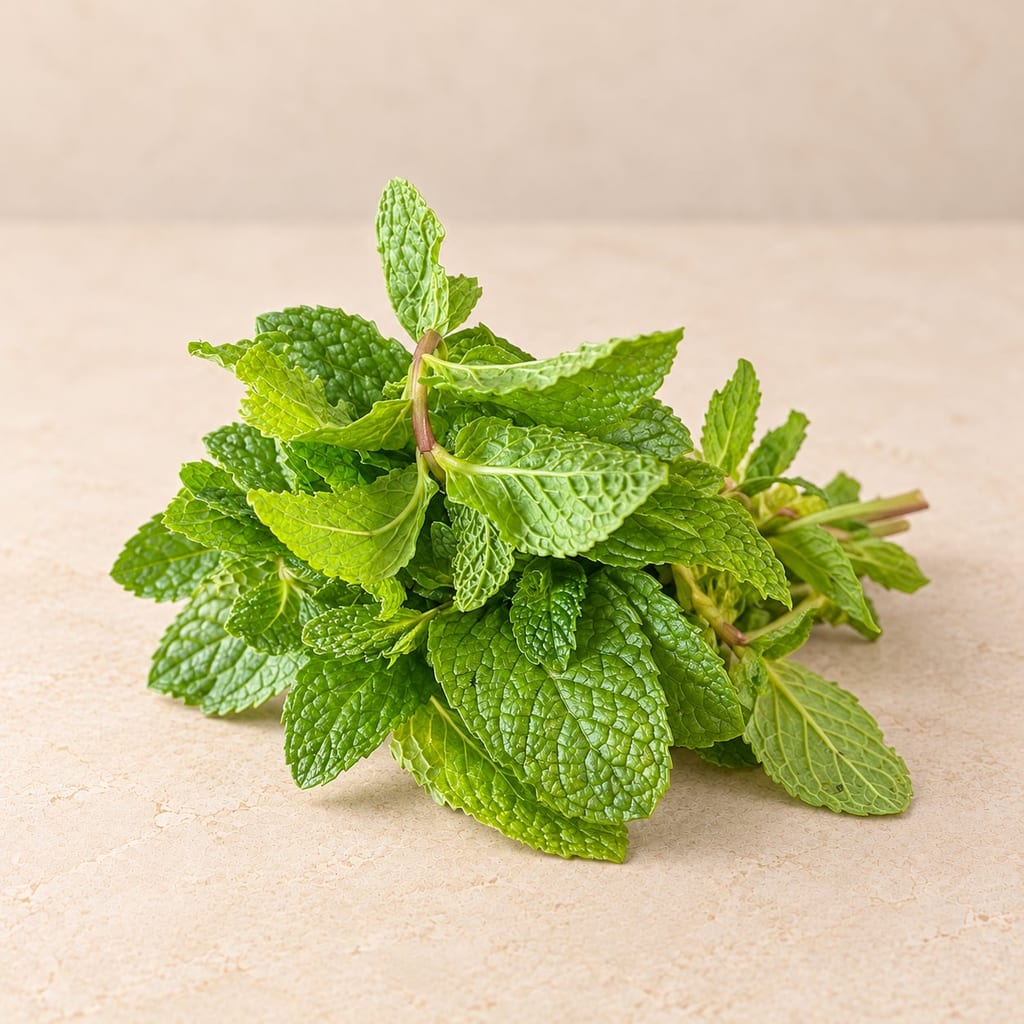
Mint
Mint is the fresh leaf of aromatic Mentha plants, chiefly spearmint and peppermint. It gives chutneys, yoghurt sauces and fermented drinks a cool, sweet, green note.
 FermenteaWhere food goes to change
Raita · Cucumber raita
Cucumber and chopped herbs are folded into plain yoghurt with salt and roasted cumin for a cool South Asian accompaniment to spiced food.
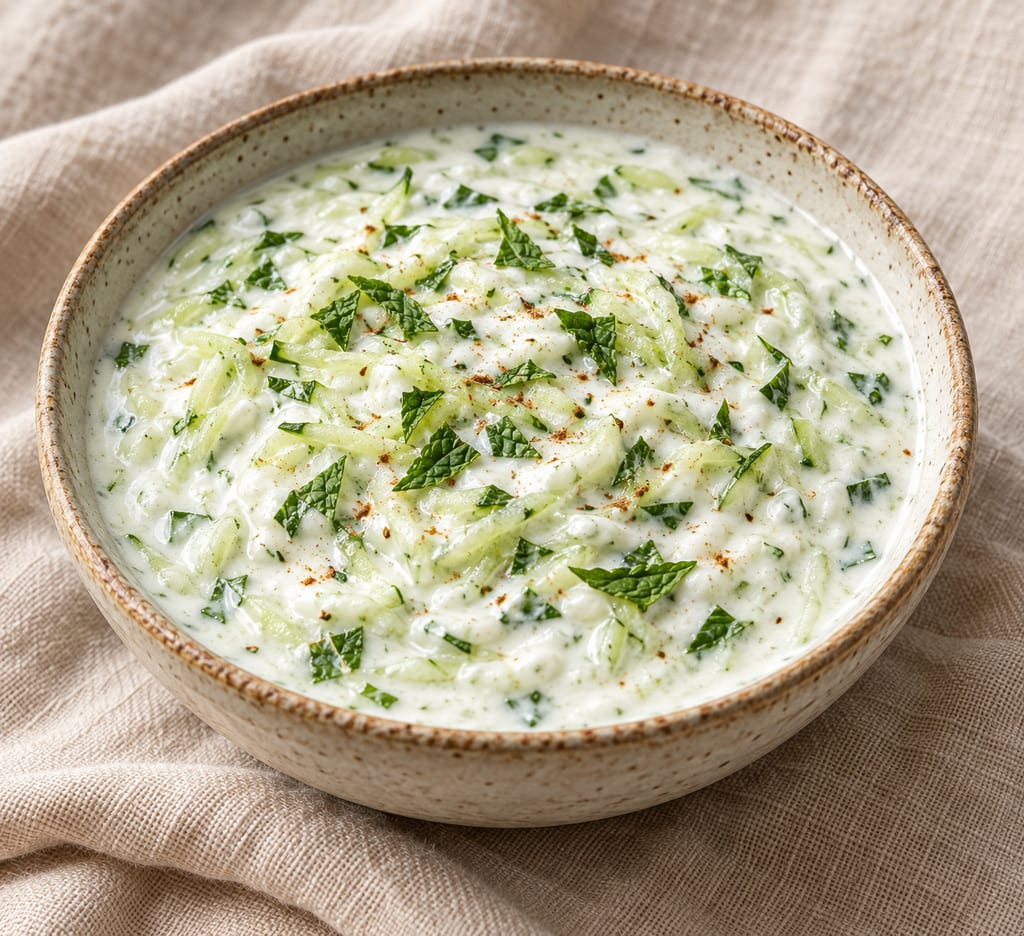
Raita is a cool yoghurt accompaniment in South Asian cooking. Its defining contrast is simple: a mild, tangy dairy base carries raw vegetables or herbs beside food with stronger heat and seasoning. The name comes from Hindi, while the dish belongs to a wider South Asian food vocabulary. That broad identity does not give every bowl a single national origin or one fixed formula.
Cucumber raita can be a loose salad, a spoonable sauce or a thick side, depending on the yoghurt and the way the cucumber is cut and drained. A documented cucumber version combines yoghurt with mint, coriander and cumin. Uttarakhand also has a named Pahari raita made with cucumber and yoghurt, seasoned with mustard and chilli. These preparations show how the same yoghurt-and-vegetable framework takes different shapes; they do not prove that this mint-and-coriander formula comes from Uttarakhand or any one household tradition.
A separate family account offers two texture choices: chop the de-seeded cucumber, or grate it and squeeze out excess moisture. It also strains juice from the cucumber seeds back into the raita. Those choices change texture and liquid, but its measurements are not evidence for the quantities in this development formula.
This version combines 250 g plain yoghurt made from pasteurised milk with 120 g grated cucumber, 15 g fresh mint, coriander or a mixture, 3 g salt and 2 g ground roasted cumin. Up to 10 g water may be added if the mixture needs loosening. The approximate 400 g yield assumes all optional water is used. Preparation takes about 10 minutes, with no cooking stage.
The proportions are a new working formula, not a measured transcription of a household recipe. The comparison recipes establish that cucumber, yoghurt, mint, coriander and cumin occur together in raita; they do not validate these amounts. The difference matters: a recognisable dish family can inspire a new batch without making its exact measurements traditional or historically established.
Yoghurt is the base. Its thickness controls how freely the raita can be spooned, while its acidity and flavour influence the balance of the whole bowl. Use plain yoghurt so the formula's seasoning remains in view. The source specifies yoghurt made from pasteurised milk because the mixture receives no later heat treatment. Different yoghurts can produce noticeably different acidity and texture, so a substitution changes the result rather than disappearing into the background.
Cucumber supplies cool, crisp, watery flesh. Grating breaks it into fine pieces that spread throughout the yoghurt; gently squeezing before weighing removes some free liquid and helps keep the mixture from becoming unexpectedly thin. It should not be pressed dry: the goal is to reduce pooling while retaining the fresh cucumber character.
Mint brings a cool, aromatic note; coriander gives a greener, more citrus-like herb character. The recipe allows mint, coriander or both but only specifies one combined 15 g amount, so the split is a cook's choice rather than a hidden pair of measurements. Fresh herbs are chopped so they distribute through the dairy instead of forming large leafy clumps.
Salt seasons the yoghurt and cucumber. It also draws moisture from cucumber once mixed, which is one reason the relish can loosen as it stands. Ground roasted cumin contributes a toasted, earthy aroma that gives the cool base more depth. The archive specifies 2 g ground roasted cumin but does not quantify a separate chilli addition; chilli remains an optional, restrained adjustment.
Grate the cucumber and squeeze it gently before weighing. This order makes the stated 120 g refer to the drained ingredient rather than the cucumber's unprepared weight. Chop the herbs, then fold them through the yoghurt with the cucumber, salt and ground roasted cumin. Add water gradually, and only when necessary; the full 10 g is an upper amount, not a required addition.
Mixing rather than cooking preserves the crisp cucumber and fresh-herb character. The preparation is not itself a fermentation. Yoghurt is a fermented ingredient, but this recipe simply combines it with vegetables and seasonings; no culture is added and no time is set aside for microbial growth. Do not treat the activity that made the yoghurt as a second fermentation in the raita bowl.
Chill the mixture and serve it beside spiced food, rice or grilled dishes. Raita also sits among other condiments such as green chutney and achar. Those neighbours are not interchangeable: a chutney may be a fresh herb blend or a cooked sauce, while achar names a broad pickle family. The yoghurt base is the feature that makes this preparation a raita.
Treat this as a perishable mixture of pasteurised dairy and raw produce. Wash cucumber and herbs under running water, and use clean hands, utensils and preparation surfaces. Refrigerate the raita promptly in a clean, covered container. General leftovers guidance says to discard perishable food that has been above 40°F (4°C) for more than two hours. No keeping time has been established for this exact mixture, and the yoghurt's storage life does not establish one for the raita. Do not use appearance, smell or taste to decide whether it is safe.
Freezing is likely to change the texture. Cucumber can become waterlogged, and milk sauces may separate; yoghurt is not named in that freezing guidance, so the result for this mixture is not established.
Raita is a South Asian yoghurt-and-raw-vegetable preparation. The mint/coriander formula here is an original development recipe; the sources do not establish its historical date or a narrower place of origin.
Yield 400 g · Scaling: source batch only
The cucumber and fresh herbs are not heated in this recipe.
Hazard sourceRinse cucumber and herbs under running water; wash your hands and use clean utensils and preparation surfaces.
Control sourceRefrigerate promptly; discard the mixture if it has been above 40°F (4°C) for more than two hours.
Control sourceContains milk.
This fresh formula has not been kitchen-tested or evaluated for shelf life.
The dictionary defines raita as a South Asian yoghurt-and-raw-vegetable dish; this association applies to the dish family and does not establish the origin of this mint/coriander formula.
Mint is the fresh leaf of aromatic Mentha plants, chiefly spearmint and peppermint. It gives chutneys, yoghurt sauces and fermented drinks a cool, sweet, green note.
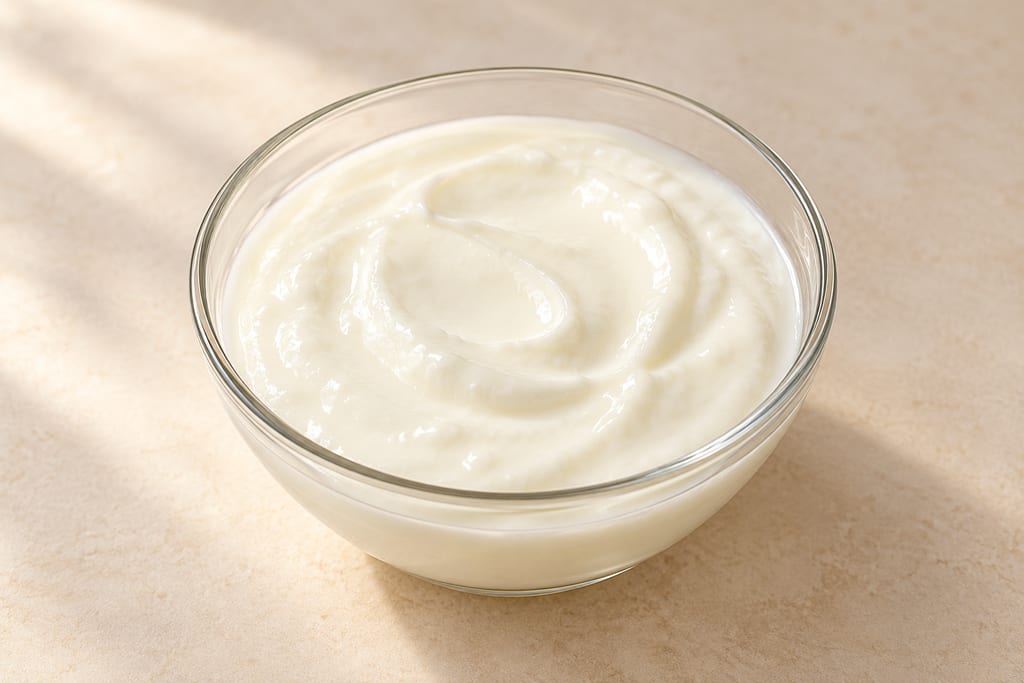
A mild, set yogurt made by inoculating warm pasteurized milk with live-culture yogurt and holding it until it gels. This US extension method uses a short ingredient list and controlled incubation.
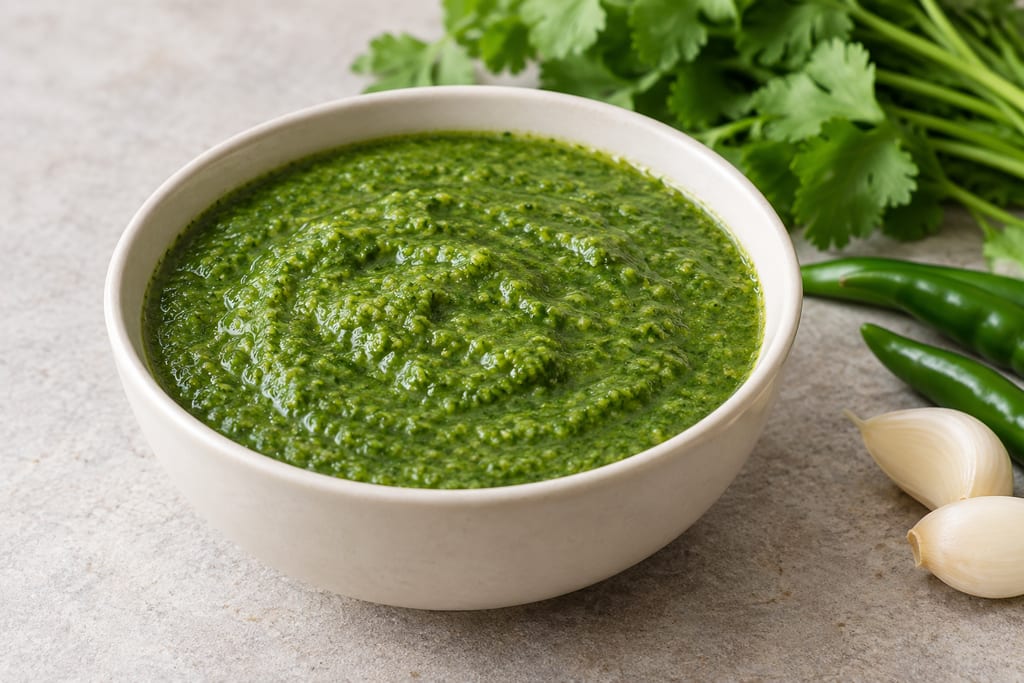
Afghan coriander chatni is a sharp, hot herb sauce with garlic and vinegar. A 2008 Afghanistan manual records green or red pepper and optional walnut; heat and household versions vary.
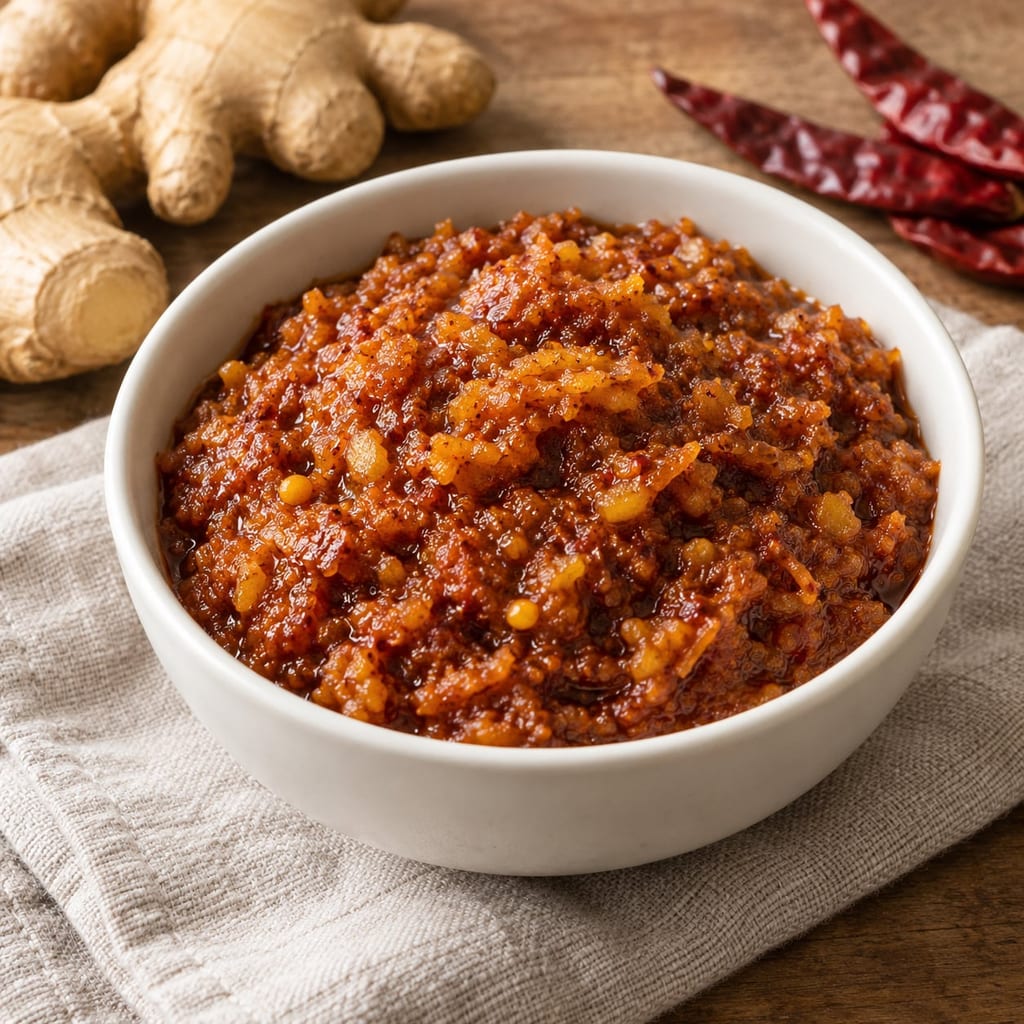
An Andhra ginger-and-urad chutney in which browned dal and briefly fried ginger and chillies are cooled, then ground with jaggery to a coarse paste.
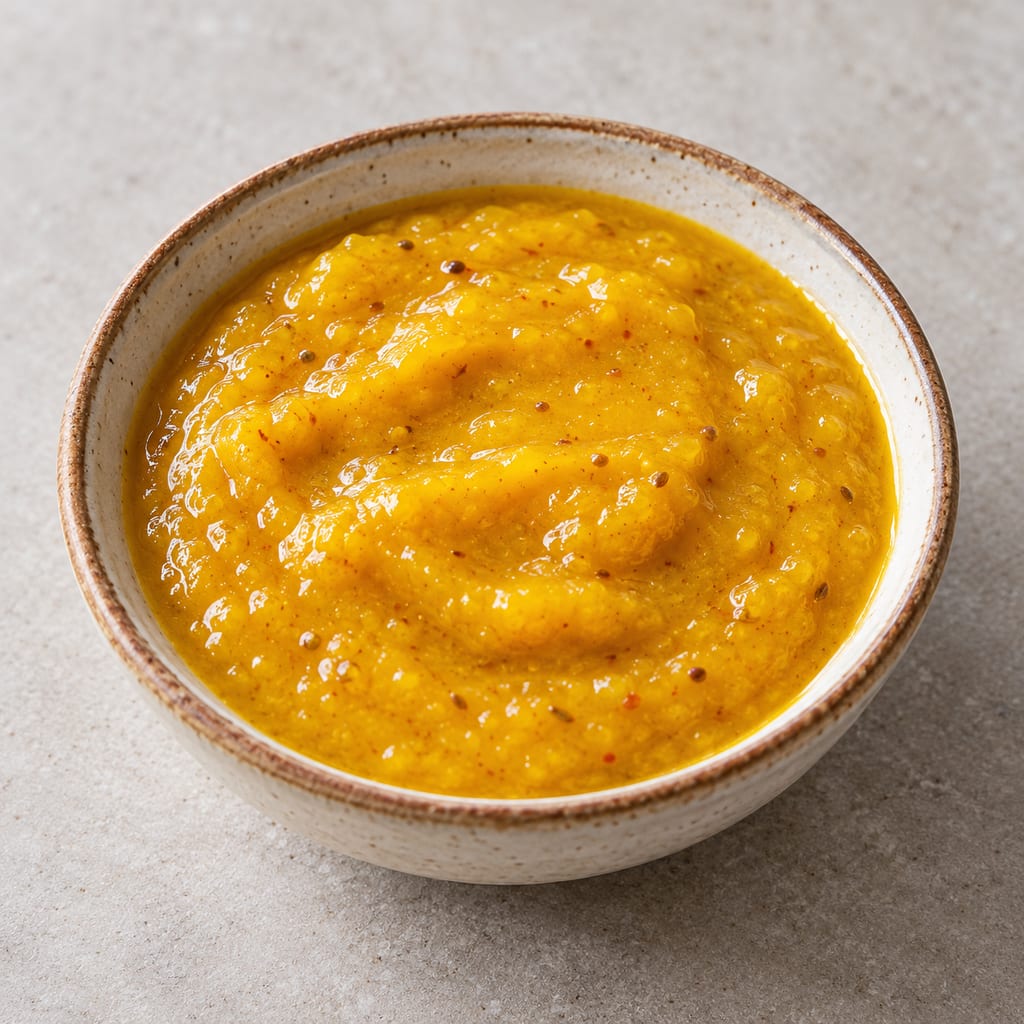
This cooked amba follows a Jewish Food Society recipe that simmers ripe mango with onion, garlic, mustard seed and warm spices into a tangy Middle Eastern condiment.
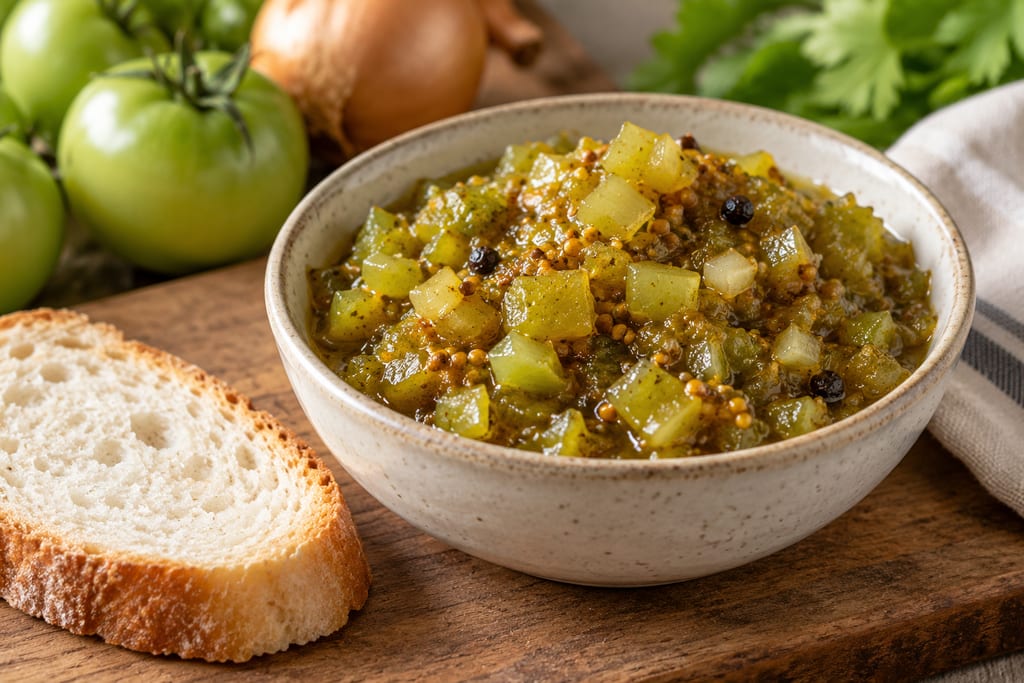
Australian green tomato pickles and relishes vary. This partial version follows ABC Western Victoria’s 2018 pickle recipe, not Beerenberg’s commercial formula. Sources document examples from 1944 onward, not a single origin.
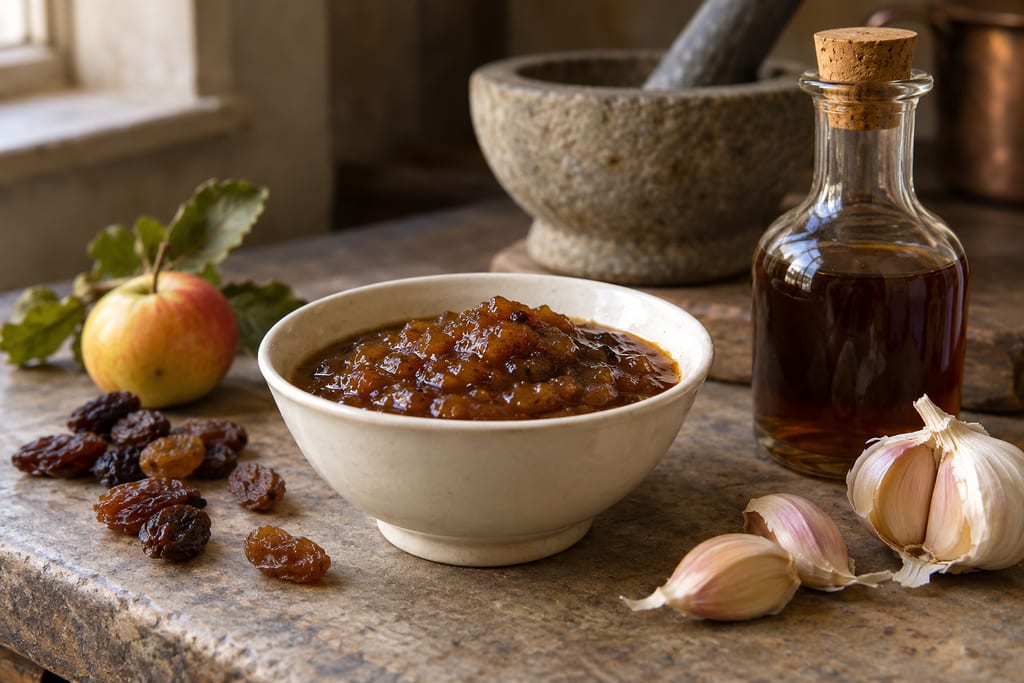
Eliza Acton's Bengal receipt for chetney sauce: stoned raisins and a hard acid fruit pounded with brown sugar, ginger, salt, cayenne and garlic, then thinned with vinegar to the consistence of thick cream.
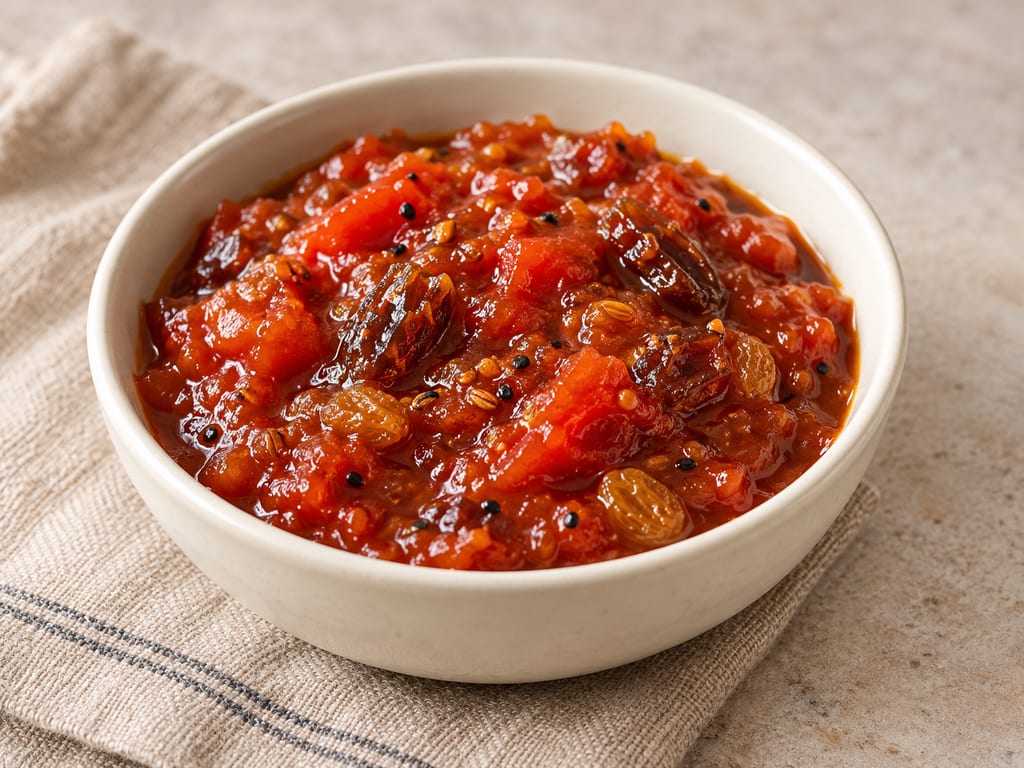
A cooked Bengali meal chutney combining tomatoes, dates, raisins, ginger and panch phoron.

A spicy South African vegetable relish of onion, carrot, pepper, tomato, curry seasoning and beans, cooked briefly and served warm or cold beside pap and grilled meat.
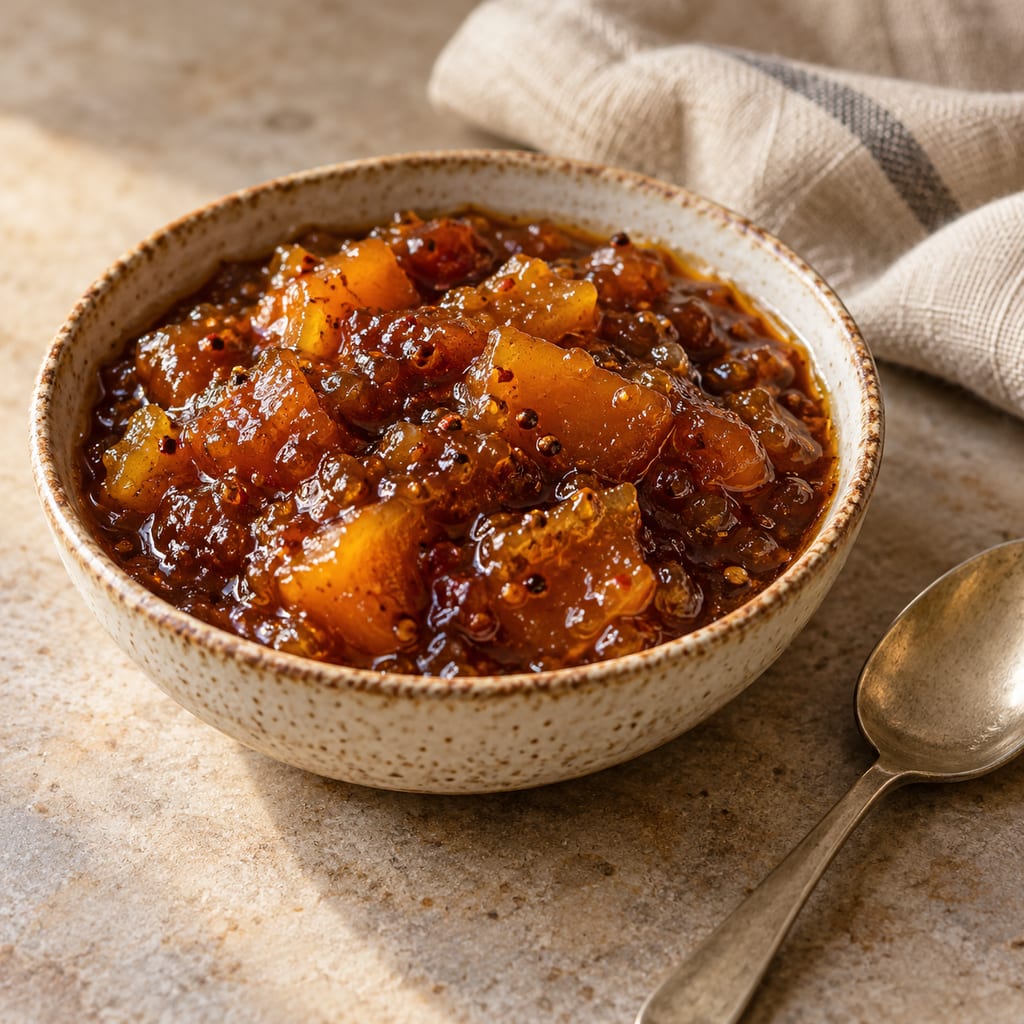
A broad account of cooked chutney traditions: fruit or vegetables combined with sugar, spices and sometimes acid, often boiled into a thick condiment. This record is historical and process context, not a formula or storage recipe.
No community contributions have been published for this entry yet.
Sign in to contribute. Published comments and photos are free to read.
Keith Pfeiffer, Pfeiffer Family: The Indian CookbookComposition · Method · Use
Cucumber raitaDocuments cucumber raita with yoghurt, mint, coriander and cumin; describes chopped and grated cucumber methods, de-seeding, squeezing grated cucumber and using the seed-pulp juice, plus the author's family and serving context. This comparison does not establish the quantities in the development formula.
Cited in: Yoghurt beside spiced food; A fresh development formula; What each ingredient contributes; Mix, season and chill
Oxford Advanced Learner’s DictionaryIdentity · Geography · Names
RaitaDefines raita as a South Asian dish of raw vegetables and yoghurt; identifies Hindi as the word's origin. Does not date the dish or establish this specific formula.
Cited in: Yoghurt beside spiced food
Vivekananda Parvatiya Krishi Anusandhan SansthanRegional comparison
Nutritious and Healthful Traditional Cuisine of Uttarakhand HimalayasDocuments a cucumber-yoghurt Pahari Raita as prevalent in Uttarakhand; its mustard and chilli formula differs from this mint/coriander development and does not establish its origin.
Cited in: Yoghurt beside spiced food
Centers for Disease Control and PreventionSafety
Fruit and Vegetable Safety at HomeSupports rinsing produce under running water and using clean utensils and surfaces.
USDA Food Safety and Inspection ServiceSafety · Handling
How do I handle leftovers safely?Supports prompt refrigeration or freezing, shallow storage containers and a two-hour limit at room temperature for leftovers.
National Center for Home Food Preservation, University of GeorgiaHandling · Freezing
Lots of Leftovers?Perishable food left above 40°F (4°C) for more than two hours should be discarded; cucumbers do not generally freeze well because they become waterlogged, and milk sauces may separate.
Cited in: Keeping a fresh dairy condiment
Centers for Disease Control and PreventionSafety · Handling
Preventing Food PoisoningUnwashed fruits and vegetables are riskier foods; rinse fresh produce under running water and wash hands, utensils and preparation surfaces.
Cited in: Keeping a fresh dairy condiment