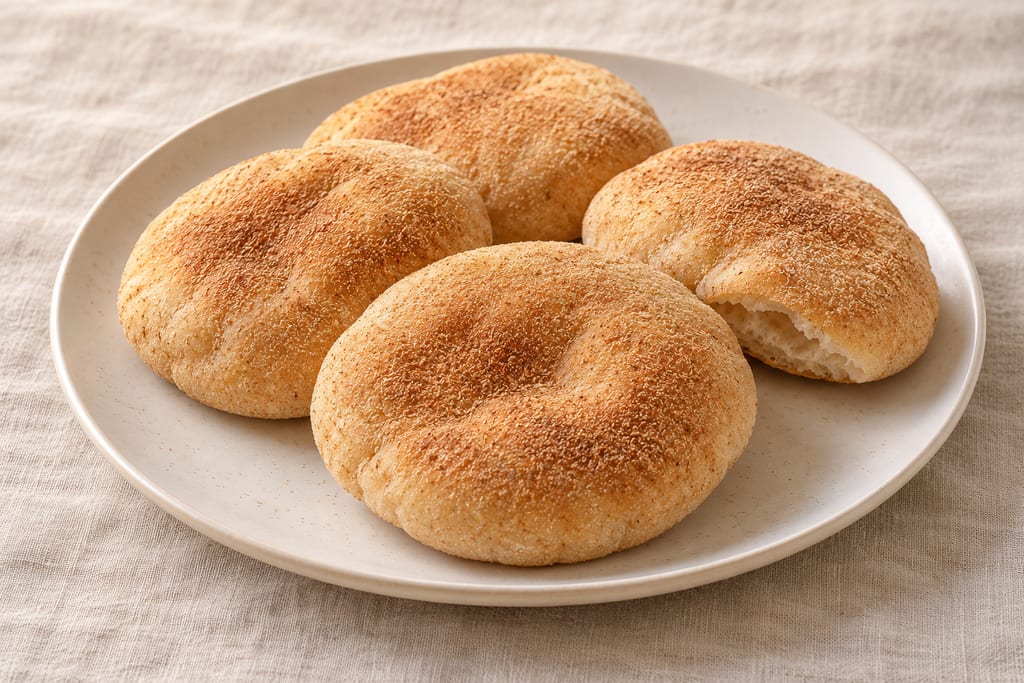
Poee (Goan bran rolls)
Goan wheat rounds coated in bran and baked hot until they puff. This measured home method uses commercial yeast and makes six poee.
 FermenteaWhere food goes to change
Recheado masala · Raechad masala · Recheado paste · Tempero do recheio
Recheado is a red Goan spice paste of Kashmiri chillies, garlic and spices ground in vinegar, best known as the stuffing for fried fish such as mackerel.
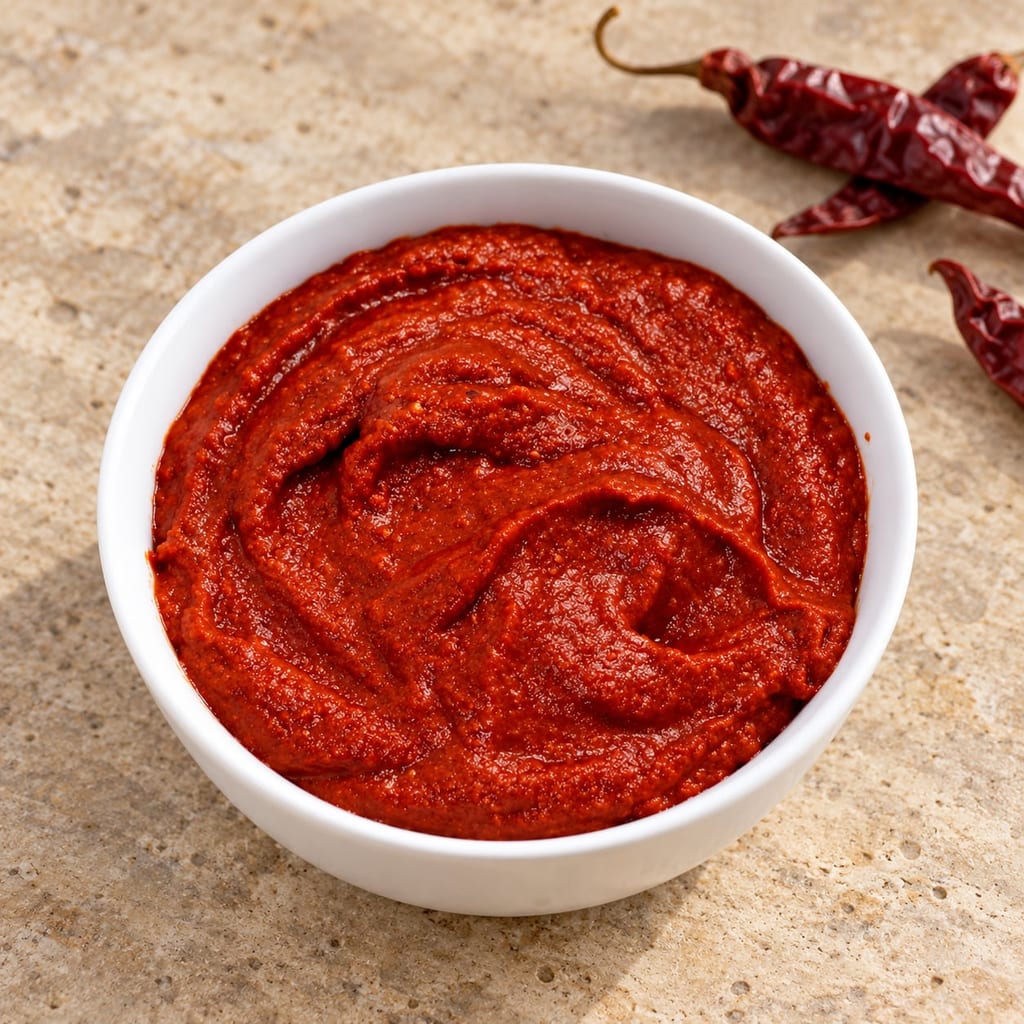
Recheado masala is a Goan paste of dried red chillies, garlic and spices ground in vinegar. The name points to its main job. Recheado, in Portuguese-influenced Goan usage, means stuffed, and the paste is pressed into slits cut in a whole fish, most often mackerel, before the fish is fried. A Goan food producer's heritage page describes the same practice of filling fish with the paste and notes that households differ in how they make it.
The paste is the preparation described here, not the finished fish. It is a seasoning that cooks keep ready for fish, and the stuffing and frying are the dish. Because it is ground wet in vinegar and is not left to ferment, it belongs with the spice pastes and sauces and not with the fermented foods.
The Goan Food Recipes page gives two versions side by side. The site's own batch is the brighter red of the two: 50 Kashmiri chillies, 100 g garlic, 15 g cloves, 50 g turmeric, a heaped teaspoon each of cumin, mustard and black pepper, a small ball of tamarind, a 5-inch piece of ginger, and a pinch each of sugar and fenugreek. Everything is ground together in vinegar.
The second version is credited to a contributor from Salcete and comes out more orange. It swaps whole chillies for ground Kashmiri chilli powder, 6 tablespoons of it, and uses 2 teaspoons of turmeric powder, 4 of ground cumin, 2 of cloves, 2 of pepper, two 4-inch cinnamon sticks, a ball of tamarind, a large teaspoon of salt, a 4-inch piece of ginger, 3 to 4 tablespoons of sugar and 2 teaspoons of mustard. Its garlic is written as "2 onions of garlic", which most likely means two whole heads but is not defined. It too is ground in vinegar.
Neither list gives a vinegar volume or a yield, and the two use different forms of chilli and different spices, so their quantities cannot be merged into one authentic recipe. The page records them as household versions, which is how the paste is best understood.
A 2022 blog post reproduces a one-cup formula credited to Maria Teresa Menezes's The Essential Goa Cookbook. It combines dried Kashmiri chillies, cloves, garlic, cumin, peppercorns, cinnamon, turmeric, cardamom and tamarind with vinegar, ground to a smooth paste. The blogger used tamarind extract in place of the book's soaked tamarind pulp and reports grinding with a coffee grinder, a mortar and a food processor. The post tells the reader to keep the paste in an airtight jar but gives no storage time.
The attributed recipe and the blogger's adaptation are separate layers: the physical book page was not inspected, and library catalogues give 2000 or 2001 as its publication date. It adds cinnamon and cardamom to the spice list, which shows how far the family of formulas stretches around the same core of chilli, garlic, vinegar and tamarind.
The recipe page describes the fish method in a few lines. A mackerel is cut open along both sides of the body, the slits are packed with as much masala as the cook likes, the fish rests briefly, and it is fried. The paste can also be smeared on the outside. The page gives no resting time, no frying temperature and no doneness test, so this is a description of a household dish and not a validated seafood procedure.
Acid does two things in this paste. Vinegar and tamarind give the sharp, sour edge that sets recheado apart from dry masalas, and they loosen the ground chilli and garlic into something that can be pushed into a cut. Sugar, in the pinch or tablespoon amounts above, softens that edge. These are properties of the ingredients and not claims made by the sources about preservation.
A Goa University thesis on the food history of Goa from 1900 to 1961 names a seasoning of red chilli and spices for stuffing fish, tempero do recheio, and says some households prepared it at home. The same passage deals with para, a separate dry-fish preserve, and its details do not describe how recheado was made or kept. The thesis was read through a third-party transcription, and its remark about vinegar use among religious communities is the author's account and should not be applied to every household.
This is a later historical account and not a dated recipe from the period. It shows the practice and a Portuguese-language name in twentieth-century Goa, not an unbroken formula.
No source gives a vinegar volume, a yield or a tested storage life for the paste. One reader comment on the recipe page says the paste can be frozen for six months and others ask how long it keeps in a fridge without an answer; those are comments and not tested limits. The name's etymology is not supported by a dated Portuguese or Konkani dictionary entry here, so the link between recheado and stuffing rests on the recipe sources' own description of its use.
The Portuguese-period name tempero do recheio appears in a thesis on Goan food between 1900 and 1961, which says some households made the seasoning at home. It does not show that today's formulas match it.
Scaling: source batch only
No source tests how long the paste keeps at room temperature, in a fridge or in a freezer.
Hazard sourceCook the stuffed fish through by frying, as the source describes
Control sourceNo tested storage life exists for the paste in these sources; do not rely on smell or taste to judge a stored batch.
No validated fish-marinating time or cooking endpoint is given.
A documented regional food practice; no source here fixes an origin or one standard formula.
One recipe is credited to a contributor from Salcete; the source does not claim Salcete as an origin.
Goan wheat rounds coated in bran and baked hot until they puff. This measured home method uses commercial yeast and makes six poee.
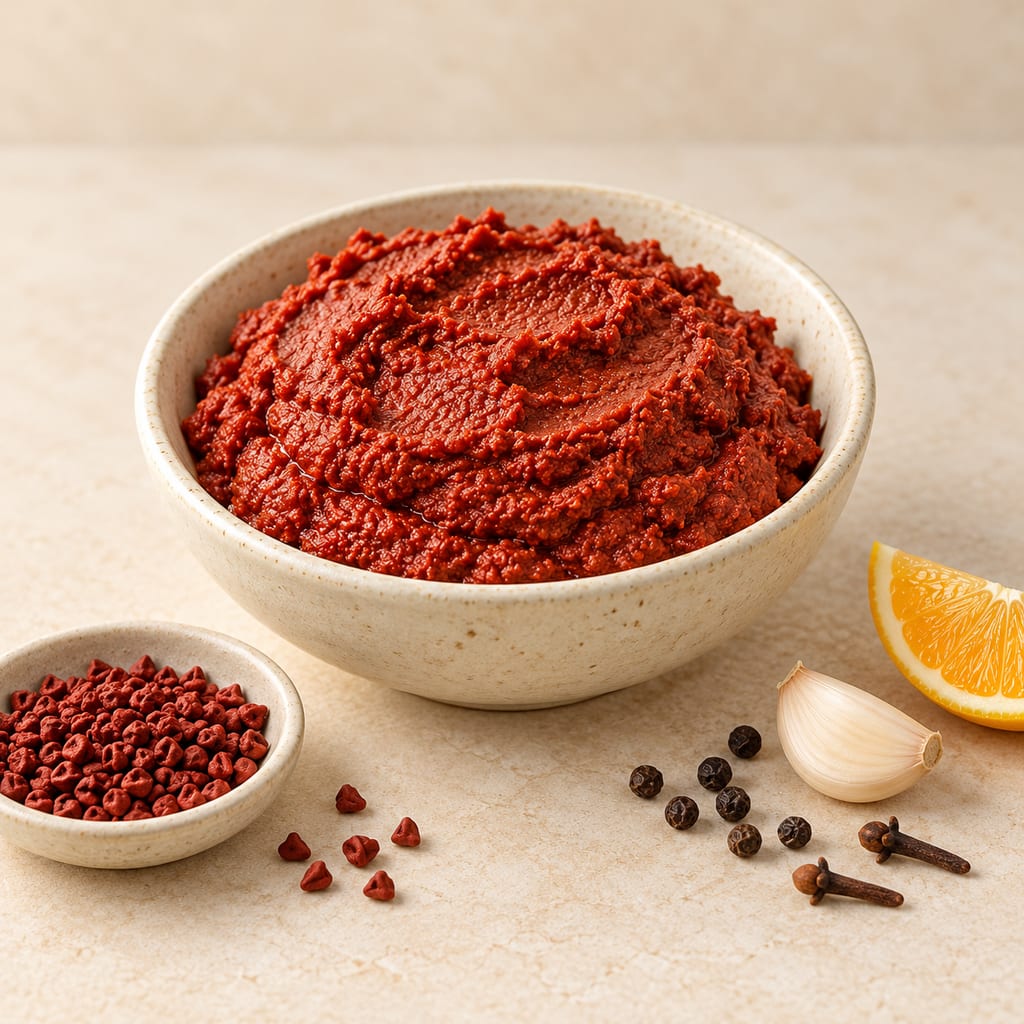
A Yucatecan recado rojo is a brick-red seasoning paste built on annatto seed, garlic and sour orange. This measured home version shows one route into a much wider family of market and household recados.
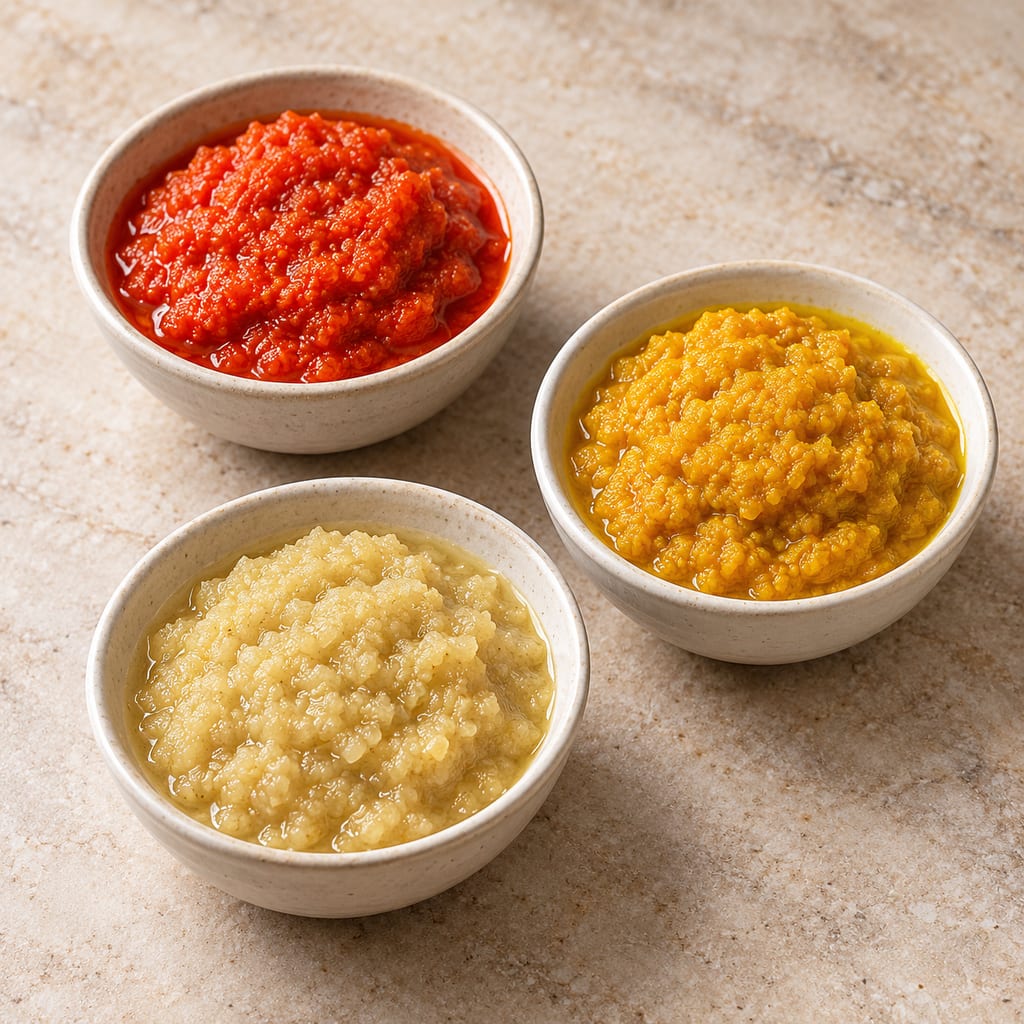
Bumbu dasar are the ground spice bases of Indonesian cooking: a white paste of shallot, garlic and salt, with chile added for red and turmeric for yellow, cooked into dishes.
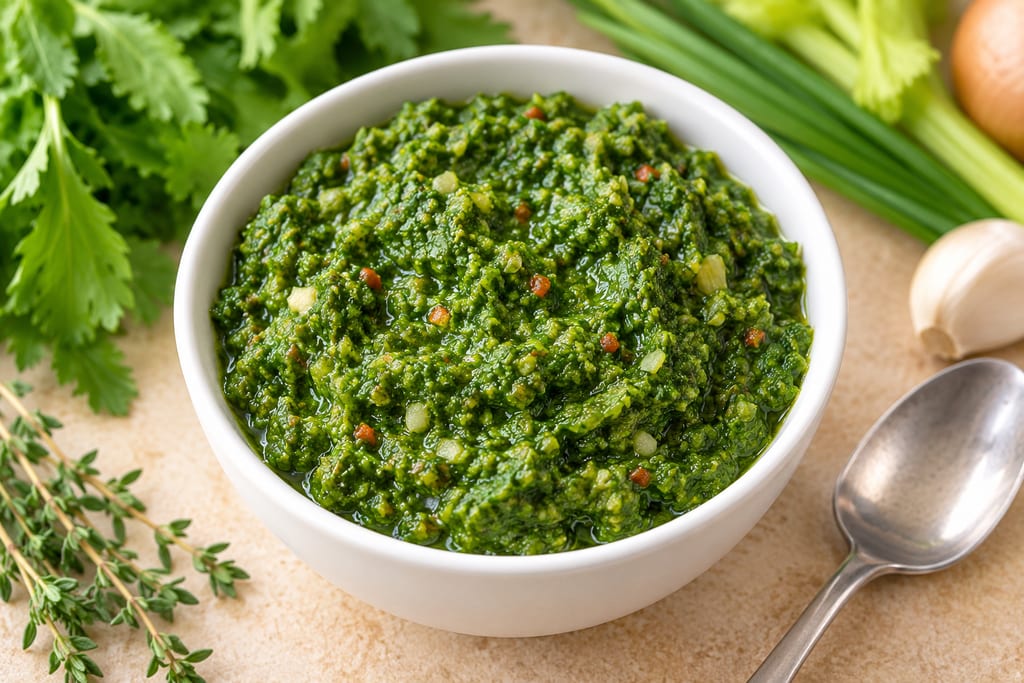
A fresh herb and aromatic paste of chadon beni (culantro), thyme, chives, celery, onion, garlic and peppers, blended with vinegar and water and used as the base for Trinidadian cooking.
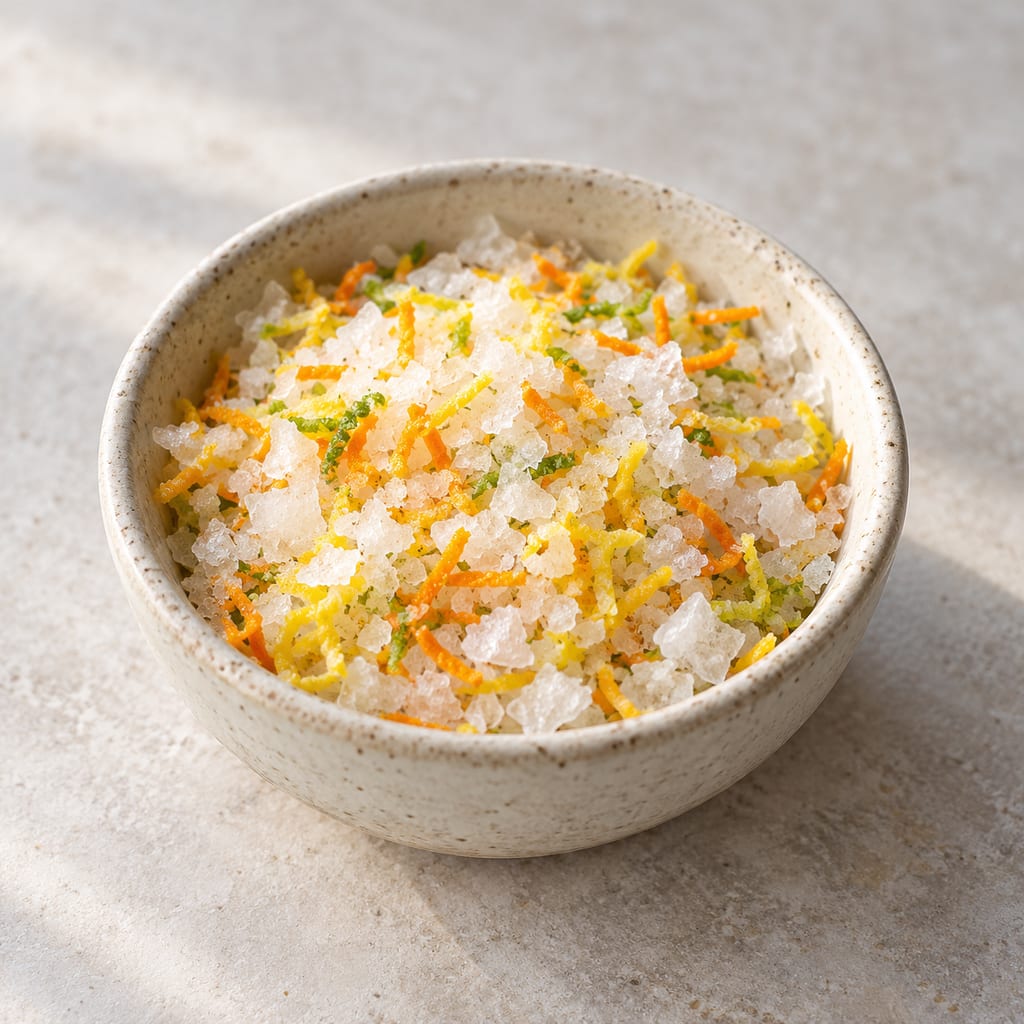
Citrus zest is rubbed into coarse or flake salt and dried on a tray. This peel-based seasoning preserves the chosen citrus aroma without adding juice.
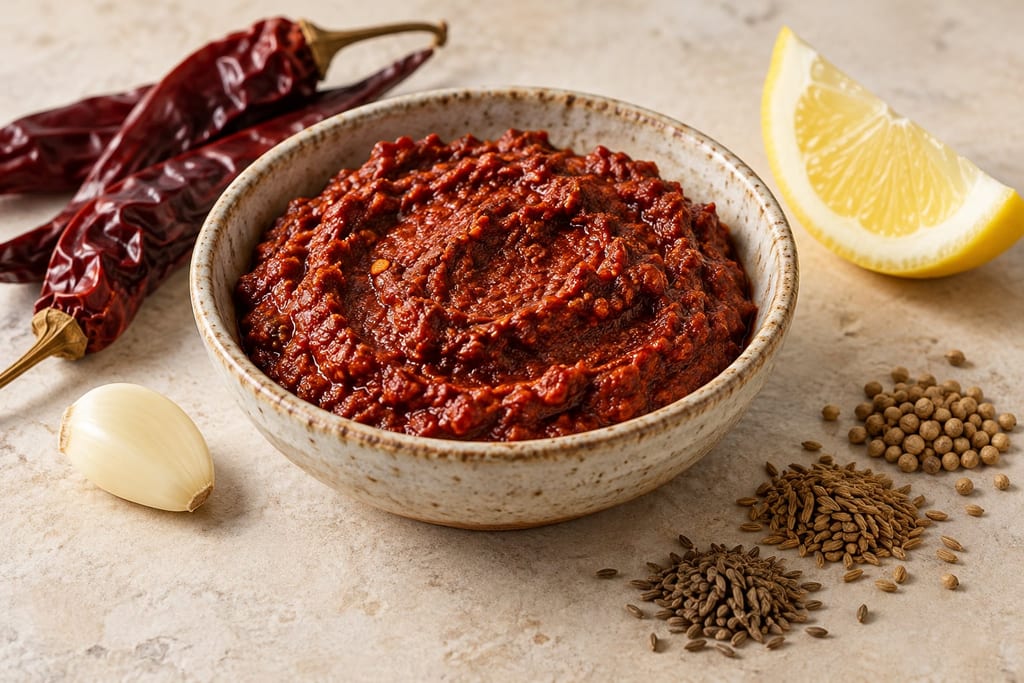
A fresh chilli paste made from rehydrated dried red peppers, garlic, olive oil, lemon and warm spices; this small-batch formula adapts the harissa family rather than reproducing a tested Tunisian method.
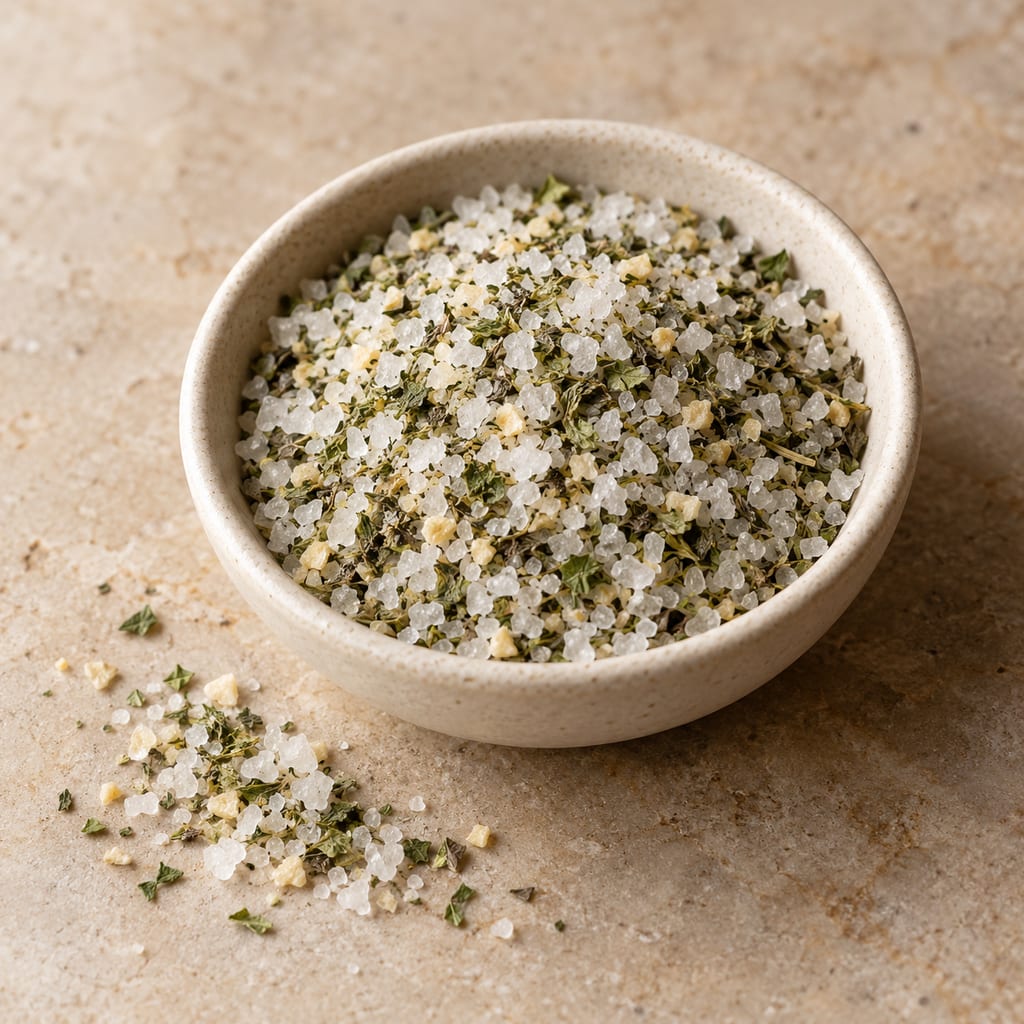
Fresh garlic and pungent herbs are chopped with kosher salt, then dried in the warmth of a switched-off oven. The blend keeps the selected herbs together in one seasoning.
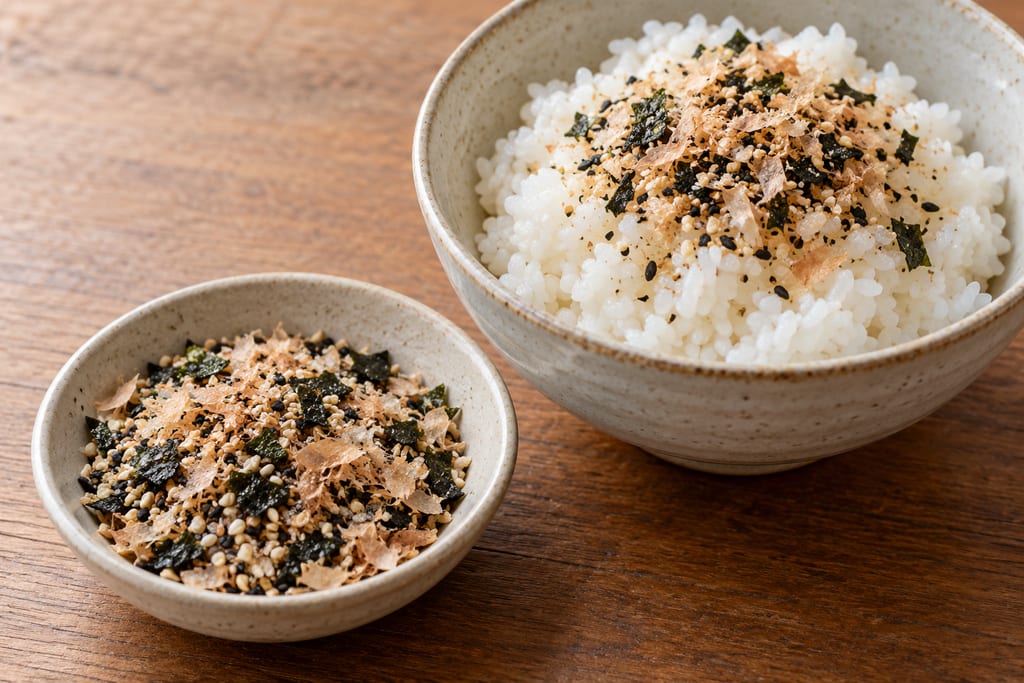
A dry Japanese rice seasoning of sesame, bonito, nori, sugar and salt. This documented home blend is one specific formula within a varied category with several early product histories.
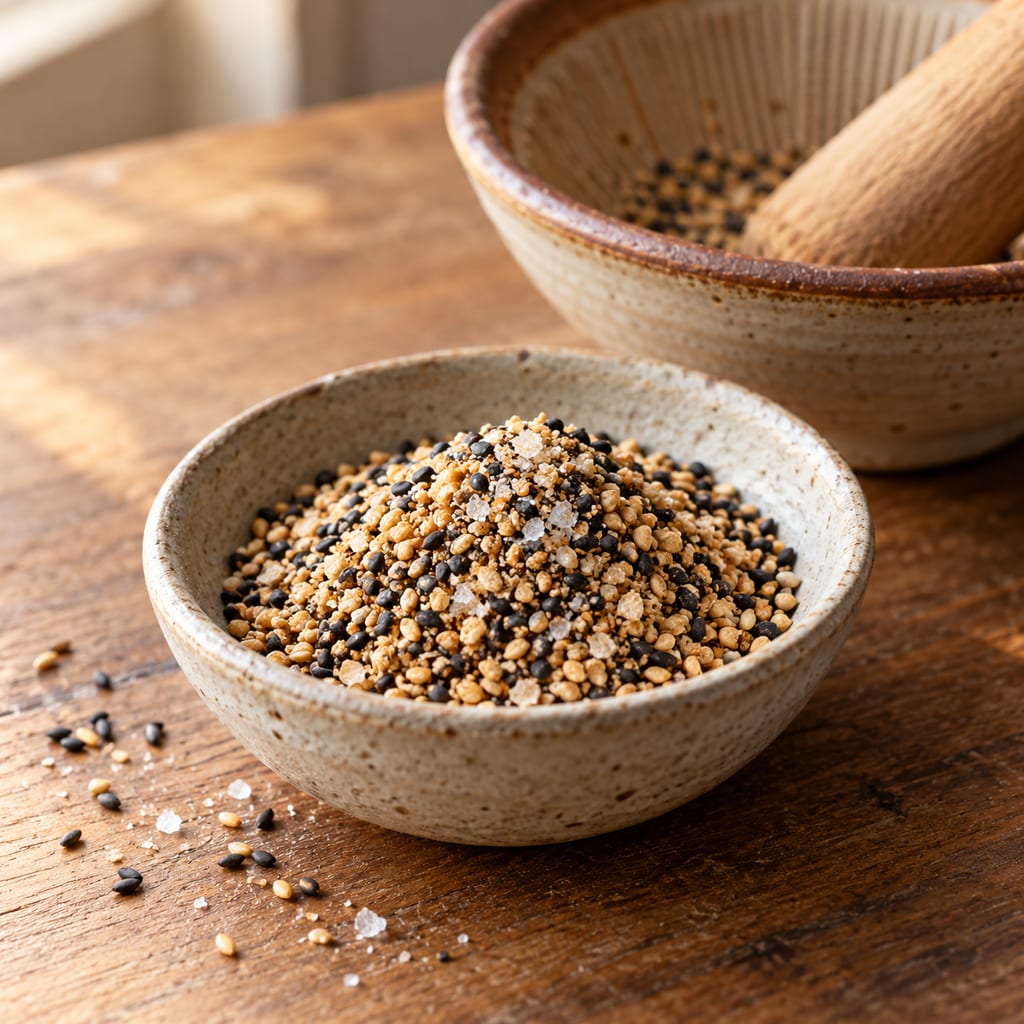
Toasted sesame seeds and sea salt are ground together into a coarse seasoning for rice. This small pan-roasted batch keeps most of the seed texture.
No community contributions have been published for this entry yet.
Sign in to contribute. Published comments and photos are free to read.
Goan Food RecipesMethod · Inspiration
Recheado MasalaBoth ingredient lists with quantities
Grind in vinegar
Fish use with mackerel
Cited in: A red paste for stuffing fish; Two documented formulas; Using it on fish; What the sources leave open
Goana FoodsHistory
Goan Food HeritageFilling fish with the paste
Households vary
Cited in: A red paste for stuffing fish
Goa University thesis, transcription hosted by ScribdHistory
Food History of Goa: Researching its Multifaceted Aspects from 1900 upto 1961Tempero do recheio as a fish-stuffing seasoning
Home preparation in some households
Cited in: The older name
Cooking in KonkaniMethod
Making a Goan masalaOne-cup formula credited to Menezes
Tamarind extract substitution
Airtight jar
Cited in: A cookbook version
Google Books (Penguin Books India)Bibliographic
The Essential Goa CookbookBibliographic record of the cookbook
Cited in: A cookbook version
