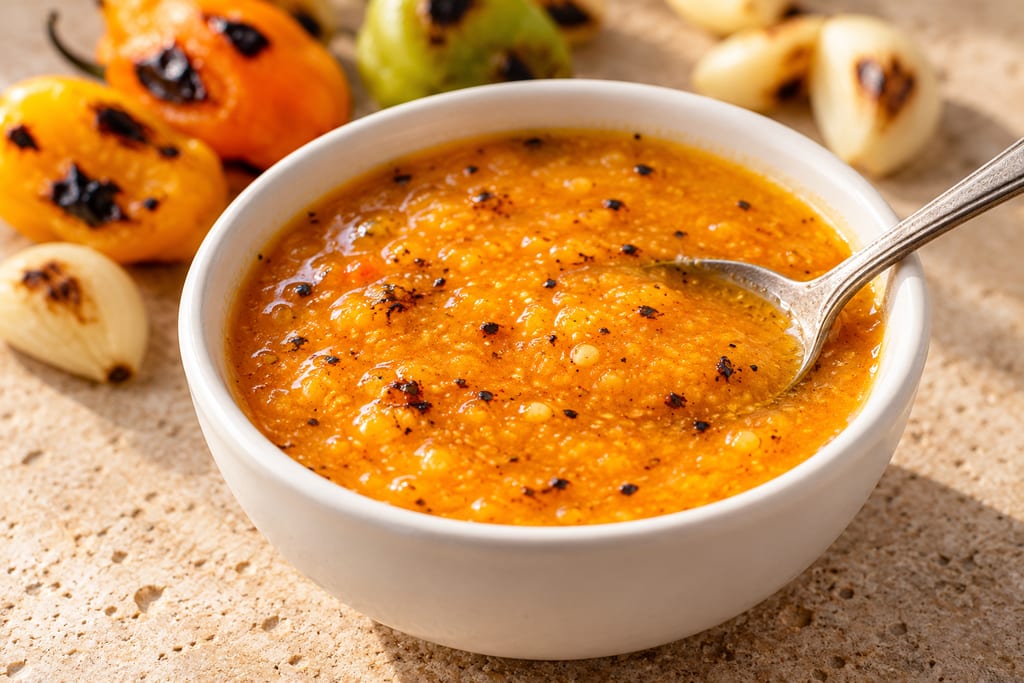
Habanero table salsa
A hot, fruity chile sauce of the Yucatán, built on habanero peppers and often charred with garlic. It sits on the table as a condiment, and the recipes vary widely.
 FermenteaWhere food goes to change
Recado rojo · Achiote condimentado · Recado colorado · Recado rojo yucateco
A Yucatecan recado rojo is a brick-red seasoning paste built on annatto seed, garlic and sour orange. This measured home version shows one route into a much wider family of market and household recados.
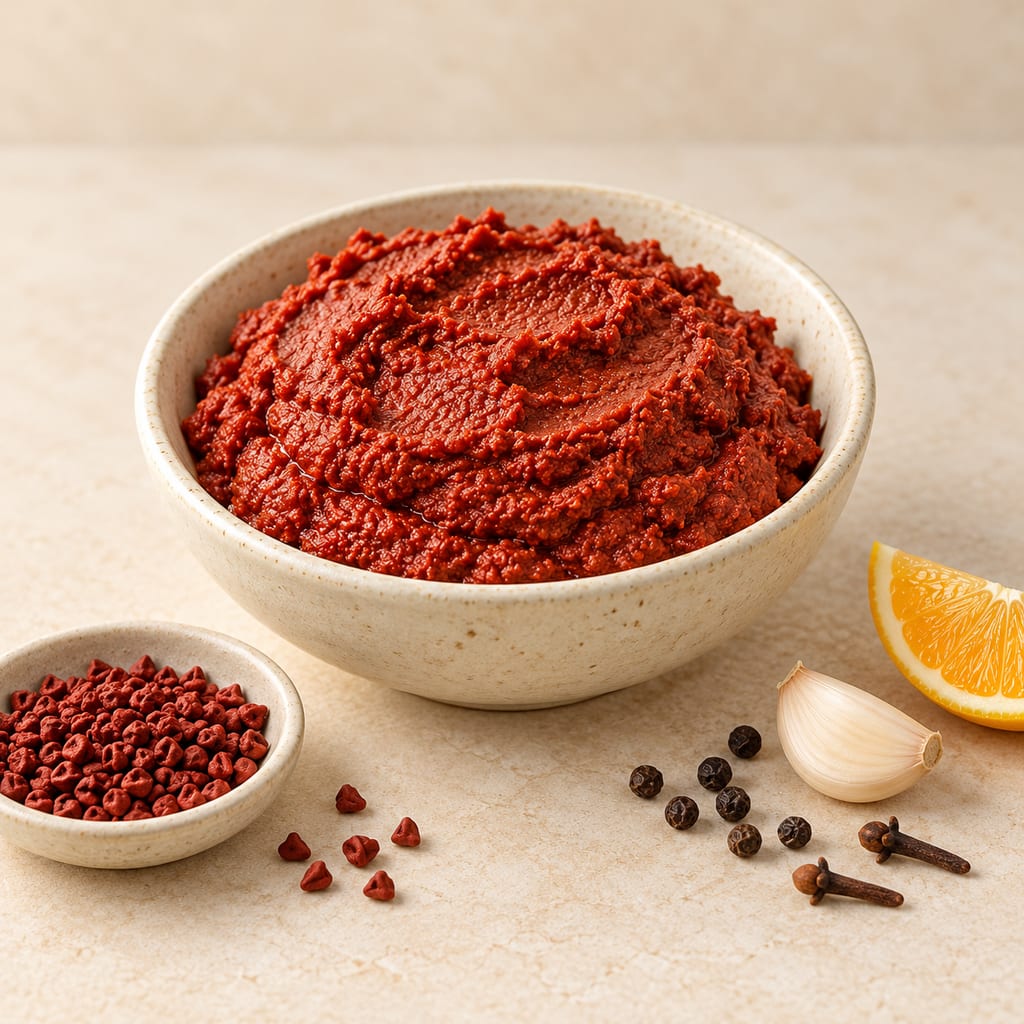
Achiote paste begins with the hard, small seeds of Bixa orellana, the tropical shrub called annatto in English. A thin red-orange coating around each seed supplies the vivid pigment; the whole seed, once ground with spices and a sour liquid, contributes the paste sold and made in Yucatán as recado rojo. That name identifies a seasoned mixture, not purified annatto dye. Its flavour is earthy, warm and gently peppery; garlic, spices and sour orange carry as much of the experience as the seed’s colour.
The terms overlap in everyday cooking. Larousse Cocina says recado rojo and Yucatecan achiote paste refer to the same product, while individual market makers and households have their own balance and texture. A brick of firm commercial paste, a soft hand-milled paste and a thinner version ready to dilute for a marinade are related forms, not evidence of one standardized recipe. This page gives one measured home formula and keeps the Yaxunah account and other variants distinct.
Achiote is the Nahuatl-derived name most familiar in Mexico; annatto, bija and urucú are among names used elsewhere in the Americas. Historical scholarship records Nahuatl achiotl, Zapotec bia and Maya names including oox and k’uxub in different settings. These words point to the plant, seed or pigment across distinct languages. They should not be collapsed into a single ancient recipe name.
Mexican government and historical sources describe Indigenous use of the red seed coating before European arrival, including color in cacao drinks and body painting. Annatto also entered textile and pigment histories. Those uses show that communities understood and valued its strong color, but they do not establish when a Yucatecan spice paste first took the form now called recado rojo. The sources consulted here describe a living regional preparation, not a dated origin story for the paste itself.
In Yucatán, recado rojo has become a familiar market product as well as a household seasoning. Larousse attributes a version to Yaxunah and describes specialist market stalls in Mérida where cooks choose a preferred maker. That account puts craft and local preference at the center: the name travels widely, but recipes are attached to particular cooks, mills and kitchens.
The seed arrives from a spiny, often brightly coloured capsule on Bixa orellana, a perennial shrub native to the Neotropics. Mexico’s seed-service describes achiote as a crop that can sit within mixed family gardens with fruit trees, maize, beans and forest trees. That agricultural setting matters to the pantry: annatto is not an industrial red powder by definition. The food seed retains its own coat and can be selected, dried, ground and mixed locally into a seasoning paste.
The plant’s many names track its wide cultural geography. Achiotl in Nahuatl, bia in Zapotec and oox or k’uxub in Maya language records point to different communities and uses; annatto is a common English label, while bija and urucú appear in other parts of the Americas. Historical texts describe coloring and ceremonial uses in addition to cooking. These usages are evidence for the plant and its pigment, not interchangeable recipes. A source mentioning a red-painted object or dyed cloth does not tell us the spice ratio of a Yucatecan kitchen.
The seed-service account notes that synthetic colourants reduced annatto consumption in Mexico from 1884, followed by renewed interest in natural pigments. That is a modern market history for the crop, not a dating clue for the cuisine. A household can make recado rojo from food-grade annatto now without reproducing either an ancient pigment preparation or the factory extraction of bixin. The culinary paste uses the whole seed as food, with its aroma and grinding texture carried into the final condiment.
The red-orange coating around annatto seeds contains bixin and related carotenoid pigments. Bixin is fat-soluble, while norbixin is water-soluble; manufacturers can extract or transform these compounds into standardized food colours. Culinary recado is a different thing: it grinds the whole food seed with garlic, spices and acid, keeping the seed’s flavour and texture in the mixture rather than isolating pigment.
The contrast explains why a pinch of annatto powder cannot stand in for a complete recado. Seed supplies color and a mild, earthy note; cumin, pepper, cloves, oregano and cinnamon build aroma; garlic gives the paste a pungent body; sour orange brings acidity and fragrance. The same deep color can therefore sit inside very different blends. A commercial color extract, a seed-only oil infusion and a Yucatecan recado are separate products made for different jobs.
Grinding is the key physical transformation in this measured version. Annatto seeds are unusually hard, so the grinder needs to reduce them finely enough that the paste does not feel sandy. A sieve catches coarse fragments; it is a texture correction, not a required extraction step. Unlike miso or fermented chile pastes, this recipe has no culture, salt-driven fermentation or maturation. Its short covered rest lets the spices mingle; it does not create preservation.
The formula below follows a published Yucatecan recado rojo recipe that yields about half a cup. It uses whole annatto, black peppercorns, cloves, dried Mexican oregano and cumin with cinnamon and salt. The garlic and sour-orange juice are blended separately, then worked into the spice powder. This produces a dense, spoonable seasoning paste. A different Yaxunah version described by Larousse softens seed in water and vinegar, blends a larger liquid portion, and strains the result to a very smooth, almost liquid consistency; that is a related recipe, not an instruction to add unmeasured water to this batch.
A spice grinder handles the hard seed efficiently. If using a small processor, work in short pulses and scrape down so seeds do not ride around the bowl. If the ground powder still has coarse fragments, sieve it before adding the garlic mixture. Do not keep adding citrus until the paste resembles a sauce: the recipe is a concentrated seasoning, and it can be thinned later in the amount needed for a marinade.
The resting period is only a culinary pause. The recipe source recommends several hours for the flavours to meld; no temperature, acidity endpoint or microbiological validation is supplied. The paste is not a preserve, and the presence of citrus or salt does not turn it into a safe meat-curing method.
Recado rojo changes with its maker. Larousse’s Yaxunah account uses achiote, cumin, Yucatecan oregano, black and allspice, garlic, chile, sour orange, water and vinegar, with a straining step that leaves a nearly liquid red seasoning. Other formulas vary the chiles, use cloves instead of allspice, add cinnamon or coriander, or replace bitter orange with another sour liquid. These are source-attributed choices, not a single standard that every Yucatecan cook follows.
The ethnographic account by Gabriel Vázquez Dzul records variation in how households use the mixture. Some families he describes primarily season broths with recado; other preparations use it to coat meat for roasting or pibil cooking. Even within cochinita pibil, the recado’s role and relative importance can shift alongside onion, tomato and herbs. UADY authors list cochinita pibil, poc chuc rojo and longaniza among its uses, showing that the paste works across different dishes rather than defining one recipe alone.
A firmer market block and a soft home-blended paste can both be called achiote or recado rojo. Larousse speculates that some market pastes may contain flour to firm them, but does not document a universal practice; do not assume every purchased block contains flour or maize. Read the maker’s ingredient label when that matters, especially for wheat or other dietary exclusions.
Market appearance is a poor guide to a recipe’s exact contents. Larousse describes the Yaxunah paste as almost liquid after repeated milling and contrasts it with firmer market forms, speculating that flour may account for some of the difference. Por Esto! separately describes a thicker version made by softening seeds, grinding them with spices, then adding citrus and vinegar. Those reports show that hydration, grinding, straining and optional binders can change the form; neither report establishes the ingredients of every paste sold in Mérida. When making the measured version here, do not add flour simply to make it form a block. It is designed to be spooned and later loosened in a marinade.
Some published home formulas add chile, some leave it out; some pair cloves with cinnamon while others use allspice or coriander. The measured recipe’s blend is a useful starting point because each ingredient is named and weighed or measured, but it should be read as one author’s formula. If heat is desired, use a documented separate recipe or a measured dried chile adaptation and name it as a variant, rather than silently changing this base. The exact pepper type also matters: Yucatecan oregano is named in some versions and is not automatically the same botanical ingredient as Mediterranean Origanum vulgare.
The paste is usually a seasoning base, not a finished dip. Cooks dissolve or smear it over pork, chicken or fish before roasting, grilling or cooking in a pibil style. Sour orange loosens the dense paste into a marinade and adds the tang associated with Yucatecan recados; the meat’s own cooking method is a separate process and needs its own recipe and safety controls. UADY’s examples include the pork preparation cochinita pibil, red poc chuc and longaniza, while Larousse presents recado rojo as a key seasoning for cochinita.
For soups and broths, a small amount can provide both color and a warm spice base. The ethnographic study notes households that use it in this way, so a reader should not assume every Yucatecan household uses the paste mainly as a meat rub. In other Mexican and Caribbean cooking, annatto may appear as a coloring ingredient, but that broader use does not make those preparations identical to this Yucatecan spice paste.
Because recado is concentrated, the source recipe is best treated as a seasoning batch. Use the paste to build a dish rather than tasting it as if it were a ready-to-eat salsa; its raw garlic, concentrated spices and sour juice are balanced in cooking with the food it seasons.
A gritty result usually means the annatto was not ground finely enough. Use a sturdy grinder, sift the powder if needed, and blend the garlic and sour orange until smooth before combining them. If the paste is too thick for the next dish, thin only the portion being used with sour orange juice; the Yaxunah recipe’s water-and-vinegar method is a separate, more liquid variant.
The exact batch has no validated pH or tested shelf life. Keep it refrigerated promptly as a perishable fresh condiment and do not infer room-temperature stability from the sour taste or the salt. FoodSafety.gov’s general guidance is to refrigerate perishable food within two hours, or within one hour in temperatures above 90°F/32°C, and to keep the refrigerator at or below 40°F/4°C; those general rules do not assign a product-specific use-by date to this paste. Do not use sensory checks such as smell or color to certify safety.
No health benefit is claimed for the recipe. UADY’s article discusses laboratory testing of seed and leaf extracts against an enzyme and explicitly frames further investigation as a future possibility; that is not a clinical result from eating recado rojo. The culinary value described here is its aroma, color and role in Yucatecan dishes.
Achiote seed and its red pigment have a much longer documented cultural history than any single modern measured recado formula. Mexican government and historical scholarship sources describe pre-contact uses of annatto among Indigenous communities, including color in cacao drinks and body or textile decoration. The exact first date of the Yucatecan culinary paste is not established by the sources used here.
Yield 0.5 cup · Scaling: source batch only
Keep the prepared paste refrigerated promptly; no product-specific validated storage duration is available, so do not treat it as shelf-stable or rely on informal storage claims.
Control sourceThis is a fresh, non-fermented seasoning paste, not a validated preservation process. Its citrus and salt do not establish a safe acidity or shelf life.
Do not use this paste to preserve raw meat. Apply current food-safety guidance to the separate meat preparation.
Larousse attributes a soft, repeatedly hand-milled recado version to Yaxunah. This does not establish the origin of achiote use or the earliest date of recado rojo.
A hot, fruity chile sauce of the Yucatán, built on habanero peppers and often charred with garlic. It sits on the table as a condiment, and the recipes vary widely.
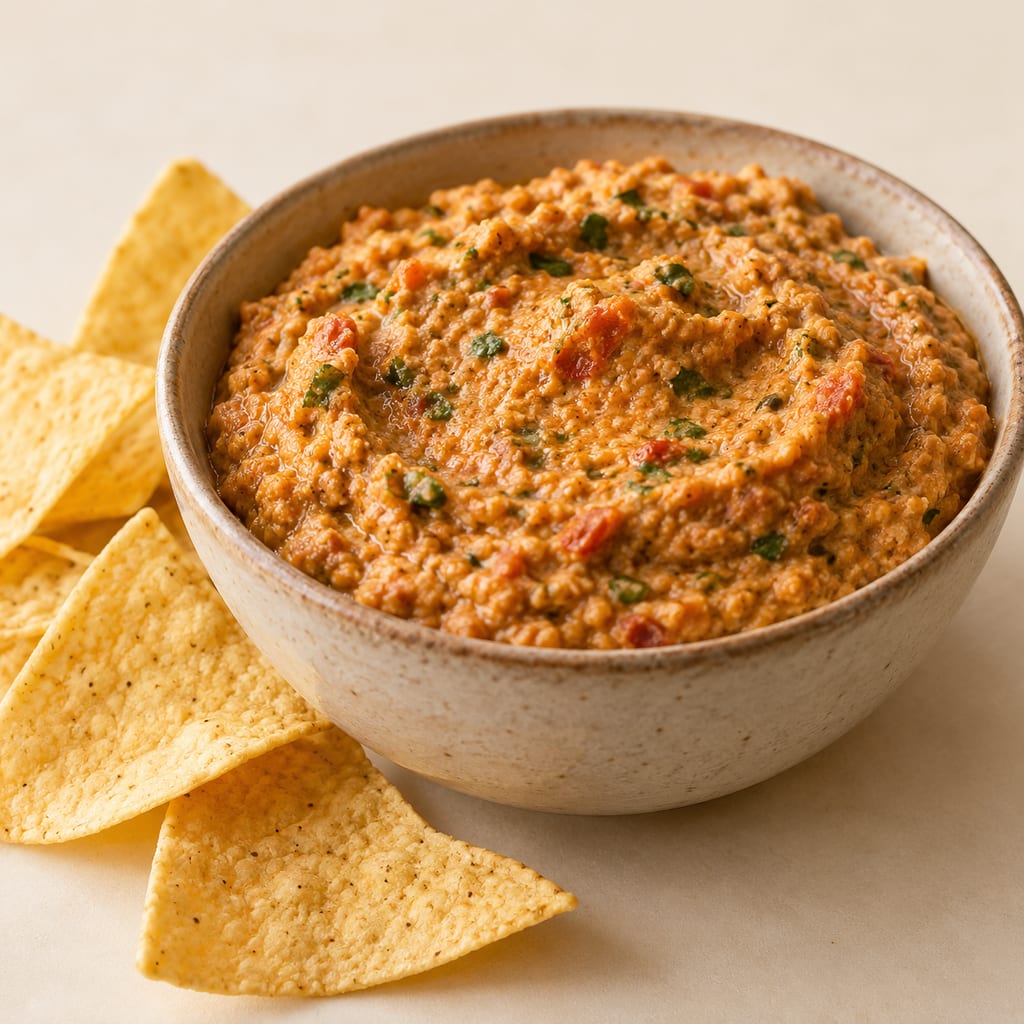
Sikil p’ak is a Yucatecan dip of toasted, ground pumpkin seeds mixed with roasted tomato, habanero, onion and herbs, served with tortilla chips or warm tortillas. Its name is built from Maya words for pumpkin seed and tomato.

Pozol is lime-cooked maize ground to dough, shaped into balls, wrapped in banana leaves and fermented for days, then stirred into water as a sour drink in southeastern Mexico.
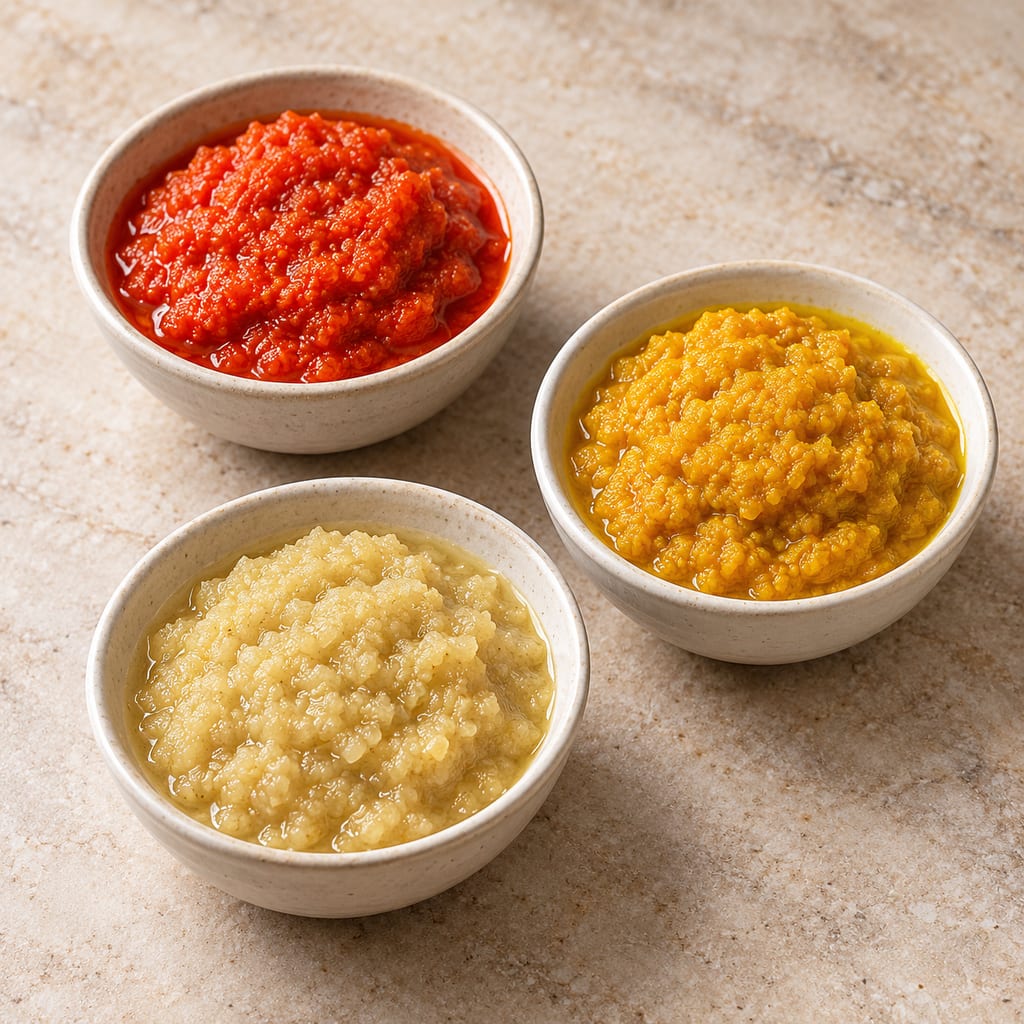
Bumbu dasar are the ground spice bases of Indonesian cooking: a white paste of shallot, garlic and salt, with chile added for red and turmeric for yellow, cooked into dishes.
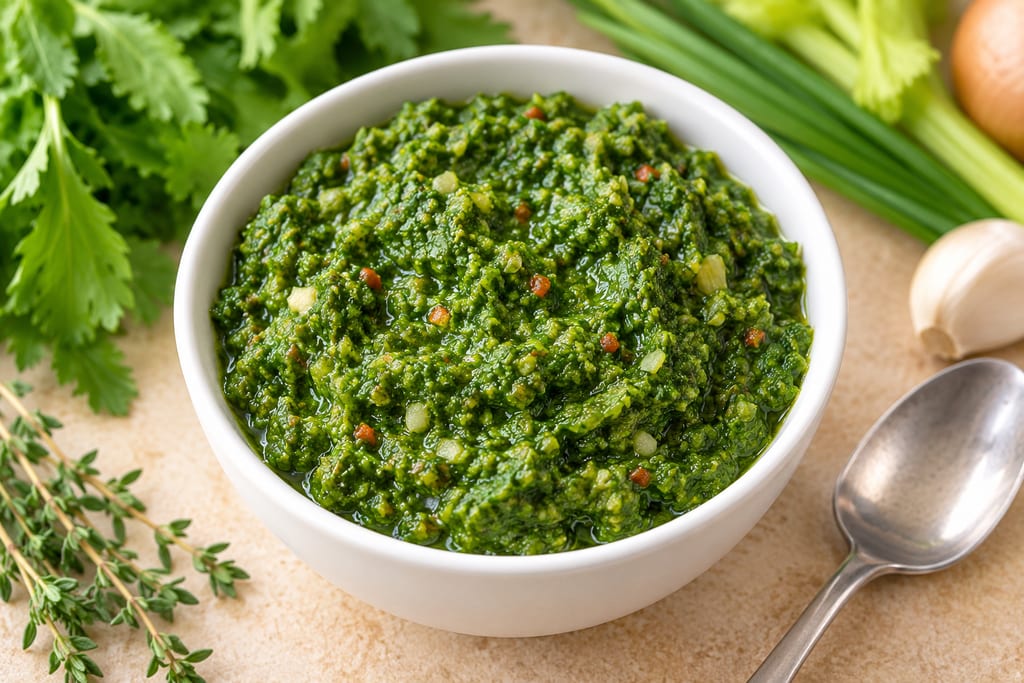
A fresh herb and aromatic paste of chadon beni (culantro), thyme, chives, celery, onion, garlic and peppers, blended with vinegar and water and used as the base for Trinidadian cooking.
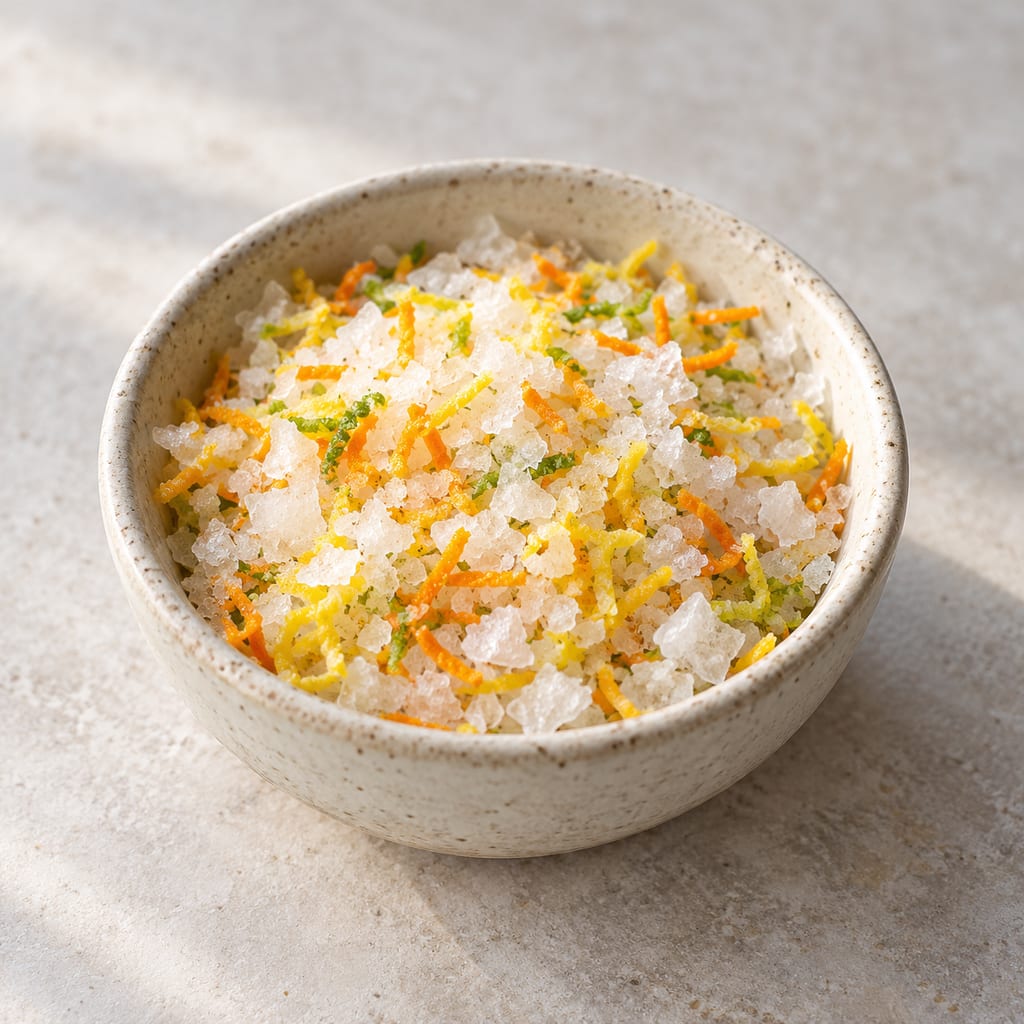
Citrus zest is rubbed into coarse or flake salt and dried on a tray. This peel-based seasoning preserves the chosen citrus aroma without adding juice.
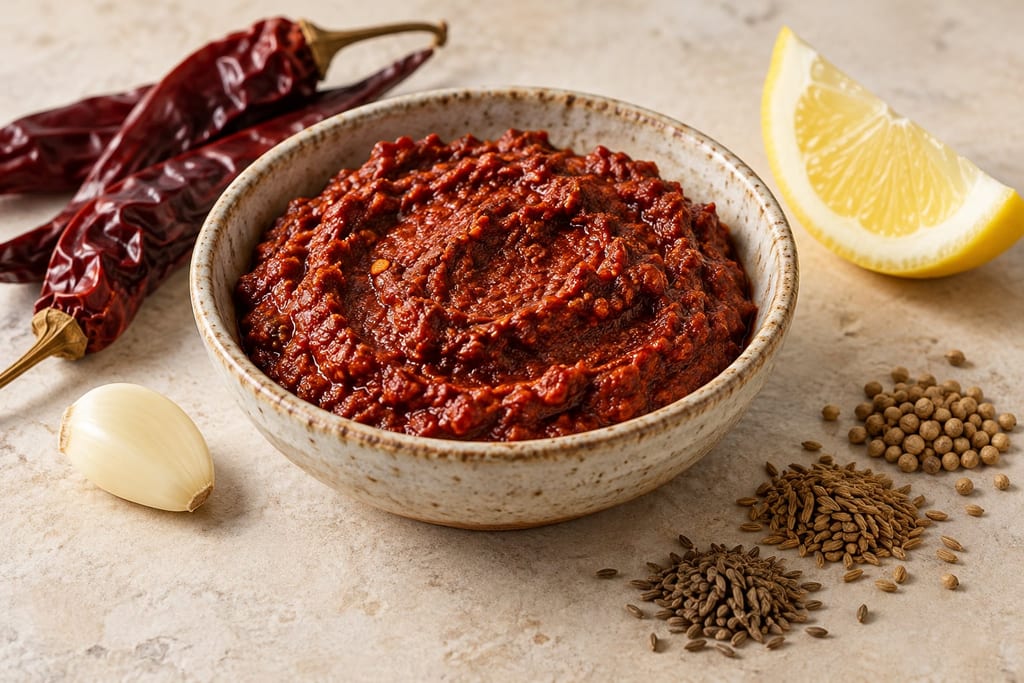
A fresh chilli paste made from rehydrated dried red peppers, garlic, olive oil, lemon and warm spices; this small-batch formula adapts the harissa family rather than reproducing a tested Tunisian method.
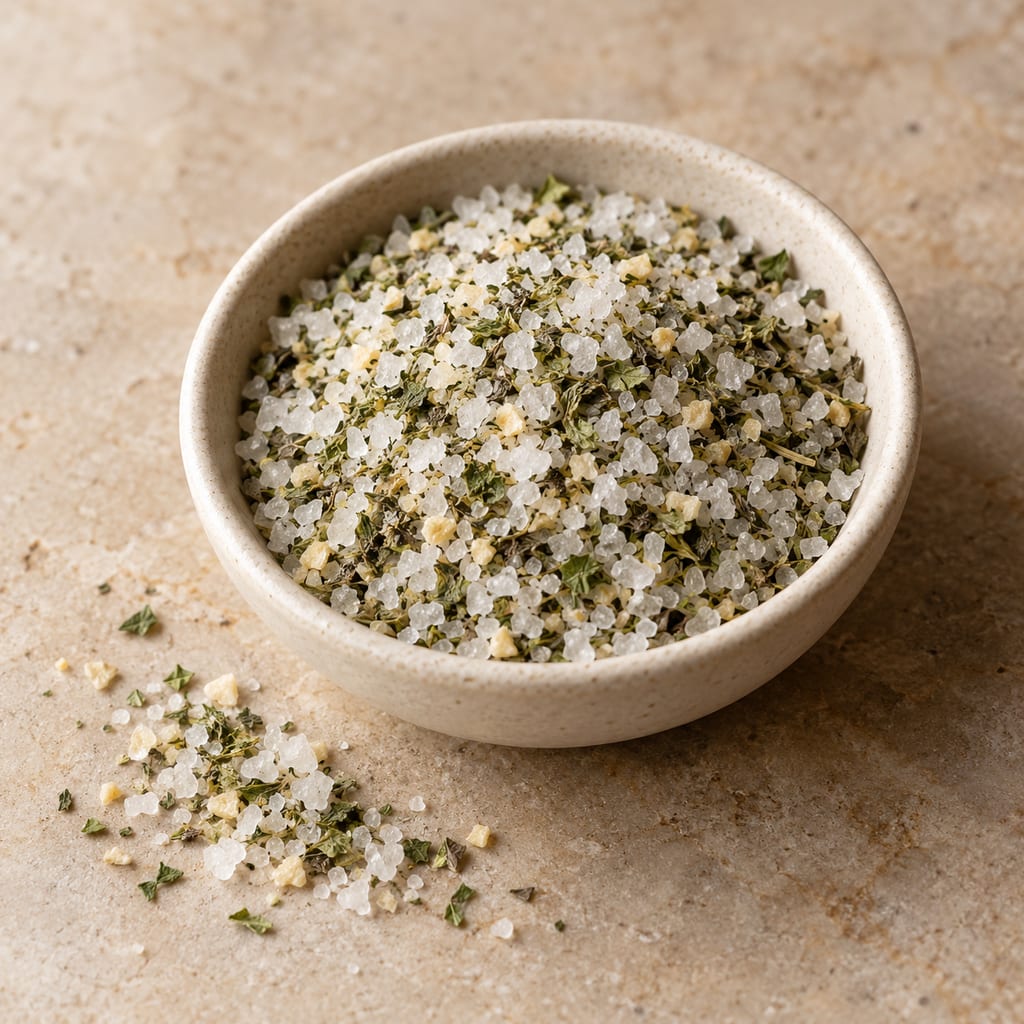
Fresh garlic and pungent herbs are chopped with kosher salt, then dried in the warmth of a switched-off oven. The blend keeps the selected herbs together in one seasoning.
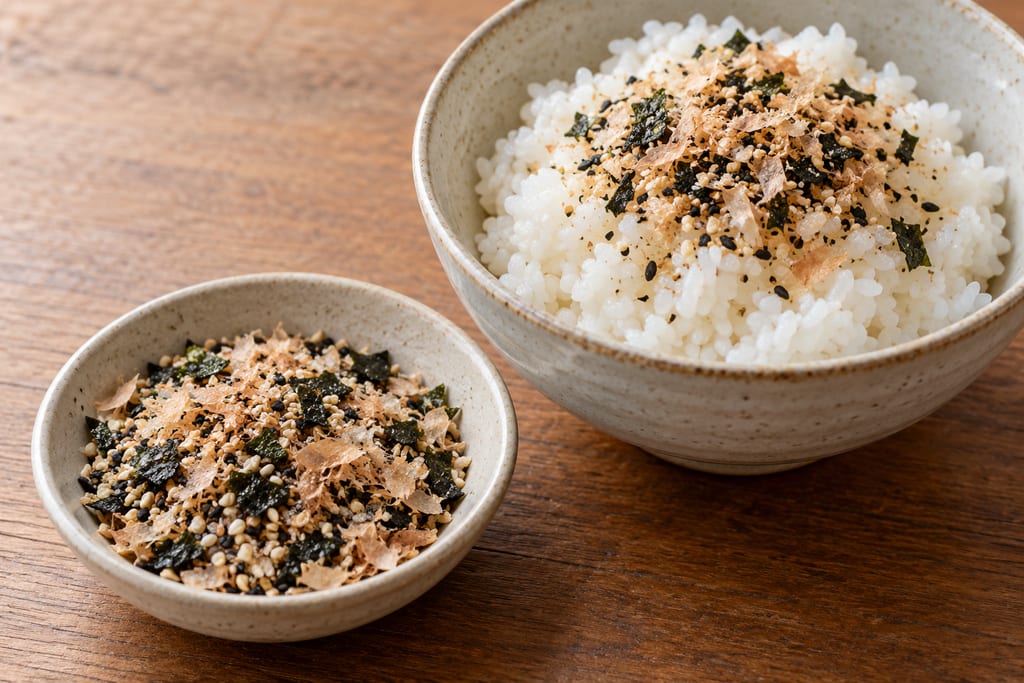
A dry Japanese rice seasoning of sesame, bonito, nori, sugar and salt. This documented home blend is one specific formula within a varied category with several early product histories.
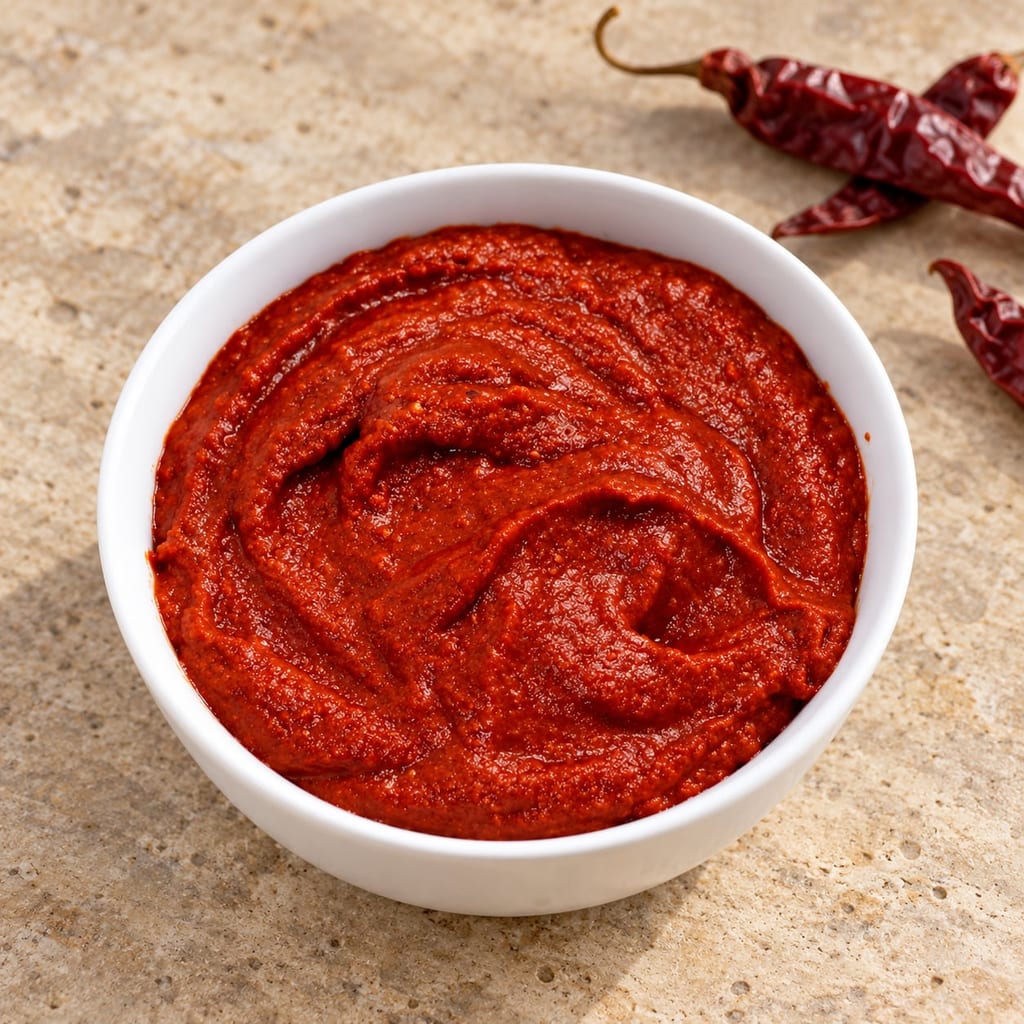
Recheado is a red Goan spice paste of Kashmiri chillies, garlic and spices ground in vinegar, best known as the stuffing for fried fish such as mackerel.
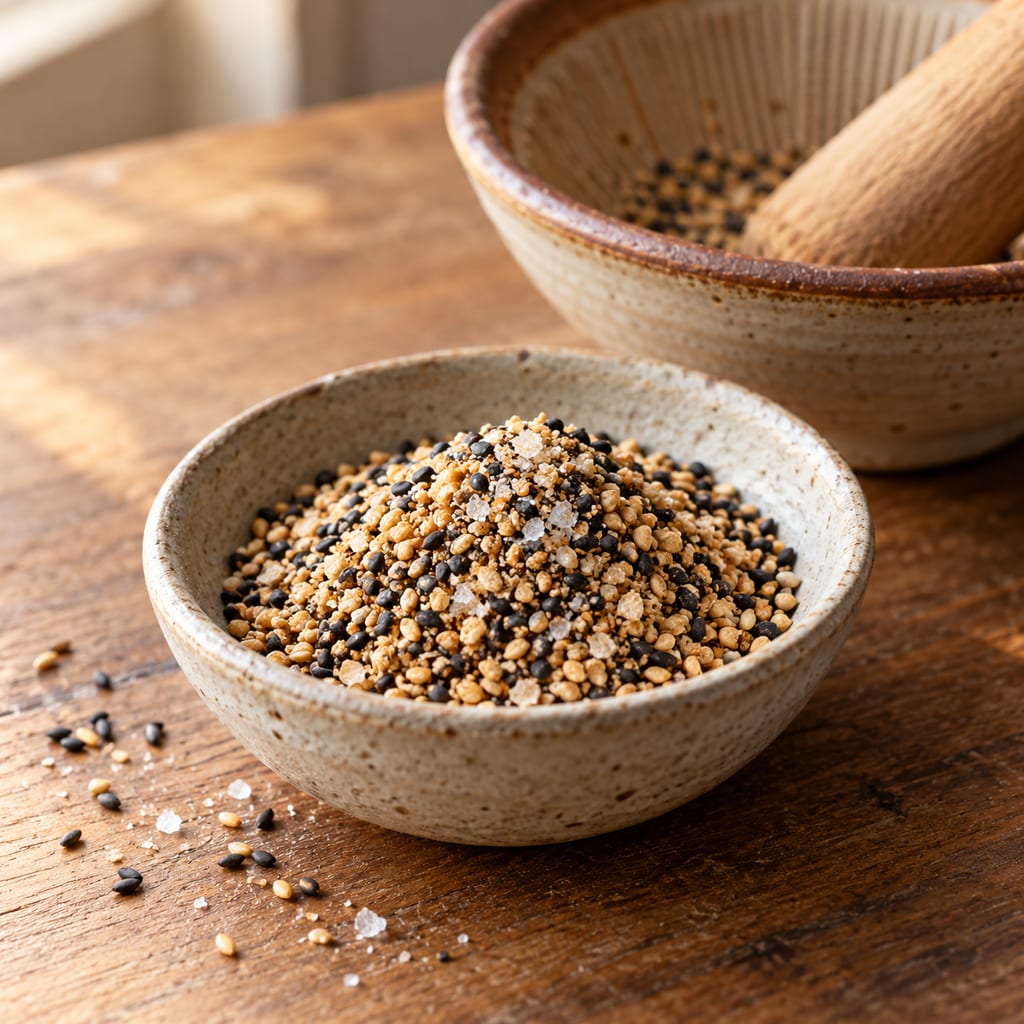
Toasted sesame seeds and sea salt are ground together into a coarse seasoning for rice. This small pan-roasted batch keeps most of the seed texture.
No community contributions have been published for this entry yet.
Sign in to contribute. Published comments and photos are free to read.
Whats4eatsMethod · Ingredients · Yield · Uses · Variations
Recado Rojo (Mexican Yucatecan achiote spice paste)The page gives a measured recipe making about one-half cup from annatto, black pepper, cloves or allspice, Mexican oregano, cumin, cinnamon, salt, garlic and sour orange or vinegar.
It describes grinding the hard annatto seeds, combining spice powder with garlic and sour-orange juice, resting the paste, and optional toasting and ingredient variations.
Cited in: A red seed becomes a Yucatecan recado; Where the colour comes from; One measured home version; At the table; Texture and handling
Larousse CocinaRegional preparation · History · Method · Variations
Recado rojoLarousse identifies recado rojo with Yucatecan achiote paste and attributes one version to Yaxunah, Yucatán.
Its account says repeated hand-milling gives a very soft, almost liquid paste; market pastes are firmer and vendors may use flour, a point the source itself presents as conjecture.
The page gives a separate formula with achiote, Yucatecan oregano, comino, pepper, garlic, chile, sour orange, water and vinegar, and strains its smooth red liquid.
Cited in: A red seed becomes a Yucatecan recado; A plant with a history longer than this recipe; Where the colour comes from; One measured home version; Family likeness, local difference; At the table; Texture and handling
Universidad Autónoma de Yucatán, Facultad de QuímicaIdentity · Regional use · Source limit
Recado rojo: sazón y control de las grasasThe article defines recado rojo as an achiote-seed paste and names cochinita pibil, poc chuc rojo, longaniza and pollo pibil as Yucatecan uses.
The article describes a laboratory study of extracts, not clinical benefits from eating the condiment; no health claim is adopted here.
Cited in: A red seed becomes a Yucatecan recado; A plant with a history longer than this recipe; Family likeness, local difference; At the table; Texture and handling
Secretaría de Agricultura y Desarrollo Rural, Gobierno de MéxicoHistory · Cultural use
Achiote, rojo como la pasión de una naciónThe government article describes pre-Hispanic use of achiote among Maya and Aztec peoples, including seasoning cacao beverages and the use of red pigment in body and ceremonial painting.
It associates current Mexican uses with Yucatán dishes including cochinita and pollo pibil, tamales and panuchos.
Cited in: A plant with a history longer than this recipe; From capsule to kitchen; At the table
Universitat Politècnica de València, Instituto Universitario de Restauración del PatrimonioHistory · Names · Pigment context
Annatto in America and Europe: Tradition, treatises and elaboration of an ancient colourThe 2010 study examines sixteenth- to eighteenth-century New World writing about annatto products and uses.
It records different names for annatto across regions, including Nahuatl achiotl, Zapotec bia, Maya oox and k'uxub, and South American and Caribbean names. These refer to the plant or colorant and do not date this recipe.
Cited in: A plant with a history longer than this recipe; From capsule to kitchen
El Colegio de MichoacánEthnography · Regional variation · Uses
Lógicas del gustoThe ethnographic thesis describes red recado as a Yucatecan spice mixture and records variation in household use, including families who primarily seasoned broths with it.
Its account distinguishes different proportions and roles in cochinita preparations; it does not establish one universal recipe.
Cited in: A plant with a history longer than this recipe; Family likeness, local difference; At the table
Por Esto!Regional method · Uses · Variation
¿Cómo se hace el achiote, el sabroso condimento de Yucatán?The report describes Yucatán achiote paste as recado rojo and records a seed-softening, grinding and citrus-vinegar blending route attributed to Yaxunah.
It names pork for cochinita pibil, tacos al pastor, tamales and red broths; it also reports a dense smooth texture.
Cited in: A red seed becomes a Yucatecan recado; Where the colour comes from; One measured home version; Family likeness, local difference; At the table
Journal of Food Science and Technology / PubMed CentralBotany · Chemistry · Identity
Achiote (Bixa orellana L.): a natural source of pigment and vitamin EThe review describes the seed's red-orange aril and distinguishes food-color annatto extracts from the whole culinary seed.
It identifies bixin as fat-soluble and norbixin as water-soluble, explaining why refined dye manufacture is a separate process from grinding seeds into recado.
Cited in: A red seed becomes a Yucatecan recado; From capsule to kitchen; Where the colour comes from
FoodSafety.gov, U.S. Department of Health and Human ServicesHandling · Safety
4 Steps to Food SafetyThe guidance says to refrigerate perishable foods within two hours, one hour above 90°F, and keep the refrigerator at 40°F/4°C or below.
It is general guidance and does not specify a shelf life for achiote paste.
Cited in: One measured home version; Texture and handling
Tasting TableModern variation · Method comparison
Homemade Achiote Paste RecipeThe 2023 recipe uses citrus juice, garlic, coriander and vinegar with annatto and spices, illustrating a contemporary measured home version.
Its recommended month-long storage is not adopted because the page does not establish a tested safety validation for this product.
Cited in: Family likeness, local difference
Food Safety and Inspection Service, U.S. Department of AgricultureHandling · Safety
Leftovers and Food SafetyThe page gives general rapid chilling guidance for leftovers and refrigerated storage recommendations; these do not test or establish a shelf life for fresh recado rojo.
Cited in: Texture and handling
Servicio Nacional de Inspección y Certificación de Semillas, Gobierno de MéxicoBotany · Cultivation · History
Achiote (Bixa orellana L.)The Mexican seed-service page describes Bixa orellana as a perennial shrub native to the Neotropics and discusses it as a crop in mixed family gardens alongside fruit trees, maize, beans and forest trees.
The page reports a decline in Mexican consumption from 1884 with synthetic colourants and later renewed interest in natural colours; that date concerns consumption, not the origin of recado rojo.
Cited in: From capsule to kitchen