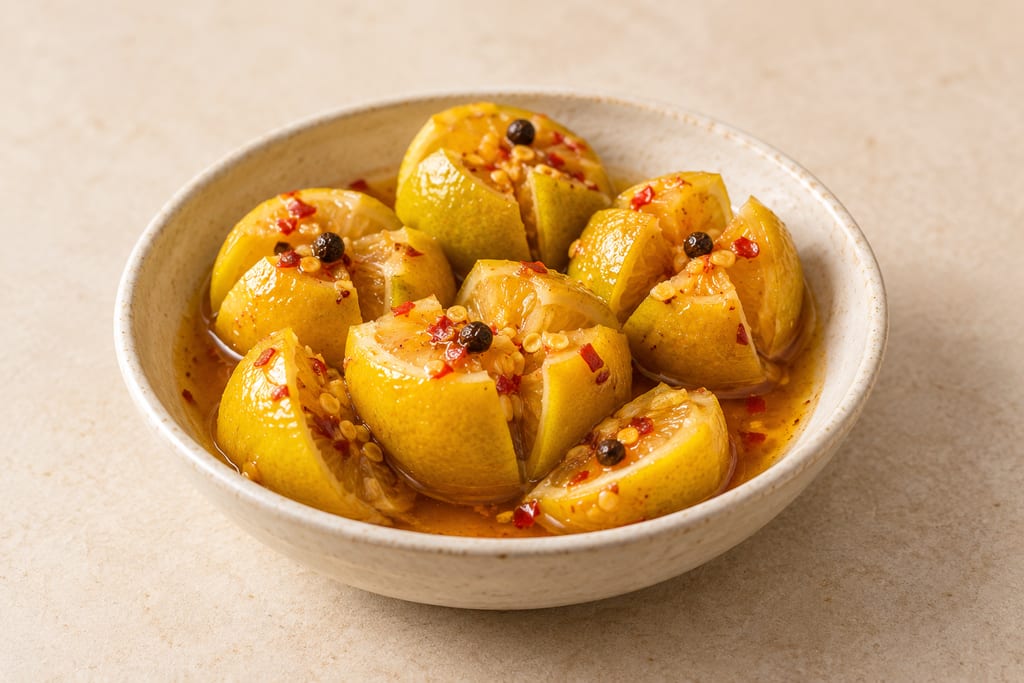
Lime pickle (Peter Kuruvita)
Peter Kuruvita’s published lime pickle stuffs 20 limes with rock salt, then simmers them in vinegar, sugar and chilli before a two-week rest.
 FermenteaWhere food goes to change
Spices and aromatics
Black peppercorns are dried fruits of Piper nigrum, valued for piperine pungency and volatile aroma; whole peppercorns season Peter Kuruvita's lime pickle.
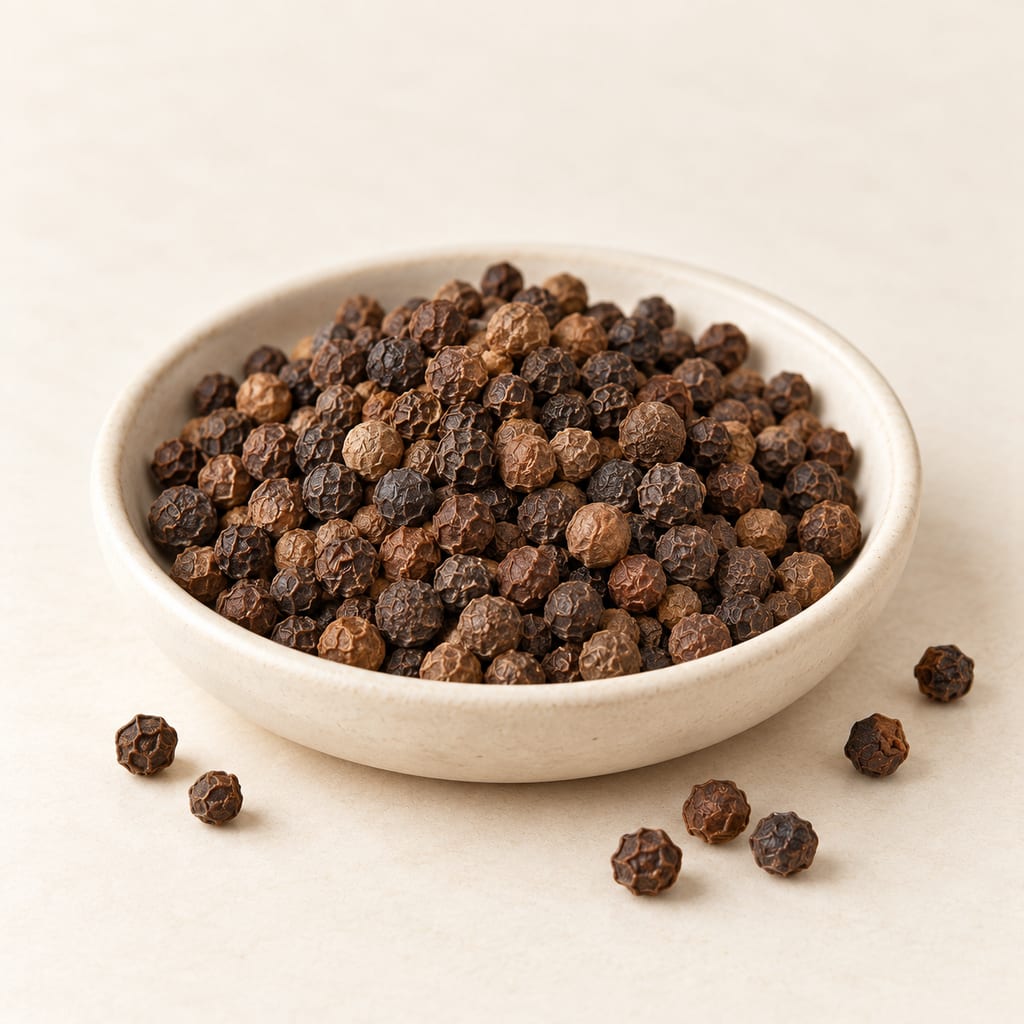
A black peppercorn is a dried fruit of Piper nigrum, a woody tropical climber in the pepper family, Piperaceae. Each tiny, nearly spherical fruit develops on a hanging spike. It begins green, reddens as it ripens, and has one seed inside a thin outer fruit wall. The familiar black peppercorn is harvested at the mature-but-still-green stage and dried; the fruit darkens and wrinkles as it loses water. In the jar it is hard and light, with a woody, warm, resinous smell. Bite one and its slow, unmistakable heat builds across the tongue. That heat is only part of its character: pepper also supplies a volatile, fragrant note that makes it smell as much as sting.
Black, white and green peppercorns are not three species. They are different harvest and processing forms of P. nigrum. Black pepper retains its dried fruit wall; white pepper is made from riper fruit after the outer flesh is removed, often by soaking; green pepper is picked unripe and preserved or dried before it darkens. The resemblance of their names to chilli peppers is misleading: chillies are Capsicum, in another plant family. Pink pepper is also unrelated, usually coming from Schinus, while Sichuan pepper belongs to Zanthoxylum. The word “pepper” has gathered several pungent plants under one kitchen name, but whole black peppercorns have a botanical identity of their own.
For the kitchen, “whole” matters. The closed fruit releases its aroma more gradually than a cracked or ground form. Crushing opens it, increasing the area exposed to air and heat and releasing fragrant volatile compounds quickly. Pepper's bite is associated chiefly with piperine, a non-volatile alkaloid; its aroma comes from an essential-oil mixture. A research study comparing grinding methods found that processing and subsequent storage changed measured piperine and essential-oil levels, with outcomes dependent on the grinding method. This does not establish a universal shelf-life or prove that every ground pepper loses aroma at the same rate. It does explain why a recipe that specifies whole peppercorns should not be silently rewritten as ground pepper: the two forms disperse differently and meet the food differently.
Pepper’s long history is a history of cultivation and movement, not a simple tale of a spice “discovered” by one people. The first-century Periplus of the Erythraean Sea, a merchant’s account of ports and trade across the Red Sea and Indian Ocean, describes pepper among commodities available on India’s coast and names Muziris, a Malabar emporium, in its trading geography. Pliny the Elder, writing in the first century CE, discusses pepper as an Indian import, differentiates black, white and long pepper, complains about its cost, and records the Roman appetite for it. His botanical explanations are not reliable modern botany, but his irritation is revealing: pepper was already a valuable, familiar commodity in Rome, arriving through an extensive commercial chain.
This evidence does not tell us when people first used pepper, or identify the first grower. It shows that pepper was established in Indian Ocean trade by the early Roman imperial period. Much later, European attempts to reach the pepper-producing coast by sea altered the balance of trade and empire. Vasco da Gama’s 1498 arrival at Calicut belongs to that story of European maritime expansion; it did not mark pepper’s discovery or the beginning of its trade. The demand already rested on Asian cultivation, port networks and the knowledge of merchants and sailors moving goods between India, Arabia, East Africa and the Mediterranean.
The crop’s botanical homeland is itself described with different levels of precision in reference sources. Kew’s taxonomic database accepts Piper nigrum and describes its native range as Sri Lanka, while the linked Kew species-profile text says black pepper is native to India’s Western Ghats, Kerala. The Indian Spices Board likewise describes it as mostly found in southern India. These statements should not be flattened into a confident single-origin claim: “native range” in a taxonomic record and a crop’s long history of cultivation are not identical questions, and the historical record does not settle the plant’s earliest domestication. The evidence securely places black pepper within the humid tropical South Asian world and documents its early export from India’s Malabar coast; it does not give a precise village, date or single inventor.
Pepper’s value also changed with supply. In English legal language, “peppercorn rent” means a nominal rent: Oxford traces the term to the practice of stipulating a peppercorn as token payment, and the University of Texas law library discusses pepper used as contractual consideration in historical English records. This legal convention is not evidence that pepper was always beyond ordinary use. The plant requires tropical growing conditions and its fruits must be harvested and dried; Kew records cultivation across tropical regions, including India, Vietnam, Indonesia and Brazil. A spice that moved through long-distance trade is now an everyday table condiment, though origin and processing can still shape its character.
The peppercorn on the table is not a seed that has been roasted black. It is a fruit whose skin and outer tissues darken and wrinkle during drying. In commercial processing, black pepper is typically made from the mature green fruits, which are dried after harvest. White pepper follows another route: riper fruits are soaked or retted so their outer flesh can be removed, leaving the pale seed. Green pepper is harvested earlier and kept green through brining, pickling or drying. The timing and treatment alter not just colour but flavour and pungency, so “peppercorn” alone is not always enough information when a recipe depends on a particular kind.
The point of whole peppercorns is not that the whole fruit is inert. Their volatile oils and piperine are present in the spice, but the intact exterior slows their release into a dish. A mortar, knife or mill breaks that surface. In a liquid or pickle, whole peppercorns can remain discrete, releasing flavour into the surrounding brine while retaining their shape. Cracked pepper exposes more surface and distributes more readily. Fine ground pepper disperses through liquid and can make each mouthful more uniformly peppery. Those are practical differences, not an assertion that one form is universally stronger: cultivar, maturity, storage and dose all affect the result.
A 2018 food-science study measured black, white and green pepper processed by cryogenic grinding and hammer milling. It found differences in measured chemical constituents, including piperine and essential oil, between treatments; the paper discusses heat generated by milling as one possible factor. Its samples and equipment do not define what happens in every home grinder. The useful lesson is narrower: grinding is a physical transformation with measurable consequences, and “ground pepper” is not simply whole pepper made smaller without change. Whole peppercorns also tolerate cooking in a different way because their flavour leaves the fruit gradually. There is no need to invoke fermentation or a special preserving action by the spice to explain its role in a pickle.
A clear contemporary example appears in Peter Kuruvita’s Serendip: My Sri Lankan Journey, published by Murdoch Books in 2009. Its lime pickle calls for twenty limes, 250 grams of rock salt, twenty whole black peppercorns, white vinegar, 400 grams of caster sugar and dried chilli flakes. The limes are quartered without separating the base; salt and peppercorns are stuffed inside. The reserved juice joins the vinegar, sugar and chilli in a saucepan. The fruit is simmered until yellow, cooled, loosely packed into two sterilised one-litre jars, covered with the cooking liquid and kept in a cool, dark place for at least two weeks before use. These are the book sample’s instructions, not a food-safety validation.
The book version is not the same as the magazine adaptation. Australian Gourmet Traveller published an edited version on 23 April 2009, listing half a teaspoon of black peppercorns and 500 grams of caster sugar; it also gives a 30–35 minute cooling interval. The book sample instead specifies twenty whole peppercorns, 400 grams of sugar and simply says to cool. Both versions stuff peppercorns with salt inside the limes, but only the book sample explicitly specifies that they are whole. The amounts and some instructions differ, so the two publication versions should remain separate rather than be silently blended. Neither source establishes that the peppercorns ferment the pickle or make it safe to keep.
Other Sri Lankan accounts make the diversity plain. A 2013 home-cooking recipe for lunu dehi describes a mother’s method: salt the cut limes, expose them to sunlight over several days, then add lime juice with turmeric, fenugreek and optional chilli. It does not use Kuruvita’s vinegar-and-sugar simmer or list black peppercorns. A separate account in Explore Sri Lanka describes salt-stuffed limes dried repeatedly in the sun and also mentions an “instant” boiled version using peppercorns among a broader set of ingredients. These are distinct methods and genres: a family recipe shared online, a food-magazine account of a chef’s book recipe, and a travel-food feature. Their differences are evidence of variation, not permission to combine them into a supposed universal formula.
Pepper is only one member of a larger Sri Lankan spice vocabulary. In Kuruvita’s recipe, the limes bring sourness and fragrance; salt and the hot liquid shape the seasoning; vinegar and sugar make a sharp-sweet syrup; chilli adds a more immediate heat. Pepper contributes a second kind of warmth, aromatic and lingering. A few whole peppercorns can be noticed individually against the citrus. The contrast between these ingredients is part of why the recipe specifies a small amount rather than treating pepper as an undifferentiated powder.
Choose pepper by the form a recipe asks for. Whole black peppercorns should be recognizable as small, dark, wrinkled fruits; white pepper is pale and lacks the same outer fruit layer, and green pepper is deliberately kept from the fully dried black form. A labelled origin can be useful, but the name of a region is not a guarantee that every lot has identical pungency or aroma. If a recipe calls for whole peppercorns, keep them whole for the intended texture and gradual release. If substituting cracked or ground pepper, understand that it will disperse differently and can make the liquid or filling taste more evenly peppery; there is no reliable universal conversion from either Kuruvita publication’s whole-pepper measure to a ground form without testing the dish.
Peppercorns appear in cuisines around the world because they work in many contexts: whole in a simmering liquid, cracked over a dish, ground into a spice mixture, or steeped with meat, vegetables or pickles. Their pungency and aroma keep them useful as an everyday table condiment, though Pliny records that pepper was imported into Rome and sold by weight. In a curry meal, a lime pickle can act as a bright, sharp counterpoint to the sauced dishes. Kuruvita’s version is one route to that contrast: citrus with salt, sweet-sour cooking liquid and a small, distinct pepper note.
Documented recipe association; not a claim of the ingredient's origin.
Peter Kuruvita’s published lime pickle stuffs 20 limes with rock salt, then simmers them in vinegar, sugar and chilli before a two-week rest.
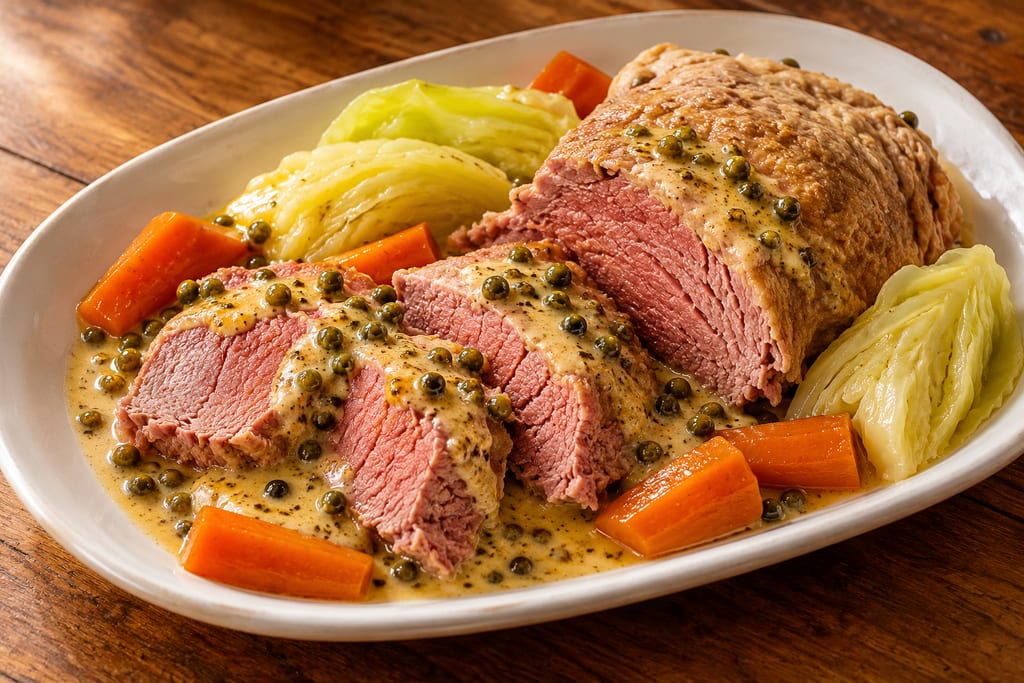
A Karoo-style festive dish of already cured salt beef simmered with vegetables and aromatics, served with a cream sauce of brined green peppercorns and wholegrain mustard.
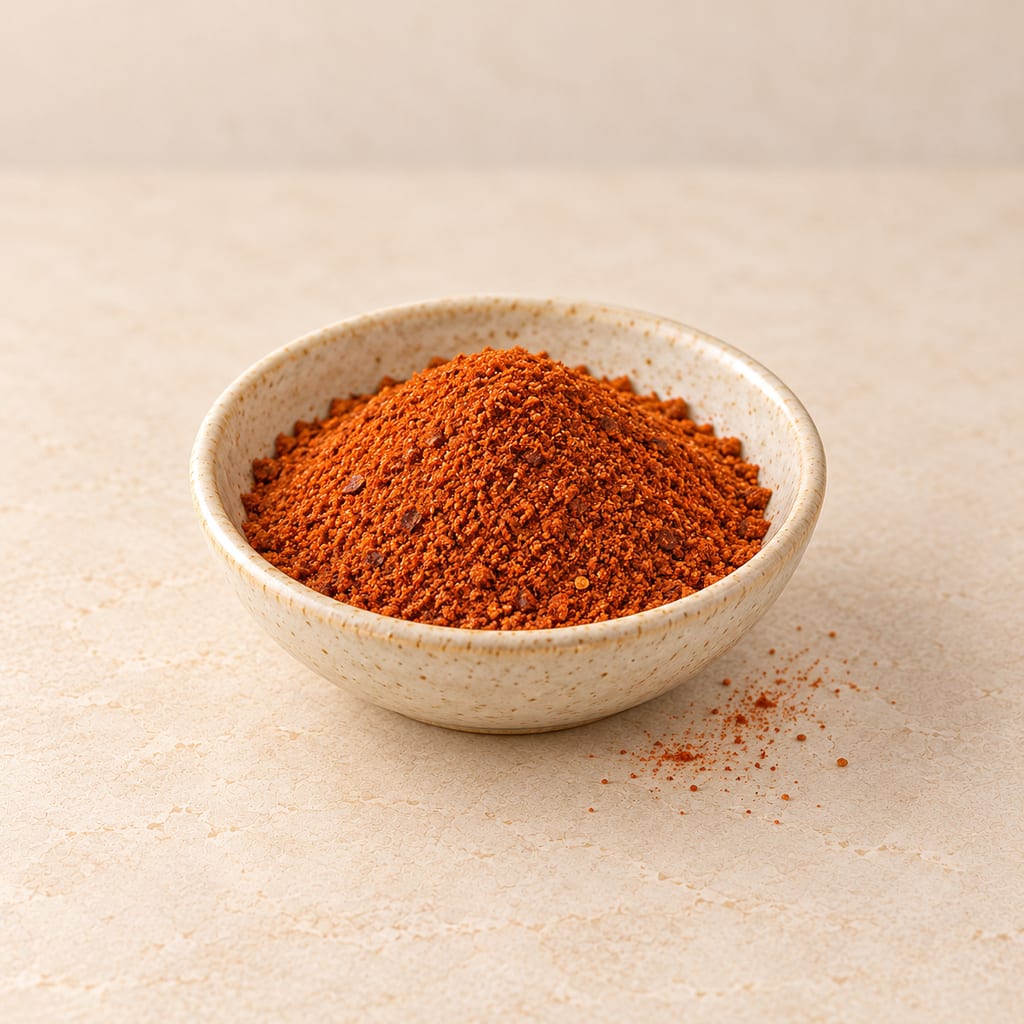
Chilli powder is dried chilli fruit ground fine, sold either as plain ground chillies or, in the United States, as a seasoning blend with salt, garlic and cumin.
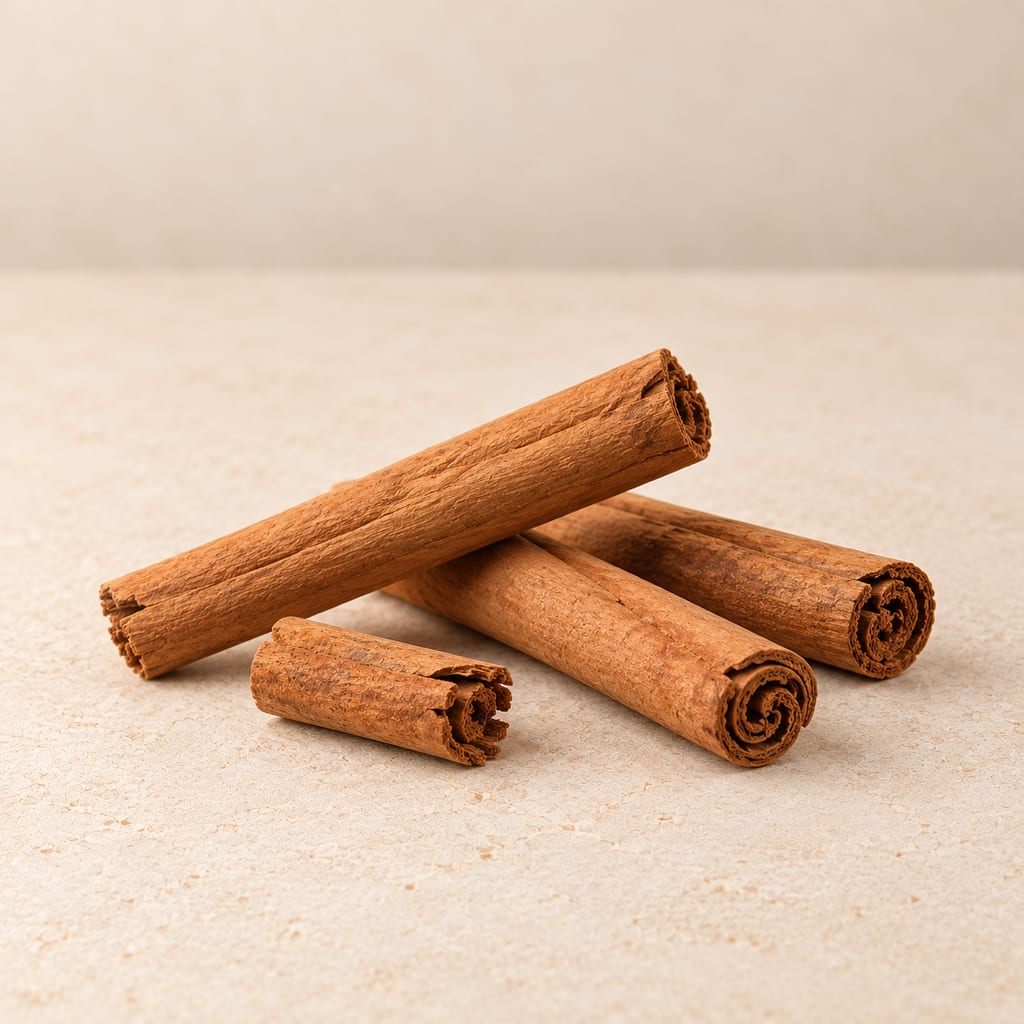
Cinnamon is the dried inner bark of Cinnamomum trees, rolled into quills or ground; Ceylon cinnamon comes from C. verum of Sri Lanka and cassia from related species.
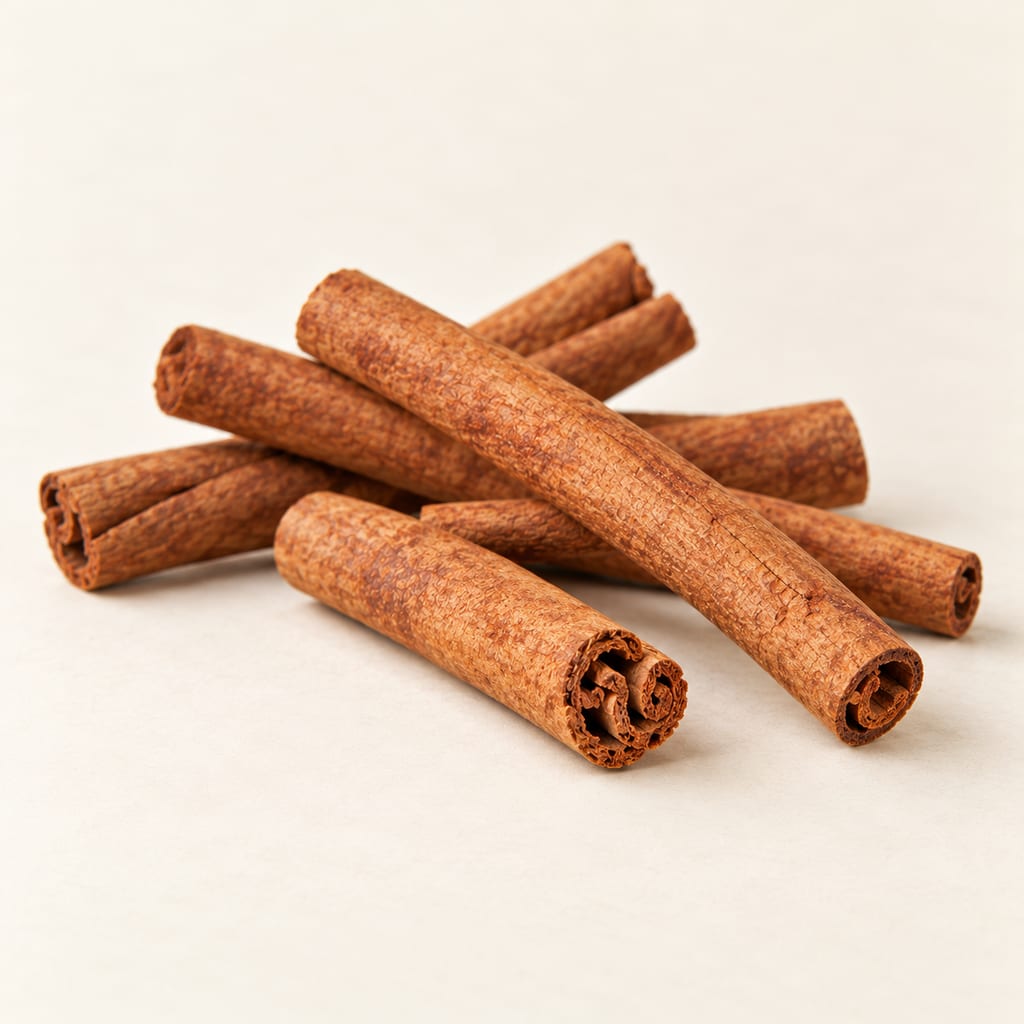
Cinnamon sticks are dried inner bark curled or layered into quills. The common name covers several Cinnamomum species; whole bark perfumes food and drink.
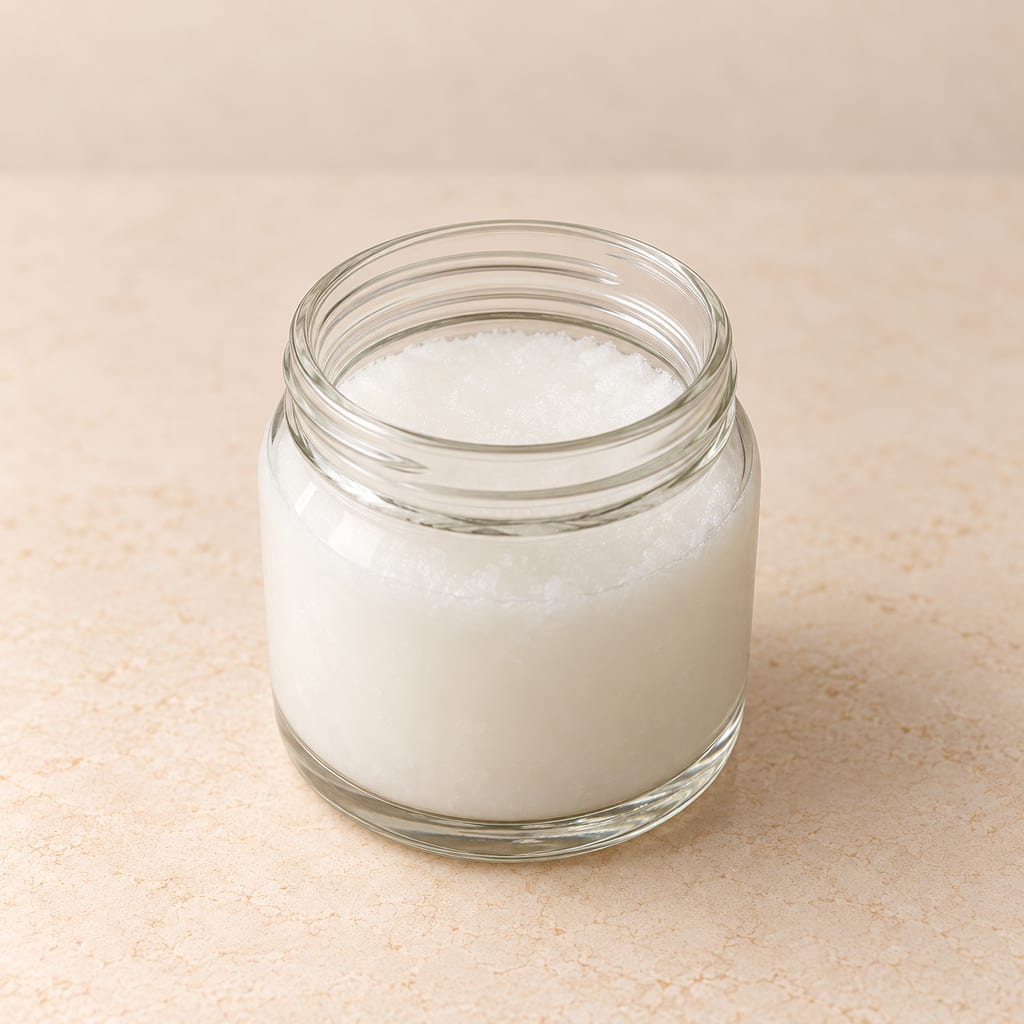
Fat pressed or separated from the kernel of a mature coconut: solid below about 25 °C, mostly saturated and half lauric acid, sold virgin, refined or hydrogenated.
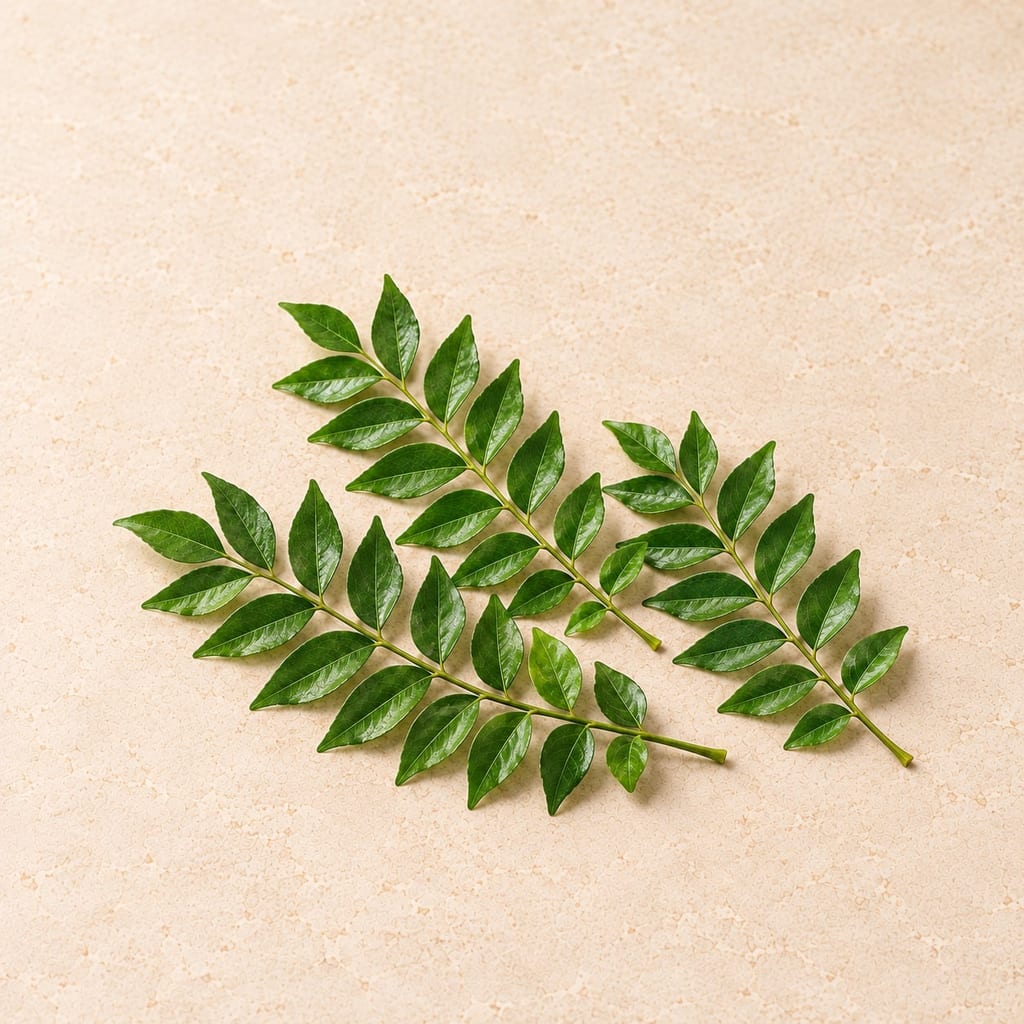
Curry leaves are the glossy compound leaves of the curry tree, Bergera koenigii, used fresh across southern India and Sri Lanka. Fried in hot oil they give a citrusy, nutty, faintly smoky note.
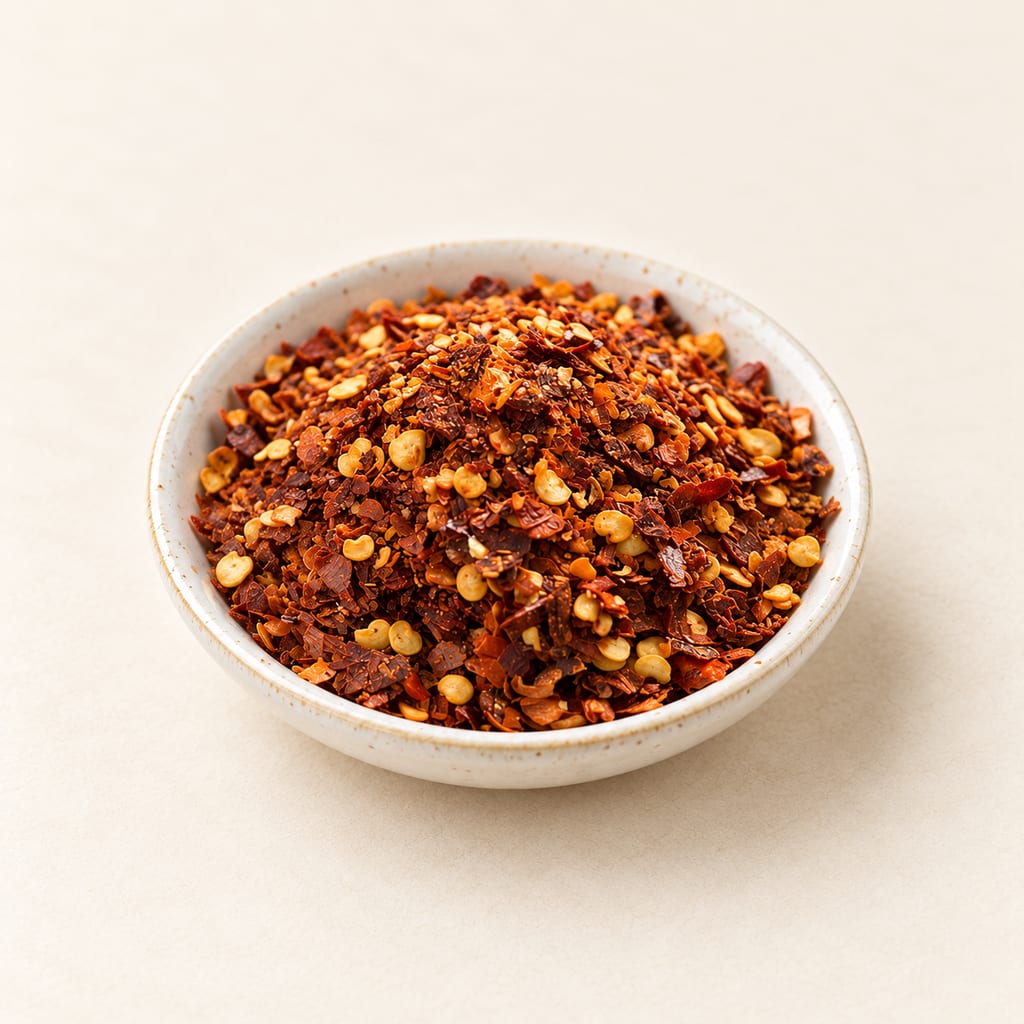
Dried chilli flakes are broken dried Capsicum fruit used for dispersed heat, colour and flavour; Peter Kuruvita's lime pickle includes one teaspoon.
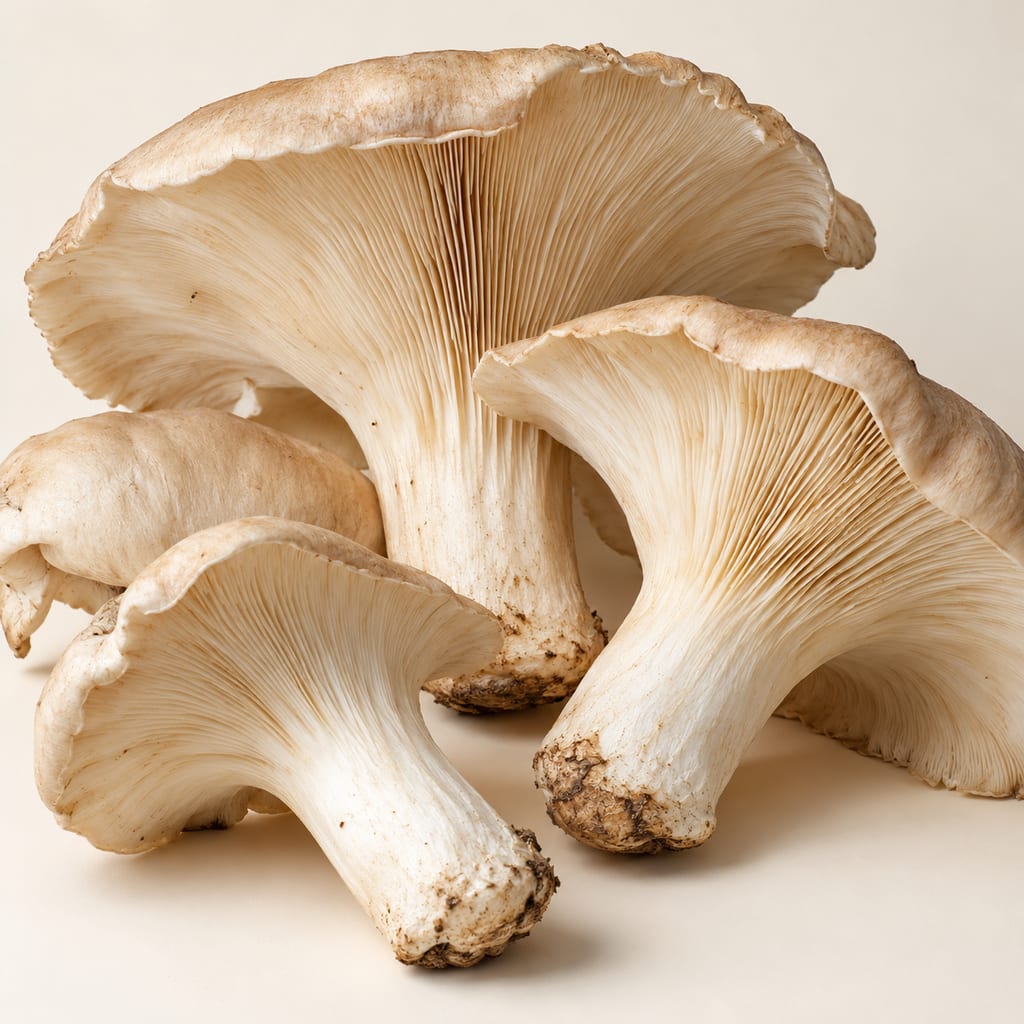
The giant oyster, Pleurotus giganteus, is a large tropical wild mushroom that was once named Lentinus giganteus and is now placed in the oyster genus, eaten in Thailand and Sri Lanka and only recently grown on purpose.
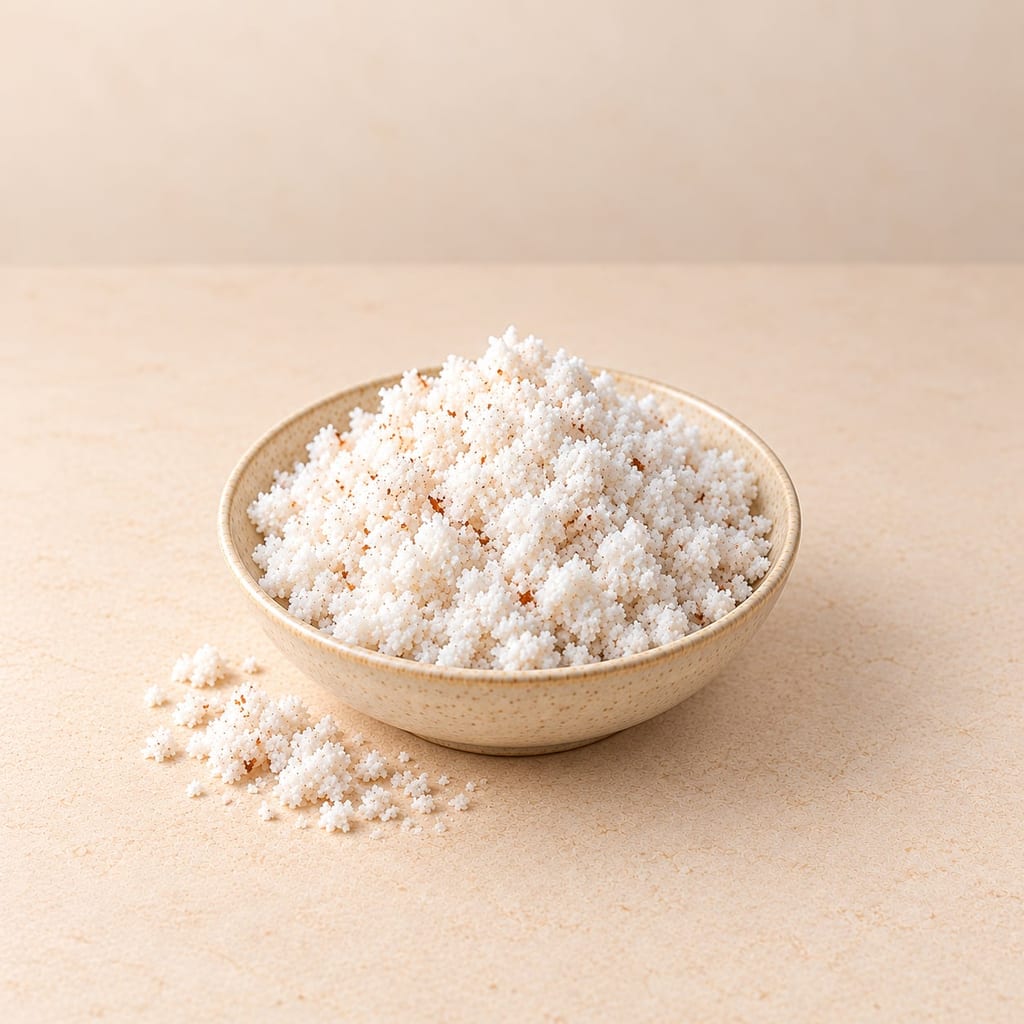
The shredded white kernel of a mature coconut, used fresh or thawed from frozen in sambols and chutneys; its lauric-acid fat is rich and the moist meat is perishable.

At North Abydos in Egypt, a fixed early Dynastic brewery comprised parallel semi-subterranean installations with rows of ceramic mash vats; excavation reports revise their number, scale and estimated batch capacity.

Ají amarillo is the orange-yellow Peruvian chilli cultivar group of Capsicum baccatum, used to colour and season huancaína sauce and ají de gallina. Published heat estimates do not establish one range for the named cultivar.

Toasted almonds are whole sweet almond kernels dry-roasted until golden to brown. Heat replaces their marzipan note with a roasted, nutty one; they thicken and flavour romesco.

Kodiak salmon, halibut and cod cut as seg'aq and hung on an initaq rack to become tamuuq, with kac'amaasaq and kupcuunaq named as different results.

Aniseed is the dried ripe fruit of Pimpinella anisum, an aromatic Apiaceae spice commonly called a seed. It adds a sweet, warm aroma to breads such as Moroccan krachel and South African mosbolletjies, and is distinct from star anise.

A fixed Late Chalcolithic installation in Areni-1 cave combined a shallow clay pressing basin with a large jar set into the cave floor and storage vessels nearby.

Ripe avocado flesh is the soft, buttery, fat-rich pulp of Persea americana, eaten raw. It is low in acid, so it is a fresh ingredient that needs care in chilled dishes.

A portable dome and pan used over a hearth, with embers on the lid and heat from below. Regional peka and saç forms share this principle while differing in materials, pan shape and how the food is cooked.
No community contributions have been published for this entry yet.
Sign in to contribute. Published comments and photos are free to read.
Oxford University Press, Oxford Scholarship Online, The European Discovery of the Indian FloraEditorial
The First European SettlementsDa Gama's arrival at Calicut in May 1498 and later departure with spices, including pepper
Cited in: A spice with a history, not a single origin story
University of Washington, Silk Road Texts; digitized from Schoff translation, Longmans, Green, and Co.Editorial
The Voyage around the Erythraean Sea (The Periplus of the Erythraean Sea)Mid-first-century text's trade geography
Muziris listed among leading market towns
Pepper exported in quantity from a named district near the markets
Sea route context and seasonal winds
Cited in: A spice with a history, not a single origin story
Explore Sri LankaEditorial
Lunu Dehi: a Friendly ZestAccount distinguishes repeated sun exposure and salt stuffing from an instant boiled lunu dehi containing peppercorns
Cited in: Whole peppercorns in Kuruvita’s lime pickle
Food Science & Nutrition, Wiley; PubMed Central open-access full text, PMCID PMC5976597Editorial
Pulverizing processes affect the chemical quality and thermal property of black, white, and green pepper (Piper nigrum L.)Cryogenic grinding versus hammer milling comparison
Measured effects on piperine and essential oil
Effects after the study's storage at 4°C for six months
Study-specific explanation of heating/volatile-retention pathway
Cited in: A wrinkled fruit, not a pepper seed; What drying creates; In the pantry and at the table
Royal Botanic Gardens, KewEditorial
Piper nigrum L. | Plants of the World OnlineAccepted species Piper nigrum L. and family Piperaceae
Kew POWO record's Sri Lanka native range wording
Climbing habit and wet tropical biome
Black, white and green pepper forms and distinctions from other pepper plants
Fruit stages and processing descriptions
Cited in: A wrinkled fruit, not a pepper seed; A spice with a history, not a single origin story; What drying creates; In the pantry and at the table
A Taste of Sri Lankan cuisine (home-cooking blog)Editorial
Lime pickleFamily recipe account identifying the method as the writer's mother's
Salted quartered limes, sunlight exposure, lime juice, turmeric, fenugreek and optional chilli
Approximately 15-day stated preparation time
Cited in: Whole peppercorns in Kuruvita’s lime pickle; In the pantry and at the table
Peter Kuruvita; Murdoch Books, 2009Editorial
Serendip: My Sri Lankan Journey (publisher sample)Book's 20 whole black peppercorns, 250 g rock salt, 400 g caster sugar, 20 limes, vinegar and dried chilli flakes
Salt and whole peppercorns stuffed in lime quarters
Simmer until yellow, cool without stated duration, jar, and stand at least two weeks
Makes two 1-litre jars
Author explains recipe variation within Sri Lankan food in preface
Cited in: Whole peppercorns in Kuruvita’s lime pickle
Tarlton Law Library, University of Texas at AustinEditorial
Peppercorn RentPeppercorn used as contractual consideration and nominal rent in English legal practice
Cited in: A spice with a history, not a single origin story
FoodepediaEditorial
Serendip – Peter KuravitaFoodepedia's 16 June 2009 book review identifies Peter Kuruvita's Serendip and lists Murdoch Books as the book publisher.
Cited in: Whole peppercorns in Kuruvita’s lime pickle
Australian Gourmet TravellerEditorial
Peter Kuruvita’s lime pickleTwenty limes
Half teaspoon whole black peppercorns with rock salt stuffed into cut limes
Vinegar, sugar and chilli liquid; simmer, pack in jars, wait at least two weeks
Recipe's attribution to Peter Kuruvita and Serendip
Cited in: Whole peppercorns in Kuruvita’s lime pickle; In the pantry and at the table
Spices Board India, Ministry of Commerce and Industry, Government of IndiaEditorial
PepperPiper nigrum L., Piperaceae
Commercial part is fruit
Climbing perennial vine and spike description
Southern Indian cultivation context
Cited in: A wrinkled fruit, not a pepper seed; What drying creates
Oxford Advanced Learner's DictionaryEditorial
peppercorn rent nounPeppercorn rent means very low rent
Word origin is the practice of stipulating a peppercorn as nominal rent
Cited in: A spice with a history, not a single origin story
Perseus Digital Library, Tufts UniversityEditorial
Pliny the Elder, The Natural History, Book XII: The Natural History of Trees, Chapter 14Pliny's discussion of Indian pepper imports and Roman demand
His distinctions of black, white and long pepper and prices
His report of adulteration
Editorial note documents inaccuracies in his botany
Cited in: A spice with a history, not a single origin story; In the pantry and at the table
Food Chemistry, Elsevier, volume 456, article 139980Editorial
Preparation, pungency and bioactivity transduction of piperine from black pepper (Piper nigrum L.): A comprehensive reviewPiperine derived from black pepper is responsible for pungent sensation
Cited in: A wrinkled fruit, not a pepper seed; What drying creates; In the pantry and at the table