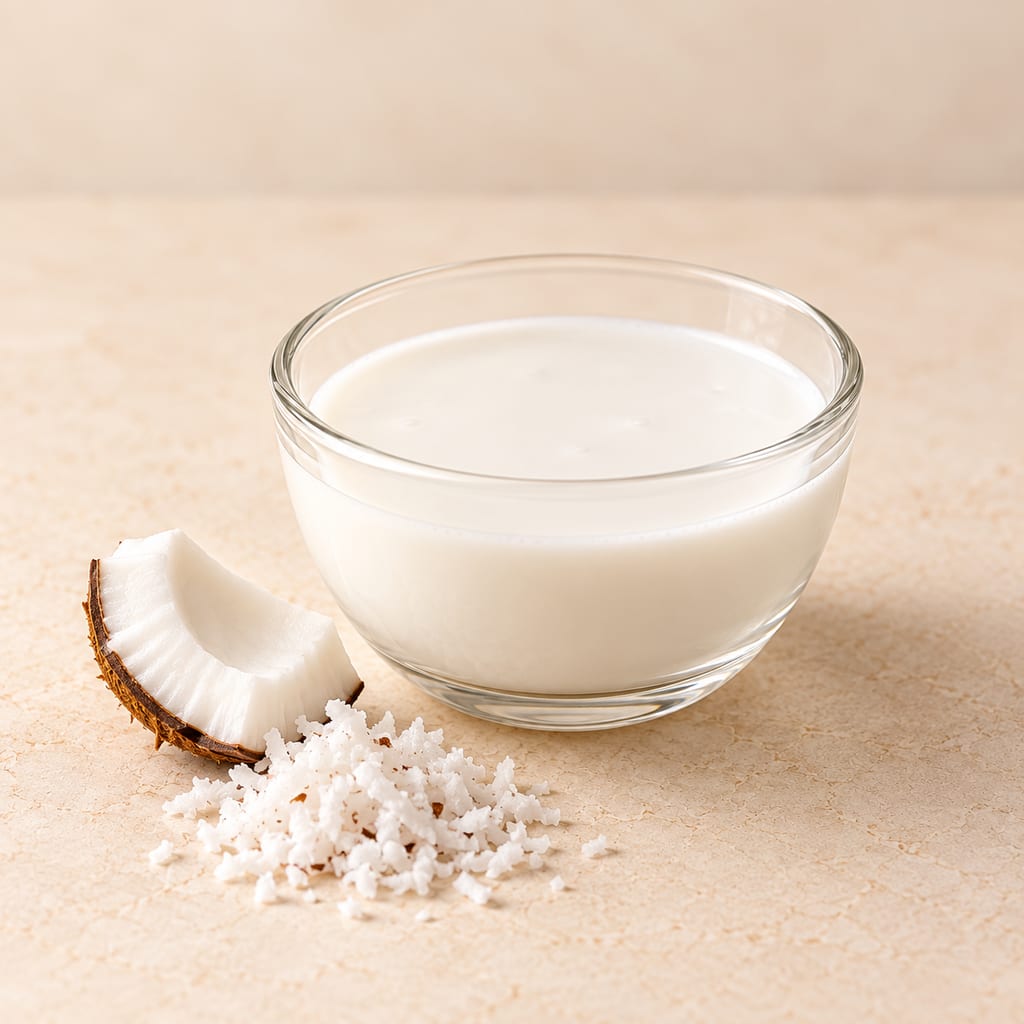
Coconut milk
Coconut milk is an aqueous emulsion extracted from mature coconut kernel, sold fresh, packaged or reconstituted. It is distinct from the liquid naturally inside a coconut.
 FermenteaWhere food goes to change
Fat or oil
Fat pressed or separated from the kernel of a mature coconut: solid below about 25 °C, mostly saturated and half lauric acid, sold virgin, refined or hydrogenated.
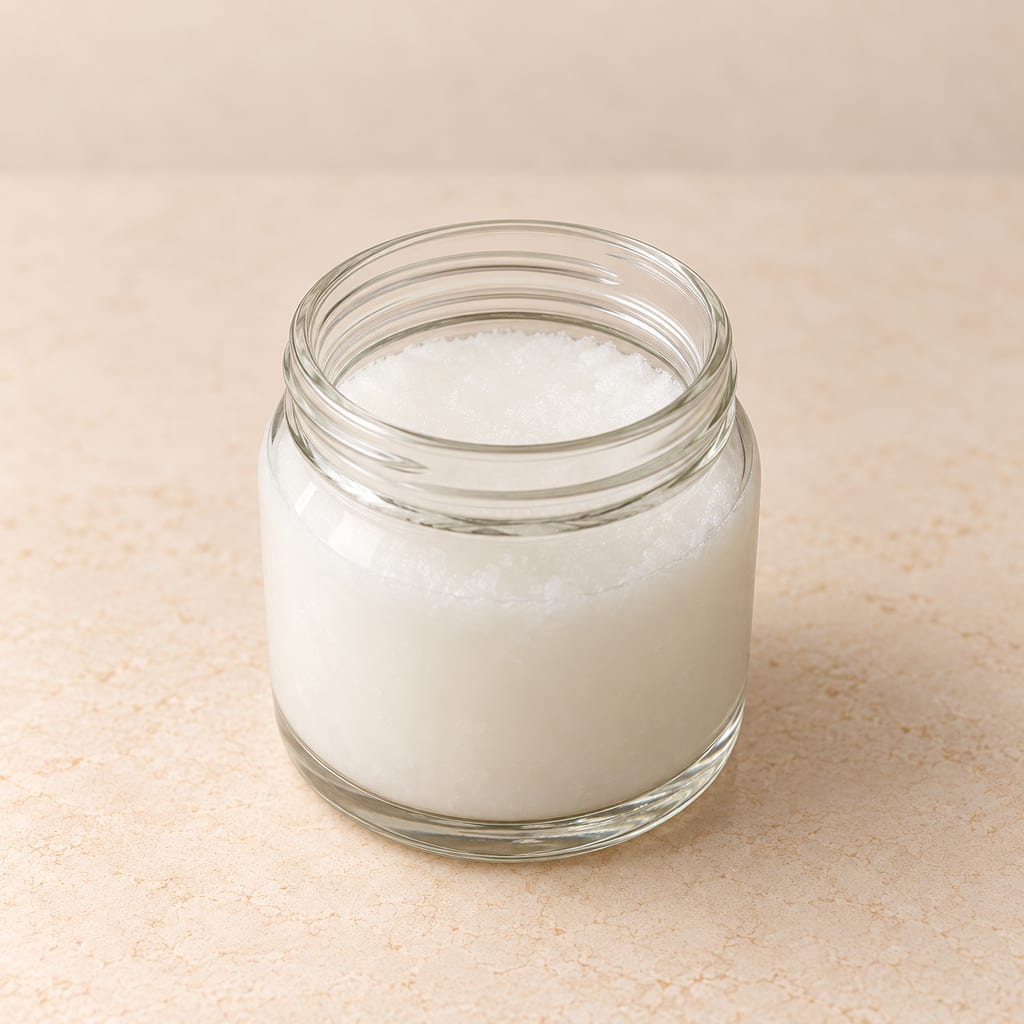
Coconut oil is the fat pressed or separated from the white kernel of a mature coconut. It is the fat most unlike the others in a kitchen. At about 30 degrees Celsius and above it is a clear, colourless liquid; below roughly 25 degrees it sets to a white solid, with a gel point of 22 to 25 degrees and a melting point of about 24 degrees. A jar kept in a cool room is therefore a solid block, and the same jar in a warm one is a liquid. It is about 90 per cent saturated fat, and roughly half of that fat is lauric acid.
Several products go by the name. Virgin coconut oil is made from fresh milk, meat or residue without heat refining, and it keeps the smell and taste of coconut. Refined, bleached and deodorised oil, known as RBD, is made from crude oil pressed out of dried copra and then refined; it has no coconut taste or aroma. Hydrogenated coconut oil is a third product, hardened so that it stays solid in warm climates, with a melting point of 36 to 40 degrees. Its density is about 924 kilograms per cubic metre, so it floats on water, and it flows like an ordinary liquid until it nears its melting point, where growing fat crystals thicken it. Solid triglycerides are roughly 10 per cent denser than the liquid. The typical coconut smell survives only in oil that has not been refined, bleached and deodorised, and the same refining steps also strip some of the taste, aroma and bioactive compounds. The distinction between grades matters in the kitchen because the oils behave differently when heated: an unrefined oil reaches its smoking point at about 170 degrees, a refined one at about 232 degrees, though a general reference quotes 175 to 177 degrees for the oil as a whole and the sources do not reconcile the figures.
Coconut oil comes from the palm that cultivators in the Pacific and the Indian Ocean domesticated independently, and it has been a cooking fat of tropical Asia for a long time. It reached most Western kitchens much more recently. Before electric lighting, coconut oil was India’s main lamp oil and was exported as cochin oil.
The industrial history runs through copra, the dried kernel. A thousand mature coconuts yield about 170 kilograms of copra, and the copra gives about 70 litres of oil. Drying is the weak point. Sun-drying is slow and open to contamination, and copra with a moisture content under about 6 per cent keeps better than wet copra.
Virgin coconut oil is the newest of the products. It was introduced to the world at the end of the twentieth century and has become one of the most prominent high-value coconut products in producing countries, with uses in food, cosmetics and hair care as well as medicine. The palm itself is grown in about 93 countries on roughly 12 million hectares, producing around 57,500 million coconuts a year, and the Asian Pacific Coconut Community reports that exports of coconut oil from Asia grew by an average of 3.3 per cent a year over a five-year period.
World production of coconut oil was about 3.12 million tonnes in 2023. The Philippines led with about 1.21 million tonnes, followed by Indonesia with 646,000 tonnes, India with 549,000, Vietnam with 182,000 and Mexico with 131,000. The Philippines and Indonesia together made 59 per cent of the total.
Two broad routes lead to coconut oil. In the dry process the meat is dried to copra, then pressed or extracted with hexane; a hydraulic press recovers more than 60 per cent of the copra’s dry weight as crude oil, and hexane can extract up to 10 per cent more than rotary mills and expellers alone. The crude oil is then refined. What remains, copra meal, retains about 19 per cent protein and is mostly used as animal feed or fertiliser; world output of the meal reached 1.98 million tonnes in 2023. In the wet process, fresh meat is grated and pressed into coconut milk, an oil-in-water emulsion, and the emulsion is broken by centrifuges or other treatments. Yields are 10 to 15 per cent lower than with the dry process.
Virgin oil has a wider set of methods, each trading yield against flavour and quality. Cold extraction chills the coconut milk and takes the fat phase, with a low yield. Hot extraction heats the milk and passes it through muslin; heating above 40 degrees reduces antioxidant properties. Low-pressure extraction presses dried meat in a manual press. In chilling, freezing and thawing, the milk is chilled below zero and warmed back to 25 degrees before centrifuging. Centrifugation is quick but low in yield. Enzymatic extraction gives a high yield but needs specific enzymes. Supercritical carbon dioxide works on dried grated meat without heat but needs expensive equipment, and expeller pressing works on whole fruit or meat at a lower yield.
Two routes use fermentation. In natural fermentation, hot water is added to coconut milk, the vessel is covered, and the milk is left for two days; it keeps the natural flavour and nutrients but takes a long time. In induced fermentation, microorganisms are mixed into the milk, which is simple and gives a high yield but can reduce the oil’s quality and leave a fermented odour. Oil made this way is the main link between this ingredient and the fermented foods on this site. The route leaves a mark on the minor components: in one comparison a hot-process virgin oil had a higher phenolic content (40.03 micrograms per millilitre) and stronger nitric-oxide scavenging than a fermentation-processed virgin oil, so the method shapes more than the yield.
The fat of coconut is dominated by saturated fatty acids of medium chain length. Lauric acid, with twelve carbon atoms, makes up about 48 per cent, with myristic acid at about 16 per cent, palmitic acid at 9.5, capric acid at 8, caprylic acid at 7 and oleic acid at 6.5. Another review gives virgin coconut oil 45 to 52 per cent lauric acid, 16 to 20 per cent myristic and 6 to 8 per cent caprylic. Per 100 grams the oil holds 99 grams of fat, 82.5 grams of it saturated, 6.3 grams monounsaturated and 1.7 grams polyunsaturated, for 890 kilocalories. Another analysis puts the saturated share at around 94 per cent, with about 62 per cent of the fat in medium-chain acids. Digestion follows chain length: caprylic and capric acids are absorbed directly into the portal vein, while lauric acid, at the boundary, behaves more like a long-chain fat, with 70 to 75 per cent absorbed with chylomicrons.
Standards set ranges rather than single values, because oils vary with the coconuts and the process. For lauric acid the Malaysian standard allows 47.00 to 50.00 per cent, the Asian and Pacific Coconut Community standard 43.00 to 53.00 and the Codex range is 45.10 to 53.20. For myristic acid the three ranges are 17.00 to 18.50, 16.00 to 21.00 and 16.80 to 21.00 per cent, and for caprylic acid 8.00 to 9.00, 5.00 to 10.00 and 4.60 to 10.00 per cent.
Because so little of the oil is unsaturated, it is slow to oxidise and resists rancidity better than most vegetable oils. Saturated fatty acids have no double bonds, the places where oxidation chains start. Virgin oil adds natural antioxidants, among them polyphenols such as gallic, caffeic and p-coumaric acid and the tocopherols that make up vitamin E, and under accelerated ageing it showed lower free fatty acid and peroxide values than refined coconut oil. Refining removes certain free fatty acids to reduce rancidity.
Moisture varies with the method. Oil from dried copra holds much less water than oil from fresh meat, and oil extracted with heat holds less than oil that was not heated, which is one reason a virgin oil made from fresh milk and a refined oil from copra differ in how they keep.
Choose by purpose. Virgin oil carries the taste and smell of the coconut and is suited to dishes where that flavour is wanted; refined oil is neutral and tolerates higher heat. Check that the label says whether the oil is virgin, refined or hydrogenated, because the three are different foods. Partial hydrogenation can form trans fatty acids, and coconut oil has so little unsaturated fat to hydrogenate that the effect is limited.
Compare it with olive oil. Extra-virgin olive oil is rich in monounsaturated oleic acid, at 70 to 77 per cent, and in phenolic compounds, but its oxidative stability is moderate and limits its use in high-temperature cooking; coconut oil, with its saturated profile, is the steadier fat for frying and long storage. The two are separate ingredients with their own pages.
Moisture is the enemy of shelf life: the oil should contain under about 0.2 per cent water. A cool room turns the jar solid, which does no harm. The sources used here do not give a storage time in months for a household jar, so none is stated.
The place of coconut oil in a healthy diet is contested. A meta-analysis of 16 clinical trials found that coconut oil raised LDL cholesterol by 10.47 milligrams per decilitre and HDL cholesterol by 4.00 milligrams per decilitre compared with non-tropical vegetable oils. The American Heart Association’s 2017 advisory advised against it because it raises LDL. Studies in humans of its effects on weight, waist circumference and blood sugar have given mixed results. No recommendation is drawn here beyond noting that coconut oil is a saturated fat and should be counted as one.
Coconut is a catalogued allergen source, with the allergen Coc n 1, a vicilin-like protein. The sources reviewed do not establish whether refined or virgin oil provokes reactions in people with coconut allergy.
Coconut oil is the main cooking oil of Sri Lankan cuisine, where it is used for sauteing and frying in savoury and sweet dishes, and it is prominent in Thai and Kerala cooking. In Western kitchens it appears in baked goods and pastries and in sautes, with a slightly sweet, nutty flavour, and some cinemas use it to pop popcorn. Hydrogenated coconut oil appears in non-dairy creamers and snack foods.
Coconut oil mixes with water into a white emulsion only when agitated; left alone it is insoluble in water. The short chains of its main fatty acids and its low viscosity make it easy to disperse with emulsifiers, which is part of why it appears in non-dairy creamers and emulsified products.
Coconut oil is a separate ingredient from coconut milk, cream and the grated kernel, and each has its own page on this site.
Smoking-point figures differ between sources and with the grade of oil. No source reviewed gives a household shelf life, and the history of the oil before the modern copra trade is thinly documented.
Coconut (Cocos nucifera allergen Coc n 1)
Largest producer of coconut oil in 2023, about 1.21 million tonnes.
Second-largest producer, about 646,000 tonnes in 2023.
Coconut oil was India’s main lamp oil and was exported as cochin oil; India produced about 549,000 tonnes in 2023.
Coconut oil is the main cooking oil of Sri Lankan cuisine; no locality is claimed.
Coconut oil is prominent in Kerala cooking.
Coconut milk is an aqueous emulsion extracted from mature coconut kernel, sold fresh, packaged or reconstituted. It is distinct from the liquid naturally inside a coconut.
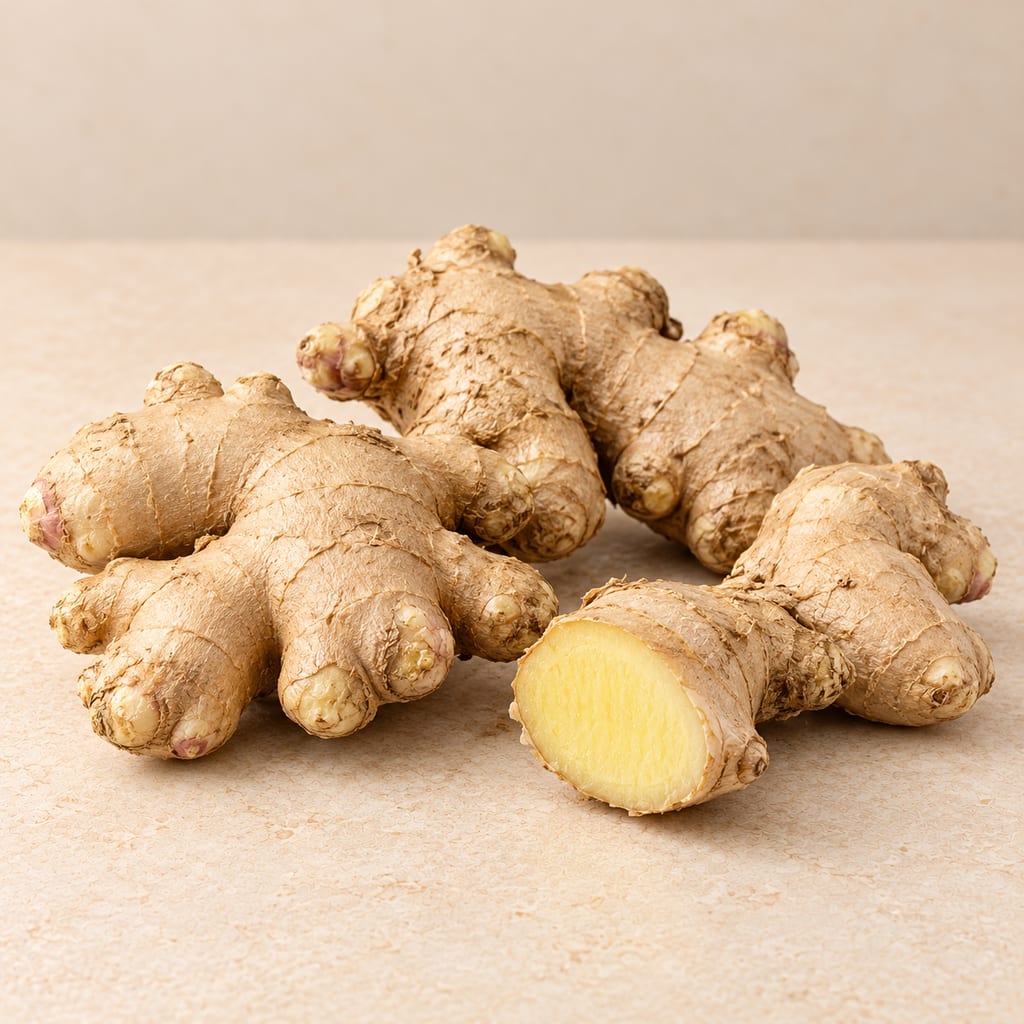
Ginger is the aromatic rhizome of Zingiber officinale, used fresh, dried and preserved. Historical ginger wines sliced or bruised it to flavour a sugar-based ferment.
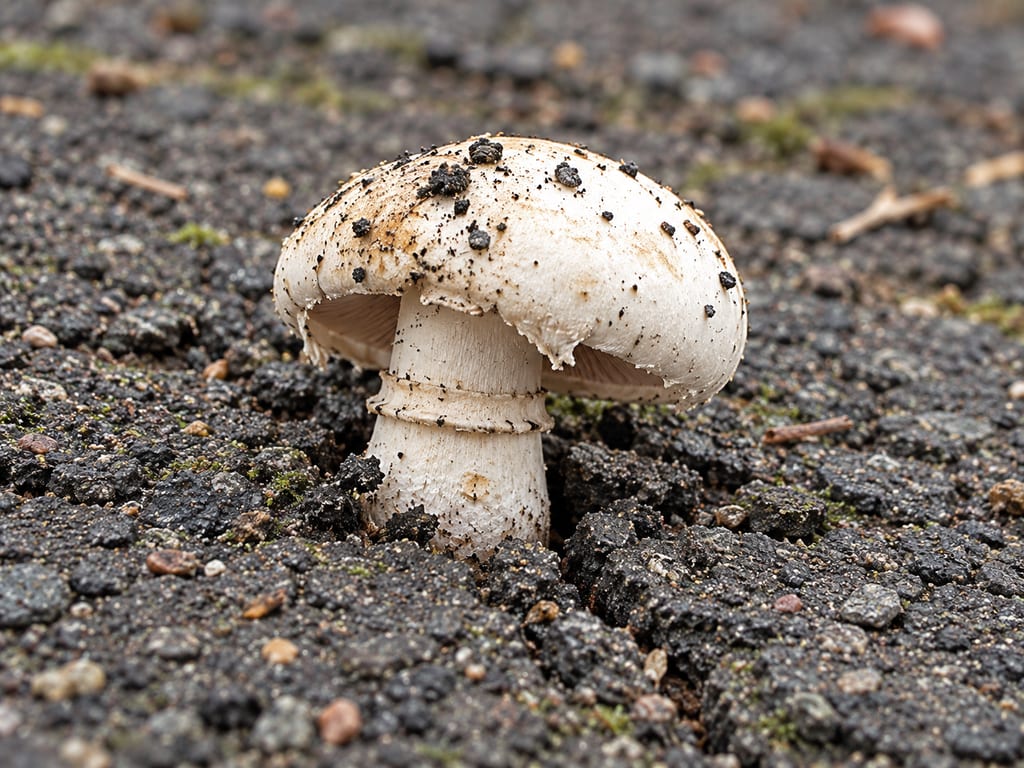
Agaricus bitorquis is a firm edible mushroom known for fruiting in hard, disturbed ground and for its persistent double ring. It is also cultivated in warmer conditions than the common button mushroom.
Rice flour is ground, non-waxy rice used in breads, batters and noodles. Its particle size, milling and rice variety shape how it absorbs water and sets when cooked.
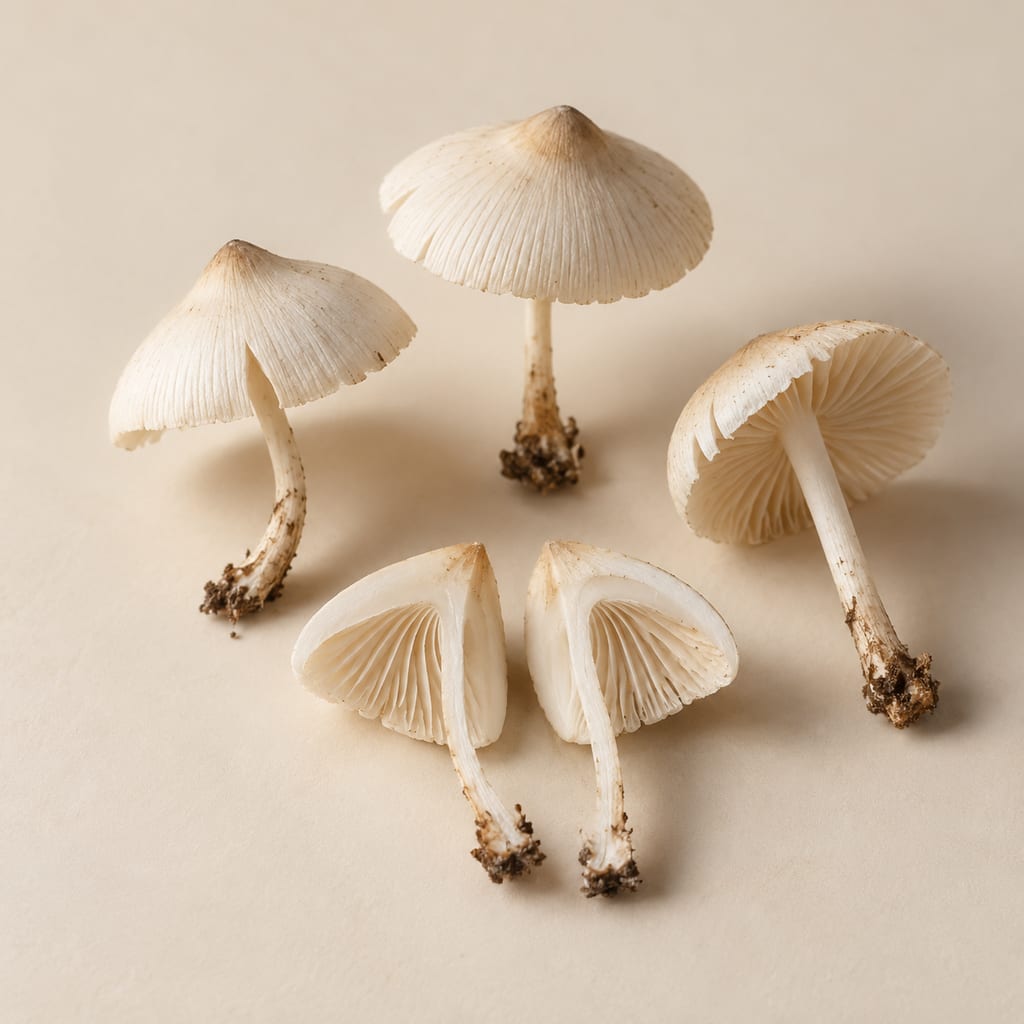
A small wild termite-associated mushroom recorded as food in parts of India and elsewhere. Its name has a taxonomic history, and some African records are treated cautiously because they may represent a different lineage.
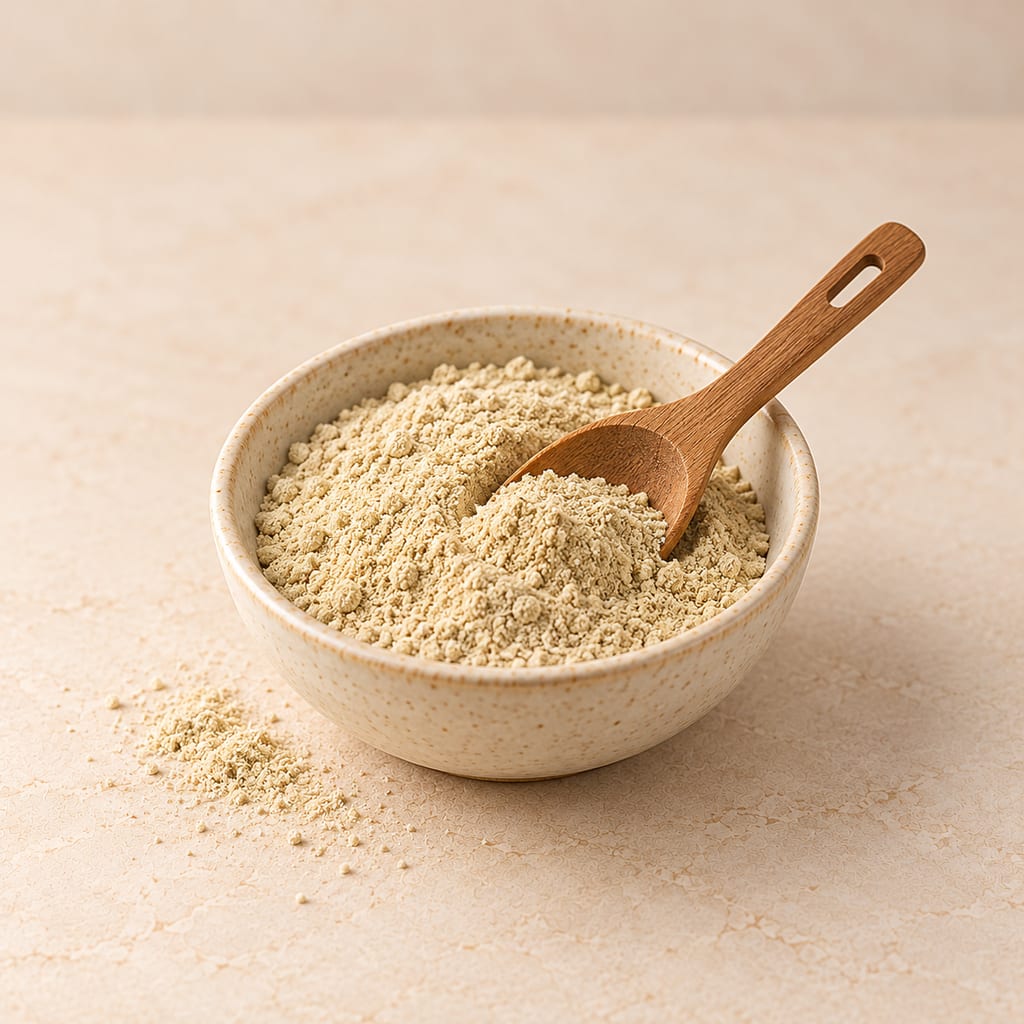
White pepper is the ripe fruit of Piper nigrum with its outer fruit wall retted or stripped away, leaving a pale, smooth peppercorn. It seasons pale sauces and soups and three linked cured sausages.
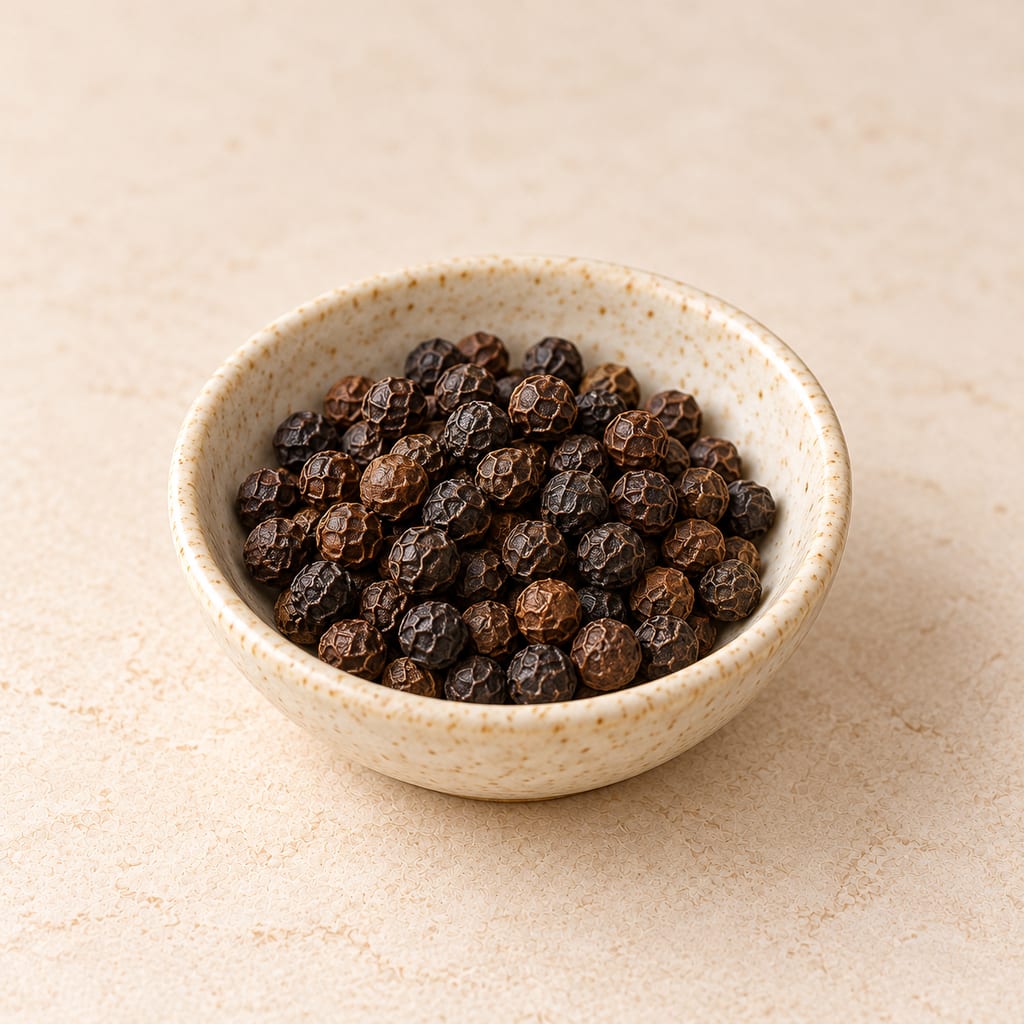
Whole peppercorns are the dried, uncracked berries of Piper nigrum, sold with their pungent seed intact. They season cured sausages such as Genoa-style salami and soppressata di Calabria beside a ground pepper.
No community contributions have been published for this entry yet.
Sign in to contribute. Published comments and photos are free to read.
Bioprocess and Biosystems EngineeringMethod · Properties
A comprehensive review on the techniques for coconut oil extraction and its applicationextraction methods: cold, hot, low-pressure, chilling-thawing, natural and induced fermentation, centrifugation, enzymatic, supercritical CO2, expeller, wet mill
natural fermentation: hot water added to coconut milk, covered, two days; induced fermentation gives high yield with fermented odour
colourless liquid at 30 C and above; solid at 25 C; smoke point 170 C unrefined, 232 C refined
Cited in: What coconut oil is; Palm, copra and trade; How it is extracted; What is in the oil; Choosing and keeping it; In the kitchen; Notes
WikipediaHistory · Production · Properties
Coconut oilcochin oil lamp trade; 1,000 coconuts yield about 170 kg copra and about 70 litres of oil
wet process yields 10 to 15 per cent lower; dry process; hexane; RBD from pressed copra over 60 per cent oil
fatty acid composition; 99 g fat per 100 g; melting point 24 C; hydrogenated 36 to 40 C
2023 production 3.12 million tonnes; Philippines 1.21 Mt; Indonesia 646,000 t; India 549,000 t; Vietnam 182,000 t; Mexico 131,000 t
main cooking oil in Sri Lanka; Thai and Kerala cooking; AHA 2017 advisory
Cited in: What coconut oil is; Palm, copra and trade; How it is extracted; What is in the oil; Choosing and keeping it; Health and dietary context; In the kitchen; Notes
Food Chemistry: XComposition
Virgin coconut oil: A comprehensive review of its health impacts and functional food applicationslauric acid 45 to 52 per cent; myristic 16 to 20; caprylic 6 to 8; about 90 per cent saturated
tocopherols, polyphenols and phytosterols in virgin oil; high oxidative stability
Cited in: What coconut oil is; Palm, copra and trade; What is in the oil; Choosing and keeping it; In the kitchen
CirculationHealth
The Effect of Coconut Oil Consumption on Cardiovascular Risk Factors: A Systematic Review and Meta-Analysis of Clinical Trials16 trials; LDL +10.47 mg/dL (95% CI 3.01 to 17.94); HDL +4.00 mg/dL (95% CI 2.26 to 5.73) versus non-tropical vegetable oils
Cited in: Health and dietary context
PLoS ONEHistory
Independent origins of cultivated coconut (Cocos nucifera L.) in the Old World tropicscoconut cultivation arose independently in the Pacific and Indian Ocean basins
Cited in: Palm, copra and trade
HeliyonProcessing
Drying kinetics and mathematical modeling of coconut meat slices: Insight into pretreatment and drying synergic effectdried coconut meat is copra; sun drying is slow, costly and prone to contamination
Cited in: Palm, copra and trade
Animals (MDPI)Processing
Copra Meal: A Review of Its Production, Properties, and Prospectscopra meal is a by-product of coconut oil production; 1.98 million tonnes in 2023
Cited in: How it is extracted
Foods (MDPI)Processing
Effect of Dry Processing of Coconut Oil on the Structure and Physicochemical Properties of Coconut Isolate Proteinsdry processing of dried meat; copra meal protein about 19 per cent; used as feed, fertiliser or discarded
Cited in: How it is extracted
Foods (MDPI)Composition
Comparative Study of the Fatty Acid and Phenolic Profiles of Tender and Mature Coconut for Coconut Milk Productionmature coconut meat total fatty acids 299.7 g/kg, lauric acid 48 per cent
Cited in: What is in the oil
Allergologie SelectAllergens
Allergens from plant-based food allergen sources and their clinical and diagnostic relevanceCoc n 1, a vicilin-like protein, is the catalogued allergen of Cocos nucifera
Cited in: Health and dietary context