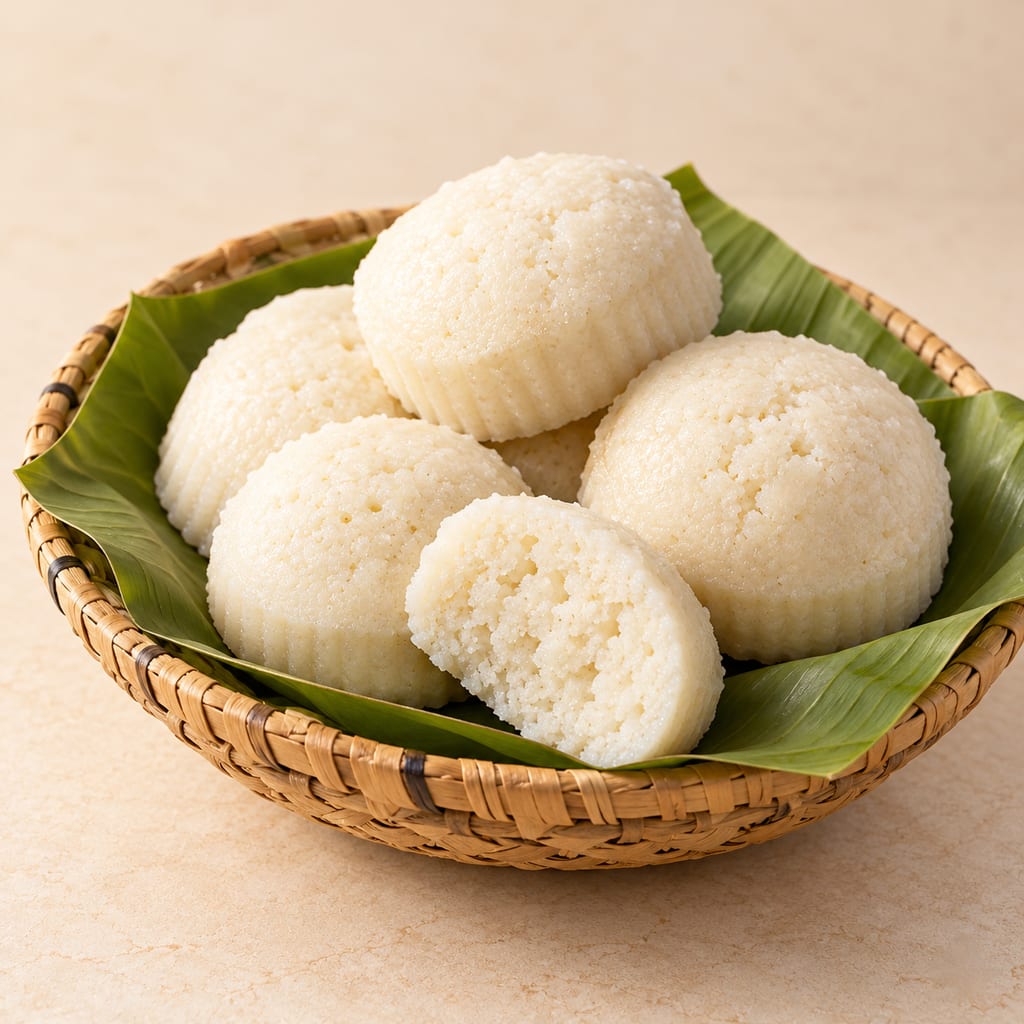
Ablo (rice-based steamed bread)
Soft, lightly tangy steamed cereal bread documented across Benin and Togo. This page gives one measured rice-flour research method; maize-based Ablo and mixed-grain versions remain distinct traditions.
 FermenteaWhere food goes to change
Rice flour is ground, non-waxy rice used in breads, batters and noodles. Its particle size, milling and rice variety shape how it absorbs water and sets when cooked.
Rice flour is finely ground rice, usually from cultivated rice (Oryza sativa). In the ordinary, non-waxy form covered here, the source grain is not glutinous or sweet rice. This material is different from whole rice, which retains its grain form, and from rice starch, which is separated and processed as a starch ingredient.
Milling choices produce different flours. White rice flour is made from polished rice after the bran and germ have been removed; brown rice flour retains those parts after the inedible hull is removed. Wet, semi-dry and dry grinding also affect particle size and starch damage. A bag labelled simply “rice flour” may therefore differ in colour, texture and water absorption from another bag.
The term “rice flour” covers more than one physical product. A flour ground from polished rice omits much of the bran and germ, while brown rice flour retains them. The flour can be made from whole kernels or broken rice, and commercial grades vary in particle size. These differences affect texture and processing, so the colour of a flour does not identify its cultivar or predict every baking result. A label that says white, brown, glutinous or whole grain gives useful information, but the exact milling method may still be unknown.
Rice flour can enter a recipe at different stages. A dry flour may be stirred directly into a batter, while appam uses kappi, a cooked paste made from rice flour and water, alongside flour. In some regional food methods, soaked rice is ground wet and handled as a slurry. These are different ingredient states even though the recipe may ultimately use rice. A quantity for dry flour cannot automatically stand in for soaked grain or cooked paste.
“Glutinous” describes the sticky texture of cooked waxy rice, not the presence of gluten. Waxy rice is rich in amylopectin and its flour behaves differently from flour milled from ordinary non-waxy rice. Studies of rice bread compare them as distinct materials because starch composition and flour properties change how batter thickens, expands and sets. The catalogue keeps glutinous rice flour on its own ingredient record; a recipe calling for sweet or sticky rice flour should not be assumed to mean this item.
Rice flour is also not a synonym for rice starch. Flour contains the ground grain material, with composition depending on whether it was milled from polished or whole-grain rice. Starch products are extracted and processed for different functions.
Ordinary rice flour’s starch composition also varies by cultivar. Researchers compare waxy and non-waxy rice because amylose and amylopectin proportions influence swelling, gelatinization and pasting. Those properties help explain why one flour makes a cohesive cake while another suits a bread batter better. They do not create a simple ranking in which one rice flour is always best. In bread trials, particle size, damaged starch, grain variety and the rest of the formula all affect the result.
Rice flour does not form wheat’s gluten network. A dough made only with ordinary rice flour therefore behaves differently from wheat dough, and a wheat loaf formula cannot be converted by exchanging the flours cup for cup. Gluten-free rice breads use formulas designed around batter or dough consistency, and studies test particle size, damaged starch, rice variety, water and supporting ingredients such as proteins or hydrocolloids. Each result belongs to the formula tested; there is no single rice-flour bread ratio that applies to every flour.
In Kerala, a published appam method combines rice flour with yeast, coconut milk and kappi, a cooked rice-flour paste, then ferments the batter before cooking it in a curved pan. Sri Lankan food reviews document rice-flour hoppers, string hoppers, pittu and roti, while South Indian foodways share some related forms. These are distinct foods and methods: not every rice-flour preparation is a leavened loaf.
In Benin, rice-based Ablo is documented alongside maize and mixed-grain versions. Rice-based Ablo is described as as a later adaptation of a maize-based steamed bread. It is useful evidence for rice flour in a regional bread, but it does not make rice Ablo the original form or define every producer’s recipe.
A controlled study also fermented rice flour with named lactic-acid bacteria before using it in rice bread. The researchers measured changes in flour and starch properties and compared bread staling. This shows that fermentation can be one researched treatment of rice flour; it does not establish a household starter recipe or a general shelf-life extension. The result belongs to the flour, strains and method tested in that paper.
Rice bread research includes both loaves made principally from rice flour and breads where rice flour is a partial wheat-flour replacement. Those are different product designs. In a wheat blend, wheat proteins can still form the main gluten network; in a fully rice-based loaf, the formula must manage gas retention and crumb structure another way. A laboratory method with gums or added proteins should be described as a tested gluten-free formulation, not as a property of rice flour itself.
Fermenting rice-flour batter also does not make every product a sourdough loaf. Appam is cooked as a thin, bowl-shaped pancake and may use yeast or other locally documented leavening. Ablo is steamed into small cakes and has rice, maize and mixed-grain versions. Sri Lankan hopper batter and Kerala appam are related by ingredients and shape, but names, ingredients and methods vary. Keeping these products distinct makes the ingredient’s role clearer than treating every fermented rice batter as one method.
Rice flour is also used in noodles, dumplings, cakes, gruels and other foods across Asia. The form and process matter: some doughs use ground dry flour, some use wet-ground rice, and others start with soaked or cooked grain. A food made from rice is not automatically made from rice flour.
Beyond bread, rice flour appears in modern fermentation research and in the preparation of fermented grain foods. The Maroua cochette account in the atlas uses rice flour in a rice beer process; that beverage is a separate use and should not be presented as bread.
Geographic labels here record documented use, not exclusive ownership. Kerala Tourism documents a rice-flour appam method; a Sri Lankan review associates several traditional flour foods with the island and related South Indian traditions; and the Benin paper distinguishes rice Ablo from the maize-based earlier form. These examples do not identify where rice flour was first made, and they should not be combined into one shared origin story.
Sri Lankan food research describes several rice-flour preparations as meal foods eaten with accompaniments. That account distinguishes roti from steamed pittu and string hoppers, which are extruded into strands and cooked with steam. Hoppers are cooked in a shallow, curved vessel, producing a thin rim and a thicker middle. Their inclusion on a flour map records the ingredient in a set of local preparations; it does not imply that all are leavened breads or that the same flour grade is used in each.
Match the flour to the recipe. Check whether it calls for ordinary or glutinous rice flour, polished or brown rice flour, and a stated grind or particle size. Fine and coarse flours can absorb water and set differently, so add water according to a tested formula rather than assuming that all brands behave alike.
At home, rice flour can be made by grinding clean, dehusked non-waxy rice and sieving it to the fineness the recipe calls for. Sri Lankan accounts also describe a traditional route in which grains are soaked, drained, pounded or stone-ground, then sieved. That preparation is not identical to dry milling, and recipes written for wet-ground rice may need their own process. Use equipment intended for grinding food and keep the flour dry during storage; sources here do not establish one shelf life or storage limit for every flour.
Milling systems are not merely household details. The scientific review of bakery products compares methods that differ in hydration, particle size and starch damage, and shows why the word “rice flour” alone is not a complete formula specification. Traditional pounding and stone grinding can create flour suited to a local food, while industrial milling produces standardized or specialty grades. Neither route gives a universal fineness for every bread.
For a home baker, the flour’s source and treatment matter most when a recipe depends on a precise batter or dough texture. Wet-milled flour begins with soaked grain, while dry-milled flour does not; rice milled after soaking and draining may retain a different particle profile from retail dry flour. Sifting removes large particles but does not undo starch damage or make two milling processes equivalent. Follow a formula’s stated flour and hydration rather than trying to correct every difference by eye.
If you grind rice at home, start with plain dehusked non-waxy grain when the recipe calls for ordinary rice flour. Grind in small amounts until it reaches the stated fineness, then sieve out coarse pieces and regrind them if needed. Traditional stone grinding and pounding can use soaked rice, so it produces a different starting material from direct dry grinding. A recipe based on soaked or wet-ground rice needs its own preparation details; this ingredient profile does not supply a universal soaking duration, grind size or water ratio.
Keep purchased flour in the package or another clean, dry container and follow its own storage instructions. Whole-grain rice flour and refined flour differ in the grain material retained, but the sources reviewed here do not establish one storage duration or temperature for all brands, milling processes and home-ground batches. This page therefore sets no universal use-by interval. If flour is recalled or has been contaminated, follow the relevant food-safety advice rather than relying on smell or taste.
Rice contains no wheat gluten, but this does not guarantee that a particular flour is free from gluten cross-contact. People who must avoid gluten should check the product’s controls and label rather than relying on the grain name alone.
Raw flour is not ready to eat. The U.S. Food and Drug Administration warns that flour can carry harmful bacteria and advises against tasting raw dough or batter; cook or bake foods containing flour thoroughly. No fermentation time, bubbling, smell or home measurement makes raw flour dough safe to eat.
The paper on gluten-free rice bread also shows that ordinary and waxy rice flour can respond differently to heating and water. That finding does not make one flour safer than another; it is a formulation difference. The item’s gluten note refers only to rice itself. Milling, packing and kitchen surfaces can introduce wheat or other gluten-containing grains, so people with coeliac disease should rely on product controls and medical guidance.
Do not taste uncooked dough, batter or flour mixtures. The FDA’s general flour guidance applies to rice flour products as well: raw flour can carry harmful bacteria, and cooking is the step that makes flour foods ready to eat. Wash hands and utensils after handling uncooked flour, especially before they contact food that will be eaten without cooking. A fermentation stage or the natural absence of wheat gluten does not replace the cooking step.
Government tourism material documents a Kerala appam method using rice flour; this is a recipe association, not a claim of origin.
A review documents rice-flour roti, hoppers, string hoppers and pittu in Sri Lankan food traditions; related foods also occur in South India.
Research documents a rice-flour Ablo variant and distinguishes it from maize-based Ablo described as the earlier form.
Soft, lightly tangy steamed cereal bread documented across Benin and Togo. This page gives one measured rice-flour research method; maize-based Ablo and mixed-grain versions remain distinct traditions.

Appam, or hoppers, are South Indian and Sri Lankan rice pancakes made from a fermented coconut-and-rice batter and cooked in a curved pan to a crisp lacy rim and a soft, spongy centre.
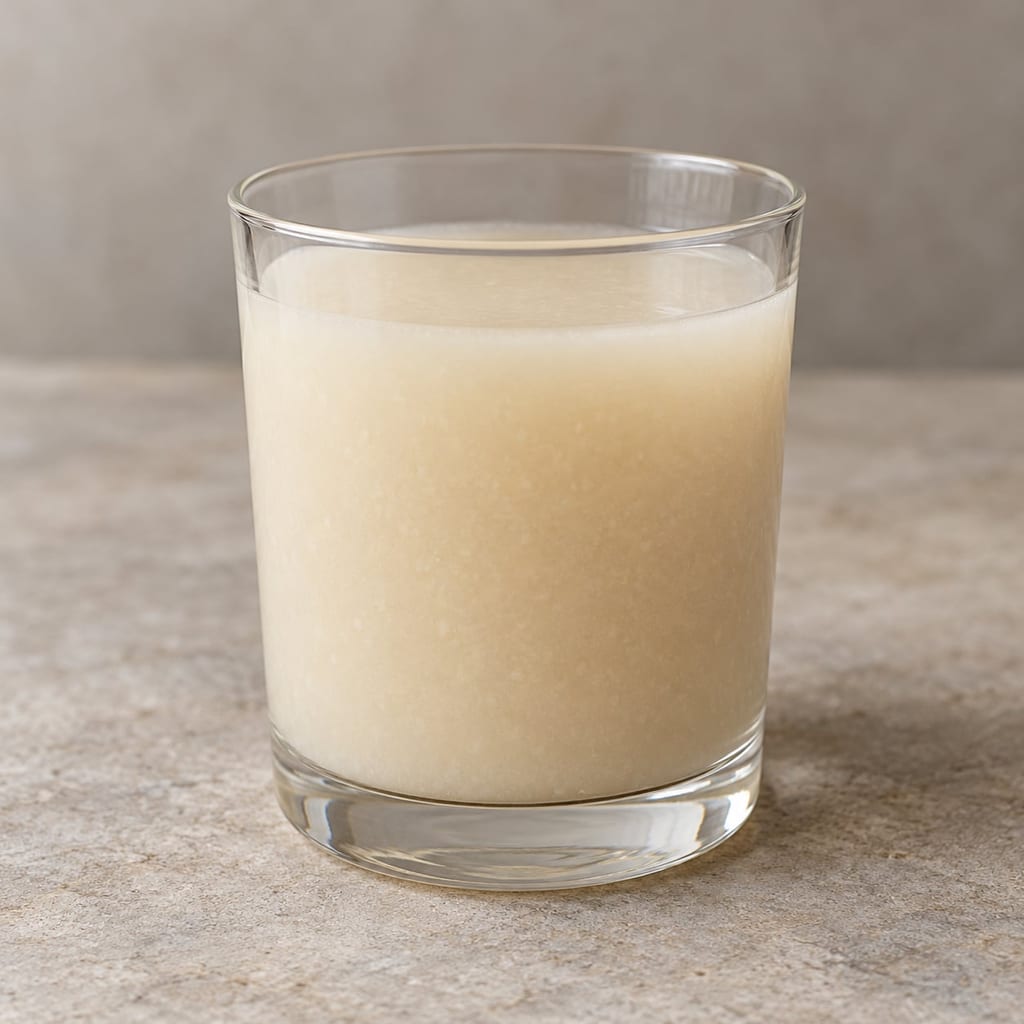
An alcoholic rice beer from Maroua, Cameroon, brewed from boiled rice flour with some malt and started with chai or bili-bili.
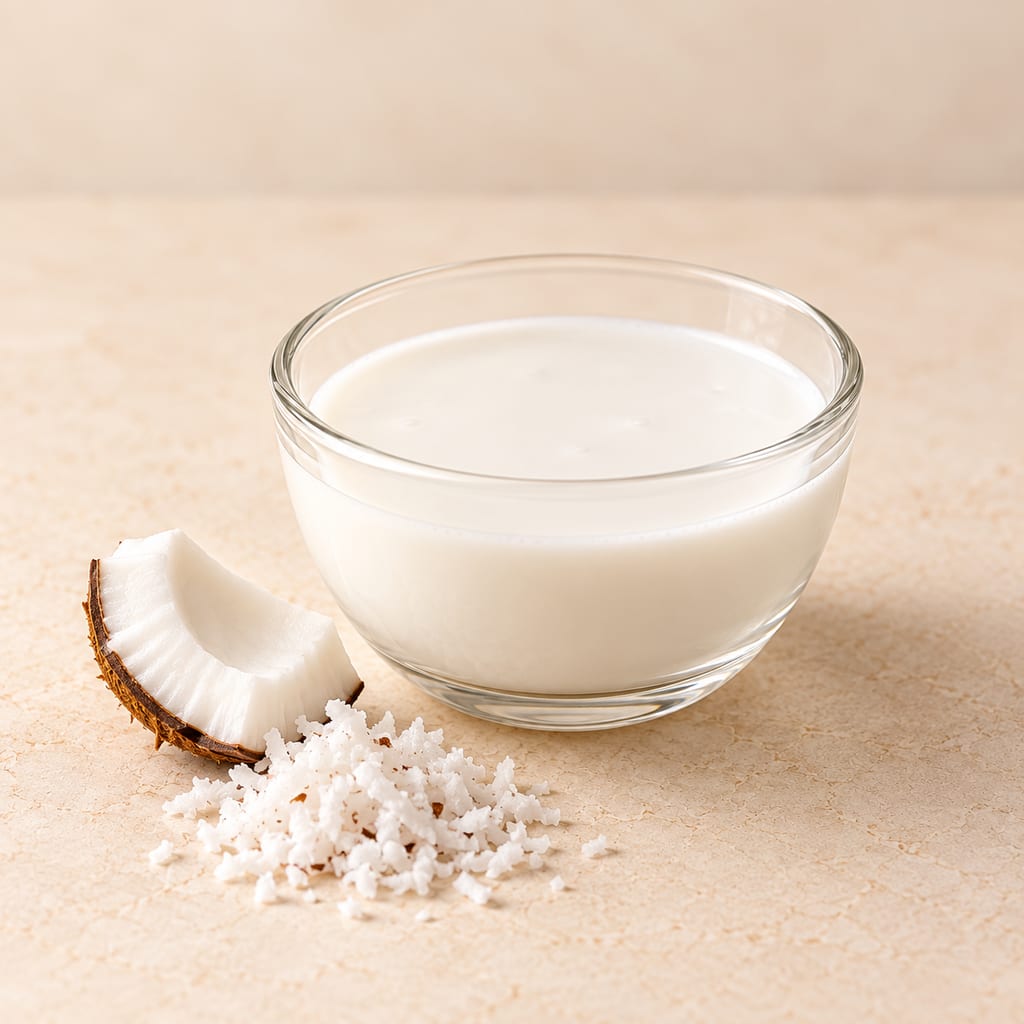
Coconut milk is an aqueous emulsion extracted from mature coconut kernel, sold fresh, packaged or reconstituted. It is distinct from the liquid naturally inside a coconut.
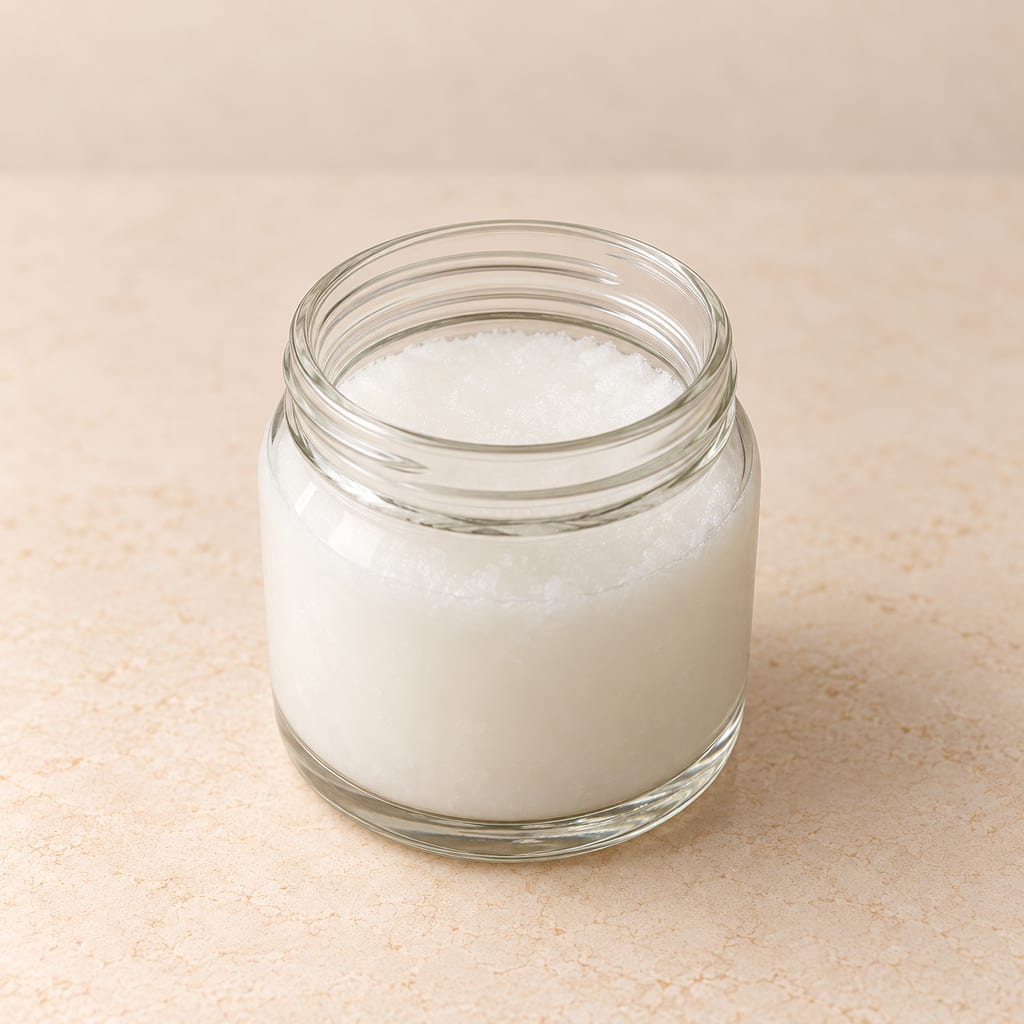
Fat pressed or separated from the kernel of a mature coconut: solid below about 25 °C, mostly saturated and half lauric acid, sold virgin, refined or hydrogenated.
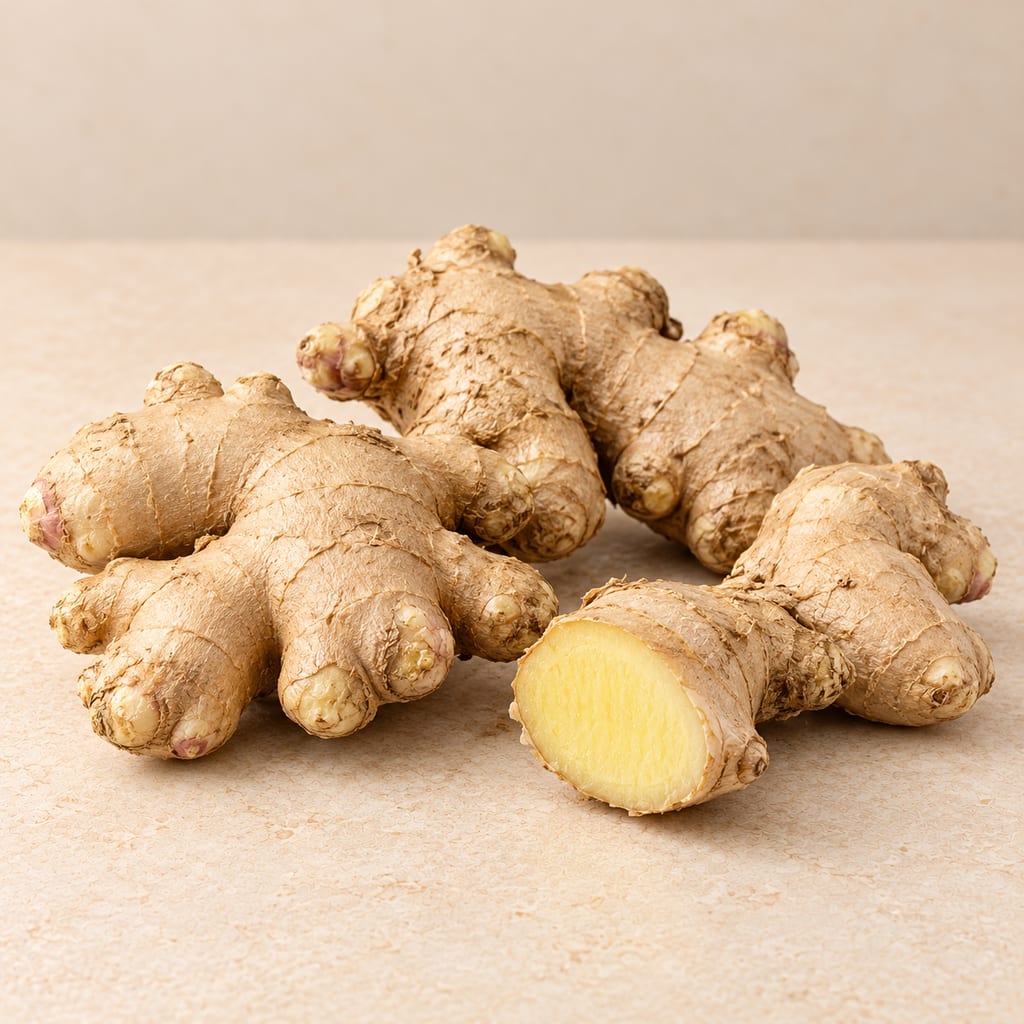
Ginger is the aromatic rhizome of Zingiber officinale, used fresh, dried and preserved. Historical ginger wines sliced or bruised it to flavour a sugar-based ferment.
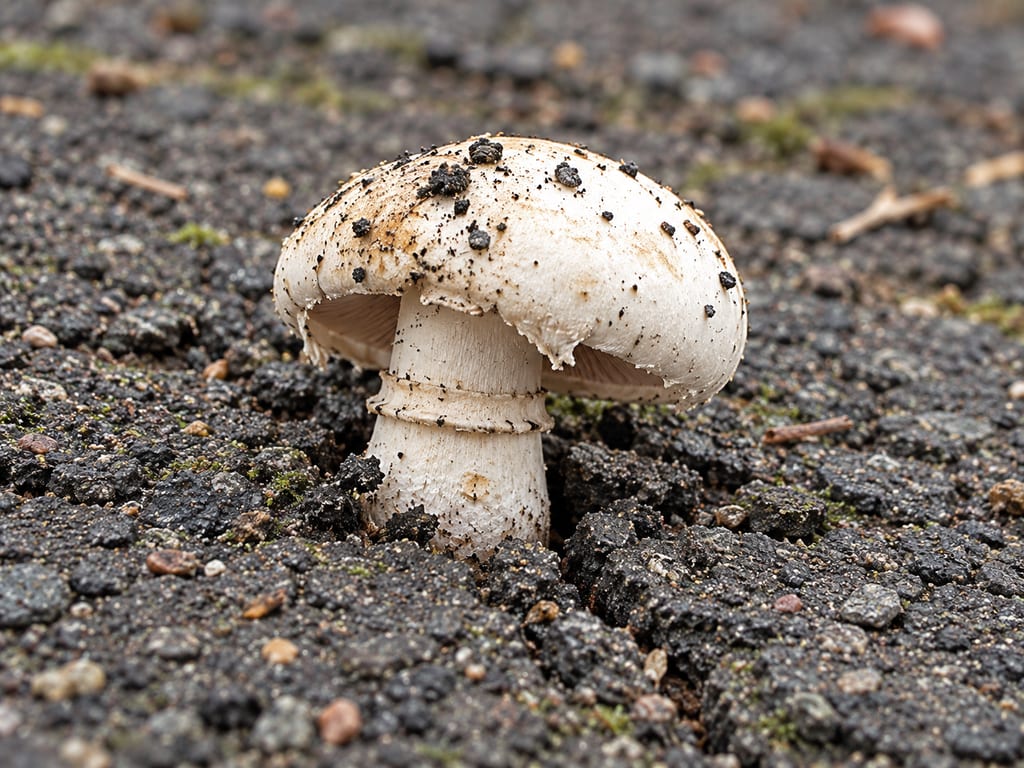
Agaricus bitorquis is a firm edible mushroom known for fruiting in hard, disturbed ground and for its persistent double ring. It is also cultivated in warmer conditions than the common button mushroom.
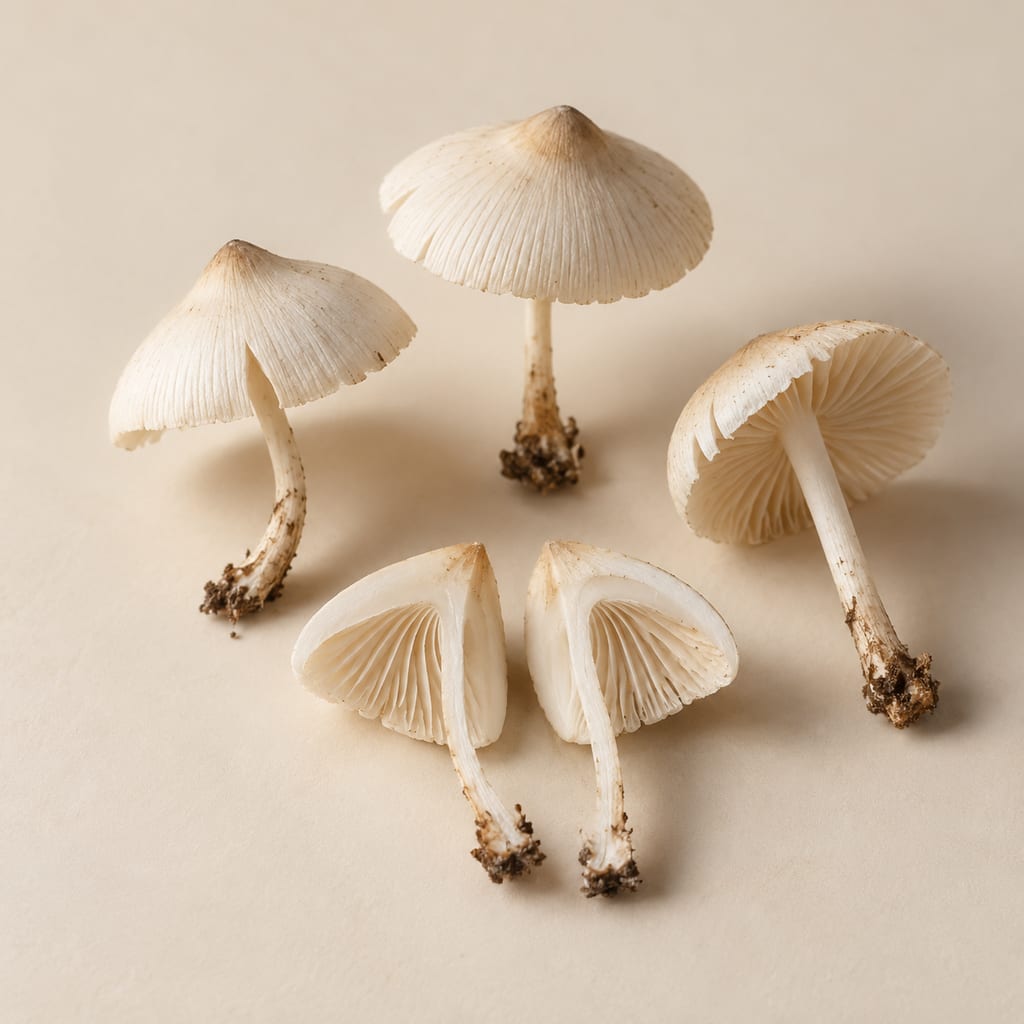
A small wild termite-associated mushroom recorded as food in parts of India and elsewhere. Its name has a taxonomic history, and some African records are treated cautiously because they may represent a different lineage.
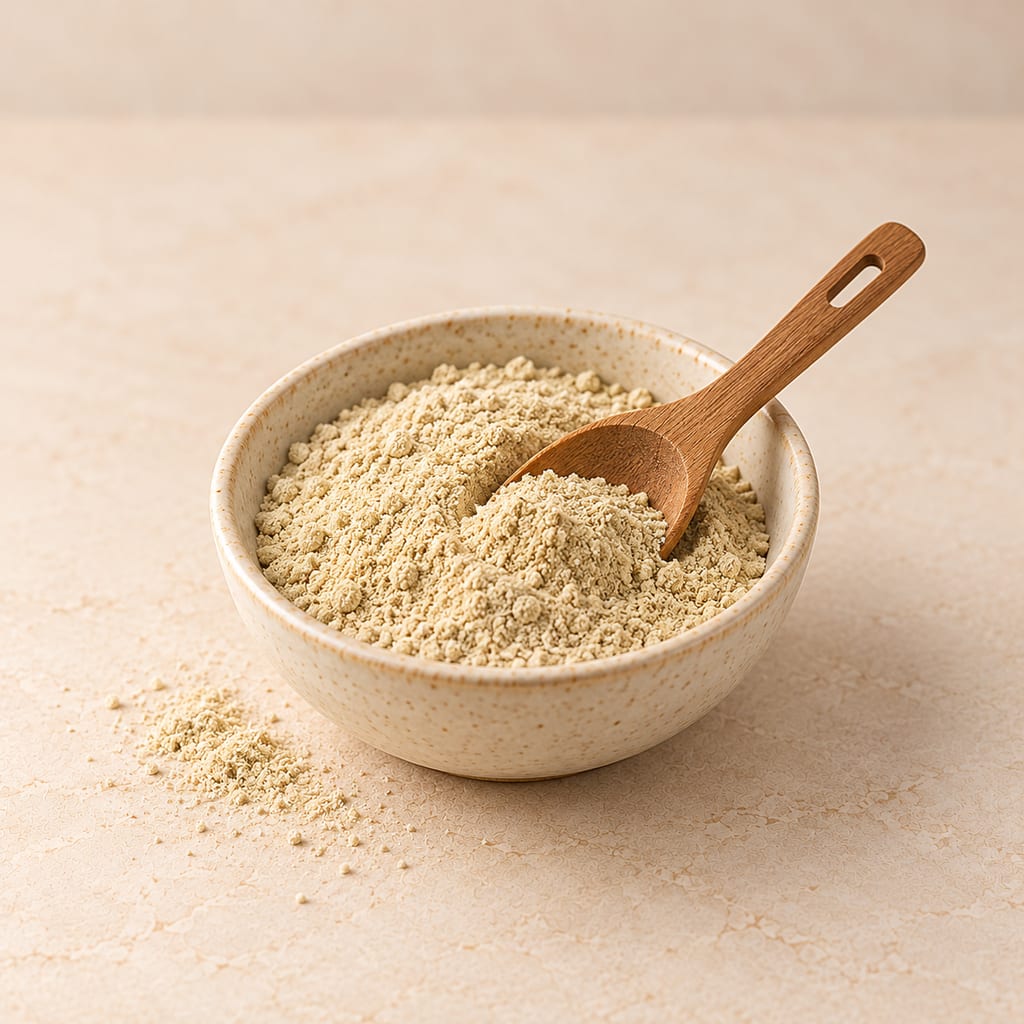
White pepper is the ripe fruit of Piper nigrum with its outer fruit wall retted or stripped away, leaving a pale, smooth peppercorn. It seasons pale sauces and soups and three linked cured sausages.
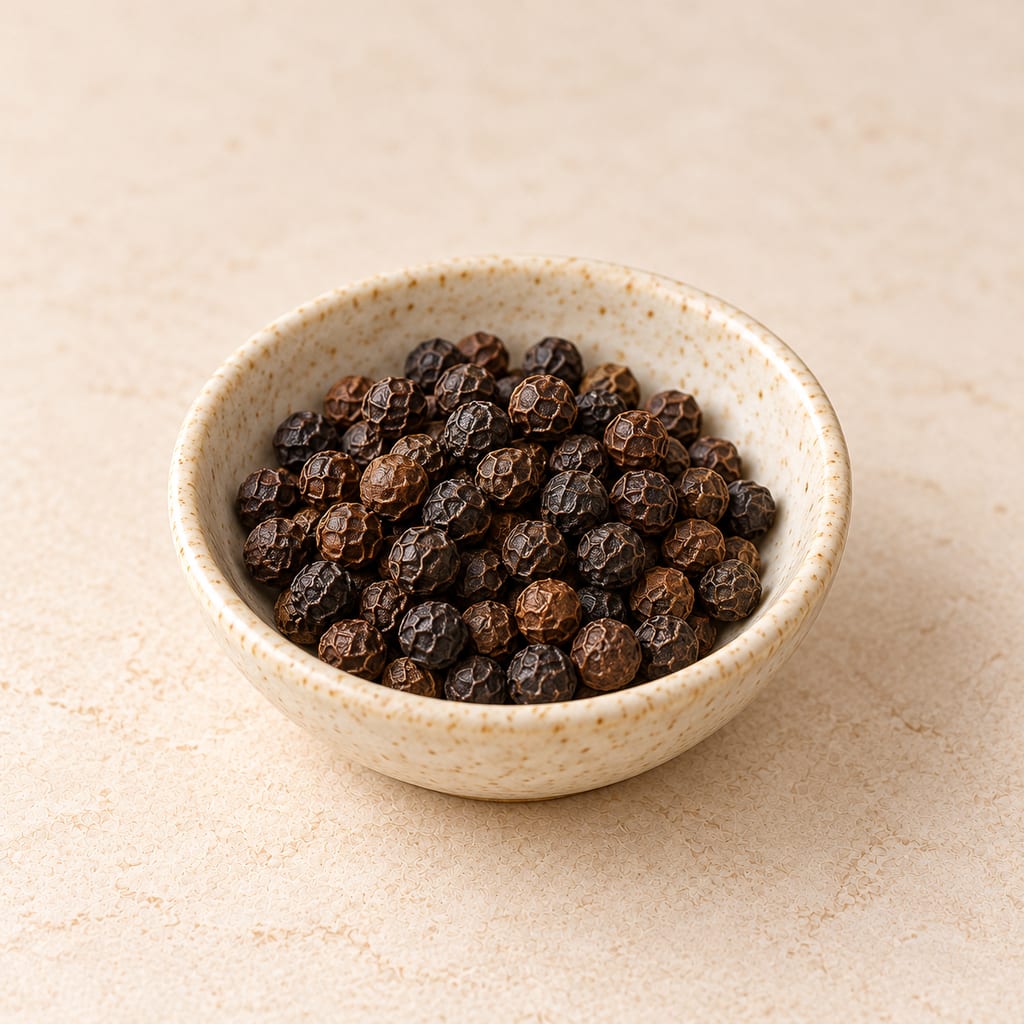
Whole peppercorns are the dried, uncracked berries of Piper nigrum, sold with their pungent seed intact. They season cured sausages such as Genoa-style salami and soppressata di Calabria beside a ground pepper.
No community contributions have been published for this entry yet.
Sign in to contribute. Published comments and photos are free to read.
AACC International, RICE: Chemistry and Technology, Third EditionIdentity · Processing · Uses
Chapter 17: Preparation and Applications of Rice FlourDefines rice-flour production terminology: rice is polished to remove bran; broken or polished rice is ground to make flour; rice flour has traditional Asian food and bakery applications.
Cited in: A flour ground from ordinary rice; Ordinary rice flour and glutinous rice flour; Other uses and food traditions
Foods, MDPI / PubMed CentralBread use · Science · Preparation
Rice-Based Gluten-Free Foods and Technologies: A ReviewRice flour is used in gluten-free breads and bakery products; rice bread lacks wheat gluten, and formulas use additional ingredients; the review distinguishes ordinary from glutinous rice choices and discusses particle size and damaged starch.
Cited in: Rice flour in breads and fermented batters; Dietary and food-safety notes
Foods, MDPI / PubMed CentralIdentity · Bread use · Processing
Applicability of Flours from Pigmented and Glutinous Rice in Gluten-Free Bread BakingDescribes refining ordinary white rice into flour after removing hull, bran and embryo, whole-grain brown-rice flour, and differences in flour granulation and baking behavior, including a glutinous-rice comparison.
Cited in: A flour ground from ordinary rice; Ordinary rice flour and glutinous rice flour
Ceylon Journal of Science 53(4)Processing · Bread use · Geographic association
Effect of Size Reduction Processes on Rice Flour Properties and the Quality of their Bakery ProductsReviews size-reduction methods and rice-flour bakery performance; names rice-flour traditional foods in Sri Lanka and examples from Malaysian, Indian, Japanese and Chinese foodways.
Cited in: A flour ground from ordinary rice; Rice flour in breads and fermented batters; Other uses and food traditions; Choosing and preparing rice flour at home
Journal of Ethnic FoodsGeographic association · Preparation · Uses
Indigenous and Traditional Foods of Sri LankaTraditional rice flour is made by pounding soaked and drained dehusked rice or grinding it between stones, then sieving; rice-flour foods include Sri Lankan roti, string hoppers, hoppers and pittu, with related South Indian traditions.
Cited in: Rice flour in breads and fermented batters; Choosing and preparing rice flour at home
Department of Tourism, Government of KeralaGeographic association · Bread use · Method
Appam and Crab MasalaKerala Tourism's appam formula uses rice flour with yeast, coconut milk and cooked rice-flour paste (kappi); it documents one method, not all appam recipes.
Cited in: Rice flour in breads and fermented batters
Annales des sciences agronomiquesGeographic association · Bread use · History
Effect of Traditional Production Technology on the Quality of Ablo: A steamed bread in BeninDocuments maize, rice and mixed-grain Ablo in Benin; rice Ablo is a later adaptation of the maize-based form.
Cited in: Rice flour in breads and fermented batters
U.S. Food and Drug AdministrationSafety
Food Safety in the Kitchen: Tips for Writing Food Safe RecipesRaw flour may contain harmful bacteria; do not eat raw dough or batter, and bake foods containing flour thoroughly before tasting.
Cited in: Dietary and food-safety notes
Food Science & NutritionIdentity · Science
Investigating the structural properties and in vitro digestion of rice floursCompares flour from black, brown, white and waxy rice and reports different starch behavior; supports treating rice flour properties as variety- and milling-dependent.
Cited in: Ordinary rice flour and glutinous rice flour