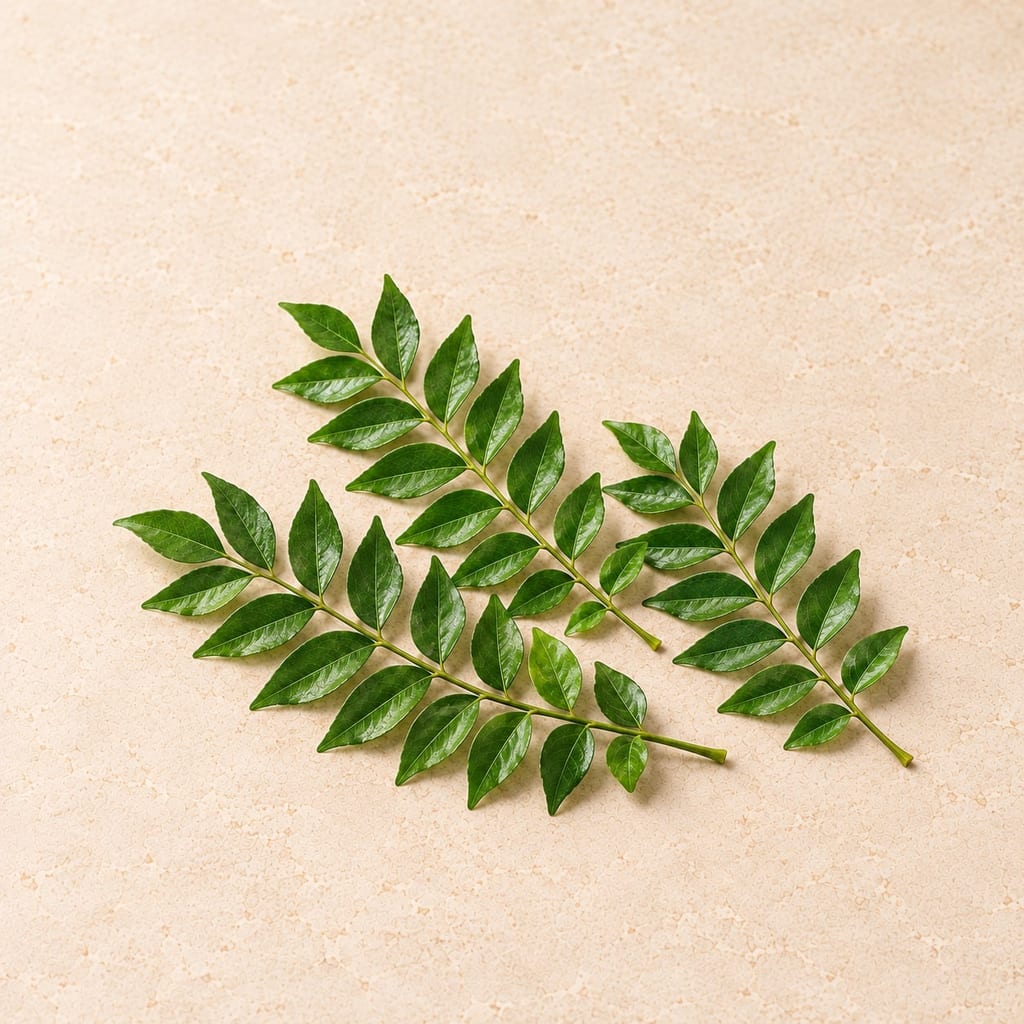
Curry leaves
Curry leaves are the glossy compound leaves of the curry tree, Bergera koenigii, used fresh across southern India and Sri Lanka. Fried in hot oil they give a citrusy, nutty, faintly smoky note.
 FermenteaWhere food goes to change
Modern method
Pol Sambol (Coconut Relish) · Coconut sambol · Coconut relish
A Sri Lankan coconut relish made from grated coconut, aromatics, chilli, lime and optional Maldive fish; a seasoned paste is folded through the coconut by hand.
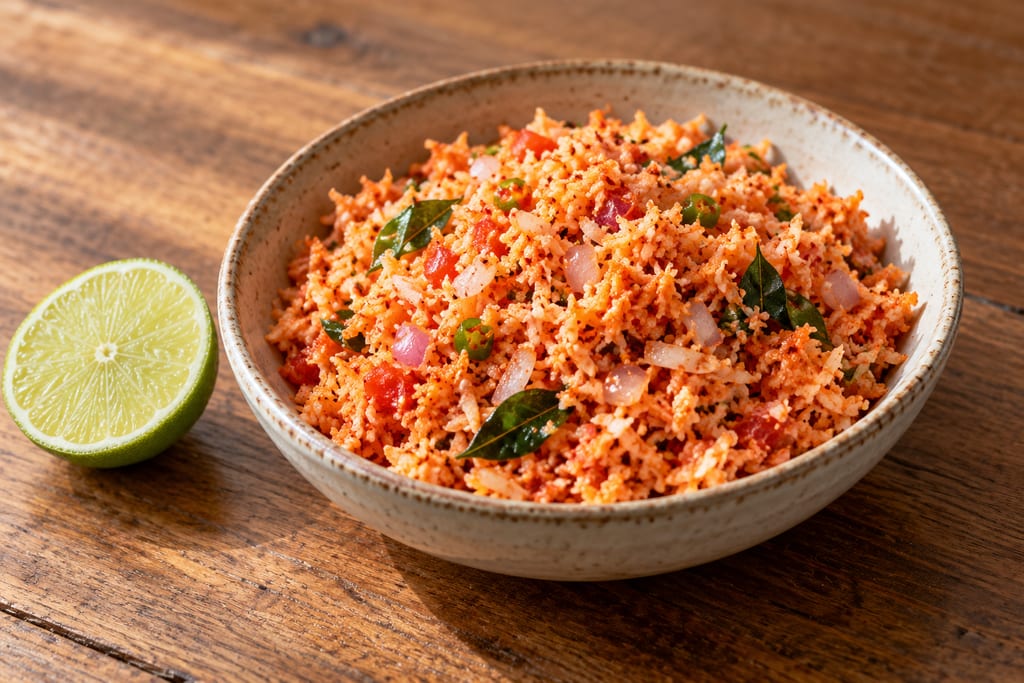
Pol sambol (Sinhala: පොල් සම්බෝල), sometimes written pol sambola or coconut sambol, is one of Sri Lanka's characteristic everyday relishes. It combines grated coconut with chilli, lime, onion and other seasonings to produce a fresh, aromatic accompaniment that is neither a curry nor a cooked chutney.
Pol means coconut in Sinhala. The word sambol refers to a family of strongly flavoured accompaniments that may be pounded, mixed or otherwise prepared from vegetables, spices and other ingredients.
Pol sambol is usually prepared shortly before eating. Its central ingredient is grated coconut, Cocos nucifera L.
The coconut contributes fat, moisture and a distinctive flavour. Chilli adds heat, lime supplies acidity, onion and garlic provide pungency, and optional Maldive fish contributes concentrated savouriness.
The recipe preserved here is a contemporary cookbook formulation that also includes tomato, black peppercorns, green chilli and curry leaves. It is a particularly aromatic version rather than the only possible pol sambol recipe.
Coconut is fundamental to Sri Lankan cuisine.
Coconut palms are widely cultivated, and different parts of the fruit are used throughout the food system.
Coconut milk contributes richness to curries.
Grated coconut appears in relishes, sweets and other preparations.
Coconut oil is used in cooking.
Coconut-based ingredients also appear in breads, rice dishes and festival foods.
Pol sambol is especially useful because it transforms grated coconut into a highly seasoned condiment without requiring a long cooking process.
It can be made in a small household quantity and served with several kinds of food.
The combination of coconut fat, chilli heat, lime acidity and salt creates an intense flavour from relatively simple ingredients.
The exact invention date of pol sambol is unknown.
The dish is securely established within Sri Lankan food culture, but a precise ancient origin story is not supported by the available recipe record.
Sri Lankan cooking contains many sambols.
Lunu miris is a strongly flavoured preparation involving onion, chilli, salt and citrus, often pounded together.
Seeni sambol is a cooked onion preparation with a sweeter, darker character.
Other sambols may use herbs, vegetables or seafood ingredients.
Pol sambol is distinguished by coconut as its bulk ingredient.
Its texture is usually granular or shredded rather than completely smooth.
That texture matters.
A fine paste made by liquefying coconut with all the seasonings would not provide quite the same eating experience.
Traditional pounding allows ingredients to become integrated while retaining the coconut's recognisable structure.
The present formula was published in Sri Lanka: The Cookbook by Prakash K. Sivanathan and Niranjala M. Ellawala, with a copyright date of 2016. It later appeared on Epicurious in 2020.
The documented batch serves four.
Small onion — 1 — Pungency and sweetness
Garlic — 1 clove — Aromatic sharpness
Medium tomato — 1 — Moisture and acidity
Black peppercorns — 5 — Warm pungency
Green chilli — 1, deseeded — Fresh chilli flavour
Chilli powder — ¾ tsp — Heat and colour
Fresh curry leaves — 5 — Distinctive aroma
Fresh or desiccated coconut — 200 g — Main body
Maldive fish, optional — 1 tsp, crushed — Savoury depth
Lime — Juice of ½ — Acidity
Salt — To taste — Seasoning
The source also expresses the coconut as approximately 2½ cups of grated material, but its stated mass of 200 g is retained.
The amount of salt is not specified.
An exact quantity should not be invented merely to make the recipe appear more precise.
Fresh coconut contains more inherent moisture than most dried commercial coconut products.
Its fat is distributed within moist plant tissue.
When freshly grated, it has a soft, slightly fibrous texture.
Desiccated coconut has undergone drying.
Its water content is lower, and its texture may be firmer.
The recipe permits either.
However, the sensory result may differ.
Fresh coconut can produce a more succulent relish.
Dry coconut may absorb some moisture from tomato, onion and lime.
The source does not specify a rehydration method for desiccated coconut.
Therefore the two should be retained as source-supported alternatives, without inventing extra water quantities.
Coconut contains a relatively high proportion of fat, much of it saturated.
The fat changes mouthfeel and carries aroma compounds from the spices.
The grated tissue also contributes body.
Chilli and onion can taste quite aggressive when eaten alone.
Coconut distributes those flavours across a larger quantity of food.
Its mild sweetness and richness balance the sharpness of the chilli and lime.
The resulting relish can be intensely seasoned without feeling like a pure chilli paste.
This balance is one reason it accompanies plain or starchy foods so effectively.
Maldive fish is a preserved tuna product traditionally associated with the Maldives and its culinary connections with Sri Lanka.
It is made through cooking, smoking and drying fish, often tuna.
The resulting material can be flaked or crushed and used as a seasoning.
Its proteins have undergone processing that produces concentrated savoury flavour.
It contributes saltiness and umami.
The recipe uses only one teaspoon, optionally.
That modest amount can have a significant effect because the ingredient is highly concentrated.
The sambol remains recognisably pol sambol without Maldive fish, but the flavour becomes less seafood-savoury.
The optional ingredient also changes dietary classification.
A version containing Maldive fish is not vegetarian.
The formula uses both green chilli and chilli powder.
These provide related but different flavours.
Fresh green chilli contributes pungency and a fresh vegetal note.
Chilli powder contributes concentrated heat, colour and the aroma of dried pepper material.
The green chilli is deseeded in the source method.
Removing seeds and associated internal tissue can reduce some perceived heat, depending on the chilli.
However, capsaicinoids are strongly associated with the pepper's internal placental tissue rather than the seeds themselves.
The exact heat of the finished relish depends on the chilli variety and powder used.
The source does not specify a fixed Scoville rating or one botanical cultivar.
Fresh curry leaves come from Murraya koenigii.
They are widely used in South Asian cooking, including Sri Lankan cuisine.
Their aroma is complex and differs from the flavour of commercial curry powder.
Curry leaves contain volatile compounds that contribute characteristic herbal and citrus-like notes.
The recipe uses five fresh leaves.
They are processed with onion, garlic, tomato and chilli.
This distributes their flavour through the relish.
Fresh leaves and dried leaves do not necessarily have identical aromatic intensity.
The formula specifically calls for fresh leaves.
Tomato is not present in every pol sambol recipe.
The documented version uses one medium tomato.
It contributes water, natural acidity, sweetness and soluble compounds.
The tomato is quartered before blending.
Its inclusion creates a more moist, paste-supported relish than a very dry coconut-and-chilli version.
It also changes the colour and texture.
Because tomatoes vary in size and ripeness, the result may be wetter or drier from batch to batch.
The source does not give a measured tomato weight.
The original description of one medium tomato should therefore be retained.
1. Prepare the aromatics. Roughly chop one small onion, halve one garlic clove and quarter one medium tomato.
2. Prepare the chilli and leaves. Deseed one green chilli and measure ¾ teaspoon chilli powder, five peppercorns and five fresh curry leaves.
3. Process the aromatics. Place onion, garlic, tomato, peppercorns, green chilli, chilli powder and curry leaves in a food processor.
4. Create a fine paste. Blend until the ingredients are well broken down. The source specifies a fine paste at this stage.
5. Transfer to a bowl. Use a medium mixing bowl for combining the paste and coconut.
6. Add the coconut. Incorporate 200 g freshly grated or desiccated coconut.
7. Add optional Maldive fish. Crush one teaspoon and distribute it through the mixture if using.
8. Mix by hand. The source specifically uses hand mixing to combine the paste with the coconut while preserving a recognisable texture.
9. Finish with acidity. Add the juice of half a lime.
10. Season. Add salt to taste and mix again. The source gives no numerical salt concentration.
11. Serve fresh. A few crushed curry leaves may be used as garnish.
There is no cooking stage.
The source also does not include a fermentation period.
The process separates the aromatic paste from the coconut.
This is an important texture decision.
Onion, garlic, tomato, chilli and curry leaves are blended finely.
The coconut is subsequently mixed by hand.
That means the vegetables provide a seasoning paste while the grated coconut retains its distinct structure.
If all the ingredients were blended together until smooth, the result could become a dense coconut paste.
That would be a related condiment but not the texture described in the source.
Traditional mortar-and-pestle versions achieve a somewhat different result, crushing the coconut and seasonings together.
Both belong to the pol sambol family.
Pol sambol is eaten with many everyday Sri Lankan foods.
It can accompany rice and curry meals, adding heat and acidity to relatively mild components.
It is particularly associated with hoppers, bowl-shaped pancakes made from fermented rice-based batter.
The coconut relish contributes substantial flavour to the soft pancake.
It is also eaten with string hoppers, delicate noodle-like nests made from rice flour and steamed.
The contrast between the mild starch and intense relish is especially effective.
Coconut roti is another common pairing.
The sambol can be served alongside dhal and other curries.
It may also accompany bread, including Sri Lankan bread and flatbreads.
The relish functions as a condiment rather than a standalone main dish.
A comparatively small serving can significantly change the character of a meal.
In Sri Lanka, the distinction between breakfast foods and lunch or dinner accompaniments is not always rigid.
String hoppers and hoppers are familiar breakfast foods, but they may appear at other times.
Pol sambol is versatile enough to accompany both.
Its flavour remains fresh and intense because it is not cooked.
With string hoppers, it can provide the principal chilli and lime element.
With a meal already containing highly spiced curries, it contributes a different freshness and coconut texture.
The same relish therefore fulfils several culinary functions.
Some versions are made with red chilli flakes and shallots, pounded with coconut.
Others include Maldive fish.
Some use tomato, as in the present recipe.
Certain households prepare a relatively dry sambol.
Others prefer a more moist mixture.
The coconut may be freshly grated or purchased desiccated.
These differences affect texture and intensity, but they remain variations of one recognised food.
A recipe catalogue should therefore avoid splitting every minor chilli or onion change into a separate primary article.
The important variations concern ingredients with meaningful sensory or dietary consequences.
Not every coconut-based Sri Lankan accompaniment is raw.
Some relishes are cooked with spices and other ingredients.
Heat changes coconut texture and aromatic compounds.
It can also modify the flavour of onions and spices.
Pol sambol in the present record is deliberately uncooked.
This means that its freshness is central to the desired result.
It also means the recipe should be handled as a perishable prepared food, not as a preserved relish.
If the relish is excessively wet, the tomato may have contributed more liquid than expected.
If it is dry and harsh, the coconut may be very desiccated or the seasoning paste may be insufficient.
If the garlic is overpowering, the clove may be unusually large or pungent.
If chilli dominates, the chosen chilli powder or fresh pepper may be stronger than the source's ingredients.
The coconut should remain recognisable.
An overprocessed uniform paste loses some of the intended texture.
The lime should provide a clear acidic accent without completely obscuring the coconut.
Fresh grated coconut contains moisture, fat and nutrients that can support microbial deterioration.
The recipe also uses raw onion, garlic, tomato and curry leaves.
It is not fermented, sterilised or preserved by a validated acidification procedure.
The source provides no storage duration or measured final pH.
Consequently, it should be treated as a fresh, refrigerated preparation and not as a shelf-stable condiment.
Lime juice contributes acidity but does not establish a guaranteed safe pH throughout the mixture.
Good hygiene and appropriate refrigeration are important.
The recipe is reprinted from the 2016 cookbook Sri Lanka by Prakash K. Sivanathan and Niranjala M. Ellawala. The card calls it a coconut relish but does not make a historical origin claim.
Yield 4 servings · Scaling: source batch only
The cookbook recipe is explicitly presented as Sri Lankan; no more precise origin is claimed.
Curry leaves are the glossy compound leaves of the curry tree, Bergera koenigii, used fresh across southern India and Sri Lanka. Fried in hot oil they give a citrusy, nutty, faintly smoky note.
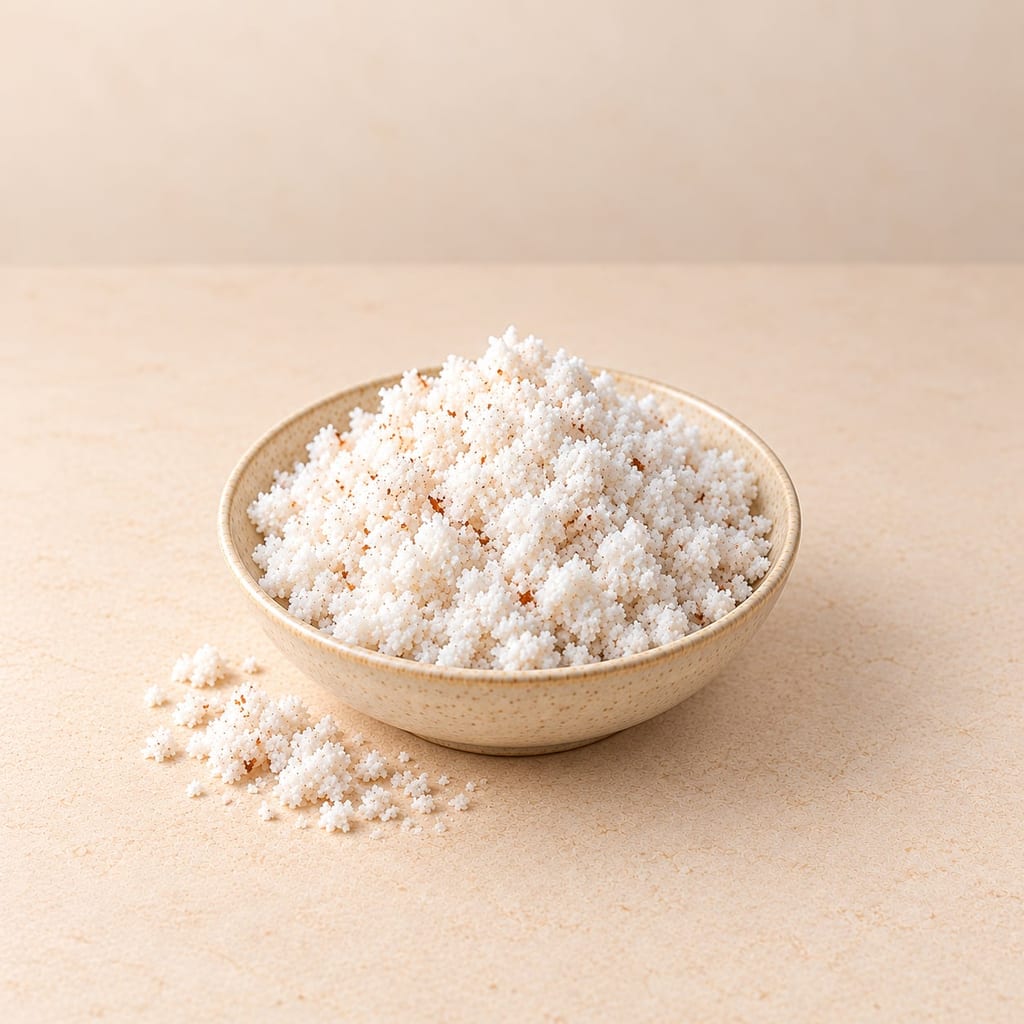
The shredded white kernel of a mature coconut, used fresh or thawed from frozen in sambols and chutneys; its lauric-acid fat is rich and the moist meat is perishable.
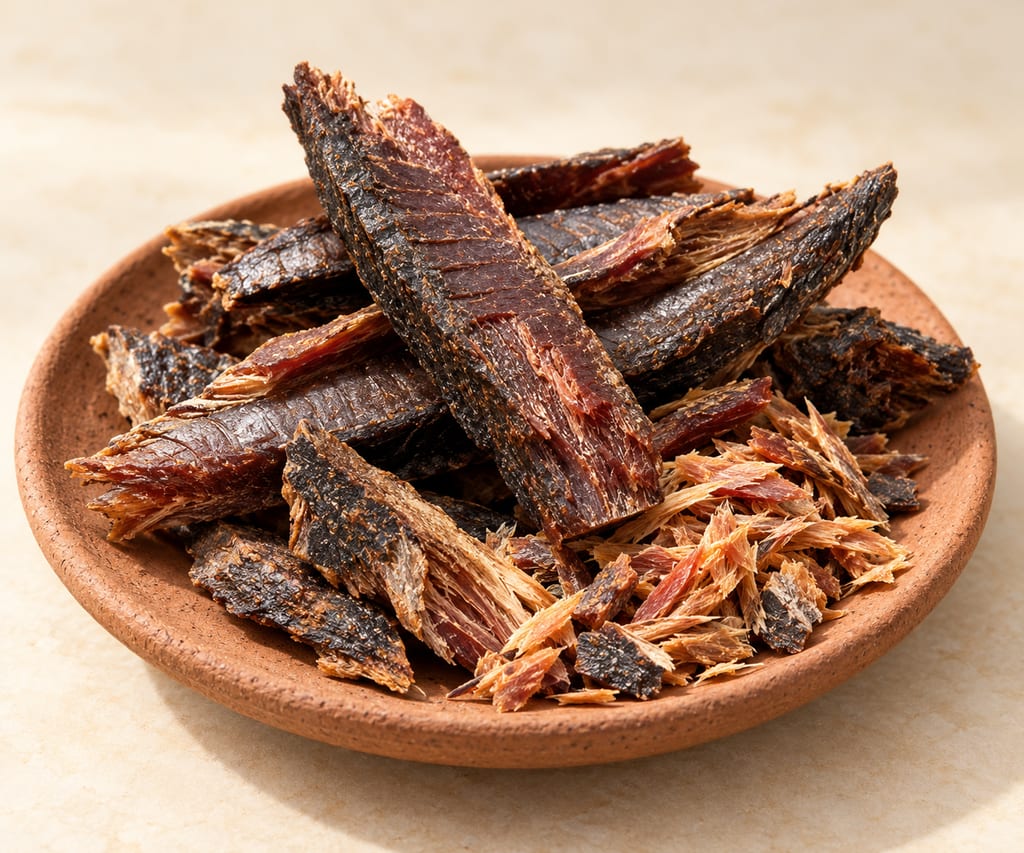
Maldive fish is a hard, smoke-dried tuna product made in the Maldives and traded especially to Sri Lanka, where it is known as umbalakada. Cooks shave or pound it into a concentrated savory seasoning for sambols, curries and other dishes.
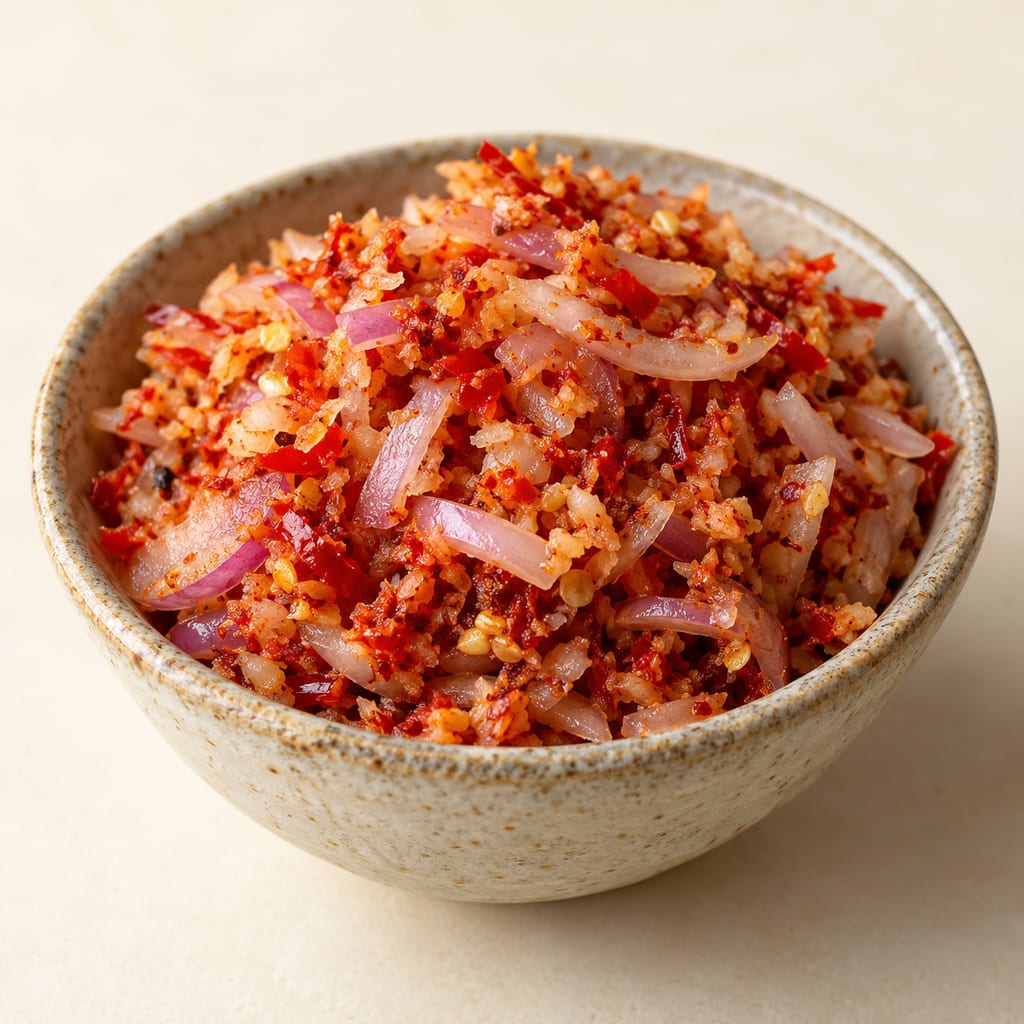
A Sri Lankan lunu miris made by pounding onion and chilli flakes with lime; Maldive fish is optional.
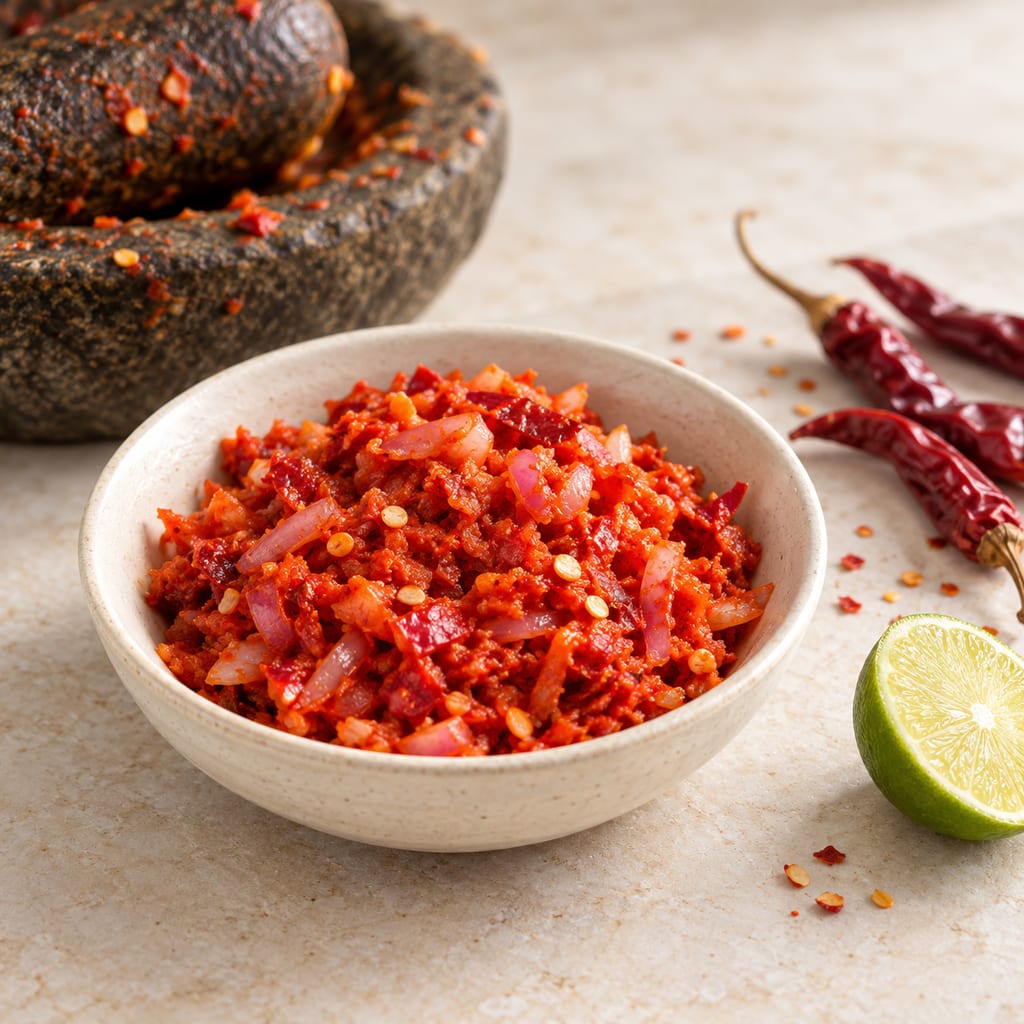
Lunu miris is Sri Lanka's pounded onion and chilli sambol: chilli flakes and red onion crushed with salt and lime, often with Maldive fish, eaten in small amounts with hoppers, pol roti and kiribath.
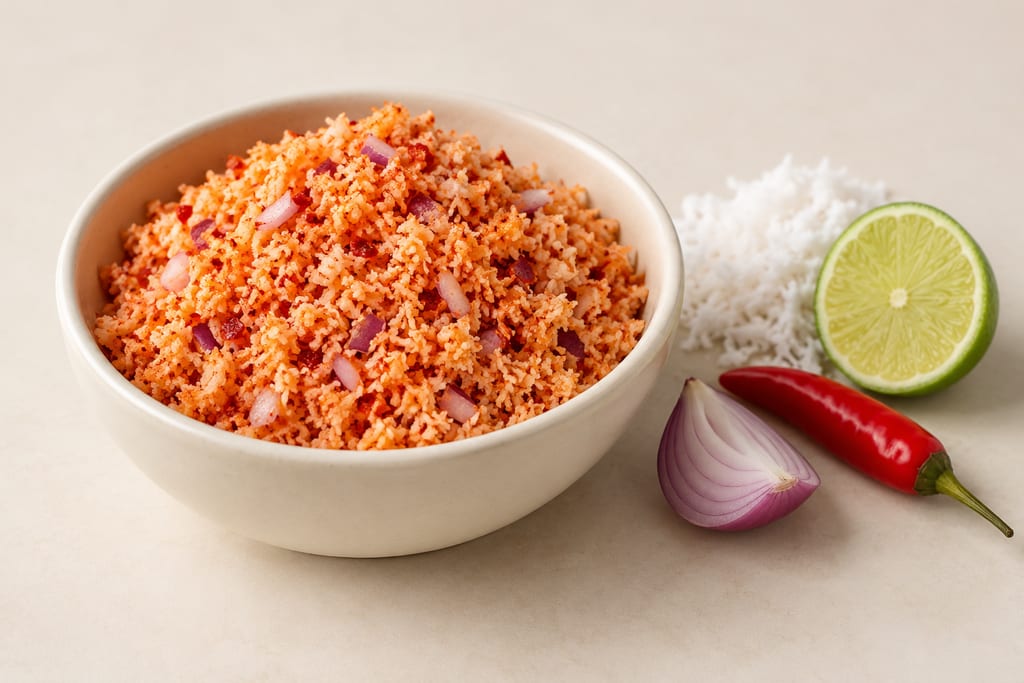
A fresh, untested coconut relish developed in reference to Sri Lankan pol sambol. This formula is an adaptation, not a documented traditional recipe or a preserve.
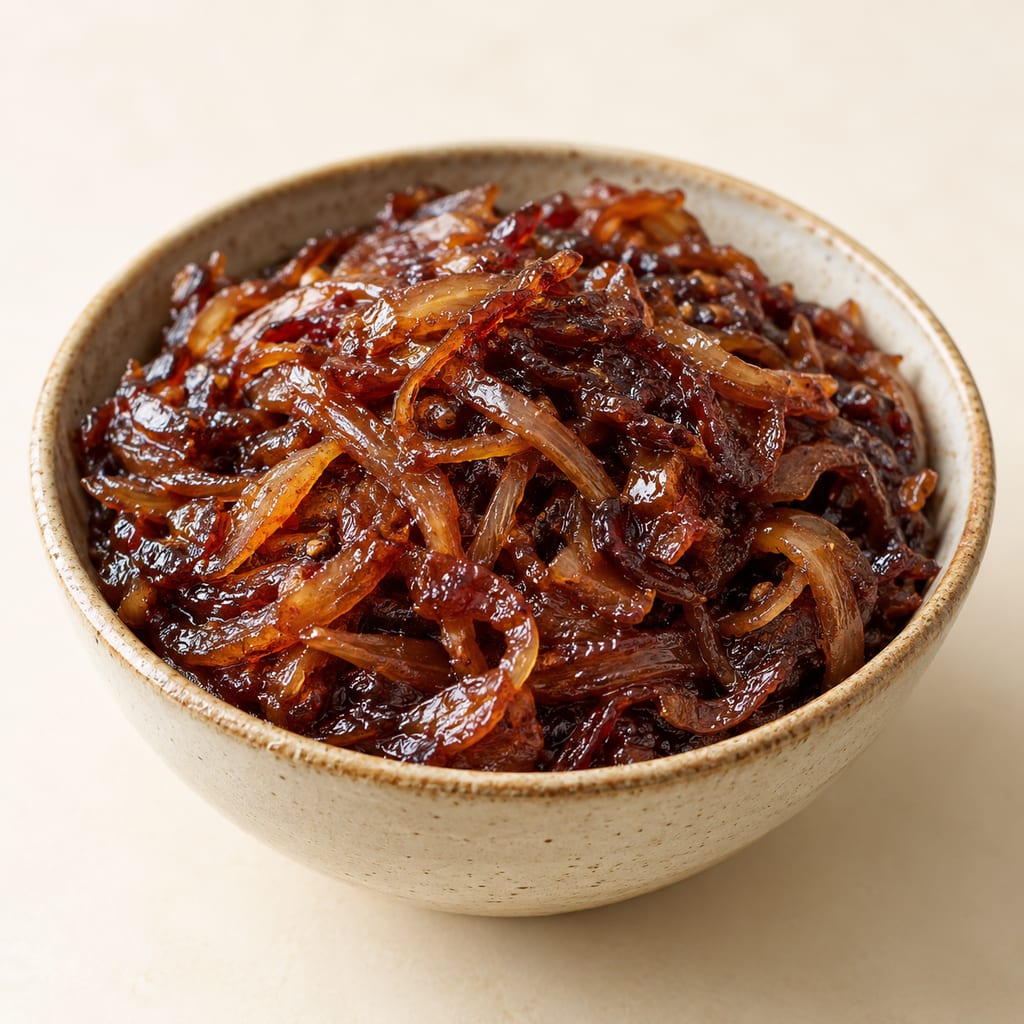
Sri Lankan cooked onion relish: onions fried in oil until dark and jammy, then sharpened with tamarind and sweetened with sugar. Not a fermented condiment.

Achcharu is a family of Sri Lankan vinegar pickles made with mixed vegetables or seasonal fruit and a piquant spice dressing. This version is a quick, refrigerated, non-fermented mixed-vegetable pickle.

Appam, or hoppers, are South Indian and Sri Lankan rice pancakes made from a fermented coconut-and-rice batter and cooked in a curved pan to a crisp lacy rim and a soft, spongy centre.
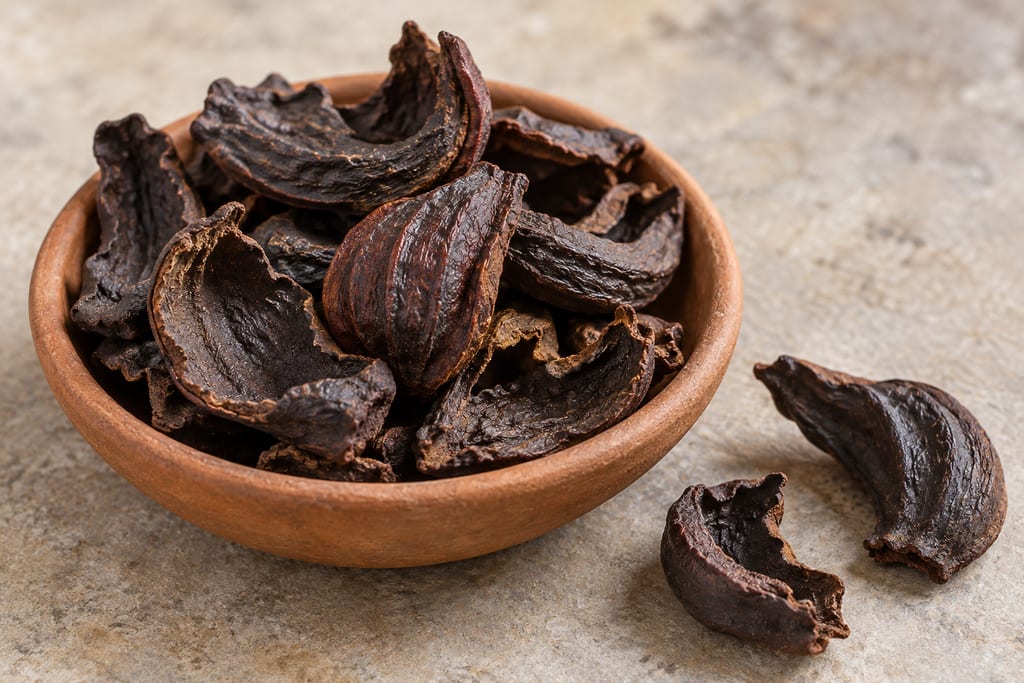
Goraka is the dried rind of Garcinia quaesita, a souring ingredient for Sri Lankan curries. Its drying is documented, but no complete household method is.
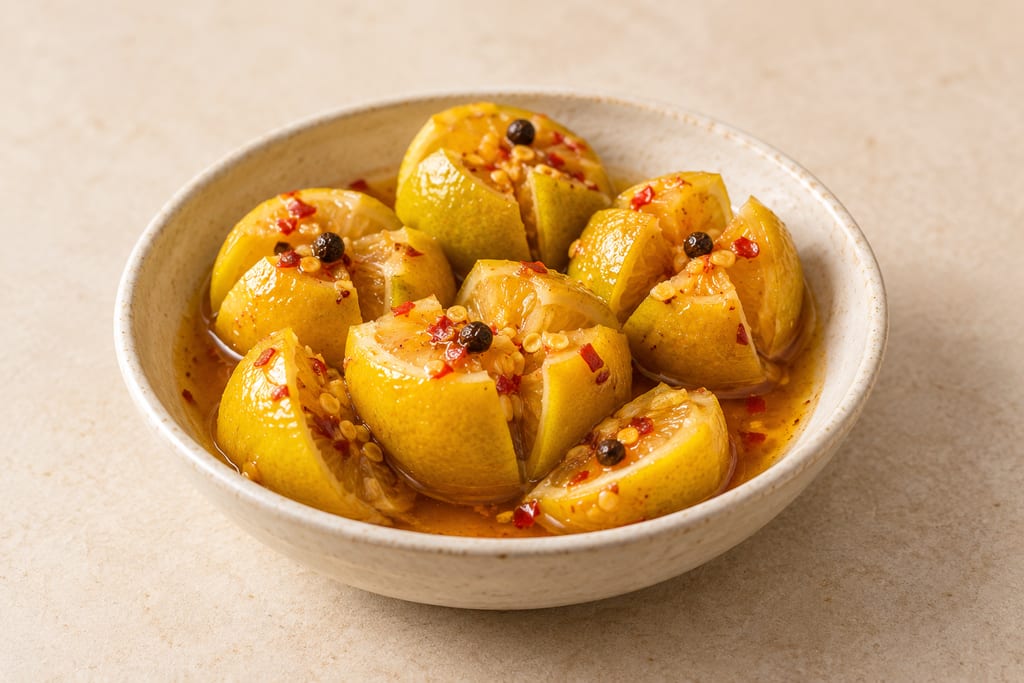
Peter Kuruvita’s published lime pickle stuffs 20 limes with rock salt, then simmers them in vinegar, sugar and chilli before a two-week rest.
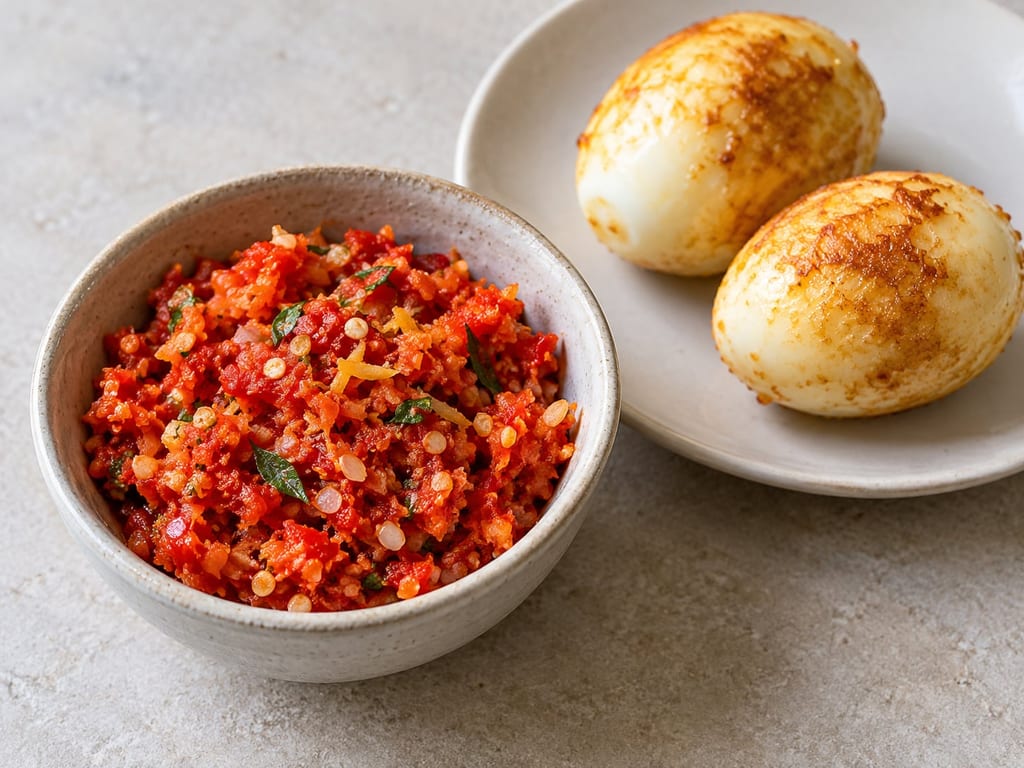
Ai-manas is described as a very hot chilli paste served with Timorese meals. One published version blends fresh chillies, shallots, garlic, Thai basil, ginger, lemon and salt, and serves it with eggs. Sources do not establish a standard formula, precise birthplace or earliest date.
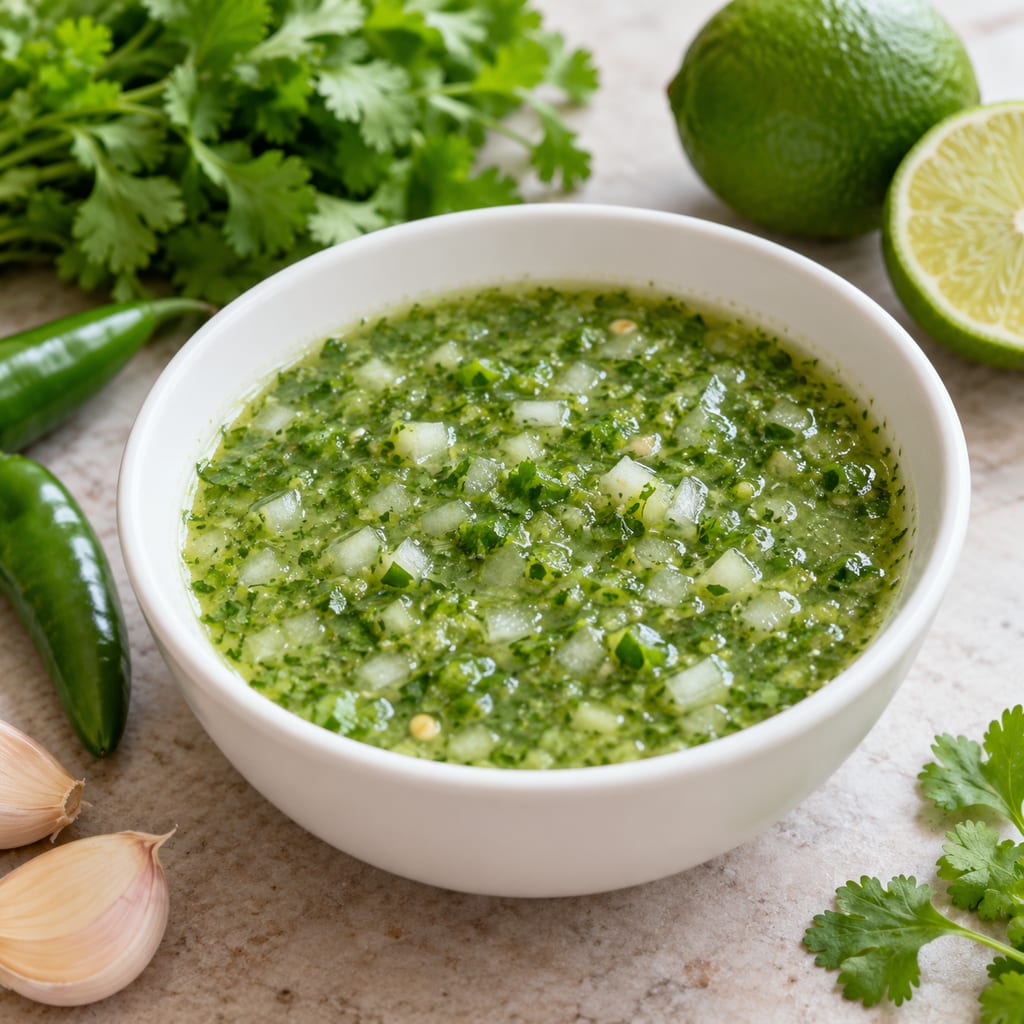
A fresh, uncooked Ecuadorian table sauce of hot pepper, cilantro, garlic and lime, served with most everyday dishes.
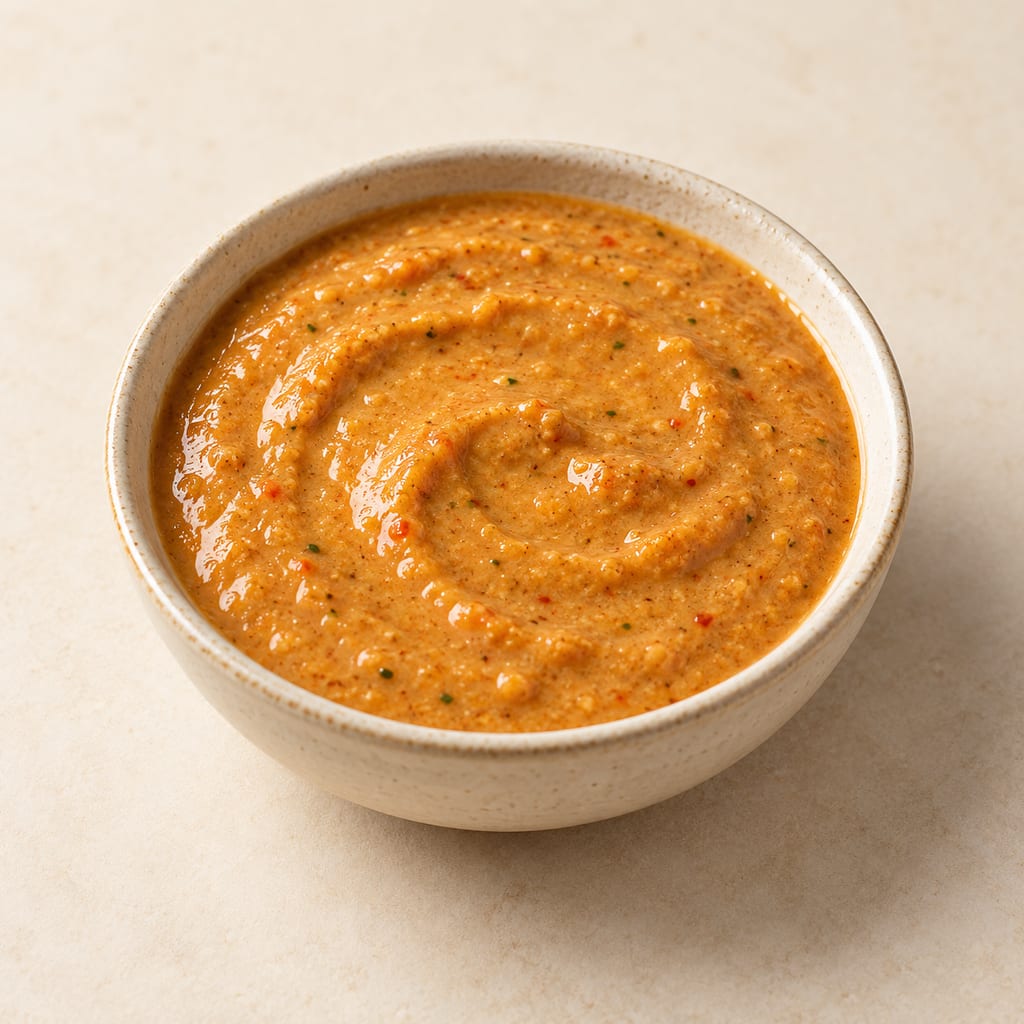
A spicy peanut hot sauce from the Popayán and Cauca region of Colombia, traditionally served with pipián empanadas and tamales.
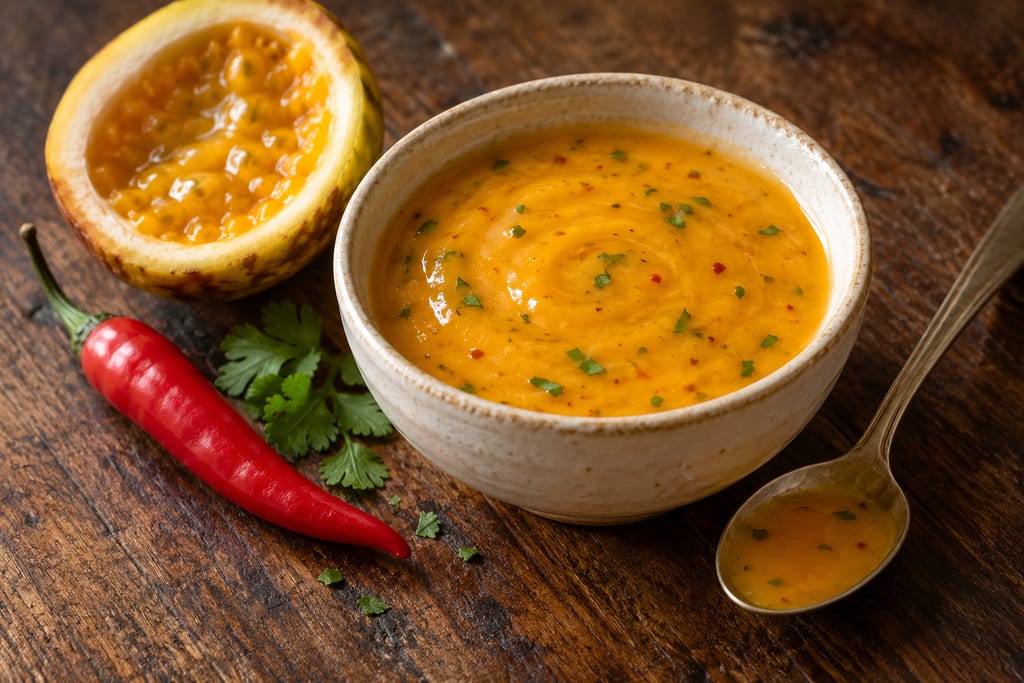
A contemporary Ecuadorian hot sauce that pairs passion fruit juice with boiled chile peppers, oil and lime.
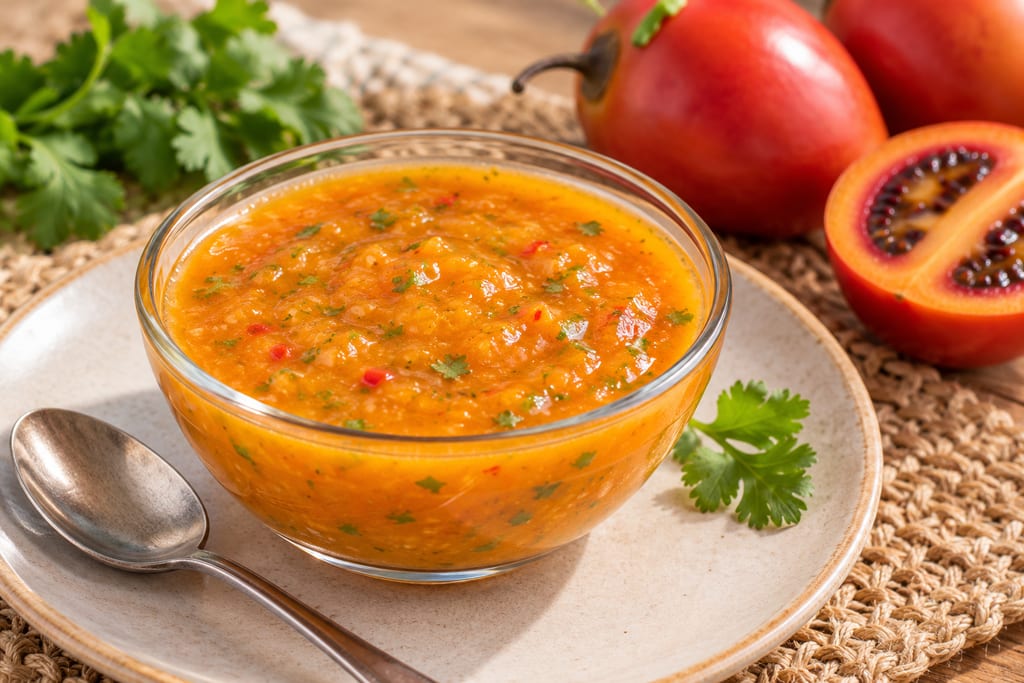
An Ecuadorian hot sauce built on tamarillo, a tart fruit that gives a sharper, fleshier base than ordinary tomato salsa.
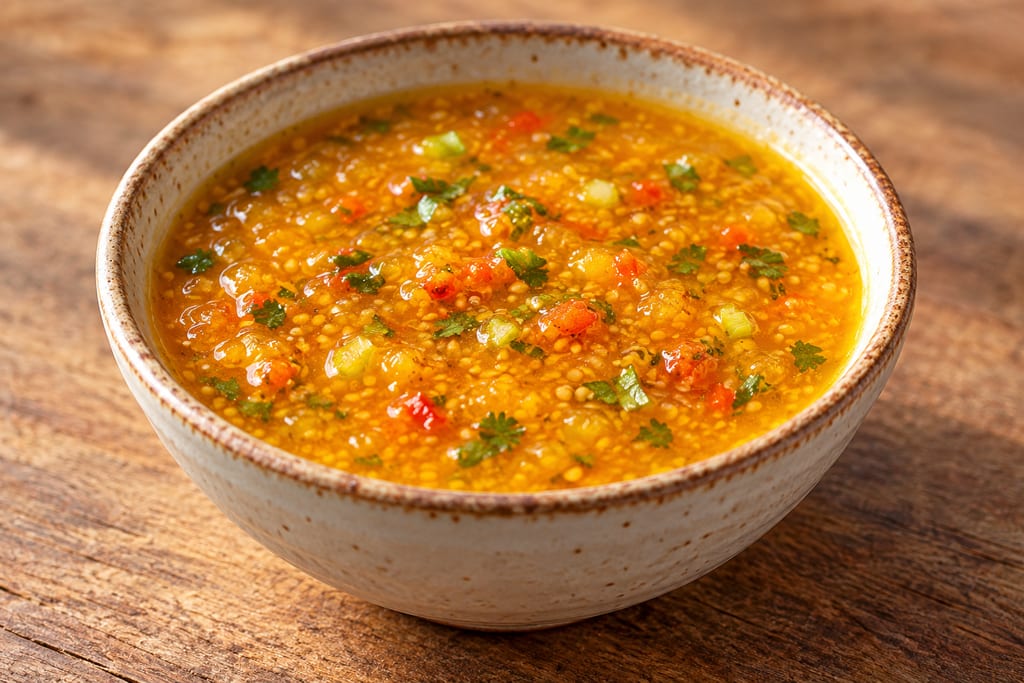
A sweet, tart and spicy Colombian sauce of uchuva, the yellow physalis fruit, with hot pepper, scallion, cilantro and lime.
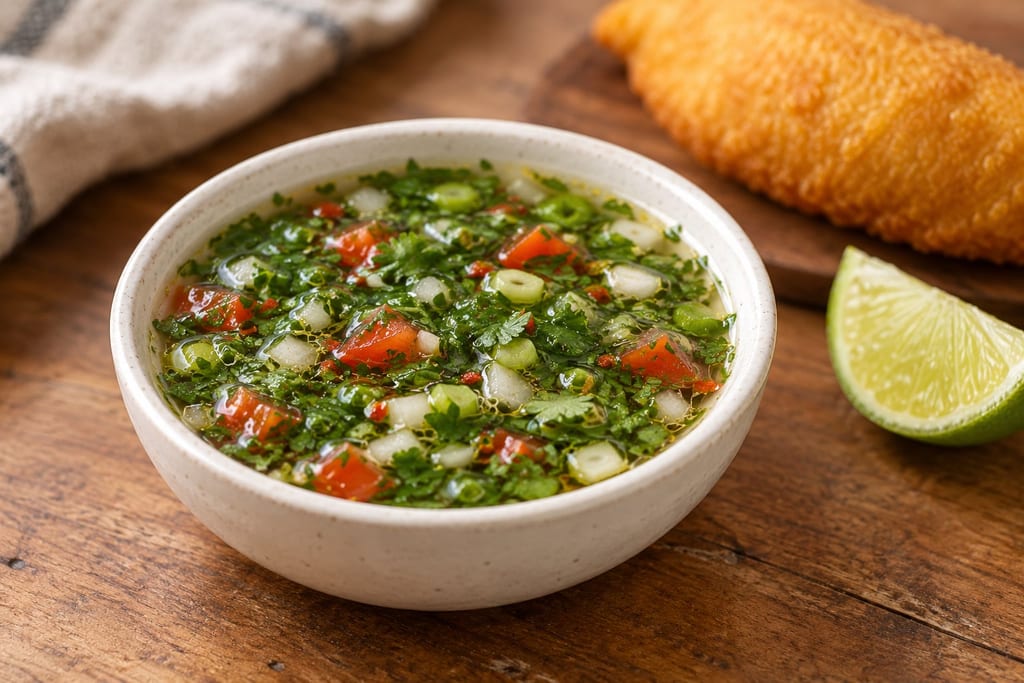
A fresh Colombian table condiment of chopped herbs, scallion and tomato in a vinegar and chile base, served beside fried and filled dishes.
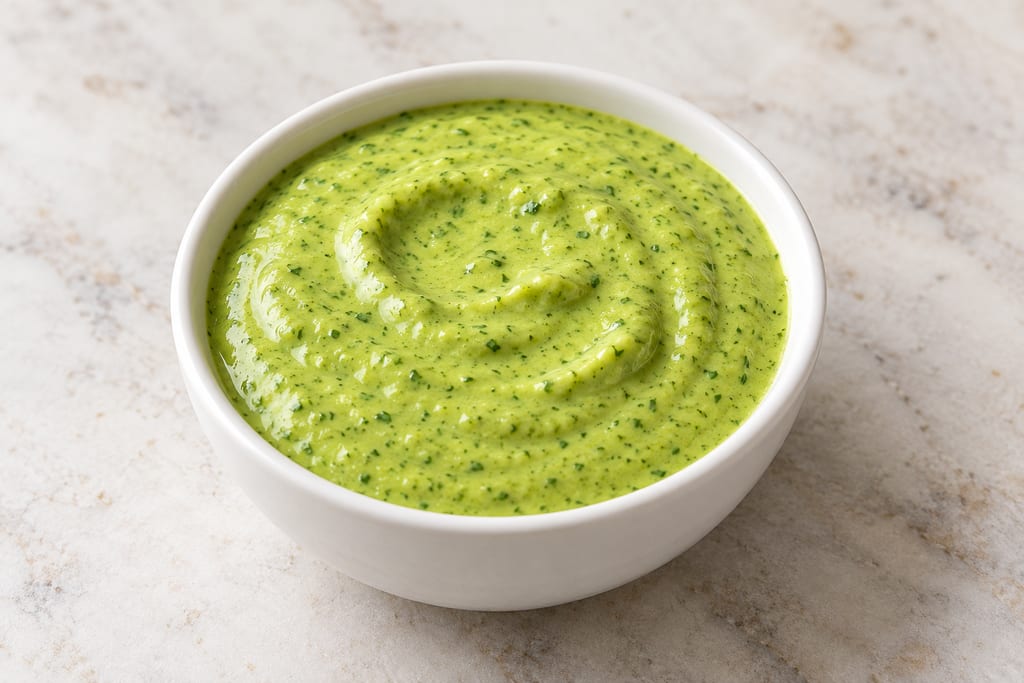
Ají verde is a Peruvian green sauce of coriander, chilli, onion and garlic in a mayonnaise or cheese base. It is best known through Peruvian restaurant cooking abroad.
No community contributions have been published for this entry yet.
Sign in to contribute. Published comments and photos are free to read.
Epicurious, reprinted from Sri Lanka (Frances Lincoln Limited)Inspiration · Recipe · Geography
Pol Sambol (Coconut Relish)Full page lines 19–23 credits authors and publication date; lines 44–49 identify Sri Lankan context/use and yield; lines 51–83 list ingredients, ordered stages and reprint credit.
Cited in: Overview; Coconut in Sri Lankan food culture; The broader sambol family; The documented cookbook recipe; Fresh versus desiccated coconut; Why coconut fat matters; Maldive fish and umami; Chilli in the recipe; Curry leaves: a distinctive aromatic component; The function of tomato; The documented method; Why the recipe blends only part of the ingredients; How it is eaten; Pol sambol at breakfast and other meals; Regional and household variations; Fresh sambol versus cooked coconut relishes; Troubleshooting; Food safety and storage
Sri Lanka: The CookbookMethod
Sri Lanka: The Cookbook — Pol SambolCited by the written account for this record.
Cited in: The documented cookbook recipe; The documented method
Sri Lanka TourismHistory
Sri Lanka Tourism — Traditional Foods and AccompanimentsCited by the written account for this record.
Cited in: Coconut in Sri Lankan food culture; The broader sambol family; How it is eaten; Pol sambol at breakfast and other meals
Cook Book CeylonMethod
Cook Book Ceylon — Sri Lankan RecipesCited by the written account for this record.
Cited in: Regional and household variations; Fresh sambol versus cooked coconut relishes; Troubleshooting