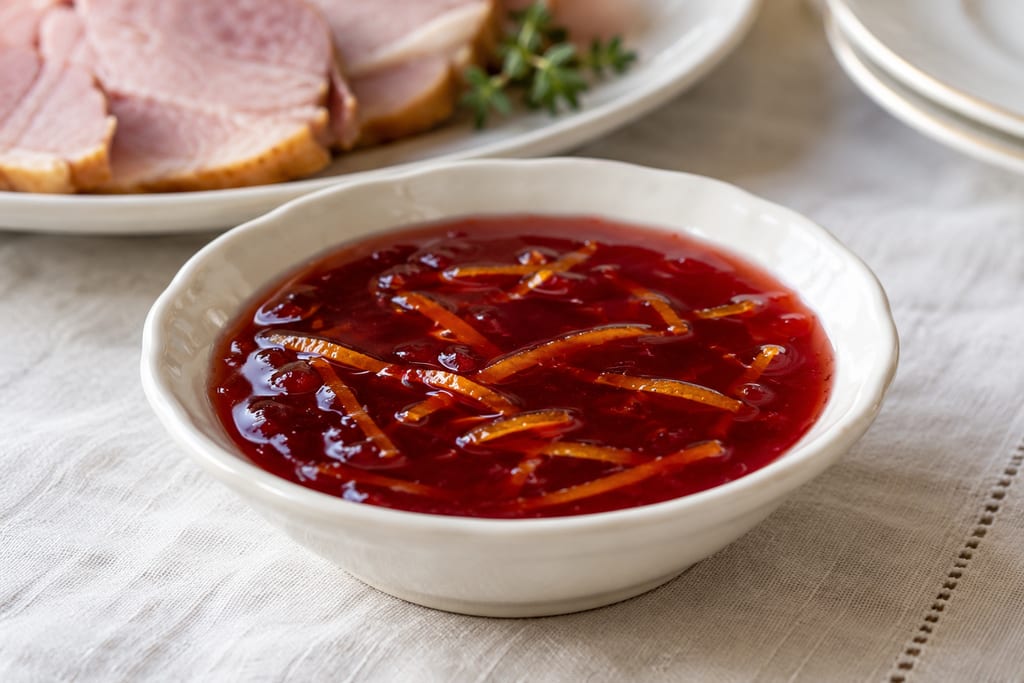
Cumberland sauce
Cumberland sauce is a British condiment of redcurrant jelly, mustard, blanched orange peel and port, traditionally served cold with ham, game and cold meats.
 FermenteaWhere food goes to change
Steak Diane · Diane sauce · Peppercorn cream sauce · green peppercorn sauce
Steak Diane is a restaurant pan sauce of seasoned butter, Worcestershire and parsley, often flamed; the related peppercorn cream sauce is reduced from cream and crushed peppercorns for steak.
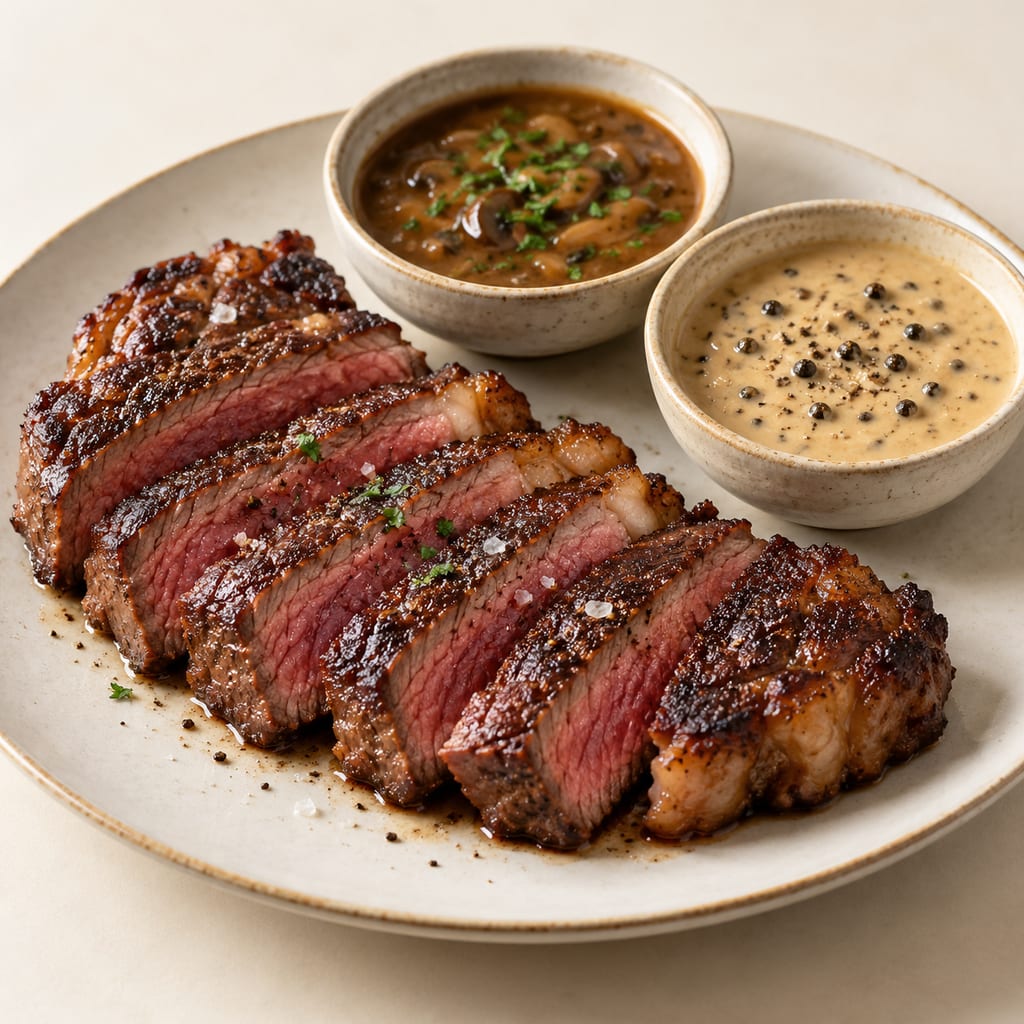
Steak Diane is a steak dish finished in its own seasoned pan sauce, traditionally made at the table. The peppercorn cream sauce is a related restaurant pan sauce, served with beef, lamb, chicken and fish. Both belong to the twentieth-century restaurant repertoire rather than to the French classics.
Steak Diane does not appear in the classics of French cuisine, and sources call London the most likely place of invention.
The earliest attestation is a 1936 Daily Express listing at Jermyn Street, London, which describes a flattened fillet steak cooked at the table and seasoned with Worcestershire sauce. Several chefs later claimed the dish. Bartolomeo Calderoni of Quaglino's was reported in 1955 to have popularised it. Tony Clerici, of Romano's in Sydney, said he invented it at Tony's Grill in Mayfair in 1938 and named it for Lady Diana Cooper.
A 1968 account credits Beniamino Schiavon and Luigi Quaglino at the Plage Restaurant in Ostend, Belgium. The dish appeared in Australia and the United States by 1940 and was standard continental cuisine from the 1940s through the 1960s.
Older recipes use sirloin and newer ones often use tenderloin, cut or pounded thin. The steak is sautéed in butter seasoned with Worcestershire sauce, pepper, salt and chopped parsley. Early versions were not flamed. The sauce is made from the seasoned pan juices.
1953 New York recipes add some or all of brandy, sherry, chives, dry mustard and lemon juice, and one flames the sauce with brandy, dry sherry or Madeira before pouring it over the steak. Modern recipes add cream, mushrooms or both, while others stay closer to the early versions.
A green-peppercorn sauce emerged in the late 1960s, according to Lovegren (1995), when preservation advances made it possible to export the berry from Madagascar. The sauce is cream reduced with crushed peppercorns, and black, green and pink peppercorns can each be used. Some recipes use sansho, which is similar in flavour but not a peppercorn.
Brandy or cognac, butter, wine, shallots, garlic and seasonings such as bay leaf, star anise, tarragon and salt are common additions. Whiskey can replace brandy. Pink peppercorns caused allergic reactions in some diners, so the type of peppercorn should be known to the cook and named on the plate.
The sauces are served hot. Peppercorn cream sauce is used with filet mignon and other beef tenderloin cuts, lamb, chicken, tuna and salmon, and it is used in some versions of steak au poivre.
Neither article gives storage, holding or reheating advice. Because both are cream and meat-juice sauces, a batch that is kept or cooled needs a tested method that these sources do not supply.
Several inventors are claimed for Steak Diane, including Bartolomeo Calderoni at Quaglino's, Tony Clerici at Tony's Grill in Mayfair (1938, said to be named for Lady Diana Cooper), and Beniamino Schiavon and Luigi Quaglino at the Plage in Ostend (1968 claim). Sources call London the most likely place of invention and says the dish is not in the French classics.
Scaling: source batch only
Peppercorn sauce sources report that pink peppercorns, from a different species, caused allergic reactions in some diners.
Hazard sourceA cream sauce served over cooked meat supports bacterial growth if it is held warm or cooled slowly; the sources give no holding advice.
Hazard sourceName the peppercorn type on the plate for diners with allergies
Control sourceThe sources give no storage or holding advice for these sauces. Serve them fresh and use a tested method for any batch kept.
The 1936 Daily Express listing places it at Jermyn Street; sources call London the most likely place of invention.
Cumberland sauce is a British condiment of redcurrant jelly, mustard, blanched orange peel and port, traditionally served cold with ham, game and cold meats.
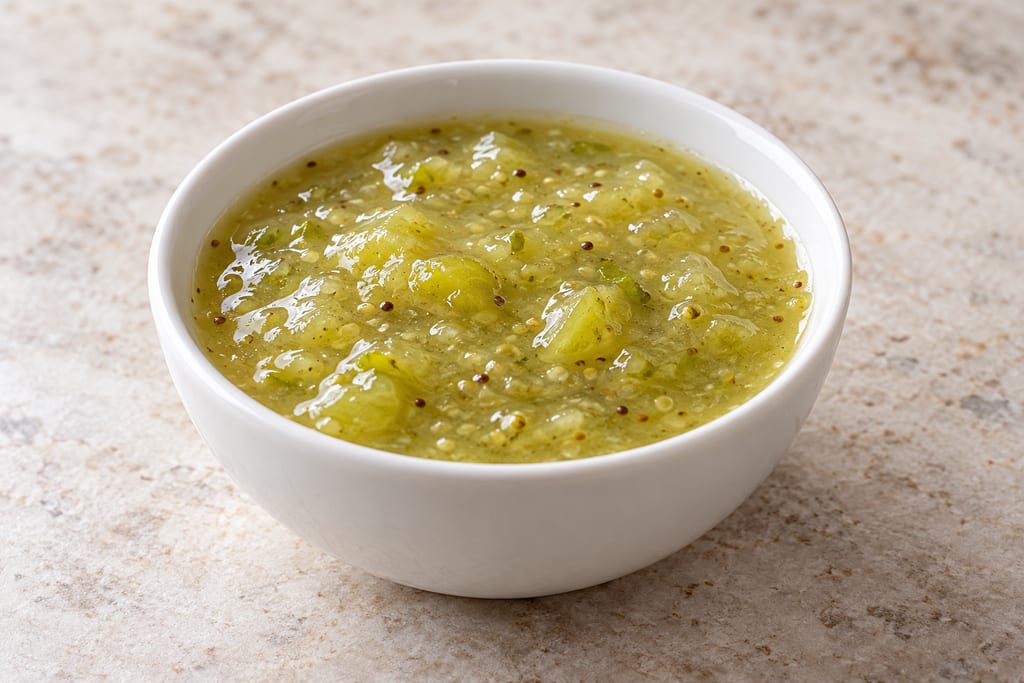
Gooseberry sauce is a soft, tart sauce of cooked green gooseberries, sharpened with wine or vinegar and lightly sweetened, traditionally served with mackerel.
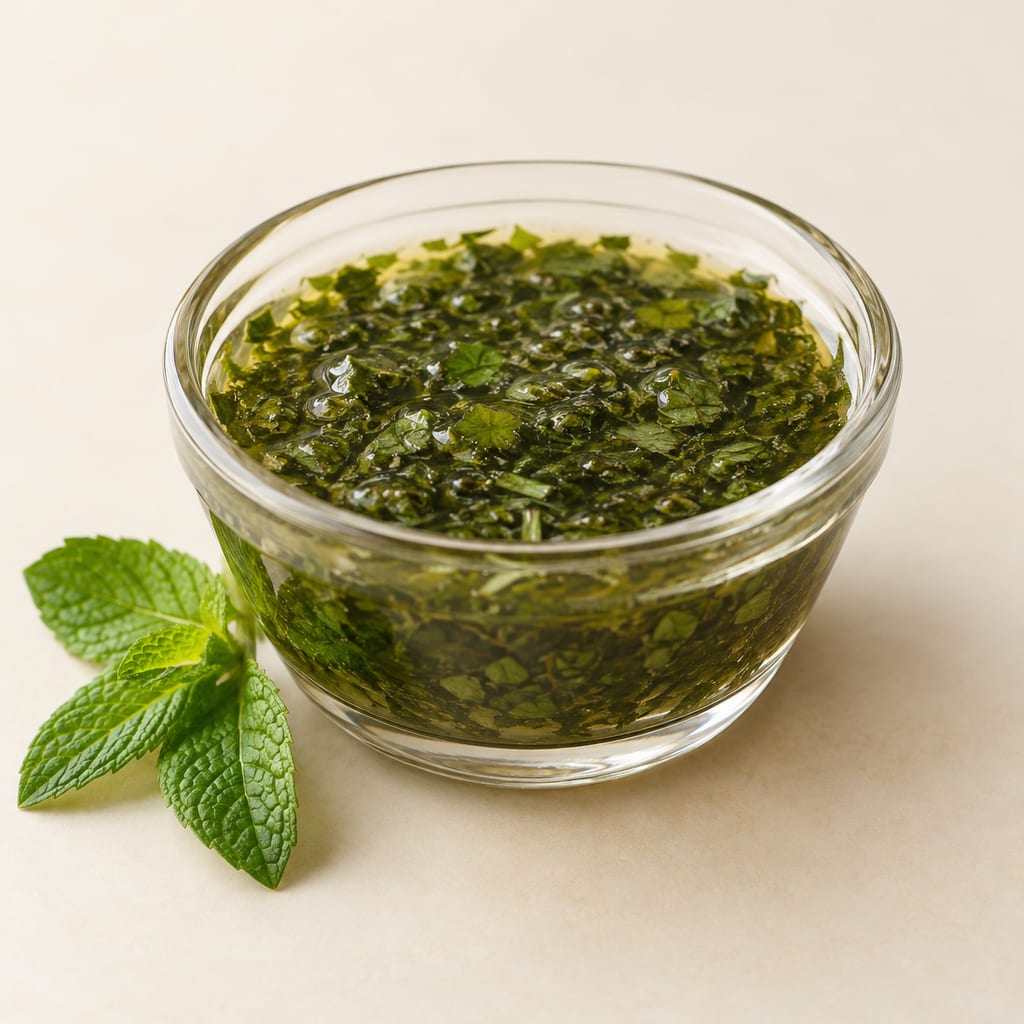
Finely chopped fresh mint steeped in a sweet and sharp liquid of white wine vinegar, sugar and water, the sauce traditionally served with roast lamb in Britain.
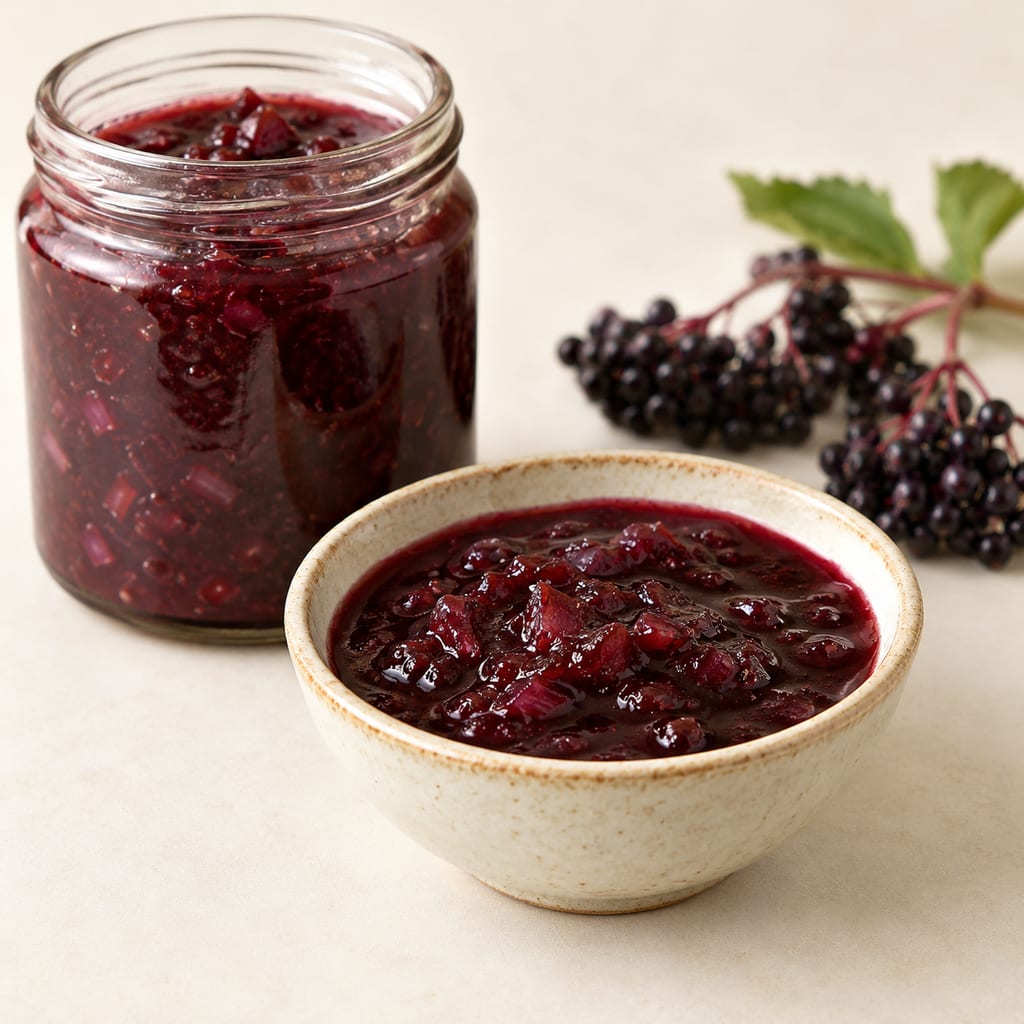
An English elderberry condiment of vinegar, shallots and warm spices, historically called a catsup and tied to Pontac's Head tavern in London.
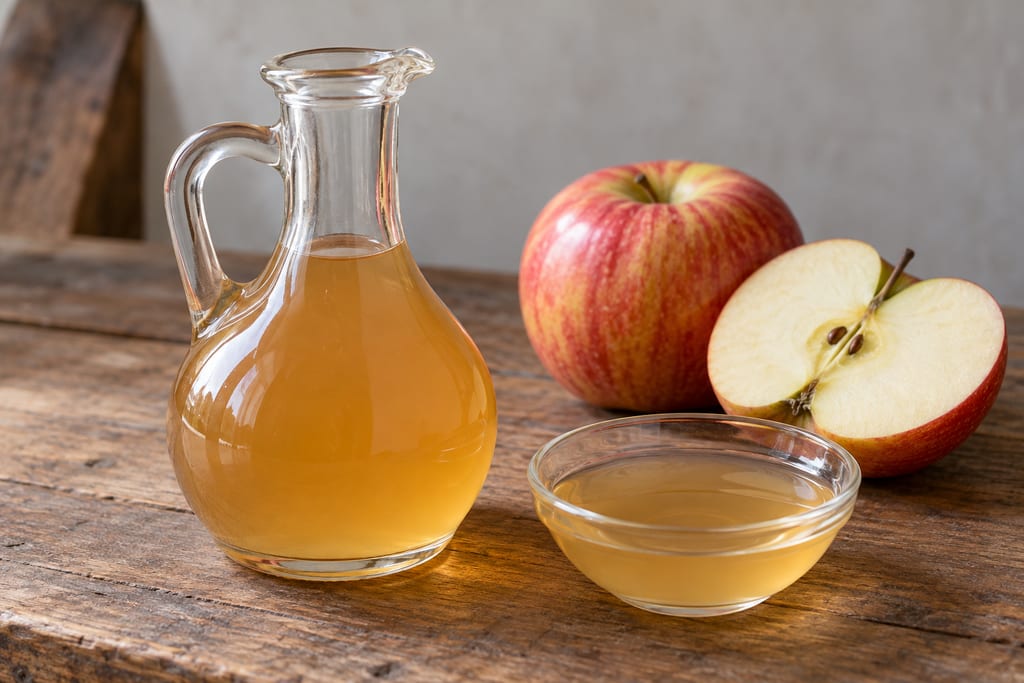
Cider vinegar is made when acetic-acid bacteria use oxygen to turn the alcohol in dry apple cider into acetic acid. This historical cask method begins with fermented cider and differs from apple-scrap vinegar made with sugar and water.
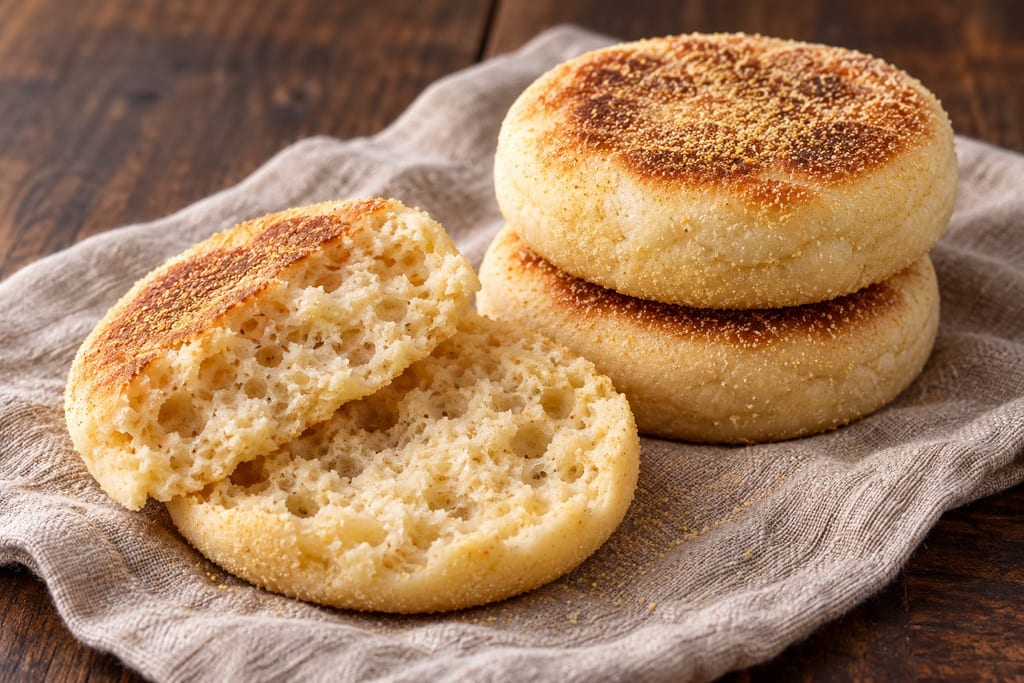
King Arthur’s six-piece English muffin batch uses a yeast preferment, two folds and a skillet or electric griddle; it is distinct from the sourdough-and-yeast version already catalogued.
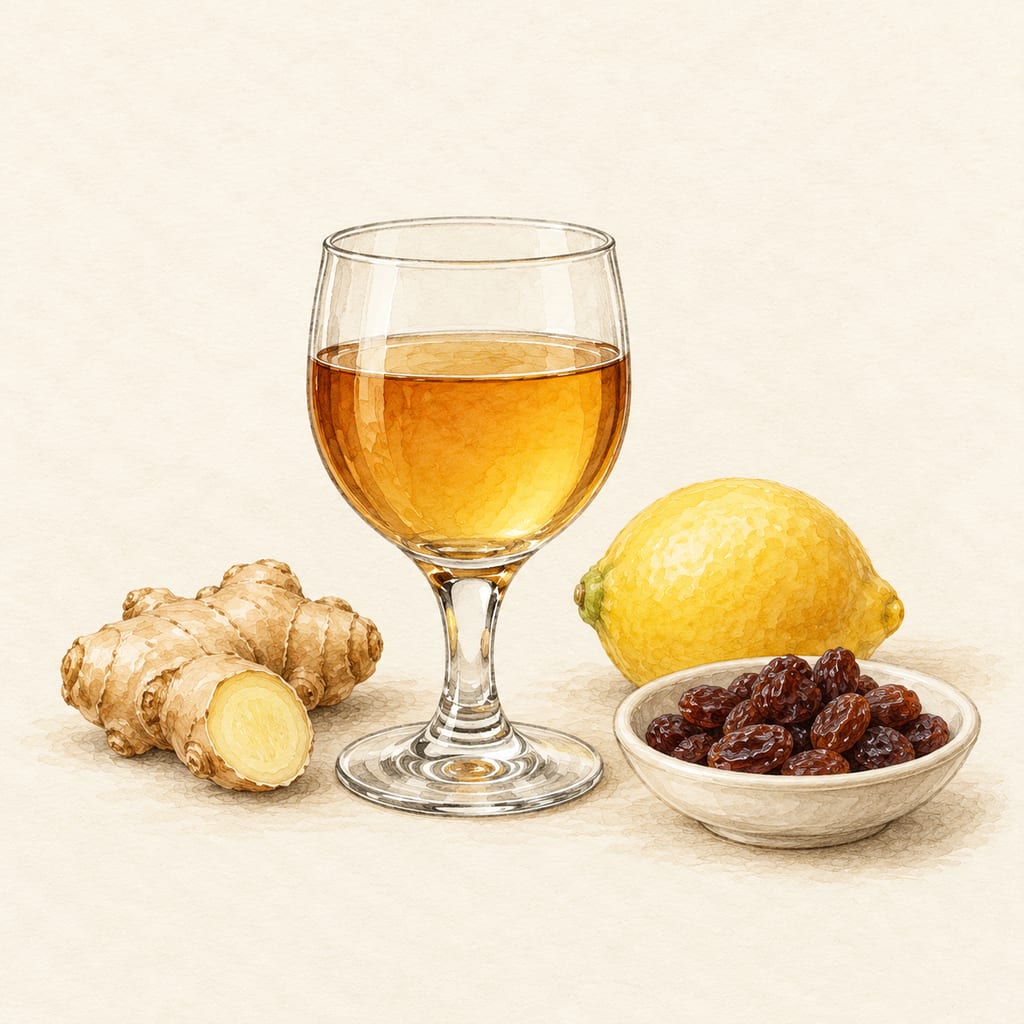
A Victorian household wine of boiled sugar, lemon and bruised ginger, worked on raisins in a cask for a fortnight and finished with brandy, made nine gallons at a time.
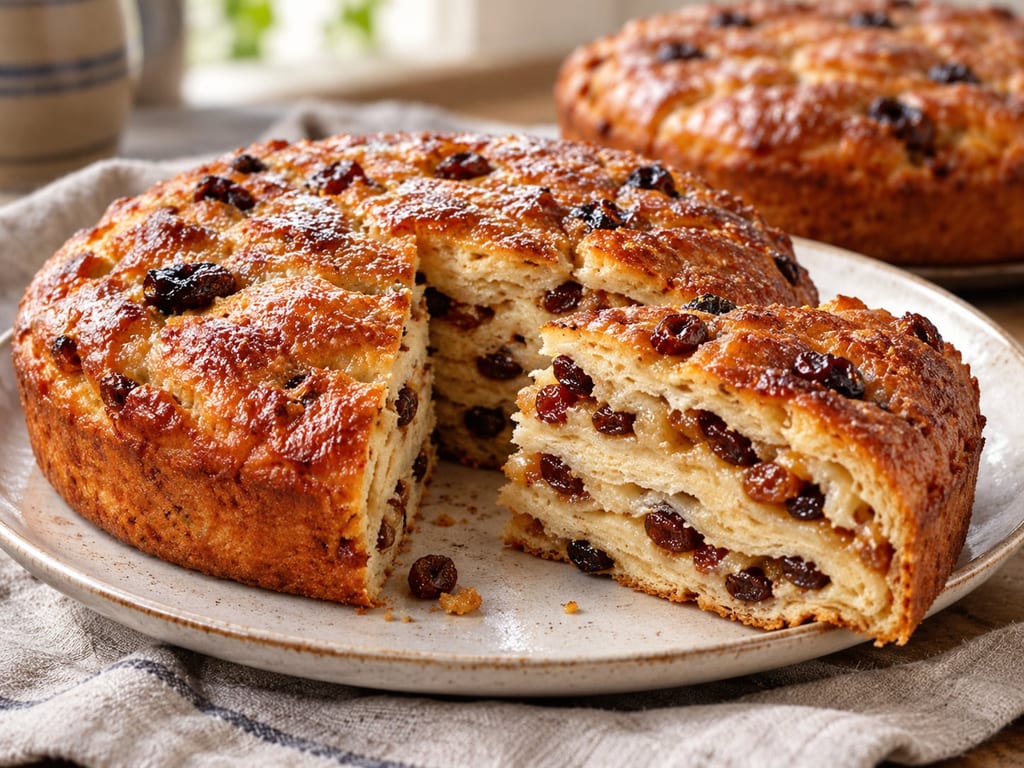
A yeast dough is folded around sweetened lard and dried fruit, then baked in tins until the bottom caramelizes.
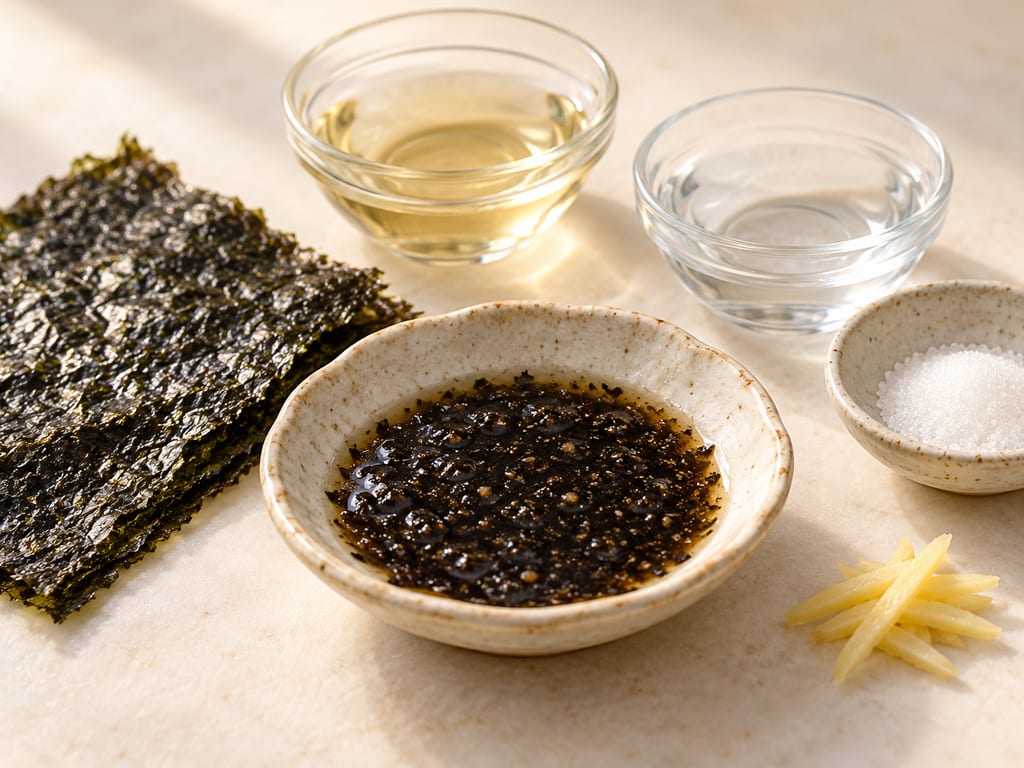
A fresh condiment in which crumbled nori softens in lightly sweetened vinegar and water. It is not vinegar fermented from seaweed.
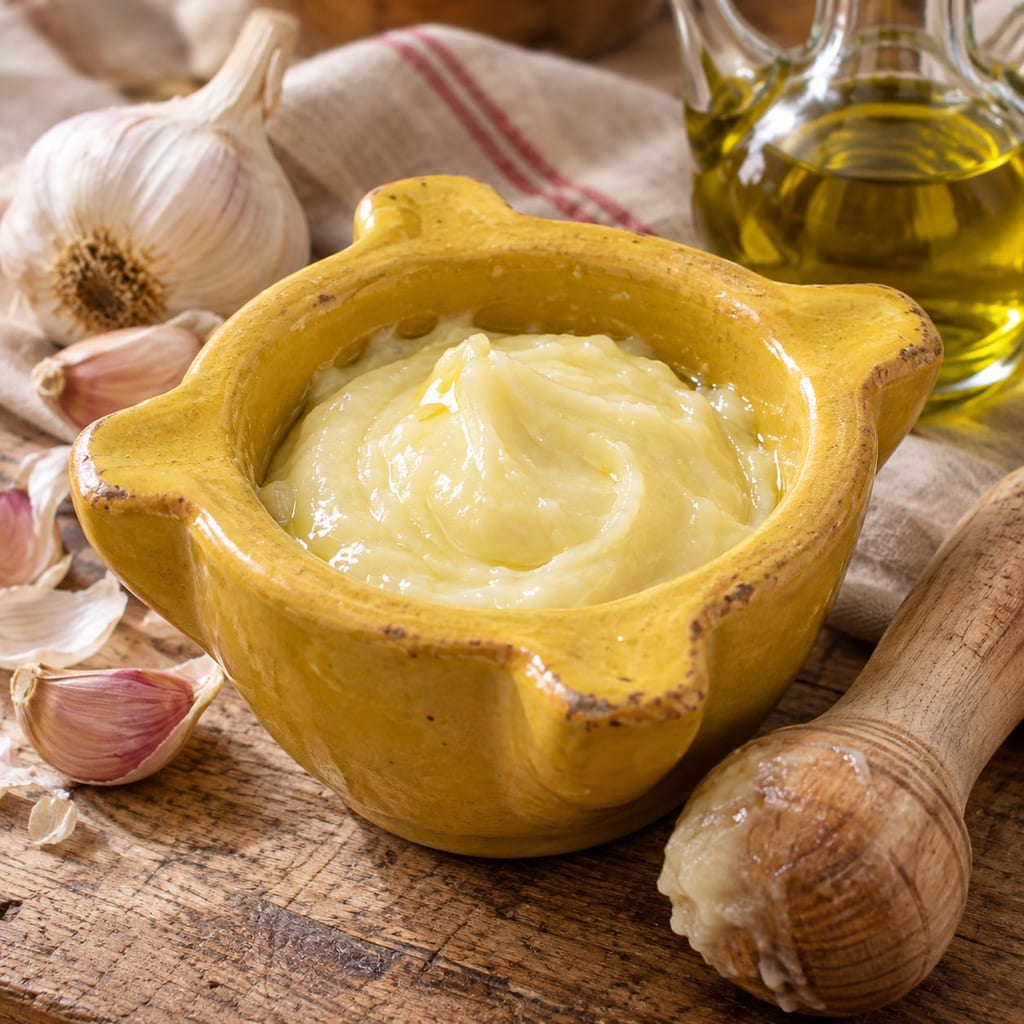
Traditional Catalan allioli is a dense emulsion of garlic, olive oil and salt made slowly in a mortar. This measured Barcelona-style version keeps egg-based garlic mayonnaise distinct.
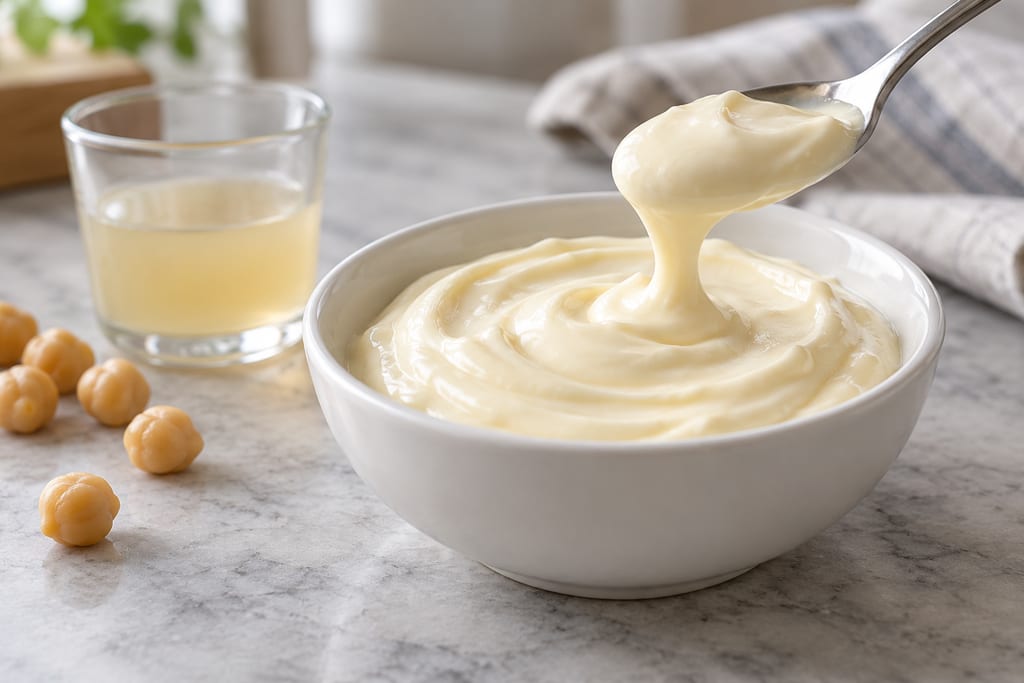
An eggless, untested emulsion made with canned chickpea liquid. Nominal yield 255 g.
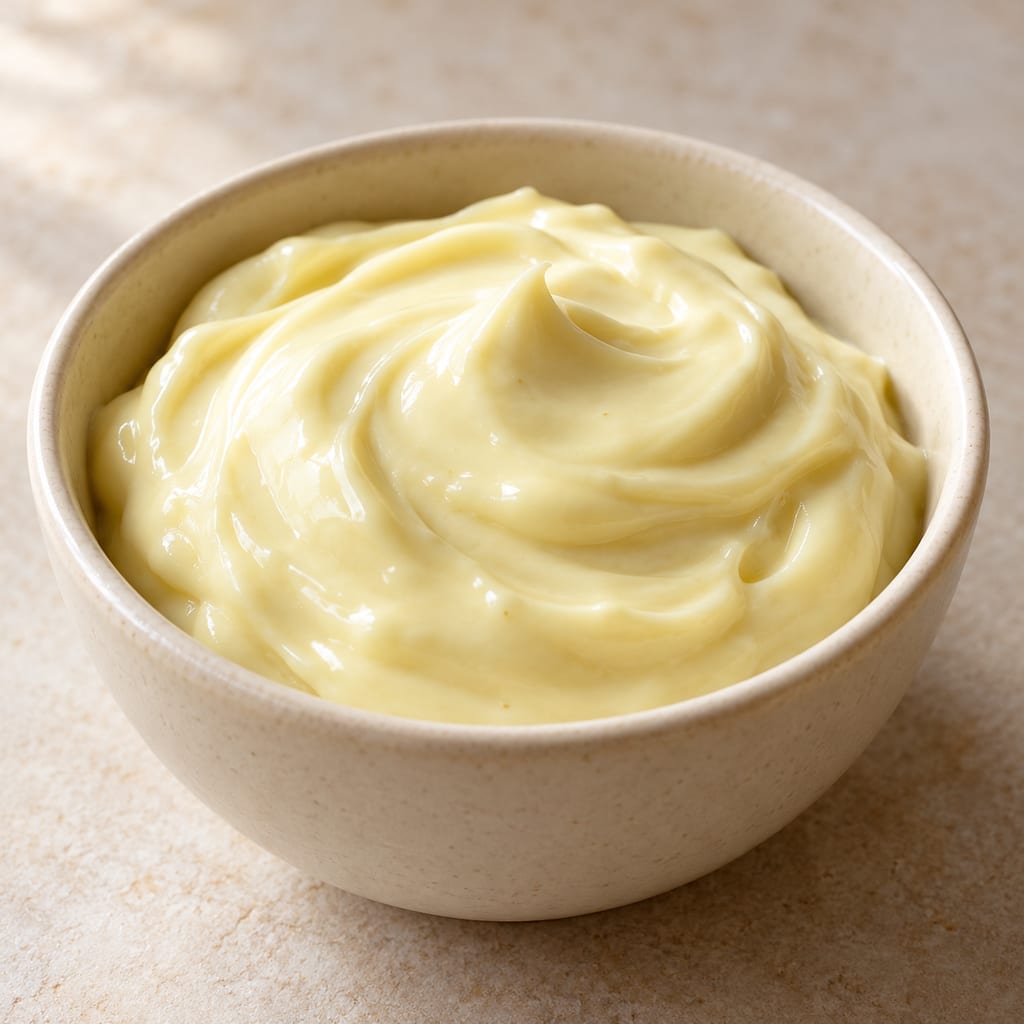
Avocado-oil mayonnaise is an ordinary egg-and-oil emulsion in which avocado oil supplies the oil phase. The oil changes flavour and colour, and it does not preserve the sauce.

Bechamel is a white sauce of milk thickened with a butter and flour roux, one of the French mother sauces, and the base from which Mornay and other cheese and cream sauces are made.
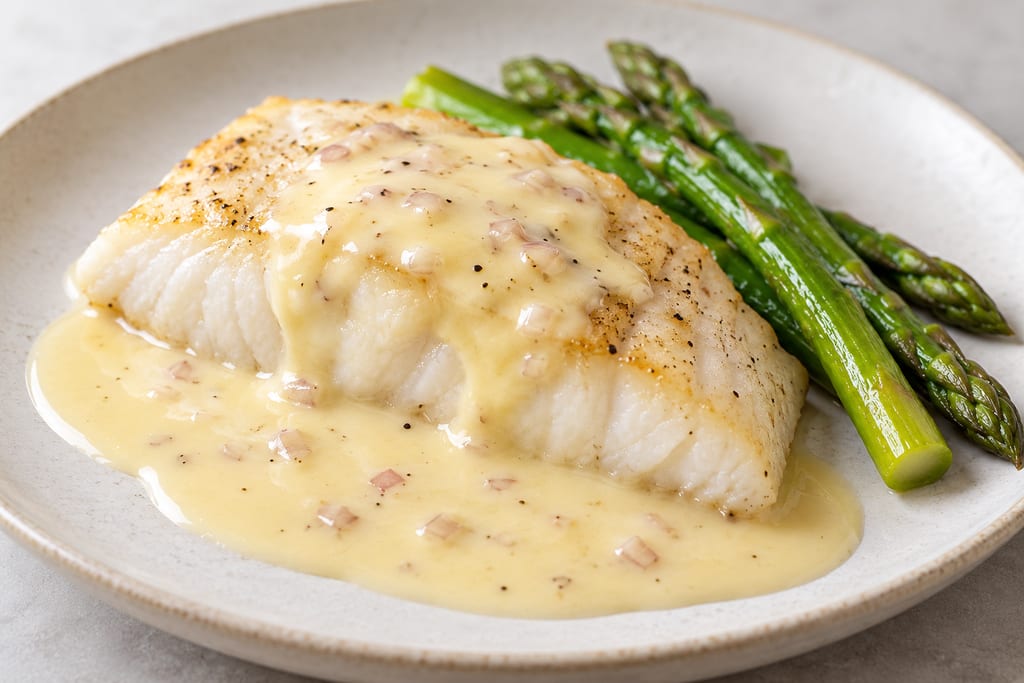
Beurre blanc is a warm emulsion of cold butter whisked into a reduction of white wine, vinegar or lemon juice and shallot, a sauce from the Loire Valley and its red-wine version, beurre rouge.
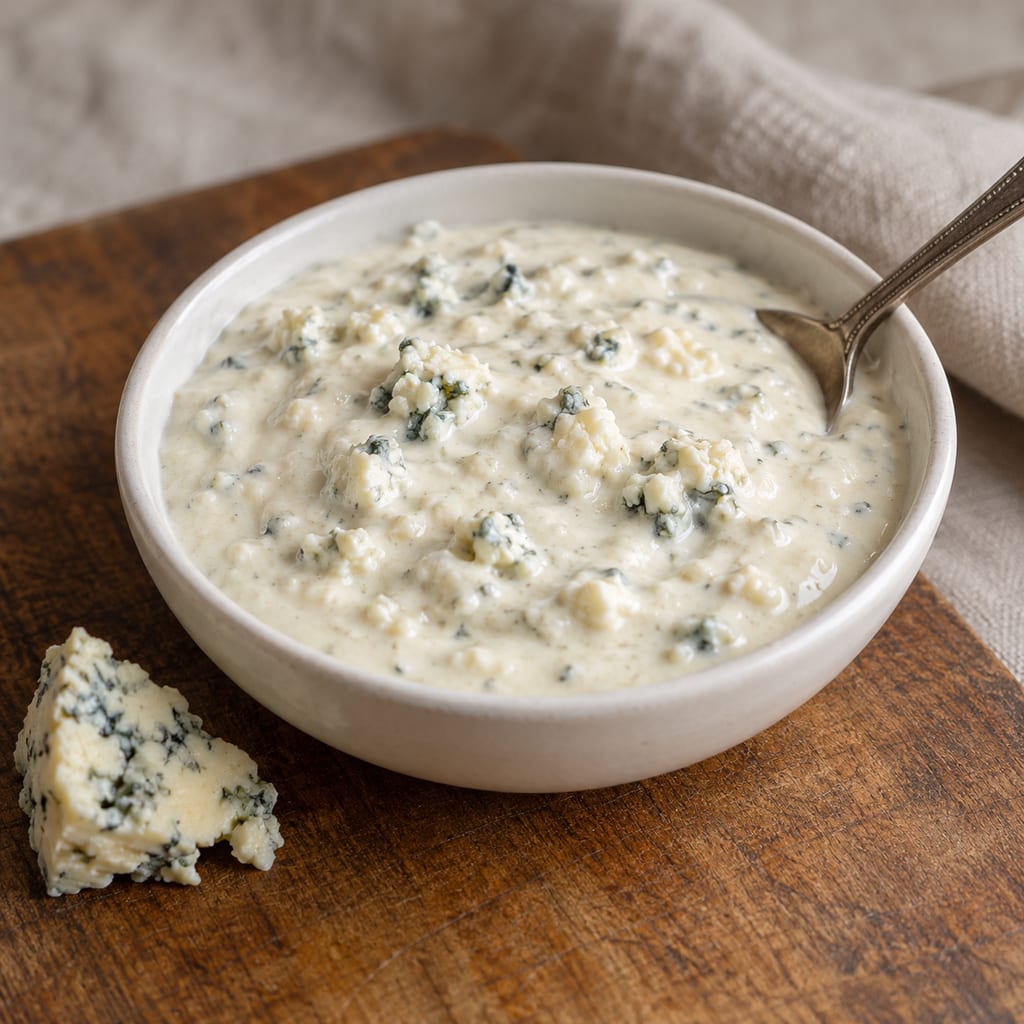
Blue cheese dressing is a creamy dressing built on crumbled blue cheese mashed into buttermilk, with sour cream, mayonnaise, vinegar and seasoning, and kept cold for up to two weeks.
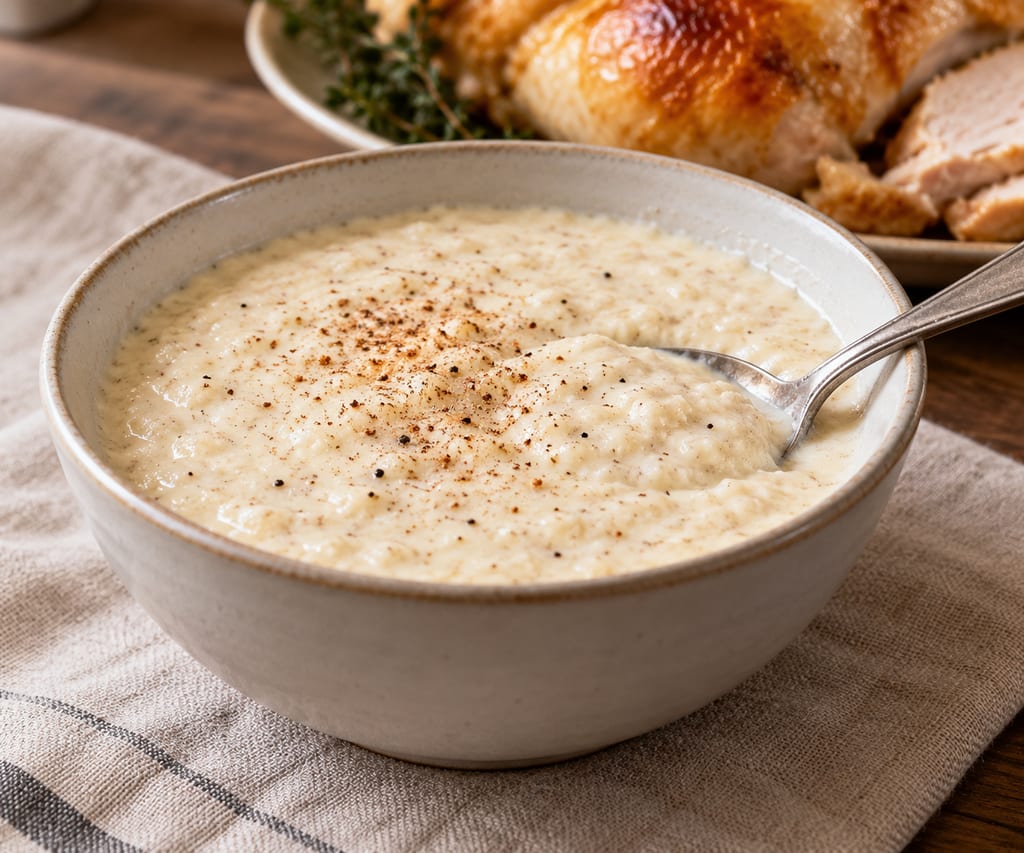
Bread sauce is a British sauce of milk infused with onion, clove and bay, thickened with stale breadcrumbs and finished with butter, served with roast chicken or turkey.

Soft, spreadable Calabrian pork sausage made with a great deal of red chilli and fatty pork, stuffed into natural casings, sometimes smoked and matured while staying soft.

A way to add independent temperature logging to an existing food dehydrator without changing its built-in controls or protections. It is a monitoring method, not a rewiring plan.

Pleurotus cystidiosus is the abalone mushroom, a cultivated oyster-type fungus with dark brown caps that grows more slowly and is more demanding than other Pleurotus species.

A dark, balanced vinegar from Emilia-Romagna made by combining cooked or concentrated grape must with wine vinegar, then acetifying and refining it in wood under a protected specification.

A living dairy inoculum that starts controlled cream fermentation, developing acidity and aroma before sour cream or cultured butter is finished.

A small electric incubator holds jars at a selected temperature for yogurt and other documented warm food preparations. Controls, capacity and vessel arrangement vary by model.

Adygean salt is a seasoned table salt associated with Adygea and the wider North Caucasian culinary tradition. Salt is blended with garlic and a variable selection of herbs and spices; the exact mix depends on the named style and maker.

The African Caesar-group mushroom, Amanita masasiensis, is a wild ectomycorrhizal species of central and southern African woodlands, eaten locally. The genus contains deadly poisonous species, so identification needs care.
No community contributions have been published for this entry yet.
Sign in to contribute. Published comments and photos are free to read.
WikipediaHistory · Method · Variants
Steak Diane1936 Daily Express listing; competing inventors; Clerici 1938; Ostend 1968 claim; 1953 variants; mushrooms and cream; no storage advice
Cited in: Pan sauces of the restaurant table; Who invented Steak Diane; Making the steak and its sauce; Serving and holding
WikipediaMethod · Variants · Safety
Peppercorn sauceLate 1960s green peppercorn sauce; Lovegren 1995 (cited); peppercorn cream reduction; additions; sansho; pink peppercorn allergy; no holding advice
Cited in: Pan sauces of the restaurant table; Peppercorn cream sauce; Serving and holding