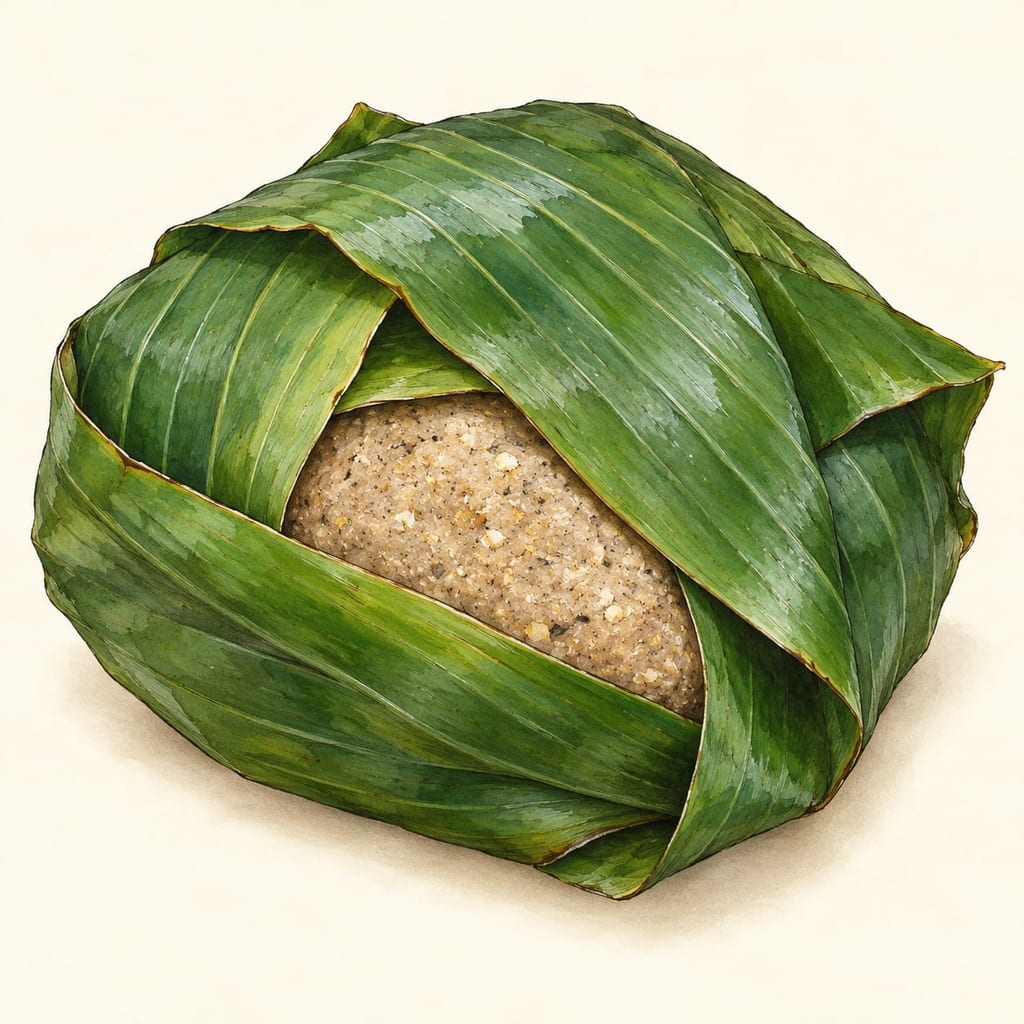
Pozol leaf package
Plantain leaves wrap pozol’s nixtamalized maize dough during fermentation, limiting drying and keeping portions portable in southeastern Mexico.
 FermenteaWhere food goes to change
pozol · pozol · pozole · posole · chorote
Pozol is lime-cooked maize ground to dough, shaped into balls, wrapped in banana leaves and fermented for days, then stirred into water as a sour drink in southeastern Mexico.

Pozol is a fermented maize dough and the drink made from it. Maize is cooked with lime, ground, shaped into balls and wrapped in banana leaves, where it ferments for days. Pieces of the dough are then stirred into water to make a sour, whitish drink that is taken at meals, during work or at any hour as refreshment.
A Mexican university overview calls it a drink of Maya origin and a basic food for many peoples of southern and southeastern Mexico, among them the Chontal, Chol, Maya, Lacandón, Tzotzil (Chamula), Tzeltal, Zoque, Mam and Zapotec, as well as the mestizo population. FAO adds that it is a daily staple for large communities across social classes, and that daily intake runs from 80 to 1,000 g of undiluted dough per person.
FAO's account begins with 1 to 1.5 kg of shelled kernels, preferably white maize, boiled for an hour in 1 to 2 litres of a solution of about 10% calcium hydroxide. The lime swells the kernels so the pericarp peels off easily, and raises the kernel pH from 5.7 to 7.5. The cooked kernels are cooled, rinsed and drained to give nixtamal, which is ground in a manual metal mill to a coarse dough.
The dough is shaped by hand into balls, typically 10 to 12 cm long and 5 to 8 cm wide, weighing 70 to 170 g, though some reach a kilogram or more. The balls are wrapped in banana leaves so they do not dry out and left to ferment for 1 to 14 days or more, depending on what the eater wants. The Mexican overview gives a wider range, from a few hours through 3 to 7 days to a month. Maize colour varies too: white, yellow or black maize are used, and the overview says people who eat all three prefer yellow and black for what they believe is more vitamin content.
Lime and heat destroy most of the microbes that come with the maize. The organisms that ferment pozol enter at grinding: lactic acid bacteria, Enterobacteriaceae and aerobic mesophiles. In the microbiology data FAO reports, the dough starts near pH 7.3 with lactic acid bacteria at 10^4 to 10^6 per gram, and in the first 24 hours the bacteria outnumber yeasts and moulds and make most of the acid. After 30 hours at 28 °C the pH had fallen to 4.6, and in a separate series the dough reached pH 3.9 by day 8, with moisture holding near 30%.
The lactic acid bacteria named include Leuconostoc mesenteroides, Lactobacillus plantarum, L. confusus, Lactococcus lactis and L. raffinolactis. The Mexican overview adds the amylolytic Streptococcus infantarius, which breaks maize starch into glucose and maltose that others can use, and a 2021 experiment compared selected amylolytic and non-amylolytic strains from pozol in pure and mixed cultures to see how they interact. Yeasts and moulds join in. FAO names Candida species, Geotrichum candidum, Trichosporon cutaneum and Saccharomyces cerevisiae among the yeasts.
Pozol also hosts nitrogen-fixing bacteria, among them Agrobacterium azotophilum, and a study of nitrogen fixation in pozol is among the sources. The overview suggests this may explain why pozol is richer in protein than unfermented maize. FAO reports pozol richer than maize in protein, niacin, riboflavin, lysine and tryptophan, and maize richer in thiamine and phosphorus. Laboratory strain studies describe how these microbes interact; they do not make those isolates a household starter.
Fresh or partly fermented dough is diluted with water, one part to two or three, into a porridge-like drink eaten uncooked. Salt, toasted ground chili, sugar or honey may go in. Because the balls keep, they are carried as provisions on long journeys: FAO notes that some Lacandón and Chamula travellers take fermented or mouldy balls into the forest.
The sources also report medicinal uses. The Lacandón mix pozol with honey for fever and diarrhoea, and mouldy balls have been applied to superficial wounds. FAO says laboratory tests showed in vitro antagonism against several bacteria, yeasts and moulds. Those are reports of custom and laboratory observation, not evidence of treatment.
In Tabasco ground cacao beans are added before fermentation to make chorote; the Mexican overview also lists sugar, honey, coconut pulp and dried toasted ground chilies as additions. In Yucatán ground coconut is added. FAO distinguishes a traditional type made by indigenous people from a mestizo type that involves extra cooking of the dehulled grains, and the overview says mestizo consumers mostly take white pozol and chorote.
The word is not one thing. A study of Maya and Spanish terms argues that colonial Spanish used pozol or posole for several distinct Maya drinks, including the everyday k'eyem and the ritual saka', so the name alone does not identify one community, preparation or role. FAO records use across Chiapas, Tabasco, Campeche and Yucatán, and on a smaller scale in Veracruz, Oaxaca and Guatemala.
FAO reports that the falling pH allows pozol to be kept without refrigeration in tropical conditions, and that antifungal substances from microbes such as Agrobacterium azotophilum may hold back mould in the first days of storage, with pH, moisture and temperature also likely to matter. The same sources record hazards. Candida parapsilosis, C. tropicalis and Phialophora richardsiae have been isolated from pozol, and the Mexican overview found Aspergillus flavus and other potentially pathogenic fungi mainly in pozol fermented for only a few hours, with more mature dough appearing to suppress them by competition. Pathogenic strains of Escherichia coli have also been found. A study cited in that overview found aflatoxins in 17% of samples, only one above 20 ppb, and none in yellow-maize pozol.
The sources do not establish a retained culture, a refresh routine, a storage period or a household safety endpoint, and nothing here should be read as a validated process. The cooking time of the mestizo type is not given.
Pozol is described as a drink of Maya origin and a basic food for many peoples of southern and southeastern Mexico. A study of Maya-Spanish terminology argues that colonial Spanish usage grouped distinct Maya drinks, including the everyday k'eyem and the ritual saka', under the single word pozol or posole.
Scaling: source batch only
Potentially pathogenic fungi (Candida parapsilosis, C. tropicalis, Trichosporon cutaneum, Geotrichum candidum, Aspergillus flavus) and pathogenic strains of Escherichia coli have been isolated from pozol, mainly from balls fermented for only a few hours. A Mexican study reported aflatoxins in 17% of samples, one above 20 ppb, and none in yellow-maize pozol.
Hazard sourceIf the kernels carry aflatoxin from Aspergillus flavus, lime and heat destroy most of it but some persists through the fermentation.
Hazard sourceThe sources give no validated control. The falling pH during fermentation is reported as a preserving factor in tropical conditions, but it is not a validated safety limit. Do not use smell, taste or appearance as a safety test.
Control sourceDocumented practice, not a validated home process. A household culture, refresh routine or storage period is not established.
Named by FAO among the southeastern states where pozol is mainly consumed.
Ground cacao beans are added before fermentation to make chorote.
Named by FAO among the southeastern states where pozol is mainly consumed.
Ground coconut is added in the version described for Yucatán.
Consumed on a smaller scale according to FAO.
Consumed on a smaller scale according to FAO.
Consumed on a smaller scale according to FAO; no locality is given.
Plantain leaves wrap pozol’s nixtamalized maize dough during fermentation, limiting drying and keeping portions portable in southeastern Mexico.
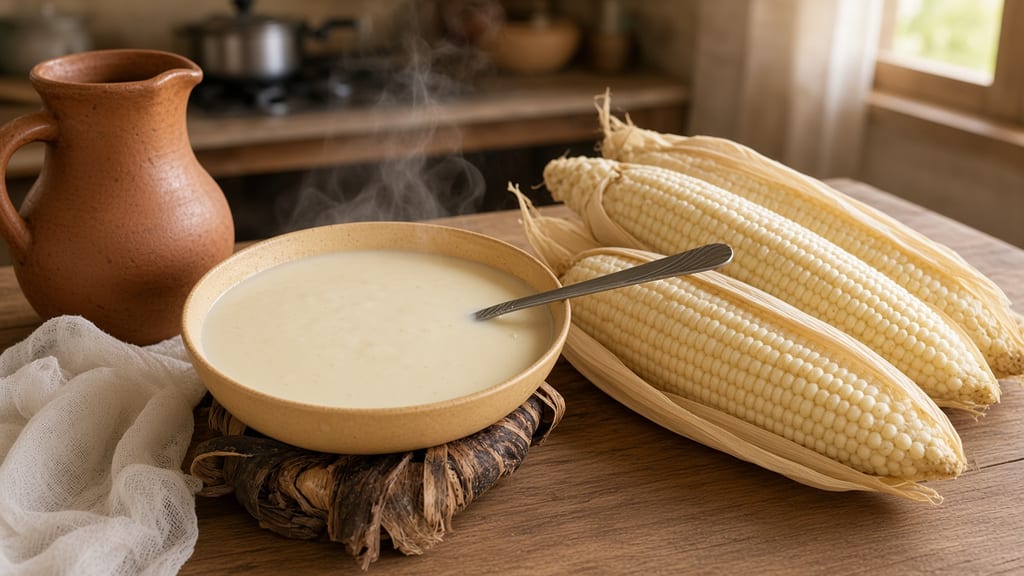
A hot, sour maize drink from Tabasco made from maize that is not lime-cooked. The ground grain sours for half a day, then makers strain it and boil it until thick.
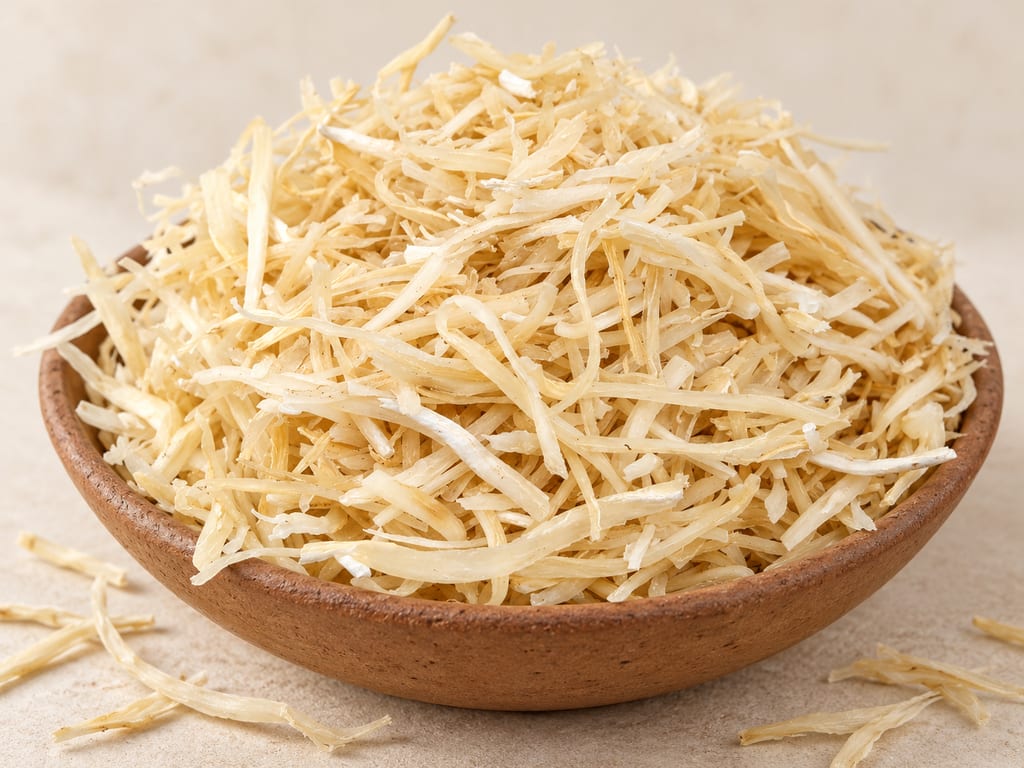
Abacha is a fermented cassava-strip preparation from southeastern Nigeria, sold wet or dried and later rehydrated for meals such as African salad.
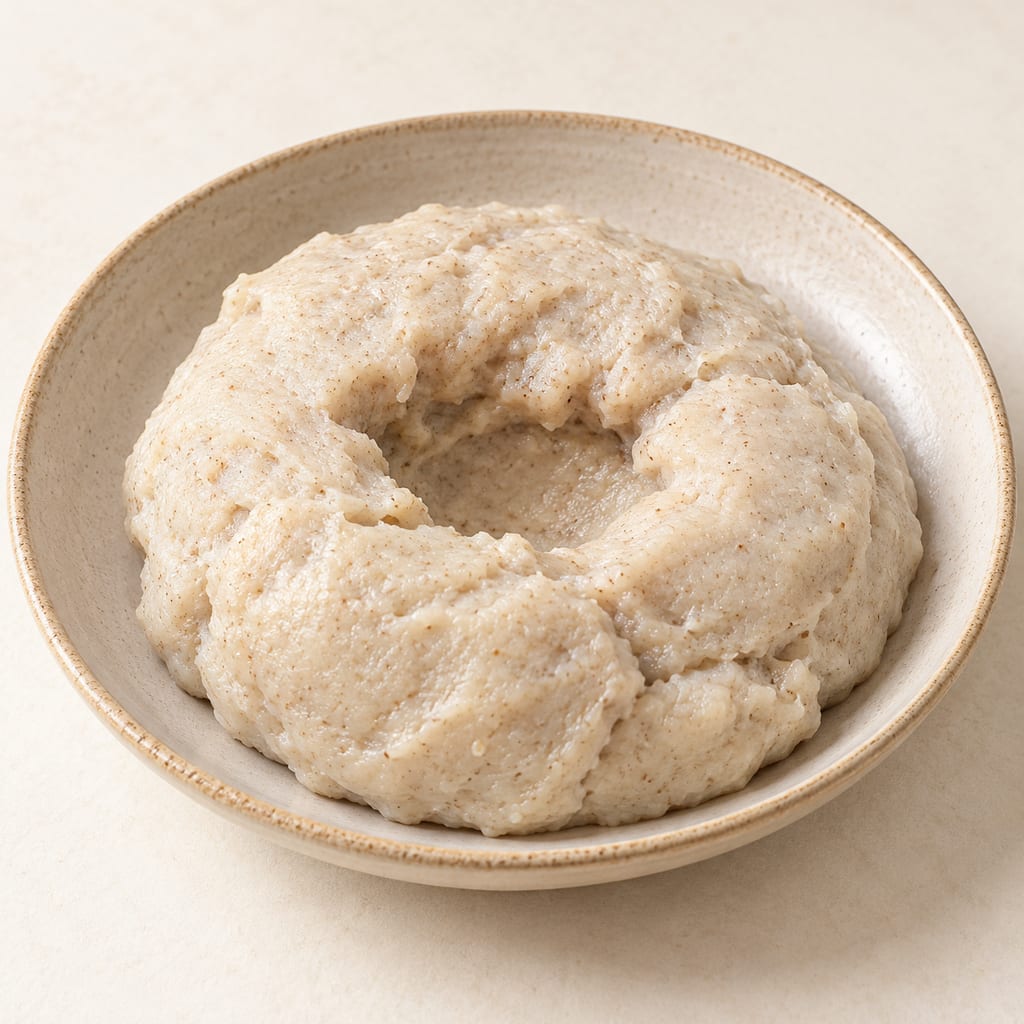
Aceda is Sudan’s firm cereal porridge, commonly made from sorghum and shaped into a smooth mound. Some versions use fermented dough; fermentation is not universal.
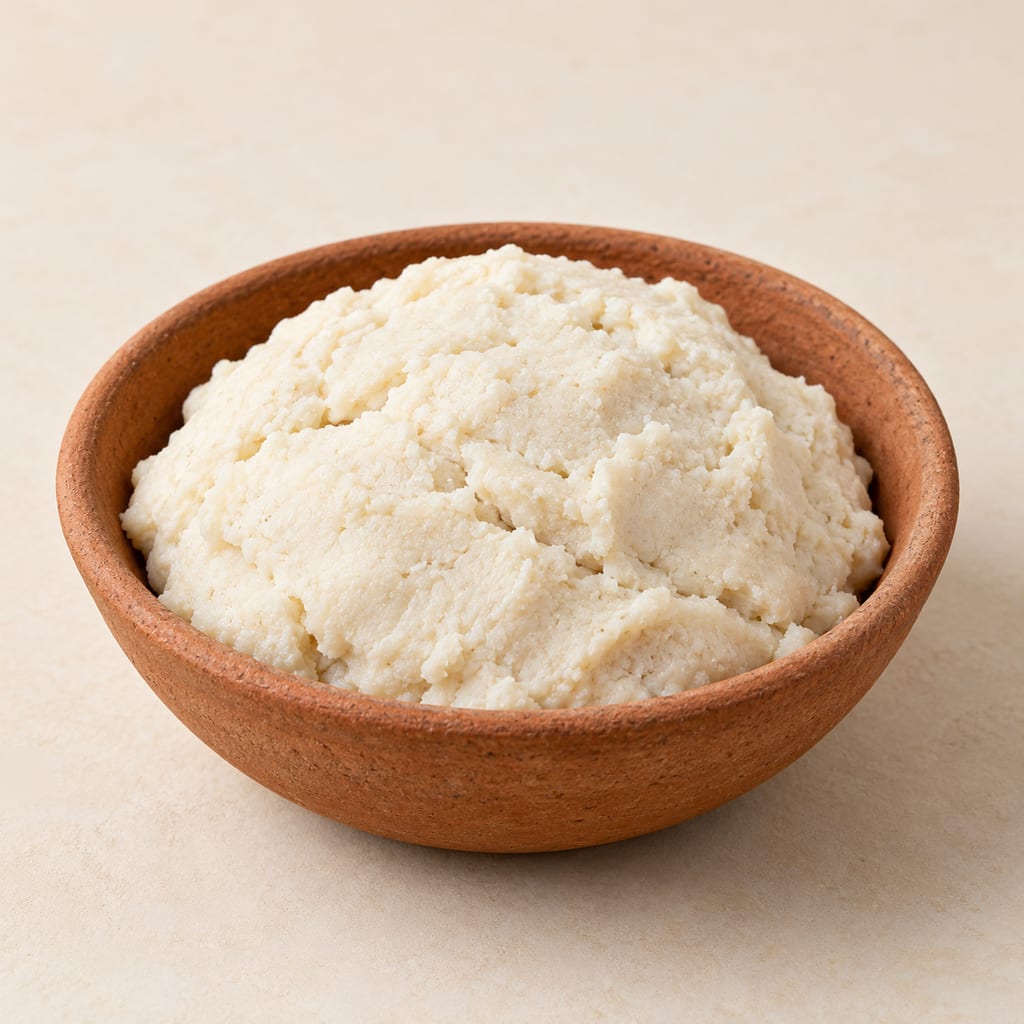
Ghanaian sour cassava dough fermented with traditional inoculum and drained during fermentation. It is used as a base for cooked foods such as banku and akple; process variants and safety outcomes differ.

Appam, or hoppers, are South Indian and Sri Lankan rice pancakes made from a fermented coconut-and-rice batter and cooked in a curved pan to a crisp lacy rim and a soft, spongy centre.
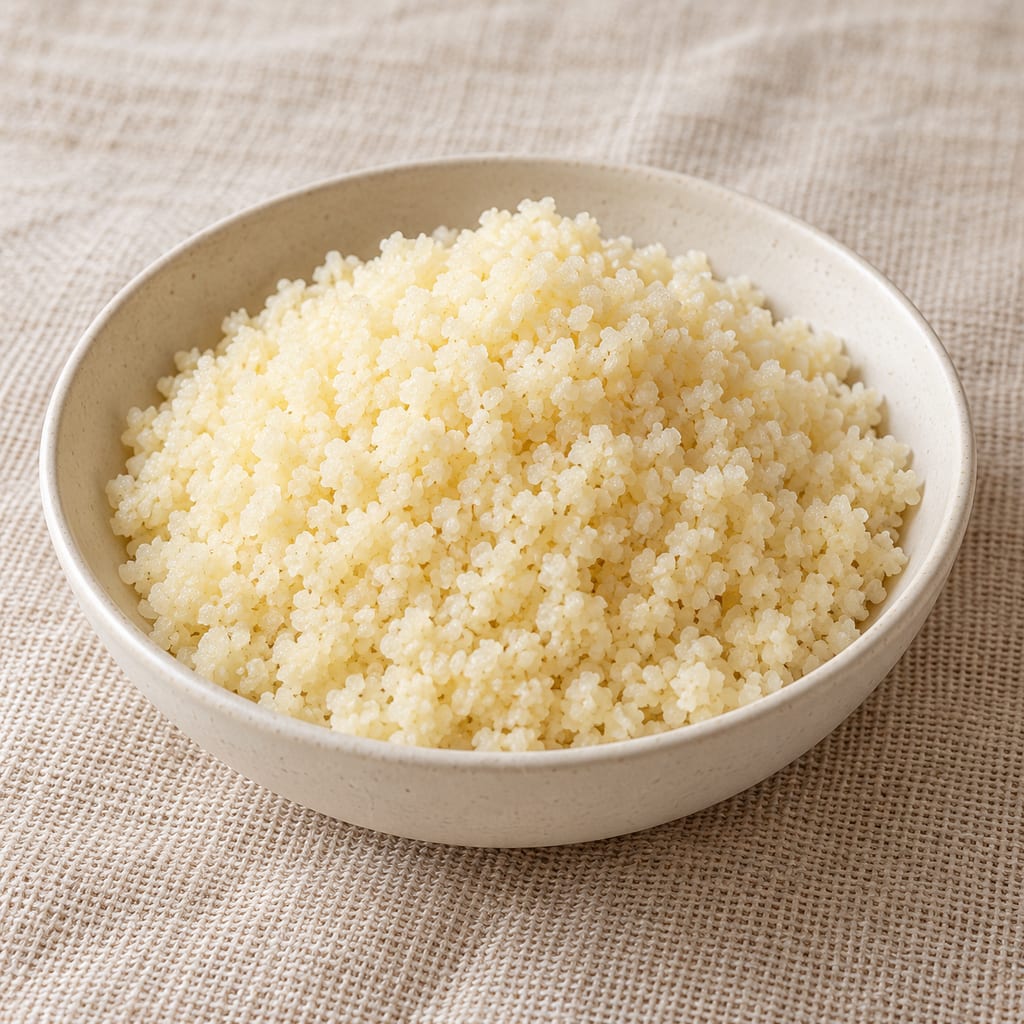
Ivorian cassava semolina: grated cassava is fermented overnight with a traditional inoculum, pressed, sieved into granules, dried and steamed. Documented in a 2006 field study; no sole original process is established.
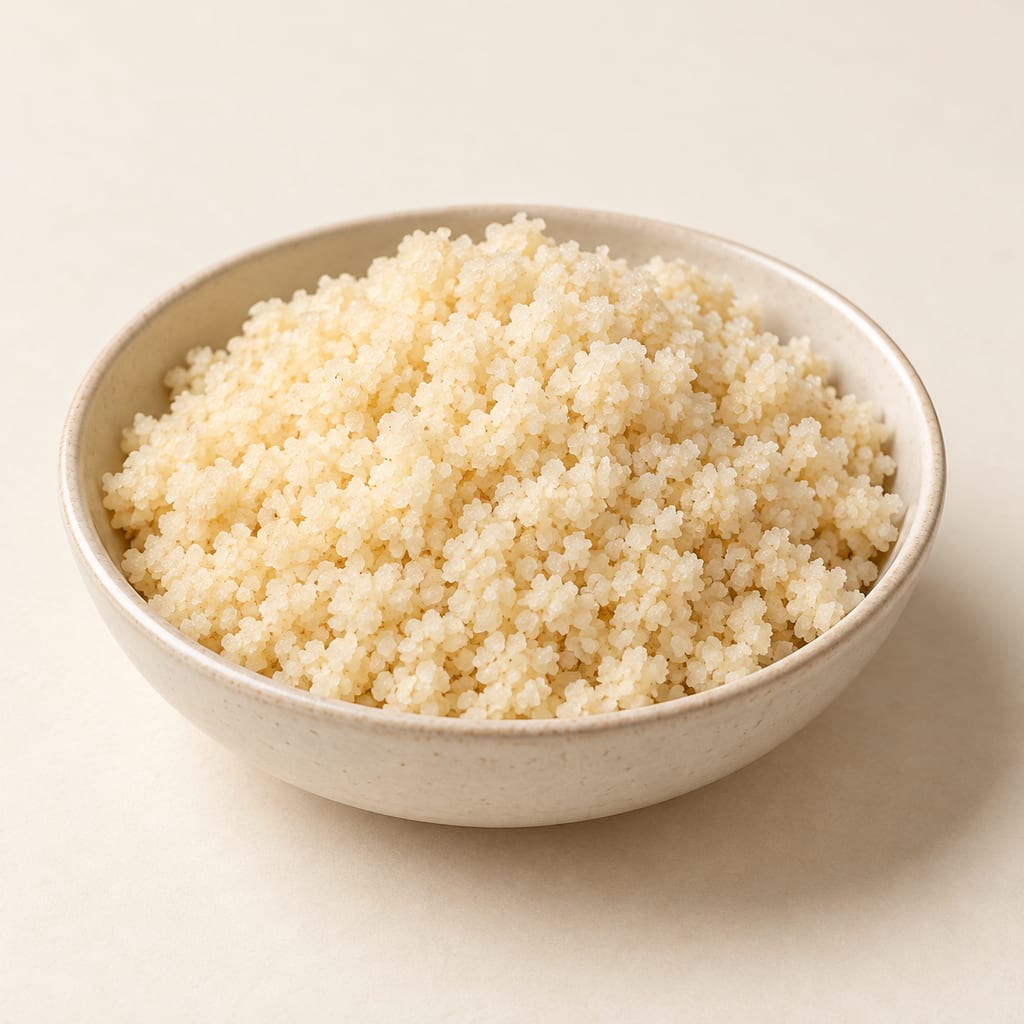
Attiéké is an Ivorian staple of grated cassava fermented with a traditional inoculum, then pressed, sieved, granulated, dried and steamed into fine couscous-like grains.

Crushed or milled barley cooked in water until the starch softens and the mixture thickens, the plainest way a northern household turned stored grain into a meal, here with apple and hazelnut.
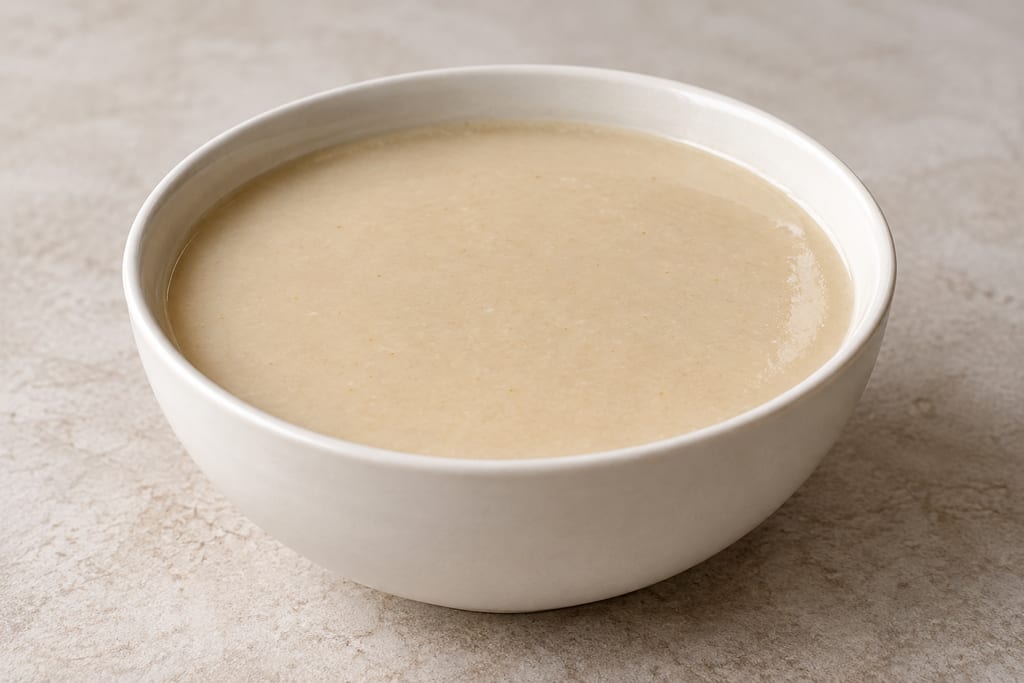
A fermented pearl-millet gruel documented in Ouagadougou, Burkina Faso. Whole grain is soaked, wet-milled and sieved; the settled paste ferments again before it is cooked with its liquid.
No community contributions have been published for this entry yet.
Sign in to contribute. Published comments and photos are free to read.
Food and Agriculture Organization of the United NationsMethod · Microbiology · Geography · Safety
Fermented cereals: a global perspectiveQuantities and steps of production, ball size, fermentation 1 to 14 days, dilution 1:2 to 1:3, regional additions, consumption, microbial counts and pH, named organisms, aflatoxin and pathogen findings.
Cited in: A maize dough that becomes a drink; How it is made; What happens in the dough; Drinking and carrying it; Chorote, types and names; Safety and what is not established
Revista Digital Universitaria, UNAMHistory · Use · Microbiology
La biotecnología alimentaria antigua: los alimentos fermentadosMaya origin; white, yellow and black maize; fermentation from a few hours to a month; chorote with cacao; uses and consumers; amylolytic Streptococcus infantarius; nitrogen fixers; pathogenic fungi mainly in short-fermented pozol; aflatoxins in 17% of samples.
Cited in: A maize dough that becomes a drink; How it is made; What happens in the dough; Drinking and carrying it; Chorote, types and names; Safety and what is not established
Food and Agriculture Organization of the United NationsGeography
Traditional fermented food and beverages for improved livelihoodsUse of pozol across several southeastern Mexican states.
Cited in: Chorote, types and names
Estudios de Cultura Maya; SciELOHistory · Names
Evanescencias en las traducciones del Chilam Balam de Chumayel: el maíz y el frijol del Sur, los ibes del Oriente y el pozol ritualColonial Spanish usage grouped distinct Maya drinks, including k'eyem and saka', under pozol or posole.
Cited in: Chorote, types and names
Applied and Environmental Microbiology; American Society for MicrobiologyMicrobiology
Nitrogen Fixation in Pozol, a Traditional Fermented BeverageNitrogen fixation by microbes in pozol.
Cited in: What happens in the dough
Foods; PubMedMicrobiology
Microbial Interactions between Amylolytic and Non-Amylolytic Lactic Acid Bacteria Strains Isolated during the Fermentation of PozolA 2021 experiment compared selected pozol-derived strains in defined pure and mixed cultures.
Cited in: What happens in the dough