
Pozol
Pozol is lime-cooked maize ground to dough, shaped into balls, wrapped in banana leaves and fermented for days, then stirred into water as a sour drink in southeastern Mexico.
 FermenteaWhere food goes to change
Equipment · Bamboo, leaf and wraps
Plantain leaves wrap pozol’s nixtamalized maize dough during fermentation, limiting drying and keeping portions portable in southeastern Mexico.
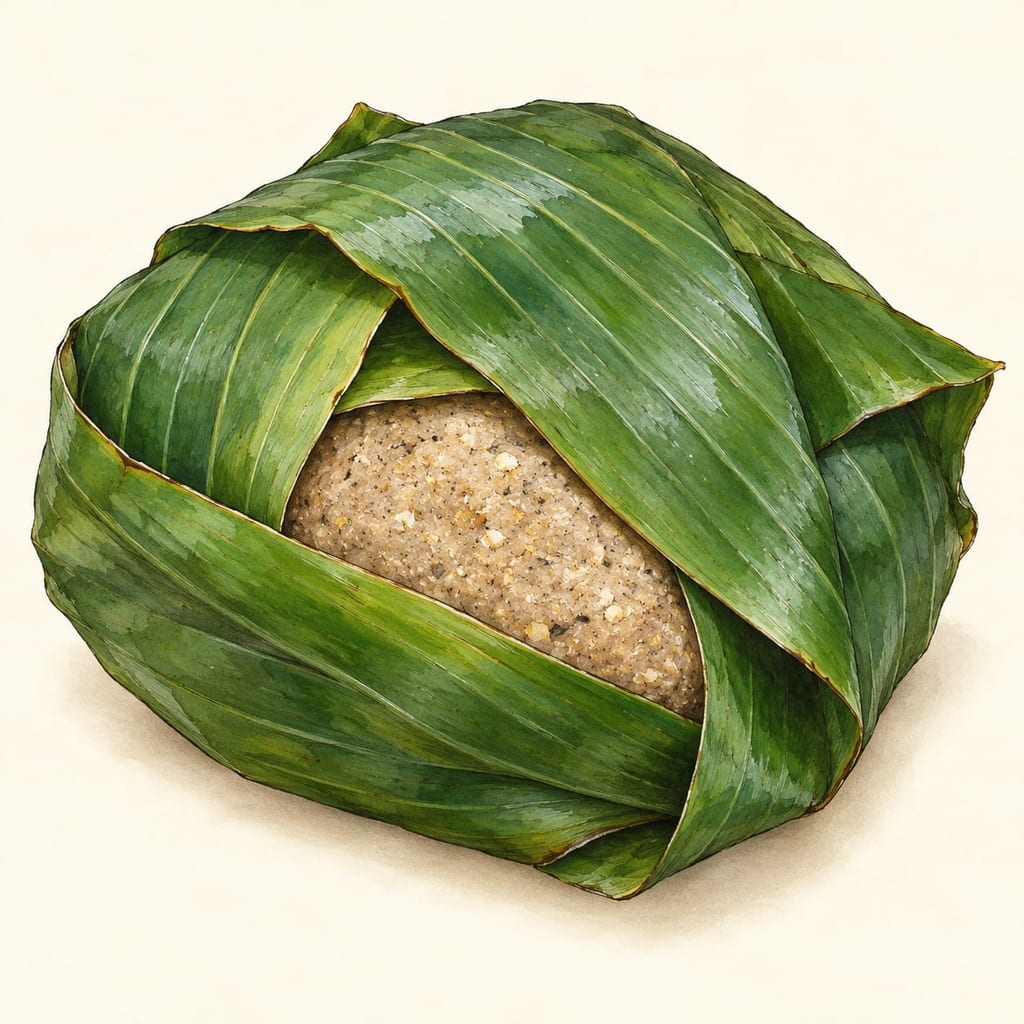
Pozol is made from nixtamalized maize dough. After shaping, it is wrapped in plantain or banana leaves and left to ferment. The wrapper is part of the fermentation equipment: the Food and Agriculture Organization describes it as preventing the dough from drying, while keeping portions together for handling and travel. This is distinct from the bowl used later to dilute the dough into a drink.
Pozol portions are balls or elongated forms rather than a rigid vessel. Their shapes and weights vary, and no standard capacity belongs to the leaf package. It conforms to each portion instead of defining a fixed volume. Published accounts support leaves enveloping the dough, but do not specify a universal fold, tie, number of layers or sealed-end design.
The evidence names banana or plantain leaves. One study sampled wrapped pozol balls bought at Atasta market in Villahermosa, Tabasco; the paper also describes pozol as a southeastern Mexican and Guatemalan food. FAO lists Chiapas, Tabasco, Campeche and Yucatán, with pozol also found on a smaller scale in Veracruz, Oaxaca and Guatemala. These locations establish a broad documented distribution, not one exclusive point of origin.
Fermentation time varies with maker and circumstances: FAO records one to fourteen days or longer, while later UNAM writing describes practices lasting hours to several days and sometimes longer. The wrapper participates in a process whose duration is not standardized. The sources do not establish that leaves are always reused, tied, or drawn from the same plant in every regional version.
A Tabasco photograph shows pozol dough with a green leaf, but not the closed fermentation parcel; it is evidence for dough and leaf material, not a template for a specific wrapping pattern. The sources consulted also give no standard leaf dimensions, preparation or cleaning instructions, fastening method, or dated first use. Those details should remain open rather than being supplied as a reconstruction.
FAO and UNAM associate pozol with Maya and other communities of southern and southeastern Mexico and describe traditional continuing use. They do not establish a precise date for the wrapper. The history period is therefore unknown even though regional use is documented.
UNAM and FAO describe pozol as traditional and Maya-associated, but do not date the first use of plantain leaves as a fermentation wrapper. The FAO chapter's 1999 publication date is not an origin date.
The leaves enclose formed dough during fermentation; a portion is later diluted in water to make the drink. This is not the serving bowl.
Source →The sources do not specify one folding, tying or sealing pattern.
Source →FAO identifies states in the southeast and describes banana-leaf wrapping; no exclusive origin or uniform variant is claimed.
FAO includes Guatemala in pozol's distribution; this country-level association does not identify localities or claim uniform wrapper use.
Pozol is lime-cooked maize ground to dough, shaped into balls, wrapped in banana leaves and fermented for days, then stirred into water as a sour drink in southeastern Mexico.

The acocote is a long, hollowed and dried gourd used to draw aguamiel from a mature maguey. It is a harvesting tool: the sap is transferred to a separate vessel before it ferments into pulque.
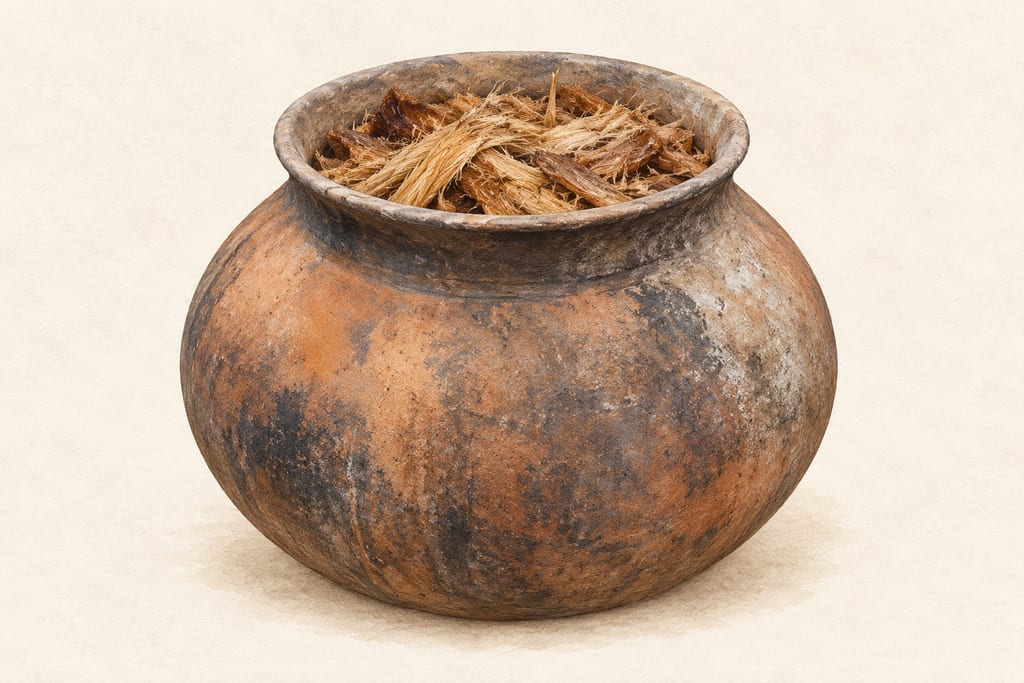
An open earthenware vessel for fermenting cooked agave mash before distillation, documented in Mexican mezcal production. It is distinct from the clay pot still used to distil the fermented mash.
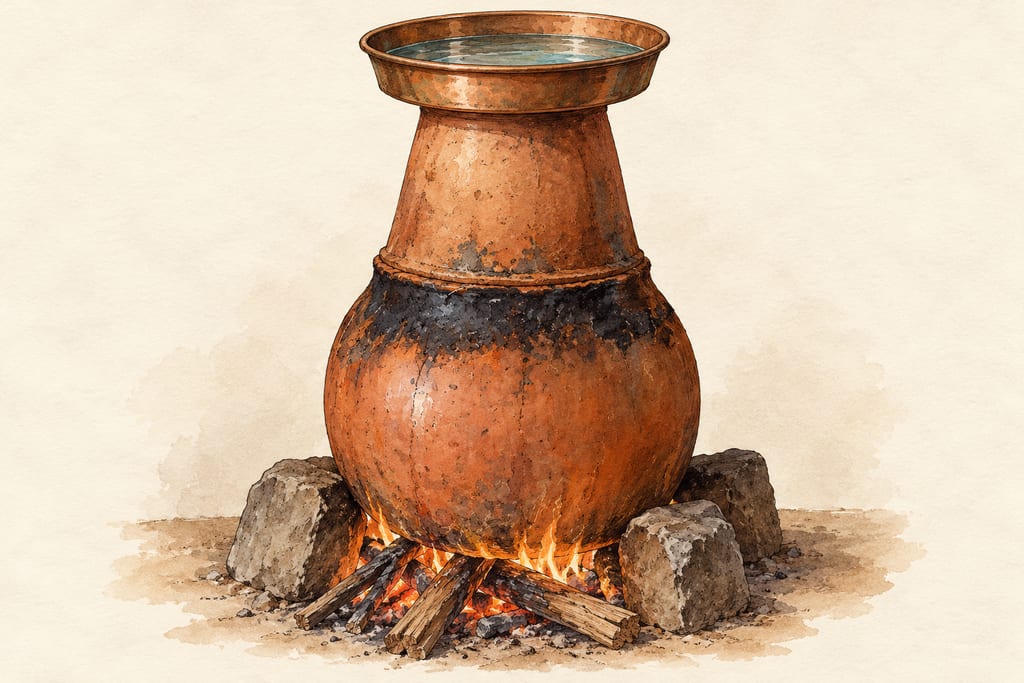
A fired-clay vessel assembly used to distil fermented agave must in several Mexican mezcal traditions. Its arrangement varies by region and producer; the sources document both clay or wooden vapour passages and particular cooling vessels.
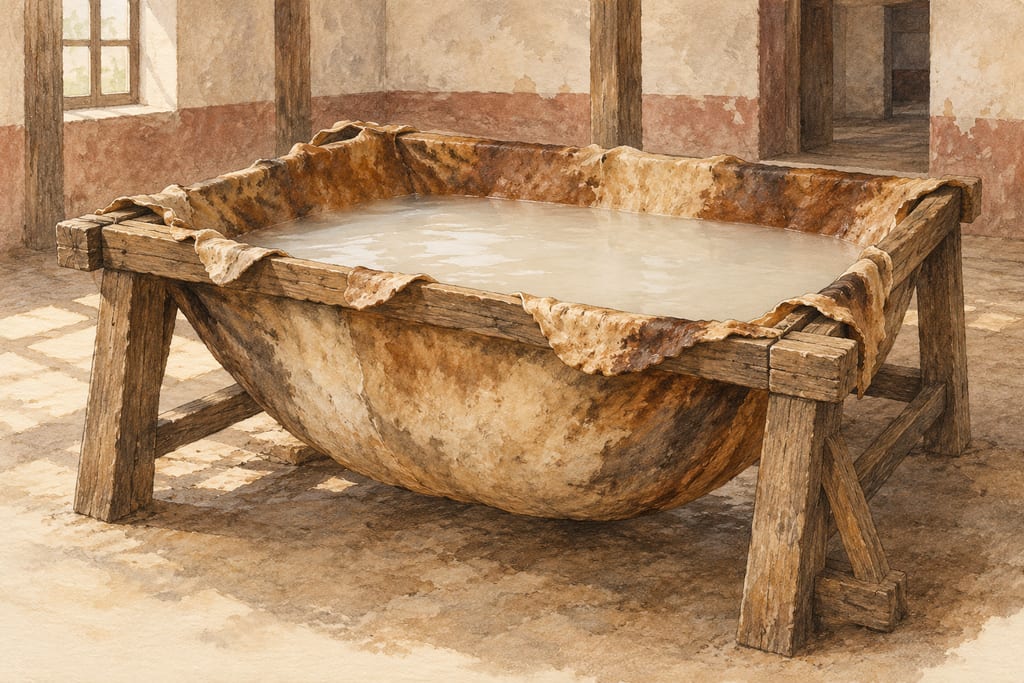
A framed hide vat is cattle hide fixed around a timber frame and sagging into a basin. In a tinacal it holds aguamiel and its ferment as they become pulque; it is distinct from the room, the acocote and a carrying skin.
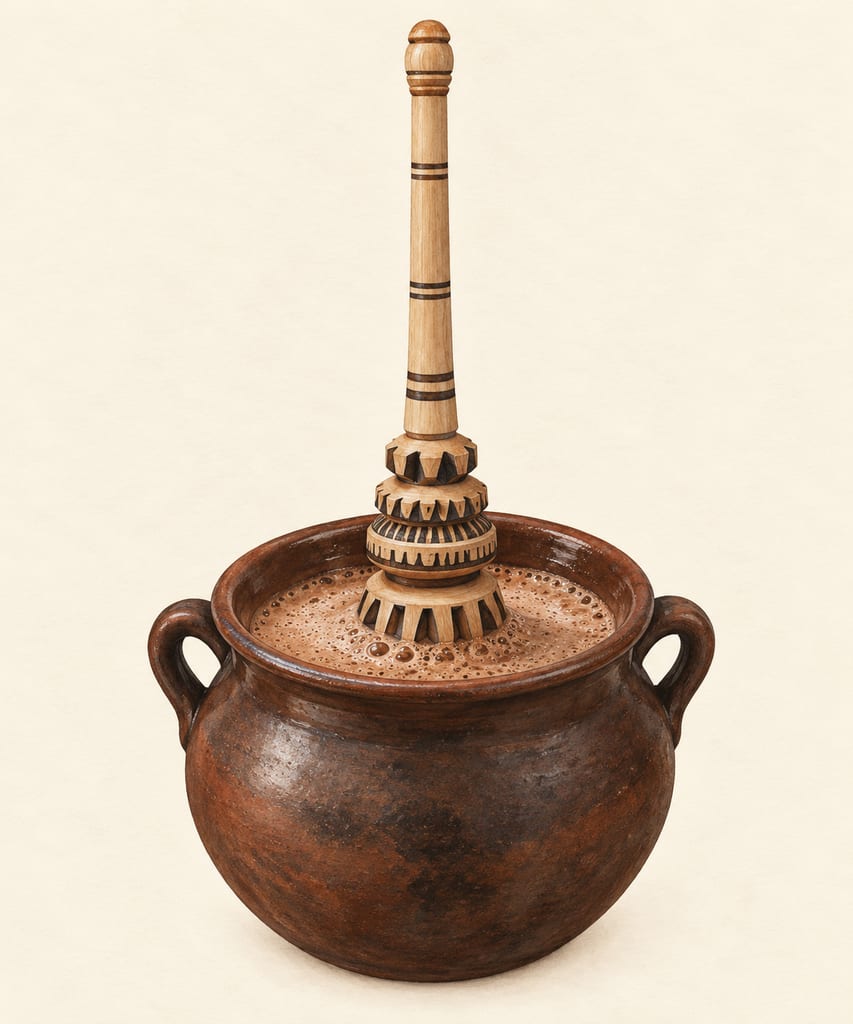
A molinillo is a hand-turned whisk used to beat drinking chocolate to a froth. Its carved wooden head works in the pot as the handle turns between the palms.
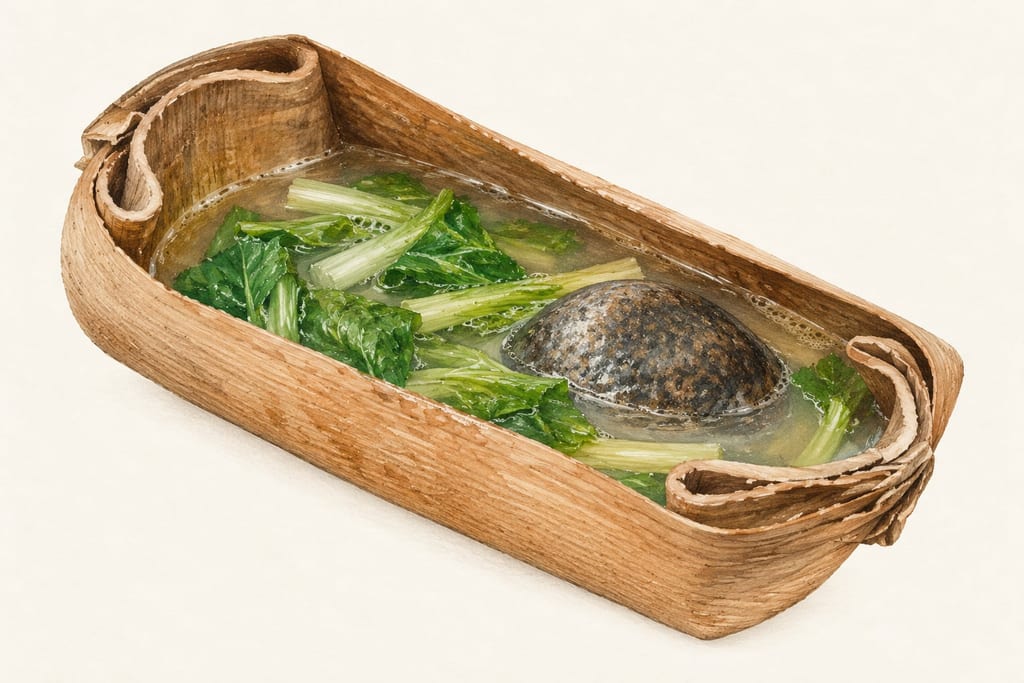
Stone boiling heats food in a vessel with stones warmed separately in a fire. Amis leaf sheaths, Chinantec jícaras and Northwest Coast cooking baskets are distinct regional forms, not one universal pot.
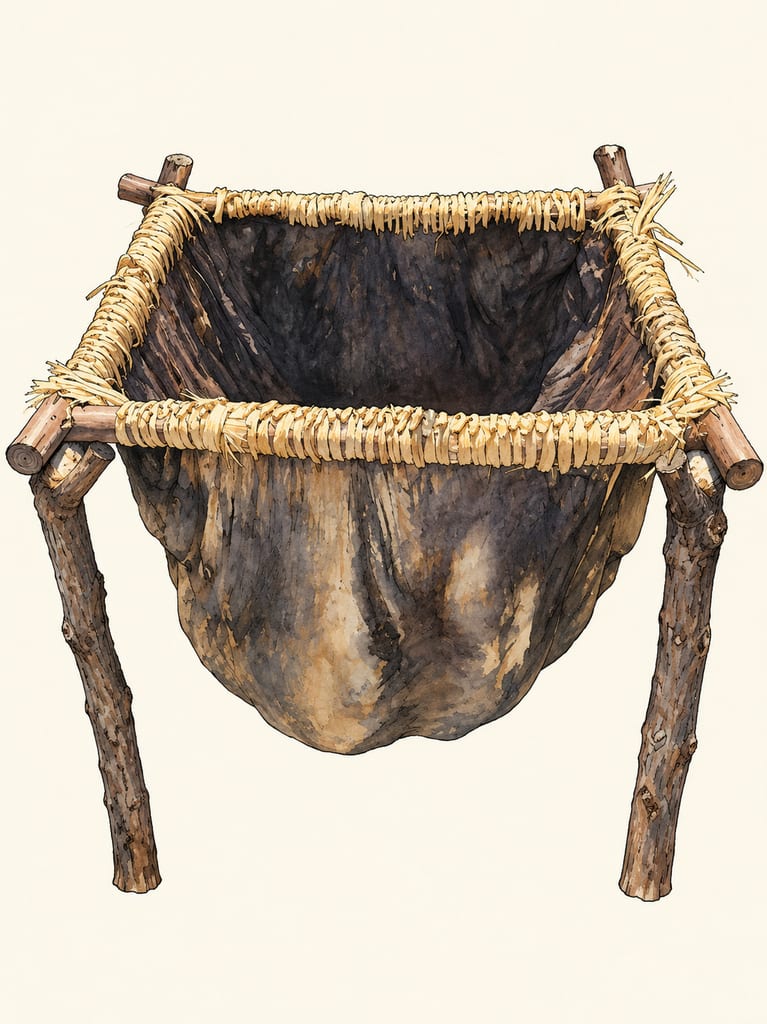
A hide stretched over a timber support forms an open, hanging basin for agave fermentation. Contemporary accounts document examples in Puebla and Oaxaca; the sources do not establish the form's pre-contact chronology.
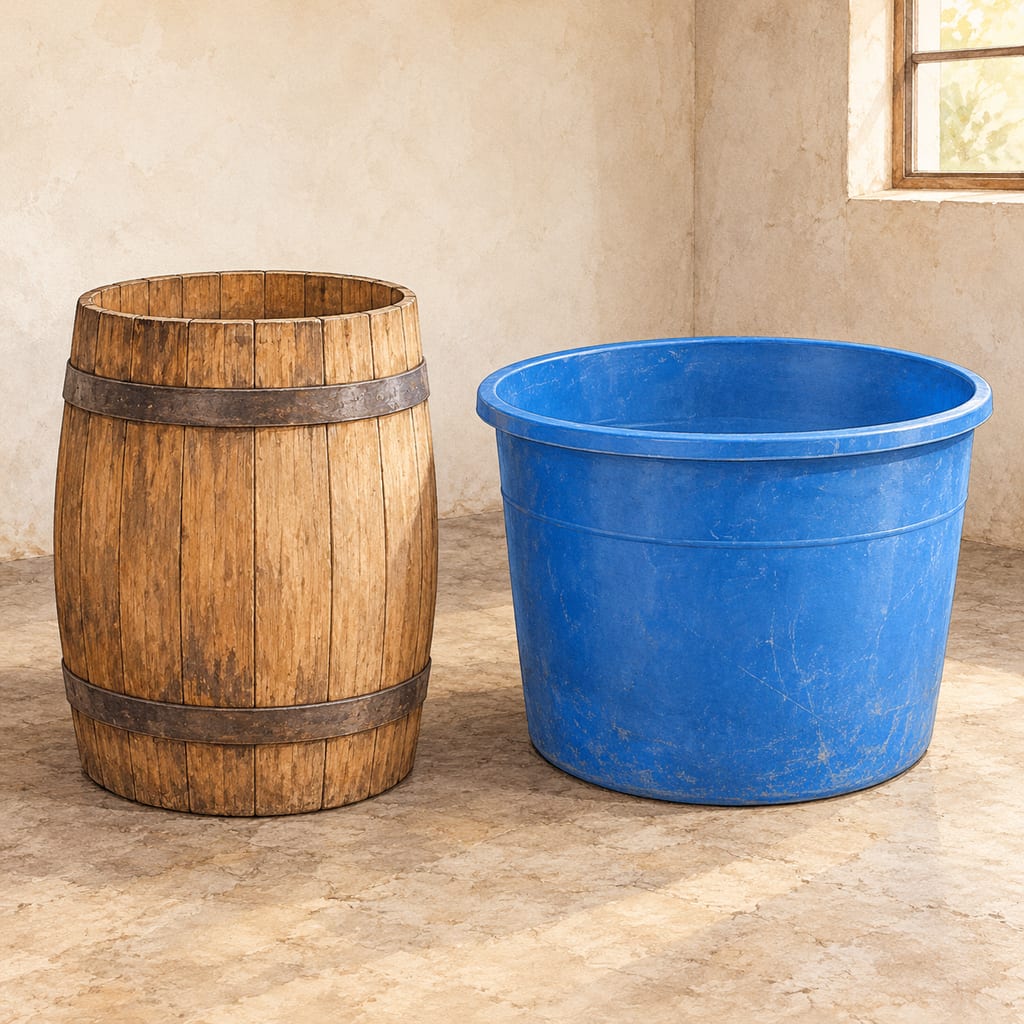
Pulque fermentation may use a wooden barrel or a modern plastic or fibreglass tub. The tinacal is the room or place where the vessels stand, not a name for either container.
No community contributions have been published for this entry yet.
Sign in to contribute. Published comments and photos are free to read.
Food and Agriculture Organization of the United NationsMethod · Geography
Fermented cereals: a global perspective, chapter 4Pozol dough balls are enveloped in banana leaves during fermentation to prevent desiccation.
Main area is southeastern Mexico, including Chiapas, Tabasco, Campeche and Yucatán; smaller-scale distribution includes Veracruz, Oaxaca and Guatemala.
The 1999 account gives variable sizes and fermentation for one to fourteen days or longer.
Cited in: Leaves as the fermentation package; Documented material and use; What the record leaves open
Revista Digital Universitaria, Universidad Nacional Autónoma de MéxicoHistory · Method · Geography
La biotecnología alimentaria antigua: los alimentos fermentadosDescribes pozol as nixtamalized maize dough balls wrapped in plantain leaves and fermented for hours to days, sometimes longer.
Places pozol among traditional foods of Maya and other communities of southern and southeastern Mexico; the process continues.
Does not date the particular leaf-wrapping practice.
Cited in: Leaves as the fermentation package; Documented material and use; What the record leaves open
Applied and Environmental MicrobiologyMethod · Geography
Polyphasic Study of the Spatial Distribution of Microorganisms in Mexican PozolReports pozol in southeastern Mexico and Guatemala; dough is shaped into balls, wrapped in banana leaves and fermented at ambient temperature.
Researchers sampled wrapped balls from Atasta market, Villahermosa, Tabasco.
Cited in: Documented material and use