A vessel heated from within
Stone boiling uses stones heated in a separate fire as movable heat carriers. A watertight vessel or lined cavity holds liquid and food; heated stones are transferred into it, and their stored heat raises the contents to cooking temperature. Unlike a kettle set over flames, the vessel can be made from materials that would not withstand direct fire. The name groups a physical method, not one standardized object: local vessels include woven baskets, wood, bark, gourds, leaf sheaths, animal hides and hollows in stone or ground. Each form has its own material knowledge and place; the list is not a set of interchangeable substitutes.
Sources for this section
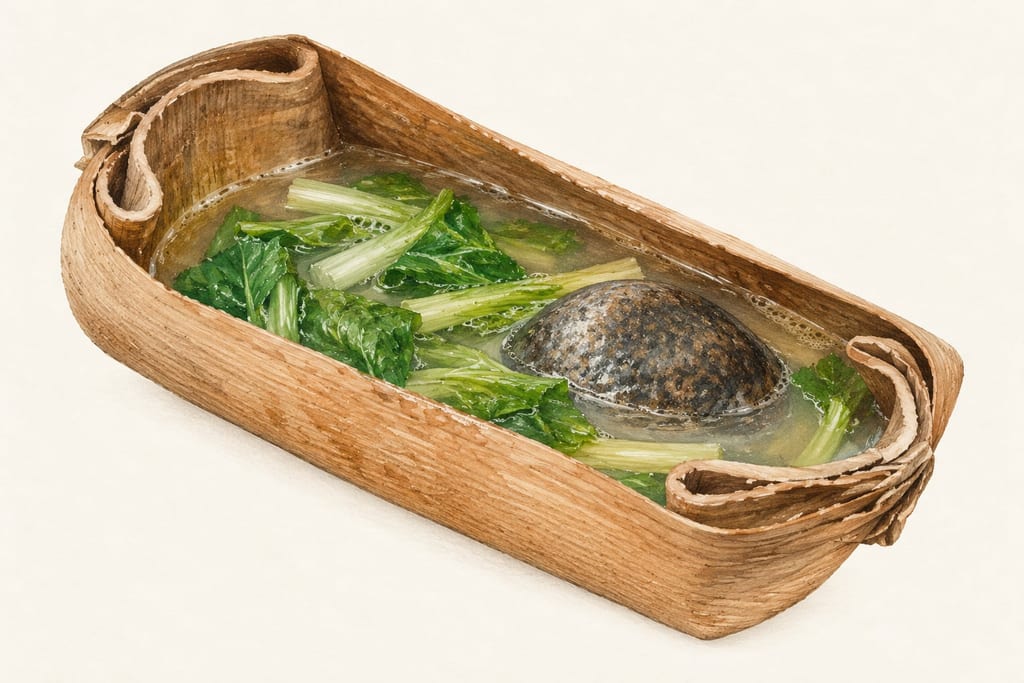
Amis leaf-sheath hot pot in eastern Taiwan
Indigenous Sight’s 2022 account describes an Amis stone hot pot made in an areca or betel-palm leaf sheath. A sheath that has fallen from the palm is used as the container; soaking makes it soft and pliable. The broth and food are placed inside, and a heated porphyritic andesite known locally as Maifan stone supplies the heat. The article connects the choice of stone to eastern Taiwan’s andesite and identifies a three-rock stove, Parod, for heating them. As the stones cool in the food, they are reheated in the fire and returned. The reported number of stones belongs to that source’s account and should not be treated as a universal load or recipe ratio.
This example makes the vessel’s material part of the equipment rather than a decorative wrapper: the sheath contains the food while the stone carries heat. The account presents the technique as inherited Amis knowledge, but does not provide a dated origin, standardized dimensions or a general care manual. The equipment record names the regional form without assigning every stone-boiling vessel an areca-leaf body.
Sources for this section
Other local forms are not interchangeable
In San Felipe Usila, in northern Oaxaca, Mexico, INPI describes Chinantec caldo de piedra served and cooked in a jícara or a hollowed stone. Fish or shrimp, water and seasonings are combined, then selected heated river stones cook the broth. The source situates the dish beside the river and describes it as a practice of sharing and hospitality. It also includes a community origin narrative; that narrative is testimony, but does not establish a precise archaeological date for the technique. A dried gourd bowl and a leaf sheath differ in shape and material, even though both can serve as vessels in stone-heated cooking.
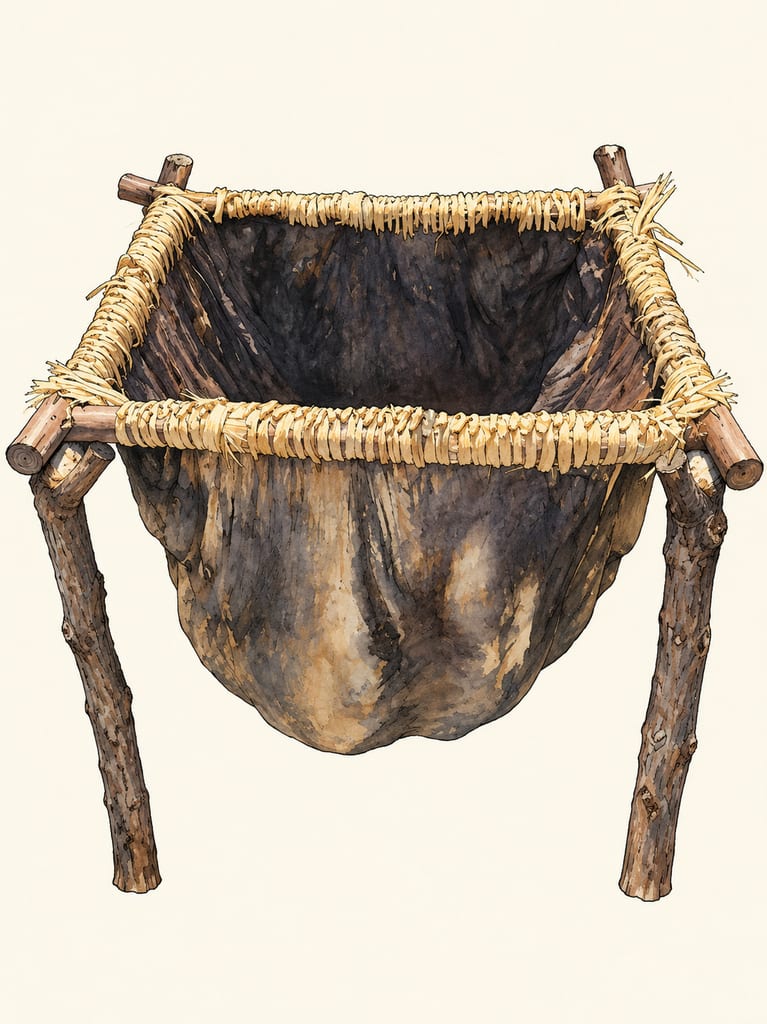
A contemporary American Museum of Natural History account presents another form through Suquamish elder and master basket weaver Ed Carriere: a hard-coiled cooking basket woven tightly enough to hold water could receive hot rocks to boil food. The account discusses Coast Salish basketry within southwestern British Columbia and western Washington and emphasizes diversity among communities and basket types. It does not license treating any woven basket as watertight or suitable for cooking. Smithsonian ethnographic publications from the early twentieth century also record baskets and wooden containers in other communities; these dated accounts are not a universal blueprint.
Sources for this section
Heat, stone choice and limits of the evidence
The vessel and stones solve different problems. The vessel retains liquid; the fire heats stones elsewhere; handling tools and room to exchange cooling stones are part of the system. A stone’s performance depends on its material and condition, so a name from one community should not be generalized. The Amis account identifies porphyritic andesite; the Chinantec account identifies selected white stones; neither creates a universal specification. USDA research on Cedar Mesa limestone examines alkaline conditions relevant to maize processing, a distinct case in which the stone can contribute chemistry as well as heat.
Hot-stone cooking also involves physical hazards: the research archive notes fragmentation risks for wet, cracked or unsuitable stones. This page does not prescribe a stone-selection or heating protocol because the consulted sources do not establish a safe universal procedure. There is likewise no shared capacity, dimensions, stone load, construction material, acquisition route or cleaning method for this functional group. Those details belong to a specific vessel and community source, not an invented all-purpose pot.
Sources for this section
History
The sources document hot-stone cooking forms in a 1926 Smithsonian ethnography and contemporary Amis, Chinantec and Coast Salish accounts. These attestations do not establish when the method began or define the temporal bounds of the wider functional equipment group.
Equipment details
CapacityNo universal capacity; cited accounts concern distinct forms.
PowerFire or solid fuel A separate fire heats stones transferred into the vessel.
How you get oneNot established No standard maker or acquisition route is established across these forms.
CareNo source establishes a universal cleaning, repair or storage routine for these unlike vessels.
Made of
- Areca/betel-palm leaf sheath — Container in the documented Amis example
Indigenous Sight describes fallen sheaths used as containers; soaking makes them flexible. - Gourds, stone, woven plant fiber, wood, bark or hide — Other documented vessel forms
Different communities' designs; not interchangeable-material recommendations. - Heating stones — Heat carrier
Stone type is locally specific; Amis source names porphyritic andesite (Maifan stone), while the Chinantec account describes selected white river stones.
Places
Eastern Taiwan
Traditional use · Region evidenceAmis stone hot pot using fallen areca-leaf sheath and heated porphyritic andesite; one regional form.
San Felipe Usila
Documented preparation · Locality evidenceINPI documents Chinantec caldo de piedra prepared in a jícara or hollow stone; no origin date is established.
Northwest Coast
Historical attestation · Region evidenceAMNH presents Coast Salish knowledge of hot-rock cooking baskets; not all basket forms were cooking vessels.