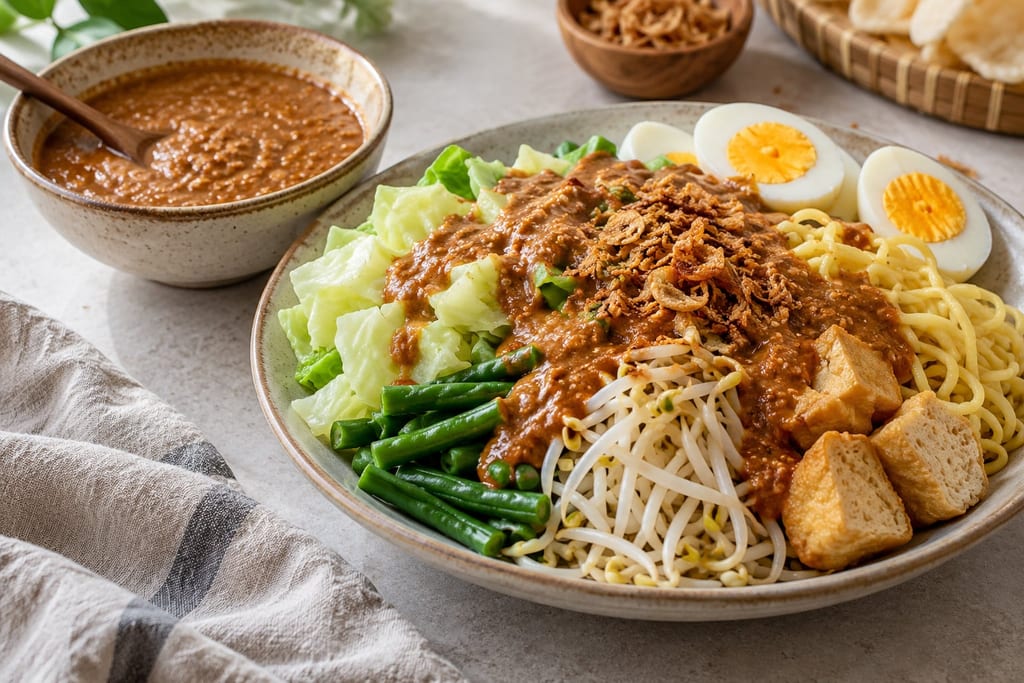
Indonesian peanut sauce
A cooked peanut sauce of ground roasted peanuts, aromatics, shrimp paste and coconut cream, as made for gado-gado; pecel and Malaysian satay sauces are close relatives with different formulas.
 FermenteaWhere food goes to change
Bumbu dasar · Bumbu dasar · Bumbu dasar putih · Bumbu dasar kuning · Bumbu dasar merah · White spice base · Yellow spice base · Red spice base · Indonesian basic spice paste
Bumbu dasar are the ground spice bases of Indonesian cooking: a white paste of shallot, garlic and salt, with chile added for red and turmeric for yellow, cooked into dishes.
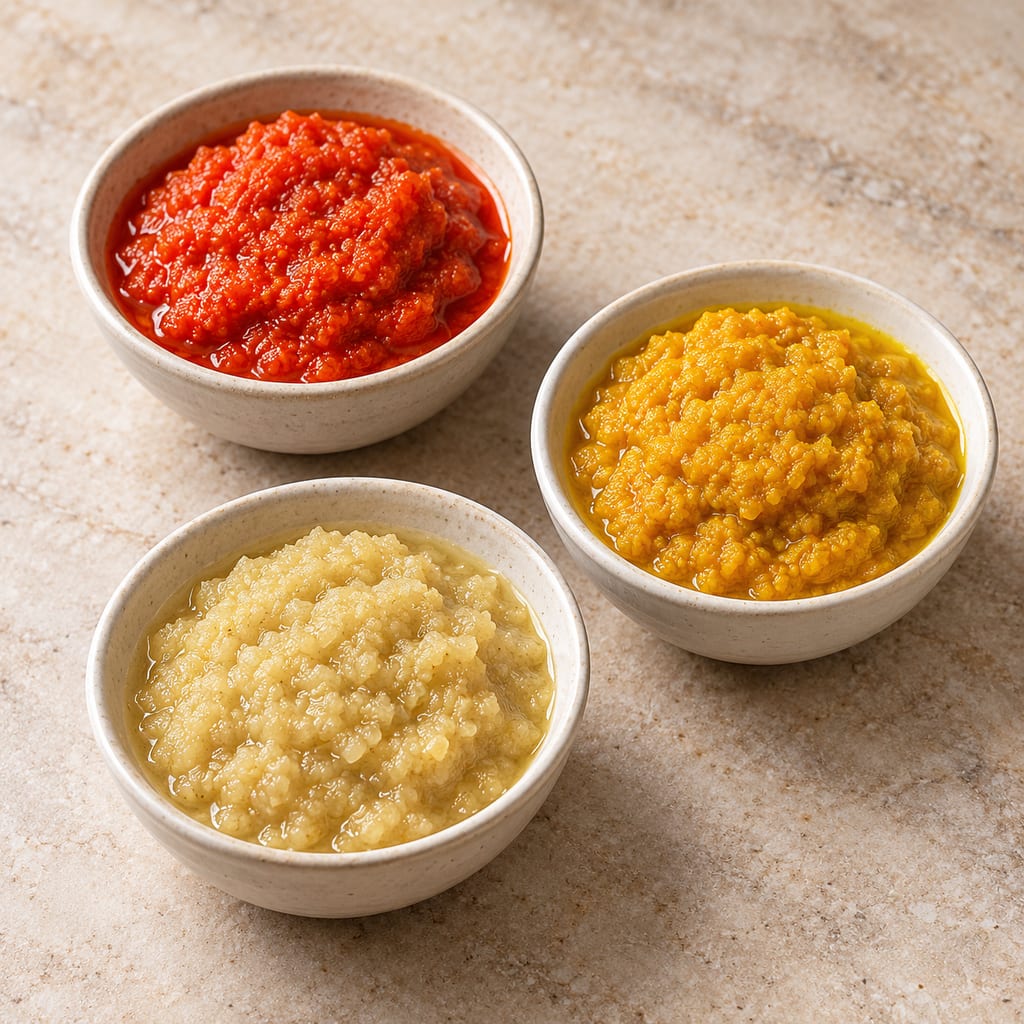
Bumbu dasar means "basic seasoning": a ground paste of aromatics that a cook prepares first and builds a dish on. Indonesian vocational teaching presents it as a small family sorted by colour. White (putih), red (merah) and yellow (kuning) are the three this page covers; the same textbook also lists orange and black bases, so these three are not a complete classification.
A base is an intermediate preparation. The finished dish adds its own liquid, protein, vegetables and further seasoning, so two cooks using the same colour of base will not cook the same dish.
In the textbook's outline the white base is shallot, garlic and salt, with candlenut, pepper or coriander as options. The red base adds red chile to shallot, garlic and salt, and the type of chile and whether it is seeded can vary. The yellow base adds turmeric to the same three, and may include coriander, candlenut or pepper.
The book links the bases to dishes by example. Yellow turns up in gudeg and sayur bobor (the yellow coconut-milk vegetable dishes) and in kari and pesmol; red is tied to balado, the chile-red dishes. These pairings are examples, not fixed rules.
The teaching text treats these as ground pastes that may be cooked before use. Grinding is a physical step that breaks the aromatics open and mixes them with salt; cooking in oil or liquid is a later step in the dish. Neither makes the paste a fermented food. The sources do not describe a starter, a fermentation stage, an acidity endpoint or a shelf-stable base.
A 2017 Universitas Pendidikan Indonesia thesis compared variants of the three bases and consumer acceptance. Its method chapter reports that final samples with sugar, salt and vinegar were kept at room temperature and checked daily until judged unusable. The abstract reports three days; the conclusion says about four to five. Those are conflicting observations from one student study with no objective microbiological endpoint. They are not advice to store a paste at room temperature, and the page offers no storage time.
No quantity, ratio, grinding time or cooking time is given in the sources read, so none is stated here. Make a base by eye and by the dish. The related wet spice pastes of Indonesian and Peranakan cooking (rempah) are covered on their own page.
No source read dates the three bases; they are described as current teaching and product-development material.
Scaling: not established
A 2017 thesis kept sugar, salt and vinegar versions at room temperature and judged them daily until unusable; its abstract reports three days and its conclusion about four to five. That is a student product-development observation, not storage advice and not a safety validation.
The sources give no refrigeration instruction, acidity target or shelf life for a stored base. Smell or appearance never shows that a paste is safe.
An Indonesian vocational cooking textbook presents the bases as standard preparations; it does not locate them in a particular island or town.
A cooked peanut sauce of ground roasted peanuts, aromatics, shrimp paste and coconut cream, as made for gado-gado; pecel and Malaysian satay sauces are close relatives with different formulas.
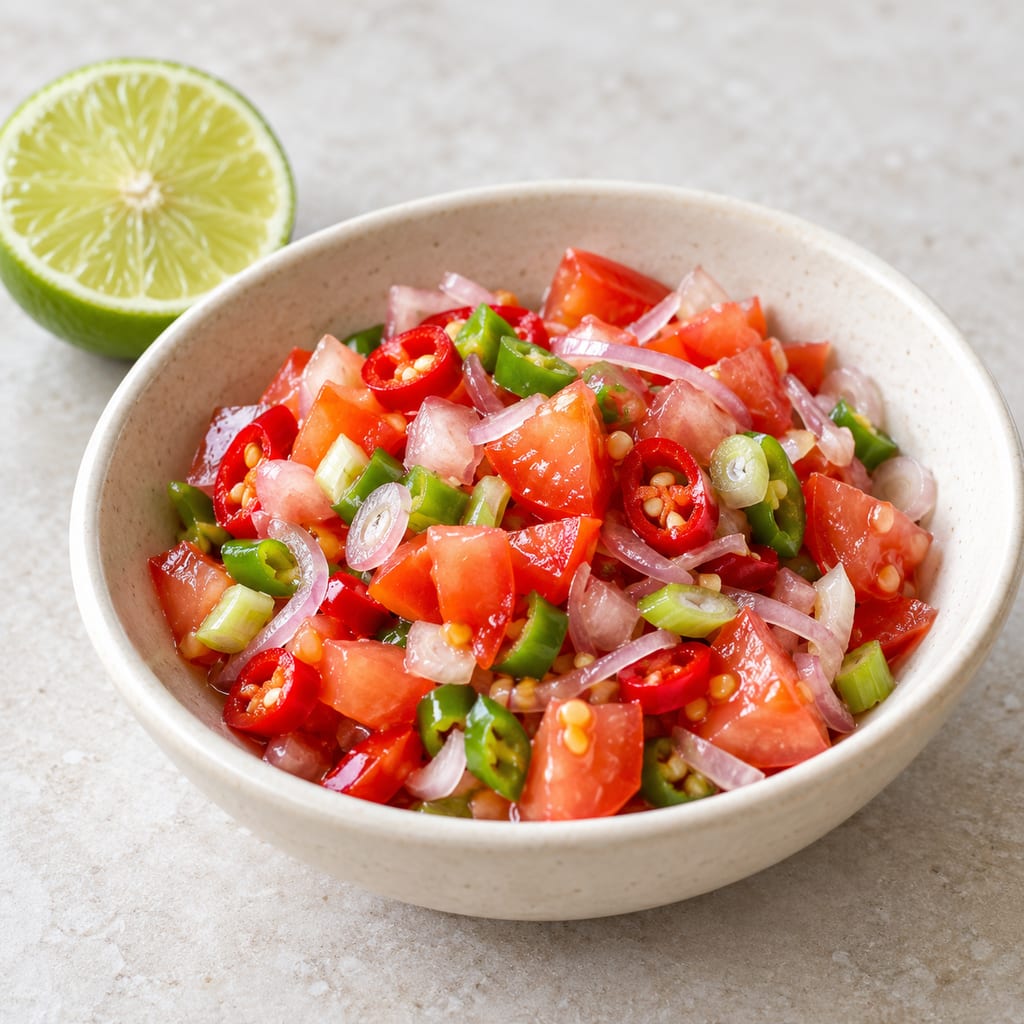
Dabu-dabu is a raw North Sulawesi relish of chopped chillies, shallot, scallion and tomato, dressed with salt and lime juice or coconut oil.
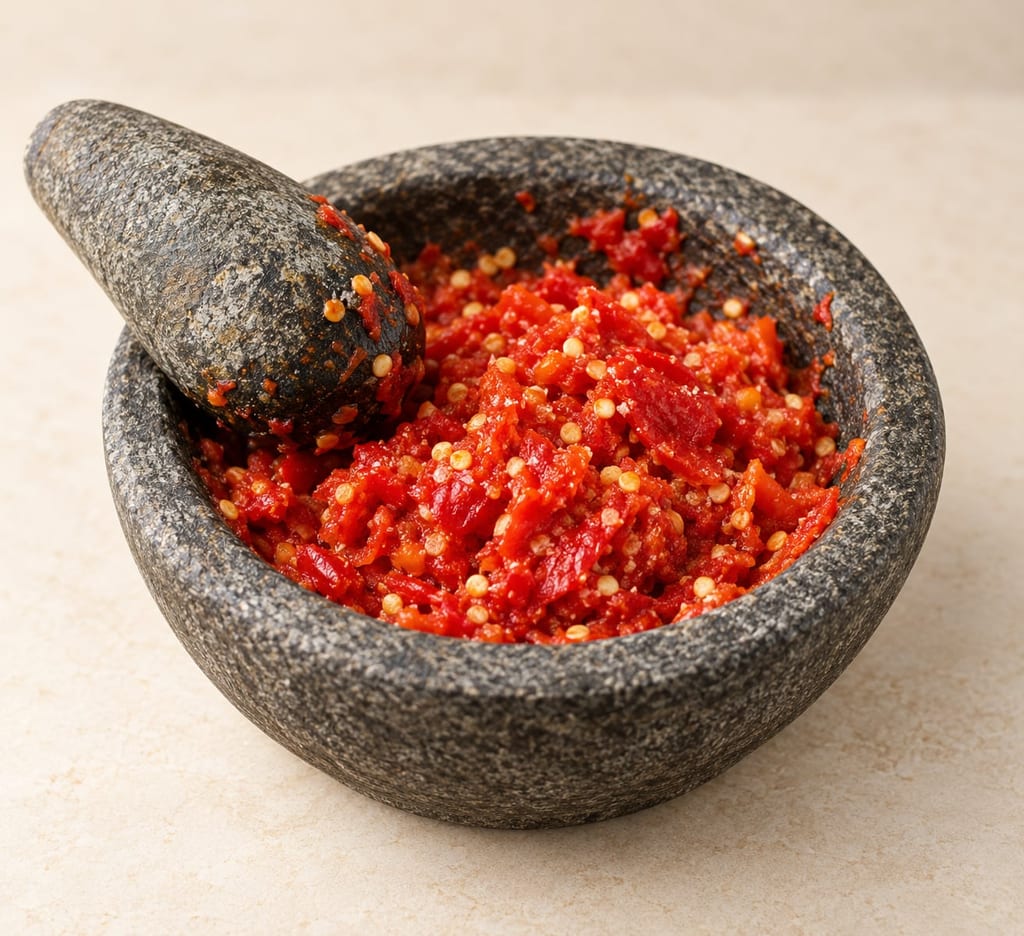
Sambal ulek or oelek is Indonesian chilli paste in its plainest form: red chillies pounded or ground with salt, here with a little vinegar.
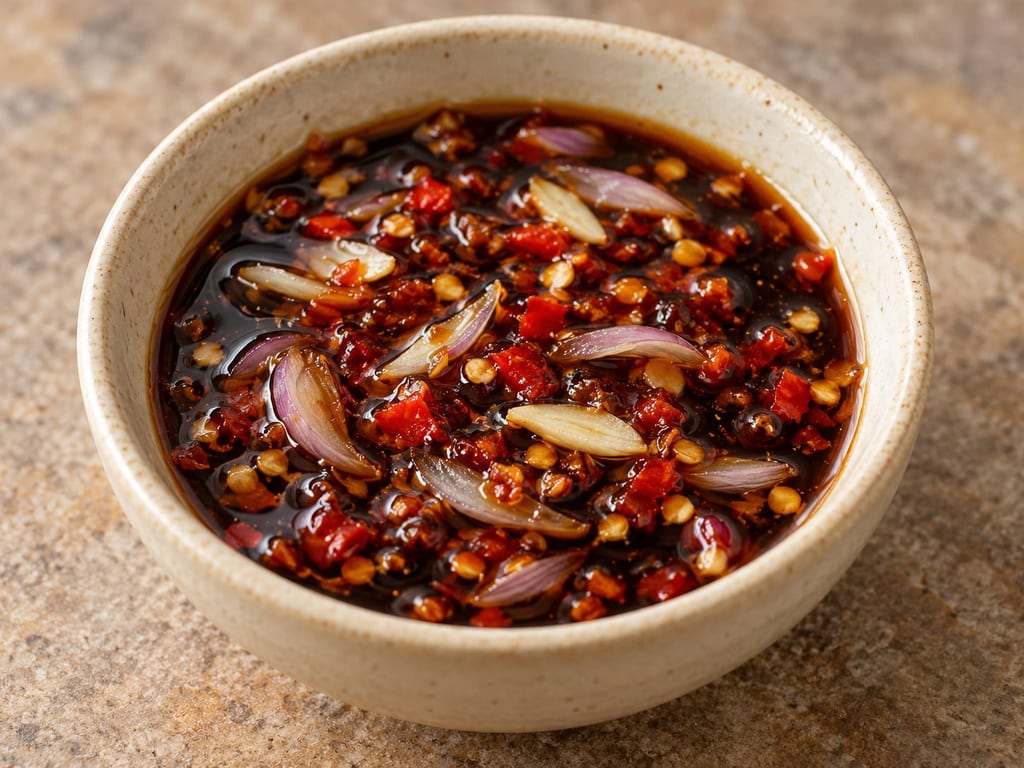
Sambal kecap is an Indonesian table condiment of fresh bird's eye chilli and shallot stirred into sweet soy sauce, served with grilled food, satay and tempe.
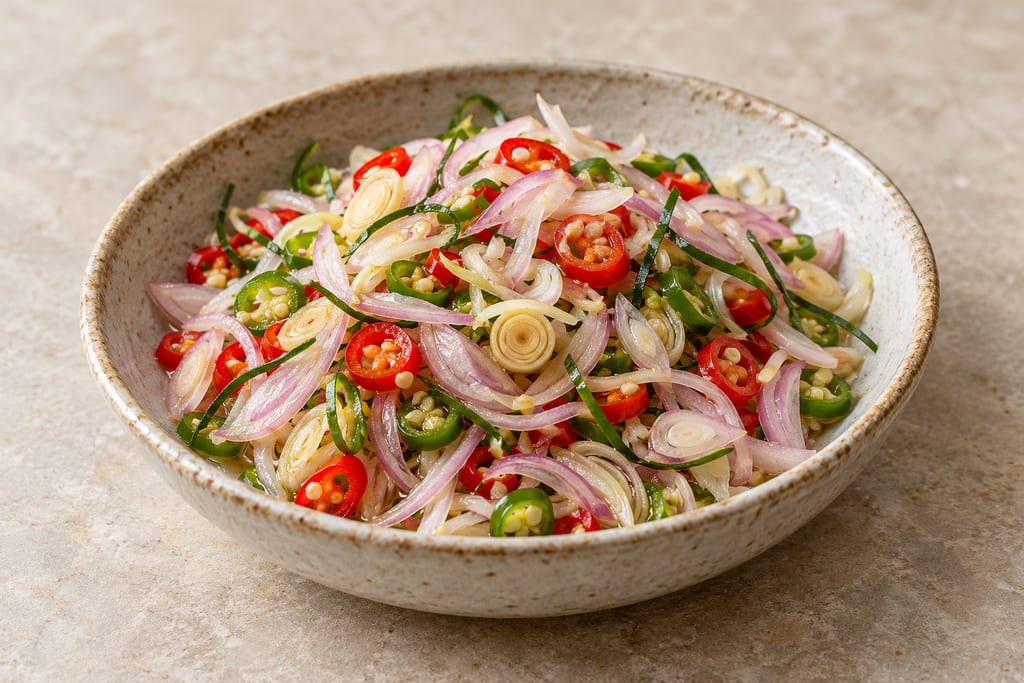
A small fresh relish of sliced shallots, chillies, lemongrass and lime leaf with lime juice, oil and salt, inspired by Balinese sambal matah.
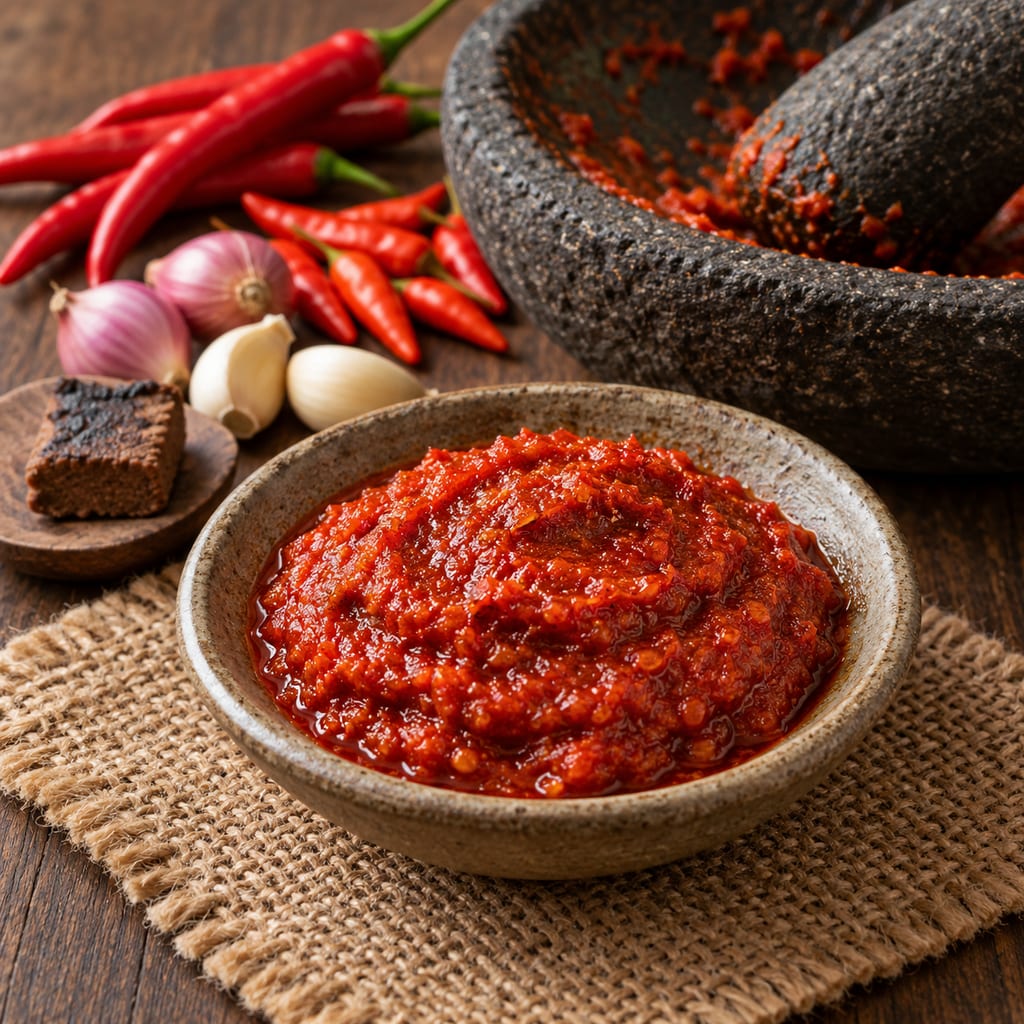
This documented West Java sambal grinds cooked red and bird’s-eye chiles with garlic, shallots and fermented shrimp paste, then simmers the paste before serving.
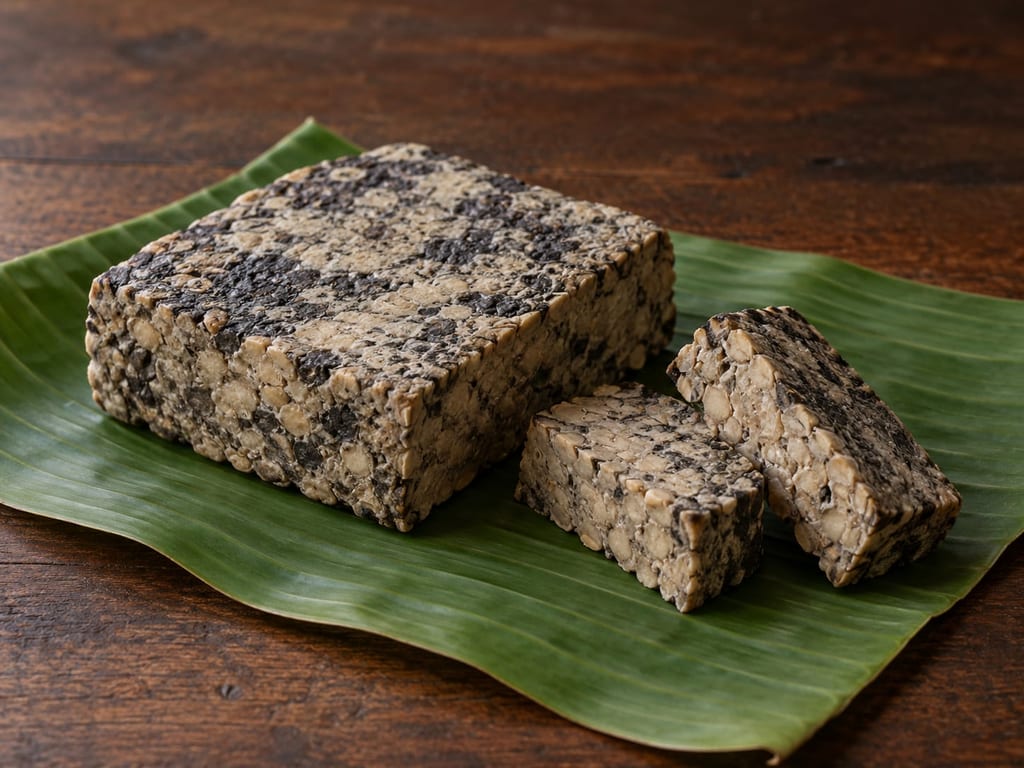
Black oncom is a mould-fermented cake made from defatted peanut cake, pressed to about 2 cm, steamed and then incubated for a day at ambient temperature.
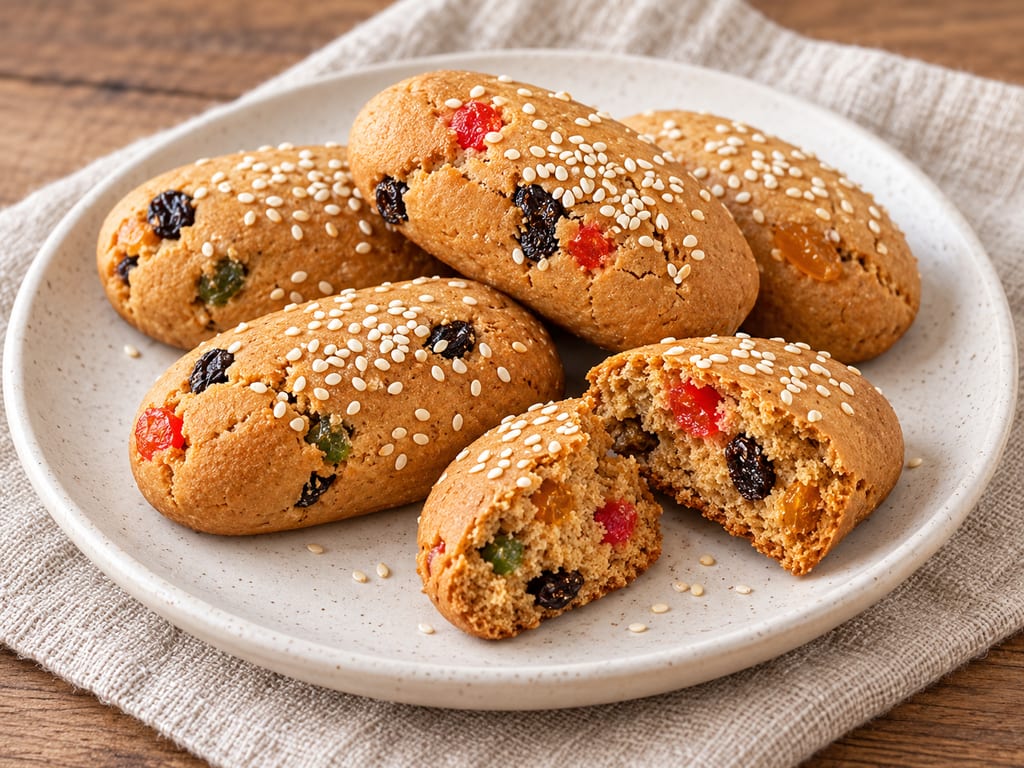
An Indonesian palm-sugar and cinnamon quick bread with dried fruit and sesame.
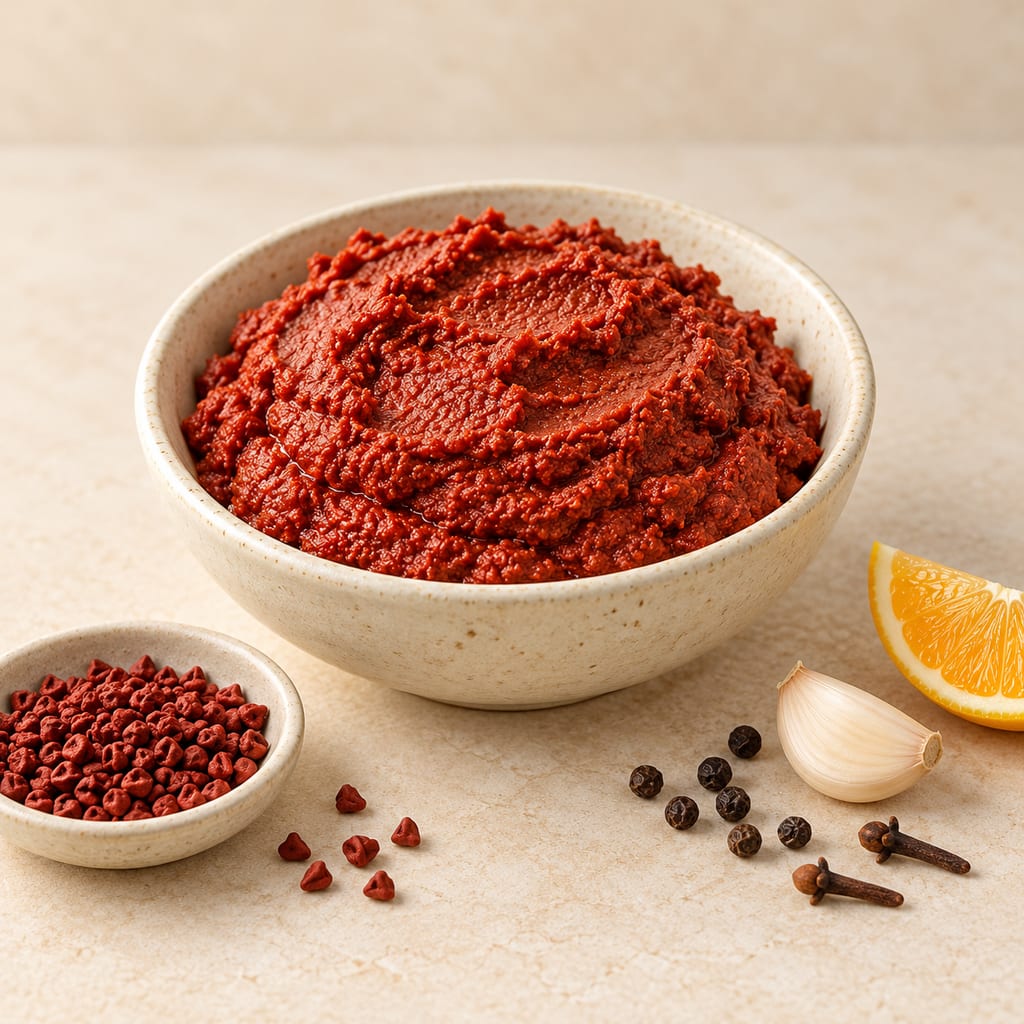
A Yucatecan recado rojo is a brick-red seasoning paste built on annatto seed, garlic and sour orange. This measured home version shows one route into a much wider family of market and household recados.
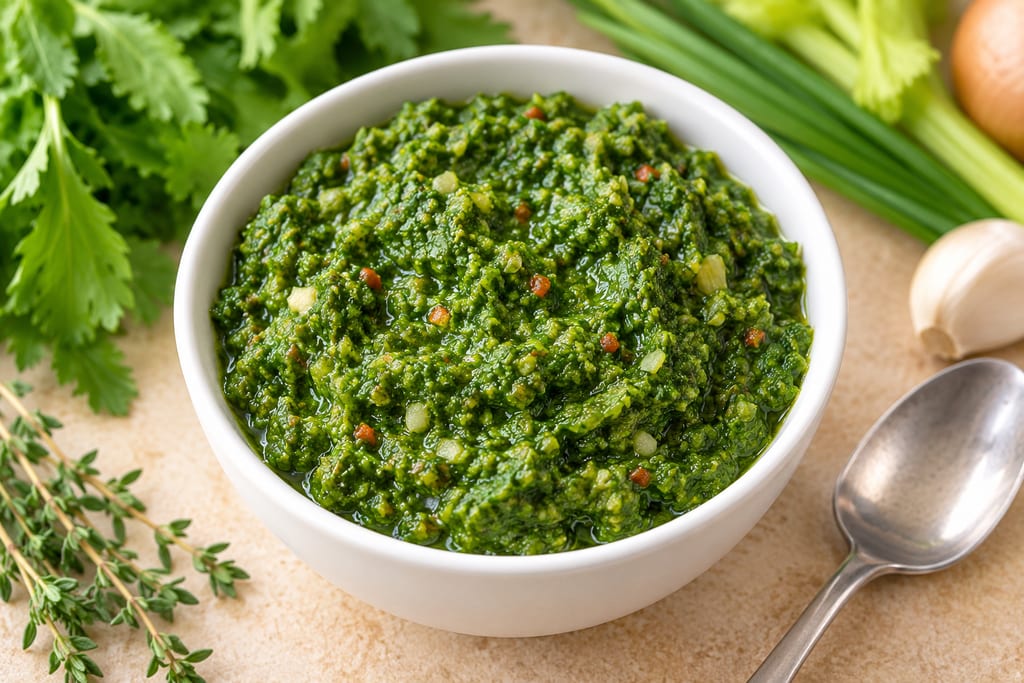
A fresh herb and aromatic paste of chadon beni (culantro), thyme, chives, celery, onion, garlic and peppers, blended with vinegar and water and used as the base for Trinidadian cooking.
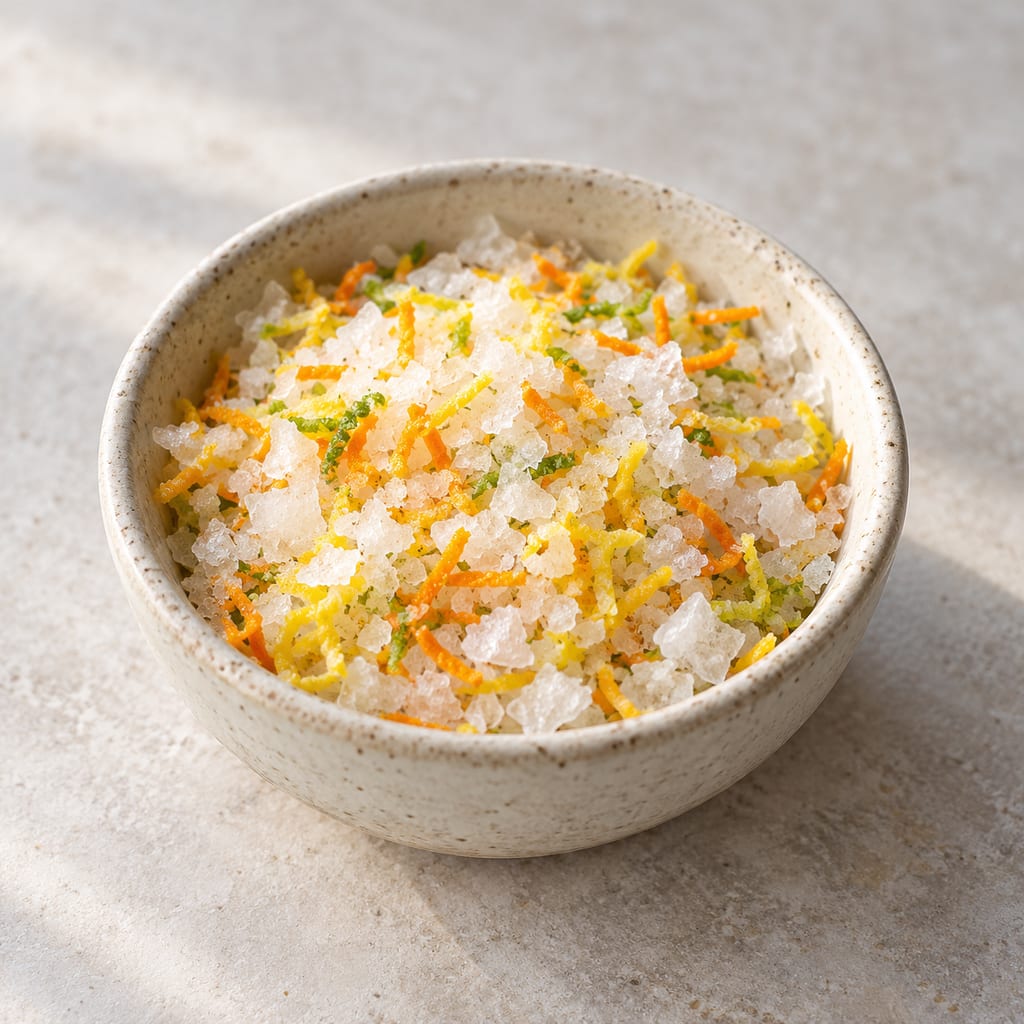
Citrus zest is rubbed into coarse or flake salt and dried on a tray. This peel-based seasoning preserves the chosen citrus aroma without adding juice.
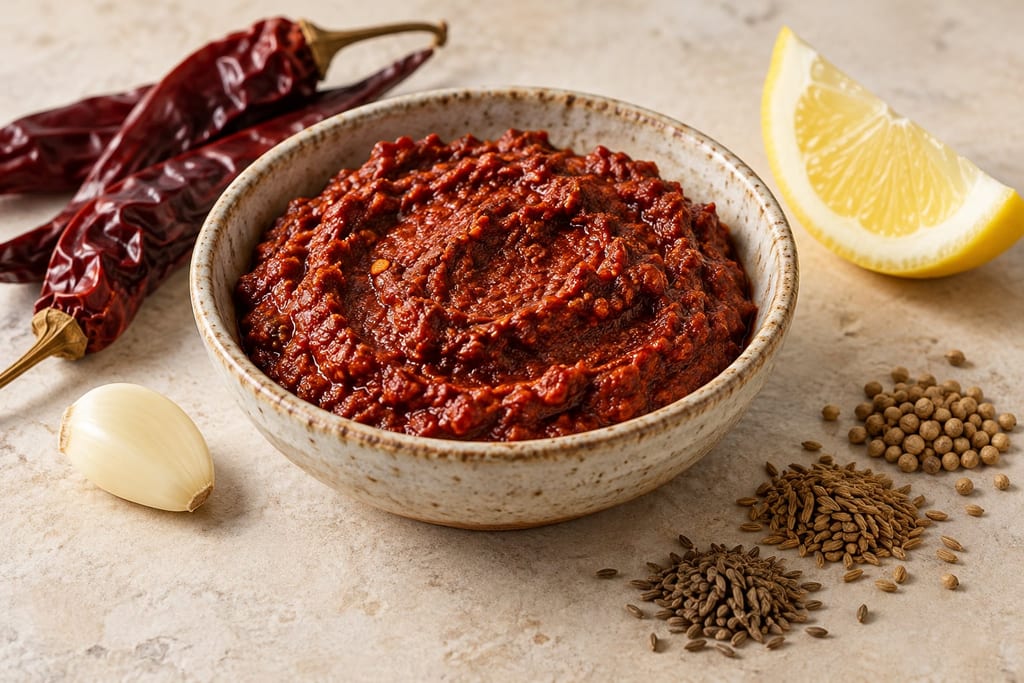
A fresh chilli paste made from rehydrated dried red peppers, garlic, olive oil, lemon and warm spices; this small-batch formula adapts the harissa family rather than reproducing a tested Tunisian method.
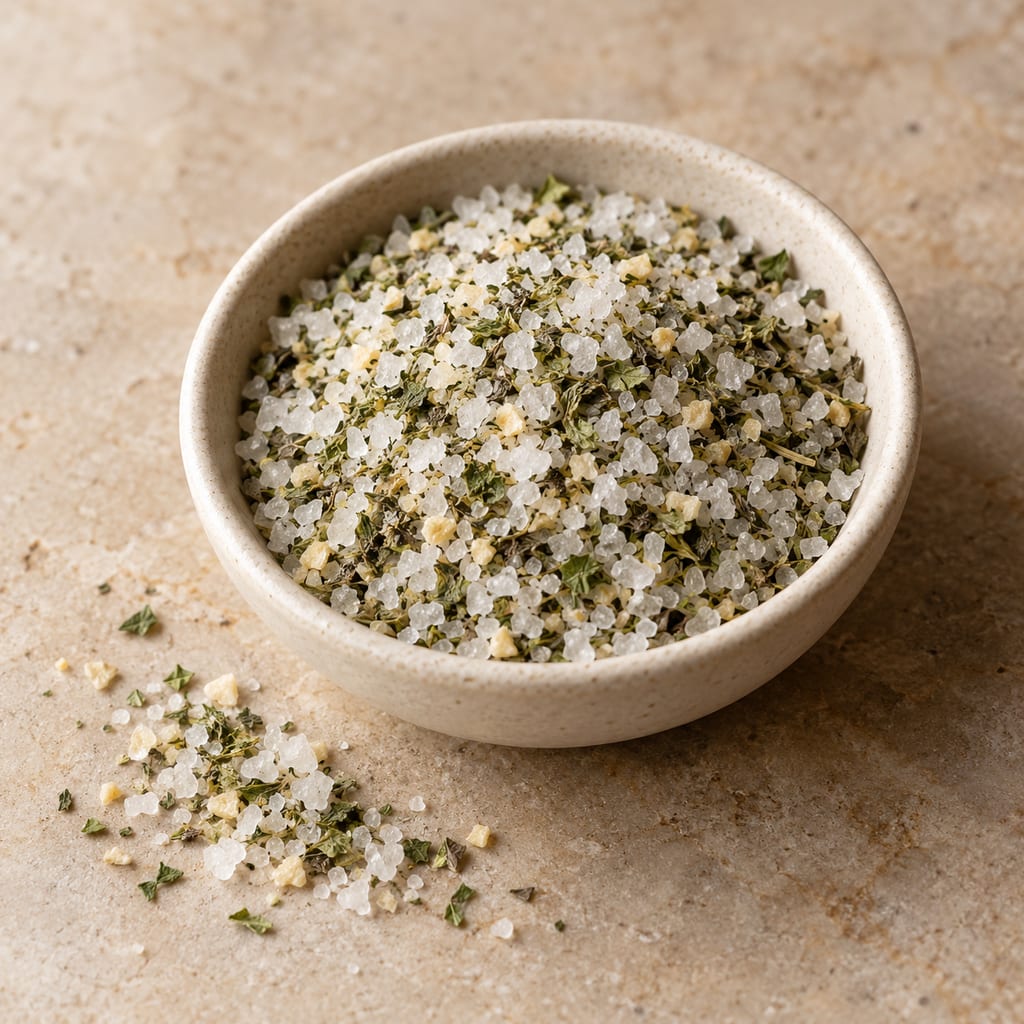
Fresh garlic and pungent herbs are chopped with kosher salt, then dried in the warmth of a switched-off oven. The blend keeps the selected herbs together in one seasoning.
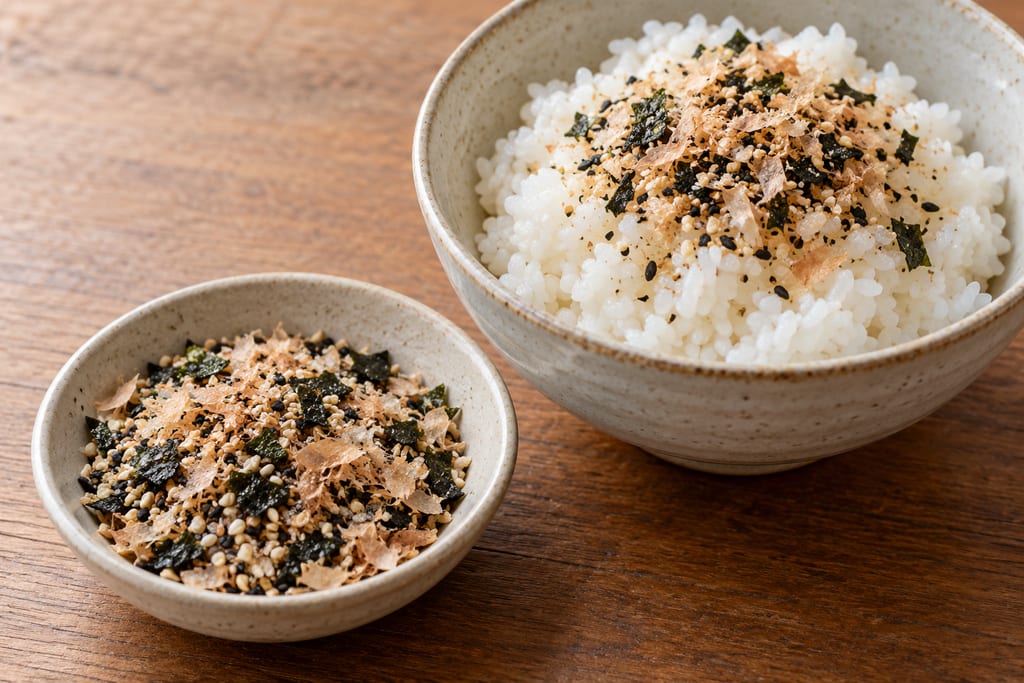
A dry Japanese rice seasoning of sesame, bonito, nori, sugar and salt. This documented home blend is one specific formula within a varied category with several early product histories.
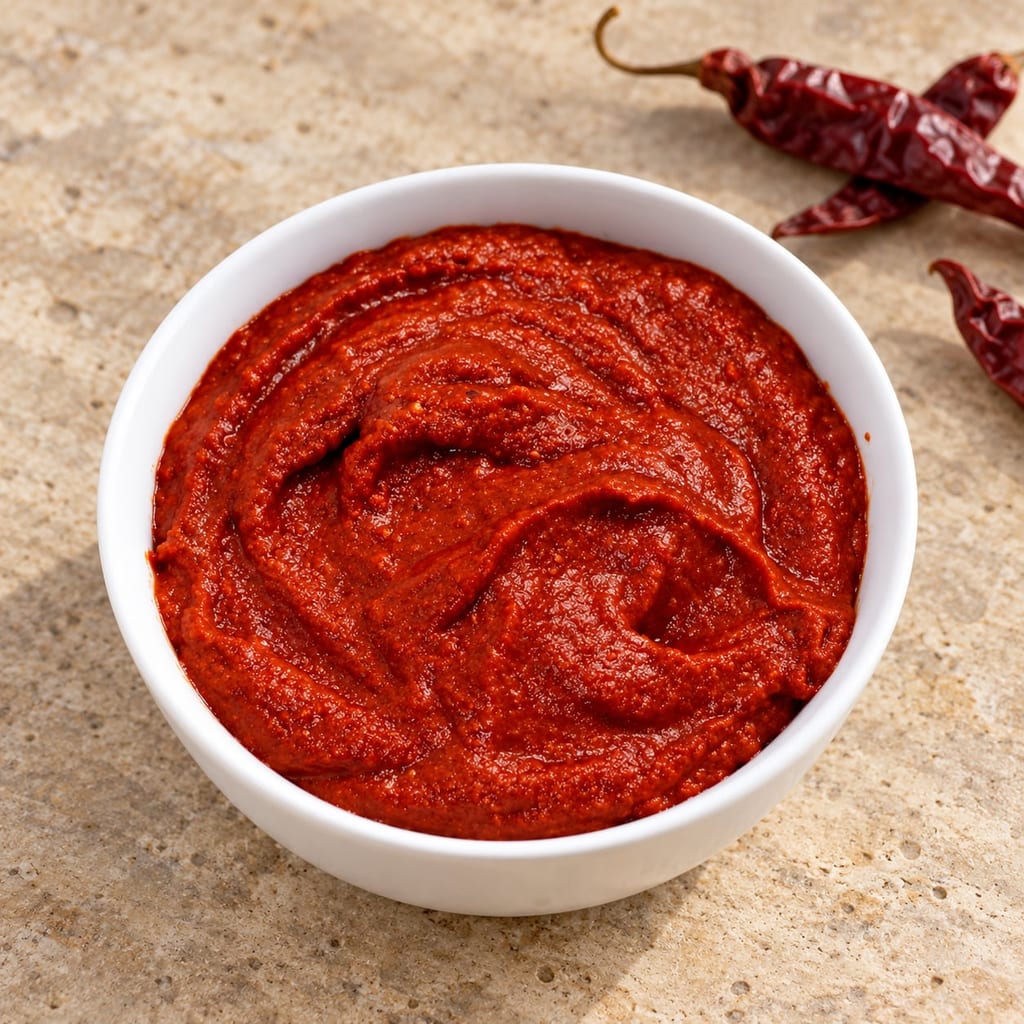
Recheado is a red Goan spice paste of Kashmiri chillies, garlic and spices ground in vinegar, best known as the stuffing for fried fish such as mackerel.
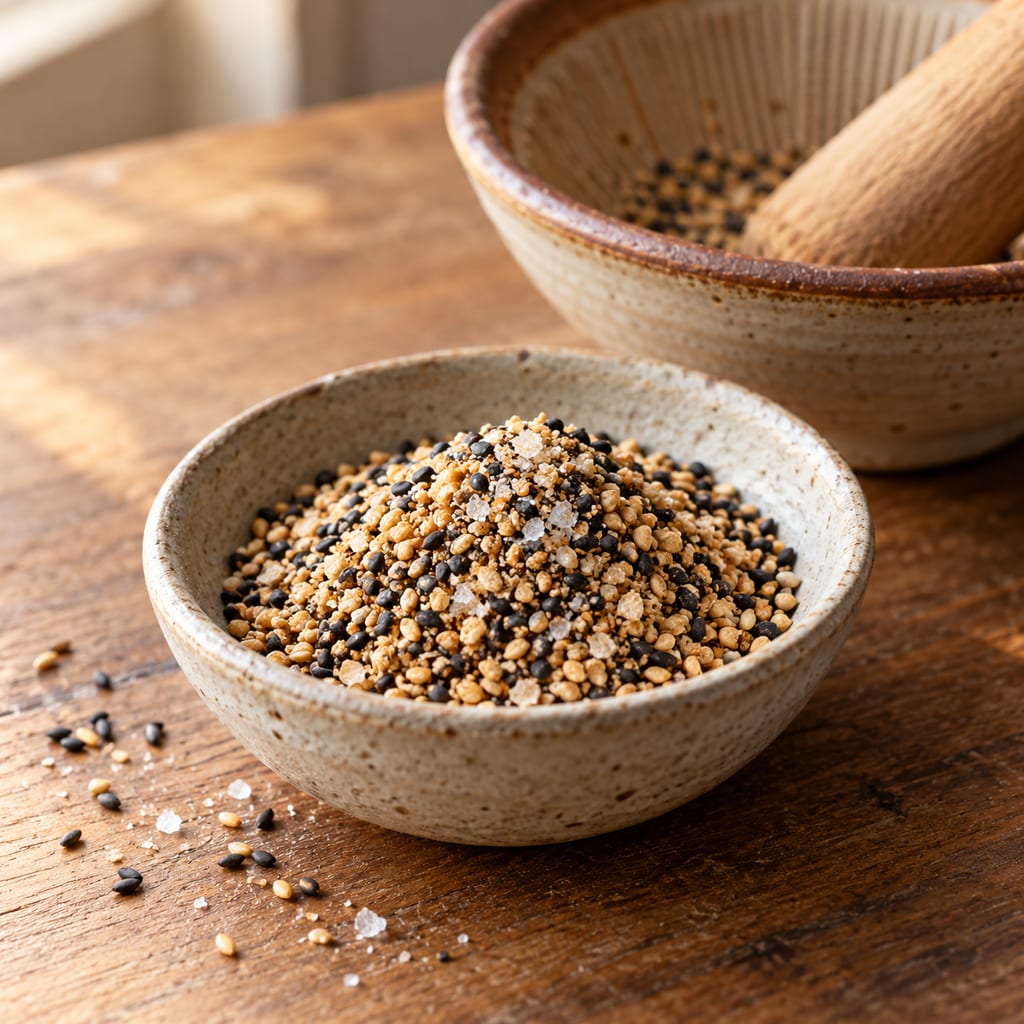
Toasted sesame seeds and sea salt are ground together into a coarse seasoning for rice. This small pan-roasted batch keeps most of the seed texture.
No community contributions have been published for this entry yet.
Sign in to contribute. Published comments and photos are free to read.
Kementerian Pendidikan, Kebudayaan, Riset, dan Teknologi; Pusat Perbukuan / Direktorat SMKMethod · Identity · Use
Dasar-Dasar Kuliner untuk SMK/MAK Kelas X Semester 2White, red and yellow bumbu dasar as practical families; orange and black bases also listed.
White: shallot, garlic, salt, optional candlenut, pepper or coriander. Red adds red chile. Yellow adds turmeric and may include coriander, candlenut or pepper.
Example dishes: gudeg and sayur bobor, balado, kari and pesmol.
Ground pastes that may be cooked before use.
Cited in: A family of bases, not one master paste; White, red and yellow; Grinding and cooking are separate stages; What is not recorded
Universitas Pendidikan IndonesiaSafety · Method
Studi Pembuatan Bumbu Dasar dengan Bahan Khas Indonesia Berbasis Daya Terima Konsumen2017 thesis comparing variants and consumer acceptance across the three paste families.
Cited in: What a product-development thesis adds, and does not
Universitas Pendidikan IndonesiaMethod
Chapter III: Metodologi PenelitianFinal samples with sugar, salt and vinegar were kept at room temperature and checked daily until judged unusable; no objective microbiological endpoint.
Cited in: What a product-development thesis adds, and does not
Universitas Pendidikan IndonesiaSafety
Abstract: Studi Pembuatan Bumbu Dasar...Abstract reports three days at room temperature.
Cited in: What a product-development thesis adds, and does not
Universitas Pendidikan IndonesiaSafety
Chapter V: Simpulan dan SaranConclusion reports about four to five days; incomplete preparation and packaging detail in the selected passages.
Cited in: What a product-development thesis adds, and does not
Direktorat Pembinaan SMKIdentity
Boga Dasar 2: Bumbu dasarVocational teaching manual on bumbu dasar; seen only as a search excerpt.