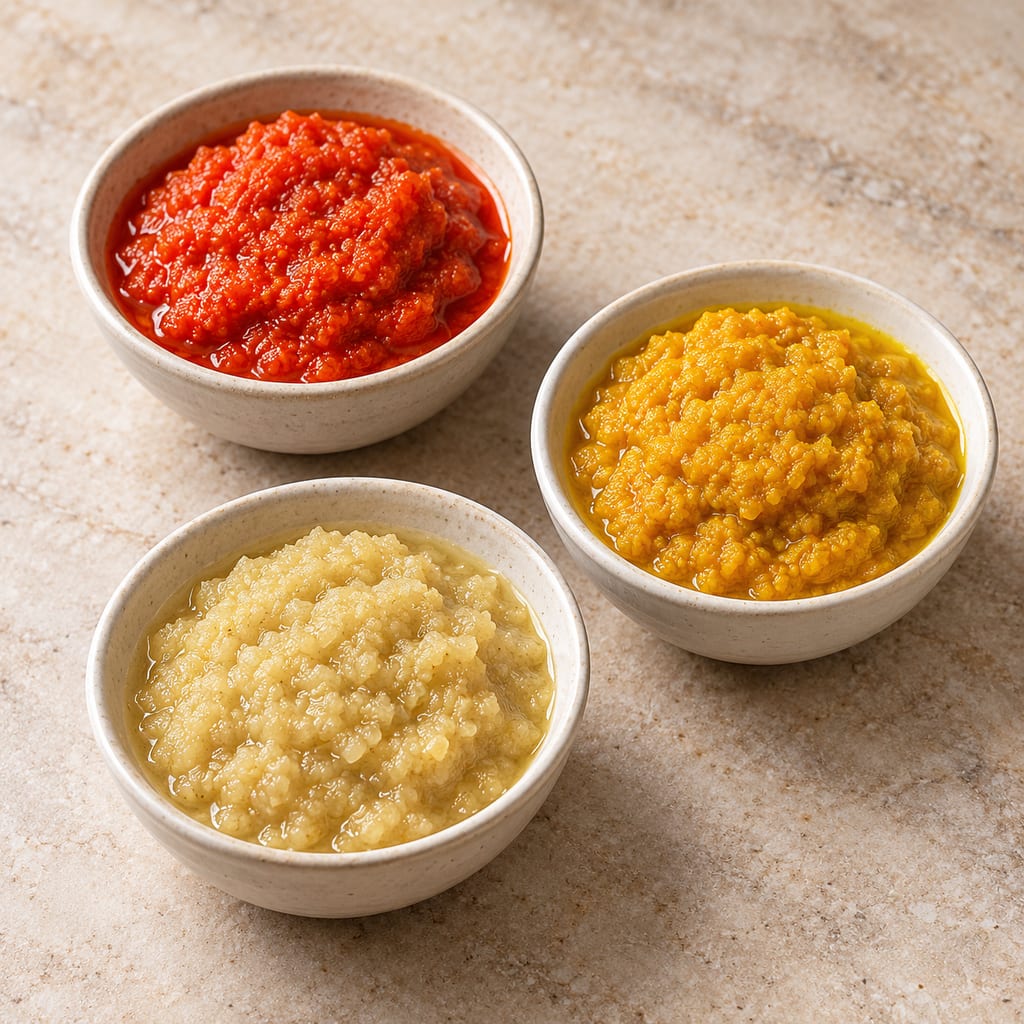
Bumbu dasar (Indonesian white, yellow and red spice bases)
Bumbu dasar are the ground spice bases of Indonesian cooking: a white paste of shallot, garlic and salt, with chile added for red and turmeric for yellow, cooked into dishes.
 FermenteaWhere food goes to change
Dabu-dabu · Dabu dabu · Sambal dabu-dabu
Dabu-dabu is a raw North Sulawesi relish of chopped chillies, shallot, scallion and tomato, dressed with salt and lime juice or coconut oil.
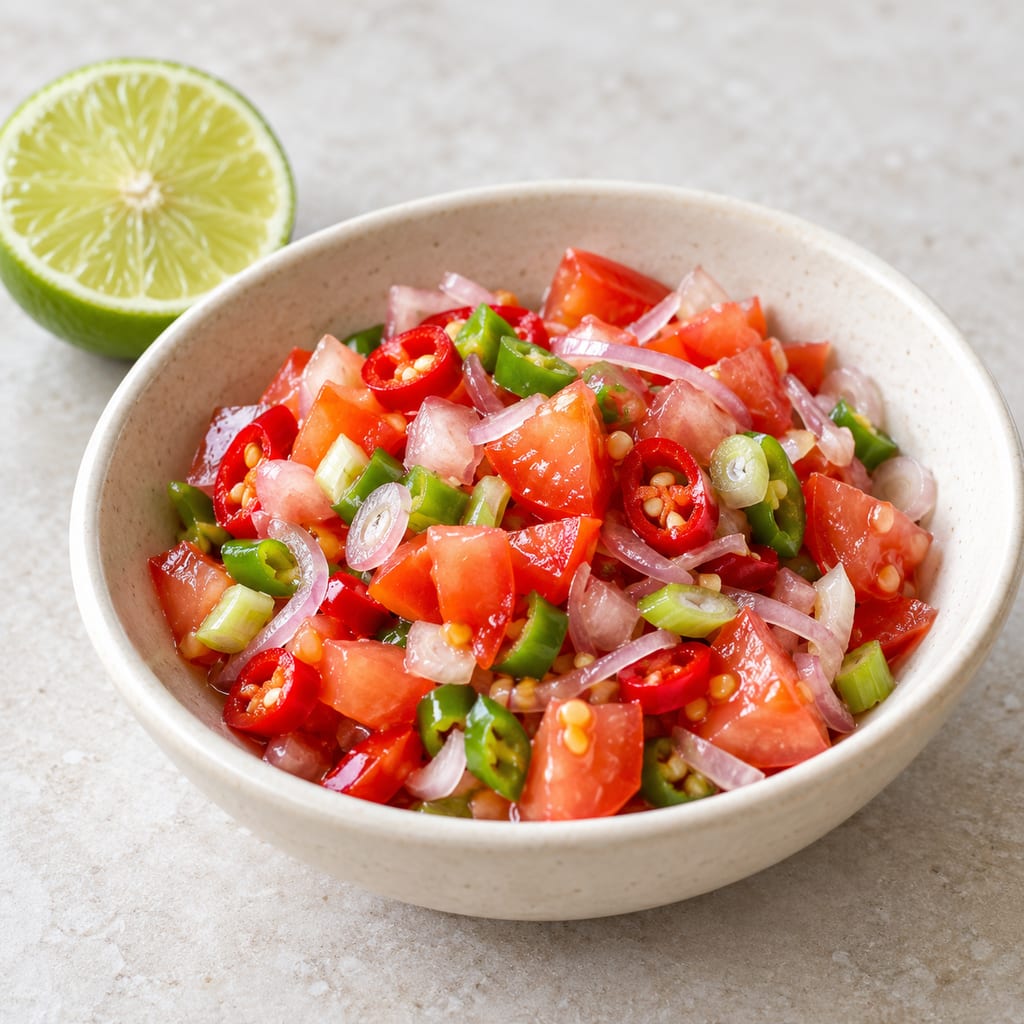
Dabu-dabu comes from Manado in North Sulawesi. It is a sambal in the broad Indonesian sense, a chilli-based condiment, but it is cut rather than ground: chillies, shallot, scallion and tomato are chopped and left in pieces. The tomato is the difference that stands out beside Bali's sambal matah. It adds juice and a soft, sour body that sliced shallot and lemongrass do not supply.
The Indonesian Foreign Ministry's cookbook gives the dressing as salt with either lime juice or coconut oil. The two give different results. Lime juice makes a sharp, wet relish. Coconut oil coats the pieces and carries the aroma of the raw aromatics. The cookbook gives no quantities, so proportions are left to the cook, and none are invented here.
The same cookbook treats Balinese sambal matah as a separate preparation. Matah uses thinly sliced shallot, garlic, red chilli, shrimp paste, salt, lemongrass, lime and coconut oil, with the oil heated and poured over the cut ingredients. Dabu-dabu has no lemongrass, shrimp paste or hot-oil step in the cookbook entry, and it includes tomato and scallion. Both are raw-cut sambals, which is why they are often named together, but they are two recipes with two regional labels and should not be read as variants of one formula.
No source used here gives a shelf life for freshly chopped dabu-dabu. Lime juice makes the relish tart, but sourness does not show that a raw vegetable mixture is safe to keep, so the sensible reading is to make it in small amounts and serve it fresh. The cookbook entry is a short list of ingredients, not a full recipe, and the page does not establish an earliest date, a seasonal pattern or a complete picture of how households in Manado prepare it.
The cookbook documents dabu-dabu as a present-day Manado preparation. No source used here dates its origin.
Scaling: not applicable
Chopped raw vegetables dressed with lime juice or oil have no validated shelf life in the sources.
Hazard sourceMake it fresh and in small amounts; the sources give no storage period, so none is claimed. Do not store it at room temperature for later use.
Control sourceNo validated storage period exists for the finished relish. Acidity from lime juice does not establish safety or shelf stability.
The Indonesian Foreign Ministry cookbook labels dabu-dabu as a Manado preparation; this does not date it or exclude other places.
Bumbu dasar are the ground spice bases of Indonesian cooking: a white paste of shallot, garlic and salt, with chile added for red and turmeric for yellow, cooked into dishes.
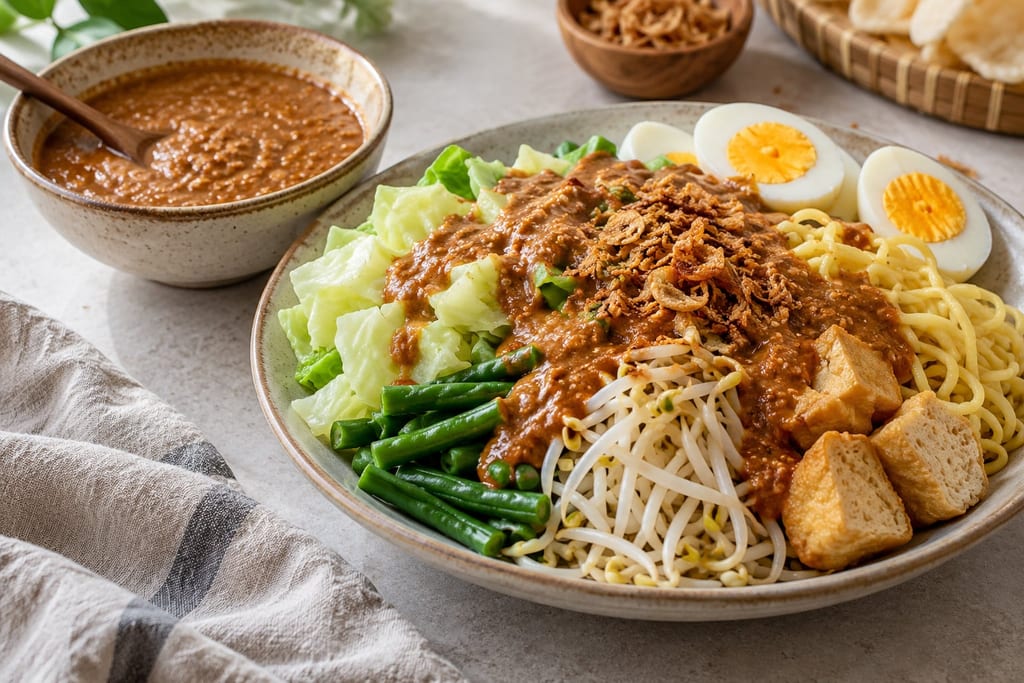
A cooked peanut sauce of ground roasted peanuts, aromatics, shrimp paste and coconut cream, as made for gado-gado; pecel and Malaysian satay sauces are close relatives with different formulas.
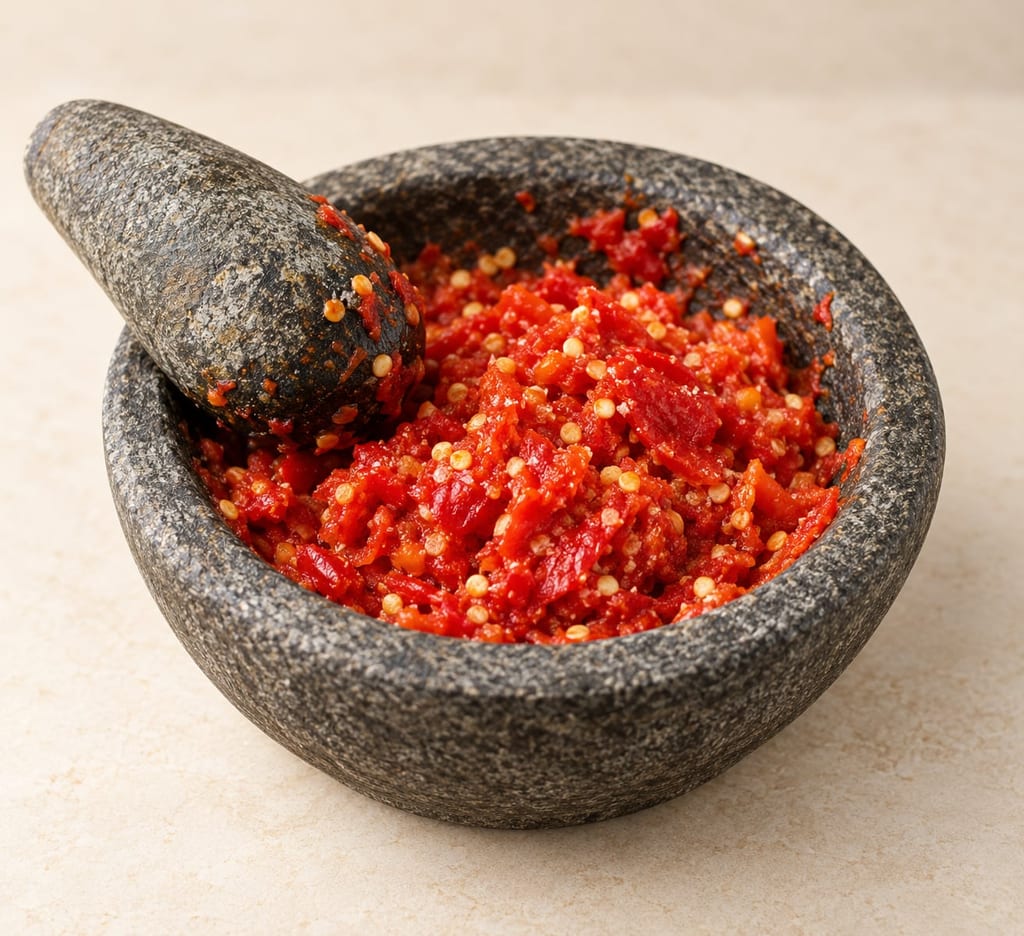
Sambal ulek or oelek is Indonesian chilli paste in its plainest form: red chillies pounded or ground with salt, here with a little vinegar.
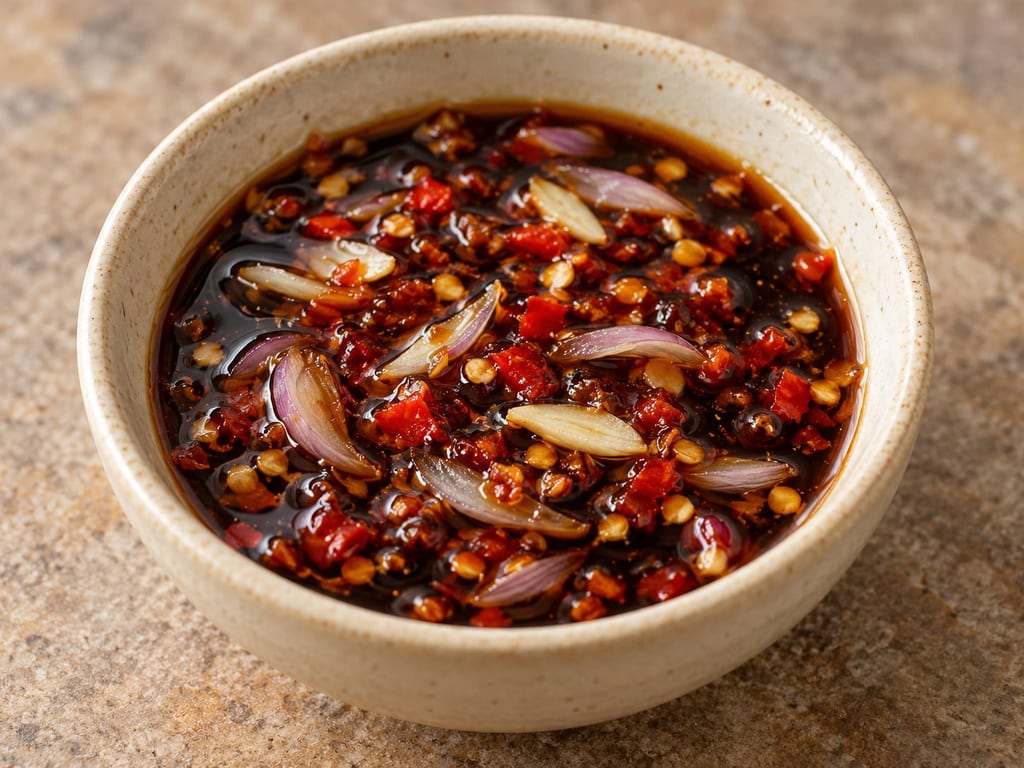
Sambal kecap is an Indonesian table condiment of fresh bird's eye chilli and shallot stirred into sweet soy sauce, served with grilled food, satay and tempe.
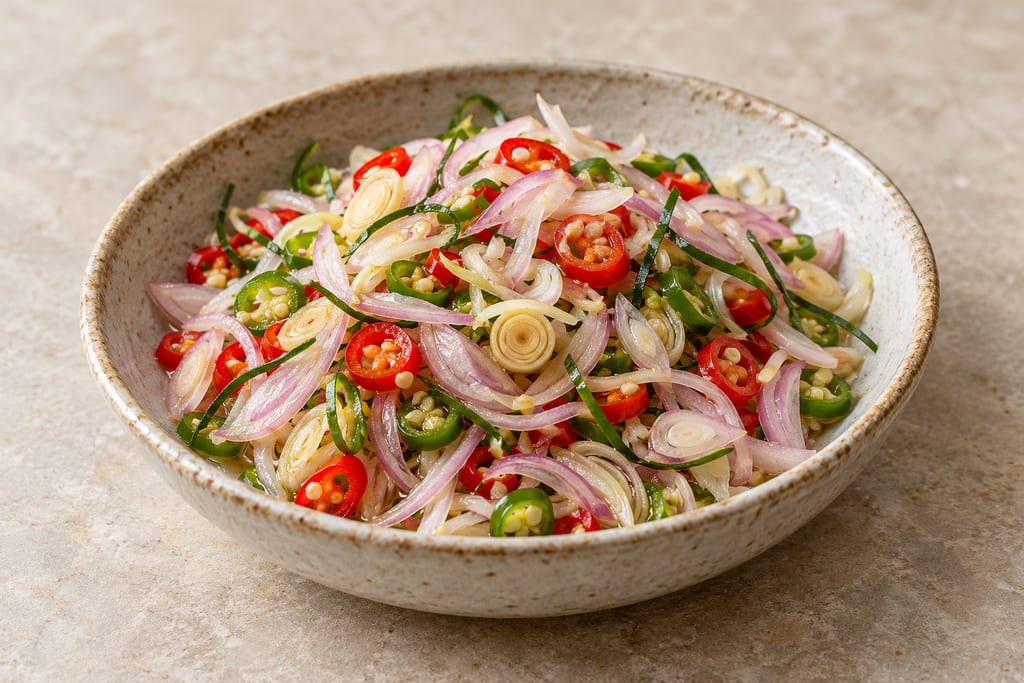
A small fresh relish of sliced shallots, chillies, lemongrass and lime leaf with lime juice, oil and salt, inspired by Balinese sambal matah.
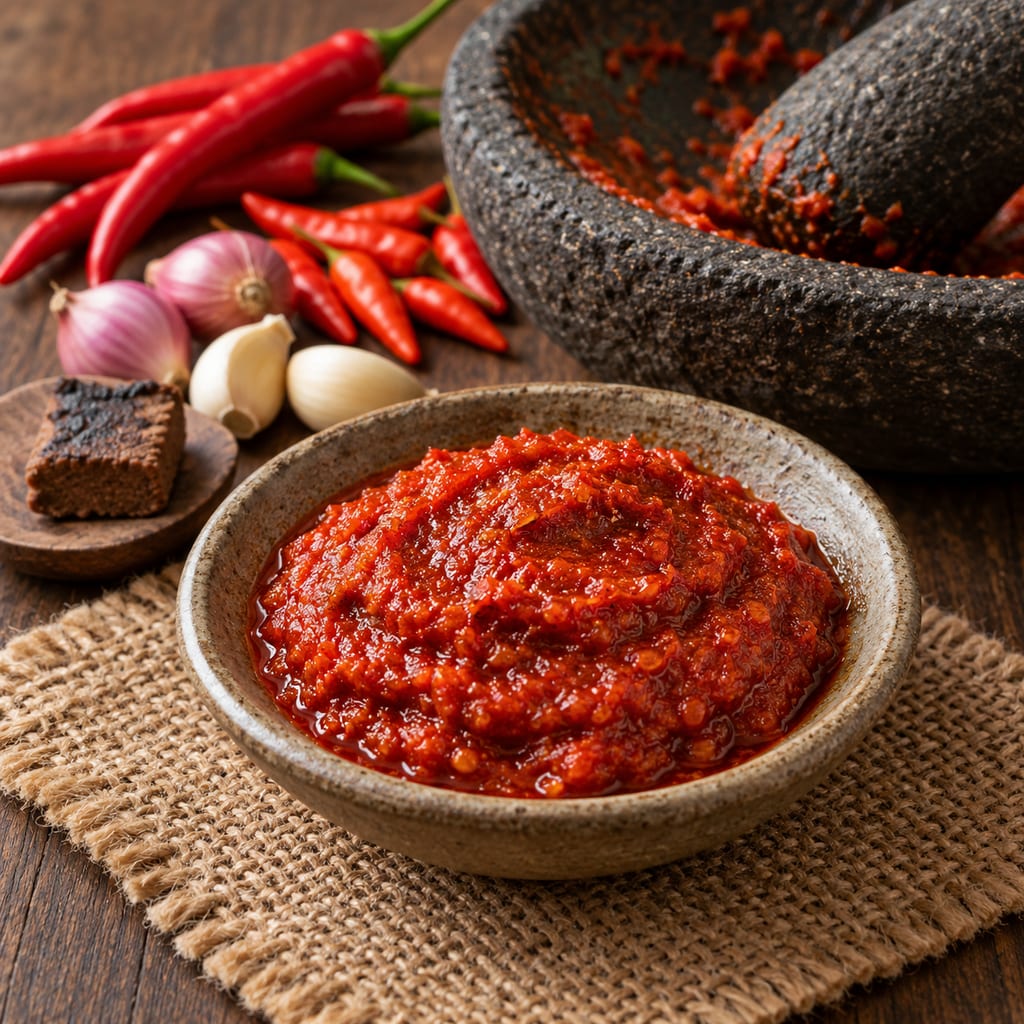
This documented West Java sambal grinds cooked red and bird’s-eye chiles with garlic, shallots and fermented shrimp paste, then simmers the paste before serving.
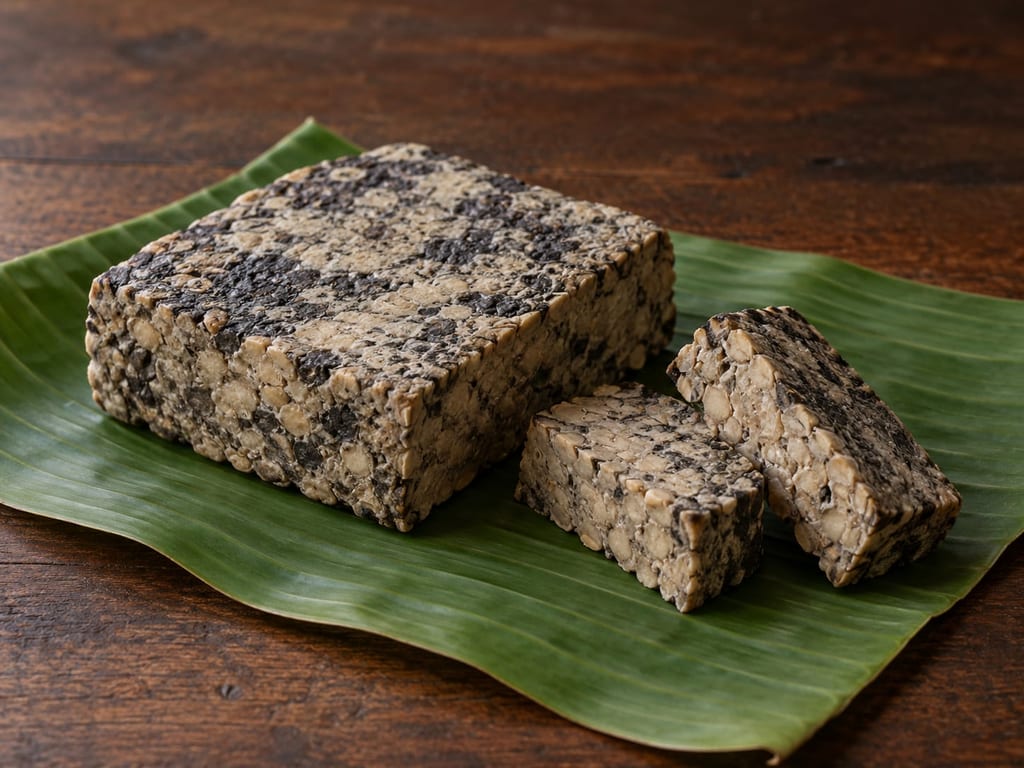
Black oncom is a mould-fermented cake made from defatted peanut cake, pressed to about 2 cm, steamed and then incubated for a day at ambient temperature.
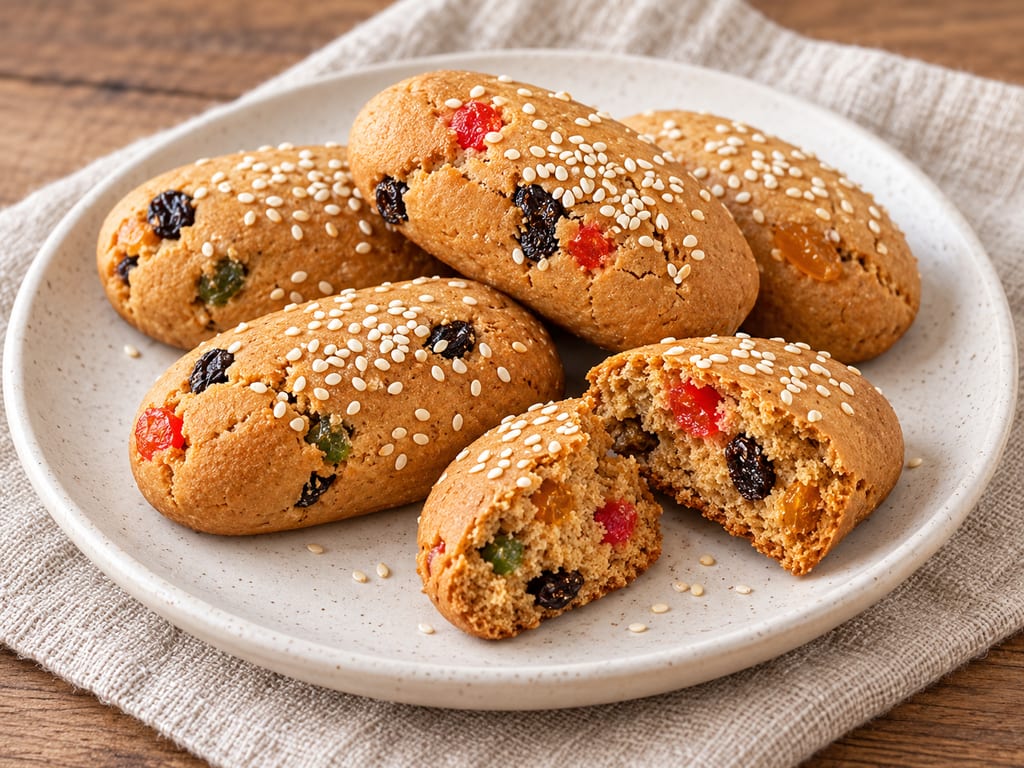
An Indonesian palm-sugar and cinnamon quick bread with dried fruit and sesame.
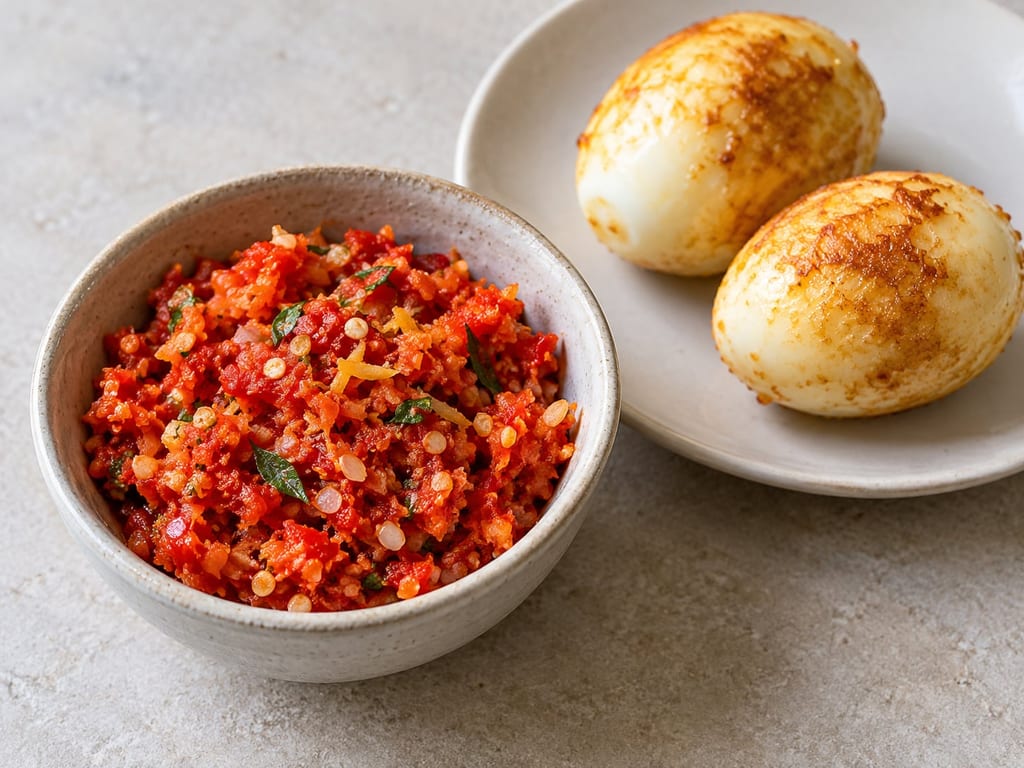
Ai-manas is described as a very hot chilli paste served with Timorese meals. One published version blends fresh chillies, shallots, garlic, Thai basil, ginger, lemon and salt, and serves it with eggs. Sources do not establish a standard formula, precise birthplace or earliest date.
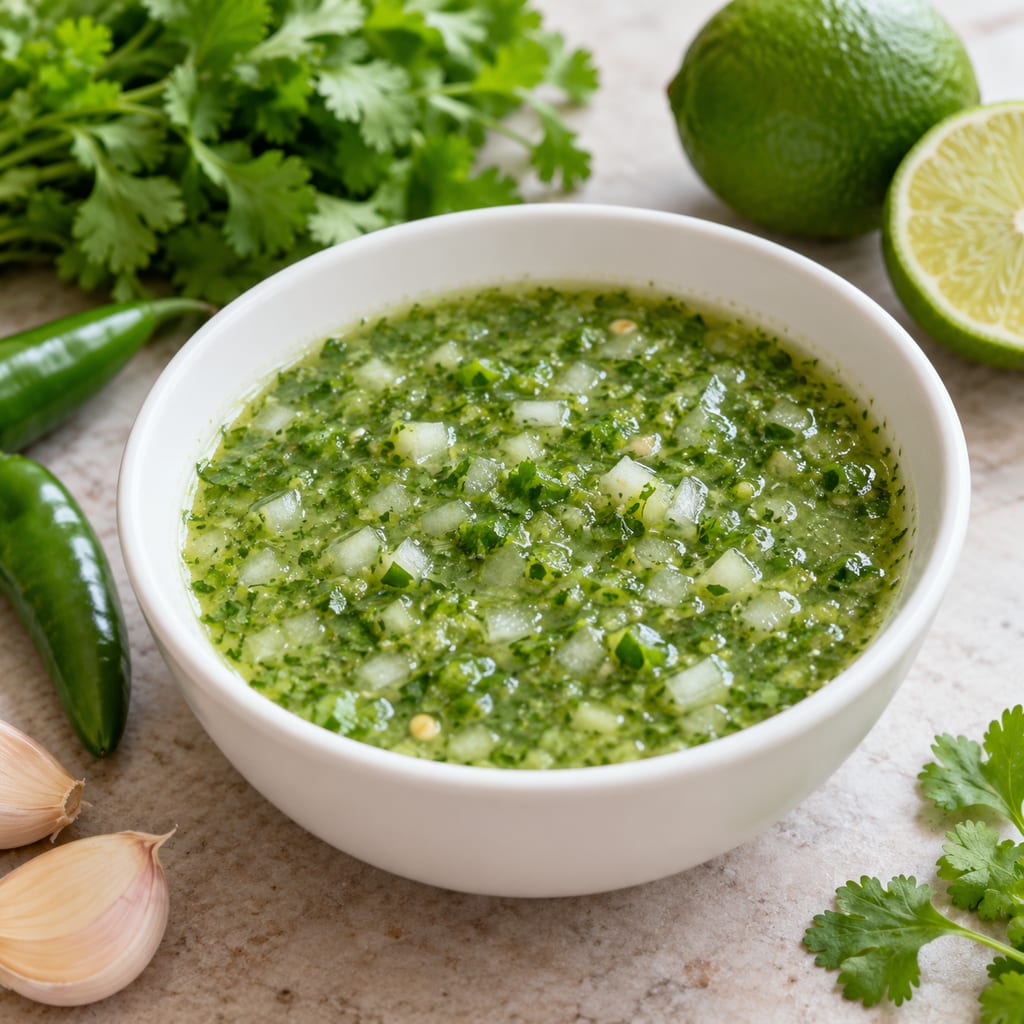
A fresh, uncooked Ecuadorian table sauce of hot pepper, cilantro, garlic and lime, served with most everyday dishes.
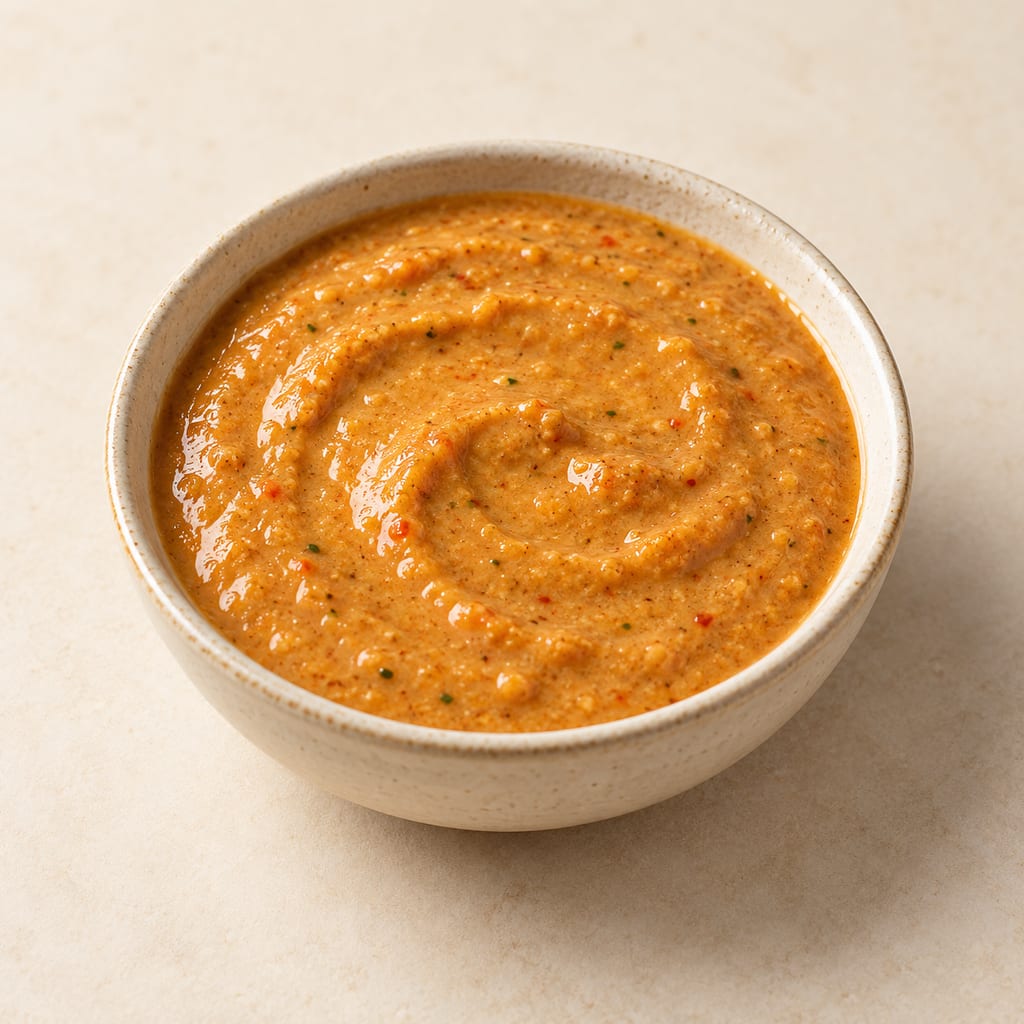
A spicy peanut hot sauce from the Popayán and Cauca region of Colombia, traditionally served with pipián empanadas and tamales.
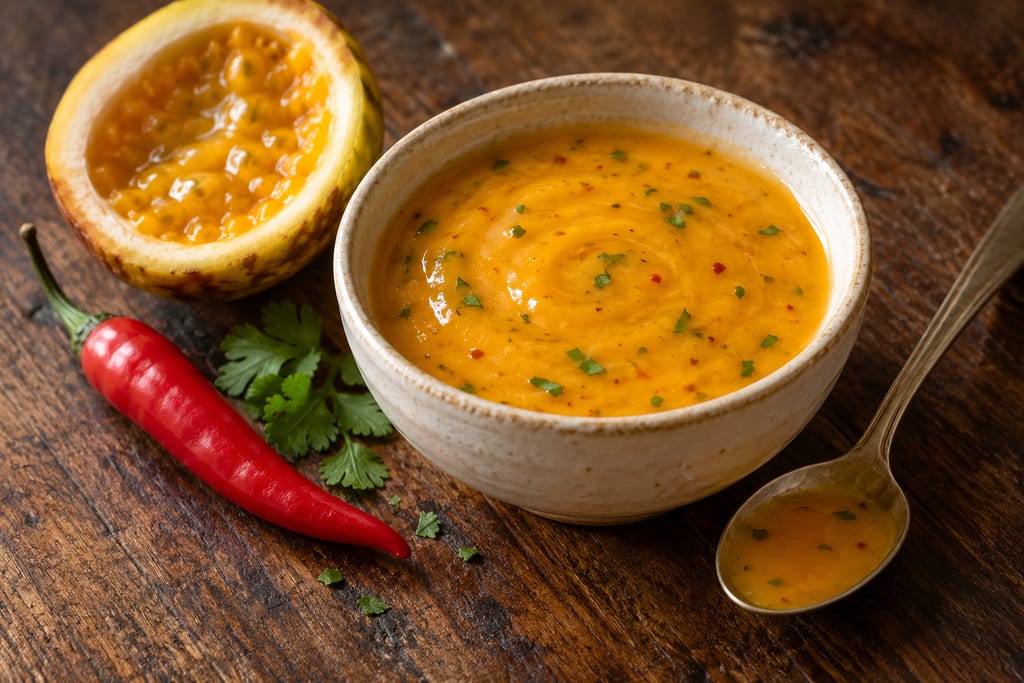
A contemporary Ecuadorian hot sauce that pairs passion fruit juice with boiled chile peppers, oil and lime.
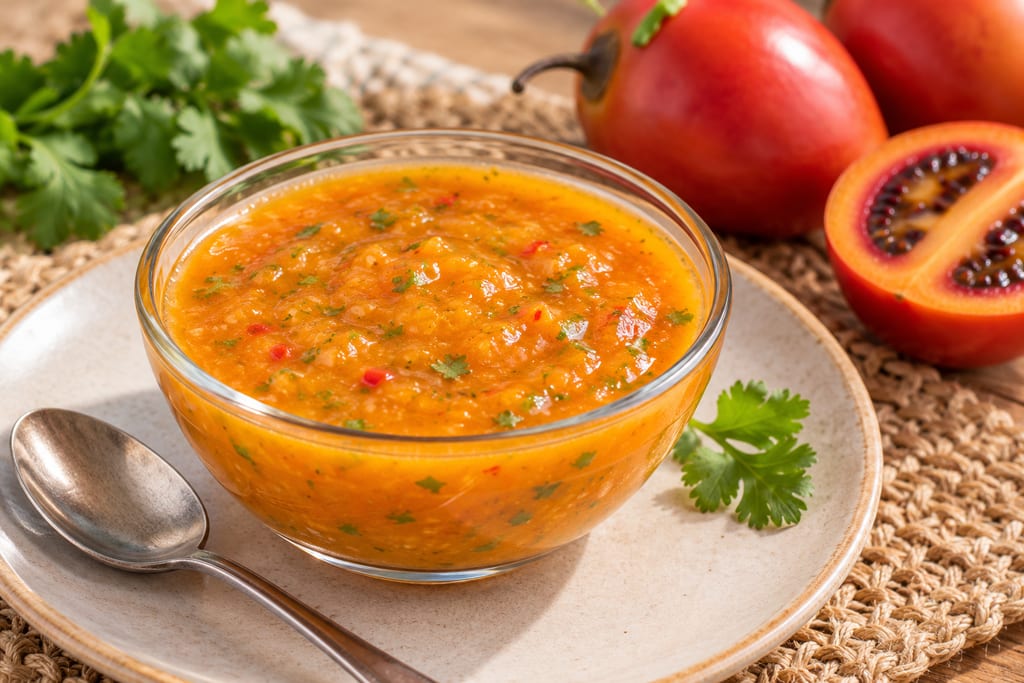
An Ecuadorian hot sauce built on tamarillo, a tart fruit that gives a sharper, fleshier base than ordinary tomato salsa.
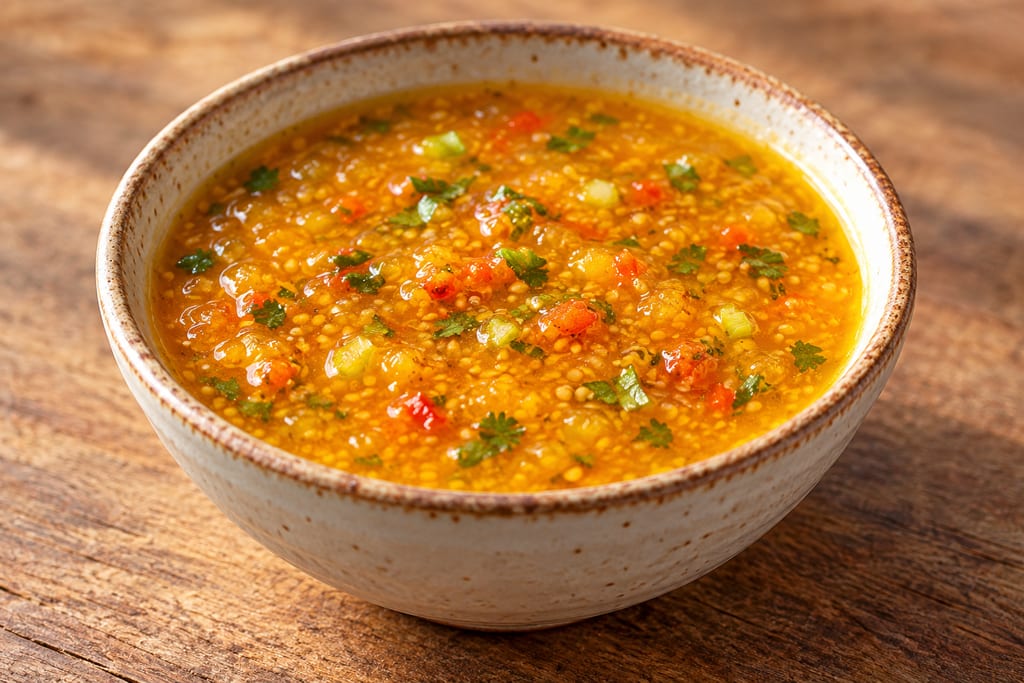
A sweet, tart and spicy Colombian sauce of uchuva, the yellow physalis fruit, with hot pepper, scallion, cilantro and lime.
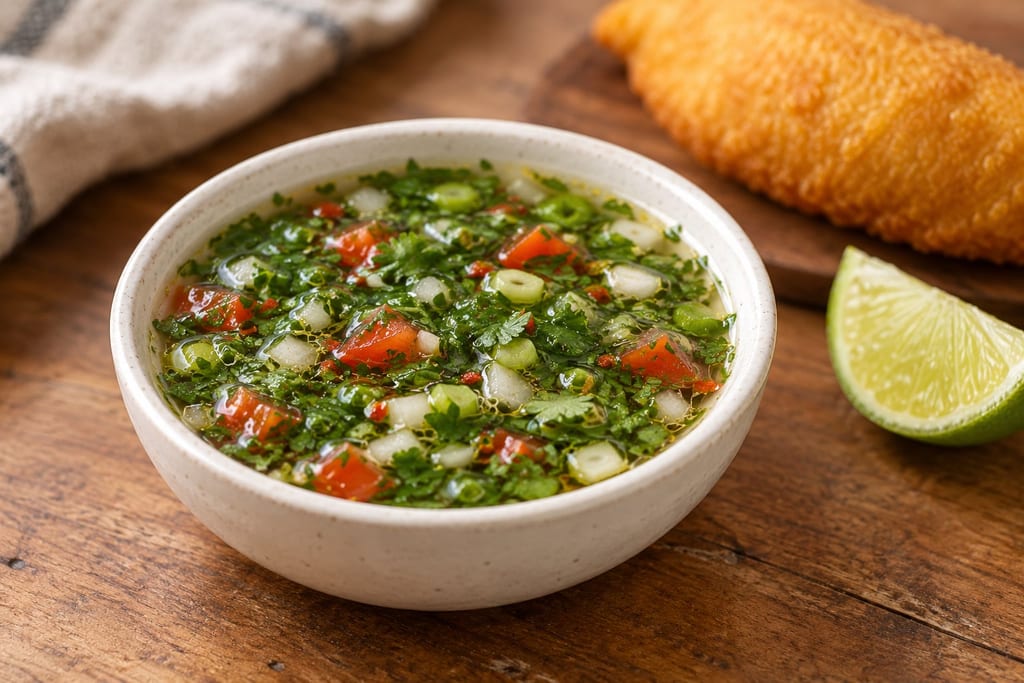
A fresh Colombian table condiment of chopped herbs, scallion and tomato in a vinegar and chile base, served beside fried and filled dishes.
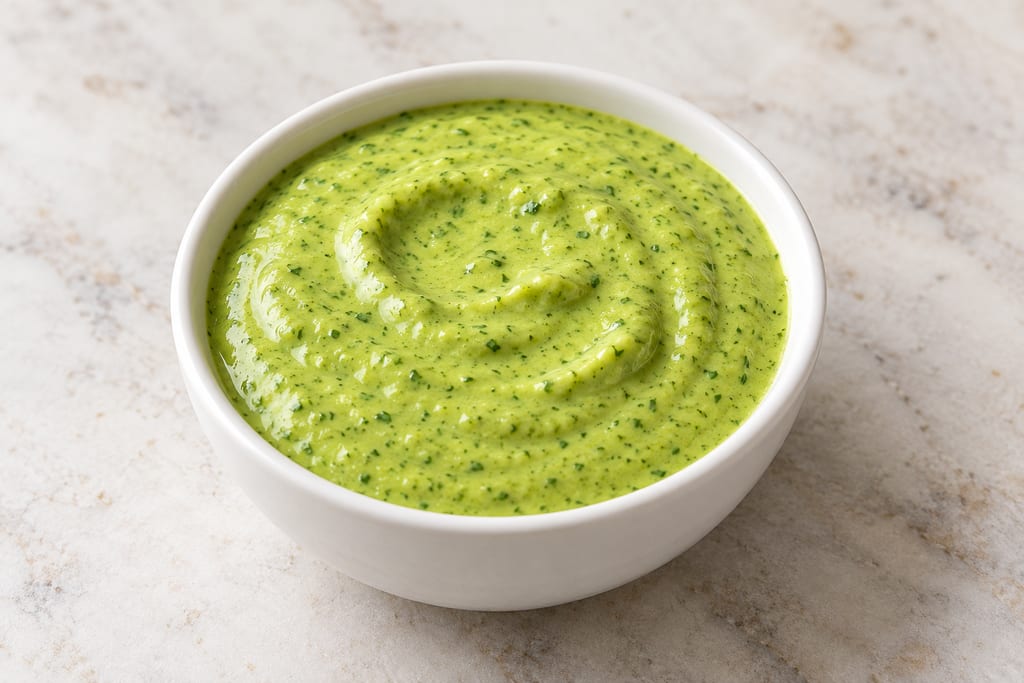
Ají verde is a Peruvian green sauce of coriander, chilli, onion and garlic in a mayonnaise or cheese base. It is best known through Peruvian restaurant cooking abroad.
No community contributions have been published for this entry yet.
Sign in to contribute. Published comments and photos are free to read.
Ministry of Foreign Affairs of the Republic of Indonesia and Komunitas Pencinta Gastronomi Indonesia (IGC)Recipe · Geography
Handrawina Adiboga Nusantara pada Jamuan Makan Perwakilan Republik Indonesia di Luar NegeriLists dabu-dabu as a Manado/North Sulawesi preparation of chopped chillies, shallot, scallion and tomato with salt and lime juice or coconut oil (printed page 74).
Describes Balinese sambal matah as a separate preparation of sliced aromatics with hot coconut oil.
Cited in: A relish that is chopped, not pounded; How it differs from sambal matah; Keeping and limits of the evidence
Journal of Ethnic Foods / Springer NatureContext
Diversity of sambals, traditional Indonesian chili pastesPlaces sambal as a broad family of Indonesian chilli preparations, from raw chopped mixtures to pounded and cooked pastes.
Cited in: A relish that is chopped, not pounded