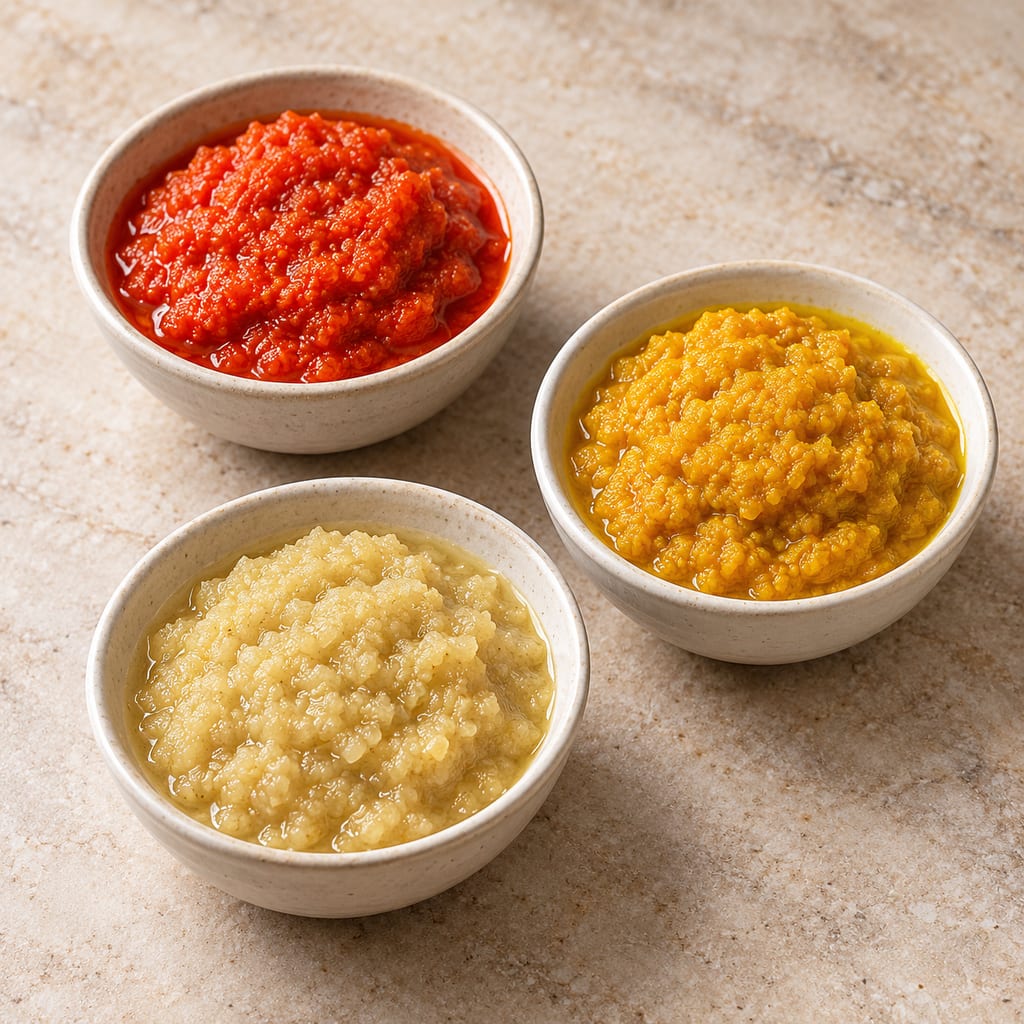
Bumbu dasar (Indonesian white, yellow and red spice bases)
Bumbu dasar are the ground spice bases of Indonesian cooking: a white paste of shallot, garlic and salt, with chile added for red and turmeric for yellow, cooked into dishes.
 FermenteaWhere food goes to change
Modern adaptation
Sambal matah · Fresh sambal matah · Raw shallot and lemongrass sambal
A small fresh relish of sliced shallots, chillies, lemongrass and lime leaf with lime juice, oil and salt, inspired by Balinese sambal matah.
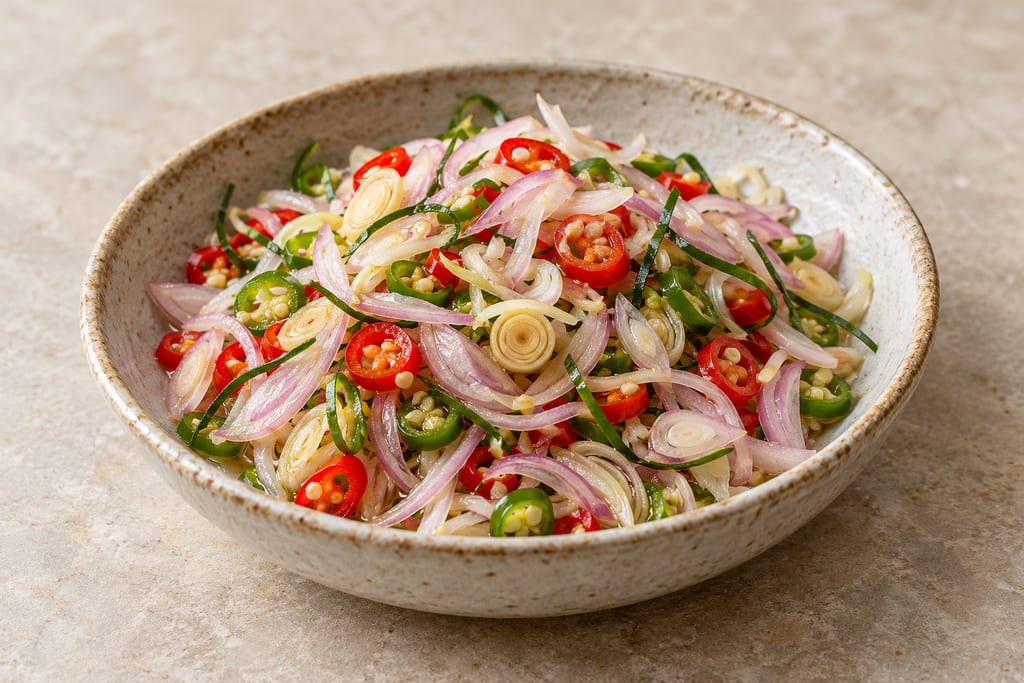
Sambal matah is a Balinese raw sambal made from sliced aromatics. Indonesia's tourism ministry names shallots, bird's-eye chillies, lemongrass and citrus leaves, dressed with hot coconut oil, and distinguishes it from sambals that are pounded or fried. Its account notes versions with terasi or garlic and describes the relish with chicken, fish and Balinese rice dishes. This report formula is an adaptation: it uses lime juice and coconut or neutral oil, omits shrimp paste by default and leaves the aromatics uncooked.
Shallots lead at 70 g of the 170 g batch, about 41%, sliced thinly so the lime and salt reach every piece. Chillies, 20 g, are sliced finely for heat. Only the tender centre of the lemongrass goes in, 15 g sliced very finely, because the outer layers are tough and fibrous. The makrut lime leaves are used by the gram: 2 g, central rib removed, sliced as finely as possible. Lime juice (30 g) sharpens, oil (30 g, coconut or neutral) coats everything and carries the aromas, and 3 g salt seasons and draws juice from the shallots so the relish dresses itself.
Two choices are left to the cook. The oil can be warmed gently before mixing, for flavour, but pouring warm or hot oil over raw aromatics is not a validated preservation step and should not be treated as one. And this version leaves out shrimp paste. If you want it, use a suitably cooked, ready-to-eat product and label the shellfish allergen, because the relish is not cooked afterwards.
The formula makes a small batch on purpose, and it should not be turned into a room-temperature oil preserve. Raw, low-acid aromatics covered in oil are the conditions behind a well-documented warning: the US National Center for Home Food Preservation reports that its research confirmed garlic-in-oil mixtures stored at room temperature are at risk of botulism. This relish holds shallots and lemongrass rather than garlic, and it has lime juice, but nobody has tested it, and the garlic case is the reason not to keep it in a jar on the counter. The recipe itself is untested in the kitchen and for keeping. Eat it soon after making; any remainder goes in the fridge at 4°C or colder where practical and is used within 48 hours, a planning convention borrowed from leftovers advice and never a shelf life.
Keeping the pieces sliced rather than pounded is part of the format: thin shallots, chilli, tender lemongrass and finely cut citrus leaf remain distinct in the finished relish. Lime juice and oil coat these pieces, while salt seasons them. The ministry describes hot coconut oil as part of its version; the report's formula instead makes gently warmed oil optional for flavour and does not treat warm oil as preservation. These are related preparations, not identical instructions.
The cited garlic-in-oil guidance from the National Center for Home Food Preservation concerns garlic specifically. This default formula contains no garlic, so that page is not used as a direct finding about this relish. It does not establish a process or room-temperature storage for sambal matah. The report's formula has no measured pH, water activity or keeping trial; keep it cold and treat the cited 48-hour leftovers period as general advice, not a measured life for the recipe.
The sources document a present-day style or product, not the earliest attestation of this separate home adaptation.
Yield 170 g · Scaling: source batch only
The newly mixed formula has no measured keeping period; general leftovers advice is used as a conservative handling convention, not as process validation.
Hazard sourceKeep the refrigerator at 0–5°C; cool and refrigerate promptly; eat within 48 hours or freeze. This general guidance does not validate the formula's shelf life.
Control sourceThe reported 48-hour handling period is general leftovers guidance, not a measured shelf life for this formula. Refrigerate promptly or freeze; do not store at room temperature or can.
Optional shrimp paste adds crustacean shellfish. Use only a product ready to eat as sold or prepare it according to its label.
The ministry documents a Balinese raw sambal family; this untested formula is a modern adaptation with lime juice and optional coconut or neutral oil.
Bumbu dasar are the ground spice bases of Indonesian cooking: a white paste of shallot, garlic and salt, with chile added for red and turmeric for yellow, cooked into dishes.
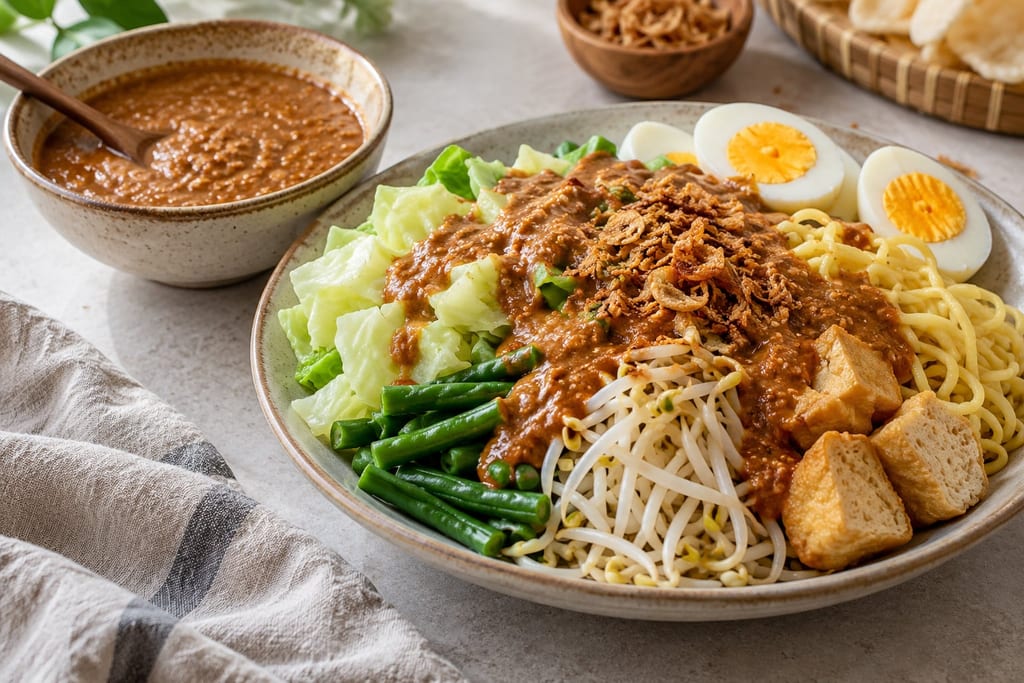
A cooked peanut sauce of ground roasted peanuts, aromatics, shrimp paste and coconut cream, as made for gado-gado; pecel and Malaysian satay sauces are close relatives with different formulas.
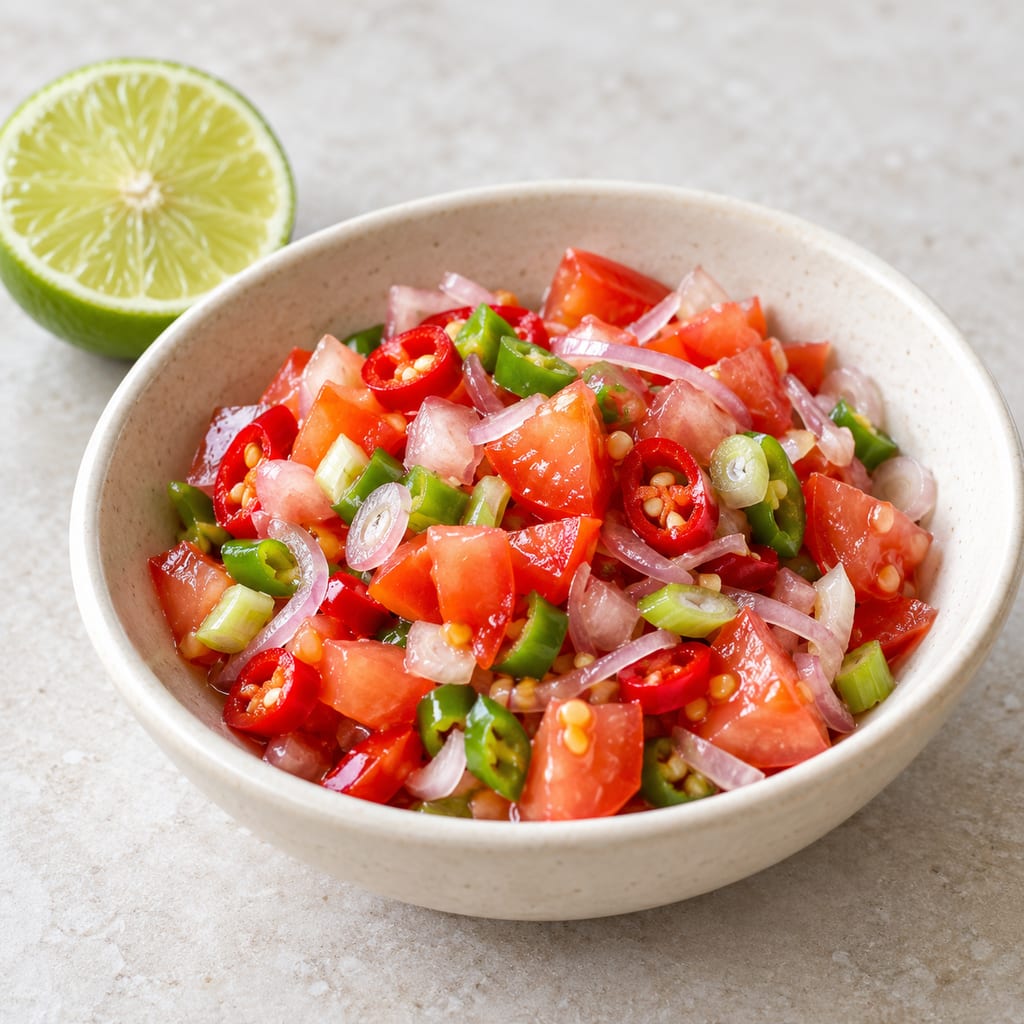
Dabu-dabu is a raw North Sulawesi relish of chopped chillies, shallot, scallion and tomato, dressed with salt and lime juice or coconut oil.
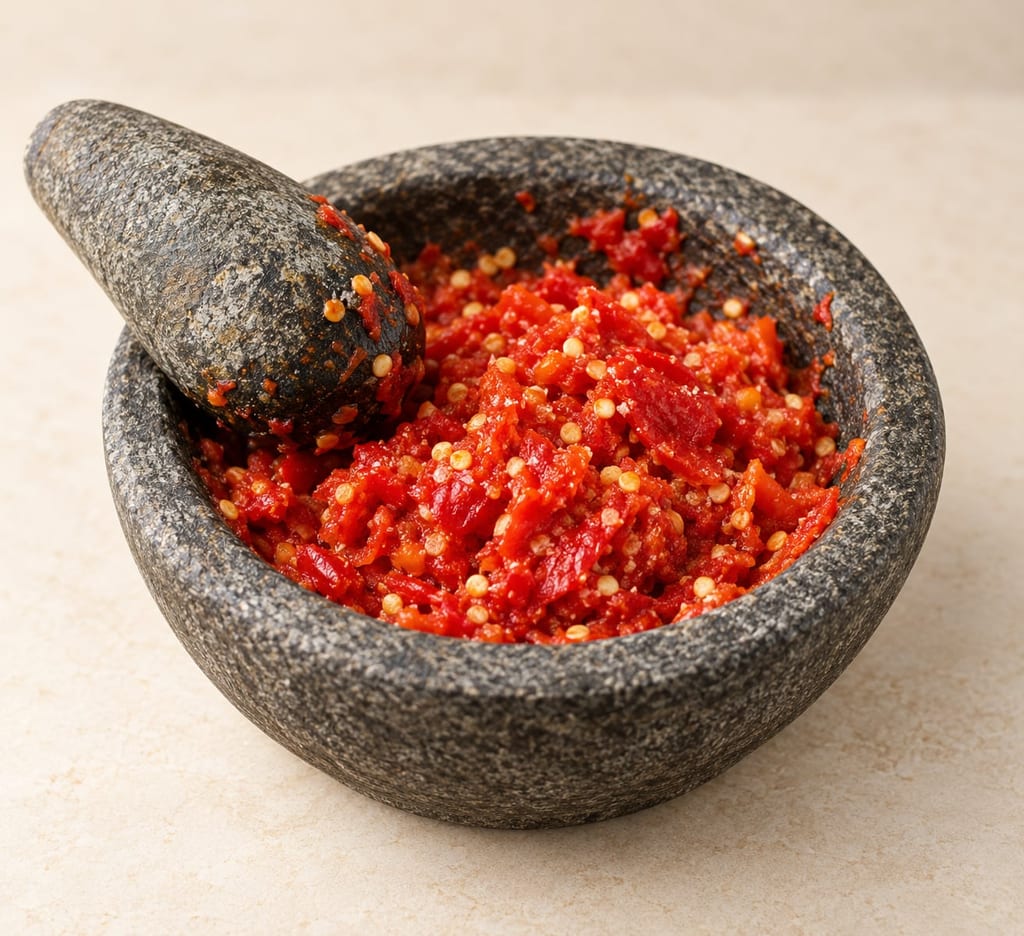
Sambal ulek or oelek is Indonesian chilli paste in its plainest form: red chillies pounded or ground with salt, here with a little vinegar.
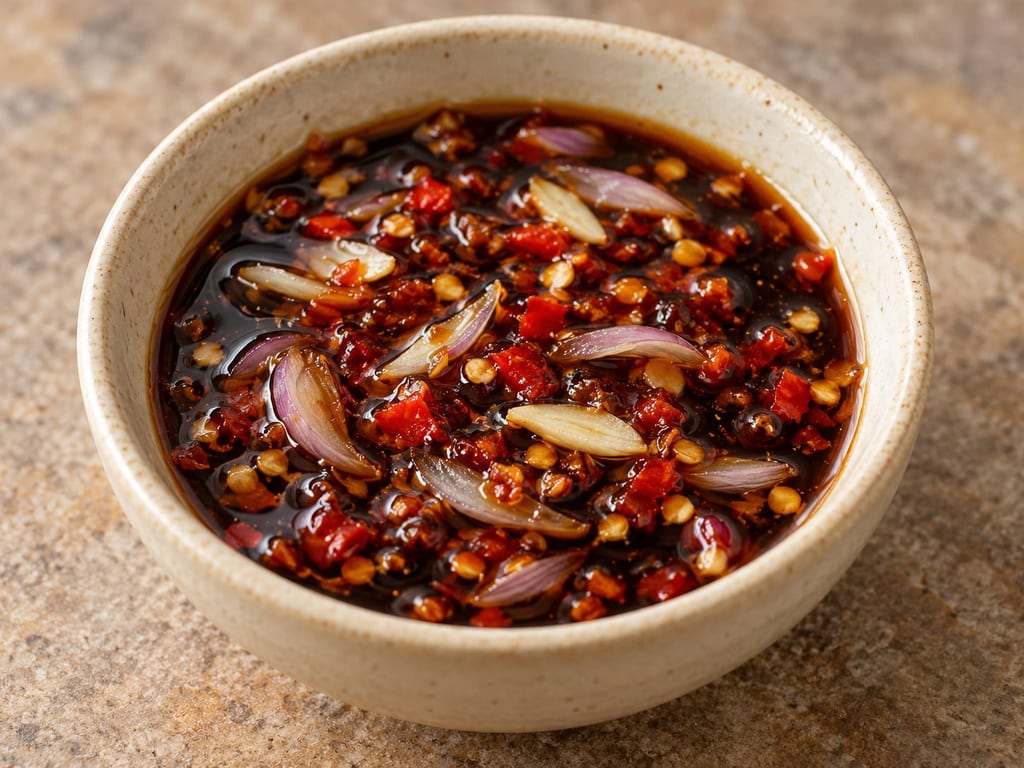
Sambal kecap is an Indonesian table condiment of fresh bird's eye chilli and shallot stirred into sweet soy sauce, served with grilled food, satay and tempe.
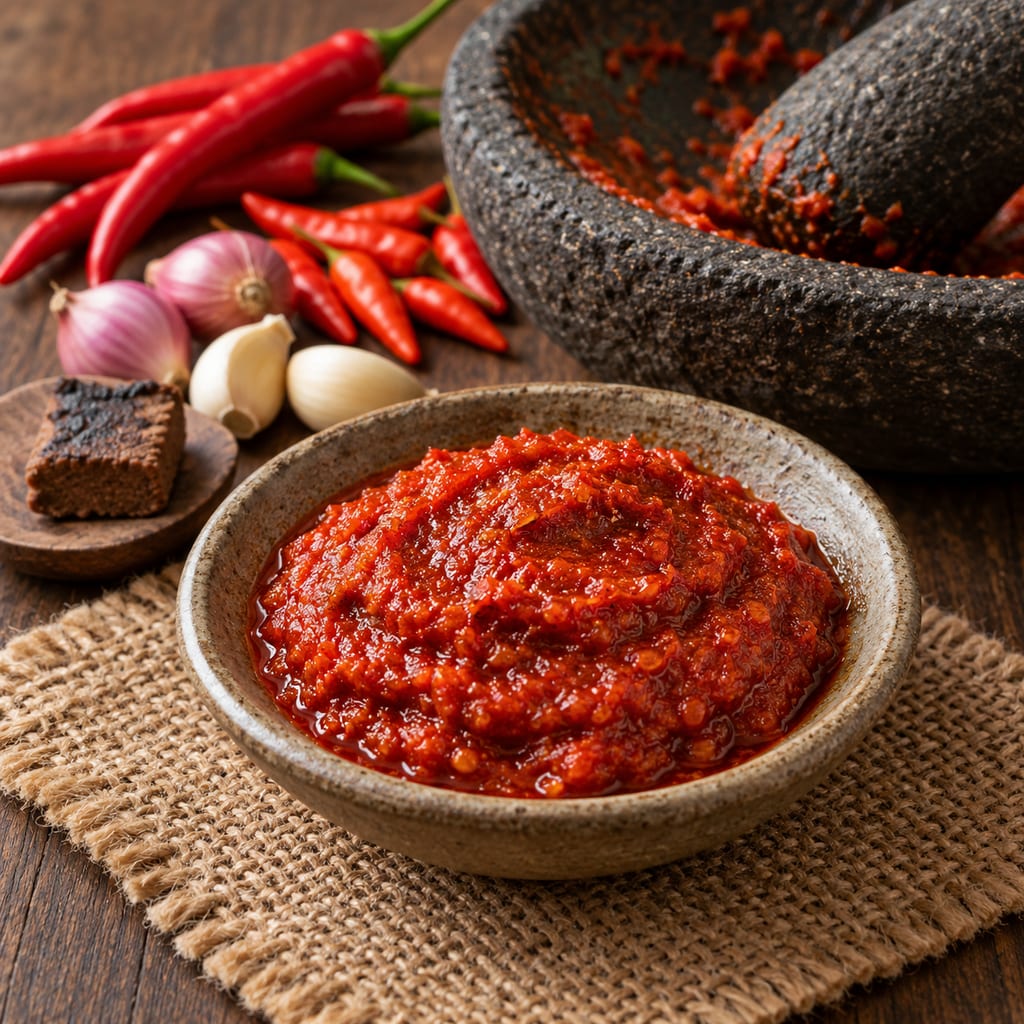
This documented West Java sambal grinds cooked red and bird’s-eye chiles with garlic, shallots and fermented shrimp paste, then simmers the paste before serving.
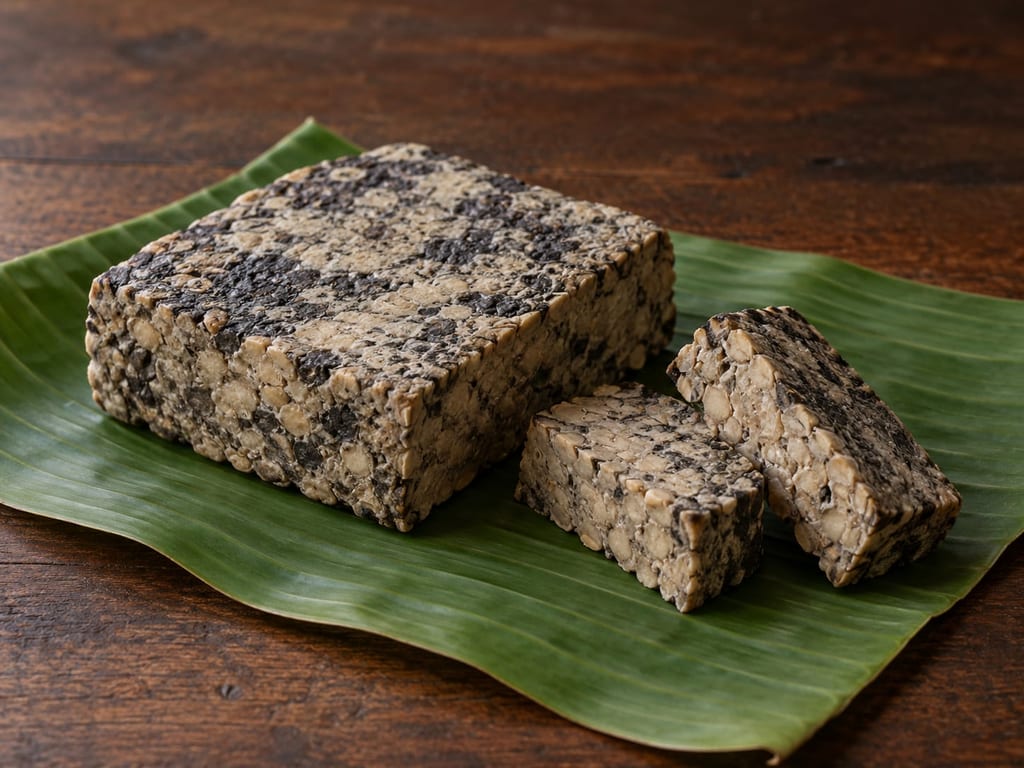
Black oncom is a mould-fermented cake made from defatted peanut cake, pressed to about 2 cm, steamed and then incubated for a day at ambient temperature.
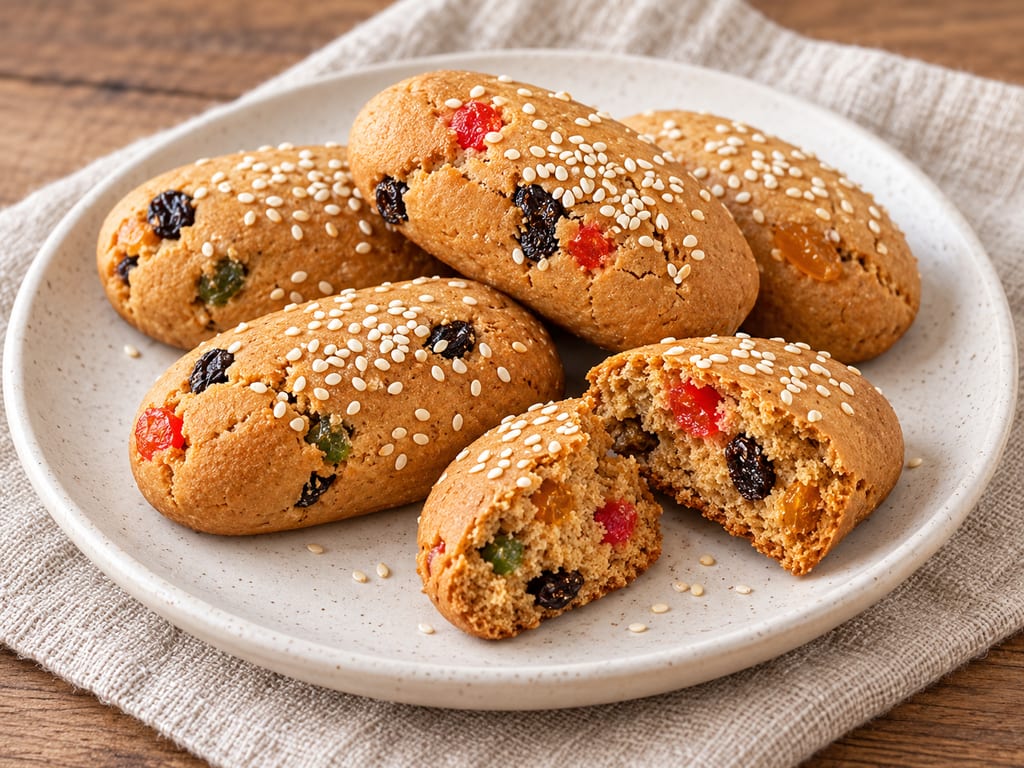
An Indonesian palm-sugar and cinnamon quick bread with dried fruit and sesame.
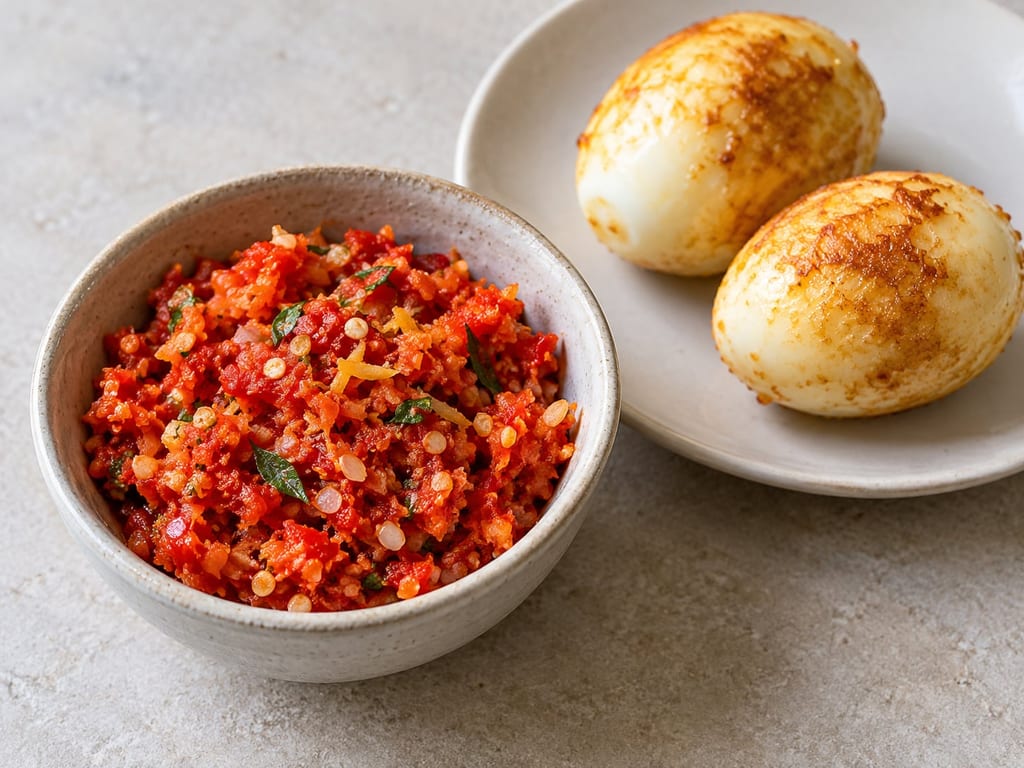
Ai-manas is described as a very hot chilli paste served with Timorese meals. One published version blends fresh chillies, shallots, garlic, Thai basil, ginger, lemon and salt, and serves it with eggs. Sources do not establish a standard formula, precise birthplace or earliest date.
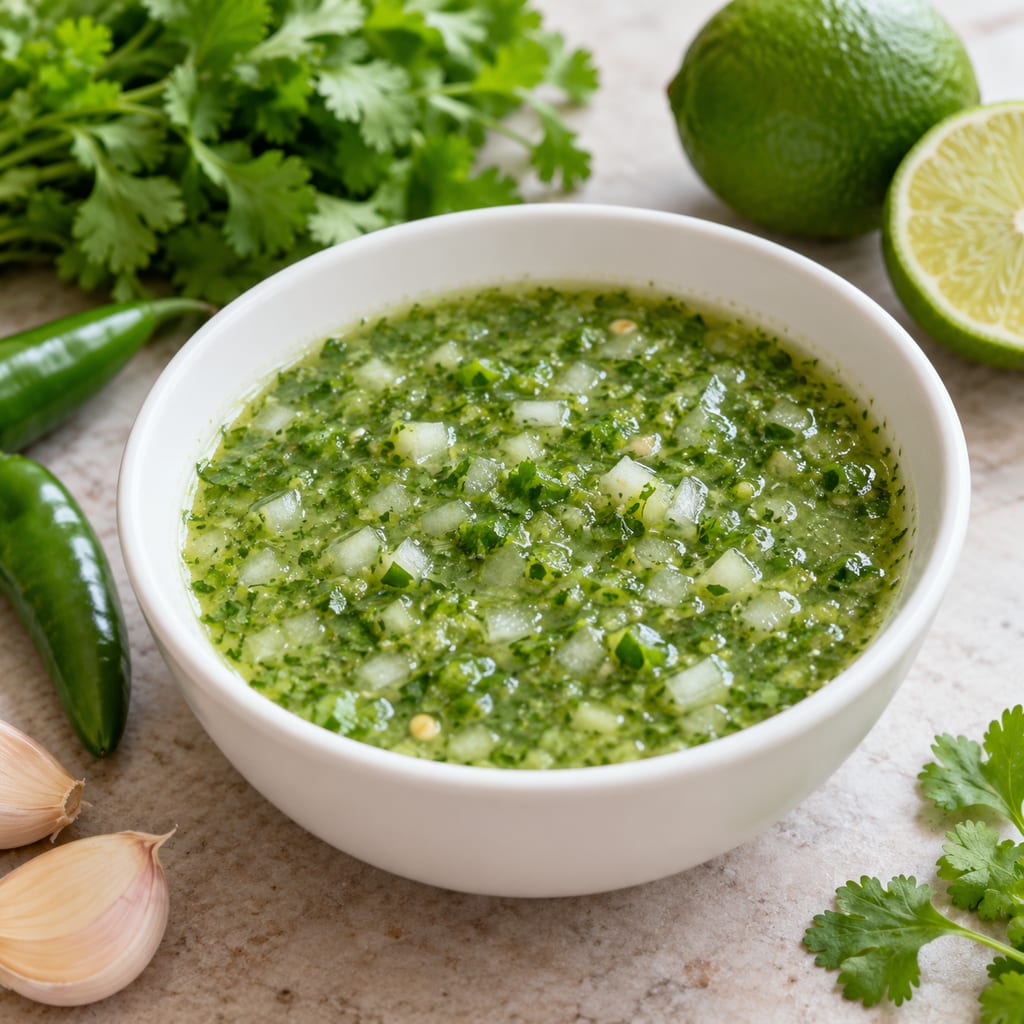
A fresh, uncooked Ecuadorian table sauce of hot pepper, cilantro, garlic and lime, served with most everyday dishes.
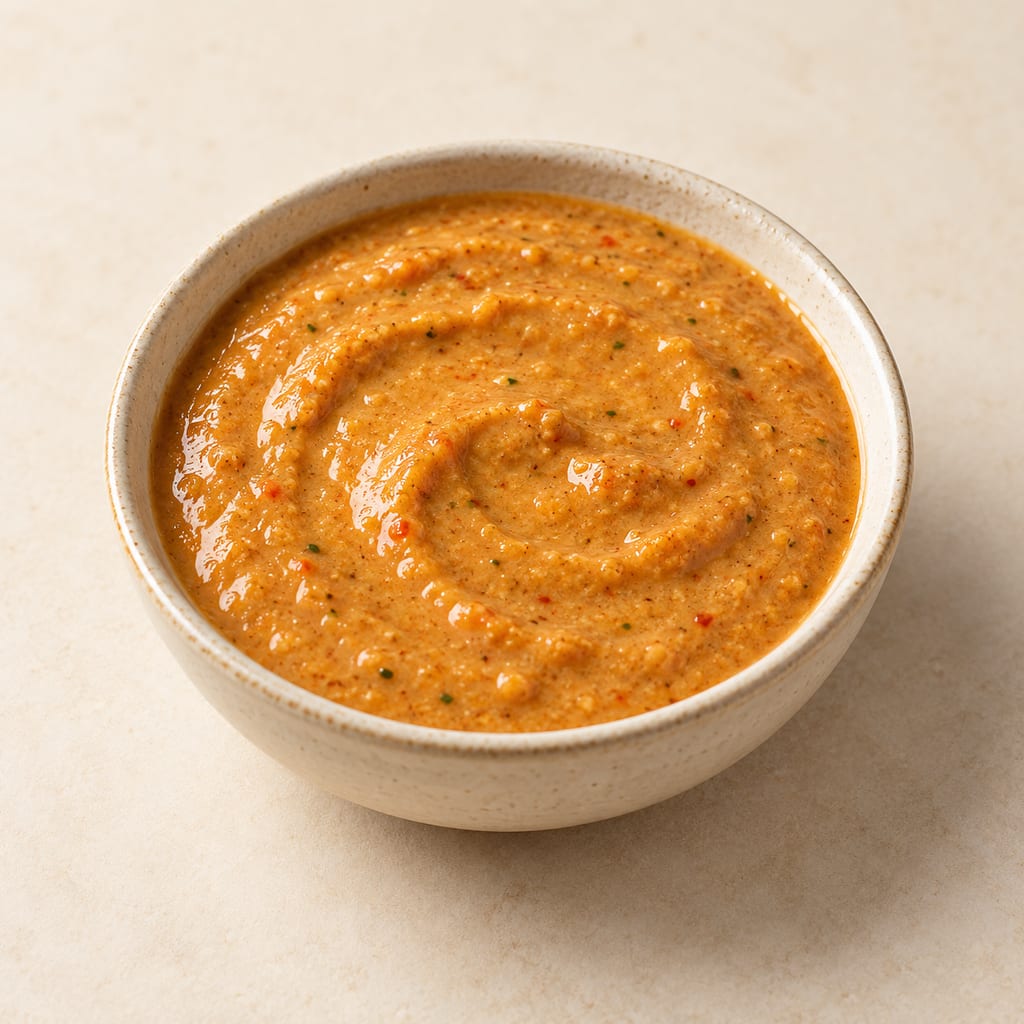
A spicy peanut hot sauce from the Popayán and Cauca region of Colombia, traditionally served with pipián empanadas and tamales.
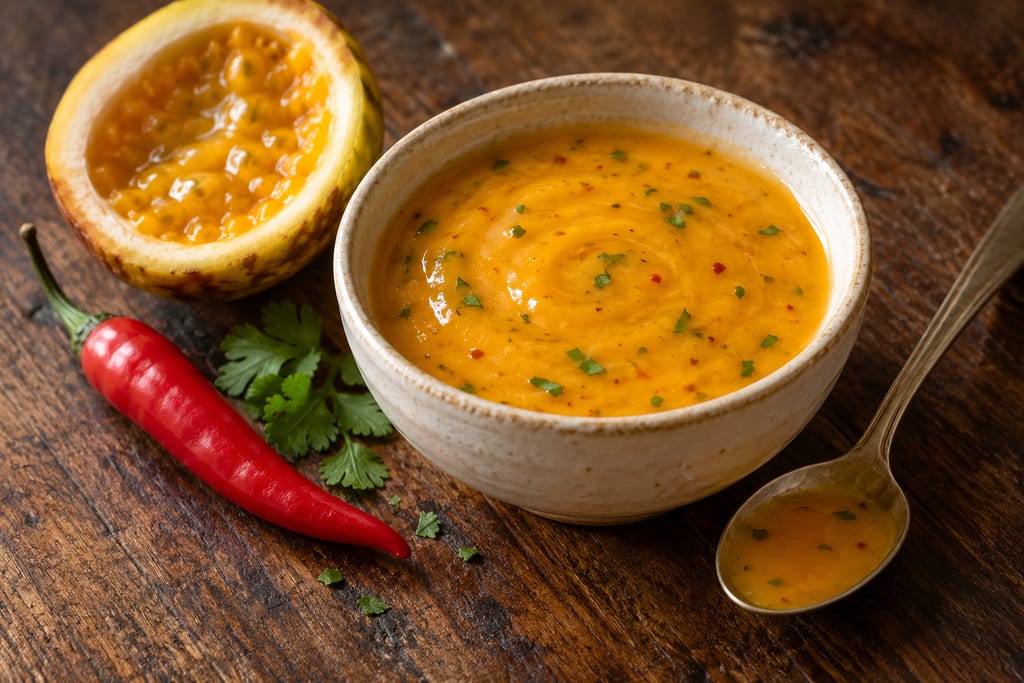
A contemporary Ecuadorian hot sauce that pairs passion fruit juice with boiled chile peppers, oil and lime.
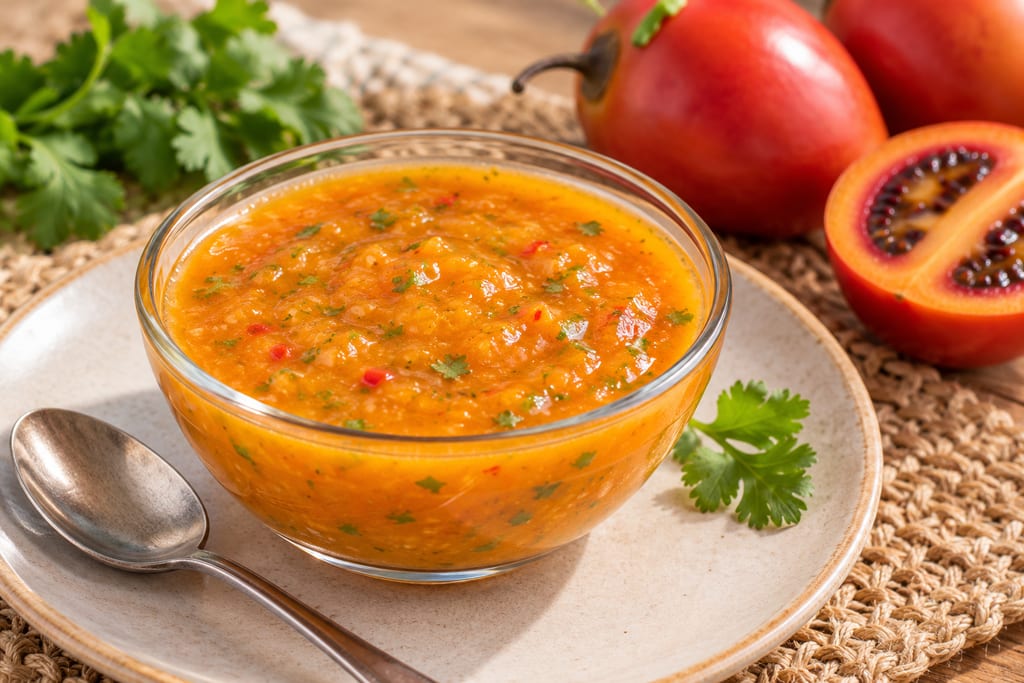
An Ecuadorian hot sauce built on tamarillo, a tart fruit that gives a sharper, fleshier base than ordinary tomato salsa.
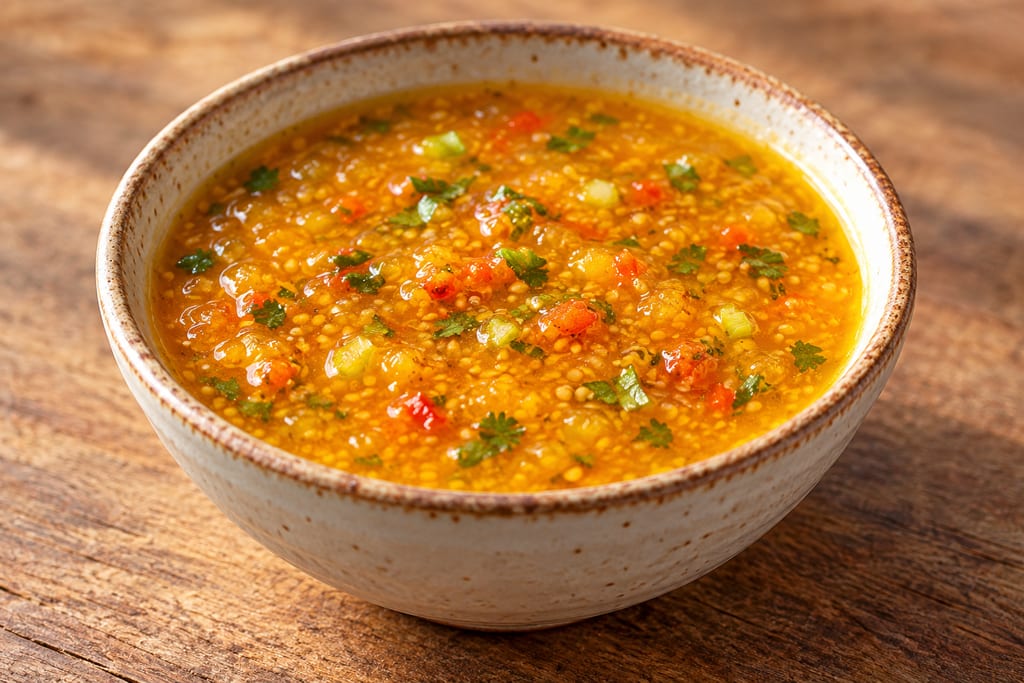
A sweet, tart and spicy Colombian sauce of uchuva, the yellow physalis fruit, with hot pepper, scallion, cilantro and lime.
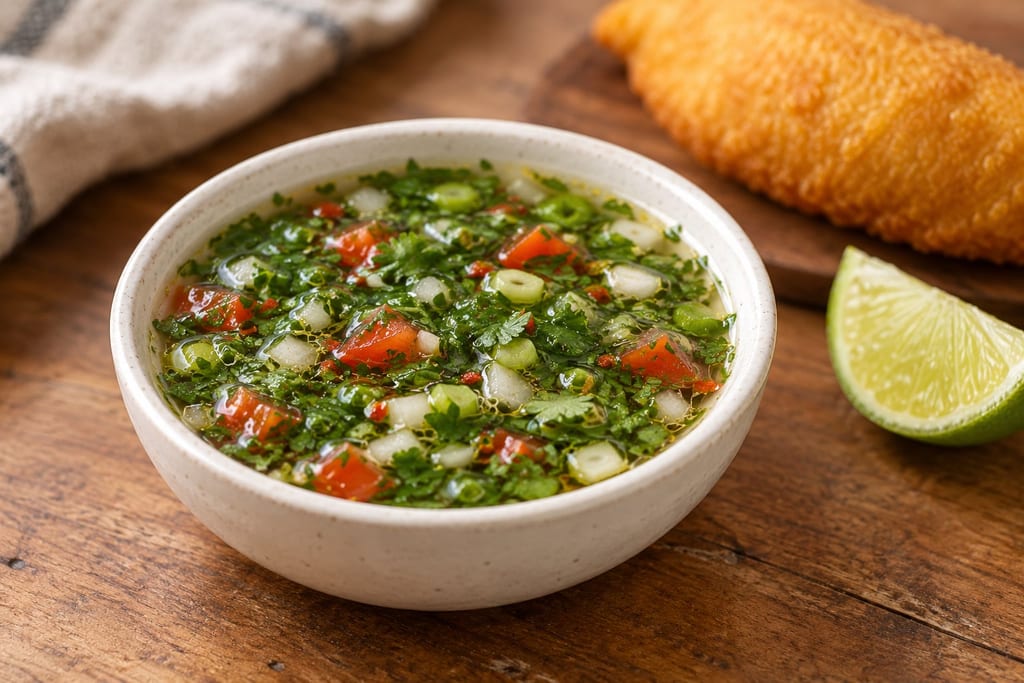
A fresh Colombian table condiment of chopped herbs, scallion and tomato in a vinegar and chile base, served beside fried and filled dishes.
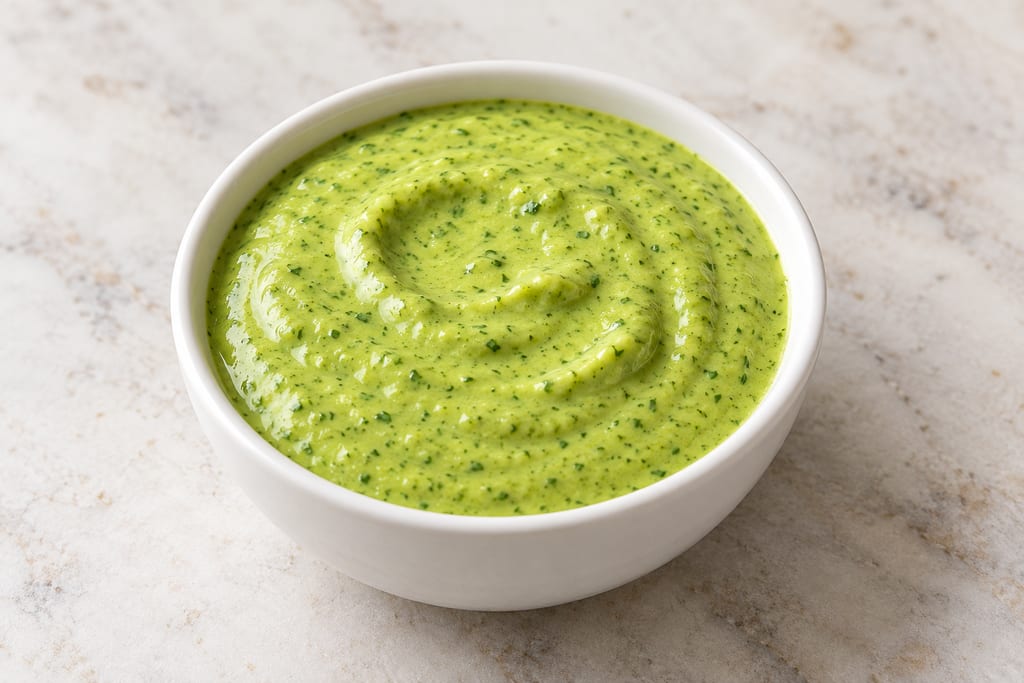
Ají verde is a Peruvian green sauce of coriander, chilli, onion and garlic in a mayonnaise or cheese base. It is best known through Peruvian restaurant cooking abroad.
No community contributions have been published for this entry yet.
Sign in to contribute. Published comments and photos are free to read.
National Center for Home Food Preservation (University of Georgia)Safety context
Freezing Garlic-In-Oil - National Center for Home Food PreservationNCHFP states that room-temperature garlic-in-oil mixtures risk botulism and gives specific refrigeration and freezing guidance for garlic-in-oil; that finding does not directly establish a hazard limit or shelf life for this shallot-and-lemongrass relish.
Cited in: Raw by design
Ministry of Tourism, Republic of IndonesiaHistory · Inspiration · Use
Sambal MatahDescribes sambal matah as a Balinese raw sambal of sliced shallots, chillies, lemongrass and citrus leaves, traditionally dressed with hot coconut oil.
Distinguishes it from pounded or fried sambals; notes versions with terasi or garlic and serving with chicken, fish and rice.
This report formula differs by using lime juice and coconut or neutral oil, leaving shrimp paste out by default and not pouring hot oil over the aromatics.
Cited in: Raw by design
Food Standards Agency (published on GOV.UK)Handling · Safety
How to chill, freeze and defrost food safelyGeneral refrigerator and leftover-handling guidance; it does not measure the shelf life of this raw relish.
Cited in: Raw by design