
Makrut lime leaves
The fragrant leaves of Citrus hystrix bring a distinctive citrus aroma to Southeast Asian soups, curries, pastes and condiments.
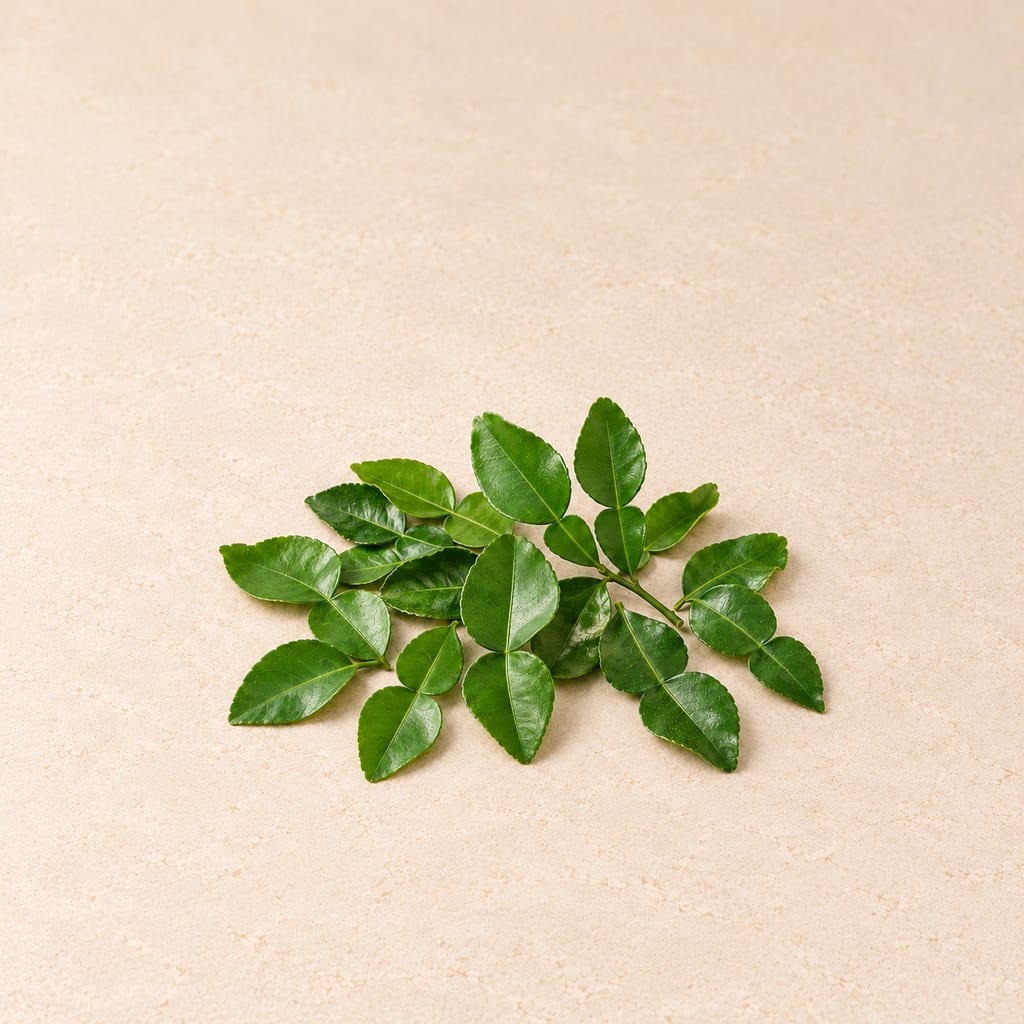
An aromatic citrus leaf
Makrut lime leaves come from Citrus hystrix, a citrus tree used for its distinctive fragrant foliage. The leaf appears to have two connected sections: the broad winged leaf stalk and the leaf blade meet at a narrow waist. The upper surface is dark green and glossy. Their aroma is intense and citrusy, different from squeezing ordinary lime juice into a dish.
The fruit also has a bumpy, aromatic rind, but this entry concerns the leaf. The names used for the plant differ by place; makrut is a widely used Thai name. Identify leaves by the ingredient and the supplier rather than assuming that leaves from any citrus tree are interchangeable.
Sources for this section
Where the flavour is used
The leaves are used in Thai and Indonesian cooking and are also a regional condiment in Cambodia. They can season soups, curries, pastes and other savoury preparations. Whole or torn leaves release their aroma into a liquid; finely sliced leaves can be incorporated into a dish. The supplied Balinese condiment material calls for very fine slices with the central rib removed.
A small amount can be prominent. The texture of a whole mature leaf may remain tough, so a recipe may remove it after infusion or ask for the blade to be sliced thinly. Leaf and fruit rind contribute different textures and should not be substituted solely by weight.
Fresh, frozen and dried
Fresh leaves should be green and fragrant. Keep them refrigerated and use before they deteriorate; freezing is useful when fresh leaves will not be used promptly. Dried leaves can also be found, but their fragrance and texture differ, and the amount needed depends on the product and the dish. Discard material that has spoiled or developed mould.
The Thai pharmacopoeia describes volatile oil in Citrus hystrix leaves and identifies compounds including citronellal and citronellol. Aromatic oil composition can vary with plant material and extraction. These descriptions explain the ingredient’s fragrance; they are not a reason to add concentrated essential oil to food in place of culinary leaves.
In a fermented or preserved dish
Leaves may be used as a flavouring alongside fermented or preserved ingredients, but their aroma alone does not preserve the rest of a mixture. The supplied archive describes a condiment use rather than a complete fermentation process. Follow the method and storage instructions of the specific recipe, including its salt, acid and refrigeration requirements, instead of treating fragrant leaves as a preservation step.
Places
No source in this record establishes a place.
Community
No community contributions have been published for this entry yet.
Share what you made
Sign in to contribute. Published comments and photos are free to read.
Sources
University of California Riverside Citrus Variety CollectionContext
Citrus hystrixidentity
leaves
culinary use
Cited in: An aromatic citrus leaf; Where the flavour is used
Thai Department of Medical SciencesContext
Citri Hystricis Foliumidentity
leaf constituents
Cited in: Fresh, frozen and dried
MoleculesContext
Chemical Composition of Essential Oils and Supercritical Carbon Dioxide Extracts from Amomum kravanh, Citrus hystrix and Piper nigrum KampotCambodian culinary use
aromatic compounds
Cited in: Where the flavour is used; Fresh, frozen and dried; In a fermented or preserved dish