
Spices and aromatics
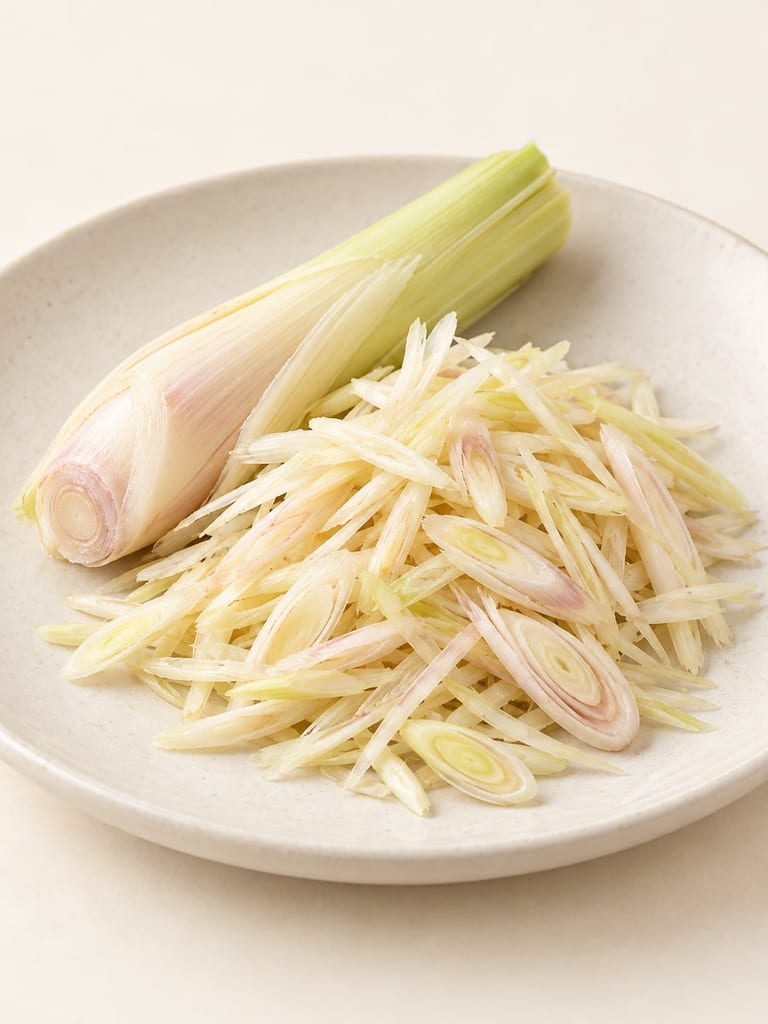
Lemongrass (tender centre)
Food uses and cultivation reports for Cymbopogon citratus, with regional limits and a clear distinction between fresh culinary plant material and traded essential oil.
Scope of this account
The common ingredient name can refer to more than one plant. The research below concerns the particular taxon and uses named in its sources; it does not identify every ingredient sold under this name.
Sources for this section
Name and regional context
Kew accepts Cymbopogon citratus (DC.) Stapf and reports a native range in India and Sri Lanka. PROSEA uses the name West Indian lemongrass and records regional names including Indonesian serai dapur or sereh, Filipino tanglad and Thai cha khrai. The name lemongrass also appears in trade for other Cymbopogon species, so a market label alone does not establish this species. PROSEA says the crop's origin is uncertain and describes Malesia only as a possibility; this differs from Kew's current native-range account.
Sources for this section
Food use and essential oil are different contexts
PROSEA describes the plant as both a condiment crop and a source of essential oil. In its Java account, leaf sheaths season sambal and cooked fish, young shoot hearts are served with rice, and the plant is used in bandrek and serbat. Illinois Extension describes leaves and stalks used to flavor fish, soups, curries, sauces and tea; its household example removes a large stalk piece from the finished dish. These are region- and source-specific food reports, not a complete species-verified recipe. PROSEA treats steam-distilled oil as a separate commercial product and notes that oil trade statistics often combine C. citratus with C. flexuosus. Nothing here provides a home distillation method or an essential-oil dose.
Sources for this section
Growing reports and their limits
PROSEA describes best crop performance in sunny, warm, humid conditions, with frost normally fatal. It identifies good drainage as the most important soil requirement and reports plantation soils commonly at pH 5.5–7.5, while also documenting successful growth outside that range. These are crop-production observations, not a universal garden recipe. The same source says plants are usually propagated by dividing clumps because seed is rarely produced, and reports home-garden condiment cultivation in Southeast Asia. For a cooler setting, RHS rates the plant H1C under its UK hardiness scheme and recommends full light, a sheltered position and moist but well-drained soil; Illinois Extension advises a well-drained container and bringing it indoors before frost. The sources do not establish a greenhouse temperature, humidity target or container size.
Sources for this section
Harvest and open questions
PROSEA's first leaf harvest at about 6–8 months and repeated cutting schedules describe field crop production, including oil production, rather than a guaranteed household yield. Illinois Extension identifies the white tender stem as its preferred culinary part and reports leaves used fresh or dried, but gives no validated drying or storage life. The Thai cultivation PDF and Philippine food-plant guide were not inspected successfully for this article. Regional food preparation, cultivar identity, local frost behavior and safe storage therefore remain open questions.
Sources for this section
Research gaps
No complete, species-verified household recipe with quantities and storage limits was established.
The Thai cultivation guide and Philippine field guide were not inspected successfully; no claims from their search excerpts are used.
No household greenhouse regime, container size, photoperiod requirement or universal frost threshold was established.
The reported commercial essential-oil process is not a household method, and this article gives no advice on oil use or dosing.
Research status
The underlying plant account received a partial source review. Its review scope is described in the original plant article.
Sources for this section
Places
Unknown
Relationship not established · Place not establishedThe available research does not establish a single origin for this ingredient.
Community
No community contributions have been published for this entry yet.
Share what you made
Sign in to contribute. Published comments and photos are free to read.
Sources
Royal Botanic Gardens, Kew, Plants of the World OnlineIngredient research
Cymbopogon citratus (DC.) StapfCited in: Scope of this account; Name and regional context; Research gaps
Plant Resources of South-East Asia (PROSEA)Ingredient research
Cymbopogon citratus (DC.) StapfCited in: Name and regional context; Food use and essential oil are different contexts; Growing reports and their limits; Harvest and open questions; Research gaps
Royal Horticultural SocietyIngredient research
Cymbopogon citratus: detailsCited in: Growing reports and their limits; Research gaps
University of Illinois ExtensionIngredient research
Lemon GrassCited in: Food use and essential oil are different contexts; Growing reports and their limits; Harvest and open questions; Research gaps
FermenteaResearch provenance
West Indian lemongrass (Cymbopogon citratus): original plant researchCited in: Research status