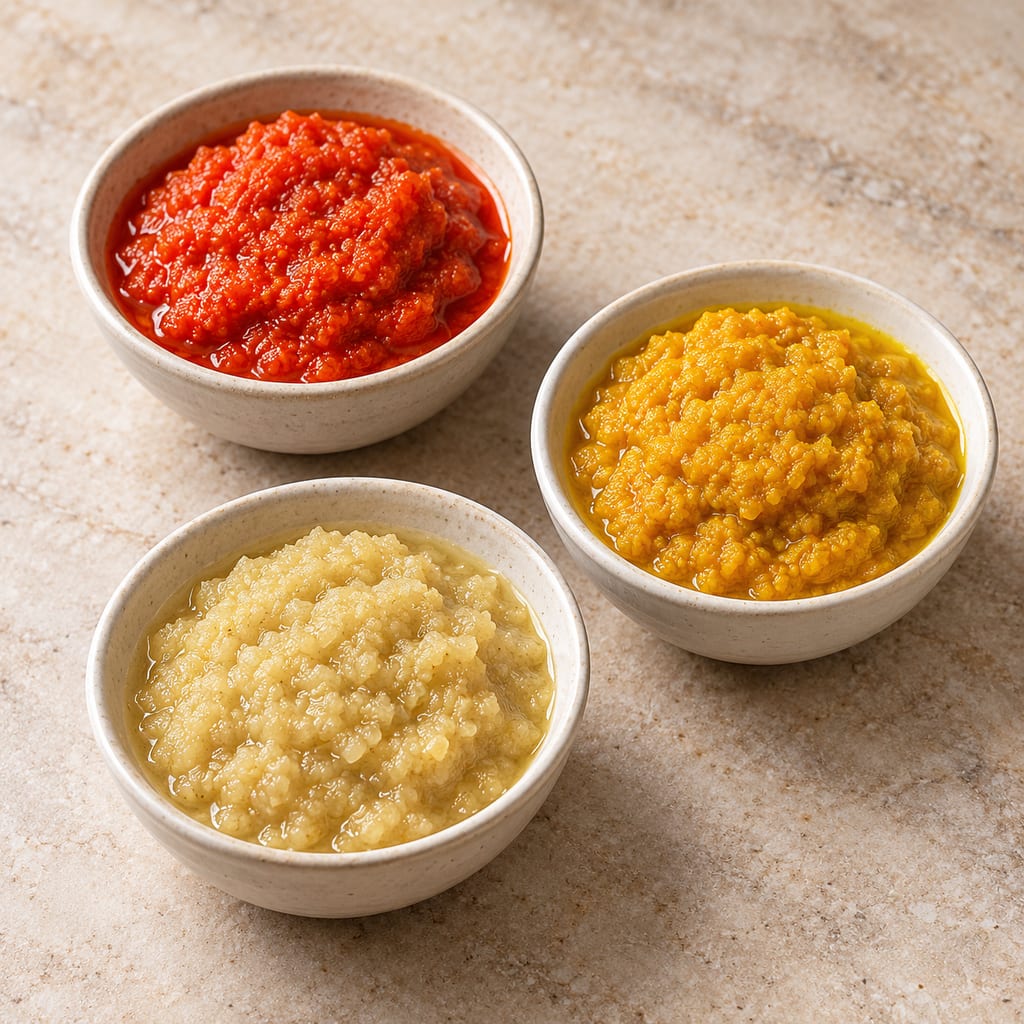
Bumbu dasar (Indonesian white, yellow and red spice bases)
Bumbu dasar are the ground spice bases of Indonesian cooking: a white paste of shallot, garlic and salt, with chile added for red and turmeric for yellow, cooked into dishes.
 FermenteaWhere food goes to change
Sambal ulek · Sambal oelek · Sambal ulek · Sambel ulek
Sambal ulek or oelek is Indonesian chilli paste in its plainest form: red chillies pounded or ground with salt, here with a little vinegar.
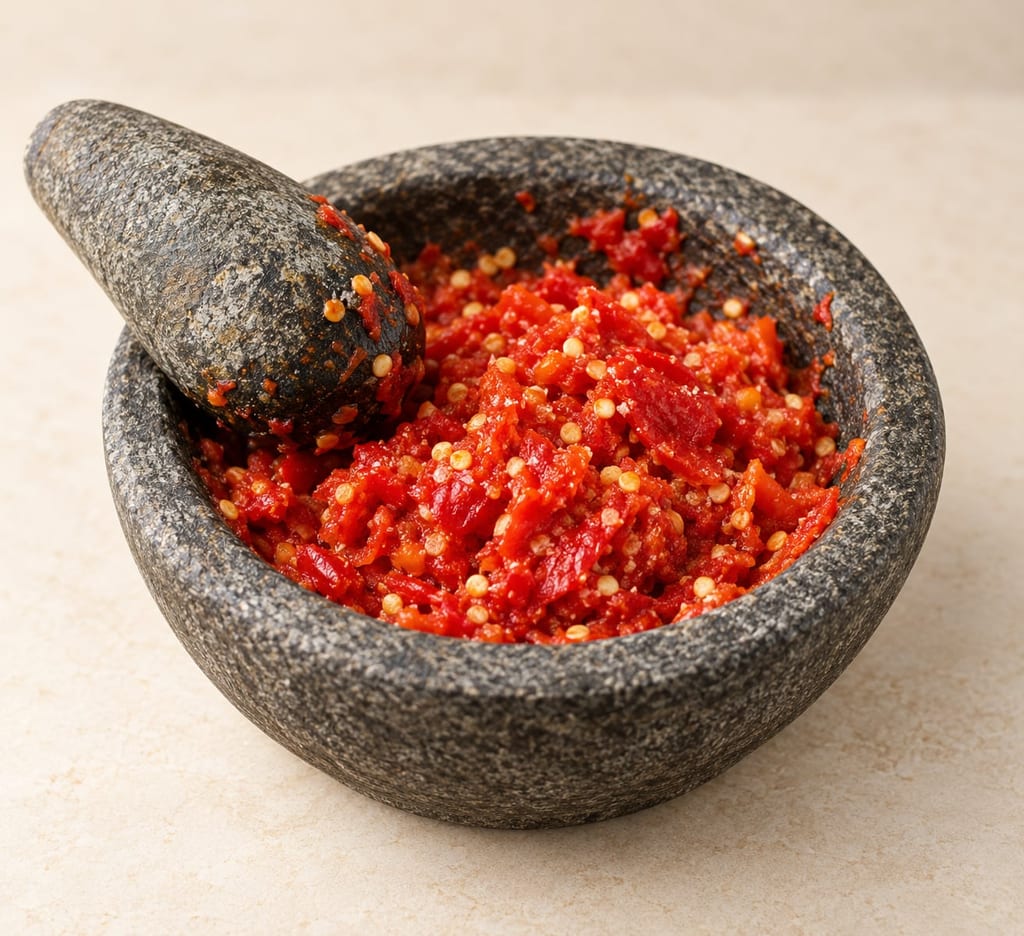
Sambal is the Indonesian word for a broad family of chilli condiments. A review of traditional sambals describes raw chopped mixtures, crushed or pounded pastes, and cooked or fried versions, with forms and uses that change by region and cookbook. Sambal ulek, spelled oelek in the older Dutch-influenced orthography, sits at the simple end: chilli, crushed. An Indonesian Ministry of Agriculture catalogue gives it as mashed red chillies with salt, and notes that cooks may fry it or add trassi (shrimp paste), nuts or spices.
The word points to the method. Ulek is connected with mashing or pounding, traditionally done in a mortar. That is why the name does not promise one ingredient list. It names a texture and a way of working, and the paste can be left bare or built up.
Pounding breaks the chilli skin and flesh and releases juice and aroma, which the salt then draws out further and seasons. This is a physical change, not a biological one: no starter, no waiting period and no microbial stage is involved, and the paste is not a ferment. The vinegar in this household formula adds sharpness and a little acid; the other sources do not require it.
The recipe on this page is one modern household formula: 200 g fresh red chillies, a tablespoon of vinegar and a teaspoon of coarse salt, ground by hand or in a food processor. The jar and the industrial pack are different products. One industrial sambal oelek lists red chilli, salt, distilled vinegar and xanthan gum and is sold in a five-gallon container. The thickener and the distilled vinegar belong to that formulation; they are not evidence that every home ulek contains vinegar or a stabiliser.
Fresh, cooked and packaged sambals also keep differently. The fresh paste is a perishable food. The household source describes a week in the refrigerator and a water-bath option for longer storage, but it gives no process validation, so those claims are not adopted here.
Sambal appears in scholarship on the Javanese literary work Serat Centhini. A ministry library catalogue describes the handwritten original as written in Surakarta Javanese in the nineteenth century, dated 1814-1823, and a Universitas Gadjah Mada article also places it in 1814. That gives sambal a nineteenth-century literary context. It does not identify the first sambal, the oldest mention, or the origin of sambal ulek, and it does not support a claim of a count of sambal varieties.
Sambal as a category appears in nineteenth-century Javanese literary context, but no source used here dates sambal ulek itself or names a first sambal.
Scaling: source batch only
The recipe author describes a week in the refrigerator and a water-bath option for longer storage, but no process validation supports either as general advice.
Hazard sourceTreat the paste as a fresh food: keep it cold and use it soon. Do not can it or keep it at room temperature on the strength of the blog's water-bath suggestion.
Control sourceNo validated shelf life or canning process exists for this formula. Vinegar and salt in these amounts do not establish shelf stability.
Country-level association from a ministry catalogue and a review of sambals; no region of origin or date is established.
Bumbu dasar are the ground spice bases of Indonesian cooking: a white paste of shallot, garlic and salt, with chile added for red and turmeric for yellow, cooked into dishes.
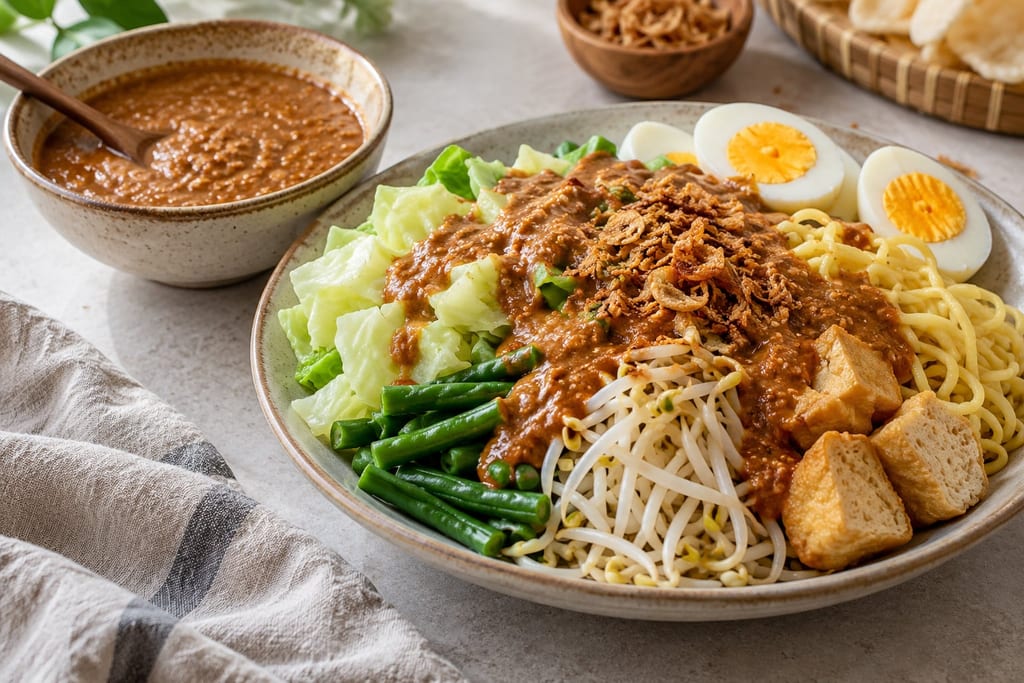
A cooked peanut sauce of ground roasted peanuts, aromatics, shrimp paste and coconut cream, as made for gado-gado; pecel and Malaysian satay sauces are close relatives with different formulas.
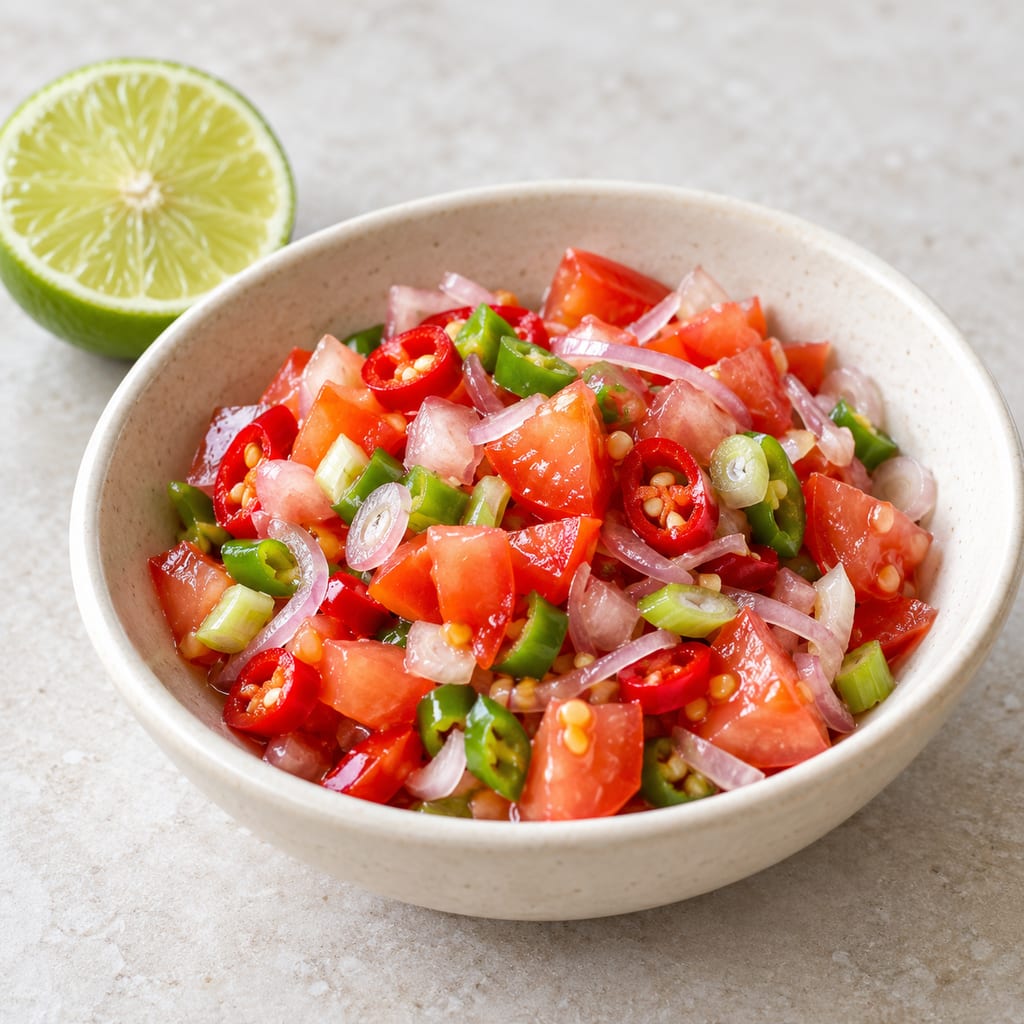
Dabu-dabu is a raw North Sulawesi relish of chopped chillies, shallot, scallion and tomato, dressed with salt and lime juice or coconut oil.
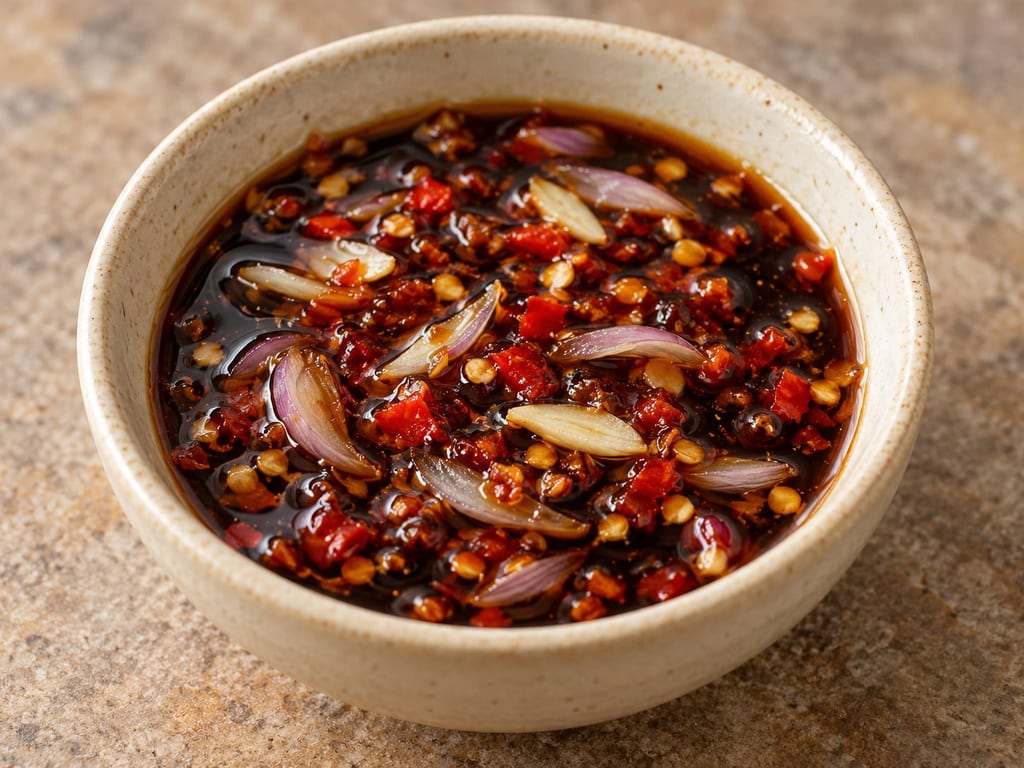
Sambal kecap is an Indonesian table condiment of fresh bird's eye chilli and shallot stirred into sweet soy sauce, served with grilled food, satay and tempe.
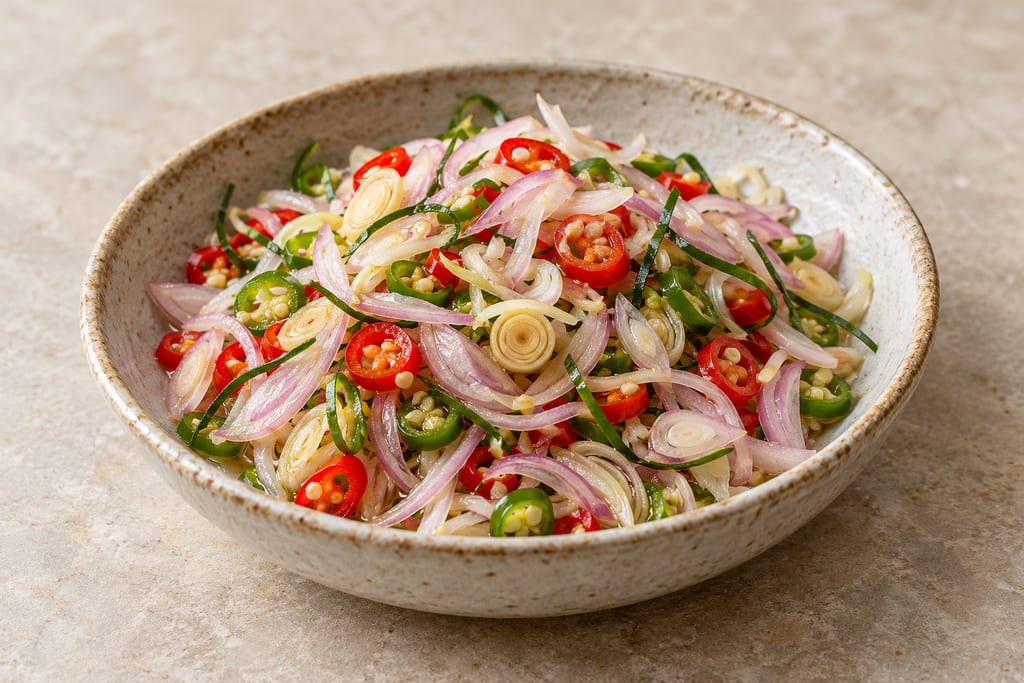
A small fresh relish of sliced shallots, chillies, lemongrass and lime leaf with lime juice, oil and salt, inspired by Balinese sambal matah.
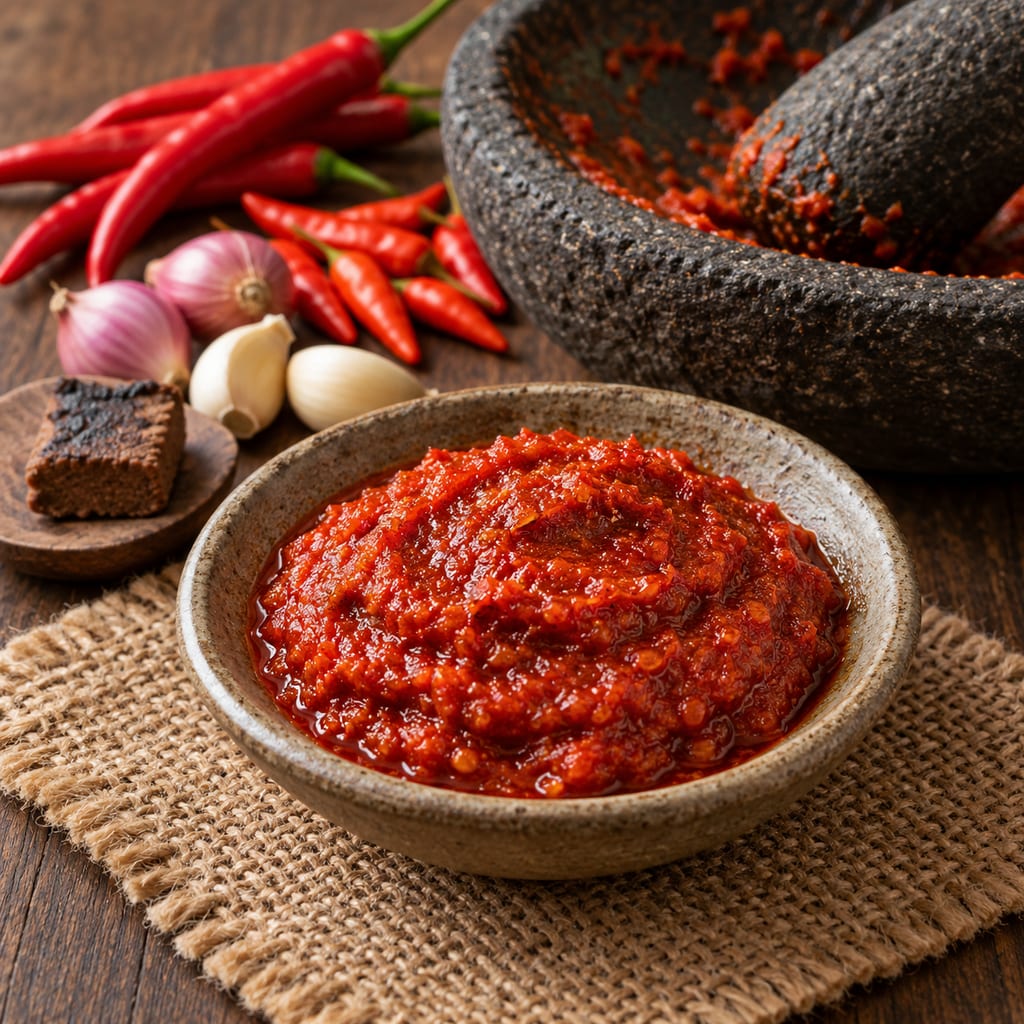
This documented West Java sambal grinds cooked red and bird’s-eye chiles with garlic, shallots and fermented shrimp paste, then simmers the paste before serving.
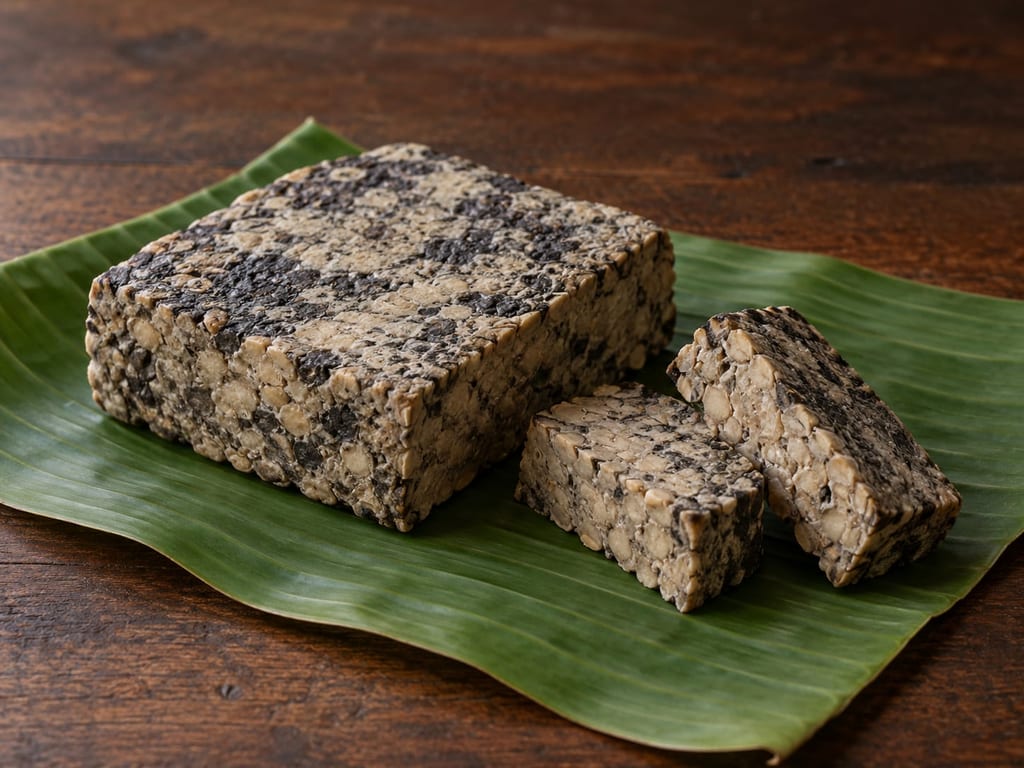
Black oncom is a mould-fermented cake made from defatted peanut cake, pressed to about 2 cm, steamed and then incubated for a day at ambient temperature.
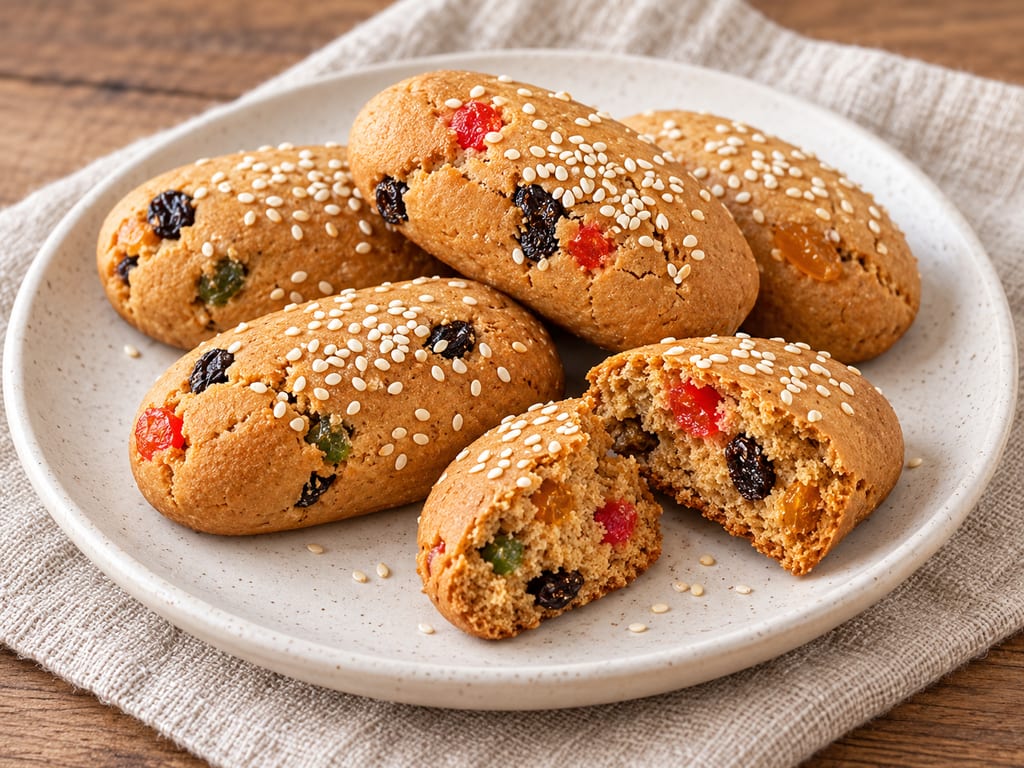
An Indonesian palm-sugar and cinnamon quick bread with dried fruit and sesame.
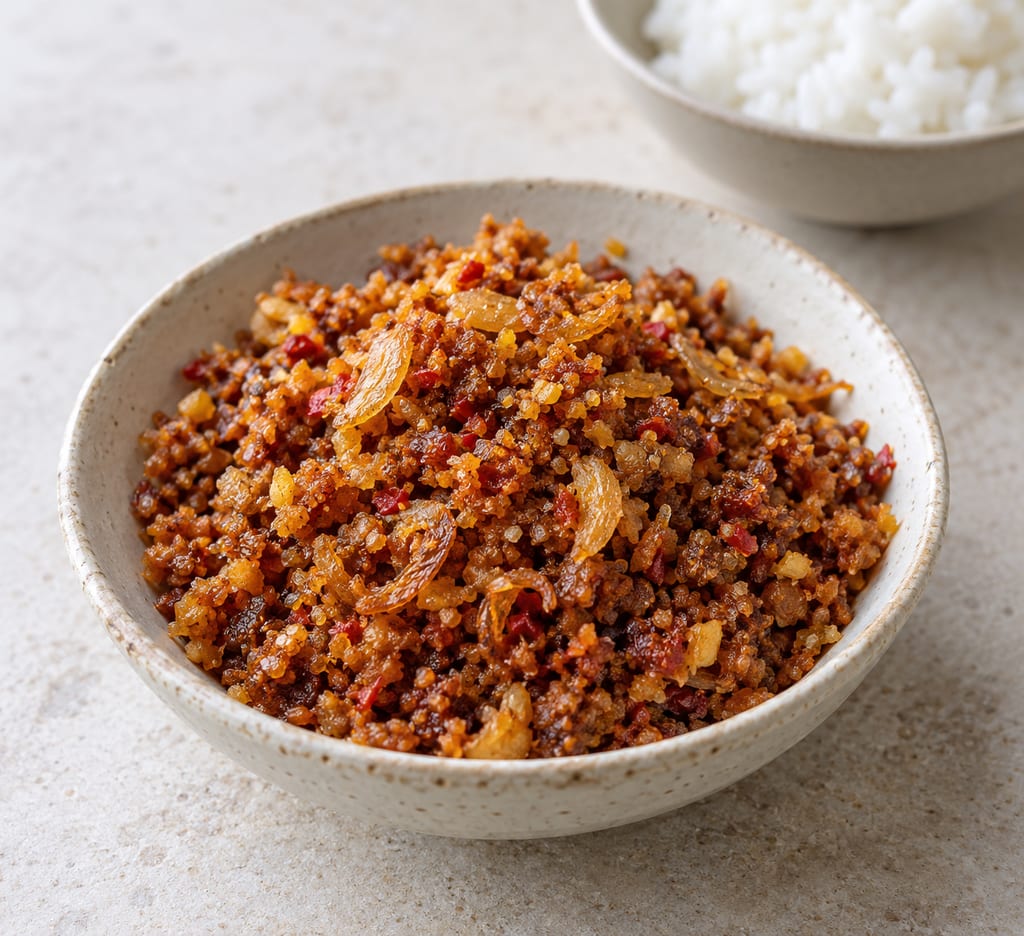
A Myanmar relish of dried shrimp, fried eschalot and garlic, chilli, turmeric, tamarind and ngapi. Naomi Duguid’s published recipe makes about 1 cup; it contains crustacean shellfish.
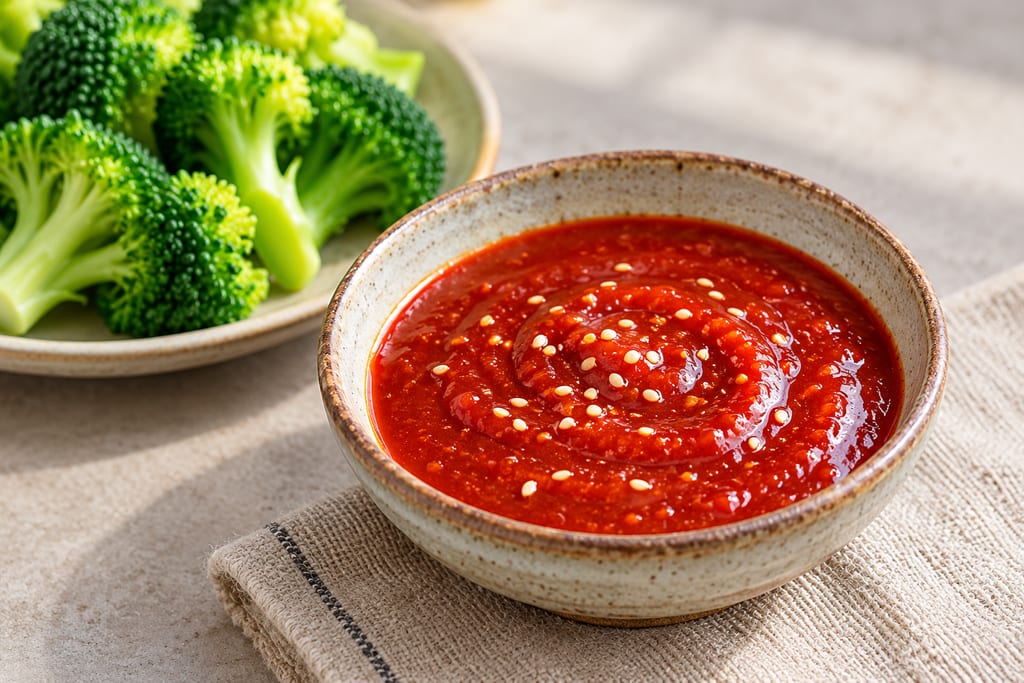
Chogochujang is a Korean sweet-sour sauce made by seasoning gochujang with vinegar and sugar. This development batch adds water and toasted sesame seeds, with optional garlic for the portion being served.
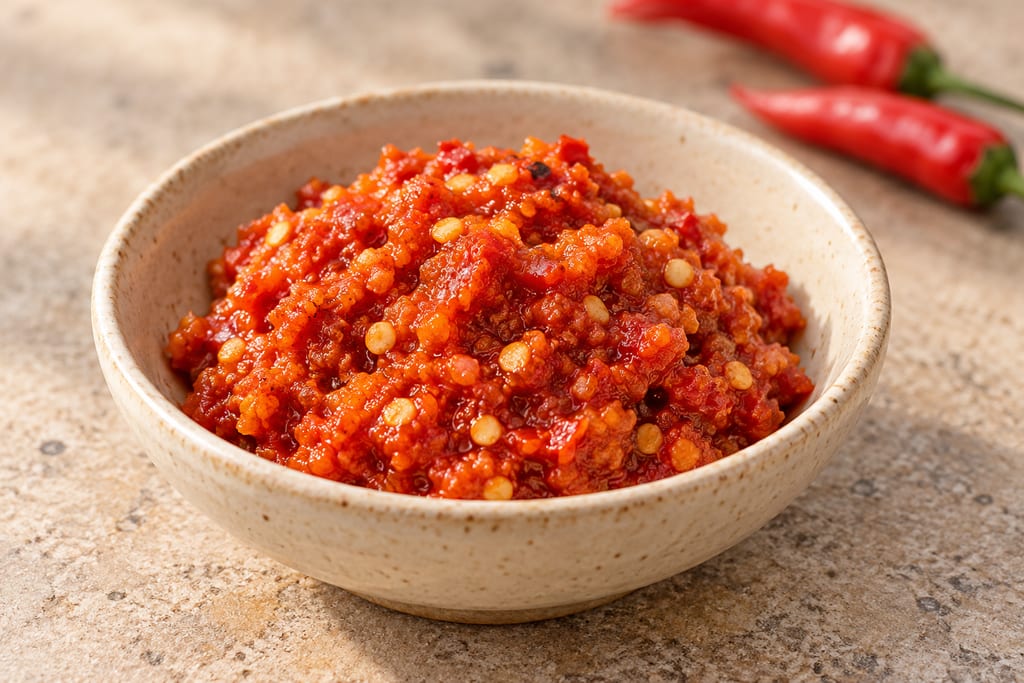
Dinanche, or donne' dinanche, is a Chamorro hot pepper paste of crushed chillies that Guam cooks use on its own or stir into fina'denne'. Its versions range from pepper alone to ones with eggplant, miso or coconut milk.
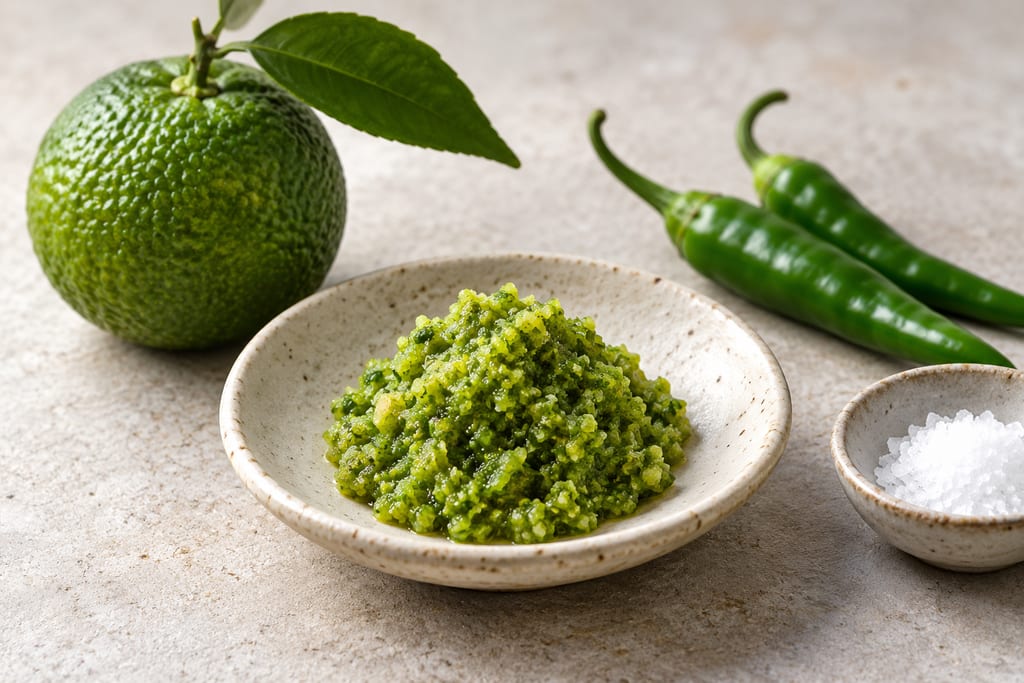
A fresh, uncooked yuzu and green chilli paste inspired by Kyushu’s yuzu kosho, made here as an untested small-batch seasoning rather than a preservation formula.
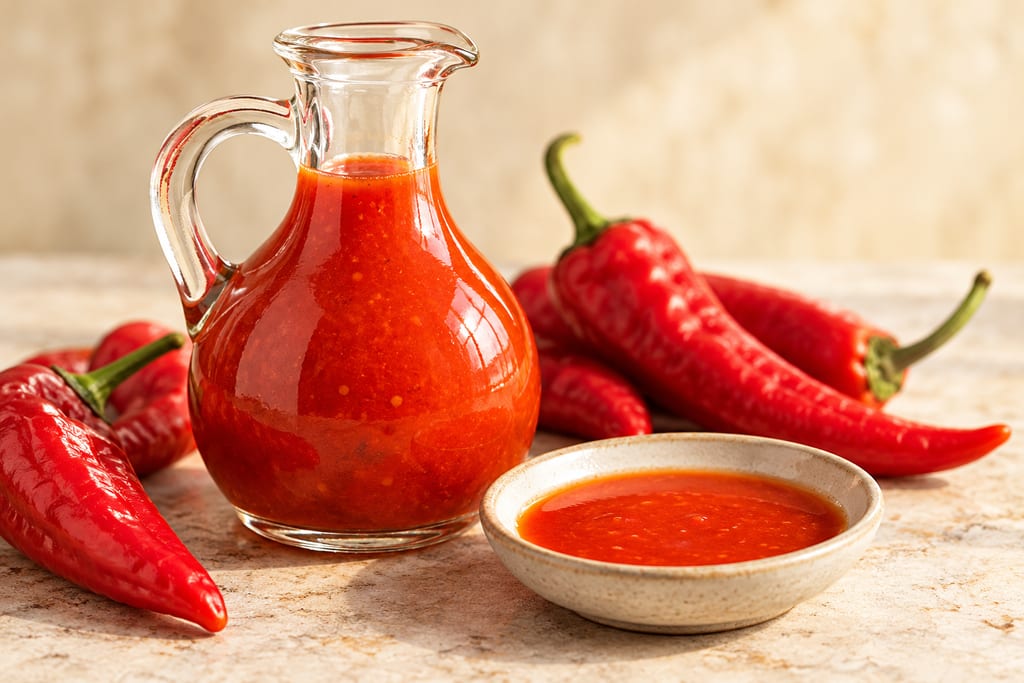
Fresh hot peppers ferment beneath a measured salt brine, then become a bright, tangy sauce blended from the peppers and their liquor.
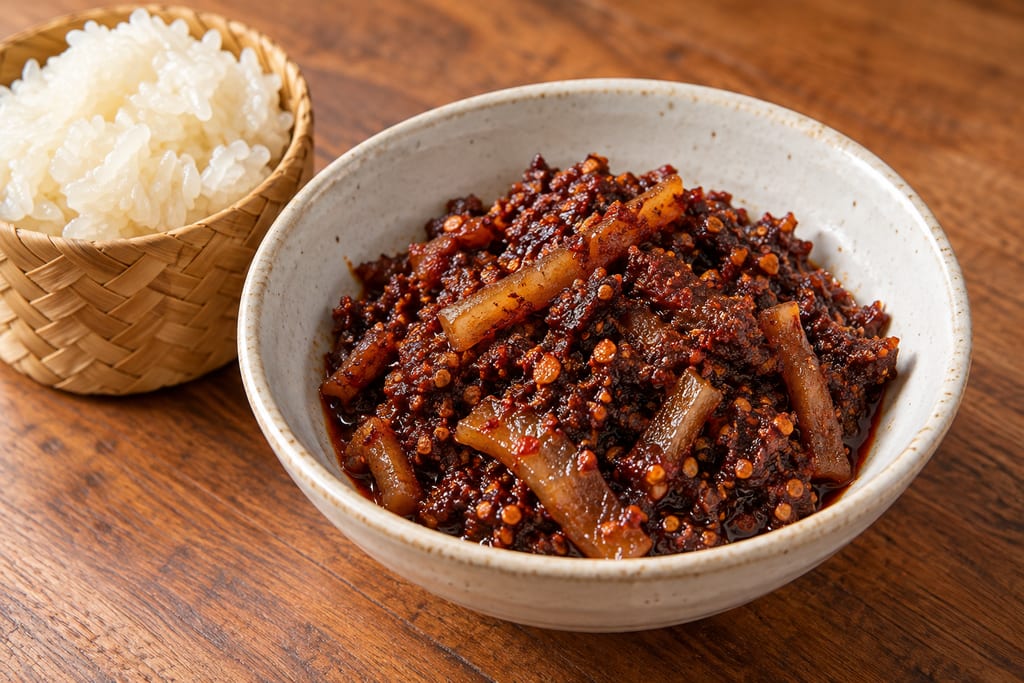
Jeow bong is a Lao paste of dried chilli, shallot, garlic and galangal cooked with buffalo or cow skin, a Luang Prabang specialty eaten with sticky rice and grilled meat.
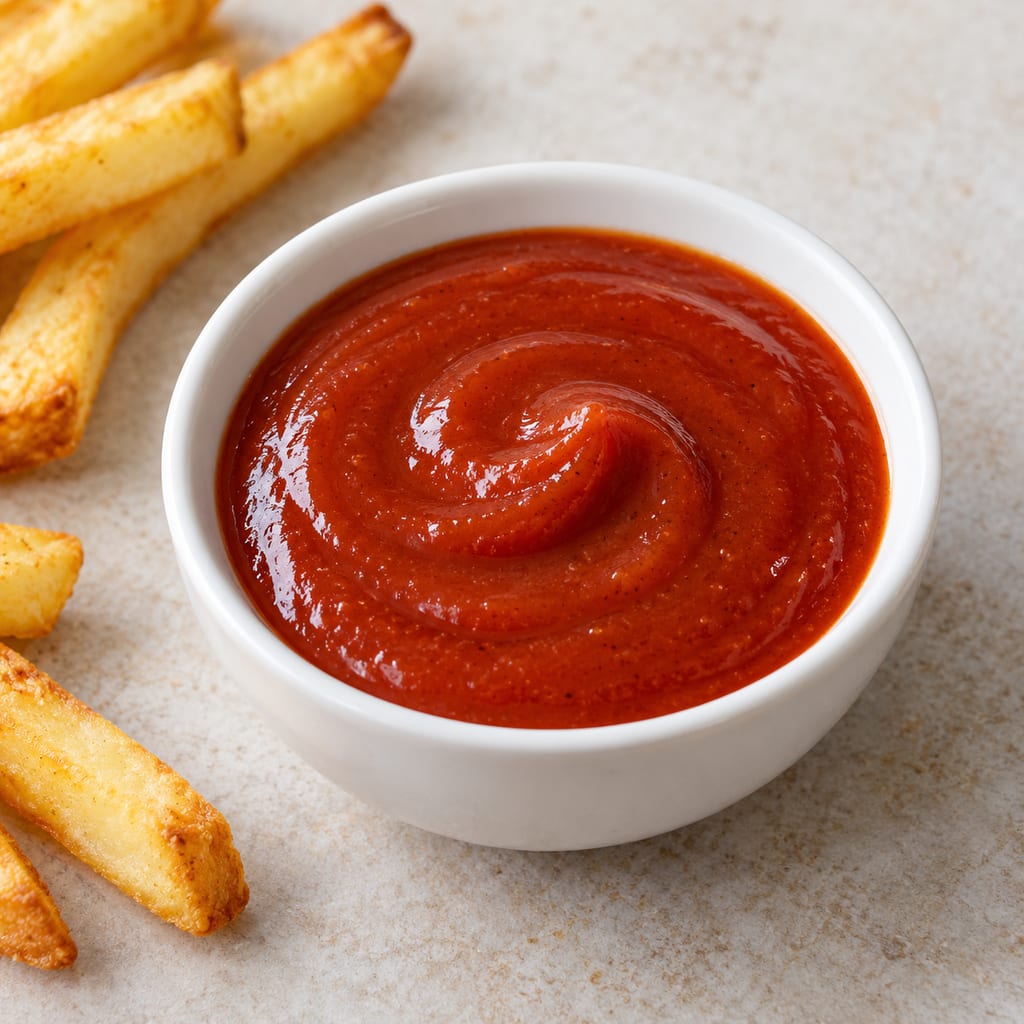
A modern tomato condiment sharpened with the spicy, savoury tang associated with kimchi; this measured version whisk-mixes prepared ketchup and commercial kimchi seasoning.
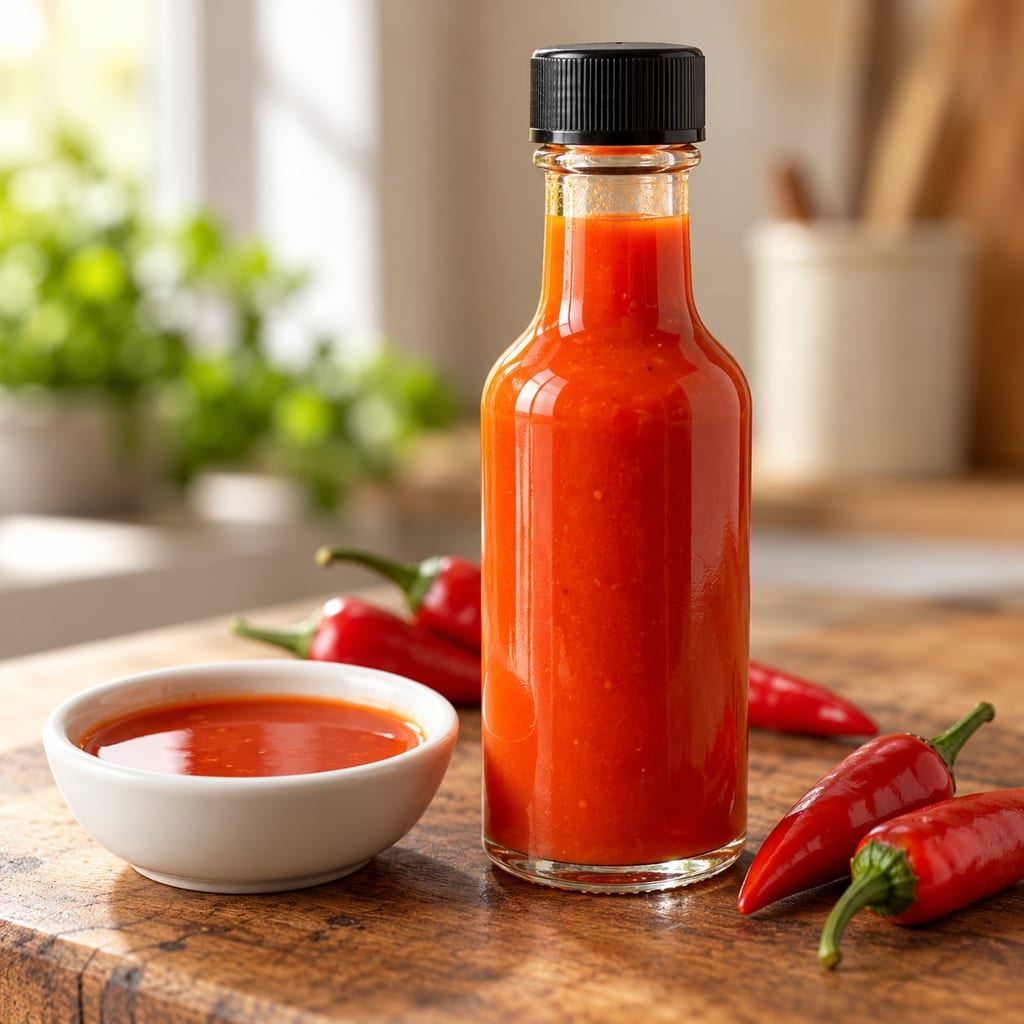
Documentary account of Louisiana pepper sauces, using TABASCO's published barrel-aged commercial process as one specific example; the source does not provide a validated home recipe.
No community contributions have been published for this entry yet.
Sign in to contribute. Published comments and photos are free to read.
LinsFoodRecipe · Method · Safety
Sambal Oelek Recipe (3 Ingredients)200 g fresh red chillies, one tablespoon vinegar and one teaspoon coarse salt, ground by hand or in a food processor.
The author describes refrigerating for a week and a water-bath option for longer storage; no validation is given.
Cited in: What the pounding does; Home paste and factory jar
Directorate General of Horticulture, Ministry of Agriculture, Republic of IndonesiaIdentity · Geography
Indonesian Fruits and Vegetables CatalogueGives sambal ulek as mashed red chillies with salt, with optional frying or additions such as trassi, nuts or spices.
Connects the word ulek/oelek with mashing or pounding.
Cited in: The plainest sambal; What the pounding does
Journal of Ethnic Foods / Springer NatureContext · Variants
Diversity of sambals, traditional Indonesian chili pastesSambal is a broad Indonesian family of raw chopped mixtures and crushed or pounded pastes, varying by region and cookbook.
Cited in: The plainest sambal
Lee Kum Kee USACommercial product
Sambal Oelek Sauce | Industrial productAn industrial sambal oelek lists red chilli, salt, distilled vinegar and xanthan gum and is sold in a five-gallon container.
Cited in: Home paste and factory jar
Perpustakaan Amir Machmud, Kementerian Dalam Negeri Republik IndonesiaHistory
Serat Centhini Jilid 1: Menyingkap Rasa, Menyurat yang TersiratDescribes the original Serat Centhini as handwritten in Surakarta Javanese language and script in the nineteenth century, dated 1814-1823.
Cited in: Where it sits in history
Humaniora, Faculty of Letters, Universitas Gadjah MadaHistory
Serat Centhini sebagai Sumber Informasi Jenis Makanan Tradisional Masa LampauDescribes the Serat Centhini as Javanese literature written in 1814 and a source on traditional foods.
Cited in: Where it sits in history