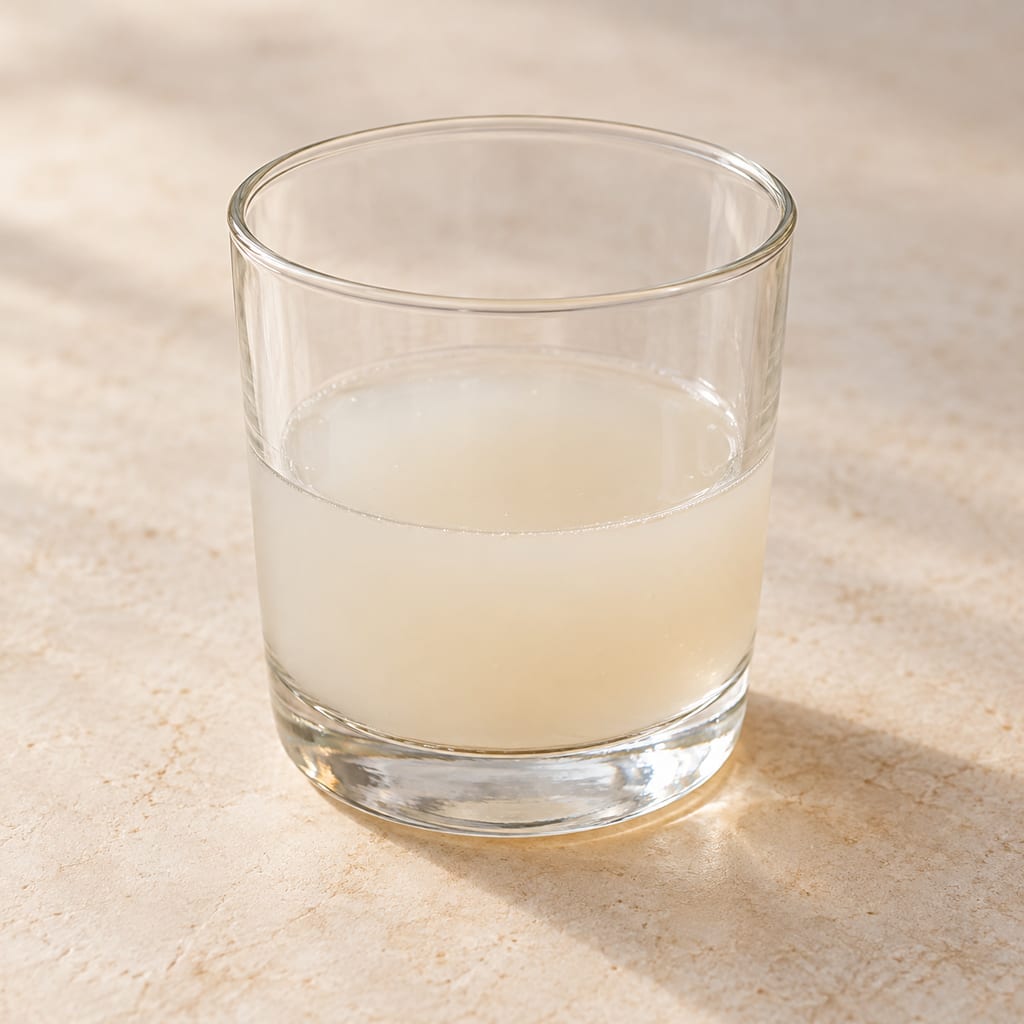
Hyphaene petersiana sap
Sap tapped from Hyphaene petersiana, distinct from the fermented Utchema drink made from it and from sap of other palms.
 FermenteaWhere food goes to change
Sugar-rich liquid tapped from different palms, gathered fresh or transformed into local drinks and sweeteners; species and collection stage shape its composition.
Palm sap is the sugar-bearing liquid tapped from a palm. It is a gathered plant juice, not one botanical substance with a single composition. The term covers liquids from different palm species and tapping practices. Fresh sap can be clear or cloudy and taste sweet, but appearance and sweetness vary with the tree, collection stage and handling. A useful name therefore includes the palm species wherever the source identifies it.
“Sap” also identifies a point in a process. Freshly tapped liquid differs from liquid in which yeasts and bacteria have begun changing sugars. Palm wine, vinegar, syrup and palm sugar can all be made from sap, but they are separate products. This account concerns the tapped ingredient and its transformations; it does not use those finished products as synonyms.
In Côte d’Ivoire, researchers compared spontaneously fermenting sap from oil palm (Elaeis guineensis), raffia palm (Raphia hookeri) and palmyra palm (Borassus aethiopum). The lactic-acid-bacteria communities were not identical. A Burkina Faso study measured fresh B. aethiopum sap during its first four days of tapping. These examples show why palm wine cannot be treated as the product of a single standard palm or a uniform fermentation.
Tunisian legmi is fresh sap from date palm (Phoenix dactylifera). A study compared samples from male and female trees and at different collection times and found compositional differences. In coastal Kenya, mnazi is made from coconut palm sap, not the water inside a coconut fruit. In northeastern Gaza, Mozambique, the local wine utchema is reported from Hyphaene petersiana. These names are place-specific examples, not interchangeable aliases for raw sap.
Tapping draws sugary liquid from palms, but the method depends on species and local practice. A Ghana study followed palm wine from oil palms tapped after felling. Work in Côte d’Ivoire sampled sap across tapping stages from three palm types. A Mozambique conference abstract describes collection from larger H. petersiana stems. These are different settings, not instructions that can be transferred to any palm.
Sap collection has social and economic importance in some places. The Mozambique study describes utchema production and sale as a livelihood for communities in and around Banhine National Park. That finding describes the households and area studied; it does not measure producer incomes elsewhere. The sources reviewed here do not establish one domestication history, origin point or shared chronology for tapping all palms. An ancient date or continent-wide birthplace would go beyond this evidence.
Palm sap contains fermentable sugars. In fresh B. aethiopum samples studied in Burkina Faso, researchers measured sucrose, glucose and fructose alongside organic acids. Yeasts, lactic acid bacteria (LAB) and acetic acid bacteria (AAB) were present. These were spontaneous communities encountered in particular palms and settings, not a universal starter added in a standard formula.
Yeasts can use sugar to produce ethanol and carbon dioxide. LAB produce lactic acid and other metabolites; AAB can oxidize ethanol to acetic acid when conditions allow. Their sequence and balance affect sweetness, acidity, aroma and alcohol. In the Ghana oil-palm study, yeast, LAB and AAB changed across tapping and storage samples; AAB were isolated only after the third day, when alcohol had become substantial in those samples. This illustrates one study, not a timeline for all sap.
Freshness does not make composition fixed. In Burkina Faso, B. aethiopum sap collected over the first four days varied in sugar measurements and contained acids and small amounts of ethanol. The Tunisian date-palm study found differences between sap from male and female palms and between collection times, including carbohydrate and amino-acid profiles. The Côte d’Ivoire comparison found that palm species shaped microbial communities in fermented sap. Tree, tapping stage, location and handling all matter when samples are compared.
One sweetness description, sugar percentage or alcohol result from one sample cannot stand in for every palm sap. Nor does the word “fresh” prove that a liquid is chemically unchanged or alcohol-free. In Ghana, measured ethanol differed between wine collected within the day, accumulated overnight and held for another period. Those numbers belong to the sampled oil-palm wine and study conditions. They are not a home storage chart or universal prediction.
Palm wine is sap that has undergone alcoholic fermentation, often alongside lactic and acetic activity. As sugars are consumed and acids accumulate, taste and aroma change. In the studied Ghana samples, alcohol content increased across sampled collection and holding stages. The Côte d’Ivoire study likewise describes spontaneous fermentations whose bacterial communities varied by palm and stage. This variation is part of the product’s identity, but “palm wine” alone does not specify a stable alcohol strength.
Local names identify particular traditions. Legmi can refer to fresh date-palm sap in Tunisia, though context is needed when a source discusses fermented forms. Mnazi is a Kenyan coconut-sap drink. Utchema is associated with H. petersiana in Mozambique. Market terms such as “toddy” and “palm wine” often refer to fermented drinks; they should not be added as generic aliases for raw sap. Fermentation can continue after collection, so the contents may change between tapping and sale.
Palm-wine vinegar is a later product in which acetic acid bacteria convert ethanol to acetic acid. Heating and concentrating sap instead yields syrup or sugar. Those products result from different processes and are not alternative names for fresh sap. The Burkina Faso study notes sap’s possible uses in wine, syrups and sugars. Research on Tunisian legmi describes its carbohydrate-rich composition. Neither source makes the products interchangeable in a recipe.
Fresh sap contributes water, sugars, minerals, organic acids and natural microorganisms in proportions shaped by the palm and handling. A cooked syrup has been concentrated and heated; fermented wine has changed through microbial activity; vinegar has undergone further acidification. Substituting one for another changes sugar, water, acidity, microbial load and flavour, and requires evidence from the specific preparation.
Sap is a nutrient-rich liquid that can support microbial growth. That includes organisms involved in desired fermentation, but field studies show why collection hygiene matters. In Burkina Faso samples, total aerobic counts were high; total coliforms, Staphylococcus aureus and Bacillus were detected in some samples, not all. The authors discuss plant surfaces, tapping tools, tappers, insects and surroundings as possible microbial sources. This study does not prove that every palm sap is contaminated or unsafe.
Use sap from a producer who can explain hygienic tapping, clean collection vessels and handling after collection. Do not assume that a short time, sweet taste, strong smell, visible bubbles or the word “fresh” establishes alcohol content or safety. Spontaneous fermentation is not a validated kill step. The cited studies do not establish a universal safe time, temperature, pH, alcohol level or shelf life for sap across all palms. Follow local food-safety guidance rather than invent a limit.
Identify the palm and intended stage first. A source specifying date-palm legmi, coconut sap for mnazi, or H. petersiana for utchema is more informative than “palm juice.” Ask whether the liquid is freshly tapped, already fermenting or deliberately preserved. Fresh sap and palm wine can both be sold soon after collection, and a traditional name alone does not settle its stage.
For a recipe or study, record species when known, locality at the precision the source supports, whether the palm is living or felled when documented, collection method and time between tapping and use. Do not assume an undocumented tapping method or vessel. Without these details, differences in sweetness, acidity, aroma and alcohol can be mistaken for a standard product.
The sources document several separate associations: oil-palm sap in Ghana; oil, raffia and palmyra sap studies in Côte d’Ivoire; palmyra sap in Burkina Faso; date-palm legmi in Tunisia; coconut sap mnazi in Kenya; and H. petersiana utchema in Mozambique. Together they show a range of palms and uses in parts of Africa. They do not establish that palm sap began in one of these countries or that every community uses the same species or process.
Tapping also occurs beyond Africa, so this broad ingredient entry is not a map of African consumption alone. The cited sources place these associations at country or wider regional level. They do not justify mapping a village, oasis, park boundary or exact coordinates for this ingredient. Keep the species, product and place tied to the particular study or tradition that documents them.
Palm sap is best understood at the point of collection, with the palm species and handling kept visible. Research documents it as a sugary feedstock for spontaneously fermenting drinks and as a material for syrup and sugar. It also shows variation among species, collection stages and locations. The evidence supports comparison, but not one formula for tapping, fermenting, storing or preserving all palm sap.
When a particular palm, drink or finished product has sufficient evidence for its own catalogue entry, it remains a distinct linked subject. Date-palm sap, coconut-sap mnazi, palm wine, vinegar and palm sugar have different identities and uses. Keeping those distinctions clear helps readers see what each source actually describes and avoids confusing raw sap with products that have already changed through fermentation or processing.
The studies make it possible to compare particular saps without forcing them into one category. The Ghana research follows oil-palm wine through tapping and storage; the Côte d’Ivoire study compares three palm species and changes in LAB during tapping; the Burkina Faso work examines fresh palmyra sap; and the Tunisia article examines fresh date-palm juice. Each answers a different question. Their shared subject is palm-derived liquid, but they do not test the same trees, sample stages or measurements. A comparison should name those boundaries before interpreting a difference.
For example, a microbial count from fresh B. aethiopum sap is not a prediction for date-palm legmi or coconut-sap mnazi. An alcohol value from collected Ghanaian oil-palm wine is not a standard strength for utchema. Even within one study, collection stage mattered. These limits are useful rather than inconvenient: they tell cooks and researchers which details to record and prevent a result from one location being presented as a general property of every palm.
Collected palm sap is both an ingredient and a short-lived process starting point. The same tree-derived liquid may be consumed fresh in one context, allowed to ferment in another, or concentrated for a sweetener. As its microbial community acts on sugars, the liquid’s sweetness, acidity and alcohol can change. The ingredient’s useful identity therefore includes the palm, stage and handling, rather than a single ingredient name detached from its source.
This is also why published names should be handled carefully. “Date palm sap” narrows the botanical source to Phoenix dactylifera; “coconut sap” distinguishes the exudate from coconut water; and “palm wine” usually signals a fermented drink rather than the raw liquid. A broad palm-sap record can connect these as related products and traditions, but it should not claim that they share a species, recipe or quality standard. The evidence remains strongest when a name is paired with the exact place and material a source describes.
Oil-palm sap and palm wine were studied in Ghana; this does not claim a Ghanaian origin.
Sap from oil, raffia and palmyra palms was studied in Côte d’Ivoire; this does not imply one national recipe.
Fresh Borassus aethiopum sap was sampled in Burkina Faso; this does not claim origin.
Phoenix dactylifera sap known as legmi was studied in Tunisia.
The source studies mnazi made from coconut palm sap in Kenya.
The source reports utchema from Hyphaene petersiana sap in northeastern Gaza; no more precise locality is mapped here.
Sap tapped from Hyphaene petersiana, distinct from the fermented Utchema drink made from it and from sap of other palms.
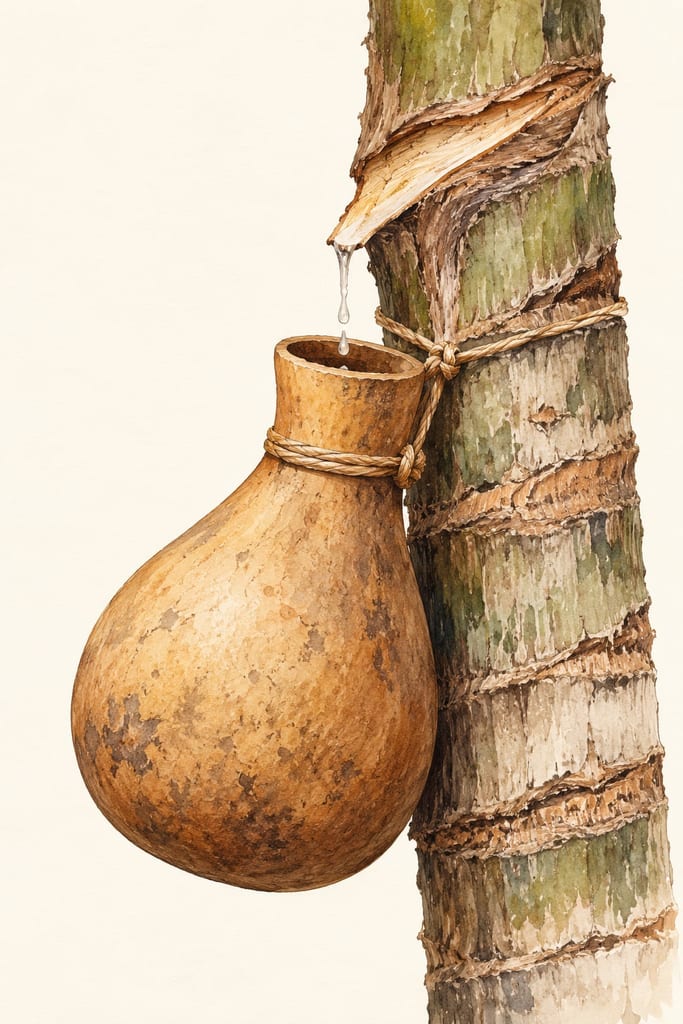
A hollowed gourd tied below a palm opening to collect sap. Sierra Leone records a Limba bulle/buli; Nso sources describe a calabash steadied by stick and plant material. These are related local forms, not one standard design.
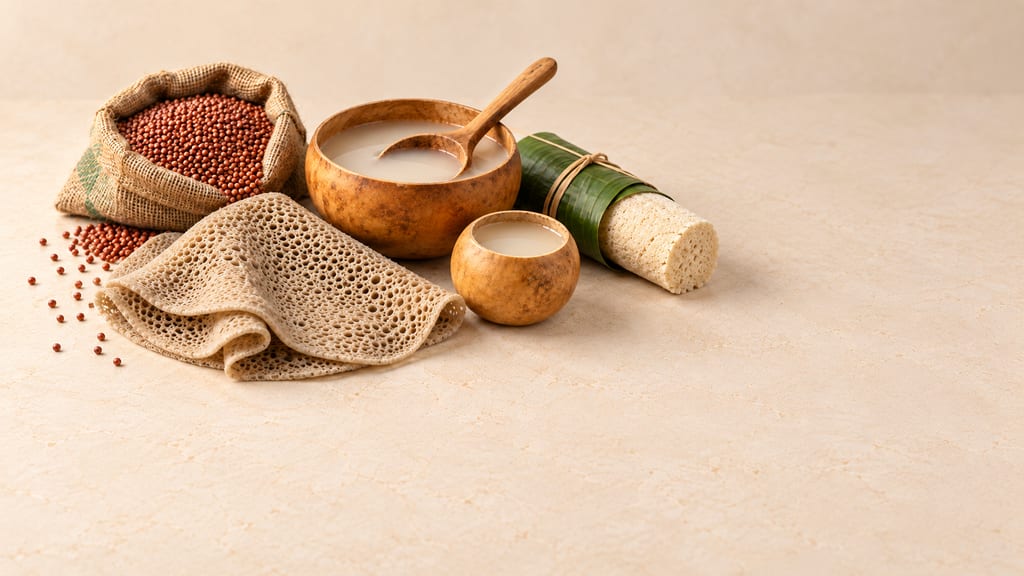
From sour breads and milk to savoury seeds, cassava staples and living beers, African fermentation follows the crop, the community and the work of transformation.
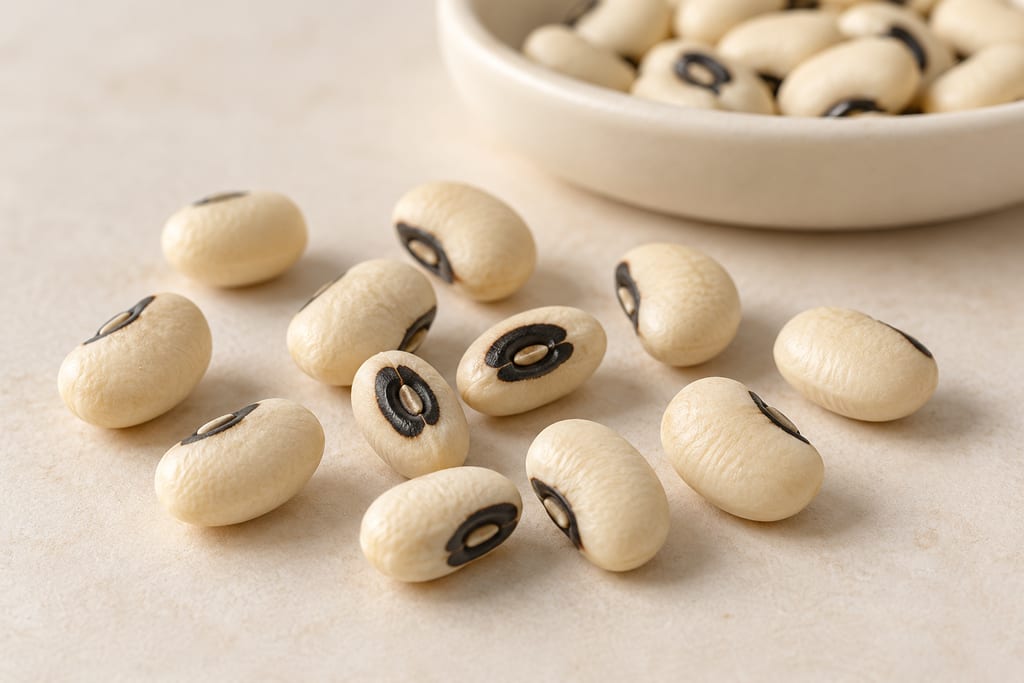
Cowpeas are the seeds of Vigna unguiculata, eaten green and freshly shelled or fully mature and dry. Across Africa they serve as food, fodder and a crop partner, while research also examines them in fermented pastes and cereal doughs.
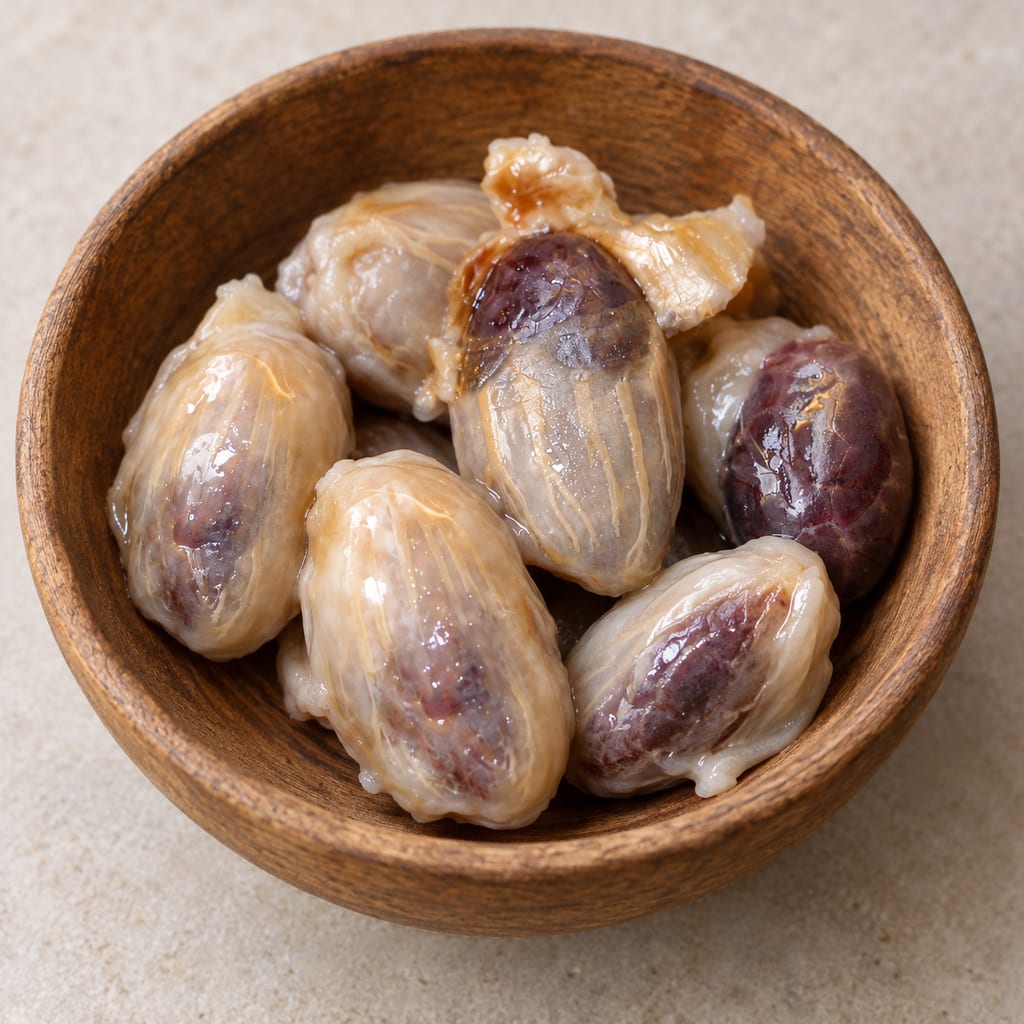
Fresh cocoa beans with pulp are cacao seeds newly removed from the pod while the sweet-acid white mucilage still clings to them. The seed-and-pulp mass is the starting material for post-harvest cocoa fermentation.
Kudeme is described in research as a traditional Ghanaian inoculant for fermenting cassava dough into Agbelima. Its exact microbial composition and a single canonical preparation are not established by the sources reviewed.
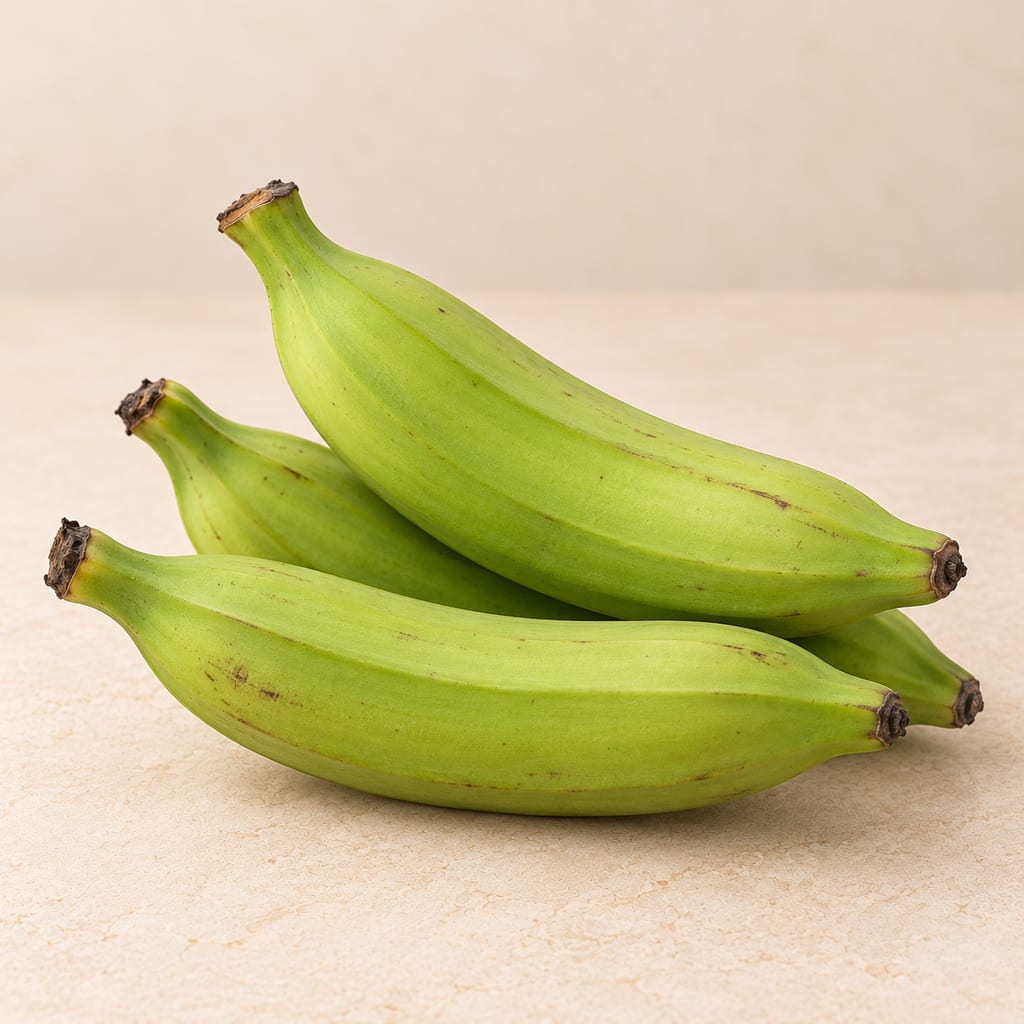
Plantains are starchy cooking bananas used green through fully ripe. Their firmness and sweetness shift with maturity, and ripe mashed fruit appears in a University of Rhode Island Liberian rice-bread adaptation.
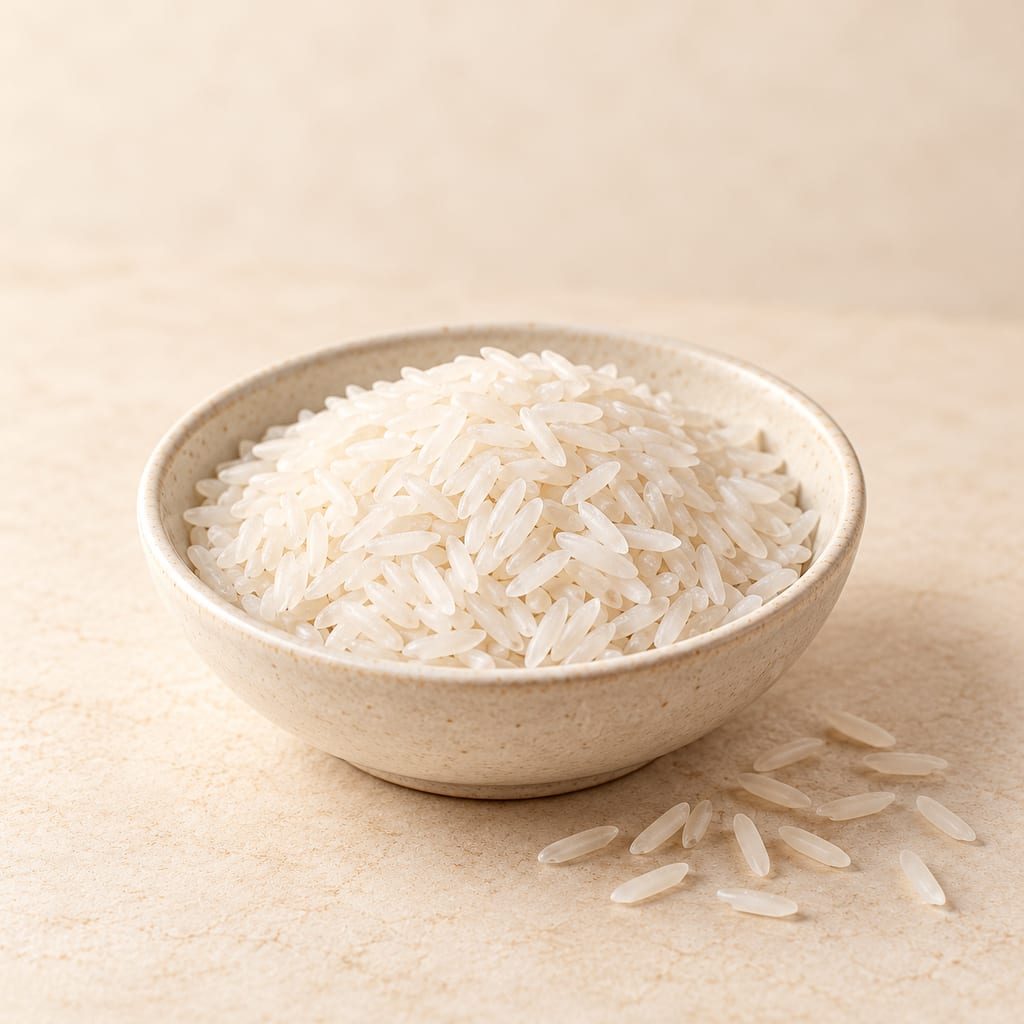
Rice contributes starch to flatbreads, steamed breads, batters and many distinct fermentations. Its species, milling and starch character shape how it cooks, binds, expands and feeds enzymes.
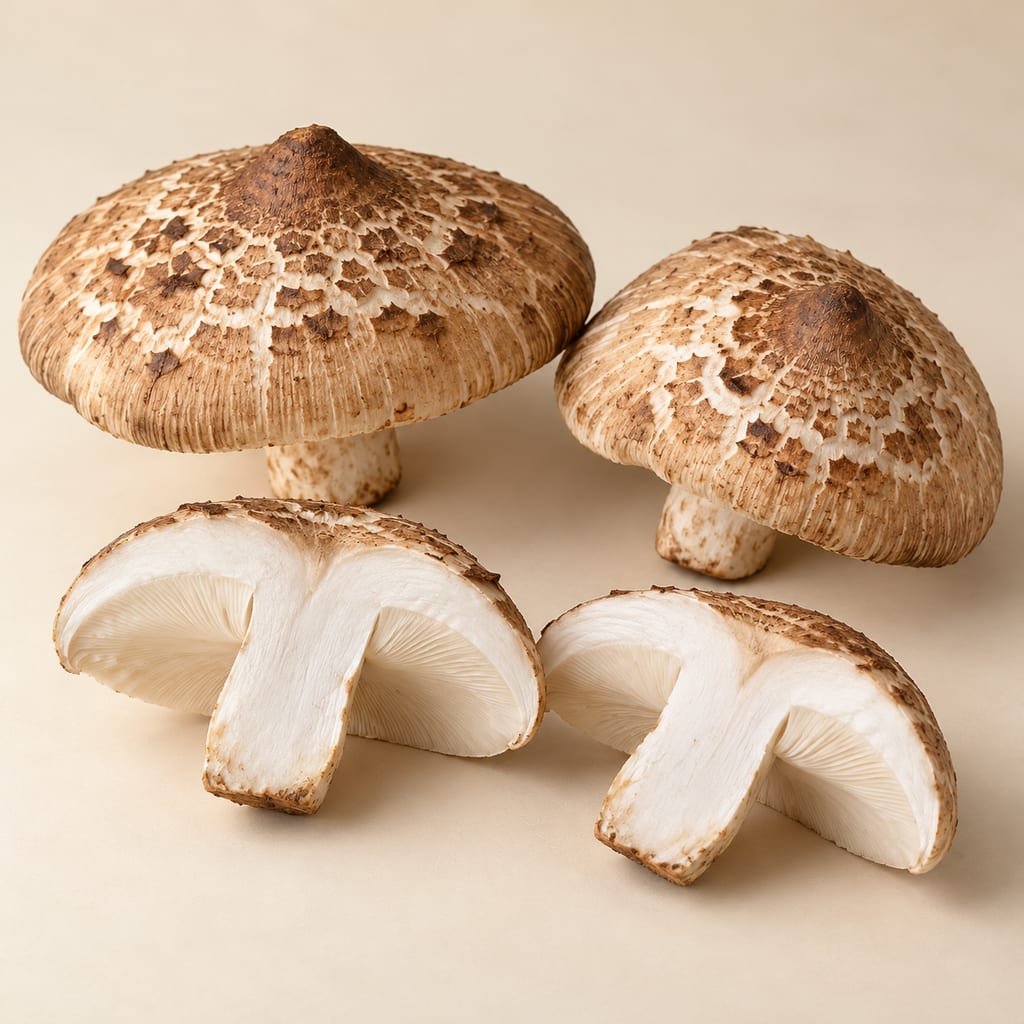
The termite mushroom, a large wild fungus of tropical Africa that fruits on Odontotermes termite mounds. The EFTA inventory lists it but gives no edibility rating or preparation.
Termitomyces reticulatus is a termite mushroom that grows with Odontotermes termites in African woodland. The European Food Safety Authority list records it as edible, but its identity and preparation need checking.
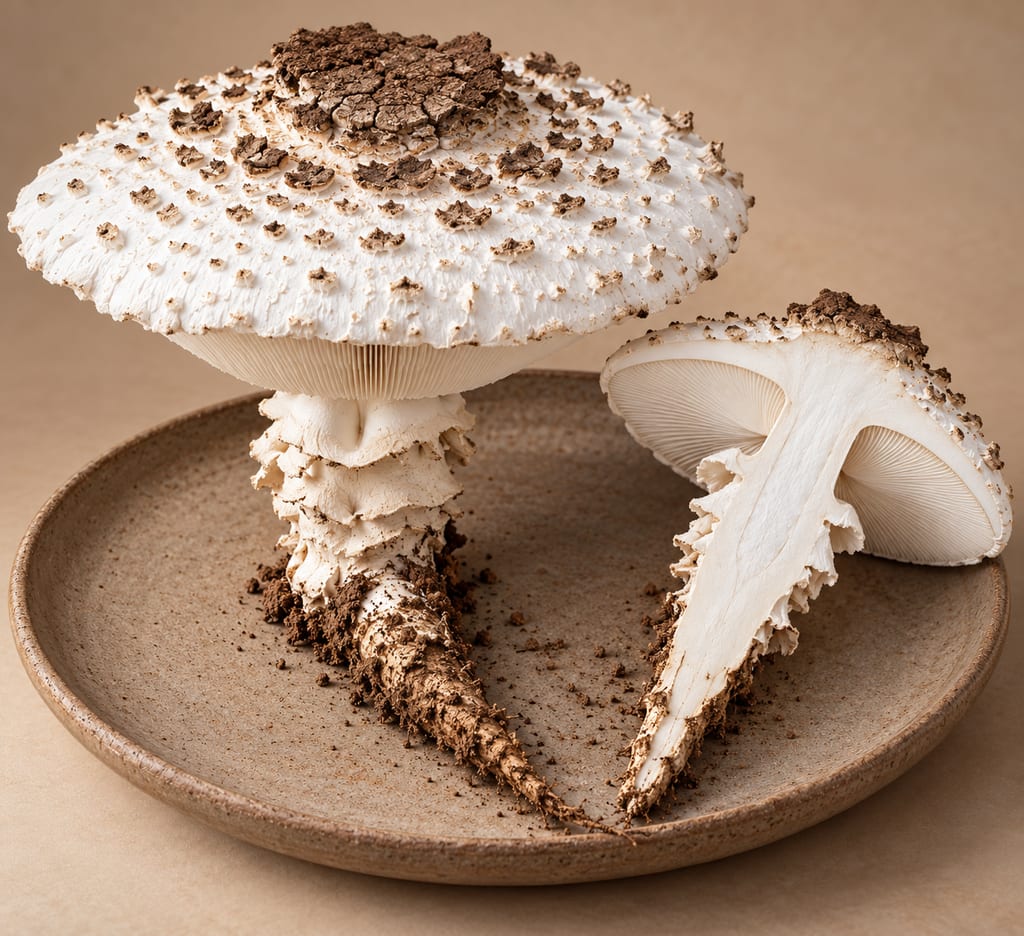
A large wild termite-associated mushroom gathered across parts of tropical Africa. Local food uses and fruiting seasons vary by place and rainfall; its appearance alone cannot establish a safe identification.
No community contributions have been published for this entry yet.
Sign in to contribute. Published comments and photos are free to read.
Journal of Applied Microbiology / PubMedScience · Fermentation · Safety
Growth of yeasts, lactic and acetic acid bacteria in palm wine during tapping and fermentation from felled oil palm (Elaeis guineensis) in GhanaStudy of palm wine from felled Elaeis guineensis trees in Ghana through tapping and storage.
Yeasts, LAB and AAB changed across sampled stages.
Measured alcohol varied by sample age and handling; study observations are not universal storage limits.
Cited in: Gathering a resource; Sugars and microbial change; Composition and time; Distinct fermented drinks; Hygiene and safety; Geography and evidence; What this ingredient is—and is not; What comparison can establish; A field ingredient with changing identity
World Journal of Microbiology and Biotechnology / PubMedScience · Species diversity · Geography
Dynamics and species diversity of lactic acid bacteria involved in the spontaneous fermentation of various palm tree saps during palm wine tapping in Côte d’IvoireCompared spontaneously fermented Elaeis guineensis, Raphia hookeri and Borassus aethiopum sap in Côte d’Ivoire.
LAB communities differed among palms and tapping stages.
Cited in: Several palms, several saps; Gathering a resource; Composition and time; Distinct fermented drinks; Geography and evidence; What this ingredient is—and is not; What comparison can establish
Journal of Food Science and Technology / PubMed CentralComposition · Microbiology · Safety · Geography
Nutritional, biochemical and microbiological composition of Borassus aethiopum Mart. sap in Burkina FasoExamined fresh Borassus aethiopum sap in Burkina Faso during the first four days of tapping.
Measured sugars, acids, yeasts, LAB, AAB and aerobic flora; coliforms, Staphylococcus aureus and Bacillus appeared in some samples.
Discusses plant surfaces, tappers, equipment, insects and surroundings as possible microbial sources.
Cited in: Definition; Several palms, several saps; Sugars and microbial change; Composition and time; Other products made from sap; Hygiene and safety; Geography and evidence; What this ingredient is—and is not; What comparison can establish
Scientia Agricola / ORBiComposition · Species · Geography
Physico-chemical properties and amino acid profiles of sap from Tunisian date palmPhoenix dactylifera sap is called legmi in Tunisia and described as fresh juice.
Compared male and female palms and collection times; carbohydrate and amino-acid profiles differed.
Cited in: Definition; Several palms, several saps; Composition and time; Distinct fermented drinks; Other products made from sap; Choosing sap for a preparation; Geography and evidence; A field ingredient with changing identity
Journal of Asian Scientific ResearchFermentation · Geography · Species
Isolation and Identification of Lactic Acid Bacteria in Coconut Toddy (Mnazi)Mnazi in Kenya is coconut palm sap fermented into an alcoholic beverage, not coconut water.
Authors isolated LAB from sampled mnazi and discuss their role in product change and spoilage.
Cited in: Several palms, several saps; Distinct fermented drinks; Choosing sap for a preparation; Geography and evidence; A field ingredient with changing identity
XII Congresso de Ciências; Universidade Eduardo MondlaneUse · Geography · Economics
Produção e comercialização de vinho de Hyphaene petersiana no Parque Nacional de Banhine, MoçambiqueConference abstract identifies utchema in northeastern Gaza, Mozambique, as palm wine made from Hyphaene petersiana sap.
Reports local extraction, seasonal livelihood and commercialization context.
Cited in: Several palms, several saps; Gathering a resource; Distinct fermented drinks; Choosing sap for a preparation; Geography and evidence