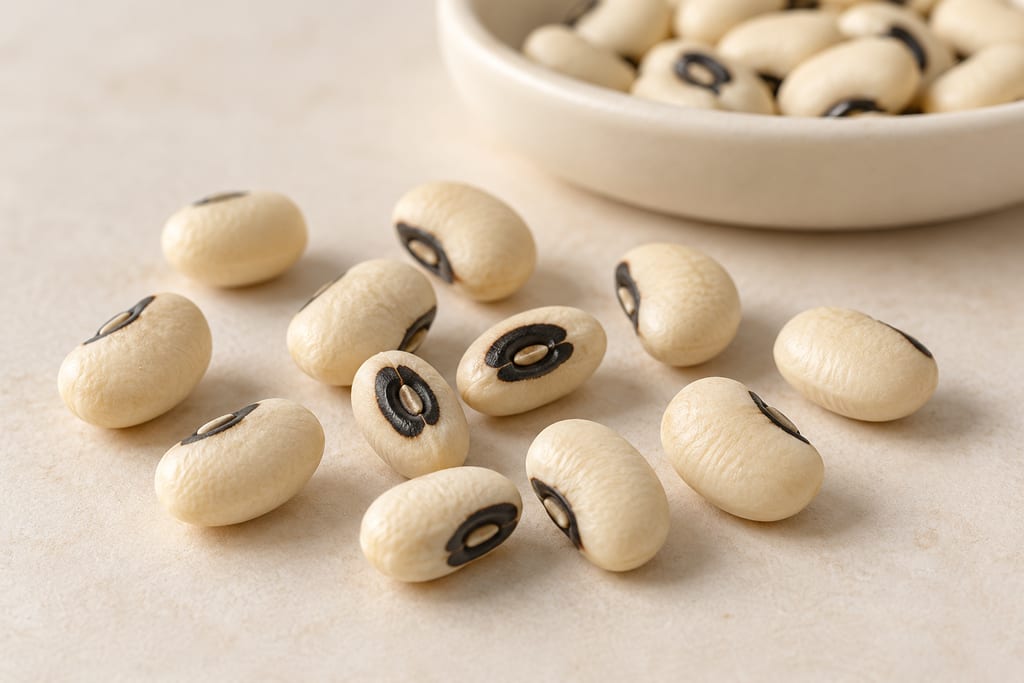
Cowpeas
Cowpeas are the seeds of Vigna unguiculata, eaten green and freshly shelled or fully mature and dry. Across Africa they serve as food, fodder and a crop partner, while research also examines them in fermented pastes and cereal doughs.
 FermenteaWhere food goes to change
Substrates
Fresh cocoa beans with pulp are cacao seeds newly removed from the pod while the sweet-acid white mucilage still clings to them. The seed-and-pulp mass is the starting material for post-harvest cocoa fermentation.
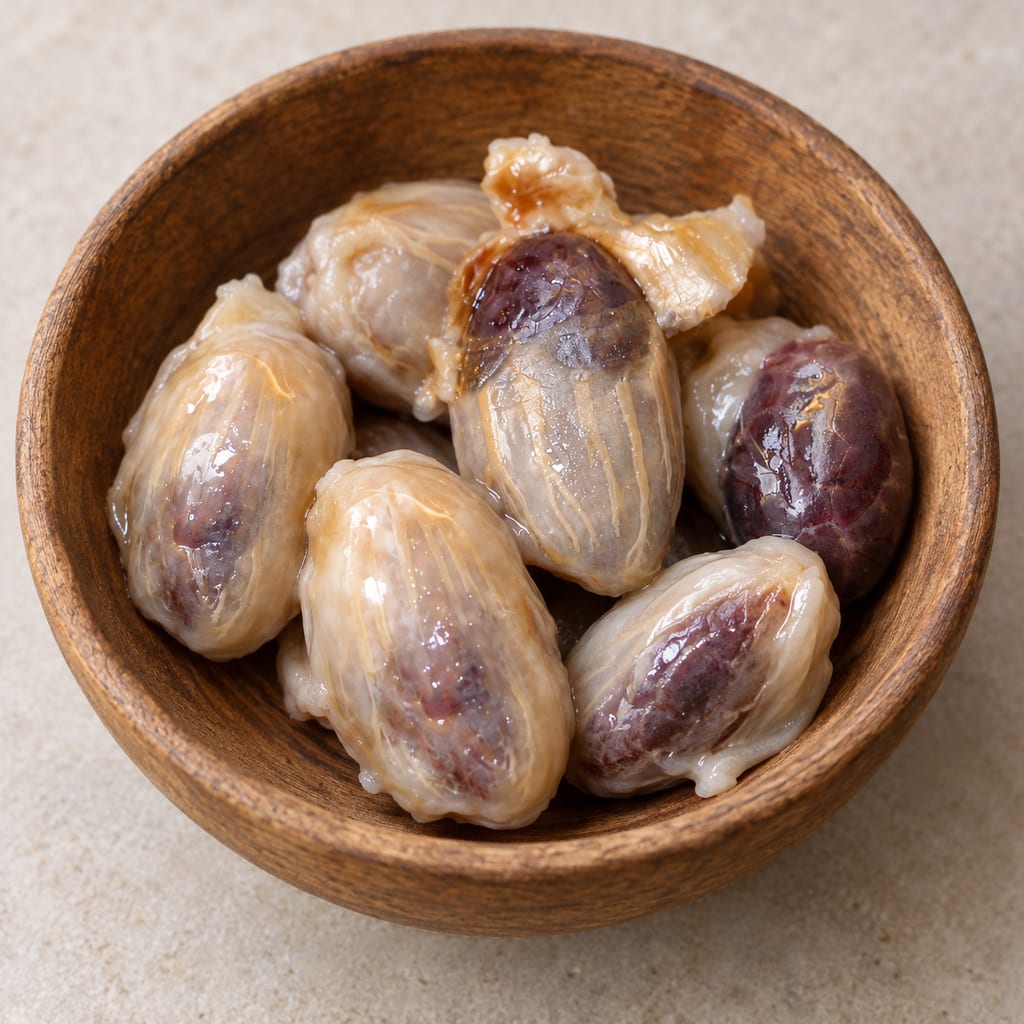
Fresh cocoa beans with pulp are the seeds of cacao, Theobroma cacao L., just after they are taken from a ripe pod while the white, sweet-acid mucilage remains attached. They are neither dried fermented cocoa beans nor roasted beans, nibs, cocoa powder or finished chocolate. Cacao pulp sold or fermented on its own is another ingredient; this record covers the seed-and-pulp mass.
The term bean is the familiar food name for the seed. A pod's seeds sit together in mucilage, and the proportions and character of pulp and seed vary with fruit and growing conditions. The precise cultivar or maturity is not specified by the Ghanaian fermentation studies summarized here.
When the seed-and-pulp mass is removed from the opened pod and exposed during post-harvest handling, spontaneous fermentation begins. Sugar-rich pulp supports early yeast activity. Yeasts form ethanol and other metabolites; lactic acid bacteria and acetic acid bacteria also participate as the mass changes. Oxygen, acidity, temperature, drainage and turning differ across heaps, boxes and trays, so the microbial community and the resulting flavour precursors vary by process.
This fermentation conditions the seed for later drying and roasting. It is not a cocoa drink, a fermentation of finished chocolate, or a validated small-batch home method. Research measurements from one farm, heap size or season cannot be combined into universal time, temperature, turning or safety instructions.
Primary field studies document bean-and-pulp fermentation in Ghana using heaps and trays. Daniel and colleagues sampled seven Ghanaian heap fermentations from two farms near New Tafo and Old Tafo. Nielsen and colleagues compared heap and tray methods in Ghana and reported that the process and crop season affected the yeast populations. A later Ghana study examined pod storage, depulping and fermentation time in its own experimental runs.
These studies support a country-level documented-use association for Ghana. They do not identify a single birthplace for cacao fermentation, represent every Ghanaian cocoa farm or establish that all cocoa is processed by one method. Kew's plant identity and botanical history also do not date the start of the Ghanaian post-harvest practice.
Raw cocoa beans may carry Salmonella. A 2024 survey detected it in 8.2% of 870 raw bean samples arriving in Europe; the result describes that sampling frame, not every cocoa-producing region or fresh harvest. A separate pilot challenge study found that Salmonella could grow under some fermentation conditions and remain detectable after drying and storage. Fermentation, sourness, warmth or drying alone therefore cannot be treated as a validated kill step.
Mould growth during fermentation and drying can contribute to ochratoxin A contamination. EFSA identifies process control as relevant to this hazard. The studies reviewed here do not establish a safe household endpoint or transferable time-temperature rule for fresh Ghanaian beans with pulp. Roasting and other commercial controls belong to later stages and must be validated for their actual process.
Field studies document cocoa bean-and-pulp fermentations on Ghanaian farms. One reports farms near New Tafo and Old Tafo; a separate study was conducted in Ghana's Central Region. These are documented production and research settings, not an origin claim.
Cowpeas are the seeds of Vigna unguiculata, eaten green and freshly shelled or fully mature and dry. Across Africa they serve as food, fodder and a crop partner, while research also examines them in fermented pastes and cereal doughs.
Kudeme is described in research as a traditional Ghanaian inoculant for fermenting cassava dough into Agbelima. Its exact microbial composition and a single canonical preparation are not established by the sources reviewed.
Sugar-rich liquid tapped from different palms, gathered fresh or transformed into local drinks and sweeteners; species and collection stage shape its composition.
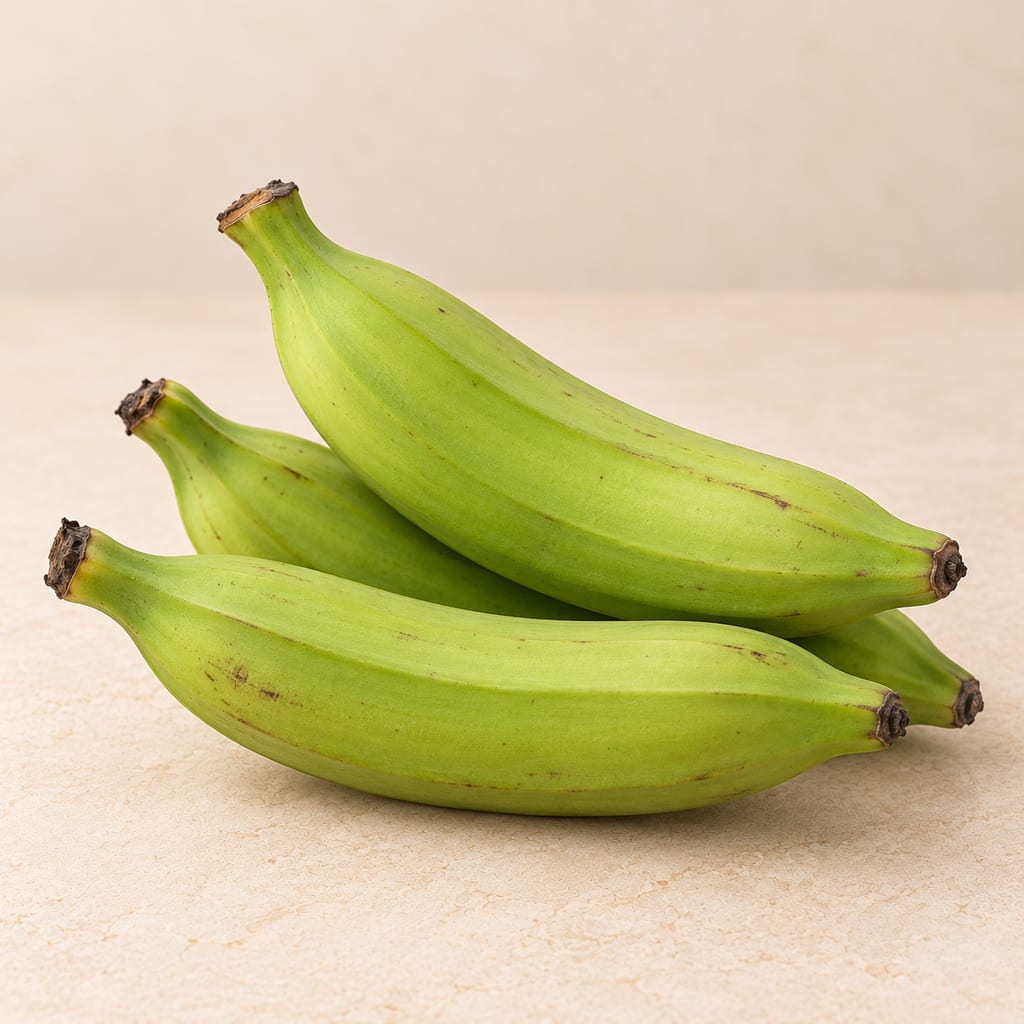
Plantains are starchy cooking bananas used green through fully ripe. Their firmness and sweetness shift with maturity, and ripe mashed fruit appears in a University of Rhode Island Liberian rice-bread adaptation.
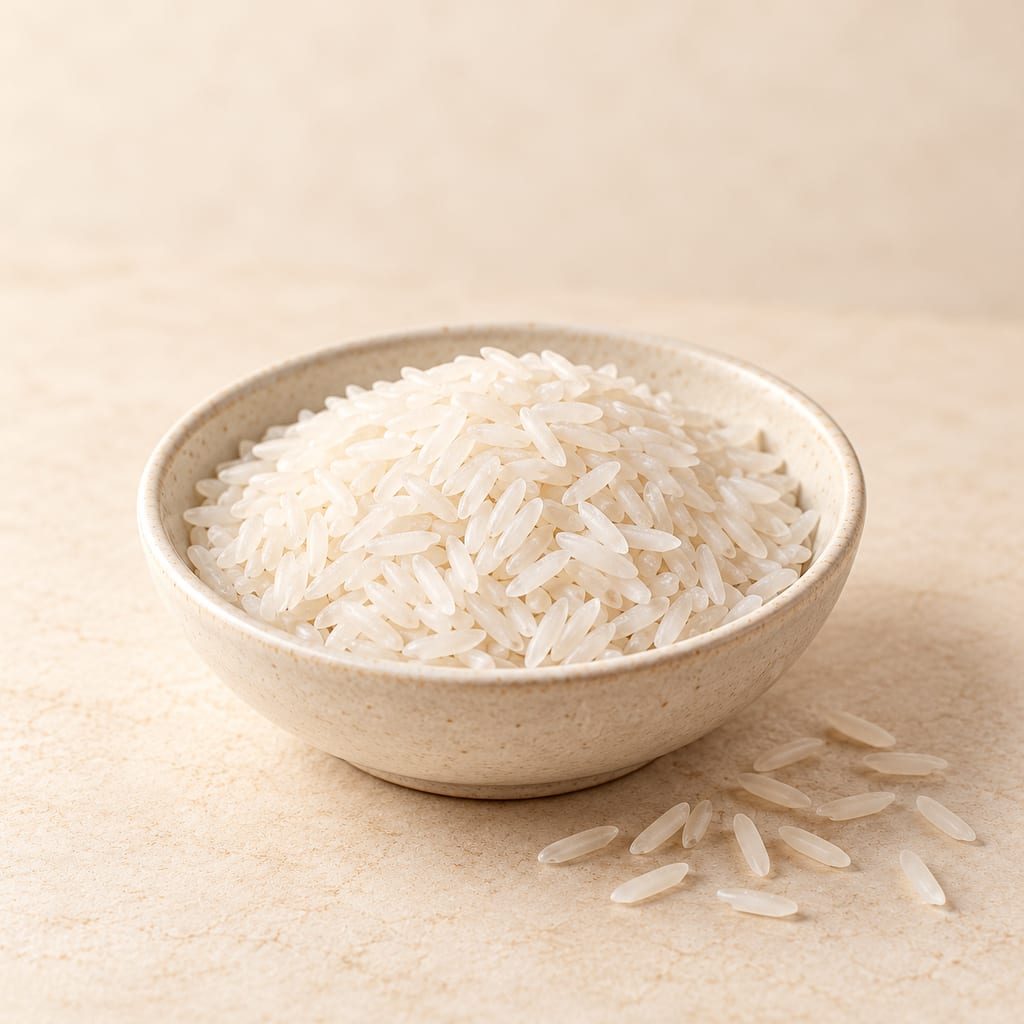
Rice contributes starch to flatbreads, steamed breads, batters and many distinct fermentations. Its species, milling and starch character shape how it cooks, binds, expands and feeds enzymes.
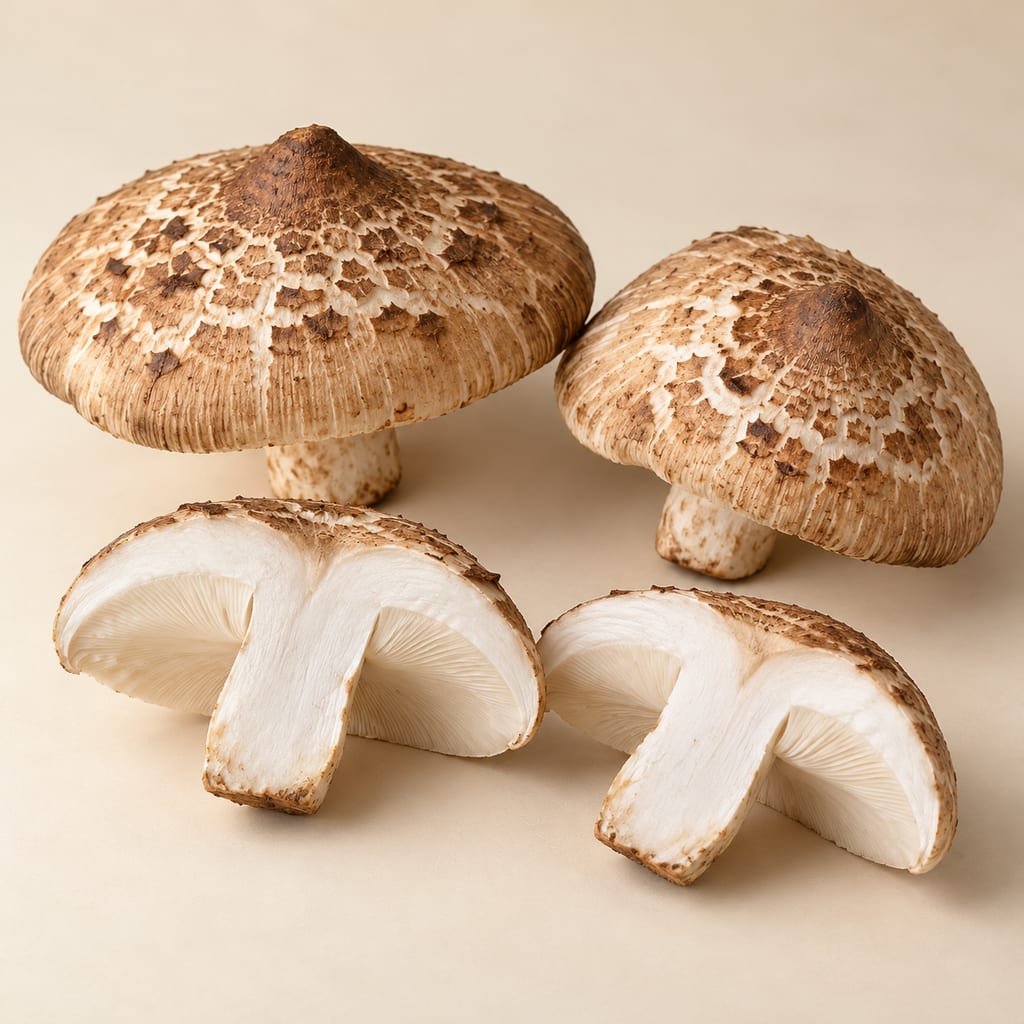
The termite mushroom, a large wild fungus of tropical Africa that fruits on Odontotermes termite mounds. The EFTA inventory lists it but gives no edibility rating or preparation.
Termitomyces reticulatus is a termite mushroom that grows with Odontotermes termites in African woodland. The European Food Safety Authority list records it as edible, but its identity and preparation need checking.
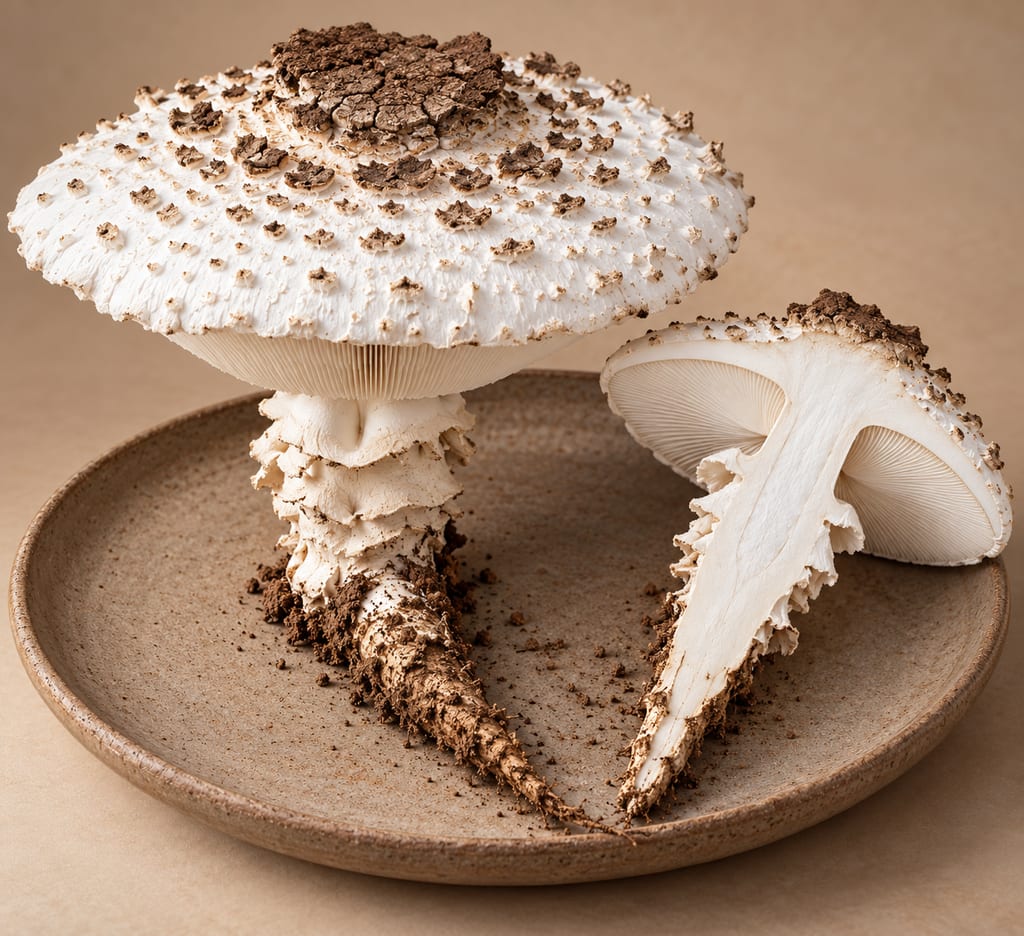
A large wild termite-associated mushroom gathered across parts of tropical Africa. Local food uses and fruiting seasons vary by place and rainfall; its appearance alone cannot establish a safe identification.
No community contributions have been published for this entry yet.
Sign in to contribute. Published comments and photos are free to read.
Plants of the World Online, Royal Botanic Gardens, KewIdentity · Taxonomy · Composition
Theobroma cacao L.Kew identifies Theobroma cacao L.; its fruit pod contains seeds surrounded by white pulp.
Cited in: A seed still wearing its fruit pulp; Ghanaian processing evidence
FEMS Yeast ResearchIdentity · Process · Geography · Science
Yeast diversity of Ghanaian cocoa bean heap fermentationsCocoa seeds are embedded in mucilaginous pulp; exposure of the bean-and-pulp mass starts spontaneous fermentation involving yeasts, lactic acid bacteria and acetic acid bacteria. Field samples came from heaps on farms near New Tafo and Old Tafo, Ghana.
Cited in: A seed still wearing its fruit pulp; Why the attached pulp ferments; Ghanaian processing evidence
FEMS Yeast ResearchProcess · Geography · Science
Occurrence and diversity of yeasts involved in fermentation of West African cocoa beansThe primary study compares Ghanaian heap and tray fermentations; it describes the seed-plus-pulp material and notes substantial variation with process, season and post-harvest storage.
Cited in: Why the attached pulp ferments; Ghanaian processing evidence
FoodsProcess · Geography · Science
Influences of Depulping, Pod Storage and Fermentation Time on Fermentation Dynamics and Quality of Ghanaian CocoaThe Ghana study examines how depulping, pod storage and fermentation time affect cocoa bean fermentation and quality; its experimental details apply to those runs, not every Ghanaian farm.
Cited in: Why the attached pulp ferments; Ghanaian processing evidence
Journal of Food ProtectionSafety
Salmonella Prevalence in Raw Cocoa Beans and a Microbiological Risk Assessment to Evaluate the Impact of Cocoa Liquor Processing on the Reduction of SalmonellaA survey of 870 raw cocoa bean samples arriving in Europe detected Salmonella in 71 samples (8.2%); the study is bounded to its sample frame and does not estimate prevalence in all countries or fresh Ghanaian heaps.
Cited in: Safety and evidence limits
International Journal of Food MicrobiologySafety · Process
Behavior of Salmonella during fermentation, drying and storage of cocoa beansA pilot-scale challenge study found Salmonella growth during some fermentation conditions and survival through drying and storage; fermentation and drying alone are not validated pathogen-kill steps.
Cited in: Safety and evidence limits
EFSA JournalSafety
Risk assessment of ochratoxin A in foodEFSA discusses mould growth and ochratoxin A formation in cocoa fermentation and drying when process control is inadequate; this record sets no transferable household limit.
Cited in: Safety and evidence limits