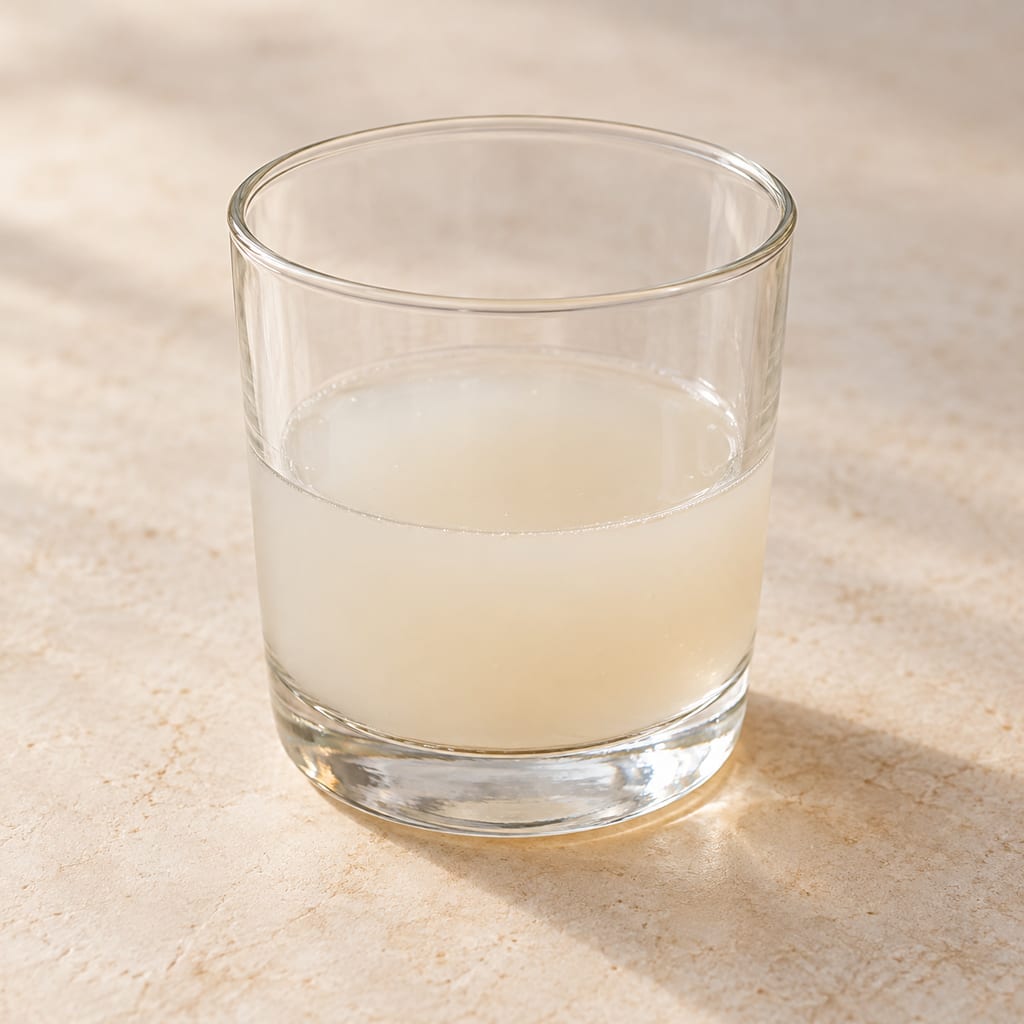
Hyphaene petersiana sap
Sap tapped from Hyphaene petersiana, distinct from the fermented Utchema drink made from it and from sap of other palms.
 FermenteaWhere food goes to change
Traditional method
Utchema · Hyphaene petersiana palm wine (Mozambique)
Utchema is a traditional palm wine made from Hyphaene petersiana sap in Mozambique’s Banhine National Park area. Available fieldwork identifies the drink and tapping economy but does not provide a complete controlled fermentation method.
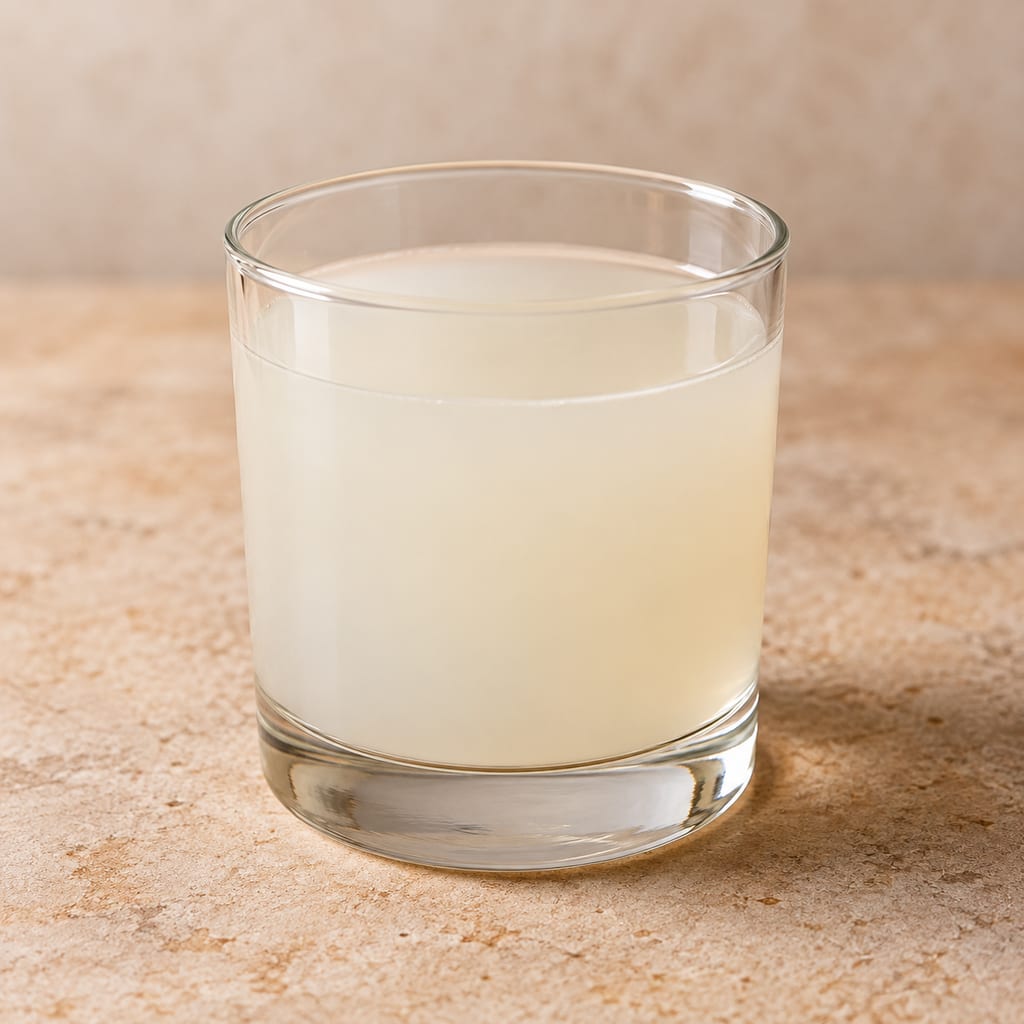
Utchema is a traditional alcoholic drink made from the sap of Hyphaene petersiana in northeastern Gaza, Mozambique. The Universidade Eduardo Mondlane fieldwork identifies the local drink name and palm species; Kew treats Hyphaene petersiana Klotzsch ex Mart. as the accepted species name.
A 2025 household study documents production and sale around Banhine National Park. This locality is evidence of documented use, not an origin claim. Utchema is species-specific and should not be collapsed into a generic recipe for coconut or other palm saps.
The 2025 survey reports sap dripping from larger palm stems into bottles and being collected two or three times a day. Collection from one palm continued for one to two months, depending on the tree, until flow stopped. This period describes sap harvesting over time; it is not the fermentation time for one batch.
The 2023 abstract says sap ferments into wine in less than 24 hours. It does not report a complete sequence, batch proportions, a measured temperature, vessel preparation, fermentation endpoint or a validated stopping rule. The under-24-hour observation marks the start of fermentation, not proof that a batch is finished or safe.
The sources reviewed do not give an alcohol-strength range, a household sanitation procedure, fermentation temperature or safe storage limit. Utchema is therefore recorded as an alcoholic sap ferment with an incomplete process description, not as a validated home recipe.
Do not infer safety or strength from elapsed time, taste, aroma, appearance or bubbling. More source evidence is needed for the fermentation stage and handling controls before this account can support a reproducible household method.
The Banhine National Park survey combined interviews with direct observation and included 93 households: 81 tappers and 12 retailers. These numbers describe the researchers’ local sample, not a census of producers or a national estimate.
The UEM abstract calls extraction a six-month activity and names August through December as the dry-season period. Those five named months do not match the stated six-month duration. The record preserves this discrepancy and does not turn it into a precise annual calendar or a fermentation schedule.
The UEM conference abstract identifies utchema as a traditional alcoholic drink made from Hyphaene petersiana sap in northeastern Gaza. A 2025 study examines household production and marketing at Banhine National Park. These records document current practice, not the drink's origin date.
Scaling: source batch only
Utchema is an alcoholic fermented-sap drink, but the fieldwork abstract reports no measured strength or validated endpoint. A report that fermentation begins within 24 hours is not a safe stopping rule.
Hazard sourceThe sources describe local sap collection and economic use but do not establish vessel sanitation, fermentation temperature, packaging or safe storage conditions for a household batch.
Hazard sourceNo source-backed household fermentation endpoint, alcohol-strength range, sanitation procedure or storage limit was found. Do not infer safety or strength from elapsed time, taste, aroma, appearance or bubbling.
Control sourceThe under-24-hour observation refers to fermentation starting; it is not a complete fermentation schedule or a safety endpoint.
The reported one-to-two-month collection period is per palm and must not be mistaken for fermentation time.
UEM fieldwork and a later household survey document utchema production in and around Banhine National Park in northeastern Gaza. This is a documented production area, not an origin claim.
Sap tapped from Hyphaene petersiana, distinct from the fermented Utchema drink made from it and from sap of other palms.

From sour breads and milk to savoury seeds, cassava staples and living beers, African fermentation follows the crop, the community and the work of transformation.

Kalou is Seychellois coconut-palm toddy: sap from an unopened flower stalk is collected and ferments naturally into an alcoholic drink. Sources document the identity and tapping tradition but no validated batch or alcohol endpoint.
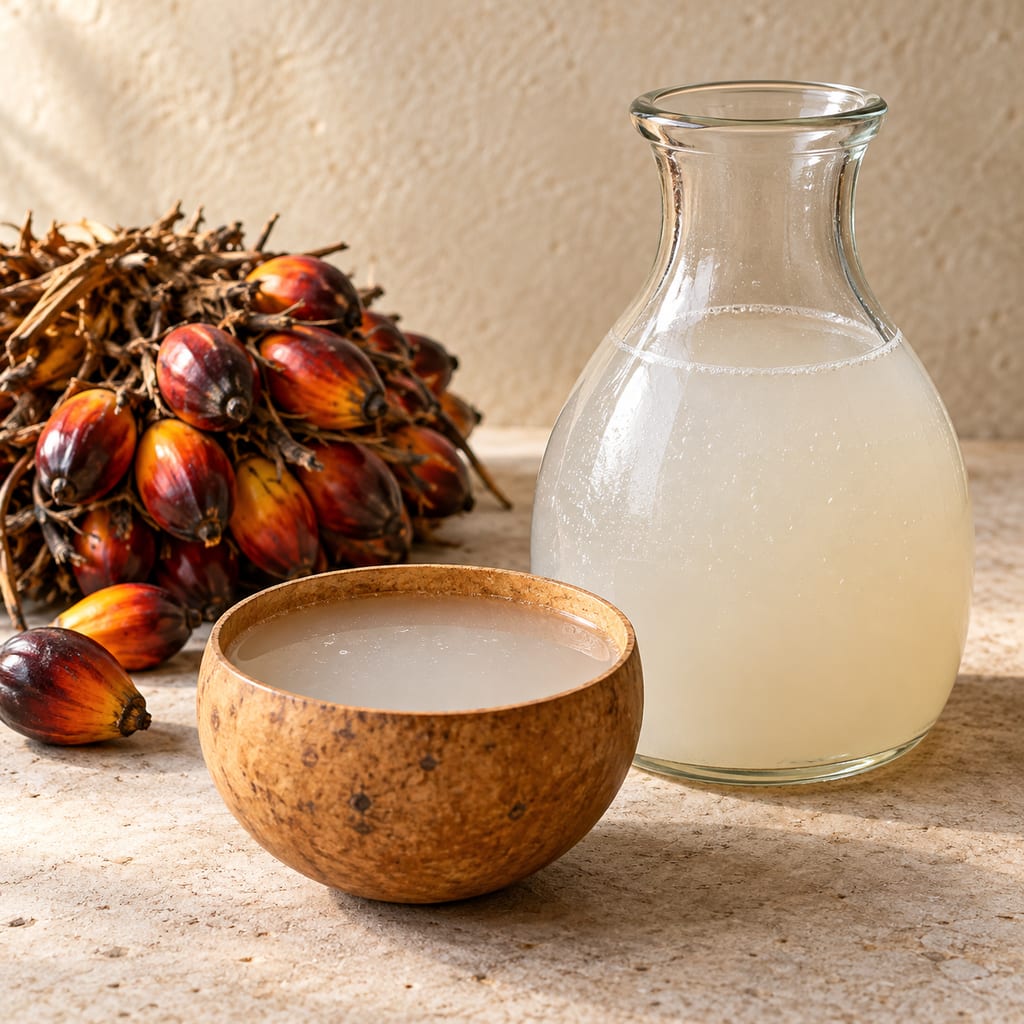
Palm wine is fermented sap from several palm species. West and Central African traditions differ in palm, tapping, vessel and serving stage; this page records shared principles without claiming one universal home-scale process.
No community contributions have been published for this entry yet.
Sign in to contribute. Published comments and photos are free to read.
Universidade Eduardo Mondlane, Livro de Resumos da XII Conferência CientíficaIdentity · Geography · Use · Method
Produção e comercialização de vinho de Hyphaene petersiana no Parque Nacional de Banhine, MoçambiqueNames the drink utchema and identifies its substrate as Hyphaene petersiana sap in northeastern Gaza, Mozambique.
States that the sap ferments into palm wine in less than 24 hours; it does not say fermentation is complete or safe by then.
Describes fieldwork on sap extraction, local management, sale and livelihood contributions around Banhine National Park.
The abstract says sap extraction is practiced six months per year, from August to December in the dry season; the named months span five months, so the stated duration and calendar range do not align.
Cited in: A named palm wine from northeastern Gaza; Sap collection is documented more fully than fermentation; Strength and safety controls remain unknown; Survey scope and a season discrepancy
South African Journal of Botany, volume 187 (2025)Identity · Geography · Method · Use
Production and marketing of wine from the palm tree Hyphaene petersiana Klotzsch ex mart. (Arecaceae) in Banhine National Park, MozambiqueReports a survey of 93 households, including 81 tappers and 12 retailers, and direct observation of local production and marketing.
Describes sap dripping from larger stems into bottles and collection two or three times per day for one to two months per palm, depending on the tree, until flow stops. This is harvesting duration, not fermentation time.
Identifies Banhine National Park in Gaza Province, Mozambique, as the study area and documents local livelihood dependence on palm-wine extraction.
The household survey covered 93 respondents: 81 tappers and 12 retailers; interview and direct-observation findings describe the survey sample, not every household in Mozambique.
Cited in: A named palm wine from northeastern Gaza; Sap collection is documented more fully than fermentation; Strength and safety controls remain unknown; Survey scope and a season discrepancy
Plants of the World Online, Royal Botanic Gardens, KewTaxonomy
Hyphaene petersiana Klotzsch ex Mart.Treats Hyphaene petersiana Klotzsch ex Mart. as an accepted species name.
Lists Mozambique within the species' native range.
Cited in: A named palm wine from northeastern Gaza