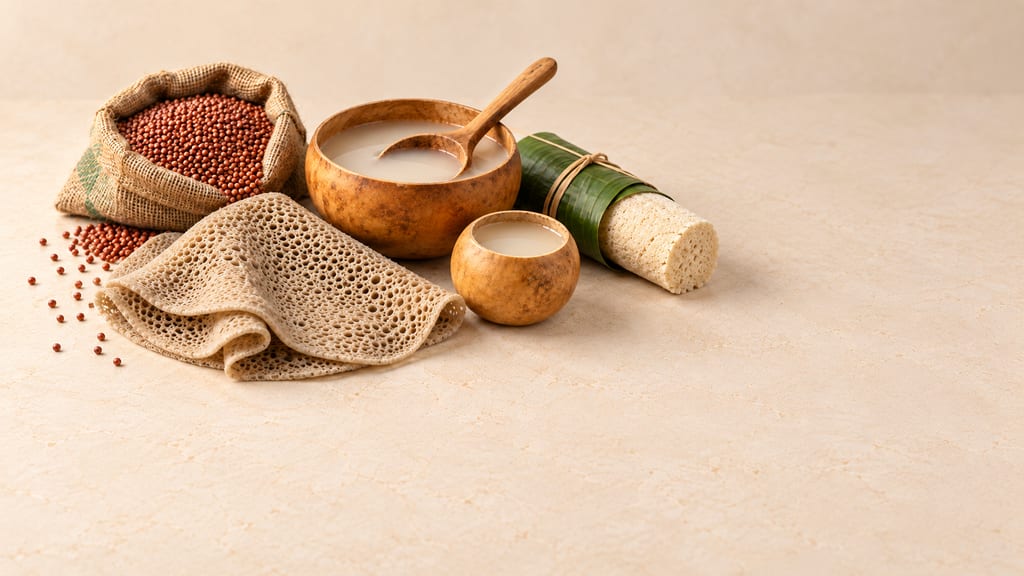
African fermented foods, drinks and preservation
From sour breads and milk to savoury seeds, cassava staples and living beers, African fermentation follows the crop, the community and the work of transformation.
 FermenteaWhere food goes to change
Traditional method
calou
Kalou is Seychellois coconut-palm toddy: sap from an unopened flower stalk is collected and ferments naturally into an alcoholic drink. Sources document the identity and tapping tradition but no validated batch or alcohol endpoint.

Kalou, also written calou, is Seychellois toddy made from coconut-palm sap. This sap comes from the flower stalk, not from the liquid inside a young coconut. The BBC's Seychelles feature identifies kalou as a local alcoholic palm wine made from coconut sap, and an official 1936 Parliamentary statement distinguishes toddy from bacca, the fermented sugarcane drink.
A Seychellois cultural account describes kalou in household and social settings, including lakanbiz and ceremonies. It recalls freshly tapped toddy on Cousin Island in the late 1950s. These observations document cultural use in the islands; they do not establish a single birthplace or date the beginning of the tradition.
Local accounts describe skilled tappers collecting sap from an unopened coconut inflorescence or flower stalk into a vessel attached below it. A first-person cultural account describes shaving the spadix and refreshing the cut while collecting sap. This is evidence of one local practice, not a complete technical specification or a safe instruction for climbing and cutting a palm.
The collected sap may be consumed fresh or allowed to ferment naturally. Local descriptions distinguish sweet fresh toddy from stronger fermented stages and say that continued fermentation can turn it sour or vinegar-like. They do not establish a consistent time, temperature, composition or readiness point. No specific household batch size, added starter, sugar or water is supported by the sources used here.
Kalou is an alcoholic beverage, but its strength is not established by the name or by elapsed time alone. The Seychelles Heart Study 2004 used 9% as an assumed value for its alcohol-intake calculations. That figure was not a measured ABV for individual kalou samples and is not a formula or fermentation endpoint.
The sources do not provide validated sap-collection hygiene, a fermentation endpoint, safe storage conditions or a tested home process. Freshness, sweetness, bubbling and sourness cannot establish alcohol strength or safety. The traditional collection method also involves working at height with a cutting tool; the cultural account is not an occupational-safety guide.
The earliest dated source used here is a 1936 Parliamentary statement about toddy manufacture and its regulation in Seychelles; local oral-cultural accounts place the drink in everyday and ceremonial life but do not date its beginning.
Scaling: source batch only
Kalou is documented as an alcoholic toddy whose strength changes as sap ferments. Sources do not give a measured ABV for a specific batch or a reliable stage endpoint.
Hazard sourceThe documented traditional collection method involves climbing a coconut palm and cutting its flower stalk; the sources provide no occupational-safety protocol.
Hazard sourceKalou is alcoholic. The WHO Seychelles survey used 9% as an assumed value in its alcohol calculations; it did not report a measured ABV for each kalou batch. Do not use that survey assumption as a recipe target or universal strength.
Freshness, taste, effervescence or sourness do not establish alcohol strength or microbiological safety.
Traditional tapping is skilled work at height. This partial record is not a safe palm-climbing or cutting guide.
The sources used here do not provide validated collection hygiene, fermentation, readiness or storage controls.
These sources identify coconut-palm toddy as a Seychellois beverage and document its local use; they do not establish a single island of origin.
From sour breads and milk to savoury seeds, cassava staples and living beers, African fermentation follows the crop, the community and the work of transformation.
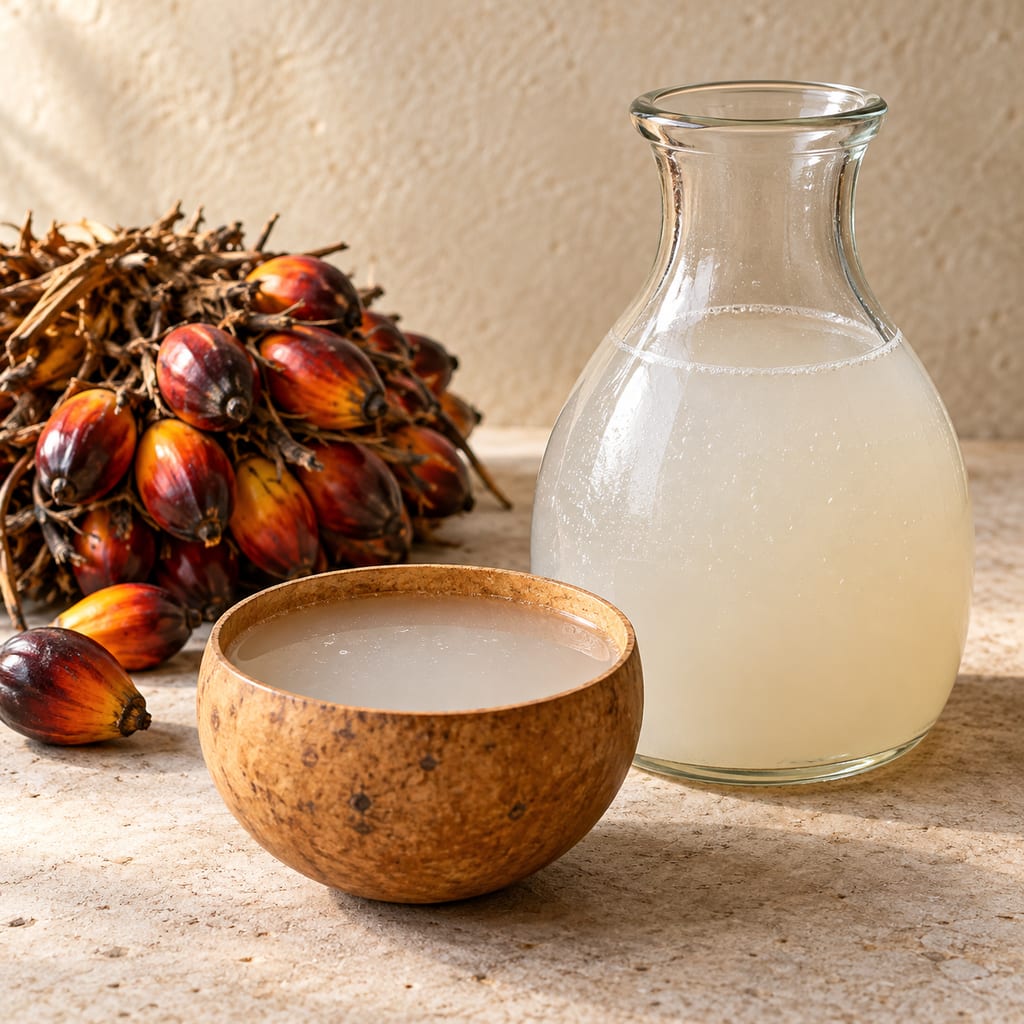
Palm wine is fermented sap from several palm species. West and Central African traditions differ in palm, tapping, vessel and serving stage; this page records shared principles without claiming one universal home-scale process.
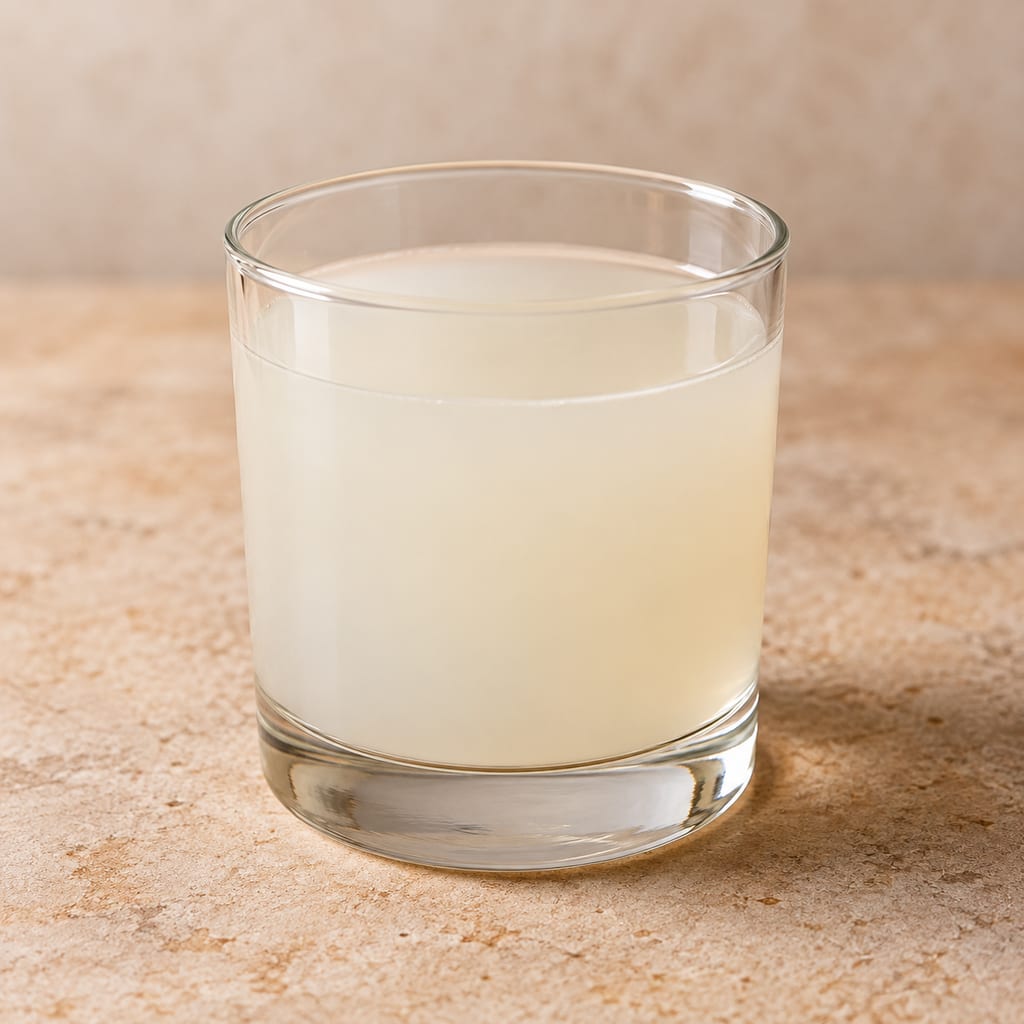
Utchema is a traditional palm wine made from Hyphaene petersiana sap in Mozambique’s Banhine National Park area. Available fieldwork identifies the drink and tapping economy but does not provide a complete controlled fermentation method.

Soft, spreadable Calabrian pork sausage made with a great deal of red chilli and fatty pork, stuffed into natural casings, sometimes smoked and matured while staying soft.

A way to add independent temperature logging to an existing food dehydrator without changing its built-in controls or protections. It is a monitoring method, not a rewiring plan.

Pleurotus cystidiosus is the abalone mushroom, a cultivated oyster-type fungus with dark brown caps that grows more slowly and is more demanding than other Pleurotus species.

A dark, balanced vinegar from Emilia-Romagna made by combining cooked or concentrated grape must with wine vinegar, then acetifying and refining it in wood under a protected specification.

A living dairy inoculum that starts controlled cream fermentation, developing acidity and aroma before sour cream or cultured butter is finished.

A small electric incubator holds jars at a selected temperature for yogurt and other documented warm food preparations. Controls, capacity and vessel arrangement vary by model.

Adygean salt is a seasoned table salt associated with Adygea and the wider North Caucasian culinary tradition. Salt is blended with garlic and a variable selection of herbs and spices; the exact mix depends on the named style and maker.

The African Caesar-group mushroom, Amanita masasiensis, is a wild ectomycorrhizal species of central and southern African woodlands, eaten locally. The genus contains deadly poisonous species, so identification needs care.
No community contributions have been published for this entry yet.
Sign in to contribute. Published comments and photos are free to read.
UK Parliament, House of Commons Hansard, 20 May 1936History · Geography
Seychelles Islands (Liquor Traffic)A Parliamentary statement says December 1935 ordinances regulated manufacture of bacca and toddy and describes toddy as a fermented beverage made from coconut-palm juice; it records legal history, not first use.
Cited in: Coconut-palm toddy in Seychelles; Collection and spontaneous fermentation
The Creole Melting PotMethod · History · Geography
Tapping Toddy in the Seychelles — Tir KalouThe local cultural account identifies kalou as coconut-palm toddy, describes tapping the unopened spadix and collecting its sap, recalls consumption on Cousin Island in the late 1950s, and describes household and ceremonial use.
Cited in: Coconut-palm toddy in Seychelles; Collection and spontaneous fermentation; Strength and safety limits
BBC StoryWorks, commercial production for The Seychelles IslandsGeography · Identity
The Creole WayThe tourism feature identifies kalou as a local alcoholic palm wine made from coconut sap and distinguishes it from bacca.
Cited in: Coconut-palm toddy in Seychelles; Collection and spontaneous fermentation
Ministry of Health and Social Development, Seychelles; World Health OrganizationSafety
The Seychelles Heart Study 2004: Methods and Main FindingsThe survey's alcohol-intake calculation assigned kalou an assumed 9% value; this was a survey input, not a laboratory measurement of a particular batch or a recipe endpoint.
Cited in: Strength and safety limits
University of SeychellesIdentity · Geography
The Creole Garden and Kitchen PharmacyThe University-hosted guide identifies coconut (Cocos nucifera) toddy as a locally used palm wine in Seychelles.
Cited in: Coconut-palm toddy in Seychelles