
Maltese sausage, starter-cultured
A documentary account of Maltese zalzett and a contemporary starter-cultured adaptation. The cited raw-pork method lacks documented validation for pathogen reduction and is not offered as a preparation recipe.
 FermenteaWhere food goes to change
Spices and aromatics
Crushed coriander seed is the ripe, dried fruit of Coriandrum sativum broken into coarse aromatic pieces for curries, sauces and meat seasonings.
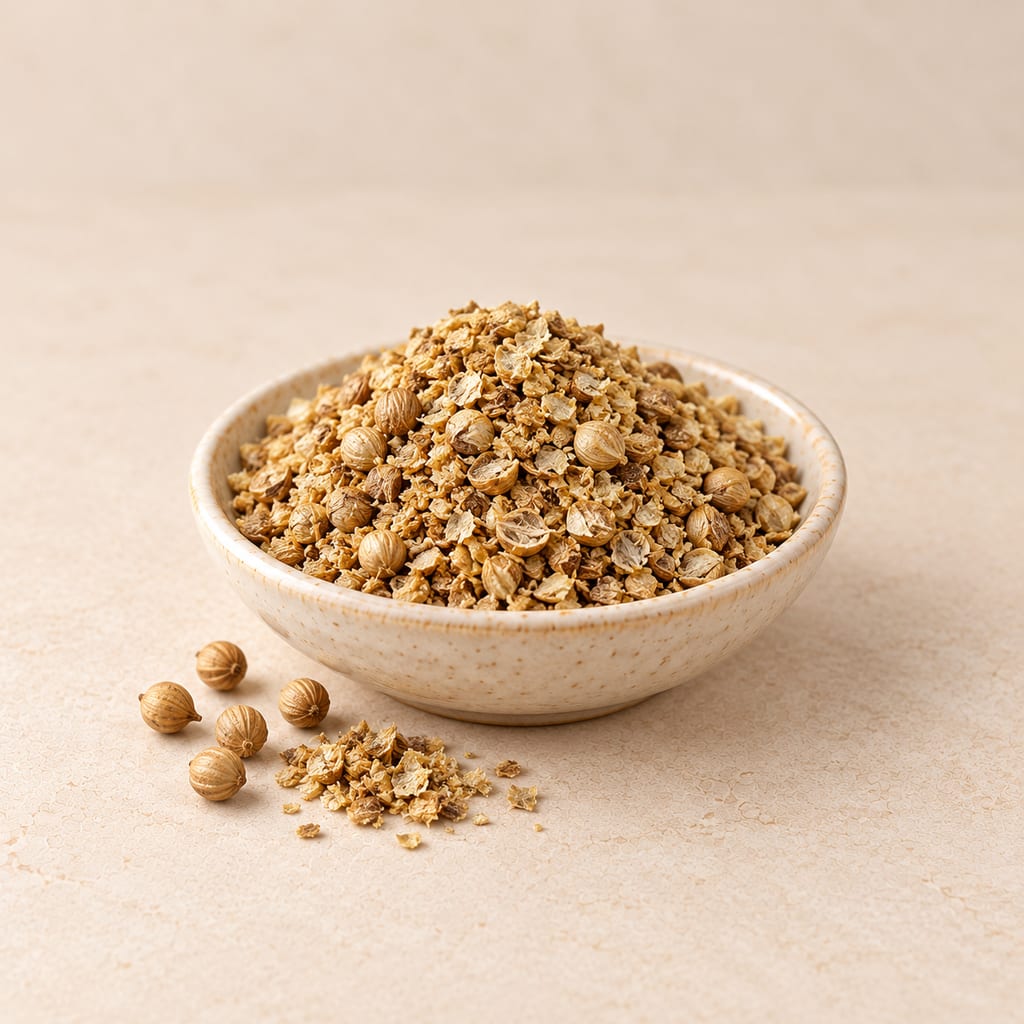
Crushed coriander seed is the dried, ripe fruit of Coriandrum sativum broken into coarse pieces. The culinary name seed is convenient but botanically incomplete: the rounded object is a fruit that contains the seeds. It belongs to Apiaceae, the carrot family. Its pale tan fragments and warm aromatic character are a different seasoning from the green leaves of the same plant.
The fruit is a schizocarp, a dry fruit that separates into smaller units called mericarps. Coriander’s joined fruit therefore has a built-in division, even before a cook pounds it. Crushing can split that structure and break it further into irregular pieces. A bowl of crushed coriander may consequently contain curved portions of the outer fruit as well as smaller fragments, rather than uniformly chopped seeds.
The distinction matters when reading a recipe. Whole coriander fruit, coarse crushed coriander and fine ground powder are forms of the same spice, but they put different particles into the food. Green coriander, often called cilantro in North America, is another harvested part. A request for crushed coriander seed should not be silently interpreted as chopped leaves, however familiar the plant’s fresh name may be.
The Roman cookery collection transmitted as Apicius provides direct evidence of coriander being crushed for food. In its book on legumes, a lentil preparation distinguishes green coriander from coriander seed and calls for the seed to be crushed with other seasonings. The two forms appear in one dish with separate jobs. The text is especially useful because it records an action in the kitchen, not merely a plant name.
Other lentil and chestnut preparations in the collection combine coriander seed with spices, herbs and sweet or sour additions. They show it participating in complex seasoning mixtures. The modern cook need not reconstruct the entire ancient preparation to recognize the significance of the mortar: breaking an aromatic dry fruit before mixing it into food has a long written history.
Pliny’s Natural History adds a different kind of testimony. He singled out Egyptian coriander as esteemed in his account. That is evidence of an ancient geographical reputation, not proof that coriander originated in Egypt or that all Egyptian crops were identical. His discussion also contains medicinal and preservation beliefs that cannot be treated as modern controls. The culinary record is strongest when the food use is kept distinct from those claims.
Coriander’s native range extends broadly from the eastern Mediterranean to western Pakistan, but widespread cultivation and escape from gardens complicate the identification of an exact original homeland. A broad native distribution is not a dated account of domestication, and a place where an ancient author valued the crop is not necessarily its first growing site.
The plant’s reach is readily visible in its uses. The fresh herb and the fruit spice both have culinary uses. Roots are also used in Thai food. These harvested parts share a plant but differ in flavour and handling, giving coriander more than one place in a kitchen. A curry seasoned with ripe fruit therefore need not resemble a dish finished with fresh coriander leaves.
The dried fruit also lends itself to distribution as a spice crop. Growers, processors and cooks may encounter it as intact fruits, cleaned bulk material, milled seasoning or extracted aroma. Each product has its own specification. Neither a national name nor a familiar recipe fixes the cultivar, harvest conditions or particle size of an anonymous packet of crushed coriander.
Coriander is an annual herb. Its flowers develop into the round dry fruits used for this spice, so a fruit crop must remain in the field beyond the stage at which tender shoots are harvested for green coriander. A crop cut young for leafy use and one retained to ripen fruit are following different harvest plans, even when they began with the same species.
Growing conditions influence those plans. In Singapore’s humid conditions, hot weather can prompt flowering and the herb benefits from good drainage and protection from intense afternoon sun. A regional recommendation for young leaf harvest should not be mistaken for a universal schedule for commercial seed-spice production.
In Tamil Nadu, a fruit crop can be harvested by gathering the plants, then drying, threshing and cleaning them. Threshing releases the crop from the dried plants; winnowing and cleaning remove unwanted material before sale. The crop’s final appearance thus reflects agricultural handling as well as the botanical fruit. The coarse pieces bought for a recipe are a later form of a crop first harvested and cleaned as a spice.
Commercial coriander includes large-fruited and small-fruited types. Their performance differs with growing conditions and essential-oil content. Canadian selections include CDC Major and CDC Minor, developed for crop production in Saskatchewan. Those names describe agricultural selections, not cooking instructions: they help growers choose material suited to a market and a season.
Indian regional varieties include Co 1, Co 2 and Co 3. Some are described as dual-purpose, useful for leaf and fruit production. Variety descriptions also address disease tolerance, drought and growth habit. The existence of these selections is a reminder that coriander is a developed crop, rather than one uniform wild seed gathered everywhere.
Harvest and grading then connect those plants with commerce. In Saskatchewan, buyers assess aroma and appearance, including colour, stems, split fruits and foreign material. Intact fruits are preferred in that market because splitting allows volatile oil to escape. A split-fruit discount at harvest is quite compatible with a cook deliberately crushing the cleaned spice later: the market seeks to retain quality through storage and transport until the point of use.
A whole fruit holds its compact form until it is broken. Coarse crushing leaves recognizable fragments; milling to powder takes the operation further. These are physical changes, with no fermentation required. Their immediate culinary effect is visible: larger pieces remain distinct in a filling or sauce, while a fine powder disperses without the same coarse fragments.
The name crushed does not establish one universal particle size. A supplier’s coarse product can differ from another’s, and crushing in a mortar produces a mixture of sizes. Coarse crushed coriander is sold separately from whole fruit and fine powder. Its irregular tan pieces can retain curved portions of the fruit, making the broken structure visible. The commercial distinction is useful even without a precise milling grade.
The crop-market concern about volatile loss also explains why the timing of breaking the fruit matters to aroma. Keeping fruits whole until preparation limits the period for which the broken material is exposed. This is a practical implication of volatile oils, not a promise that every freshly crushed batch will outperform every packed product. The condition of the original crop and the way it has been stored remain part of the result.
The aromatic difference between coriander fruit and green coriander is more than a change of colour. A study of commercial essential oils found fruit oils dominated by linalool, whereas the oils from the aerial herb had a different mixture with prominent aldehydes. A volatile compound is one that can pass into the air and contribute to aroma; an essential oil concentrates such components from the plant.
These measurements help explain why the two harvested parts are not flavour equivalents. The ripe-fruit spice has a sweet, aromatic character distinct from the fresh green herb. They do not provide an instruction to add essential oil to food, nor do oil percentages describe the composition of a spoonful of crushed fruit. Extracted oils and intact food ingredients are different materials.
Variation is also part of the evidence. Commercial oils in the study did not all have identical compositions. A species name establishes botanical identity, but it does not guarantee an exact aroma profile across growing areas, harvests or suppliers. For the cook, the useful distinction is between the fruit spice, the leafy herb and concentrated extracts, followed by the actual quality and form of the product being used.
Coriander seed is an ingredient in garam masala and Indian curries, while its crushed form has the historical legume uses preserved in Apicius. These examples show a spice that works within a mixture. Its aromatic character accompanies other seasonings rather than needing to dominate the whole dish. The green shoots and roots have their own uses and should not be imported into a seed-spice substitution without considering the intended flavour.
The starter-cultured Maltese sausage linked here specifically calls for coarsely crushed coriander seed. That form leaves a different texture from fine coriander powder. It appears with black pepper, garlic and parsley in the seasoning, so the character of the sausage depends on the combination as well as on any single spice.
This is a flavour role in a fermented preparation. The sausage formulation separately specifies a culture and its other processing ingredients. Coriander’s presence does not establish acidification or protection of the meat. Essential-oil research and ancient preservation beliefs cannot validate a different food formulation. The linked sausage page carries its complete method; coriander remains one named seasoning within it.
The same volatile components that make coriander aromatic can be lost from broken fruit. An airtight container is therefore a practical part of keeping the spice. Herb and spice oils can oxidize, diminishing colour and flavour; airtight packaging helps limit that exposure. This is advice about protecting quality rather than a universal shelf-life promise.
At crop scale, cleaning out green material and managing drying and aeration are important parts of storage. Green material can interfere with even airflow and increase spoilage during storage. This is a useful distinction between a mature, cleaned spice and a bin containing moist plant debris. The agricultural meaning of conditioning or curing a dry crop should not be confused with fermenting it.
For a bought ingredient, retain the supplier’s storage information and date guidance. Check whether the contents are whole fruit, coarse pieces, powder or a blend; the same name can appear on several products with different handling histories. No single evidence-backed consumer expiry period follows from the word coriander. Strong aroma can help assess seasoning quality, but it cannot establish the microbiological condition of the packet.
Pathogens have been found in marketed spices, and disease outbreaks have been associated with spices and dried aromatic herbs. Contamination prevention and appropriate controls matter throughout the supply chain. These are broad category findings. They do not measure contamination in a particular batch of crushed coriander, and the absence of a visible defect does not establish safety.
Coriander can itself cause food allergy. In a clinical case involving coriander-flavoured beer, testing with the spice and a supervised oral challenge with crushed coriander seed produced a reaction. The case illustrates why a small flavouring can matter to an allergic person even when it is not the most obvious ingredient in a food. It does not supply a population reaction rate. A diagnosed coriander allergy therefore calls for checking the complete seasoning, including spice mixtures and flavoured foods.
Dietary requirements concern the product actually bought. Pure coriander fruit differs from a curry powder or other mixture containing it. A mixed seasoning may contain additional ingredients relevant to someone avoiding a food, so the name coriander is not a substitute for reading the label and supplier information. The page makes no blanket claim that all coriander products are allergen-free.
The growing places also have distinct meanings. Saskatchewan and Tamil Nadu are agricultural examples; the eastern Mediterranean-to-western-Pakistan range is botanical evidence; Maltese sausage is a culinary use. None alone establishes the first domestication site. That point remains unresolved; the ingredient itself is the ripe, dried fruit spice in coarse broken form.
Documented crop production and grading; not botanical origin.
Documented cultivation and fruit processing; not origin of Maltese sausage.
A documentary account of Maltese zalzett and a contemporary starter-cultured adaptation. The cited raw-pork method lacks documented validation for pathogen reduction and is not offered as a preparation recipe.
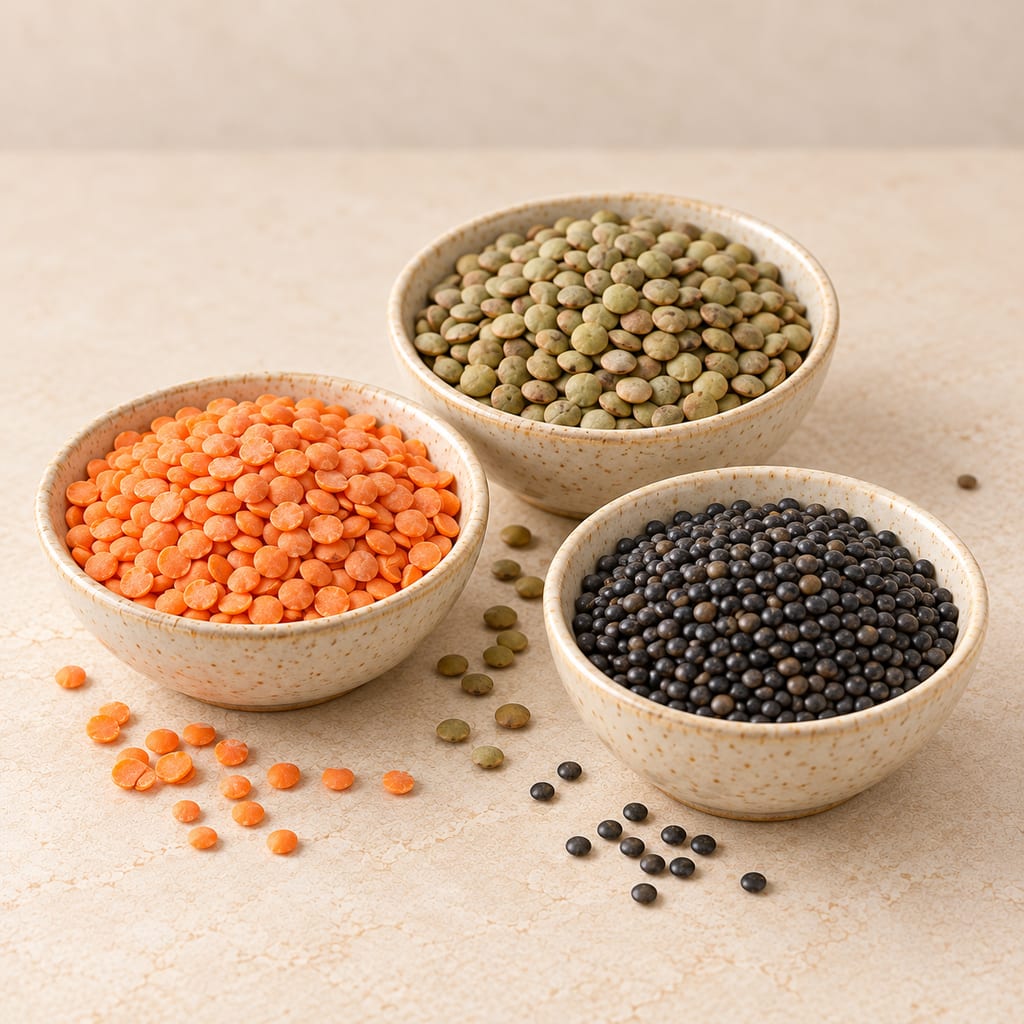
Lentils are the flat, lens-shaped seeds of Lens culinaris, a legume first cultivated in Southwest Asia 8,000 to 10,000 years ago. They are cooked whole, dehulled, split or milled into flour.

At North Abydos in Egypt, a fixed early Dynastic brewery comprised parallel semi-subterranean installations with rows of ceramic mash vats; excavation reports revise their number, scale and estimated batch capacity.
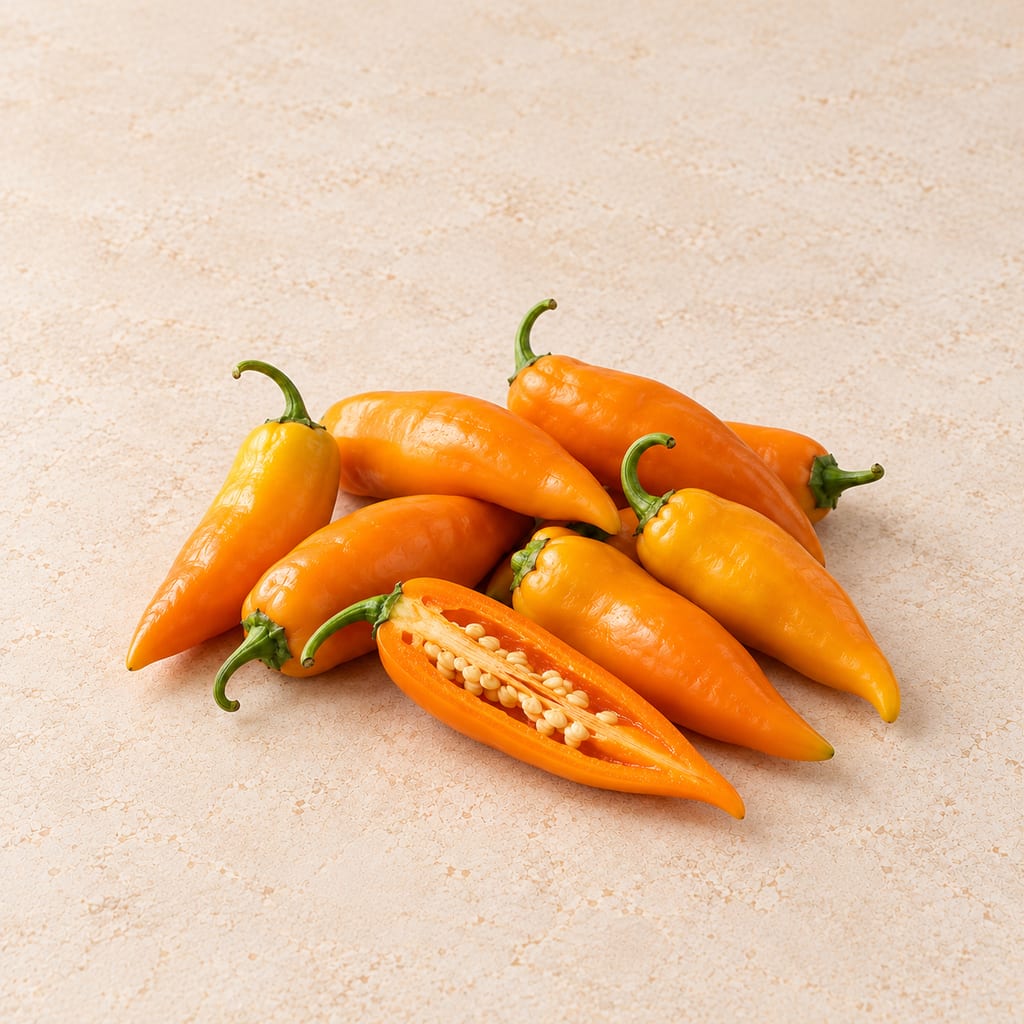
Ají amarillo is the orange-yellow Peruvian chilli cultivar group of Capsicum baccatum, used to colour and season huancaína sauce and ají de gallina. Published heat estimates do not establish one range for the named cultivar.

Toasted almonds are whole sweet almond kernels dry-roasted until golden to brown. Heat replaces their marzipan note with a roasted, nutty one; they thicken and flavour romesco.

Kodiak salmon, halibut and cod cut as seg'aq and hung on an initaq rack to become tamuuq, with kac'amaasaq and kupcuunaq named as different results.
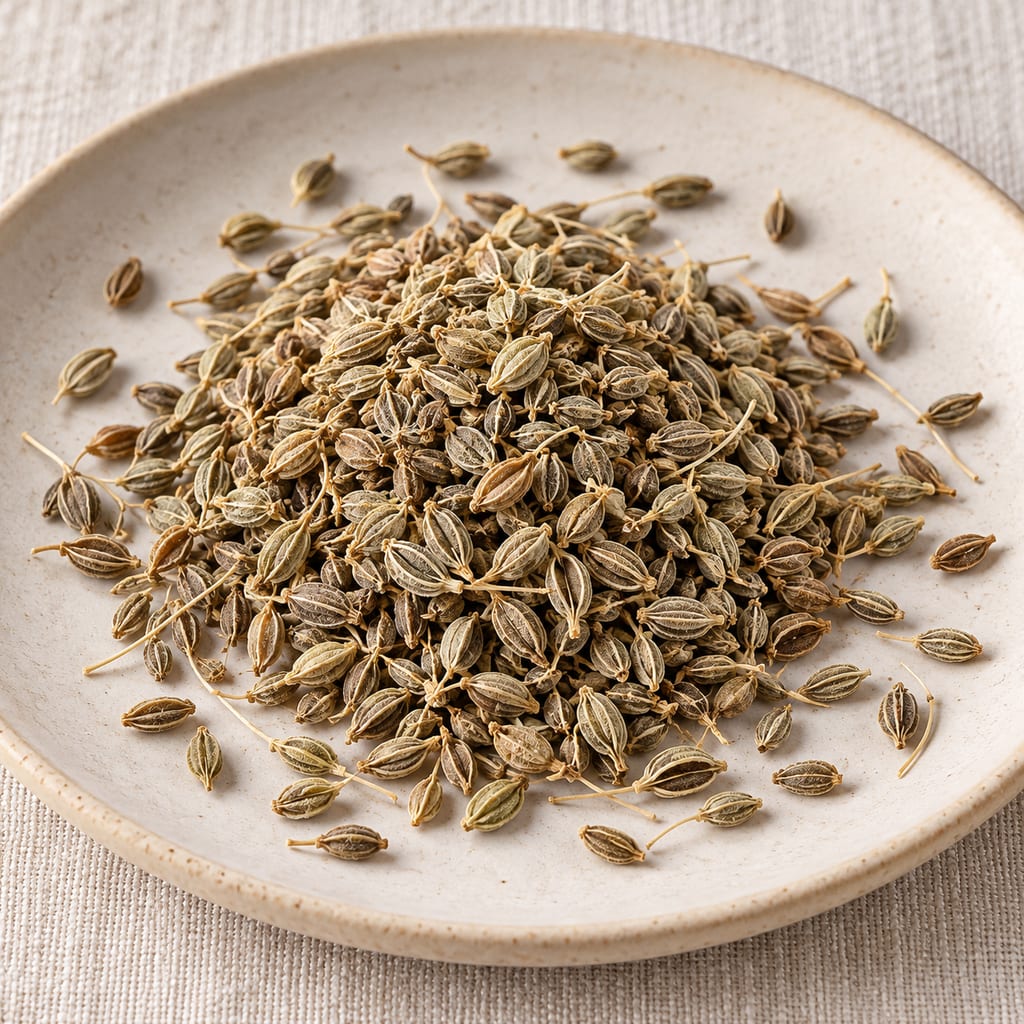
Aniseed is the dried ripe fruit of Pimpinella anisum, an aromatic Apiaceae spice commonly called a seed. It adds a sweet, warm aroma to breads such as Moroccan krachel and South African mosbolletjies, and is distinct from star anise.
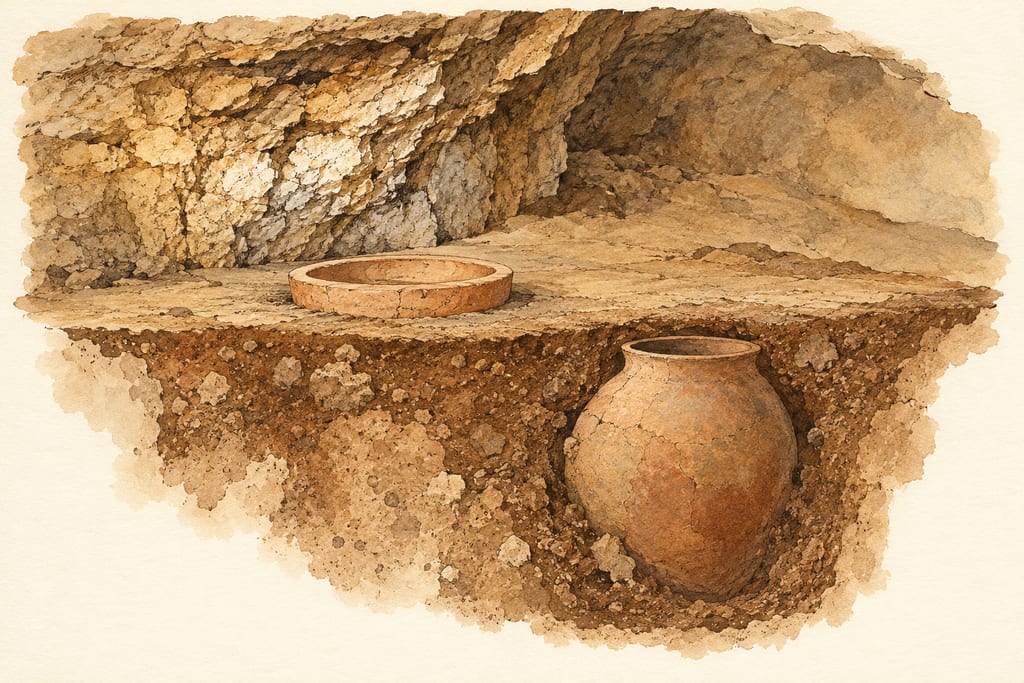
A fixed Late Chalcolithic installation in Areni-1 cave combined a shallow clay pressing basin with a large jar set into the cave floor and storage vessels nearby.

Ripe avocado flesh is the soft, buttery, fat-rich pulp of Persea americana, eaten raw. It is low in acid, so it is a fresh ingredient that needs care in chilled dishes.
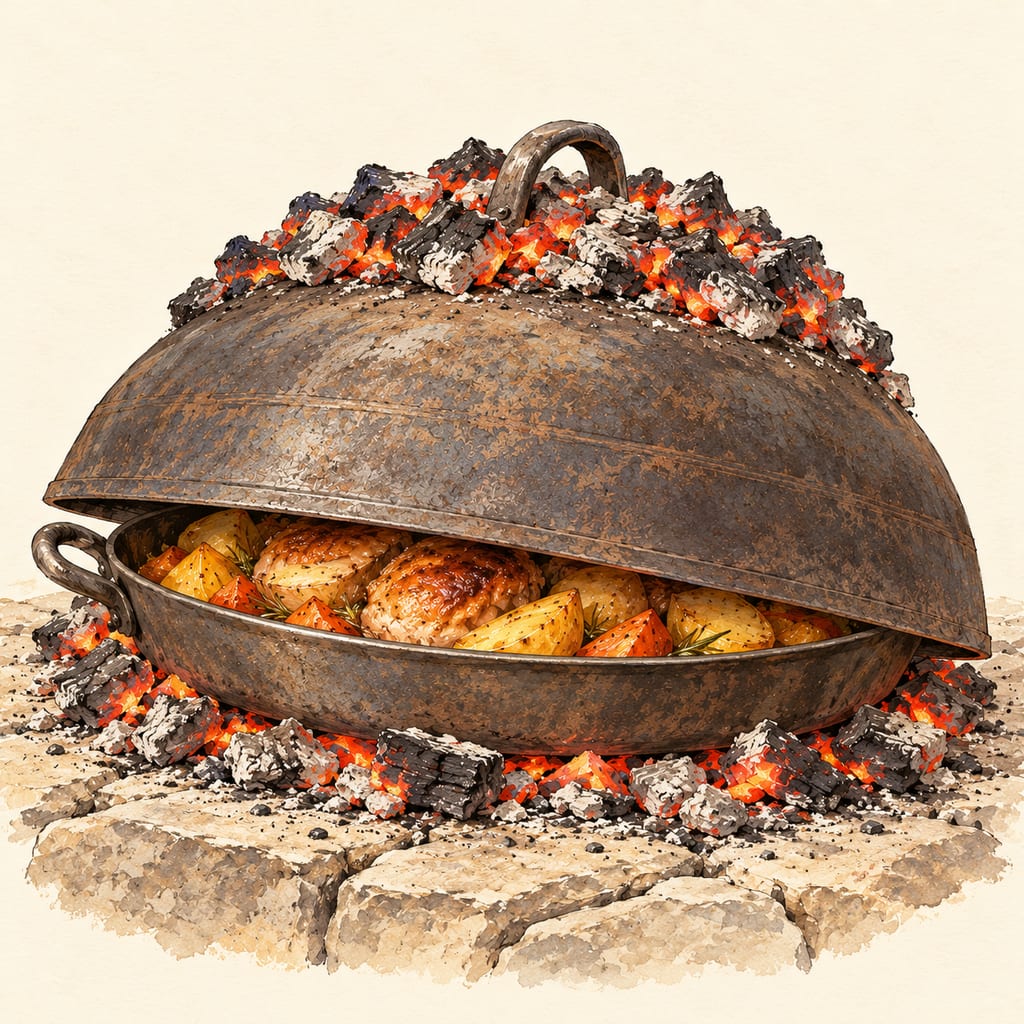
A portable dome and pan used over a hearth, with embers on the lid and heat from below. Regional peka and saç forms share this principle while differing in materials, pan shape and how the food is cooked.
No community contributions have been published for this entry yet.
Sign in to contribute. Published comments and photos are free to read.
Royal Botanic Gardens, KewIngredient context
Coriandrum sativum L.Coriandrum sativum is an annual in Apiaceae; its fruit structure and broad native-range account accompany uncertainty about its original cultivation history.
Cited in: The fruit inside the familiar name; A wide plant range, without one certain birthplace
Singapore National Parks BoardIngredient context
Coriandrum sativumCoriander’s schizocarp fruits, culinary leaves and roots, seed use in curry and cultivation in regional gardens.
Cited in: The fruit inside the familiar name; A wide plant range, without one certain birthplace; Growing for leaves or for ripe fruit; Why fruit and leaf smell different; Curries, legumes and sausage
LacusCurtius, University of Chicago; Walter M. Hill 1936 editionIngredient context
De Re Coquinaria, Book V, lentil preparations 183–184aThe translated lentil preparations distinguish green coriander from crushed coriander seed and combine the seed with chestnuts and other seasonings.
Cited in: Coriander in a Roman mortar; Curries, legumes and sausage
Project Gutenberg; John Bostock and H. T. Riley translationIngredient context
Natural History, Book XX.82The ancient account describes the reputation of Egyptian coriander.
Cited in: Coriander in a Roman mortar
Tamil Nadu Agricultural UniversityIngredient context
Horticulture: Spice Crops: CorianderTamil Nadu selections include Co 1, Co 2 and Co 3 and dual-purpose varieties; mature crops are harvested, dried, threshed and cleaned.
Cited in: Growing for leaves or for ripe fruit; Selection, climate and the buyer’s market
Government of Saskatchewan, Ministry of AgricultureIngredient context
CorianderRegional guidance distinguishes large- and small-fruited types, including CDC Major and CDC Minor, and explains harvest, grading, oil loss from splitting and storage of green material.
Cited in: Selection, climate and the buyer’s market; Crushing makes a different texture; Keeping the aroma in the packet
Chadwik Agro ExportIngredient context
Crushed Coriander SeedsThe supplier sells crushed coriander as coarse fruit fragments, distinct from whole fruits and fine powder.
Cited in: Crushing makes a different texture
Prabodh Satyal and William N. Setzer, Natural Product Communications, SAGEIngredient context
Chemical Compositions of Commercial Essential Oils From Coriandrum sativum Fruits and Aerial PartsThe measured commercial coriander fruit oils were dominated by linalool and differed in composition from oils made from aerial parts.
Cited in: Why fruit and leaf smell different
2 Guys & A CoolerIngredient context
Maltese SausageThe Maltese sausage formulation uses coarsely crushed coriander as seasoning alongside other aromatics and a separately added starter.
Cited in: Curries, legumes and sausage
Utah State University ExtensionIngredient context
Packaging Foods: Spices & SeasoningsSpice oils oxidize during storage, and airtight packaging helps preserve quality.
Cited in: Keeping the aroma in the packet
World Health Organization and Food and Agriculture OrganizationIngredient context
Microbiological hazards in spices and dried aromatic herbs: meeting reportSpices and dried aromatic herbs can carry pathogens and have been implicated in foodborne outbreaks.
Cited in: Safety, ingredients and places
U.S. Food and Drug AdministrationIngredient context
Questions & Answers on Improving the Safety of SpicesSpice safety depends on preventing and reducing contamination through appropriate processing and handling.
Cited in: Safety, ingredients and places
Luisa Brussino and colleagues, BMJ Case Reports, 2018Ingredient context
Beer anaphylaxis due to coriander as hidden allergenThe case report identifies coriander as the hidden allergen in a beer reaction and records a positive oral challenge with crushed coriander seed.
Cited in: Safety, ingredients and places