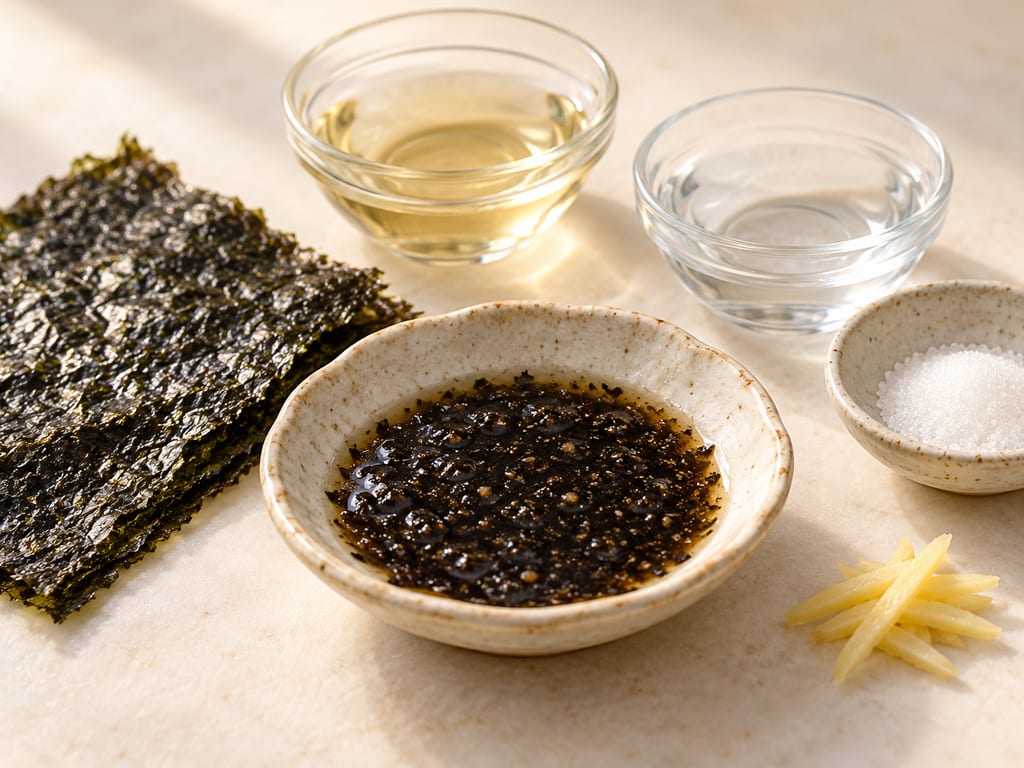
A non-fermented seaweed-and-vinegar dressing
A fresh condiment in which crumbled nori softens in lightly sweetened vinegar and water. It is not vinegar fermented from seaweed.
 FermenteaWhere food goes to change
Sawce Noyre · Sawce Noyre for mallard · Sawce Noyre for Capons y rosted · Sawse noire
Two dark sauces from The Forme of Cury, about 1390: one for mallard from bread and boiled blood, the other for roast capon from liver, bread and spices. Both are historical preparations.
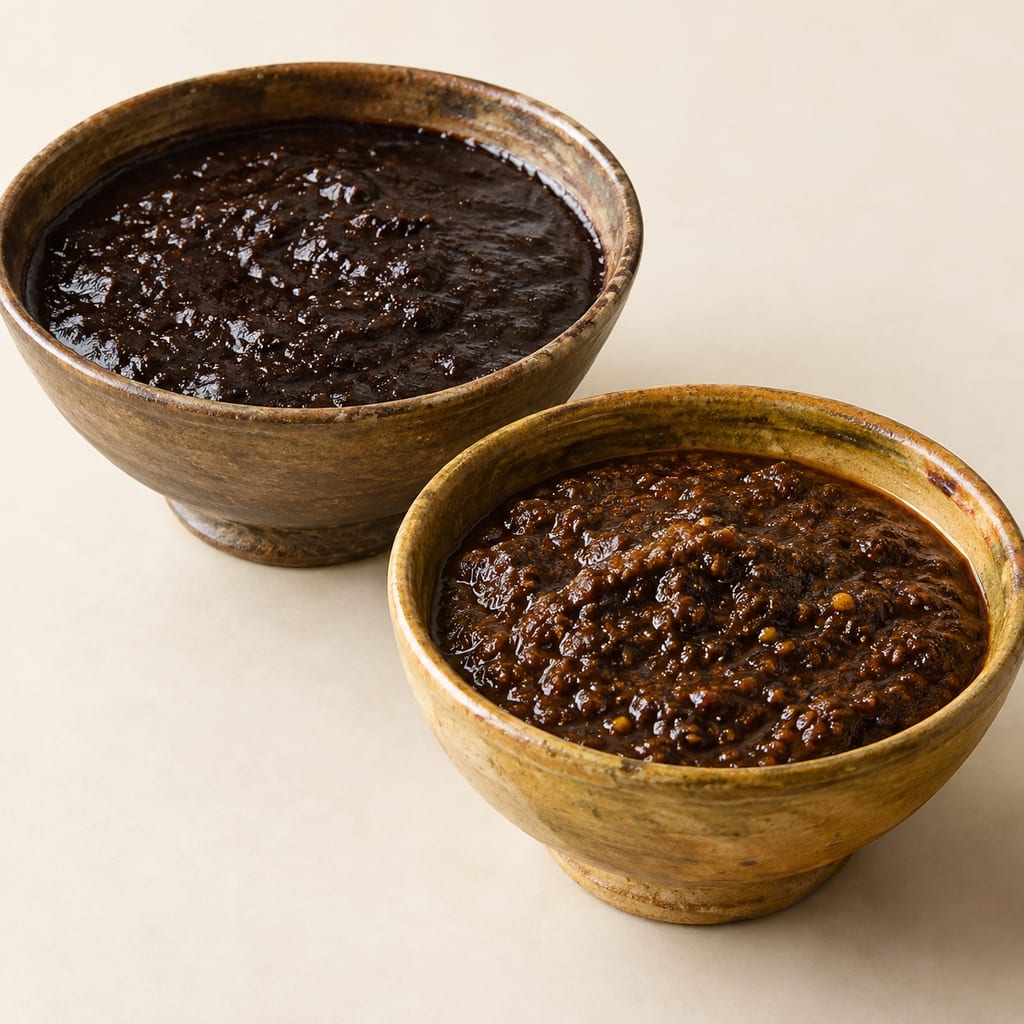
Sawse noire is a dark sauce, coloured by blood or liver. The Forme of Cury gives two versions, one for mallard and one for roast capon, and the two differ in their main ingredient and in how the mixture is strained or ground.
Both are boiled before serving and are served with the bird they were made for. They are historical preparations, not a single sauce with two names.
In the mallard version, bread thickens the blood and vinegar sharpens it, and straining through a cloth removes the coarse material. In the capon version, the liver gives body and the spices give warmth, and verjuice replaces the vinegar.
The record gives no quantities, so the balance of blood or liver to bread and acid is not known. Raw blood and liver are not ingredients a modern kitchen should handle without current food-safety guidance.
The method names no temperatures, timings or holding conditions. Its boiling step is the only heat treatment in the text as read.
Historical inclusion does not endorse recreating the raw materials or the holding practices of the period. No preserving process is established, and no safety claim is made for either sauce.
Both sauces are recorded in The Forme of Cury, an English recipe collection compiled about 1390 and attributed to the master cooks of King Richard II.
Blood and liver are raw materials with food-safety requirements. The historical method does not establish how they were handled, and no safety claim is made here. Do not treat the medieval practice as a present-day instruction.
No source in this record establishes a place.
A fresh condiment in which crumbled nori softens in lightly sweetened vinegar and water. It is not vinegar fermented from seaweed.
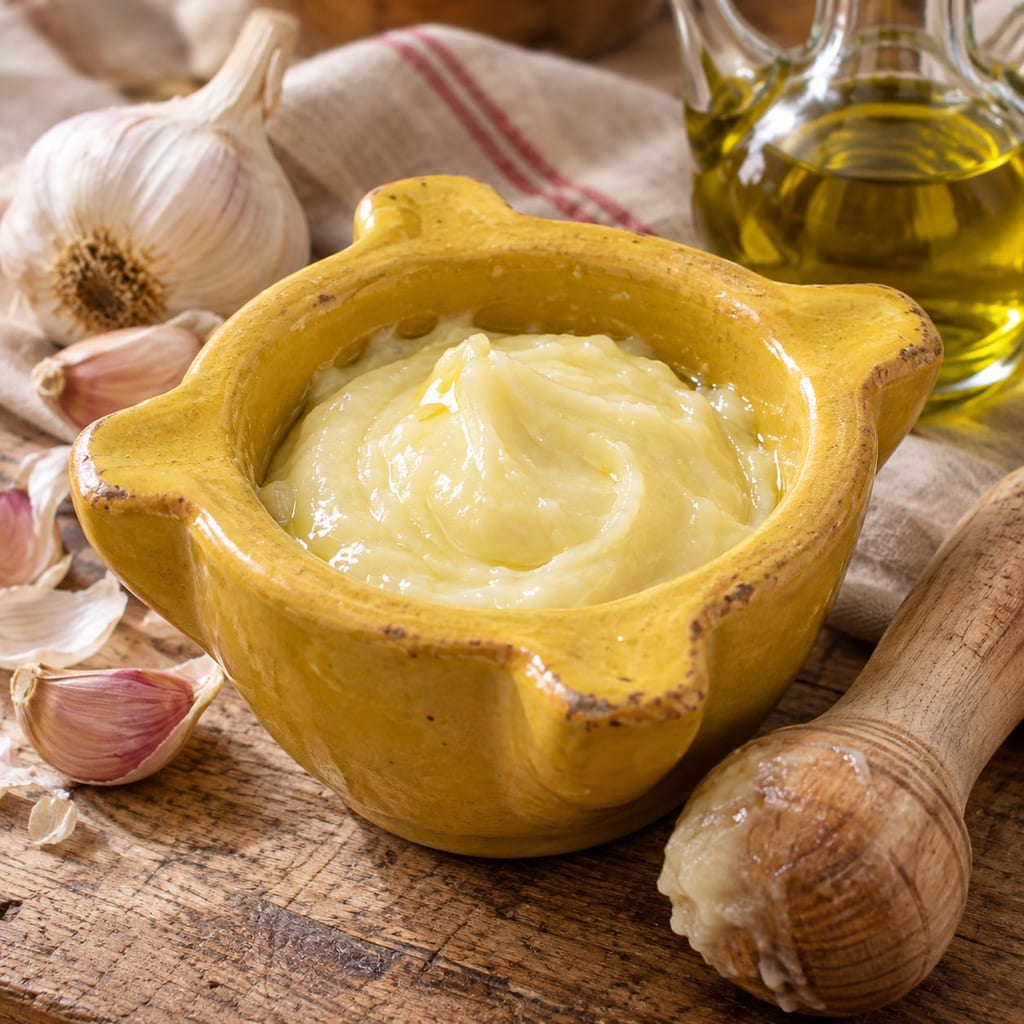
Traditional Catalan allioli is a dense emulsion of garlic, olive oil and salt made slowly in a mortar. This measured Barcelona-style version keeps egg-based garlic mayonnaise distinct.
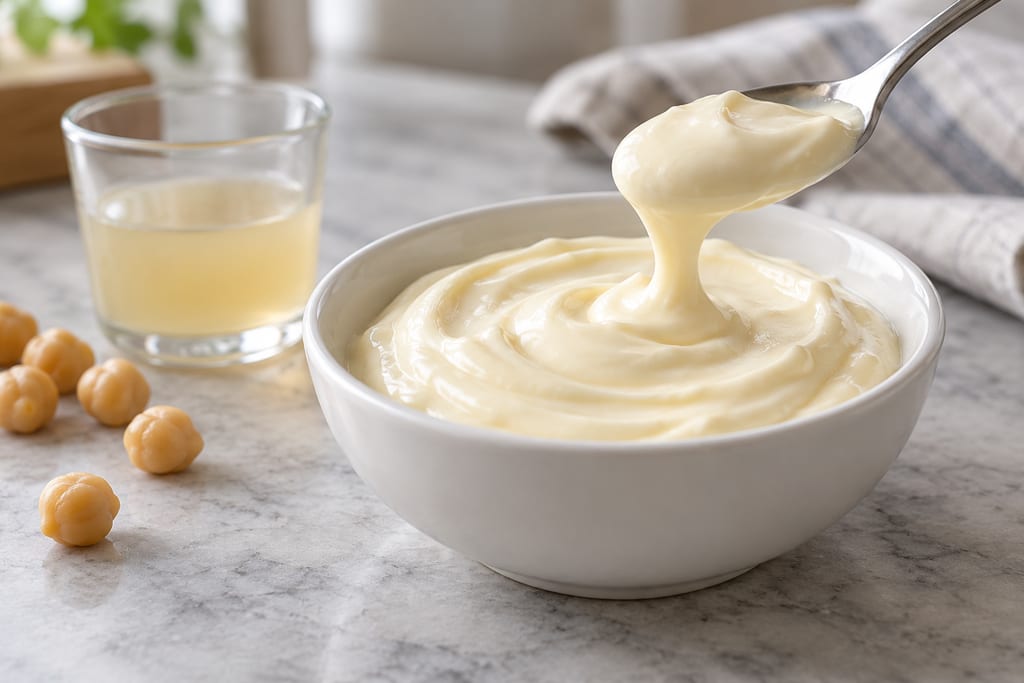
An eggless, untested emulsion made with canned chickpea liquid. Nominal yield 255 g.
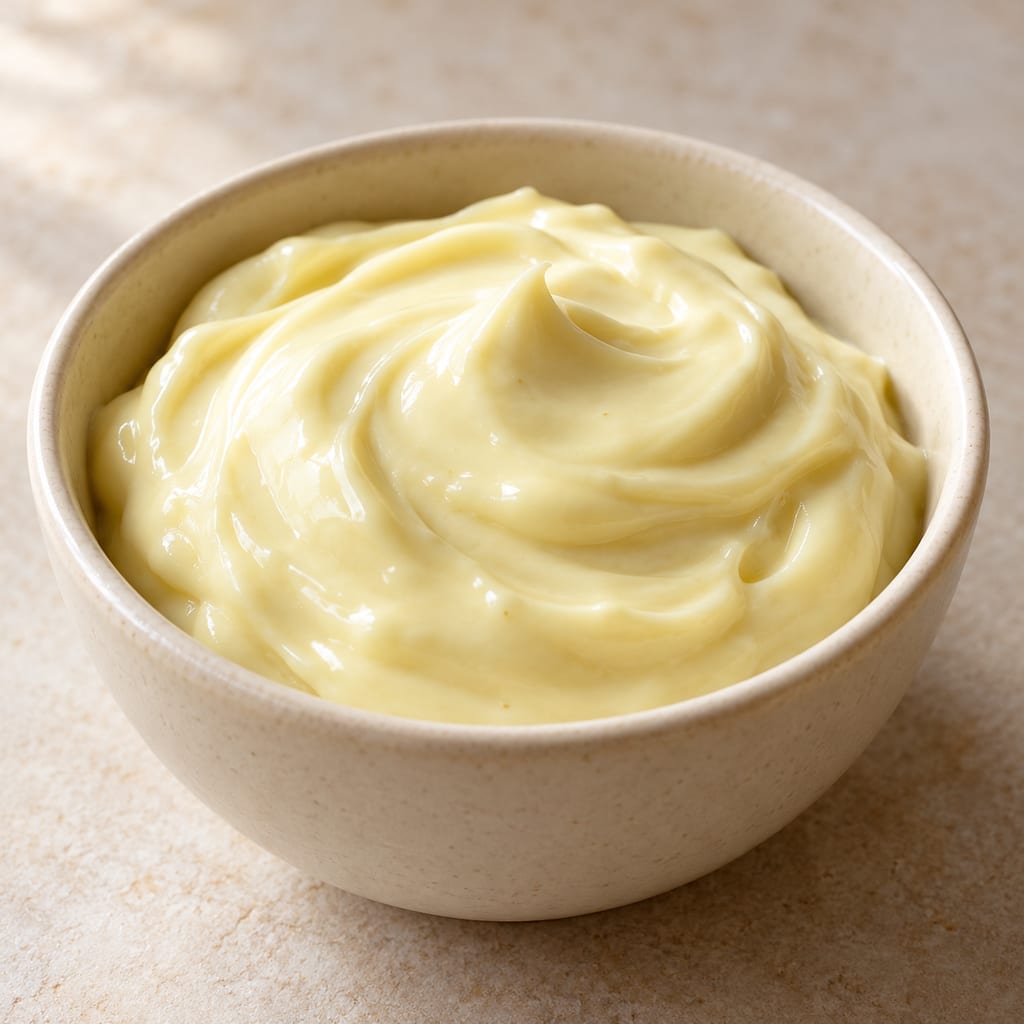
Avocado-oil mayonnaise is an ordinary egg-and-oil emulsion in which avocado oil supplies the oil phase. The oil changes flavour and colour, and it does not preserve the sauce.

Bechamel is a white sauce of milk thickened with a butter and flour roux, one of the French mother sauces, and the base from which Mornay and other cheese and cream sauces are made.
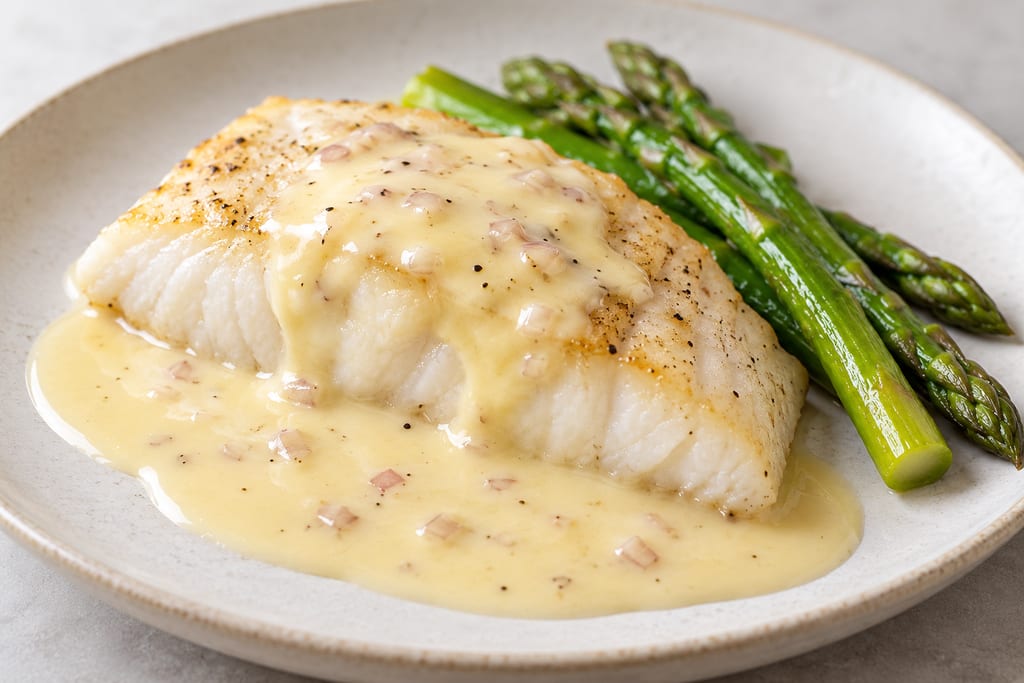
Beurre blanc is a warm emulsion of cold butter whisked into a reduction of white wine, vinegar or lemon juice and shallot, a sauce from the Loire Valley and its red-wine version, beurre rouge.
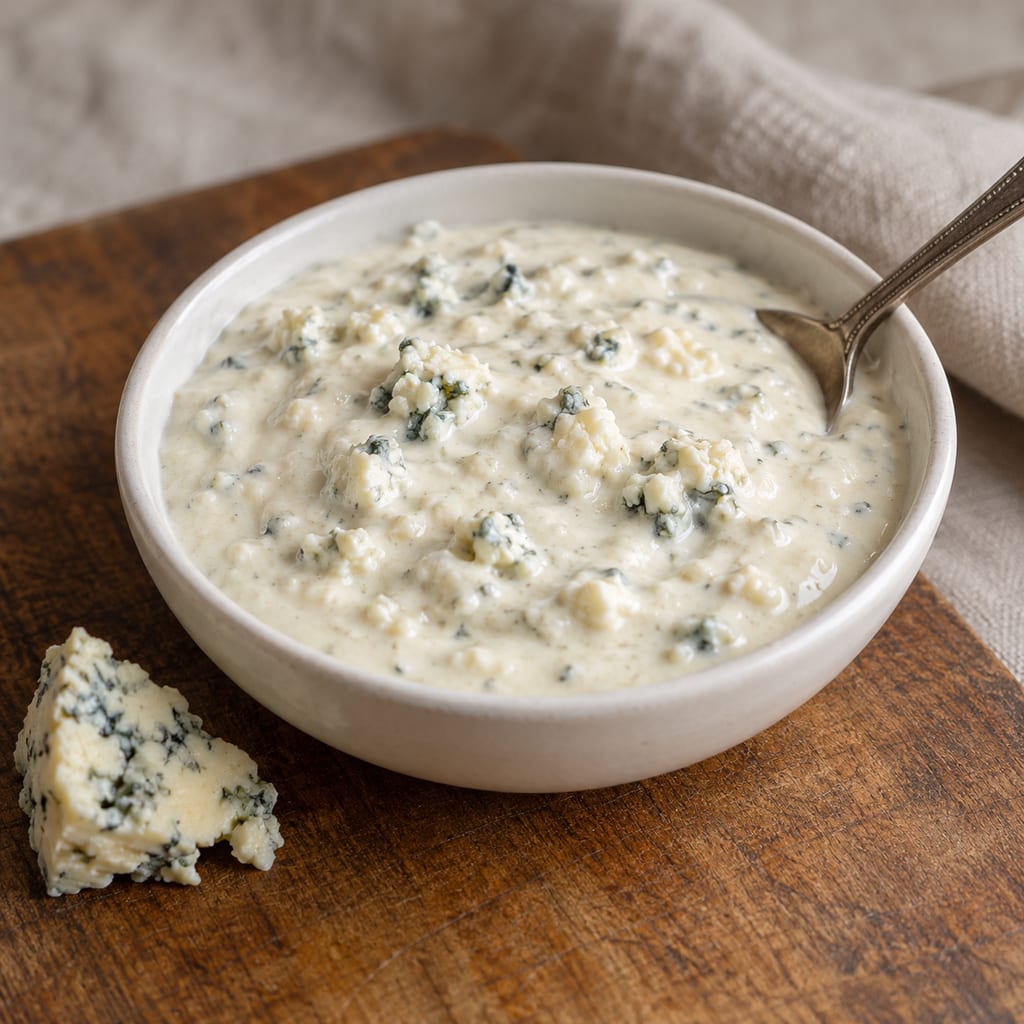
Blue cheese dressing is a creamy dressing built on crumbled blue cheese mashed into buttermilk, with sour cream, mayonnaise, vinegar and seasoning, and kept cold for up to two weeks.
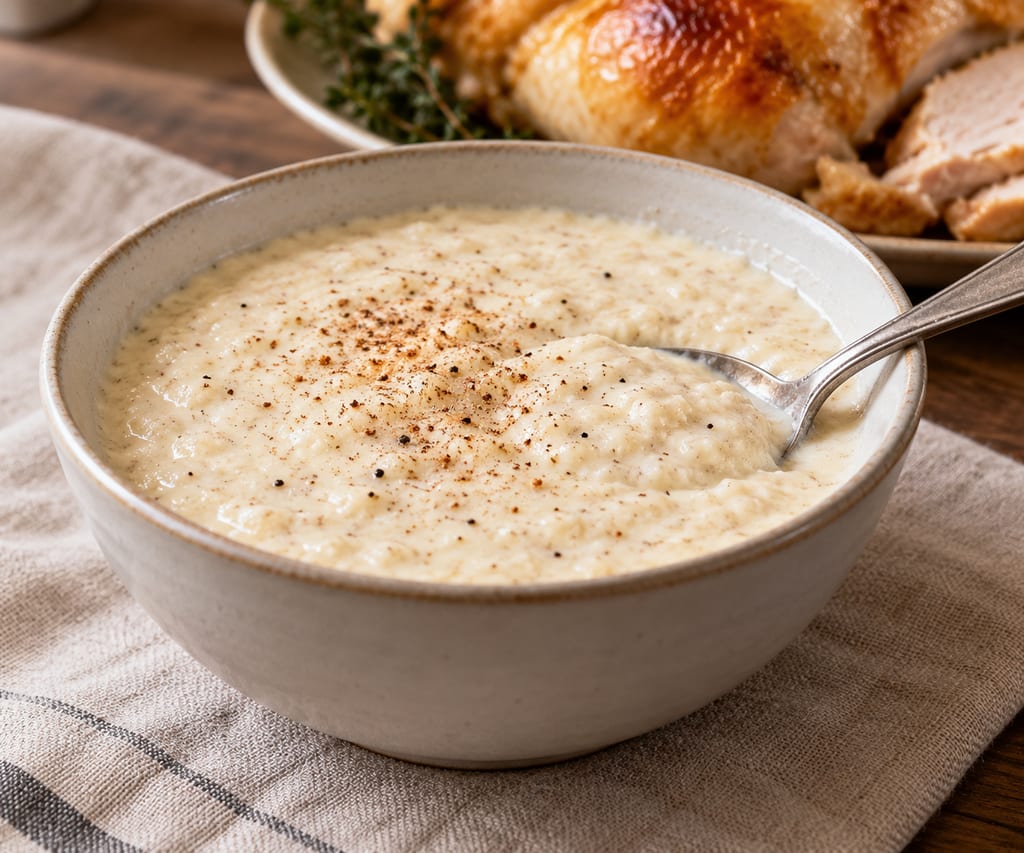
Bread sauce is a British sauce of milk infused with onion, clove and bay, thickened with stale breadcrumbs and finished with butter, served with roast chicken or turkey.

Protected Italian vinegar made only from cooked grape must, fermented and aged in a battery of wooden barrels for at least 12 years: sweet, sharp and syrupy.
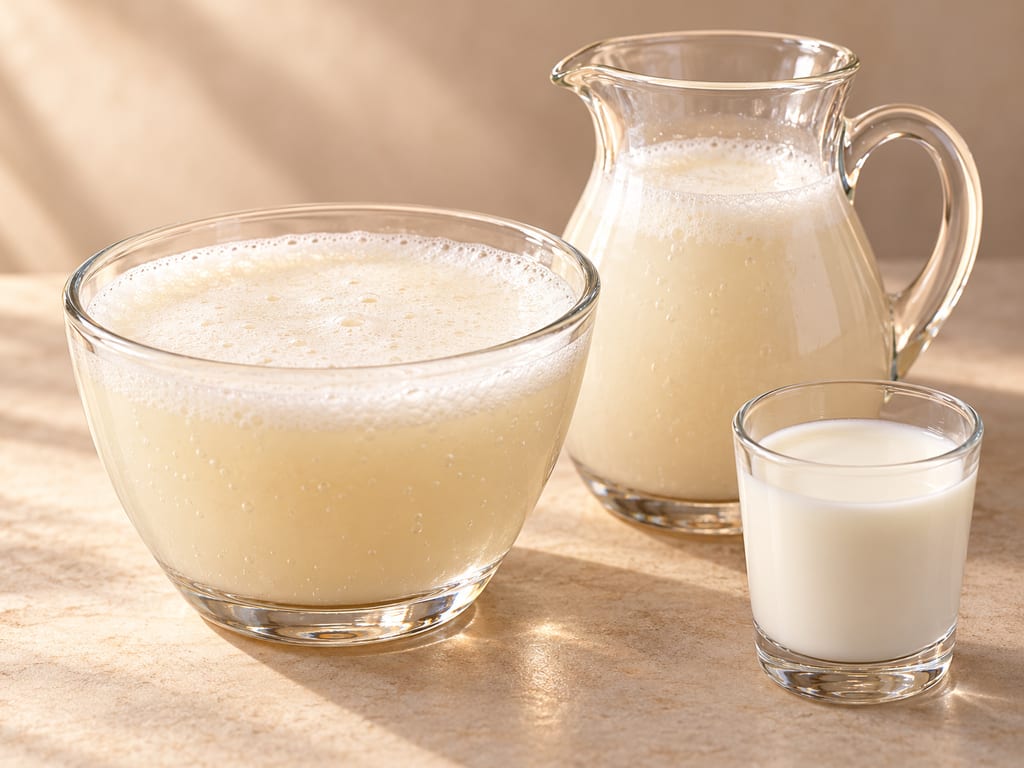
Airag is Mongolia’s fermented mare’s-milk drink, traditionally churned with saved starter in a reusable cowhide khokhuur.

Appam, or hoppers, are South Indian and Sri Lankan rice pancakes made from a fermented coconut-and-rice batter and cooked in a curved pan to a crisp lacy rim and a soft, spongy centre.
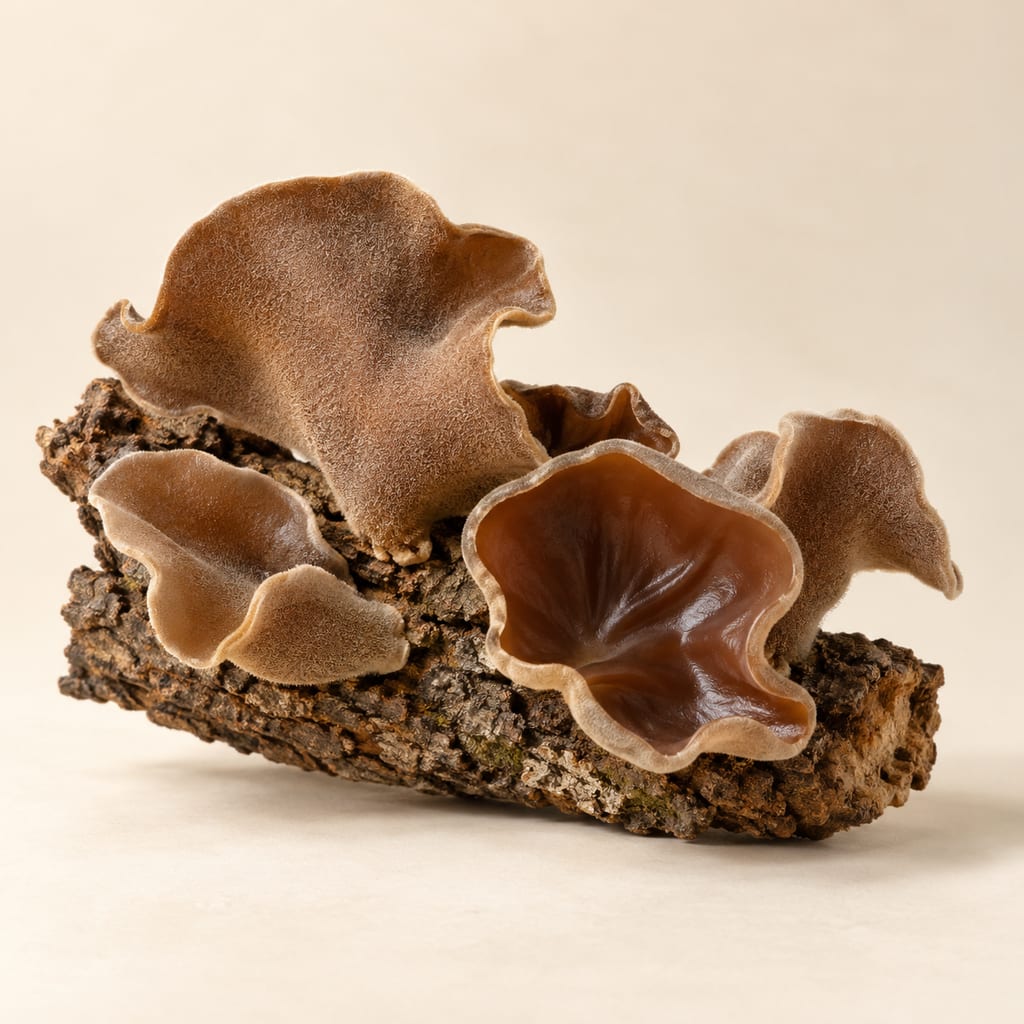
Auricularia tremellosa is a wood ear fungus of the genus that supplies most dried wood ear sold in China; its own food record is thin, and the culinary practice described here comes from the closely related wood ear species.
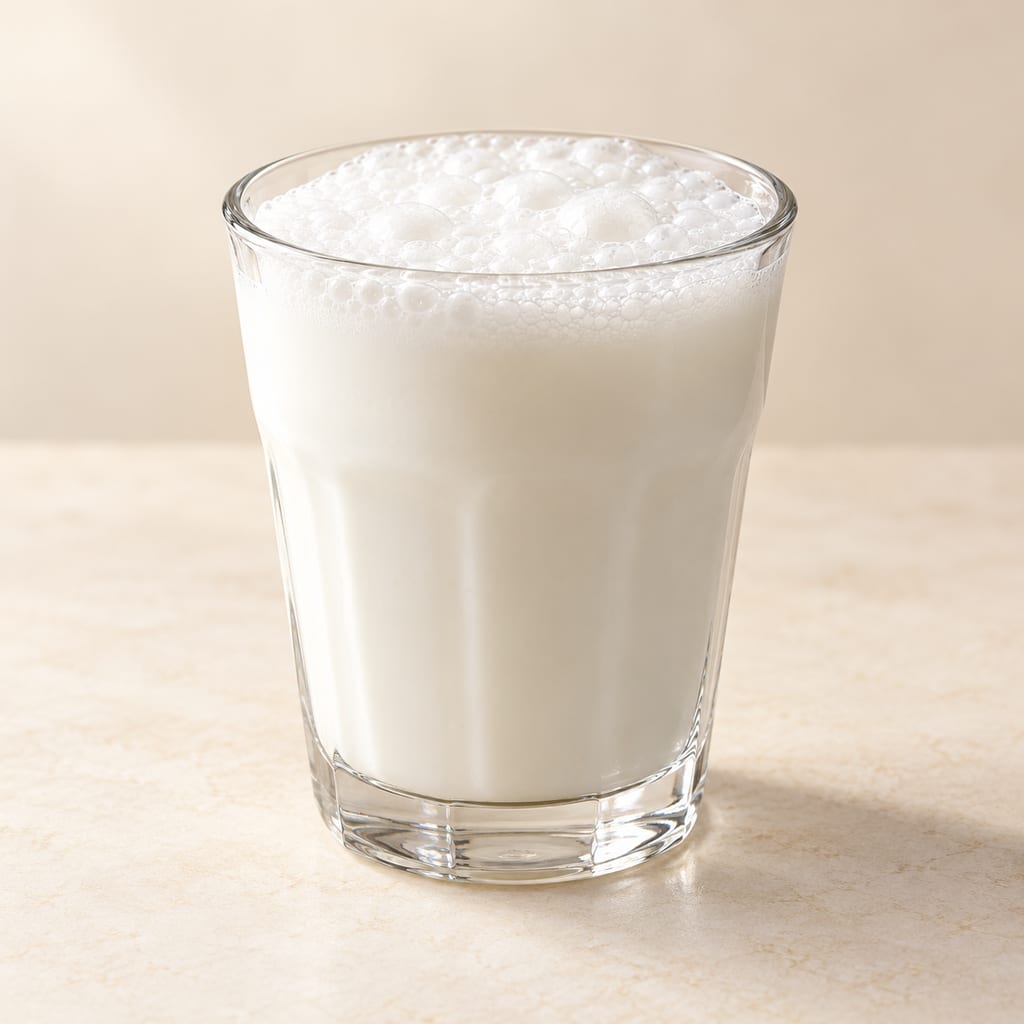
Ayran is Turkey’s cold, savoury yogurt drink: plain yogurt is loosened with water and lightly salted, then whisked smooth or aerated into a soft cap of foam.
A thin stone griddle used over an open hearth. Norwegian archaeology documents the established tradition from the early Middle Ages; a Viking-period origin is only a cautious suggestion linked to Shetland.

Crushed or milled barley cooked in water until the starch softens and the mixture thickens, the plainest way a northern household turned stored grain into a meal, here with apple and hazelnut.

Black carrot is the anthocyanin-pigmented Eastern carrot (Daucus carota var. atrorubens), the purple root that preceded orange types and still colours kanji and şalgam.
No community contributions have been published for this entry yet.
Sign in to contribute. Published comments and photos are free to read.
Project GutenbergHistory · Method · Safety
The Forme of Cury: A Roll of Ancient English Cookery Compiled, about A.D. 1390For mallard, bread and boiled blood are ground, strained through a cloth with vinegar, and seasoned with ginger, pepper, the mallard's grease and salt, then boiled (XX.VII.I).
For roasted capon, a capon's liver, anise, grains of paradise, ginger, cinnamon and a little bread crust are ground fine with verjuice and capon grease, then boiled (XX.VI.XVII).
The collection is attributed to the master cooks of King Richard II and dated about 1390.
Cited in: What the sauce was; Why the ingredients matter; Reading the record