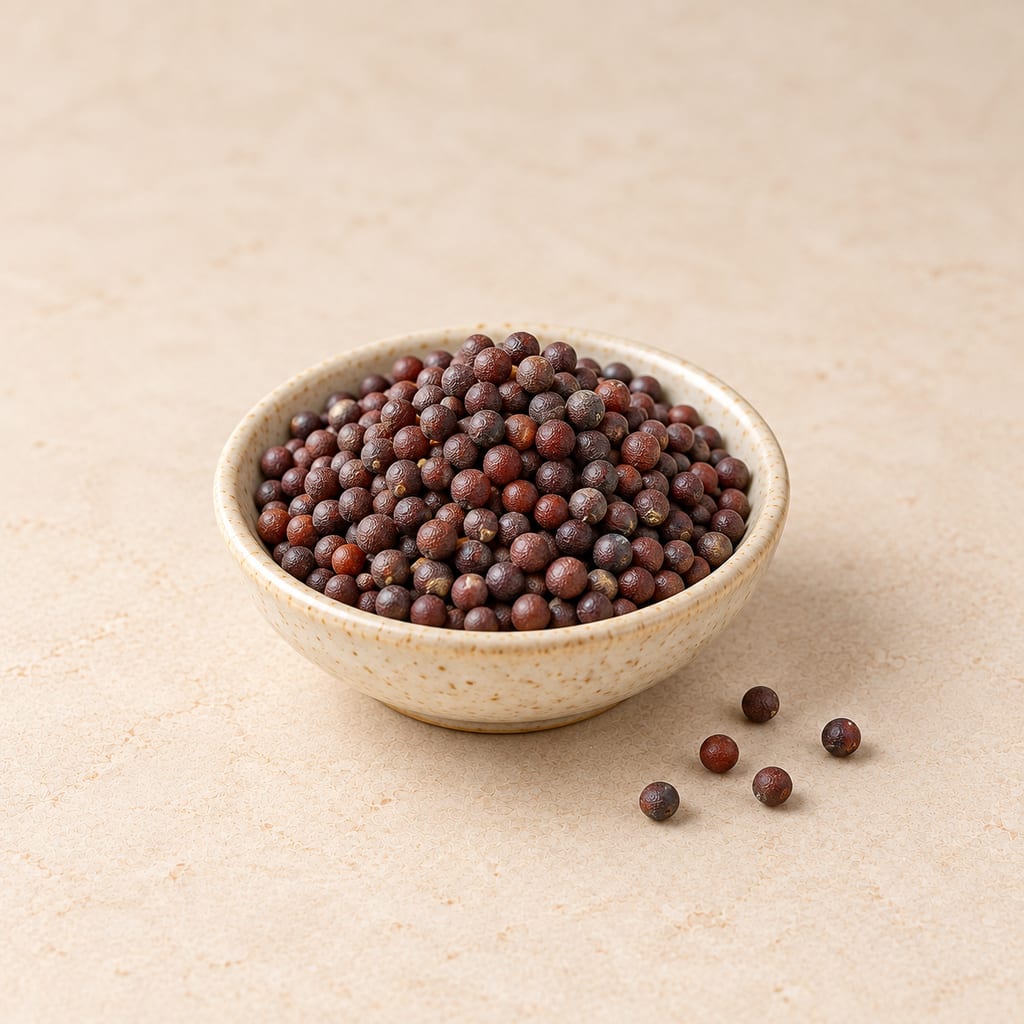
Black mustard seed
Black mustard seed is the small, dark, very pungent seed of Brassica nigra, the hottest of the three mustards. It gives its bite through sinigrin, which turns into allyl isothiocyanate when the crushed seed meets water.
 FermenteaWhere food goes to change
Acids
Verjuice is the sharp juice pressed from unripe grapes, and sometimes from crab apples or other sour fruit. Medieval cooks used it where later kitchens reached for vinegar or lemon.
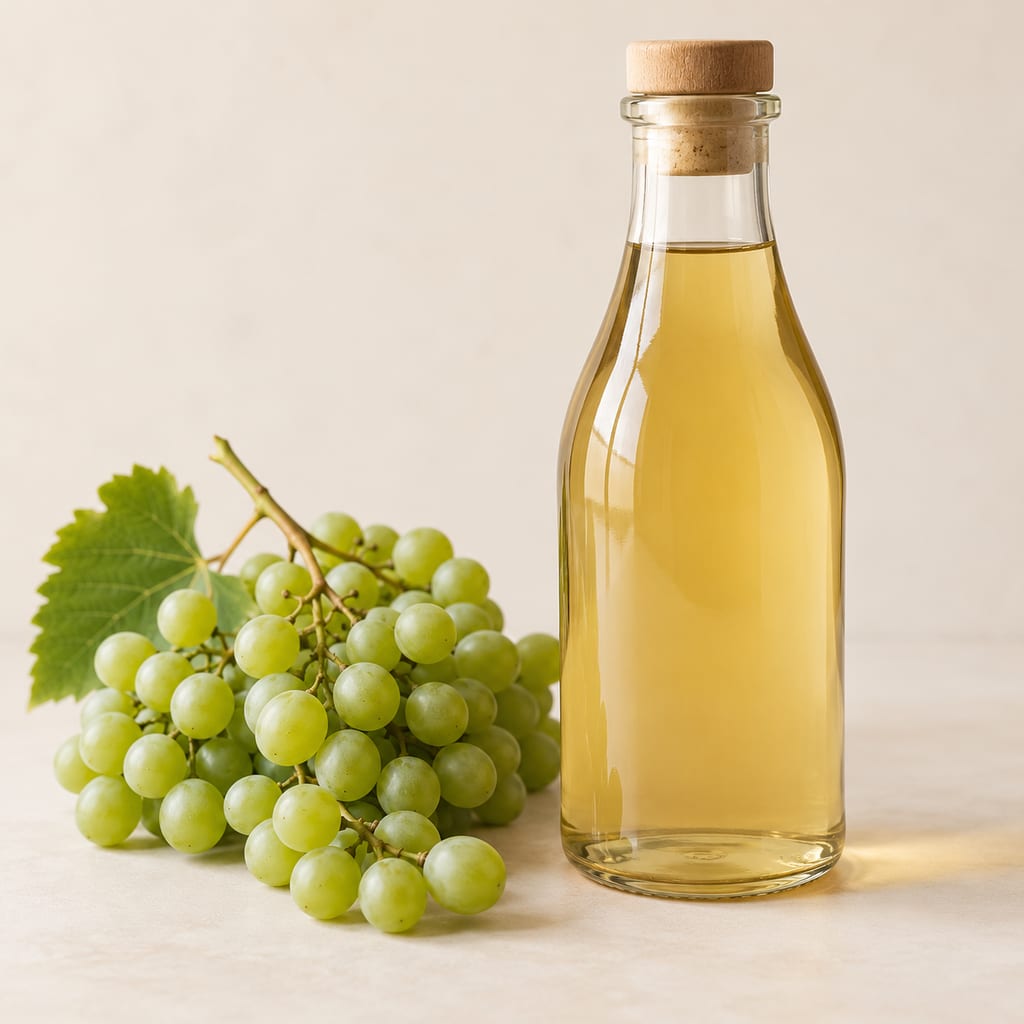
Verjuice is a highly acidic juice made by pressing unripe fruit, most often grapes. Crab apples and other sour fruit were also pressed for it, and in medieval and early modern English cookery texts the word sometimes means apple or crab-apple juice. The English word comes from the French verjus, which derives from Middle French vert jus, green juice. The name describes the whole method: the fruit is green, so the juice is green too, and sour.
The juice is pressed, not fermented. The sources that describe it treat it as a raw sour liquid, and the Coquinaria account keeps it apart from must, the fermenting grape juice that is available only briefly after pressing. Verjuice is used as a sour seasoning, much as a cook uses vinegar or citrus, and the sources do not describe it as a fermented or cultured product.
Sources describe two colours. White verjuice ranges from light and mild to tangy and sharp; red verjuice ranges from gentle and floral to rich and hearty. In the home batch described by Coquinaria the result was sour, cloudy and still recognisably grapey, and the photograph of a finished glass shows a pale green liquid.
The same juice carries many names. Verjus and verjuis are used in French, Dutch, German, Spanish, Swedish, Finnish, Czech, Hungarian and several other languages. Italian uses agresto, Catalan agràs, Portuguese agraço and Azerbaijani abqora. Arabic has husroum (حصرم), the word for unripe grapes, and Persian uses ab-ghooreh (آبغوره), which has the same sense. Turkish calls it koruk suyu, and Chinese uses 酸葡萄汁, sour grape juice. Japanese, Korean and several other languages have borrowed the French word in local script.
The names show where the juice travelled. Its Persian and Arabic names are built on the unripe grape, and its European names on the sour juice or on the green colour, so each name points back to the same raw material.
Verjus was widely used across Western Europe in sauces, as a condiment and for deglazing. The recipes show it as a sour acid for sauces and for vegetable dishes, chosen where a cook wanted sharpness.
The texts show how the juice was treated across the centuries. The Ménagier de Paris, a fourteenth-century household book, gives a recipe for a summer verjuice, vertjus d'ozeille, in which old white verjuice replaces vinegar and wine. The same book advises blending old and new verjuice, because new juice from July is still very green. The Middle Dutch manuscript KANTL Gent 15.1 holds an older version of the summer recipe. Gheeraert Vorselman's cookbook, published in Antwerp in 1560, gives a summer recipe built on sorrel, parsley, wine and vinegar, with vine leaves as a substitute, and a winter recipe made from grape must, roasted salt and unripe medlars. Carolus Battus's Medecynboec, printed in Dordrecht in 1593, gives a winter verjuice in which the juice is boiled and unroasted salt is used to preserve it.
The juice fell out of use in the seventeenth and later centuries and returned in the twentieth. The Latin writers also mention it. Pliny the Elder discusses the timing of grape picking, and the fifteenth-century humanist Platina quotes Macrobius, who said that vinegar was sharper than verjuice.
Verjuice depends on picking fruit before it ripens and colours. Pliny's Naturalis Historiae says the grapes should be about the size of chickpeas and picked before the dog days, after 6 July. The Ménagier points to a similar early harvest around July. A Florilegium discussion cited by Coquinaria suggests picking between early August and early September, a little later than those medieval texts,. The sources give these dates for the early harvest without stating the chemistry behind them.
The grape variety also mattered. The Gouais grape was praised for verjuice, and its DNA appears in later varieties such as Chardonnay, which came from crossing it with Pinot. The sources do not give a single correct variety, and the choice of grape changes the juice's colour and sharpness.
Medlars were a documented addition in one winter recipe. A medlar is inedible until it softens through decay, and Vorselman suggests adding it to the must to improve flavour and keeping. The sources record the suggestion rather than a tested result, so this page does not treat it as a standard step.
Verjuice mellows with age, and it does not keep indefinitely. Medieval cooks dealt with this by making a fresh batch when the old stock ran out. The Ménagier records a summer verjuice for that purpose, and it advises mixing old and new juice rather than using either alone. When old verjuice was not available, the sources list vinegar, gooseberry juice, lemon juice and rose water as substitutes. The Coquinaria author suggests apple vinegar as the closest substitute in northwest Europe, where verjuice was probably made from apples.
Salt appears in the historical methods, and the sources differ on it. Vorselman's winter verjuice uses roasted salt. Battus uses unroasted salt and boils the juice to preserve it. The home batch described by the Coquinaria author was salted with roasted sea salt, covered and left for about a day and a half, then filtered and frozen in ice-cube trays. That account describes one batch by one cook. It is not a validated preservation method, and the sources do not give a safe storage time or a salt level that makes the juice safe to keep. No source here gives a safe storage time for home-made verjuice, so the home batch should not be read as a validated method.
The sources also disagree with popular accounts. A food-history blog places verjuice in Roman times under the name acresta, meaning acrid, and gives 71 CE as the oldest reference. This page does not rely on that blog, because the date was not confirmed against a scholarly source. The Roman and classical details here come from the Pliny and Macrobius passages cited above.
Verjuice fell out of use in Western kitchens for centuries. Its modern revival began in South Australia. The cook and food writer Maggie Beer started commercial production in 1984, after a harvest of Rhine Riesling grapes could not be sold. National sales were slow at first, and international markets opened about fifteen years later. In 2015 the Niagara Oast House Brewers in Ontario released a farmhouse ale made with local Niagara Pinot Noir verjus.
Cooks now use verjuice most often in salad dressings where wine will be served with the salad, because it adds sourness without changing the taste of the wine. Some people drink it with sparkling water and ice. In the Middle East it is used in Lebanese, Syrian and Persian cooking. Coquinaria reports that Iranian traditional medicine holds it to have medicinal properties and to help diagnose illness. The page presents this as a belief and does not evaluate it.
France has a specific documented use. In 1856 Jean Naigeon of Dijon replaced the vinegar in prepared mustard with verjuice, which established the modern form of Dijon mustard.
The sources do not give a production standard, a measured acidity, a shelf life or a validated method for keeping verjuice. They do not name the specific acids that make it sharp, so this page does not name them. The medieval recipes give measures and procedures that differ between texts, and this page does not combine them into a single formula. The meaning of verjuice in English texts is not always grapes; a reader of an early English recipe should check whether the source means apple juice.
Documented as a common sauce acid across Western Europe in medieval and Renaissance cookery; the country-level sources do not give a single place of origin.
Documented use: Jean Naigeon replaced vinegar with verjuice in prepared mustard in 1856.
Documented in Lebanese, Syrian and Persian cooking; the source reports the medicinal belief as part of Iranian traditional medicine without evaluating it.
Modern commercial production began here in 1984 with Maggie Beer.
Black mustard seed is the small, dark, very pungent seed of Brassica nigra, the hottest of the three mustards. It gives its bite through sinigrin, which turns into allyl isothiocyanate when the crushed seed meets water.
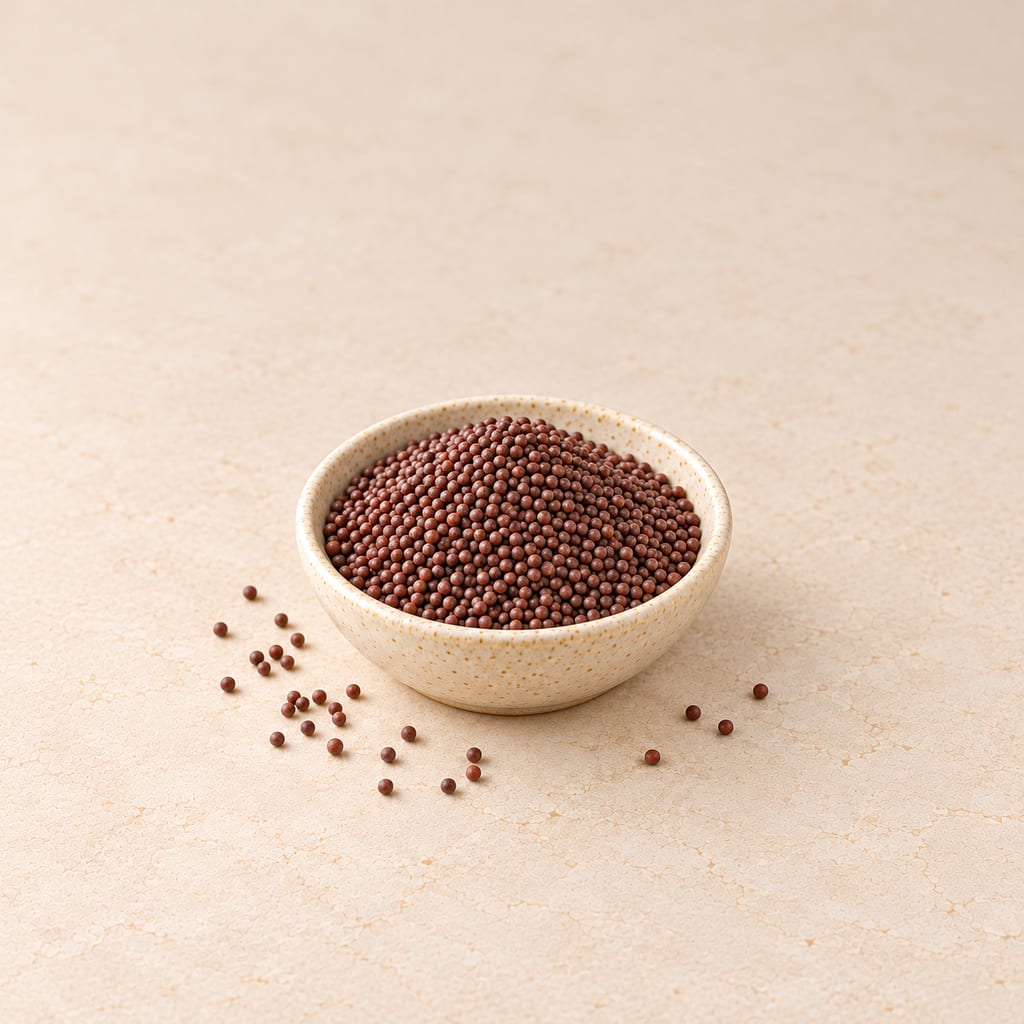
Brown or oriental mustard seed comes from Brassica juncea, a hybrid of black mustard and turnip rape. It is the hot, easily harvested seed behind Dijon, spicy brown mustards and much of the mustard oil of the Indian subcontinent.

Protected Italian vinegar made only from cooked grape must, fermented and aged in a battery of wooden barrels for at least 12 years: sweet, sharp and syrupy.
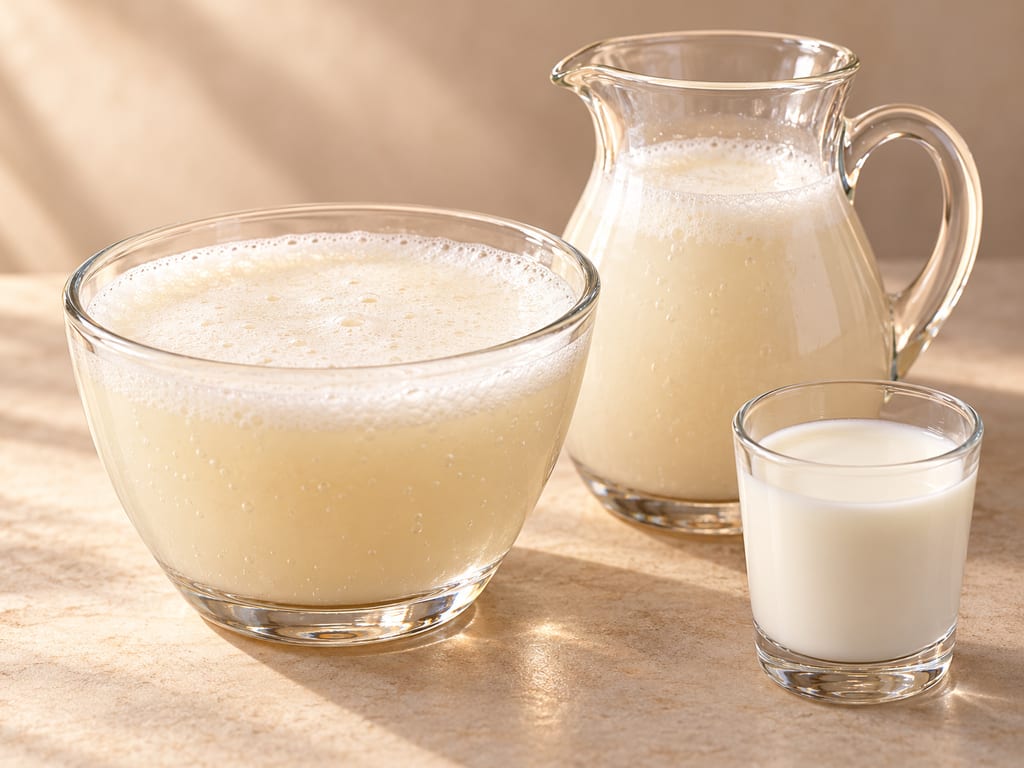
Airag is Mongolia’s fermented mare’s-milk drink, traditionally churned with saved starter in a reusable cowhide khokhuur.

Appam, or hoppers, are South Indian and Sri Lankan rice pancakes made from a fermented coconut-and-rice batter and cooked in a curved pan to a crisp lacy rim and a soft, spongy centre.
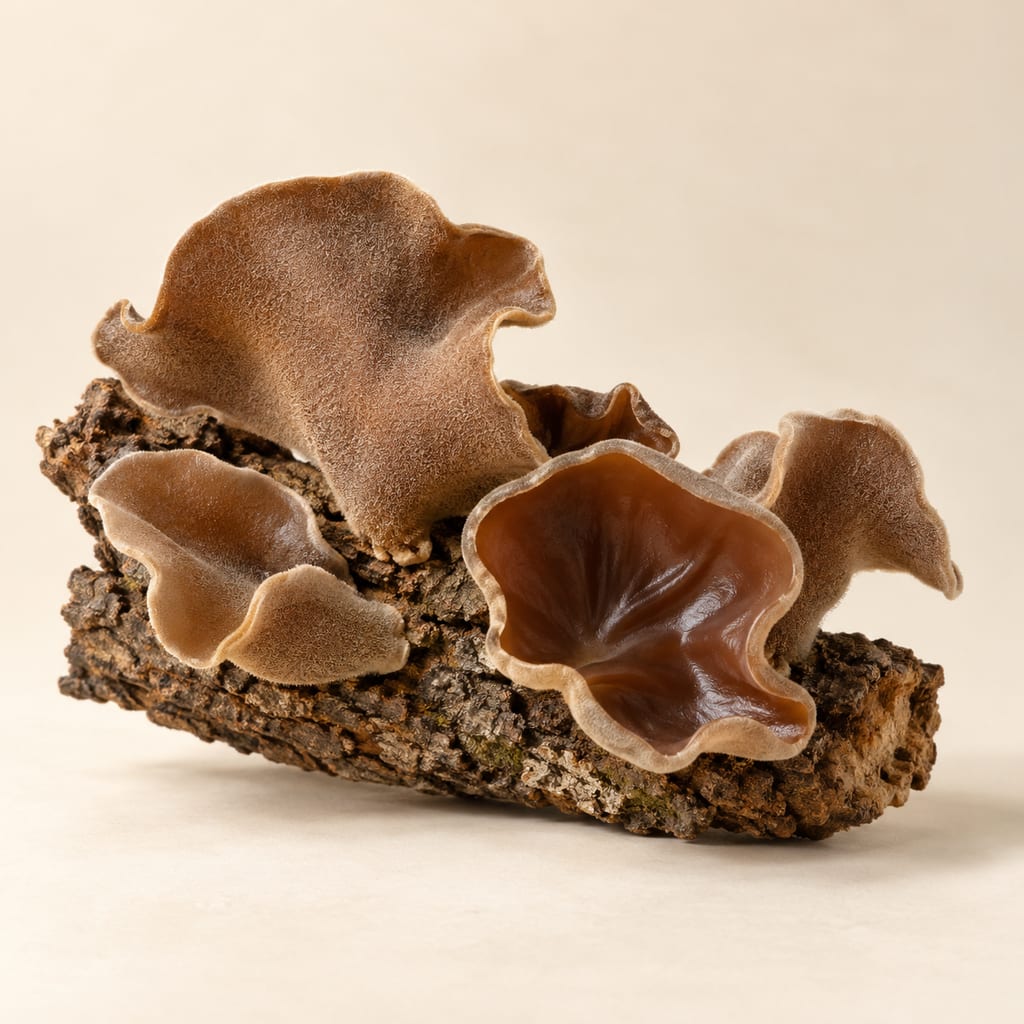
Auricularia tremellosa is a wood ear fungus of the genus that supplies most dried wood ear sold in China; its own food record is thin, and the culinary practice described here comes from the closely related wood ear species.
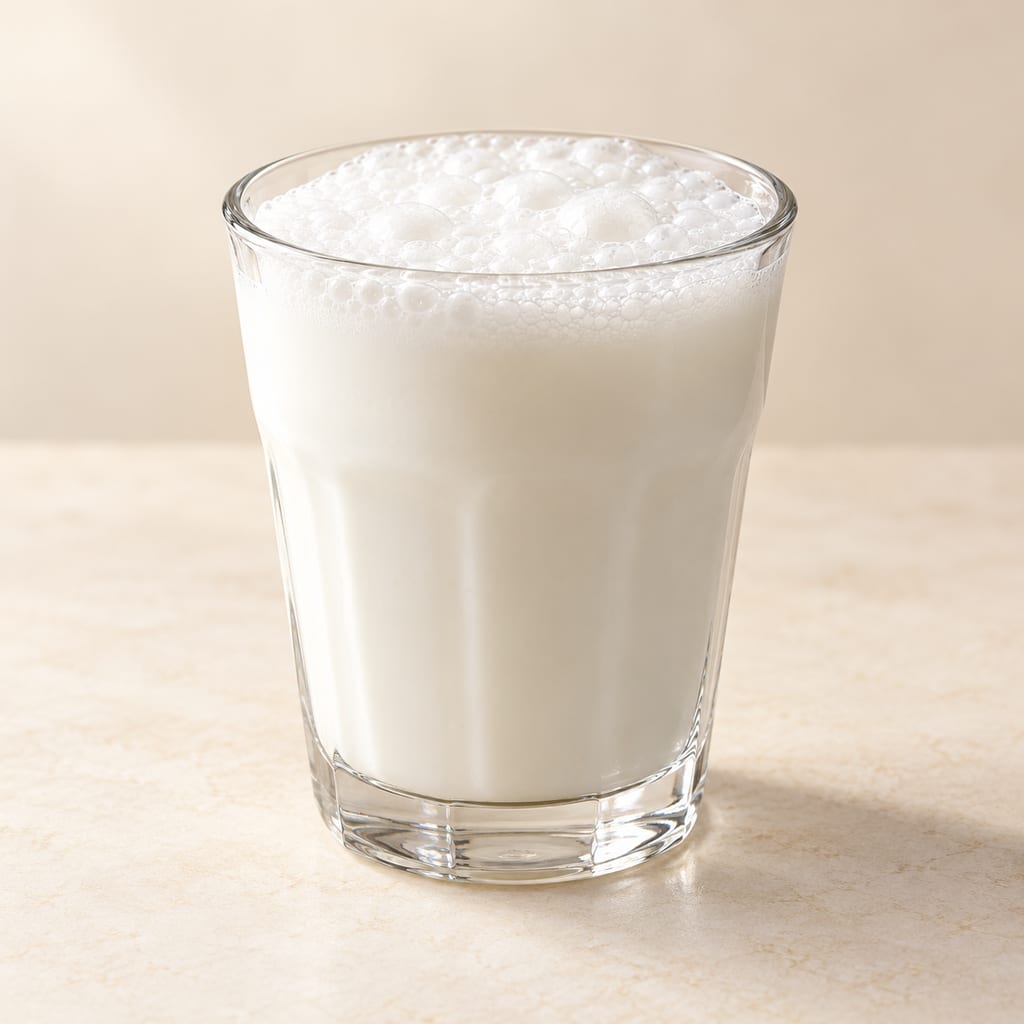
Ayran is Turkey’s cold, savoury yogurt drink: plain yogurt is loosened with water and lightly salted, then whisked smooth or aerated into a soft cap of foam.
A thin stone griddle used over an open hearth. Norwegian archaeology documents the established tradition from the early Middle Ages; a Viking-period origin is only a cautious suggestion linked to Shetland.

Crushed or milled barley cooked in water until the starch softens and the mixture thickens, the plainest way a northern household turned stored grain into a meal, here with apple and hazelnut.

Black carrot is the anthocyanin-pigmented Eastern carrot (Daucus carota var. atrorubens), the purple root that preceded orange types and still colours kanji and şalgam.
No community contributions have been published for this entry yet.
Sign in to contribute. Published comments and photos are free to read.
CoquinariaHistory · Method · Uses
Verjuice (verjus)Verjuice from unripe grapes, distinct from must
Medieval texts: Ménagier de Paris, KANTL Gent 15.1, Vorselman 1560, Battus 1593, Platina citing Macrobius
Gouais grape and picking times
Substitutes and apple vinegar suggestion
Salting and freezing of one home batch, not a validated method
Maggie Beer 1984; Niagara Oast House 2015
Dijon mustard 1856 (Jean Naigeon)
Modern dressings and Middle Eastern uses
Cited in: What verjuice is; Names across languages; Its place in medieval and early modern cookery; Why the grapes are picked early; Keeping, salt and the limits of the sources; Modern use and the revival
WikipediaDefinition · Etymology · History
VerjuiceHighly acidic juice from unripe grapes, crab apples or other sour fruit
Name from French verjus, green juice
In medieval and early modern English texts, sometimes apple or crab-apple juice
Cited in: What verjuice is; Its place in medieval and early modern cookery; Modern use and the revival; Notes and open questions