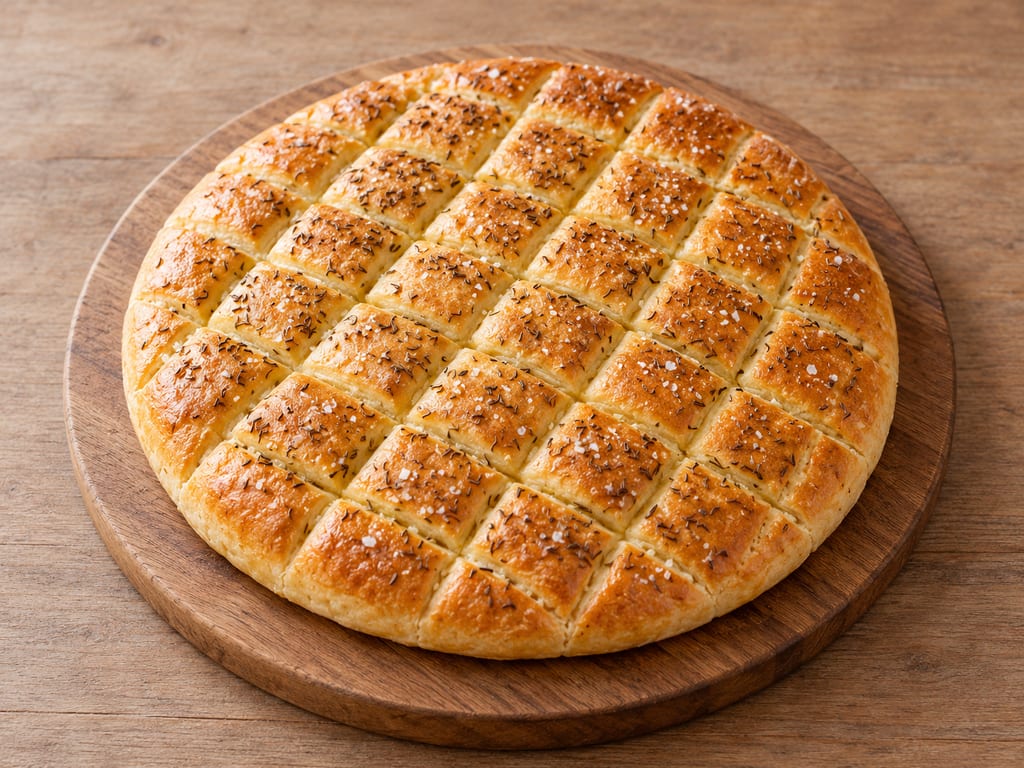
Belokranjska pogača
A round Slovenian flatbread scored in a grid and topped with caraway and coarse salt.
 FermenteaWhere food goes to change
Modern method
Orehova potica · walnut potica · potica
A home adaptation of Slovenia's walnut potica specification: enriched yeast dough is rolled around a cold walnut filling, proofed in a ring mould and baked.
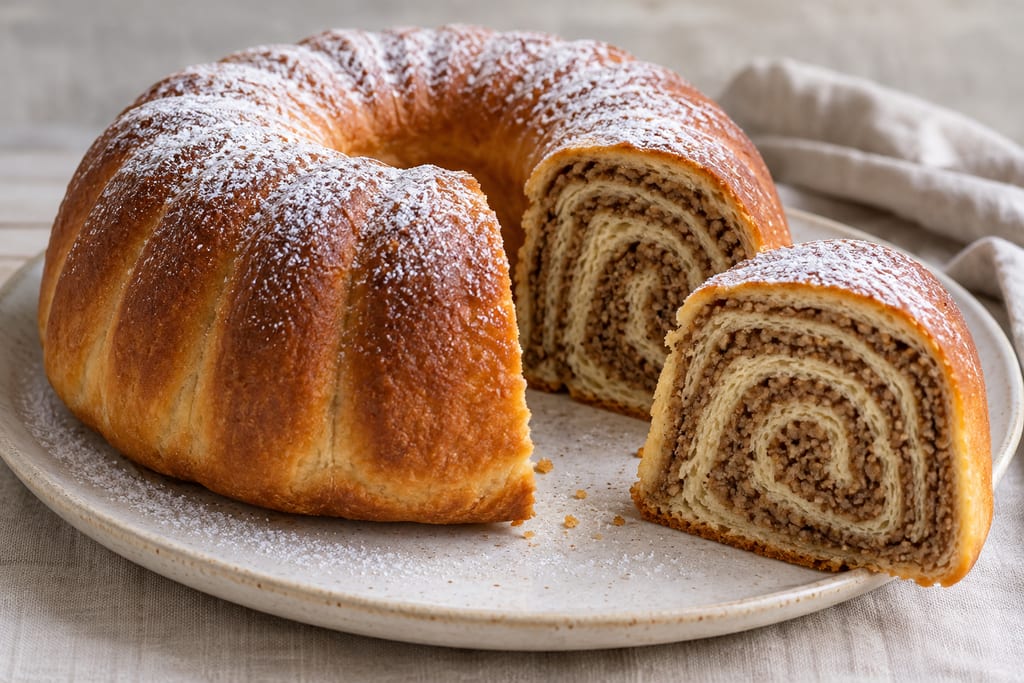
Potica is a rolled yeast dough with a sweet or savoury filling, baked as a ring. Slovenia's approved product specification defines five fillings for the certified name Slovenska potica, including walnut. The certification applies to a defined formula and shape; this page gives a home adaptation of the walnut specification and does not claim that a home bake is a certified product.
The Slovenian Ministry of Culture documents potica across the country, with regional differences in fillings, doughs and forms. It records the name in texts from 1575 and 1577 and an early recipe from 1689. Potica is associated with festive tables, while this recipe follows the walnut-filled ring method.
The dough combines white wheat flour with yeast, butter, sugar, salt, egg yolks, vanilla sugar, rum and enough milk to reach a smooth, non-sticky consistency. This version uses the specification's cold-rise route: cold ingredients are kneaded, then rolled without a warm first proof. The walnut filling is prepared separately by pouring hot milk over ground walnuts and allowing them to cool before mixing in the softened butter, sugar, vanilla, cinnamon and whipped egg whites.
The filling should spread without tearing the dough. One kilogram of filling goes into each kilogram of dough. The specification uses three or four turns in a mould up to 29 cm across and allows larger moulds one or two extra turns. A buttered, floured potičnik gives the loaf its ring and centre hole.
The assembled loaf rises for about eight hours in the refrigerator. The proof is judged by visible growth and a surface that looks swollen but still feels soft and airy; the potica method gives no numeric refrigerator temperature. Use pasteurized dairy, keep the filling and shaped dough cold during the proof, and prepare the filling fresh or store it refrigerated for no more than two days. These are handling controls, not a claim that the home bake is certified.
The oven schedule is at least 40 minutes at 160–180°C (320–356°F), with time adjusted for oven and mould. Because the filling contains raw egg whites, check the centre with a food thermometer and continue baking to 160°F (71°C), the FDA recommendation for egg dishes. The CDC advises against eating raw dough or batter and recommends washing hands, utensils and surfaces after handling raw flour or eggs. Refrigerate leftover slices within FDA limits.
The Slovenian Tourist Board describes potica as a holiday pastry that families also bake outside the festive calendar. Its account highlights teaching between generations and the care needed to balance the dough and filling. This makes the craft of rolling and filling part of the bread's cultural context, alongside its place on a celebration table.
That broad tradition includes many fillings. This page keeps the specific walnut-filled, refrigerated-proof home adaptation recorded above. Other regional fillings and the general name potica are not evidence that this loaf meets the certified Slovenska potica specification.
Slovenia's Ministry of Culture records the name potica in Primož Trubar's works of 1575 and 1577, and the oldest potica recipe in Valvasor's 1689 work. The ministry documents potica baking across Slovenia and describes regional variations and festive use. These records establish the broader tradition, not this particular cold-rise home adaptation.
Yield 1 potica · Scaling: source batch only
Before baking, the dough contains uncooked flour and egg yolks, while the filling contains uncooked egg whites; raw dough and eggs can carry pathogens.
Hazard sourceThe filling contains raw egg whites and needs thorough baking; the specification does not give a centre temperature.
Hazard sourceThe recipe uses milk and other dairy ingredients; unpasteurized milk can contain harmful germs.
Hazard sourceThe filling and dough contain milk, butter and eggs that need cold handling before baking.
Hazard sourceUse pasteurized milk and dairy products; keep perishable dairy refrigerated. CDC identifies pasteurized dairy as the safer choice.
Control sourceFor the cold proof, keep the dough and filling in the refrigerator at or below 40°F (4°C). FDA guidance says perishable foods should be refrigerated at this temperature.
Control sourcePrepare the filling fresh or keep it refrigerated for no more than two days, as specified for the defined Slovenska potica fillings.
Control sourceDo not taste raw dough or filling. Bake the flour dough before eating and wash hands, bowls, utensils and counters after handling raw flour or eggs.
Control sourceCheck the filling's centre with a food thermometer and bake egg-containing food to 160°F (71°C).
Control sourceRefrigerate leftover cooked potica within two hours, or within one hour when surrounding temperature is above 90°F (32°C); use within 3–4 days.
Control sourceContains wheat, walnuts, milk and eggs.
Do not eat the uncooked dough or filling.
Keep the dough and filling refrigerated for the approximately eight-hour cold proof; the specification gives no numerical refrigerator setpoint.
The oven schedule varies with the mould and oven. The specified minimum bake time does not replace the thermometer check for the egg-containing centre.
This is a home adaptation of the protected Slovenska potica specification, not a certified TSG product.
The approved specification and Ministry of Culture describe potica across Slovenia. This home adaptation is not represented as a certified Slovenska potica TSG product.
A round Slovenian flatbread scored in a grid and topped with caraway and coarse salt.
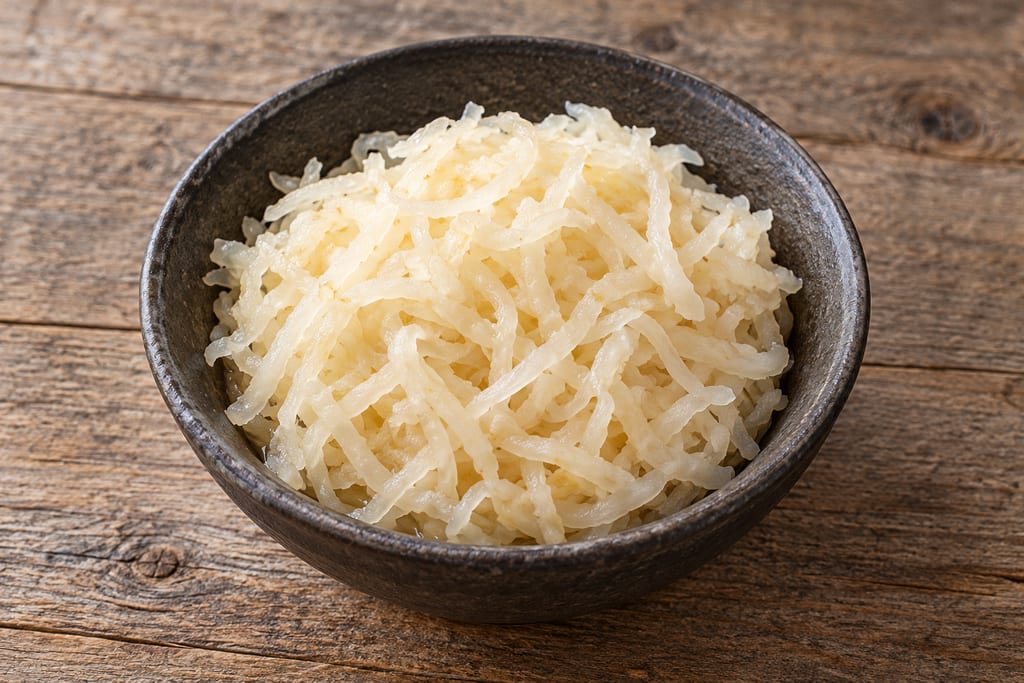
Kisla repa is Slovenian sour turnip, made either from grated turnip or from whole roots; a 2023 household guide gives a 1 kg grated batch salted with 20 g salt.
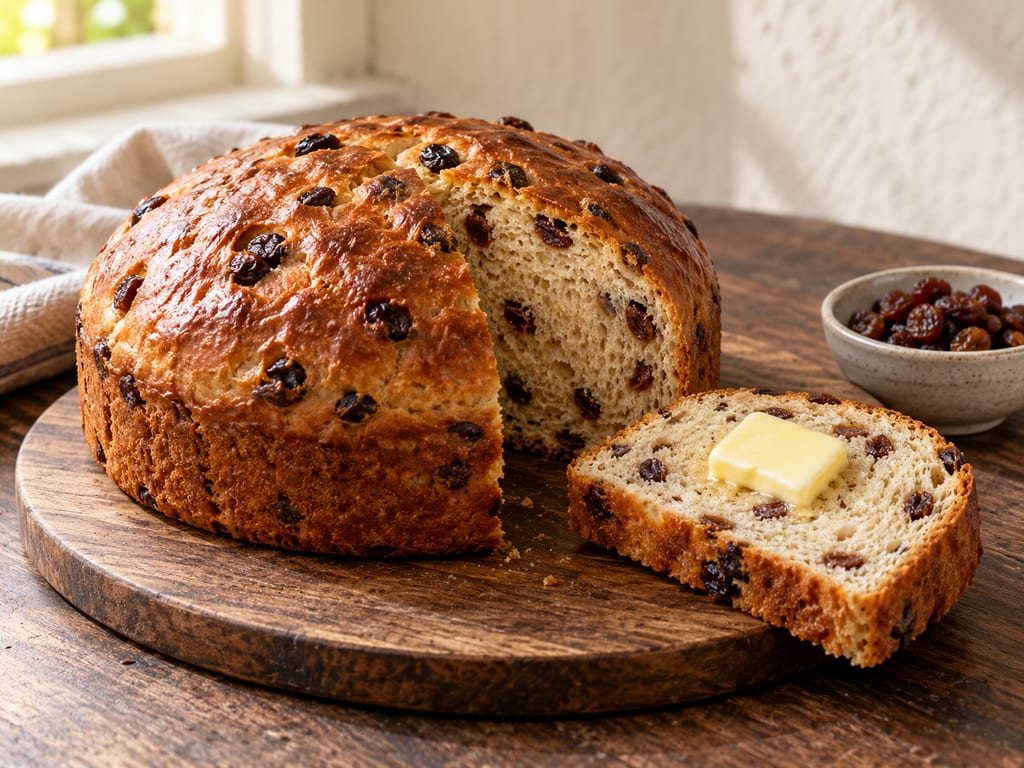
An Irish fruit-studded yeast loaf, associated in a contemporary cultural account with Halloween and often served fresh or toasted with butter.
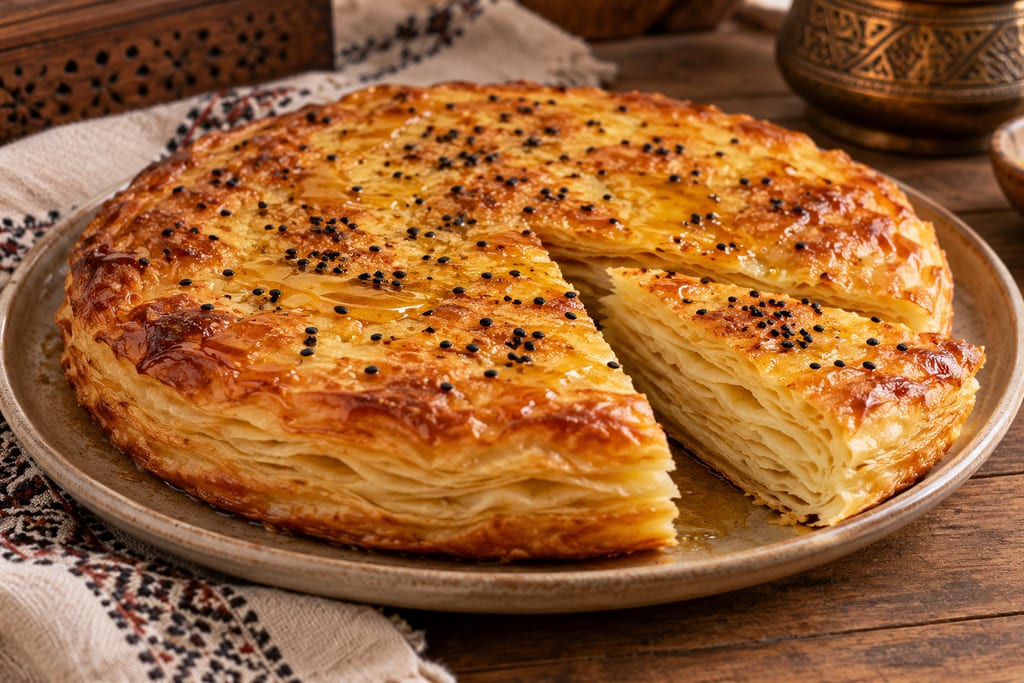
Bint al-sahn is a Yemeni celebration and home bread built from thin, egg-rich yeast dough layers brushed with ghee or butter. This source-specific version makes one round cake, baked until golden and served warm with honey.
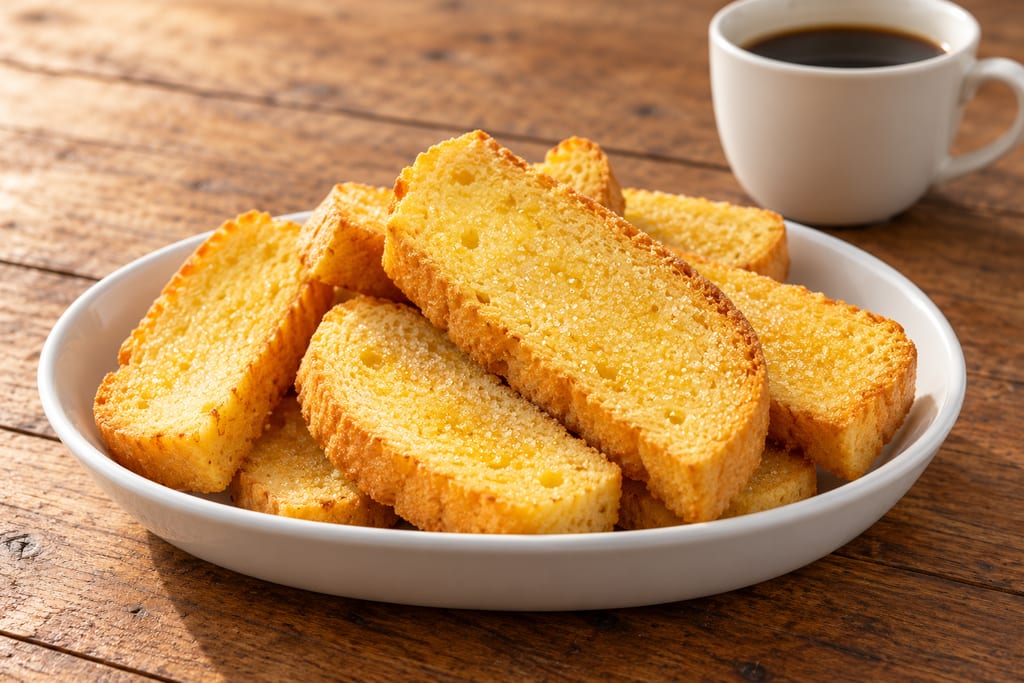
PagkainPinoy’s 24–30 piece version twice-bakes day-old soft bread with a thin butter-and-sugar coating.
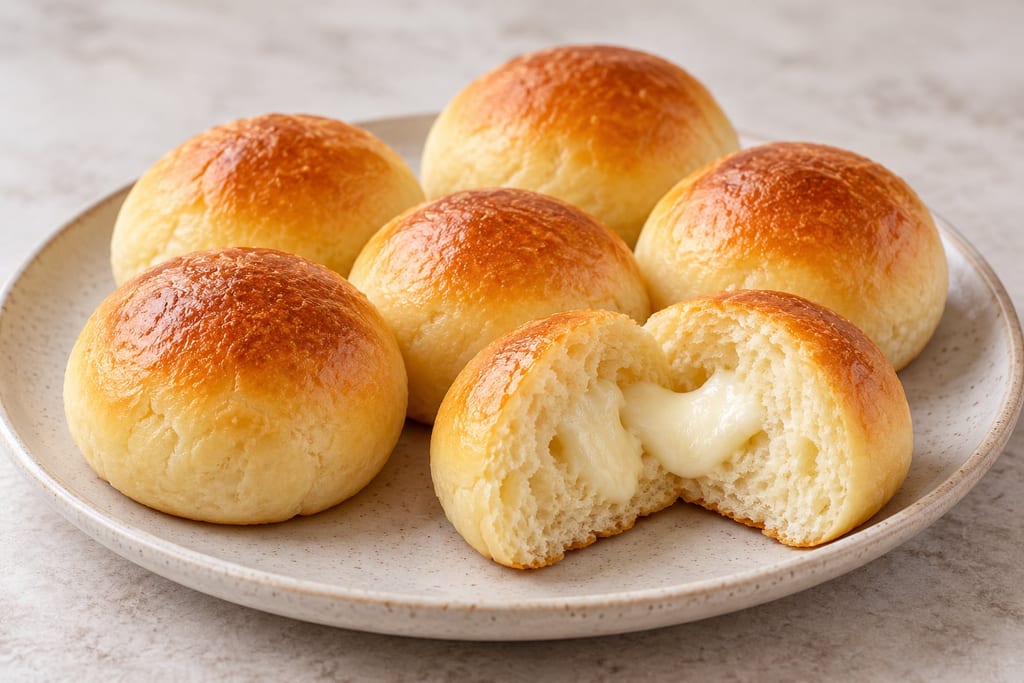
Soft Brazilian yeast rolls use cooked mashed potato in an enriched dough, with mozzarella cubes enclosed before baking.
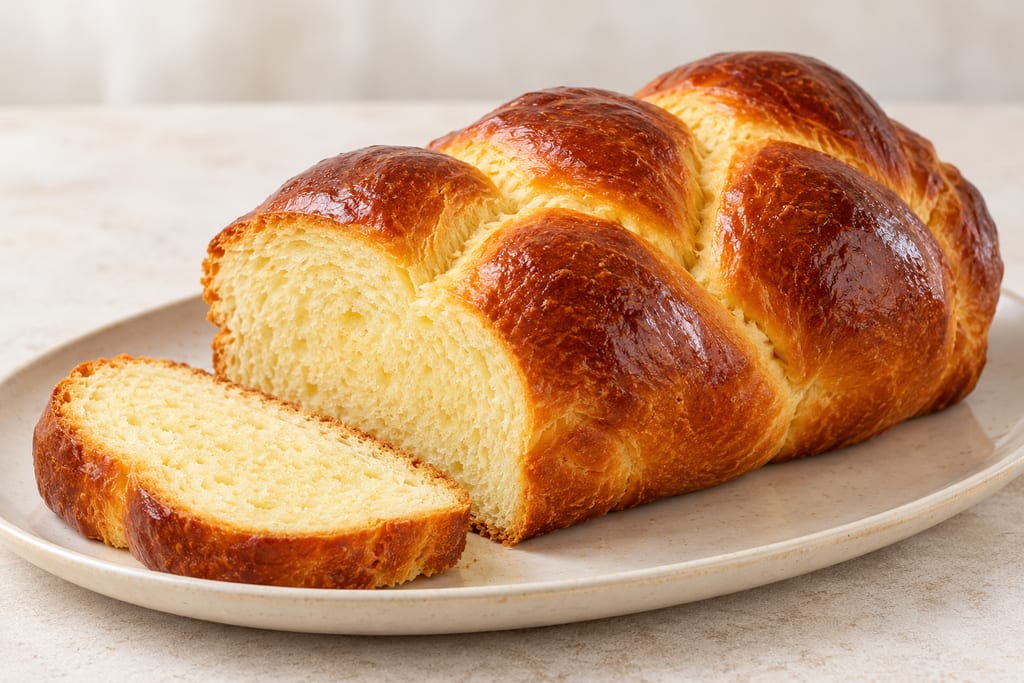
An egg-and-butter-rich yeast dough shaped as one round loaf, two loaves or twelve small brioches, with baking paths that vary by shape.
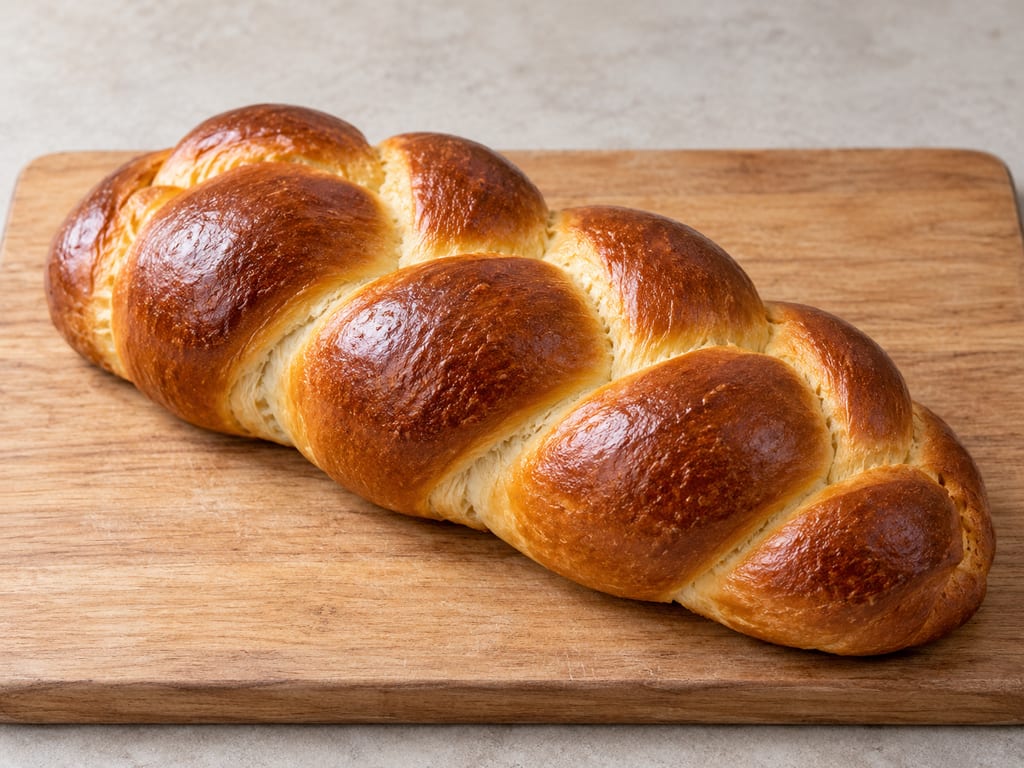
A three-strand yeast-raised challah with flour, salt, yeast, water, neutral oil, honey and egg, based on a Jewish Museum Vienna home recipe.
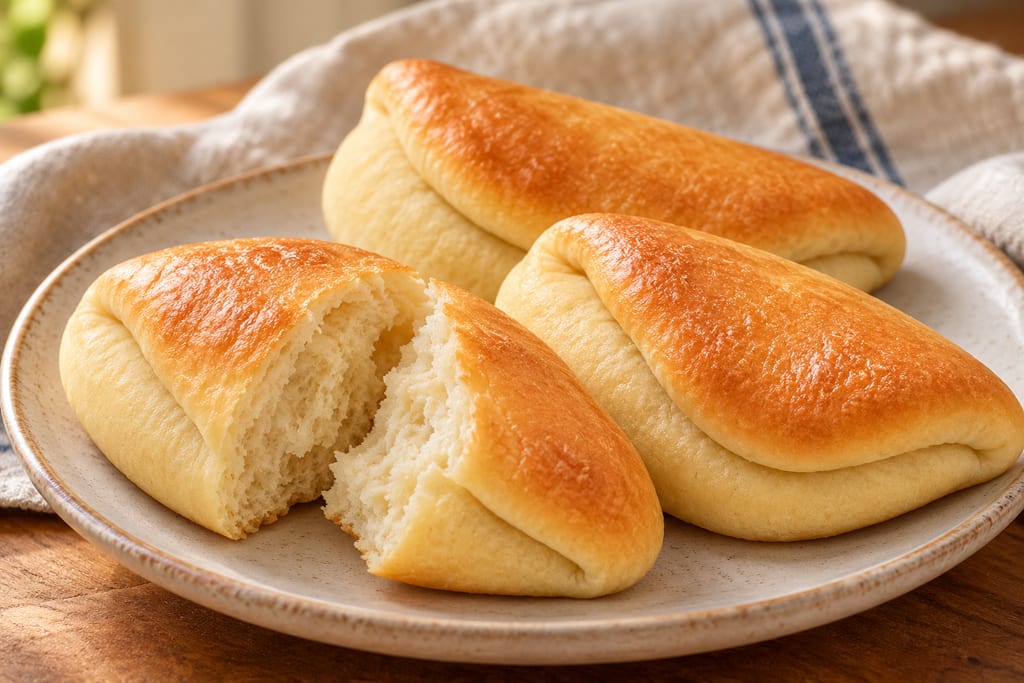
Jamaican-style folded rolls made from sweet coconut-milk yeast dough and brushed with butter.
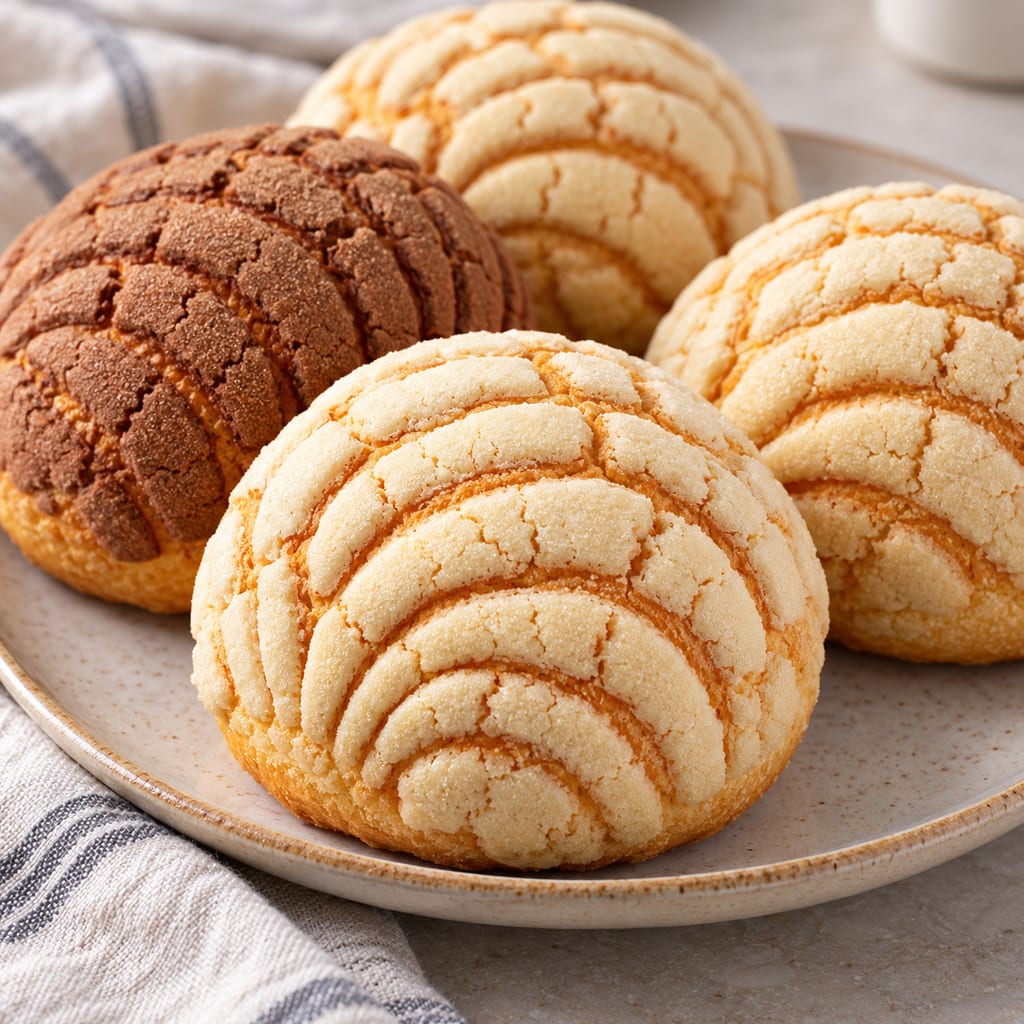
Mexican sweet rolls with a soft enriched yeast dough and a separate scored sugar-flour topping shaped like a shell. This version makes 15 rolls and uses a chilled dough rest before final proofing.

A gelling polysaccharide extracted from red seaweeds, sold as kanten strips or powder; it sets firm at a low concentration and stays solid until about 85 °C.

A Dominican table and seasoning condiment of sour orange juice, mixed with lime and salt and bottled raw; garlic, oregano or a hot pepper may be added for meat or a spicier bottle.

Cicerbita alpina is an alpine perennial whose tender shoots and leaves have been eaten raw or cooked. Sámi milk preparations and modern Carnian dishes are distinct uses, with serious identification and preservation limits.

Japanese skipjack tuna cooked, then repeatedly smoked and dried over a wood fire by the hand-fired tebiyama method into a hard block for shaving into dashi: the first stage of katsuobushi.

A Swedish-style spirit vinegar made by fermenting neutral alcohol with live vinegar bacteria, with a separate guide to commercial ättika strengths.

A yeast-raised wheat ring shaped from a firm dough, briefly boiled and baked. This source-batch formula gives a gently malted crust and a chewy crumb.

A warm dip of garlic, anchovy and olive oil, often enriched with butter, that Piedmont serves over a flame with raw and cooked vegetables and bread.

Bechamel is a white sauce of milk thickened with a butter and flour roux, one of the French mother sauces, and the base from which Mornay and other cheese and cream sauces are made.
No community contributions have been published for this entry yet.
Sign in to contribute. Published comments and photos are free to read.
Ministry of Agriculture, Forestry and Food, Republic of SloveniaIngredients · Method · Identity · Safety · Equipment
Potrjena specifikacija št. 33203-10/2017/33: Slovenska potica (Approved product specification: Slovenska potica)The approved specification's formula for 1 kg white wheat flour, 30 g yeast, 100 g butter, 120 g sugar, 10 g salt, 3 egg yolks, vanilla sugar, rum and up to 500 mL milk.
The walnut filling formula and method: 1 kg ground walnuts, 375 g sugar, 100 g butter, 3 egg whites, 20 g vanilla sugar, 1–2 knife tips cinnamon and up to 600 mL milk; soak the nuts with hot milk, cool, add the other ingredients and fold in whipped whites.
For the cold-rise method, use cold dough ingredients, roll immediately with cold filling, shape in a potičnik and refrigerate for about eight hours; the final dough should visibly grow and feel soft and airy.
The specification says fillings are prepared fresh or may be kept refrigerated for up to two days. It recommends baking at 160–180°C for at least 40 minutes, adjusted for oven and loaf size, then inverting to cool.
The specification governs the certified Slovenska potica product; this recipe is an at-home adaptation and makes no certification claim.
Cited in: Walnut potica and the protected product; Enriched dough and a cold walnut filling; Refrigerated proof and thorough baking; A festive skill passed on at home
Ministry of Agriculture, Forestry and Food, Republic of SloveniaIdentity · Regional context
European Commission protects Slovenska poticaThe ministry distinguishes the certified Slovenska potica TSG from broader names such as potica and orehova potica; the protected specification defines its form and five traditional fillings.
Cited in: Walnut potica and the protected product
Ministry of Culture, Republic of SloveniaHistory · Geographic context
V register nesnovne kulturne dediščine vpisane tri nove enote (Three new elements entered in the Register of Intangible Cultural Heritage)Potica baking is documented throughout Slovenia with regional variation and festive use; the Ministry records references to the name in 1575 and 1577 and an early recipe in 1689.
Cited in: Walnut potica and the protected product
Centers for Disease Control and PreventionSafety
Raw Flour and DoughRaw flour and eggs can carry pathogens; do not eat raw dough, bake according to instructions and wash hands, tools and surfaces after handling flour and eggs.
Cited in: Refrigerated proof and thorough baking
U.S. Food and Drug AdministrationSafety
What You Need to Know About Egg SafetyFresh eggs may contain Salmonella; keep eggs refrigerated; cook egg-containing dishes thoroughly to 160°F; refrigerate leftovers within two hours and use cooked egg dishes within 3–4 days.
Cited in: Refrigerated proof and thorough baking
Centers for Disease Control and PreventionSafety
Raw MilkChoose pasteurized milk and dairy products; raw milk can carry germs and perishable dairy should be kept refrigerated.
Cited in: Refrigerated proof and thorough baking
Slovenian Tourist BoardContext
Potica, the delicious queen of festive dishesDescribes potica as a traditional holiday pastry also baked outside holidays, with family teaching across generations and numerous fillings. These broader variants do not replace the selected walnut specification.
Cited in: A festive skill passed on at home
Wikimedia CommonsImage reference
File:Velika_noč_-_jedila_hren_šunka_pirhi_potica.jpgKlemen Brumec,30March2013,explicitCC0 with VRT ticket2013033110002731. Visually confirmed sliced nut-filled potica at Easter table; approved linked-a23981b4ff39d317. Whole ring and exact formula not shown.
Wikimedia CommonsImage reference
File:Potica_(9501040588).jpgMichael R Perry,CC BY2.0,notPD/CC0;excluded.
Wikimedia CommonsImage reference
File:Poticza_filling_being_sliced.pngWhatamIdoing,CC BY-SA4.0,notPD/CC0;different thick filling method not substituted;excluded.