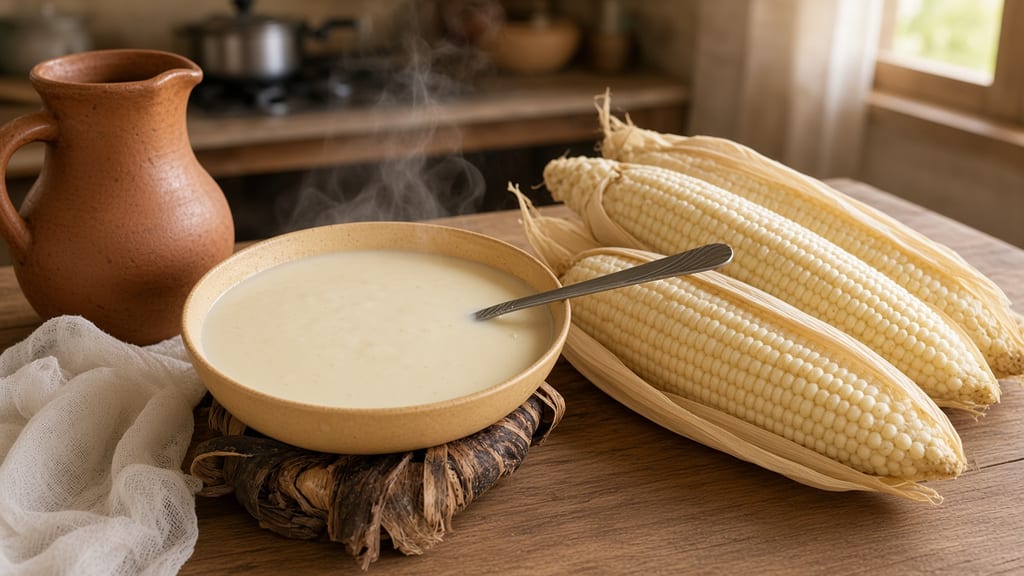
Atole agrio
A hot, sour maize drink from Tabasco made from maize that is not lime-cooked. The ground grain sours for half a day, then makers strain it and boil it until thick.
 FermenteaWhere food goes to change
Concha · concha · pan dulce concha
Mexican sweet rolls with a soft enriched yeast dough and a separate scored sugar-flour topping shaped like a shell. This version makes 15 rolls and uses a chilled dough rest before final proofing.
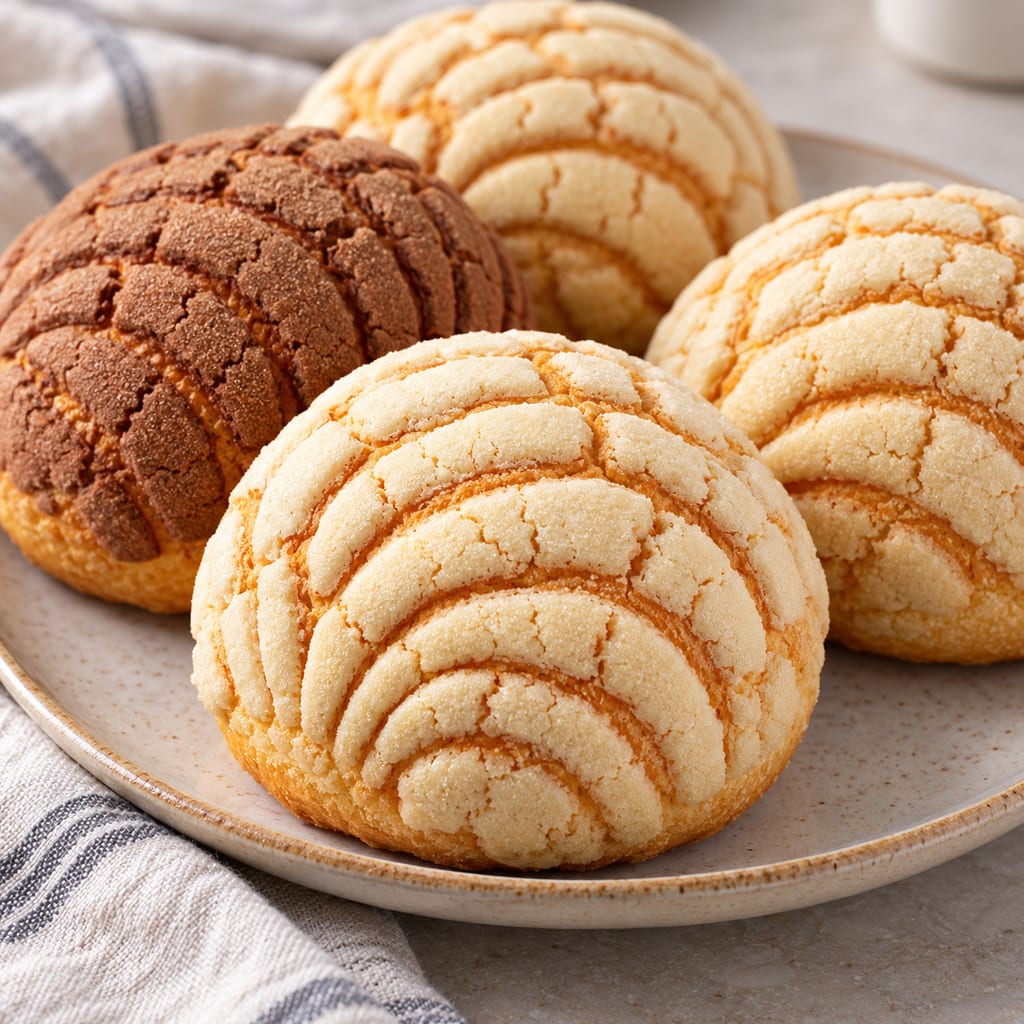
Conchas are sweet yeast rolls named for the shell-like pattern scored into their sugar-flour topping. Pati Jinich describes them as a popular Mexican pan dulce and recalls visiting Panadería Santa María in Valle de Bravo, where baker Félix showed her family how the rolls were shaped and covered. The topping is a separate dough made from flour, confectioners’ sugar and fat; it bakes into a patterned crust over an enriched bread roll.
This version is credited to baker and author Francisco Migoya. Its milk, water, eggs, butter, sugar and yeast form a soft enriched wheat dough. A topping made with powdered sugar, pastry flour, shortening and vanilla is rolled thin, cut into discs and scored on each roll. The source also lists optional flavorings; this base version keeps the stated vanilla formula. The regional association is Mexican, but neither source identifies a single place or date as the origin of conchas.
The dough is mixed until elastic rather than until it becomes firm or clears the bowl. The source recommends 10–15 minutes at medium-high speed after the ingredients combine. Its windowpane test is a practical check: a small piece stretches into a thin translucent sheet without tearing. The dough then rests briefly at room temperature, chills for at least two hours, and is divided after refrigeration. Chilling firms this rich dough for handling; the source does not describe this as a safety step.
The topping is mixed separately and rolled to about 4 mm before cutting. Freezing the sheet briefly firms it for clean cutting, but the discs should be at room temperature when attached and scored. That makes them pliable enough to press around the dome of each ball. The classic shell pattern comes from the topping surface; cut only the topping so the dough below remains intact.
The shaped rolls need a final rise after the shell pattern is scored. At room temperature, the source gives 2–3 hours; in a proof box it specifies 27°C/80°F and 75% relative humidity for 1–1.5 hours. Those are alternatives from the cited formula, not a universal conversion for every kitchen. During the final 30 minutes, heat a still oven to 190°C/375°F or a convection oven to 175°C/350°F.
Arrange no more than five rolls on a half-sheet pan as the source recommends, so they have room to expand. Bake for 20–25 minutes, until golden brown. To check doneness, insert a clean instant-read thermometer into the centre of a roll from the middle of the pan; King Arthur Baking uses 190°F/88°C as a general centre-temperature benchmark for most yeast breads and soft rolls. Cool the conchas on their pans before serving. The recipe portions fifteen rolls; it gives no tested multiplier for a larger batch.
This formula contains milk, eggs and raw flour, so the dough and topping must not be tasted raw. FDA and CDC guidance emphasizes baking raw dough before eating it, keeping flour and eggs away from ready-to-eat food, and washing hands, bowls, tools and work surfaces after handling them. FDA’s general two-hour advice for perishable foods does not itself test or establish a safe proofing schedule for yeast dough. A bread-dough study found no Staphylococcus aureus growth or enterotoxin A production in about 470 g lean dough during four hours at 25°C or 35°C. That is relevant comparison evidence, not a validation of this richer concha formula, every kitchen condition or a process outside the source’s stated proof. Do not lengthen the specified proof; bake the rolls thoroughly and use the centre-temperature check as a doneness guide, not as proof that arbitrary warm holding is safe.
King Arthur Baking’s classic challah is another comparison, not a replacement: its egg-enriched dough rises for about two hours, then for 60–90 minutes at room temperature after shaping, and is baked until the centre reads 190°F. These examples show why a general leftover or perishable-food time rule cannot by itself classify a source’s intended yeast fermentation as unsafe. They do not establish a concha-specific safe schedule.
This recipe handles raw flour and eggs. FDA and CDC advise against tasting raw dough and recommend keeping raw flour and eggs separate from ready-to-eat foods, then washing hands, counters, bowls and utensils after handling them. Bake the rolls before serving. The conchas contain wheat and gluten, milk and eggs; check ingredient labels and prevent cross-contact for anyone who needs to avoid these allergens.
Conchas sit within the broader Mexican pan dulce category described in Jinich's bakery account. Contemporary efforts to document that category extend beyond individual recipes: Mexico's cultural information system lists a September 2026 festival organised by the baking-industry chamber Canainppa in Coyoacán.
The festival entry describes work by researchers, historians and bakers toward documenting pan dulce's cultural value. Its reference to a heritage initiative is not evidence that a designation had already been granted. Nor does the festival establish when conchas first appeared or turn Francisco Migoya's particular fifteen-roll formula into a national standard.
Pati Jinich describes conchas as a popular Mexican sweet roll and recounts a visit to a panadería in Valle de Bravo where a local baker showed her family how the rolls were made. The recipe here is credited to Francisco Migoya and uses a specific enriched dough and sugar-flour topping; this record does not claim a single birthplace or that every bakery uses this formula.
Yield 15 conchas · Scaling: source batch only
Uncooked flour and raw eggs can carry harmful bacteria; the dough and topping must be baked before eating.
Hazard sourceThe recipe contains wheat, milk and eggs; the pastry flour and bread flour contain gluten.
Hazard sourceDo not taste the raw dough or topping. Keep raw flour and dough away from ready-to-eat foods; wash hands, bowls, utensils and work surfaces after handling, and bake the rolls before serving.
Control sourceFor these soft rolls, check the centre of a roll from the middle of the pan with a clean instant-read thermometer; 190°F/88°C is King Arthur Baking’s general doneness benchmark for most yeast breads and soft rolls. This is not a concha-specific process validation.
Control sourceIdentify wheat/gluten, milk and egg for readers and prevent cross-contact where needed.
Control sourceContains wheat (gluten), milk and eggs.
Do not taste the raw dough or topping; bake the conchas before serving.
The recipe's stated room-temperature and proof-box proof options are source-specific yeast-dough steps. General perishable-food time advice does not by itself establish a concha-specific safety limit; do not extend the source's proof range.
Use 190°F/88°C at the centre of a roll as a general bread-doneness check. This check does not validate storage, arbitrary holding, or untested proof conditions.
Pati Jinich describes conchas as a popular Mexican pan dulce and recounts seeing them made at a bakery in Valle de Bravo. This country-level association does not claim a single origin.
A hot, sour maize drink from Tabasco made from maize that is not lime-cooked. The ground grain sours for half a day, then makers strain it and boil it until thick.
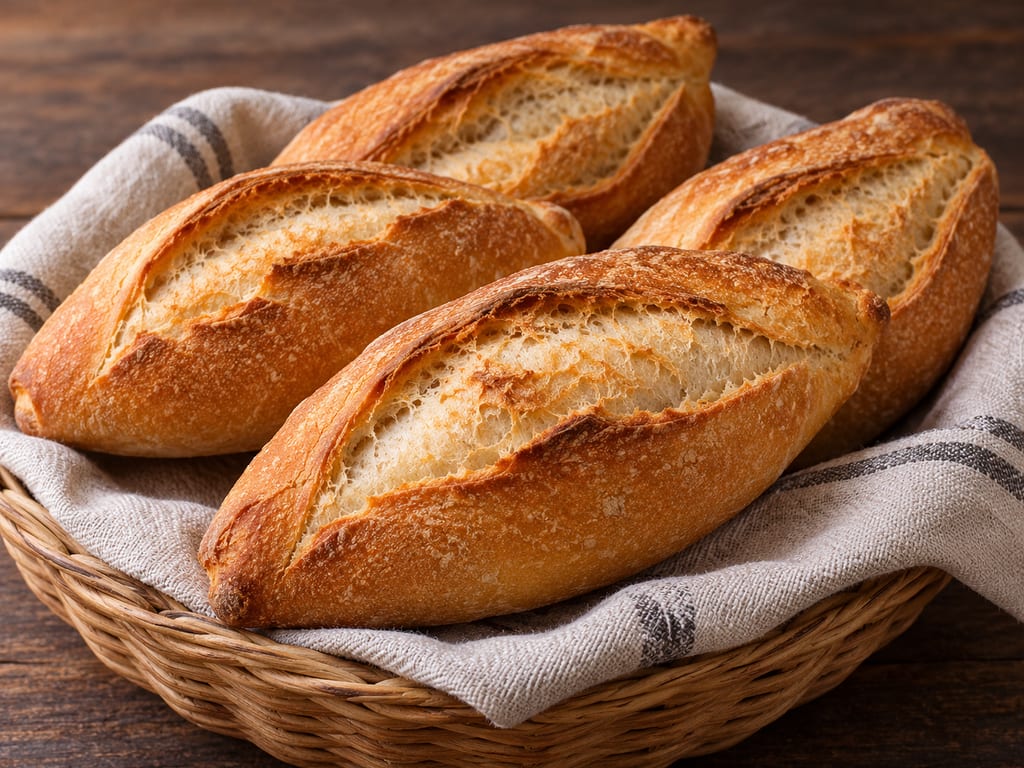
A measured, commercial-yeast home method for Guadalajara-style birote salado, with a six-hour preferment, shaped rolls and a two-temperature steam bake. This formula contains no egg.
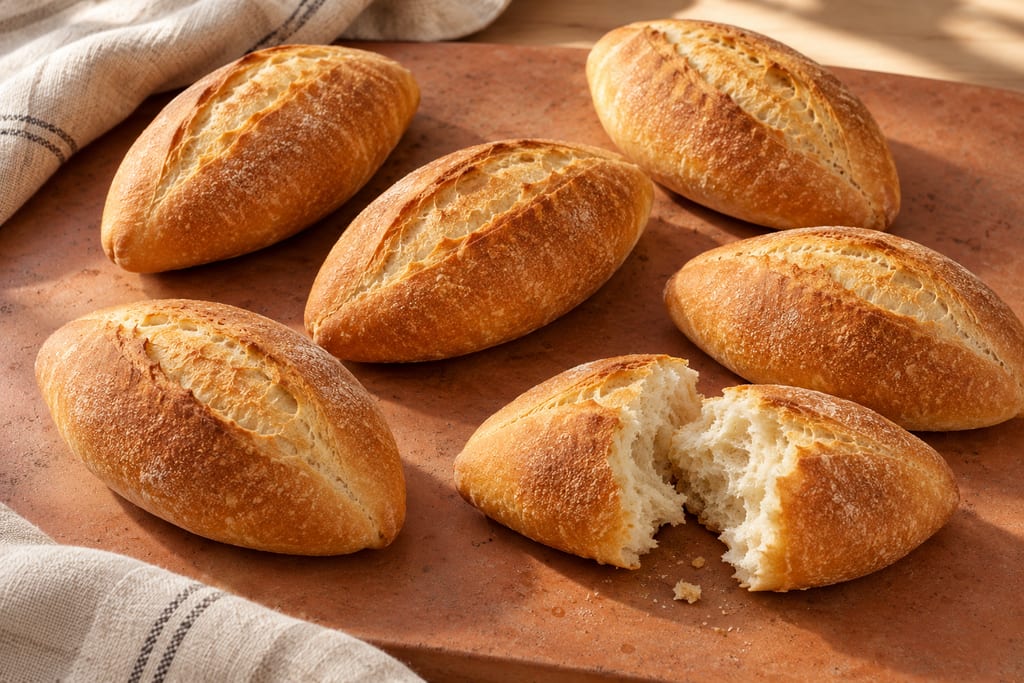
Small, lightly enriched rolls with tapered ends and a scored top; this six-roll formula bakes on a hot stone with steam for a thin, crisp crust.
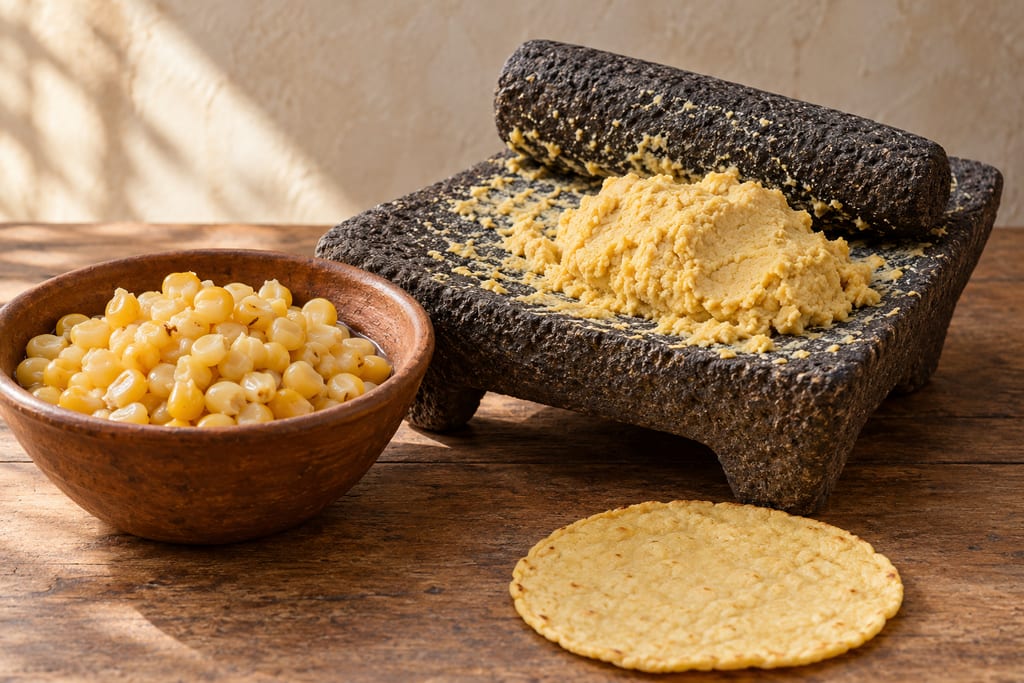
Whole maize cooked and steeped overnight in lime water, washed of its skins and excess lime, then ground into the moist dough used for tortillas.
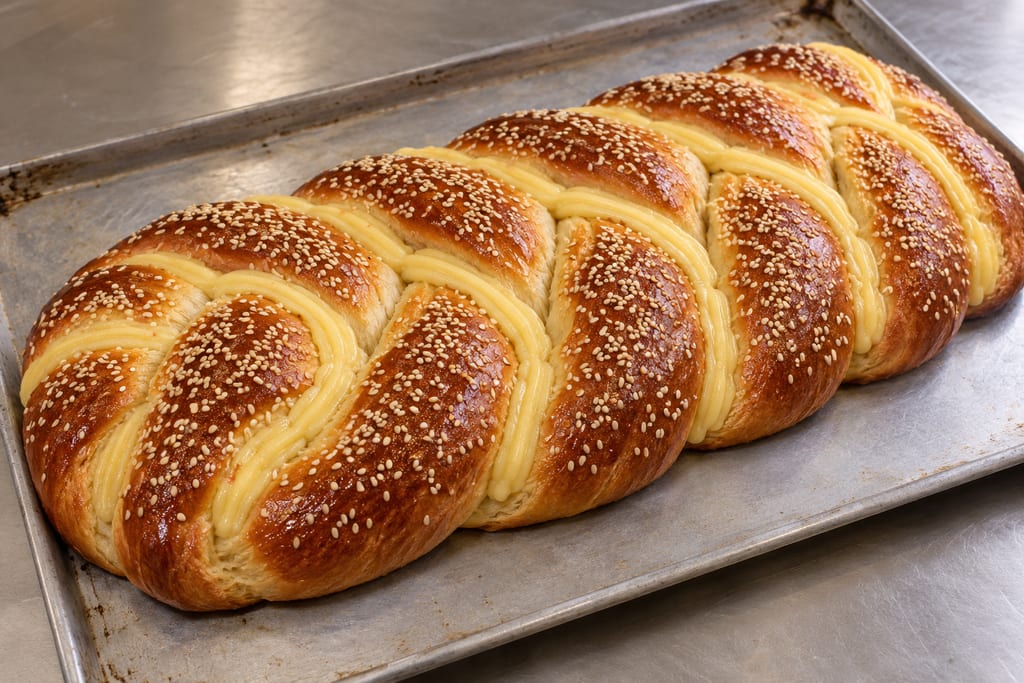
A Mexican sweet, yeast-raised wheat bread shaped as a broad braid or closed zigzag, brushed with egg glaze and decorated with pastry cream and sesame.
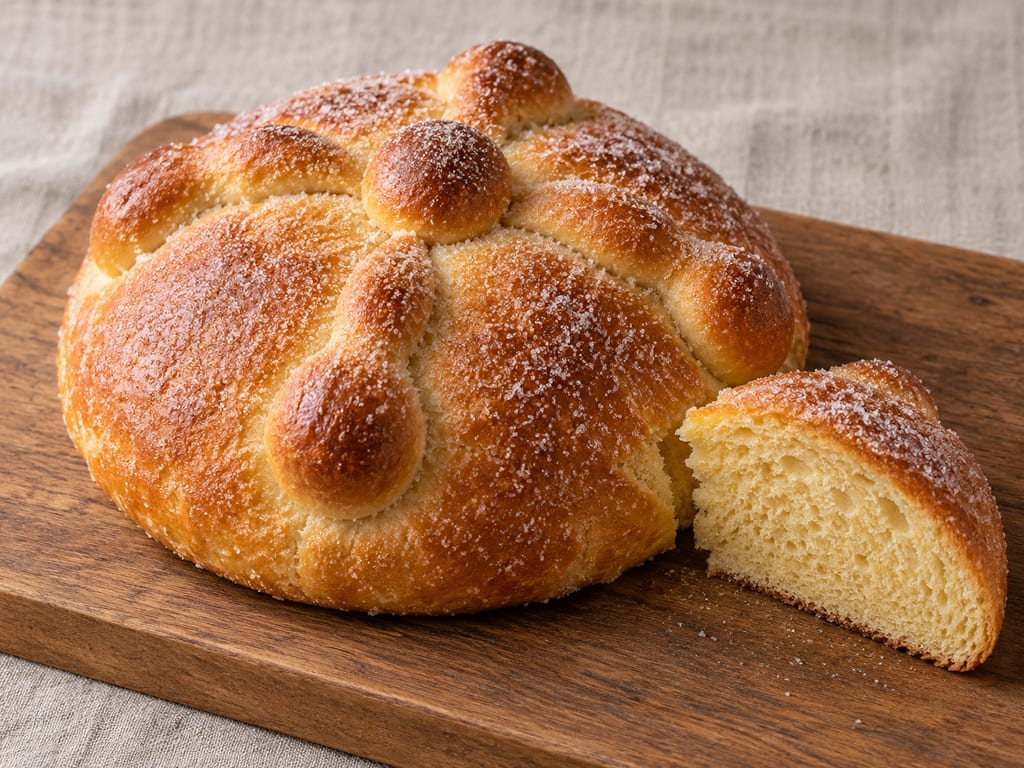
Two enriched, orange-anise loaves shaped with crossed dough bones and a central round, baked for Día de Muertos and finished with butter and sugar.
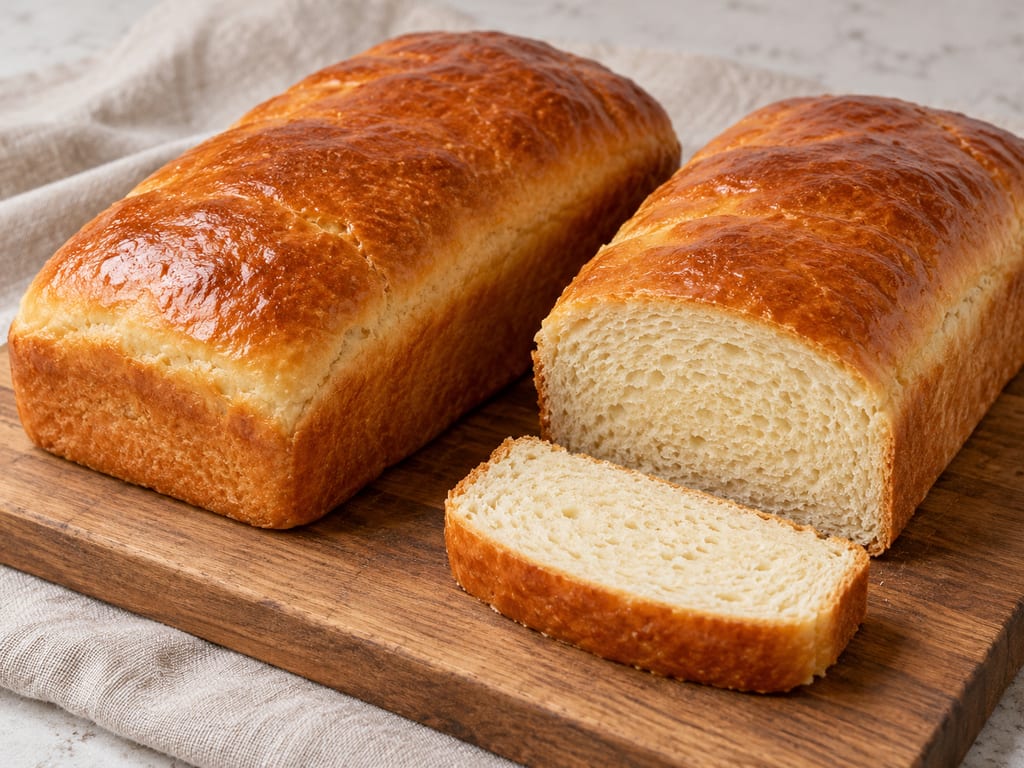
Two Mexican loaves made with pulque, eggs and baker's yeast in a home-oven recipe.
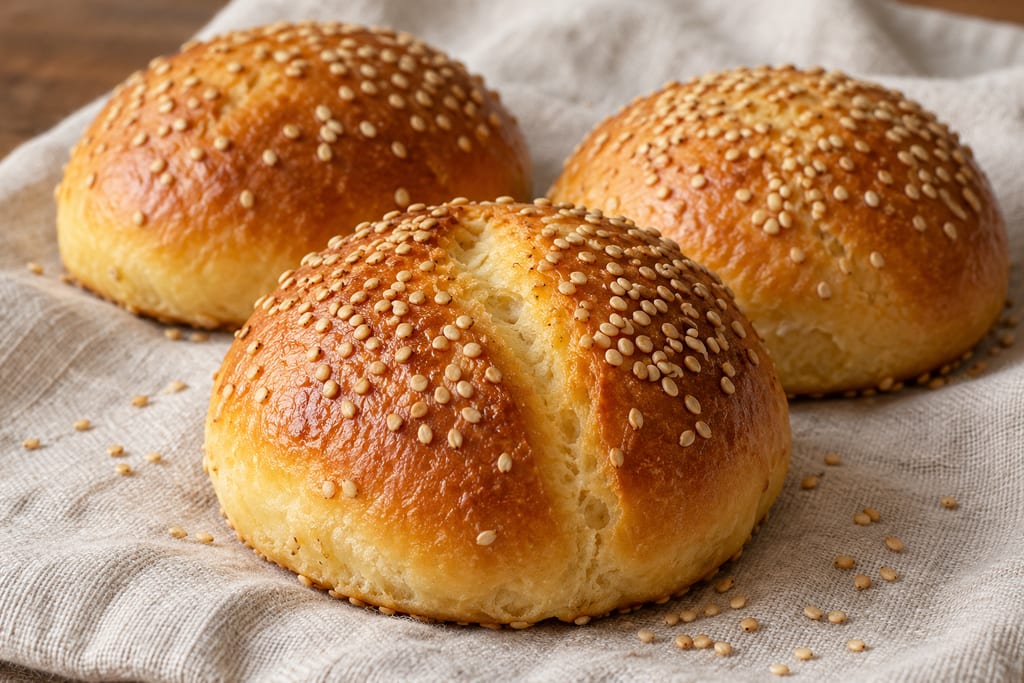
This Oaxacan yeast bread enriches wheat dough with eggs, extra yolks and butter, then shapes it into sesame-coated rounds for a long rise and a hot bake.
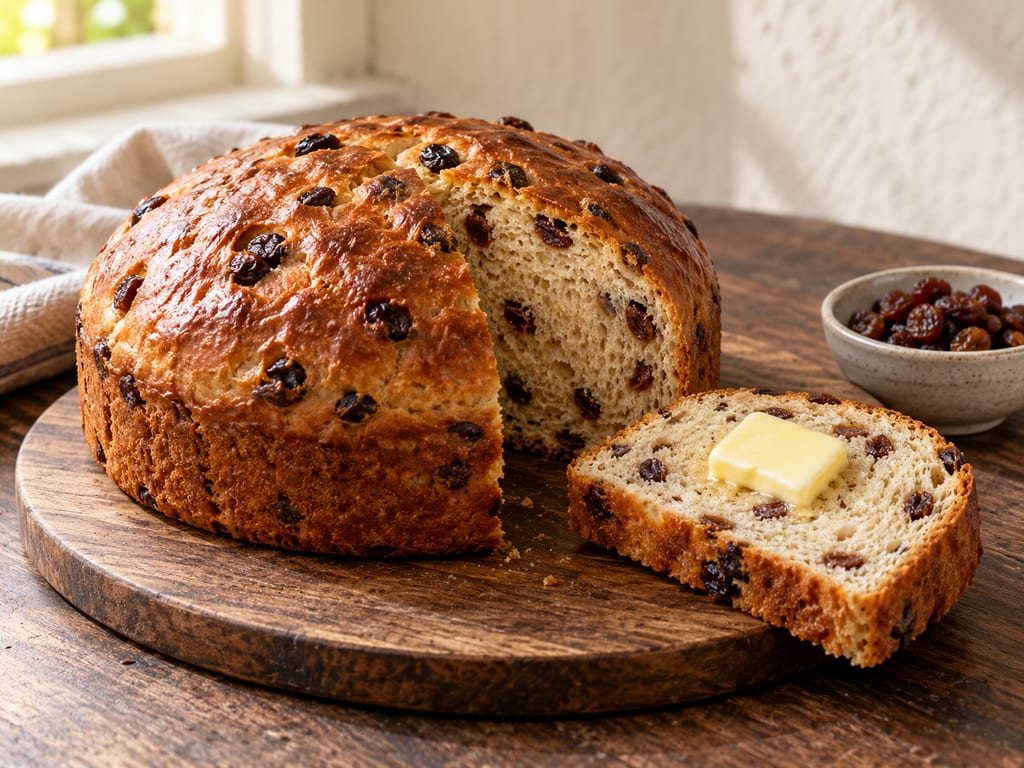
An Irish fruit-studded yeast loaf, associated in a contemporary cultural account with Halloween and often served fresh or toasted with butter.
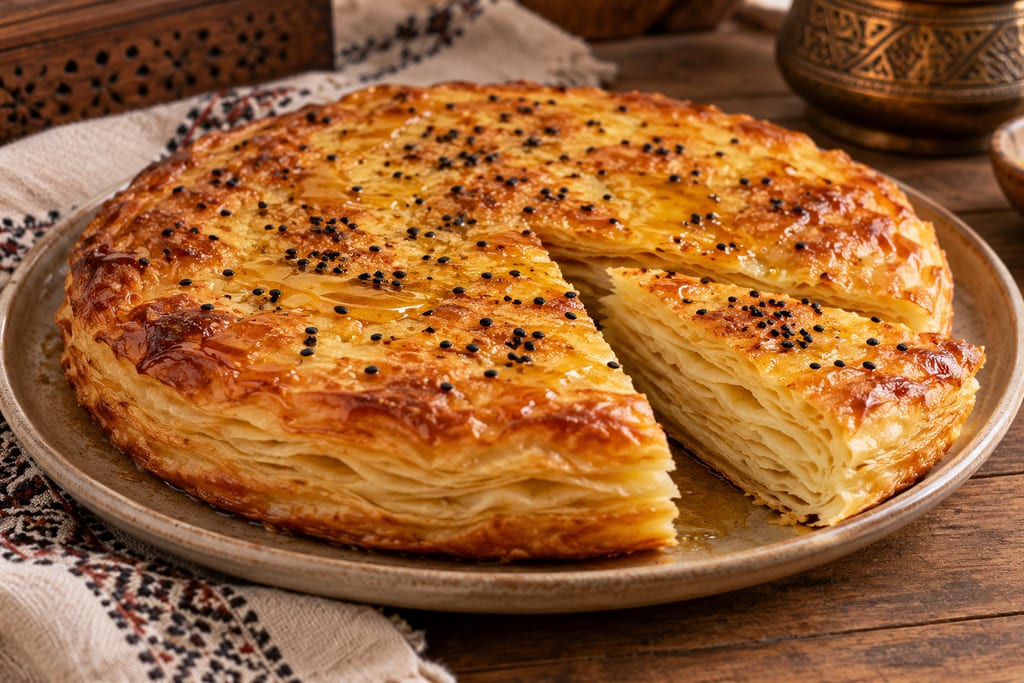
Bint al-sahn is a Yemeni celebration and home bread built from thin, egg-rich yeast dough layers brushed with ghee or butter. This source-specific version makes one round cake, baked until golden and served warm with honey.
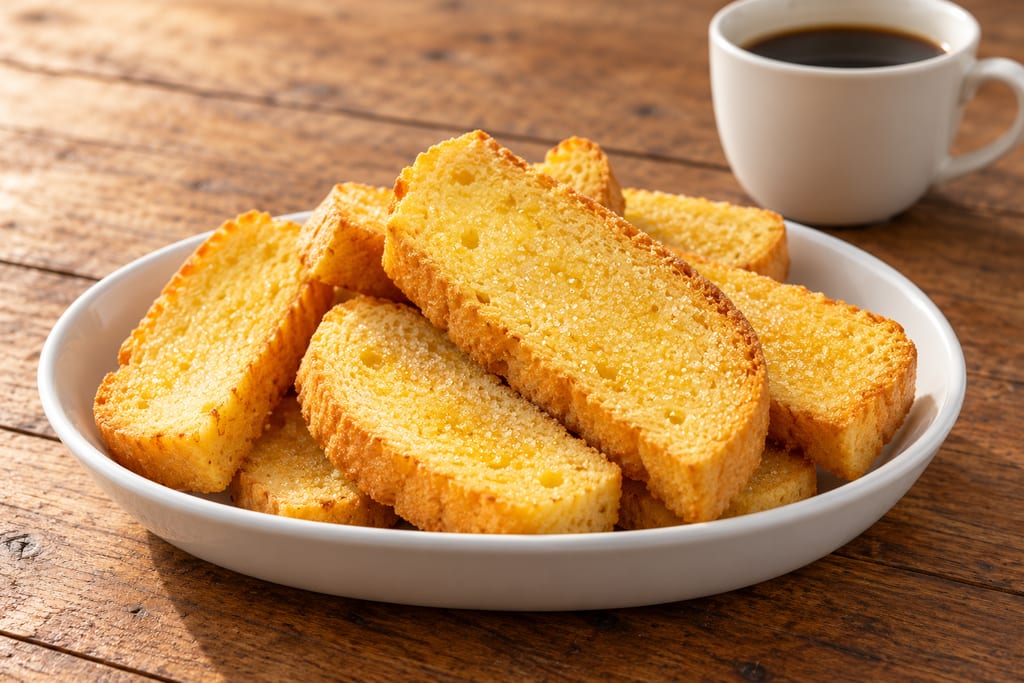
PagkainPinoy’s 24–30 piece version twice-bakes day-old soft bread with a thin butter-and-sugar coating.
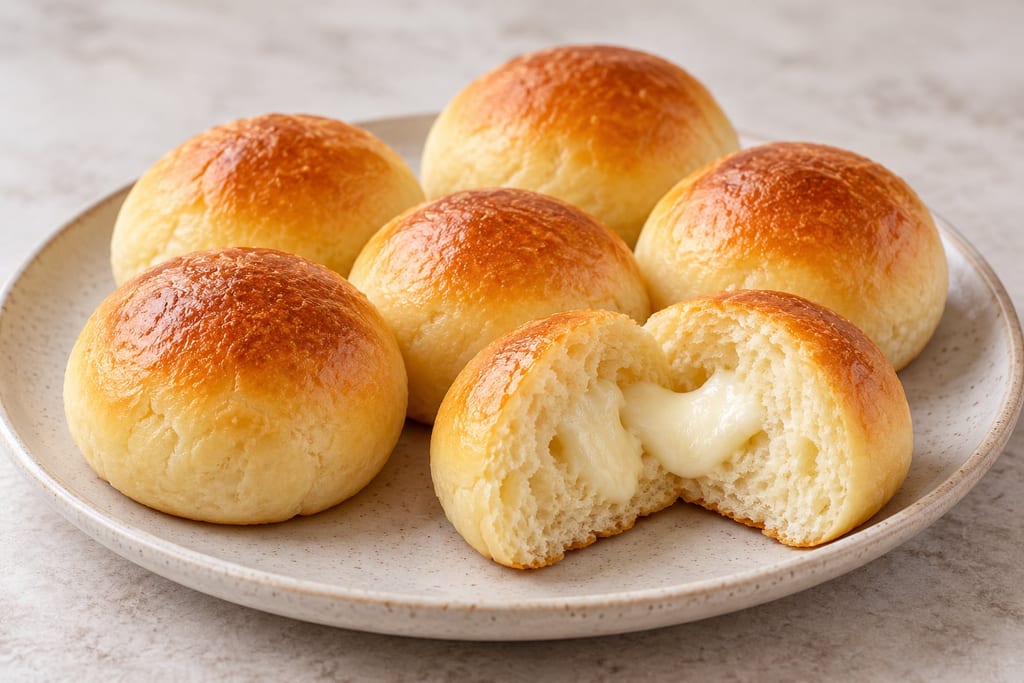
Soft Brazilian yeast rolls use cooked mashed potato in an enriched dough, with mozzarella cubes enclosed before baking.
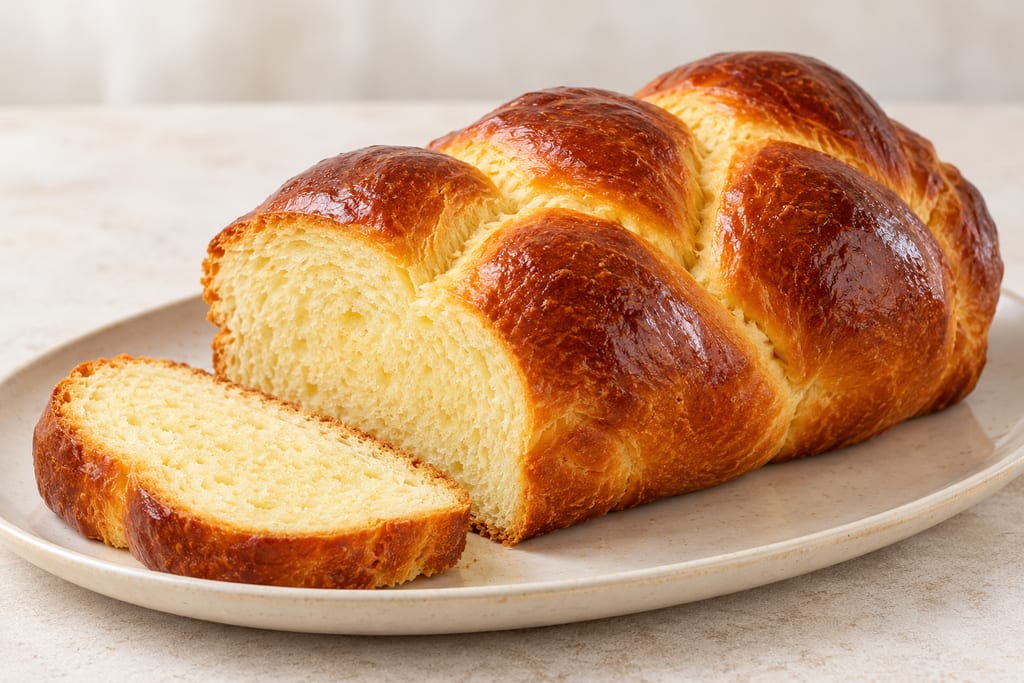
An egg-and-butter-rich yeast dough shaped as one round loaf, two loaves or twelve small brioches, with baking paths that vary by shape.
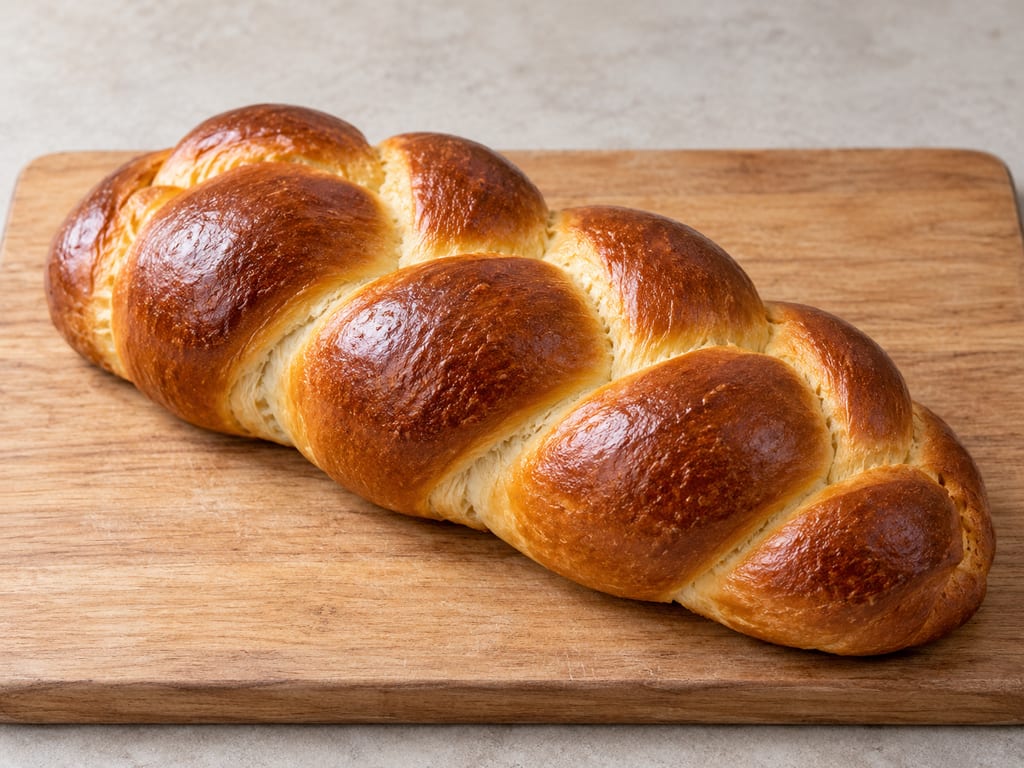
A three-strand yeast-raised challah with flour, salt, yeast, water, neutral oil, honey and egg, based on a Jewish Museum Vienna home recipe.
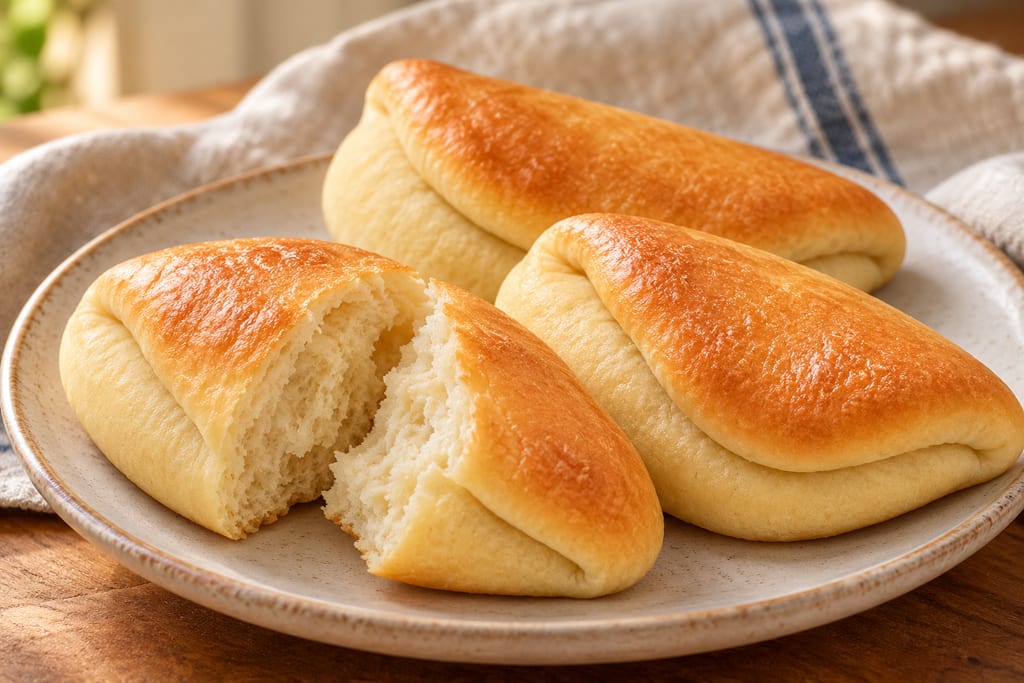
Jamaican-style folded rolls made from sweet coconut-milk yeast dough and brushed with butter.
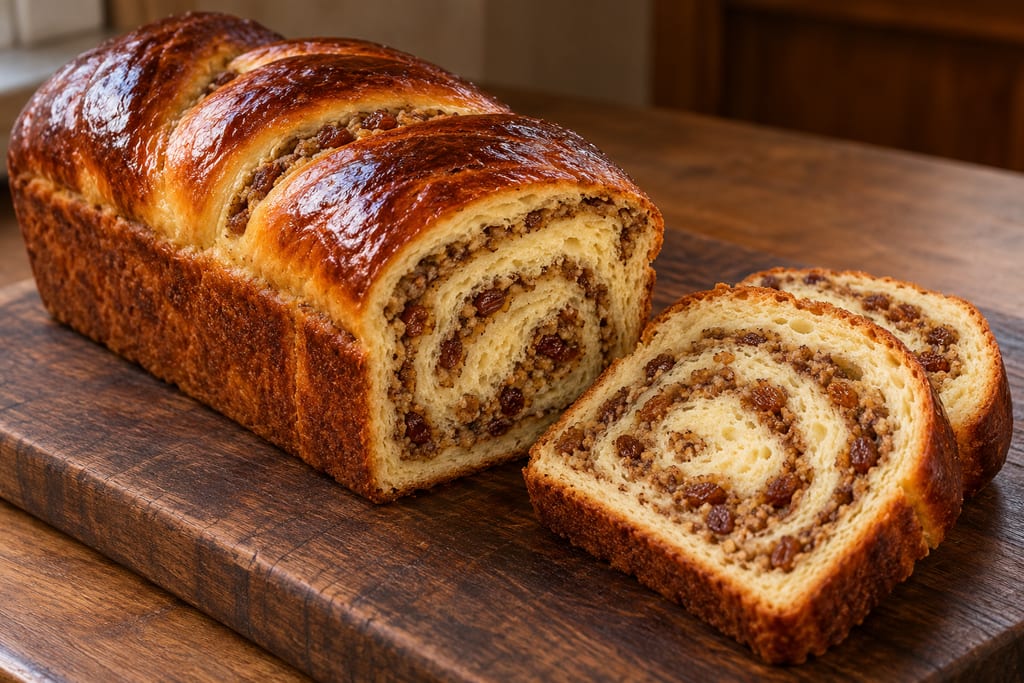
This Romanian cozonac recipe makes two enriched loaves filled with walnuts, sultanas and a whipped egg-white mixture. The dough rises once before filling and again in tins, then bakes in two oven stages.
No community contributions have been published for this entry yet.
Sign in to contribute. Published comments and photos are free to read.
Pati JinichMethod · Ingredients
ConchasComplete formula and method for 15 conchas, including dough mixing, windowpane cue, initial rest, refrigeration, topping preparation, portioning, scoring, final proof options and oven settings.
The source identifies the recipe as courtesy of Francisco Migoya.
Cited in: A Mexican pan dulce; Dough and topping; Proofing and baking; Handling the raw dough
Pati JinichHistory · Geography · Technique
Sweet Conchas!Jinich describes conchas as a popular Mexican sweet pan dulce and reports observing them made at Panadería Santa María in Valle de Bravo.
Her account describes enriched yeast dough, flour-sugar-butter topping, shell scoring and a bakery oven, without claiming a single origin.
Cited in: A Mexican pan dulce; Within a living pan dulce tradition
U.S. Food and Drug AdministrationSafety
Handling Flour Safely: What You Need to KnowFlour is a raw food and raw eggs may carry harmful bacteria; do not taste raw dough, prevent cross-contamination, and wash hands, utensils and surfaces after handling flour or raw dough.
Cited in: Handling the raw dough
Sistema de Información Cultural, Secretaría de CulturaContext
Festival del Pan Dulce MexicanoLists September 2026 festival organised by Canainppa in Coyoacán, with historical and cultural documentation efforts around Mexican pan dulce. The listed heritage initiative is not treated as an already granted designation.
Cited in: Within a living pan dulce tradition
Wikimedia Commons / ProtoplasmaKidImage reference
Concha de vainilla (pan dulce mexicano) 05.jpgOwn-work vanilla concha bought in Mexico City, 20 May 2021. File-level CC BY-SA 4.0; excluded from PD/CC0 reference count.
U.S. Food and Drug AdministrationFood safety
Are You Storing Food Safely?FDA advises that foods requiring refrigeration should not remain at room temperature for more than two hours, or one hour if ambient air exceeds 90°F, and recommends keeping household refrigerators at or below 40°F/4°C. This general advice does not validate enriched-dough fermentation.
King Arthur Baking, King Arthur Test KitchenMethod comparison
ConchasIndependent egg-enriched conchas formula: the source specifies a 60–90-minute first rise and a further 30–45-minute covered proof after shaping; it does not specify a refrigerated dough schedule.
Comparison only. The timings do not establish a complete cumulative safe handling schedule for the Pati Jinich / Francisco Migoya formula and are not substituted into it.
Institute of Culinary Education (originally International Culinary Center)Method comparison
Mexican Sweet BreadIndependent conchas formula includes milk, eggs and butter; it permits a 2–3-hour room-temperature ferment or overnight refrigeration, followed by a 2–3-hour warm proof after shaping.
The overnight option does not resolve the later warm proof. Comparison only; no ingredients or steps are merged into the Pati Jinich / Francisco Migoya method.
PuratosMethod comparison
ConchasThe inspected commercial formula lists final fermentation overnight in a retarder followed by floorproofing until ready, without a temperature or bounded proof duration.
This method does not provide a complete bounded schedule that resolves the current safety hold. Comparison only; not adopted as a home formula or combined with the Pati Jinich / Francisco Migoya method.
Wikimedia CommonsImage research audit
Earlier image-research ledger: individual exclusions and unresolved leadsAudit compares this worker's pushed research report with the current live record. The following earlier findings were missing from current source metadata; this audit makes no new visual approval or licence re-verification claim.
https://commons.wikimedia.org/wiki/File:Concha_(pan).jpg — Earlier check recorded CC BY-SA 4.0, excluded.
https://commons.wikimedia.org/wiki/File:Pan_Concha_1.jpg — Earlier check recorded attribution-only licence, not PD/CC0.
No new original downloaded, attached or used for generation. These exclusions and unresolved leads do not increase the verified PD/CC0 exact-subject count. Recipe, safety wording, holds and public snapshot remain unchanged.
Journal of Food Protection / PubMedFood safety evidence · Method comparison
Growth of Salmonella enterica and Staphylococcus aureus in no-knead bread dough during prolonged yeast fermentationIn a 2011 study, investigators inoculated no-knead bread dough made with a flour:water:salt:yeast weight ratio of 375:325:5:1 and found significant growth of Salmonella enterica and Staphylococcus aureus during fermentation.
At 21°C, reported mean Salmonella counts increased by 0.5 log CFU/g after 6 hours and 1.5 log CFU/g after 12 hours; the study reports a positive relationship between fermentation temperature and pathogen multiplication over tested temperatures of 21–38°C.
The study concerns inoculated lean no-knead dough, not the egg-, milk-, sugar- and fat-enriched concha formula, its staged refrigeration, or its proof schedule. It demonstrates that yeast fermentation alone cannot be assumed to prevent pathogen growth in dough, but does not establish a concha-specific safe time, temperature or schedule.
King Arthur Baking, King Arthur Test KitchenMethod comparison · Baking endpoint
Classic ChallahThe egg-enriched dough rises about 2 hours, then the shaped loaf rises 60–90 minutes at room temperature; the source bakes it until a digital thermometer in the center reads 190°F.
This is a comparator showing ordinary enriched bread practice, not a validated concha schedule or a substitution for the Francisco Migoya method.
King Arthur BakingMethod · Baking endpoint
Using a thermometer with yeast breadKing Arthur describes 190°F at the center as a good doneness benchmark for most loaves and rolls; its soft dinner-roll test also shows checking a center roll because rolls at the pan edge can be hotter.
The 190°F figure is used here as a general bread doneness benchmark, not as a concha-specific validated pathogen process.
Food Hygiene and Safety Science (Shokuhin Eiseigaku Zasshi)Food safety evidence · Method comparison
Staphylococcal Enterotoxin A Production and Inactivation in Bread during the Production ProcessesIn a study of about 470 g lean bread dough, no Staphylococcus aureus growth or staphylococcal enterotoxin A production was observed during four hours of fermentation at 25°C or 35°C.
The study did not test enriched concha dough, all pathogens, home-kitchen contamination, or this exact proof schedule; it is relevant comparison evidence, not process validation.
Centers for Disease Control and PreventionFood safety
About Eating Raw DoughDo not eat raw dough or batter; raw flour and eggs can contain harmful germs.
Cited in: Handling the raw dough