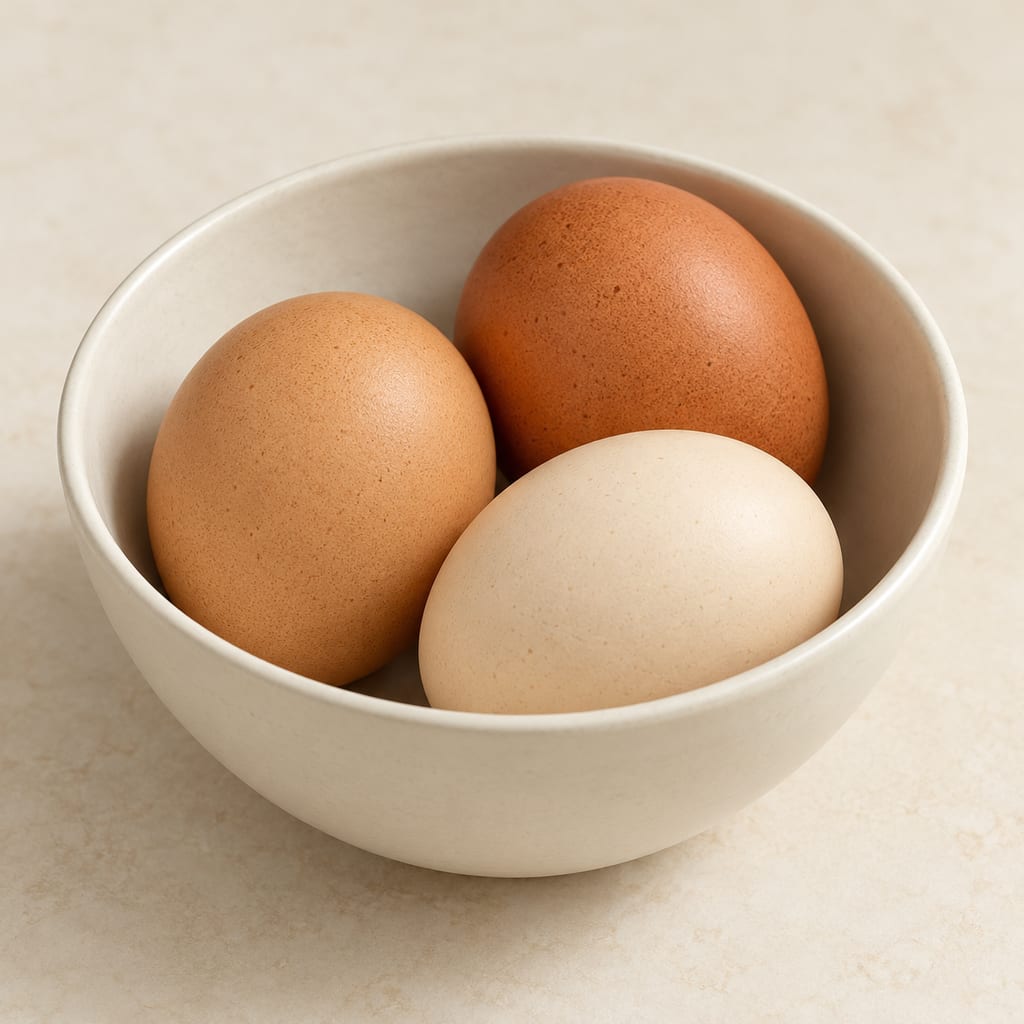
Chicken egg
Chicken eggs supply proteins and yolk fats that set and emulsify. Atlas breads use them in enriched doughs, surface washes and a sourdough pancake batter mixed after fermentation.
 FermenteaWhere food goes to change
Challah · challa · ḥallah · challot
A three-strand yeast-raised challah with flour, salt, yeast, water, neutral oil, honey and egg, based on a Jewish Museum Vienna home recipe.
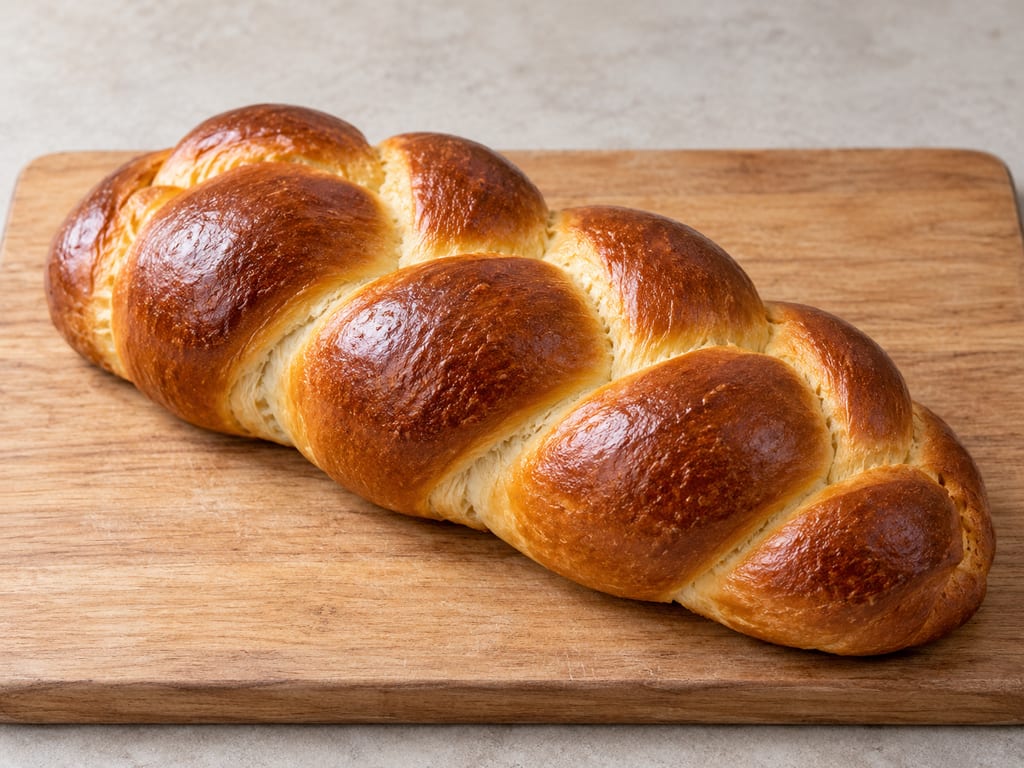
This page follows the Jewish Museum Vienna's one-loaf challah recipe. Its formula combines flour, salt, yeast, water, neutral oil, honey, egg and yolk, then shapes the dough into three strands. The museum recipe is a modern home adaptation; its publication by a museum in Vienna does not make the formula a Viennese regional tradition.
Reform Judaism describes challah as a yeast-raised bread eaten on Shabbat and festivals. It notes braided loaves for Shabbat and round forms for Rosh HaShanah, while also describing differences among communities and recipes. These are cultural contexts, not rules followed uniformly by all Jewish people.
The Reform Judaism article also distinguishes the religious dough portion called challah from the braided loaf now commonly known by that name. The museum's recipe is for the loaf. Its honey, oil and egg make an enriched dough, and commercial yeast supplies its leavening; it is not a sourdough formula.
Combine flour, salt and yeast in a bowl. Add lukewarm water, neutral oil, honey, one egg and the yolk. Knead the dough for 10–15 minutes, until elastic. The source does not name a flour grade or yeast type, and it gives no numeric water or dough temperature.
Shape the dough into a ball, return it to the bowl and cover it. Leave it at room temperature for about two hours, until it doubles in size. The source gives neither a measured proof temperature nor a validated time endpoint; room temperature is its qualitative instruction.
Move the risen dough to a board covered with baking paper and divide it into three equal portions. Roll each piece into a strand about 40 centimetres long, tapering its ends. Cover the strands for about two hours, as the museum recipe directs. That method does not say when to braid them, so this version braids them after the rest. The Jewish Food Society's separate recipe describes pinching three strand ends together and crossing each piece over the middle; its ingredient formula and timing are not used here.
Whisk the remaining egg with water to make the wash; the museum source does not quantify that water. Heat a fan oven to 180°C. Brush the braided loaf lightly with egg wash. Bake for about 30–45 minutes as the museum directs, checking the centre with a digital thermometer; King Arthur Baking challah recipes use at least 190°F (about 88°C) as a centre endpoint. This separate recipe guidance is an added doneness check, not validation of the museum formula. If the crust darkens before the centre reaches the target, loosely tent the loaf with foil. The museum gives no loaf weight or scaling method.
Cool the loaf on a rack. Golden colour and a hollow sound are traditional sensory cues, but do not use them instead of the thermometer reading.
Rabbi Rifat Sonsino's Reform Judaism article describes a historical account in which Jews in South Germany began adopting a braided Sabbath bread from their neighbors in the 15th century. He distinguishes this custom from his own Sephardic experience. This is one attributed historical explanation; it does not establish a single place of origin or make the museum's present-day dough formula a medieval recipe.
The same article connects challah with Shabbat and festivals and describes different forms for ordinary Shabbat meals and Rosh HaShanah. Such practices vary. The source does not provide a universal rule for shape, ingredients or use, and this entry makes no claim that every Jewish community follows the same custom.
Uncooked flour and raw eggs can carry germs. Do not taste the dough before it is baked, and wash hands, bowls, utensils and work surfaces after handling the flour, eggs or dough. FDA advises keeping shell eggs refrigerated at 40°F (4°C) or below until use.
The museum source gives a 180°C fan-oven setting and a 30–45 minute bake, but no centre temperature. King Arthur Baking’s separate classic and sourdough challah recipes bake to at least 190°F (about 88°C) at the centre. This is a practical baking endpoint for the loaf, not a validation study of the museum formula. Check with a digital thermometer; golden colour and a hollow sound alone do not establish doneness.
The source calls for about two hours at room temperature for the first rise and another two hours for the covered strands before baking. FDA's general egg storage guidance does not evaluate yeast-raised dough proofing or validate this specific schedule. Keep eggs refrigerated until needed and bake when the final rest is complete; this entry makes no claim that the museum's exact proof schedule has been independently validated.
A Reform Judaism article describes challah as a yeast-raised bread used for Shabbat and festivals, with braided Shabbat loaves and round Rosh HaShanah forms; it notes that Jewish customs and recipes vary. The author attributes adoption of a braided Sabbath bread by Jews in 15th-century South Germany. This account is not a single-origin proof and does not date the Jewish Museum Vienna formula.
Yield 1 loaf · Scaling: source batch only
Uncooked flour and raw eggs can carry germs; do not taste the dough before baking.
Hazard sourceDo not eat or taste unbaked dough. Wash hands, bowls, utensils and work surfaces after handling flour, eggs or dough.
Control sourceKeep shell eggs refrigerated at 40°F (4°C) or below until needed, and return unused eggs promptly to the refrigerator.
Control sourceUse a digital thermometer to check the centre of the loaf and bake to at least 190°F (88°C), following the endpoint used in King Arthur Baking challah recipes; this is an added doneness check, not validation of this exact method.
Control sourceDo not taste the raw dough; uncooked flour and eggs can carry germs. Wash hands and clean tools and surfaces after handling them.
The Jewish Museum Vienna gives a 180°C fan-oven setting and about 30–45 minutes, with golden colour and a hollow-sound cue. Add a centre-temperature check of at least 190°F (88°C), an endpoint used in separate King Arthur Baking challah recipes; it is baking guidance, not a validation study of this exact formula. Do not rely on colour or sound alone.
The museum specifies about two hours for the first rise and about two hours for the covered strands. FDA consumer guidance says to keep eggs refrigerated, but its general storage guidance does not evaluate yeast-raised dough proofing or validate this specific schedule. Follow the described rise stages, keep eggs refrigerated until used, and bake once the final rest is complete.
The source does not provide a storage duration. Flour grade, yeast type, proof temperature and egg-wash water amount are not stated.
The article attributes adoption of a braided Sabbath bread by Jews in this region to the 15th century; it does not prove a unique birthplace.
Chicken eggs supply proteins and yolk fats that set and emulsify. Atlas breads use them in enriched doughs, surface washes and a sourdough pancake batter mixed after fermentation.
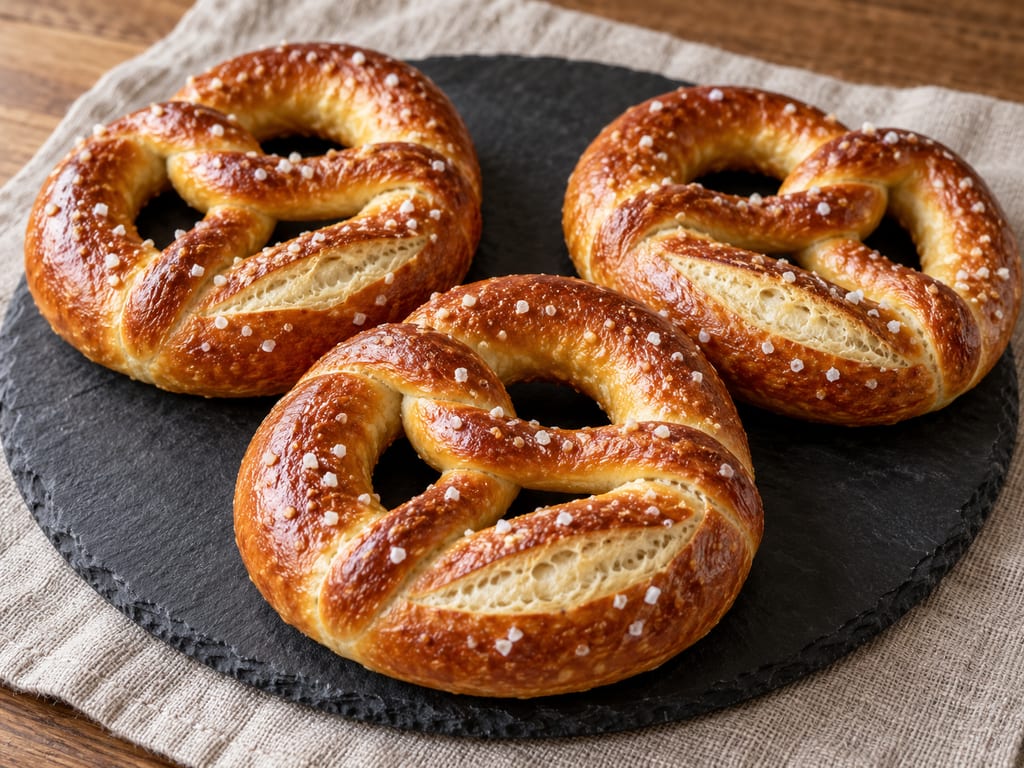
This German-style knot pretzel uses a firm yeast dough, a chilled shape, a one-minute baking-soda bath and a deep bake. The method follows Jeffrey Hamelman's home adaptation for King Arthur Baking.
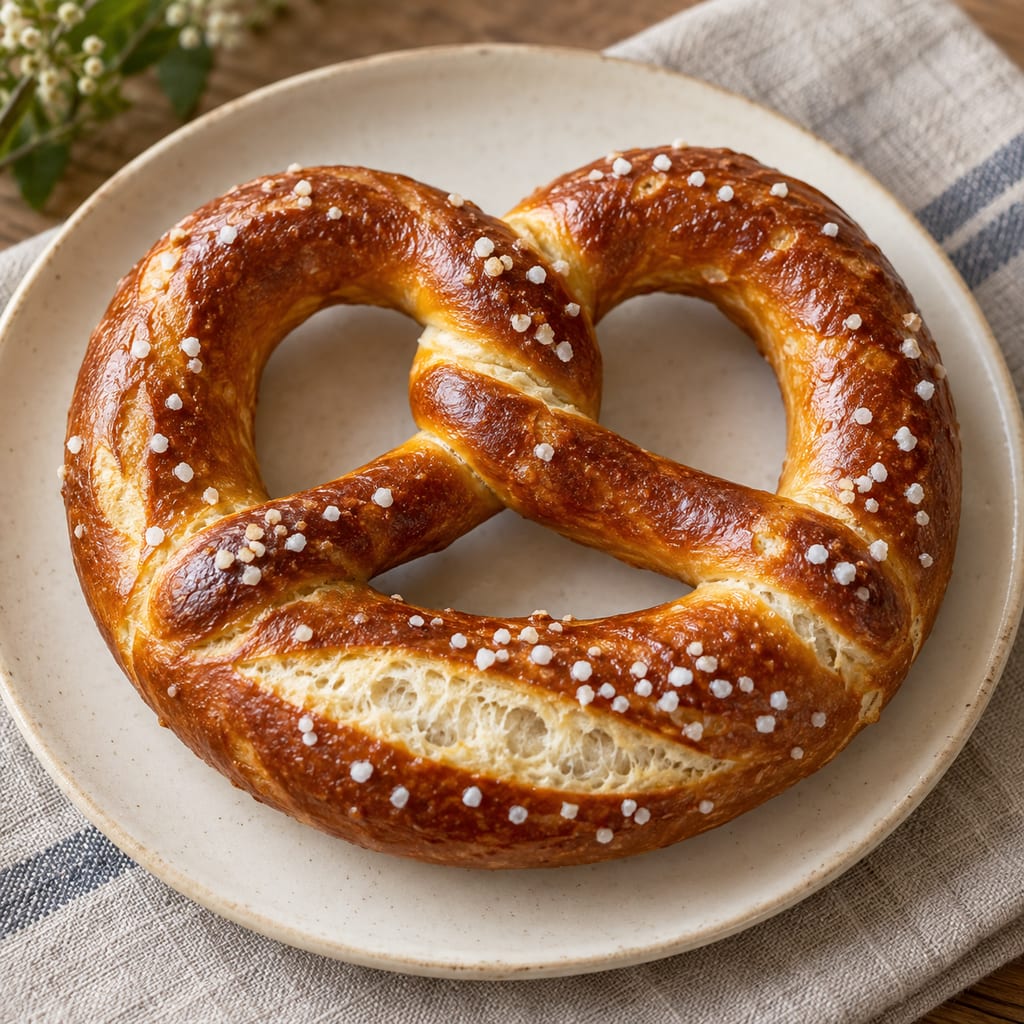
A German-style Brezel is a yeast-raised wheat dough shaped into a loop and dipped in an alkaline bath before baking. This home version uses baking soda; the original formula uses food-grade lye.
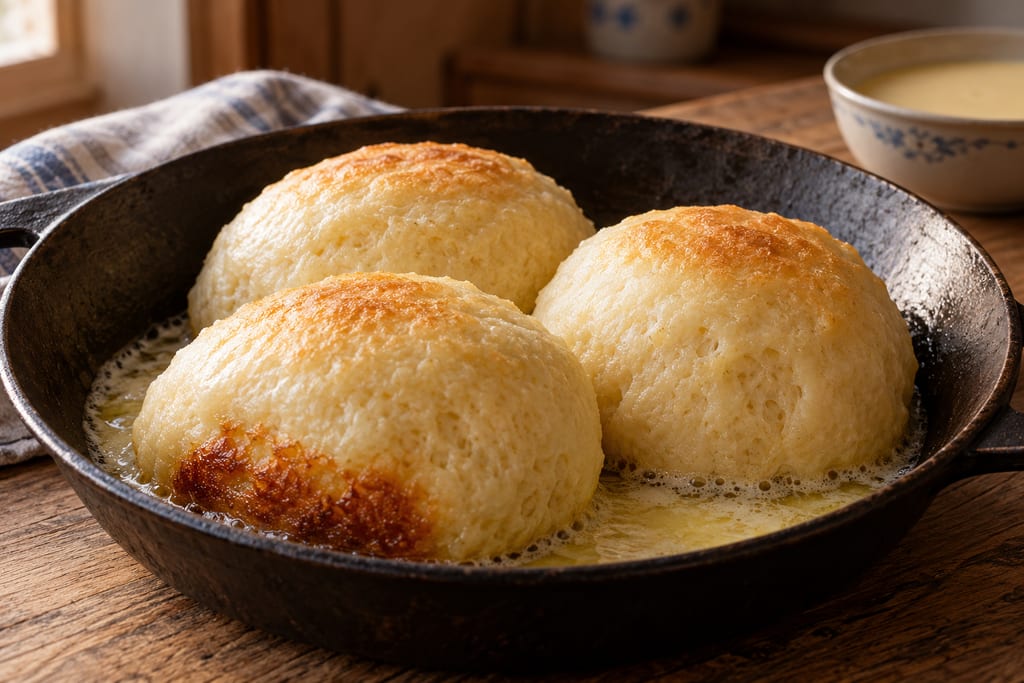
Allgäu Dampfnudeln are enriched wheat buns proofed in a covered casserole and cooked in milk and butter until the liquid nearly cooks away.
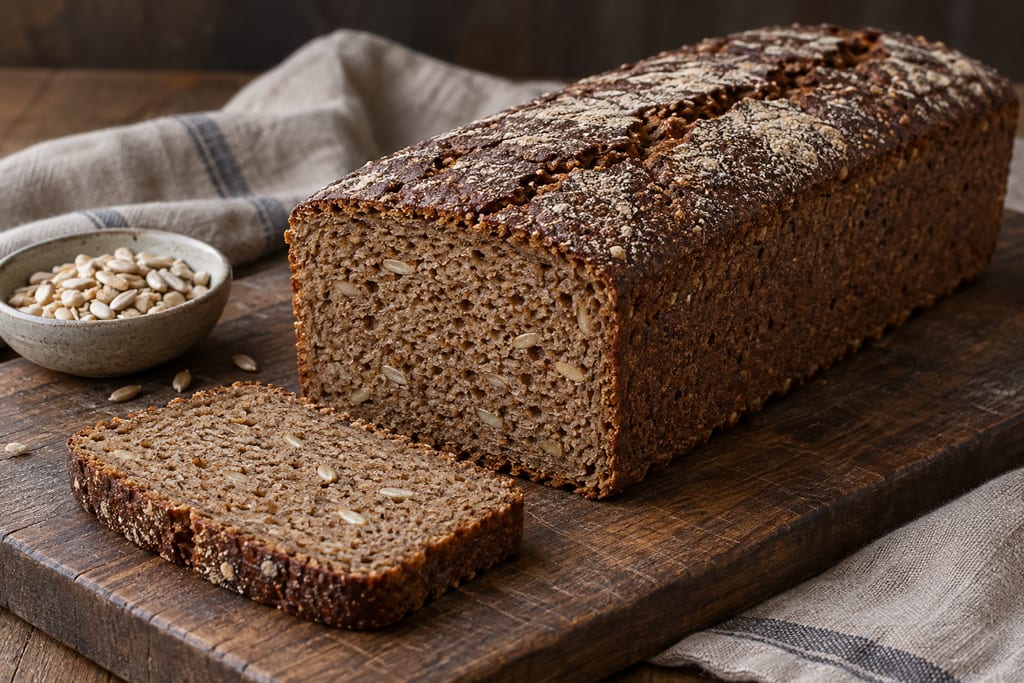
A dense whole-rye loaf with a sourdough preferment, soaked rye chops and sunflower seeds. It bakes in a long loaf pan and rests for 24–48 hours before slicing.
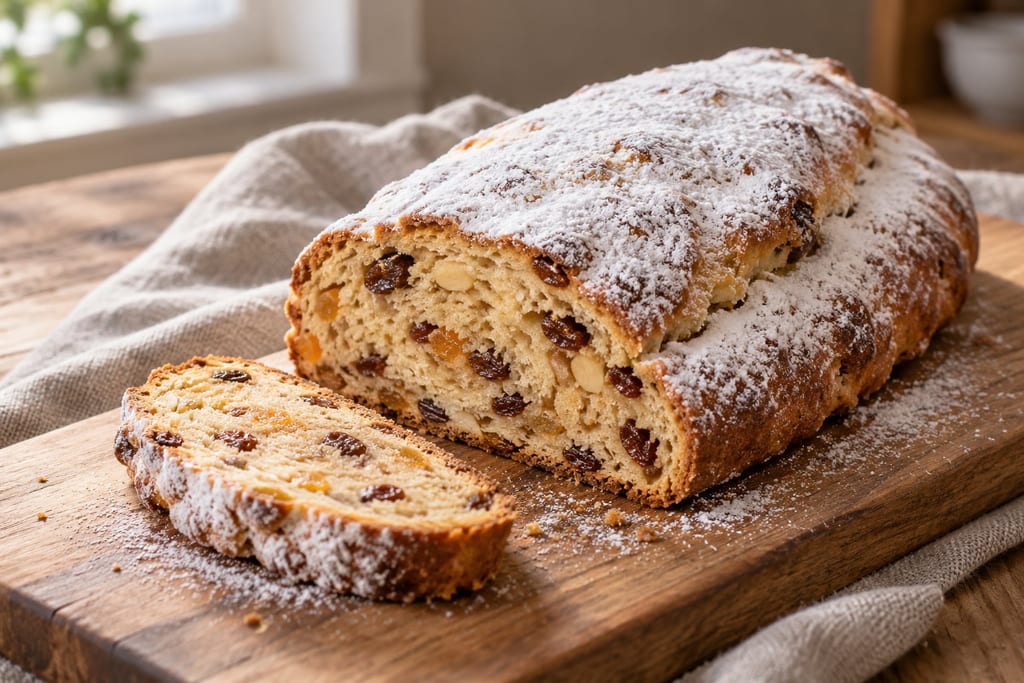
A four-loaf German family Christmas stollen with rum-soaked sultanas, almonds, candied citrus and marzipan, baked in two stages.
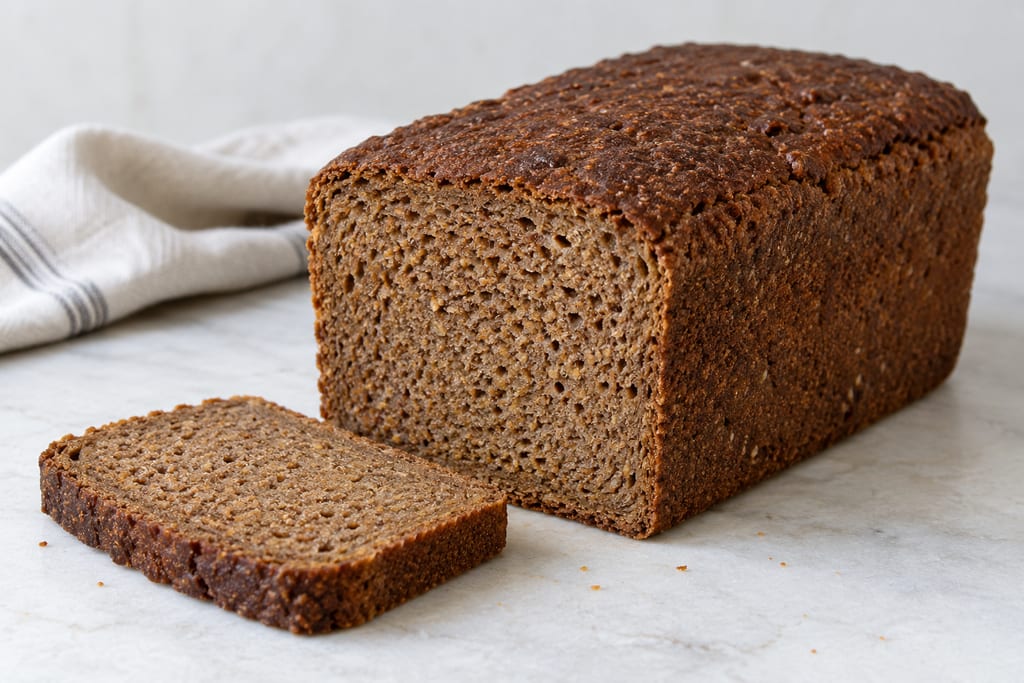
A dense, dark rye-and-wheat loaf with a warm rest and long covered bake. This home version uses a 5-hour oven bake and differs from the protected Westphalian product.

A source-specific modern extract adaptation of Düsseldorf Altbier, with specialty malts, two hop additions and an ale yeast. It is distinct from a brewery's commercial Altbier process and from Kölsch.
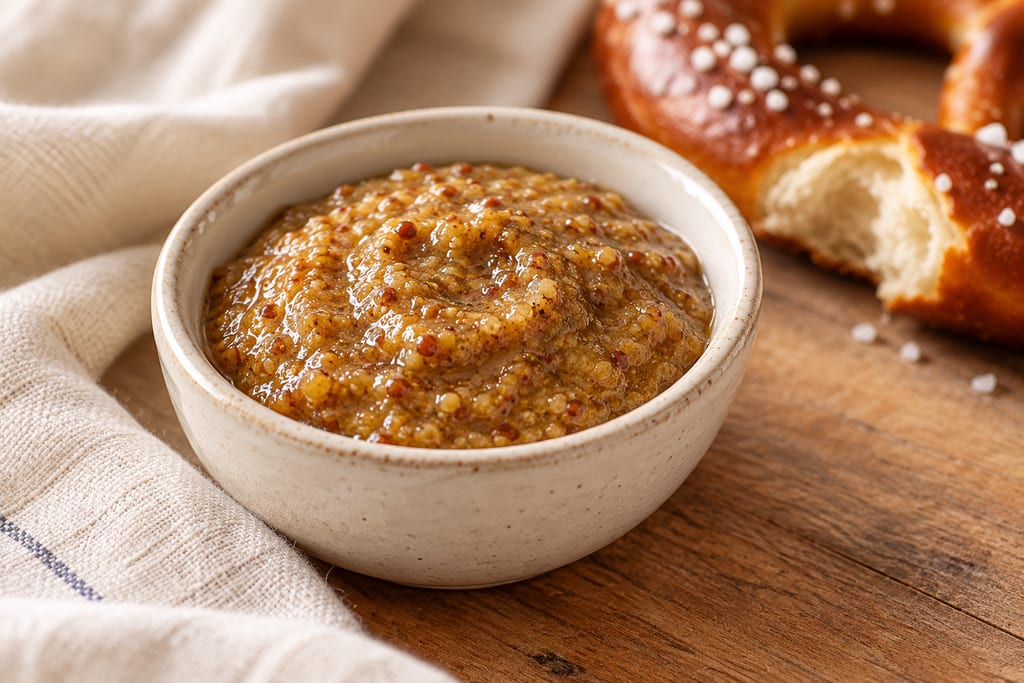
A coarse, sweet Bavarian-style mustard of yellow and brown seed in a cooked brown-sugar and vinegar base, made to eat with Weisswurst; an original refrigerated formula.
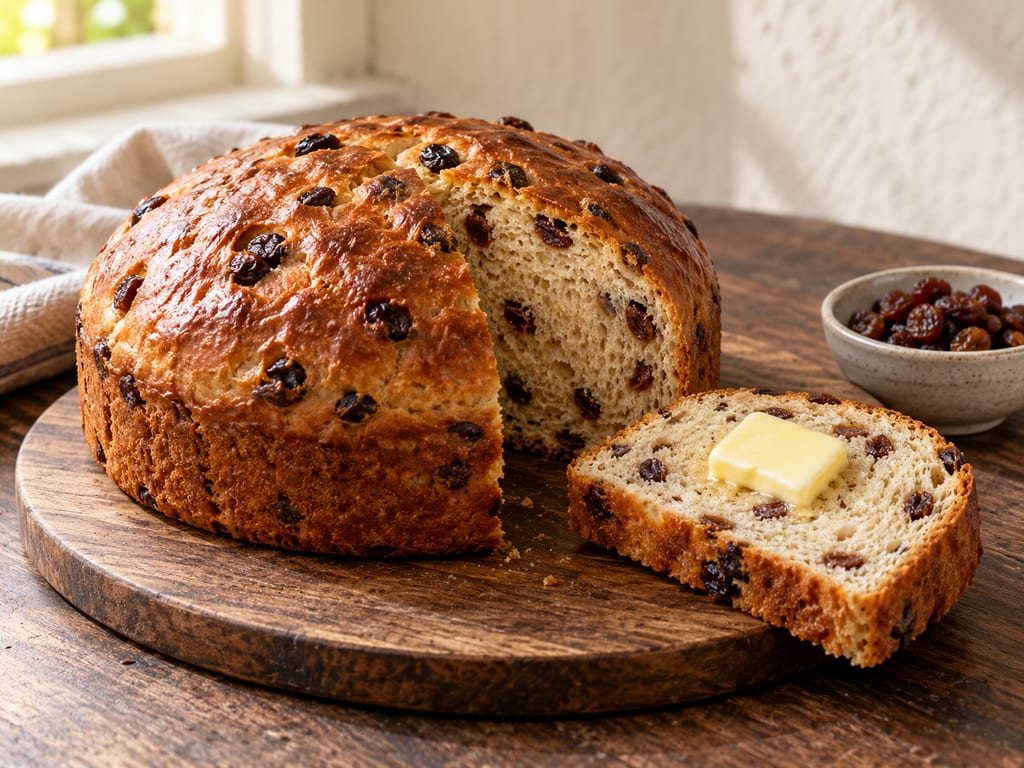
An Irish fruit-studded yeast loaf, associated in a contemporary cultural account with Halloween and often served fresh or toasted with butter.
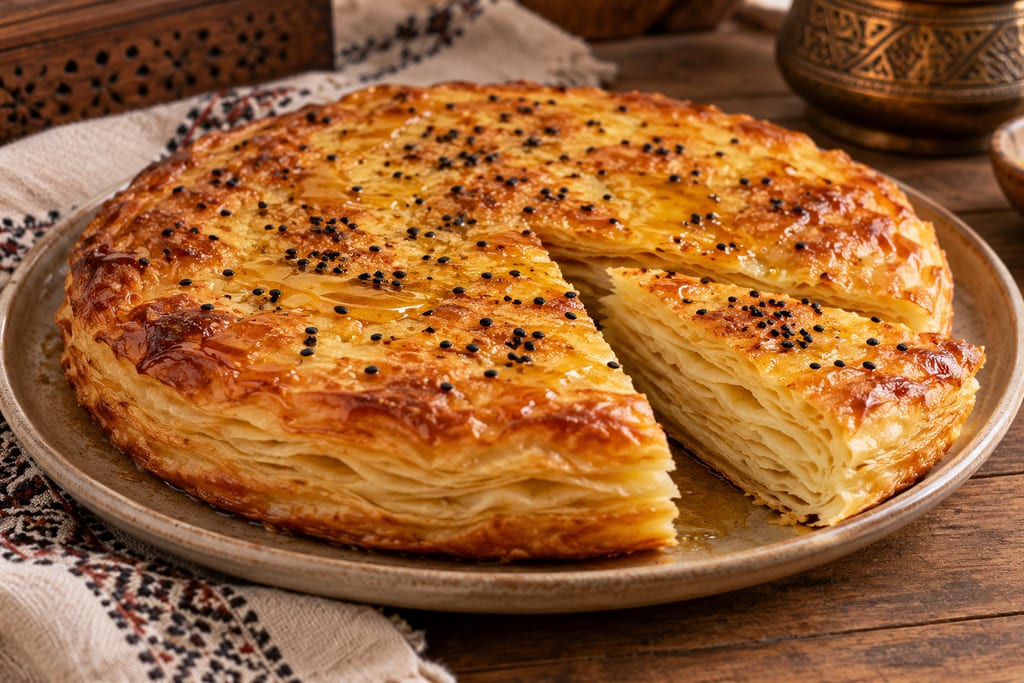
Bint al-sahn is a Yemeni celebration and home bread built from thin, egg-rich yeast dough layers brushed with ghee or butter. This source-specific version makes one round cake, baked until golden and served warm with honey.
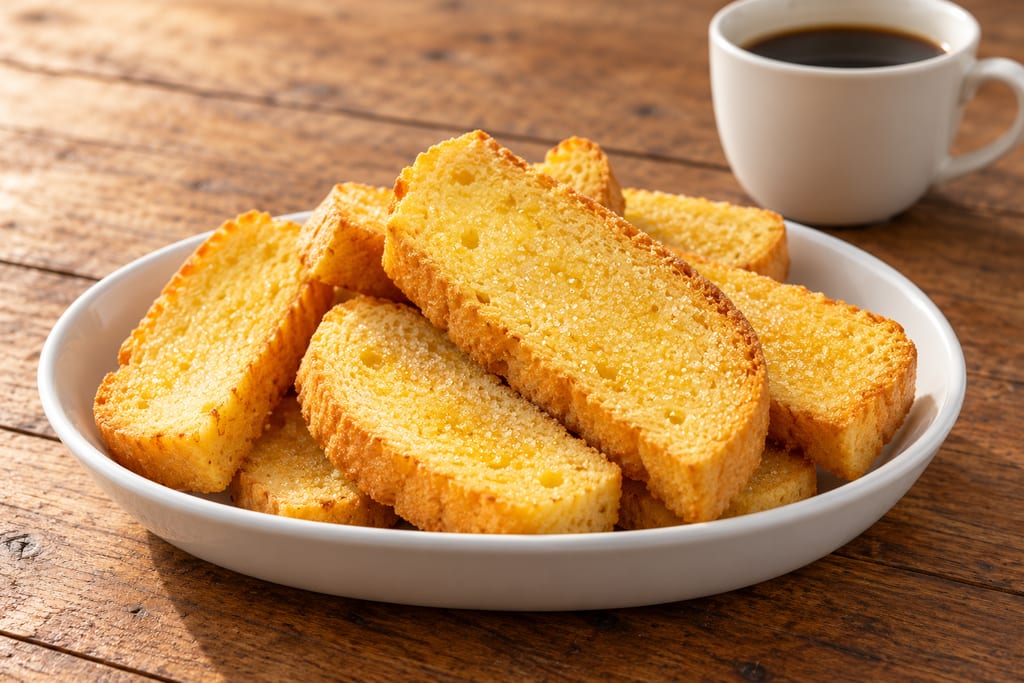
PagkainPinoy’s 24–30 piece version twice-bakes day-old soft bread with a thin butter-and-sugar coating.
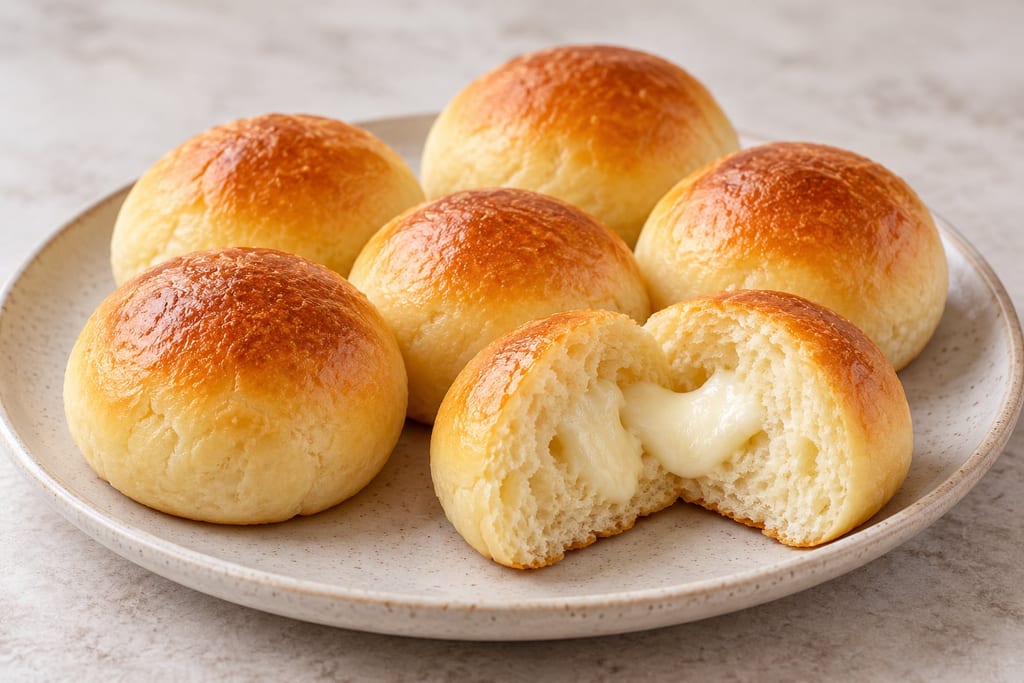
Soft Brazilian yeast rolls use cooked mashed potato in an enriched dough, with mozzarella cubes enclosed before baking.
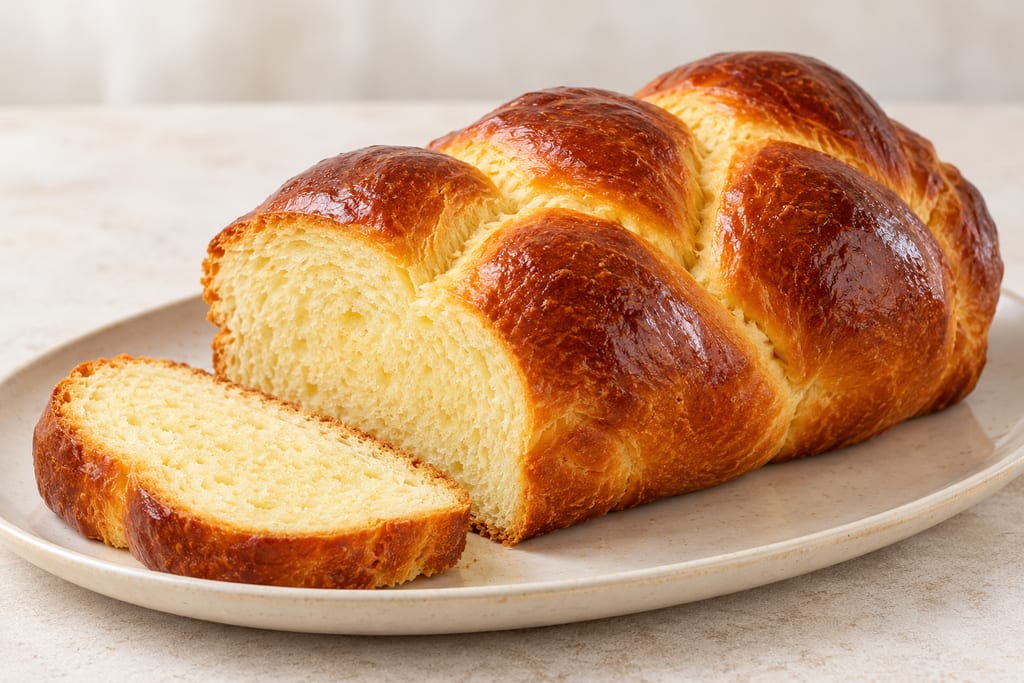
An egg-and-butter-rich yeast dough shaped as one round loaf, two loaves or twelve small brioches, with baking paths that vary by shape.
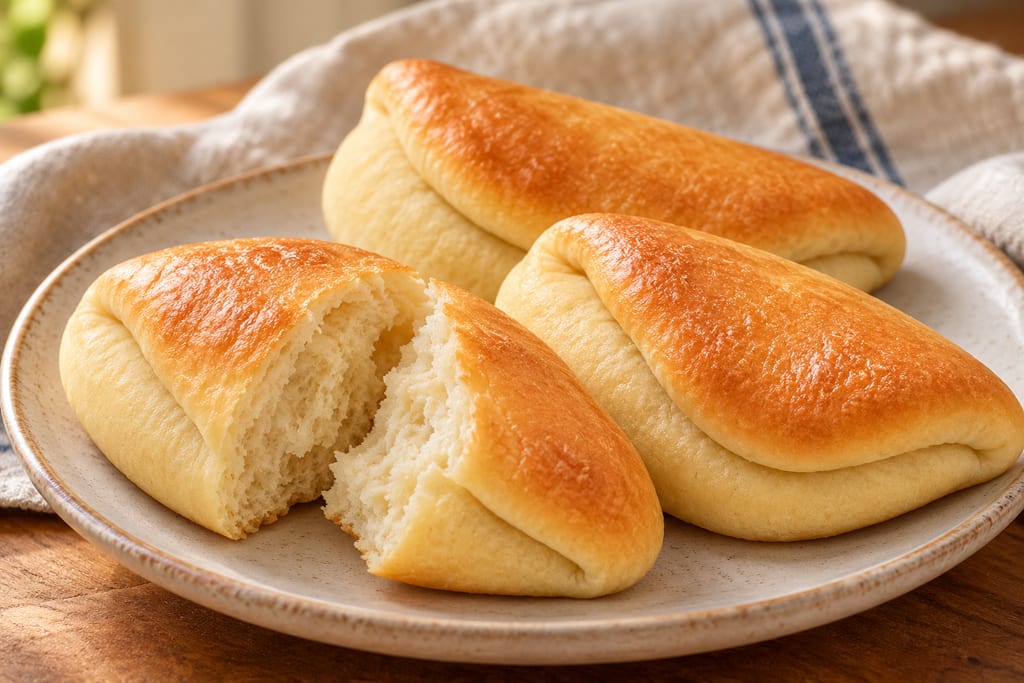
Jamaican-style folded rolls made from sweet coconut-milk yeast dough and brushed with butter.
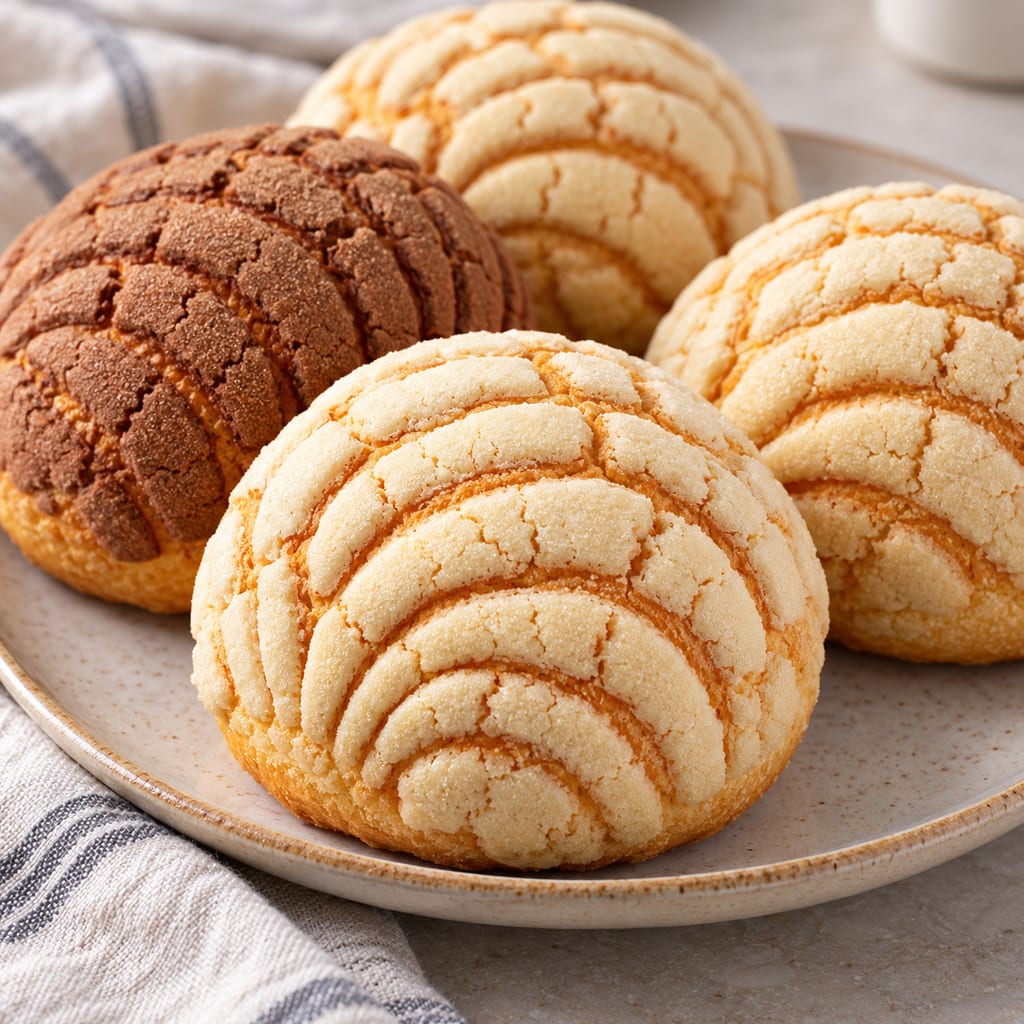
Mexican sweet rolls with a soft enriched yeast dough and a separate scored sugar-flour topping shaped like a shell. This version makes 15 rolls and uses a chilled dough rest before final proofing.
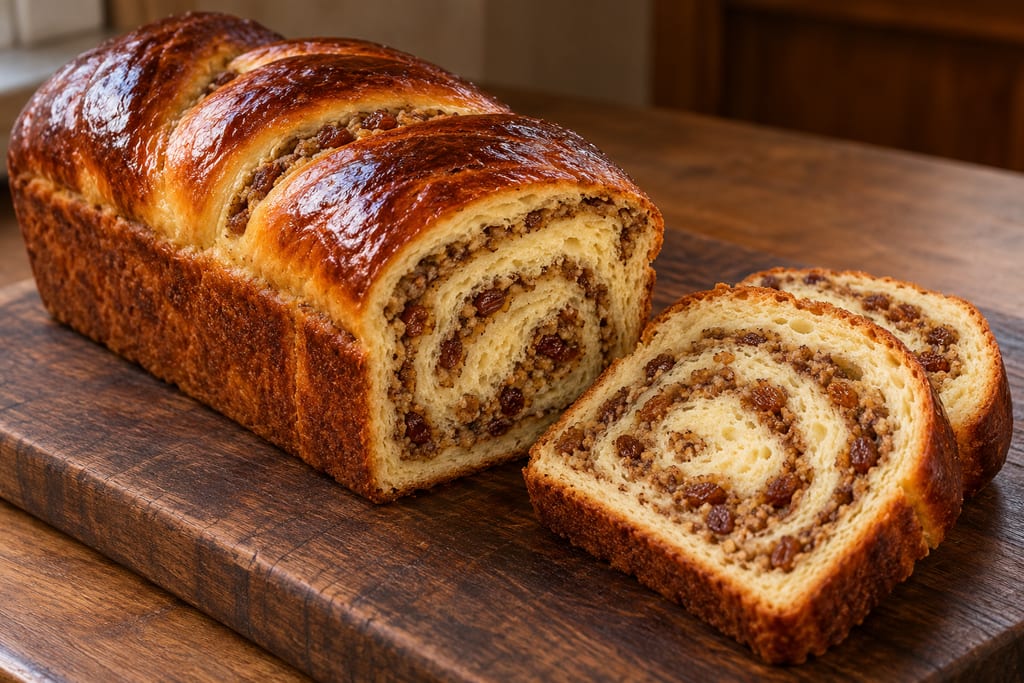
This Romanian cozonac recipe makes two enriched loaves filled with walnuts, sultanas and a whipped egg-white mixture. The dough rises once before filling and again in tins, then bakes in two oven stages.

Protected Italian vinegar made only from cooked grape must, fermented and aged in a battery of wooden barrels for at least 12 years: sweet, sharp and syrupy.

Airag is Mongolia’s fermented mare’s-milk drink, traditionally churned with saved starter in a reusable cowhide khokhuur.

Appam, or hoppers, are South Indian and Sri Lankan rice pancakes made from a fermented coconut-and-rice batter and cooked in a curved pan to a crisp lacy rim and a soft, spongy centre.

Auricularia tremellosa is a wood ear fungus of the genus that supplies most dried wood ear sold in China; its own food record is thin, and the culinary practice described here comes from the closely related wood ear species.

Ayran is Turkey’s cold, savoury yogurt drink: plain yogurt is loosened with water and lightly salted, then whisked smooth or aerated into a soft cap of foam.
A thin stone griddle used over an open hearth. Norwegian archaeology documents the established tradition from the early Middle Ages; a Viking-period origin is only a cautious suggestion linked to Shetland.

Crushed or milled barley cooked in water until the starch softens and the mixture thickens, the plainest way a northern household turned stored grain into a meal, here with apple and hazelnut.

Black carrot is the anthocyanin-pigmented Eastern carrot (Daucus carota var. atrorubens), the purple root that preceded orange types and still colours kanji and şalgam.
No community contributions have been published for this entry yet.
Sign in to contribute. Published comments and photos are free to read.
Jewish Museum ViennaRecipe · Modern museum adaptation
Jewish Museum cooks! ChallahOne loaf formula: 375 g flour, 1/2 tablespoon salt, 1 teaspoon yeast, 100 mL lukewarm water, 45 mL neutral oil, 35 g honey, two eggs and one yolk.
The source uses one egg and the yolk in the dough; the remaining egg is whisked with water for an unquantified egg wash.
The method gives 10–15 minutes kneading, a room-temperature rise of about two hours, three 40 cm strands with another rest of about two hours, a 180°C fan oven and a 30–45 minute bake. It gives visual and hollow-sound cues.
Cited in: A museum recipe and a wider custom; Mixing and the first rise; Three strands, shaping and baking
Reform Judaism; Rabbi Rifat Sonsino, Ph.D.History · Religious and regional context
Why Is Challah So Beloved by the Jewish People?The author describes challah as yeast-raised, eaten on Shabbat and festivals, braided on Shabbat and round on Rosh HaShanah; he notes variation in forms and recipes.
The author attributes adoption of a braided Sabbath bread by Jews in South Germany to the 15th century and distinguishes his Sephardic experience from the custom he describes. This is one historical account, not a universal practice or single-origin proof.
The article describes the ritual dough portion called challah as distinct from the modern loaf name.
Cited in: A museum recipe and a wider custom; Historical setting and limits
Jewish Food Society; recipe shared by Uri ScheftProcess context
Classic ChallahThe page describes how to braid three strands, providing the shaping action omitted from the Jewish Museum Vienna method.
Its formula and proofing times are separate and are not merged with the selected museum recipe.
Cited in: Three strands, shaping and baking
Centers for Disease Control and PreventionSafety
Raw Flour and DoughRaw flour and eggs can contain germs; CDC advises against eating raw dough and recommends cleaning after handling flour, eggs or dough.
Cited in: Raw dough and storage
U.S. Food and Drug AdministrationSafety context
Are You Storing Food Safely?FDA consumer storage guidance says eggs and other foods requiring refrigeration should not remain at room temperature longer than two hours (one hour above 90°F). It does not address raw challah dough or validate this recipe’s fermentation schedule.
Cited in: Raw dough and storage
King Arthur BakingIndependent recipe comparison · Process and safety review
Sourdough ChallahThis is a separate sourdough challah formula; its ingredients and method are not merged into the Jewish Museum Vienna formula.
The source directs a one-hour room-temperature rise, followed by 8–16 hours refrigerated.
After shaping, the source directs a 2.5–3 hour room-temperature proof and bakes until internal temperature is at least 190°F.
The source does not state that this handling schedule is a validated safety control for egg-enriched raw dough, and it does not validate the Jewish Museum Vienna formula's roughly four hours of room-temperature rests.
Cited in: Three strands, shaping and baking; Raw dough and storage
King Arthur BakingIndependent enriched bread baking guidance
Classic ChallahThe separate egg-enriched challah formula uses about a two-hour first rise, then a room-temperature covered rise of 60–90 minutes after braiding.
The recipe directs baking until a digital thermometer at the centre reads 190°F; its ingredients and timing are not merged into the Jewish Museum Vienna formula.
Cited in: Three strands, shaping and baking; Raw dough and storage
King Arthur BakingIndependent enriched bread baking guidance
Sourdough ChallahThis separate sourdough challah formula directs a 2.5–3 hour final room-temperature rise and a centre temperature of at least 190°F.
Its formula and timing are not merged into the Jewish Museum Vienna recipe; the page is used as comparative baking guidance, not as validation of the museum schedule.
Cited in: Three strands, shaping and baking; Raw dough and storage
U.S. Food and Drug AdministrationEgg handling
What You Need to Know About Egg SafetyFDA advises purchasing eggs refrigerated and storing them at 40°F (4°C) or below, and washing hands and utensils after contact with raw eggs.
The consumer guidance discusses egg handling and egg dishes but does not evaluate proofing yeast-raised dough.
Cited in: Raw dough and storage