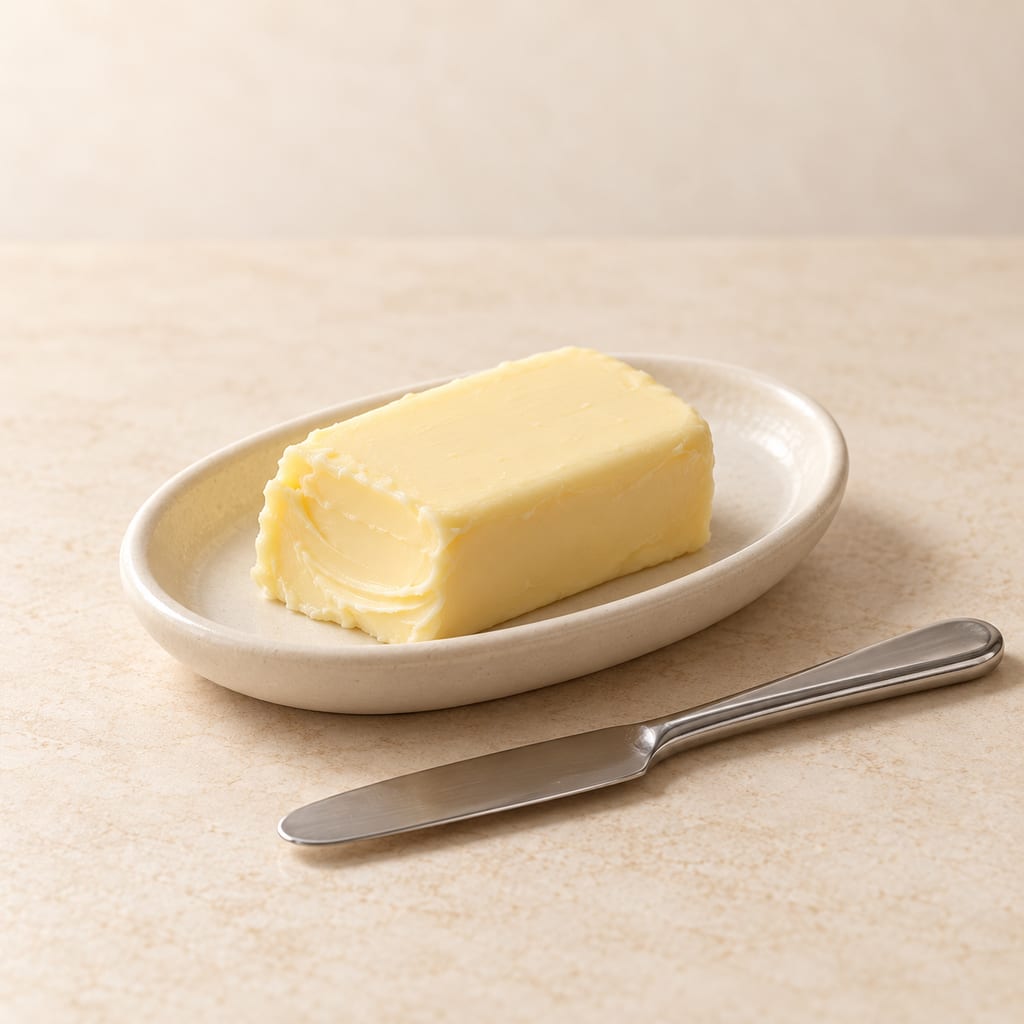
Cultured butter
Cultured butter is churned from cream soured with lactic cultures. Its lightly tart flavour comes from the cultured cream, which separates into butter grains and buttermilk.
 FermenteaWhere food goes to change
Substrates
Heat-treated dairy cream whose fat globules have not been mechanically homogenized, retaining a form used for churning cultured and sweet-cream butter.
Pasteurized, non-homogenized cream is the fat-rich part of milk after a heat treatment, with its fat globules left without the intensive mechanical size reduction of homogenization. The two descriptions belong together comfortably. Pasteurization concerns microorganisms and heat; homogenization concerns the physical arrangement of the fat. A cream can receive the first treatment while retaining the globule structure that the second would change. Non-homogenized cream is therefore quite different from a product identified simply as raw cream.
For a butter maker, that distinction has practical consequences. Cream must first carry its fat as dispersed globules, then release and gather enough of that fat during churning to form grains. A treatment designed to keep small droplets suspended can change how easily that later separation takes place. The ingredient's apparently long name describes a choice of material for that job: cream that has been pasteurized while remaining suitable for the chosen churning method.
The appearance can still vary. Cream is white to off-white, and its thickness depends partly on its fat content. A visible cream line or a thicker upper layer can occur when the fat has not been homogenized into a more stable dispersion. That physical variation is one reason to read the processing description as well as looking at the bottle. The words describe how the dairy material was handled, rather than promising one exact colour, viscosity or fat percentage.
Cream was available long before machinery could separate it continuously. Milk left standing develops a fat-rich upper layer, which can be skimmed away. The household needed vessels, space and time to collect that layer, and enough milk to make the accumulated cream worth processing. The remaining skimmed milk was another usable dairy material. Cream separation was therefore part of managing the whole milk supply, with butterfat and the less fatty fraction moving towards different uses.
In Canadian farm teaching of the early twentieth century, shallow pans, deep setting and hand-powered separators stood beside one another as competing ways to obtain cream. George H. Barr's 1907 Buttermaking on the Farm criticized shallow pans for leaving fat behind in skim milk and exposing a broad surface to household air and odours. Deep cans surrounded by cold water or ice offered a different arrangement. The hand separator promised more uniform cream and better recovery of butterfat, while leaving skim milk available for young stock.
The comparison makes the economics tangible. Fat left behind was butter that the farmer could not sell, while uneven cream made the next operation harder to repeat. More effective separation could improve recovery without requiring more milk from the herd. The creamery system added shared equipment, specialist work and the ability to market a larger quantity together. A farm's cream was becoming an ingredient in a coordinated industry as well as a material for household churning.
The centrifugal separator accelerated a separation that gravity could already accomplish. In a rapidly rotating vessel, the denser milk fraction moves outward relative to the lighter fat-rich fraction. Separate outlets collect cream and skim milk. The operation concentrates globules into one stream; it does not have to break them into the much smaller droplets produced by homogenization. Separation and homogenization are consequently different operations even though both involve machinery and both affect the way milk looks.
In Sweden, Gustaf de Laval and Oskar Lamm patented their separator in 1878 and founded AB Separator in 1883. The machine became widely used on Swedish farms around the turn of the century. Its importance lay in making the two milk streams available more quickly and consistently. The story concerns a particular development in dairy engineering, rather than an invention of cream itself. People had already been skimming cream; the equipment changed the scale and organization of the work.
The separator's cream stream can be adjusted further by standardization: mixing a lower-fat milk stream with a richer one to obtain the desired fat content. This gives manufacturers another way to shape the ingredient without changing what the two processing descriptions mean. Fat concentration, heat treatment and homogenization are three separate attributes. A cream may be rich or relatively light, treated with heat or supplied raw, and homogenized or left without that mechanical step. The particular combination determines which material reaches the cook.
Milkfat is not dissolved evenly through milk like sugar in water. It is gathered into globules with a fat-rich core and a surrounding interface containing membrane lipids and proteins. The globules sit in the watery milk serum. Cream concentrates that dispersed fat while retaining an oil-in-water arrangement: water remains the continuous surrounding phase. This structure explains how cream can pour as a liquid while containing a much richer concentration of fat than the milk from which it was separated.
Homogenization reduces droplet size and creates much more fat–water surface. Milk proteins help cover that newly formed interface alongside remnants of the original membrane. The smaller droplets resist rising and gathering into a distinct cream layer. This is useful when the desired product is a stable, uniform drinking milk or a cream designed for particular storage and textural properties. It is a purposeful change in the emulsion, with consequences for what happens when the material is later whipped, acidified or churned.
Churning works towards a change that homogenization is often intended to resist: the fat must partially gather together. Agitation disturbs globule interfaces and brings the globules into contact. As fat aggregates into larger grains, the surrounding liquid separates as buttermilk. Further working brings the grains into a continuous butter mass with water dispersed through it. The finished structure is different from the original cream, even though much of the fat came from exactly those starting globules.
Globule size is part of that behaviour, but it is not the only variable. Experiments with dairy cream have found that reducing average globule size can lengthen churning and leave more fat in the buttermilk; the material stabilizing the droplet surfaces also affects the outcome. The useful lesson is a graded one. Churnability depends on the droplet structure and its surroundings, rather than on a universal division between cream that can and cannot ever become butter.
Fat's physical state matters too. Cooling causes part of the milkfat to crystallize, while another part remains liquid. The balance affects the way globules gather during churning and the texture of the butter afterwards. Very cold cream and excessively warm cream can therefore behave differently even when they came from the same bottle. The particular recipe supplies its churning conditions. Non-homogenized describes the starting emulsion; it does not remove the need to manage the rest of the process.
Pasteurization is a controlled heat treatment used to reduce disease-causing microorganisms. It is separate from removing cream from milk and from changing globule size. For cultured butter, it also changes the microbial starting point before an intended culture is added. The maker is selecting a treated dairy material and then introducing a starter for controlled souring, rather than relying on whatever organisms happened to arrive with untreated cream.
The treated cream still needs appropriate handling. Contamination can occur after pasteurization, so a package's refrigeration and use directions remain relevant once the cream reaches the kitchen. The processing word does not mean that an opened bottle is sterile or that it has one storage life in every setting. Selecting a commercially pasteurized cream keeps the ingredient choice clear without turning a historical home-dairy explanation into new instructions for heat-treating raw cream.
Cultured butter and sour cream can begin with related dairy materials but seek different structures. For butter, the fat will later be gathered and separated. For a spoonable sour cream, a smooth gel with little free whey is desirable. Homogenization can help fat droplets interact with the developing protein structure and can influence thickness. The cream that suits one finished texture need not be the same cream-processing choice used for another.
This distinction appears within the Canadian home-dairy method linked here. Its butter directions specify pasteurized cream that has not been homogenized. Its separate sour-cream directions prefer homogenized light cream for a smoother, thicker gel. The butter maker uses the culturing stage while retaining the butter section's cream choice. The sour-cream section's stated fat level describes that sour-cream formulation; the butter section does not establish a cream-fat percentage for this ingredient.
Culturing itself changes acidity and aroma through bacterial activity. The cream supplies milk sugar, protein, fat and water, while the starter begins the fermentation. Churning comes later and performs a physical separation. Keeping those roles distinct makes the ingredient easier to understand: pasteurization is its heat-treatment history, non-homogenized describes its dispersed fat, and cultured describes a biological change that may be carried out before it is churned.
A useful label or producer specification confirms both pasteurization and the absence of homogenization. Neither a glass bottle nor the word fresh establishes those two attributes. Product names such as whipping cream also describe intended use or composition within a particular market; they do not identify the entire process. Reading the ingredient list alongside the treatment description reveals whether the product contains cream alone or includes other permitted milk ingredients, thickeners or stabilizers.
Current producers illustrate the distinction. Kalona's whipping cream is described as low-temperature pasteurized and non-homogenized. Fresh cream sold from the Dobbiaco dairy area in Italy is likewise identified as pasteurized and non-homogenized, with pastry and kitchen uses. These are examples of the combination as a real ingredient, rather than a choice between modern heat treatment and an unchanged fat dispersion. Their individual pack sizes, composition and refrigeration instructions belong to those products.
Neither pasteurized nor non-homogenized supplies a fat grade. The fat level affects how much water-rich serum accompanies the globules and how thickly the cream pours. Two products with the same treatment description may therefore differ in composition and in the amount of recoverable butterfat they bring to a batch. The recipe's cream specification and the product's own composition label answer different questions: the first identifies the intended processing form, while the second describes the particular cream in the package.
Freezing is another physical change to consider. It can destabilize cream's emulsion so that fat separates on thawing. Cream that has separated in this way may be unsuitable for whipping, although a cooking use such as a cream soup can still make use of its flavour. Storage and future function are connected: preserving a container for later does not necessarily preserve all of its original foaming behaviour. The package's storage directions remain the guide for the particular product.
The same cream can have a life in desserts, coffee and ordinary cooking. Pouring keeps the cream as a liquid emulsion; whipping incorporates air and builds a foam; churning gathers the fat into butter. These operations produce visibly different foods from a related starting material. For a cook, the distinction explains why the form needed for a sauce, a whipped topping and a butter batch cannot be judged solely by how rich the cream tastes.
Milk proteins remain present in cream, so it belongs in the milk-allergen category. Removing homogenization does not remove those proteins, and pasteurization does not turn the product into a milk-free ingredient. Lactose is a different consideration: it is milk sugar, and lactose intolerance is distinct from milk allergy. No lactose concentration or lactose-free status is established by this processing description. The precise product label supplies the information needed about its ingredients and any specific dietary claim.
The linked Canadian butter method gives no cream-fat percentage. Its source-specific temperatures, starter ratio and churning instructions remain in the recipe. Storage follows the actual cream product's directions; no universal shelf life is assigned here.
milk
Publication place of the documented butter-cream specification, not its unique origin.
Documented separator development and farm adoption; cream itself predates this machinery.
Current product example made from milk collected around Dobbiaco, Villabassa and San Candido; not a general origin claim.
Cultured butter is churned from cream soured with lactic cultures. Its lightly tart flavour comes from the cultured cream, which separates into butter grains and buttermilk.

A living dairy inoculum that starts controlled cream fermentation, developing acidity and aroma before sour cream or cultured butter is finished.
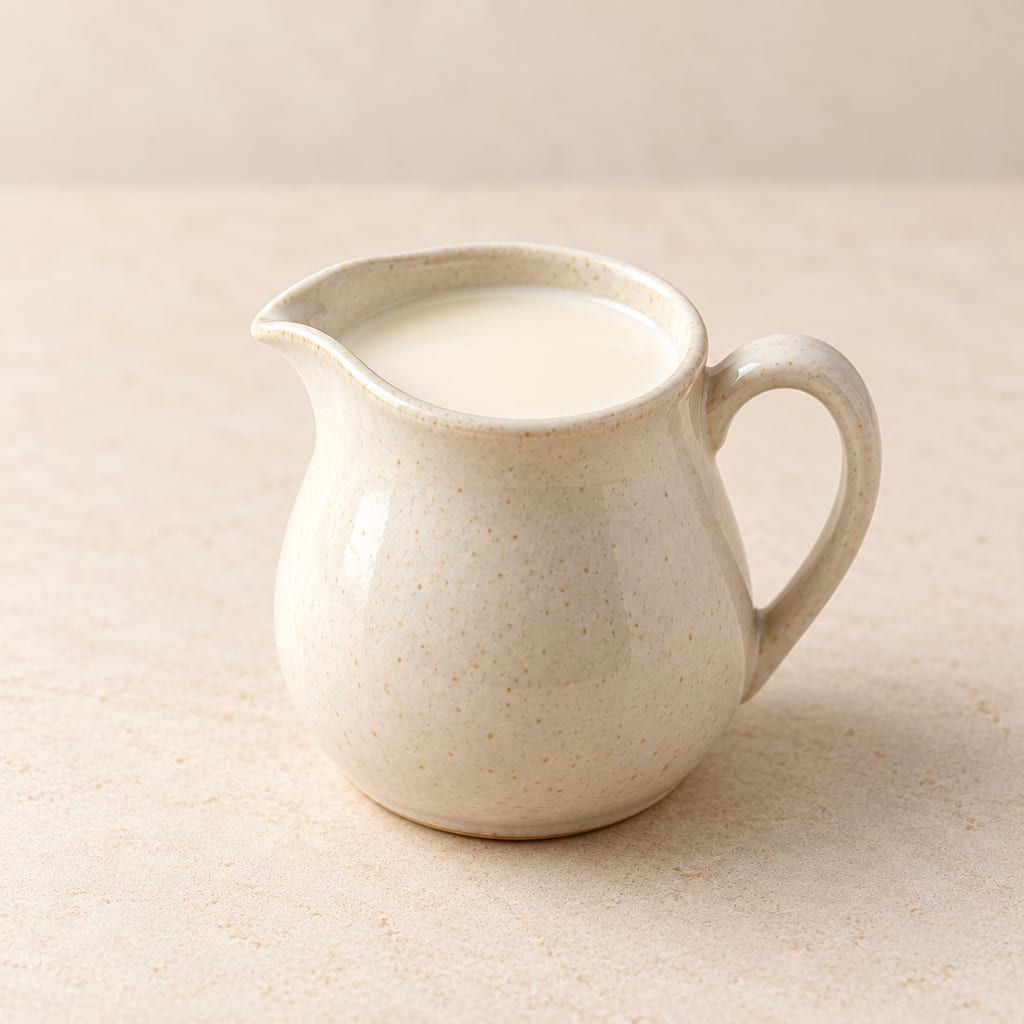
The fat-rich fraction of milk, used as a pouring ingredient, a whipped foam, a cultured dairy substrate or the starting material for butter.
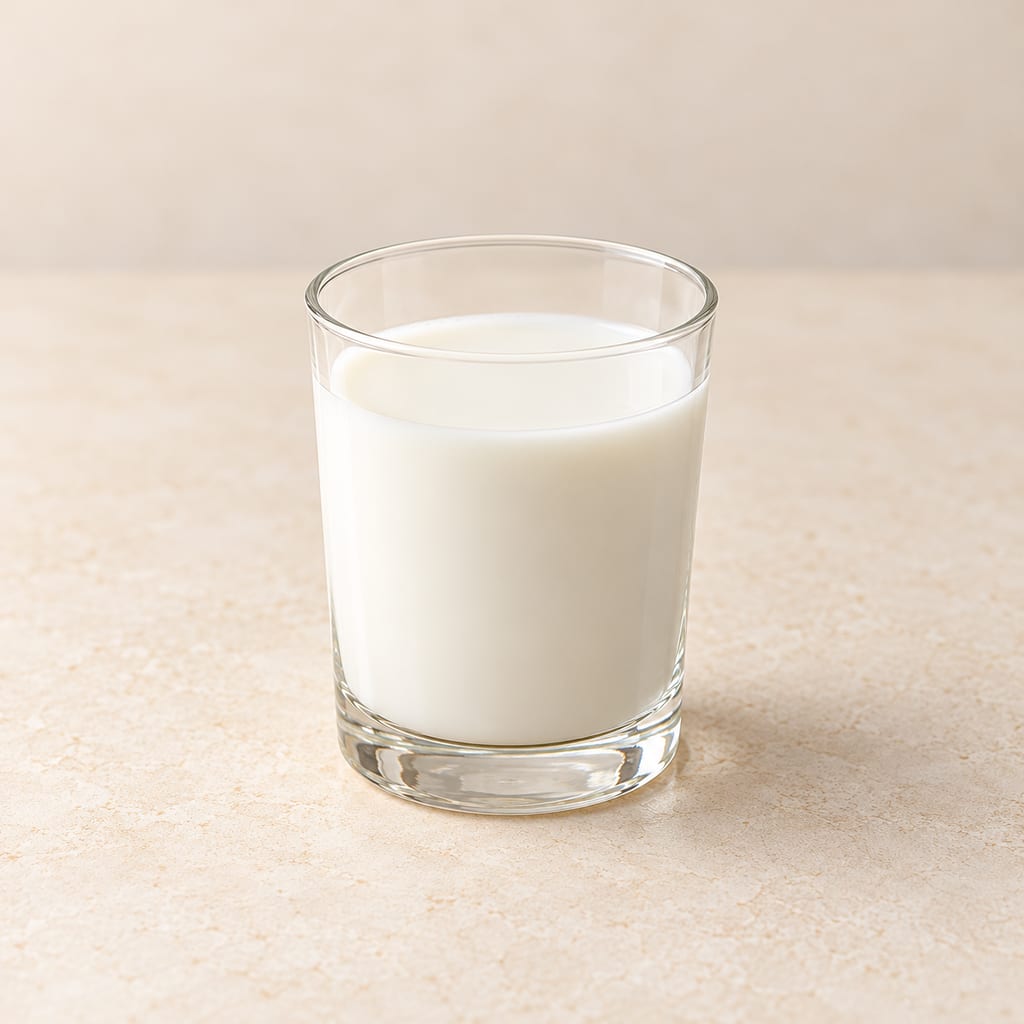
Milk with most of its fat separated into cream, retaining lactose and proteins used in cultured curds, starter media and other dairy foods.

Soft, spreadable Calabrian pork sausage made with a great deal of red chilli and fatty pork, stuffed into natural casings, sometimes smoked and matured while staying soft.

A way to add independent temperature logging to an existing food dehydrator without changing its built-in controls or protections. It is a monitoring method, not a rewiring plan.

Pleurotus cystidiosus is the abalone mushroom, a cultivated oyster-type fungus with dark brown caps that grows more slowly and is more demanding than other Pleurotus species.

A dark, balanced vinegar from Emilia-Romagna made by combining cooked or concentrated grape must with wine vinegar, then acetifying and refining it in wood under a protected specification.

A small electric incubator holds jars at a selected temperature for yogurt and other documented warm food preparations. Controls, capacity and vessel arrangement vary by model.

Adygean salt is a seasoned table salt associated with Adygea and the wider North Caucasian culinary tradition. Salt is blended with garlic and a variable selection of herbs and spices; the exact mix depends on the named style and maker.

The African Caesar-group mushroom, Amanita masasiensis, is a wild ectomycorrhizal species of central and southern African woodlands, eaten locally. The genus contains deadly poisonous species, so identification needs care.
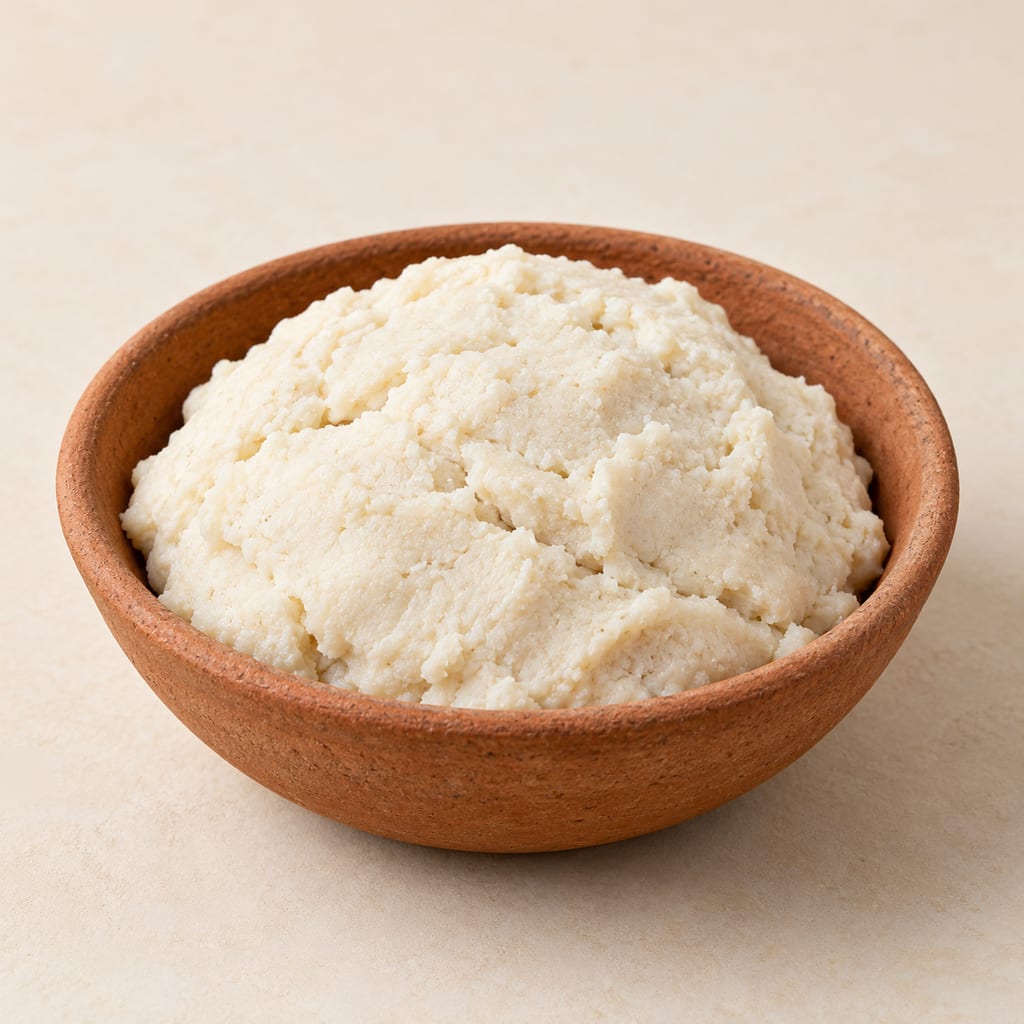
Ghanaian sour cassava dough fermented with traditional inoculum and drained during fermentation. It is used as a base for cooked foods such as banku and akple; process variants and safety outcomes differ.
No community contributions have been published for this entry yet.
Sign in to contribute. Published comments and photos are free to read.
Agriculture CanadaMethod · History · Ingredient context
Home-made dairy products, Publication 1669The butter section calls for pasteurized, non-homogenized cream; the separate sour-cream section prefers homogenized 18% cream for its gel. The manual was published in 1978 and reprinted in 1981.
Cited in: Why the cream is pasteurized; A different aim in sour cream; Preparation note
Dairy Science & TechnologyScience · Production
Organization of lipids in milks, infant milk formulas and various dairy products: role of technological processes and potential impactsCream is an oil-in-water emulsion with a biological fat-globule interface; homogenization reduces droplet size and changes that interface, while churning produces butter through phase inversion.
Cited in: Cream with two separate processing choices; What a fat globule contains; What churning asks of the cream; A different aim in sour cream; Cooking uses and milk allergens
AgroscopeIdentity · Ingredient context
Cream and cream productsCream is the fat-rich milk fraction and retains an oil-in-water arrangement; grades differ with intended use. The source's legal table is dated 2016.
Cited in: Cream with two separate processing choices; Choosing the product and reading its label
Canada Department of AgricultureHistory
Buttermaking on the Farm, Bulletin17Printed pages 4–5 and 7–9 of Barr's 1907 bulletin describe farm and creamery organization, shallow pans, deep setting, hand separators, fat recovery, uniform cream and skim milk for livestock.
Cited in: Before the separator
Tekniska museetHistory · Production
Gustaf de Laval – The milk-cream separatorThe museum contrasts gravity and centrifugal separation and documents de Laval and Oskar Lamm's 1878 patent, the 1883 formation of AB Separator and adoption on Swedish farms.
Cited in: Turning separation into a continuous operation
Food Research InternationalScience
Effect of fat globule size on the churnability of dairy creamThe study abstract describes how fat-globule size and interfacial stabilizers affect cream churning and fat loss.
Cited in: What churning asks of the cream
University of Wisconsin Center for Dairy ResearchScience
Butter Science101Fat crystallization and the balance of solid and liquid fat influence butter structure; cream culturing and churning perform distinct functions.
Cited in: What churning asks of the cream; Why the cream is pasteurized; A different aim in sour cream
Canadian Dairy CommissionProduction · Ingredient context · Uses
CreamCream production involves fat-stream separation and standardization; its emulsion, homogenization, freezing and thawing behavior affect whipping and culinary use.
Cited in: Cream with two separate processing choices; Turning separation into a continuous operation; Choosing the product and reading its label; Cooking uses and milk allergens
BC Centre for Disease ControlSafety
Dairy SafetyControlled pasteurization reduces disease-causing microorganisms; treated dairy remains susceptible to subsequent contamination.
Cited in: Cream with two separate processing choices; Why the cream is pasteurized
Kalona SuperNaturalIngredient context · Uses
Organic Whipping CreamThe producer identifies its whipping cream as low-temperature pasteurized and non-homogenized, provides refrigeration directions, and describes coffee and dessert uses.
Cited in: Choosing the product and reading its label
ValsanaIngredient context · Geography · Uses
Fresh cream DobbiacoThis pasteurized, non-homogenized cream comes from the Dobbiaco, Villabassa and San Candido area of Trentino-Alto Adige, Italy, and is described for pastry and kitchen use.
Cited in: Choosing the product and reading its label
U.S. Food and Drug AdministrationAllergens
Food Allergies: What You Need to KnowMilk is a major food allergen, and product labels identify milk-derived ingredients.
Cited in: Cooking uses and milk allergens
National Institute of Diabetes and Digestive and Kidney DiseasesDietary context
Definition & Facts for Lactose IntoleranceLactose is milk sugar; difficulty digesting it differs from an immune reaction to milk proteins.
Cited in: Cooking uses and milk allergens