
Iburunge with ikivuguto
Iburunge is boiled cassava and kidney beans dressed with strong butter, the Rwandan farm meal Hirata recorded. This home plate uses butter oil and comes with a cold cup of ikivuguto.
 FermenteaWhere food goes to change
Modern method
kivuguto · Rwandan fermented milk
Ikivuguto is Rwanda's thick soured milk. This home version sets pasteurised whole milk with cultured buttermilk overnight at about 21 °C, then chills it for a mild, spoonable drink.
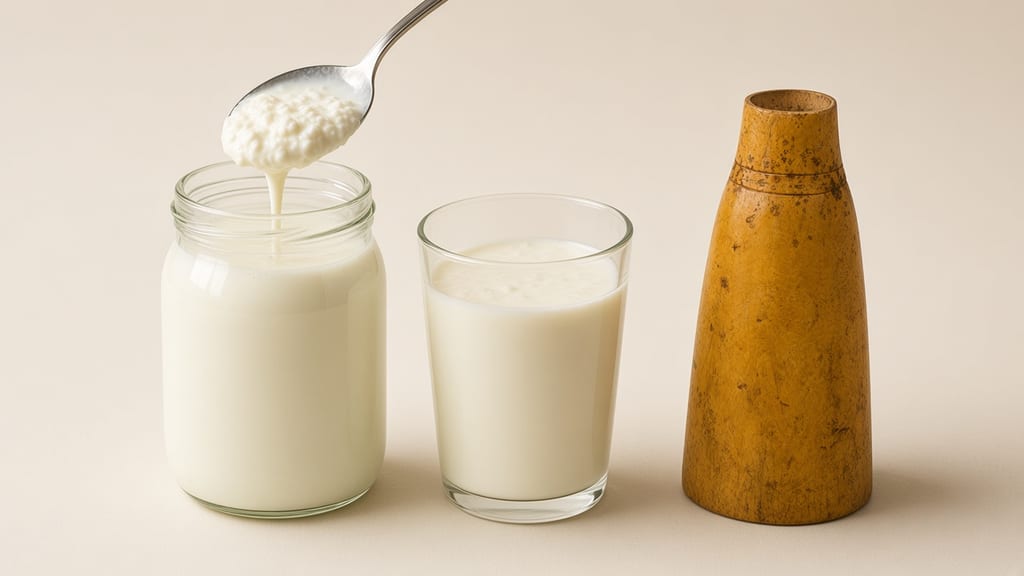
In a Rwandan farmhouse, the morning milk goes into a wooden pot. The Japanese researcher Masahiro Hirata watched the routine in 2018. Fresh milk is poured into an inkongoro, a carved wooden pot about 30 cm tall. When it cools, it moves into a larger pot called an icyansi. Then it waits.
By evening the milk is half sour. People call it umubanji and do not drink it. After about two days it sets into a thick gel. That gel is ikivuguto. Before serving, someone stirs it with a wooden stick called an umutozo, because it often splits into curd and whey in the pot.
Karenzi's 2013 review of Rwandan dairy says the icyansi stands in a warm, clean corner of the house called the uruhimbi. It sits under a straw lid or a lid cut from a calabash. It is never sealed. No starter goes in at the start. The bacteria living in the wooden pot do the work.
The wooden pot is part of what gives ikivuguto its taste. It can also carry germs. In 2013, F. D. Nzabuheraheza and A. N. Nyiramugwera bought samples of traditional fermented milk from sellers in Kinigi Sector in the north of Rwanda. They found Escherichia coli and Staphylococcus aureus. They judged the milk unsafe and recommended pasteurised milk and a pure starter culture.
Karenzi's review makes the same point in a general way. The useful lactic bacteria in traditional ikivuguto live next to harmful ones. The balance depends on the hygiene of the person who makes it.
Rwanda's dairies already follow that advice. A 2019 study by C. Ezeanya-Esiobu and V. Ndungutse describes commercial ikivuguto made by adding a starter culture at 2 to 3% to milk that has been pasteurised and cooled. This home recipe takes the same route on a kitchen scale. It swaps the wooden pot and its wild microbes for clean milk and a known culture.
Karenzi's team isolated the bacteria that sour ikivuguto from samples taken in the north and south of Rwanda. They found Lactococcus lactis and two species of Leuconostoc. These are mesophilic bacteria. They like a mild room, not the heat that yogurt needs.
Karenzi's review compares ikivuguto with Swedish filmjölk, another mild soured milk made by Lactococcus and Leuconostoc. The same group of bacteria sours cultured buttermilk. That makes a carton of fresh cultured buttermilk a sensible home starter.
The method here comes from a 1966 extension bulletin from Virginia Polytechnic Institute, written by G. J. Nageotte and P. M. Large. It was written for cultured buttermilk. It uses whole or skim milk, a small dose of starter and a slow overnight set at room temperature. The temperatures and times below are taken from that bulletin and converted to Celsius.
Start with pasteurised whole milk. Ikivuguto comes from whole milk, and the fat gives a fuller body. The bulletin heats the milk again before culturing. Set the jar of milk in a larger pan of water, with the water higher than the milk, and cover the milk. Bring it to 82 °C and hold it there for 30 minutes.
This second heating does two things. It knocks back any germs that got into the milk after the dairy. It also changes the milk proteins so the curd sets thicker.
Then cool the milk in a bath of cold water to 21 °C. Starter added to hot milk will die. Add 10 mL of fresh cultured buttermilk to each litre. The bulletin gives 2 teaspoons per quart, which is close to this. Stir for one minute so the starter spreads through the milk.
Cover the jar and leave it alone. The bulletin sets the milk at 20 °C in summer and 22 °C in winter. Aim for 20 to 22 °C. A cool cupboard can work. Check it with a thermometer.
The set takes 12 to 16 hours. Start in the evening and it will be ready in the morning. Do not shake or stir the jar while it sets. Movement breaks the curd and makes it watery.
The milk is ready when it has set and tastes pleasantly sour. Karenzi's laboratory strains set milk in about 8 hours at 30 °C. A shop starter at room temperature is slower and milder. That slow pace matches the mild taste of ikivuguto.
Once the milk has set, cool it quickly. Stand the jar in a pan of iced water until the milk drops below 10 °C. Stir only enough to give a smooth body. Then move it to the fridge at 4 °C or below.
The bulletin says the flavour and aroma reach their best about 24 hours after cooling. Give it a day in the fridge before you drink it. Stir before pouring, as the traditional cook does with the umutozo.
Karenzi's review notes that some Rwandan households add a little ikivuguto from the last batch to new milk. The bulletin allows the same trick. Save a cup of the finished milk in a sterile jar as the starter for the next batch.
The bulletin also sets a limit. Get a new starter at least once a week. Each round of saving lets stray microbes build up. A fresh carton of cultured buttermilk resets the culture.
Ikivuguto is a drink for everyone. Hirata found that men and women, children and adults all drink it. It comes to the table with boiled food. His informants said that when food was short they ate only ikivuguto and sweet potato, or ikivuguto with cassava and kidney beans. They also drank it with a stiff sorghum porridge called mutsima.
In Kigali it is a milk-bar drink. NPR's Fatma Tanis reported in 2026 that the city's milk bars sell cold milk, hot milk with honey and fermented milk. The Rwandan custom is to sit down while drinking milk, out of respect for cows.
Serve it cold in a cup or a mug. Pair it with a plate of iburunge, the boiled beans and cassava dressed with butter, or with boiled sweet potato.
The kit is small. You need a heatproof jar or pot that holds a little more than a litre, a lid, a larger pan for the water bath and a dairy thermometer. A long spoon or a clean wooden stick does the stirring.
Wash everything in hot soapy water and rinse it with boiling water before you start. The bulletin is firm on clean utensils. Stray bacteria on a spoon can outgrow a weak starter.
Buy the freshest cultured buttermilk you can find. The bulletin advises fresh products as starters because the bacteria in older cartons lose strength. Read the label. It should say that the milk is cultured or contains live cultures.
In parts of eastern Rwanda the pots are smoked before the milk goes in. Karenzi's review describes smoke from a grass and from a shrub called Combretum molle. The grass is dried and stored for months, then burned in a small clay pot. The milk vessel is held upside down over the smoke. Milk set in a smoked pot tastes of smoke, and the review says Rwandans prize that taste.
Hirata found smoked vessels in all seven households he visited in the northeast. There a small clay smoker called an igicunga holds the burning grass.
This recipe does not copy the smoking. Smoking the pot is a household practice with no tested home method. The plain set milk here matches the mild, clean ikivuguto of the dairies.
In the farmhouse, ikivuguto is also the start of butter. Hirata watched it churned in a round gourd called an igisabo, rocked back and forth on the floor for up to two hours. The liquid left behind is amacunda, the buttermilk. Children and women drink it with meals.
The butter is then aged for weeks into a strong cooking fat, or heated into butter oil in the northeast. That fat goes into iburunge, the dish of beans and cassava that pairs with a cup of ikivuguto. The Fermentea iburunge recipe uses butter oil made from shop butter instead of the aged butter of the farmhouse.
If the milk has not set after 16 hours, the starter was probably weak or the room too cold. Do not keep it warm for longer in the hope that it will set. Throw it out and start again with a fresh starter.
If you see mould, pink or grey patches, or gas bubbles, throw the batch out. Smell, taste and texture can help you judge quality. They cannot prove that the milk is safe. The safety comes from the steps. Use pasteurised milk, heat it again, keep the kit clean, add a live starter and keep the finished milk cold.
Never make this with raw milk, and do not try the open wooden-pot method at home. The Kinigi samples show what that method can carry.
Hirata recorded ikivuguto made in wooden pots in Rwandan farm households in 2018, and Karenzi's review describes the same practice.
Yield 1 L · Scaling: linear
Raw dairy can carry Listeria and other harmful germs.
Hazard sourceTraditional ikivuguto sold in Kinigi carried E. coli and Staphylococcus aureus.
Hazard sourceUse pasteurised milk, heat it again to 82 °C for 30 minutes, and use clean, scalded utensils.
Control sourceAdd a fresh live starter instead of waiting for wild souring.
Control sourceCool below 10 °C after setting and keep refrigerated.
Control sourceSmell, taste and texture cannot prove that fermented milk is safe. Discard a batch that fails to set, shows mould or was left warm far past 16 hours.
Do not use raw milk or the open wooden-pot method at home.
Replace the starter with fresh shop buttermilk at least once a week.
Mesophilic lactic starter from cultured buttermilk — Sours and thickens the milk. Rwandan studies isolated Lactococcus lactis and Leuconostoc from ikivuguto; the shop starter's strains are not identified.
Ikivuguto is the traditional soured milk of Rwanda; this home method is a modern adaptation.
Iburunge is boiled cassava and kidney beans dressed with strong butter, the Rwandan farm meal Hirata recorded. This home plate uses butter oil and comes with a cold cup of ikivuguto.
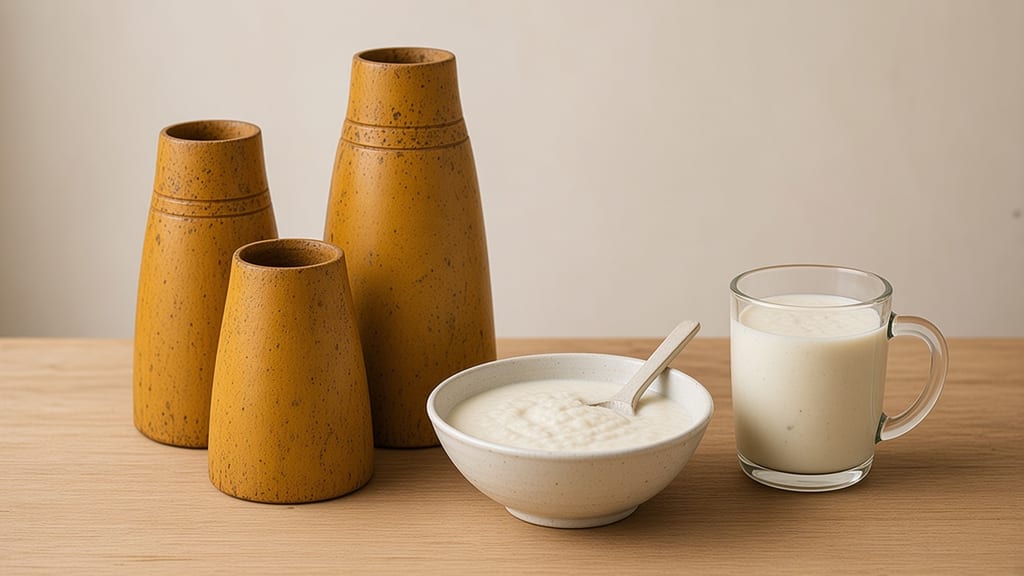
In Kigali people sit down to drink milk out of respect for the cow. A look at Rwanda's milk bars, the wooden pots of ikivuguto, aged butter and a 17th-century royal decree about milk.
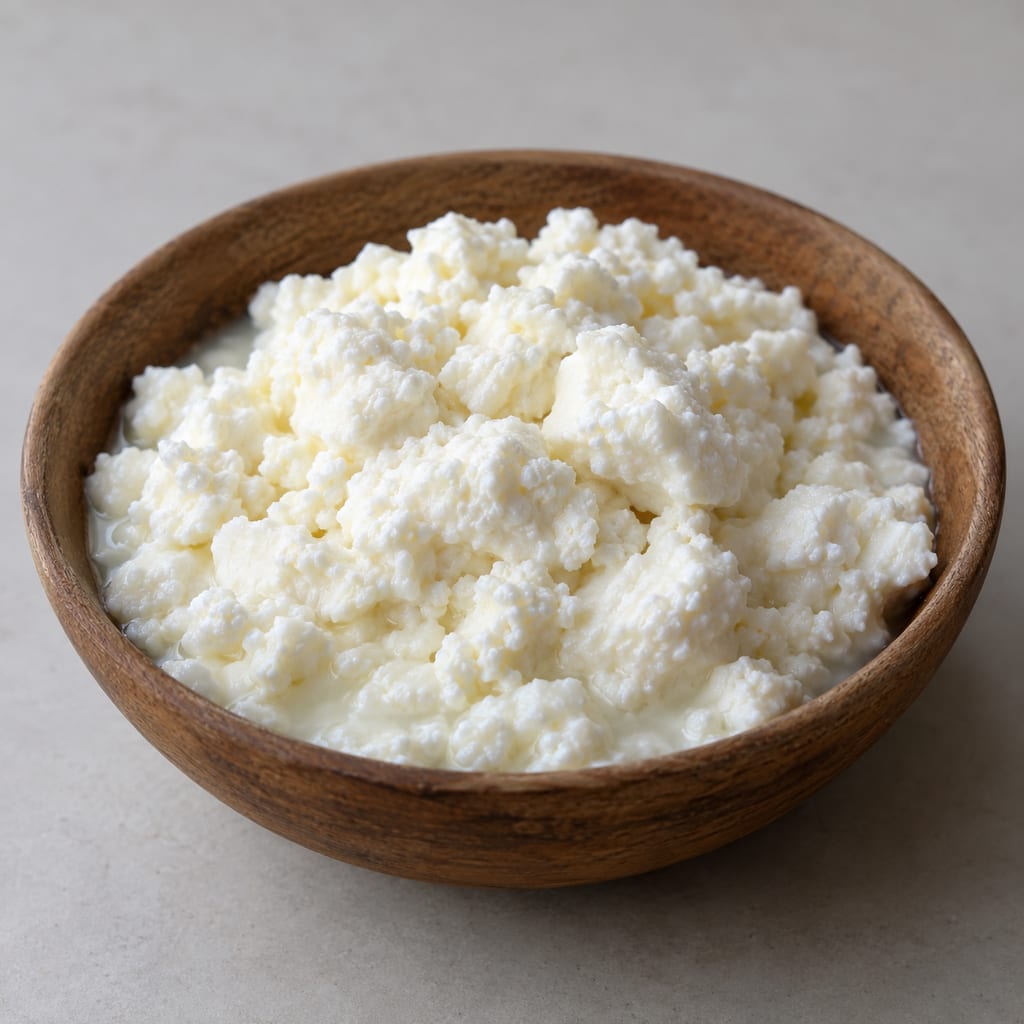
Aarts is a soft Mongolian curd made by draining boiled fermented yogurt; it remains wet, unlike aaruul, which is dried.
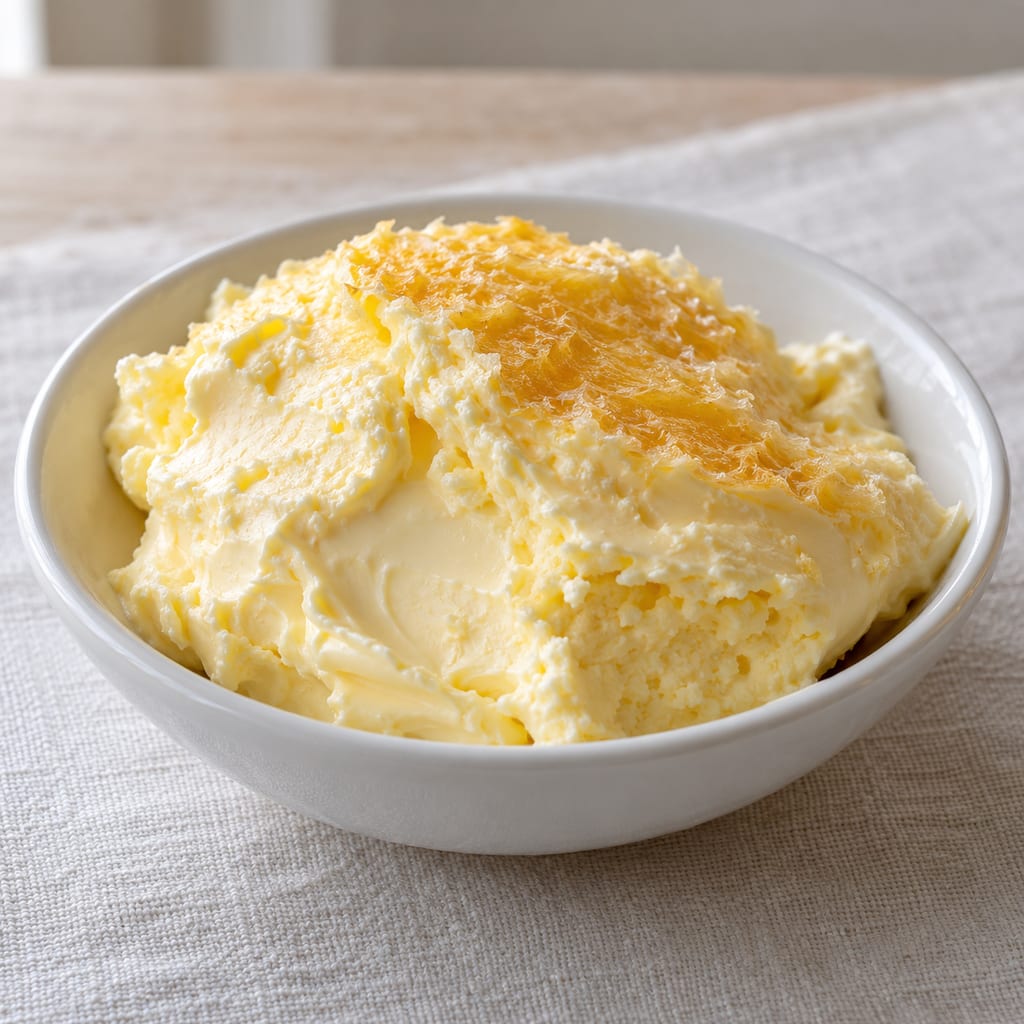
High-fat cream scalded below boiling for at least an hour until a thick crust forms, then cooled hard so the crust sets and the cream beneath thickens.
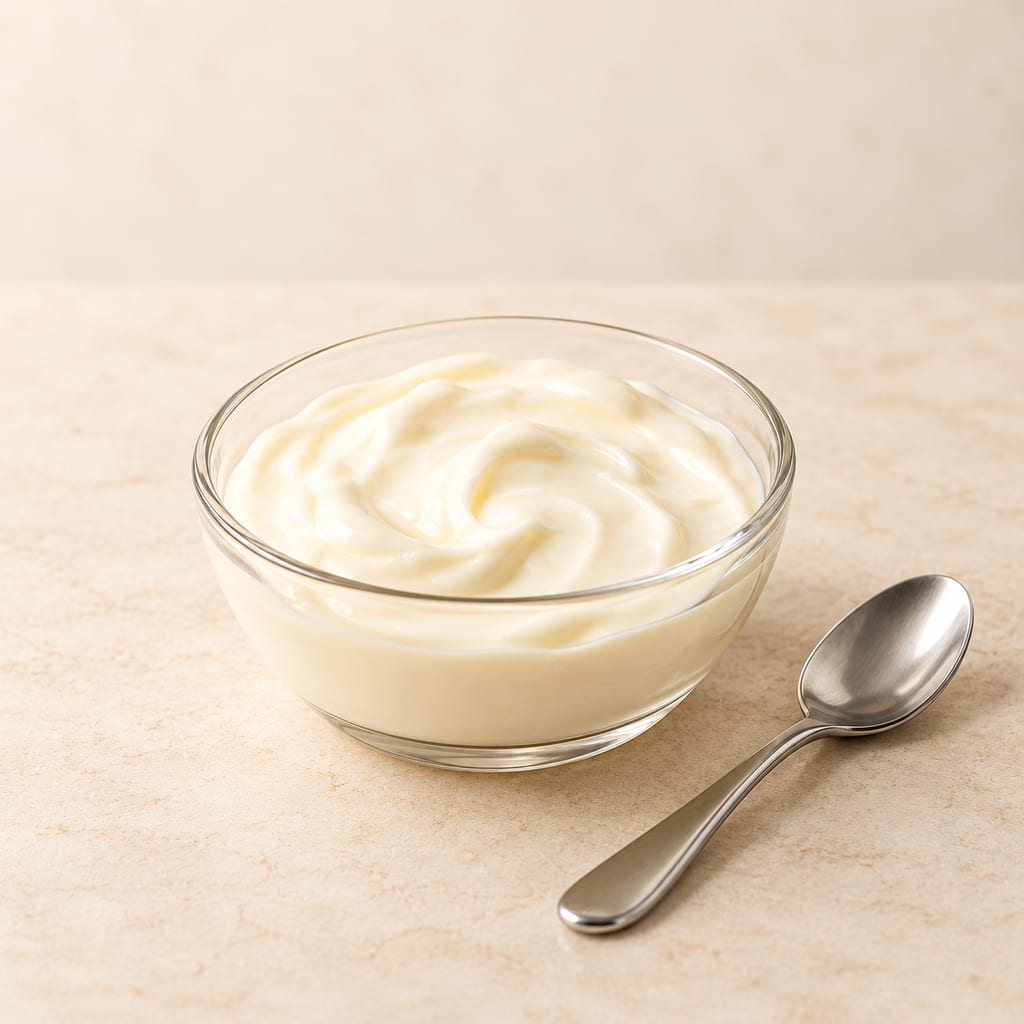
Crème fraîche is cream soured by lactic cultures into a thick, mild topping. It suits fruit and desserts as well as soups, sauces and other savoury dishes.
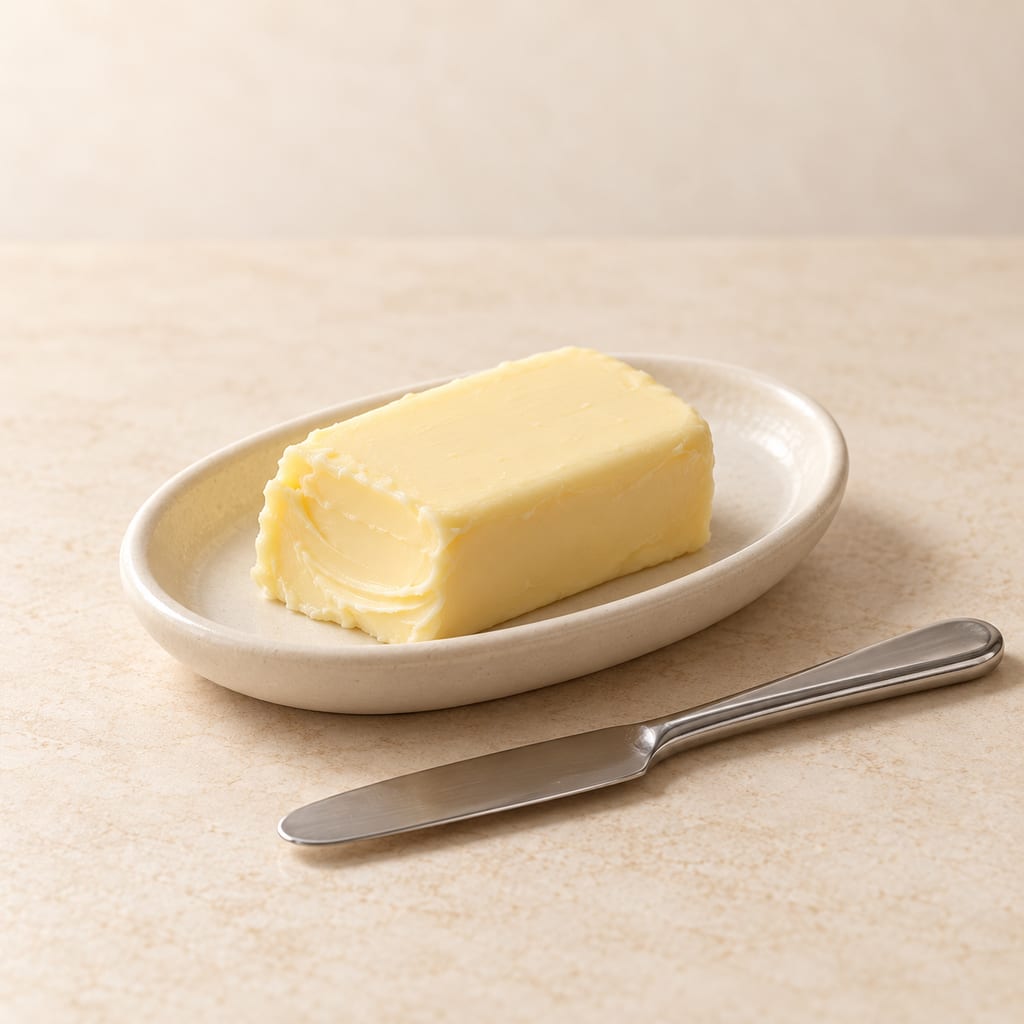
Cultured butter is churned from cream soured with lactic cultures. Its lightly tart flavour comes from the cultured cream, which separates into butter grains and buttermilk.
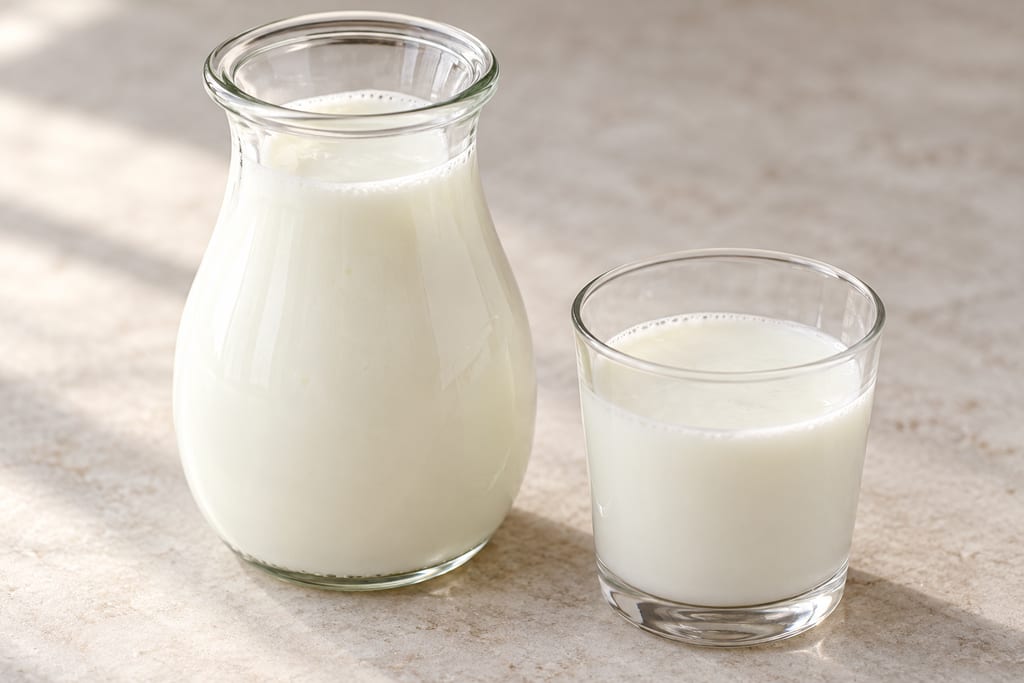
Cultured buttermilk is skim milk soured with a lactic starter into a tangy drink. This Canadian home method sets the milk without churning cream.
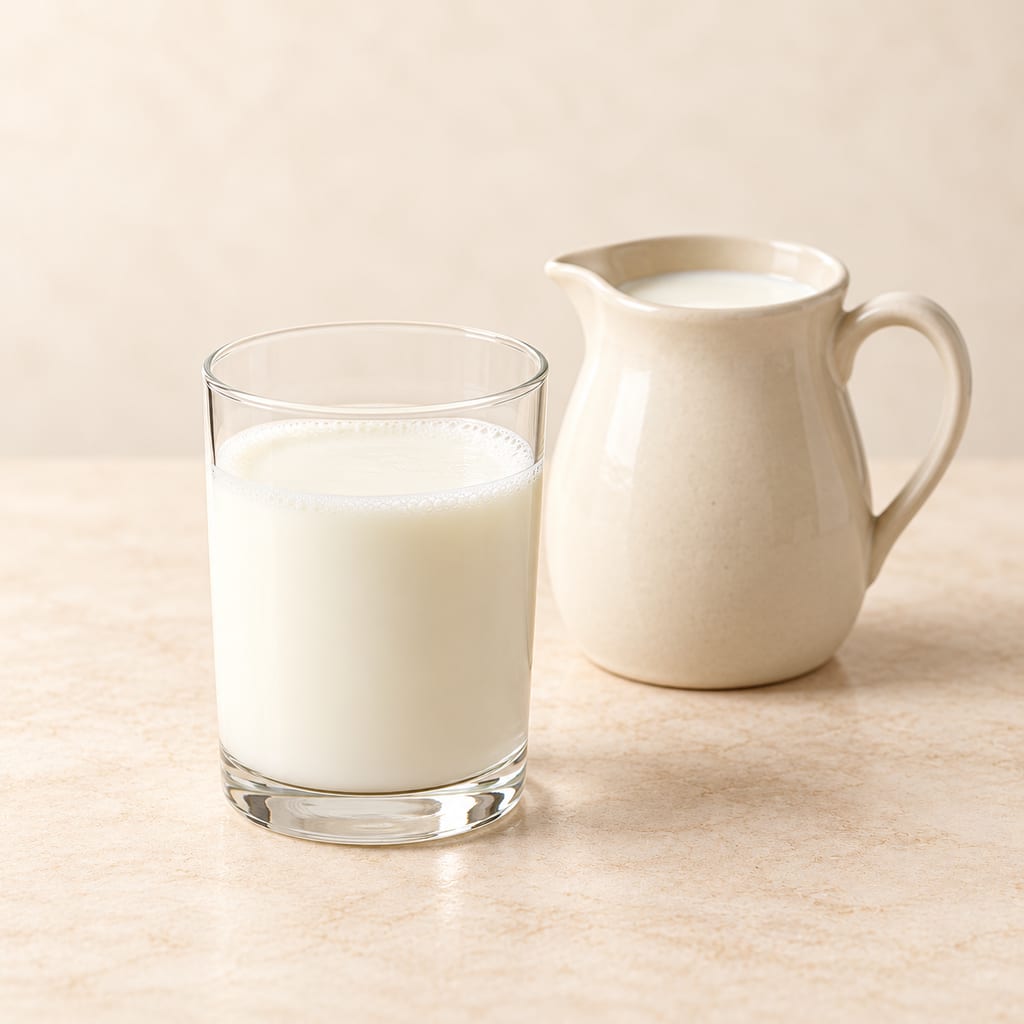
Milk thickened with a packet of buttermilk culture makes a tangy drink and a baking ingredient. This warm-incubated version uses whole milk.
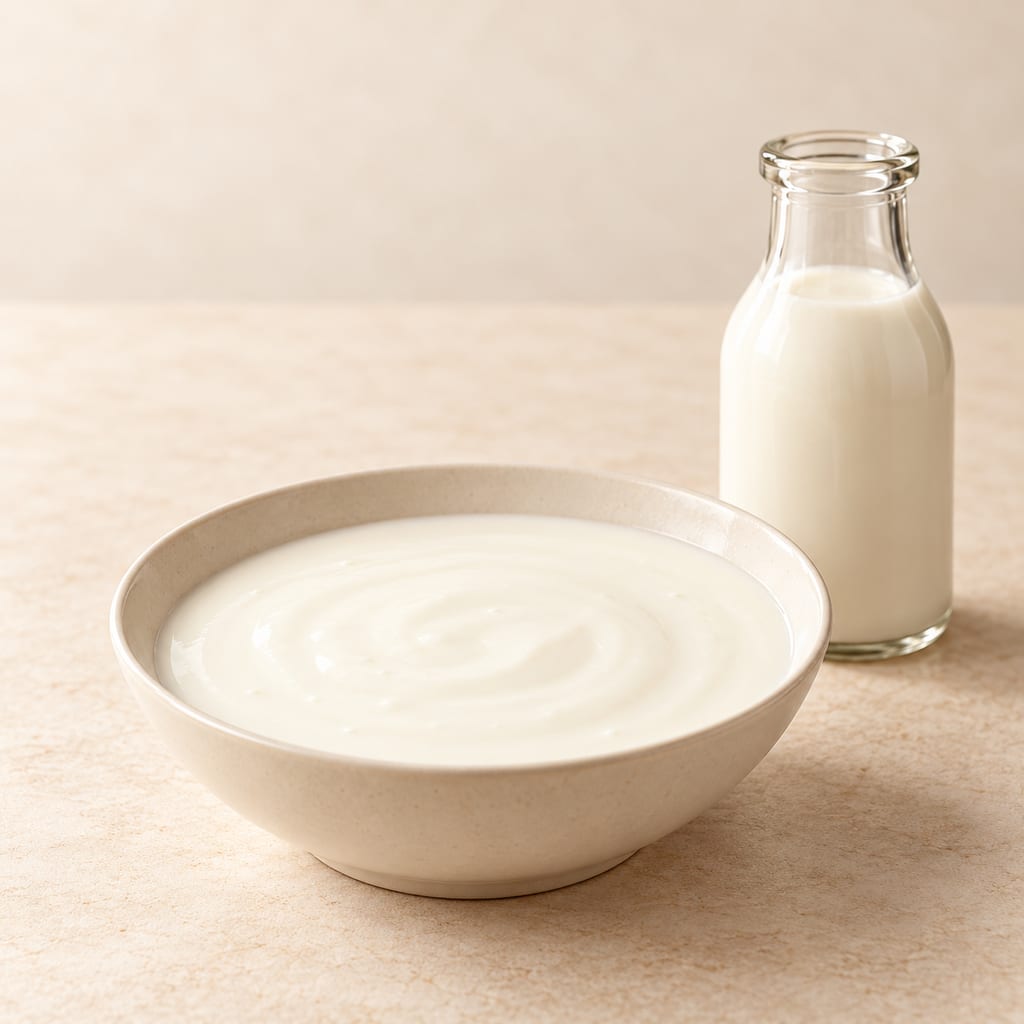
Filmjölk is a Swedish cultured milk with mild acidity and a spoonable body. This recurring batch uses filmjölk from the previous batch to culture fresh milk.
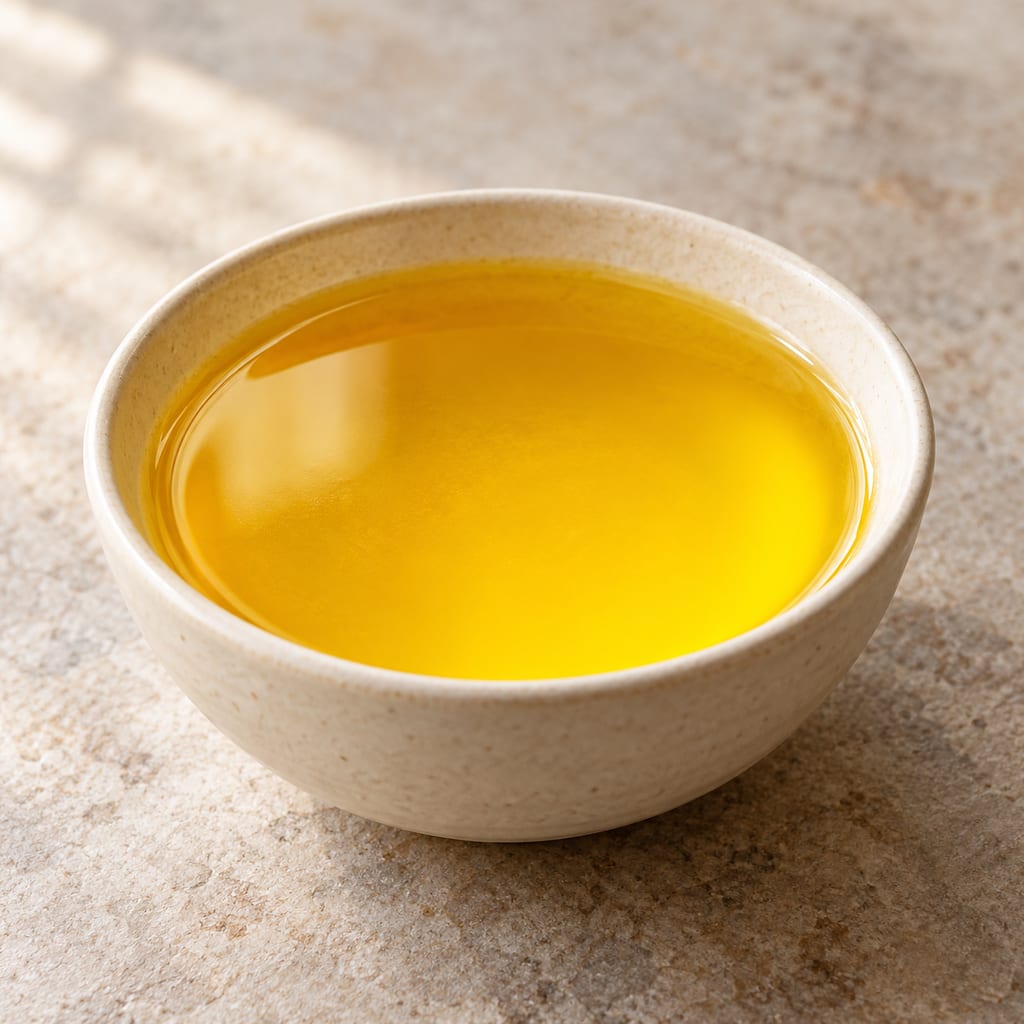
Butter heated until most water leaves and the milk solids separate, giving a fat that keeps far longer than butter. Rendering applies the same heat to animal tissue to make lard and tallow.
No community contributions have been published for this entry yet.
Sign in to contribute. Published comments and photos are free to read.
Virginia Polytechnic Institute ExtensionProcess
Homemade cultured milk products, Series 504Cultured buttermilk method: heat milk to 180 F and hold 30 minutes, cool to 70 F, add 2 tsp starter per quart, set 68 F in summer or 72 F in winter for 12 to 16 hours undisturbed, cool below 50 F, best flavour 24 hours after cooling. Save a cup as next starter but get a new starter at least once a week.
Cited in: The bacteria and the borrowed method; Heat, cool, seed; The overnight set; Cool it fast; Keeping a starter going; What you need; If it goes wrong
Milk Science 67(3)History · Context
Milk Processing System in RwandaInkongoro and icyansi pots, umubanji, ikivuguto after about two days, stirring with umutozo, smoked vessels, iburunge of aged butter mixed into boiled cassava and beans, ikivuguto eaten with sweet potato, cassava and kidney beans, butter oil made by heating butter in the northeast.
Cited in: Milk that sets in the pot; How Rwandans drink it; The smoked pots of the east; From ikivuguto to butter
Biotechnologie, Agronomie, Societe et Environnement 17(2)History · Context
Kivuguto traditional fermented milk and the dairy industry in Rwanda. A reviewIcyansi kept in the uruhimbi, backslopping from the last batch, boiled milk left 24 to 36 hours, hygiene risk in traditional kivuguto, comparison with filmjolk.
Cited in: Milk that sets in the pot; Why this version uses a starter; The bacteria and the borrowed method; Keeping a starter going; The smoked pots of the east
Sciences & Technologie C 36Culture
Fermentation of kivuguto, a Rwandese traditional milk: selection of microbes for a starter cultureLactococcus lactis and Leuconostoc isolated from kivuguto; set in about 8 hours at 30 C.
Cited in: The bacteria and the borrowed method; The overnight set
AJFAND 16(2)Safety
Microbiological analysis of traditionally fermented milk sold in Kinigi sector of Musanze district in RwandaTraditional samples carried E. coli and Staphylococcus aureus; authors recommend pasteurised milk and a pure starter.
Cited in: Why this version uses a starter; If it goes wrong
IK: Other Ways of Knowing 5Context
Rural women economic empowerment, indigenous fermented milk production, and the challenges of modernityCommercial ikivuguto made with a 2 to 3 percent starter in pasteurised, cooled milk; 87 percent of processors and sellers interviewed were women.
Cited in: Why this version uses a starter
NPRContext
How much milk is too much milk?Kigali milk bars sell cold, hot and fermented milk; custom of sitting to drink milk.
Cited in: How Rwandans drink it
US Centers for Disease Control and PreventionSafety
Listeria and dairyRaw milk products can carry Listeria and other germs.