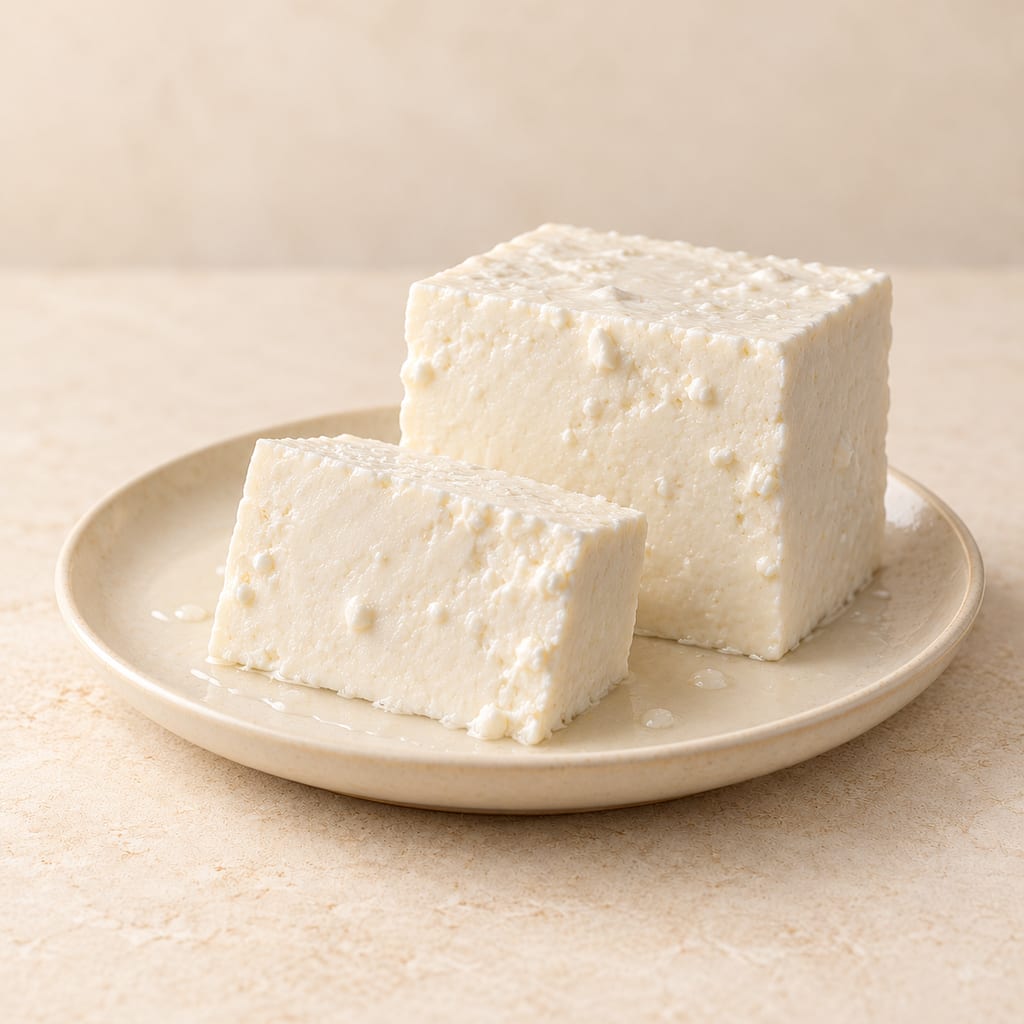
Beyaz peynir
Beyaz peynir is a Turkish white cheese matured in brine. Sheep milk, alone or mixed with other milks, gives a close-textured cheese cut into blocks and packed in cans.
 FermenteaWhere food goes to change
Modern adaptation
Pide · Kapalı pide · Kır pidesi · Turkish filled pide
Turkish home-style yeast dough is shaped into closed boats around spinach and cheese, then baked hot until the crust is golden.
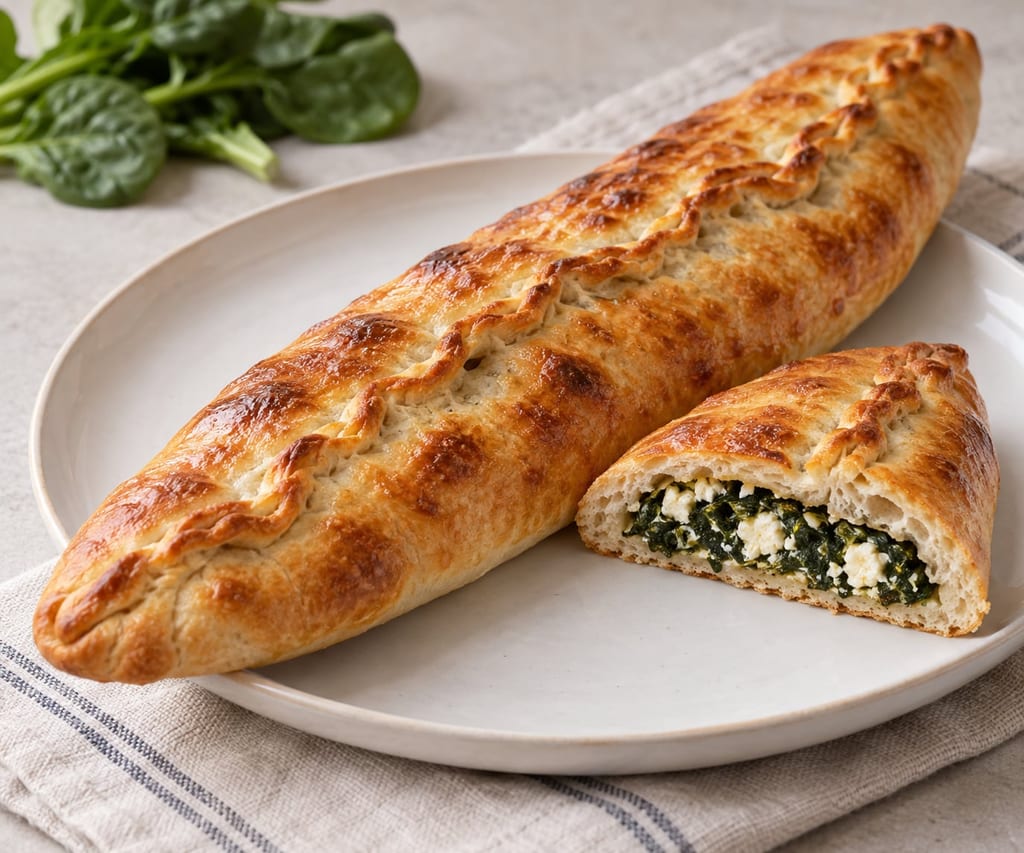
Pide names cover several shapes and toppings. Ayşenur Altan's home recipe distinguishes open boats from a closed form, which she commonly uses with spinach or potato. This version follows the closed spinach-and-cheese branch. It is one home method, not a claim that all Turkish pide use the same dough or filling.
The source's minced-beef topping is not included here. Its bake instruction gives no meat doneness limit, so this version uses the source's vegetable and cheese options. Altan also links to a separate traditional Ramadan pide flatbread recipe; this version is the closed, filled pide, not that plain Ramadan bread.
Mix lukewarm water with yeast and sugar, then add most of the flour and salt. Knead until elastic and slightly tacky, cover, and let rise until almost doubled. The source does not fix the rise time or temperature. Its formula yields twelve dough portions; the listed spinach mixture fills about three, while cheese is added to taste.
Pulse the onion and dry spinach with salt and pepper, leaving some texture. Add crumbled white cheese or feta, or shredded kaşar or mozzarella. Keeping spinach dry helps the filling stay contained rather than wetting the dough.
Heat the oven to its highest setting, about 230–250°C. Roll each piece into an oblong, place the filling down the centre with a clear 2 cm border, fold the sides together over the filling and pinch the seam closed. Fold the extra dough to one side and press it down. Brush with beaten egg and bake until golden and crisp. No bake time or internal temperature is given.
The dough contains raw flour. Do not taste it before baking and wash hands, tools and surfaces after handling it. This version contains no raw meat filling.
Ayşenur Altan presents a Turkish home-style pide recipe with open and closed forms and several filling choices. The closed form is associated in that recipe with spinach or potato fillings. The dough and topping selection here follow one household version and do not define every regional pide.
Yield 12 dough portions; spinach filling for about 3 pide · Scaling: source batch only
Flour is raw before baking and may carry harmful bacteria; do not taste the dough.
Hazard sourceDo not taste raw dough. Wash hands, utensils and surfaces after handling flour, then bake the pide fully.
Control sourceThis version uses spinach and cheese; it does not give a raw-meat filling method or a meat doneness limit.
The source does not give a bake duration; its guidance is to bake until golden and crisp.
Ayşenur Altan documents a Turkish home-style pide; no specific locality or exclusive origin is established.
Beyaz peynir is a Turkish white cheese matured in brine. Sheep milk, alone or mixed with other milks, gives a close-textured cheese cut into blocks and packed in cans.
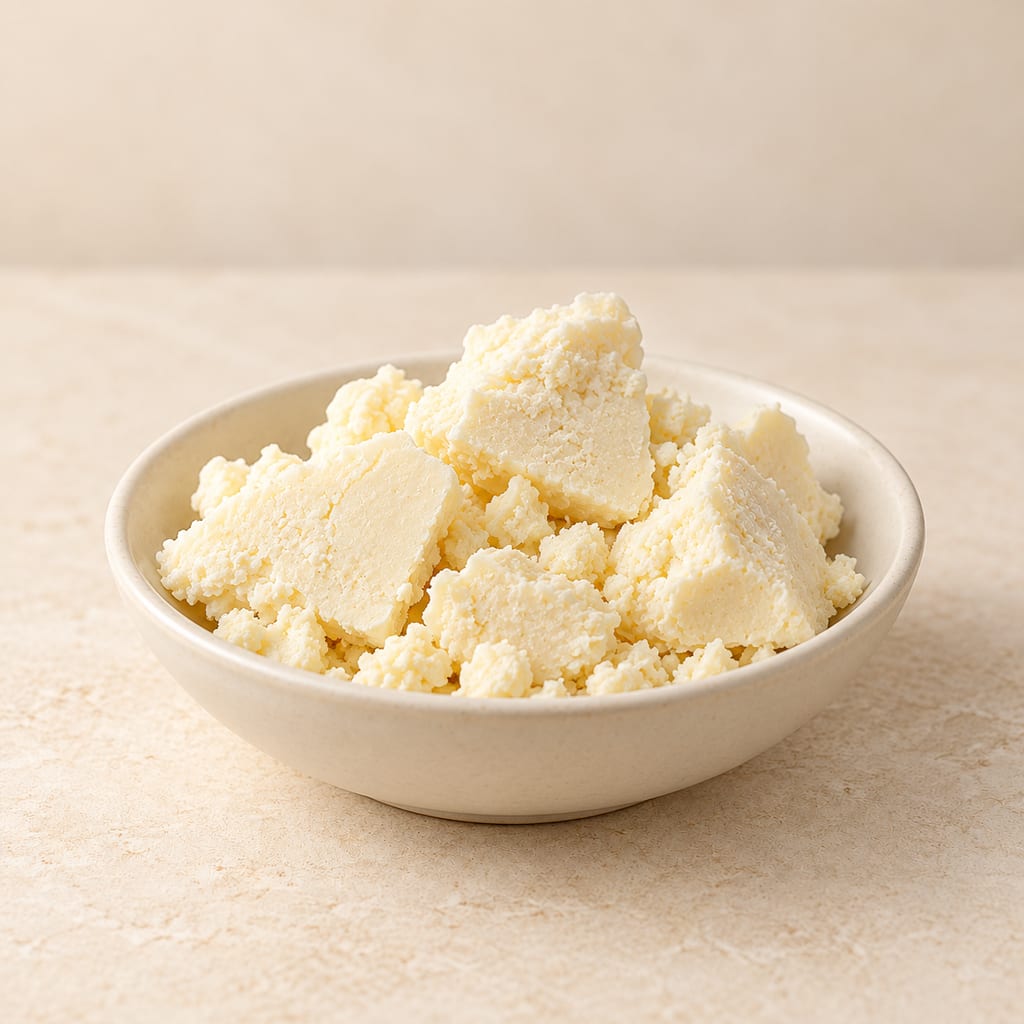
Tulum peyniri is a Turkish cheese traditionally packed into animal-skin bags to mature. This sheep-milk method adds a thermophilic yogurt culture before renneting, draining and dry salting.
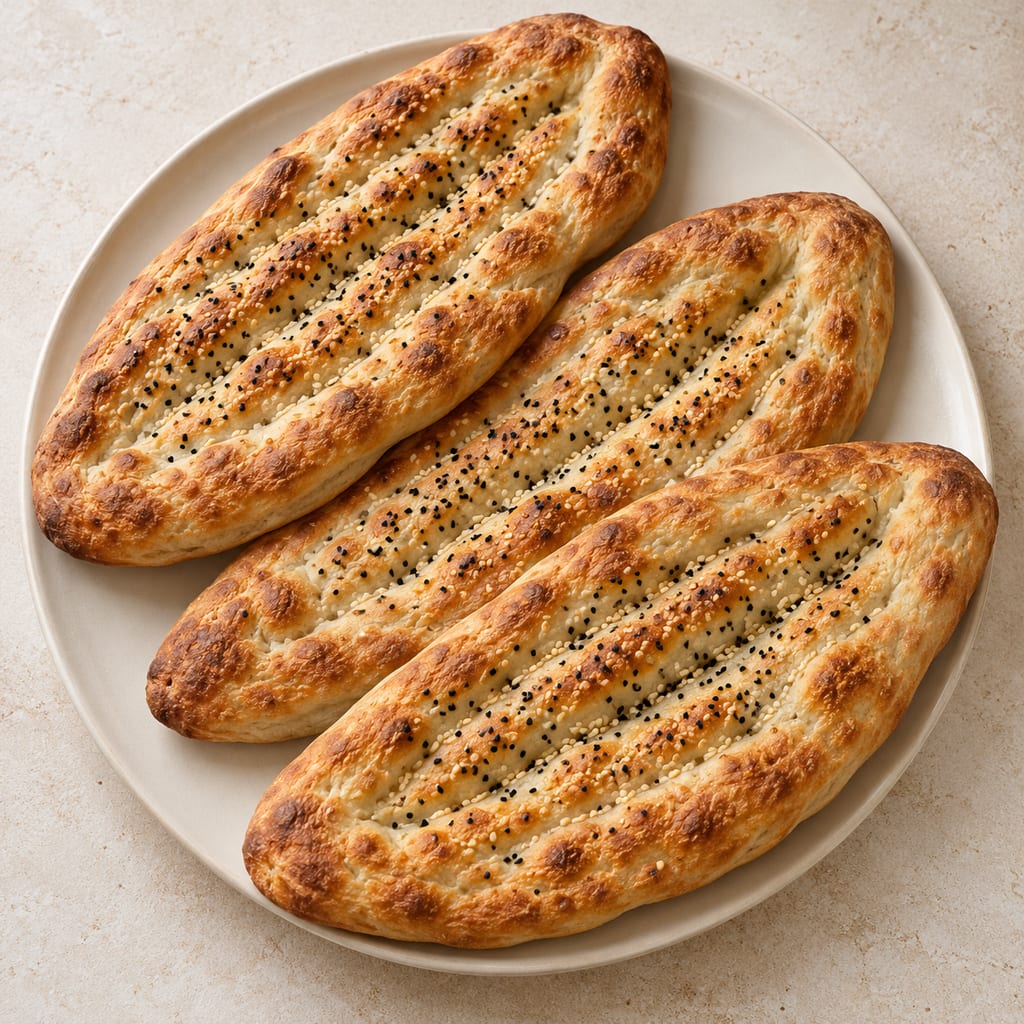
A long oval Afghan wheat bread, leavened with yeast, grooved along its length and baked until crisp outside and chewy within.
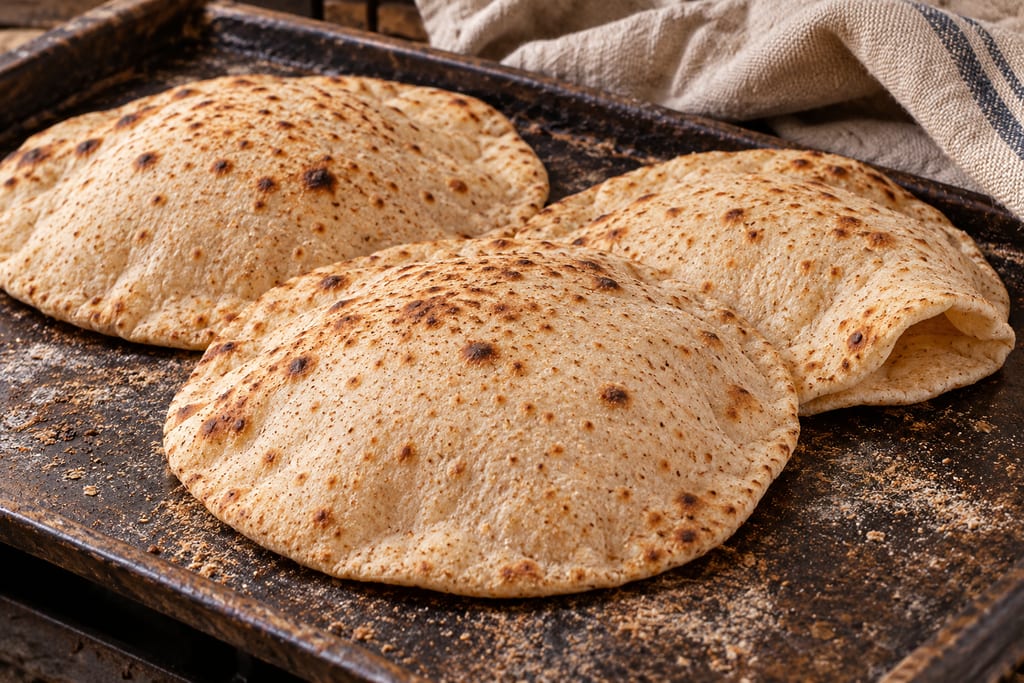
This home adaptation of Egyptian aish baladi uses a refrigerated yeast biga, whole-wheat dough, bran dusting and a very hot baking surface to make 16 pocketed rounds.
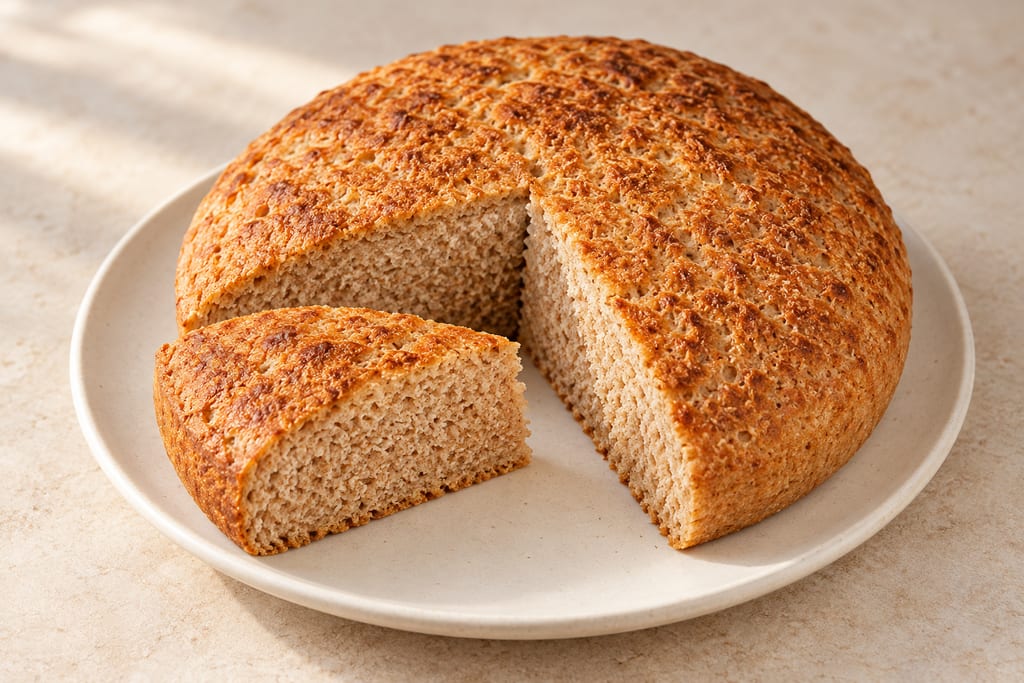
This oven-baked Amdo balep uses yeast, whole-wheat and white flour, a long covered rise and a two-sided bake in a heavy oven-safe pot.
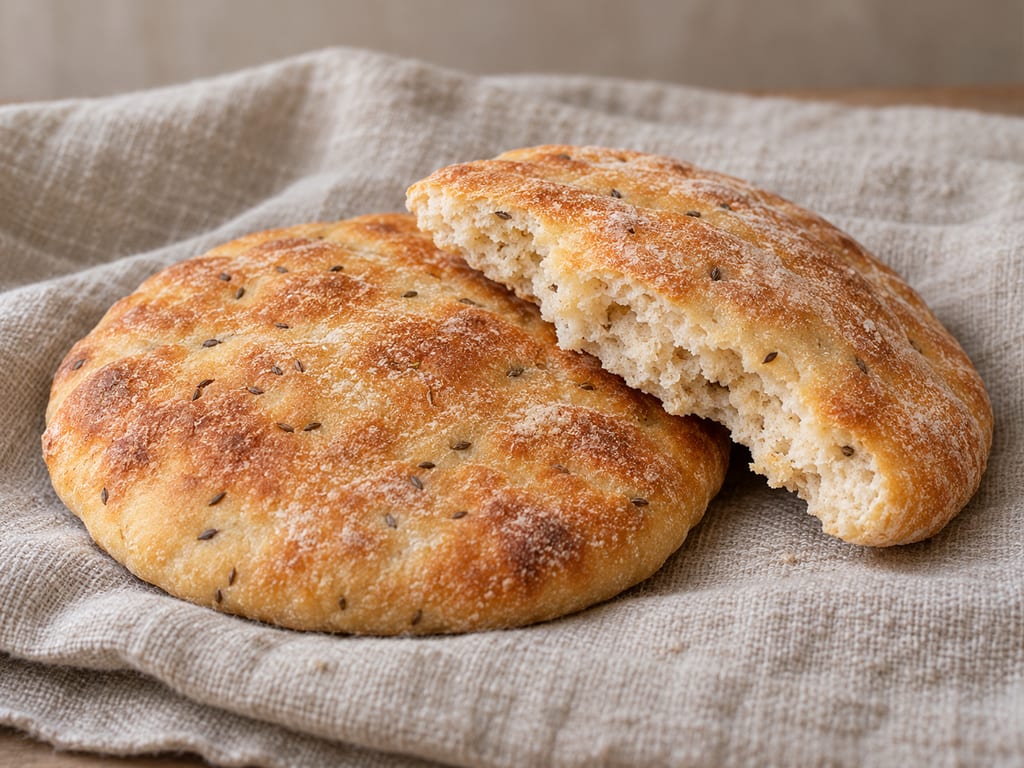
A measured, yeast-raised Ayacucho chapla home method shared by Thermomix Peru presenter Roxanna Salaverry. It makes thin, anise-scented rounds baked at 240°C; the historic qunchu-leavened form is documented separately.
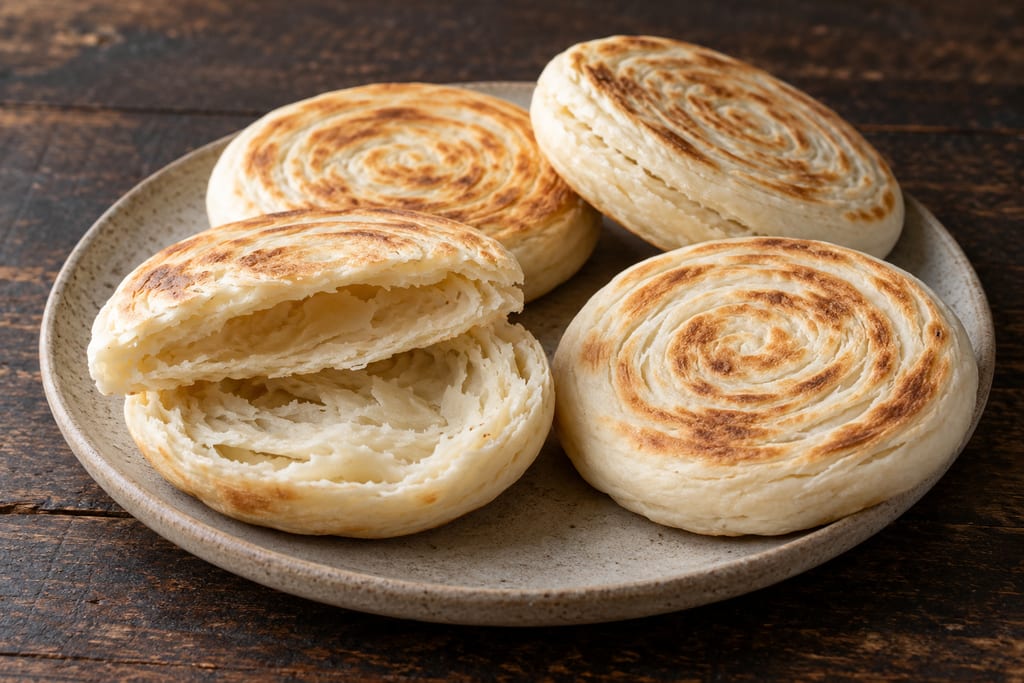
This Shaanxi-associated yeast flatbread uses a simple water dough, coiled shaping and a skillet bake. It is the bread used in roujiamo, not the filled meat dish.
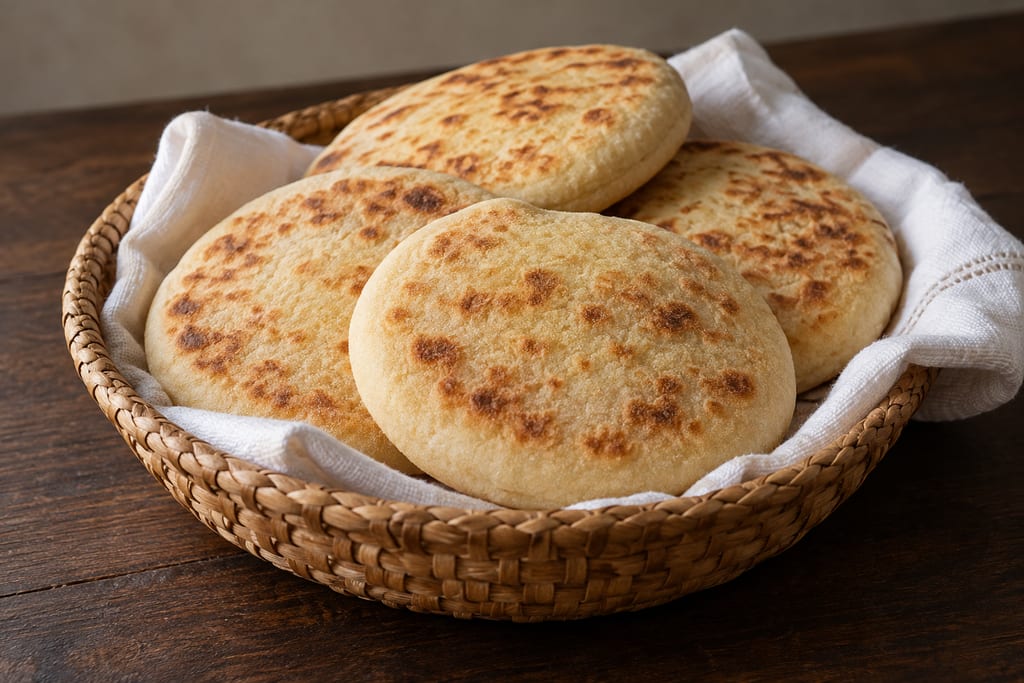
A Moroccan yeast-raised semolina pocket bread cooked on a dry pan or griddle; this measured batch makes about twenty 4-inch rounds.
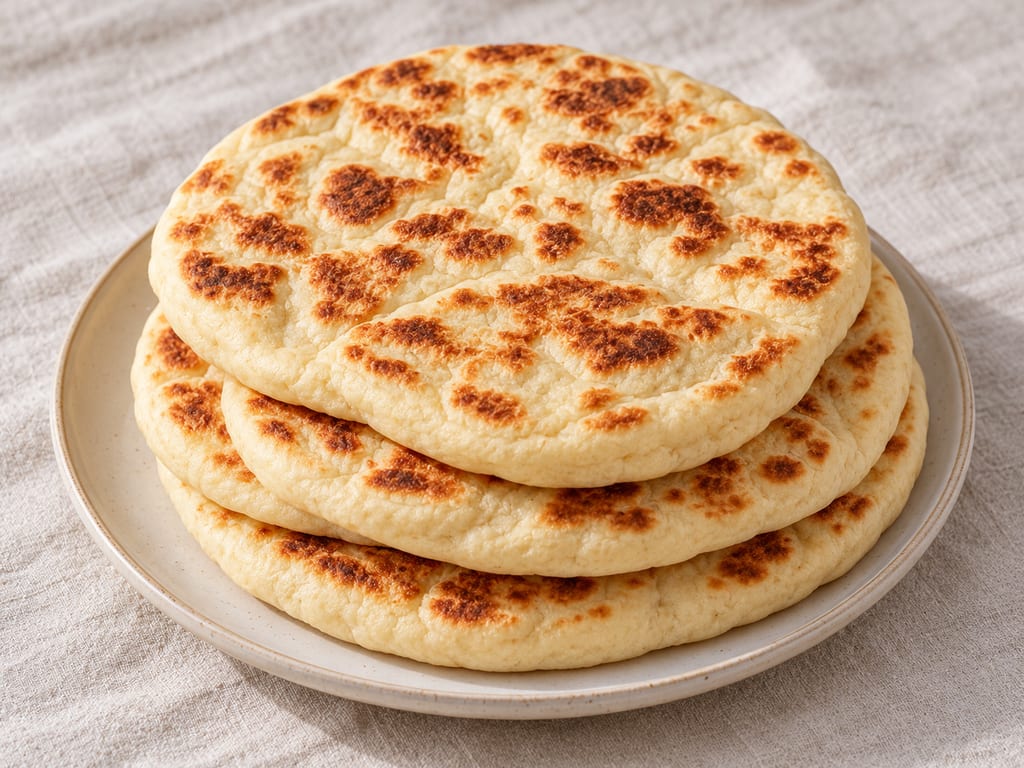
This Turkish bazlama uses yeast, plain yogurt and olive oil for a soft dough cooked in a skillet. Shape it into twelve small or six larger rounds, flip as bubbles appear, and wrap the breads to keep them soft.
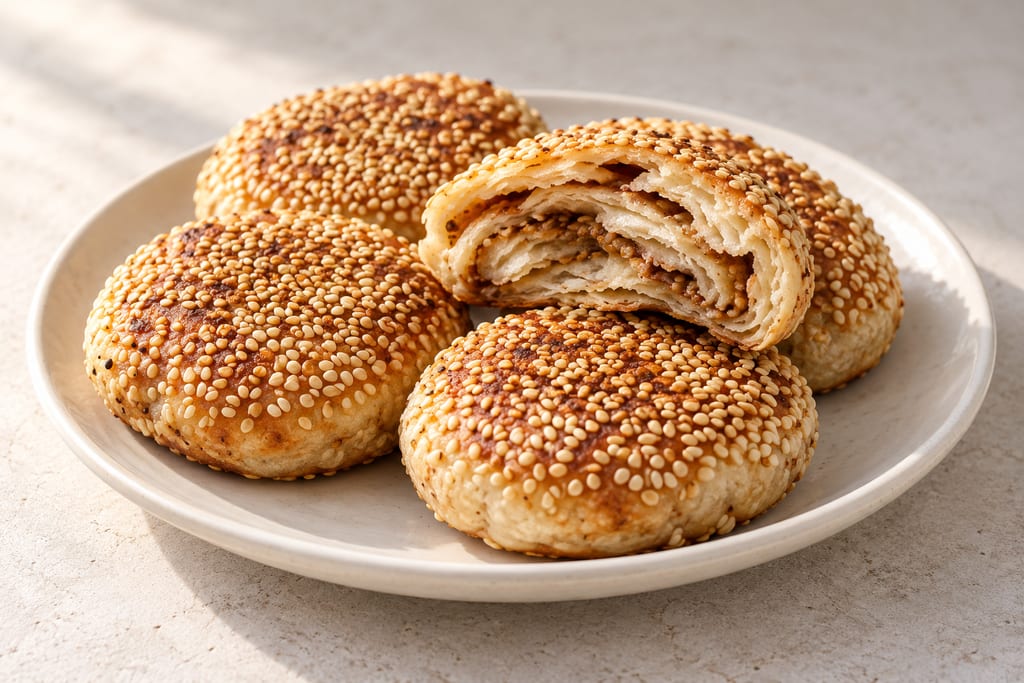
A Beijing-style yeast dough is layered with seasoned sesame paste, sealed into small buns, briefly pan-fried, seeded, and baked.
No community contributions have been published for this entry yet.
Sign in to contribute. Published comments and photos are free to read.
Turkish Food TravelRecipe · Method · Geographic context
BEST TURKISH PIDE Recipe / PizzaDough formula: two cups lukewarm water, 25 g fresh or 1 tbsp active dry yeast, 1 tbsp sugar, about 5–5½ cups flour and 2 tsp salt; it rises until almost doubled and is divided into 12 pieces.
The author gives spinach filling for about three pide and cheese options without fixed amounts; the closed pide shape is usually used for spinach or potato fillings.
The source directs a 230–250°C home oven, sealed closed pide, egg wash and baking until golden; it does not give a bake duration or internal temperature.
The author links a separate traditional Ramadan pide flatbread recipe; this body covers the closed spinach/cheese-filled variation.
Cited in: A Turkish home-style filled pide; Make the dough and filling; Fold and bake
U.S. Food and Drug AdministrationFood safety
Handling Flour Safely: What You Need to KnowRaw flour may carry harmful bacteria; do not taste raw dough and clean hands and surfaces after handling flour.
Cited in: Fold and bake