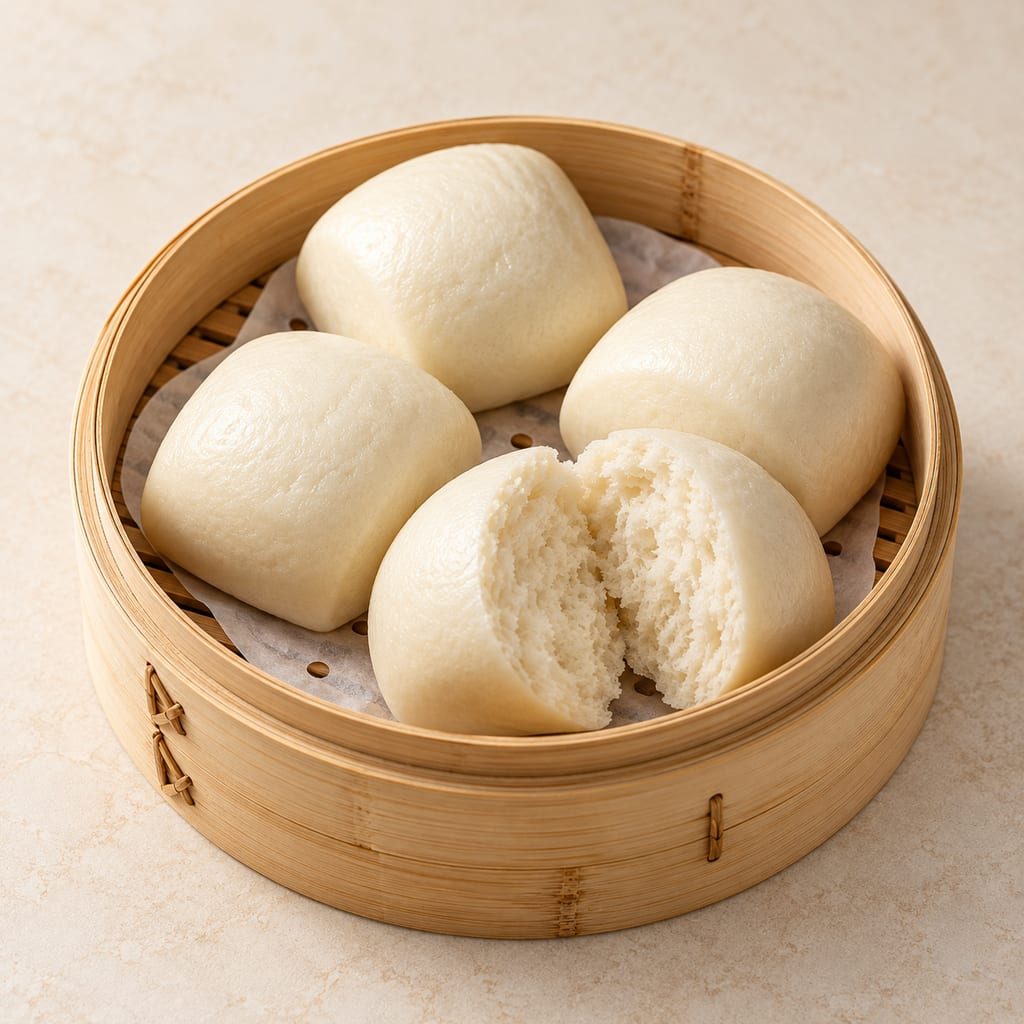
Mantou (The Woks of Life all-purpose dough)
Plain wheat mantou made with yeast and baking powder, then proofed and steamed in a lined basket.
 FermenteaWhere food goes to change
Modern adaptation
老北京麻酱烧饼 · Old Beijing sesame buns · majiang shaobing · sesame-paste shaobing
A Beijing-style yeast dough is layered with seasoned sesame paste, sealed into small buns, briefly pan-fried, seeded, and baked.
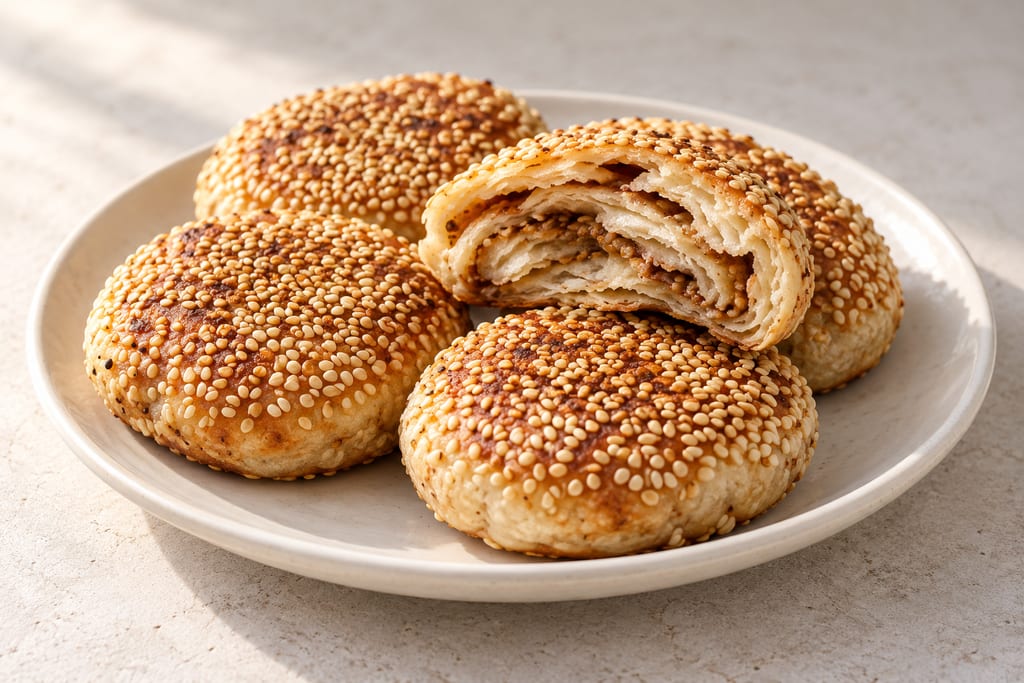
This entry follows Sean St John's Old Beijing Sesame Buns, 老北京麻酱烧饼, a yeast-raised dough wrapped around seasoned sesame paste, shaped into small sealed buns, lightly fried and baked. St John describes the food as an old Beijing street bun. His site focuses on Northern Chinese food and its author says he has lived in Beijing since 2015; the recipe is a direct home formula rather than a claim to reproduce every bakery's version.
Beijing's tourism bureau independently includes sesame-paste shaobing among traditional city snacks. Its description points to sesame paste inside the bread, sesame on some outside surfaces and a layered cut interior. This supports the regional match for St John's name and ingredients. It does not prove that this one home formula is the only Beijing style or establish an earliest date.
Shaobing is a broad name shared by many Chinese regional breads. A Shanghai government culture article describes a large family of differing sweet and savory forms, including Shanghai dabing and the northern huoshao category. In Beijing, the sesame-paste bun is a specific item within that wider family. This page records the recipe's Old Beijing identity rather than treating a Beijing style as universal.
The name shaobing covers more than one shape and cooking route. Beijing Tourism separately describes a horseshoe-shaped mati shaobing: it uses half-leavened dough and a special brick furnace, is brushed with oil and sugar water, and can be hollow inside. That is not the sesame-paste bun in this recipe. The shared shaobing name is not a reason to combine its ingredients, shaping or equipment with this page's formula.
The same tourism feature lists sesame-paste shaobing under Beijing traditional snacks and describes sesame paste inside a layered bread. It notes that typical examples may show 15 or 16 layers, but St John's recipe does not specify or count layers. Its method rolls a sheet with paste into a log and seals slices. This entry therefore does not promise a layer count or reshape the buns to match a different account.
The name also does not mean that all shaobing are sesame-filled. Regional forms can be plain, sweet or savory, and may be baked in different ovens or pans. The Shanghai International Service Portal describes shaobing as a large family with more than one hundred regional forms. This record's name, geography and method stay attached to the Beijing sesame-paste version rather than being used as a generic Chinese flatbread recipe.
The dough combines 400 g flour, 220 g warm water, 2.5 g yeast, 2 g salt, 2 g baking soda and 10 g vegetable oil. Mix the dry ingredients first, then add the water and bring them into a rough ball. Fold in the oil and knead for 5–10 minutes, until the dough is smooth and elastic. The source uses both yeast and baking soda; its recipe calls for a short proof, not a long fermentation.
Transfer the dough to a clean bowl with a light film of oil and cover it. The proof is 20–40 minutes, or until the dough has doubled and springs back to the touch. Use the rise and texture cue because the page does not state a proofing temperature. During this time, make the sesame paste and the separate brushing liquid so both are ready before shaping.
The finished dough has to roll into a thin rectangle and hold a sticky sesame filling without splitting. Kneading to smoothness and proofing until doubled are the source's signs that it is ready for the rolling stage. No hydration change is offered if it feels wrong; the recipe gives a fixed flour and water amount, so do not add flour or water by guess beyond normal surface dusting.
The source calls for a modest amount of yeast and a short proof, but it does not describe a sour starter or a multi-day dough. Baking soda is included alongside yeast, and both are retained because they appear in the measured recipe. The page gives no explanation for their relative effects, so this entry does not infer a leavening ratio or remove either one. Its readiness cue is the doubled, springy dough.
The filling paste uses 3 tablespoons Chinese sesame paste, 1 tablespoon sesame oil, ½ tablespoon dark soy sauce and ¼ teaspoon ground Sichuan pepper. Start with 1 tablespoon water and add up to 3 tablespoons as needed to make a thick paste that spreads over dough. St John notes that sesame paste can be stiff and should stay thicker than peanut butter. If needed, the page allows a little oil from the paste jar or a drop of water to help loosen it.
The brushing liquid is a different mixture: 1 tablespoon light soy sauce, 1 tablespoon water, ½ tablespoon honey and 1 tablespoon flour. Stir it together and set it aside. This liquid is brushed on the shaped buns so sesame seeds can coat them before frying and baking; it is not mixed into the filling paste. The flour in it remains raw until the buns complete the oven stage.
The two soy sauces do different jobs in the written formula: dark soy seasons the sesame filling, while light soy enters the outside brushing mixture. Sesame paste and sesame oil form the aromatic filling; ground Sichuan pepper seasons it. The topping seeds are measured only as an unspecified amount, so use enough to coat the buns rather than treating a guessed quantity as part of the recipe.
The recipe's filling is paste spread over a thin dough sheet, not a measured spoonful placed inside each bun. Water is given as a range because sesame paste varies in stiffness; use the smallest amount that makes the mixture spreadable, adding more only as needed within the page's 1–3 tablespoon range. The separate light-soy mixture has its own flour and honey. Keeping the bowls separate avoids mixing the two components or confusing the outside coating with the filling.
Roll the proofed dough into a thin rectangle, longer than it is wide. The source gives no exact dimensions and uses the descriptor fairly thin, so this record does not invent a length or thickness. Brush the sesame filling evenly over one face. Roll the sheet up from one long side like a sausage, which traps the sesame paste between dough layers.
Cut the roll into slices about 2 inches thick. The page expects around ten pieces and elsewhere gives a yield range of 9–12 buns; the exact count depends on how the log is divided. Each cut face should show a spiral. Hold a piece with its cut side facing you, press both index fingers into the centre and draw the sides upward. Pinch the top together, rotating the bun until its seam is sealed, then place it seam-side down.
That sealing action gives the cut spiral a covered outside. It is not the open or pleated seam used for a filled bao, and the sesame mixture remains between layers rather than being spooned into a pocket. If a piece opens while being shaped, the source's method is to bring the sides together and pinch all around. It does not call for adding extra filling or repairing the dough with a separate paste.
The seal matters to the shape as well as the bake. The cut spiral remains visible on the face, while the pinched top is turned down onto the tray. Unlike a stuffed bao, the bun is closed around a coil of dough and sesame paste rather than a spooned filling. The written source gives finger placement and a turning motion as the shaping method, but no exact shape diameter or weight per piece. This record does not supply those missing measurements.
Brush each sealed bun with the soy-honey-flour liquid, then top it with sesame seeds. Preheat the oven to 200°C, or 180°C with a fan. On the stove, heat a flat frying pan over medium heat with a layer of oil. The source does not give a measured amount for frying or an oil temperature.
Fry the buns for about 30 seconds to 1 minute on each side, just until lightly browned. This brief pan stage precedes baking; it is not the complete cooking step. Move the browned buns to a baking tray and bake for 18 minutes at the stated oven setting. The short pan stage colours the outside, while the longer oven stage completes the recipe's cooking route.
The recipe does not describe an internal temperature check or a validated endpoint beyond its stated time and color cue. Those instructions are retained as the source method, without claiming they establish a universal safety limit for other sizes or ovens. The source makes an approximate 9–12 buns, so the bun size may vary; keep each batch piece similar enough to follow the same source timing.
For a home cook, the method uses ordinary equipment: a bowl, worktop, rolling pin, small bowls for mixing, a brush, flat pan, baking tray and oven. It does not require the traditional jar or brick furnace used by some other shaobing forms. The brief pan fry and fixed oven stage make this a two-part route; an oven-only bake or a pan-only cook would be a different adaptation and is not included here.
Beijing Tourism places sesame-paste shaobing among the city's traditional snacks and describes it alongside other foods associated with Hui breakfast businesses. Its description emphasizes sesame paste within the bread and layered interiors. St John's page calls the version an old street food and remembers a local couple who made the buns, but neither source dates the first appearance of this particular formula. The history period is therefore recorded as unknown.
The recipe is served warm and can be made with a mixing bowl, work surface, rolling pin, small bowls for the two sesame mixtures, frying pan, baking tray and oven. The page does not specify a dipping sauce, rest after shaping, storage period or reheat method. Beijing shaobing may be eaten with breakfast foods or as a snack, but the recipe itself ends with warm buns. No meat accompaniment or separate preparation is included here.
The dough and brushing liquid contain raw flour before cooking. CDC advises against tasting raw dough and recommends cooking flour-containing mixtures according to the recipe, then washing hands, bowls, utensils and work surfaces after handling flour. The sesame paste, sesame oil and seed coating mean the finished buns contain sesame; wheat flour and soy sauces are also present. Check purchased products for additional ingredients and disclose those allergens when serving.
The source ends with warm buns and gives no storage, freezing or reheating advice. This omission is retained rather than filled with a generic rule. Sesame seeds and sesame paste are explicit ingredients; wheat flour is in the dough and the brushing liquid; dark and light soy sauce add soy. The record lists these ingredients plainly so a reader can check their own products and avoid assuming the buns are allergen-free.
Sean St John names his recipe 老北京麻酱烧饼 (Old Beijing sesame-paste buns) and describes it as a Beijing street food. Beijing Tourism separately lists sesame-paste shaobing as a Beijing snack and describes a sesame-paste layered form. These sources support a Beijing association for this named style, not an origin date for the broader shaobing family.
Scaling: source batch only
Both the bread dough and brushing liquid contain uncooked flour before baking; do not taste either raw mixture.
Hazard sourceThe recipe contains Chinese sesame paste, sesame oil and sesame-seed topping.
Hazard sourceDo not eat the raw dough or brushing liquid. Bake the formed buns according to the recipe and wash hands, bowls, utensils and surfaces after handling flour.
Control sourceTell diners that the buns contain sesame, wheat and soy; check packaged sesame paste and soy sauces for additional allergens.
Control sourceContains wheat, sesame and soy. Check packaged sesame paste, soy sauces and any other purchased ingredients for additional allergens.
The recipe gives medium pan heat and a brief fry but no measured oil temperature; the frying is followed by the specified oven bake.
The recipe is explicitly named for Old Beijing and Beijing Tourism lists sesame-paste shaobing as a Beijing snack; no national origin claim is made.
Both sources support a Beijing association for sesame-paste shaobing; this is not a claim that all shaobing are from Beijing.
Plain wheat mantou made with yeast and baking powder, then proofed and steamed in a lined basket.
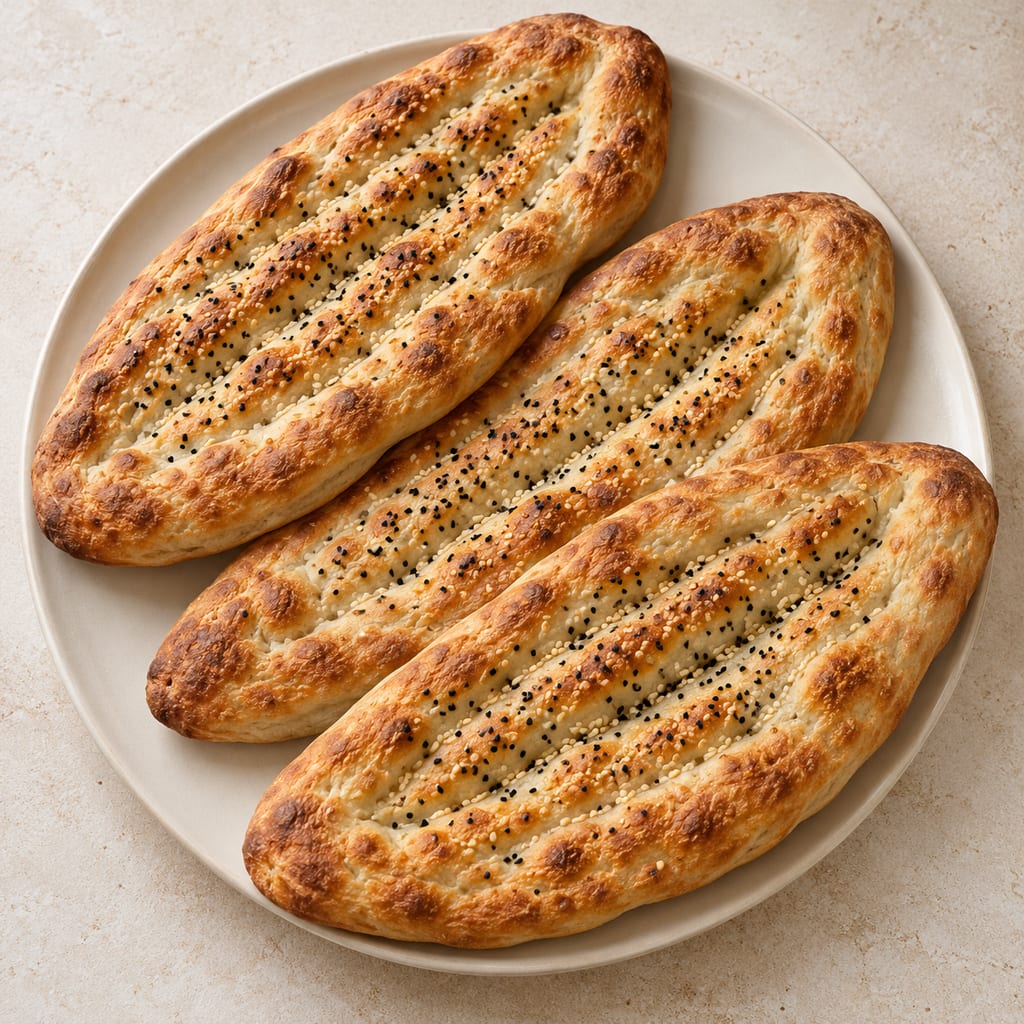
A long oval Afghan wheat bread, leavened with yeast, grooved along its length and baked until crisp outside and chewy within.
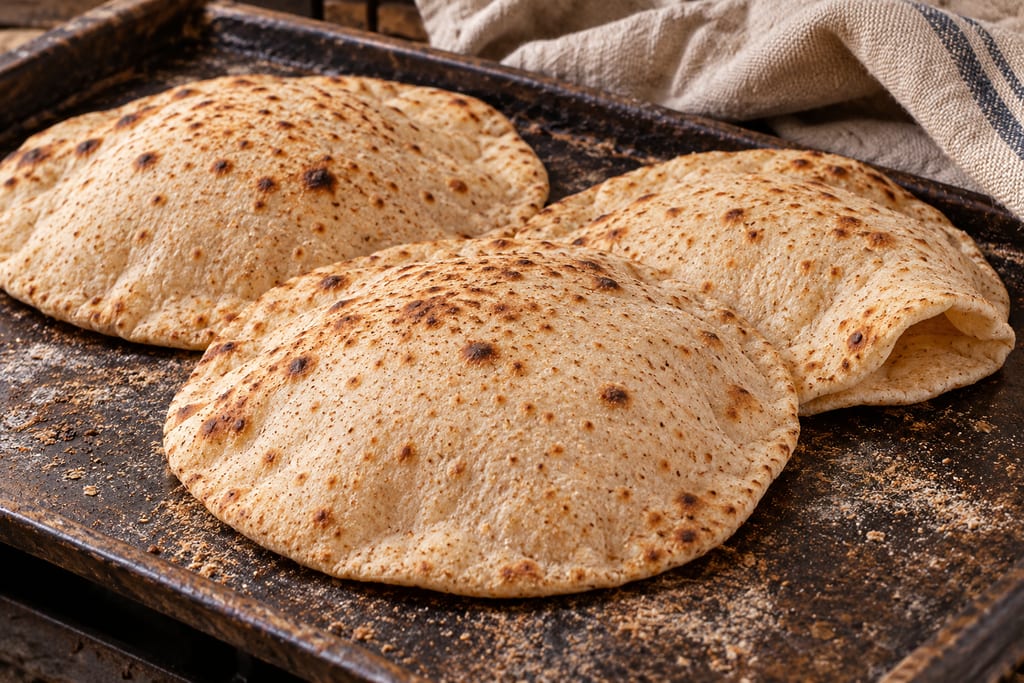
This home adaptation of Egyptian aish baladi uses a refrigerated yeast biga, whole-wheat dough, bran dusting and a very hot baking surface to make 16 pocketed rounds.
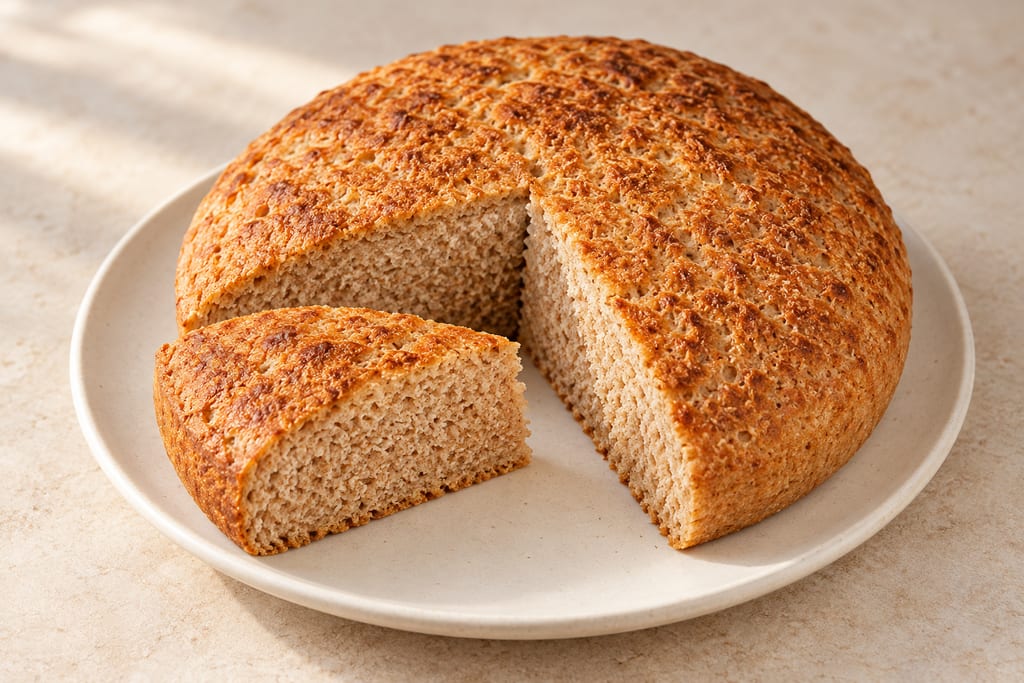
This oven-baked Amdo balep uses yeast, whole-wheat and white flour, a long covered rise and a two-sided bake in a heavy oven-safe pot.
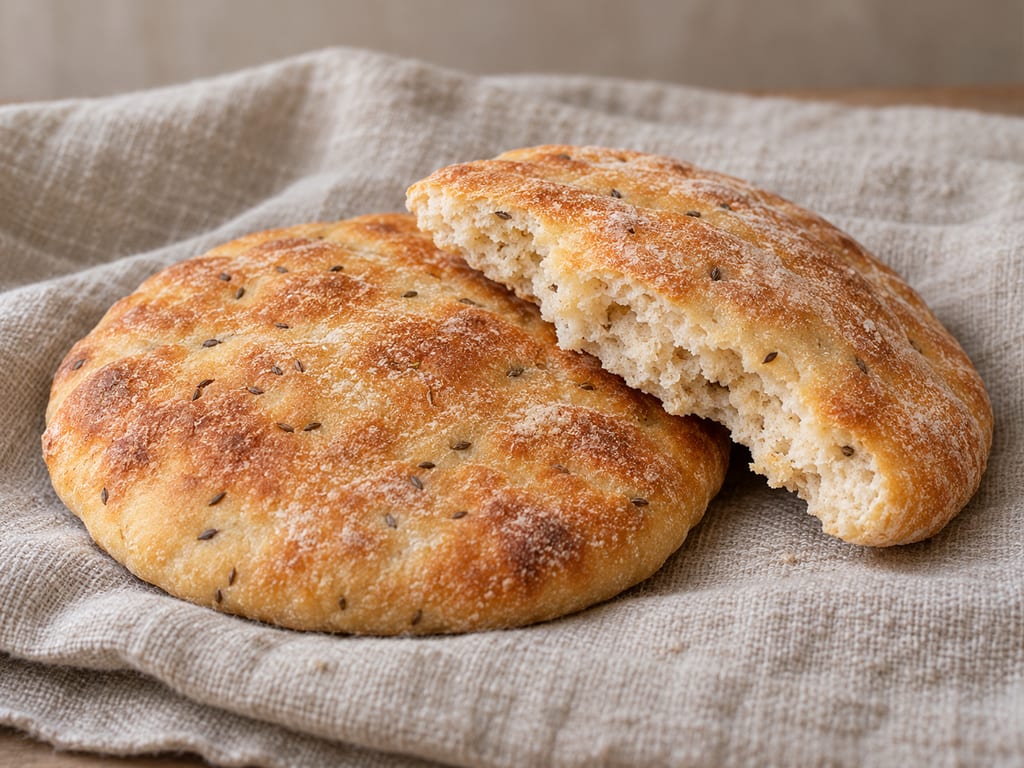
A measured, yeast-raised Ayacucho chapla home method shared by Thermomix Peru presenter Roxanna Salaverry. It makes thin, anise-scented rounds baked at 240°C; the historic qunchu-leavened form is documented separately.
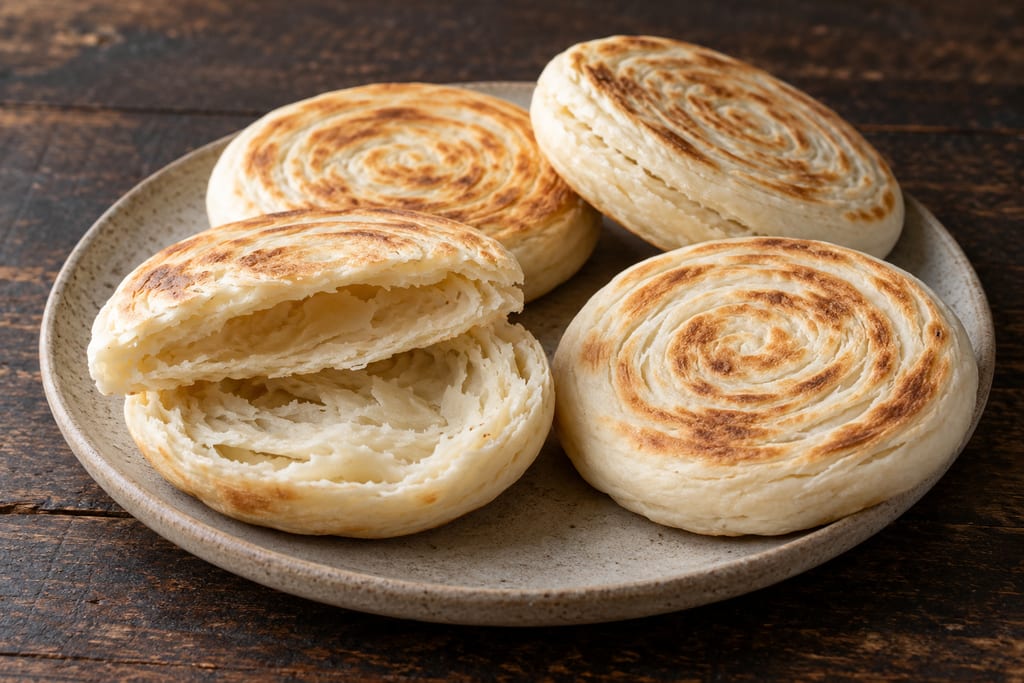
This Shaanxi-associated yeast flatbread uses a simple water dough, coiled shaping and a skillet bake. It is the bread used in roujiamo, not the filled meat dish.
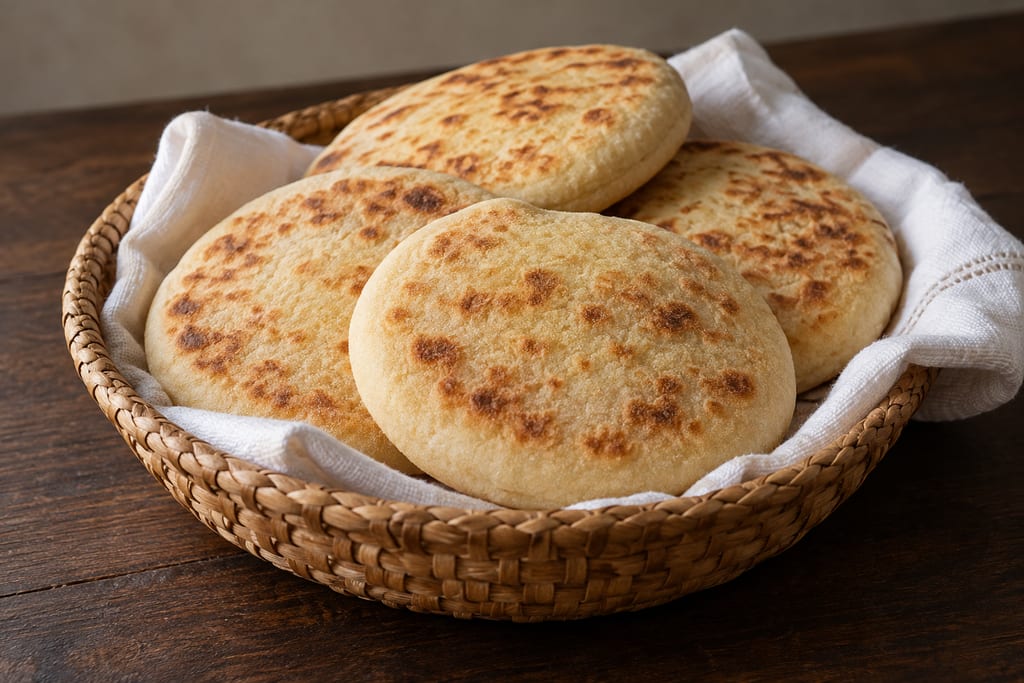
A Moroccan yeast-raised semolina pocket bread cooked on a dry pan or griddle; this measured batch makes about twenty 4-inch rounds.
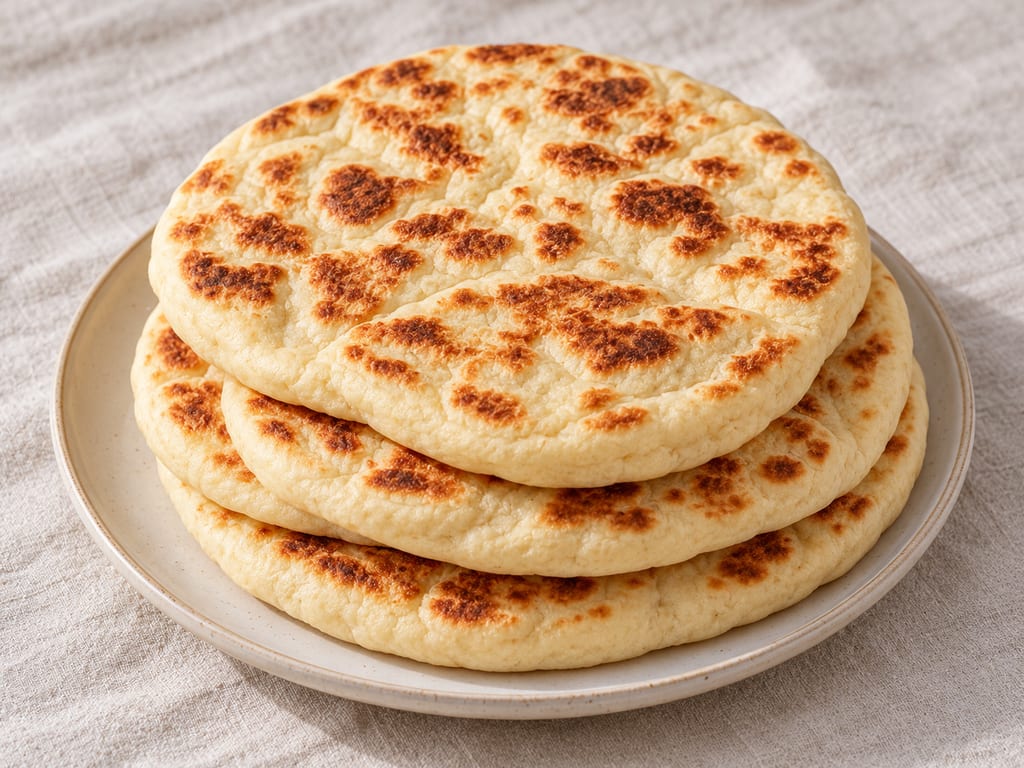
This Turkish bazlama uses yeast, plain yogurt and olive oil for a soft dough cooked in a skillet. Shape it into twelve small or six larger rounds, flip as bubbles appear, and wrap the breads to keep them soft.
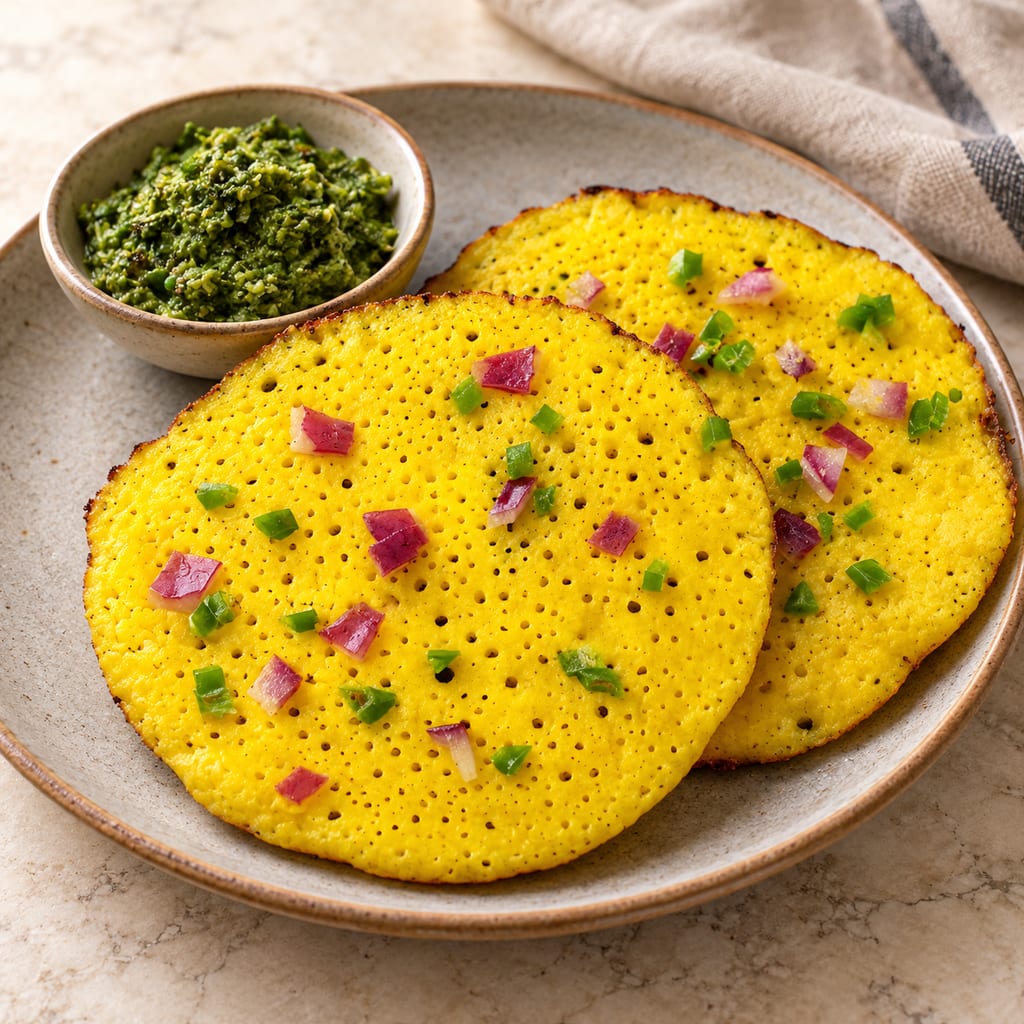
Spongy rice-and-coconut pancakes associated with Goa, cooked on one side from a batter that a multicooker's yogurt programme lets rise overnight.
No community contributions have been published for this entry yet.
Sign in to contribute. Published comments and photos are free to read.
Tea & OrangesRecipe · Regional identity
Old Beijing Sesame BunsPage identifies the food as 老北京麻酱烧饼 (lao beijing majiang shaobing), says it makes 9–12 buns, and provides measured yeast dough, sesame paste, brushing liquid, shaping, brief pan frying and baking instructions.
Dough uses 400 g flour, 220 g warm water, 2.5 g yeast, 2 g salt, 2 g baking soda and 10 g vegetable oil; knead 5–10 minutes and proof 20–40 minutes until doubled and springy.
Filling paste uses Chinese sesame paste, sesame oil, dark soy, ground Sichuan pepper and 1–3 tablespoons water. A mixture of light soy, water, honey and flour is brushed on before sesame seed coating.
Buns are fried 30 seconds to 1 minute per side until lightly browned, then baked at 200°C conventional or 180°C fan for 18 minutes.
Cited in: A named Beijing sesame-paste shaobing; Mix and proof the enriched dough; Stir two different sesame mixtures; Roll, slice and seal the sesame layers; Brush, seed, fry and bake; Regional use and practical limits
Tea & OrangesRegional context
About Sean St JohnThe author says Tea & Oranges documents Northern Chinese food, focuses on Beijing and other northern cuisines, and that he has lived in Beijing since 2015.
Cited in: A named Beijing sesame-paste shaobing
Promotional Centre of Beijing Municipal Bureau of Culture and TourismRegional identity · Foodways
Traditional snacks in BeijingThe Beijing tourism feature lists Zhimajiang Shaobing (芝麻酱烧饼) as a Beijing snack, describes sesame paste within the bread and notes its layered interior and its place among Hui breakfast foods.
Cited in: A named Beijing sesame-paste shaobing; Keep the regional names and forms distinct; Regional use and practical limits
Shanghai International Service PortalRegional distinction
The Culture of ShaobingThe article describes shaobing as a broad family with more than 100 regional styles and distinguishes several region-specific forms, supporting the choice to record a named Beijing sesame-paste style rather than one pan-Chinese formula.
Cited in: A named Beijing sesame-paste shaobing; Keep the regional names and forms distinct
Centers for Disease Control and PreventionFood safety guidance
Raw Flour and DoughUncooked flour can contain germs; do not eat raw dough; cook flour-containing foods according to directions and clean hands, bowls, utensils and surfaces after handling flour.
Cited in: Stir two different sesame mixtures; Regional use and practical limits