
Baby-Swiss-style cheese
A washed-curd cheese with propionic bacteria, warmed by hot water in two steps and then held in a warm room for weeks so the bacteria can form its holes.
 FermenteaWhere food goes to change
Built structures · Kettles, coppers and boilers
hot liquor tank for cheese · hot-water tank
The brewer holds clean water at a set temperature for washed-curd cheeses and other hot-water jobs, beside a separate cheese pot, instead of heating milk directly.
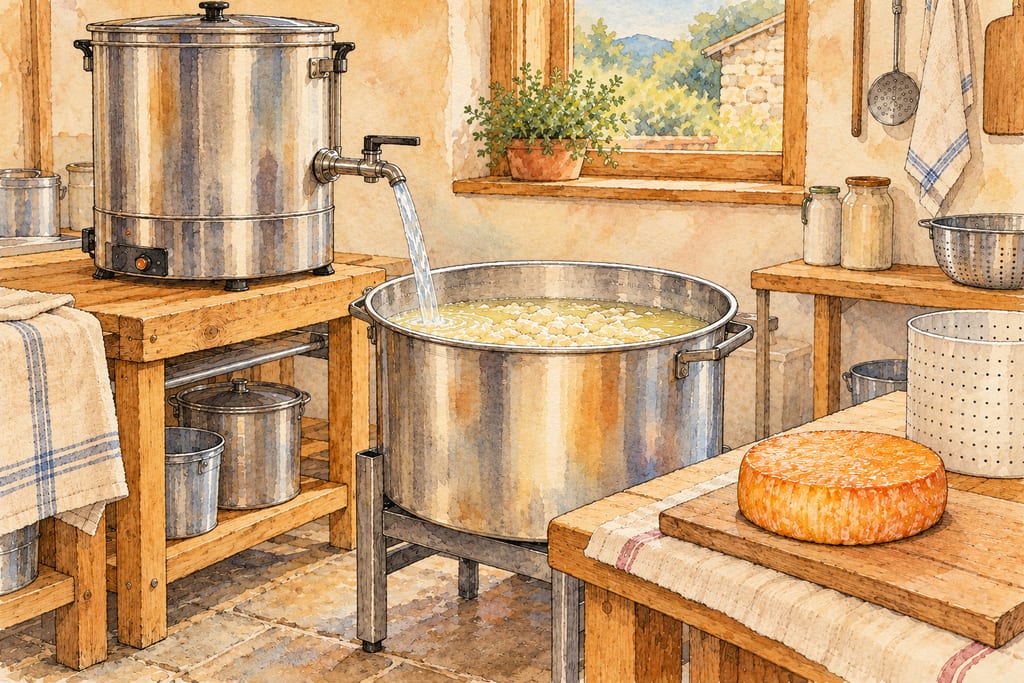
Several washed-curd and pressed cheeses warm the curd by adding hot water, not by heating the milk through the wall of a pot. A brewer full of water at a known temperature can supply that water. The brewer then stays a hot-water store beside the cheese pot.
Jim Wallace's Gouda removes about a third of the whey and adds water at 130 °F over 15 minutes. His baby Swiss adds non-chlorinated water at 130 °F to bring the curds to 95 °F and then 102 °F. His tomme adds water equal to 15% of the milk volume at 120 °F. His canestrato reheats formed cheeses in whey or in 150 °F water. The brewer can supply each of these waters at the stated temperature.
Water added to the curd mixes straight in, so the temperature changes quickly and evenly, without waiting for heat to pass through a pot wall. The Gouda method adds water to remove part of the lactose that lactic bacteria would turn into acid.
Tony Hamblyn's later brewery layout kept one tank purely for hot water, beside the cheese tanks. This is the nearest documented layout: the sources do not show a brewer supplying wash water to a curd directly.
The same hot-water role can keep a bath hot for a separate vat, run the early large-volume stage of a syrup before a smaller pan finishes, and support several small pots and equipment tasks. Cleaning and sanitising water are kept separate from water added to food.
The water temperatures come from the cheese recipes. Using the brewer as the water source is an adaptation: no inspected source tests it, and the page records it as such.
The measures are the water temperature in the jug at the moment of adding, and the curd temperature after each addition.
The water becomes part of the cheese. The vessel, tap and hose must be fit for food, and a brewer that has been cleaned must be rinsed before it fills with water for the curd (reasoned, not from a source).
Wash water and cleaning water need separate containers. Baby Swiss specifies non-chlorinated water for the curd.
The sources are current cheesemaking instructions from New England Cheesemaking Supply and a New Zealand brewery update. They use the brewer as a hot-water store. They do not date the first use of a brewer for this purpose.
A build is made where it stands: moving it means building it again.
The water becomes part of the cheese, so the vessel, tap and hose must be fit for food.
Hazard sourceRinse the brewer after any cleaner before filling it with water for the curd.
Control sourceUse non-chlorinated water where the recipe calls for it (baby Swiss).
Keep wash water and cleaning water in separate containers.
Tony Hamblyn's later brewery layout keeps one tank for hot water; the page does not date it.
A washed-curd cheese with propionic bacteria, warmed by hot water in two steps and then held in a warm room for weeks so the bacteria can form its holes.

A scalded cheese moulded in baskets and re-cooked in its forms in hot whey, made alongside a ricotta from the same milk, then acidified, brined and aged for months.
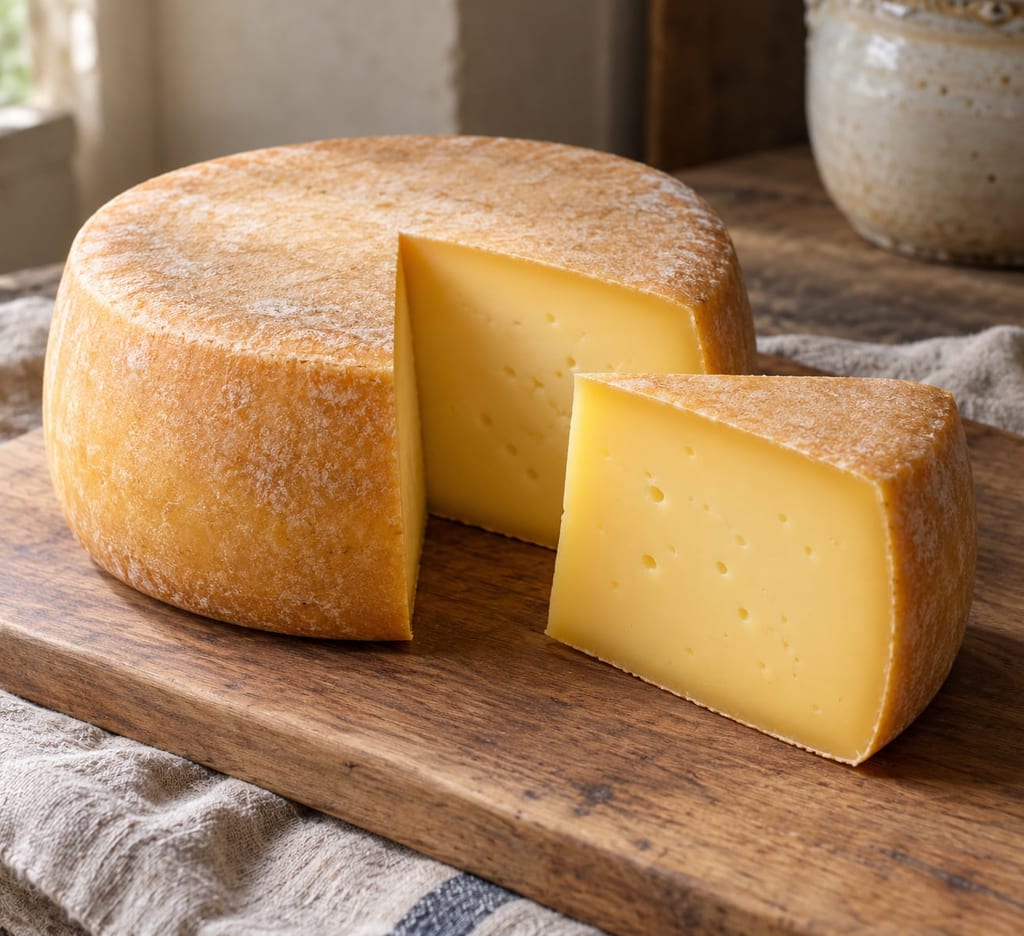
A pressed, brined cheese in which a third of the whey is replaced with hot water, washing out lactose so the cheese ends less acidic before months of ageing.
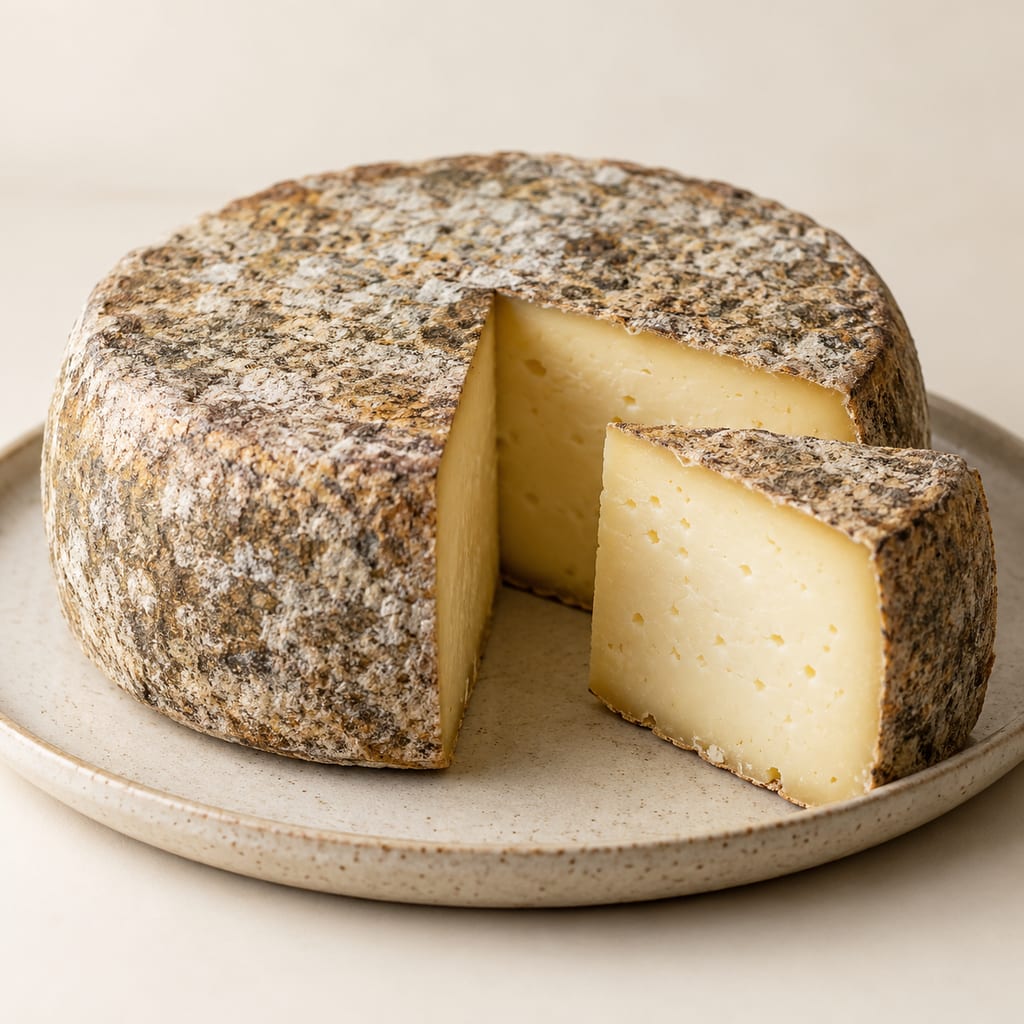
A rustic pressed cheese with a mixed mesophilic and thermophilic culture, whose curd is warmed by swapping whey for hot water before light pressing and cellar ageing.
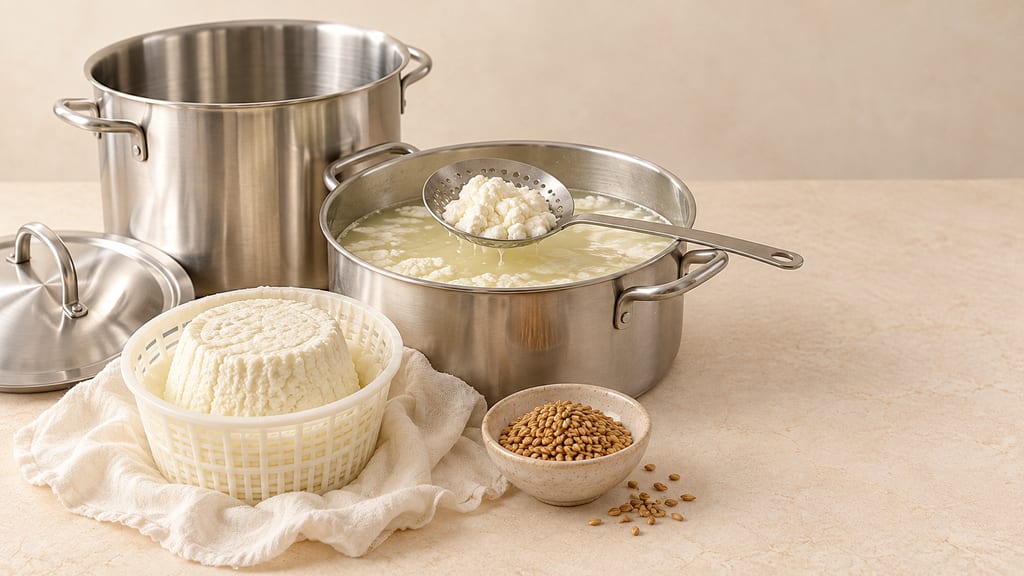
A home brewing kettle can hold a cheese pot in hot water, supply wash water and reheat whey. This is what two brewer manuals allow, and which cheeses show each job.
A slow cooker, a brewing kettle or a dehydrator can take over the hard part of many old food crafts, once you see each appliance as a set of physical functions and give it the right container.
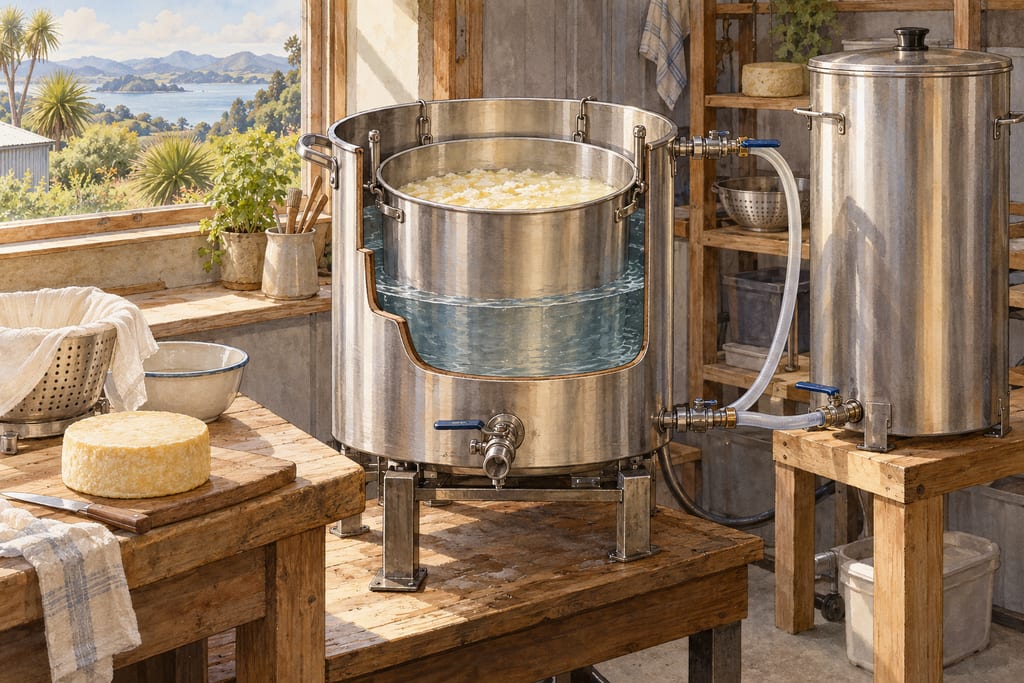
New Zealand home cheesemaker Tony Hamblyn's custom brewery, in which a 50-litre cheese pot hangs in a 70-litre mash tun of circulated hot water; later one tank served purely as hot water.
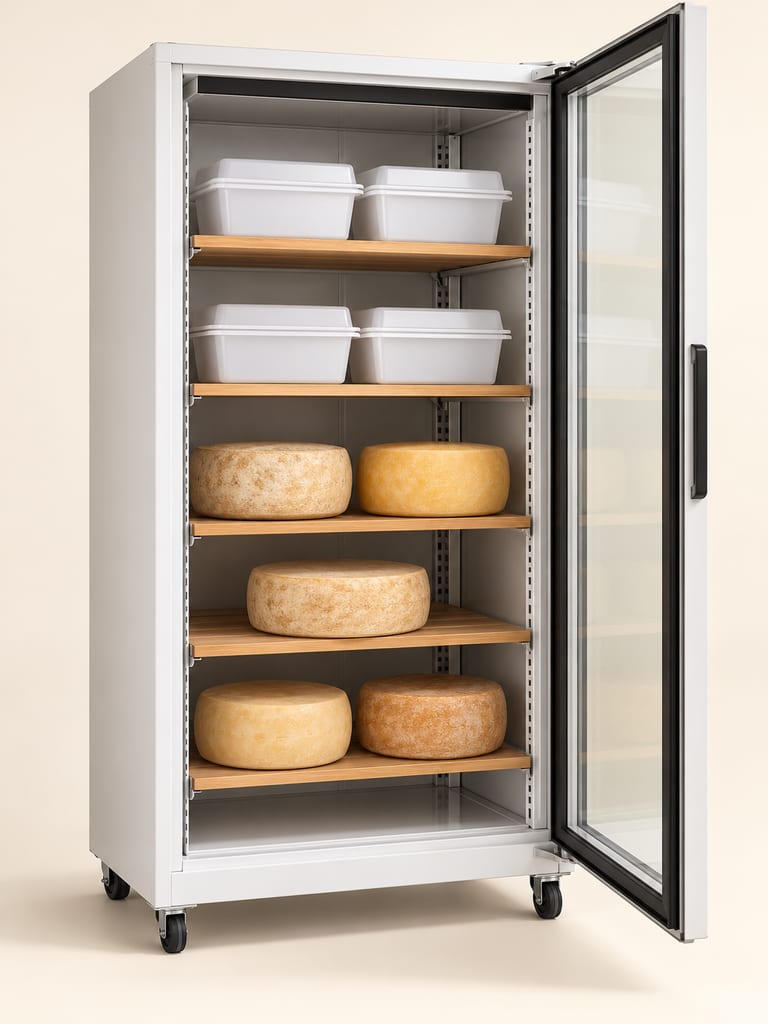
A modern cheese-ripening space made by controlling the temperature of a refrigerator or display cabinet and managing each cheese in its own covered container. It is an appliance conversion, not a natural cave or a traditional structure.
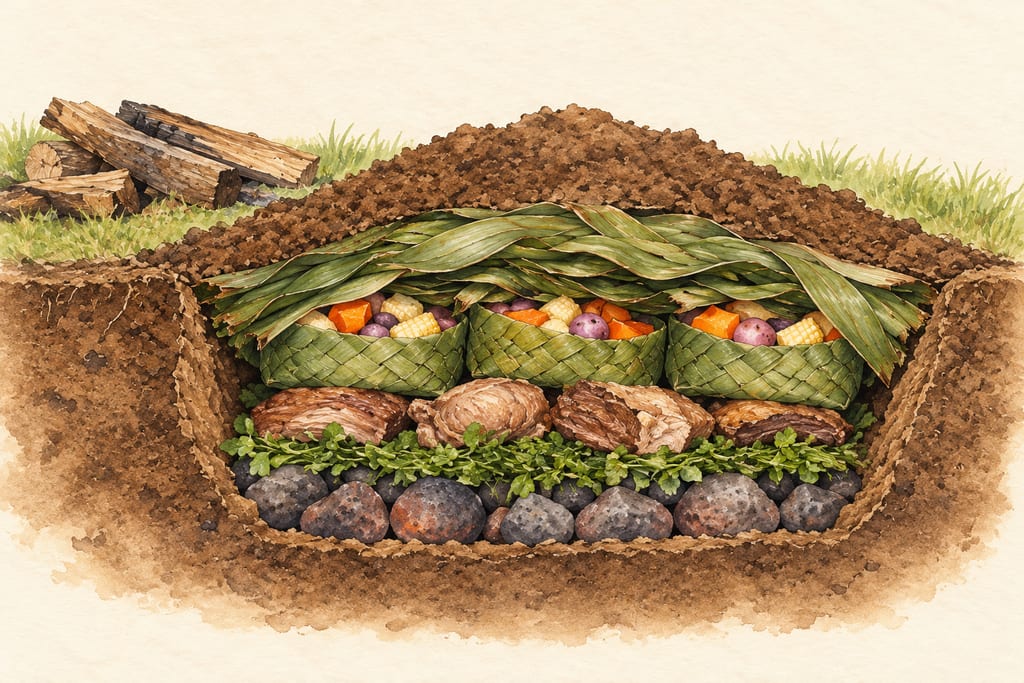
A source-specific account of the shallow earth oven used by a Ngāi Tahu family at Arowhenua Marae, with its hot stones, woven rourou and earth cover.
Māori raised storehouses held preserved food and seed. Heritage New Zealand documents one rare, uncarved Ngāti Hauiti example at Rata; its materials and later relocation are specific to that structure.
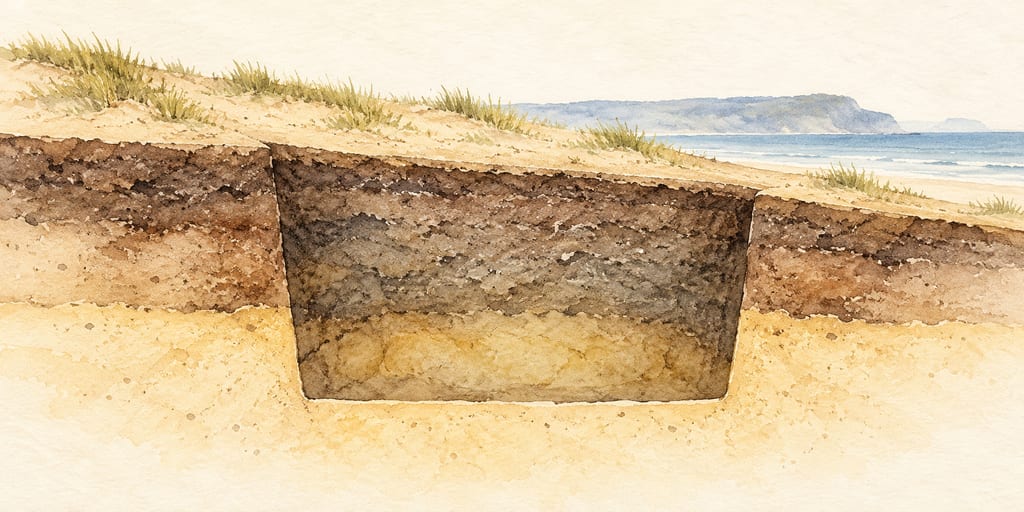
Rua kūmara are underground Māori stores for whole kūmara. Research at Pūrākaunui, authorized by Pūrākaunui Block Inc. and Kāti Huirapa Rūnaka ki Puketeraki, documents 15th-century pits without establishing one design.
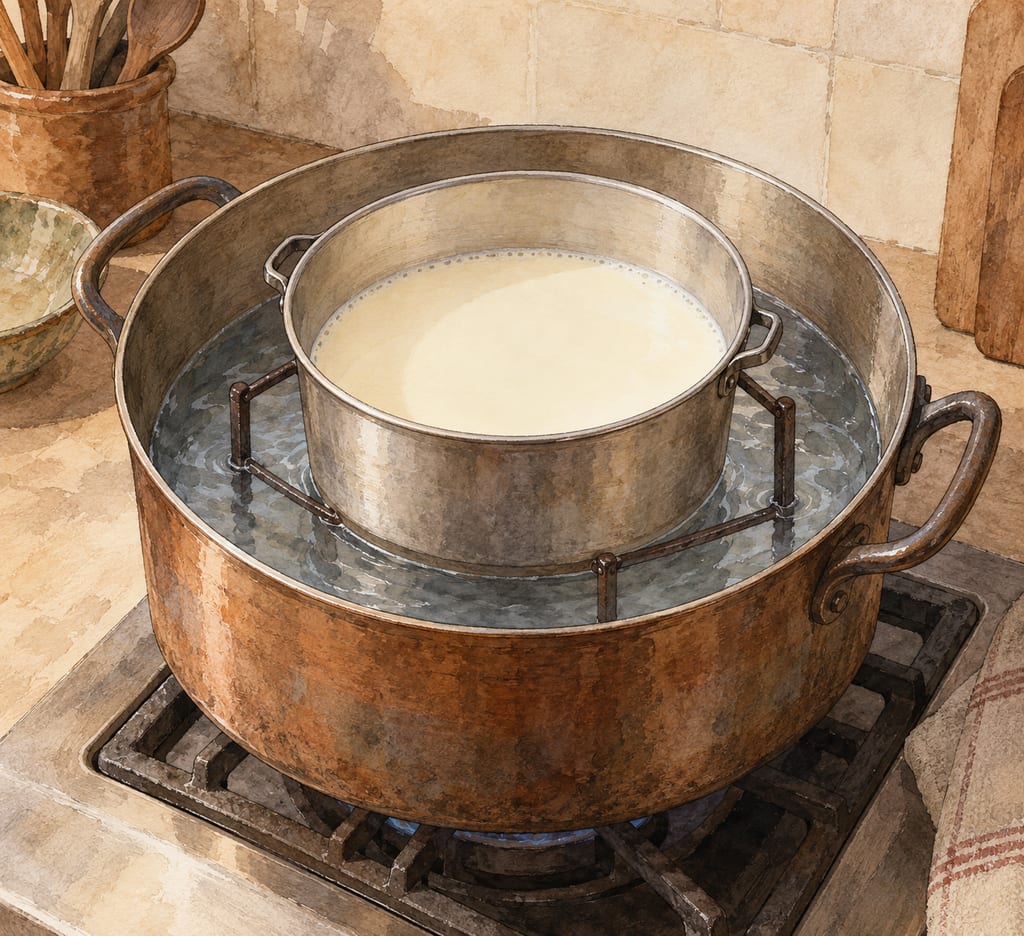
A food pot held at a fixed height inside a larger vessel of controlled hot water: the water distributes heat while the milk or whey inside stays still and away from the heater.
Whata are raised Māori food-storage platforms or stages. Sources describe temporary storage and drying, while recorded forms and terminology vary.

Soft, spreadable Calabrian pork sausage made with a great deal of red chilli and fatty pork, stuffed into natural casings, sometimes smoked and matured while staying soft.

A way to add independent temperature logging to an existing food dehydrator without changing its built-in controls or protections. It is a monitoring method, not a rewiring plan.

Pleurotus cystidiosus is the abalone mushroom, a cultivated oyster-type fungus with dark brown caps that grows more slowly and is more demanding than other Pleurotus species.

A dark, balanced vinegar from Emilia-Romagna made by combining cooked or concentrated grape must with wine vinegar, then acetifying and refining it in wood under a protected specification.

A living dairy inoculum that starts controlled cream fermentation, developing acidity and aroma before sour cream or cultured butter is finished.

A small electric incubator holds jars at a selected temperature for yogurt and other documented warm food preparations. Controls, capacity and vessel arrangement vary by model.

Adygean salt is a seasoned table salt associated with Adygea and the wider North Caucasian culinary tradition. Salt is blended with garlic and a variable selection of herbs and spices; the exact mix depends on the named style and maker.

The African Caesar-group mushroom, Amanita masasiensis, is a wild ectomycorrhizal species of central and southern African woodlands, eaten locally. The genus contains deadly poisonous species, so identification needs care.
No community contributions have been published for this entry yet.
Sign in to contribute. Published comments and photos are free to read.
New England Cheesemaking Supply CompanyMethod
Gouda Cheese Making Recipe (Jim Wallace)Cited in: Overview; How it works
New England Cheesemaking Supply CompanyMethod
Swiss Cheese Recipe (Baby Swiss) (Jim Wallace)Cited in: Overview; Evidence; Limits and food safety
New England Cheesemaking Supply CompanyMethod
Tomme Style Cheese Recipe (Jim Wallace)Cited in: Overview
New England Cheesemaking Supply CompanyMethod
Canestrato Italian Basket Cheese Recipe (Jim Wallace)Cited in: Overview
New England Cheesemaking Supply Company (cheesemaking.com)Documented use
Tony Hamblyn in New Zealand UpdateCited in: Documented layouts