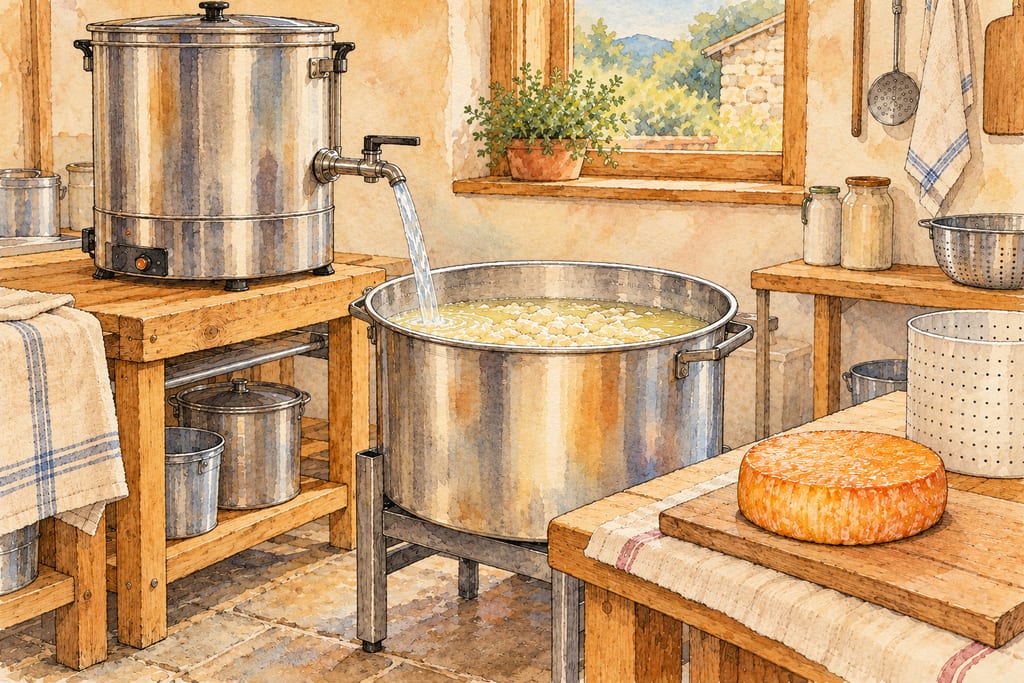
Brewer as a hot-water service station
The brewer holds clean water at a set temperature for washed-curd cheeses and other hot-water jobs, beside a separate cheese pot, instead of heating milk directly.
 FermenteaWhere food goes to change
Built structures · Pits and cavities
Hāngī
A source-specific account of the shallow earth oven used by a Ngāi Tahu family at Arowhenua Marae, with its hot stones, woven rourou and earth cover.
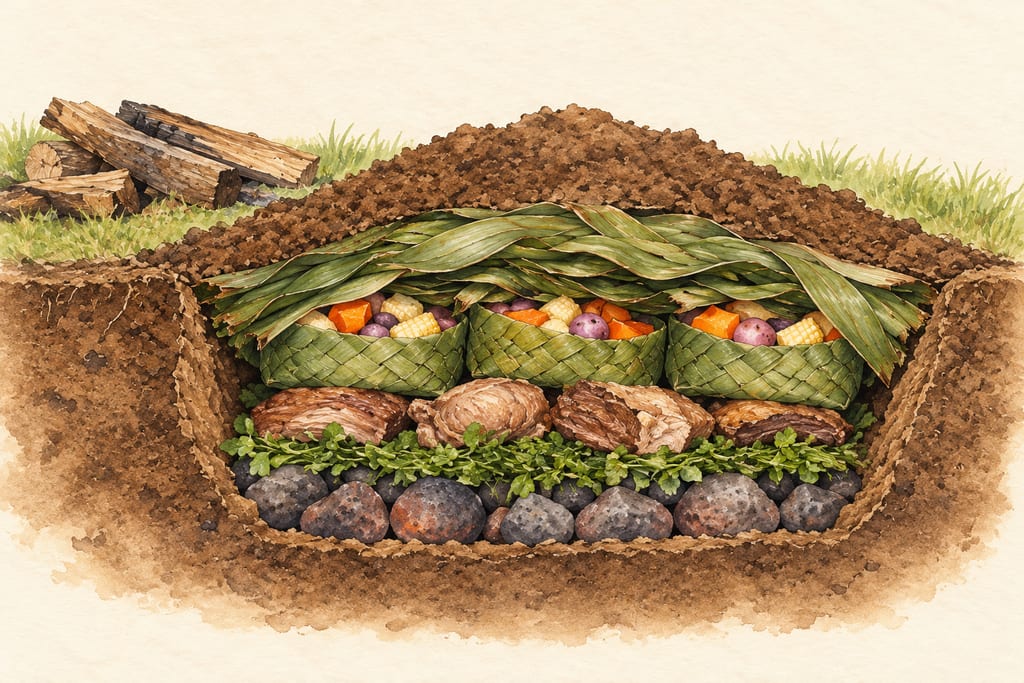
Hāngī is a Māori earth-oven method of cooking with heated stones and steam. This page follows one account: Karl Russell’s Ngāi Tahu family preparing a hāngī for a birthday at Arowhenua Marae in South Canterbury. The report documents a living family practice, not a universal Māori design or a date of origin.
In this particular account, the pit was described as no more than about two feet deep. That measurement belongs only to this example. The account does not prescribe a standard width, capacity or construction plan. Arowhenua is near Temuka; its location here records where the preparation was documented, not the origin of hāngī.
The family’s fire was built in the pit, with hardwood beams laid across it to support stones while they heated. The practitioner preferred volcanic stone because, in his experience, many river stones can split under extreme heat; river stones were used for this particular meal because of the conditions. The fire burned down for two to three hours while the food was prepared. These are details of one account, not operating specifications.
After the embers were removed, the stones were reset and wiped with a wet sack. Watercress went over the hot stones, followed by meat and then woven harakeke rourou baskets of vegetables. The baskets were lined with watercress and cabbage. Damp harakeke mats covered the food, and earth was banked over them to hold steam. The family account says the meal cooked for three to four hours; timing depends on the oven and load, so those times should not be generalized.
The ground cavity, heated stones, moisture and earth covering form a temporary enclosed cooking space. Heat stored in the stones and steam trapped under the cover cook the food. It is a cooking structure, not a fermentation vessel or food-preservation process. Modern hāngī may use drums or gas-fired equipment, but those are distinct adaptations; this record concerns the in-ground form in the Arowhenua account.
In this family's chosen old-style preparation, harakeke baskets and mats are contrasted with wire baskets and later wet-sack covers. The named contemporary foods include potatoes, pumpkin and maize; these examples should not be projected back onto the earliest Māori settlement period. The account presents cooking as shared whānau work and a reason to gather, as well as a way to prepare food.
The sources attest a current Ngāi Tahu family practice but do not establish when hāngī originated. No origin date is assigned.
Fire, heated stones and retained heat can cause severe burns; hot stones may split when heated. The cited family account is cultural documentation, not a construction or safety specification. Consult current local fire and food-safety guidance; do not assume river stones are safe to heat.
Location of the specific Ngāi Tahu family preparation documented by Te Rūnanga o Ngāi Tahu; not claimed as the origin of hāngī.
General cultural context for Māori hāngī; this does not imply one uniform regional design.
The brewer holds clean water at a set temperature for washed-curd cheeses and other hot-water jobs, beside a separate cheese pot, instead of heating milk directly.
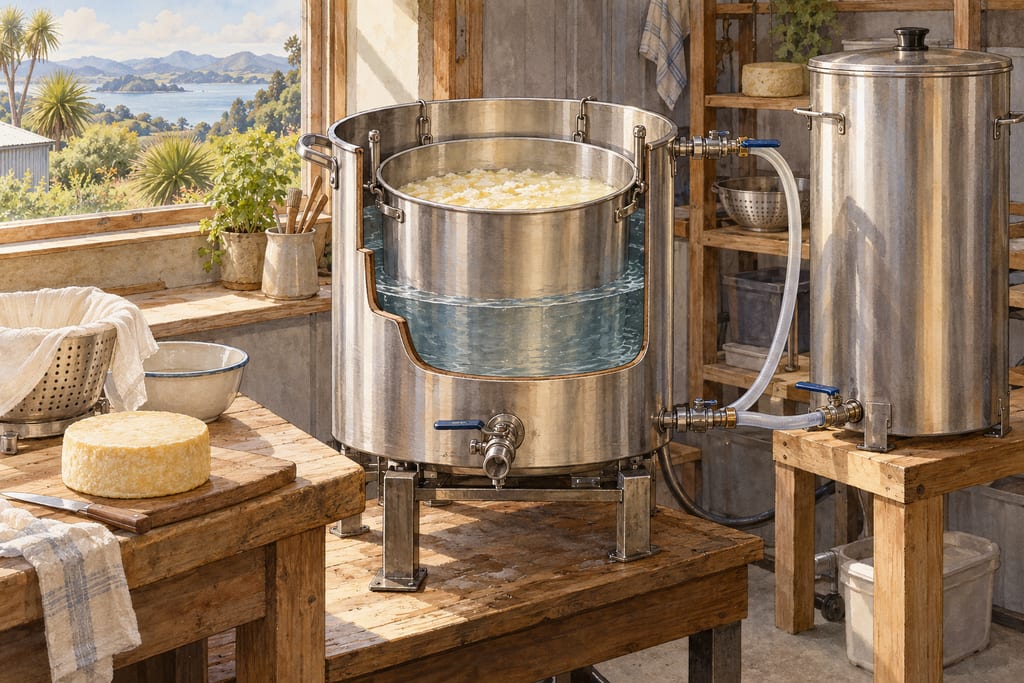
New Zealand home cheesemaker Tony Hamblyn's custom brewery, in which a 50-litre cheese pot hangs in a 70-litre mash tun of circulated hot water; later one tank served purely as hot water.
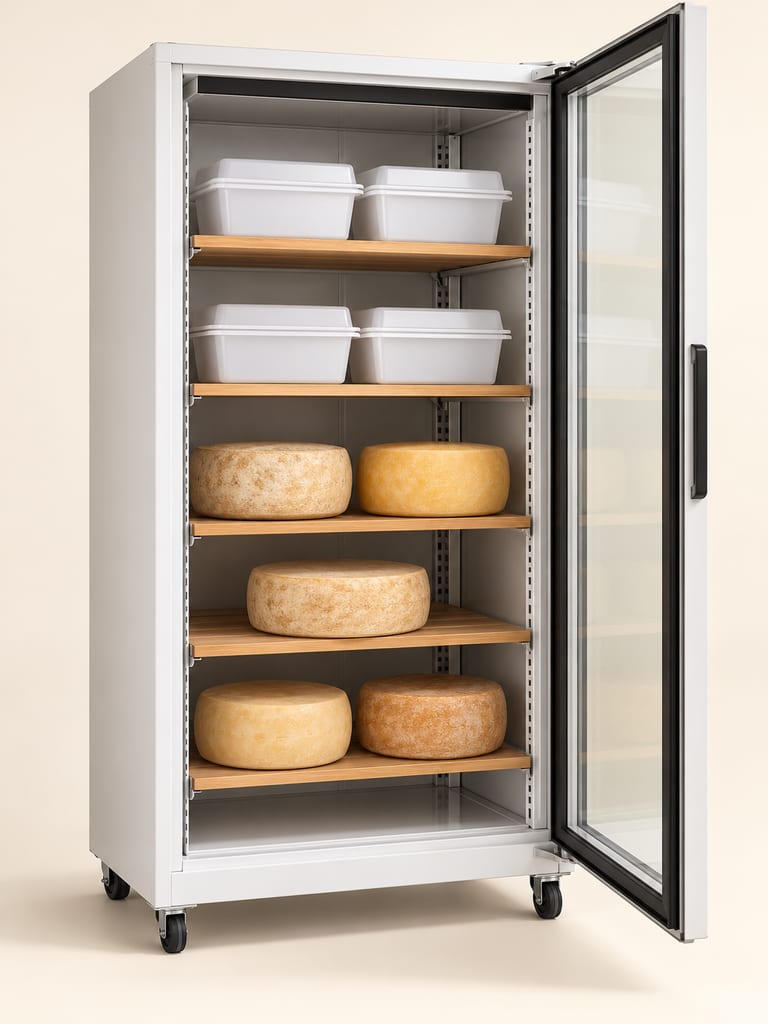
A modern cheese-ripening space made by controlling the temperature of a refrigerator or display cabinet and managing each cheese in its own covered container. It is an appliance conversion, not a natural cave or a traditional structure.
Māori raised storehouses held preserved food and seed. Heritage New Zealand documents one rare, uncarved Ngāti Hauiti example at Rata; its materials and later relocation are specific to that structure.
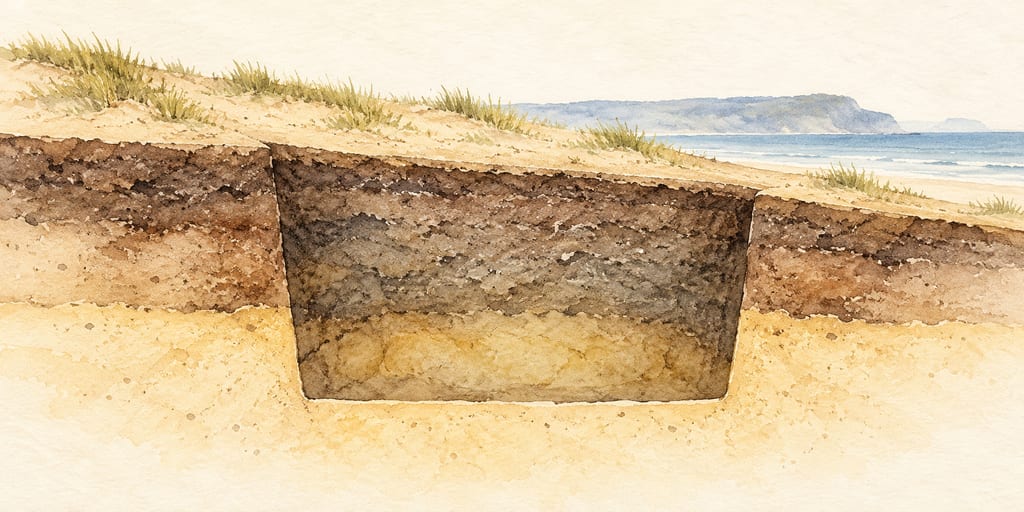
Rua kūmara are underground Māori stores for whole kūmara. Research at Pūrākaunui, authorized by Pūrākaunui Block Inc. and Kāti Huirapa Rūnaka ki Puketeraki, documents 15th-century pits without establishing one design.
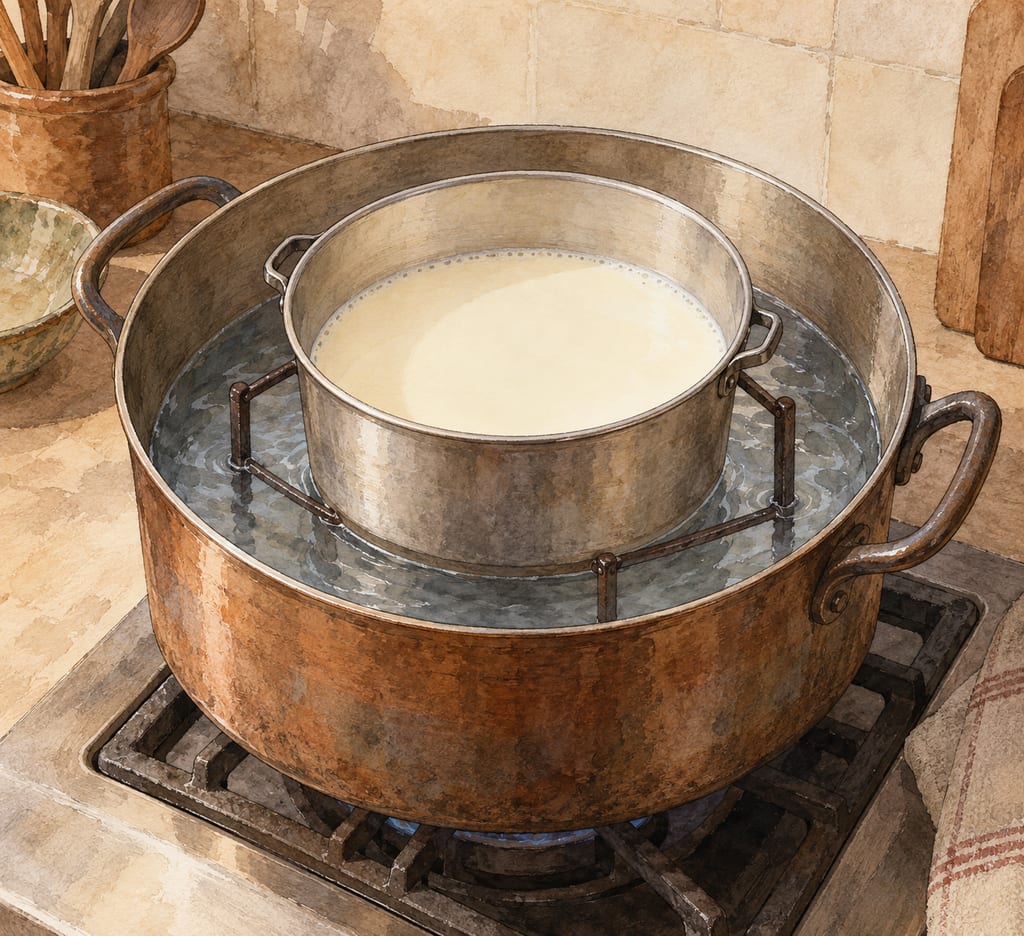
A food pot held at a fixed height inside a larger vessel of controlled hot water: the water distributes heat while the milk or whey inside stays still and away from the heater.
Whata are raised Māori food-storage platforms or stages. Sources describe temporary storage and drying, while recorded forms and terminology vary.
No community contributions have been published for this entry yet.
Sign in to contribute. Published comments and photos are free to read.
Te Rūnanga o Ngāi TahuMethod · Geography · Materials · Images
Kai: An excuse to shareA 2013 account documents Karl Russell's old-style Ngāi Tahu family hāngī at Arowhenua Marae, including pit, fire and stone arrangement, materials, food layers and cooking times.
The article describes the account as one family practice and distinguishes it from modern gas-fired drums and recycled kegs.
Cited in: A living Ngāi Tahu practice; Pit, stones and layers; What the structure does
Te Ara – The Encyclopedia of New ZealandContext · Method
Traditional cooking and preservingMāori hāngī is an earth-oven cooking method using hot rocks and water in a shallow pit, with layered food covered to retain steam.
Cooking time depends on the size of the oven; the source describes cooking rather than microbial fermentation.
Cited in: Pit, stones and layers; What the structure does
Te Rūnanga o Ngāi TahuGeography
ArowhenuaArowhenua is identified as the principal Māori kāinga of South Canterbury, about two kilometres south of Temuka.
Cited in: A living Ngāi Tahu practice