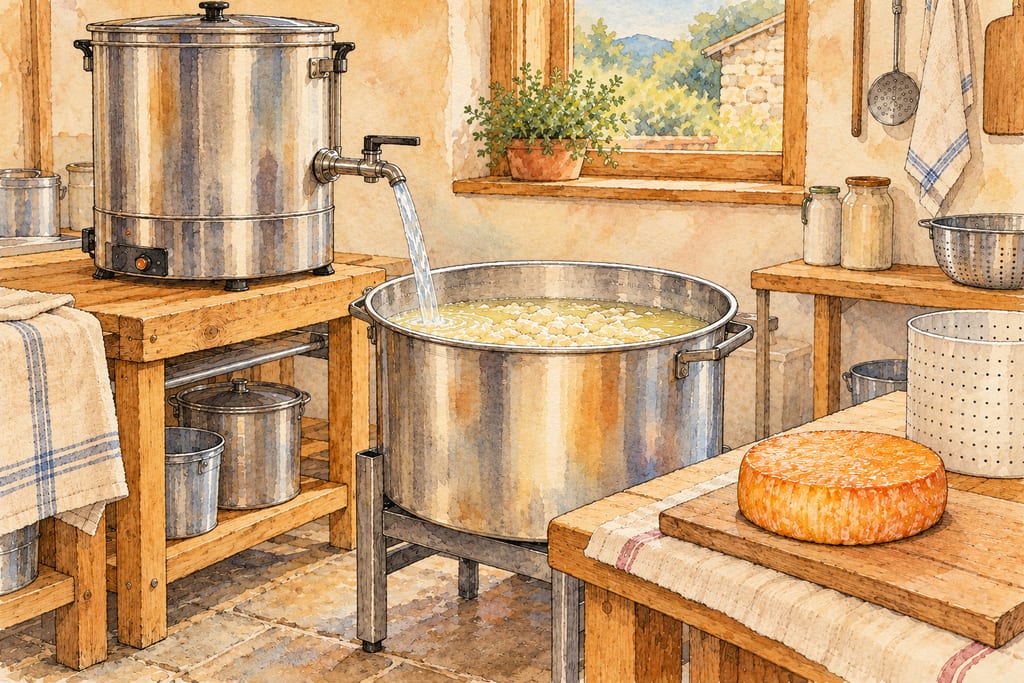
Brewer as a hot-water service station
The brewer holds clean water at a set temperature for washed-curd cheeses and other hot-water jobs, beside a separate cheese pot, instead of heating milk directly.
 FermenteaWhere food goes to change
Built structures · raised-storehouses
Māori raised storehouses held preserved food and seed. Heritage New Zealand documents one rare, uncarved Ngāti Hauiti example at Rata; its materials and later relocation are specific to that structure.
Pātaka are Māori storehouses documented for holding preserved foods and seed. Te Ara names fish, birds, kao (a kūmara preparation) and seed among what a pātaka could protect from kiore, or Pacific rats, in winter. The same entry describes a floor trapdoor and a small front opening used as a window. These details are from the cited account; they do not establish a fixed plan or capacity for every storehouse.
Te Papa describes pātaka as buildings that were customarily located near a leading chief’s dwelling in a village. Its account also interprets carved examples as signs of abundance, knowledge and prestige, connecting storage with leadership and generosity. These meanings are presented as Te Papa’s account, not a universal interpretation for every iwi or pātaka.
Te Ara distinguishes pātaka from two other Māori storage forms: whata, raised platforms used to hold or hang food, and rua kūmara, underground pits for kūmara. The distinction matters because these structures place food in different settings; descriptions of drainage in a rua kūmara should not be transferred to a pātaka. This record is limited to the raised storehouse form.
General accounts of Māori storage do not establish a particular iwi’s design. A specific surviving example is documented by Heritage New Zealand: McManaway’s Pātaka was constructed by Ngāti Hauiti ancestors, and the register records cultural significance to Te Rūnanga o Ngāti Hauiti and to Taiuru whānau (Ngāti Haukaha). It is believed to have stood near Te Hou Hou kāinga before relocation to the present site in the late 19th or early 20th century. Heritage New Zealand classifies that present site as private with no public access.
Heritage New Zealand’s listing documents one rare, uncarved example. It describes adzed tōtara slabs along the sides and vertical slabs at the front and rear, with an uncarved maihi and amo frontage. Its listed dimensions are 3.44 metres wide, 4.9 metres long and 4.5 metres high. These measurements belong to McManaway’s Pātaka and are not a general pattern.
The page uses published descriptions from Te Ara, Te Papa and Heritage New Zealand while keeping their Māori context and qualifications. Te Ara’s illustration is credited to George French Angas and the Alexander Turnbull Library; its page requires permission before image reuse. No such permission is recorded here, and the Heritage New Zealand photographs also have no established reuse permission. No image is attached or used as a generation reference.
The same register distinguishes original features from later changes: piles were replaced after relocation, new timber framing was added during reconstruction, petrol drums were placed under the corners, and corrugated iron roofing was added later. This is evidence about one building’s history, not a recipe for rebuilding pātaka. The heritage page includes photographs credited to J Wylie, but this record has no established reuse permission; those photographs are not copied or used as generation references.
Te Ara documents pātaka as Māori storehouses in historical and traditional contexts. The sources cited here do not date their origin or establish a single form across iwi.
A build is made where it stands: moving it means building it again.
The sources attribute pātaka to Māori contexts in Aotearoa but do not name an iwi or pin this type to a particular locality.
This identifies the historical region of one named pātaka, not a public visit location; Heritage New Zealand marks the present site private with no public access.
The brewer holds clean water at a set temperature for washed-curd cheeses and other hot-water jobs, beside a separate cheese pot, instead of heating milk directly.
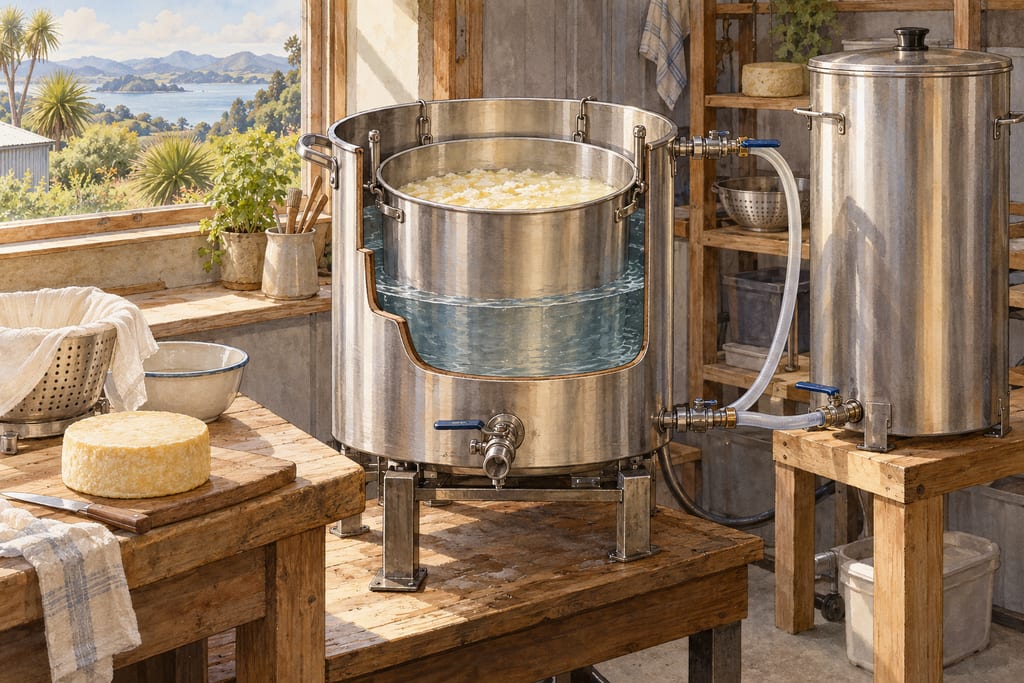
New Zealand home cheesemaker Tony Hamblyn's custom brewery, in which a 50-litre cheese pot hangs in a 70-litre mash tun of circulated hot water; later one tank served purely as hot water.
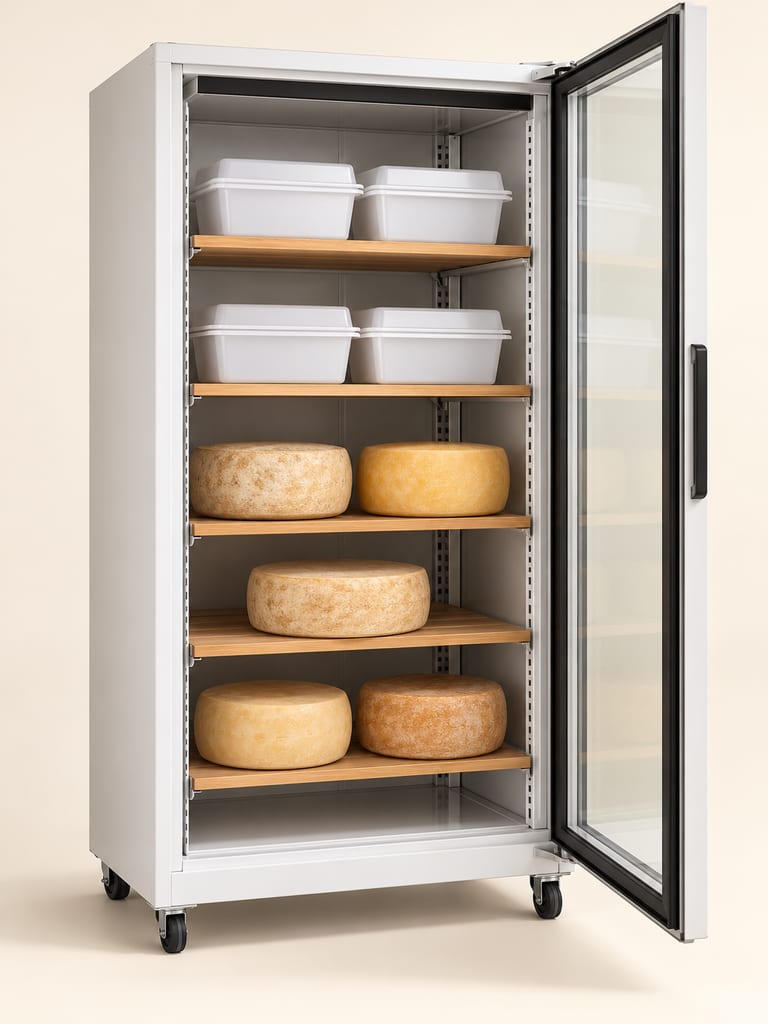
A modern cheese-ripening space made by controlling the temperature of a refrigerator or display cabinet and managing each cheese in its own covered container. It is an appliance conversion, not a natural cave or a traditional structure.
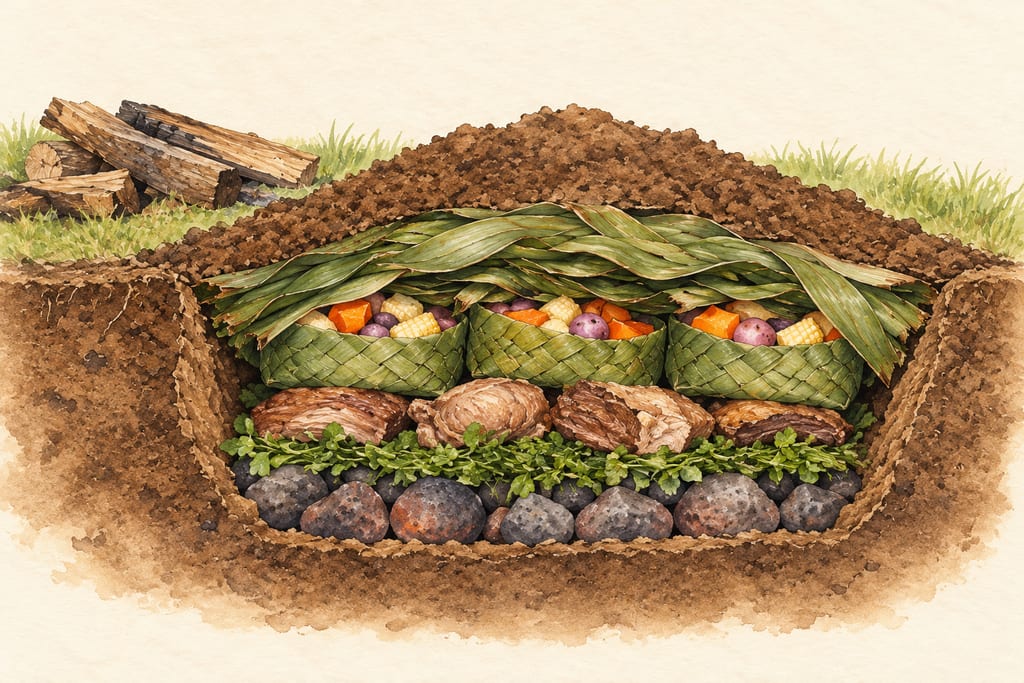
A source-specific account of the shallow earth oven used by a Ngāi Tahu family at Arowhenua Marae, with its hot stones, woven rourou and earth cover.
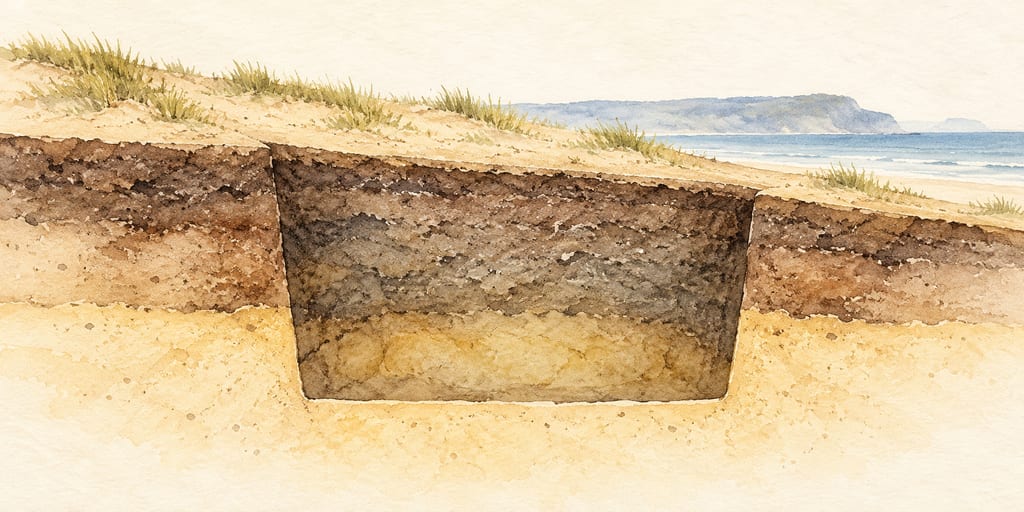
Rua kūmara are underground Māori stores for whole kūmara. Research at Pūrākaunui, authorized by Pūrākaunui Block Inc. and Kāti Huirapa Rūnaka ki Puketeraki, documents 15th-century pits without establishing one design.
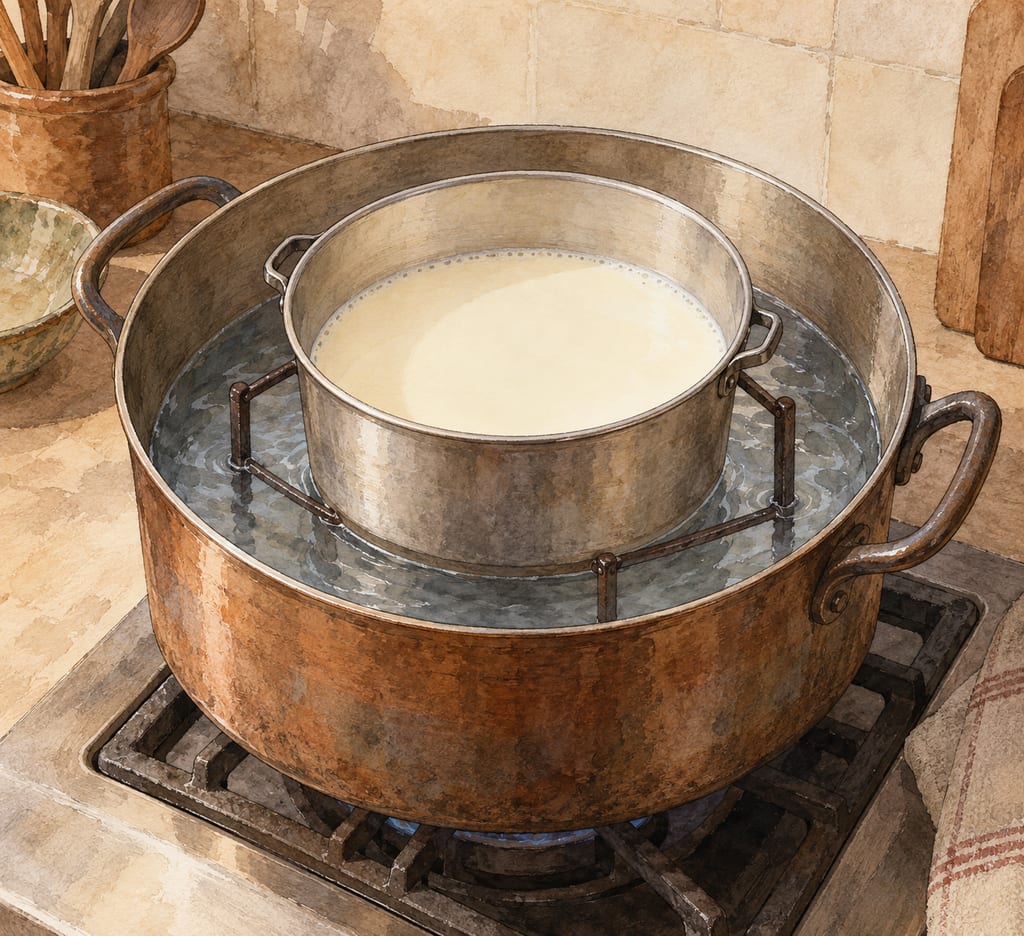
A food pot held at a fixed height inside a larger vessel of controlled hot water: the water distributes heat while the milk or whey inside stays still and away from the heater.
Whata are raised Māori food-storage platforms or stages. Sources describe temporary storage and drying, while recorded forms and terminology vary.
No community contributions have been published for this entry yet.
Sign in to contribute. Published comments and photos are free to read.
Te Ara – the Encyclopedia of New ZealandForm · Use · History · Culture
Pātaka — Freight and warehousingTe Ara describes pātaka as storehouses for preserved fish, birds, kao (a kūmara preparation) and seed, kept safe from kiore in winter.
The entry describes access through a floor trapdoor and a small front opening used as a window.
The page explicitly says permission from the Alexander Turnbull Library is required before reuse of its image; this page does not reproduce it.
Cited in: A raised storehouse; Not a pit or an open platform; Evidence and image rights
Te Ara – the Encyclopedia of New ZealandUse · Geography · Culture
Traditional cooking and preserving — Māori foods – kai MāoriTe Ara distinguishes raised whata platforms from pātaka storehouses and underground rua kūmara pits.
The page describes pātaka within Māori food storage accounts; its statements do not establish a single form for all iwi.
Cited in: Not a pit or an open platform; Evidence and image rights
Museum of New Zealand Te Papa TongarewaCulture · History · Form
Pātaka and the story of Tinirau and the whaleTe Papa describes pātaka as storehouses for food or valuables and says they were customarily near a leading chief’s dwelling in a village.
Te Papa discusses carved examples as symbols of plenty, knowledge, prestige and generosity; this interpretation is kept attributed to the museum and not generalized to every pātaka.
Cited in: A raised storehouse; Evidence and image rights
Heritage New Zealand Pouhere TaongaForm · Materials · History · Culture · Geography
McManaway’s Pātaka and WakaHeritage New Zealand records this example as culturally significant to Te Rūnanga o Ngāti Hauiti and Taiuru whānau (Ngāti Haukaha), with its original location believed to be near Te Hou Hou kāinga.
The register describes adzed tōtara slab walls, an uncarved maihi and amo frontage, six piles, dimensions of 3.44 m by 4.9 m by 4.5 m, and relocation in the late 19th or early 20th century.
It identifies replaced piles, petrol drums, new timber framing and corrugated iron roofing as changes to this particular building; it marks the current site private with no public access.
The register page includes photographs credited to J Wylie, but no image reuse license was established; they are not copied, attached, or used as generation references.
Cited in: Not a pit or an open platform; Evidence and image rights