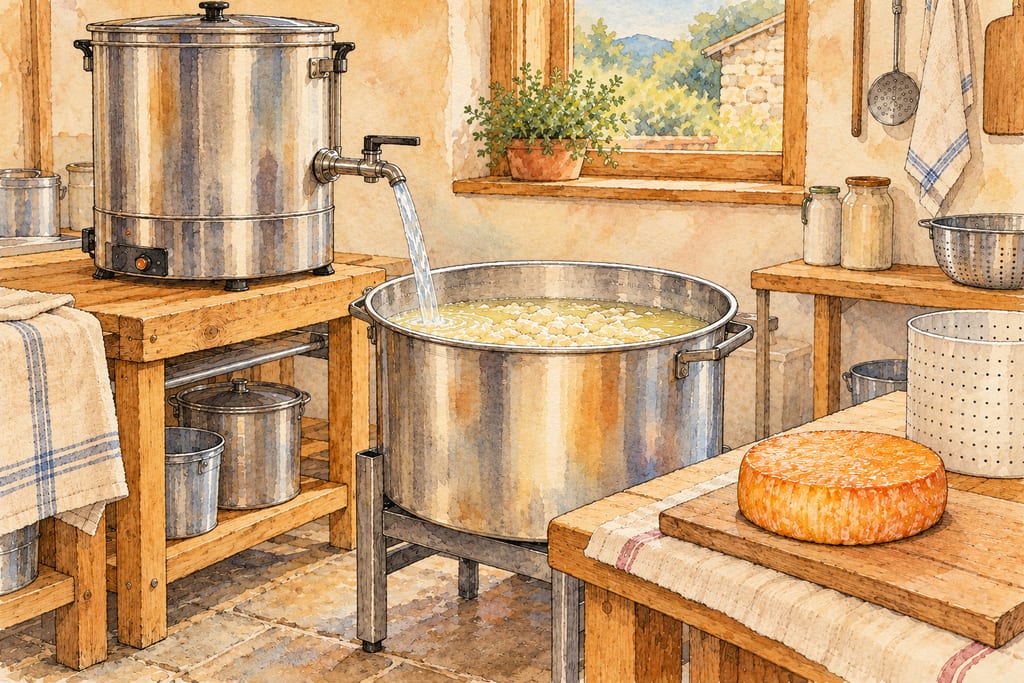
Brewer as a hot-water service station
The brewer holds clean water at a set temperature for washed-curd cheeses and other hot-water jobs, beside a separate cheese pot, instead of heating milk directly.
 FermenteaWhere food goes to change
Built structures · Terraces, platforms and stands
Whata are raised Māori food-storage platforms or stages. Sources describe temporary storage and drying, while recorded forms and terminology vary.
Elsdon Best’s 1916 Dominion Museum survey records open elevated platforms and also stages with a rough thatch covering. It notes that whata and pātaka were applied inconsistently across historical descriptions, and reports a Māori informant’s distinction between an open whata and an enclosed pātaka. This early colonial-era compilation preserves testimony but cannot stand for all iwi or settle contemporary naming.
This page describes the raised platform function while leaving exact construction unspecified. It does not treat an open rack, a roofed stage and an enclosed pātaka as one structure. The cited forms remain source-specific descriptions rather than a universal design.
Te Ara describes whata as raised platforms for holding or hanging kai before it was moved to a pātaka or rua kūmara. Its account says the elevated structure could have a thatched top to protect harvested food from kiore and weather. Te Papa likewise presents whata as temporary storage and distinguishes it from the more permanent storehouse or underground kūmara pit.
These descriptions concern food storage, not a fermentation vessel or a recipe. Sources describe food being hung or placed there, including for drying, but do not establish identical dimensions, materials, capacity or duration for all whata.
The cited accounts describe traditional Māori food-storage use but do not establish an origin date or single chronology.
A build is made where it stands: moving it means building it again.
The sources describe whata in Māori food-storage contexts in Aotearoa but do not pin this general form to a particular iwi or locality.
The brewer holds clean water at a set temperature for washed-curd cheeses and other hot-water jobs, beside a separate cheese pot, instead of heating milk directly.
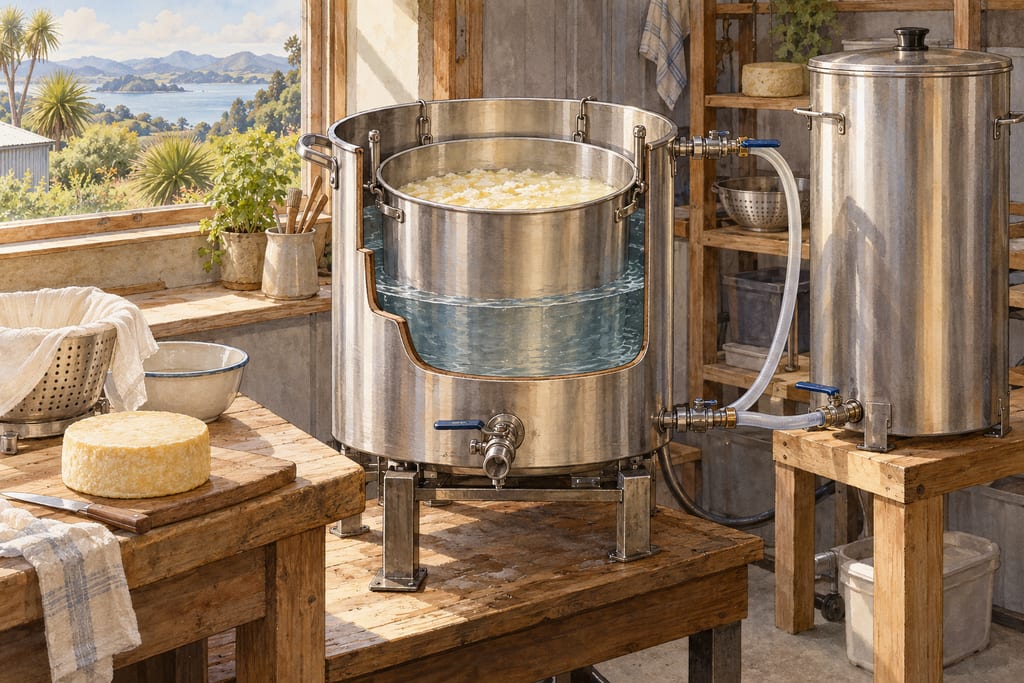
New Zealand home cheesemaker Tony Hamblyn's custom brewery, in which a 50-litre cheese pot hangs in a 70-litre mash tun of circulated hot water; later one tank served purely as hot water.
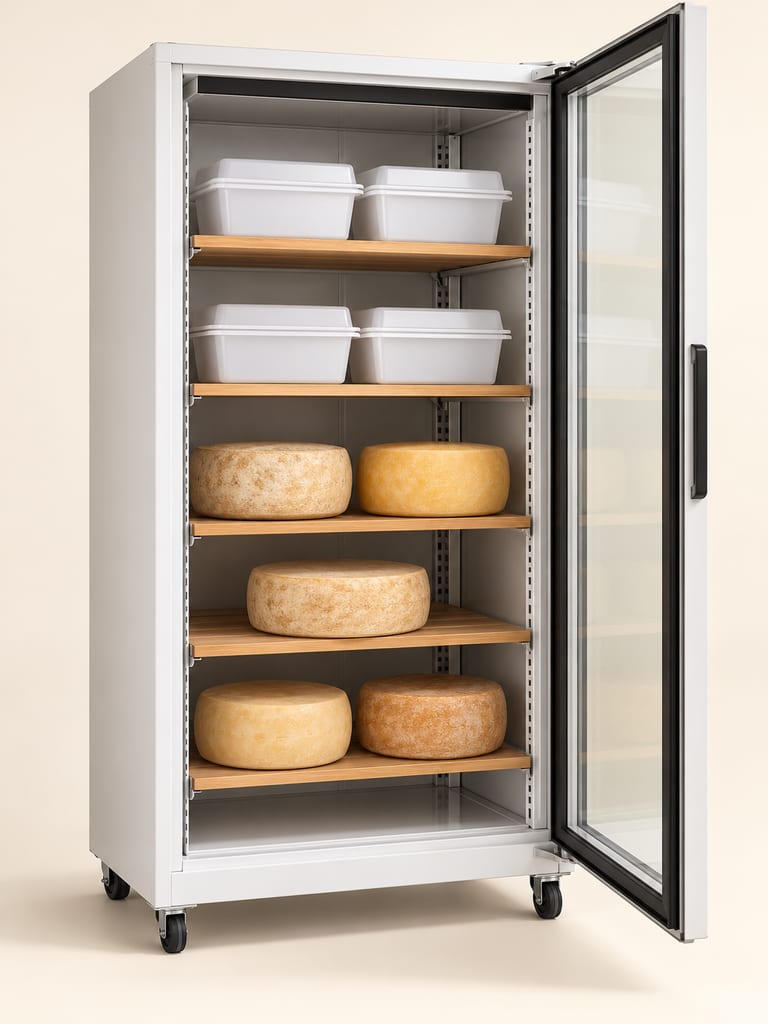
A modern cheese-ripening space made by controlling the temperature of a refrigerator or display cabinet and managing each cheese in its own covered container. It is an appliance conversion, not a natural cave or a traditional structure.
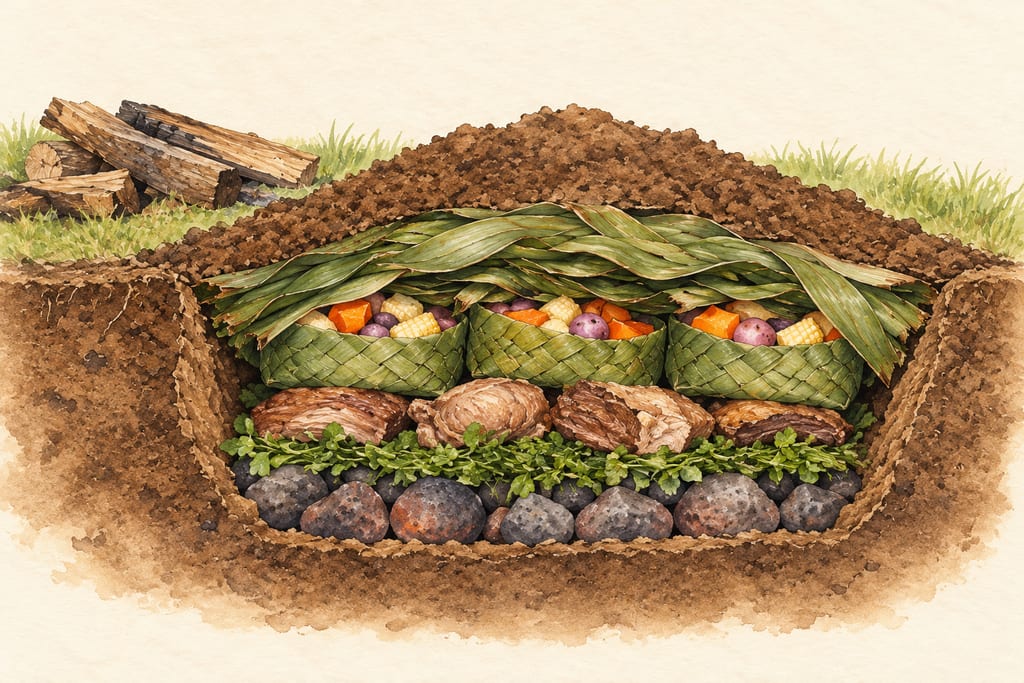
A source-specific account of the shallow earth oven used by a Ngāi Tahu family at Arowhenua Marae, with its hot stones, woven rourou and earth cover.
Māori raised storehouses held preserved food and seed. Heritage New Zealand documents one rare, uncarved Ngāti Hauiti example at Rata; its materials and later relocation are specific to that structure.
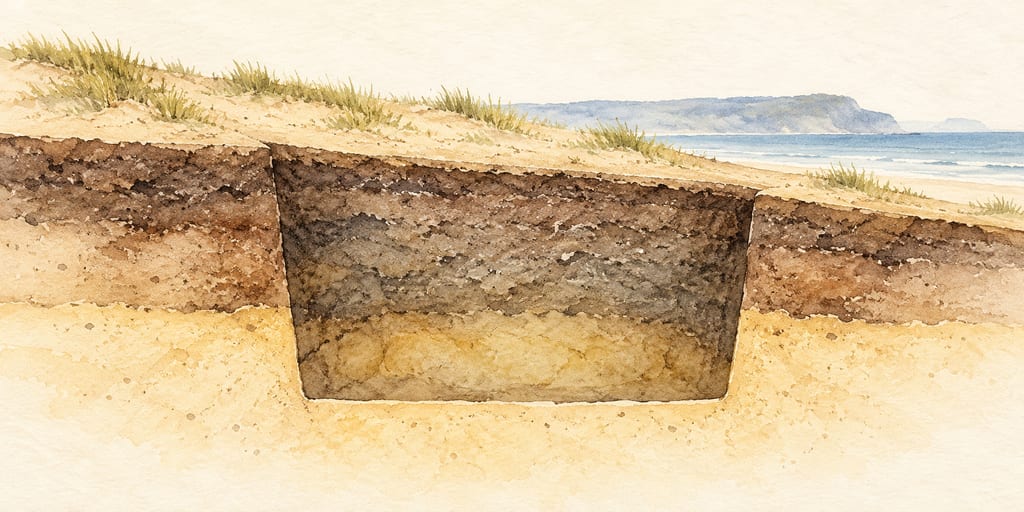
Rua kūmara are underground Māori stores for whole kūmara. Research at Pūrākaunui, authorized by Pūrākaunui Block Inc. and Kāti Huirapa Rūnaka ki Puketeraki, documents 15th-century pits without establishing one design.
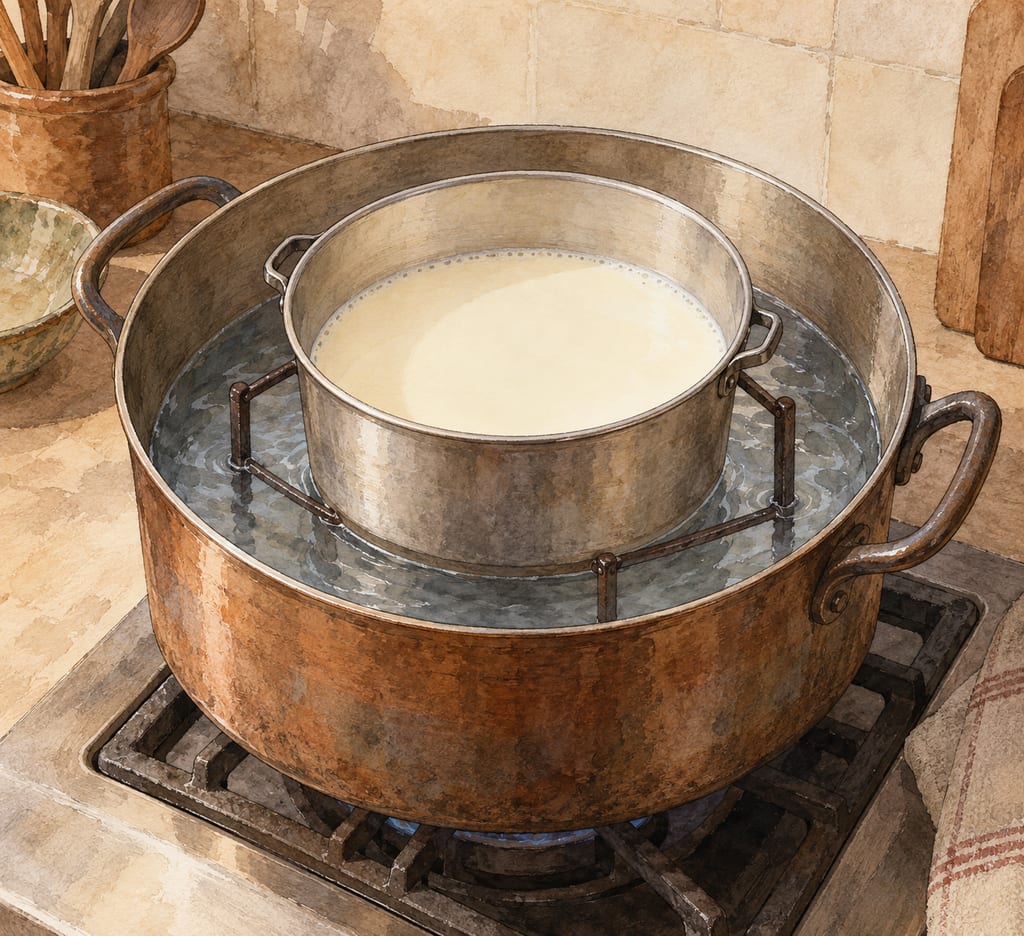
A food pot held at a fixed height inside a larger vessel of controlled hot water: the water distributes heat while the milk or whey inside stays still and away from the heater.
No community contributions have been published for this entry yet.
Sign in to contribute. Published comments and photos are free to read.
Te Ara – the Encyclopedia of New ZealandUse · Form · Geography · Culture
Māori foods – kai Māori: Traditional cooking and preservingTe Ara describes whata as raised platforms used to hold or hang food before it was moved to a pātaka or rua kūmara.
Te Ara says whata had a thatched top to protect harvested food from kiore and weather; this is one account, not a universal form.
Cited in: Historical names and forms; Raised temporary storage
Dominion Museum, Bulletin No. 5Form · Use · History · Terminology
Māori Storehouses and Kindred Structures: Houses, Platforms, Racks, and Pits Used for Storing FoodBest’s 1916 survey records open elevated platforms as well as roofed stages and explains that whata and pātaka terminology was used inconsistently across accounts.
The survey quotes Māori informants and historical observers; it is an early colonial-era record and should not stand for every iwi or be treated as a single design specification.
Cited in: Historical names and forms
Museum of New Zealand Te Papa TongarewaUse · Form · Culture
Matariki teaching resource: Module 4 – Storing kaiTe Papa describes whata as temporary raised storage before kai moved to pātaka or rua kūmara.
The resource describes a raised, thatched structure as protection from kiore and weather; it does not identify this as a universal Māori design.
Cited in: Historical names and forms; Raised temporary storage