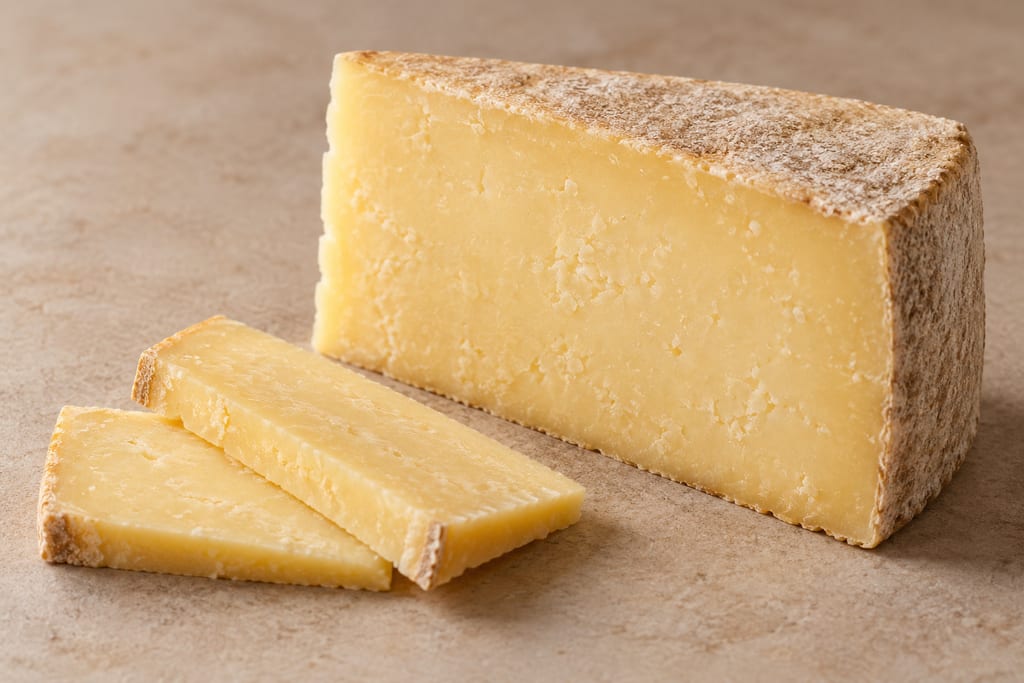
Cheddar-style cheese
A pressed cheese whose curd is cooked slowly, then cheddared: kept warm in slabs that are turned and stacked for hours before milling, salting and pressing.
 FermenteaWhere food goes to change
Built structures · Cabinets and chamber conversions
A modern cheese-ripening space made by controlling the temperature of a refrigerator or display cabinet and managing each cheese in its own covered container. It is an appliance conversion, not a natural cave or a traditional structure.
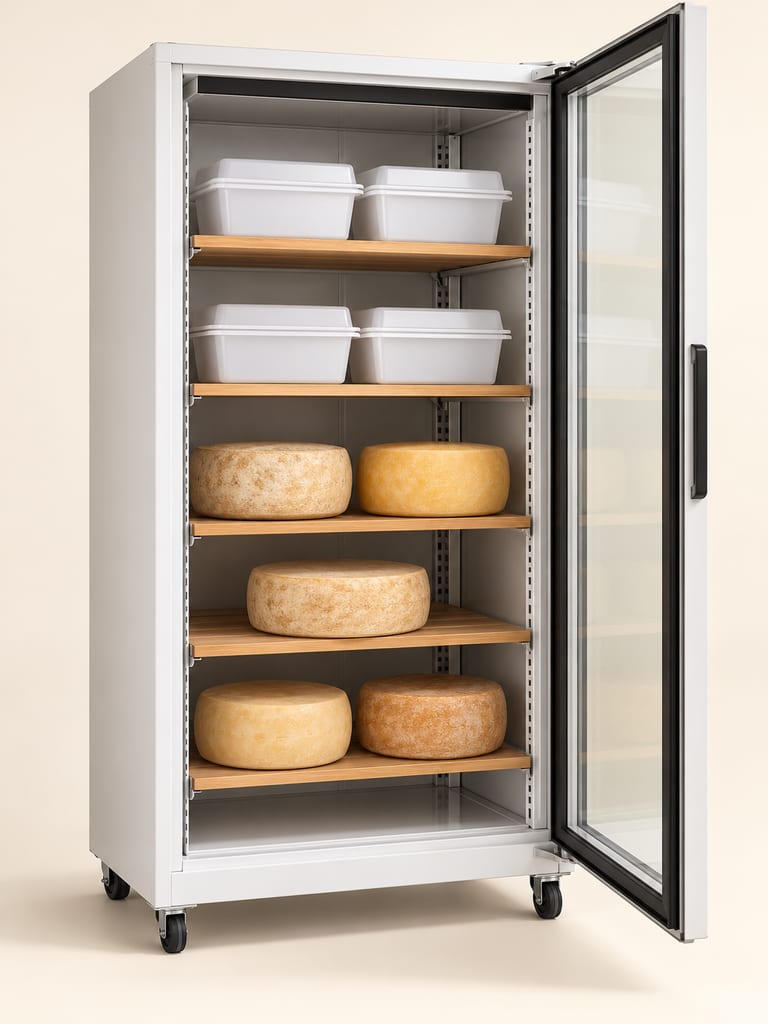
A fridge cheese cave is a modern controlled space made by adapting a refrigerator or refrigerated display cabinet for cheese ageing. The word “cave” describes its role as a cool ripening environment; it does not mean that the cabinet is underground, naturally formed or built in the traditional manner. This item is classified as a cabinet conversion because the enclosure is a manufactured appliance adapted to hold a different temperature and humidity from an ordinary food refrigerator. The sources document present-day guidance, including a converted-fridge FAQ and a 2020 account from New Zealand; neither dates the invention of this approach.
The sources document two arrangements rather than one standard design. New England Cheesemaking Supply describes a home refrigerator controlled to a warmer ageing setpoint. In a separate account, cheesemaker Tony Hamblyn describes using a three-door shop display fridge as his cave. Neither account makes a particular make, cabinet size or internal layout essential to the idea.
A controller can keep a refrigerator above its own normal thermostat range. The FAQ's example sets a converted fridge to 52–55 °F (about 11–13 °C) and describes raising humidity with a shallow water pan and a sterilized sponge. Hamblyn reports a different commercial setup at 12 °C and 90% humidity, while also noting that humidity varied within the cabinet. These are reported examples, not one universal specification.
Ageing targets depend on the cheese. A cabinet reading cannot by itself show the conditions at every shelf or inside a covered box, so the useful measurement is near the cheese. The selected recipe or ageing method should determine temperature and humidity; a wine cooler is only a possible cabinet if its actual operating range suits that target.
Covered containers can reduce moisture loss by keeping a smaller volume of humid air around a cheese. The FAQ gives a general container fill guideline of about 40 percent cheese and 60 percent air space. It also discusses wiping away condensation, keeping a wet surface from forming, lifting cheese on a mat where the method calls for it, and opening boxes to exchange air. These handling details come from the FAQ; the linked Hamblyn photograph shows lidded containers on the upper shelves of his fridge but does not show cheese inside them, a mat or an air vent.
The distinction matters when describing the pictured equipment: the photo documents a commercial fridge used for cheese, with cheeses and lidded containers in the same cabinet. It does not prove that every cheese was boxed or that every box had the same internal arrangement. Boxed ageing is a separate practice that can be used inside a controlled cabinet.
In a 2020 update, Hamblyn describes a three-door shop display fridge with temperature and humidity controllers and a humidifier in one bay. His account gives settings of 12 °C and 90 percent relative humidity, and says that humidity varied within the fridge. Dish-draining trays created a more humid micro-environment for cheeses that needed it. This is a single reported New Zealand example, not the origin of the method or a model to copy in every detail.
One cabinet provides one main temperature, so cheeses with incompatible targets need separate spaces or another method. A controller does not verify food safety or guarantee a successful rind. Do not run a cheese-ageing setpoint while also treating the appliance as an ordinary refrigerator for other perishable foods. Containers help manage moisture but are not a guarantee of microbial isolation.
A build is made where it stands: moving it means building it again.
Tony Hamblyn's 2020 update documents one display-fridge cheese cave in New Zealand; it does not establish the origin or exclusive location of refrigerator cheese caves.
A pressed cheese whose curd is cooked slowly, then cheddared: kept warm in slabs that are turned and stacked for hours before milling, salting and pressing.
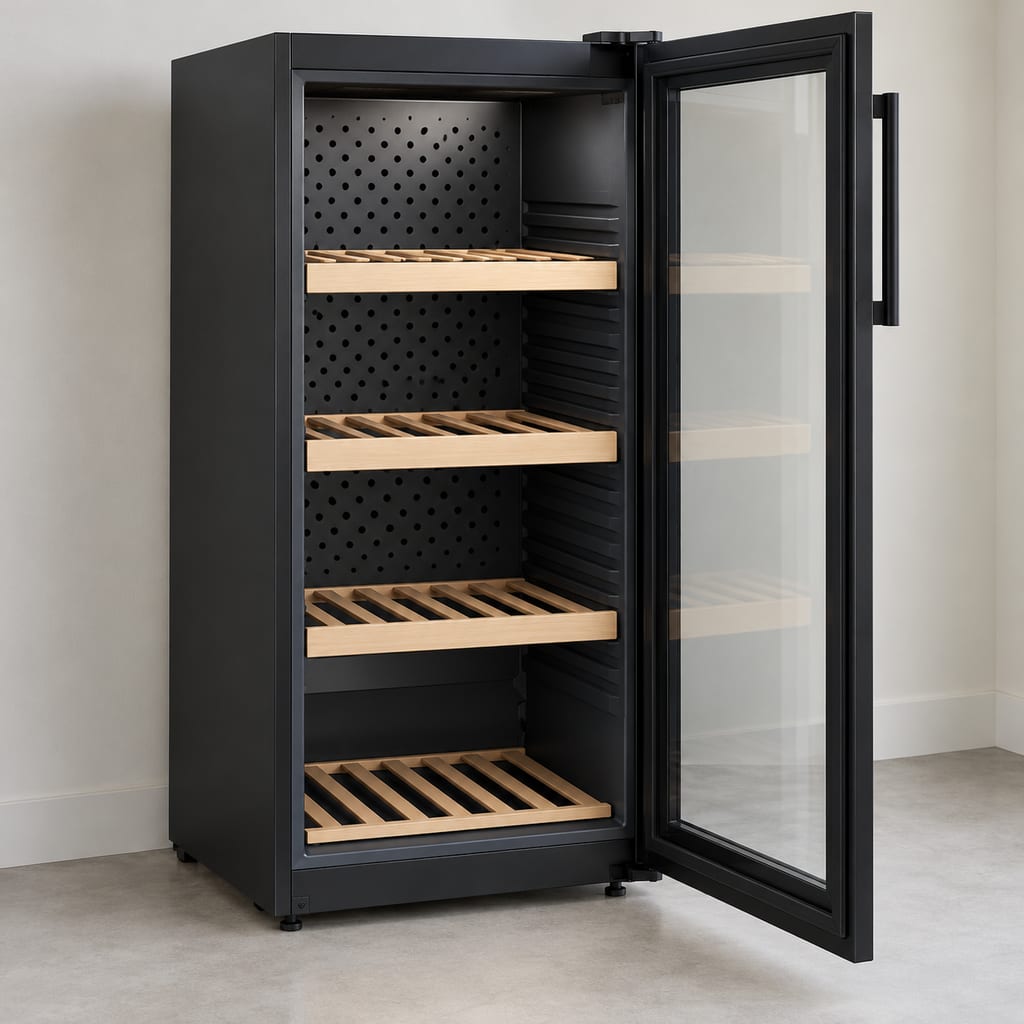
A refrigerator or wine cabinet can provide a cool enclosure for holding or ripening food, but it does not control every condition a ferment or cheese needs. Check temperature, humidity, airflow and cleanable food containers separately.
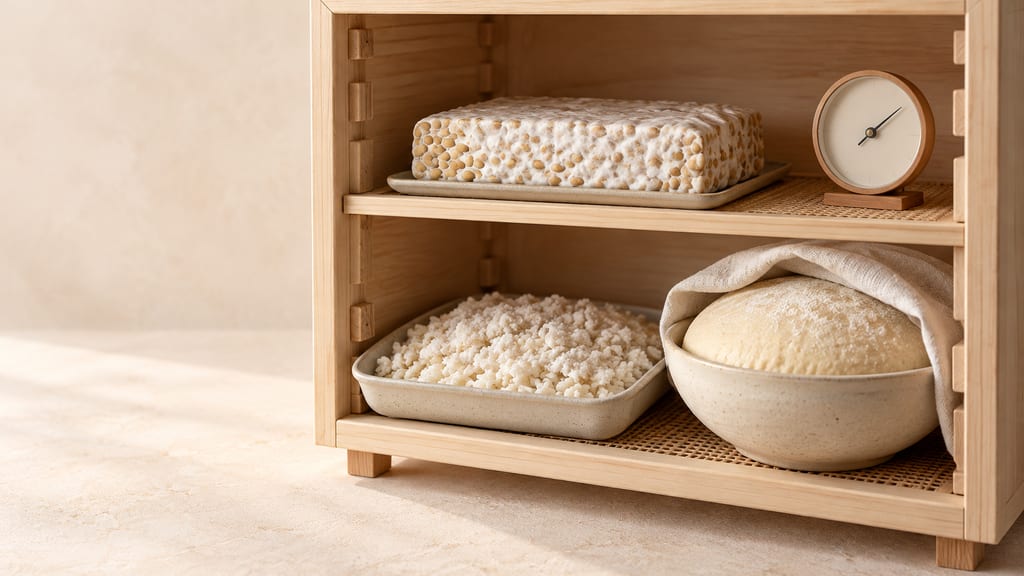
A proofer, a dehydrator with its trays out or an old fridge on a controller can keep cultures at a steady temperature. Whether it works depends on what sits inside: a lidded jar, a vented bag, a shallow tray or a crock.
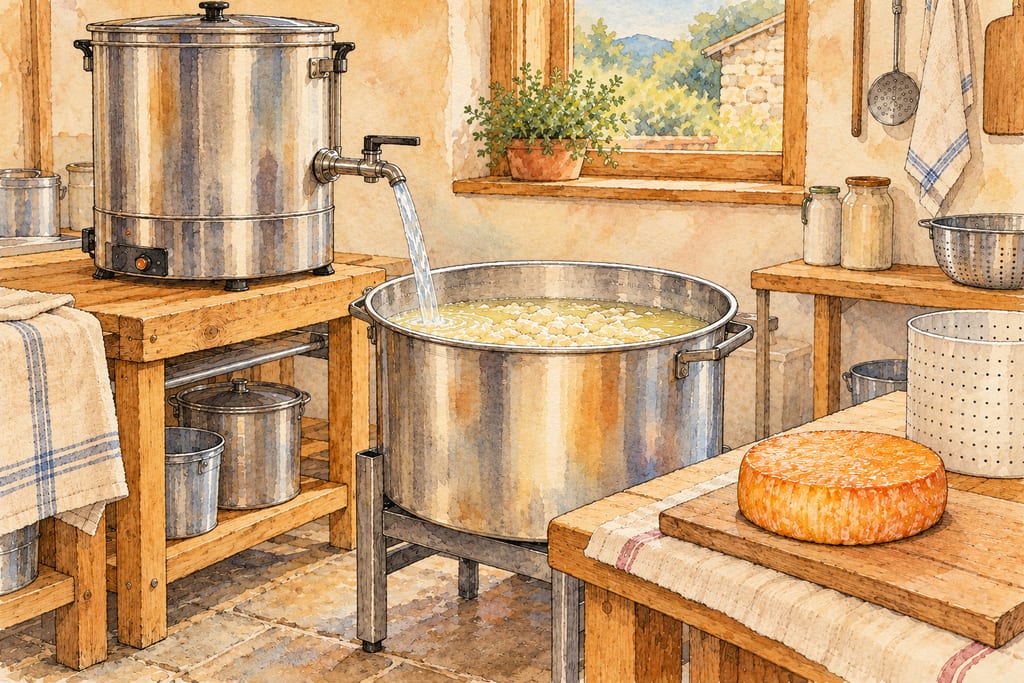
The brewer holds clean water at a set temperature for washed-curd cheeses and other hot-water jobs, beside a separate cheese pot, instead of heating milk directly.
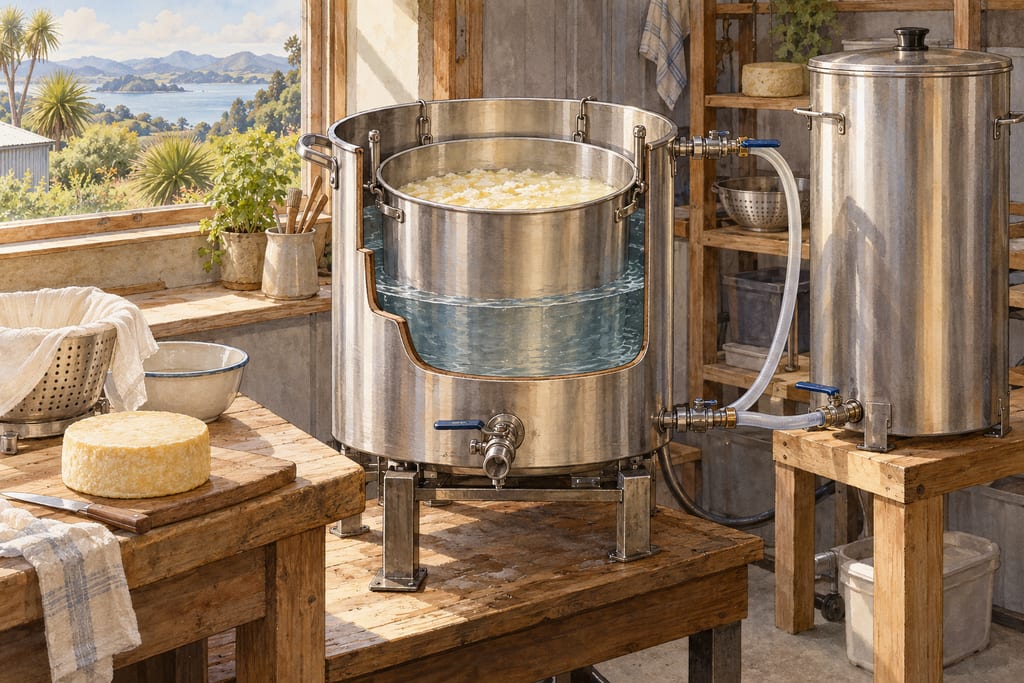
New Zealand home cheesemaker Tony Hamblyn's custom brewery, in which a 50-litre cheese pot hangs in a 70-litre mash tun of circulated hot water; later one tank served purely as hot water.
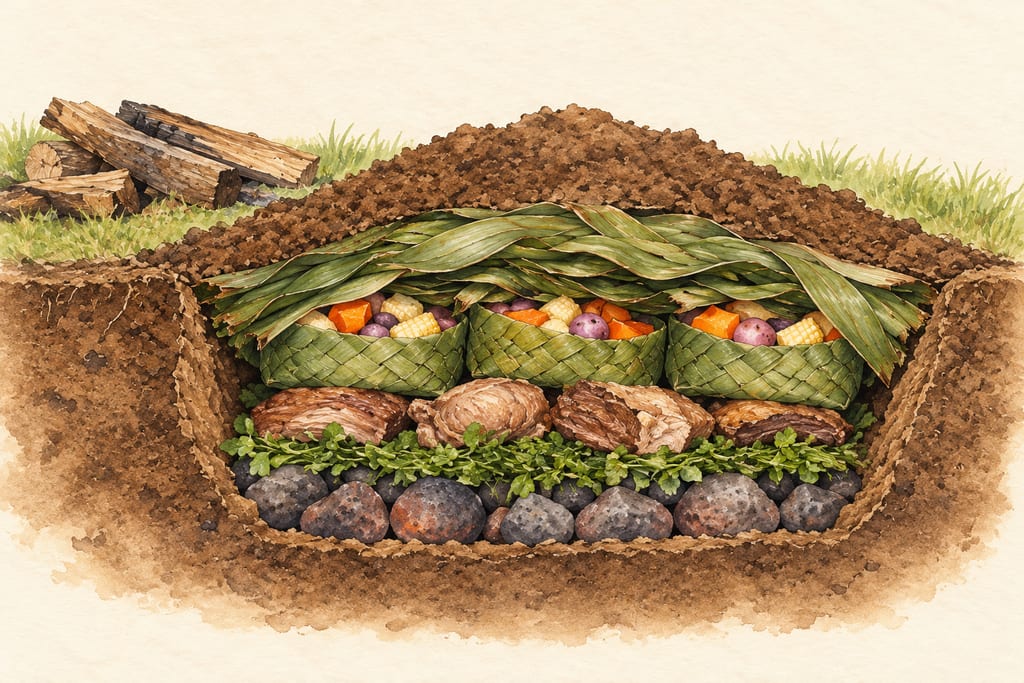
A source-specific account of the shallow earth oven used by a Ngāi Tahu family at Arowhenua Marae, with its hot stones, woven rourou and earth cover.
Māori raised storehouses held preserved food and seed. Heritage New Zealand documents one rare, uncarved Ngāti Hauiti example at Rata; its materials and later relocation are specific to that structure.
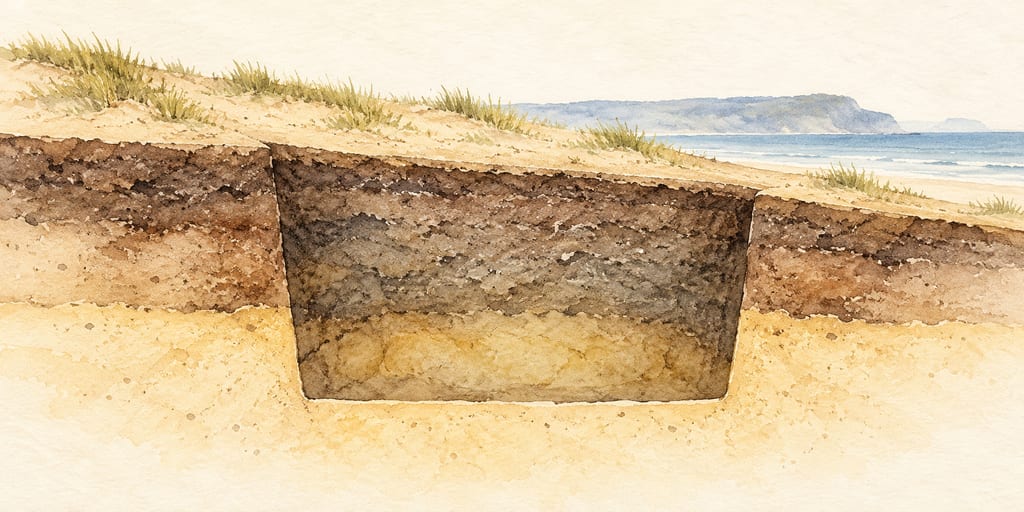
Rua kūmara are underground Māori stores for whole kūmara. Research at Pūrākaunui, authorized by Pūrākaunui Block Inc. and Kāti Huirapa Rūnaka ki Puketeraki, documents 15th-century pits without establishing one design.
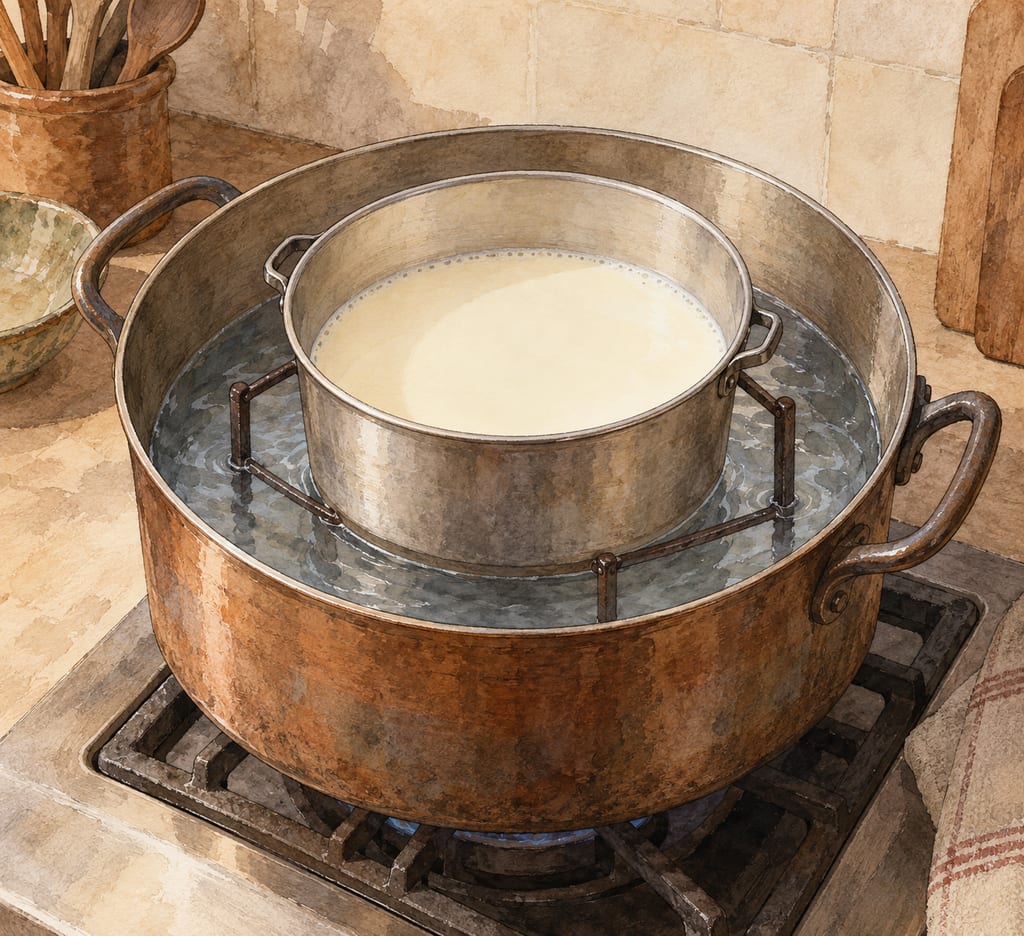
A food pot held at a fixed height inside a larger vessel of controlled hot water: the water distributes heat while the milk or whey inside stays still and away from the heater.
Whata are raised Māori food-storage platforms or stages. Sources describe temporary storage and drying, while recorded forms and terminology vary.

Soft, spreadable Calabrian pork sausage made with a great deal of red chilli and fatty pork, stuffed into natural casings, sometimes smoked and matured while staying soft.

A way to add independent temperature logging to an existing food dehydrator without changing its built-in controls or protections. It is a monitoring method, not a rewiring plan.

Pleurotus cystidiosus is the abalone mushroom, a cultivated oyster-type fungus with dark brown caps that grows more slowly and is more demanding than other Pleurotus species.

A dark, balanced vinegar from Emilia-Romagna made by combining cooked or concentrated grape must with wine vinegar, then acetifying and refining it in wood under a protected specification.

A living dairy inoculum that starts controlled cream fermentation, developing acidity and aroma before sour cream or cultured butter is finished.

A small electric incubator holds jars at a selected temperature for yogurt and other documented warm food preparations. Controls, capacity and vessel arrangement vary by model.

Adygean salt is a seasoned table salt associated with Adygea and the wider North Caucasian culinary tradition. Salt is blended with garlic and a variable selection of herbs and spices; the exact mix depends on the named style and maker.

The African Caesar-group mushroom, Amanita masasiensis, is a wild ectomycorrhizal species of central and southern African woodlands, eaten locally. The genus contains deadly poisonous species, so identification needs care.
No community contributions have been published for this entry yet.
Sign in to contribute. Published comments and photos are free to read.
New England Cheesemaking SupplyEquipment · Temperature · Humidity · Container use · Care
Aging Cheese FAQThe page describes a converted regular or dorm-sized refrigerator controlled to 52–55 °F, with humidity raised by a shallow water pan and sterile sponge when needed.
It describes individual covered boxes, roughly 40% cheese to 60% empty space as a general rule, management of condensation, mats to lift cheese, and opening boxes to exchange air.
The FAQ advises that a regular food refrigerator is cooler and tends to dry unprotected cheese; it gives a cheese-specific explanation rather than a universal target.
Cited in: An appliance conversion, not a natural cave; Temperature and humidity belong to the cheese method; Individual boxes make a smaller humid space; Documented New Zealand example and practical limits
New England Cheesemaking Supply CompanyDocumented example · Geography · Equipment · Temperature · Humidity · Image reference
Tony Hamblyn in New Zealand UpdateHamblyn reports converting a three-door shop display fridge into a cheese cave using temperature and humidity controllers, with a humidifier in one bay.
His reported setpoints are 12 °C and 90% humidity; he notes that humidity varies through the fridge and uses dish-draining trays to create a micro-environment for high-humidity cheeses.
The article photograph shows a glass-door commercial refrigerator, shelves, cheese wheels and lidded plastic containers; it does not show the boxes containing cheese or raised mats.
Cited in: An appliance conversion, not a natural cave; Temperature and humidity belong to the cheese method; Individual boxes make a smaller humid space; Documented New Zealand example and practical limits