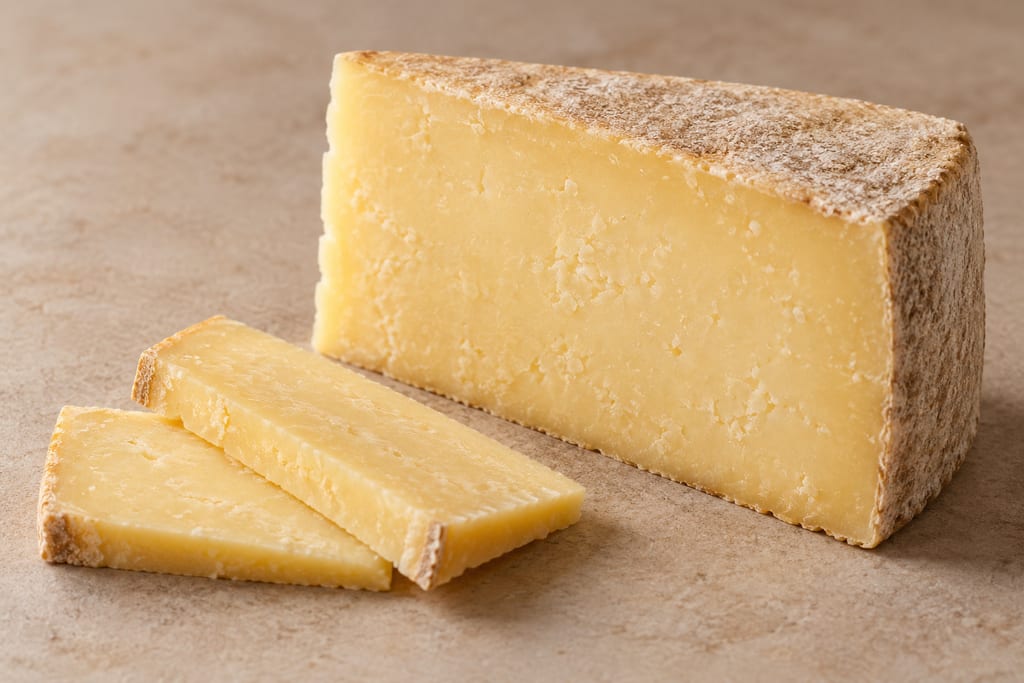
Cheddar-style cheese
A pressed cheese whose curd is cooked slowly, then cheddared: kept warm in slabs that are turned and stacked for hours before milling, salting and pressing.
 FermenteaWhere food goes to change
Equipment · Cold stores and coolers
A refrigerator or wine cabinet can provide a cool enclosure for holding or ripening food, but it does not control every condition a ferment or cheese needs. Check temperature, humidity, airflow and cleanable food containers separately.
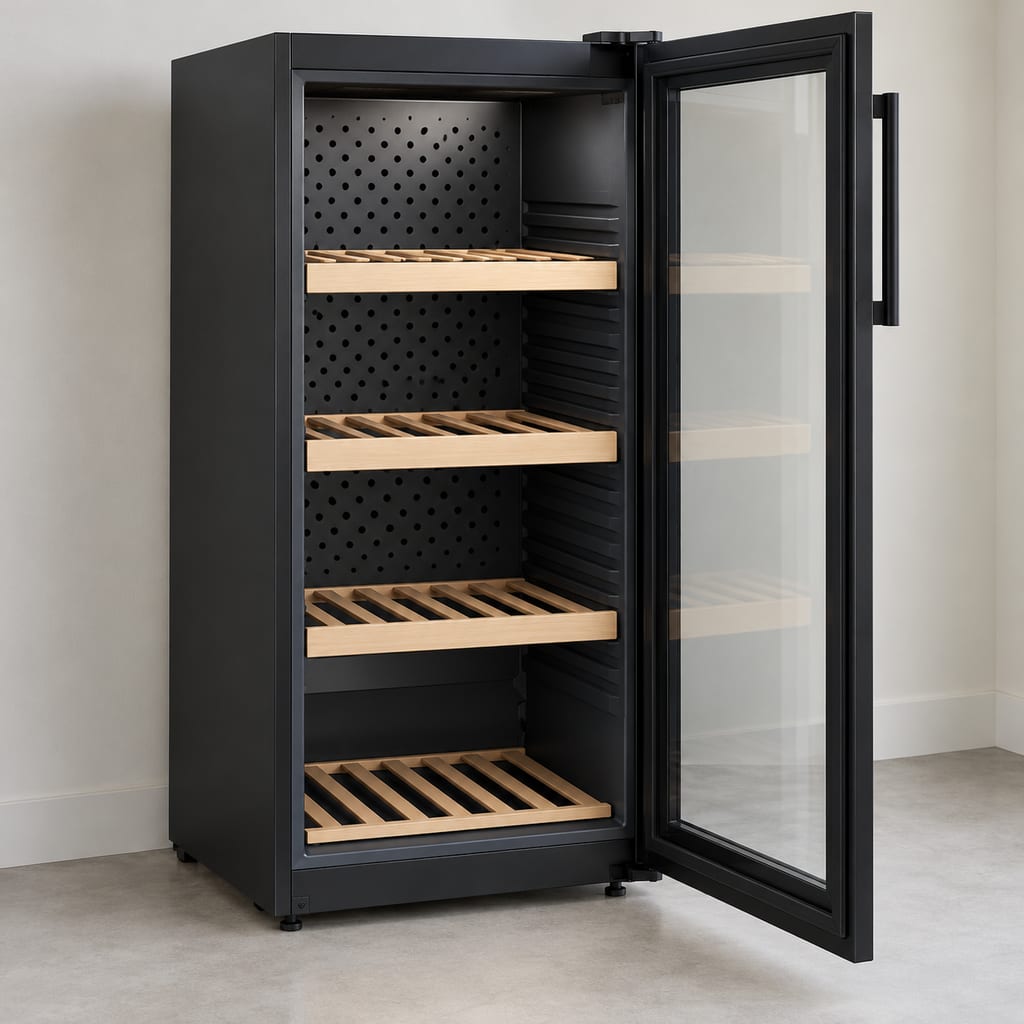
A refrigerator or wine cabinet supplies a cool, enclosed space. In cheese making, cold can slow ripening and help hold a cheese between stages, but the appliance does not supply the full aging environment on its own. A normal refrigerator tends to be colder and drier than a purpose-made cheese cave; New England Cheesemaking Supply notes that cheese therefore ripens more slowly and can dry out unless protected in an airtight box. Its advice is to control the temperature of a converted refrigerator and manage moisture around each cheese rather than assume that cold air alone is enough.
This role differs from the koji incubation cabinet: that item describes a refrigerator shell repurposed as a heated enclosure. Here the intended function is cooling. The shared cabinet shape does not make their settings or internal conditions interchangeable. It also differs from the cheese-cave build, which concerns the installed arrangement of an externally controlled fridge and individual ripening boxes; this equipment record names the movable appliance class.
A wine cabinet is a refrigerated cabinet designed around wine storage, with shelves and controls that vary by model. Liebherr lists the WPbl 4201 GrandCru as a single-zone unit with a +5 to +20°C adjustable range. That range includes temperatures used in some cheese-aging setups, but the manufacturer specifies wine storage; its advertised temperature capability is not evidence that every cheese will mature well in the cabinet. Check the exact model's minimum and maximum settings, actual loaded temperature and any relevant humidity behavior before using it for food.
Temperature and humidity are separate variables. A setpoint controls the appliance's refrigeration cycle, not the moisture at the surface of an unpackaged cheese. For cheese, individual boxes can create a smaller, more manageable microclimate. The supplier describes a box partly filled with cheese, with empty air space, a mat to lift the cheese, and regular opening to exchange air. Condensation dripping onto cheese is a sign that moisture needs attention. These measures belong to the box and the cheese-care routine, not to a special feature that can be assumed of every wine cabinet.
Choose the appliance for the conditions the particular food requires, not for its name. A standard fridge, a refrigerator run on an external thermostat and a wine cabinet are different configurations. The supplier's 52–55°F (about 11–13°C) setting is specific guidance for its cheese-aging approach, not a universal fermentation temperature. For a wine cabinet, the precise range is model-specific; a separate cabinet's +5 to +20°C specification cannot be transferred to another product.
Keep food in clean, suitable containers rather than directly on bottle shelves, and measure the conditions where the food sits. A refrigerator that serves as a cheese cave may need separate boxes to control drying and condensation; lids that trap too much water can also create a wet surface, so inspect and ventilate as the source recommends. A wine cabinet's wine-oriented layout may limit container size or airflow around containers. Avoid treating a cabinet as a fermentation method for active batches unless a recipe documents that use and its required conditions. The available evidence supports cold holding and cheese maturation as applications, but it does not establish a single historical origin, a universal humidity specification, or suitability for every fermentation.
A published cold-strained kefir-cheese method illustrates a different, short-term use for an ordinary refrigerator: kefir drains through cloth in a colander above a whey-catching container while refrigerated for 24 hours. That is a recipe-specific chilled drainage step, not a general maturation schedule, and it does not establish that a wine cabinet can substitute for a refrigerator in every recipe.
The cited material documents a present-day US cheesemaking supplier's advice and a Liebherr UK product listing, but neither establishes where refrigerator or wine-cabinet cooling for fermentation or maturation originated or a distinct traditional use.
A pressed cheese whose curd is cooked slowly, then cheddared: kept warm in slabs that are turned and stacked for hours before milling, salting and pressing.
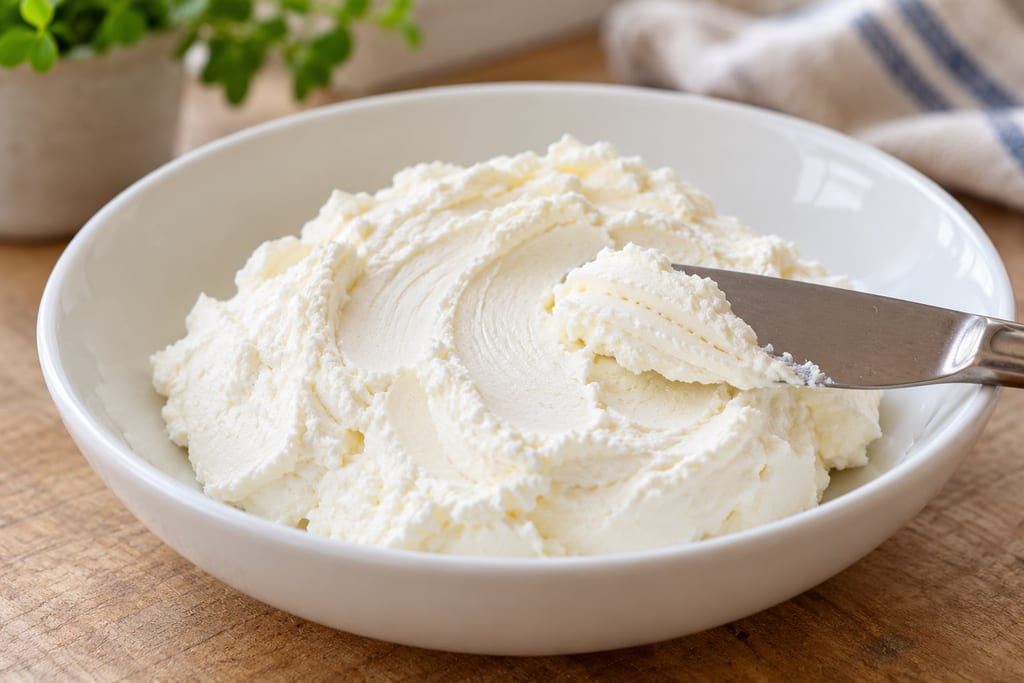
The creator’s written method strains 700 mL kefir through tight cloth for 24 hours in a refrigerator and reports 240 g finished cheese.
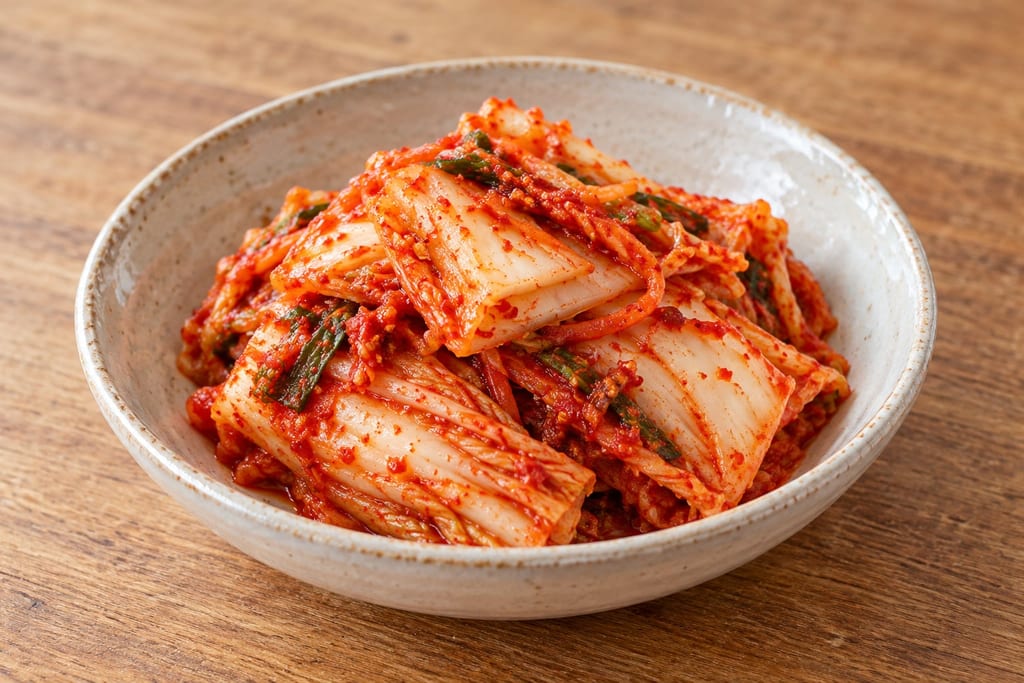
Kimchi is a Korean preserved vegetable food, most often cabbage, salted and seasoned, then fermented by the lactic acid bacteria that arrive with the vegetables. Some studies test added starter cultures, but a home jar is usually spontaneous.
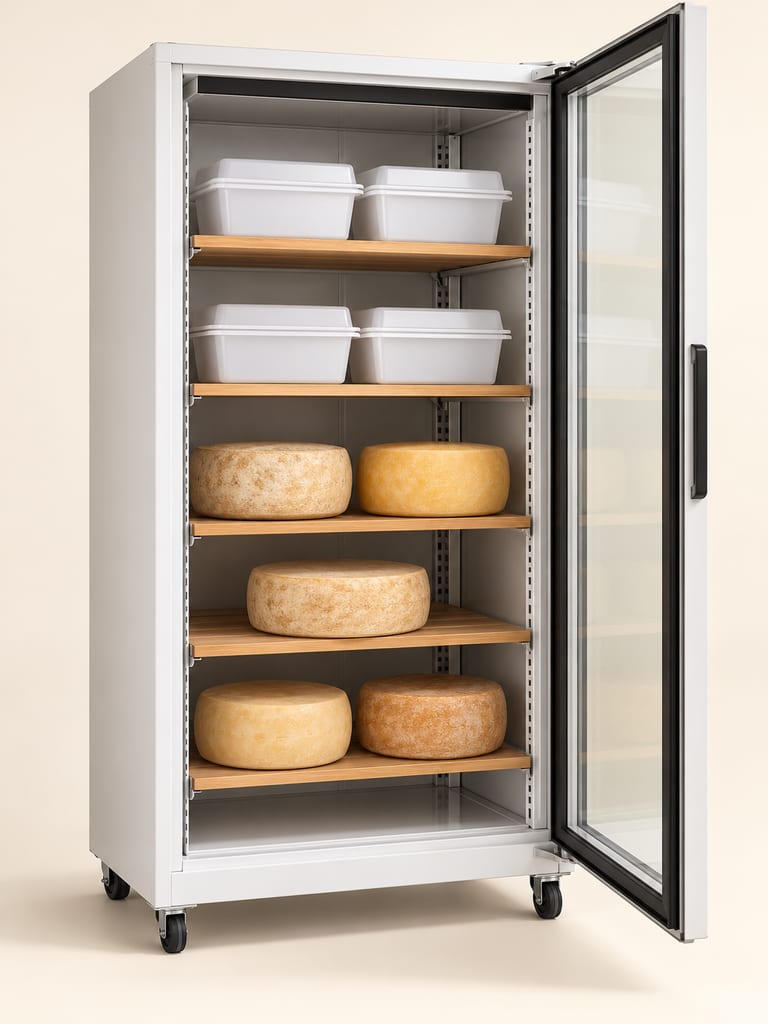
A modern cheese-ripening space made by controlling the temperature of a refrigerator or display cabinet and managing each cheese in its own covered container. It is an appliance conversion, not a natural cave or a traditional structure.
No community contributions have been published for this entry yet.
Sign in to contribute. Published comments and photos are free to read.
New England Cheesemaking Supply CompanyCheese maturation · Practical use
Aging Cheese FAQA regular refrigerator is cooler and drier than a cheese cave and slows aging; airtight boxes help protect cheese from drying.
An externally controlled refrigerator can be set to 52–55°F in this supplier's guidance; a shallow water pan and sponge can raise humidity.
Boxes, mats, air exchange and condensation management affect the microclimate around aging cheese.
Cited in: A cold enclosure, not a fermentation recipe; What a wine storage cabinet can and cannot tell you; Choosing and using one
LiebherrProduct form · Temperature range
WPbl 4201 GrandCru Wine storage fridgeA contemporary single-zone wine storage fridge with an individually adjustable temperature range of +5 to +20°C; page describes temperature and humidity controls for wine storage.
Supports the form of a manufactured wine cabinet, not its suitability for cheese or other foods.
Cited in: A cold enclosure, not a fermentation recipe; What a wine storage cabinet can and cannot tell you; Choosing and using one
LiebherrGeography
WPbl 4201 GrandCru Wine storage fridgeLiebherr maintains a regional product listing for this wine cabinet outside the UK; used only as evidence that this manufactured product line is marketed in more than one national market, not global availability.
Gari PL, 2021-11-17; expanded Polish video descriptionMethod · Equipment
Ser z Kefiru na 2 różne sposoby, expanded Polish descriptionThe published cold-strained method specifies 700 mL kefir in tight cloth supported by a colander over a whey-catching container, refrigerated for 24 hours; the reported output is 240 g.
Cited in: Choosing and using one