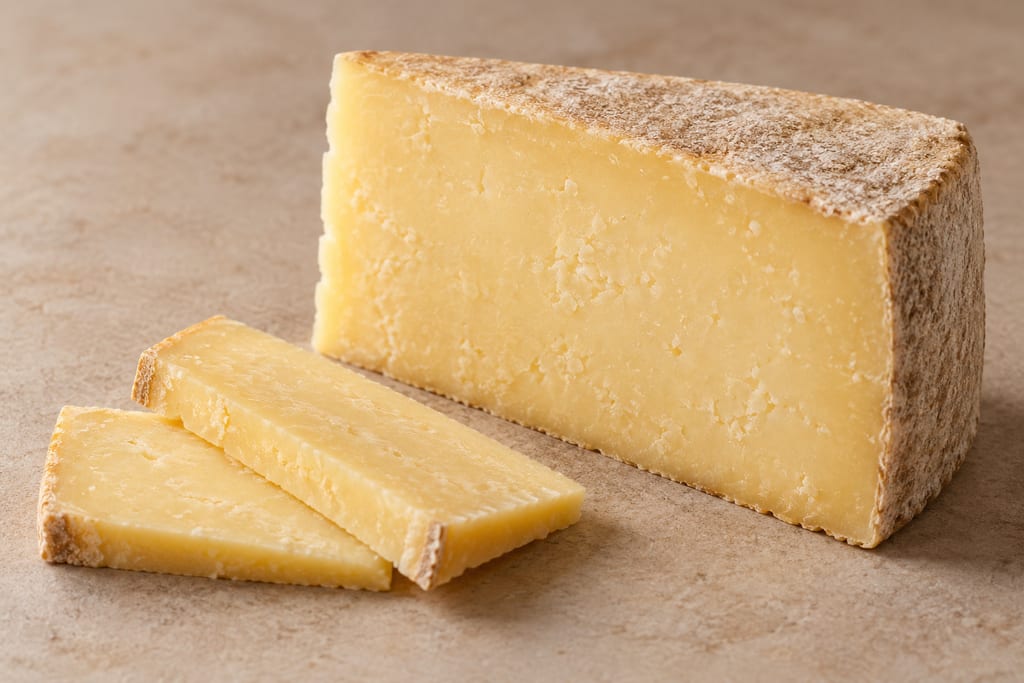
Cheddar-style cheese
A pressed cheese whose curd is cooked slowly, then cheddared: kept warm in slabs that are turned and stacked for hours before milling, salting and pressing.
 FermenteaWhere food goes to change
Built structures · Kettles, coppers and boilers
double boiler · water-jacketed vat
A food pot held at a fixed height inside a larger vessel of controlled hot water: the water distributes heat while the milk or whey inside stays still and away from the heater.
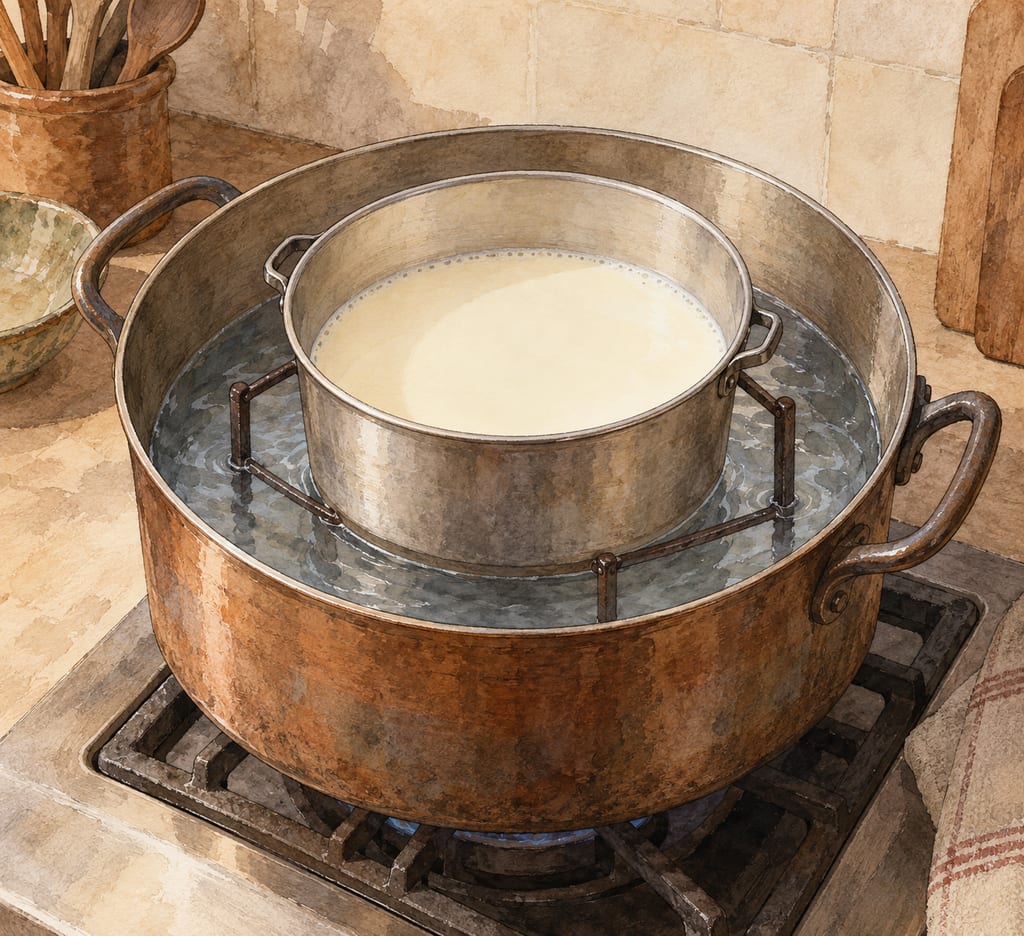
A cheese vat needs two things that pull against each other: even heating and an undisturbed rennet set. A supported pot in a water bath gives both. The bath water can move, by a pump or by convection, while the milk stays still and away from the heater.
Hamblyn's brewery is the documented example, with a rim-hung pot. The same idea appears with slow cookers and sous-vide baths in other articles.
Heat flows from water to food in proportion to the temperature difference. The food approaches the bath temperature ever more slowly, and a large bath cannot shed heat quickly if it overshoots. The bath therefore buffers heating, but it does not hold the food below the bath temperature: set the bath too hot and the food follows.
A brewer's controller reads the bath, not the food. Moving water helps. The BC Centre for Disease Control's sous-vide guideline warns that baths without adequate circulation have cold and warm spots and come up to temperature more slowly.
Halloumi and hellim: the set and curd cook are done in the bath. Whey cooking near boiling is untested.
Cheddar: ripening, set, slow cook and warm cheddaring in the bath.
Anari: the whey is reheated in the bath after the primary cheese is made.
Log the bath display and a probe in the food's centre during a water-only trial, then during the first real batch.
The rack variant and any use in a commercial all-in-one brewer are proposed, not documented.
To hold food at 88 to 91 °C for halloumi whey, the bath must sit near boiling. The time to get there is unknown (reasoned).
Displacement and evaporation reduce the water over a brewer's element.
Hamblyn's brewery double boiler is documented in a 2017 interview. The rack variant is proposed. The water-bath principle appears in other cheesemaking recipes and in a sous-vide food-safety guideline.
A build is made where it stands: moving it means building it again.
Devices without adequate water circulation have cold and warm spots and slower come-up times, per the sous-vide guideline.
Hazard sourceKeep the bath water moving by a pump or convection, and check the food temperature with a probe in the centre.
Control sourceKeep the pump return out of the food. The bath buffers heat but does not cap the food's temperature.
Tony Hamblyn's brewery double boiler: a 50 L pot hung in a 70 L mash tun with circulated hot water.
A pressed cheese whose curd is cooked slowly, then cheddared: kept warm in slabs that are turned and stacked for hours before milling, salting and pressing.
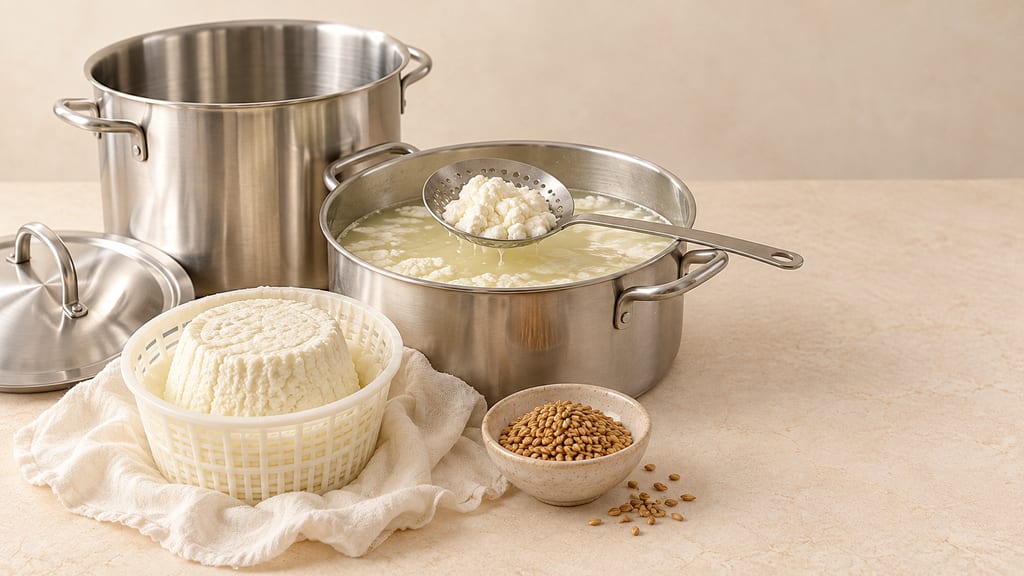
A home brewing kettle can hold a cheese pot in hot water, supply wash water and reheat whey. This is what two brewer manuals allow, and which cheeses show each job.
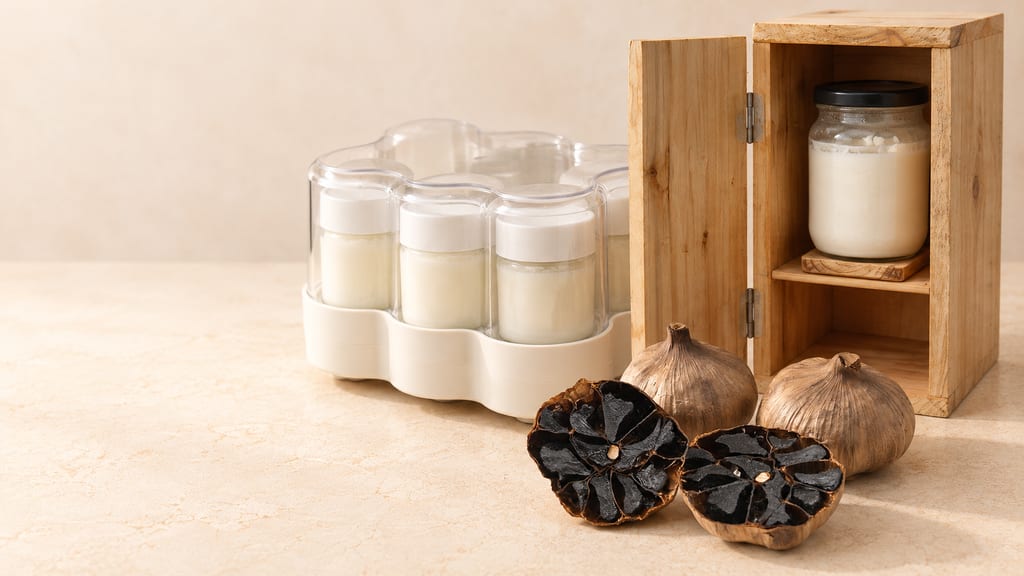
A slow cooker, a brewing kettle or a dehydrator can take over the hard part of many old food crafts, once you see each appliance as a set of physical functions and give it the right container.
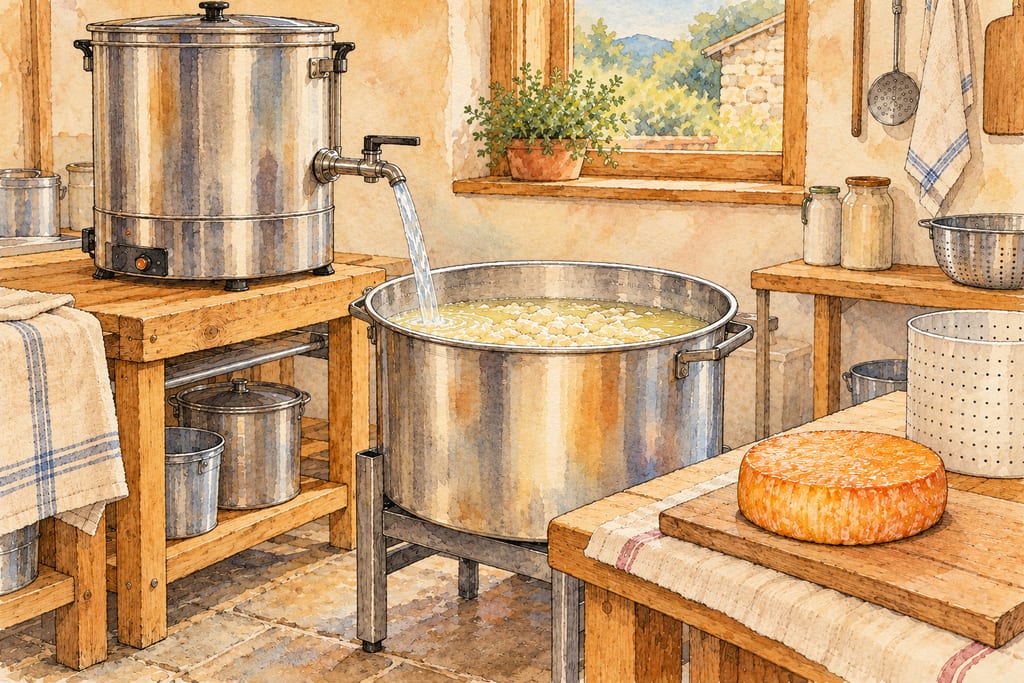
The brewer holds clean water at a set temperature for washed-curd cheeses and other hot-water jobs, beside a separate cheese pot, instead of heating milk directly.
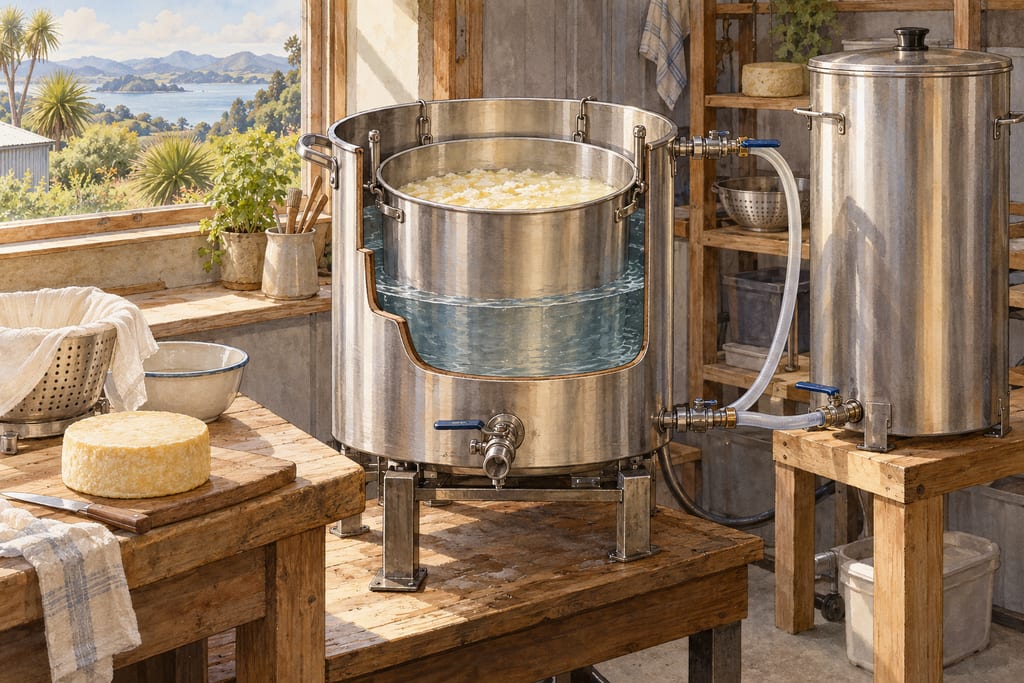
New Zealand home cheesemaker Tony Hamblyn's custom brewery, in which a 50-litre cheese pot hangs in a 70-litre mash tun of circulated hot water; later one tank served purely as hot water.
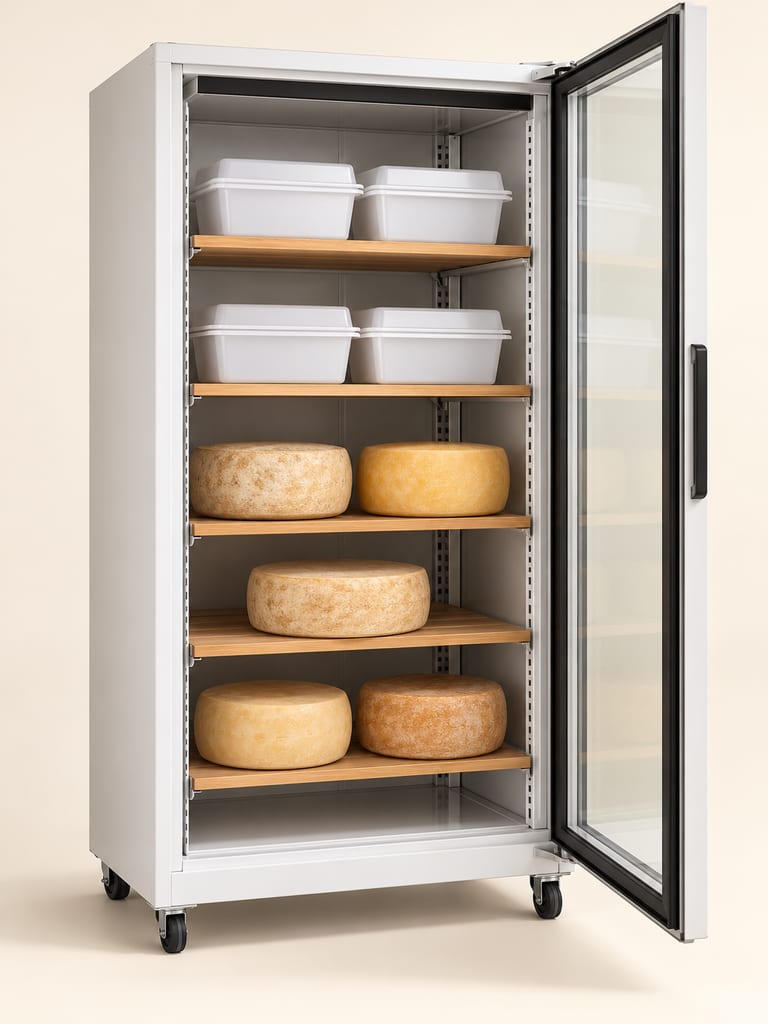
A modern cheese-ripening space made by controlling the temperature of a refrigerator or display cabinet and managing each cheese in its own covered container. It is an appliance conversion, not a natural cave or a traditional structure.
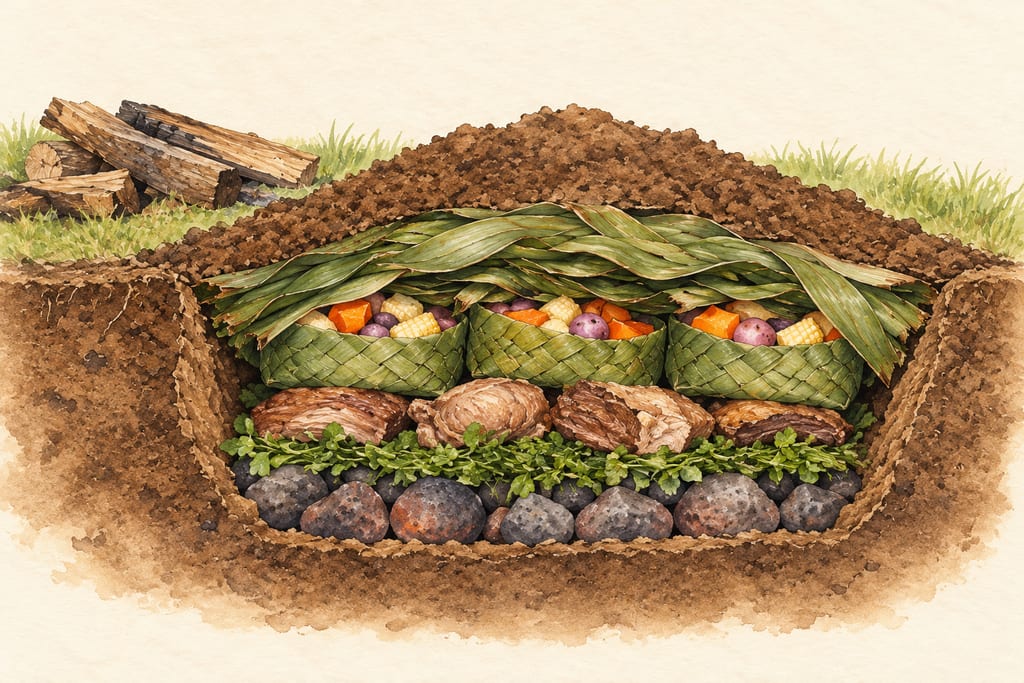
A source-specific account of the shallow earth oven used by a Ngāi Tahu family at Arowhenua Marae, with its hot stones, woven rourou and earth cover.
Māori raised storehouses held preserved food and seed. Heritage New Zealand documents one rare, uncarved Ngāti Hauiti example at Rata; its materials and later relocation are specific to that structure.
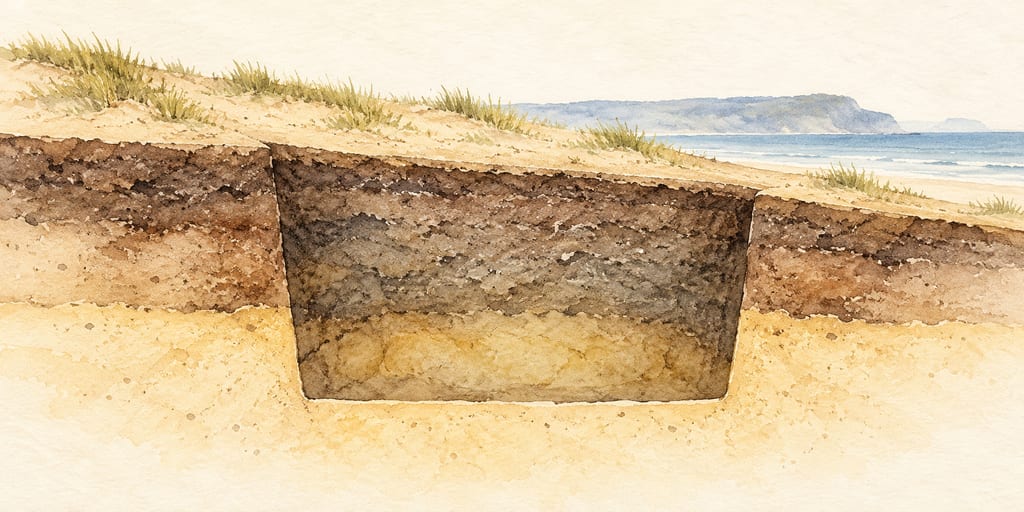
Rua kūmara are underground Māori stores for whole kūmara. Research at Pūrākaunui, authorized by Pūrākaunui Block Inc. and Kāti Huirapa Rūnaka ki Puketeraki, documents 15th-century pits without establishing one design.
Whata are raised Māori food-storage platforms or stages. Sources describe temporary storage and drying, while recorded forms and terminology vary.

Soft, spreadable Calabrian pork sausage made with a great deal of red chilli and fatty pork, stuffed into natural casings, sometimes smoked and matured while staying soft.

A way to add independent temperature logging to an existing food dehydrator without changing its built-in controls or protections. It is a monitoring method, not a rewiring plan.

Pleurotus cystidiosus is the abalone mushroom, a cultivated oyster-type fungus with dark brown caps that grows more slowly and is more demanding than other Pleurotus species.

A dark, balanced vinegar from Emilia-Romagna made by combining cooked or concentrated grape must with wine vinegar, then acetifying and refining it in wood under a protected specification.

A living dairy inoculum that starts controlled cream fermentation, developing acidity and aroma before sour cream or cultured butter is finished.

A small electric incubator holds jars at a selected temperature for yogurt and other documented warm food preparations. Controls, capacity and vessel arrangement vary by model.

Adygean salt is a seasoned table salt associated with Adygea and the wider North Caucasian culinary tradition. Salt is blended with garlic and a variable selection of herbs and spices; the exact mix depends on the named style and maker.

The African Caesar-group mushroom, Amanita masasiensis, is a wild ectomycorrhizal species of central and southern African woodlands, eaten locally. The genus contains deadly poisonous species, so identification needs care.
No community contributions have been published for this entry yet.
Sign in to contribute. Published comments and photos are free to read.
New England Cheesemaking Supply Company (cheesemaking.com)Documented use
Tony Hamblyn Cheesemaker in New ZealandCited in: Overview; Measuring; Limits
BC Centre for Disease Control Environmental Health Services and the BC Sous Vide Working GroupMethod
Guidelines for restaurant sous vide cooking safety in British Columbia (cover dated July 2017; citation January 2016)Cited in: Overview; How it works
New England Cheesemaking Supply CompanyMethod
Cheddar Cheese Making Recipe (Jim Wallace)Cited in: Documented uses
New England Cheesemaking Supply CompanyMethod
Halloumi Cheese Making Recipe Instructions (Jim Wallace)Cited in: Documented uses; Limits
New England Cheesemaking Supply CompanyMethod
Ricotta Cheese Making Recipe (Jim Wallace)Cited in: Documented uses