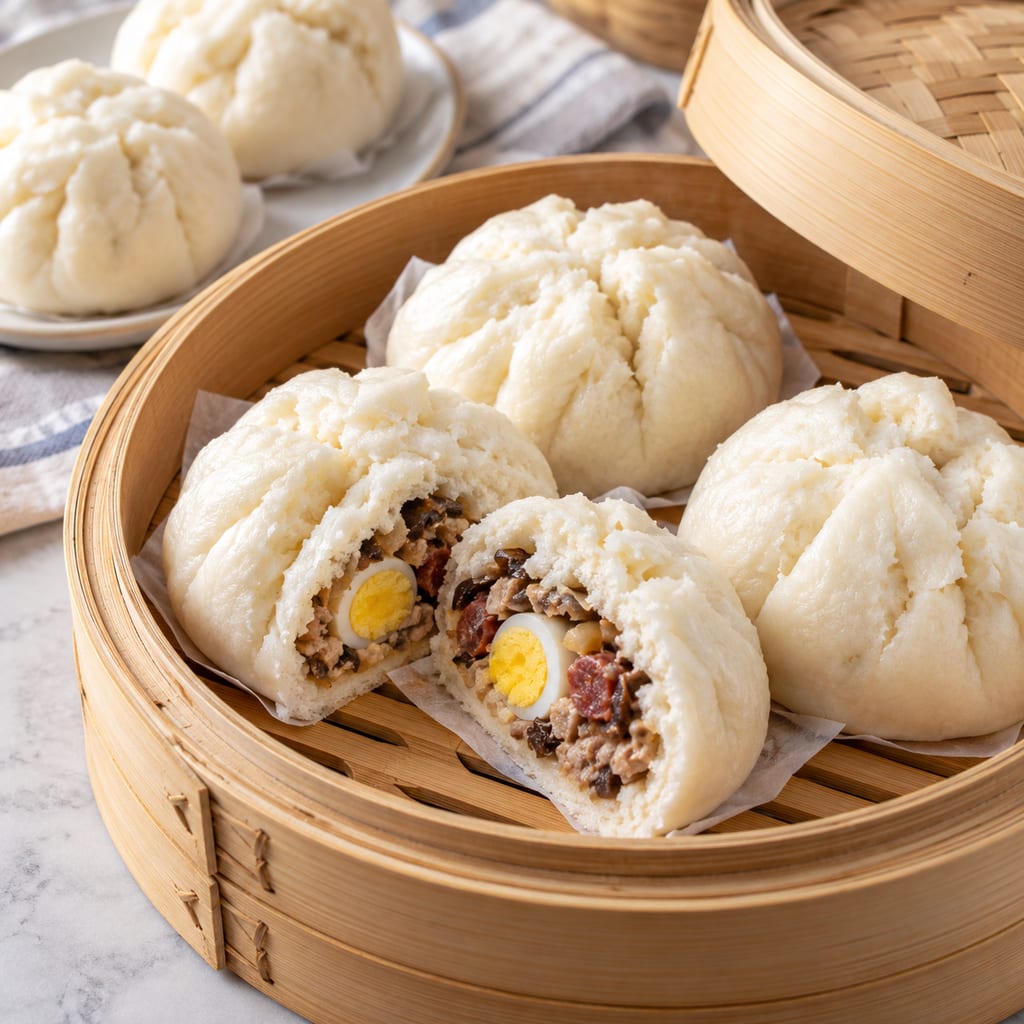
Bánh bao
Vietnamese steamed wheat buns wrapped around seasoned pork, mushrooms, Chinese sausage and hard-boiled quail eggs. This from-scratch version uses yeast and self-rising flour.
 FermenteaWhere food goes to change
Ca muoi · Salted eggplant · Vietnamese salted eggplant pickle
Vietnamese salted and fermented small eggplant, dried on the day of purchase, then held submerged in warm salty water with garlic and galingale flower for a week or longer.
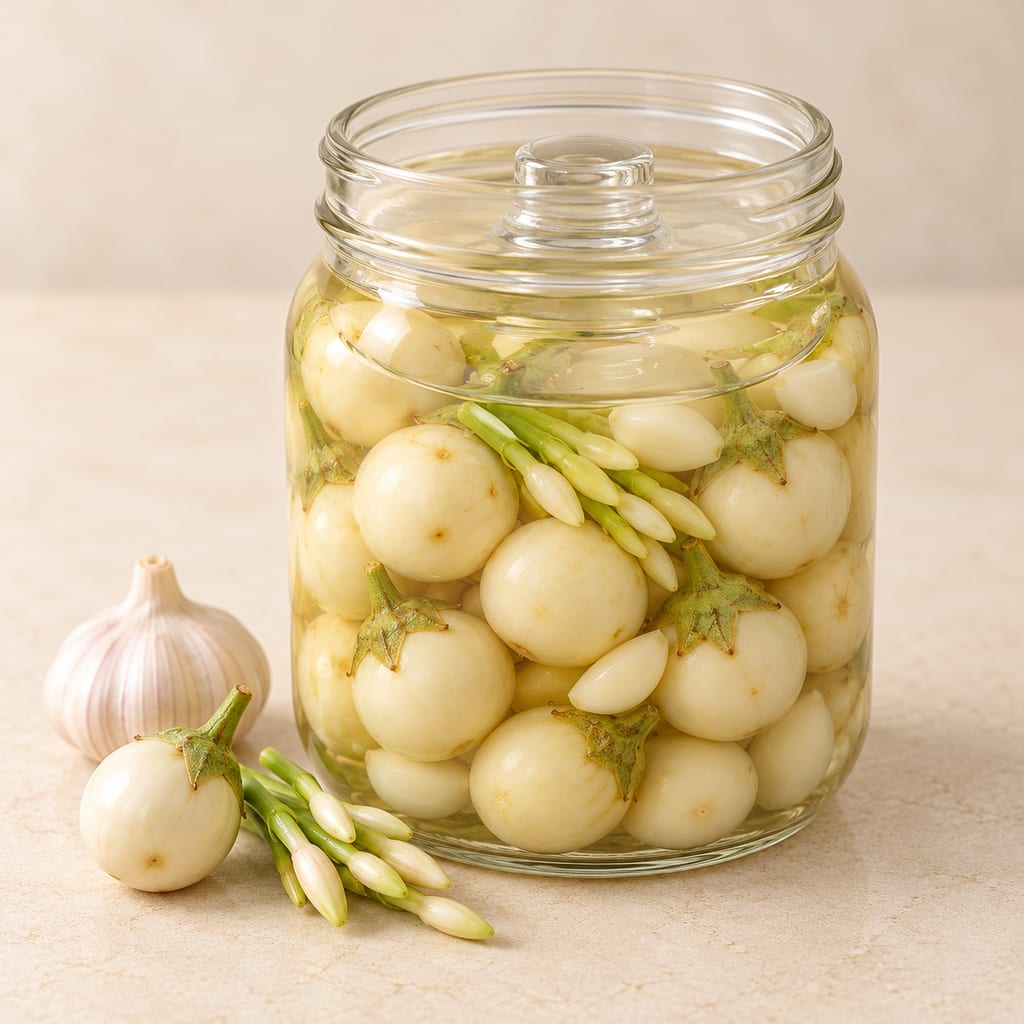
Cà muối is a Vietnamese salted and fermented small eggplant. The name means salted eggplant and is used for the eggplant pickle only. It is distinct from dưa muối, the salted leafy greens, which are mustard or beet pickles.
The 2013 study names ca muoi as eggplant fermentation. Some local names and variants are not verified.
A newspaper food feature describes cà muối as a salty, slightly sour condiment served with meals, especially with rice-field-crab soup and steamed rice. It also pairs the pickle with boiled chicken and other Hanoi dishes. The feature says it is eaten all year. These are attributed examples, not a national survey.
The feature describes traditional earthen vats, with eggplant held under a bamboo trellis and a millstone. It gives no dimensions or construction method.
The newspaper method dries the eggplants, ideally on the day of purchase, then washes them and immerses them for a week or longer in warm salty water. Minced garlic and galingale flower are added, and the jar is kept out of the sun. No ingredient quantities, brine strength, temperature, sanitation directions or storage interval are given.
A 2024 study of Hanoi market samples lists two to three days at ambient temperature for one eggplant sample, with a shelf life of three to four days that is not defined by storage conditions. The two timings do not reconcile, and neither is adopted as a safe interval.
The 2013 study reports 881 lactic acid bacteria isolates from 21 Vietnamese vegetable-fermentation samples across three product types. Its percentages are pooled, and the abstract names Lactobacillus pentosus as the species most recovered from fermented eggplant without an eggplant-specific count. The 2024 study records one Lactobacillus fermentum isolate from a cà muối sample without a denominator. No succession can be inferred from these results.
No validated endpoint, failure criterion or safe storage duration has been established for the household method. The process is not validated, and the page is not a safety guide.
Burong mustasa (veg-0020) is a Filipino mustard pickle, a comparison only. Shibazuke (veg-0053) is a Kyoto eggplant pickle, a different product.
No dated origin or chronology was found. A newspaper food feature describes cà muối as served year-round and associates it with rice-field-crab soup in summer. Its anecdotes are cultural, not dated historical evidence.
Scaling: source batch only
No validated endpoint, failure criteria or safe storage interval is given for the household method.
Hazard sourceSensory qualities and elapsed time are not evidence of safety. This page is research material, not a preservation instruction.
The 2013 study places the fermented eggplant within Vietnam without a locality. The Hanoi market and Nghe An references come from a newspaper food feature and are not dated.
Vietnamese steamed wheat buns wrapped around seasoned pork, mushrooms, Chinese sausage and hard-boiled quail eggs. This from-scratch version uses yeast and self-rising flour.
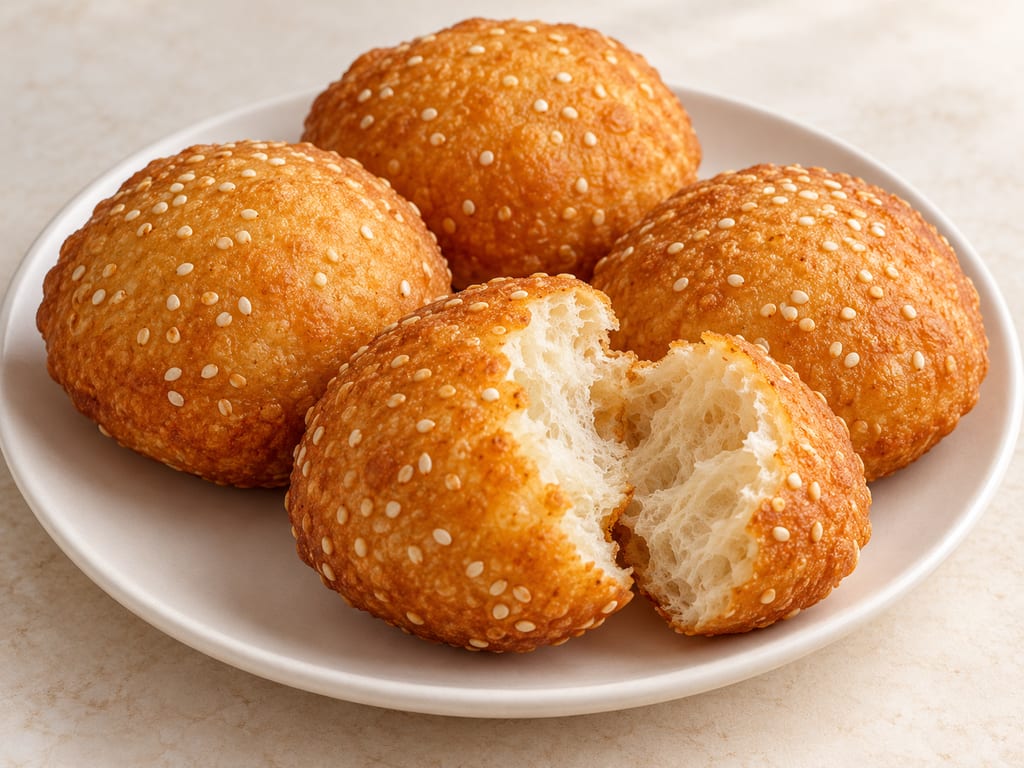
Bánh tiêu is a lightly sweet Vietnamese fried bread coated with sesame. A yeast-raised dough with baking powder is rolled into small rounds and fried until puffed and golden.
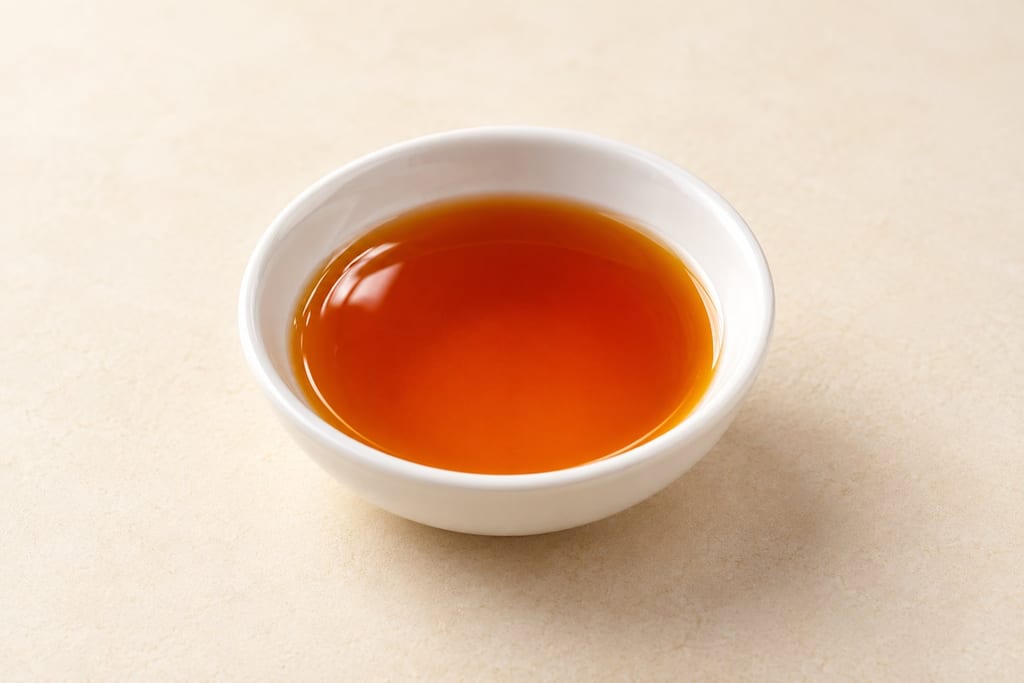
Fish sauce is a clear, salty seasoning made by maturing fish with salt and drawing off the liquid. The broad family includes distinct regional sauces rather than one interchangeable method.
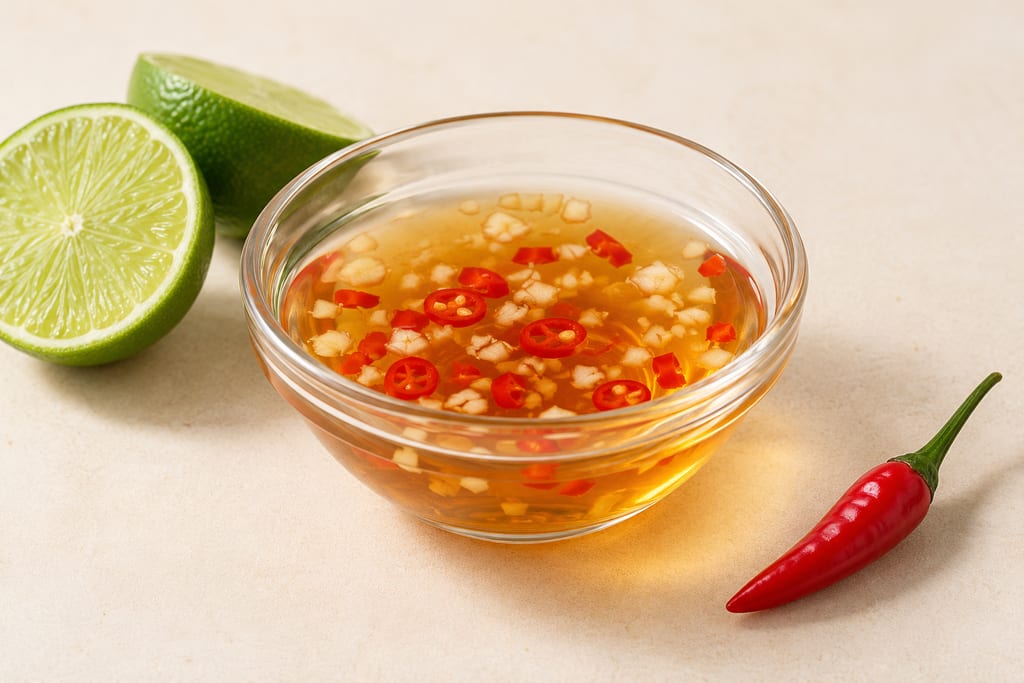
Nuoc cham is a Vietnamese fish-sauce dipping sauce. This untested development ratio starts with water, lime and sugar, then adds fish sauce, garlic and chilli.
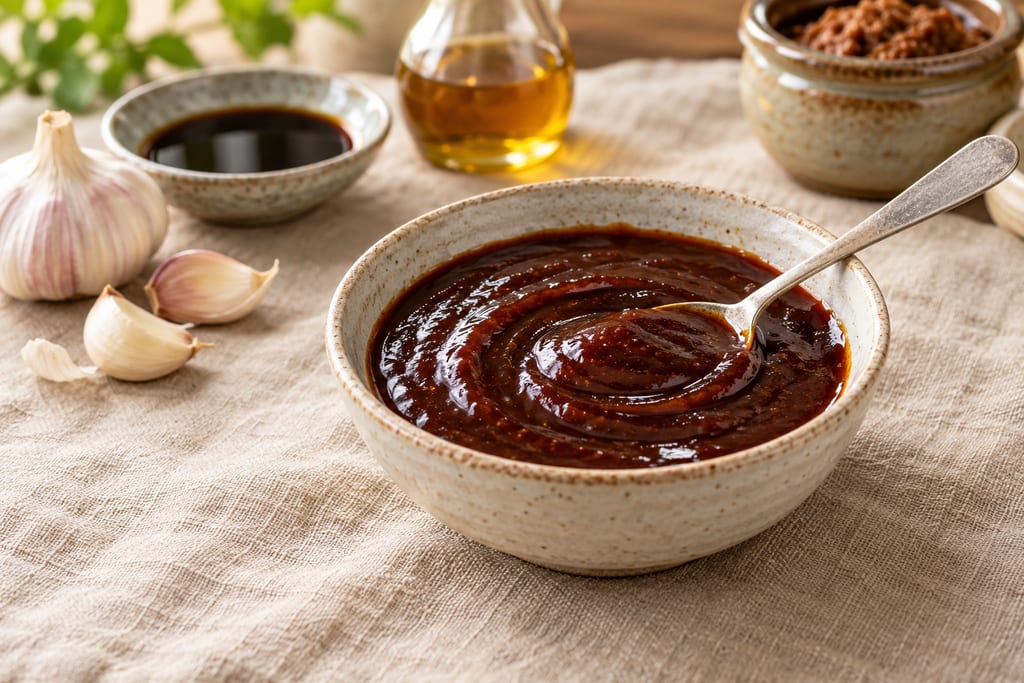
A thick, dark, sweet-salty Chinese condiment built on fermented soybean paste. This page gives one quick home version and records how commercial formulas differ.
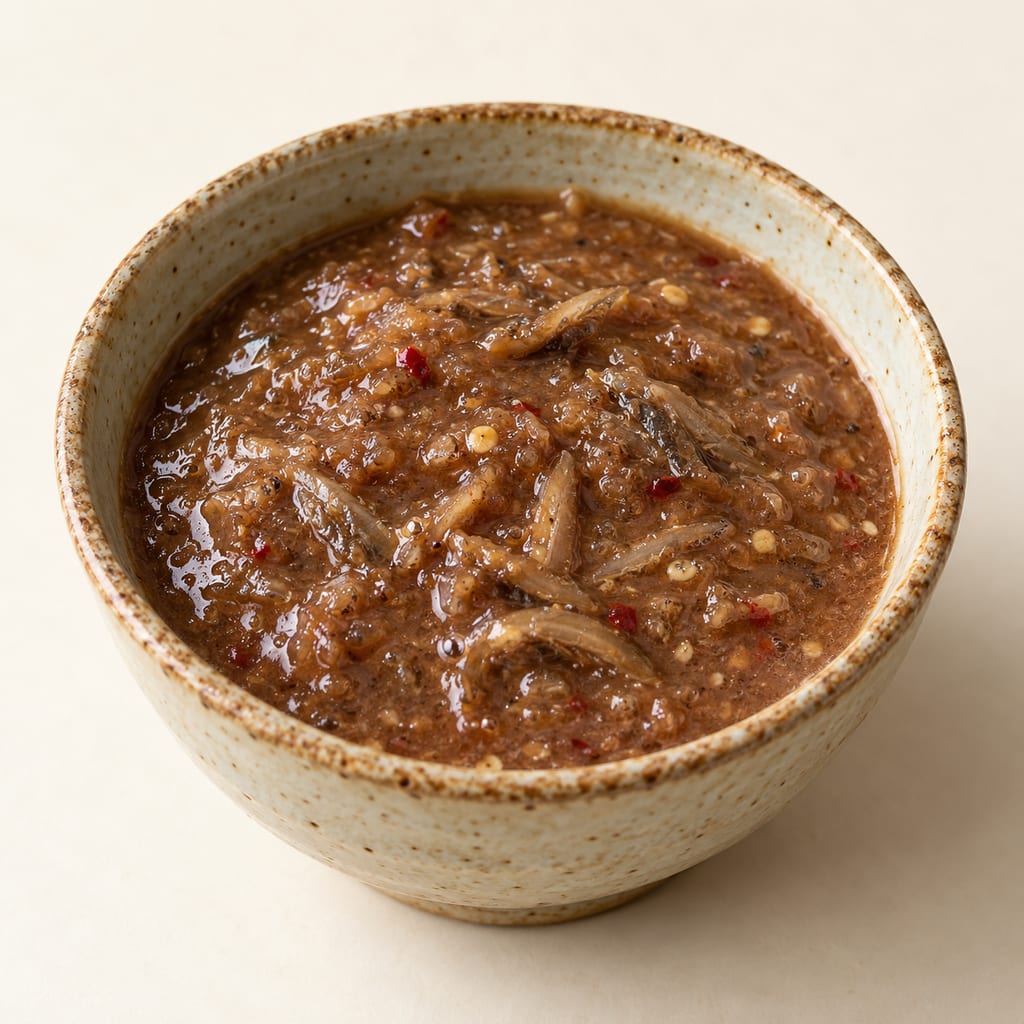
A documentary account of mắm nêm, a pungent Vietnamese fermented fish condiment and dip base. The cited cookbook describes a method, but omits essential process details; this page does not provide a home fermentation recipe.
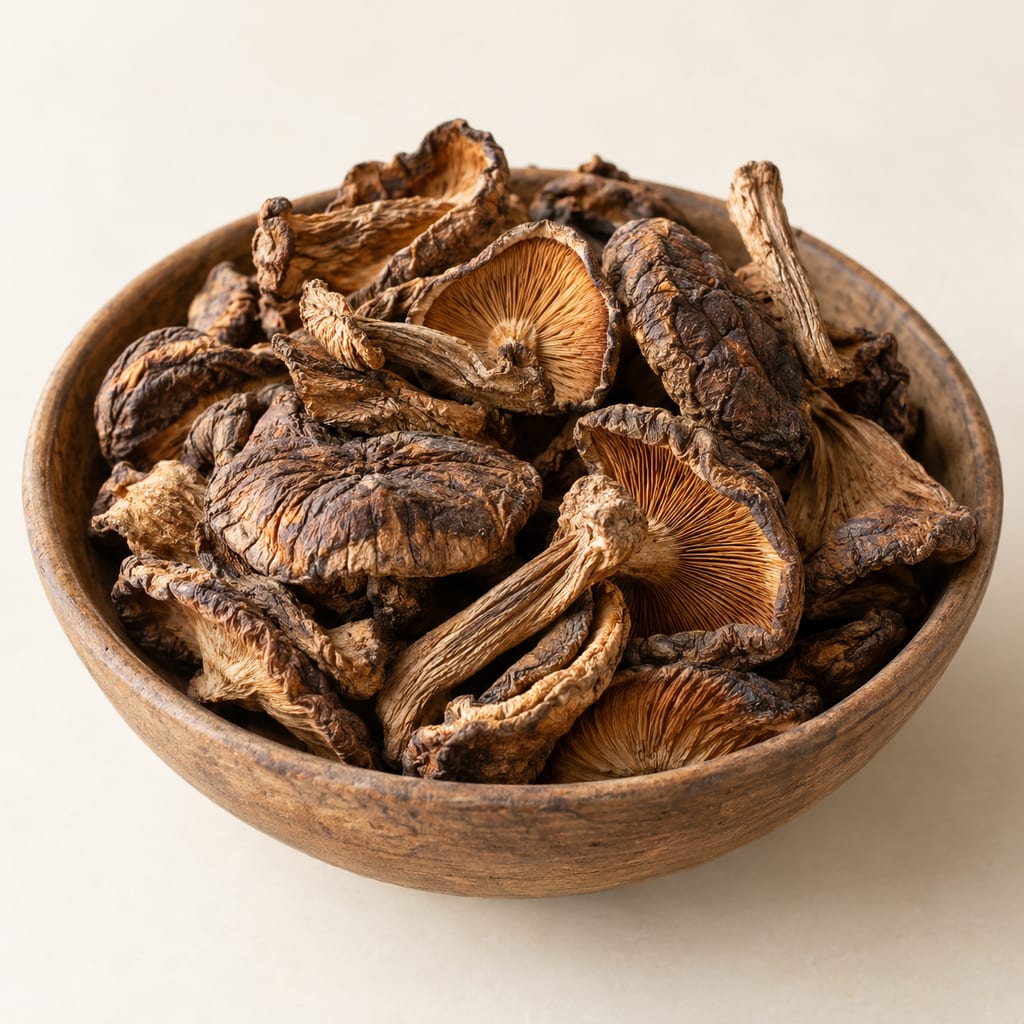
Hearth-dried mushrooms are dried on shelves above a cooking fire, so heat and smoke reach them. Tanzanian records describe the method; a Vietnamese study tested smoke-dried shiitake for fuel-dependent contaminants.

Tương Bần is a thick, sweet and salty northern Vietnamese soybean sauce made from soybean and sticky rice at Bần Yên Nhân in Hưng Yên, matured in ceramic jars for months.
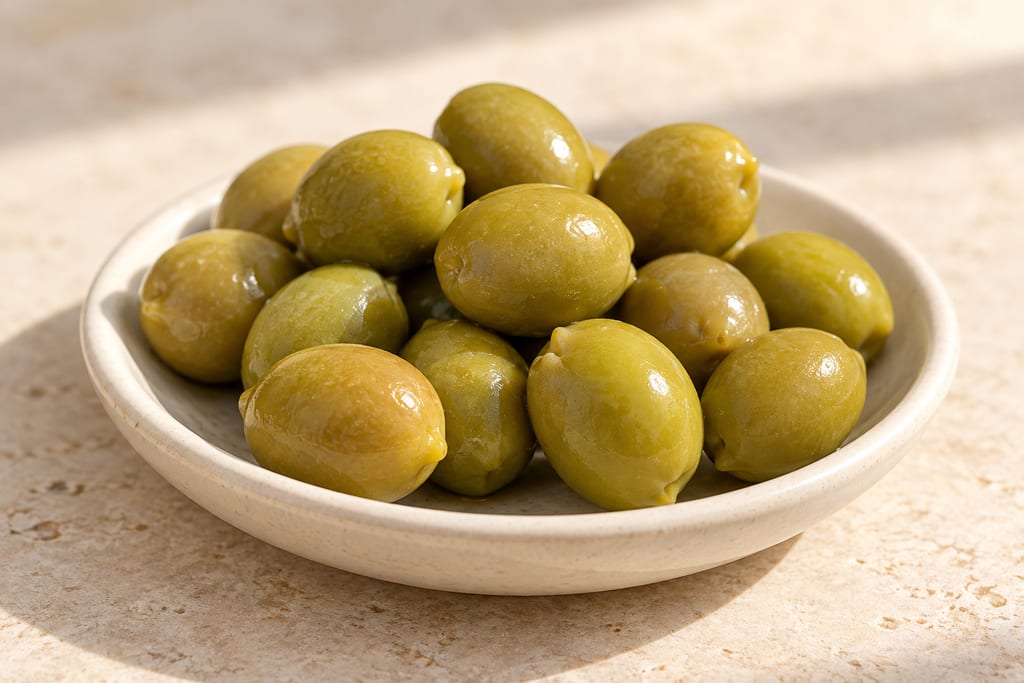
A Portuguese table-olive product from the Negrinha cultivar in northeastern Portugal, sold in three commercial styles, two of them brined fermentations and one oxidised to black.
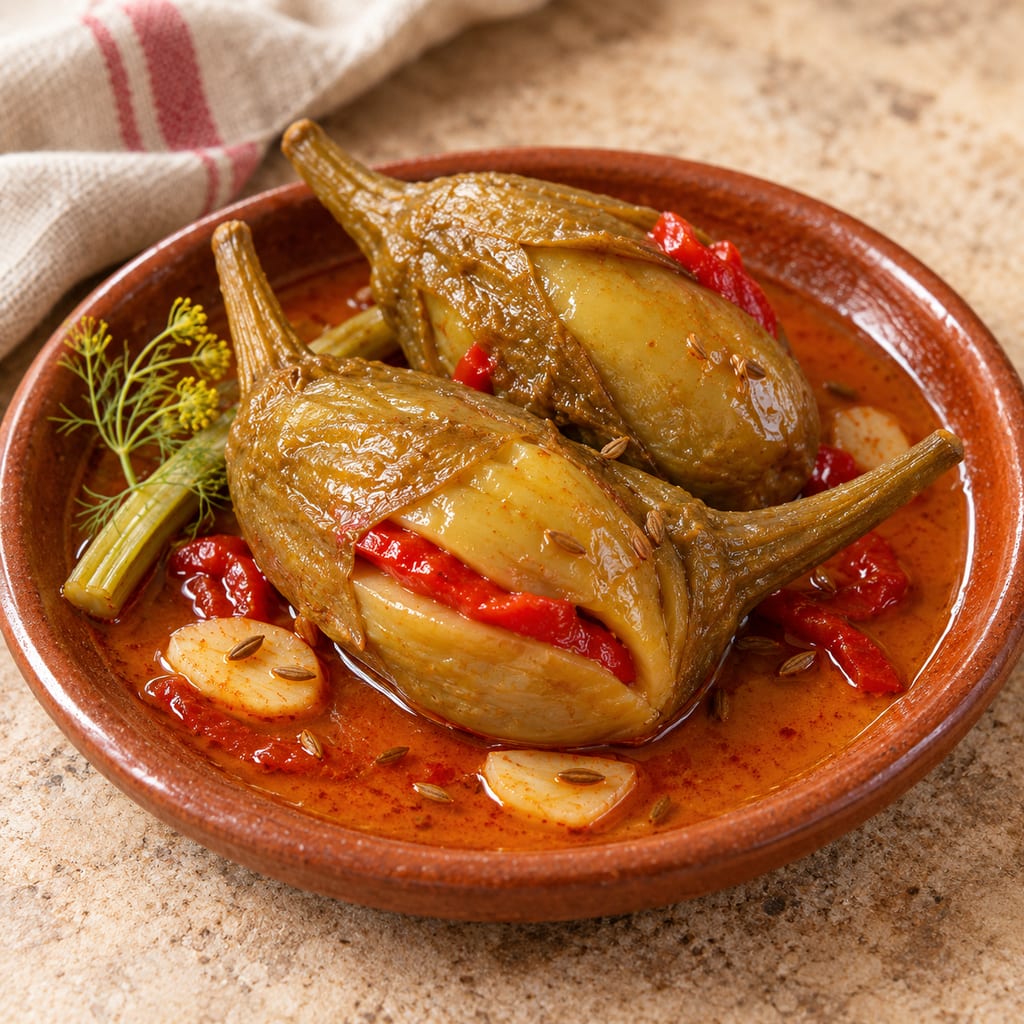
A protected aubergine preserve from Ciudad Real in Spain: tender fruit of the local Dealmagro variety, cooked briefly and then fermented in a vinegared, paprika-seasoned dressing.
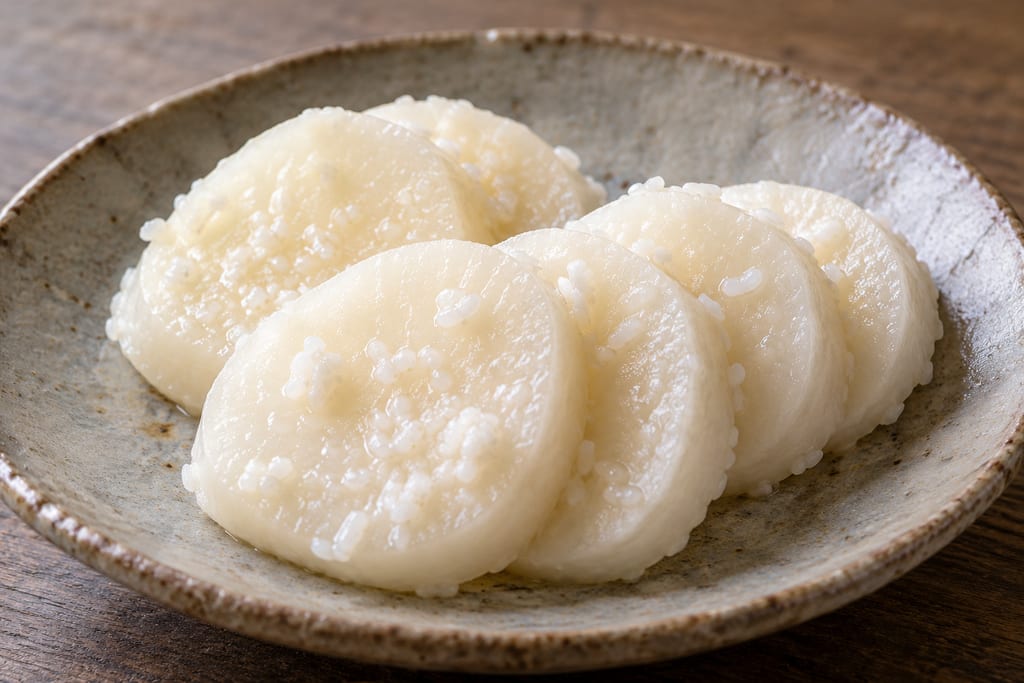
A sweet, crisp Japanese daikon pickle from Tokyo's Nihonbashi district, made by salting fresh radish and dressing it in rice koji, sugar or koji amazake without the heavy drying used for takuan.
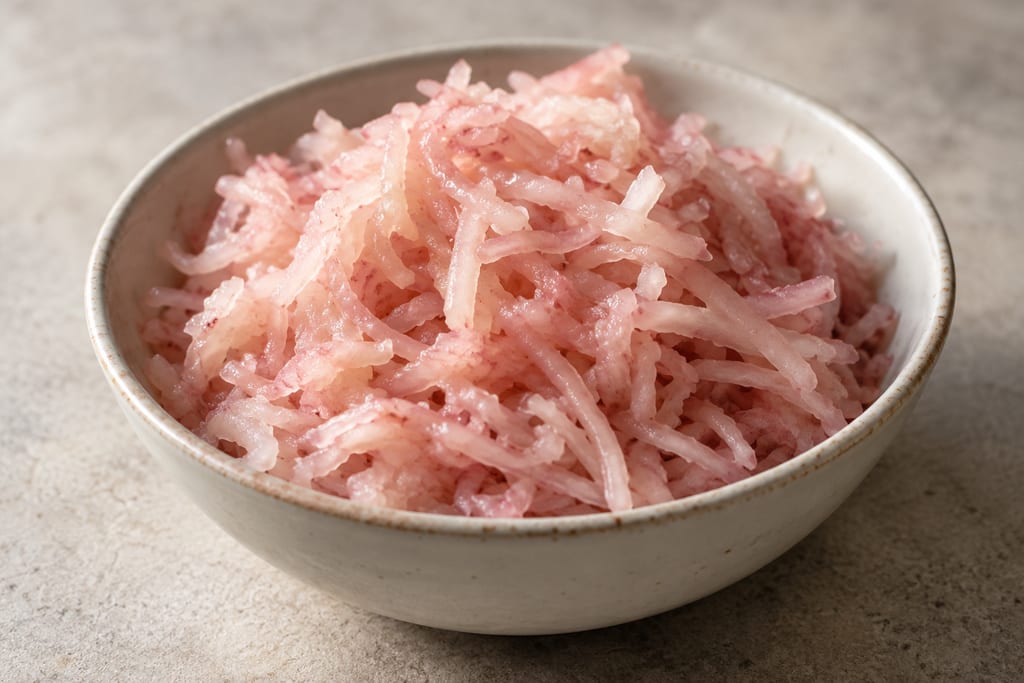
Source-specific Brovada DOP producer method for Friuli Venezia Giulia turnips and red-grape marc. This records a regulated producer process; it is not a validated home-scale recipe.
An industrial fermentation patio places factory-made fiberglass-reinforced polyester olive tanks below floor level, with drainage and transfer infrastructure arranged around the buried vessels.
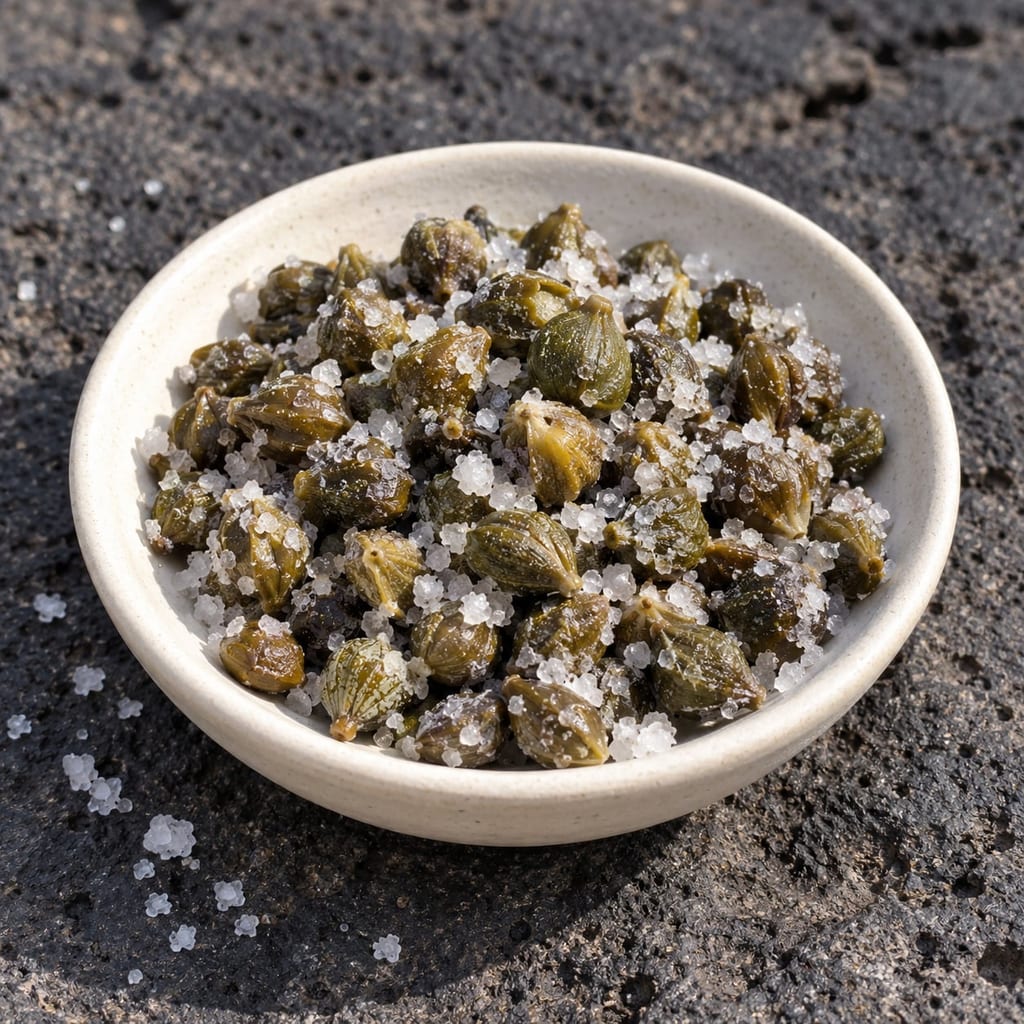
A protected Sicilian product: unopened caper buds from the island of Pantelleria, dry-salted with sea salt in a two-stage process that encourages lactic fermentation.
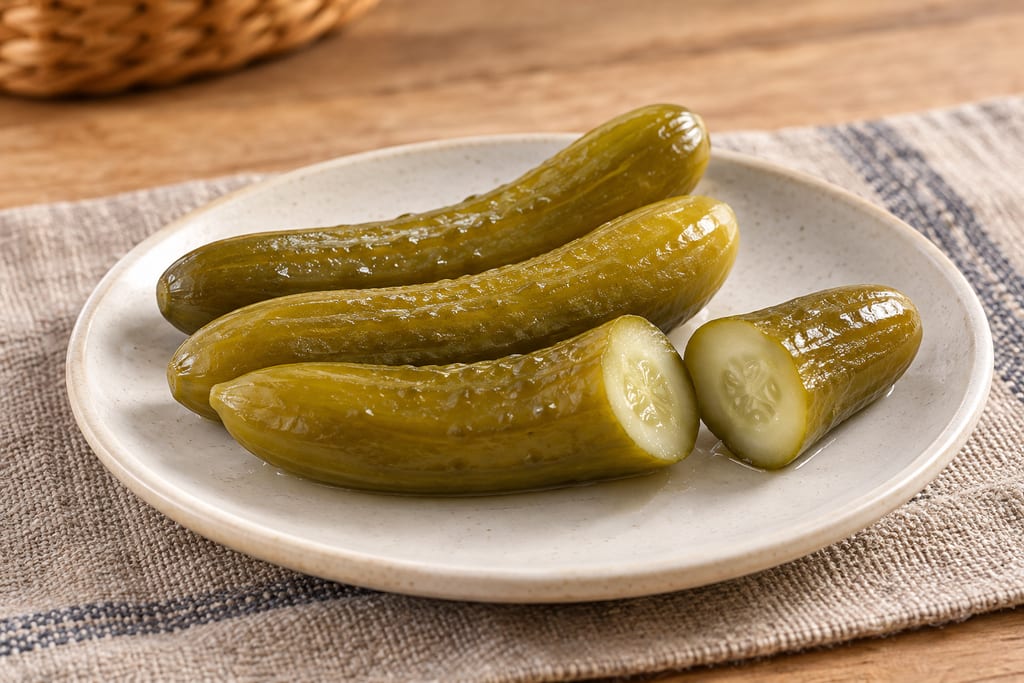
Çubuk turşusu is a registered pickle from Çubuk district in Ankara. Its cucumber variant is sold as Salatalık Turşusu, and a commercial specification sets its brine and room-temperature period.
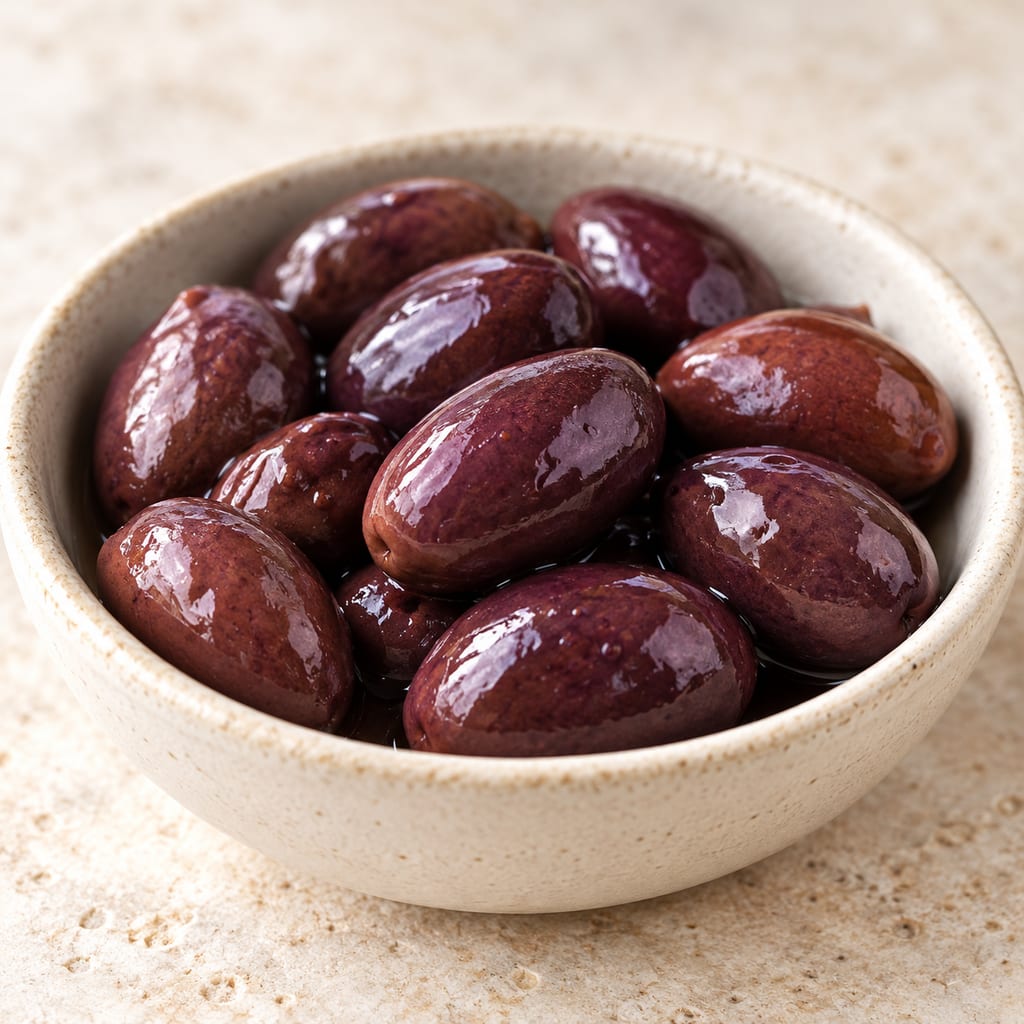
Elia Kalamatas is a Messinia table olive of the Kalamon variety, picked before full ripeness and fermented in brine for six to nine months; it is a PDO product, not a generic black olive.
No community contributions have been published for this entry yet.
Sign in to contribute. Published comments and photos are free to read.
PubMedMethod · History
Lactic acid bacteria from Vietnamese fermented vegetables (2013)Nguyen et al. 2013 names ca muoi as eggplant fermentation and dua muoi as mustard and beet fermentation.
The study isolated 881 lactic acid bacteria from 21 vegetable-fermentation samples; percentages are pooled and not assigned to eggplant.
Cited in: What it is; Use and place; Method as published; Microbes; Limits and comparisons