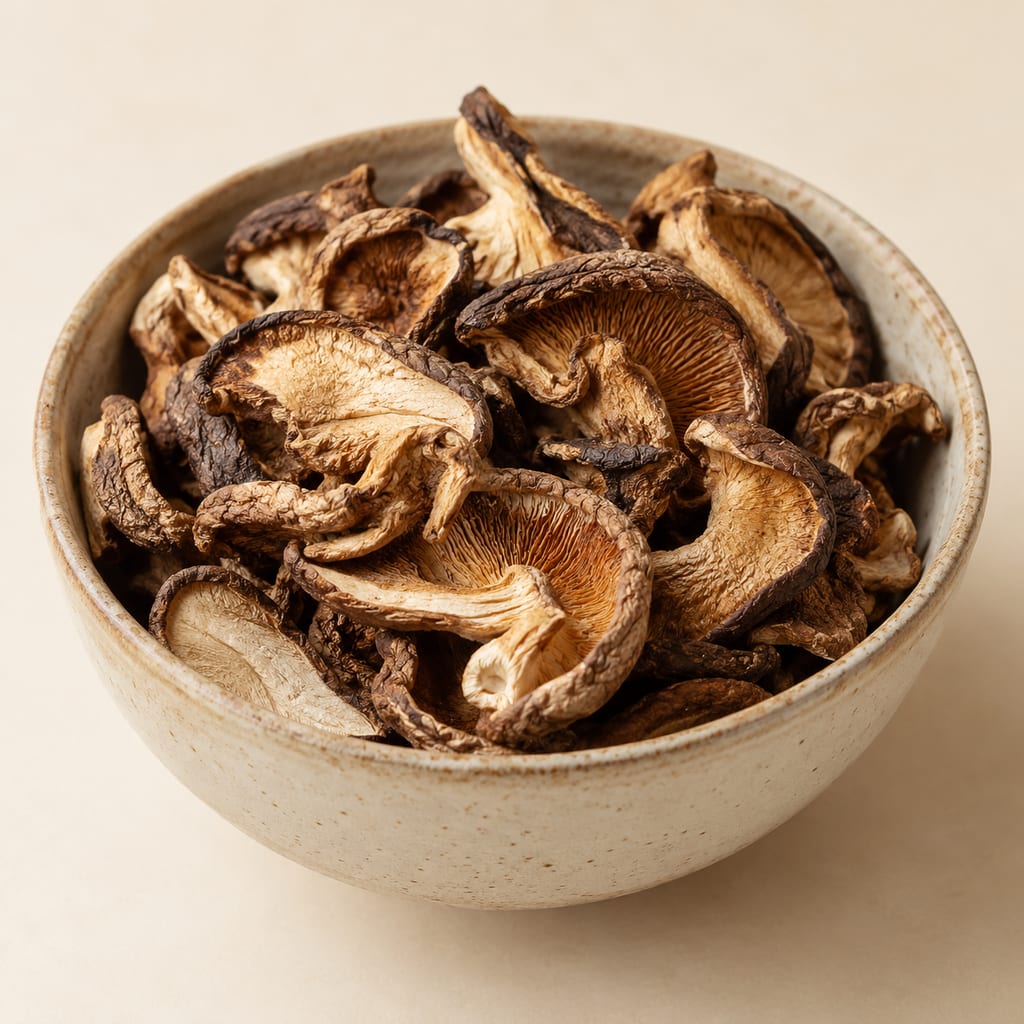
Sun-dried mushrooms
Sun-dried mushrooms are mushrooms spread in open sunlight and left to lose their water to solar heat and moving air, a method recorded in Nigeria, Tanzania, Mexico and among Algerian desert truffle gatherers.
 FermenteaWhere food goes to change
Hearth-assisted mushroom drying · Smoke-dried mushrooms · Shelf-dried mushrooms above a fire
Hearth-dried mushrooms are dried on shelves above a cooking fire, so heat and smoke reach them. Tanzanian records describe the method; a Vietnamese study tested smoke-dried shiitake for fuel-dependent contaminants.
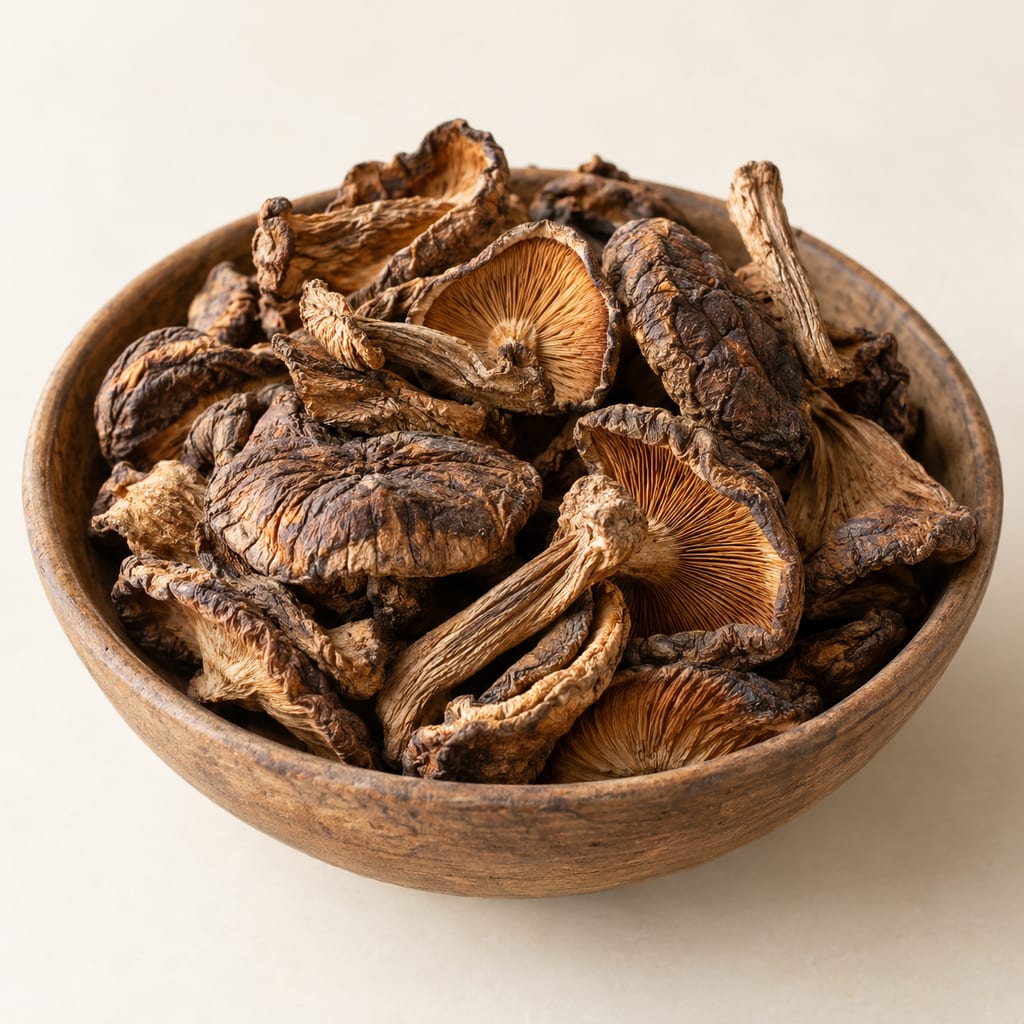
Hearth-assisted drying puts mushrooms in a place where the heat and smoke from a cooking fire reach them. The Tanzanian record describes shelves set above wood-fired cooking sites. The mushroom is dried by the rising warmth and air of the fire, and it takes up smoke at the same time. The two effects are linked in the method and are not the same thing: smoke adds flavour and chemicals, and drying removes water.
A rural study of wild mushroom use in Tanzania records shelves above wood-fired cooking sites as one of several drying routes, next to open sun drying and brine treatments. The record ties the practice to the household kitchen, where the fire is already burning. It gives no temperature, no drying time and no moisture endpoint, so the practice cannot be reproduced from the record alone.
A Vietnamese study of smoke-dried shiitake measured chemical contaminants in the finished product, including polycyclic aromatic hydrocarbons, polychlorinated biphenyls and dioxin and furan compounds. The levels depended on the fuel. The study found that plastic burned with wood produced substantially worse contamination than clean wood. The result is an experiment on one fuel system, and it does not give a safe limit for any household fire.
That is why the fuel is a step in this page rather than a footnote. A cook who keeps the fire clean and the fuel to plain wood is making a choice the study points toward. The study does not establish that clean wood makes the product safe.
Smell, colour and a dry feel do not show that the mushroom is stable or free of contaminants. The sources record no endpoint for moisture or water activity in the hearth method, and no time for the drying. Keeping smoke flavour and complete dehydration apart is the first analytical question: a mushroom that tastes smoked may still be damp, and a dry mushroom may still carry smoke compounds from the fire.
The Tanzanian interview and market study records hearth-shelf drying as a current practice. No dated first use is given.
Scaling: source batch only
The Vietnamese study measured chemical contaminants in smoke-dried shiitake that depended on the fuel. Plastic mixed with wood gave substantially worse contamination than clean wood in that experiment.
Hazard sourceSmoke adds flavour and chemicals, while drying removes water. The sources do not record a moisture endpoint for the hearth method.
Hazard sourceHearth drying is a traditional practice, not a validated safe process. Smoke flavour does not show that a product is dry or safe.
Fuel choice is a food-safety decision. Do not burn plastic or treated wood under food.
Mushrooms dried on shelves above wood-fired cooking sites are recorded in a rural interview and market study. No locality is given.
The Vietnamese study tests smoke-dried shiitake for chemical contaminants. It is an experiment, not a record of a household tradition.
Sun-dried mushrooms are mushrooms spread in open sunlight and left to lose their water to solar heat and moving air, a method recorded in Nigeria, Tanzania, Mexico and among Algerian desert truffle gatherers.
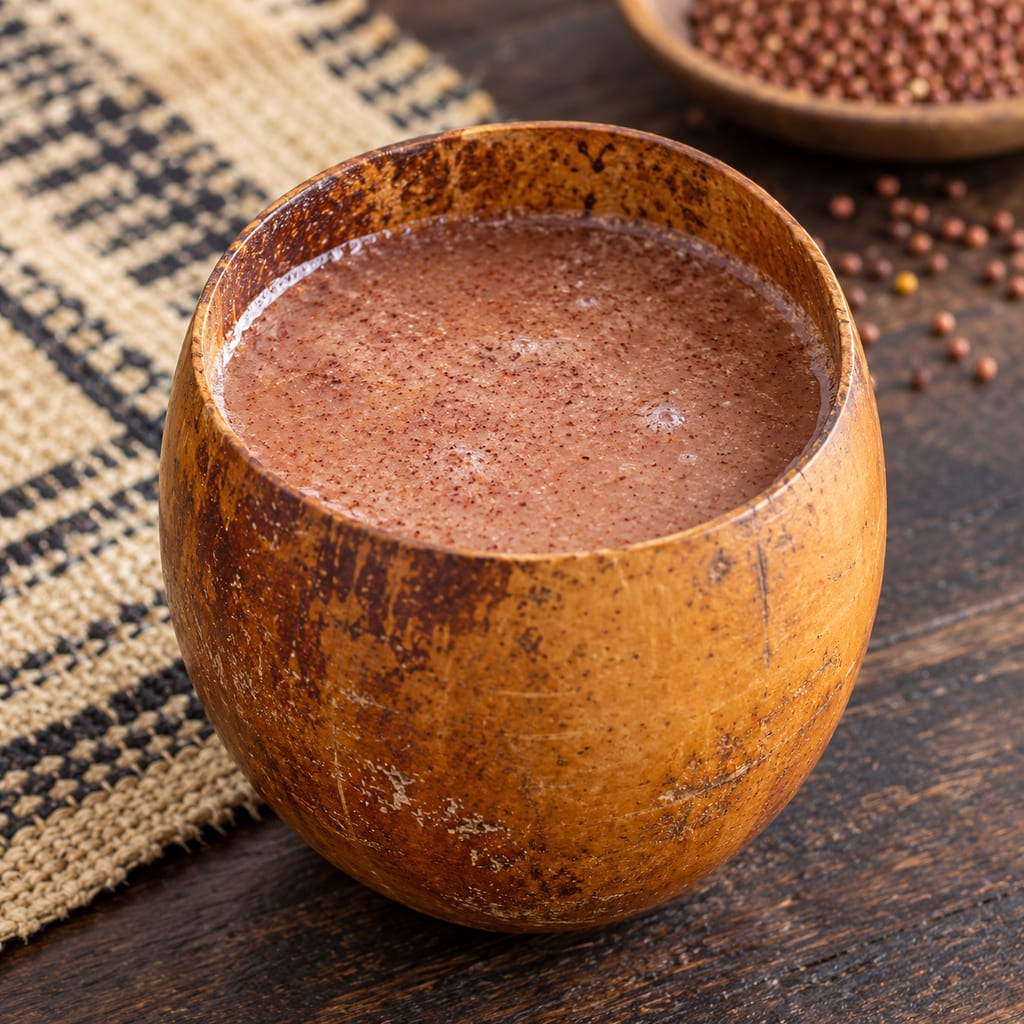
Chagga beer from the slopes of Kilimanjaro in Tanzania, made by combining a fermented banana porridge with a sweet porridge of germinated finger millet and drunk fresh within a day or two.
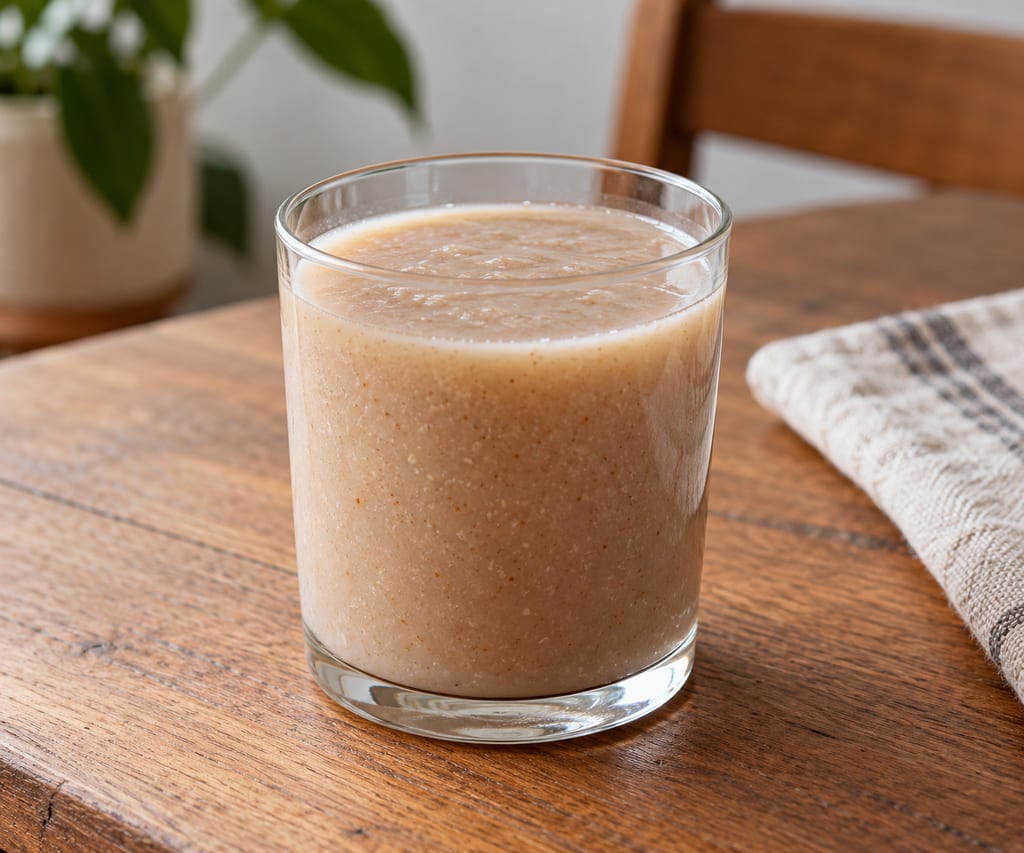
A Tanzanian cereal drink of cooked maize and sorghum flour thinned by sorghum-malt enzymes, soured by lactic acid bacteria and often started with a little of the previous batch.

Salted mushrooms are a traditional wild-mushroom preserve, especially of Finnish and Russian milk caps, made by layering boiled mushrooms with coarse salt or keeping them under brine, and kept cold.

Chipotle is a ripe jalapeño pepper smoke-dried in a wood-fired cocedor. Camargo, Chihuahua, documents a large-scale version of the process; its source accounts do not establish a complete home batch or validated safety endpoint.
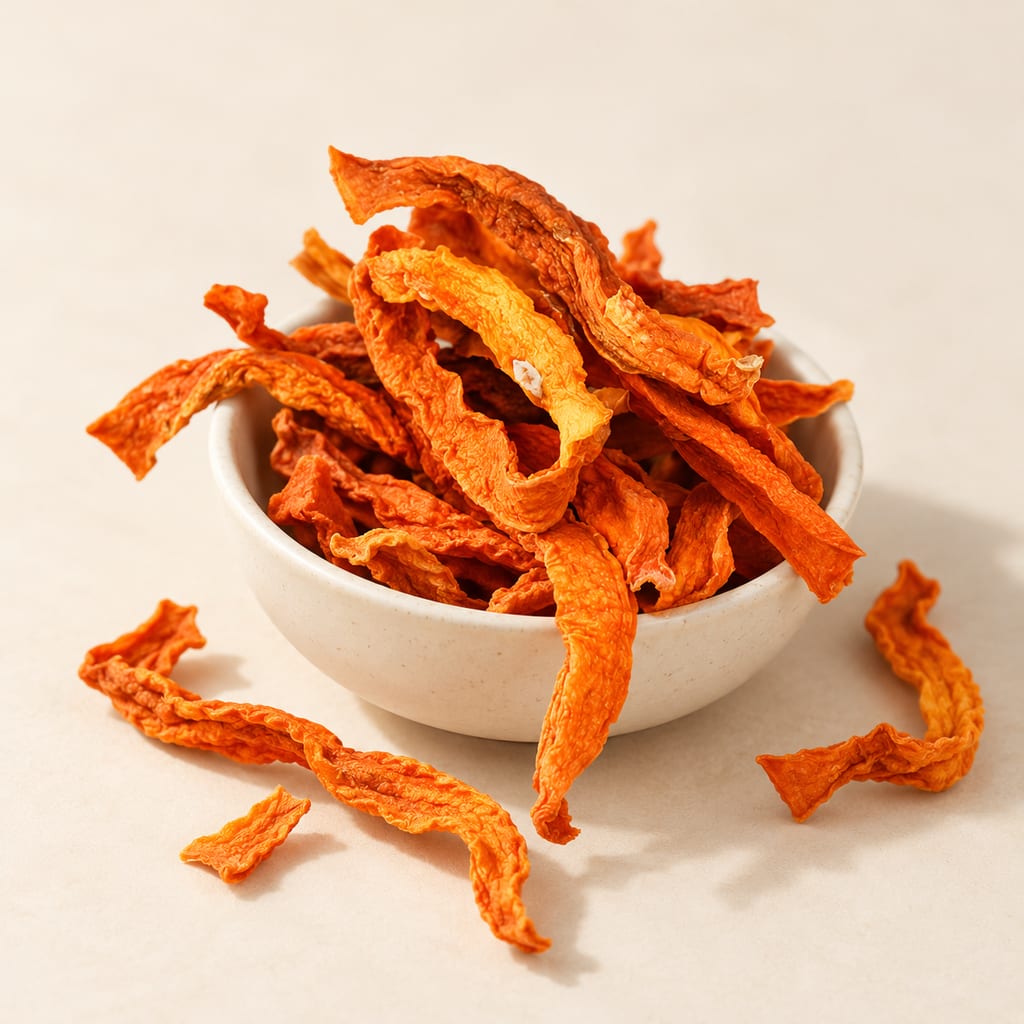
Steam-blanched pumpkin dried until brittle, kept as pieces or ground into powder, with pumpkin-specific packaging and quality guidance.
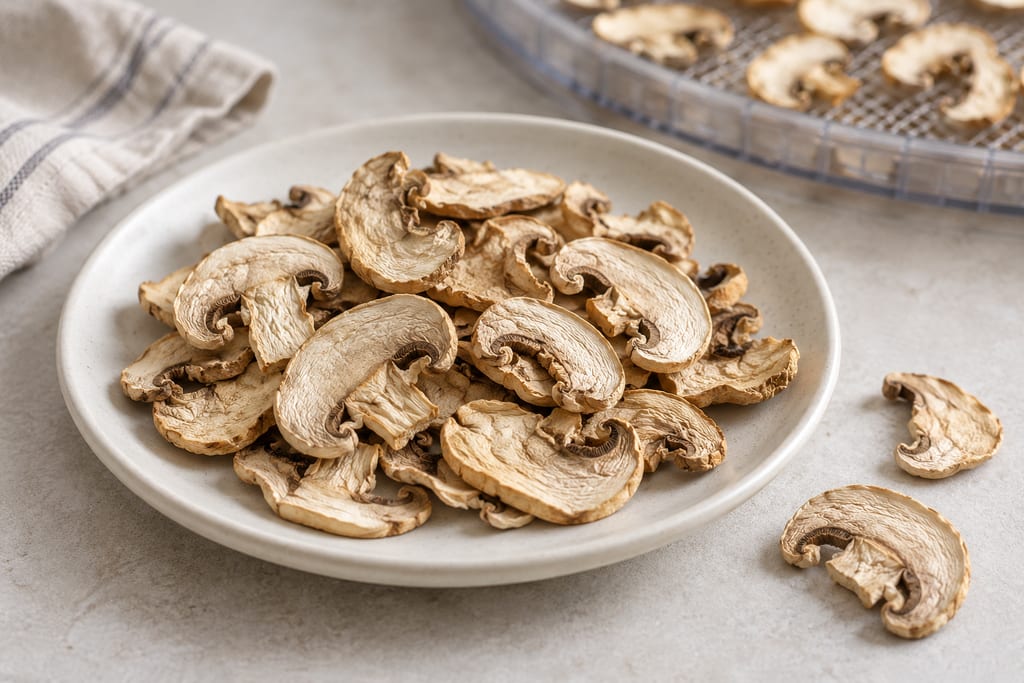
Hot-air dehydrated mushrooms are sliced mushrooms dried in a dehydrator or dryer with heated, moving air; a 2011 study dried button mushroom slices at 60 °C and compared them with microwave-vacuum and freeze-drying.

Merkén is the Mapuche seasoning of dried, smoked and ground ají cacho de cabra chile, sometimes with toasted coriander seed and salt, made in the Maule and La Araucanía regions of Chile.
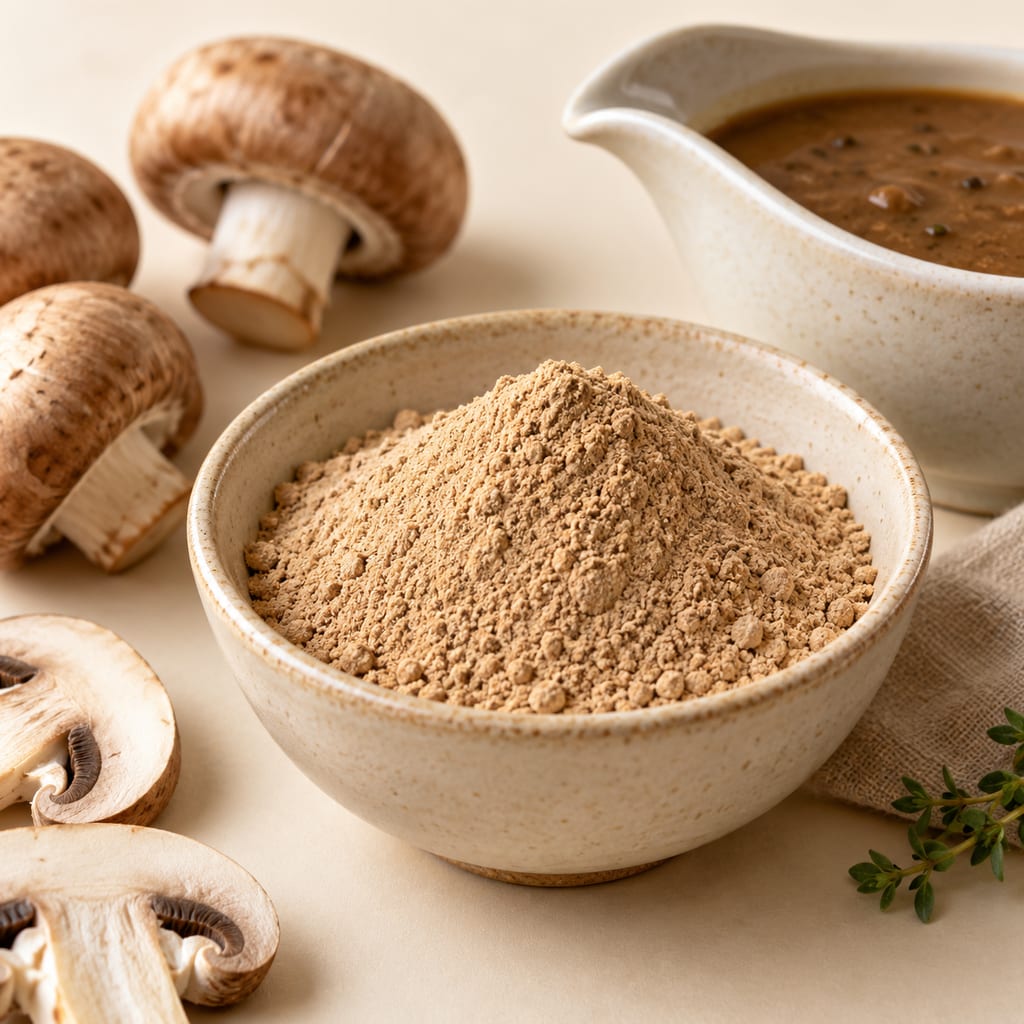
Mushroom powder is dried mushroom tissue ground to a fine powder and added to gravies and sauces. Victorian cooks made it from fresh cultivated mushrooms when fresh ones were not to hand.
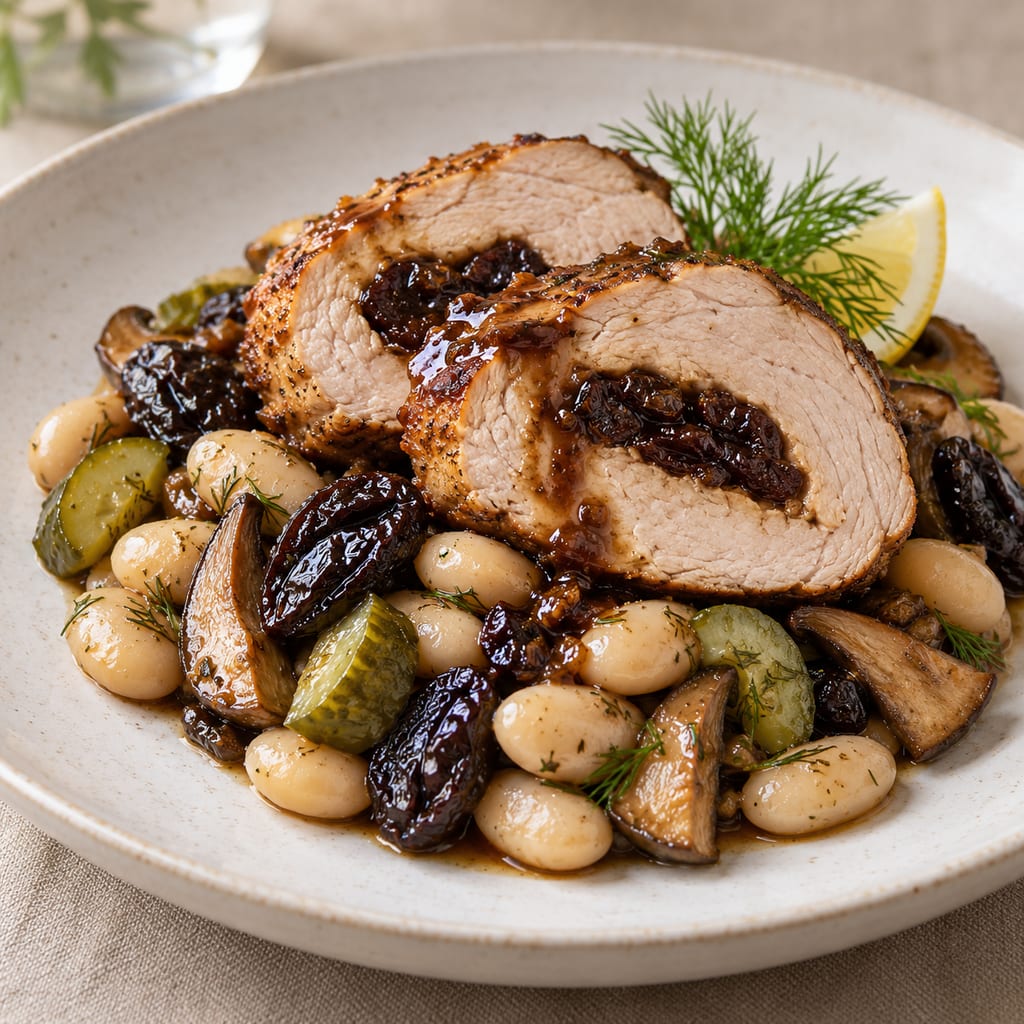
This Polish competition recipe stuffs pork loin with suska and serves it with a bean salad containing more smoked-and-dried plums.
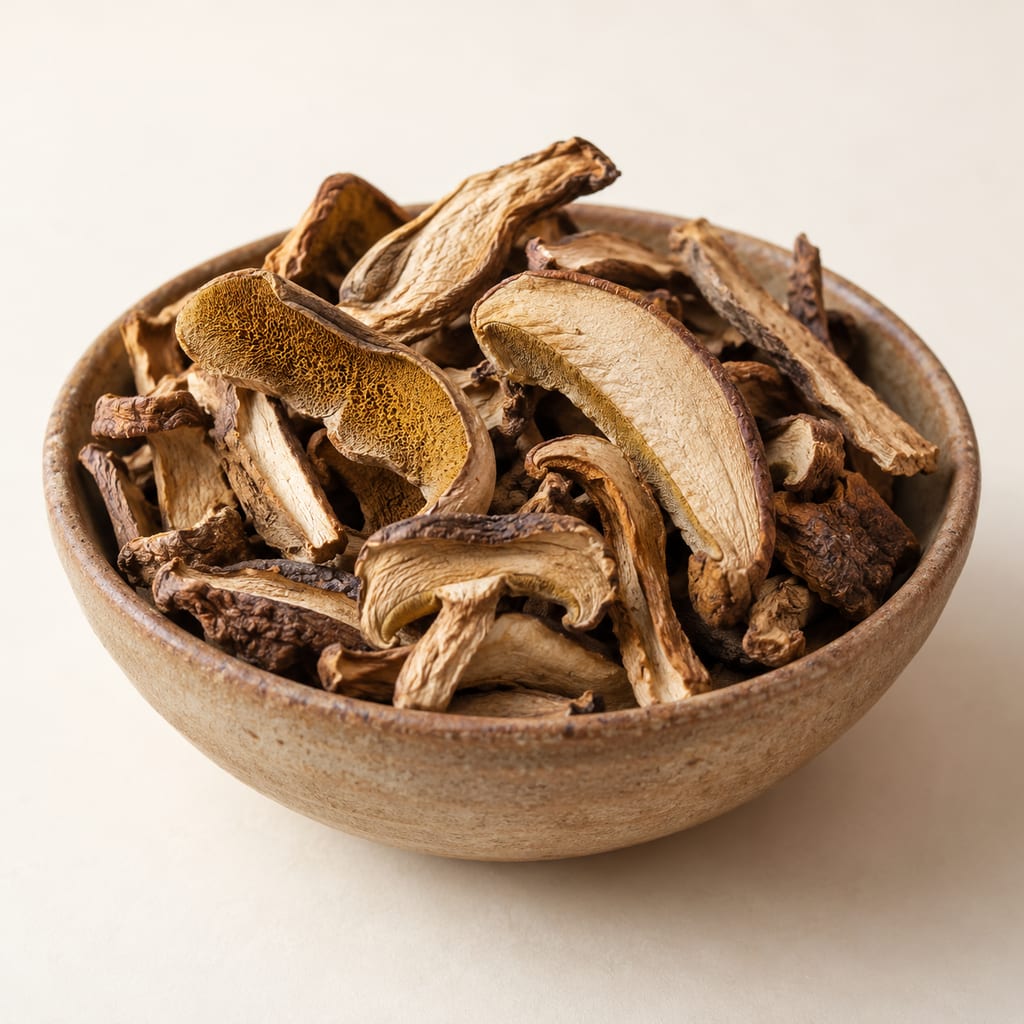
Protected solar-dried mushrooms are slices of wild Suillus luteus dried under a shade cover, a fitotoldo, rather than in open sun, as tested in an experimental study from Apurímac, Peru.

Małopolska plums smoked and part-dried over a wood fire in a regional kiln for several days, giving a dark, concentrated fruit with a protected name.
No community contributions have been published for this entry yet.
Sign in to contribute. Published comments and photos are free to read.
Tibuhwa (2013), Journal of Ethnobiology and EthnomedicineMethod · History
Wild mushroom use in rural TanzaniaMushrooms dried on shelves above wood-fired cooking sites
Nguyen-Thu et al.Safety · Experiment
Smoke-dried shiitake and fuel-dependent contaminants (2026)PAHs, PCBs and dioxin/furan compounds measured; levels depended on fuel; plastic mixed with wood fuel worse than clean wood