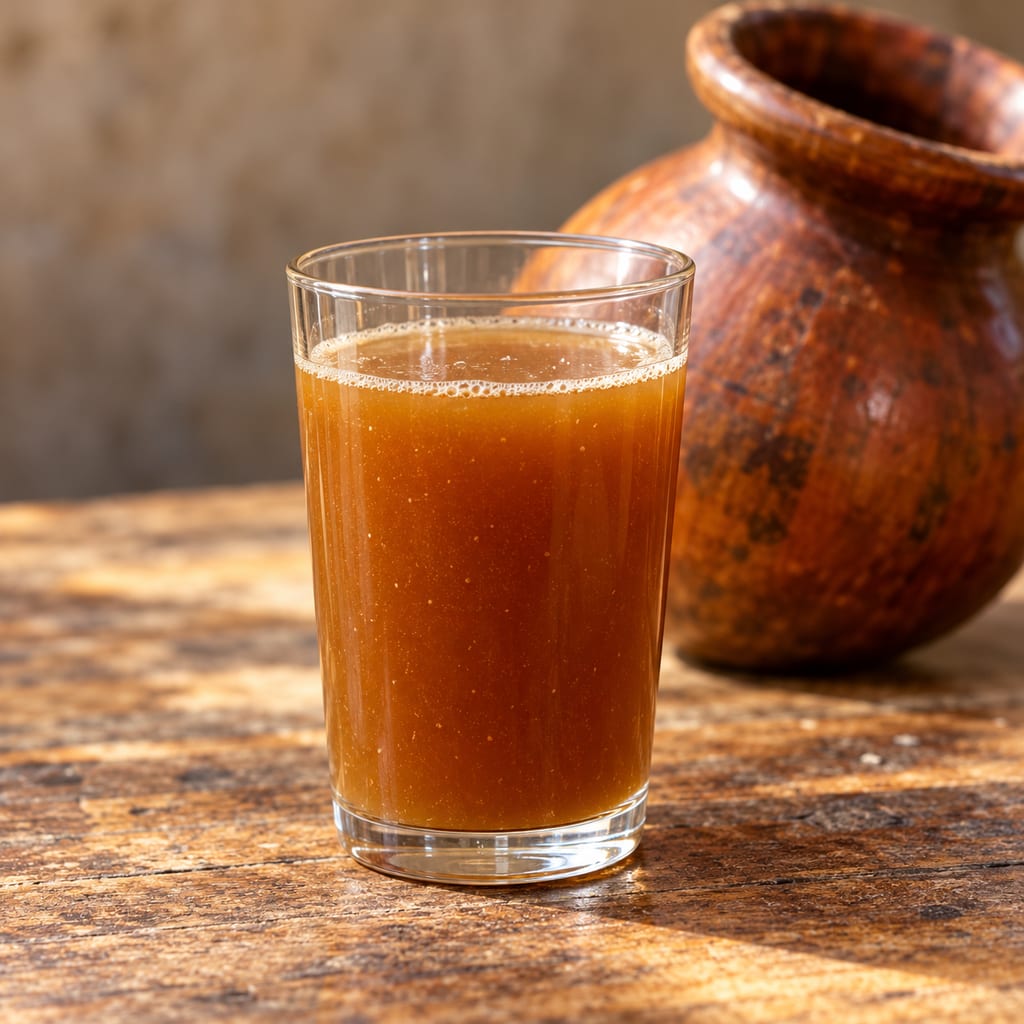
Chagga beer from the slopes of Kilimanjaro in Tanzania, made by combining a fermented banana porridge with a sweet porridge of germinated finger millet and drunk fresh within a day or two.
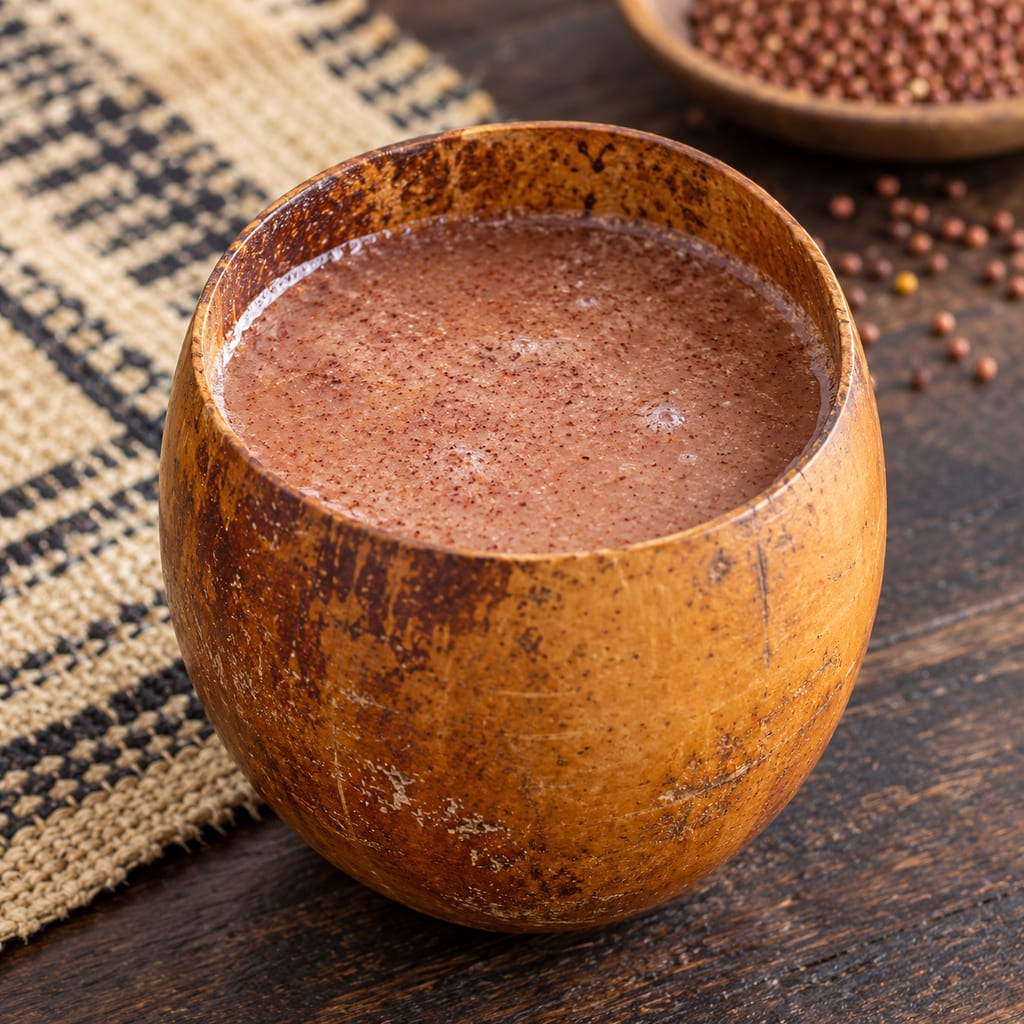
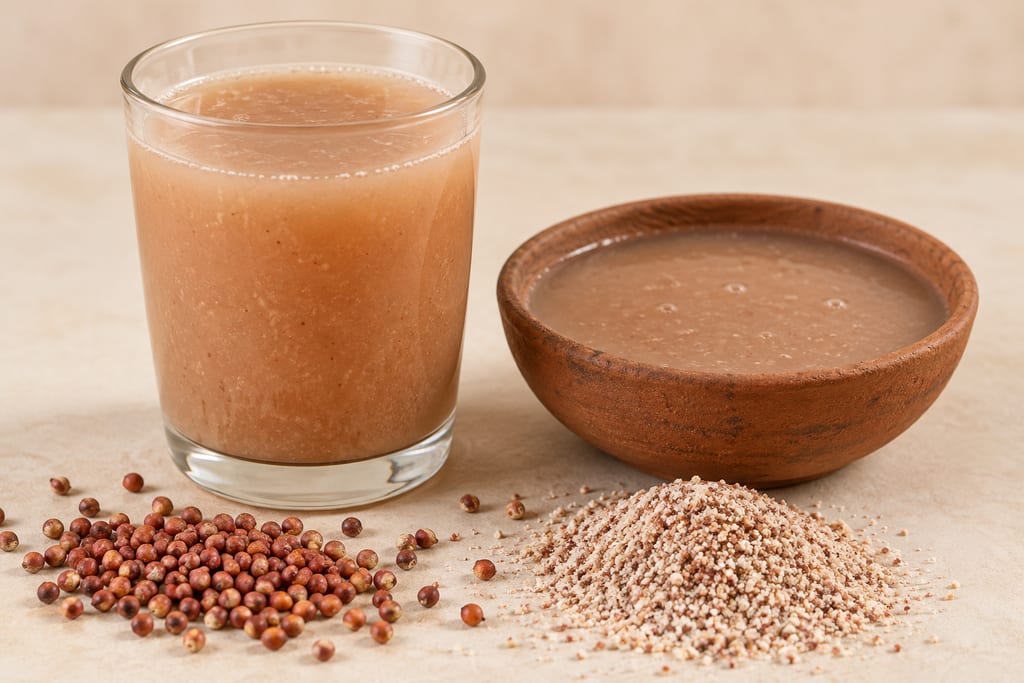
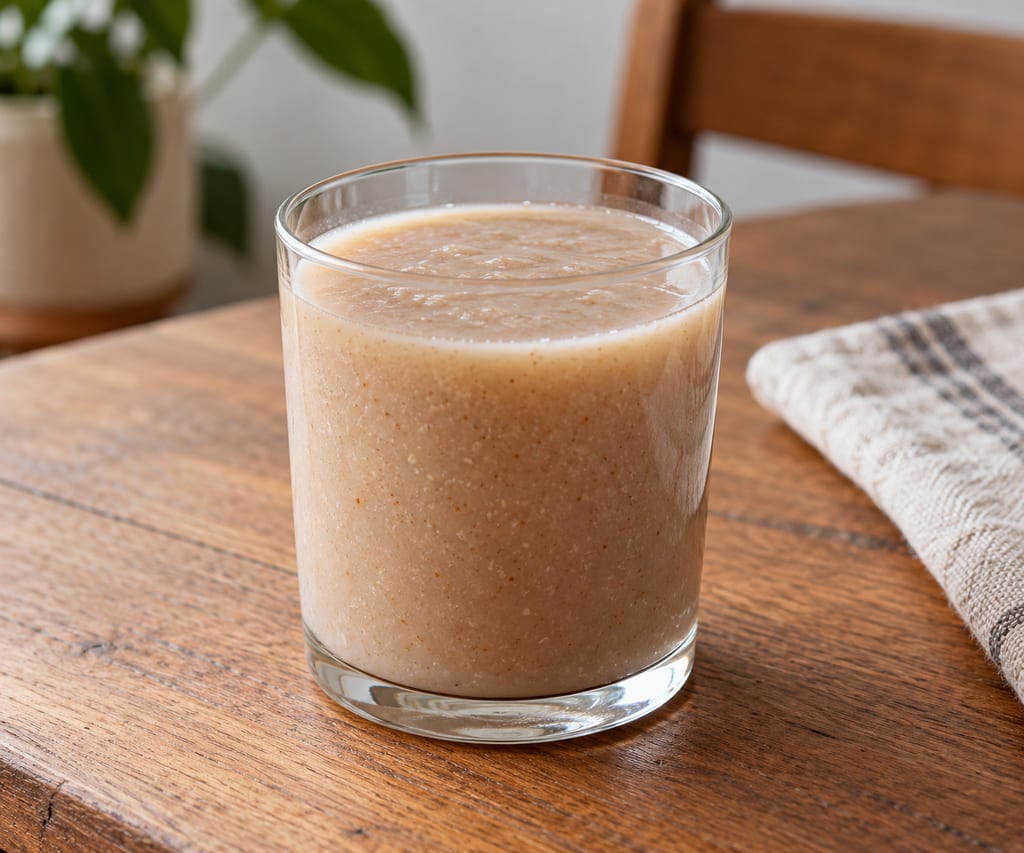
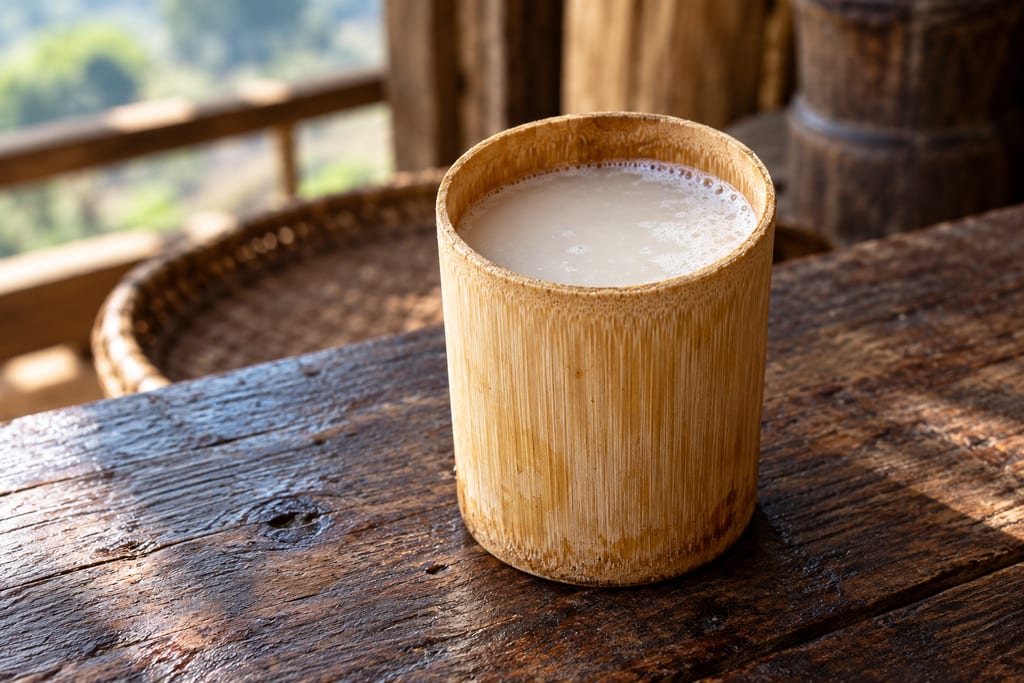
Mbege is the beer of the Chagga country, the slopes of Mount Kilimanjaro in northeastern Tanzania, and of the neighbouring Meru communities around Mount Meru. It is brewed from two cooked porridges, one of ripe bananas and one of germinated finger millet, and it is drunk young, within a day or two of the porridges being mixed. In the cup it is red-brown, opaque and slightly sour, with the grain left in, and the customary vessel is a gourd. Researchers who studied it describe it as the most popular indigenous alcoholic drink of northeastern Tanzania, in a country where, by the World Health Organization figure they quote, 87 percent of all alcohol is drunk in the form of locally made drinks rather than factory beer or spirits.
The brewers keep a separate name for every stage, and the names are worth learning because they map the method. Nyalu is the banana porridge once it has fermented and been filtered. Mso is the sweet porridge cooked from germinated finger millet. Togwa is what the two make in the first moment after they are combined, a sweet and slightly sour drink that shares its name with a widely drunk Tanzanian beverage made from saccharified grain. Once it has fermented for about six hours the mixture is mbege. The banana solids left in the filter bag are makati, which go to the pigs, and msesewe is the bark that some brewers add to speed the banana fermentation up.
The division of labour between the two porridges is the heart of the drink. Bananas bring a living, yeast-bearing mixture that has already been fermenting for the better part of two weeks, but they are a poor source of fermentable sugar once cooked down. Finger millet brings starch, and its germinated grain carries the enzymes to turn that starch into sugar, but a millet porridge on its own has no ready yeast. Mbege marries the two: the enzymes of the millet make the sugar and the yeasts of the banana ferment it. That is why the method is a recipe in three parts rather than a single mash.
Strength is modest and it changes by the hour. In the one batch that has been measured from start to finish, the mixture held 1.0 percent alcohol straight after mixing, 2.7 percent at six hours and 4.0 percent at forty-eight hours. Those readings came from a saliva alcohol test kit, which is a rough field instrument, so they show the direction of the fermentation rather than a guaranteed strength. Mbege is a perishable, actively fermenting drink, closer in spirit to a fresh sour porridge than to a bottled beer that can sit on a shelf.
The banana is the most important food crop of the Chagga, and finger millet is the grain that went into the brewing pot. Together they made one of the characteristic drinks of the mountain. Nobody can say when the two were first brought together. The documents that survive show a drink already settled in its place and do not describe an invention, and claims that the present method comes from some ancient kingdom or from prehistory rest on nothing that has been inspected.
The first firm dating is about the grain. A historian who studied the decline of finger millet on Kilimanjaro found that by the 1930s millet was bound up with mbege brewing. Colonial administrators, missionaries and settlers were criticising both the crop and local alcohol in that decade. Farmers kept growing millet at first, but from the 1940s the acreage fell. His argument is that changing economic chances and the standing of millet among the Chagga mattered as much as outside pressure.
The next record is a picture. In 1956 the Chagga painter Sam Ntiro, working in Kampala where he taught at Makerere, painted Men Taking Banana Beer to Bride by Night. Men move across the slopes of Chagga country under trees and an evening sky, and they carry the beer in gourds on their heads as an offering to a bride. The Museum of Modern Art holds the painting and describes the beer as mashed, cooked, fermented for several days, strained and left to rest. It is a painting rather than a technical text, but it dates the beer's place in marriage custom to the middle of the twentieth century at the latest.
Fieldwork in Moshi in 1968 and 1969 shows the commercial side. Women brewed at home and supplied bars that sold the beer by the cup, and the political study connects the rising importance of brewing to the slump in coffee prices in the 1950s, which pushed households to look for other income. It also records the licensing of the trade and competition among brewers and sellers.
Laboratory interest began in 1998, when Tanzanian researchers identified the yeasts and bacteria of the beer and, in a separate study, measured the cyanide released when millet is sprouted. A thorough account of the brewing sequence did not exist until 2015 and 2016, when Ryosuke Kubo and Method Kilasara made three field visits to the ward of Kilema Kaskazini and recorded volumes, temperatures and measurements, an unusual level of detail for a household brewing method. A food-heritage volume published in 2021 adds the social side and a shorter local version.
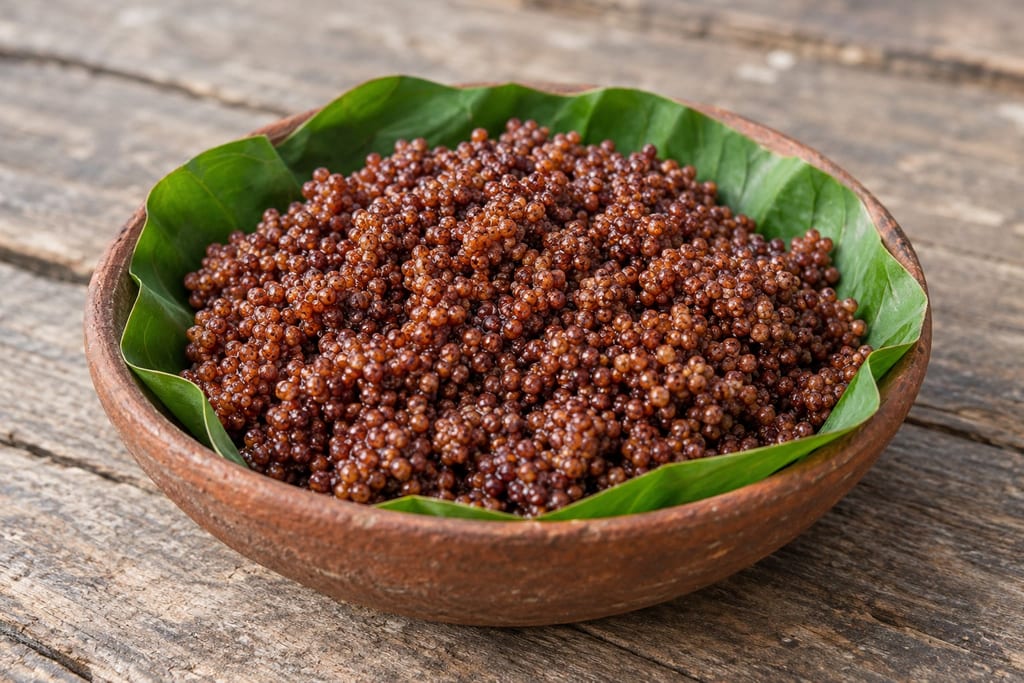
Mbege asks two separate biological questions and answers them in two separate pots. The first is how to turn grain starch into something yeast can eat. Yeast ferments sugar, and finger millet starch is not sugar. The answer is malting. When millet sprouts, the grain makes amylases, enzymes that cut starch chains into shorter sugars. The brewer cooks the sprouted, milled grain with water so that the starch swells and becomes reachable, and the amylases then work on it while it is hot. The result is mso, a thick brown porridge that tasted sweet and measured 25.0 on the Brix scale in the recorded batch, with no alcohol at all and a pH of 5.4.
Temperature is the lever. Finger millet amylase is most active at 50 to 60 degrees C and is destroyed by heat above 70. The brewer keeps the pot between 50 and 70 degrees C by pulling firewood out and putting it back, and tops the porridge up with warm, thin liquid reserved earlier rather than cold water, so that the temperature never drops suddenly. A sweet porridge is the result of managing a fire to suit an enzyme, and the brewer's remark that mso fails if it is cooked too hot matches what the enzyme chemistry predicts.
The second question is where the yeast comes from. A cooked banana porridge is first boiled until it is red and smooth, which breaks the fruit into small pieces and puts the sugar and the starch within reach, and the heat also cuts down the microbes the fruit started with. It then stands for nine to thirteen days in a wooden barrel and ferments spontaneously, seeded by whatever survives or settles into it from the barrel, the air and the hands that handle it. Bubbles form on the surface. By the time it is filtered, the nyalu holds 1.2 percent alcohol and a pH of 4.5, with a Brix of 5.6, so it is a slightly sour, slightly alcoholic suspension of live yeast and acid-producing bacteria.
A 1998 study of the beer isolated Saccharomyces cerevisiae as a main fermenting yeast and Lactobacillus plantarum, now called Lactiplantibacillus plantarum, as a main lactic acid bacterium. The yeast turns sugar into ethanol and carbon dioxide, and the lactic acid bacteria make acid, which is why the pH slips from 4.6 to 4.2 over the first two days. The same study named Acetobacter species as a leading spoilage organism. These bacteria use oxygen to turn ethanol into acetic acid, which is the way an open barrel of mbege turns to vinegar-like sourness if it is left standing.
When nyalu meets mso the yeast finally has something to eat. The first reading after mixing, the togwa stage, was 1.0 percent alcohol at Brix 9.0 and pH 4.6. At six hours it was 2.7 percent, 8.0 and 4.4, at twelve hours 3.2 percent, 7.5 and 4.2, and at forty-eight hours 4.0 percent, 6.0 and 4.2. The numbers do not move in a straight line, because the field instruments were simple and because a refractometer reading is affected by alcohol as well as sugar. They still show alcohol rising, sugar falling and acidity increasing.
The bark of msesewe adds a further variable. In a short trial the batch made with bark held 0.7 percent alcohol in its nyalu against 0.2 percent without, and 4.2 percent after twelve hours of mixed fermentation against 1.8 percent. One suggestion is that tannins in the bark hold back competing microbes and let the yeast dominate, an idea borrowed from palm-wine studies and not tested directly. They also warned that too much bark could spoil the fermentation and the taste, and that the right amount had not been worked out.
The recorded method begins with ripe bananas. The brewer in Kilema Kaskazini mixed 36 litres of ripe banana with the same volume of water in a metal oil drum and cooked it over a high flame until the porridge turned red and every lump had broken down. Cooking does three jobs: it softens the fruit so the later fermentation can reach it, it develops the red colour that marks a finished porridge, and it clears the fruit of most of its starting microbes. It is then poured into a wooden barrel and left, uncovered, at ambient temperature.
The waiting is long. The brewer allowed twelve days in the batch that was measured, and says nine to ten days is enough in the hot season and twelve to thirteen in the cold. Seasonal variation fits what a spontaneous fermentation would do: warmer air speeds yeast growth. When the time is up the porridge is filtered through a nylon bag. What passes through is nyalu, red and faintly sour. What stays behind is makati, which feeds the pigs, so the first part of the process also supports the household's animals.
Mso comes next, and it is the most technical part. Thirty-five litres of water go into a metal barrel with five litres of germinated millet flour, and the barrel is heated for a few minutes. When the water is warm the brewer removes fifteen litres of the thin mixture and sets it aside, then stirs in fifteen litres more of flour with a wooden rod, vigorously, and keeps the pot going for twenty-five minutes. Whenever the porridge gets too thick, some of the warm reserve is ladled back. The reserve exists for one reason, which is to thin the porridge without cooling it. Cold water would drop the temperature out of the range where the enzymes work.
The mso is poured into containers to cool, and the nyalu is then added to it in a wooden barrel. The recorded account does not give a ratio for the two, and a reconstruction should work that out by tasting and measuring rather than assuming one. Because the yeast in the nyalu is already active, the barrel starts to ferment within hours, and the drink is called mbege from about the sixth hour. It is served in a gourd cup and drunk over the next day or two while the fermentation continues.
What the account does not say is as informative as what it does. It gives no recipe for the malt: soaking, sprouting, drying and milling times for the millet are not recorded, and the amount of the banana is given by volume only. It does not give the temperature to which mso cools before it meets the nyalu, which matters because hot porridge would kill the yeast. A cook who wants to follow the method will need to fill those gaps with care and test the results.
Mbege is a family of household methods, and the brewer's bananas, the season and the habits of the house all change the result. In the ward where the method was recorded, eighteen banana varieties were in cultivation. Ndishi was the one most often used for brewing, because it breaks down into fine, smooth porridge when it is cooked, and it is not good enough to eat as a cooking banana. Kimalindi, kipungara, kisukari, mchare, mrarao and ndizi n'gombe were also used for brewing, while others in the area, such as bokoboko and irongo, were grown for cooking only.
The trade-offs are practical. Mchare is the favourite cooking banana of the area, but it breaks down slowly and takes a lot of time and fuel in the brewing pot. Some brewers still believe it makes better mbege because it holds more sugar, a belief that was reported but not measured. The 2021 food-heritage volume lists ndizi n'gombe, ndizi ndishi and ndizi ifanaiya as suitable varieties. A banana that cooks down easily helps the fermentation by exposing more surface to yeast and enzyme, and the folk preference for ndishi agrees with that mechanism.
The biggest single variation is msesewe. Brewers who add a handful of the dried, powdered bark of Rauvolfia caffra to the banana porridge after cooking report that it is ready in about five days instead of twelve, and the 2016 trial supported the claim. The same plant carries alkaloids such as reserpine, so the practice is a tradition with a real effect but no established safe dose, and it is not part of the base recipe. Other brewers leave it out and wait.
Methods differ in time and in detail. A 2021 Tanzanian food-heritage account describes a shorter route: cooked banana rests for two to three days, water is added, and the mix rests a day more before it is filtered. The same text mentions boiling the millet mixture, whereas the measured Kilema Kaskazini method deliberately holds the porridge between 50 and 70 degrees C. These are different published accounts and should be read as separate methods rather than blended into one. The recorded brewing also resembles methods seen in southern Tanzania, where separate cereal porridges and temperature control for saccharification are used in the same way, which suggests a shared technical idea across the country rather than one drink.
Modern change touches the drink too. Millet growing has declined since the 1940s, the 2021 volume records continuing trouble in keeping household brewing knowledge alive, and commercial versions are made. Laboratory work with selected yeast cultures and controlled incubation is a modern research adaptation and should not be taken as the household recipe.
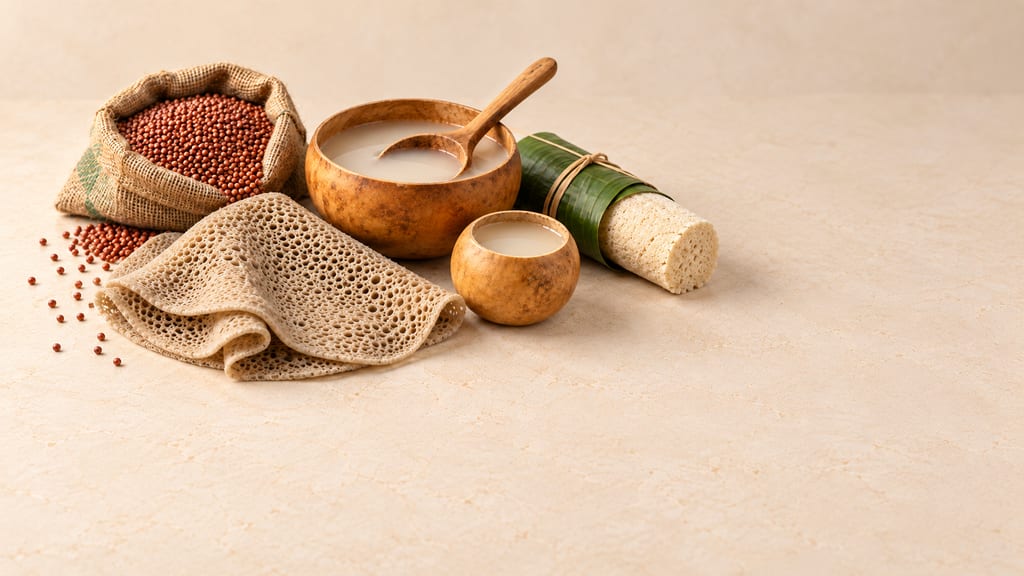
Mbege is a social drink first. It is served at marriages, in the exchange of goods that goes with them, at funerals, and whenever neighbours gather, and Sam Ntiro's painting shows one of its clearest uses: men carrying gourds of the beer to a bride by night as a gift. The gourd is part of the picture. The drink is carried and served in gourds, and one observer saw it served in a gourd cup. The 2021 food-heritage volume says women prepare it for important social events, and that among the Meru it is exchanged alongside honey wine in offerings to ancestors.
It is also everyday company. The Moshi study describes mbege drunk in bars, and the heritage volume describes people sitting together over it to talk about family and community matters and to sing. These accounts belong to particular communities and periods, and they should not be read as customs of all Tanzania.
The beer is also an income. In the Moshi fieldwork women brewed at home and sold it to bars by the cup, and the heritage volume reports sales through small village shops and drinking places. The link with agriculture is direct: the brewer needs bananas and finger millet, so changes in coffee prices, millet growing, licensing and consumer taste all reach the brewing household. Producing indigenous drinks is one of the few ways that rural women in the region earn cash, as the field researchers point out.
The drink also has body. The grain solids and fermentation biomass left in an unfiltered cereal beer contribute carbohydrates and other nutrients that clear beer lacks, and that is part of why such drinks matter in African diets. No fixed protein or vitamin figure has been given for mbege, and its alcohol is a real part of its character. The spent banana solids, makati, go to the pigs, which keeps the by-product inside the farm.
The stages are easy to read if you know what to look for. The cooked banana porridge should turn red and smooth. After days in the barrel it should show bubbles at the surface and smell slightly sour, and the filtered nyalu should be a red, faintly sour porridge. The mso should taste clearly sweet, which means the enzymes have converted starch, and it should be thick and brown. After mixing, the drink should become more alcoholic and more acid, and the sweetness should fall. A sweet smell and active bubbles show that something is fermenting, but they do not show that it is safe.
A flat, starchy mso is the likeliest brewing fault. It usually means the porridge was cooked too hot, which destroys the enzyme, or that the malt was poor. Germination quality, how finely the flour is milled, how thick the porridge is and the temperature history all change the sugar yield, and the brewer's own warning, that the porridge fails when it is cooked too hot, is the one to trust. A modern reconstruction should measure the temperature rather than rely on taste.
Contamination is a real concern. The 1998 microbiology found coliforms, pseudomonads, lactic acid bacteria and yeasts in millet malt, and called cooking and acidity protective for the samples it examined. A finished pH of 4.5, however, does not prove that harmful organisms were held in check through the whole of a long open fermentation, and dirty vessels, water and strainers all bring risk. The beer is never boiled after mixing, so anything that gets in before is in the cup.
Cyanide is a specific hazard of this drink. When millet sprouts, its cyanogenic compounds rise sharply: the 1998 laboratory study measured 40.6 ppm in raw Moshi millet and 513.4 ppm in the malt, then 8.1 ppm in the finished mbege. A second variety gave 41.2, 489.2 and 6.8 ppm. The conclusion is that processing removes most of the compound, and that malt eaten without the rest of the process would carry the high figure. The laboratory method was an improved one, so the same low value cannot be assumed for every household batch.
The bark has its own caution. It speeds up fermentation, but it holds active alkaloids, and nobody has set a safe amount, which is why it is left out here.
The last problem is time. The recorded brewer drinks mbege within one or two days, and the storage study found that it turned acid faster than other Tanzanian beers when it was kept at ambient temperature. Acetic acid bacteria sour it further when oxygen is available, and continued fermentation can make gas and pressure in a closed vessel. No pasteurisation, refrigeration schedule or bottling method has been validated for it, so mbege is a fresh drink that is meant to be finished while it is young.
Finger millet was tied to mbege brewing on Kilimanjaro by the 1930s, and millet growing declined from the 1940s. The Chagga painter Sam Ntiro showed men carrying banana beer to a bride in a painting of 1956, and fieldwork in Moshi in 1968 and 1969 recorded women brewing mbege for sale. Its yeasts and bacteria were identified in 1998 and the whole brewing sequence was measured in 2015 and 2016. No inspected record says when the drink began.
Ingredients
Scaling: source batch only
Ripe bananas (Musa spp.)Use fully ripe brewing bananas that cook down to a smooth porridge; ndishi is the variety most often used where the recipe was recorded.
36 L
Measured by volume of ripe banana, not by weight. No weight, banana count or peeling method is recorded.
Germinated finger millet flour (Eleusine coracana)Add in two lots: 5 L at the start and 15 L after a reserve of thin porridge has been set aside.
20 L
Measured by volume of flour. The soaking, sprouting, drying and milling of the malt are not recorded.
Water (millet porridge)Heat with the first 5 L of millet flour. Set aside 15 L of the warm, thin mixture and return it later to thin the porridge.
35 L
The reserved 15 L is part of this water, not an additional ingredient.
Method
Risks and precautions
Cyanogenic compounds in germinated finger millet
In a 1998 laboratory study the measured cyanide in Moshi finger millet rose from 40.6 ppm in the raw grain to 513.4 ppm after malting, then fell to 8.1 ppm in the finished mbege; the second variety went from 41.2 to 489.2 to 6.8 ppm. The fall depended on the full brewing process, so malt eaten or drunk without it carries the higher figure.
Hazard source
Rauvolfia caffra bark (msesewe)
Some brewers add a handful of the dried, powdered bark to the banana porridge. The bark contains pharmacologically active alkaloids, including reserpine, and no safe amount for a drink has been established.
Hazard source
Spontaneous banana fermentation
The banana porridge stands for 9 to 13 days at ambient temperature, uncovered, in a wooden barrel. No acidity, temperature or time limit was tested for pathogens, and cooking does not protect the porridge from contamination once it has cooled.
Hazard source
Contaminated millet malt
Millet malt used for mbege carried coliforms, pseudomonads, lactic acid bacteria and yeasts, with coliforms abundant. Cooking and acidity reduced them in the samples tested, but that does not prove every batch is clean.
Hazard source
Souring by acetic acid bacteria
Acetobacter species are important spoilage organisms of mbege. With air available they turn ethanol into acetic acid, and stored mbege turned sour and deteriorated quickly at ambient temperature.
Hazard source
Carbon dioxide pressure in a closed container
Ethanol kept rising throughout the 48 hours that were measured, so the beer is still fermenting and producing gas when it is drunk.
Hazard source
Unsafe water and vessels
Unclean water, drums with an unknown past and dirty strainers can bring harmful microorganisms or chemicals into a drink that is never boiled after mixing.
Hazard source
Make the full malt-to-beer sequence as recorded: sprouted millet, cooked at 50 to 70 degrees C, then fermented. The cyanide figures were measured for that whole process, not for the malt on its own.
Control source
Leave msesewe bark out. The base recipe omits it.
Control source
Use sound bananas without mould or rot and millet meant for human food, kept dry.
Control source
Use drinking-quality water and clean, food-contact-safe vessels, barrels, rods and filter bags rather than containers that held chemicals.
Control source
Keep insects and debris out of the barrels while the porridges cool and ferment.
Control source
Drink the beer within one or two days of mixing and do not keep it at ambient temperature, where acid builds fast.
Control source
Do not bottle actively fermenting mbege in a tightly sealed container.
Control source
Malted finger millet held 513 ppm cyanide in one study and the finished beer 8 ppm. Do not shorten the malting, cooking or fermentation, and do not use the malt in any other way without the full process.
Msesewe bark contains reserpine and other active alkaloids and has no established safe amount. Leave it out.
The banana porridge ferments for 9 to 13 days uncovered at ambient temperature with no tested safety limit. Use clean, food-grade vessels, keep insects out, and throw away a batch with mould or a rotten smell.
Mbege sours quickly. Drink it within one or two days and do not store it warm or in a sealed container.
The beer reached about 4 percent alcohol after 48 hours in the recorded batch; strength rises with fermentation time.
Choose fully ripe bananas of a kind that breaks down smoothly in the pot. Measure out 36 litres of ripe banana.
Put the bananas in a clean metal vessel with 36 litres of water.
Cook the mixture over a high flame until it turns red and every lump has broken down.
Pour the cooked banana porridge into a clean wooden barrel and let it ferment on its own at ambient temperature. The recorded brewer left it standing uncovered for 12 days, and allows 9 to 10 days in the hot season and 12 to 13 days in the cold season. Bubbles form on the surface as the fermentation works.
Filter the fermented porridge through a clean nylon bag. The red, slightly sour filtrate is nyalu. The solids left in the bag, called makati, are fed to pigs.
Make the millet porridge, mso. Pour 35 litres of water into a clean metal barrel, stir in 5 litres of germinated finger millet flour and heat over a fire for a few minutes until the water is warm.
Take out 15 litres of the warm, thin mixture and set it aside to adjust the thickness of the porridge later. Use it instead of cold water, which would cool the pot.
Stir 15 litres more of germinated finger millet flour into the barrel with a wooden rod, vigorously.
Keep cooking for 25 minutes after the second lot of flour goes in, stirring at intervals, and ladle back some of the reserved warm, thin mixture whenever the porridge gets too thick.
Hold the porridge between 50 and 70 degrees C by adding or removing firewood. Finger millet amylase works best at 50 to 60 degrees C and is destroyed above 70 degrees C, and the brewer says the mso fails if it is cooked too hot.
Pour the mso into containers and let it cool. It should be thick, brown and sweet.
Combine the fresh nyalu with the cooled mso in a clean wooden barrel. At this point the mixture is a sweet, slightly sour drink called togwa.
Leave the barrel to ferment. About 6 hours after mixing, the mixture counts as mbege, and it keeps fermenting and turning more alcoholic for at least 48 hours.
Serve the mbege fresh from a gourd cup and drink it within one or two days of mixing.
Conditions
Temperature controlMulti-stage
Places
Kilimanjaro Region
Traditional preparation · Region evidence
The Chagga country on the southern and eastern slopes of Mount Kilimanjaro; the beer is described as the most popular indigenous alcoholic drink of northeastern Tanzania.
The ward where the full brewing sequence was observed, measured and recorded in July and November 2015 and January 2016. The quantities in this record come from that one brewer.
Finger millet fermented with marcha in surveyed Darjeeling and Sikkim communities. Tongba is the later warm-water extraction from the fermented grain. The cited accounts do not establish a complete or validated home batch.
Sudanese opaque sorghum beer made from soured, toasted, cooked and malted grain through three linked fermentations, drunk fresh while still fermenting.
From sour breads and milk to savoury seeds, cassava staples and living beers, African fermentation follows the crop, the community and the work of transformation.
A Tanzanian cereal drink of cooked maize and sorghum flour thinned by sorghum-malt enzymes, soured by lactic acid bacteria and often started with a little of the previous batch.
Salted mushrooms are a traditional wild-mushroom preserve, especially of Finnish and Russian milk caps, made by layering boiled mushrooms with coarse salt or keeping them under brine, and kept cold.
Hearth-dried mushrooms are dried on shelves above a cooking fire, so heat and smoke reach them. Tanzanian records describe the method; a Vietnamese study tested smoke-dried shiitake for fuel-dependent contaminants.
Sun-dried mushrooms are mushrooms spread in open sunlight and left to lose their water to solar heat and moving air, a method recorded in Nigeria, Tanzania, Mexico and among Algerian desert truffle gatherers.
A source-specific modern extract adaptation of Düsseldorf Altbier, with specialty malts, two hop additions and an ale yeast. It is distinct from a brewery's commercial Altbier process and from Kölsch.
Andong soju is a rice spirit from North Gyeongsang, distilled from steamed rice and wheat nuruk. This method makes the starter before fermenting the rice mash in a jar.
Angami rice beer from Nagaland. A surveyed method mixed cooked rice with piazu, fermented it for about four days in summer or a week in winter, then added water and filtered it. The starter ratio leaves the rice-weight basis unclear.
Apong names Mising rice beverages in Assam, including pale Nogin and ash-associated Po:ro. Sources describe distinct preparations and do not establish one unified household recipe or validated safety endpoint.
This is a process overview, not a complete batch recipe: key quantities, yield and packaging directions are absent. The AHA tutorial uses Hop Hammer Imperial IPA as an example; this page is not that full formulation.
A darker Ethiopian maize tella, brewed from maize baked into a hot, dry kita pancake and then fermented in three stages with barley malt, gesho and water.
A Cap-Pelé boucanière is an Acadian herring-smoking building. The documented Willie Niles example is a one-storey wood-frame structure with a ridge smoke vent and interior bays for hanging fish-bearing cannes.
Achcharu is a family of Sri Lankan vinegar pickles made with mixed vegetables or seasonal fruit and a piquant spice dressing. This version is a quick, refrigerated, non-fermented mixed-vegetable pickle.
The acocote is a long, hollowed and dried gourd used to draw aguamiel from a mature maguey. It is a harvesting tool: the sap is transferred to a separate vessel before it ferments into pulque.
Parkia biglobosa seeds are fermented into regional West African seasonings, including nététou, iru, dawadawa and soumbala. The yellow fruit pulp is a separate food, and names and methods vary by place.
Japanese reddish-brown vinegar from sake lees matured about three years, turned to vinegar by acetic bacteria; the vinegar of Handa and Edomae sushi rice.
The almond mushroom, Agaricus subrufescens, was cultivated in eastern North America in the 1800s, lost its market, and returned as a cultivated mushroom from Brazil, where it is grown under several names.
Community
No community contributions have been published for this entry yet.
Share what you made
Sign in to contribute. Published comments and photos are free to read.
Field observation in Kilema Kaskazini in 2015 and 2016: three steps of nyalu, mso and mixing.
36 L of ripe banana cooked with 36 L of water until red and free of lumps; 12 days of uncovered fermentation, 9 to 10 days in the hot season and 12 to 13 in the cold season.
Filtration through a nylon bag, with the solids called makati fed to pigs.
Mso from 35 L of water and 5 L plus 15 L of germinated finger millet flour, 15 L of warm thin mixture set aside, 25 minutes of cooking at about 50 to 70 degrees C.
Measured ethanol, Brix and pH of nyalu, mso, togwa and mbege at 0, 6, 9, 12, 24 and 48 hours.
Ndishi, kimalindi, kipungara, kisukari, mchare, mrarao and ndizi n'gombe used for brewing; 18 banana varieties in the study area.
Msesewe bark added by a handful, the banana porridge ready in 5 days, and the trial of 12-hour ethanol with and without the bark.
Mbege served in a gourd cup and drunk within one or two days; ethanol measured with a saliva alcohol test kit.
Cited in: What mbege is; Bananas, millet and the Chagga country; Two porridges and three kinds of microbe; How it is made, and why each stage is there; Bananas, bark and other ways to make it; Gourds, brides and the beer trade; Reading a batch, and what can go wrong
Accessed 2026-10-27
Tanzania Journal of Agricultural Sciences, 1998, 1, 57-63Microbiology · Safety
Cyanide of 40.6 ppm in unmalted Moshi millet, 513.4 ppm in the malt and 8.1 ppm in laboratory mbege; 41.2, 489.2 and 6.8 ppm for the Sumbawanga-2 variety.
Spent grain values of 18.9 and 17.8 ppm.
Cited in: Reading a batch, and what can go wrong
Accessed 2026-10-27
International Journal of Food Sciences and Nutrition, 2000, 51(2), 135-143Safety · Storage