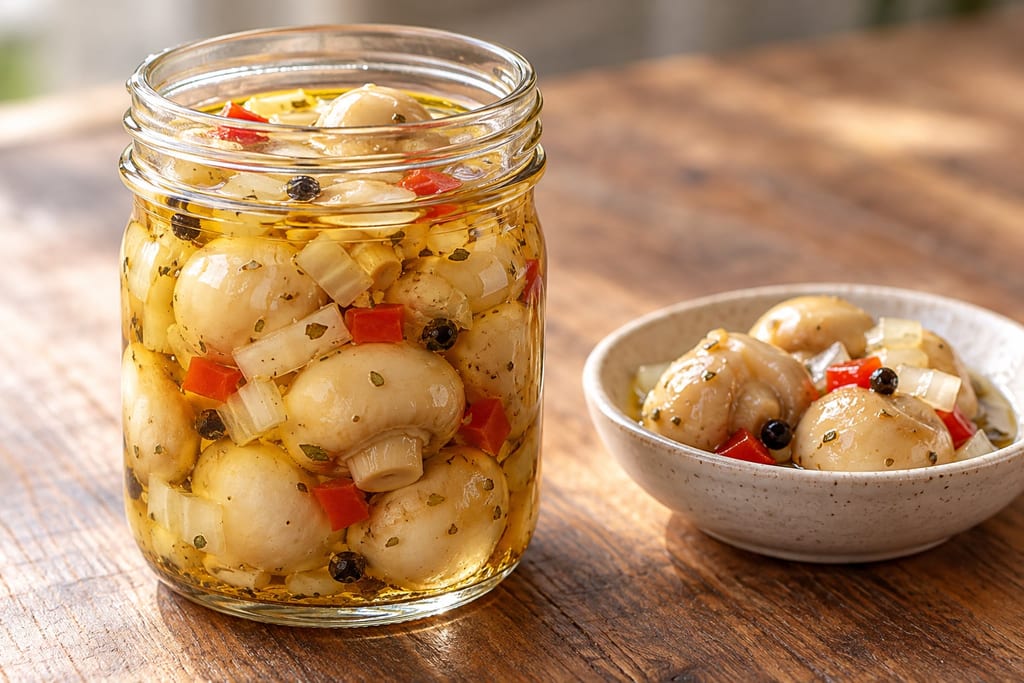
Eastern European Vinegar-Pickled Mushrooms
Small edible mushrooms are briefly cooked and packed in a seasoned vinegar marinade, a sweet-sour preserve served cold in Poland and neighbouring cuisines.
 FermenteaWhere food goes to change
Traditional method
Солёные грибы (solyonyye griby, Russian) · Salted mushrooms · Salt-cured mushrooms · Salt-preserved mushrooms · Brined wild mushrooms · Salted milk caps · Salted milkcap mushrooms · Солёные грибы (solyonyye griby, Russian) · Соленые грибы (solenye griby, Russian, without ё) · Грибы солёные (griby solyonyye, Russian) · Солёные грузди (solyonyye gruzdi, Russian, salted milk caps) · Грузди (gruzdi, Russian, milk-cap group) · Рыжики солёные (ryzhiki solyonyye, Russian, salted saffron milk caps) · Волнушки солёные (volnushki solyonyye, Russian, salted woolly milk caps) · Холодный посол грибов (kholodnyy posol gribov, Russian, cold salting) · Горячий посол грибов (goryachiy posol gribov, Russian, hot salting) · Квашеные грибы (kvashenyye griby, Russian, fermented mushrooms) · Соленые грузди по-алтайски (solenye gruzdi po-altayski, Russian, Altai-style salted milk caps) · Suolasienet (Finnish) · Suolatut sienet (Finnish) · Suolarouskut (Finnish, salted milk caps) · Rouskujen suolaaminen (Finnish, salting milk caps) · Rouskujen liuossuolaus (Finnish, brine salting of milk caps) · Hapatetut sienet (Finnish, fermented mushrooms; distinct process) · Sūdyti grybai (Lithuanian, salted mushrooms) · Rauginti grybai (Lithuanian, fermented mushrooms; distinct process) · Soolatud seened (Estonian) · Hapendatud seened (Estonian, fermented mushrooms; distinct process) · Grzyby solone (Polish) · Grzyby kiszone (Polish, lactic-fermented mushrooms; distinct process) · Mushrooms in salt brine
Salted mushrooms are a traditional wild-mushroom preserve, especially of Finnish and Russian milk caps, made by layering boiled mushrooms with coarse salt or keeping them under brine, and kept cold.

Salted mushrooms are edible mushrooms preserved with dry salt or a salt solution. They are associated with northern and eastern European woodland food traditions, where seasonal harvests are stored for use outside the mushroom season. In Finland the general name is suolasienet; suolarouskut are salted milk caps. Russian solyonyye griby means salted mushrooms and covers a wider range of fungi. Gruzdi, ryzhiki and volnushki are groups of milk caps traditionally prepared in different ways. The finished product may contain whole caps, pieces or mixed mushrooms. It is usually a preparation intended for later cooking or seasoning rather than a complete dish.
The most characteristic Finnish ingredients are milk-cap mushrooms in the genus Lactarius. The Finnish Food Authority recognises haaparouskut, including Lactarius trivialis and Lactarius utilis, kangasrousku or Lactarius rufus, and karvarousku or Lactarius torminosus. These mushrooms can contain strongly acrid substances and require species-specific preliminary boiling. Other edible milk caps, including Lactarius deliciosus and Lactarius deterrimus, have different flavour and treatment requirements. Russian traditions also use mushrooms called gruzdi, which may include Lactarius resimus and related white milk caps. Russula species, boletes and other edible fungi appear in regional salting traditions. No single botanical species defines the entire product.
There are two principal physical methods. In dry salting, mushrooms are packed in layers with salt, often beneath a weight. Moisture drawn from the tissues dissolves the salt and produces brine. In immersion salting, the mushrooms are placed directly in prepared brine. Preliminary treatment can include cleaning, soaking, boiling and cooling, depending on the species and local practice. Some Russian methods include herbs, garlic, currant leaves or other aromatic materials, while Finnish recipes can be relatively plain. A weight helps keep the mushrooms beneath the liquid surface, but it does not prove that the product has become microbiologically safe.
Salted mushrooms are not necessarily fermented; the heavy-salt Finnish method is not. Heavy salting and refrigerated storage primarily preserve through lowered water activity and suppression of microbial growth. Other regional methods deliberately allow lactic acid bacteria to produce acid, yielding a sour fermented mushroom. The 2019 review of mushroom fermentation explicitly distinguishes lactic fermentation from acidification with added vinegar.
Nobody can date the start of mushroom salting. Levshin's detailed instructions show it was an established practice by the early nineteenth century. Salt preservation is ancient, but that does not prove when people first applied it to wild mushrooms in Finland or Russia. A clear printed Russian reference appears in Vasily Levshin's Russkaya povarnya, published in 1816. It describes salting gruzdi, volnushki and ryzhiki in wooden tubs, alternating mushrooms with salt and pressing them under a weighted wooden cover. Other passages distinguish mushrooms boiled before salting from saffron milk caps salted in their own expressed liquid. The account also distinguishes these methods from vinegar pickling and drying.
Finnish mycological literature documents the importance of salted acrid milk caps during the twentieth century. A 1967 article in Karstenia names Lactarius torminosus and Lactarius trivialis as key mushrooms preserved by salting, for sale and for the home. The Finnish Mycological Society continues to describe salting as an old preservation technique, especially suitable for acrid milk caps. It also notes the drawbacks: a lot of salt, and soluble nutrients lost in the boiling and the later desalting. This contrasts with more recent household preferences for freezing and other preservation methods.
Ethnographic fieldwork provides evidence of how traditions changed and how people distinguished mushroom types. Olga Belichenko interviewed 25 Seto and 34 Russian inhabitants of Pechory District in Pskov Oblast during 2018 and 2019. Participants distinguished boletes, russulas and milk caps through local terminology, appearance, texture and culinary preference. A commonly described hot-salting method involved preliminary boiling in salted water followed by prolonged maturation, locally called fermentation. One Seto participant described layering cooked russulas with blackcurrant leaves and dill and recalled her mother's preference for avoiding garlic because she associated it with faster fermentation and spoilage. These are interview accounts, not measured fermentation experiments.
A 2024 Lithuanian ethnomycological study found that traditional salting and fermentation had largely given way to pickling and freezing, especially as labour-intensive preparation of bitter Lactarius species became less popular. Ethnographic research among Hutsul communities on the Ukrainian-Romanian border likewise documents salted and fermented mushrooms, alongside a shift toward freezing after freezers became more accessible. Beyond Europe, a 2013 Tanzanian study recorded mushrooms kept in supersaturated brine around Kigoma–Uvinza, where local salt production made it possible. These examples show geographically separate preservation practices rather than evidence of one shared historical recipe.
The principal preservation mechanism in heavily salted mushrooms is the reduction of water activity. Microorganisms require accessible water for growth, and dissolved sodium chloride reduces the amount available to them. Salt also creates an osmotic gradient between mushroom tissue and the surrounding liquid. Water moves out of the cells, dissolves salt and produces a concentrated brine. In dry-salted mushrooms this liquid forms gradually under pressure; in immersion salting it is supplied from the beginning. The salt concentration within the final food depends on mushroom moisture, the quantity of salt, added water and losses during processing.
Salt affects different microorganisms differently. Many spoilage organisms are inhibited as salinity increases, but some salt-tolerant bacteria and yeasts can persist. Heavy salting, combined with cold storage, can strongly restrict microbial activity without producing appreciable lactic acid. In a genuine lactic fermentation, lactic acid bacteria consume available fermentable carbohydrates and produce organic acids, primarily lactic acid. This changes both acidity and flavour. Mushrooms generally contain different carbohydrate mixtures from vegetables, and their available fermentable sugars may be limited. A review of mushroom fermentation describes historical processes in which sugar, whey or sour milk was added to encourage acidification.
Milk caps contain latex-bearing tissues and a range of species-dependent compounds responsible for their sharp, peppery or burning taste. In certain edible northern species, preliminary boiling in abundant water and discarding the liquid reduces unwanted acridity. The mushrooms also contain cell-wall components including chitin and glucans, which contribute to their characteristic firm and sometimes brittle texture. Boiling, salting and later soaking change tissue hydration and release soluble compounds. These steps make correctly identified species palatable; they do not neutralise every mushroom toxin. Identify the species before processing.
A 2024 study fermented Lactarius deliciosus with selected lactic acid bacteria, using 3% salt and 2.5% sucrose brine, and monitored the resulting pH. A separate study of button mushrooms found that dry salting alone failed to produce reliable lactic acid fermentation, while an inoculated brine supported much greater acidification. These experiments concern particular ingredients and cultures, not universal household methods. Even a low measured pH is only one safety parameter. Inadequately controlled moist, low-acid mushrooms can present serious hazards when stored without oxygen, including the potential for botulinum toxin formation. Safe storage depends on validated combinations of acidity, salt, temperature and packaging.
The Finnish Mycological Society's dry-salting method begins with edible milk caps that have been positively identified, cleaned and cut into manageable pieces. The society specifies 4–5 litres of preliminary boiling water per kilogram of mushrooms. The mushrooms are brought to a boil and cooked by species: about five minutes for haaparousku, ten minutes for the more acrid karvarousku and kangasrousku. The Finnish Food Authority independently specifies five minutes for haaparousku and ten minutes for the other two named species. The cooking liquid is discarded, the mushrooms are rinsed thoroughly in cold water, and excess water is drained or pressed out. They must cool thoroughly before packing.
The prepared mushrooms are then layered tightly in a clean glass or food-safe plastic container with coarse salt. The Finnish Mycological Society gives 100–150 grams of salt per kilogram of prepared mushrooms, with a salt layer on the bottom and top. A clean cover and weight keep the mushrooms compressed. Salt draws liquid from the tissues until brine surrounds the contents. The society instructs the maker to keep the container in a cold cellar, refrigerator or chilled room, checking that every mushroom remains beneath the brine. If more liquid is required, it specifies additional brine made by dissolving 100 grams of salt in one litre of water, boiling it and allowing it to cool. No universal numerical storage temperature or maturation period is supplied in that recipe.
Finnish household organisation Martat publishes two related methods. Its traditional dry-salting version uses 150–180 grams of salt per kilogram, with optional garlic, dill and blackcurrant leaves. Its separate immersion-brine method uses 100 grams of salt per litre of water. In the latter, prepared mushrooms are briefly heated in the brine before being packed hot into clean jars, which are then kept at 5°C. That is a chilled brine-preserved food, not a shelf-stable canned one.
Russian methods vary further. The 1816 cookbook describes weighted wooden tubs, mushrooms layered with salt, and different treatment for gruzdi, volnushki and ryzhiki. A modern Altai account describes soaking selected milk caps before layering them in a prepared cedar barrel with salt and aromatic leaves. The Pechory ethnography records hot-salted russulas allowed to mature for at least a month and a half. These observations document traditions, not universal safety instructions. The Japanese Ministry of Agriculture describes dry-salt and immersion-brine techniques in general, but its referenced page principally covers salted seafood rather than an authenticated Japanese milk-cap preparation.
Finnish suolasienet are mostly acrid milk caps. The Finnish Food Authority recognises haaparouskut, kangasrousku and karvarousku as food mushrooms when correctly prepared. The traditional approach is to boil the mushrooms, discard the water and preserve the cooled material with substantial quantities of salt. Some households layer mushrooms directly with coarse salt, while others use prepared brine. The Finnish Mycological Society and Martat document different salt concentrations and methods, showing that there is no one universal national recipe. The resulting mushrooms are often desalted before being made into a creamy mushroom salad. Freezing is now a common alternative for mushrooms that do not need salting to remove their acridity.
Russian traditions include both cold and hot salting. Cold salting generally involves packing suitably selected mushrooms with salt without a preceding full boil, sometimes after soaking; hot salting includes preliminary boiling or scalding. The correct treatment is species-dependent. The 1816 Russian cookbook distinguishes gruzdi, volnushki, ryzhiki and other mushrooms, with preparations involving wooden tubs, salt, weights and occasionally aromatic herbs. The Altai version documented by Slow Food uses a cedar barrel, preliminary soaking, currant leaves, dill, garlic and other seasonings. It reports 50 grams of salt per kilogram of mushrooms during packing, far less than the Finnish heavy-salt method.
Seto and Russian residents described different attitudes toward boletes, russulas and milk caps, often valuing texture after boiling and salting. One method packs cooked russulas packed with herbs and allowed to mature for at least one and a half months. In Lithuania, interviews documented the decline of salting and fermentation as freezing and vinegar pickling became more common. Hutsul respondents near the Ukrainian-Romanian border similarly described salted and fermented Lactarius deliciosus and some Russula species, alongside other preservation methods.
Research in Tanzania documented salt drenching of wild mushrooms around Kigoma–Uvinza, where salt production was locally available. Japan's agriculture ministry separately distinguishes dry salting from immersion brining, explaining their different effects on water movement and storage.
In Finland, salted milk caps are commonly used in sienisalaatti, a mushroom salad made from prepared mushrooms, onion and a dairy-based dressing. The Finnish Mycological Society names salted milk caps as especially suited to this dish. Because the preserve contains substantial salt, the mushrooms are normally rinsed and soaked in cold water, with the water changed when necessary, or briefly boiled and rinsed to remove excess salinity. They are then drained and chopped before being seasoned. The finished salad is served cold, including at festive meals. The salting process provides a stored ingredient; the onion and dressing belong to the later serving recipe rather than the original preserve.
Russian solyonyye griby are served as cold appetisers, often called zakuski. Regional preparations may include onion, garlic, dill, sunflower oil, sour cream or other accompaniments. They can be eaten alongside boiled potatoes, rye bread and other savoury foods. The 1816 Russian cookbook already distinguishes salted mushrooms intended for cold dishes from mushrooms preserved by vinegar or drying. Later Russian culinary writing documents chopped salted mushrooms dressed with vegetable oil during fasting periods or sour cream when dairy foods are permitted.
Texture is part of the appeal. Properly prepared russulas and certain milk caps can remain relatively firm after boiling and salting, providing a contrast to soft potatoes or creamy dressings. The Pechory fieldwork records that people prize mushrooms that stay crunchy. Salted mushrooms may also be incorporated into fillings, soups and cooked dishes after appropriate desalting, although the amount of salt retained varies with the duration of soaking and the mushroom's size. A recipe using salted mushrooms should therefore not assume that the ingredient has the same seasoning strength as fresh mushrooms.
Lactic-fermented mushrooms offer another flavour profile, with microbial acidification adding sourness beyond the taste of salt. The Lithuanian study documents mushroom salads with sour cream and traditional cooked mushroom dishes, while research among Hutsuls records salted and fermented mushrooms among winter provisions. These accounts do not give one universal serving formula.
A successfully prepared high-salt mushroom preserve should contain correctly identified, suitably pretreated mushrooms kept under their brine in cold storage. The mushrooms may become firmer or change colour as salt redistributes water and preliminary boiling alters the tissue. The Finnish Food Authority notes that haaparousku may develop a slight greenish colour during boiling and that this change is normal for the identified species. The Finnish Mycological Society emphasises complete submersion and replenishing brine if necessary.
The Finnish Food Authority states that some acrid milk caps require preliminary boiling because they contain compounds that can cause nausea. It specifies five minutes for haaparousku and ten minutes for kangasrousku and karvarousku. These timings apply to the named species, not to every wild mushroom. Lactarius helvus, lakritsirousku in Finnish, is mildly poisonous and is not collected for food. Tokyo's food-safety authority warns that salting, soaking or drying cannot make a poisonous mushroom edible.
Lactic fermentation needs a real drop in pH from microbial acid; waiting a set number of days does not show that it happened. The World Health Organization identifies inadequately preserved low-acid mushrooms as a potential vehicle for foodborne botulism. Salt, acidity, refrigeration and water activity must be controlled as part of an appropriate validated process. The Finnish recipes need cold storage and are not canning instructions.
The initial salting ratio also needs correct interpretation. The Finnish Mycological Society's 100–150 grams of salt per kilogram is applied to prepared mushrooms, not necessarily one kilogram of fresh mushrooms before boiling and draining. Martat separately documents a traditional method using 150–180 grams per kilogram and an immersion-brine method using 100 grams per litre of water. Salting and later desalting can also remove nutrients and contribute to excessive dietary sodium if the mushrooms are not adequately prepared before serving. In Finland, the Food Authority warns that some wild mushrooms may contain radiocaesium-137; boiling or soaking and discarding the water can reduce it under specified conditions.
Vasily Levshin's Russian Cookery (Russkaya povarnya), printed in 1816, gives instructions for salting gruzdi, volnushki, ryzhiki and other mushrooms in wooden vessels with salt, weights and cold storage, separating boiled mushrooms from those salted raw. That is a firm printed record, not the start of salting. Finnish professional literature describes milk-cap salting in the twentieth century, and recent ethnographic studies record living traditions among the Seto and Russians of Pechory, in Lithuania and elsewhere.
Scaling: salt scales at 100 to 150 g per kilogram of prepared mushrooms.
Wild mushrooms contain edible, unsuitable and poisonous species that may look similar. Salting, soaking or boiling does not make every poisonous species safe.
Hazard sourceCertain edible Finnish milk caps contain acrid constituents capable of causing nausea or gastrointestinal symptoms if improperly prepared. Required boiling times differ by species.
Hazard sourceSalt concentration, available water, temperature and contamination determine microbial growth. A traditional salt quantity and the formation of brine do not prove that the product is commercially sterile or free from pathogens.
Hazard sourceLow-acid mushrooms stored under unsuitable oxygen, salt, acidity or temperature conditions can present a botulism hazard. Salt preservation should not be treated as validated home canning.
Hazard sourceThe Finnish Mycological Society instructs that the mushrooms remain completely covered by brine. Exposure of the upper material to air may encourage surface deterioration.
Hazard sourceThe prescribed quantity of salt is high. The Finnish Mycological Society explicitly notes the nutritional disadvantage of heavy salting and advises desalting before consumption.
Hazard sourceWild mushrooms can accumulate contaminants from their growing environment. The Finnish Food Authority advises against collecting near polluting industrial sites, heavily trafficked roads and contaminated urban areas.
Hazard sourceSome forest mushrooms in areas affected by radioactive fallout may contain radiocaesium. Its concentration varies by location and species; preliminary boiling or soaking can reduce it when the treatment water is discarded.
Hazard sourceSoaking, rinsing or briefly boiling the mushrooms before use removes some of the preserving salt. The desalted mushrooms should not be treated as equivalent to the original concentrated preserve.
Hazard sourceUse only positively identified edible milk caps for which the selected Finnish preparation is appropriate.
Control sourceUse abundant water for the documented preliminary boiling method.
Control sourceApply the correct preliminary boiling time to the named edible species, then discard the cooking water.
Control sourceFor the Finnish Mycological Society's dry-salting method, layer mushrooms with the documented quantity of coarse salt.
Control sourceKeep all mushrooms compressed beneath the preserving brine.
Control sourceIf necessary, prepare supplementary brine using the source's formulation and add it after boiling and cooling.
Control sourceKeep the preserve in cold storage and inspect its condition and brine level.
Control sourceRemove excess salt before serving by soaking with changes of cold water or by briefly boiling and rinsing.
Control sourceDo not use this high-salt preparation as a substitute for a tested pressure-canning or shelf-stable mushroom-preservation method.
Control sourceThis follows the Finnish Mycological Society heavy dry-salting method; it is not a Finnish-Russian composite and not an authenticated Russian cold-salting formula.
A mushroom kept in brine has not necessarily fermented; the word fermented in an interview is not a measurement.
Do not reduce the salt to the lower amounts used in some Russian regional methods without a validated method.
A cold cellar is not the same as a refrigerator unless you have measured its temperature.
Do not use other wild mushrooms in place of the named Finnish milk caps without species-specific preparation guidance.
Boiling cannot make every toxic mushroom safe. Never use an unknown specimen.
Do not keep mouldy or deteriorating mushrooms because they were heavily salted.
Not a canning method: do not seal it in jars at room temperature.
Desalting changes the salt concentration; desalted mushrooms are perishable.
For a true lactic ferment of mushrooms use a separately documented, safety-validated process.
Small edible mushrooms are briefly cooked and packed in a seasoned vinegar marinade, a sweet-sour preserve served cold in Poland and neighbouring cuisines.
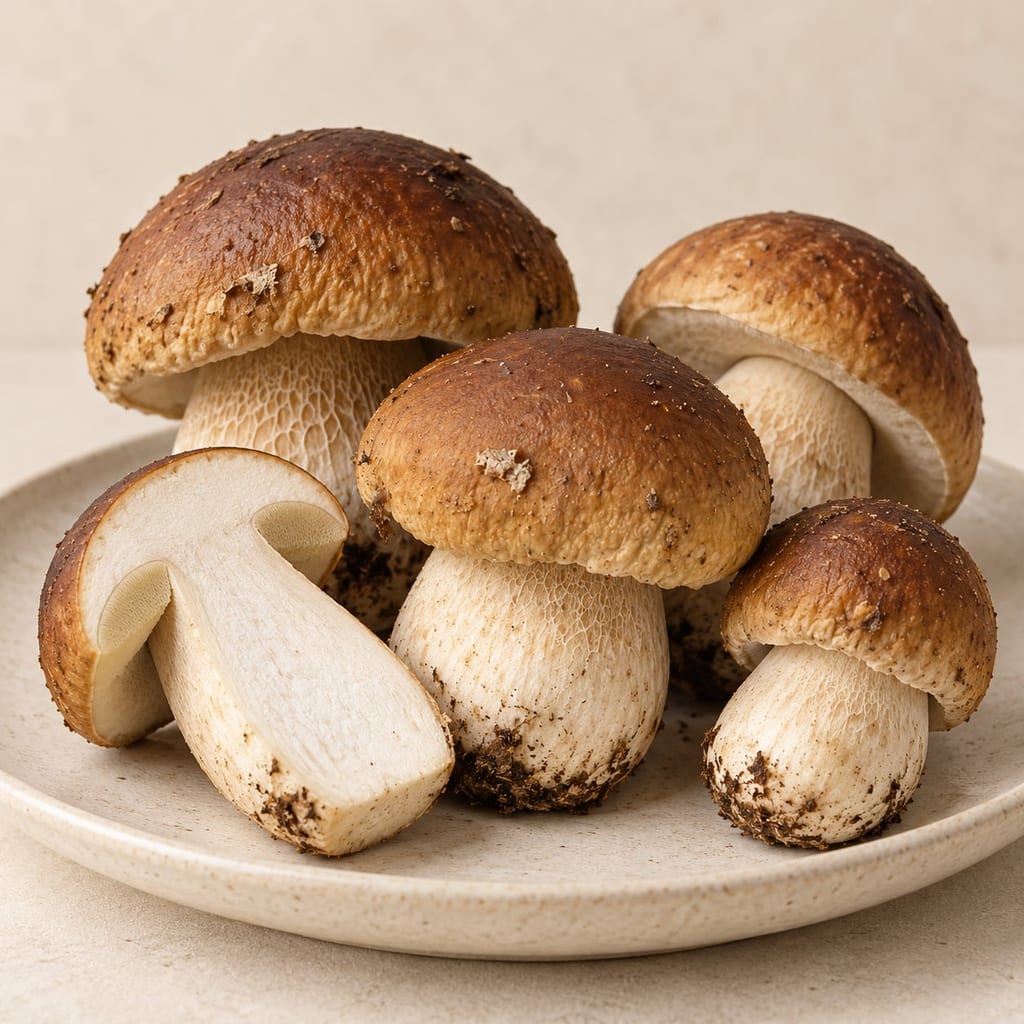
Porcini are prized wild ectomycorrhizal mushrooms from several closely related Boletus species, harvested chiefly from forests and sold fresh, dried or frozen for their firm texture and concentrated savoury aroma.
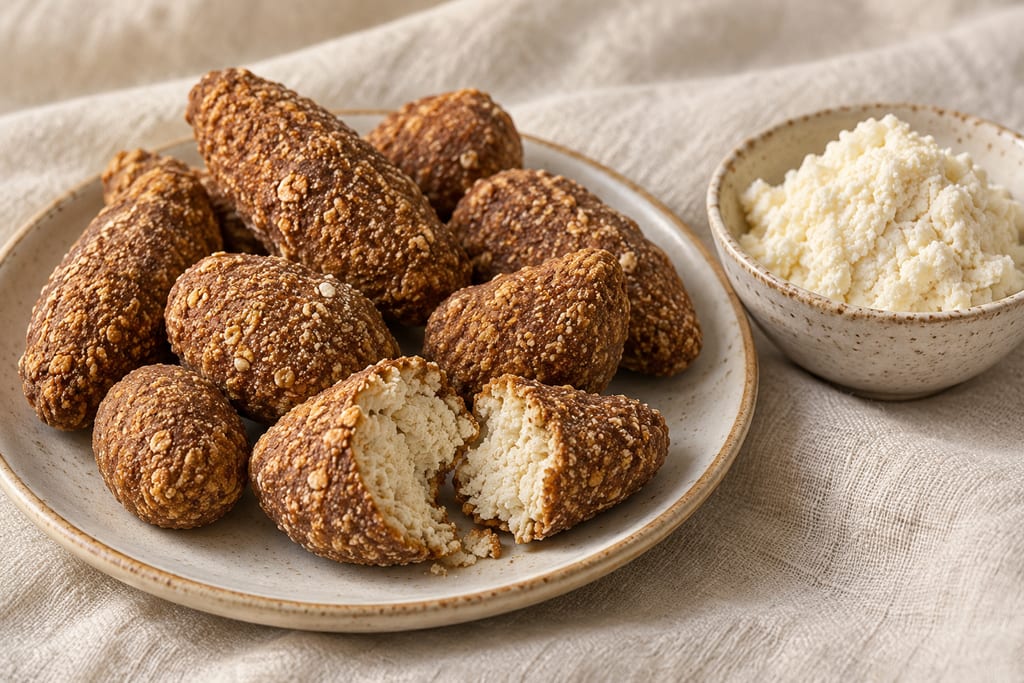
A two-stage Altai dairy preparation: sour chegen is heated into soft aarchi, then portions are drained, pressed and traditionally smoked into firm kurut.

Adygean salt is a seasoned table salt associated with Adygea and the wider North Caucasian culinary tradition. Salt is blended with garlic and a variable selection of herbs and spices; the exact mix depends on the named style and maker.

Baked milk is an Eastern European preparation of milk held at high heat for hours until it turns cream-coloured with a cooked, mildly sweet flavour, without any fermentation.
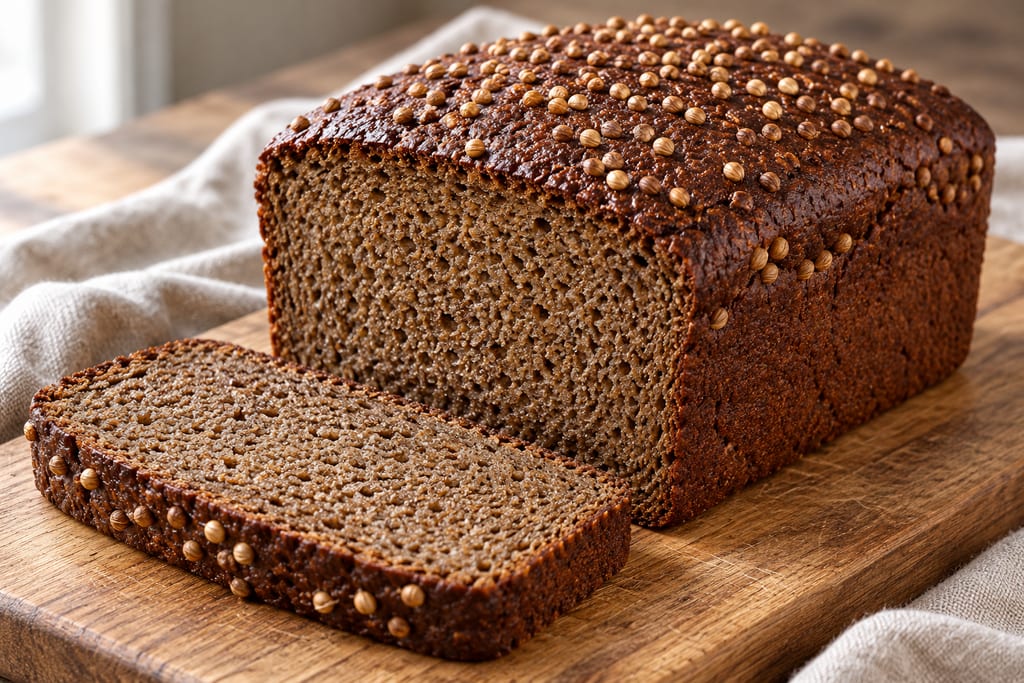
A dark rye sourdough with coriander and roasted barley-malt scald, based on Lily McCann's measured Borodinsk-ish home formula.
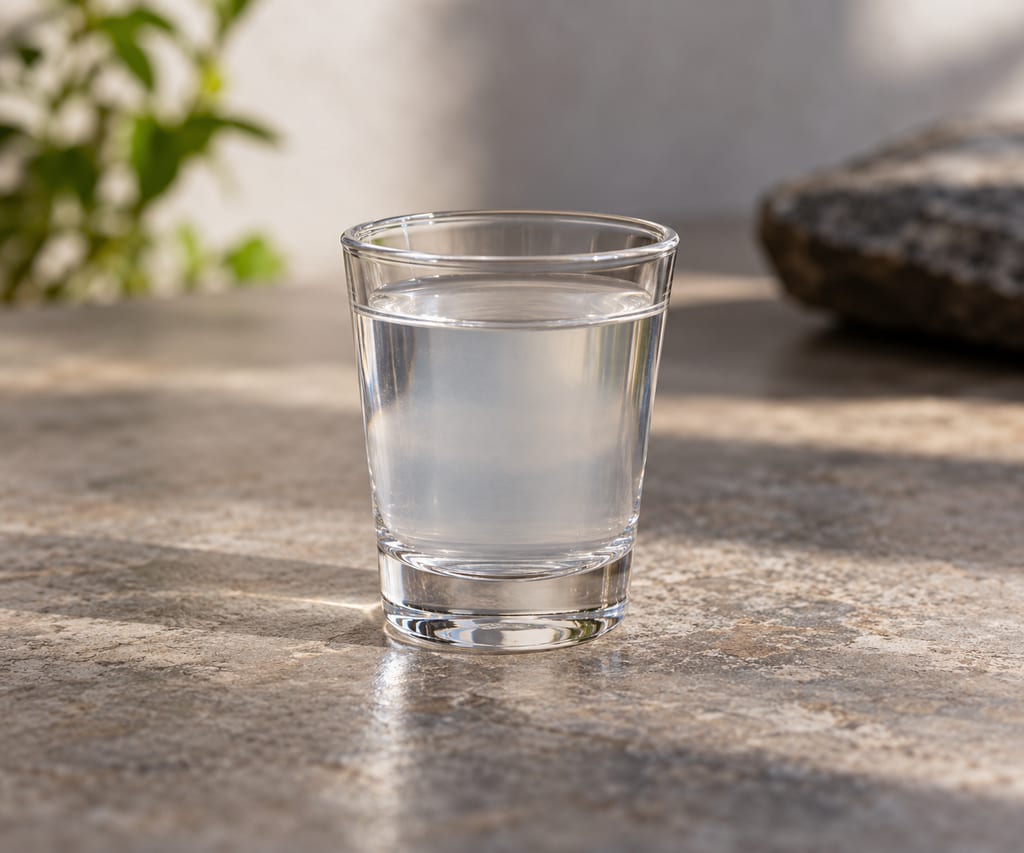
A Buryat milk spirit distilled from khurenge, the backslopped sour dairy ferment, in a cauldron still: a distillate that keeps milky and cheese-like aromas from the dairy it came from.
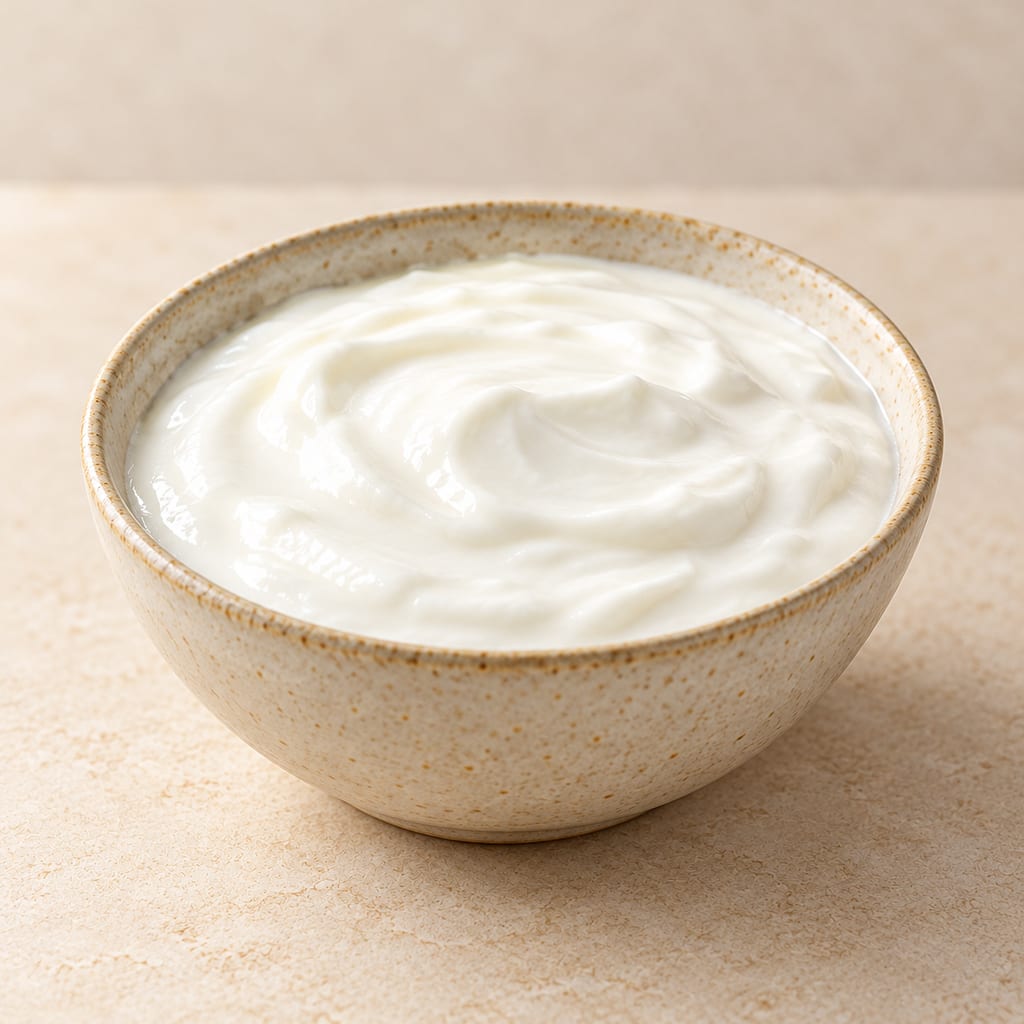
Katyk is a traditional fermented milk of Turkic-speaking peoples, made by souring heated milk with lactic bacteria, often with a spoonful of the last batch, into a thick, sour curd.
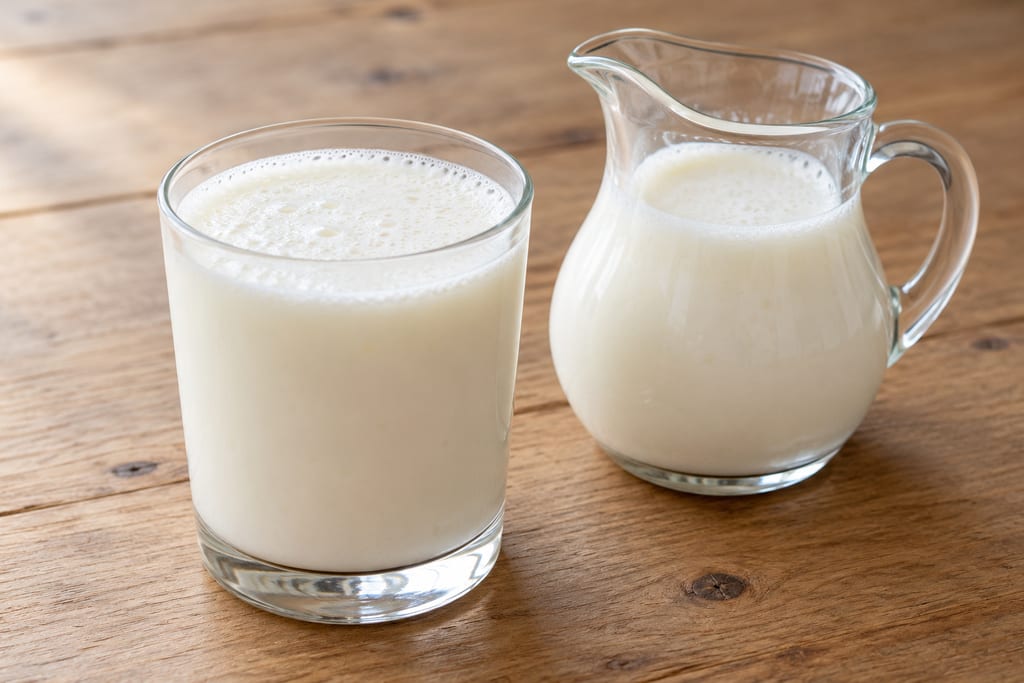
Khurunga is a traditional Buryat fermented milk made with a kept mixed bacteria-and-yeast starter, giving a sour, lightly alcoholic and often fizzy drink that is also the base for milk spirit and curds.

Mochenye yabloki are whole apples held under prepared liquid for several weeks. Russian sources from 1892 and 1959 describe the method. It is not the same as vinegar pickling.
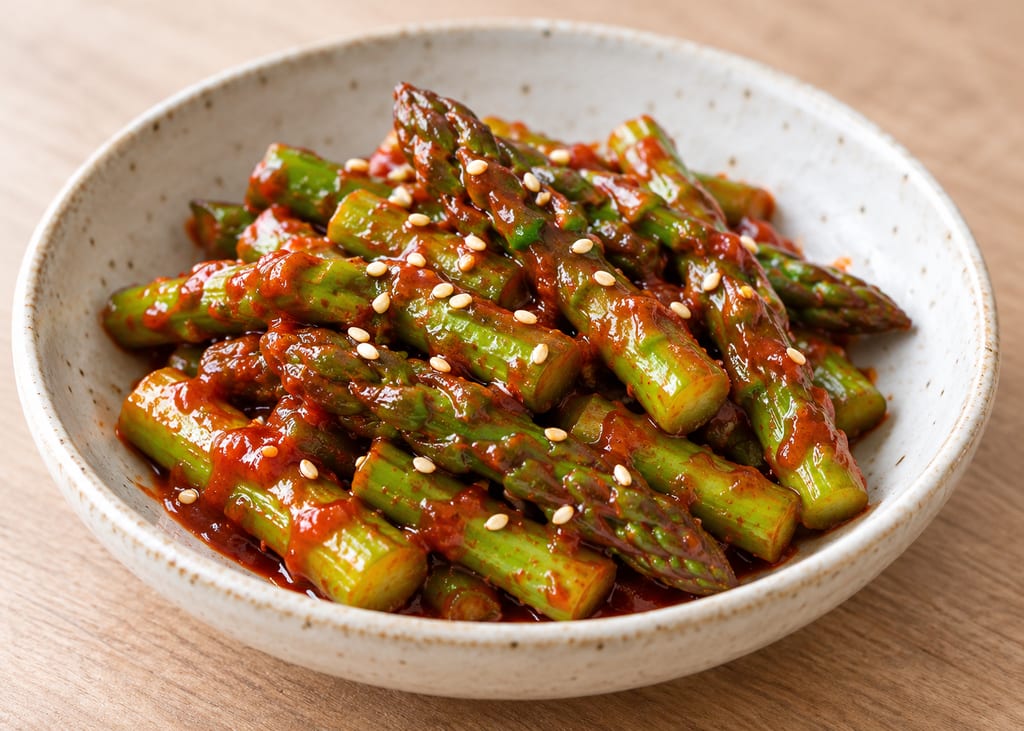
A Korean banchan of blanched asparagus dressed with a sweet-sour cho-gochujang sauce; Hyosun's version cools the spears in ice water before tossing.
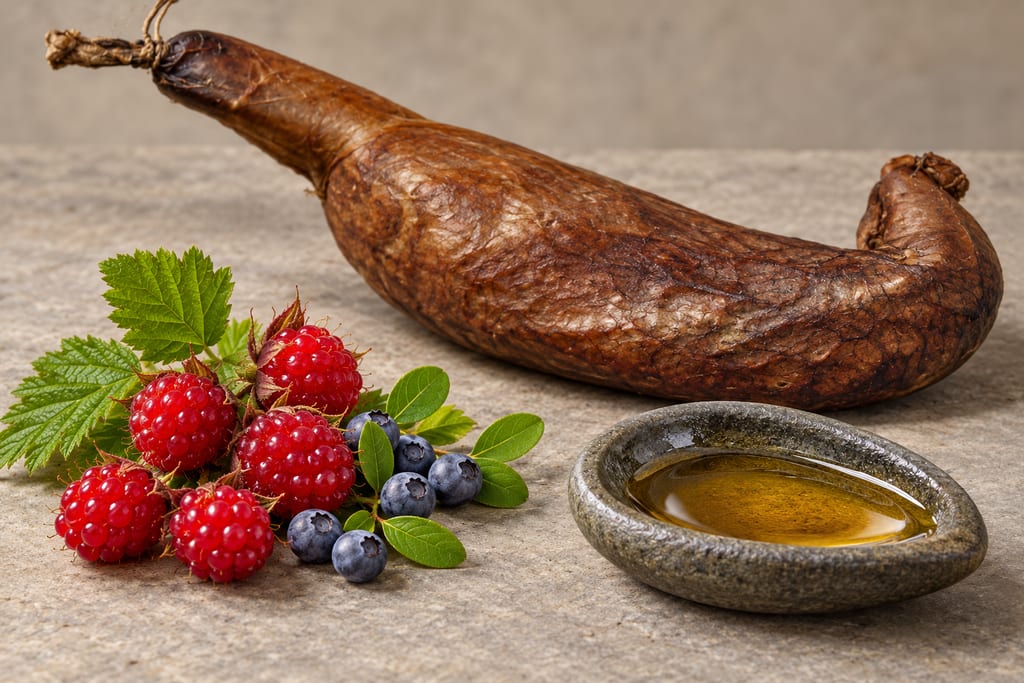
Berries, greens and fish eggs were kept in seal oil by Indigenous Alaskan communities. The oil seals the food from air, and the result depends on preparation and the surrounding conditions.
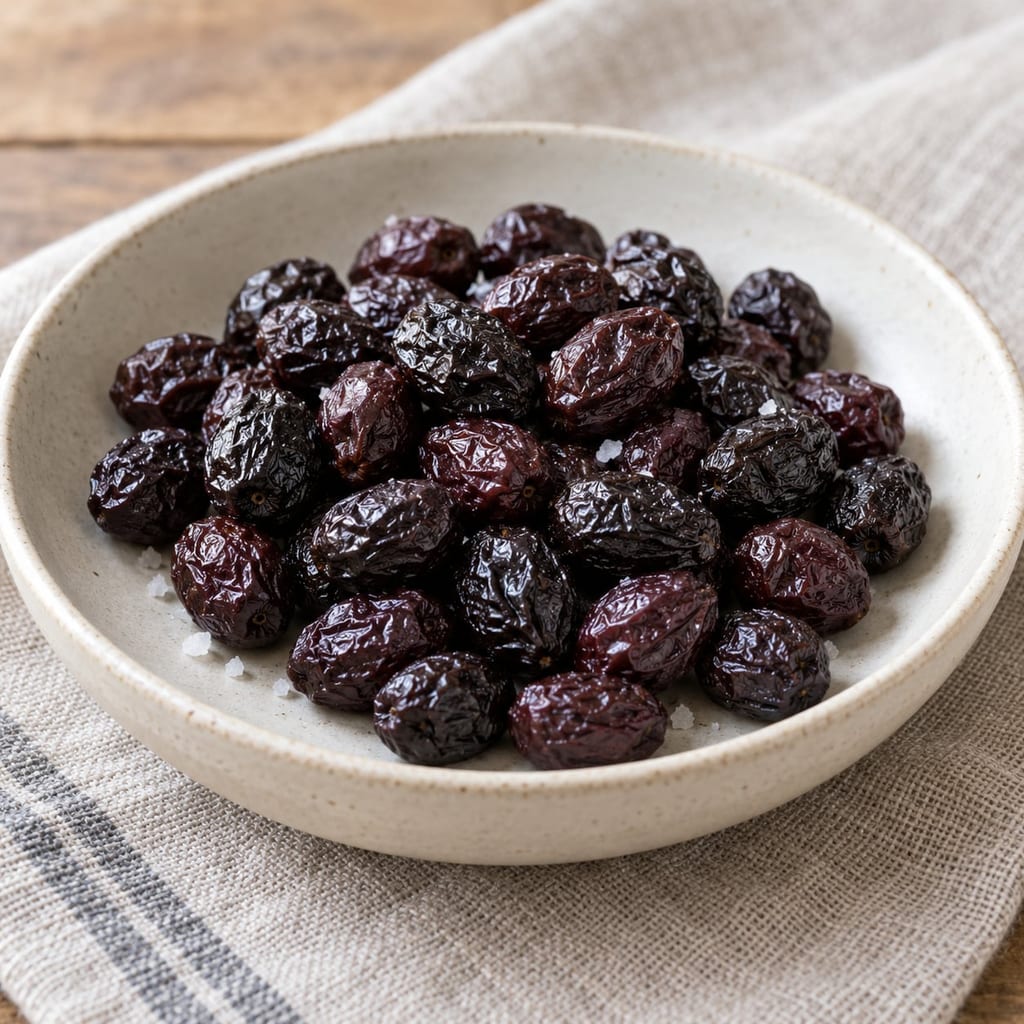
Fully ripe dark olives are mixed with salt and turned weekly as salt draws out moisture. Distinct from existing brine-fermented and lye-treated olives.
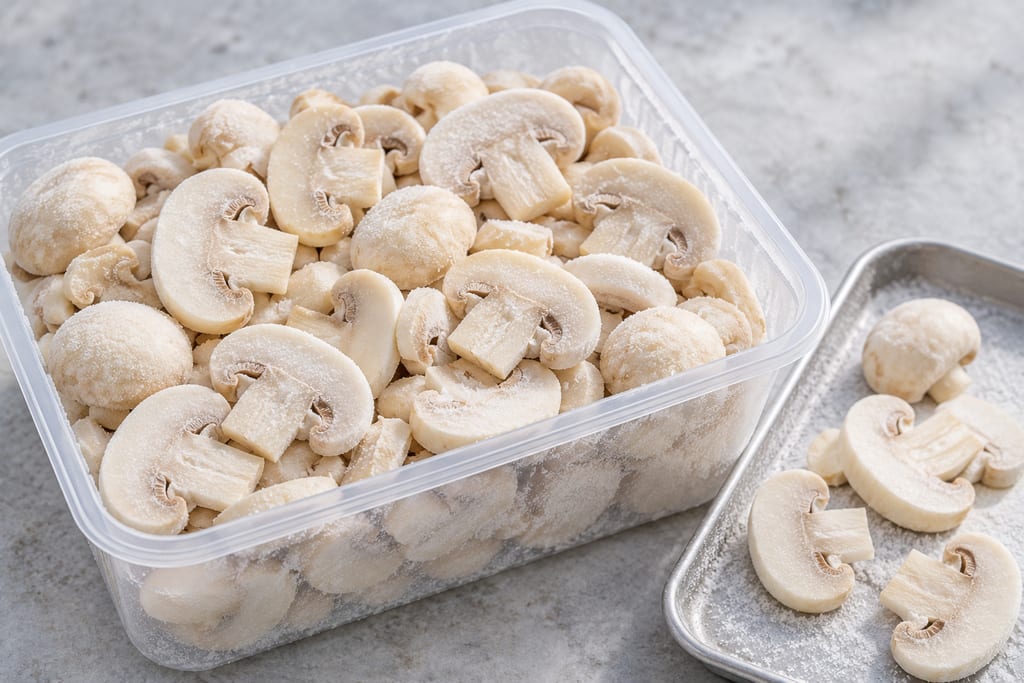
Steam-blanched frozen mushrooms are whole, button, quartered or sliced mushrooms given a short steam treatment, cooled promptly, packed with headspace and kept frozen.
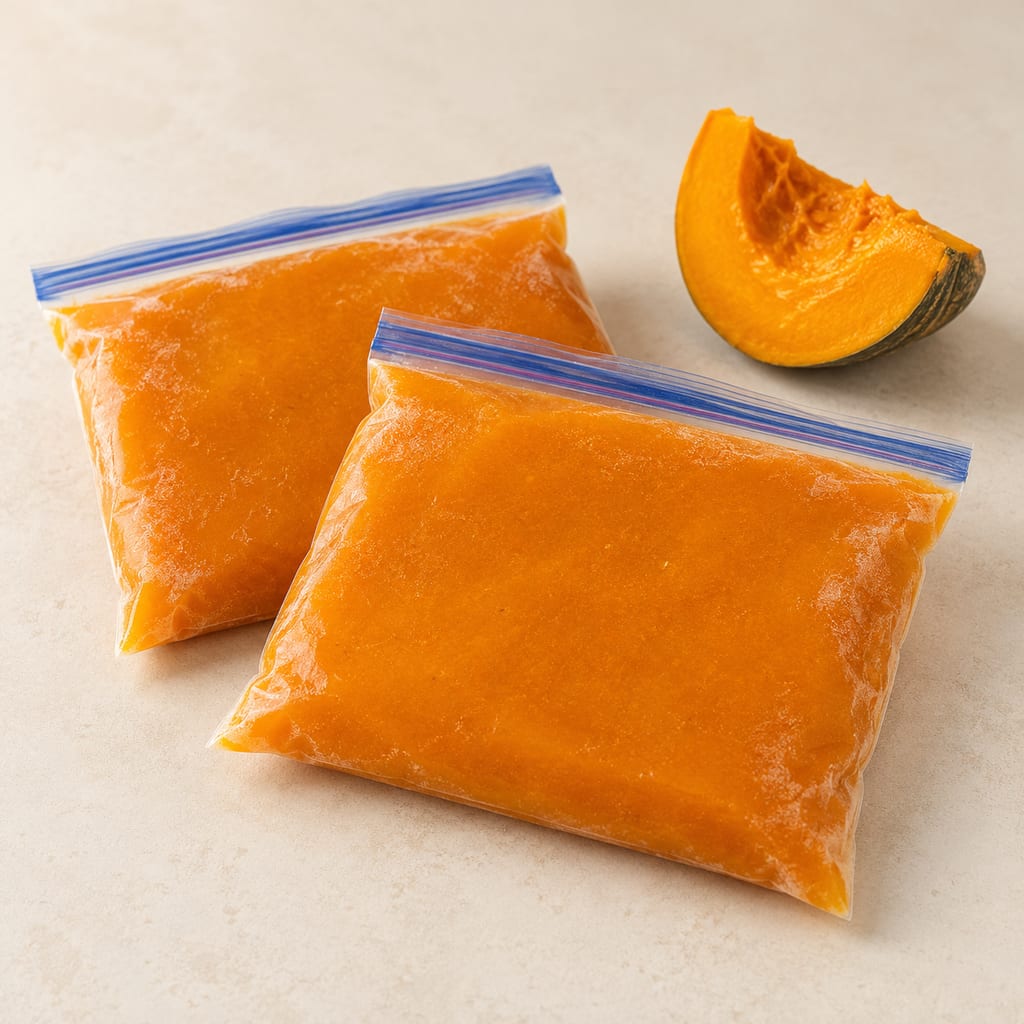
Cooked pumpkin mashed, cooled and frozen in portions: a plain base for pies, soups and baking without canning a dense purée.
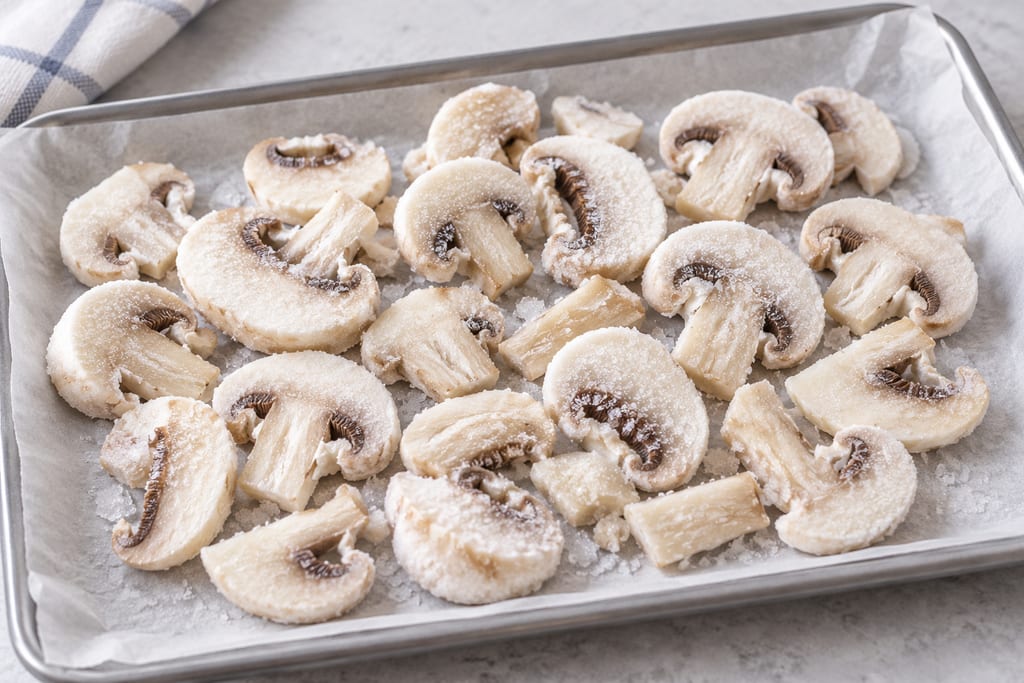
Frozen raw mushrooms are cleaned mushrooms frozen without a preheating step, the variant a Japanese forest-volunteer manual describes beside its cooked version.
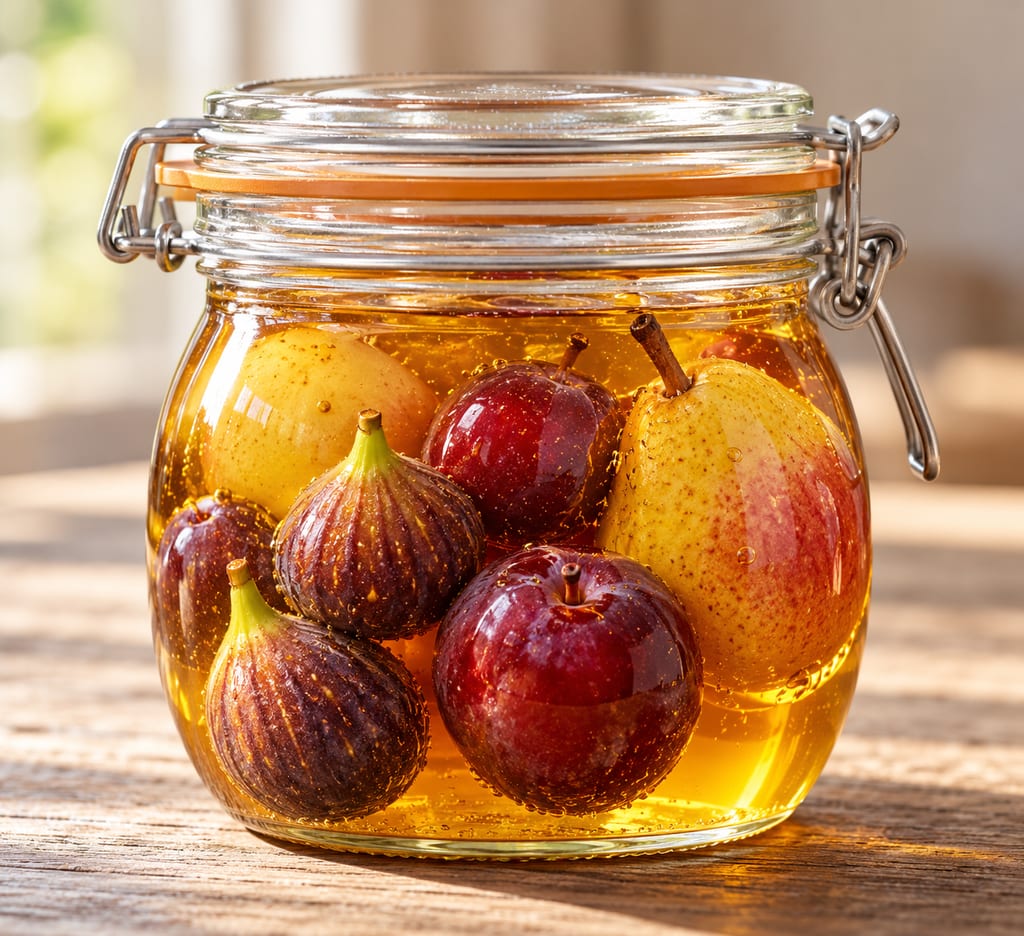
Fruit and some other foods were placed in honey in ancient Mediterranean kitchens. The honey's concentrated sugar does the preserving, and wet ingredients weaken it.
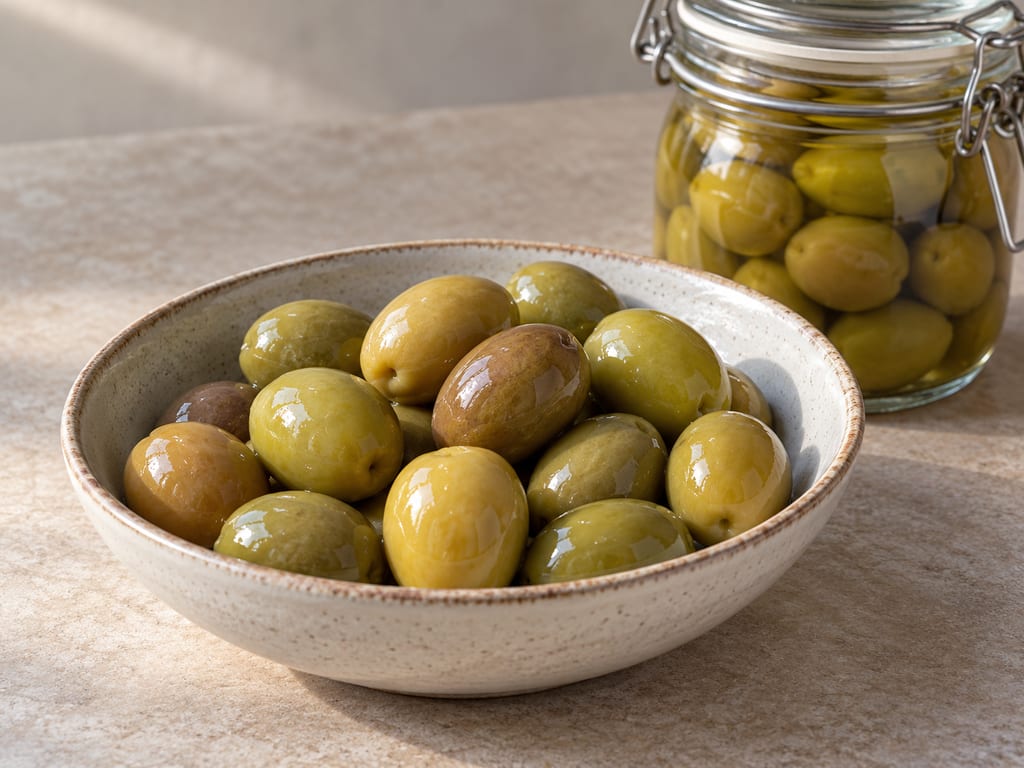
Green olives debittered in a sodium hydroxide solution, then rinsed repeatedly and held in brine, by the University of California's published home-pickling method.

A Cap-Pelé boucanière is an Acadian herring-smoking building. The documented Willie Niles example is a one-storey wood-frame structure with a ridge smoke vent and interior bays for hanging fish-bearing cannes.

Achcharu is a family of Sri Lankan vinegar pickles made with mixed vegetables or seasonal fruit and a piquant spice dressing. This version is a quick, refrigerated, non-fermented mixed-vegetable pickle.

The acocote is a long, hollowed and dried gourd used to draw aguamiel from a mature maguey. It is a harvesting tool: the sap is transferred to a separate vessel before it ferments into pulque.

Adrak murabba preserves young ginger in sugar syrup, a sweet South Asian preparation recorded in Indian cookery and food-processing sources.

Parkia biglobosa seeds are fermented into regional West African seasonings, including nététou, iru, dawadawa and soumbala. The yellow fruit pulp is a separate food, and names and methods vary by place.

Japanese reddish-brown vinegar from sake lees matured about three years, turned to vinegar by acetic bacteria; the vinegar of Handa and Edomae sushi rice.

A refined common-wheat flour blended for a broad range of baking; its protein and behavior vary with wheat, milling and market.

The almond mushroom, Agaricus subrufescens, was cultivated in eastern North America in the 1800s, lost its market, and returned as a cultivated mushroom from Brazil, where it is grown under several names.
No community contributions have been published for this entry yet.
Sign in to contribute. Published comments and photos are free to read.
Suomen Sieniseura — Finnish Mycological SocietyReference
Sienten säilöminen (Mushroom Preservation)Traditional Finnish preservation of mushrooms through salting
Particular suitability of acrid milk-cap species for salting
Use of 4–5 litres preliminary boiling water per kilogram of mushrooms
Approximately five minutes boiling for the general haaparousku treatment
Approximately ten minutes boiling for karvarousku and kangasrousku
Discarding the preliminary cooking water
Immediate rinsing with abundant cold water
Draining, pressing and cooling before salting
Use of 100–150 g coarse salt per kilogram of mushrooms
Layering mushrooms and salt in clean glass or plastic vessels
Requirement for a bottom and top layer of salt
Use of a weight to keep the mushrooms compressed
Cold storage in a cellar, refrigerator or chilled room
Checking that the mushrooms remain completely submerged in brine
Optional supplementary brine containing 100 g salt per litre of water
Boiling and cooling supplementary brine before use
Removal of excess salt by soaking, changing water or briefly boiling and rinsing
Importance of salted milk caps in Finnish mushroom salad
Dietary concerns associated with high salt intake
Loss of soluble nutrients during boiling and desalting
Absence of a fixed maturation duration, numerical storage temperature or validated shelf life
Cited in: What it is; History; How it is made and why each step matters; Regional and historical variations; How it is eaten; Reading results and problems
Martat — Finnish Home Economics AssociationReference
Rouskujen liuossuolaus (Brine Preservation of Milk Caps)Documented Finnish brine-preserved milk-cap recipe
Preliminary boiling of haaparousku for approximately five minutes
Preliminary boiling of kangasrousku and karvarousku for approximately ten minutes
Discarding boiling liquid and rinsing with cold water
Brine made using 100 g coarse sea salt per litre of water
Brief reheating of prepared mushrooms in the hot brine
Packing hot mushrooms and brine into clean glass jars
Documented chilled storage at +5°C
Rinsing brined mushrooms before eating
Separate traditional dry-salting method
Traditional dry-salting quantity of 150–180 g salt per kilogram
Optional garlic, dill and blackcurrant leaves in the traditional method
Use of weights and complete brine coverage
Important differences between Finnish dry-salting and immersion-brining methods
Absence of a validated ambient-temperature shelf life
Cited in: What it is; How it is made and why each step matters; Regional and historical variations; How it is eaten; Reading results and problems
Finnish Food Authority — RuokavirastoReference
Sienten käsittely (Handling Mushrooms)Need for species-specific preparation of wild edible mushrooms
Presence of acrid compounds in certain edible milk caps
Potential nausea resulting from inadequate preparation
Recommended five-minute boiling for haaparousku
Recommended ten-minute boiling for kangasrousku
Recommended ten-minute boiling for karvarousku
Discarding cooking water after pretreatment
Importance of correct preparation before subsequent preservation
Avoiding mushrooms harvested from contaminated environments
Potential radiocaesium contamination in certain wild mushrooms
Distinction between safe species-specific treatment and the mistaken belief that cooking makes all poisonous mushrooms edible
Cited in: How it works: microbes, enzymes and chemistry; How it is made and why each step matters; Reading results and problems
Finnish Food Authority — RuokavirastoReference
Suositeltavat ruokasienet (Recommended Edible Mushrooms)Official Finnish advisory list of edible mushroom species
Identification of edible milk caps requiring appropriate pretreatment
Use of scientific and Finnish species names
Differences between species recommended for food and unsuitable or poisonous fungi
Importance of a verified botanical identity rather than a broad common name
Relationship between species identification and safe preparation
Cited in: What it is
Finnish Food Authority — RuokavirastoReference
Sienten käsittelyohjeet cesium-137 vähentämiseksi (Processing Mushrooms to Reduce Caesium-137)Occurrence of radiocaesium-137 in mushrooms from affected regions
Variation in contamination by mushroom species and location
Use of soaking or boiling to reduce radiocaesium concentration
Transfer of water-soluble radiocaesium into the treatment liquid
Importance of discarding soaking and cooking water
Species-specific processing instructions
Distinction between radiocaesium reduction and removal of every environmental contaminant
Importance of appropriate handling of fresh and previously salted mushrooms
Original publication: Moscow, S. Selivanovsky Printing House; digitised transcription: Russian WikisourceReference
Русская поварня (Russian Cookery), 1816 — Mushroom Preservation, Page 187Primary historical evidence for Russian mushroom preservation in 1816
Distinction between salting, vinegar preservation and drying
Boiling certain mushrooms before preservation
Salting boiled mushrooms in wooden vessels
Use of salted water and a weighted cover
Historical reference to Russula mushrooms as suitable for a related salting procedure
Difference between nineteenth-century documented practice and modern food-safety guidance
Original publication: Moscow, S. Selivanovsky Printing House; digitised transcription: Russian WikisourceReference
Русская поварня (Russian Cookery), 1816 — Gruzdi, Volnushki and RyzhikiHistorical differentiation of gruzdi, volnushki and ryzhiki
Use of preliminary boiling for certain mushroom categories
Layering mushrooms with salt in wooden tubs
Use of tarragon and marjoram as optional seasonings
Use of a wooden cover and weight
Special treatment of ryzhiki using their own expressed moisture
Evidence of multiple salting methods in one nineteenth-century Russian source
Absence of a universal numerical salt percentage applicable to all mushroom species
Historical description rather than a validated contemporary household preservation method
Études finno-ougriennes, OpenEdition JournalsReference
Setos Pick Russula and Purovik, and Not the Red Ones, They Are Slimy: Cultural Preferences in Edible Mushroom Use of the Setos and Russians of Pechory District of Pskov Oblast, NW RussiaEthnomycological fieldwork among Seto and Russian inhabitants of Pechory District
Interviews with 25 Seto and 34 Russian residents
Fieldwork conducted during 2018 and 2019
Cultural differences in selecting boletes, russulas and milk caps
Reported traditional mushroom soaking and boiling
Importance of salted mushrooms in regional diets
Description of hot-salting methods
Reported prolonged maturation of some mushroom preparations
Use of currant leaves, dill and other seasonings in household accounts
Local use of the term fermentation
Distinction between ethnographic reports and microbiologically confirmed lactic fermentation
Cited in: What it is; History; How it is made and why each step matters; Regional and historical variations; How it is eaten
Journal of Ethnobiology and Ethnomedicine, Springer NatureReference
Diversity of Ethnomycological Knowledge and Mushroom Foraging Culture in a Small Nation: Case of LithuaniaEthnomycological study of Lithuanian mushroom gathering
Interviews conducted in 2022–2023
106 participants representing multiple Lithuanian ethnographic regions
Traditional preservation through salting and fermentation
Replacement of much household salting and fermentation by vinegar pickling and freezing
Regional differences in mushroom species selection
Importance of Lactarius, Russula and Boletus in Lithuanian mushroom traditions
Use of preserved mushrooms in traditional meals
Distinction between present-day interviews and the historical age of a practice
Cited in: History; Regional and historical variations; How it is eaten
Journal of Ethnobiology and Ethnomedicine, Springer NatureReference
Mushrooms (and a Cow) Are a Means of Survival for Us: Dissimilar Ethnomycological Perspectives among Hutsuls and Romanians Living Across the Ukrainian-Romanian BorderTraditional mushroom preservation among Hutsul and Romanian communities
Salting and fermentation of Lactarius deliciosus
Reported fermentation and salting of certain Russula species
Use of boiled mushrooms in fermented cabbage preparations
Differences between dried, pickled, salted and fermented mushrooms
Importance of stored mushrooms in winter and fasting-period meals
Reported decline of some older preservation practices following increased availability of household freezers
Distinction between reported household customs and analytically verified fermentation chemistry
Cited in: History; Regional and historical variations; How it is eaten
Slow Food Foundation for Biodiversity, Ark of TasteReference
Altai Salted Mushrooms — Соленые грузди по-алтайскиTraditional milk-cap salting in the Altai Republic
Use of a prepared cedar-wood barrel
Preliminary soaking in salted water
Reported preliminary soaking for one to two days
Reported initial soaking liquid made from 970 mL water and 30 g salt
Changing soaking water at least twice a day
Layering with currant leaves, dill, garlic and spices
Salt quantity of 50 g per kilogram of mushrooms during packing
Use of weights and compression
Reported maturation of approximately one to one and a half months
Association of the tradition with cold storage and cedar barrels
Differences from Finnish high-salt recipes
Evidence of a regional tradition rather than a validated microbiological home-preservation process
Cited in: What it is; How it is made and why each step matters; Regional and historical variations
Journal of Ethnobiology and Ethnomedicine, BioMed CentralReference
Wild Mushroom — An Underutilized Healthy Food Resource and Income Generator: Experience from Tanzania Rural AreasEthnomycological survey of wild mushroom gathering and trade in Tanzania
Documentation of sun drying, smoking, short-term wet storage and salt preservation
Use of strongly concentrated salt solution in the Kigoma–Uvinza area
Connection between regional salt production and mushroom-preservation practices
Absence of a quantified domestic salt-preservation recipe in the published account
Absence of confirmed lactic acid fermentation measurements for the salt-drenched mushrooms
Importance of wild mushrooms as seasonal foods and market products
Limitations of generalising Tanzanian methods to Finnish and Russian milk-cap species
Cited in: History; Regional and historical variations
Comprehensive Reviews in Food Science and Food Safety, WileyReference
Lactic Acid Fermentation of Edible Mushrooms: Tradition, Technology, Current State of Research: A ReviewHistorical and technological distinction between salted, acidified and lactic-fermented mushrooms
Use of different mushroom substrates for controlled fermentation
Importance of available carbohydrates for acid production
Use of selected lactic acid bacterial cultures
Potential addition of fermentable sugar in experimental recipes
Differences between natural mixed-culture and inoculated fermentation
Effects on acidity, texture and chemical composition
Need to avoid assigning a lactic fermentation classification merely because mushrooms are submerged in saltwater
Cited in: What it is; How it works: microbes, enzymes and chemistry; How it is eaten; Reading results and problems
Journal of Food Processing and Preservation, WileyReference
Evaluation of Sensory and Functional Compounds in Fermented Lactarius deliciosus MushroomsExperimental lactic fermentation of Lactarius deliciosus
Use of selected Lactobacillus acidophilus and Lactiplantibacillus plantarum cultures
Comparison of blanching and microwave pretreatments
Monitoring fermentation temperature and pH
Laboratory observation of pH below 4.5 in the tested fermentations
Effects of pretreatment on mushroom composition
Distinction between controlled lactic fermentation and heavy-salt preservation
Need for a separate experimentally supported fermented-mushroom recipe
World Health OrganizationReference
BotulismFoodborne botulism caused by preformed botulinum neurotoxin
Importance of improperly processed foods and inadequate preservation
Risk from low-acid foods under oxygen-limited conditions
Importance of controlling acidity, salt, temperature and other preservation factors
Potential severity of foodborne botulism
Need for validated food-preservation procedures rather than assessment based on appearance or smell
Distinction between traditional salted mushroom storage and verified shelf-stable food preservation
National Center for Home Food Preservation, University of GeorgiaReference
Mushrooms — Whole or SlicedResearch-tested pressure-canning procedure for specified cultivated mushrooms
Explicit warning not to can wild mushrooms using this procedure
Need for pressure processing of low-acid mushrooms when preparing shelf-stable canned products
Distinction between chilled salt preservation and tested canning
Reason not to adapt the Finnish milk-cap salting recipe into untested ambient-temperature sealed jars
Ministry of Agriculture, Forestry and Fisheries, JapanReference
塩漬け (Salted Foods)General principles of salting food through salt application or immersion
Relationship between salt and moisture removal
Distinction between dry-salting and immersion-salting terminology
Japanese traditional-food classification rather than a species-specific mushroom recipe
Limits of using general preservation guidance to infer a Japanese salted-milk-cap tradition
Cited in: History; How it works: microbes, enzymes and chemistry; How it is made and why each step matters; Regional and historical variations
ru.wikisource.orgReference
Web pageCited in: History; How it is made and why each step matters; How it is eaten
PubMed CentralReference
PubMed Central article PMC9180291Cited in: How it works: microbes, enzymes and chemistry
who.intReference
Web page botulismCited in: How it works: microbes, enzymes and chemistry; Reading results and problems
nchfp.uga.eduReference
Web page mushrooms