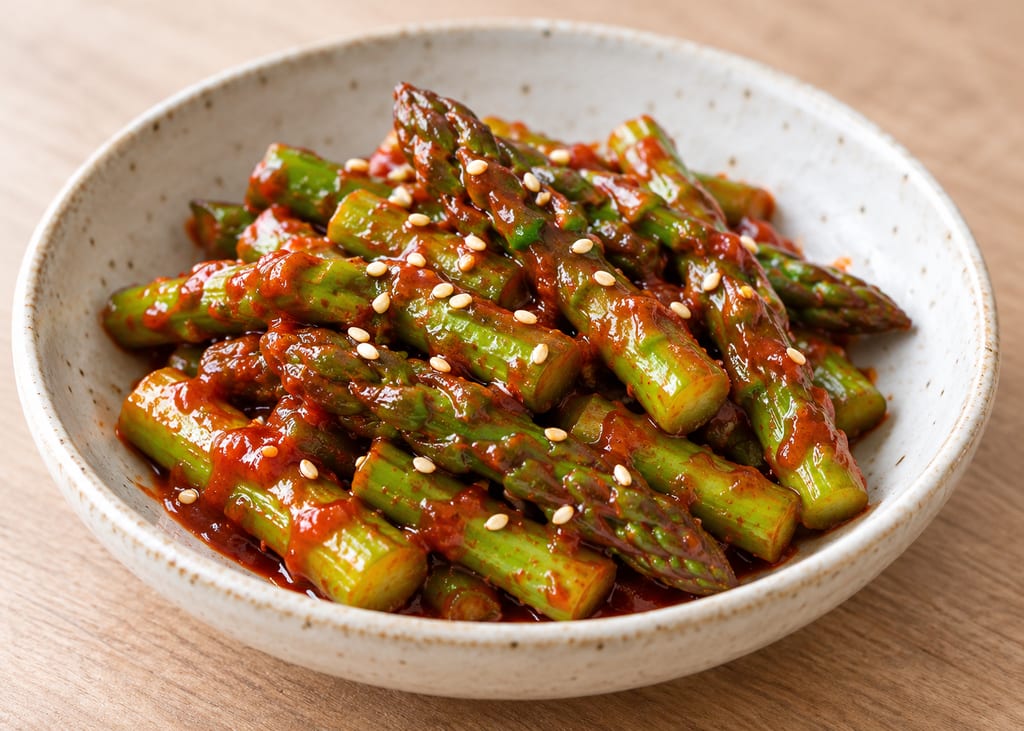
Asparagus with cho-gochujang
A Korean banchan of blanched asparagus dressed with a sweet-sour cho-gochujang sauce; Hyosun's version cools the spears in ice water before tossing.
 FermenteaWhere food goes to change
Honey-packed fruit · Fruit in honey
Fruit and some other foods were placed in honey in ancient Mediterranean kitchens. The honey's concentrated sugar does the preserving, and wet ingredients weaken it.
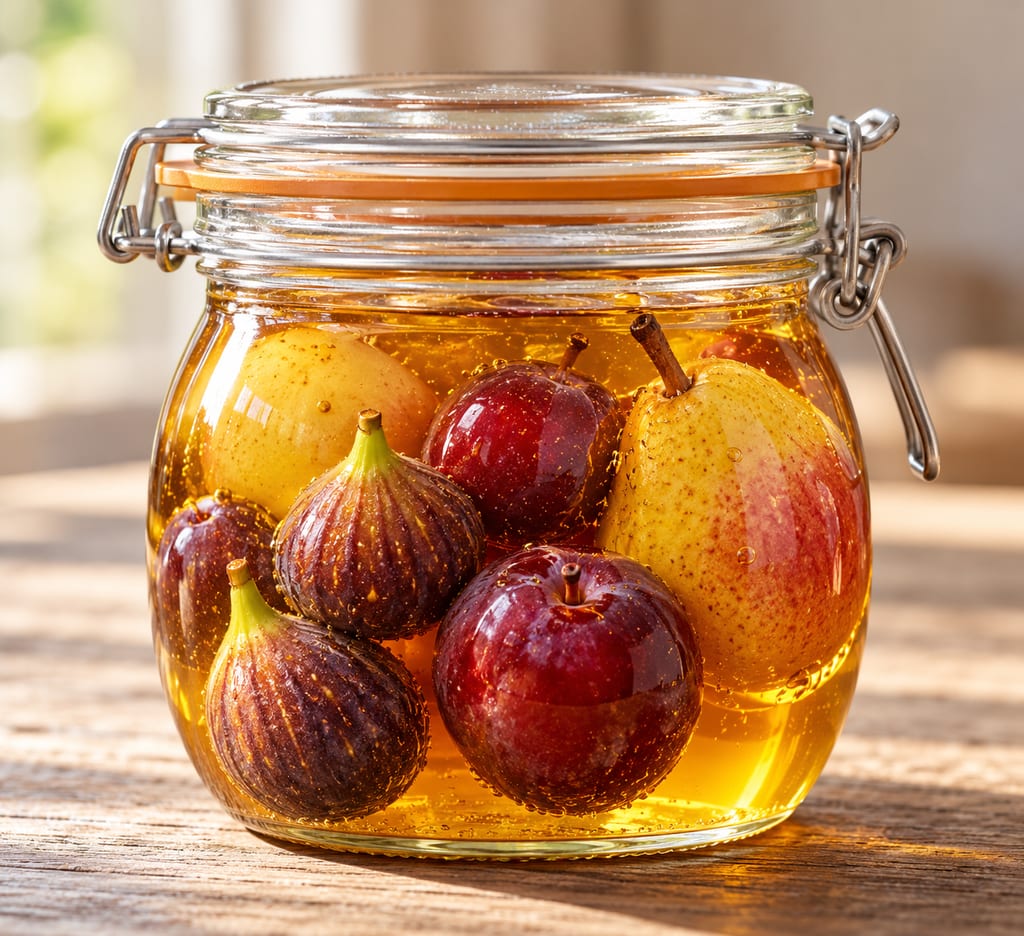
Honey packing keeps food by placing it in honey and leaving it there. Fruit is the main example, and some animal foods were also treated this way in ancient Mediterranean and other honey-using societies. The honey covers the food and changes what it can support, so the packed food keeps in a form that is different from the fresh original.
The method is simple to describe and varies in practice. Preparation before packing, the kind of honey and the storage conditions all change the result, and the record does not give a single fixed procedure.
Honey is a concentrated solution of sugars. Its high sugar content holds little free water for microbes to use, which is the basis of its preserving power. Honey packing therefore relies on the concentration of the honey around the food.
That concentration is easily reduced. The record notes that wet ingredients dilute honey and weaken its preserving power, so honey packing is not one uniform process. A fruit with a lot of its own juice, or a food that is washed and not dried before packing, changes the mixture it sits in.
Roman culinary texts give examples of honey packing, and the practice appears in other honey-using societies. The record does not date the first use. Its earliest documented form is a preservation practice whose origin cannot be fixed from the sources, so the earliest century given here is the earliest attested example rather than the moment the practice began.
The record gives no shelf life, no storage temperature and no safety threshold for honey-packed fruit. The concentration of the honey is the working variable, and it is not measured here. Fermentation in a packed fruit with added water or juice is a real hazard that a visual check will not show. A jar that smells sour, bubbles, shows mould or looks altered should be discarded.
Fruit and some animal foods were placed in honey in ancient Mediterranean and other honey-using societies. Roman culinary texts give examples of the practice.
Attested in ancient Mediterranean and other honey-using societies. The cited text is Roman and gives examples; no single locality is named.
A Korean banchan of blanched asparagus dressed with a sweet-sour cho-gochujang sauce; Hyosun's version cools the spears in ice water before tossing.
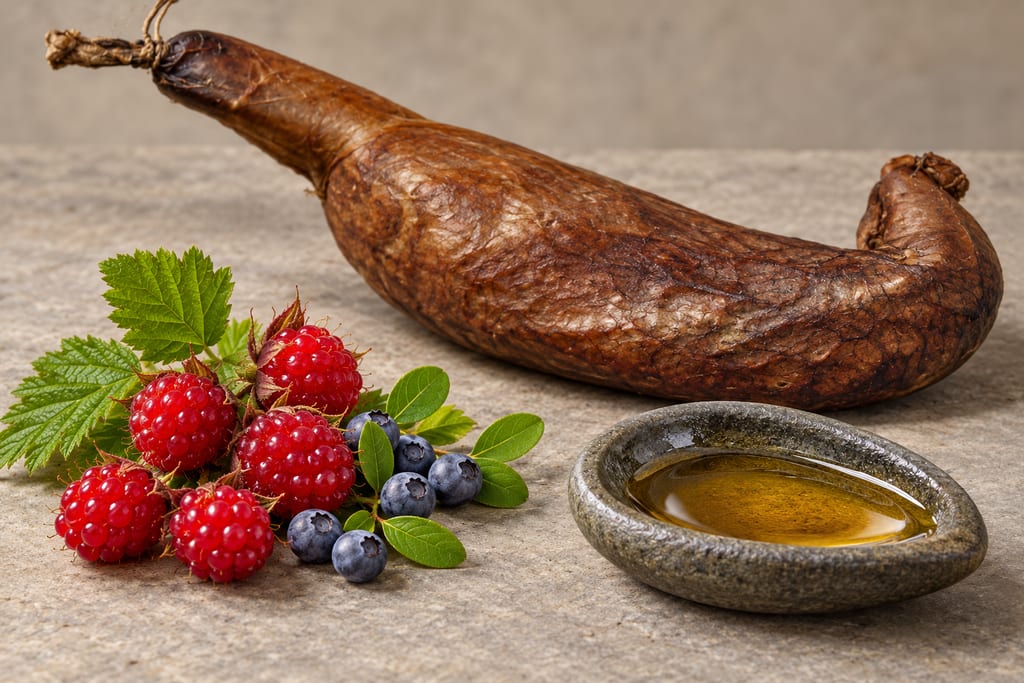
Berries, greens and fish eggs were kept in seal oil by Indigenous Alaskan communities. The oil seals the food from air, and the result depends on preparation and the surrounding conditions.
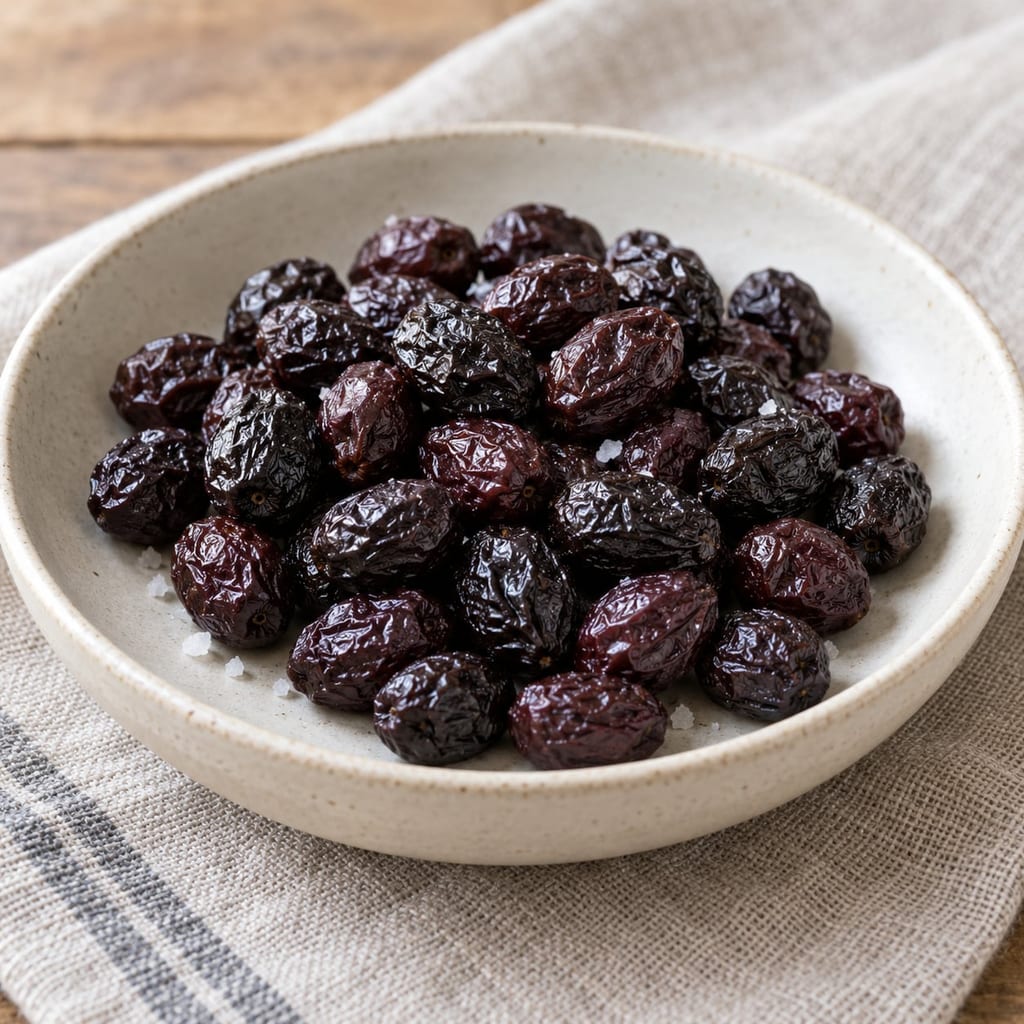
Fully ripe dark olives are mixed with salt and turned weekly as salt draws out moisture. Distinct from existing brine-fermented and lye-treated olives.
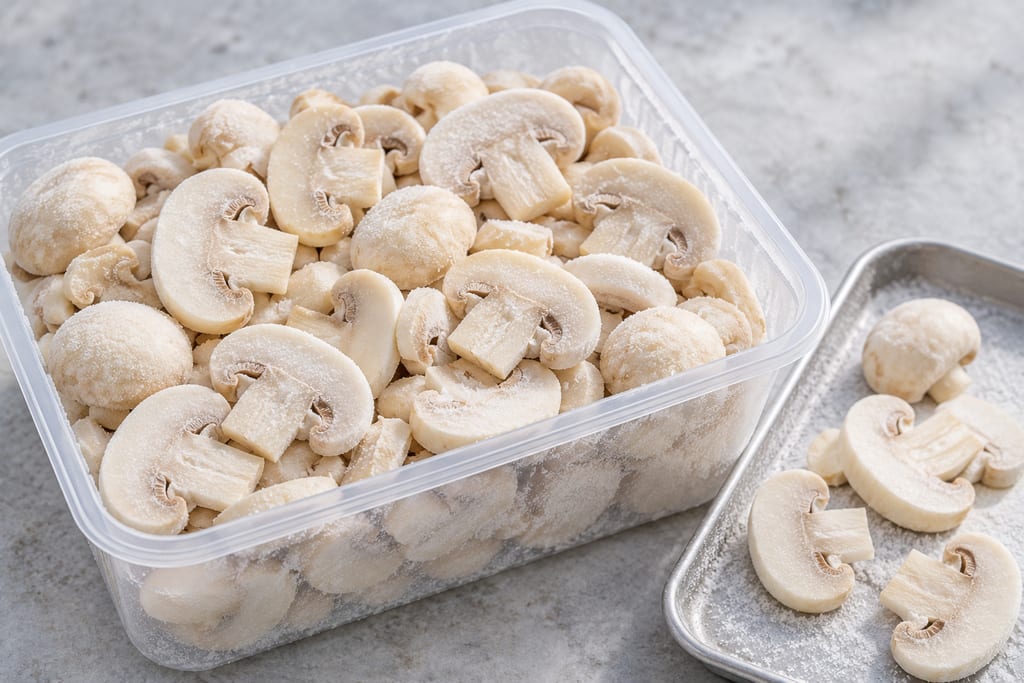
Steam-blanched frozen mushrooms are whole, button, quartered or sliced mushrooms given a short steam treatment, cooled promptly, packed with headspace and kept frozen.
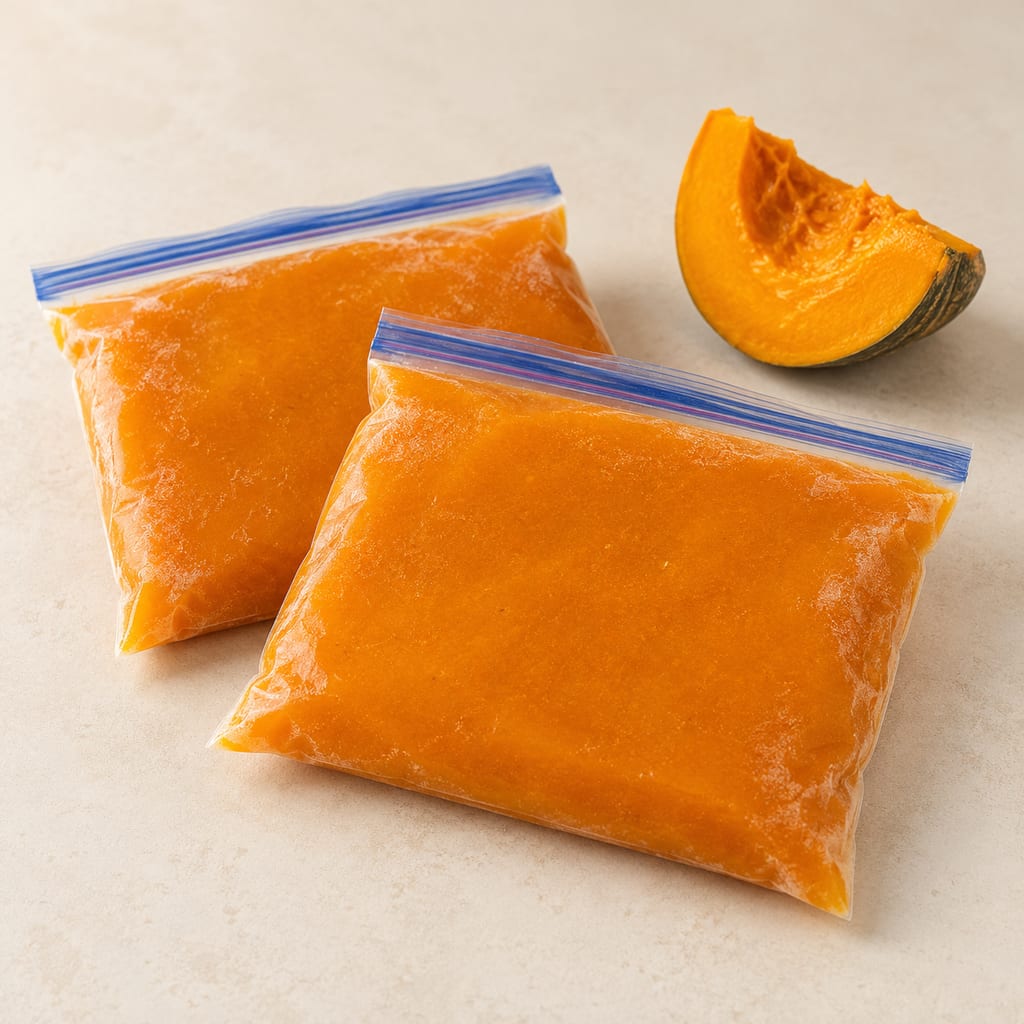
Cooked pumpkin mashed, cooled and frozen in portions: a plain base for pies, soups and baking without canning a dense purée.
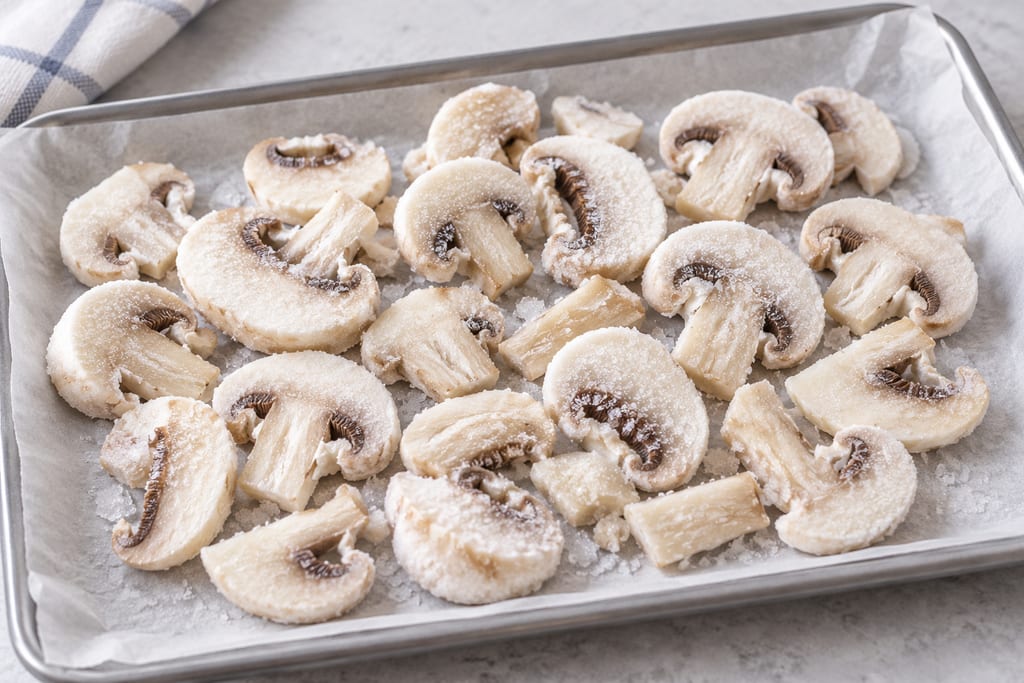
Frozen raw mushrooms are cleaned mushrooms frozen without a preheating step, the variant a Japanese forest-volunteer manual describes beside its cooked version.
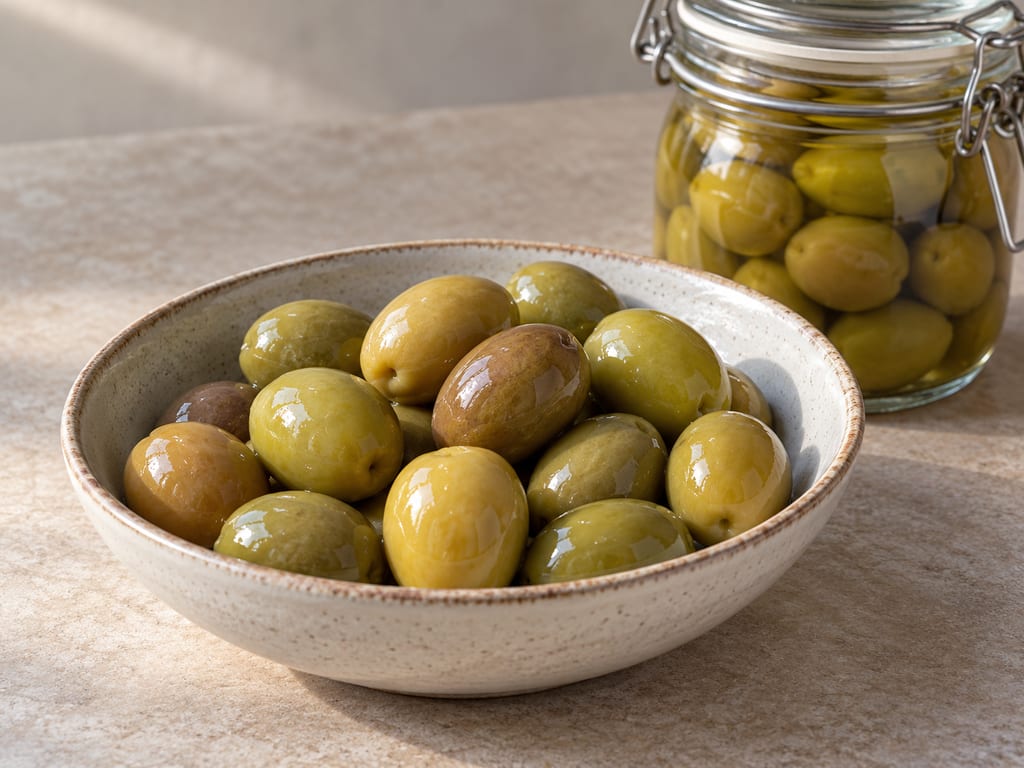
Green olives debittered in a sodium hydroxide solution, then rinsed repeatedly and held in brine, by the University of California's published home-pickling method.
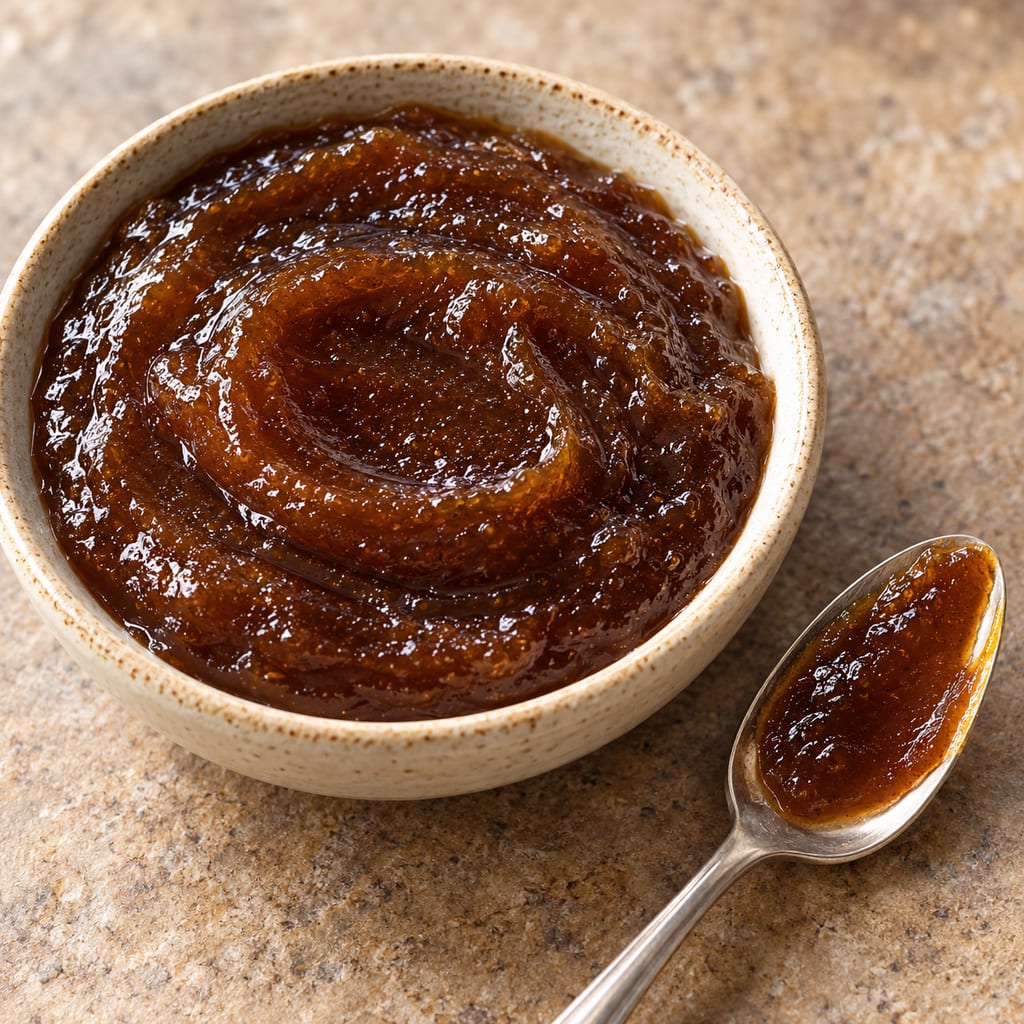
An experimental sweet mushroom preserve developed in Indian food-processing research, made by cooking mushroom pulp with sugar, added pectin and citric acid until concentrated into a thick, spreadable jam.
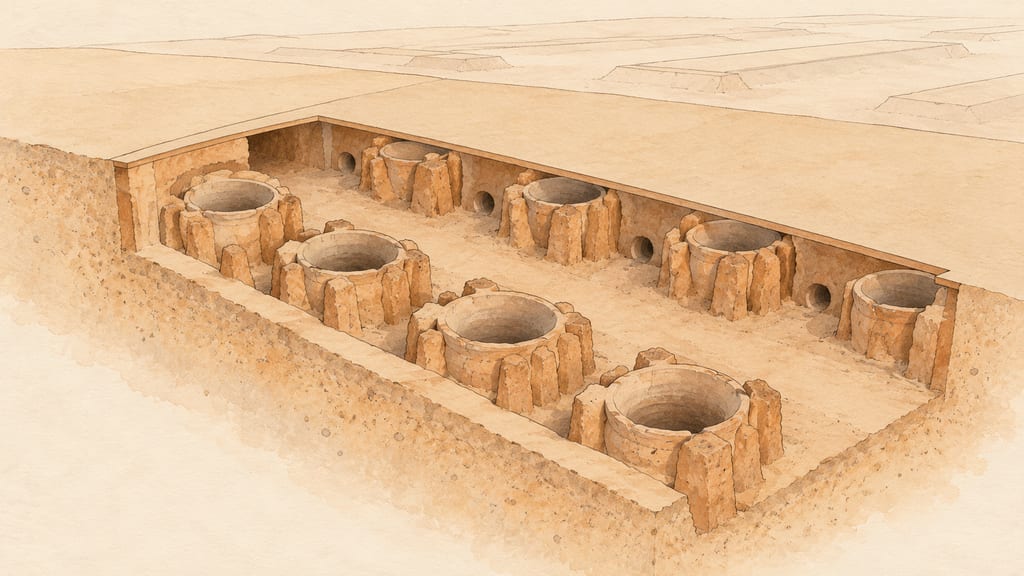
At North Abydos in Egypt, a fixed early Dynastic brewery comprised parallel semi-subterranean installations with rows of ceramic mash vats; excavation reports revise their number, scale and estimated batch capacity.
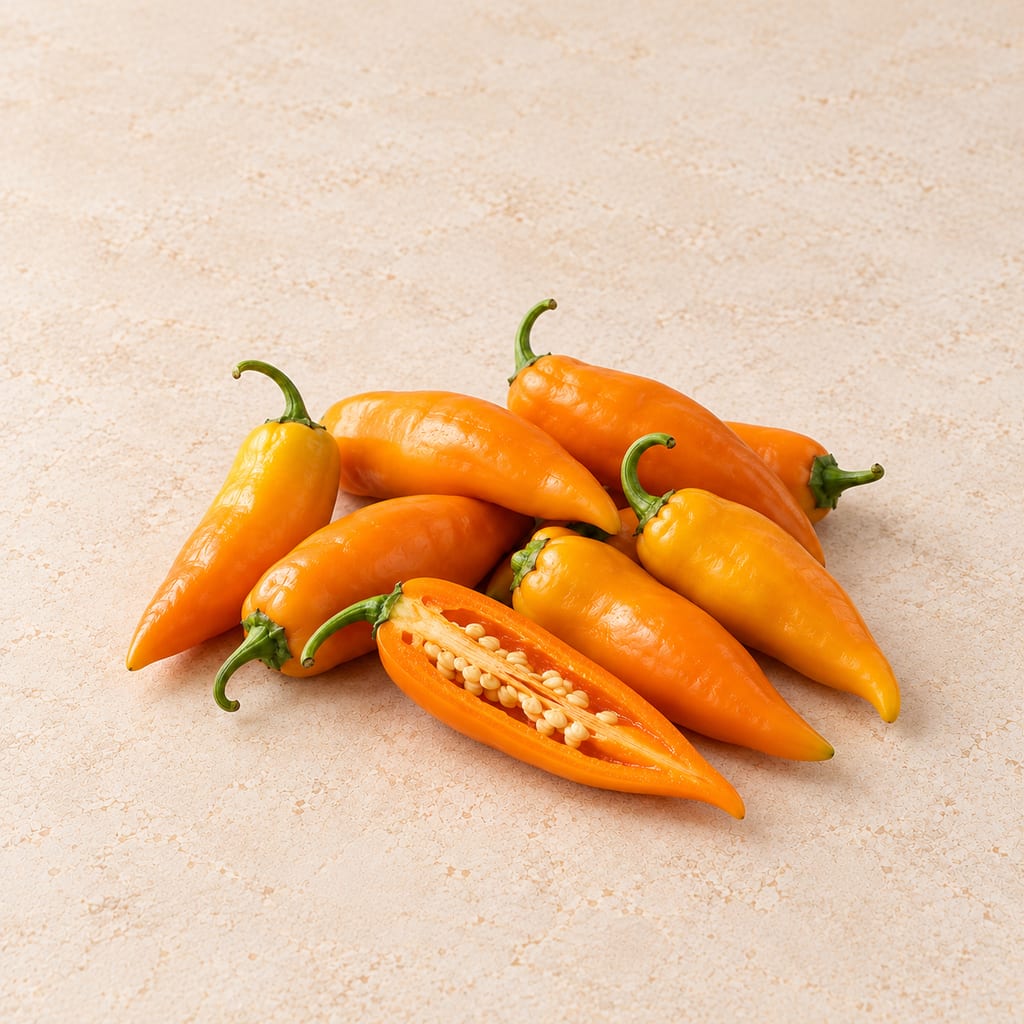
Ají amarillo is the orange-yellow Peruvian chilli cultivar group of Capsicum baccatum, used to colour and season huancaína sauce and ají de gallina. Published heat estimates do not establish one range for the named cultivar.

Toasted almonds are whole sweet almond kernels dry-roasted until golden to brown. Heat replaces their marzipan note with a roasted, nutty one; they thicken and flavour romesco.

Kodiak salmon, halibut and cod cut as seg'aq and hung on an initaq rack to become tamuuq, with kac'amaasaq and kupcuunaq named as different results.

Aniseed is the dried ripe fruit of Pimpinella anisum, an aromatic Apiaceae spice commonly called a seed. It adds a sweet, warm aroma to breads such as Moroccan krachel and South African mosbolletjies, and is distinct from star anise.
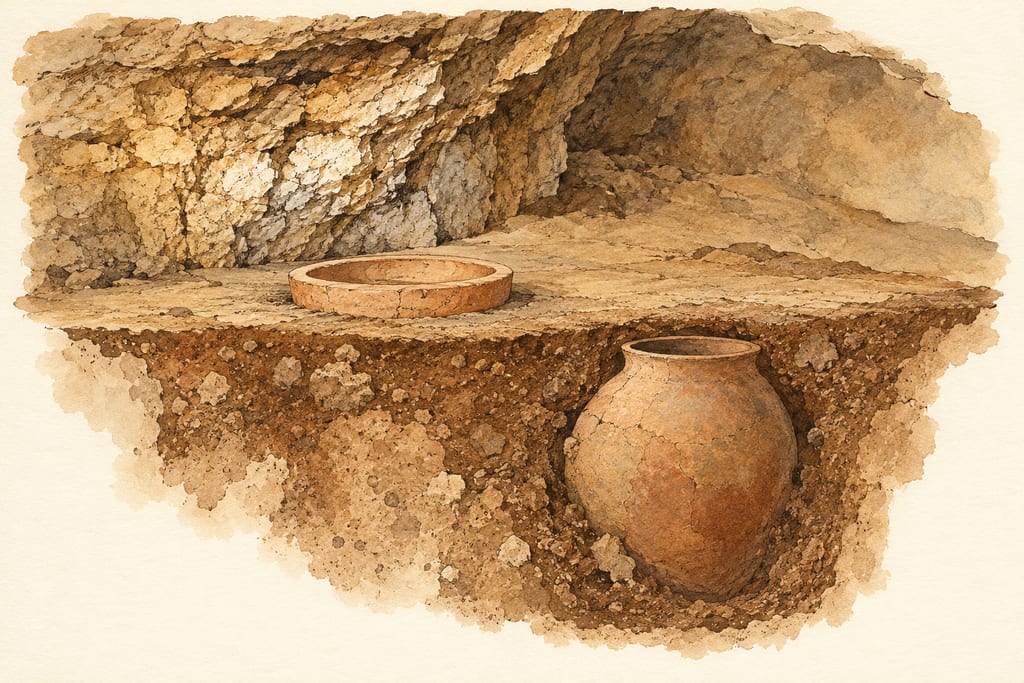
A fixed Late Chalcolithic installation in Areni-1 cave combined a shallow clay pressing basin with a large jar set into the cave floor and storage vessels nearby.

Ripe avocado flesh is the soft, buttery, fat-rich pulp of Persea americana, eaten raw. It is low in acid, so it is a fresh ingredient that needs care in chilled dishes.
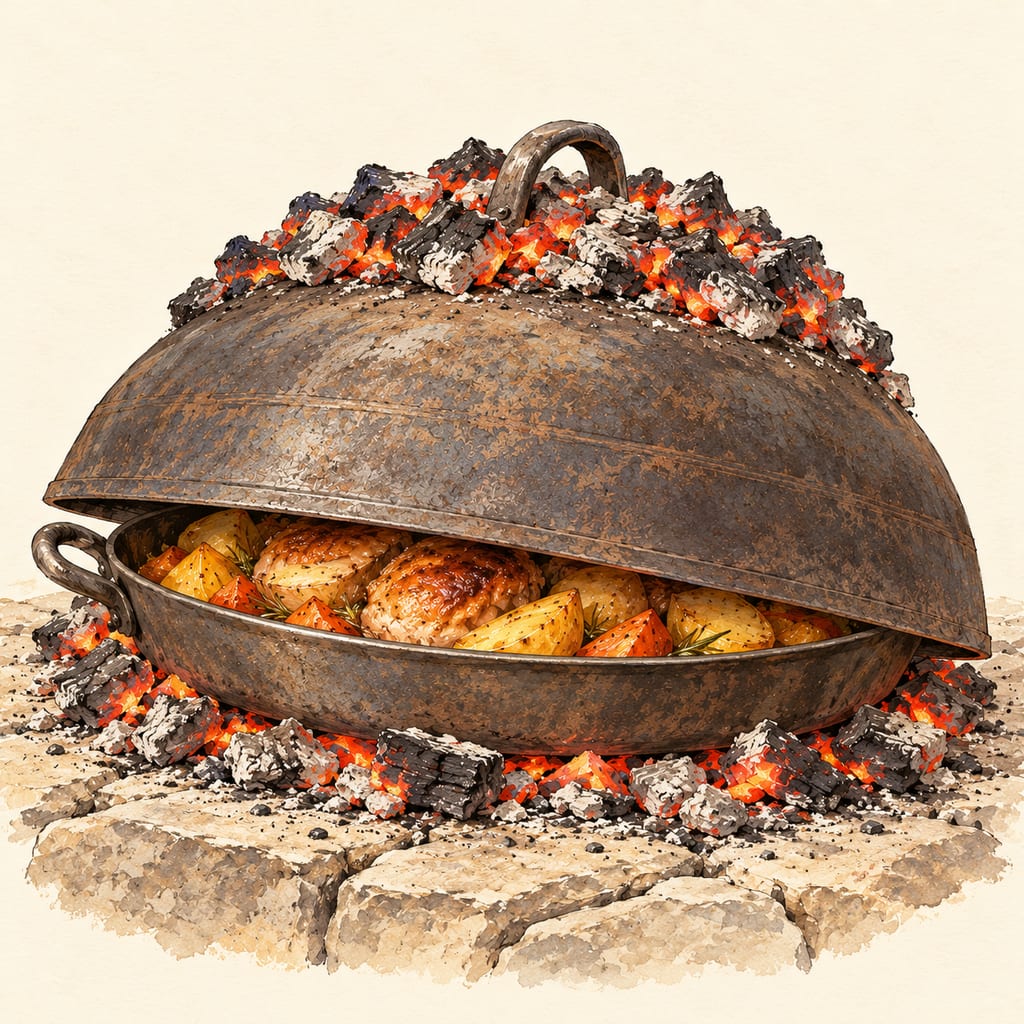
A portable dome and pan used over a hearth, with embers on the lid and heat from below. Regional peka and saç forms share this principle while differing in materials, pan shape and how the food is cooked.
No community contributions have been published for this entry yet.
Sign in to contribute. Published comments and photos are free to read.
University of Chicago, Perseus Digital LibraryHistory · Method
Apicius, Book I (Thayer, Perseus Digital Library)Roman culinary texts give examples of fruit and some animal foods placed in honey.
Dilution by wet ingredients changes the preserving power of honey.
Cited in: What it is; Why honey preserves; Ancient texts and later use; Limits of the record