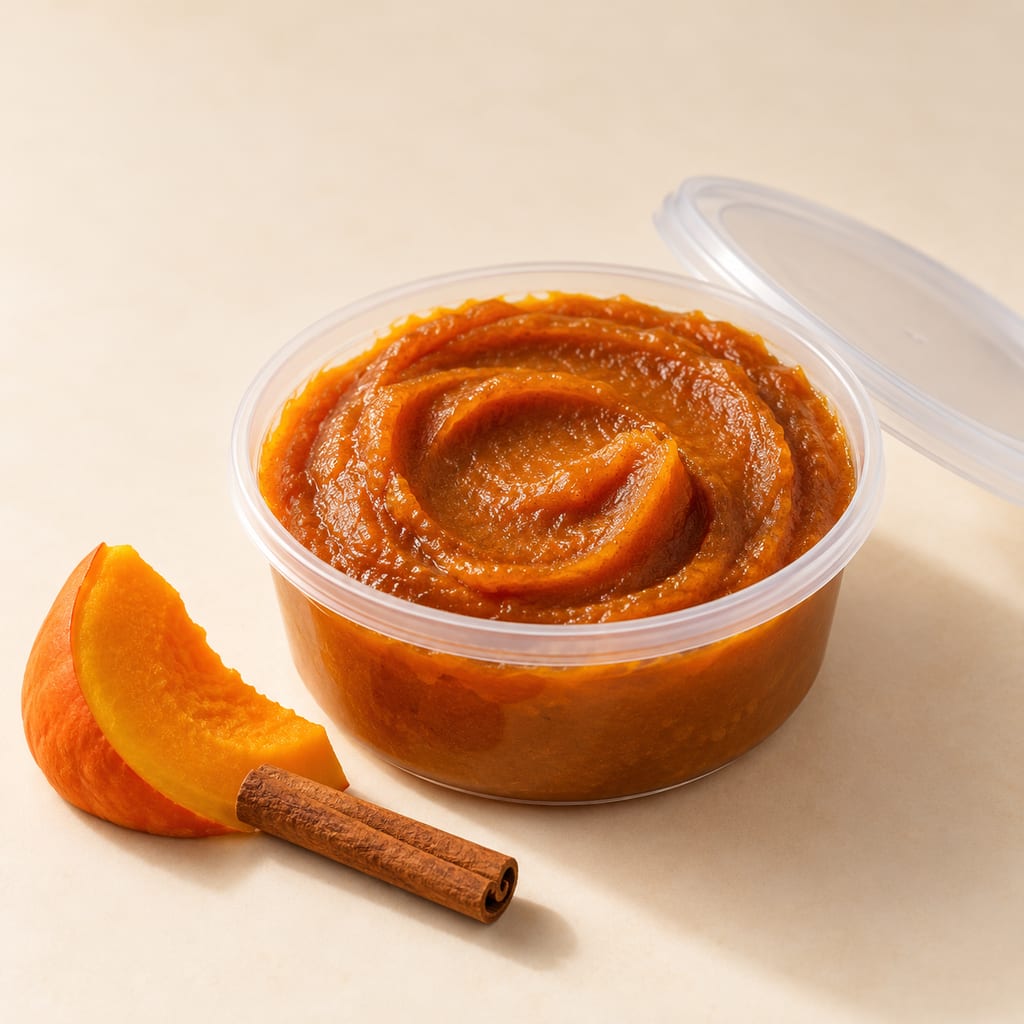
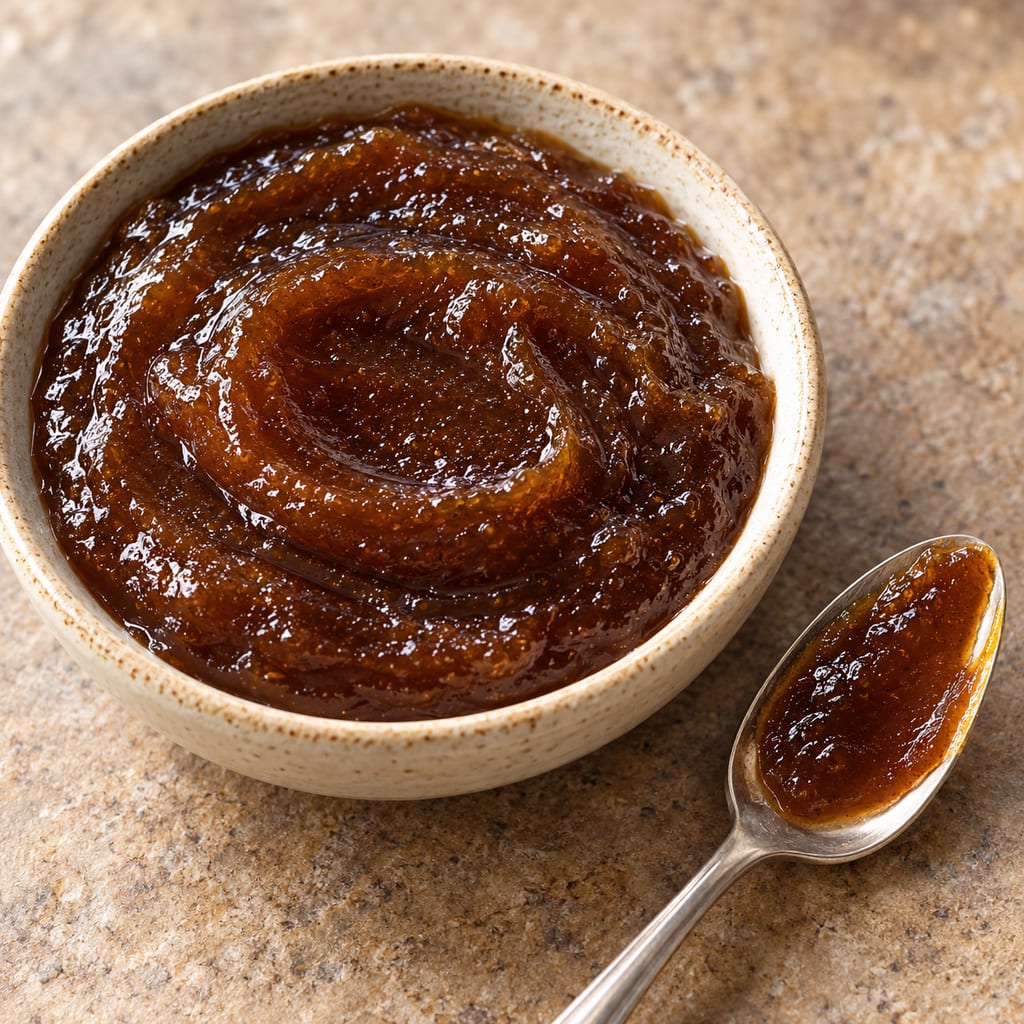
Spiced freezer pumpkin butter
Spiced freezer pumpkin butter: Freeze for winter; small fresh portion refrigerated up to 48 hours.
 FermenteaWhere food goes to change
Modern method
Cooked pumpkin mashed, cooled and frozen in portions: a plain base for pies, soups and baking without canning a dense purée.
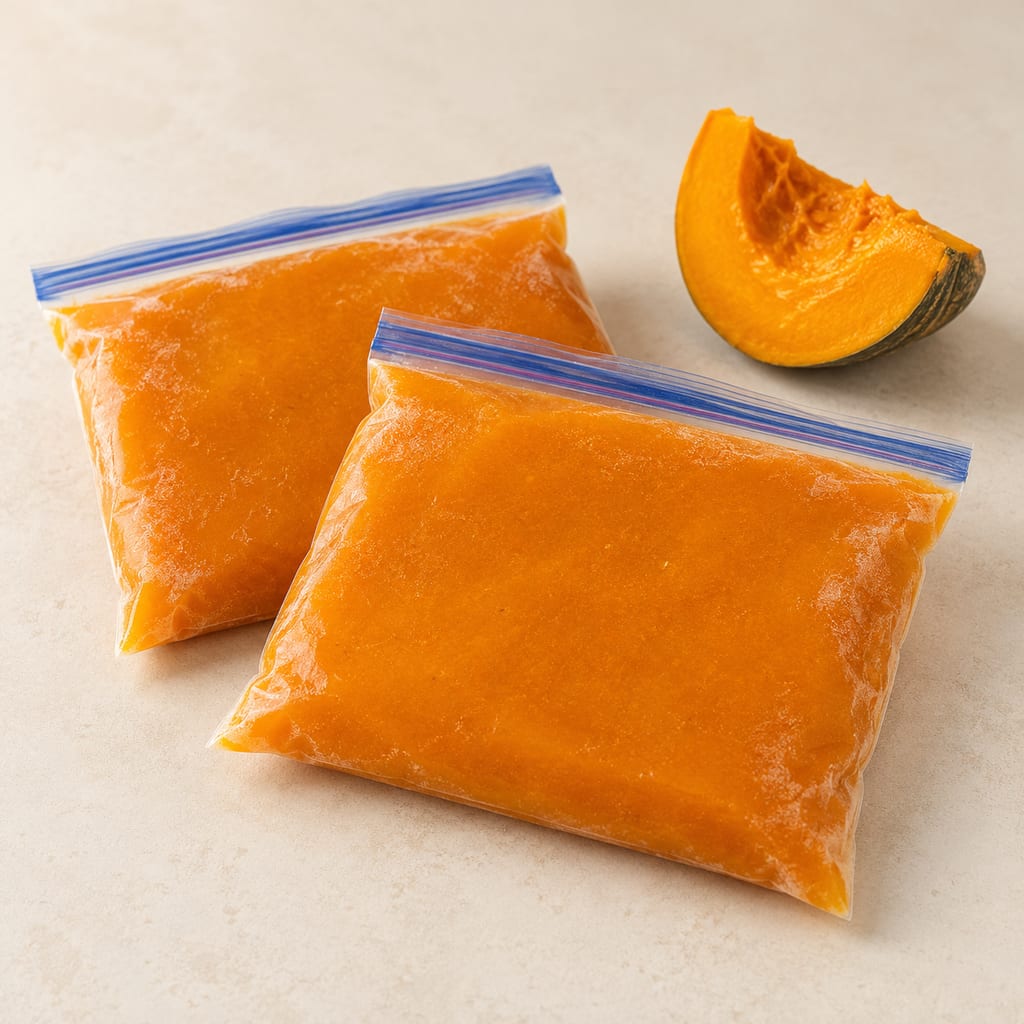
Freezing is the most straightforward long-term home method for pumpkin puree. It turns a large pumpkin into useful measured portions without requiring the extra sugar, vinegar or spices of a finished preserve. It is especially useful for a watery carving variety whose flesh is less appealing in cubes. Freezing does not improve poor flavour, so start with sound produce and assess the flesh before processing an entire batch.
Choose the amount by your freezer's capacity to freeze it promptly, not by the capacity of the largest stockpot in the kitchen. Avoid placing a huge quantity of warm puree into a freezer already full of frozen food.
NCHFP gives a general best-quality window of 8–12 months for properly prepared frozen fruit and vegetables held at −18°C or colder. Iowa State gives approximately six months to a year for pumpkin puree. These describe quality under continuous frozen storage, not a guarantee after a power failure or repeated thawing.
Thaw in the refrigerator. In a UK household, use thawed food within 24 hours of complete defrosting, following the Food Standards Agency's general guidance. A package sized for one use makes this easier than repeatedly thawing a large tub.
Why not can this puree instead?.
The pressure-canning times for pumpkin cubes do not apply to puree. NCHFP explains that puree consistency varies enough to change how heat reaches the centre of the jar; a home-canning process has not been established for the range of products. Adding a little lemon juice does not supply the missing heat-penetration study. Freeze the puree, or can pumpkin using the separate validated cube method and puree it only after opening.
The selected method appears in the University of Georgia’s So Easy to Preserve, sixth edition (2014).
Scaling: source batch only
Keep the purée frozen; do not use the pumpkin-cube canning schedule for mash.
Hazard sourceKeep the purée frozen; do not use the pumpkin-cube canning schedule for mash.
Control sourceKeep the purée frozen; do not use the pumpkin-cube canning schedule for mash.
The selected method does not establish its geographical origin.
Spiced freezer pumpkin butter: Freeze for winter; small fresh portion refrigerated up to 48 hours.
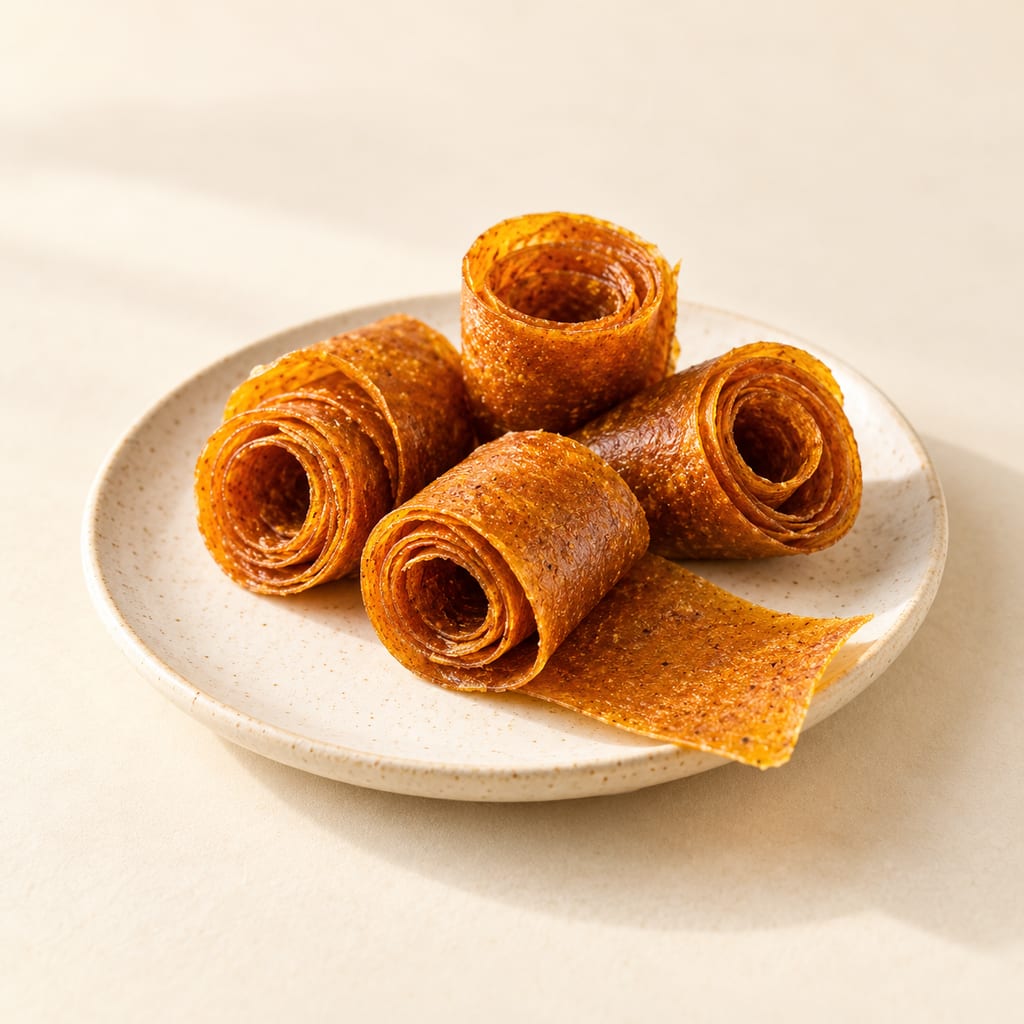
Cooked pumpkin blended with honey, cinnamon, nutmeg and cloves, spread thinly and dried into a rollable sheet.
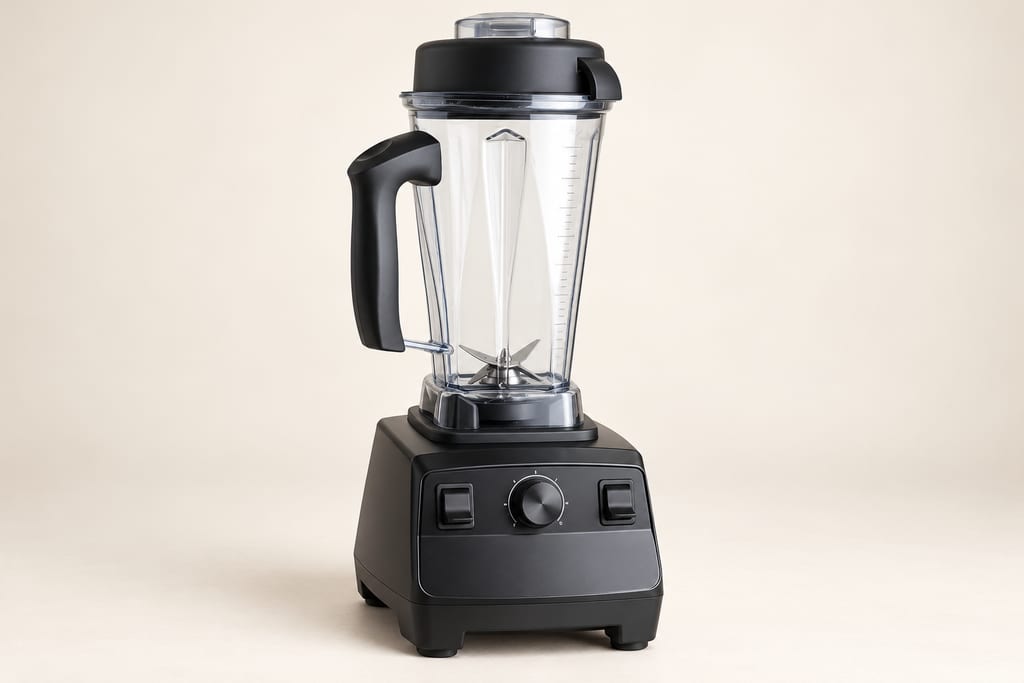
A food blender uses motor-driven blades to purée, emulsify, grind or disperse ingredients in a jar or directly in a pot. Countertop, personal and immersion forms differ in vessel and limits; food processors remain a separate tool family.
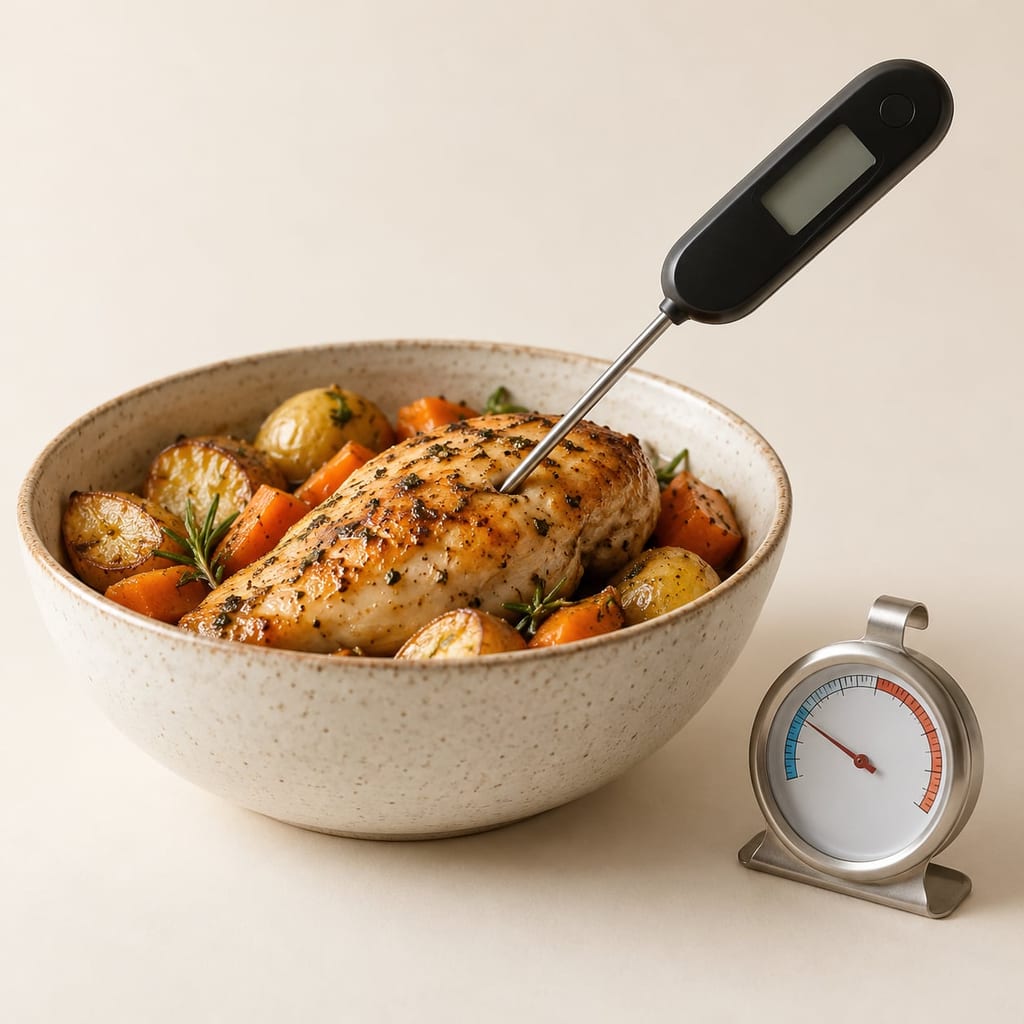
A food probe measures the temperature inside food at the probe tip; a refrigerator thermometer measures the cold storage environment. They answer different questions and cannot establish acidity or validate a preservation process.
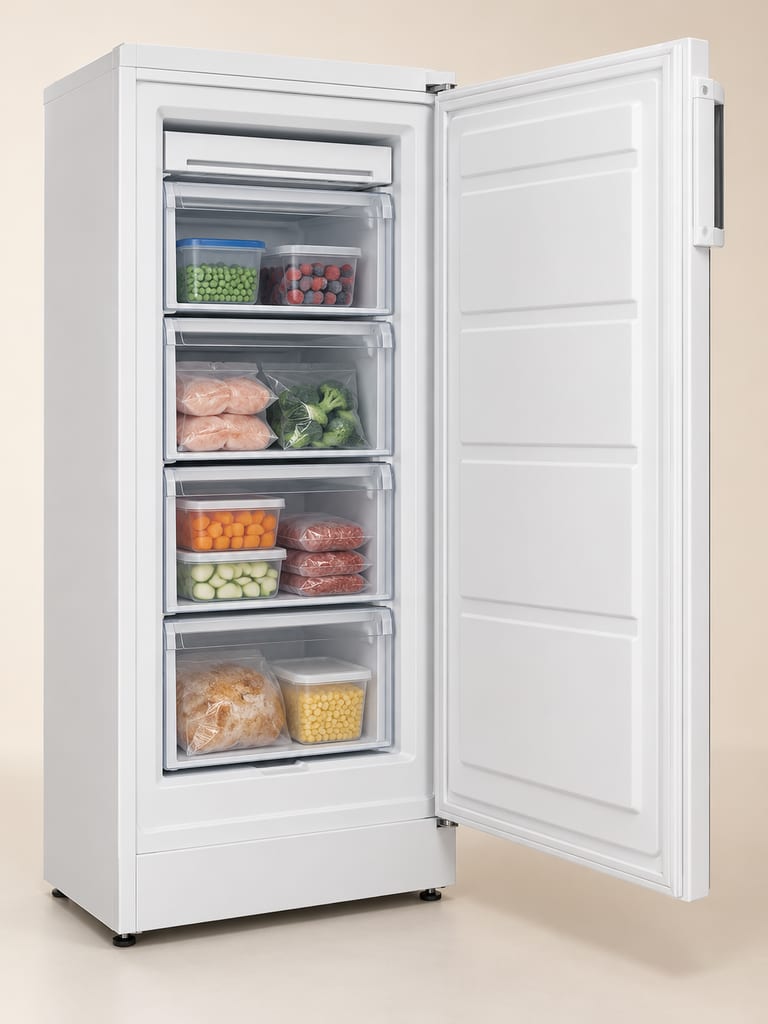
A household freezer holds food in a frozen state for storage and selected texture or separation work; its batch-storage role differs from industrial equipment that freezes individual pieces separately.
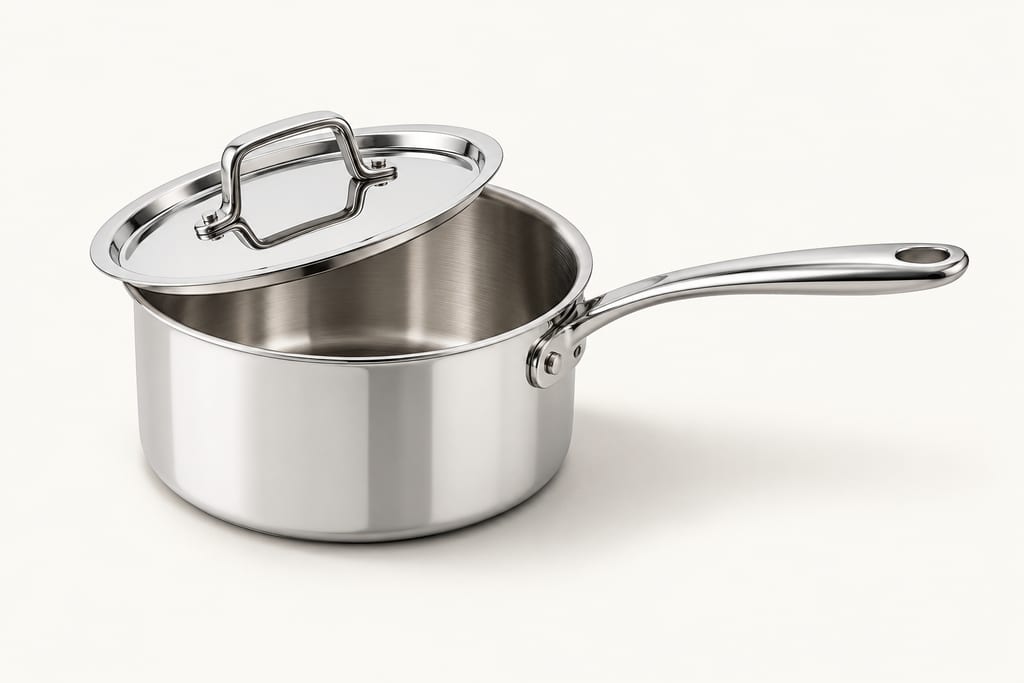
A modern, portable stovetop pan with a stainless-steel cooking surface for sauces and other small simmering jobs. Size, cladding, lid, compatibility and care vary by model.
An ordinary household refrigerator used to store selected fresh produce in vented crates or drawers, at low temperature and at a humidity chosen by the drawer. Not every crop benefits from cold.
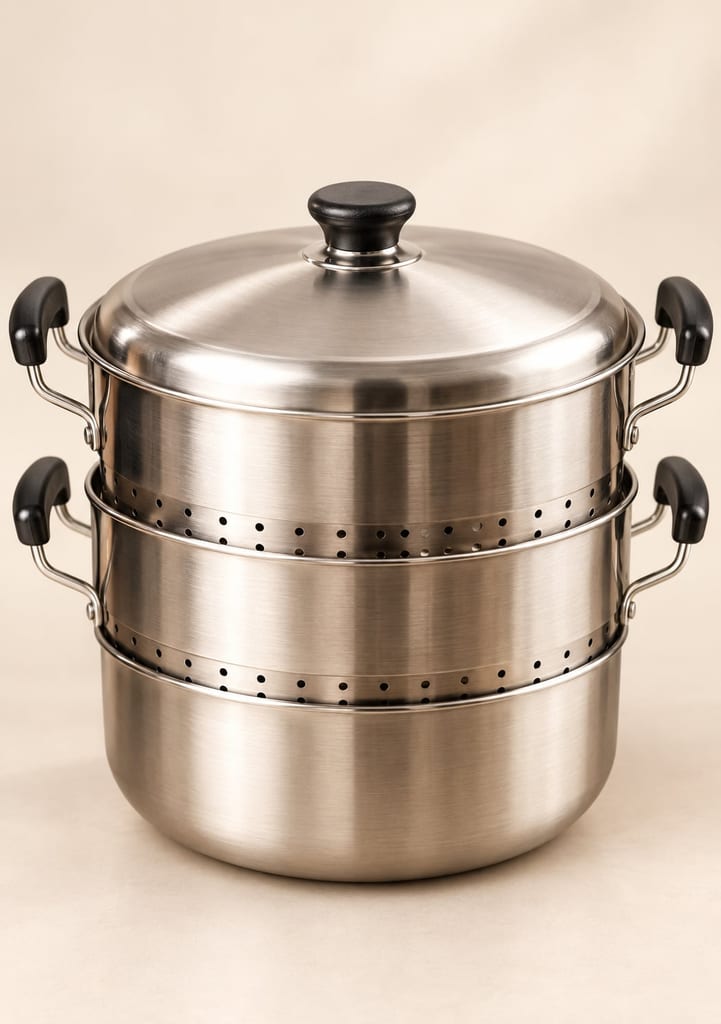
A steamer cooks food above heated water under a cover. The broad term includes improvised pot-and-rack setups, metal tiers and basket steamers; individual forms have different designs and uses.
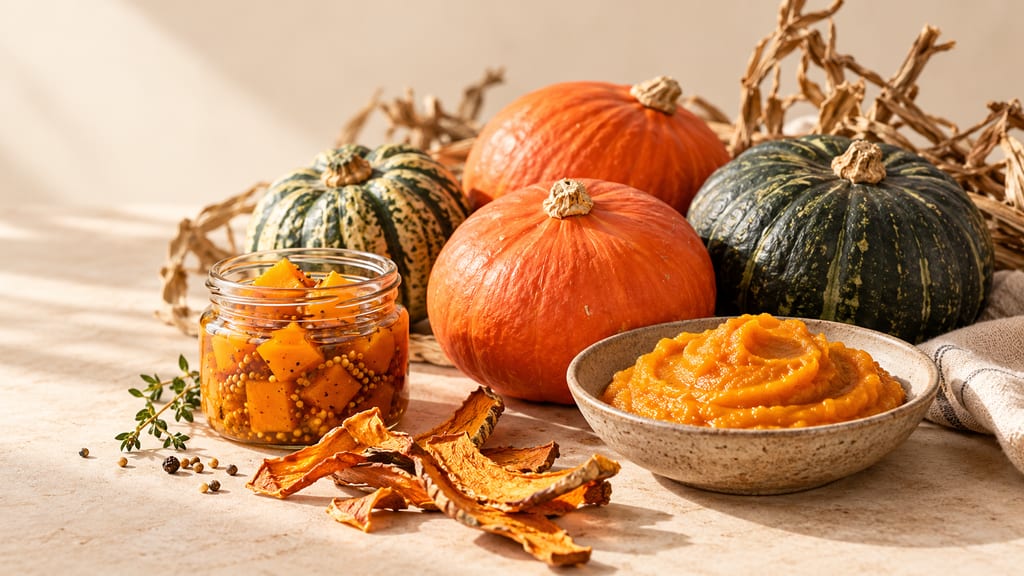
A full harvest-to-pantry guide to keeping pumpkins whole, drying and freezing them, and making pickles and sweet preserves around the world—with the exact distinction between tested canning and cold storage.
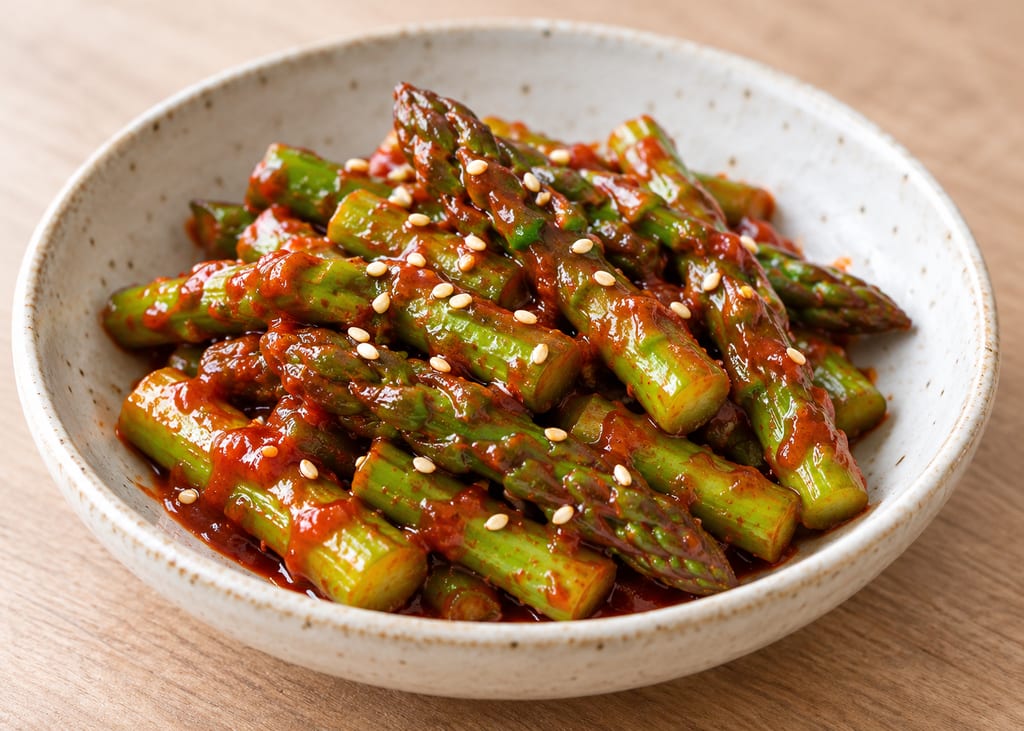
A Korean banchan of blanched asparagus dressed with a sweet-sour cho-gochujang sauce; Hyosun's version cools the spears in ice water before tossing.
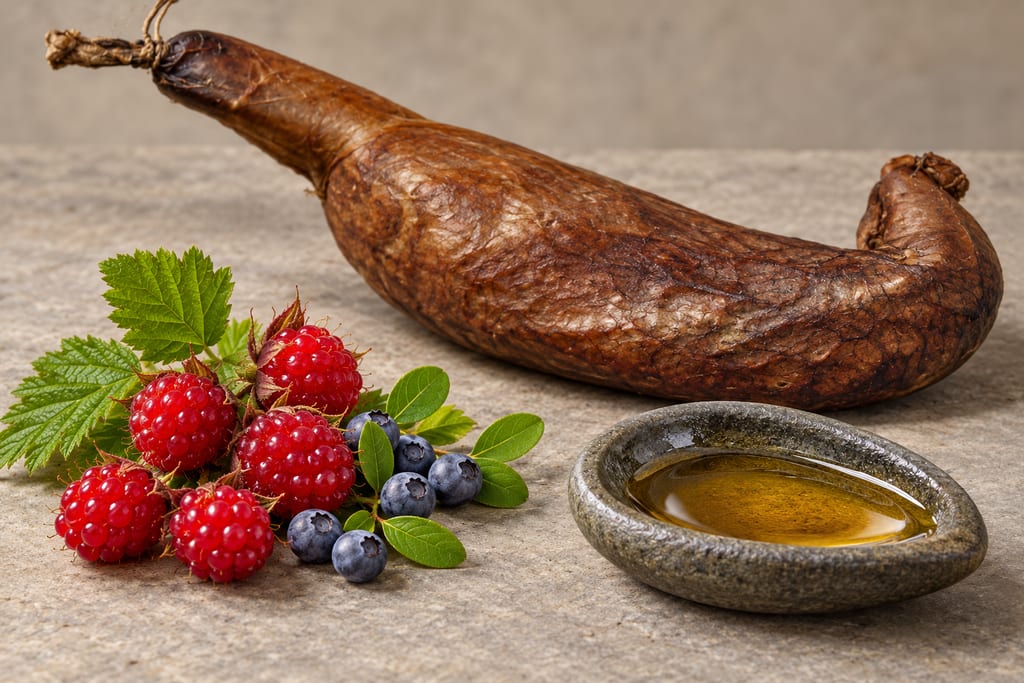
Berries, greens and fish eggs were kept in seal oil by Indigenous Alaskan communities. The oil seals the food from air, and the result depends on preparation and the surrounding conditions.
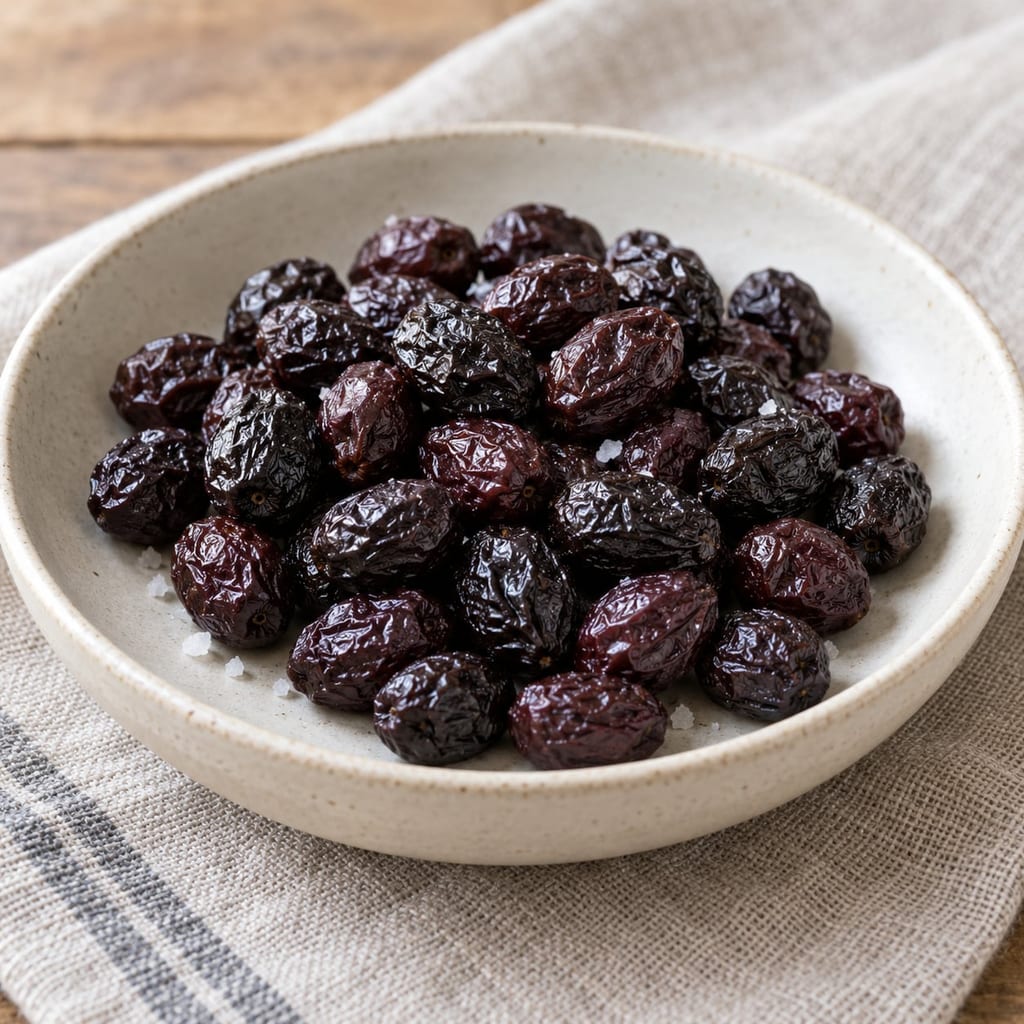
Fully ripe dark olives are mixed with salt and turned weekly as salt draws out moisture. Distinct from existing brine-fermented and lye-treated olives.
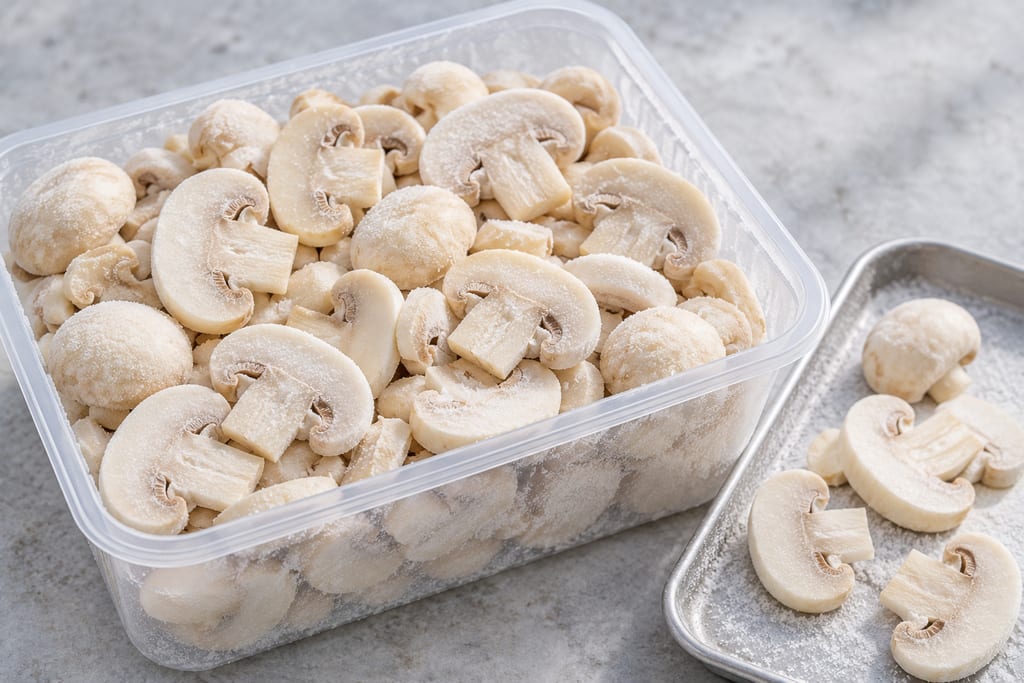
Steam-blanched frozen mushrooms are whole, button, quartered or sliced mushrooms given a short steam treatment, cooled promptly, packed with headspace and kept frozen.
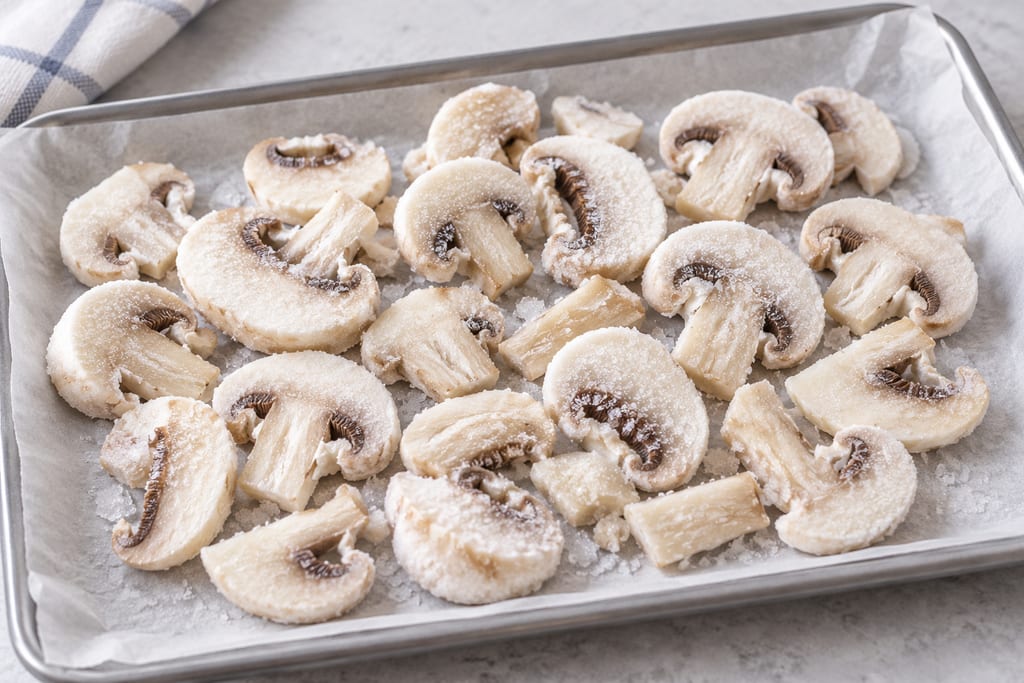
Frozen raw mushrooms are cleaned mushrooms frozen without a preheating step, the variant a Japanese forest-volunteer manual describes beside its cooked version.
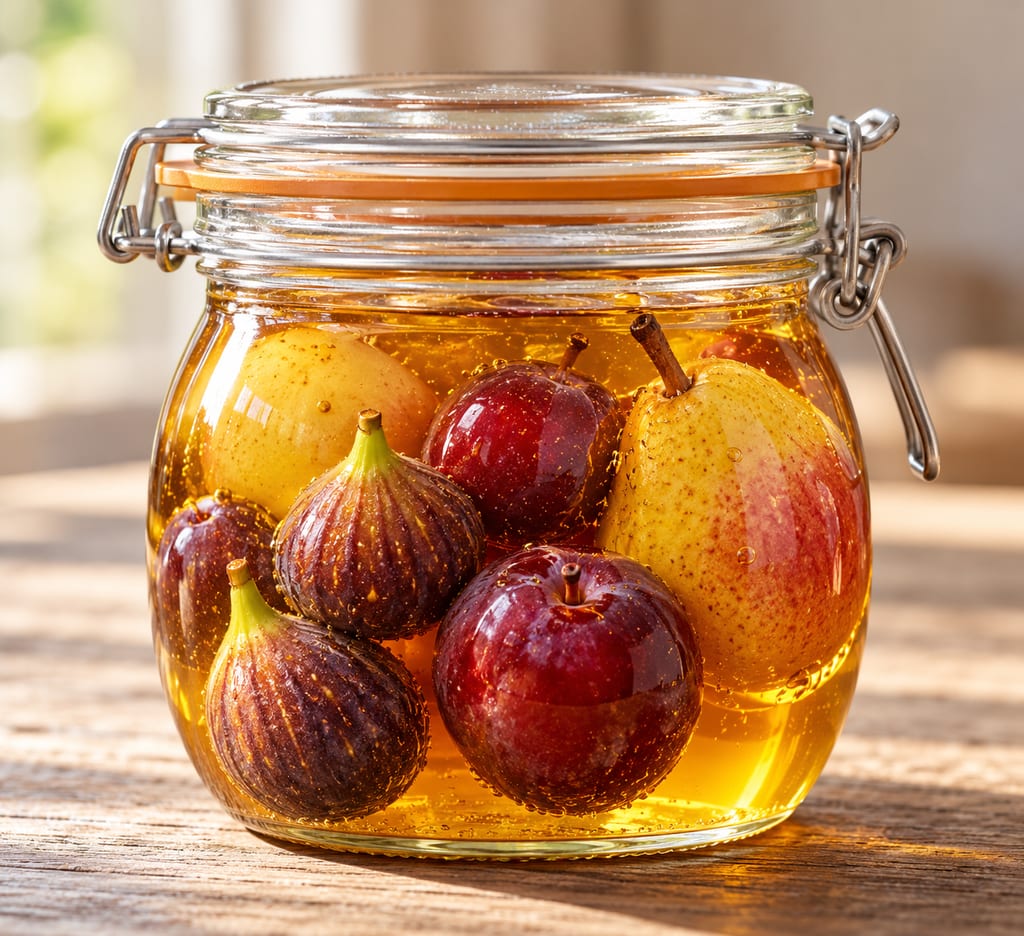
Fruit and some other foods were placed in honey in ancient Mediterranean kitchens. The honey's concentrated sugar does the preserving, and wet ingredients weaken it.
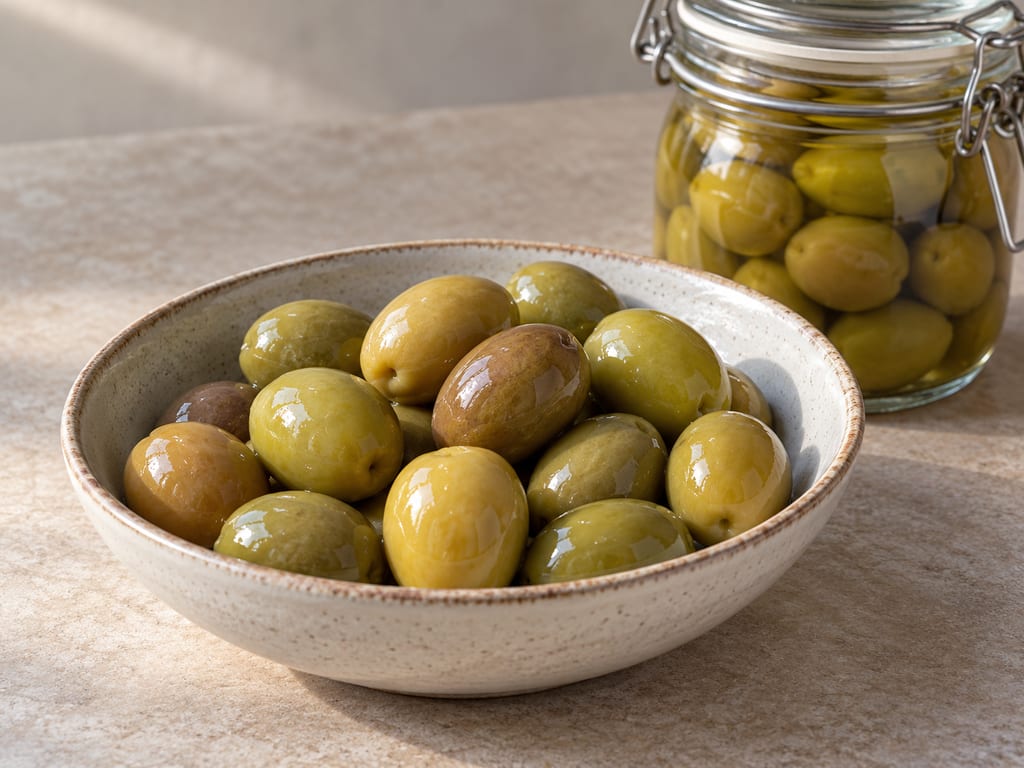
Green olives debittered in a sodium hydroxide solution, then rinsed repeatedly and held in brine, by the University of California's published home-pickling method.
An experimental sweet mushroom preserve developed in Indian food-processing research, made by cooking mushroom pulp with sugar, added pectin and citric acid until concentrated into a thick, spreadable jam.
No community contributions have been published for this entry yet.
Sign in to contribute. Published comments and photos are free to read.
nchfp.uga.eduMethod · Context · Handling
NCHFP: freezing pumpkinDocumented preparation, regional context or preservation handling, with the limits stated in the text.
Cited in: The preserve; Ingredients and equipment; Keeping and using
extension.sdstate.eduMethod · Context · Handling
extension.sdstate.eduDocumented preparation, regional context or preservation handling, with the limits stated in the text.
www.fda.govMethod · Context · Handling
www.fda.govDocumented preparation, regional context or preservation handling, with the limits stated in the text.
nchfp.uga.eduMethod · Context · Handling
National Center for Home Food Preservation. How long can I store frozen foods? University of Georgia guidance.Documented preparation, regional context or preservation handling, with the limits stated in the text.
Cited in: The preserve; Ingredients and equipment; Keeping and using
www.food.gov.ukMethod · Context · Handling
Food Standards Agency: Chilling, freezing and defrostingDocumented preparation, regional context or preservation handling, with the limits stated in the text.
Cited in: The preserve; Ingredients and equipment; Keeping and using
blogs.extension.iastate.eduMethod · Context · Handling
Iowa State University Extension. Preserving pumpkin safely. Originally 2016; reviewed and updated April 2026.Documented preparation, regional context or preservation handling, with the limits stated in the text.
Cited in: The preserve; Ingredients and equipment; Keeping and using
nchfp.uga.eduMethod · Context · Handling
NCHFP: Vegetables and fruits FAQs, pumpkin butter and pureeNo validated home pumpkin-butter process
Cited in: The preserve; Ingredients and equipment; Keeping and using