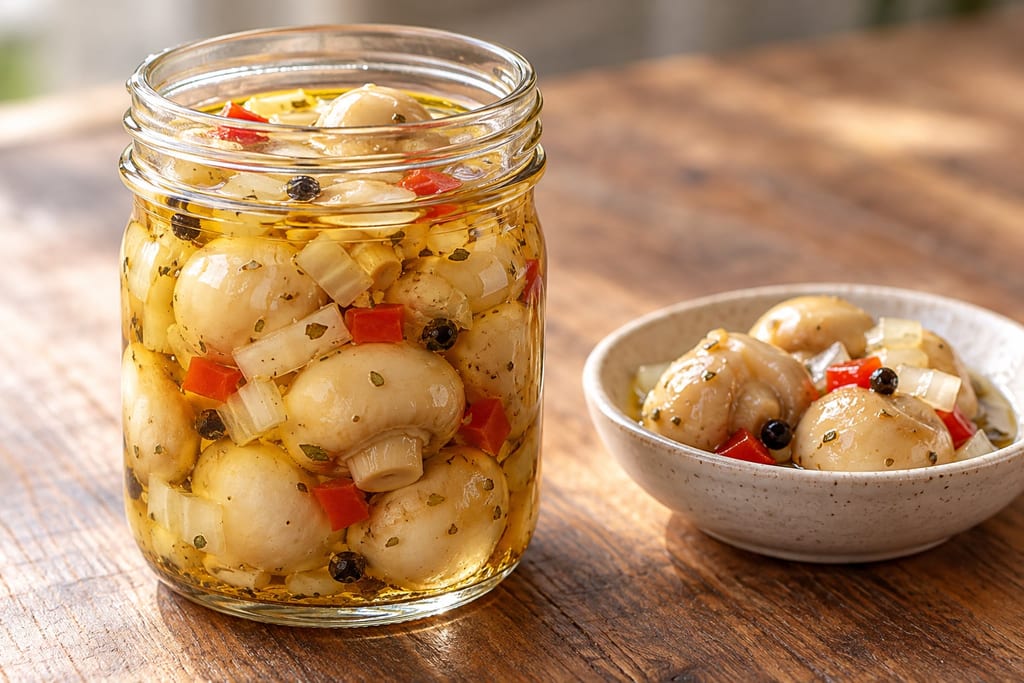
Eastern European Vinegar-Pickled Mushrooms
Small edible mushrooms are briefly cooked and packed in a seasoned vinegar marinade, a sweet-sour preserve served cold in Poland and neighbouring cuisines.
 FermenteaWhere food goes to change
Modern method
Mushroom jam · mushroom-jam · sweet mushroom jam · oyster mushroom jam · oyster-mushroom jam · Pleurotus mushroom jam · mushroom pulp jam · mushroom-based jam · mushroom preserve · banana-mushroom blended jam · banana mushroom mixed jam · milky mushroom jam · Calocybe indica jam · mushroom fruit spread · sweetened mushroom spread
An experimental sweet mushroom preserve developed in Indian food-processing research, made by cooking mushroom pulp with sugar, added pectin and citric acid until concentrated into a thick, spreadable jam.
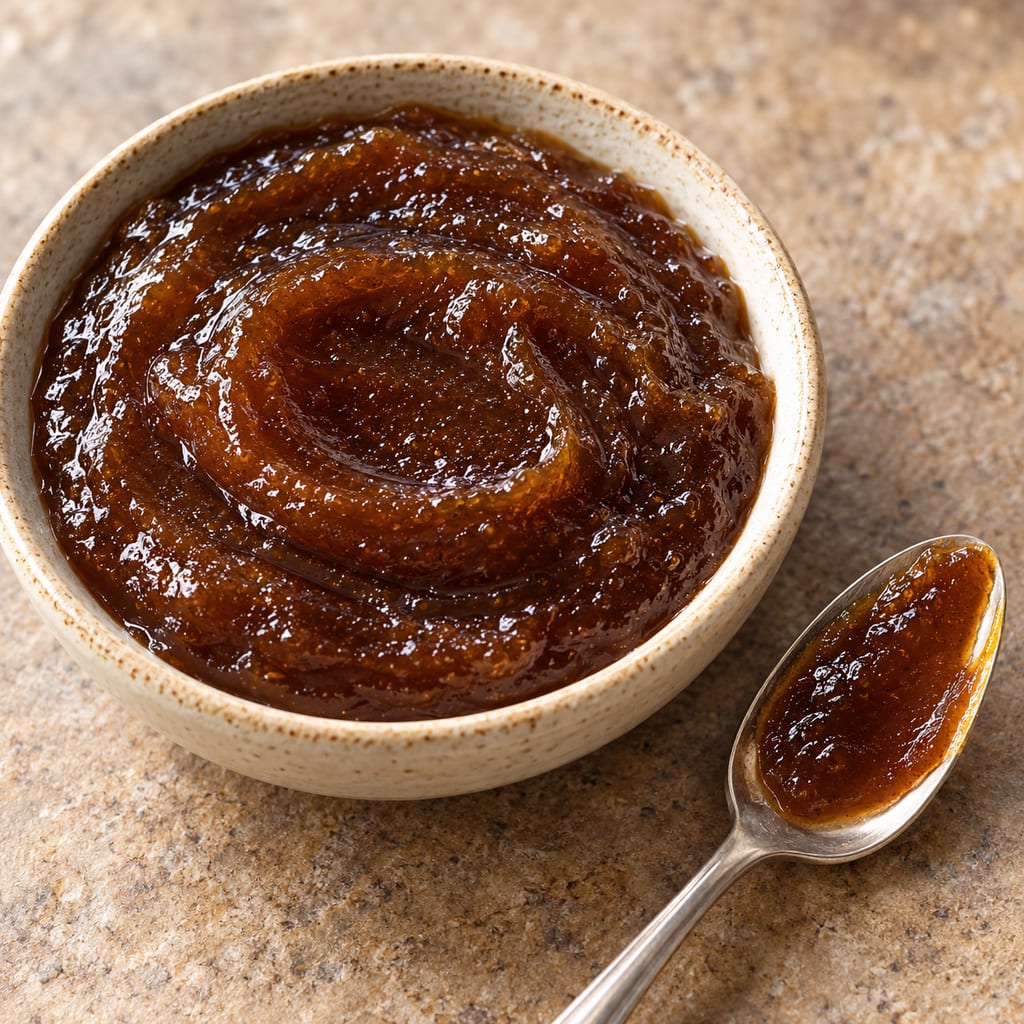
Mushroom jam is an experimental sweet preserve made by cooking edible mushroom pulp with sugar, added pectin and acid until it reaches a thick, spreadable consistency. Unlike savoury mushroom-and-onion spreads, this preparation belongs to the sweet jam-making tradition and is intended to resemble fruit jam in appearance, consistency and sweetness. It has been developed mainly by Indian agricultural researchers seeking new uses for cultivated oyster mushrooms. The finished product can be golden, amber or brown, depending on the mushroom, ingredients and cooking process.
The basic formulation begins with fresh mushrooms that are cleaned, blanched and ground into a pulp. Sugar provides sweetness and contributes to preservation through its effect on water availability. Pectin gives the gel structure familiar from fruit jam, and citric acid supplies the acidity pectin needs to set and adds flavour. Cooking evaporates water and concentrates the mixture. ICAR's Directorate of Mushroom Research in Solan describes a formulation containing equal weights of mushroom pulp and sugar, with pectin and citric acid each added at 1% of the pulp weight.
The main ingredient in the early ICAR work was oyster mushroom (Pleurotus species). Later work used Pleurotus ostreatus in a banana-mushroom blended jam. A separate Indian study used milky mushroom, Calocybe indica, and investigated pectin obtained from different sources.
Mushroom makes the jam different from fruit jam. Edible mushrooms contain cell-wall materials such as chitin and beta-glucans, whereas many fruits supply appreciable pectin. Mushroom pulp has no natural pectin-and-acid system like a jam fruit. So pectin and citric acid are added to get the structure.
Mushroom jam is non-fermented. No bacteria, yeasts, koji moulds or other starter organisms are deliberately cultivated during its production. The transformation depends on blanching, mechanical pulping, evaporation, sugar concentration, acidification and pectin gelation. Any microbial fermentation developing during storage would normally indicate unwanted deterioration rather than successful manufacture. The finished food should also be kept distinct from mushroom murabba, which preserves larger mushroom pieces in syrup, and mushroom candy, which includes further sugar impregnation and drying.
Standards for fruit jam generally assume a fruit-based ingredient system. A product composed principally of mushroom pulp may require separate regulatory assessment depending on where it is sold.
Mushroom jam has a modern research history, not a traditional regional origin. The earliest paper on the sweet oyster-mushroom product is Development and evaluation of oyster mushroom value added products, by G. C. Wakchaure, Mahantesh Shirur, K. Manikandan and Lekh Raj Rana. It appears in volume 19, issue 1 of Mushroom Research, dated 2010. The paper describes mushroom jam alongside biscuits, pickle, soup, patties and pakoda. ICAR's online catalogue lists it under 2015.
The work arose from a specific agricultural problem. Fresh oyster mushrooms spoil fast, especially in tropical heat and when a seasonal surplus is hard to sell. Growers can lose value when large quantities become available at the same time. Indian research institutions therefore tried dried powders, biscuits, pickles, sweet preserves and other products that might increase the proportion of a harvest that could be sold. Mushroom jam was one experimental product in this programme, not an inherited household speciality.
ICAR News supplied clearer public documentation in July–September 2013. An article by G. C. Wakchaure and Kamlesh K. Meena, then affiliated with the National Institute of Abiotic Stress Management in Baramati, included a photograph explicitly labelled oyster mushroom jam. It reported that mushroom pickle and jam had stayed stable at ambient temperature for six to eight months, and recommended incorporating oyster-mushroom powder at 5–10% in certain products by desired flavour and nutritional properties. The brief article did not disclose complete pH, water-activity or thermal-validation results for the photographed jam.
A separate experiment published in October 2013 by researchers at Dr. MGR Educational and Research University in Chennai used Calocybe indica, the milky mushroom. The authors compared pectin sources, and jam made with natural guava pectin scored highest in sensory tests.
In Pakistan, researchers at the University of Agriculture, Peshawar, developed a banana-mushroom blended jam. Their paper was received in October 2015, accepted in June 2016 and published on 30 April 2017. The study used oyster mushrooms and bananas obtained from the Tarnab area. Six mushroom-and-banana combinations were compared with a banana-only control, and the products were evaluated during ninety days of storage. The preferred formulation combined 400 g banana, 600 g mushroom, 1 kg sugar and 2 g citric acid.
The jam was also shown at an ICAR mushroom-awareness event held at the Indian Agricultural Research Institute in New Delhi on 21 February 2018. The exhibition displayed mushroom jam among preserved, dried and cooked mushroom products contributed by multiple organisations and businesses.
ICAR-DMR's June 2020 manual, Technologies Developed by ICAR-DMR for Commercial Use, gives the most explicit institutional manufacturing formula. It describes grinding blanched mushrooms, adding sugar, pectin and citric acid, concentrating the mixture to 68°Brix and hot-filling glass containers.
Mushroom jam is formed through heat concentration and pectin gelation. Fresh mushrooms are mostly water, and some is released in blanching and pulping. Further heating evaporates moisture and concentrates the soluble substances. Sugar dissolves into the pulp and changes both sweetness and the availability of water. Added pectin forms a network that gives the finished product a soft, spreadable structure. These processes are physical and chemical, not microbial fermentation.
The fungal material behaves differently from fruit pulp. Mushroom cell walls contain chitin, beta-glucans and other polysaccharides that contribute to tissue structure and texture. They do not supply the same established pectin-rich cell-wall system found in many jam-making fruits. For this reason, ICAR's formulation adds commercial pectin at 1% of mushroom pulp weight. This matters because ordinary high-methoxyl pectin depends on sugar and acid, while low-methoxyl pectin gels through calcium.
Pectin consists principally of polymers containing galacturonic acid residues. Under suitable conditions, pectin chains associate to form a network that retains water and suspended solids. In conventional high-sugar jam, dissolved sugar reduces competition from water around the polymer chains, while acidity changes the electrical interactions between pectin molecules. Penn State Extension gives about pH 2.8 to 3.3 as the range where traditional fruit jam gels; that is general pectin chemistry, not a measured value for this jam.
Citric acid serves both a flavour and formulation role. It provides tartness that balances the sugar and can move the mixture towards conditions suitable for pectin gel formation. The ICAR manual specifies citric acid at 1% of mushroom pulp weight, but does not report the resulting equilibrium pH. Mushrooms buffer acid, so a fixed amount of citric acid will not give the same final pH in every batch. Acidity must be measured rather than inferred from the ingredient list.
The manual's concentration target is 68°Brix. Brix is a refractometric measure of soluble solids expressed against a sucrose calibration. In a complex food it is not the same as the percentage of sucrose, because acids and other soluble compounds add to the reading. 68°Brix on its own does not show a low enough water activity. Higher soluble-solids concentration can reduce water activity and improve the effectiveness of sugar as a preservative. However, Brix and water activity are different measurements.
Cooking also affects colour and flavour. Fresh mushrooms contain enzymes, including polyphenol oxidases, involved in postharvest browning. Blanching can reduce enzymatic activity, while subsequent concentration can darken the mixture through nonenzymatic reactions and changes in pigments. Amino compounds from the mushrooms may participate in heat-induced flavour reactions when appropriate conditions are present. The balance between sweetness and natural mushroom savouriness is therefore part of the sensory character of the finished product.
The central food-safety concern is the combination of a low-acid starting ingredient and an enclosed, moist finished product. Mushroom jam may become sufficiently acidic and concentrated under a validated process, but neither sugar addition nor hot filling alone guarantees that outcome. The relevant measurements include finished equilibrium pH, water activity, soluble solids, packaging integrity and the thermal treatment used.
The ICAR-DMR process starts with fresh edible mushrooms. They are washed, blanched and ground into a relatively uniform paste. Washing removes visible debris, while blanching softens the mushroom tissues and reduces vegetative microorganisms and some browning-enzyme activity. Mechanical grinding makes a continuous pulp suitable for concentration and gel formation. The June 2020 manual gives no mushroom species, blanching temperature, blanching time or particle size for its jam formula, and the pickle and candy recipes in the same book do not fill the gap.
Sugar is then added at a ratio of one part sugar to one part mushroom paste by weight. Pectin and citric acid are each specified at 1% of mushroom pulp weight. The manual instructs heating the mixture with continuous stirring to prevent it sticking to the pan. Evaporation concentrates the soluble solids, while the pectin and acid influence the setting properties. The stated endpoint is 68°Brix. No universal cooking time or numerical temperature is supplied for this particular formula.
For the endpoint to be meaningful in food production, soluble solids need to be measured appropriately. Penn State Extension recommends a refractometer, with representative samples cooled before measurement as the instrument instructions say. Measuring a thick, heterogeneous pulp requires particular care to obtain a representative sample. The ICAR manual gives the concentration target but does not describe the calibration, sampling or measurement procedure used during the original development work.
After concentration, the ICAR process hot-fills the prepared jam into sterilised glass containers, leaving approximately 0.8–1.0 cm headspace. The containers are then sealed. The manual recommends cool, dry storage, but does not give a separate validated sealed-container heat process with an exact product temperature, time, container size or cooling schedule. Hot filling a clean or sterilised jar does not by itself make a low-acid mixture safe to keep at room temperature.
A separate Pakistani experiment provides more numerical operating details for a different recipe. The authors blended banana and Pleurotus ostreatus in several proportions. Their preferred BM6 formulation used 400 g banana, 600 g mushroom, 1 kg sugar and 2 g citric acid. The mushrooms and bananas were washed and sliced, briefly treated in acidified water at 80°C for two minutes, pulped and concentrated by cooking. The paper reports a cooking temperature of 104°C and a target of 68–70°Brix. These temperatures and ingredient quantities belong to the fruit-blended experiment, not the Indian mushroom-only formula.
The Peshawar researchers packed their jams into glass containers autoclaved at 121°C for fifteen minutes, sealed them and stored them at about 31°C for ninety days. That is a laboratory test, not a home canning schedule.
Other mushroom preparations require separate methods. Mushroom murabba retains recognisable pieces in concentrated sugar syrup, while mushroom candy undergoes additional treatment and drying. A savoury mushroom jam may contain onion, oil, vinegar and much less sugar. Neither its method nor its storage behaviour is interchangeable with the sweet ICAR formulation. For publication, the actual sweet jam process should retain its own substrate, ingredient proportions and analytical endpoints.
Mushroom jam is best understood as a family of experimental food-processing formulations rather than a single traditional dish with a recognised regional recipe. The variations come from research institutions and differ in mushroom species and pectin source.
The ICAR work in Solan, Himachal Pradesh, made oyster-mushroom jam one of several products meant to raise the value of cultivated mushrooms. The 2013 ICAR News article describes processing of fresh and dried oyster mushrooms, including experimental jam, pickle and biscuits. It also mentions using oyster-mushroom powder at 5–10% in selected preparations to balance nutritional composition with sensory acceptability.
A distinct variation was studied in Chennai, Tamil Nadu, in 2013. Researchers used Calocybe indica, commonly called milky mushroom, and compared pectin sources. Their conclusion was that a formulation using natural pectin derived from guava gave the highest sensory score among the treatments evaluated. Guava contributes a fruit-derived gelling component, potentially alongside flavour and other constituents depending on its preparation.
The Peshawar banana-mushroom formulation represents another approach. Instead of relying almost entirely on mushroom pulp, it blends oyster mushroom with ripe banana. The 2017 study compared formulations with different banana-to-mushroom ratios and with or without added citric acid. BM6, containing 400 g banana and 600 g mushroom alongside sugar and citric acid, received favourable overall quality assessments. This recipe has a recognisable fruit component and a different flavour profile from a jam made principally from mushrooms.
The 2018 mushroom-awareness exhibition in India shows the wider food-development effort. Mushroom jam appeared alongside mushroom candy, murabba, pickle, biscuits, soup mixes, snacks and other preparations. The exhibition was designed to introduce growers and consumers to opportunities for mushroom processing.
Sweet mushroom jam must also be distinguished from unrelated modern savoury products using the same English name. Savoury mushroom jam can be made from fried mushrooms, onions, vinegar, miso, wine or oil and may contain relatively little sugar. Such products depend mainly on cooking and flavour concentration rather than conventional high-sugar pectin gelation. They may be suitable as refrigerated condiments, but their ingredients and preservation hazards are different.
The intended finished product is a sweet, thick mushroom spread resembling conventional jam. The ICAR manual describes a smooth mushroom paste concentrated with sugar and set using pectin. Its purpose was to create an acceptable processed food from a highly perishable agricultural ingredient.
As a culinary preparation, a sweet mushroom jam can potentially be spread on bread or toast or used as a filling in baked goods and other desserts. These are applications consistent with the intended spreadable texture. However, the ICAR publication does not document individual serving recipes or the performance of mushroom jam in baking.
The flavour is expected to differ from familiar fruit preserves. Mushrooms contain savoury amino compounds and other substances associated with umami, while the concentrated sugar and citric acid create a sweet-sour background. Oyster mushroom pulp may also contribute a noticeable earthy or fungal aroma. The extent to which this flavour remains acceptable depends on ingredient proportion and processing. Research formulations generally aim to make the mushroom component compatible with familiar sweet-preserve characteristics rather than reproduce a conventional fruit flavour exactly.
The 2017 Peshawar study tested taste. Ten judges evaluated colour, taste, texture and overall acceptability using a nine-point hedonic scale. The blend of 60% mushroom and 40% banana pulp with added citric acid did well among the experimental blends, judged by a small panel.
Quality fell in storage. Colour, taste, texture and overall scores all dropped over the ninety days. This matters when interpreting preservation claims: a product can remain physically concentrated while becoming less desirable to eat. Commercial acceptability therefore involves flavour, colour, texture and microbiological safety, not merely achieving a particular Brix reading.
Mushroom jam is sometimes promoted as a way to increase the nutritional value of sweet products. Mushrooms contain protein, fibre-type polysaccharides and some micronutrients, but the jam is also half sugar. Processing, concentration and the ratio of mushroom to other ingredients affect its composition.
The intended result is a homogeneous, spreadable product without obvious separation between syrup and mushroom solids. It should be thick enough to resemble jam but not so stiff that it will not spread. The precise colour depends on the mushroom and processing method. A golden or brown colour is normal after concentration, but colour says nothing about quality or safety.
One measurable process endpoint is total soluble solids. ICAR specifies 68°Brix for its mushroom-pulp formula; the 2017 banana-mushroom study aimed for 68 to 70°Brix. Measure soluble solids with a calibrated refractometer. Sugar concentration, other soluble compounds and water availability need to be considered separately. A thick product may still have an unsafe combination of pH and water activity.
The Pakistan study tracked changes over ninety days. Across its treatments, soluble solids rose from about 67.94 to 69.78°Brix while pH fell from about 3.45 to 3.26. Titratable acidity and reducing sugars increased, while non-reducing sugars and sensory scores decreased.
Texture defects can arise from unsuitable proportions of pectin, sugar and acid. Too little effective pectin or insufficient concentration can produce a soft, poorly setting spread. Excessive acid or unsuitable gel conditions may cause water separation, known as syneresis. Prolonged heating can degrade pectin and weaken gel formation. A stiff or rubbery result may indicate excessive concentration or an inappropriate pectin system.
Excessive cooking may also cause scorching and undesirable flavour changes. Mushroom pulp contains suspended solids and can adhere to a hot cooking surface as water evaporates. Continuous stirring is explicitly required by the ICAR method. Browning may result from enzymatic changes before blanching or from heat-induced reactions during concentration. A darker finished colour is therefore not automatically proof of spoilage, but unexplained changes during storage require separate assessment.
The central safety concern is that mushrooms are low-acid foods before formulation. In an inadequately acidified, sealed container, conditions may allow Clostridium botulinum to grow and produce botulinum neurotoxin. The US FDA defines acidified foods using a finished equilibrium pH of 4.6 or below together with other applicable criteria, while safe shelf-stable preservation requires a suitable validated process. A jar being hot-filled or sealed does not independently prove that the necessary controls have been achieved.
ICAR's published storage statements require careful interpretation. Its 2013 bulletin reports ambient stability of oyster-mushroom jam for six to eight months, whereas the 2020 manual describes one-year preservation as a development objective.
The National Center for Home Food Preservation warns that low-acid additions can make otherwise tested jam recipes unsafe by changing the acidity of the finished product. Mushrooms present exactly this kind of formulation problem. A separately tested process is required for unrestricted shelf-stable home preservation.
Mould or unexpected fermentation during storage is unacceptable. The National Center for Home Food Preservation advises discarding an entire mouldy jam rather than scraping off the visible growth, because contamination and potentially harmful metabolites may extend beyond the surface.
Publishing it as a general shelf-stable home-canning recipe would require verification of the mushroom species and pulp composition, pectin type, acidification, equilibrium pH, water activity, processing temperature and duration, container size, packaging integrity and shelf life.
Wakchaure, Shirur, Manikandan and Rana described oyster mushroom jam among experimental value-added products in Mushroom Research, volume 19, issue 1 (2010). ICAR News reported oyster mushroom jam in July to September 2013 with a claimed ambient stability of six to eight months. A 2013 Chennai study made jam from Calocybe indica with different pectins, and a 2017 University of Agriculture, Peshawar study tested banana-oyster mushroom jams. ICAR's 2020 processing manual gives a general formula of equal weights of sugar and pulp, 1% pectin, 1% citric acid and a 68°Brix endpoint. This is modern experimental development, not an older regional tradition.
Scaling: scale by the weight of the mushroom paste: sugar 1:1, pectin and citric acid 1% each of pulp weight.
Fresh mushrooms are low-acid foods. If the concentrated mushroom product retains conditions permitting growth inside an oxygen-limited sealed container, Clostridium botulinum may produce dangerous neurotoxin. Ordinary blanching and hot filling are not independently validated controls for this recipe.
Hazard sourceThe formula specifies citric acid at 1% of mushroom pulp weight but does not report a measured finished equilibrium pH. Ingredient acidity alone cannot establish safe acidification in a low-acid mushroom matrix.
Hazard sourceThe 68°Brix target measures soluble solids, not water activity. Mushroom solids, sugars, acids and other compounds influence the relationship between water content and microbial water availability. Final water activity has not been reported.
Hazard sourceThe ICAR formula describes hot filling into sterilised glass containers but supplies no validated packaged-product heat treatment with container dimensions, product temperature, holding time and cooling conditions. Hot filling alone does not establish safe shelf-stable processing.
Hazard sourceMushroom pulp has a different acid and pectin composition from conventional jam-making fruit. A tested fruit-jam processing schedule may become unsafe if low-acid mushroom pulp is substituted without independent validation.
Hazard sourceInadequate concentration, contamination, unsuitable packaging or moisture conditions may permit spoilage. A finished product that looks gelled or tastes sweet is not necessarily microbiologically stable.
Hazard sourceMushroom paste contains suspended solids that can adhere to hot surfaces as water evaporates. The ICAR method explicitly requires continuous stirring to prevent burning.
Hazard sourceGel formation depends on the type of pectin, sugar concentration, acidity and processing. The ICAR formula does not specify pectin grade or final pH. A weak gel or water separation may result from unsuitable conditions, although texture defects alone do not establish microbial spoilage.
Hazard sourcePreservation and sugar concentration cannot be relied upon to neutralise toxins from poisonous mushroom species. Use reliably identified edible cultivated mushrooms rather than unverified wild mushrooms.
Hazard sourceDifferent Indian research publications report or propose six to eight months or up to one year of preservation, but the publicly available formula does not supply the complete validation parameters necessary to transfer those periods to home-prepared products.
Hazard sourceUse reliably identified, sound, edible mushrooms.
Control sourceMaintain the original ICAR ingredient proportions when describing its experimental formulation.
Control sourceConcentrate the product to the documented analytical endpoint.
Control sourcePrevent scorching during cooking.
Control sourceDocument the original container-filling specification without treating it as validated home canning.
Control sourceMeasure finished equilibrium pH as part of professional process validation.
Control sourceMeasure finished water activity rather than treating Brix as a substitute.
Control sourceUse appropriate pectin and acid measurements to establish consistent gel formation.
Control sourceRequire a validated process before claiming shelf-stable home preservation.
Control sourceEstablish shelf life through product-specific laboratory assessment.
Control sourceAvoid using visual appearance or taste to establish safety.
Control sourceExperimental ICAR product, not a validated home-canning recipe.
The reference weight is the prepared mushroom paste, not the raw mushrooms.
The mushroom species, blanching and cooking times, fill temperature and yield are not published.
No pectin grade is given, and no finished pH was published.
68°Brix is a soluble-solids target, not a measurement of water activity or a guarantee of shelf stability.
No boiling-water or pressure-canning process is published; do not borrow times from fruit jam, mushroom pickle, murabba or banana-mushroom jam.
Hot filling sterilised jars does not by itself make sealed mushroom jam safe.
The claimed six to eight month stability needs its original validation before use as a storage rule.
Do not store at room temperature or assume a refrigerated shelf life.
Mushroom murabba, candy and savoury mushroom jam are different products.
Discard any jar that is mouldy, fermenting or leaking; do not taste it to check.
Small edible mushrooms are briefly cooked and packed in a seasoned vinegar marinade, a sweet-sour preserve served cold in Poland and neighbouring cuisines.

In a surveyed Himachal method, ripe galgal is blanched, sun-dried, cooked with mustard oil, fennel and thyme, then left to ferment.
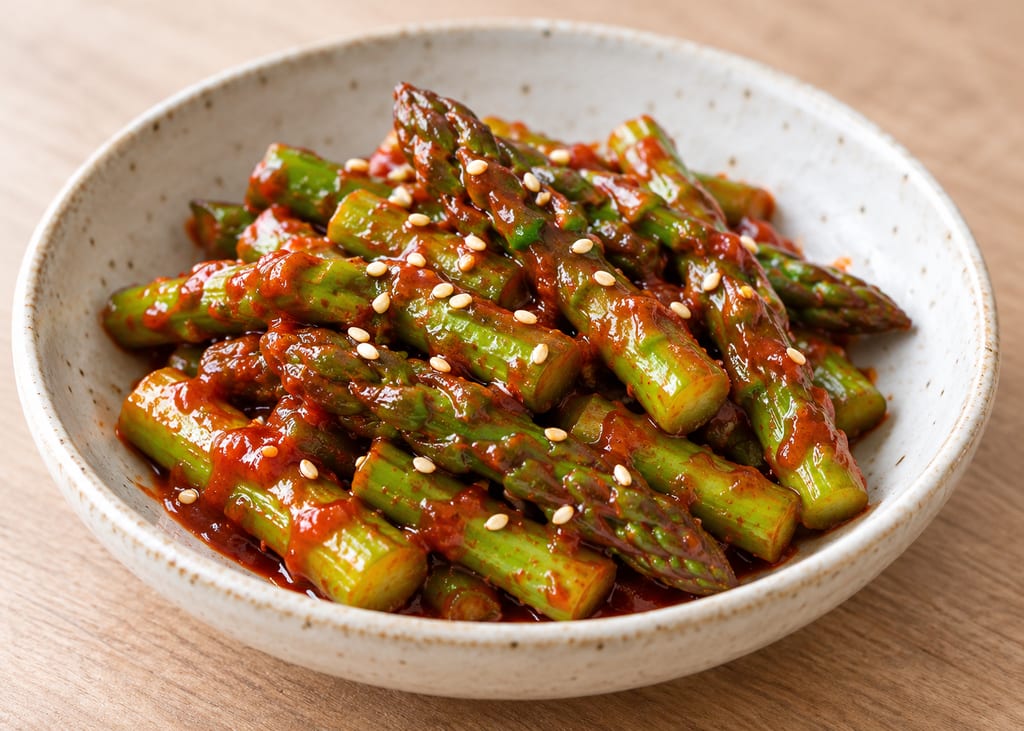
A Korean banchan of blanched asparagus dressed with a sweet-sour cho-gochujang sauce; Hyosun's version cools the spears in ice water before tossing.
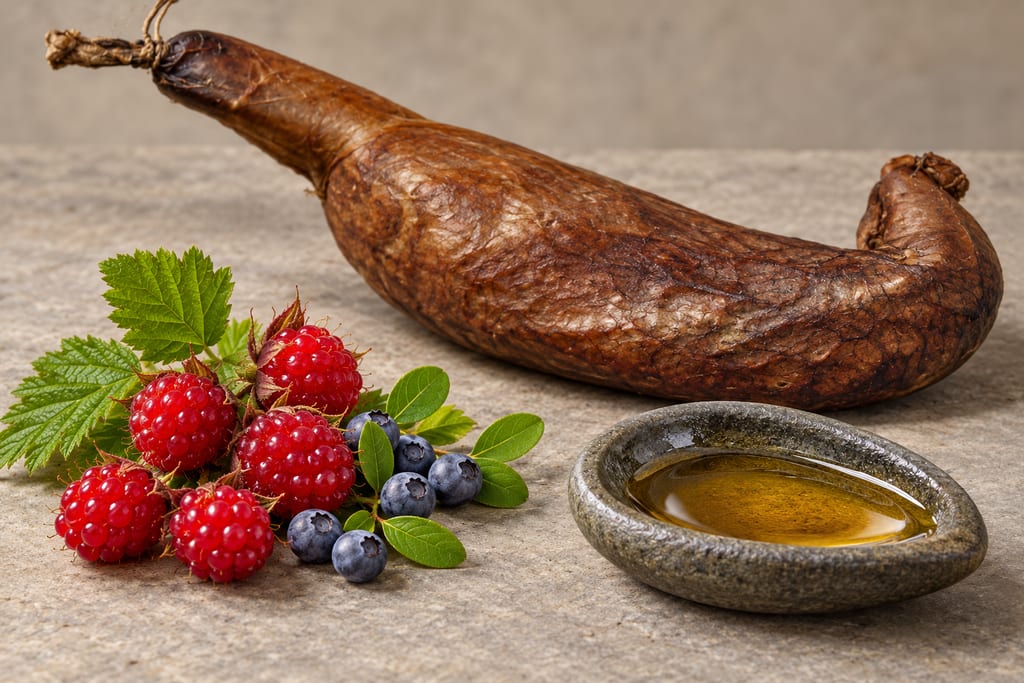
Berries, greens and fish eggs were kept in seal oil by Indigenous Alaskan communities. The oil seals the food from air, and the result depends on preparation and the surrounding conditions.
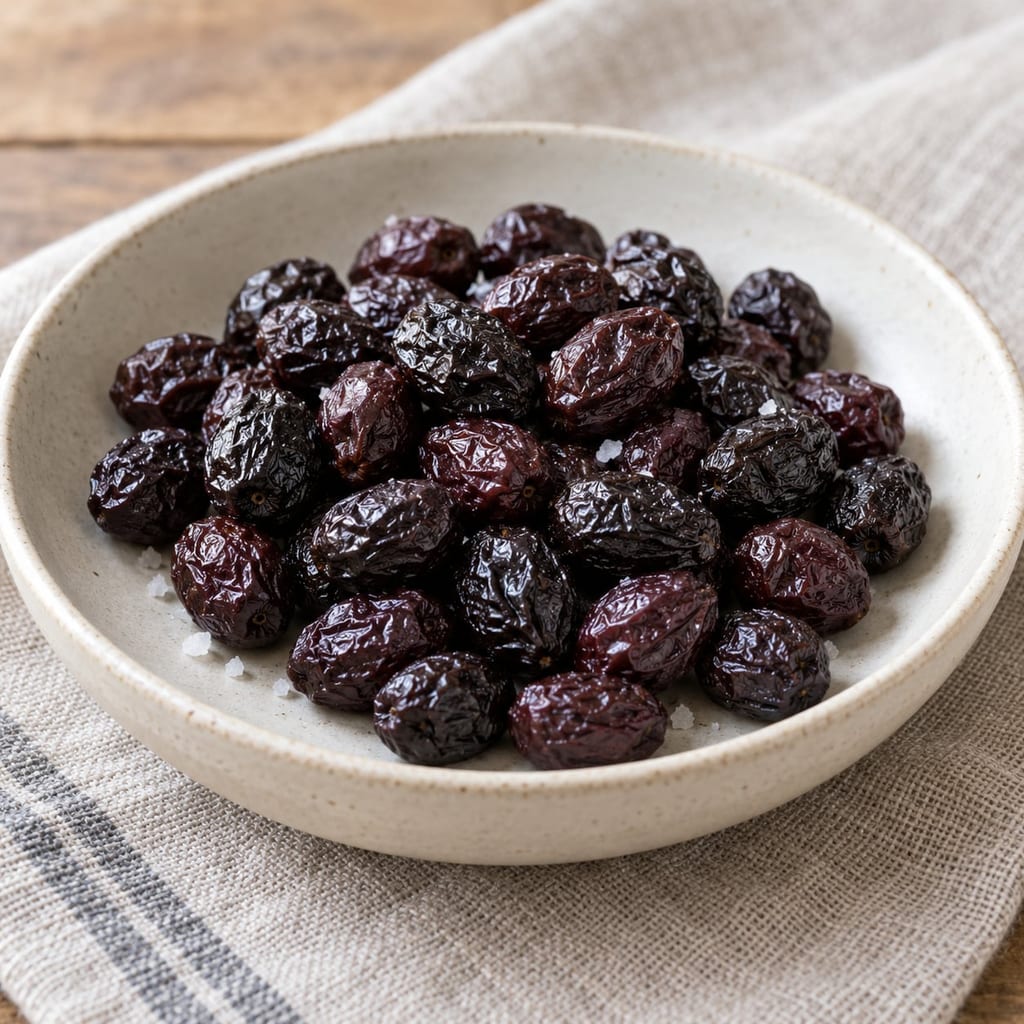
Fully ripe dark olives are mixed with salt and turned weekly as salt draws out moisture. Distinct from existing brine-fermented and lye-treated olives.
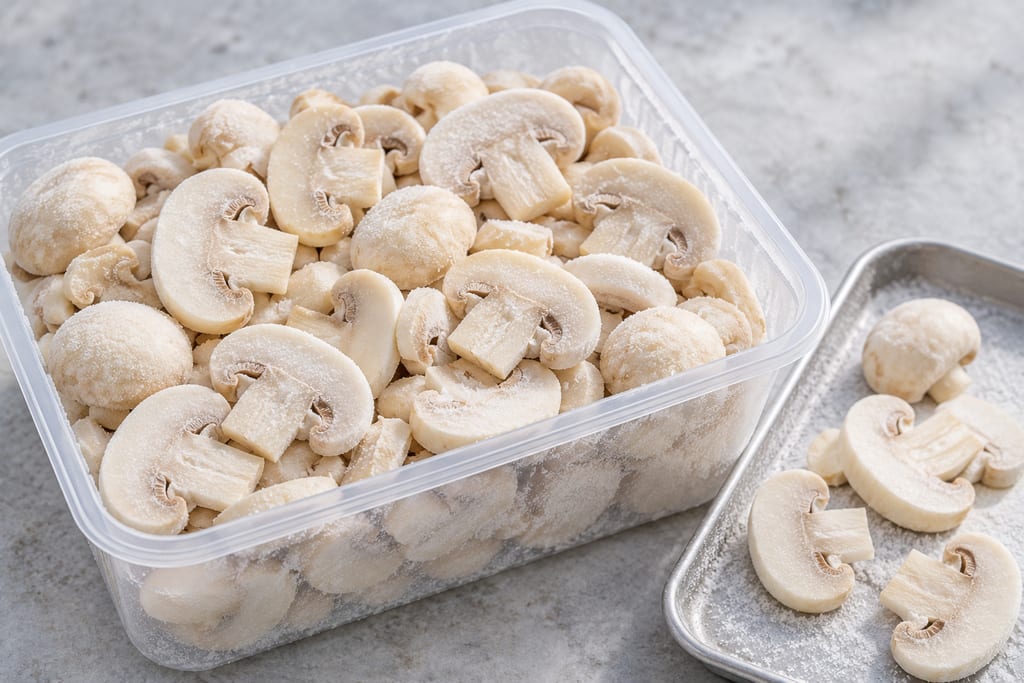
Steam-blanched frozen mushrooms are whole, button, quartered or sliced mushrooms given a short steam treatment, cooled promptly, packed with headspace and kept frozen.
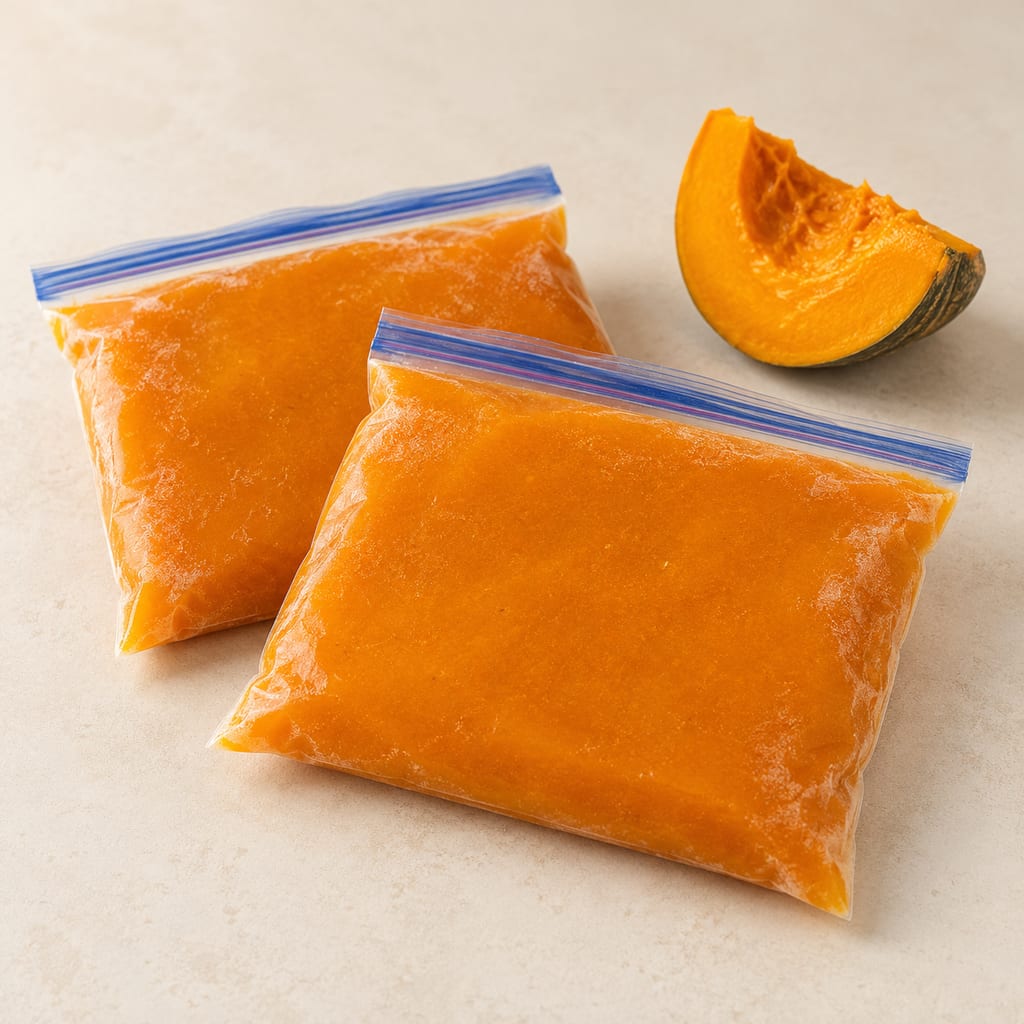
Cooked pumpkin mashed, cooled and frozen in portions: a plain base for pies, soups and baking without canning a dense purée.
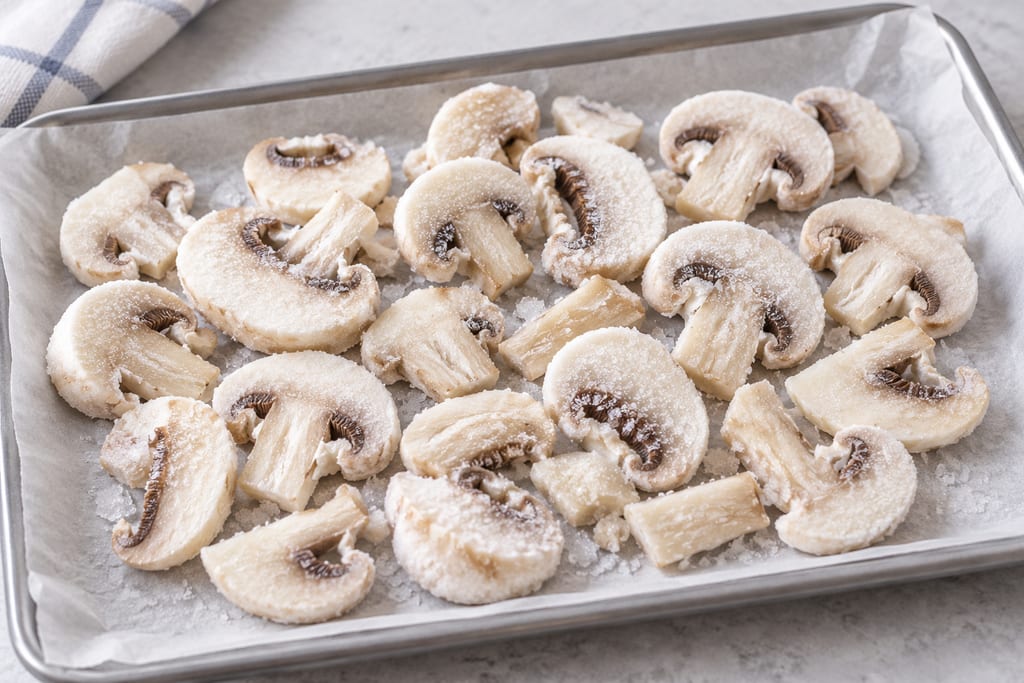
Frozen raw mushrooms are cleaned mushrooms frozen without a preheating step, the variant a Japanese forest-volunteer manual describes beside its cooked version.
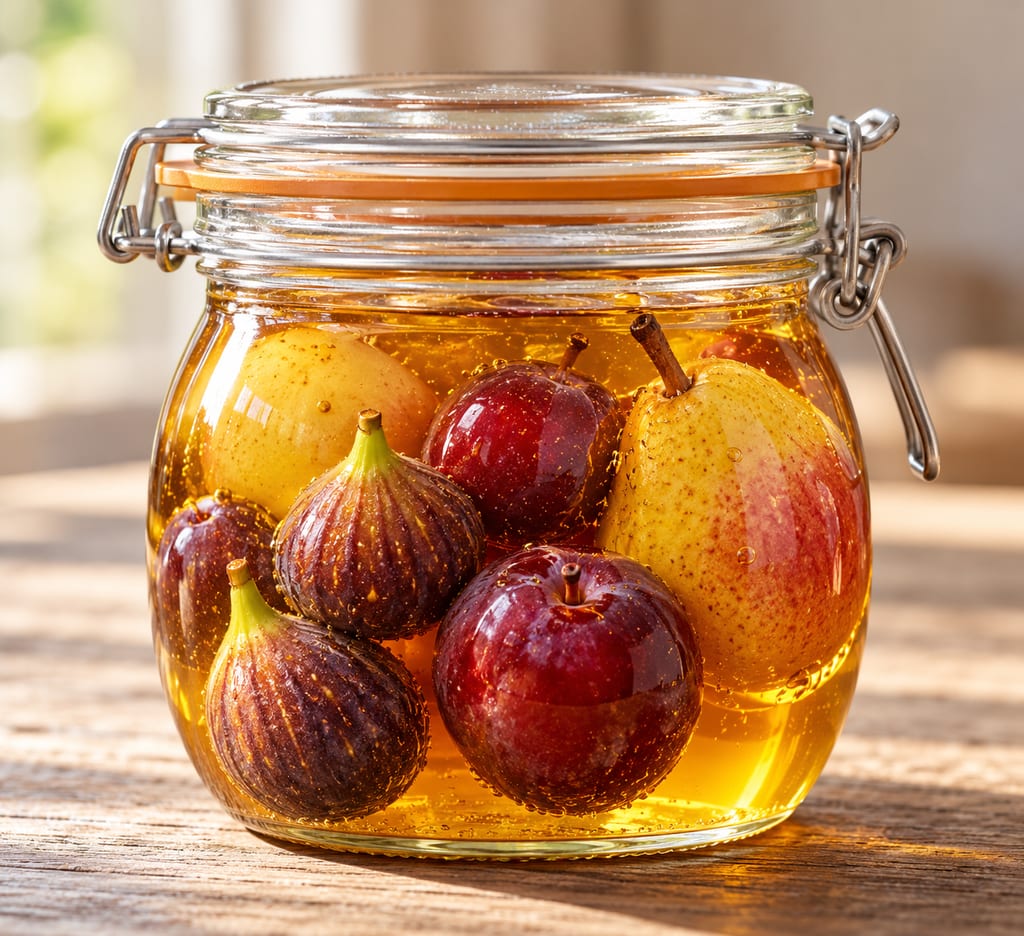
Fruit and some other foods were placed in honey in ancient Mediterranean kitchens. The honey's concentrated sugar does the preserving, and wet ingredients weaken it.
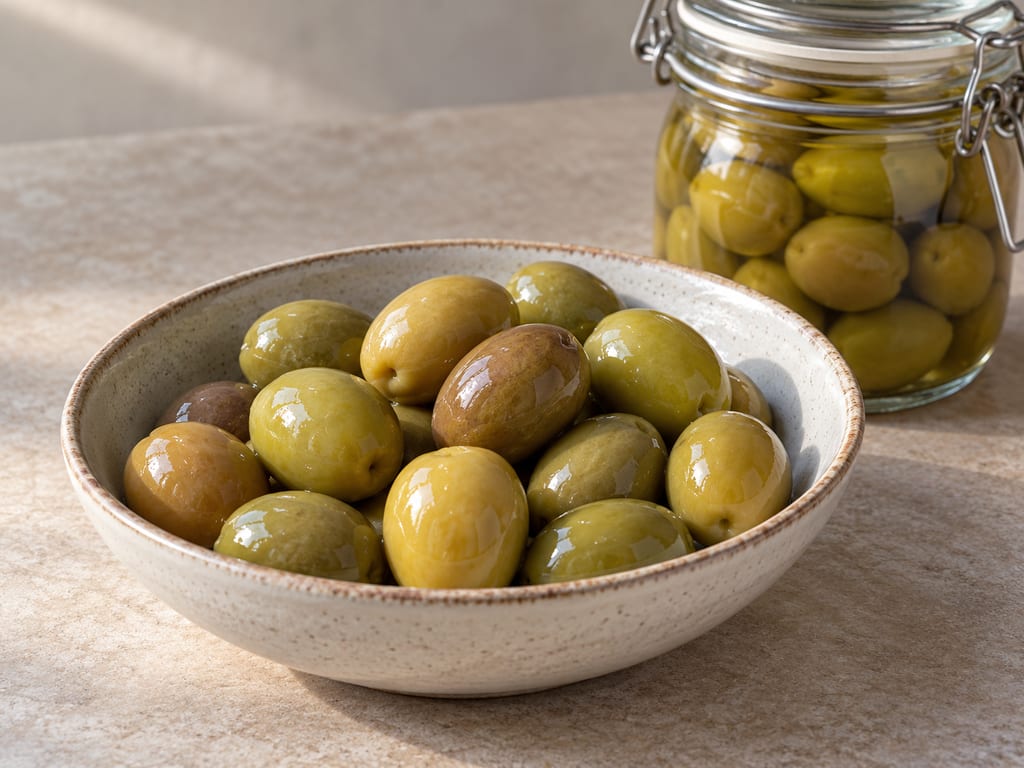
Green olives debittered in a sodium hydroxide solution, then rinsed repeatedly and held in brine, by the University of California's published home-pickling method.

Soft, spreadable Calabrian pork sausage made with a great deal of red chilli and fatty pork, stuffed into natural casings, sometimes smoked and matured while staying soft.

A way to add independent temperature logging to an existing food dehydrator without changing its built-in controls or protections. It is a monitoring method, not a rewiring plan.

Pleurotus cystidiosus is the abalone mushroom, a cultivated oyster-type fungus with dark brown caps that grows more slowly and is more demanding than other Pleurotus species.

A dark, balanced vinegar from Emilia-Romagna made by combining cooked or concentrated grape must with wine vinegar, then acetifying and refining it in wood under a protected specification.

A living dairy inoculum that starts controlled cream fermentation, developing acidity and aroma before sour cream or cultured butter is finished.

A small electric incubator holds jars at a selected temperature for yogurt and other documented warm food preparations. Controls, capacity and vessel arrangement vary by model.

Adygean salt is a seasoned table salt associated with Adygea and the wider North Caucasian culinary tradition. Salt is blended with garlic and a variable selection of herbs and spices; the exact mix depends on the named style and maker.

The African Caesar-group mushroom, Amanita masasiensis, is a wild ectomycorrhizal species of central and southern African woodlands, eaten locally. The genus contains deadly poisonous species, so identification needs care.
No community contributions have been published for this entry yet.
Sign in to contribute. Published comments and photos are free to read.
ICAR-Directorate of Mushroom Research, Solan, Himachal Pradesh, IndiaReference
Technologies Developed by ICAR-DMR for Commercial Use — Section 1.8, Mushroom JamPrimary Block C mushroom-jam formulation
Published June 2020
Preparation from washed and blanched mushroom paste
Sugar added at a 1:1 ratio to mushroom paste
Pectin at 1% of mushroom pulp weight
Citric acid at 1% of mushroom pulp weight
Continuous stirring during concentration
Total soluble solids endpoint of 68°Brix
Hot filling into sterilised glass containers
Specified headspace of 0.8–1.0 cm
Original recommendation to seal and store in a cool, dry place
Suggestion that development of mushroom jam could preserve mushrooms for one year
Absence of a reported finished equilibrium pH, water activity or validated packaged thermal process
Figure 39 photograph of actual ICAR mushroom jam in a glass jar, printed page 71, PDF page 74
Distinction between mushroom jam, murabba, candy, sauce and pickle
Cited in: What it is; History; How it works: chemistry and preservation; How it is made and why each ingredient and step matters; Regional and historical variations; How it is eaten and used; Reading results and problems
ICAR News, Indian Council of Agricultural Research, Volume 19, Number 3, July–September 2013Reference
Oyster-Mushroom Processing Can Be a Boon to Small-Scale Mushroom-GrowersICAR's earlier documentation of sweet oyster-mushroom jam
Mushroom processing as a response to rapid postharvest deterioration
Oyster mushroom species identified generally as Pleurotus spp.
Experimental mushroom jam and pickle alongside biscuits and dried products
Reported six- to eight-month ambient product stability
Recommendation to use oyster-mushroom powder at 5–10% in certain value-added products
No complete consumer recipe, equilibrium pH or thermal validation supplied in this article
Photograph explicitly labelled Oyster mushroom jam on printed page 3, PDF page 3
Difference between demonstrated processing products and validated household shelf life
Cited in: What it is; History; Regional and historical variations; How it is eaten and used; Reading results and problems
Mushroom Research, Mushroom Society of India, hosted by ICAR e-PublicationsReference
Development and Evaluation of Oyster Mushroom Value Added ProductsEarly Indian research on oyster-mushroom value-added foods
Mushroom Research volume 19, issue 1, dated 2010
Electronic citation displaying a later 2015 date
Development of mushroom jam, mushroom pickle, biscuits and other products
Documentation of oyster-mushroom jam as a distinct experimental product
Bibliographic discrepancy between the issue year and online citation year
Cited in: What it is; History; Regional and historical variations
Indian Horticulture, ICAR, January–February 2020Reference
Value Addition in MushroomIndependent ICAR horticulture article describing the same mushroom-jam development programme
Sweet mushroom jam made from blanched and pulped mushrooms
Equal-weight mushroom-pulp and sugar formula
Pectin and citric acid additions
68°Brix endpoint
Industrial product-development context
Photograph of mushroom jam alongside several other mushroom products on printed page 33, PDF page 3
Distinction between the photographed jam and the adjacent mushroom sauce, candy, pickle and other preparations
No consumer home-canning validation demonstrated by the article
African Journal of Food Science, Volume 7, Issue 10, October 2013Reference
Studies on Different Drying, Canning and Value Addition Techniques for Mushrooms (Calocybe indica)Independent Indian mushroom-preservation investigation
Use of Calocybe indica, the milky mushroom
Experimental mushroom-jam development
Comparison of pectin sources
Highest sensory score reported for a formulation using natural pectin derived from guava
Distinction between milky-mushroom jam and ICAR oyster-mushroom jam
Publication dated 31 October 2013
Limited information about preservation validation in the public abstract
Cited in: What it is; History; Regional and historical variations; How it is eaten and used
Pakistan Journal of Scientific and Industrial Research Series B: Biological Sciences, Volume 60, Issue 1, 2017Reference
Development and Quality Evaluation of Banana Mushroom Blended JamIndependent experimental banana-oyster-mushroom jam
Six mushroom-and-banana treatments and a banana-only control
Preferred BM6 formula containing 400 g banana, 600 g mushroom, 1 kg sugar and 2 g citric acid
Reported concentration to approximately 68–70°Brix
Ninety-day physicochemical and sensory study
Measured changes in pH, soluble solids, acidity and sensory acceptability
Publication date of 30 April 2017
Distinct experimental formulation not interchangeable with ICAR's mushroom-only jam
Cited in: What it is; History; How it is made and why each ingredient and step matters; Regional and historical variations; How it is eaten and used; Reading results and problems
Pakistan Journal of Scientific and Industrial Research Series B: Biological SciencesReference
Development and Quality Evaluation of Banana Mushroom Blended Jam — Full Research PaperExperimental method using banana and Pleurotus ostreatus from Tarnab, Pakistan
Brief pretreatment in acidified water at 80°C for two minutes
Pulp preparation and blending
Cooking reported at 104°C
Target soluble solids of 68–70°Brix
Glass containers autoclaved at 121°C for fifteen minutes before filling
Experimental storage at approximately 31°C for ninety days
Reported pH and quality changes during storage
Laboratory experimental conditions distinguished from validated home-canning procedures
National Center for Home Food Preservation, University of GeorgiaReference
Low-Acid Additions Can Make Your Jams and Jellies Unsafe — Here's WhyFood-preservation safety advice published August 2025
Low-acid ingredients can make a jam's final acidity unpredictable
High sugar content alone does not guarantee safe shelf storage
Importance of exact ingredient ratios
Need for scientifically tested home-canning recipes
Warning against transferring a tested recipe to an untested low-acid ingredient substitution
Importance of food-specific process validation
Cited in: How it is made and why each ingredient and step matters; Reading results and problems
National Center for Home Food Preservation, University of GeorgiaReference
Jellied Product IngredientsRoles of sugar, pectin and acid in jam and jelly
Effects of ingredient proportions on gel strength
Acidity and pectin interactions
Differences between naturally pectin-rich fruit and ingredients needing added pectin
Causes of unsuitable texture
Need to follow tested formulations
General fruit-jam guidance not constituting validation of mushroom jam
Cited in: What it is; How it works: chemistry and preservation; Reading results and problems
National Center for Home Food Preservation, University of GeorgiaReference
General Information on Canning Jams, Jellies, and MarmaladesGeneral principles of sweet-spread preservation
Conventional fruit-jam classifications
Proper relationship between fruit, sugar, acid and pectin
Boiling-water processing guidance for tested recipes
Limitations of extrapolating fruit-preservation methods to mushroom pulp
Distinction between gel formation and microbiological safety
US Food and Drug AdministrationReference
Acidified and Low-Acid Canned Foods Guidance Documents and Regulatory InformationDefinition of acidified foods
Finished equilibrium pH of 4.6 or below in the relevant acidified-food category
Use of water activity in distinguishing regulatory food categories
Low-acid canned food definition
Requirements for scheduled processes for commercial shelf-stable foods in relevant US categories
Importance of container size, product formulation and processing method
Regulatory principles not amounting to a validated mushroom-jam recipe
Cited in: How it works: chemistry and preservation; Reading results and problems
US Food and Drug Administration, Inspection Technical Guide Number 39Reference
Water Activity (aw) in FoodsDefinition of water activity
Difference between moisture content and water available for microbial growth
Effects of sugar and other dissolved components
Water activity of 0.85 or lower as an important US regulatory boundary
Water activity cannot be assumed from a Brix reading
Need for finished-product analytical testing
Variability of water availability in complex concentrated foods
Cited in: How it works: chemistry and preservation; Reading results and problems
US Centers for Disease Control and PreventionReference
Botulism PreventionRisks of improperly preserved low-acid foods
Importance of scientifically tested home-canning procedures
Botulinum toxin cannot be reliably identified by sight, smell or taste
Rejecting food with uncertain preservation safety
Warning against assuming low-acid foods are safe after ordinary hot filling
Need to distinguish safe storage from a sealed appearance
Orkney Islands Council, ScotlandReference
Making Jam and Similar ProductsLocal-authority food-production hygiene guidance
Food-contact equipment and container hygiene
Batch recordkeeping
Importance of exact formulation and acidity
Shelf life should not be assigned from an unverified recipe without appropriate analysis
Scottish jam product-naming and composition considerations
Distinction between product development and commercial legal classification
European Patent Office; record accessed through Google PatentsReference
Food Product with Long Shelf Life Based on Candied MushroomsPatent priority date of 3 July 1978
Patent application filed 2 July 1979
Patent publication dated 9 January 1980
Earlier documented concept of sweetened mushroom preserves
Repeated immersion of mushrooms in concentrated sugar syrup
Optional addition of pectin to make a jam-like preparation
Distinction between candied-mushroom jam and the later Indian mushroom-pulp formulation
Evidence that the general idea of sweet mushroom preserves predates the ICAR studies
Patent description not independently establishing a safe consumer process or widespread traditional consumption
Ekka Urban Farms, Ranchi, Jharkhand, IndiaReference
Mushroom Jam — Cloudy CapsContemporary commercial product explicitly marketed as mushroom jam
Glass jar with 200 g labelled net weight
Listed ingredients including mushrooms, spices, apple cider vinegar, water, salt and pectin
Seller description of sweet flavour
Manufacturer-claimed six-month shelf life not independently validated
Contemporary product photograph
Commercial formulation distinct from the ICAR high-sugar mushroom-pulp jam
Food NuttersReference
Black Trumpet Mushroom JamContemporary sweet mushroom jam made with black trumpet mushrooms
Use of brown sugar, lemon and honey
Photographic documentation of the finished sweet jam in a dish and jar
Variation from the ICAR mushroom-pulp and added-pectin formula
Author's refrigeration advice
Website's unvalidated inversion-sealing and ambient-storage instructions excluded from the safe reference recipe
Distinct visual example of a sweet mushroom preserve
Forager | ChefReference
Maple Black Trumpet Mushroom JamSweet mushroom spread made from black trumpet mushrooms and maple syrup
Use of vinegar and other flavourings
Photographs of mushroom jam being concentrated in a saucepan
Photograph of finished jam served with cheese on crackers
Contemporary culinary variation rather than the ICAR experiment
Different ingredient, texture and preservation conditions
Published refrigerated storage recommendation not independently validated for the ICAR formulation
PubMed CentralReference
PubMed Central article PMC7389562Cited in: What it is; How it works: chemistry and preservation
nchfp.uga.eduReference
Web page general-information-on-canning-jams-jellies-and-marmaladesCited in: What it is; How it is made and why each ingredient and step matters; How it is eaten and used; Reading results and problems
epubs.icar.org.inReference
Web page 87827Cited in: History; Regional and historical variations; How it is eaten and used
agritech.tnau.ac.inReference
Web page Farm enterprises_ Mushroom_value_addition.htmlCited in: History; How it is made and why each ingredient and step matters
extension.psu.eduReference
Web pageCited in: How it works: chemistry and preservation; How it is made and why each ingredient and step matters; Reading results and problems
niftem.ac.inReference
Web page mushroomwriteup.pdfCited in: How it is made and why each ingredient and step matters
Publisher via DOIReference
Journal article (DOI) PJSIR.BIOL.SCI.60.1.2017.11.18Cited in: How it is made and why each ingredient and step matters; How it is eaten and used
extension.oregonstate.eduReference
Web page are-home-preserved-gifts-safe-eatCited in: Reading results and problems