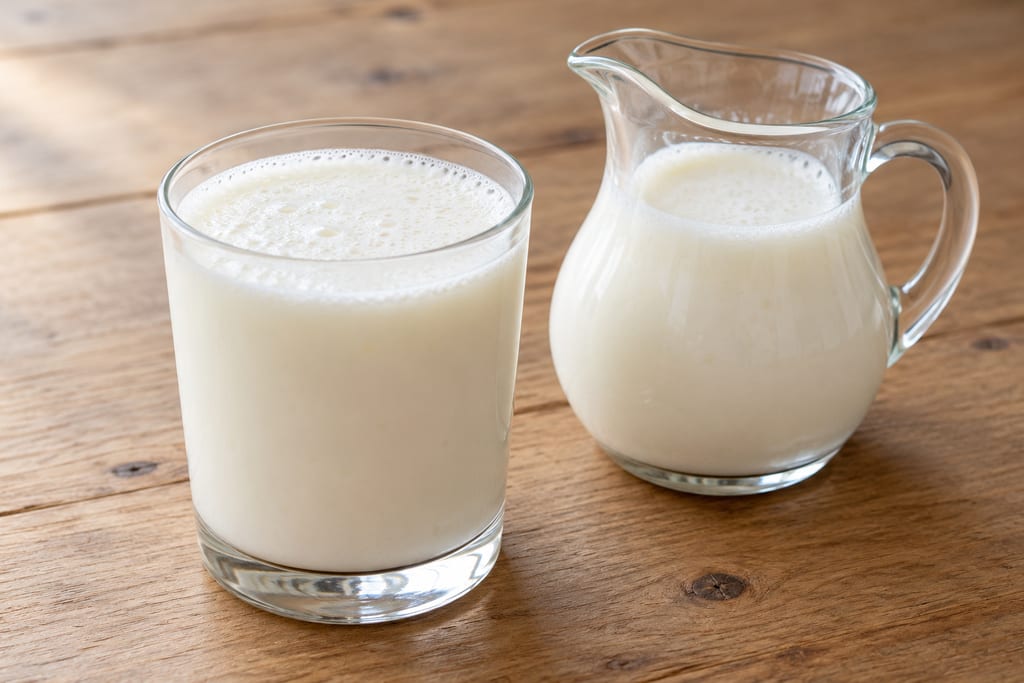
Khurunga (Buryat fermented milk)
Khurunga is a traditional Buryat fermented milk made with a kept mixed bacteria-and-yeast starter, giving a sour, lightly alcoholic and often fizzy drink that is also the base for milk spirit and curds.
 FermenteaWhere food goes to change
Traditional method
Tarasun · Togoonoi arkhi · Khurengyn arkhi · Arza · Horzo
A Buryat milk spirit distilled from khurenge, the backslopped sour dairy ferment, in a cauldron still: a distillate that keeps milky and cheese-like aromas from the dairy it came from.
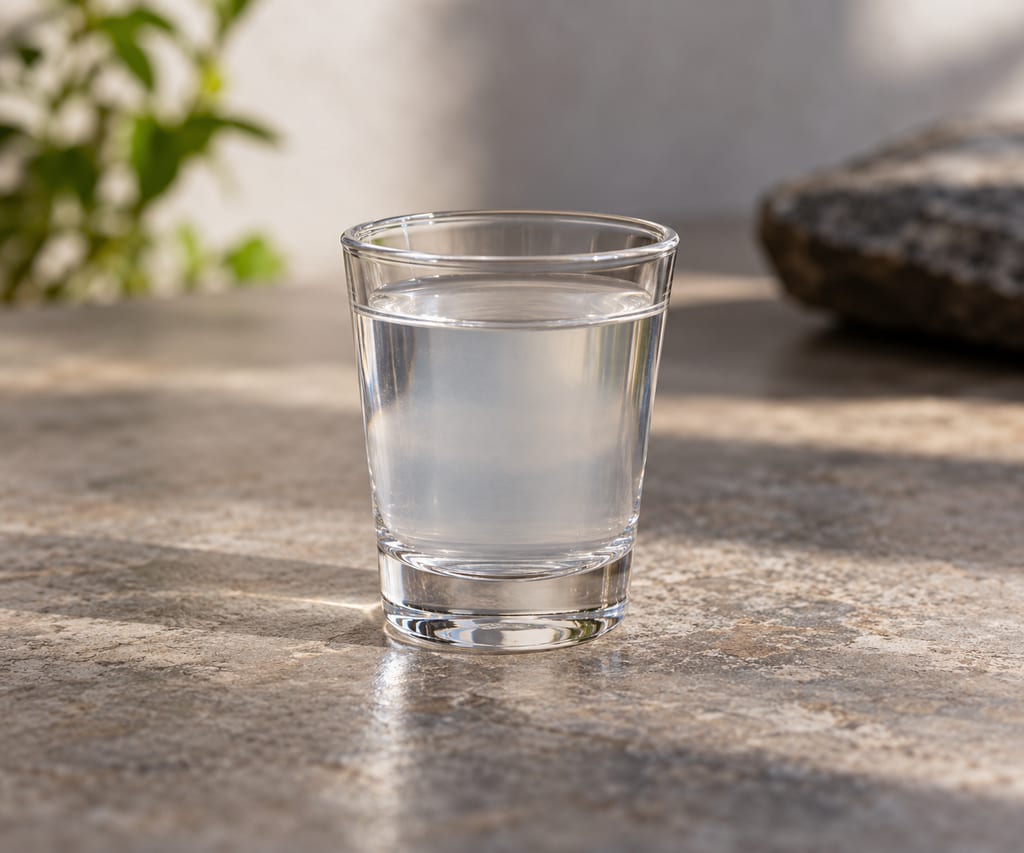
Khurenge is a traditional Buryat fermented dairy beverage that occupies an important place in one of the world's more unusual systems of alcohol production.
In Buryat and related Mongolic terminology, forms including khurenge, körüngge, kyurenge and airag occur, although their meaning and use differ between regions.
The spirit produced by distilling fermented milk is commonly known as darasun or tarasun. Other Buryat expressions include togoonoi arkhi and khurengyn arkhi.
These names reflect a connected dairy-production system rather than one standardized beverage.
The raw material is usually milk from domesticated livestock, principally cattle in the household processes studied in modern Buryatia.
The first product is a sour, mildly alcoholic, sometimes effervescent fermented milk. The second is an alcoholic distillate made from it.
Further products arise when cream, curd and whey are separated or processed.
The central technological challenge is that milk contains comparatively little fermentable carbohydrate. Most of its solids are fat and protein, neither of which ordinary brewing yeast can directly convert into substantial amounts of ethanol.
Milk fermentation can therefore produce acidity and modest alcohol concentrations, but obtaining a stronger beverage usually requires distillation.
The tradition is particularly valuable for understanding how pastoral societies developed fermentation technology around the resources reliably available to them.
The Buryat belong to the wider Mongolic-speaking cultural world of eastern and southern Siberia, Mongolia and adjacent regions.
Fermented dairy products have long been associated with Mongolic pastoral economies.
The history of milk distillation is more difficult to date precisely than the history of fermented milk.
A major interdisciplinary study published in 2026 combined ethnography, microbiology and historical linguistics to examine khurenge and darasun.
The word körüngge, associated with starter culture, appears in the Mongolian legal code Khalka Jirum, revised in 1709. A provision records a penalty for stealing a starter culture.
This gives unusually strong evidence that maintained fermentation cultures had economic value in the early 18th century.
An earlier reference to the word darasun appears in a 14th-century Mongolic glossary, while an inscription on a Yuan dynasty vessel, dated to 1260–1368, includes a related term interpreted as wine or an alcoholic beverage.
Those records establish historical terminology but do not independently prove that every use of the word described distilled cow's milk.
The 2026 study also discusses references to tarasun in Siberia during the 17th and 18th centuries, including material recorded by J. G. Gmelin in 1736.
By the 18th century, the historical record supports an established beverage tradition with social and economic importance.
The deeper history of fermented milk is undoubtedly connected to pastoral life, but precise claims that a modern household recipe was invented in a particular ancient century cannot be established.
The process begins with milk.
In contemporary Buryat households, whole milk may be mechanically separated into cream and skim milk.
The cream, known in some local terminology as zookhei, can be processed into butter, while the skimmed fraction can be used for milk tea or fermentation.
This makes fermentation one branch of a broader dairy economy.
Milk intended for khurenge may be pasteurized or used without prior heat treatment. The investigated household tradition commonly used unpasteurized milk, while commercial approaches differed.
The next requirement is a maintained starter culture.
A portion of previously fermented khurenge is retained and introduced into new milk. This practice is called backslopping in food microbiology.
The retained culture is described as khurengen ekhe, or mother khurenge.
Backslopping transfers a community of microorganisms adapted to the food and household process.
Unlike a single-strain yogurt starter, it can carry numerous bacterial and yeast species. The balance between them changes according to milk composition, environment, storage, temperature and previous batches.
One of the most useful aspects of the 2026 research is its account of actual quantities used by households in Buryatia.
The reported practice uses 40–50 litres of milk, introduced into a 70-litre barrel already containing 10–15 litres of khurenge from the previous cycle.
The vessel is kept at ambient temperature, commonly in an outbuilding.
The locally reported preferred temperature is approximately 20°C.
The fermentation typically proceeds for 2–3 days.
During fermentation, the liquid is stirred 2–3 times daily. Stirring breaks up the accumulating foam and helps redistribute the culture.
A frothy layer forms at the surface as gas is produced. Beneath it, whey separation may occur, while coagulated proteins accumulate lower in the vessel.
These details are measurements and observations from a documented modern practice. They do not automatically validate raw-milk household production elsewhere.
They are nevertheless unusually valuable compared with generic descriptions that simply say to leave milk until sour.
Khurenge fermentation involves both bacteria and yeasts.
Lactic acid bacteria metabolize available carbohydrates and produce lactic acid. This lowers pH, changes the behavior of milk proteins and develops sourness.
Yeasts can produce ethanol and carbon dioxide. Their activity contributes alcohol and a lightly fizzy texture.
The 2026 study identified substantial populations of lactic acid bacteria alongside smaller yeast populations.
Among the microorganisms identified were lactobacilli and yeasts belonging to groups including Trichosporon and Monosporozyma.
The household and commercially produced samples differed in their microbial composition, demonstrating that the name khurenge does not guarantee one identical culture.
Two sampled batches illustrate the point.
These figures are measured sample characteristics, not recommended targets for every household.
They also explain an interesting sensory difference. A beverage with lower pH may taste sharper and more acidic even if its ethanol content is lower.
The alcohol-producing organisms do not work in isolation. Lactic acid bacteria compete for nutrients, modify the chemical environment and influence which yeasts can remain active.
Other organisms may consume oxygen, break down proteins or produce minor aroma compounds.
The final character of the beverage therefore reflects the behavior of the whole microbial community.
Ethanol, % ABV — 1.5% — 2.1%
pH — 3.3 — 3.7
Titratable acidity — 240°T — 160°T
Lactic acid bacteria — 8.2 multiplied by a power of ten in CFU/g that did not survive the handover of this research — 2.7 multiplied by a power of ten in CFU/g that did not survive the handover of this research
Yeasts — 4.2 multiplied by a power of ten in CFU/g that did not survive the handover of this research — 1.2 multiplied by a power of ten in CFU/g that did not survive the handover of this research
Fresh milk contains lactose, a disaccharide composed of glucose and galactose.
Many conventional brewing strains of Saccharomyces cerevisiae cannot ferment lactose directly.
A mixed dairy culture may include microorganisms capable of utilizing lactose or products of its breakdown.
During fermentation, sugars are divided between several metabolic pathways. Some are converted into lactic acid; some into ethanol and carbon dioxide; others become microbial biomass or additional metabolites.
This is one reason milk is a less efficient ethanol substrate than a concentrated cereal mash or fruit juice.
It also explains why the ethanol concentration does not simply continue rising as long as the milk stands.
Fermentation is restricted by carbohydrate availability, competing metabolism and the changing acidic environment.
The resulting beverage is both a sour dairy food and a low-alcohol drink.
Its chemistry resembles neither plain yogurt nor a conventional grain beer exactly.
Distillation separates volatile compounds from the fermented liquid by exploiting differences in their evaporation and condensation behavior.
When khurenge is heated in suitable apparatus, ethanol and water enter the vapor phase in different proportions from those in the original liquid.
Condensation produces a distillate containing a higher concentration of ethanol.
Traditional dairy distillation can use a cauldron-based system, reflected in names associated with the Buryat term for cauldron.
One documented household yield is approximately 1 litre of darasun at 10–11% ABV from 10 litres of khurenge.
The directly measured darasun sample in the 2026 study contained 11.2% ABV.
Further distillation can produce progressively stronger fractions. The research describes experimental stages reaching approximately 40% and 75% ABV after repeated processing.
These are particular measured stages, not the normal strength of every beverage sold or served as tarasun.
Traditional terminology differentiates products or grades associated with repeated distillation, including arza and horzo.
Names and numbering of distillations vary by region, and it is important not to assign every traditional name one immutable ABV.
The first distillate may be relatively weak compared with familiar modern spirits. Multiple passes are necessary for substantially stronger alcohol.
Darasun is not simply neutral ethanol made from milk.
Volatile compounds carried over during distillation contribute recognizable dairy aromas.
The 2026 research records milky and cheese-like notes, alongside subtler animal, leather and dried-herb characteristics.
The resulting flavor can therefore retain a sensory connection with the fermented dairy raw material.
The balance depends on the khurenge, apparatus, heat management, fractions collected and any subsequent distillation.
Milk proteins and fat create additional challenges. If fermented dairy is heated carelessly, proteins can stick to hot surfaces, producing scorching and undesirable aromas.
Traditional distillation knowledge includes maintaining the apparatus and preventing the dairy material from burning.
A distillation vessel is therefore part of the technology, not merely a means of boiling liquid.
Distillation leaves substantial material behind.
The remaining curd and dairy solids are not necessarily waste.
Different Buryat dairy systems can recover curds, concentrate them or dry them for later food use.
This is related to broader Mongolic pastoral technologies in which soured milk supplies drinks, butter, dried cheese and other products.
Terms such as aarsa, aruul and related regional names require attention to local meaning. They should not all be treated as identical cheeses.
Some describe concentrated sour dairy material; others refer to dried curd products.
The practical principle is that milk is separated and transformed repeatedly, allowing different fractions to be used for different purposes.
Butter captures much of the fat. Fermented drinks make use of liquid and carbohydrate. Curd products retain protein and minerals. Drying can make dairy solids portable.
This is why fermentation and distillation belong in the larger pastoral food system.
Buryat households, commercial processors, Mongolian producers and neighboring Tuvan or Khakas communities share some technological principles but do not necessarily use identical terminology or recipes.
The microorganisms in maintained starters can differ between families.
Raw material also changes the outcome. Cow milk, mare milk, camel milk and yak milk differ in their relative fat, protein and carbohydrate composition.
Mongolian airag, for example, is particularly associated with fermented mare's milk, while Buryat khurenge in the documented contemporary study was based on bovine milk.
That distinction affects fermentation chemistry, texture and the potential alcohol yield.
Tuvan araga and other milk spirits are related technologies, but separate cultural records are necessary to describe their distinctive names and processes.
A typical khurenge develops sourness, a milk-based aroma and gas production.
The investigated samples were white, thick, acidic and slightly effervescent.
Foaming and separation are not automatically defects because they are part of the documented process.
Buryat production knowledge also identifies an undesirable condition called arabka.
It is associated with unpleasant bitterness, abnormal odor, a lack of expected foam and excessive settling of coagulated material beneath whey.
This defect may reflect a shift toward undesirable proteolytic activity or insufficient normal acid fermentation.
However, a normal sour aroma does not prove that raw-milk fermentation is free of pathogens.
The research records household raw-milk fermentation, but that should not be confused with a modern validated manufacturing method.
Raw milk may contain disease-causing microorganisms, including organisms not reliably detected by smell or appearance.
For commercial or experimental work, pasteurized milk and characterized cultures provide a more controllable starting point.
The existence of an active inherited culture does not by itself demonstrate microbiological safety.
Distillation introduces additional considerations, including fire risk, alcohol vapor, apparatus material, legal restrictions and product-quality controls.
Repeated distillation can increase alcohol strength dramatically. A spirit originally derived from milk can become as strong as other concentrated alcoholic beverages.
Alcohol content should therefore be measured rather than inferred from the drink's name or from the number of distillations.
The figures reported in the 2026 study are valuable technical observations, but they are not complete safety instructions for building or operating a still.
Darasun sits at the end of a connected dairy economy rather than standing alone as a drink. Milk is separated and transformed repeatedly so that different fractions can do different work: butter captures much of the fat, the fermented drink makes use of the liquid and its carbohydrate, curd products retain protein and minerals, and drying makes dairy solids portable. The names reflect that system rather than one standardised beverage, with forms including khurenge, körüngge, kyurenge and airag occurring in Buryat and related Mongolic terminology and differing in meaning and use between regions, and with togoonoi arkhi and khurengyn arkhi among the Buryat expressions for the spirit. Distillation leaves substantial material behind, and the remaining curd and dairy solids are not necessarily waste: different Buryat systems recover, concentrate or dry them, which connects the drink to the wider Mongolic pastoral technologies that also produce butter and dried cheese. Terms such as aarsa and aruul need attention to local meaning, because some describe concentrated sour dairy material and others dried curd products, and they should not all be treated as the same cheese. The deeper history of fermented milk is undoubtedly bound up with pastoral life, but a claim that a modern household recipe was invented in a particular ancient century cannot be established.
Yield 1 L · Scaling: source batch only
The research records household raw-milk fermentation, and raw milk may contain disease-causing microorganisms, including organisms not reliably detected by smell or appearance. The existence of an active inherited culture does not by itself demonstrate microbiological safety, and a normal sour aroma does not prove the fermentation is free of pathogens.
Hazard sourceDistillation introduces fire risk, alcohol vapour, questions about the material of the apparatus, legal restrictions and product-quality controls, and the figures reported in the study are technical observations rather than instructions for building or operating a still.
Hazard sourceRepeated distillation can increase alcohol strength dramatically, and a spirit originally derived from milk can become as strong as other concentrated alcoholic beverages. Traditional names and numbering of distillations vary by region, so no traditional name carries one immutable strength.
Hazard sourceIf fermented dairy is heated carelessly, proteins can stick to hot surfaces, producing scorching and undesirable aromas that carry into the distillate.
Hazard sourceBuryat production knowledge identifies an undesirable condition called arabka, with unpleasant bitterness, abnormal odour, a lack of the expected foam and excessive settling of coagulated material beneath whey, which may reflect a shift toward undesirable proteolytic activity or insufficient normal acid fermentation.
Hazard sourceFor commercial or experimental work, use pasteurised milk and characterised cultures rather than raw milk and an inherited mixed starter
Control sourceStir the fermentation two to three times daily to break up the foam and redistribute the culture, and hold it at the reported ambient preference rather than warmer
Control sourceReject a batch showing the arabka defect instead of distilling it
Control sourceManage the heat and maintain the apparatus so the dairy material does not stick and burn
Control sourceMeasure the alcohol content of the finished spirit rather than inferring it from the drink's name or the number of distillations
Control sourceThe household raw-milk fermentation recorded here is a documented practice, not a validated manufacturing method, and the figures from the 2026 study do not authorise reproducing it elsewhere.
Alcohol content must be measured: it varies with the khurenge, the apparatus, the heat management and the fractions collected, and no traditional name or number of passes fixes a strength.
The two measured khurenge samples are separate samples, not two ends of a target range: a beverage with a lower pH can taste sharper even when its ethanol content is lower.
Four microbial counts in the published table lost their multiplier and exponent in the handover of this research, so no cell count in this account can be used as a target or a comparison.
Distillation of a dairy ferment carries fire, vapour, apparatus-material and legal considerations that this research does not address.
Foaming and whey separation are part of the documented process and are not defects; the defect to look for is arabka, and even a normal-seeming fermentation can carry pathogens from raw milk.
The republic-level region in which the 2026 study documented the household fermentation and distillation recorded on this page. The row claims a regional association only: the microorganisms in maintained starters can differ between families, the household and commercial samples the study measured differed in composition, and no locality, village or single household method is identified. It does not assert that every Buryat household makes the drink or makes it this way.
The Buryat belong to the wider Mongolic-speaking cultural world of eastern and southern Siberia, Mongolia and adjacent regions, with which fermented dairy products have long been associated. This row carries the historical linguistic and documentary record at that broad regional level and nothing finer. It is explicitly not a claim that any of those references described distilled cow's milk: the account states that the fourteenth-century glossary entry and the Yuan vessel inscription establish terminology only.
Mongolian producers share some technological principles with Buryat households but do not necessarily use the same terminology or recipes, and Mongolian airag is particularly associated with fermented mare's milk while the documented Buryat khurenge in this study was based on bovine milk. A country-level row for that related production only. Tuvan araga and the practices of Khakas communities are related technologies that need their own records; this row does not stand in for them.
Khurunga is a traditional Buryat fermented milk made with a kept mixed bacteria-and-yeast starter, giving a sour, lightly alcoholic and often fizzy drink that is also the base for milk spirit and curds.
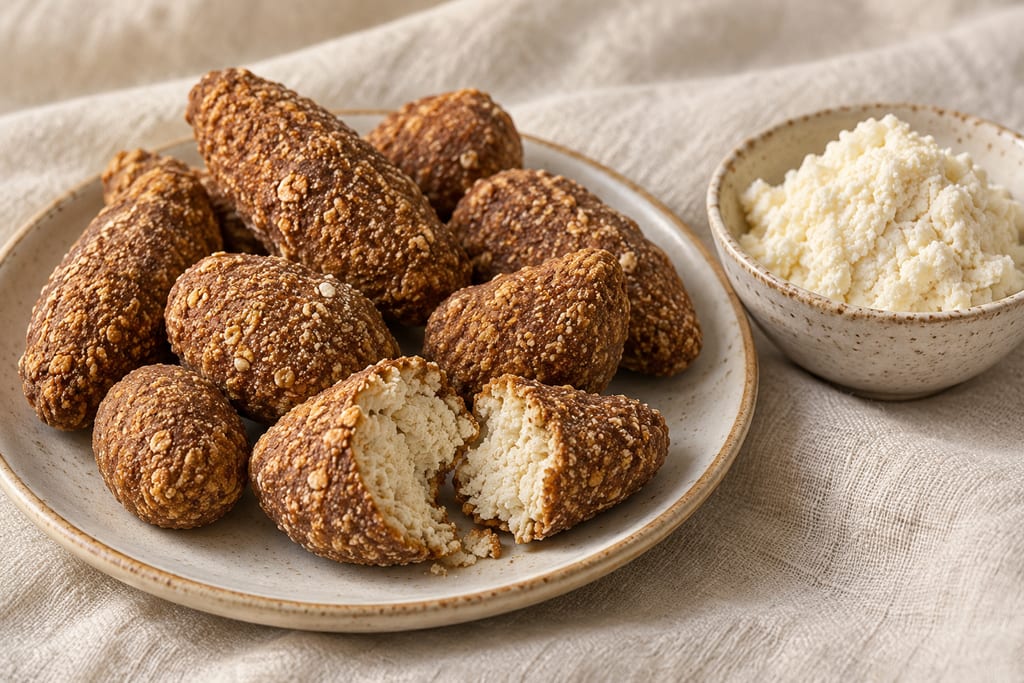
A two-stage Altai dairy preparation: sour chegen is heated into soft aarchi, then portions are drained, pressed and traditionally smoked into firm kurut.

Adygean salt is a seasoned table salt associated with Adygea and the wider North Caucasian culinary tradition. Salt is blended with garlic and a variable selection of herbs and spices; the exact mix depends on the named style and maker.
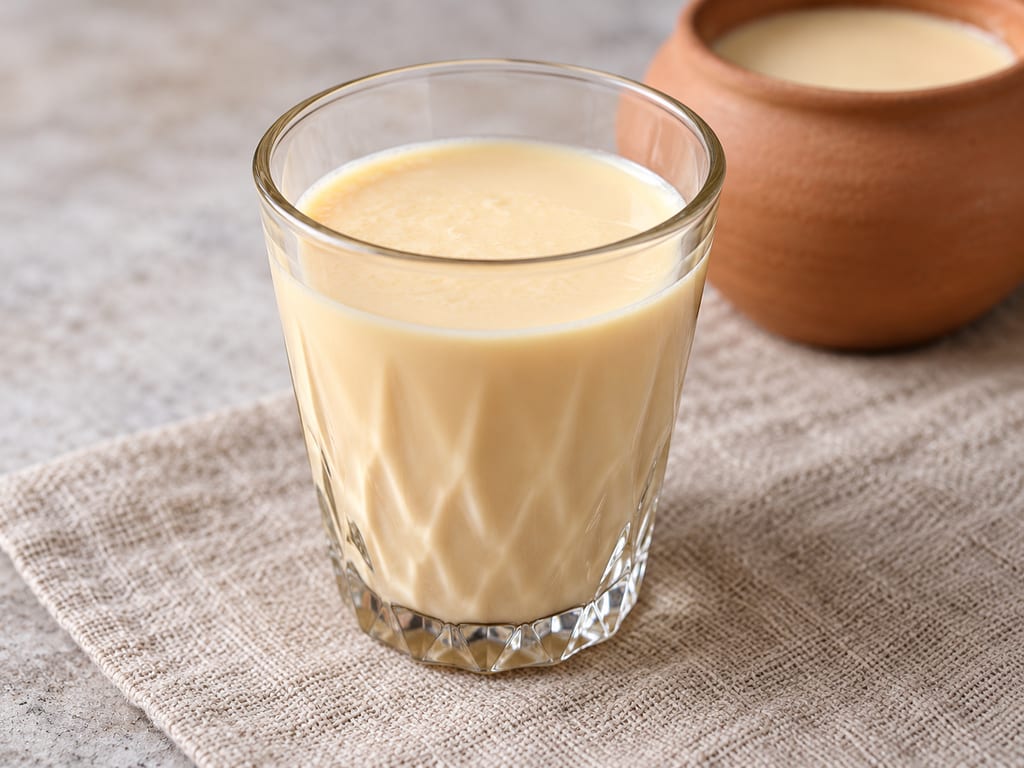
Baked milk is an Eastern European preparation of milk held at high heat for hours until it turns cream-coloured with a cooked, mildly sweet flavour, without any fermentation.
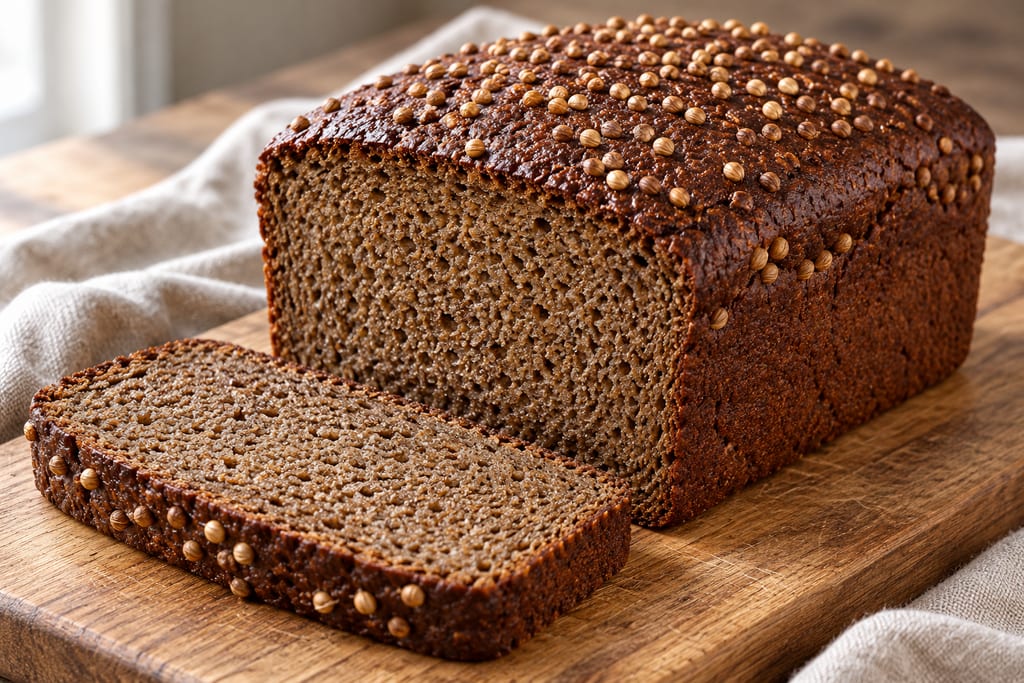
A dark rye sourdough with coriander and roasted barley-malt scald, based on Lily McCann's measured Borodinsk-ish home formula.
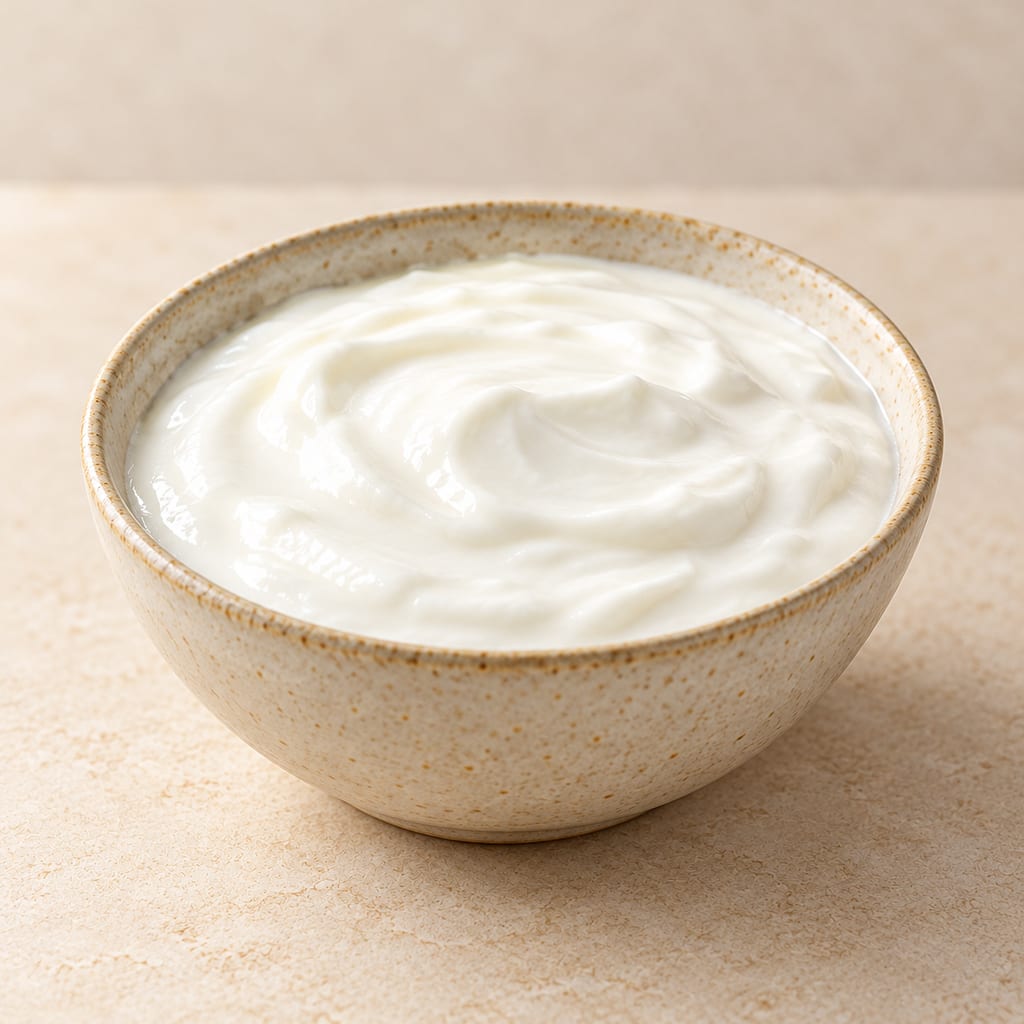
Katyk is a traditional fermented milk of Turkic-speaking peoples, made by souring heated milk with lactic bacteria, often with a spoonful of the last batch, into a thick, sour curd.

Mochenye yabloki are whole apples held under prepared liquid for several weeks. Russian sources from 1892 and 1959 describe the method. It is not the same as vinegar pickling.
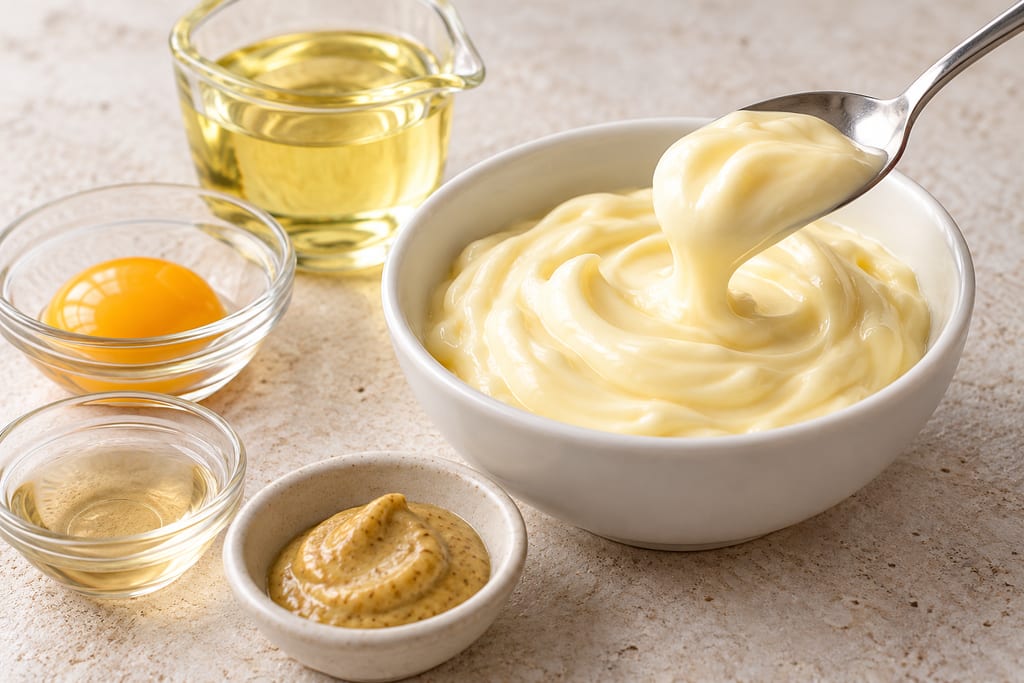
A plain mayonnaise of 200 g refined neutral oil emulsified into pasteurised yolk, vinegar, water and a little Dijon mustard: a clean base for tasting, comparing and flavouring.
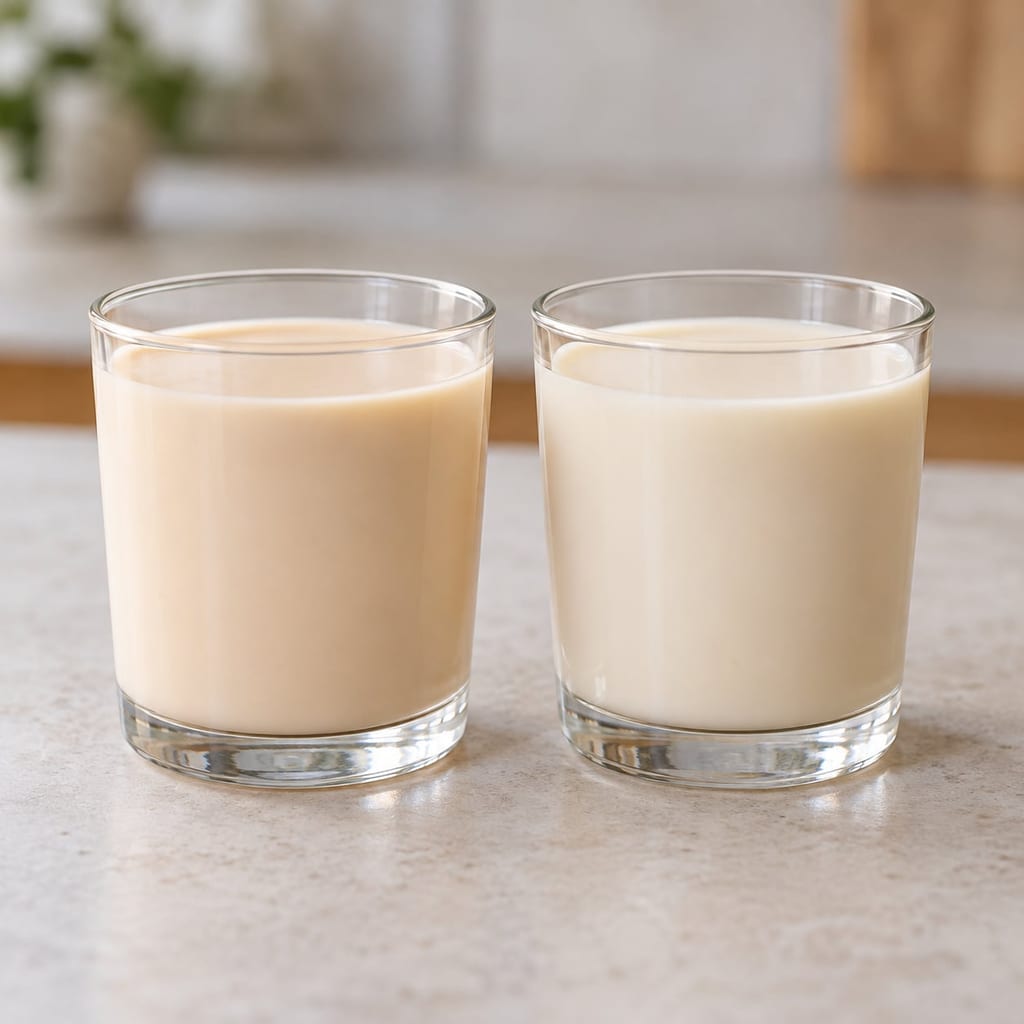
Ryazhenka is a Ukrainian and Russian cultured milk made from long-heated, baked cow's milk, cream-coloured and gently sour; varenets is its close relative with a shorter heat treatment.
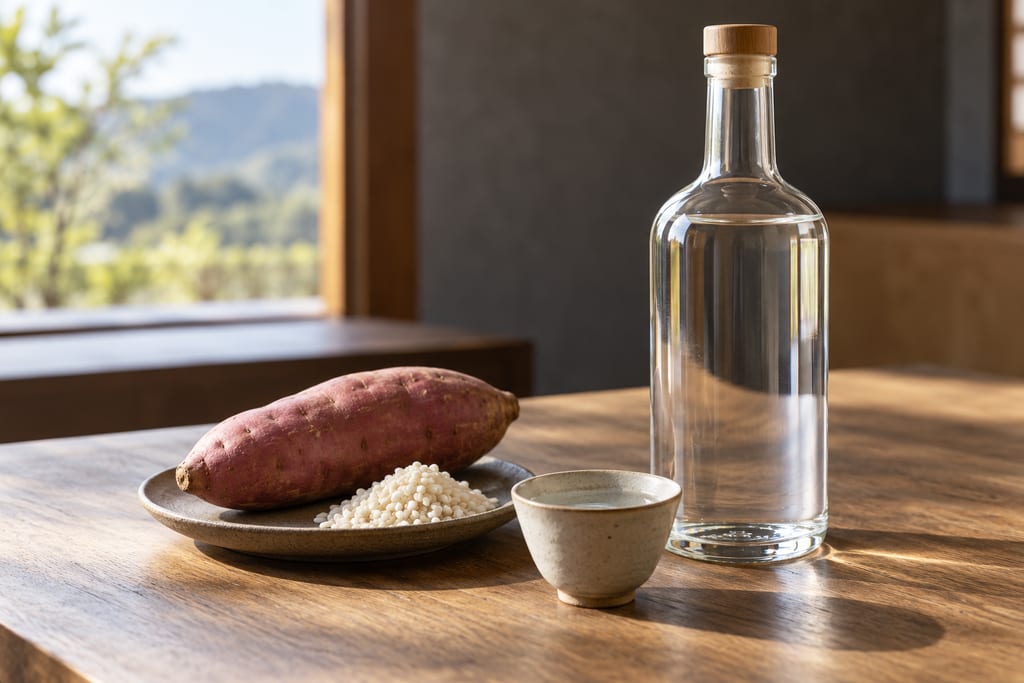
Japanese pot-distilled spirit made by fermenting sweet potatoes, rice or barley with koji and yeast in two stages, then distilling the mash once so the ingredients' aroma survives.

Mauritian molasses rum is a commercial distilled spirit made from fermented sugar-industry molasses. An official ruling describes one 40% ABV Lazy Dodo bottling; the sources do not define a single recipe for the wider product family.

A gelling polysaccharide extracted from red seaweeds, sold as kanten strips or powder; it sets firm at a low concentration and stays solid until about 85 °C.

A Dominican table and seasoning condiment of sour orange juice, mixed with lime and salt and bottled raw; garlic, oregano or a hot pepper may be added for meat or a spicier bottle.

Cicerbita alpina is an alpine perennial whose tender shoots and leaves have been eaten raw or cooked. Sámi milk preparations and modern Carnian dishes are distinct uses, with serious identification and preservation limits.

Japanese skipjack tuna cooked, then repeatedly smoked and dried over a wood fire by the hand-fired tebiyama method into a hard block for shaving into dashi: the first stage of katsuobushi.

A Swedish-style spirit vinegar made by fermenting neutral alcohol with live vinegar bacteria, with a separate guide to commercial ättika strengths.

A yeast-raised wheat ring shaped from a firm dough, briefly boiled and baked. This source-batch formula gives a gently malted crust and a chewy crumb.

A warm dip of garlic, anchovy and olive oil, often enriched with butter, that Piedmont serves over a flame with raw and cooked vegetables and bread.

Bechamel is a white sauce of milk thickened with a butter and flour roux, one of the French mother sauces, and the base from which Mornay and other cheese and cream sauces are made.
No community contributions have been published for this entry yet.
Sign in to contribute. Published comments and photos are free to read.
Scientific Reports 16, article 17769 (2026); DOI 10.1038/s41598-026-45709-5Method · Science · History · Safety
Microbial diversity and production of milk spirit using traditional Buryat fermentation and distillation technologiesA 2026 interdisciplinary study in Scientific Reports combining ethnography, microbiology and historical linguistics on khurenge and darasun.
The documented contemporary household fermentation: 40 to 50 litres of milk introduced into a 70-litre barrel already containing 10 to 15 litres of khurenge from the previous cycle, kept at ambient temperature commonly in an outbuilding, with a locally reported preferred temperature of approximately 20°C, fermenting typically for 2 to 3 days and stirred 2 to 3 times daily to break up the accumulating foam and redistribute the culture.
The retained culture is called khurengen ekhe, or mother khurenge, and backslopping transfers a community of microorganisms adapted to the food and the household process rather than a single strain.
Measured properties of two samples, a household sample HA and a commercial sample HU: ethanol 1.5 and 2.1 per cent ABV, pH 3.3 and 3.7, titratable acidity 240 and 160 degrees Thorner, with lactic acid bacteria and yeast counts whose multiplier and exponent did not survive the handover of this research.
Microorganisms identified included lactobacilli and yeasts belonging to groups including Trichosporon and Monosporozyma, and the household and commercial samples differed in microbial composition.
One documented household yield is approximately 1 litre of darasun at 10 to 11 per cent ABV from 10 litres of khurenge; the directly measured darasun sample contained 11.2 per cent ABV, and experimental stages reached approximately 40 and 75 per cent ABV after repeated processing.
Sensory record of the distillate: milky and cheese-like notes alongside subtler animal, leather and dried-herb characteristics.
Historical linguistics: körüngge, associated with starter culture, appears in the Mongolian legal code Khalka Jirum revised in 1709, where a provision records a penalty for stealing a starter culture; an earlier reference to darasun appears in a fourteenth-century Mongolic glossary; and references to tarasun in Siberia during the seventeenth and eighteenth centuries include material recorded by J. G. Gmelin in 1736.
The Buryat defect called arabka, associated with unpleasant bitterness, abnormal odour, a lack of expected foam and excessive settling of coagulated material beneath whey, which may reflect a shift toward undesirable proteolytic activity or insufficient normal acid fermentation.
Cited in: Making alcohol from milk; Historical evidence; The traditional dairy-processing system; A documented contemporary household fermentation; The microbiology of khurenge; Why milk alcohol is limited; From khurenge to darasun; The flavor of a milk distillate; Using the remainder of the milk; Regional variation; Recognizing a successful fermentation; Safety and practical limitations
PubMedScience
PubMed record for Namsaraev et al.The bibliographic record and abstract for the 2026 study, used to verify its authorship, journal placement and reported findings rather than as an independent source of process figures.
Cited in: The microbiology of khurenge; Safety and practical limitations
British MuseumHistory
British Museum: Yuan dynasty inscribed vesselA Yuan dynasty inscribed vessel dated to 1260 to 1368 whose inscription includes a term interpreted as wine or an alcoholic beverage. It is a comparative historical object discussed in the research and establishes terminology rather than proving that the word described distilled cow's milk.
Cited in: Historical evidence
BurunenHistory
Buryat regional coverage of tarasunContemporary Buryat regional coverage of tarasun as a product and cultural marker, used here for present-day naming and the standing of the drink rather than for any process figure.
Cited in: Making alcohol from milk; From khurenge to darasun; Regional variation