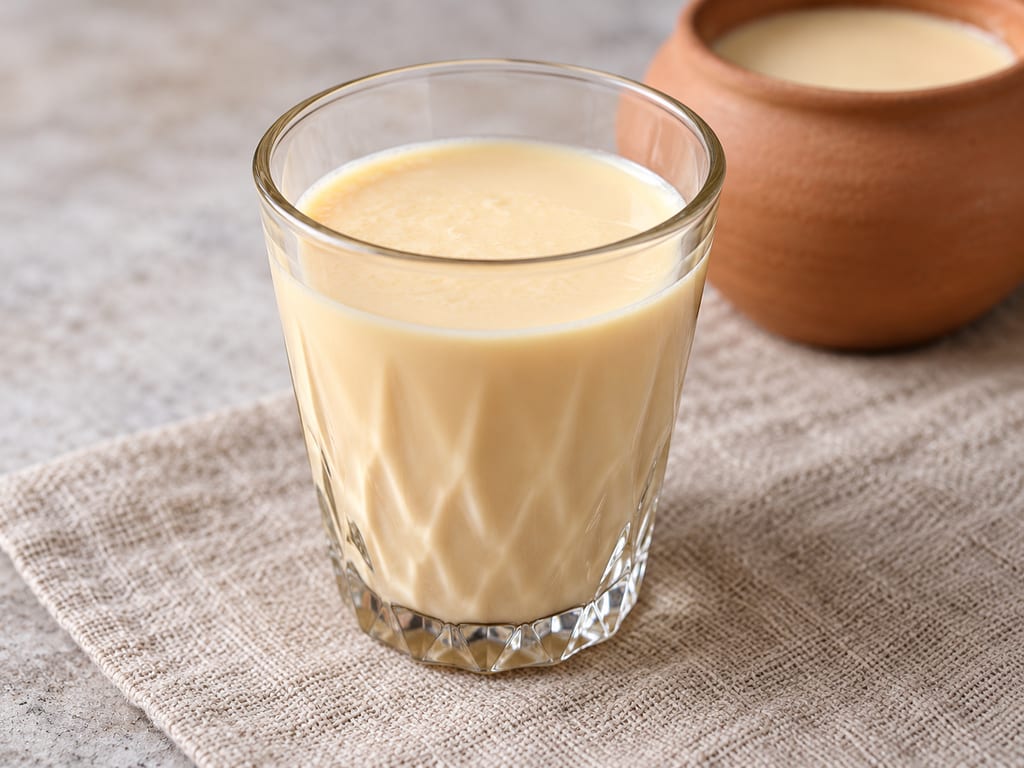
Baked milk (toplyonoe moloko)
Baked milk is an Eastern European preparation of milk held at high heat for hours until it turns cream-coloured with a cooked, mildly sweet flavour, without any fermentation.
 FermenteaWhere food goes to change
Modern adaptation
Ряжанка · Varenets · Ryazhanka · Riazhanka · Ряжанка · Ряженка · Варенець · Варенец · Fermented baked milk · Cultured baked milk · Колотуха · Колочена сметана · Завдавана сметана · Завдаванка · Парушка
Ryazhenka is a Ukrainian and Russian cultured milk made from long-heated, baked cow's milk, cream-coloured and gently sour; varenets is its close relative with a shorter heat treatment.
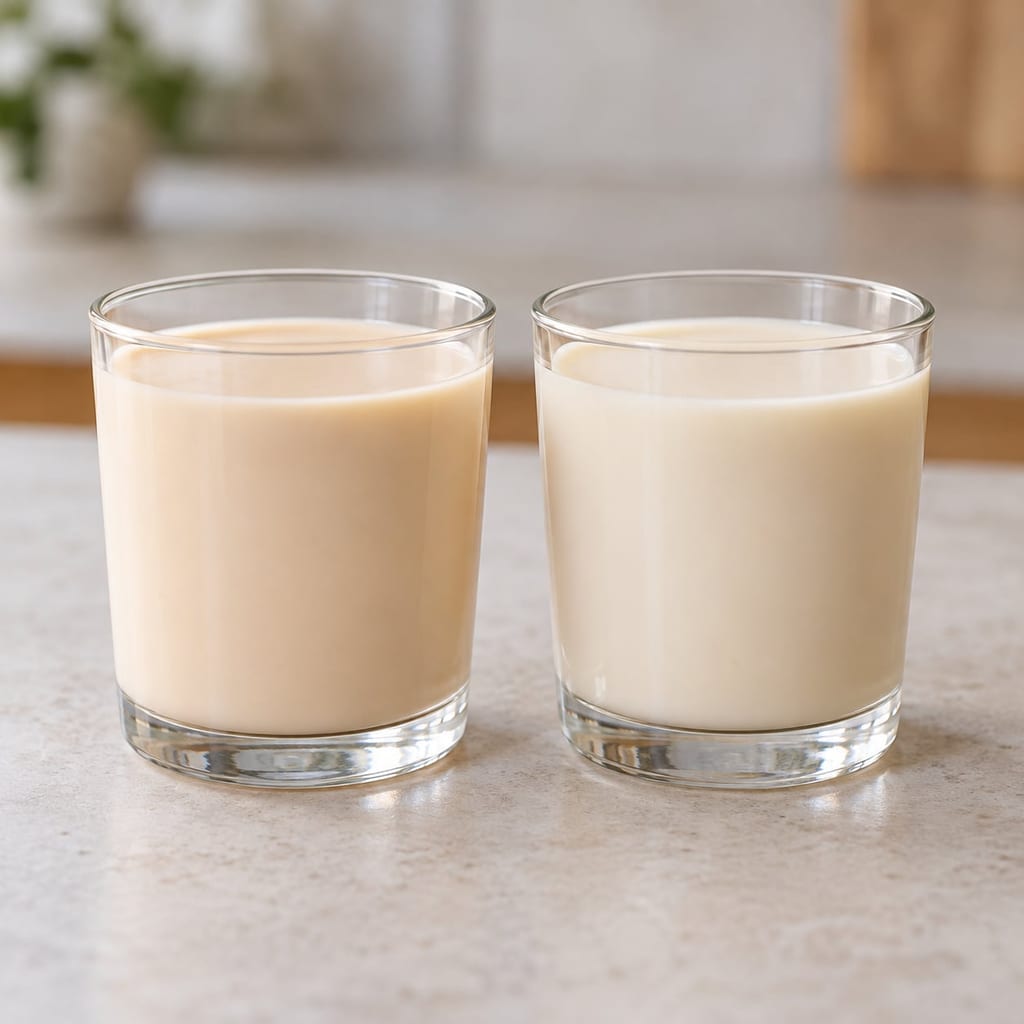
Ryazhenka is cultured milk made from baked milk. The milk is held hot for hours until it turns cream-coloured and picks up a cooked, faintly caramel flavour, and only then is it soured with lactic bacteria. The result is pale gold rather than white, mildly acid, and smooth, with a taste often compared to toasted milk or nuts. Depending on the milk, the culture and whether the curd is stirred, it can be thick enough for a spoon or loose enough to drink from a glass. The colour and cooked taste come from the heating. The sourness and the set gel come from the fermentation.
The Ukrainian name is ряжанка, written ryazhanka or riazhanka in Latin script, and Russian writes ряженка, ryazhenka. The starting material, пряжене молоко in Ukrainian and топлёное молоко in Russian, is a food in its own right: baked milk drunk plain. Baked milk that is never inoculated is not ryazhenka, and the distinction matters when recipes and ingredients are sorted.
Varenets, варенець in Ukrainian and варенец in Russian, is the same family. The word has been used for several regional preparations, among them soured baked milk and, in some dialects, baked milk that was never soured. Modern Russian dairy technology draws a narrower line: ryazhenka milk gets a long baking treatment, while varenets milk gets a shorter high-temperature treatment or is sterilised, so varenets is usually paler and less toasted. That is a specification for factories, not a rule that every household recipe obeyed.
Commercial ryazhenka is fermented with thermophilic lactic acid bacteria, mainly Streptococcus thermophilus and sometimes also Lactobacillus delbrueckii subsp. bulgaricus, added after the milk has been heated and cooled. It is not alcoholic and it is not kefir: there is no grain of yeasts and bacteria, no meaningful gas or alcohol, and the usual finished texture is quiet and bubble-free. It needs no sugar, starch, gelatin or added caramel to be itself. Sweetened and flavoured versions exist and belong in a separate category.
The setting for ryazhenka is the Eastern European masonry oven. After the main fire had died down, a pot of milk could be left in the residual heat to simmer without boiling hard for hours. A skin formed, some water left, and the milk took on its cooked flavour. Once it had cooled, a spoonful of sour cream or another soured dairy product was stirred in and the milk was left to sour. Ukrainian culinary accounts describe this sequence. They do not say when it began, and the practice has to be treated as older than any document that names it.
The names are documented in the nineteenth century. Vladimir Dal began publishing his Russian dictionary in 1863, and the second edition of 1880 defines varenets in one eastern Russian usage as baked milk soured with sour cream. The same entry lists other regional senses: baked milk with cream and no souring, and even unrelated foods. So an old text that mentions varenets does not prove fermentation, and the surrounding recipe has to decide.
For Ukrainian usage, volume IV of Borys Hrinchenko's dictionary, published in Kyiv in 1909, gives ряжанка as a kind of soured milk from the Kaniv district and points to the ethnographic material of Pavlo Chubynskyi. That shows the word in local use by the time of compilation. It records no recipe or microbiology, and it leaves open earlier ethnographic collections that deserve checking before anyone assigns an earlier date.
Material evidence helps with context only. The Museum of the History of the Church of the Tithes in Kyiv discusses ceramic milk vessels from medieval Rus and notes that some forms were, in later ethnography, used for heating milk and making ryazhenka. That suggests continuity in dairy equipment. It does not show that a medieval pot ever held ryazhenka, or that its owners called anything by that name.
Standardisation is better dated. Ukraine's DSTU 4565:2006, covering ryazhenka and varenets together, was adopted in April 2006. Russia's GOST 31455-2012 for ryazhenka was adopted in 2012 and came into force in Russia in 2013. These mark when factories got a specification, not when the milk was invented. The safe summary is that both products descend from regional baked-milk traditions that nineteenth and early twentieth-century dictionaries and ethnographers recorded.
Two changes happen one after the other, and the first shapes the second. Baking gives the colour, aroma and altered proteins. Fermentation then lowers the pH, builds the gel and adds sourness. Souring ordinary milk with the same culture gives a different food, because heated milk proteins behave differently when acidified.
During long heating, lactose, a reducing sugar, reacts with free amino groups on milk proteins, particularly lysine side chains. This is the Maillard reaction. Early products are lactose-protein adducts, later ones are carbonyl compounds and brown pigments called melanoidins. They supply the toasted, sweet cooked-milk notes. Dairy writers often call it caramelisation, but caramelisation is the browning of sugar alone, and Maillard chemistry is the better description in milk. Heat can also isomerise lactose and expose reactive sulfhydryl groups on proteins, and how far all this goes depends on the milk's actual temperature, the time and its composition.
The whey proteins, especially beta-lactoglobulin, unfold with extended heating. Their newly exposed groups let them link to one another and to kappa-casein on the surface of the casein micelles. This alters how the milk gels when it is acidified: research on acid milk gels shows that heat-induced aggregates, whether free in the serum or bound to micelles, change the network and with it firmness and water holding, with the outcome depending on how the aggregates are split between the two. So heating contributes to ryazhenka's texture as well as its flavour.
The defined starter organism is Streptococcus thermophilus. It uses beta-galactosidase to split lactose, runs the sugars through glycolysis to pyruvate, and reduces pyruvate to lactic acid by lactate dehydrogenase, which regenerates the NAD+ the cell needs to keep going. Lactobacillus delbrueckii subsp. bulgaricus, when present, works alongside it, and in mixed thermophilic cultures the two can feed one another with amino acids and growth factors. As lactic acid builds up, colloidal calcium phosphate leaves the casein micelles, the casein network loses stability and, near the isoelectric region around pH 4.6, a continuous acid gel forms.
Real products vary. A 2022 study of artisanal Russian fermented milks found Streptococcus making up 60.8 to 98 per cent of bacterial sequencing reads in the ryazhenka samples. One sample had 39.2 per cent Lactobacillus reads, and another had 8.1 per cent Leuconostoc and 3.8 per cent Lactococcus. These describe particular samples, not a recipe or a universal community. A 2025 Belarusian experiment brought ryazhenka to pH 4.48 and a titratable acidity of 89 degrees Thorner, which illustrates that pH measures active acidity while titration measures total acid. It is a lactic ferment throughout, without the yeast alcohol and gas of kefir.
Milk supplies lactose for the bacteria, casein and whey proteins for the gel, minerals that influence coagulation and fat for mouthfeel. A starter supplies the organisms that make the acid, so no rennet and no added acid are needed. Traditional Ukrainian accounts inoculate with sour cream. Modern production uses selected thermophilic cultures.
The distinctive step is the long heating. Russia's industrial reference ITS 45-2024 gives 97 plus or minus 2 C for at least three hours for ryazhenka, and 97 plus or minus 2 C for 60 plus or minus 20 minutes, or sterilised milk, for varenets. A Ukrainian dairy teaching text describes about 95 C for three to four hours, and the Russkaya Ferma technology page gives 92 to 98 C for three to five hours. These are factory conditions from different sources. They are not measurements of a household oven, whose temperature fell as it cooled. The milk must not scorch: burnt milk on the pot bottom is not controlled baked flavour. A skin may form, and traditional cooks sometimes stirred it back in.
The milk is then cooled before the culture goes in, since a hot milk would kill it. The Ukrainian teaching text cools to 43 to 45 C, adds a production starter at 5 per cent of the milk, and ferments three to four hours until the titratable acidity reaches 80 to 85 degrees Thorner. Russkaya Ferma gives 40 to 42 C with 5 per cent starter by mass for four to six hours. The temperature and time suit those starters, and other cultures need their own.
The home version is one litre of commercial pasteurised baked milk, warmed to 37 to 40 C, with one sachet of the Ivan-Pole dry ryazhenka starter stirred in for two or three minutes until it dissolves. The milk goes into a yoghurt maker or multicooker held at 37 to 40 C for six to eight hours, until it forms a smooth, viscous curd. The curd is stirred to an even consistency, then chilled for at least two hours. It uses ready-made baked milk, because the baking step is a separate preparation, and it follows the manufacturer's times and dose, which do not carry over to other brands.
Two factory routes are documented. In the thermostat method the inoculated milk is poured into its final containers and left to set undisturbed, so the curd stays intact. In the reservoir method it ferments in a tank, and the gel is then stirred and packed, giving a drinkable product. Stirring changes texture, not acidity. Cooling is the last essential stage: it slows the bacteria, limits further acid and steadies the texture. The Russian standard sets a dispatch temperature of 4 plus or minus 2 C.
The central contrast is between Ukrainian ryazhenka and Russian varenets, which are close cooked-milk ferments whose names and modern technical definitions do not always agree. Ukrainian usage ties ryazhenka to whole milk baked in an oven and soured with sour cream, while industrial ryazhenka uses standardised milk and selected thermophilic cultures. The cream colour, cooked flavour and mild sourness stay constant across the equipment change.
Varenets was a broader word. Dal's dictionary records the eastern Russian soured sense, a Siberian sense of unsoured baked milk with cream, and others. Anyone indexing old recipes has to read the description before deciding whether a varenets was fermented. Today the industrial line is by heat treatment: long baking for ryazhenka, a shorter hold or sterilisation for varenets, which comes out lighter and milder. Ukraine's DSTU treats the two as separate products inside one standard.
Local names add another layer. A Ukrainian traditional-food compilation lists kolotukha, kolochena smetana, zavdavana smetana, zavdavanka, machannia, syrokvasha and parushka in connection with ryazhenka. These make useful search terms, but they are not exact synonyms without checking each local definition, since some describe a method of mixing or inoculating or a wider group of soured milks.
The starter has changed too. Sour cream passes on whatever living bacteria it holds, which depends on how that cream was fermented. Industrial cultures are chosen for predictable acid and flavour. Fat content varies in commercial product and the curd may be left intact or stirred. The Kuban agricultural information centre describes a traditional-style method with sour cream and a household incubation of 35 to 37 C for three to five hours, with northern and southern varenets differing in holding temperature and time. Its methods have not been shown to meet current home-safety practice.
Research has produced experiments. A 2022 study by Aidarbekova and Aider supplemented ryazhenka with 3 or 9 per cent electro-activated whey and measured viscosity, colour and whey separation, and the 2025 Belarusian work compared commercial products with laboratory milk made from a selected starter. These are dairy-technology studies, not traditional recipes.
Ryazhenka is eaten and drunk as it comes, cool, from a glass or a bowl. Fat, solids and whether the curd was stirred decide whether it behaves like a drink or a soft yoghurt. Plain, it needs no sugar, since the baked milk carries much of the appeal.
Ukrainian traditional-food accounts say it was served with varenyky, pancakes, oladky and flat cakes, and with bread and pies, and that it belonged to an afternoon meal on Sundays and festive days. The pairing works because cool acid milk sets off hot dough. It is a documented custom, not proof that every region did the same.
It is not sour cream, even though sour cream was used to start it, because the finished product is made on a milk base. It should be kept apart from baked milk, kefir, buttermilk and yoghurt, even where uses overlap. Varenets is likewise spooned or drunk by its consistency, with a milder cooked note, and where an old source means unsoured baked milk it is a different dairy dish under the same name.
In modern kitchens plain ryazhenka serves as a tangy pouring dairy, in a cold dressing or beside cooked grains, though that is modern practice unless a source says otherwise. Strong heat may split the already acidified protein into curds and whey, so it is no stand-in for fresh milk where heat stability matters. Record sweetened, fruit and reformulated commercial versions separately from the plain base.
A good batch is evenly cream-coloured, smells of clean cultured milk, and tastes of cooked milk. Russia's GOST 31455-2012 describes a homogeneous product with no gas formation, a clean fermented taste with a pronounced heat-treated note, titratable acidity of 70 to 110 degrees Thorner, and at least 10 million viable lactic acid microorganisms per gram through shelf life. Those are commercial quality requirements, not proof that a home batch is safe.
Colour tells about the heating. Milk that stays white probably did not get the intended baking. Darker colour can mean stronger Maillard browning, but dark with a bitter, burnt taste means scorching, and no amount of fermentation or extra starter repairs it.
A batch that stays liquid and sweet has not acidified. Likely causes are dead starter, inoculating while the milk was too hot, a wrong temperature, or conditions that held the bacteria back. Sour-cream and defined cultures do not share timings. Do not leave a failed batch warm indefinitely: if the expected acidity has not arrived within the process, throw it out.
A little whey on top is normal when an acid gel is disturbed or stored, because the network contracts. More can follow over-acidification, a weak gel or handling. The 2022 whey-supplementation study reduced syneresis in a modified lab formulation, which says nothing about traditional ryazhenka. Strong graininess or very sharp sourness suggests the intended texture or acidity was missed.
Reject a batch with unexpected gas, a swollen container, visible mould, off colour or an offensive smell. Ryazhenka is not meant to be fizzy. A Ukrainian dairy text gives an indicative pH of 4.0 to 4.6, and Utah State University Extension recommends reaching pH 4.6 or lower within the starter's specified period for cultured dairy. That is general guidance, not a validated critical limit for this milk, and pH and titratable acidity are different measures that cannot stand in for each other.
Safety starts with the milk and starter. The CDC advises pasteurised milk because raw milk can carry Campylobacter, pathogenic E. coli, Listeria, Brucella and Salmonella. Prolonged heating reduces many hazards, but contamination after heating remains possible from vessels, spoons or starter. Refrigerate promptly at 4 C or colder; the Russian standard dispatches at 4 plus or minus 2 C. A thick curd is not proof of safety. No validated home shelf life exists for this formulation, so none is given here, and people at higher risk from foodborne illness should be cautious with homemade cultured dairy.
Dictionaries record the names in the nineteenth and early twentieth centuries; the household practice is older and not securely dated.
Raw milk may carry Campylobacter, pathogenic E. coli, Listeria, Brucella and Salmonella, and lactic fermentation cannot be assumed to remove them.
Hazard sourceA dead starter, wrong temperature or unsuitable culture can leave warm milk unacidified, where unwanted microbes can grow.
Hazard sourceUnclean containers, utensils, hands or starter can add pathogens to a heated product.
Hazard sourceFermenting outside the starter's range gives an incomplete or inconsistent result; uncontrolled room temperature is not equivalent to a controlled incubator.
Hazard sourceFinished ryazhenka is perishable and high in moisture; poor cooling allows continued microbial growth.
Hazard sourceA starter of unknown composition or viability acidifies unpredictably, and ordinary sour cream is not the manufacturer's defined culture.
Hazard sourceUse commercially pasteurised baked milk, not raw milk.
Control sourceUse the specified starter at the manufacturer's dose.
Control sourceHold the fermentation temperature.
Control sourceMonitor acidification, not thickness alone.
Control sourceRefrigerate promptly after fermentation.
Control sourceKeep equipment hygienic during cooling, inoculation and packing.
Control sourceThis reproduces a manufacturer's method and has not been independently validated.
Do not substitute raw milk for the pasteurised baked milk.
Do not assume an arbitrary yoghurt, kefir or sour-cream starter has the same requirements as the named starter.
Do not extend fermentation indefinitely if the milk does not acidify.
A thick curd is not proof of safety, and a pH below 4.6 does not show that every pathogen or toxin is absent.
Discard batches with unusual gas, mould or offensive smell; some dangerous contamination cannot be seen or smelled.
Do not mix the industrial heating and starter percentages into this home recipe without a separately validated process.
No validated refrigerated shelf life exists for this homemade formulation.
People at higher risk from foodborne illness should be particularly careful with homemade cultured dairy.
A country-level statement; no locality of origin is claimed.
The dictionary records the name here; it does not say the food began here.
Dal's dictionary and the GOST standard; country-level.
A modern comparison study, not a traditional-practice claim.
Baked milk is an Eastern European preparation of milk held at high heat for hours until it turns cream-coloured with a cooked, mildly sweet flavour, without any fermentation.
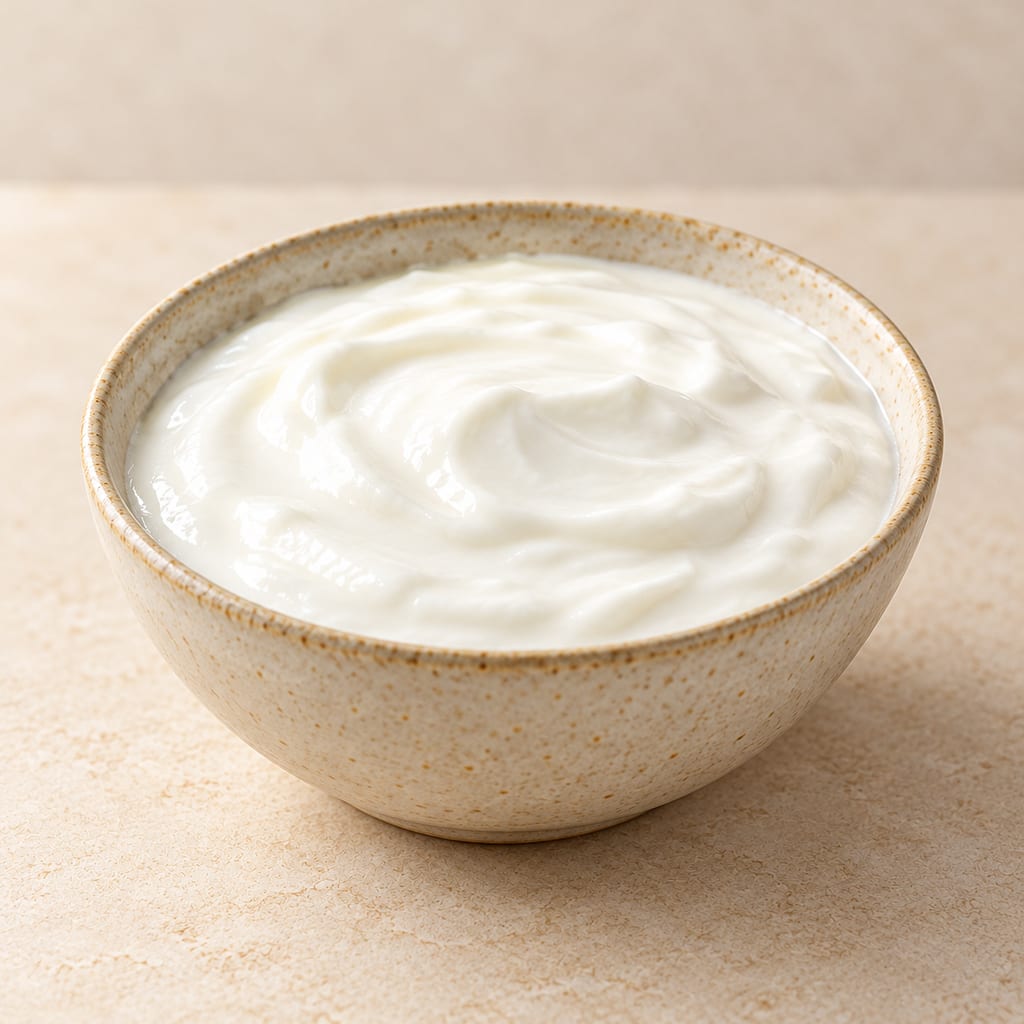
Katyk is a traditional fermented milk of Turkic-speaking peoples, made by souring heated milk with lactic bacteria, often with a spoonful of the last batch, into a thick, sour curd.
Follow milk into cheese, cultured drinks, butter, dried curds and sweets: a journey through the animals, seasons and household decisions behind the world's dairy foods.
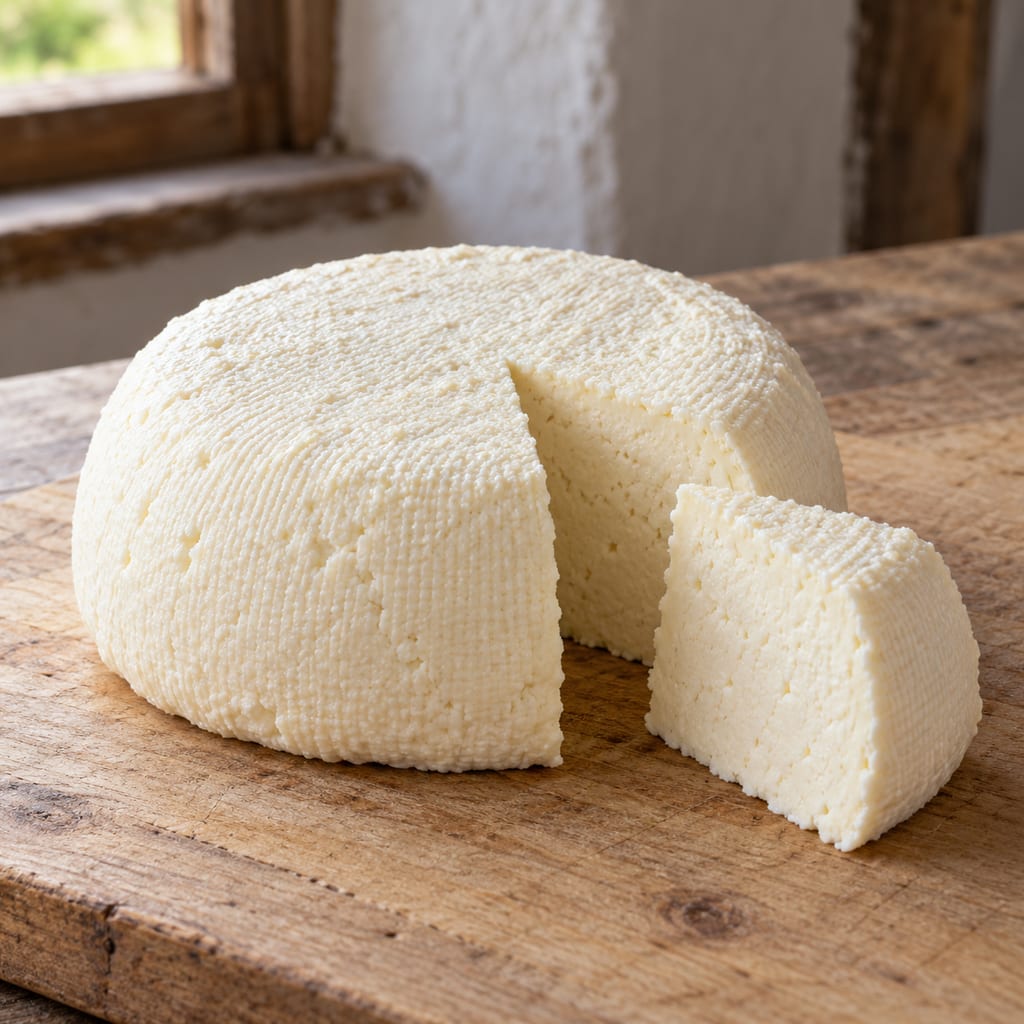
Budz is a traditional Hutsul rennet-set cheese made from sheep, cow or goat milk in the Ukrainian Carpathians, forming a fresh curd that can be eaten, smoked or processed into salted bryndza.
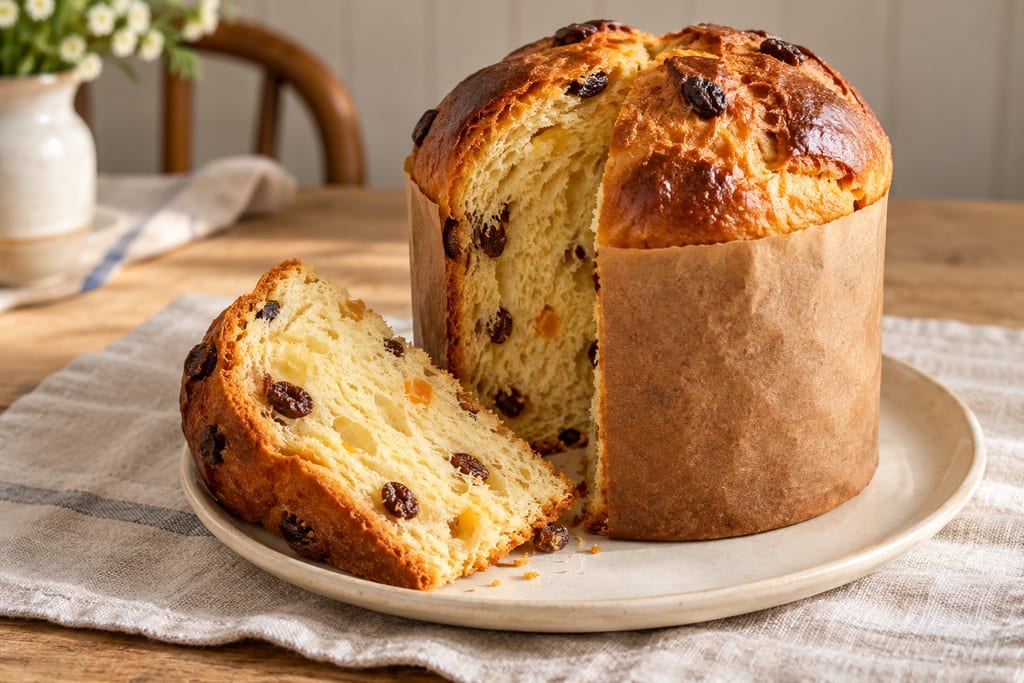
This Ukrainian Easter paska uses an enriched yeast dough with milk, eggs, butter, raisins and citrus zest. A sponge and two further rises precede baking in paper or parchment-lined moulds.
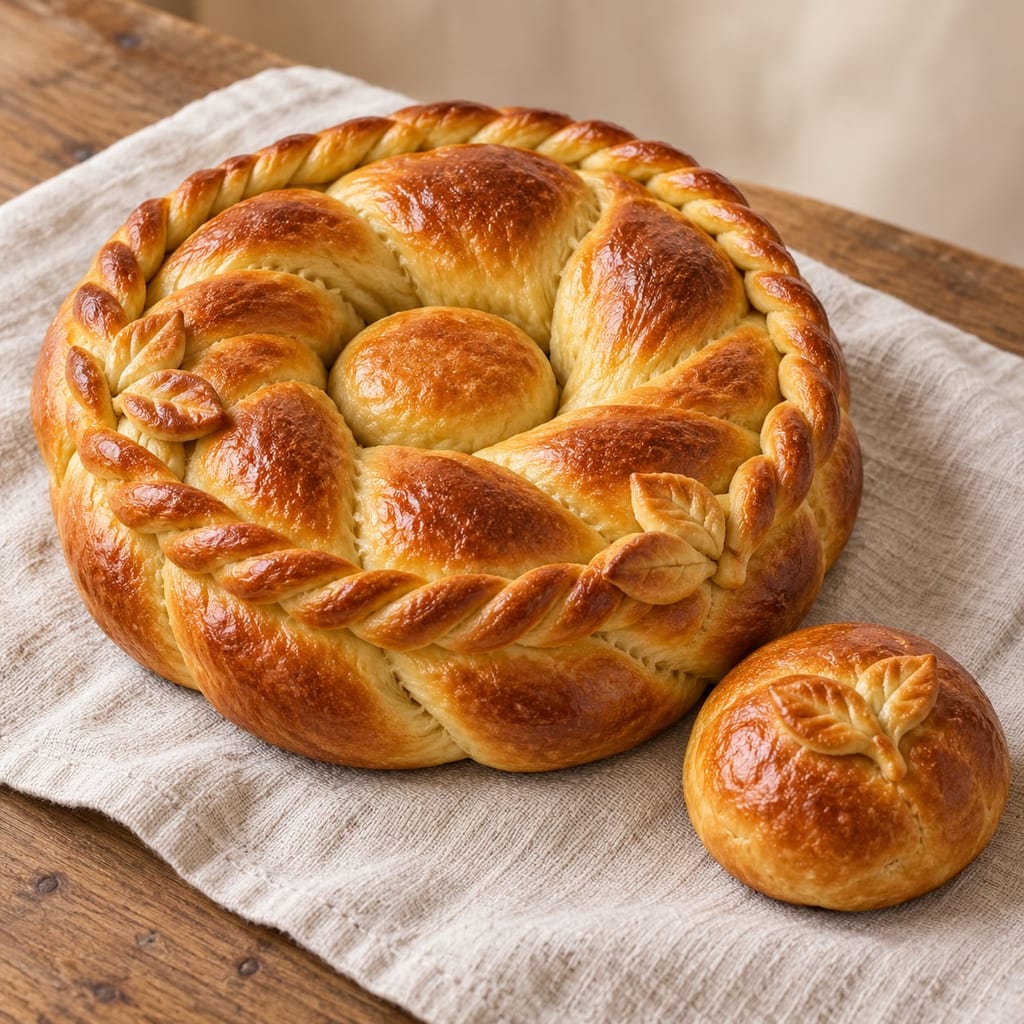
A Peremyshl-region Ukrainian wedding bread made from sweet yeast dough, shaped as a large braided round with a smaller memento loaf.
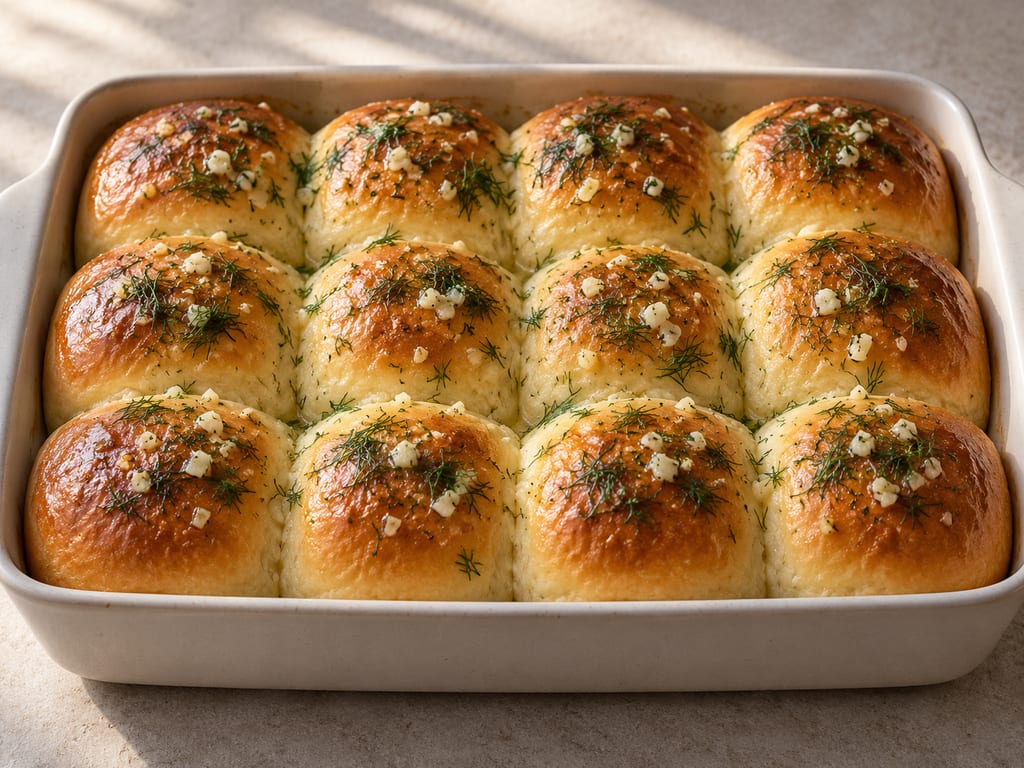
Soft Ukrainian wheat rolls are baked close together and brushed with fresh garlic, dill and oil. This savory garlic-topped baked form is separate from sweet fried pampushky.

Salted mushrooms are a traditional wild-mushroom preserve, especially of Finnish and Russian milk caps, made by layering boiled mushrooms with coarse salt or keeping them under brine, and kept cold.
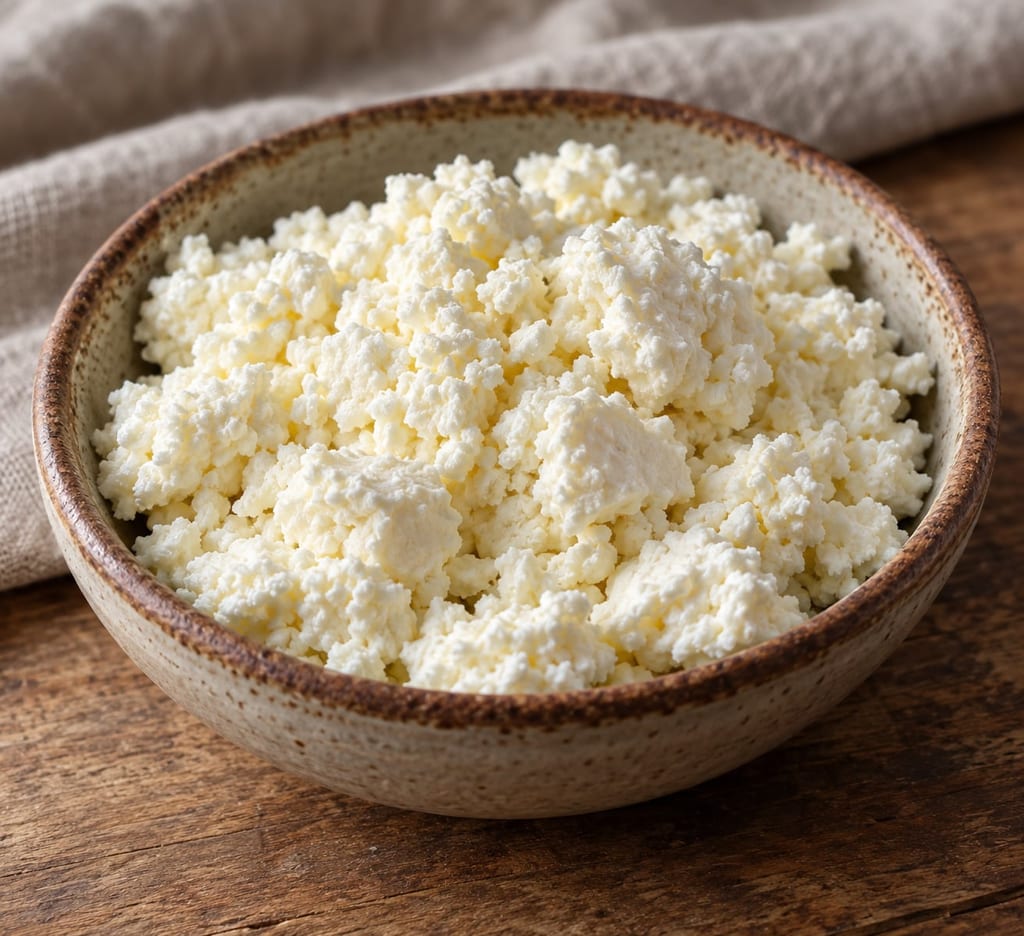
Vurda is a Hutsul whey cheese made by reheating the whey left after budz, often with fresh milk or sour whey, to recover soft pale curds that are lifted out and drained.
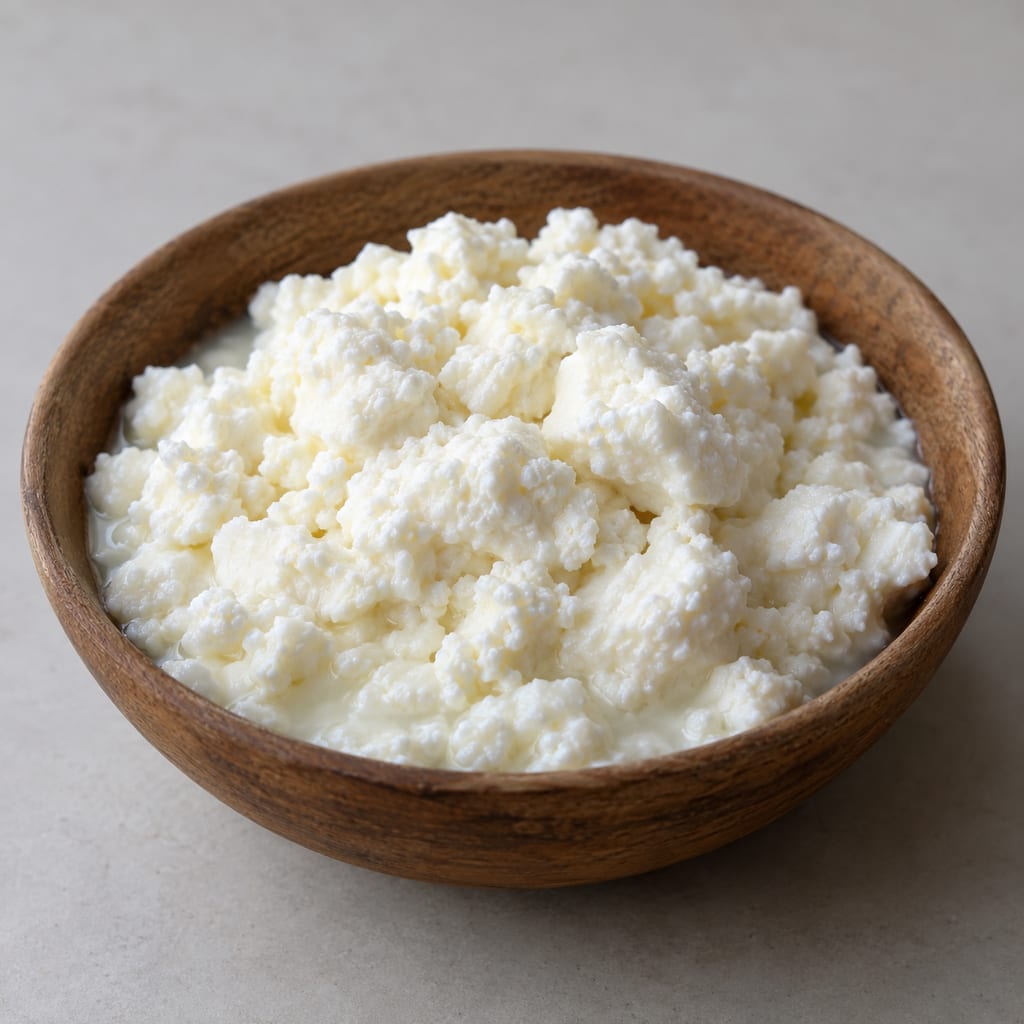
Aarts is a soft Mongolian curd made by draining boiled fermented yogurt; it remains wet, unlike aaruul, which is dried.
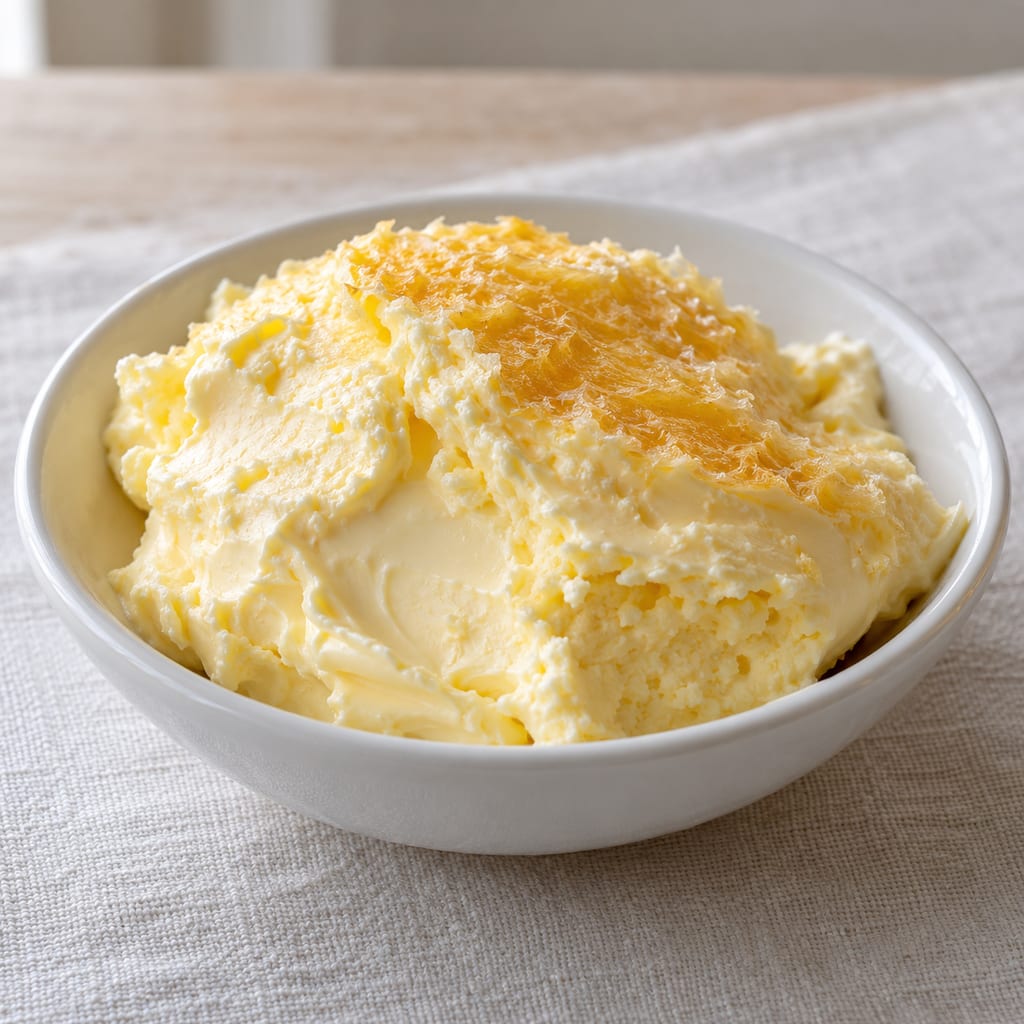
High-fat cream scalded below boiling for at least an hour until a thick crust forms, then cooled hard so the crust sets and the cream beneath thickens.
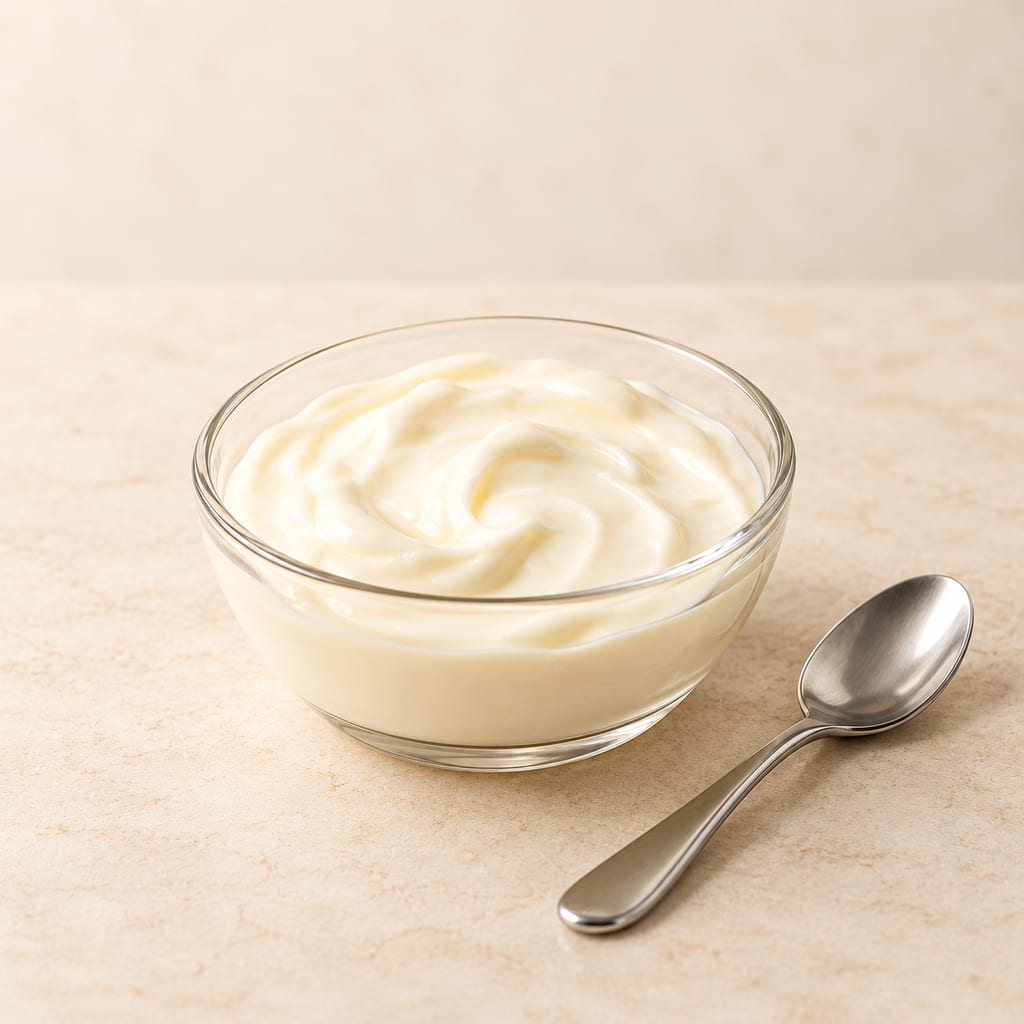
Crème fraîche is cream soured by lactic cultures into a thick, mild topping. It suits fruit and desserts as well as soups, sauces and other savoury dishes.
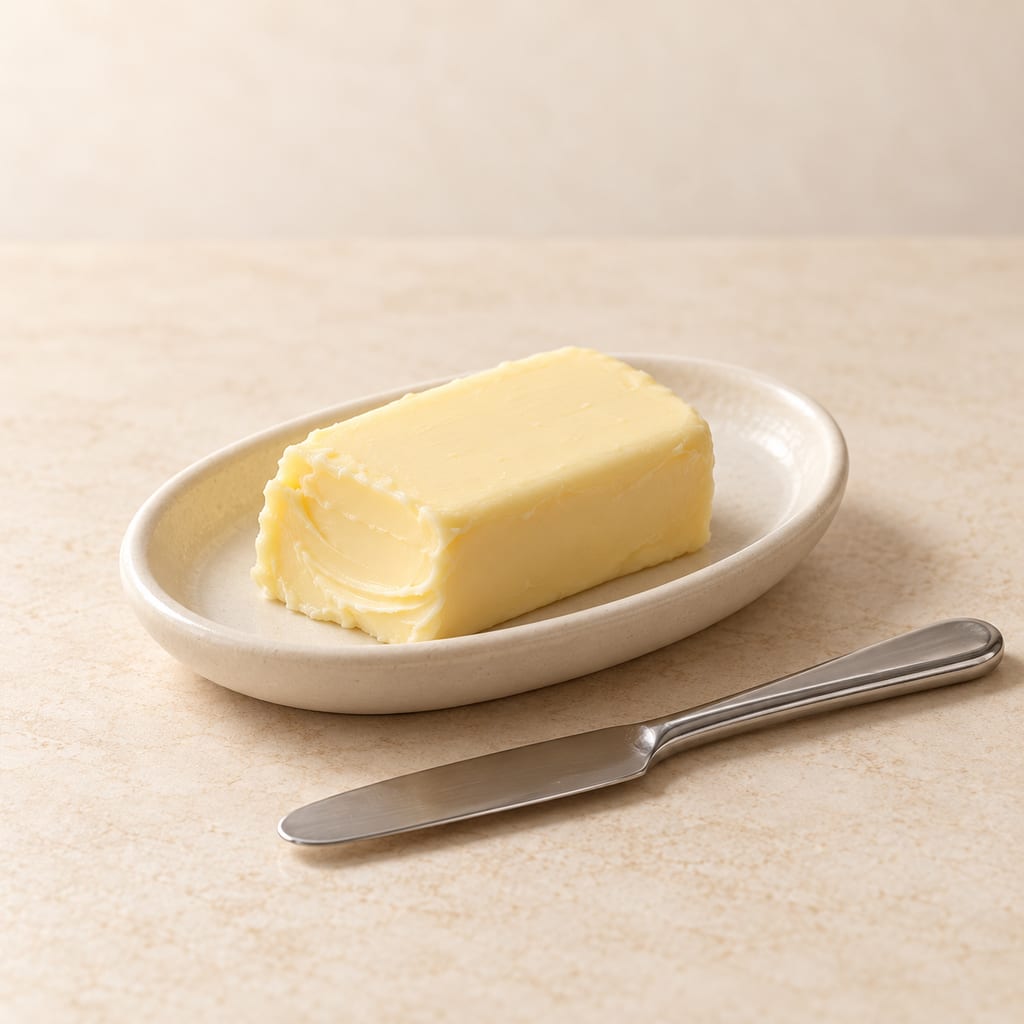
Cultured butter is churned from cream soured with lactic cultures. Its lightly tart flavour comes from the cultured cream, which separates into butter grains and buttermilk.
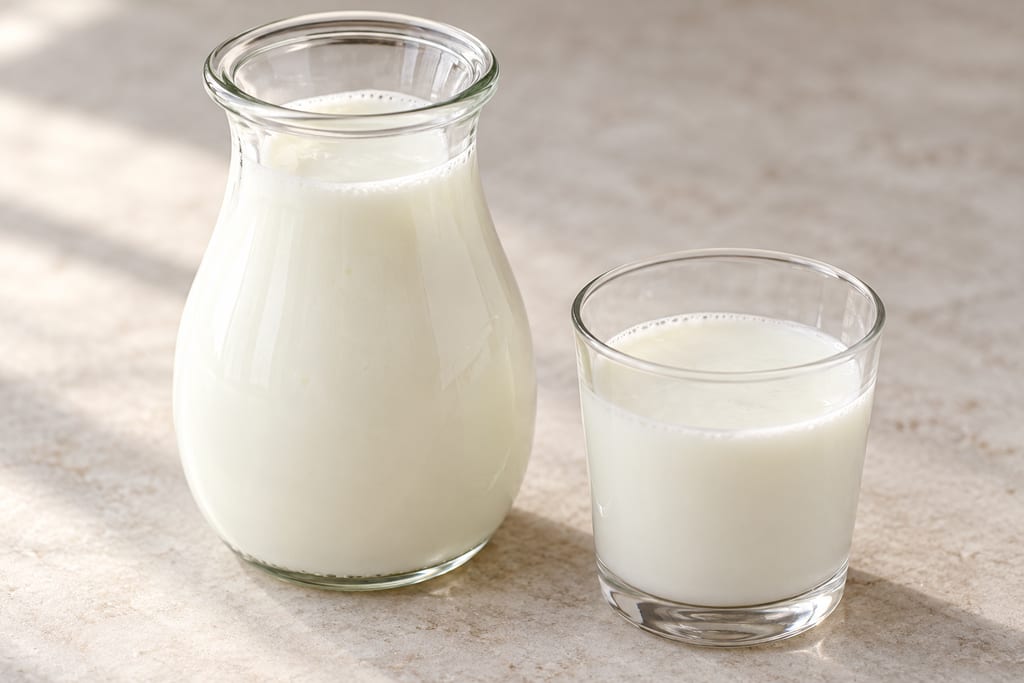
Cultured buttermilk is skim milk soured with a lactic starter into a tangy drink. This Canadian home method sets the milk without churning cream.
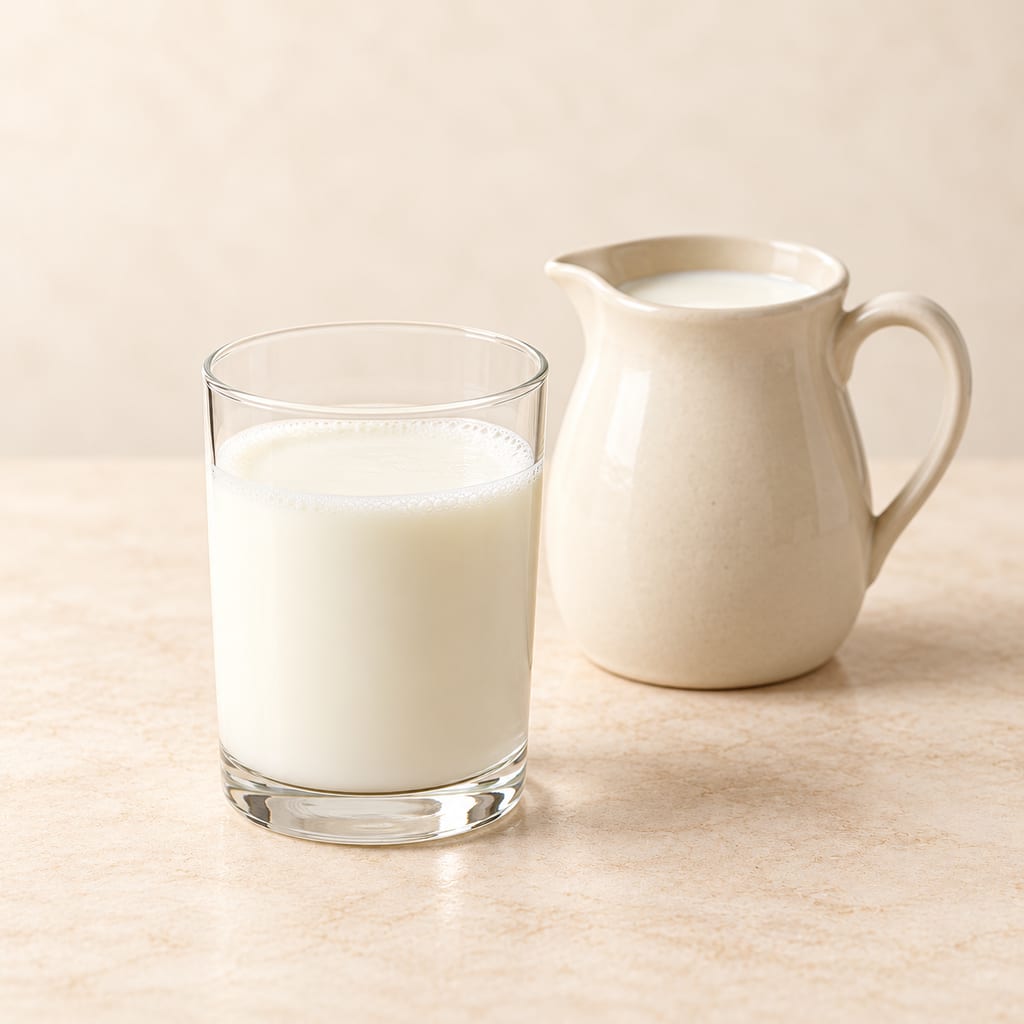
Milk thickened with a packet of buttermilk culture makes a tangy drink and a baking ingredient. This warm-incubated version uses whole milk.
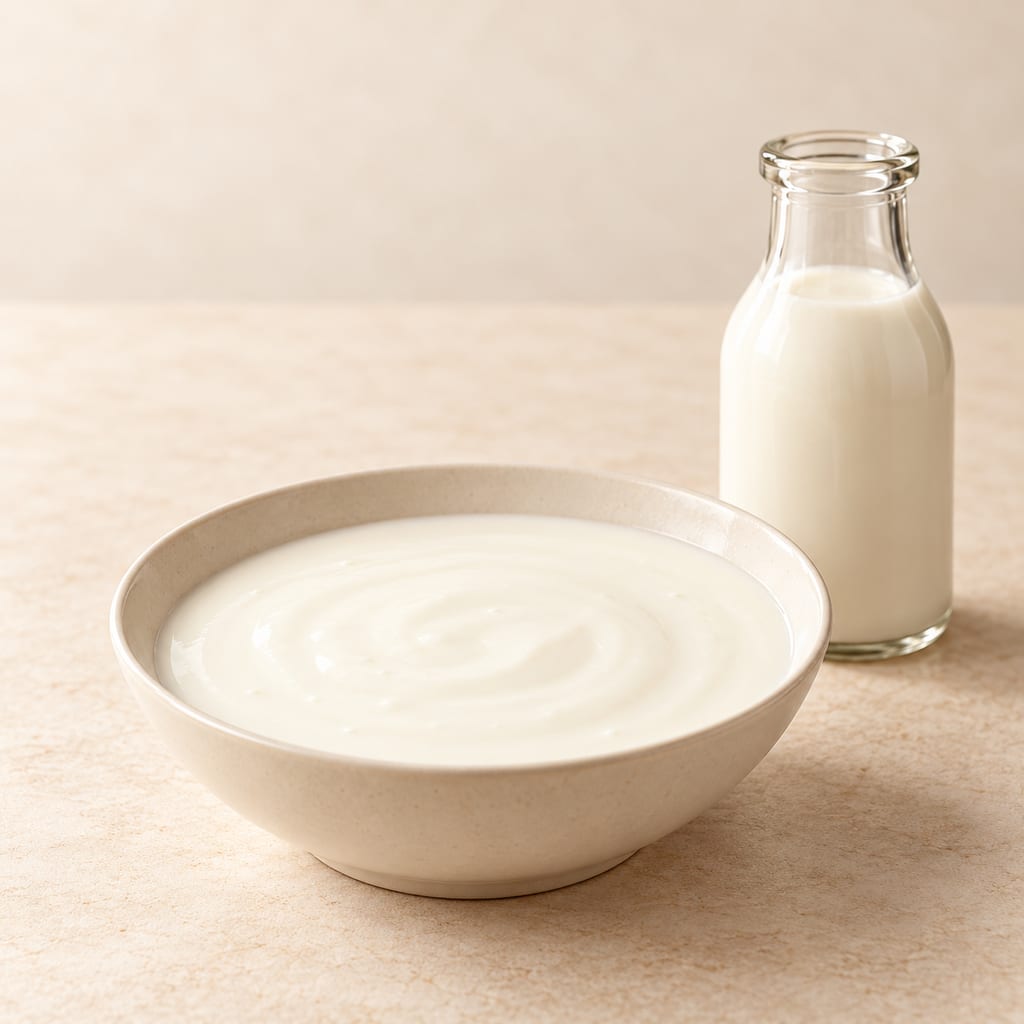
Filmjölk is a Swedish cultured milk with mild acidity and a spoonable body. This recurring batch uses filmjölk from the previous batch to culture fresh milk.
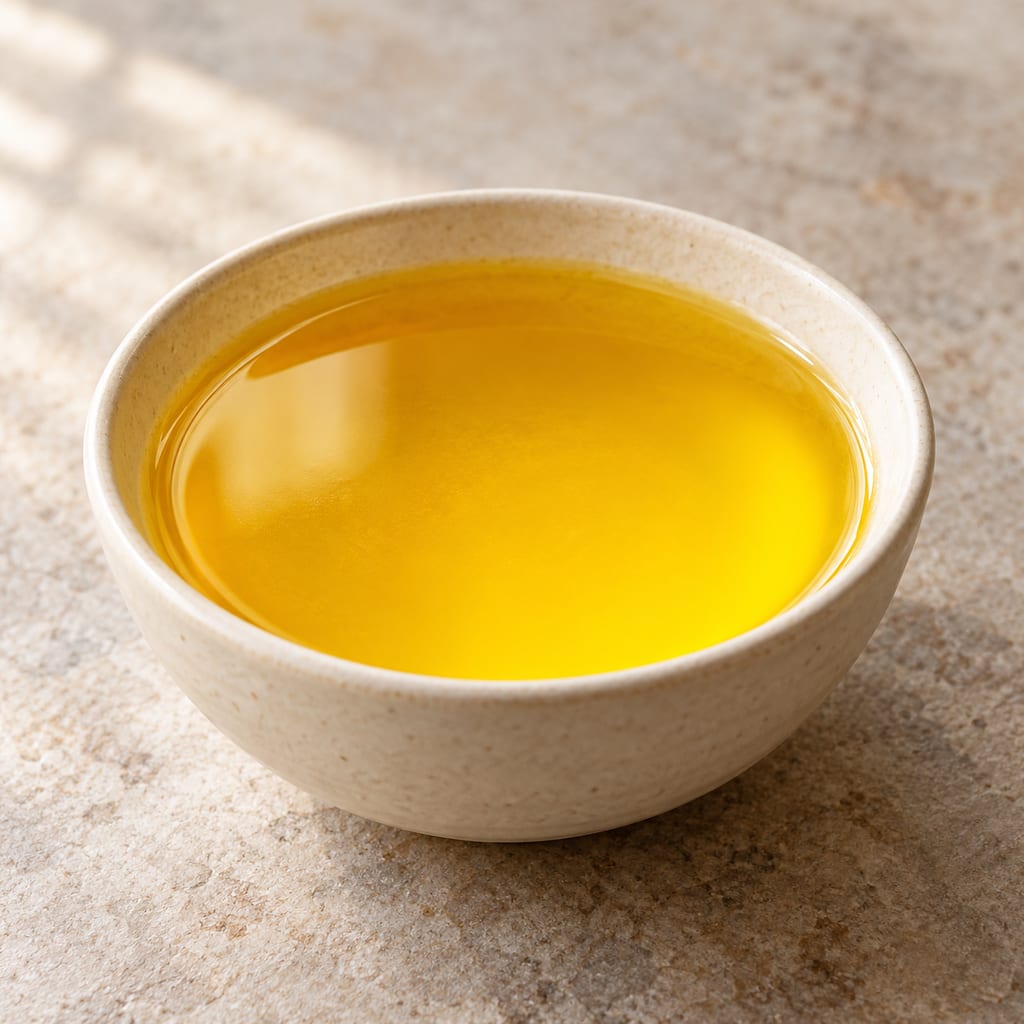
Butter heated until most water leaves and the milk solids separate, giving a fat that keeps far longer than butter. Rendering applies the same heat to animal tissue to make lard and tallow.

A Cap-Pelé boucanière is an Acadian herring-smoking building. The documented Willie Niles example is a one-storey wood-frame structure with a ridge smoke vent and interior bays for hanging fish-bearing cannes.

Achcharu is a family of Sri Lankan vinegar pickles made with mixed vegetables or seasonal fruit and a piquant spice dressing. This version is a quick, refrigerated, non-fermented mixed-vegetable pickle.

The acocote is a long, hollowed and dried gourd used to draw aguamiel from a mature maguey. It is a harvesting tool: the sap is transferred to a separate vessel before it ferments into pulque.

Adrak murabba preserves young ginger in sugar syrup, a sweet South Asian preparation recorded in Indian cookery and food-processing sources.

Parkia biglobosa seeds are fermented into regional West African seasonings, including nététou, iru, dawadawa and soumbala. The yellow fruit pulp is a separate food, and names and methods vary by place.

Japanese reddish-brown vinegar from sake lees matured about three years, turned to vinegar by acetic bacteria; the vinegar of Handa and Edomae sushi rice.

A refined common-wheat flour blended for a broad range of baking; its protein and behavior vary with wheat, milling and market.

The almond mushroom, Agaricus subrufescens, was cultivated in eastern North America in the 1800s, lost its market, and returned as a cultivated mushroom from Brazil, where it is grown under several names.
No community contributions have been published for this entry yet.
Sign in to contribute. Published comments and photos are free to read.
Иван-поле (Ivan-Pole)Method
Ряженка — закваска бактериальная1 litre pasteurised baked milk with one starter sachet
37 to 40 C inoculation and fermentation for 6 to 8 hours
2 to 3 minutes of stirring
smooth viscous curd, stirred, chilled at least 2 hours
Cited in: How it is made and why each step is there
Русская ФермаMethod
Технология производства ряженки и простоквашиmilk held 92 to 98 C for 3 to 5 hours
cooled to 40 to 42 C, 5% thermophilic starter by mass
fermented 4 to 6 hours at 40 to 42 C
Cited in: How it is made and why each step is there
Rosstandart, reproduced by Internet and LawMethod · Science
ИТС 45-2024 — Производство молока и молочной продукцииryazhenka 97 +/- 2 C for at least 3 hours; varenets 60 +/- 20 minutes or sterilised milk
Maillard products and cream colour
starter-dependent fermentation
Cited in: What ryazhenka is; Heat first, then acid; How it is made and why each step is there; Variations
Rosstandart, reproduced by MegaNormMethod
ИТС 45-2017 — Производство напитков, молока и молочной продукцииryazhenka and varenets heat-treatment distinctions
fermentation ranges in the listed industrial methods
RosstandartHistory
ГОСТ 31455-2012 — Ряженка. Технические условияstandard adopted 2012, in force in Russia 2013
Cited in: Where the names come from
Interstate Council for Standardization, Metrology and Certification, reproduced by MegaNormDefinition · Quality
ГОСТ 31455-2012 — Ряженка. Технические условия (text)ryazhenka defined as fermented baked milk
70 to 110 degrees Thorner and at least 10 million viable cells per gram
dispatch at 4 +/- 2 C
Cited in: What ryazhenka is; Heat first, then acid; How it is made and why each step is there; At the table; Reading results and problems
BudstandartHistory
ДСТУ 4565:2006 — Ряжанка та варенець. Технічні умовиUkrainian standard covering ryazhenka and varenets, adopted April 2006
Cited in: What ryazhenka is; Where the names come from; Variations; Reading results and problems
MicroorganismsScience
Microbial Communities of Artisanal Fermented Milk Products from RussiaStreptococcus 60.8 to 98% of reads in ryazhenka samples
Lactobacillus, Leuconostoc and Lactococcus in some samples
Cited in: What ryazhenka is; Heat first, then acid
US National Library of MedicineScience
Microbial Communities of Artisanal Fermented Milk Products from Russia (PubMed record)bibliographic record of the 2022 study
FAO AGRISVariation
Production of Ryazhenka, a Traditional Ukrainian Fermented Baked Milk, by Using Electro-Activated Whey as Supplementing Ingredient and Source of Lactulose3% or 9% electro-activated whey; effects on viscosity, colour and whey separation
Cited in: Variations; At the table; Reading results and problems
Kuban Agricultural Information and Consultation CentreVariation
Мини-завод по переработке молокаtraditional-style ryazhenka with sour cream; 35 to 37 C for 3 to 5 hours
northern and southern varenets differing in holding temperature and time
Cited in: Variations
Slovnyk.me, from Borys Hrinchenko's dictionaryHistory
Ряжанка — Словник української мови Грінченкаryazhanka as a soured milk of the Kaniv district
reference to Chubynskyi's ethnographic material
Cited in: Variations
Borys Grinchenko Kyiv University digital libraryHistory
Словарь української мови, том IV (Грінченко, 1909)volume IV published in Kyiv in 1909
Cited in: Where the names come from
Culture.RFHistory
Варить — Толковый словарь В. Даляvarenets as baked milk soured with sour cream in one eastern Russian sense
other regional senses including unsoured baked milk
Cited in: Where the names come from; Variations; At the table
Borys Grinchenko Kyiv University wikiHistory · Use
РяжанкаUkrainian description of ryazhanka and how it is eaten
Cited in: Where the names come from; At the table
Традиції УкраїниHistory · Use
Ряжанкаmilk baked in the oven until golden, cooled and soured with sour cream
regional names
served with varenyky, pancakes and pies
Cited in: Where the names come from; How it is made and why each step is there; Variations; At the table
Museum of the History of the Church of the Tithes, KyivHistory
Ceramic milk vessels of the Rus periodmilk vessels later associated ethnographically with making ryazhenka
Cited in: Where the names come from
Ukrainian dairy teaching referenceMethod · Quality
Гігієна молока і молочних продуктівabout 95 C for 3 to 4 hours
cool to 43 to 45 C, 5% starter, 3 to 4 hours to 80 to 85 degrees Thorner
pH 4.0 to 4.6
Cited in: What ryazhenka is; How it is made and why each step is there; Reading results and problems
International Dairy JournalScience
Impact of heat treatment of milk on acid gelationeffect of milk heat treatment on acid gel formation
Cited in: Heat first, then acid
Journal of Agricultural and Food ChemistryScience
Role of the soluble and micelle-bound heat-induced protein aggregates on network formation in acid skim milk gelsheat-induced whey protein aggregates, free and micelle-bound, shape acid gel networks
Cited in: Heat first, then acid; Reading results and problems
Comprehensive Reviews in Food Science and Food SafetyScience
Blocked Lysine in Dairy Products: Formation, Occurrence, Analysis, and Nutritional ImplicationsMaillard reaction of lactose with lysine in heated milk
Cited in: Heat first, then acid
Vestnik PSES, Kemerovo State UniversityScience · Variation
Physical and chemical properties of commercial baked milk vs experimental sampleslaboratory-fermented ryazhenka at pH 4.48 and 89 degrees Thorner
comparison with commercial products
Cited in: Heat first, then acid; Variations
Centers for Disease Control and PreventionSafety
Raw Milkraw milk pathogens
choose pasteurised milk
Cited in: How it is made and why each step is there; Reading results and problems
Utah State University ExtensionSafety
Tips to Safely Ferment at Homecontrolled temperature and timely acidification
pH 4.6 or lower for cultured dairy
Cited in: Reading results and problems
Utah State University ExtensionSafety
Homemade Fermented Yogurtstarter handling and controlled incubation
prompt refrigeration
FoodSafety.govSafety
4 Steps to Food Safetyrefrigerator at 4 C or below
perishable food handling
Cited in: Reading results and problems