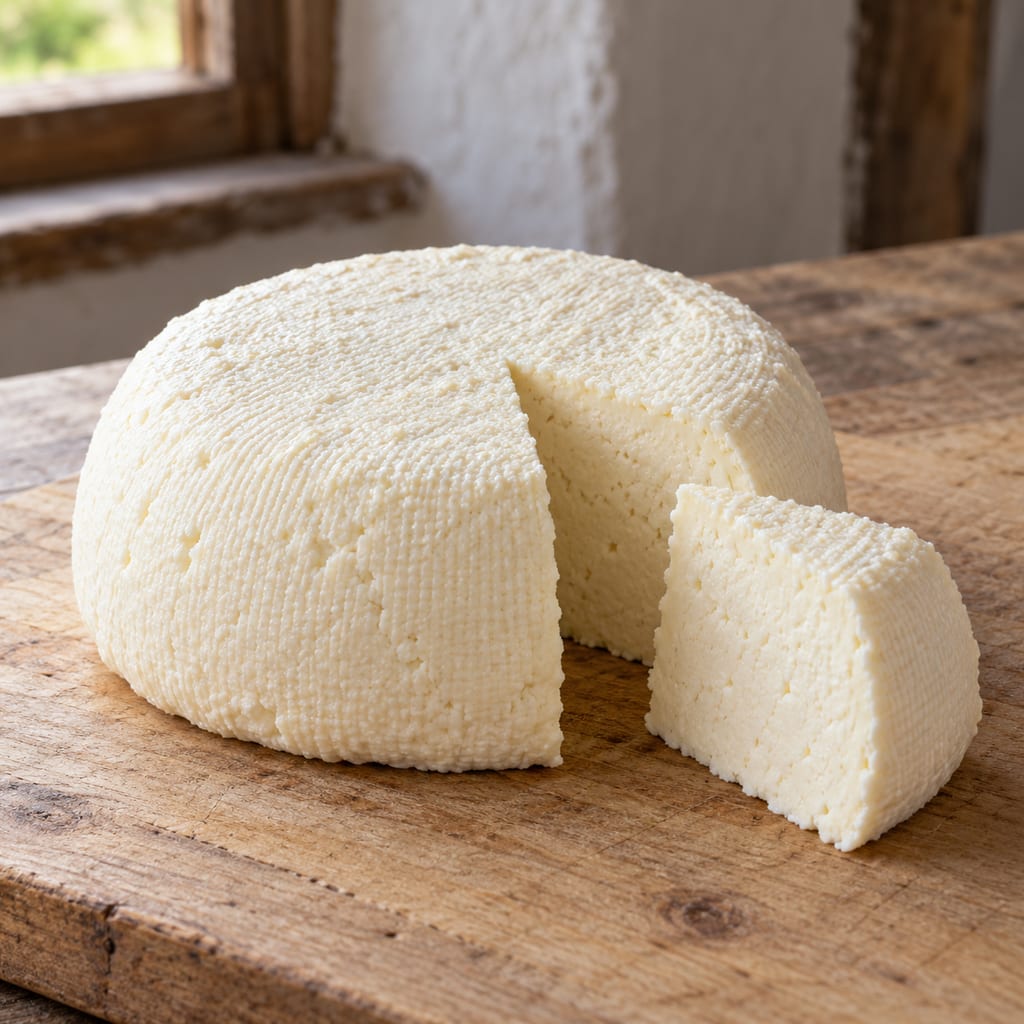
Budz (Hutsul rennet cheese)
Budz is a traditional Hutsul rennet-set cheese made from sheep, cow or goat milk in the Ukrainian Carpathians, forming a fresh curd that can be eaten, smoked or processed into salted bryndza.
 FermenteaWhere food goes to change
Traditional method
Вурда · Vurda · Urda · Урда · Gurda · Гурда · Urdă · Hutsul vurda · Carpathian vurda · Hutsul whey cheese · Carpathian whey cheese · Hutsul albumin cheese · Сироватковий сир вурда · Альбуміновий сир урда
Vurda is a Hutsul whey cheese made by reheating the whey left after budz, often with fresh milk or sour whey, to recover soft pale curds that are lifted out and drained.
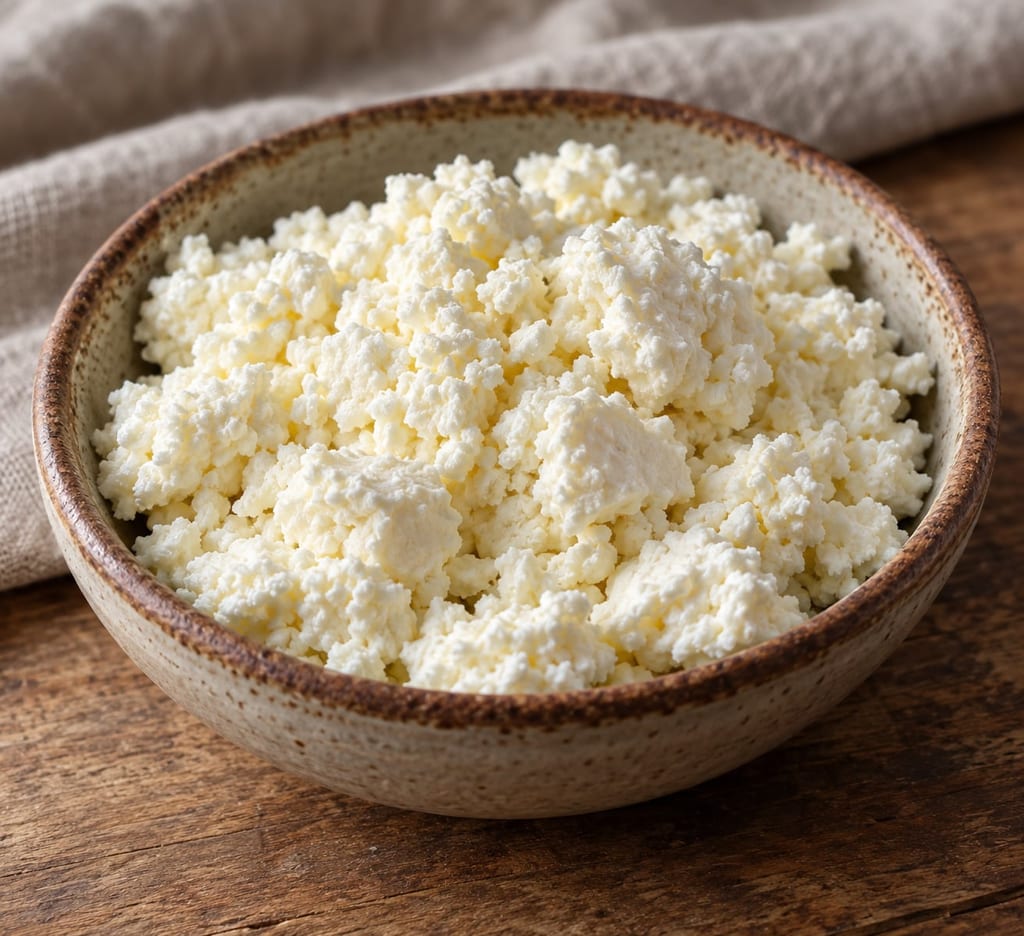
Vurda is a soft whey cheese made by Hutsul shepherds in the Ukrainian Carpathians from the liquid left after making another cheese, above all budz. When fresh cheese whey is heated again, some of the soluble proteins that stayed behind coagulate into soft white flakes, which are lifted from the surface and drained. The cheese is moist and faintly grainy, white to yellowish-white, with a mild milk flavour and sometimes a natural sweetness.
The Ukrainian name is вурда. Urda, урда, and гурда, gurda, are recorded in The Ark of Taste in Ukraine, and the Romanian urdă belongs to a wider Carpathian and Balkan family of whey cheeses, which does not imply the same method. It is sometimes called an albumin cheese because it recovers heat-sensitive whey proteins, a description of its protein and not a sign that albumin is added or a culture is used.
The essential ingredient is whey, called дзер, dzer, or жентиця, zhentytsia. It comes from a first cheese in which milk is coagulated with rennet, called gleg or klyag, so that most of the casein ends up in the budz. Whey proteins stay in the liquid and a second heating recovers them. Fresh milk is sometimes added to raise the amount of curd and enrich the flavour, and some traditional recipes use sour whey to adjust acidity.
Vurda is not mainly a microbial fermentation. Its defining change is heat-induced coagulation of whey proteins, shaped by acidity and milk composition. Whey may hold lactic bacteria from the first cheese, but they are not needed to form the curd the way a starter is needed for yoghurt, and rennet belongs to the budz stage and not to the vurda. It is therefore classed as non-fermented, depending on the cheese before it. It differs from budz, which is rennet-coagulated, and from bryndza, usually made by further processing and salting budz. Vurda is often compared with Italian ricotta, since both use heat to recover whey protein, though the traditional raw materials, vessels, acid adjustments and draining differ.
Vurda belongs to the mountain-pasture dairy economy of the Hutsuls. In summer shepherds take livestock to high pastures and work the milk beside the animals. Making budz, bryndza and vurda from one milk supply uses different protein fractions: milk becomes a rennet cheese, the whey gives a second curd, and other dairy fractions become food and drink.
The most useful attestation is The Ark of Taste in Ukraine, published in 2022 by Slow Food and the University of Gastronomic Sciences. Its entry for vurda cites Volodymyr Shukhevych's Hutsulshchyna, published 1899 to 1908 from ethnography gathered in the late nineteenth century, lists vurda among Hutsul sheep-milk foods and describes whey heating as the method. That shows documentation by the end of the nineteenth century, not an invention then.
The catalogue ties the cheese to transhumant sheep husbandry, which expanded over the preceding centuries and mattered especially in the nineteenth, and to local sheep called voloshka or ratska. The history of a breed or of pastoral migration is not direct proof that a named cheese existed in the fourteenth or fifteenth century.
Romanian urdă, Hungarian orda and related Balkan names point to cheeses made by recovering whey protein, and a 2023 article from Bukovina quotes the Hutsul writer Petro Shekeryk-Donykiv on the word vurda in Romanian and Vlach mountain dairying. That shows a shared pastoral vocabulary and not identical temperatures, acid adjustments or storage, and resemblance of words cannot prove one place of invention.
The practice continues. A 2014 Hutsul Grazhda article describes Yavoriv sheep farms making budz and then boiling the whey for vurda, and a 2025 Radio Svoboda report from Polonyna Makovytsia records farmer Roman Halemchuk explaining how soft vurda forms from hot whey after budz. Ukrainian dairy scientists studied industrial formulations in 2014 to 2017, including sheep-whey and mixed sheep and cow whey. The Ark of Taste names fewer sheep, the economics of mountain pastoralism and cheap factory cheese as threats, and makers still make it for the household, local sale and festivals.
Vurda comes from heat coagulation and not from an essential microbe. In making budz, chymosin in rennet acts on kappa-casein, the casein micelles destabilise and join into curd, and most casein and fat go into the cheese. The liquid dzer keeps lactose, soluble whey proteins, minerals, water and some fat, and a second heating recovers part of the protein the first cheese missed.
The recoverable proteins are chiefly beta-lactoglobulin and alpha-lactalbumin, with smaller amounts of serum albumin and immunoglobulins. They are globular proteins that do not form a rennet curd under the conditions of budz-making, but when whey is heated enough they unfold, exposing buried hydrophobic and reactive groups, and the unfolded molecules aggregate into bigger particles.
Beta-lactoglobulin matters most, because heat exposes sulfhydryl groups that take part in disulfide exchange and help build large aggregates. Alpha-lactalbumin also changes structure, differently because it binds calcium. The interactions depend on temperature, time, acidity, salts and protein concentration. As aggregates grow they show as small pale flakes, join into larger masses that rise, and can be skimmed or strained off.
Acidity changes protein charge, aggregation and mineral interactions. Fresh rennet whey is often less acid than whey after much lactic fermentation, so sour whey can shift the pH and help the coagulation on heating. The Hutsul recipe in the Ark of Taste lists fresh milk or sour whey as alternatives: milk adds protein and fat, and sour whey has a different job, and cheese yield and flavour differ. No pH target is given.
A 2023 review reports that small protein particles begin appearing around 80 C and that many commercial whey cheeses are heated at about 88 to 92 C, general dairy-science conditions and not a specification for Hutsul vurda. A 2017 Ukrainian study compared thermal, acid, acid-alkaline and calcium-chloride-assisted recovery from sheep and cow whey, and some methods gave more mass, but thermal recovery was recommended because the cheese had better flavour and acidity, which shows that most protein and best taste are not the same goal. Microbes may still be present from the earlier cheese, but no starter is needed, and organisms from other whey cheeses should not be assembled into an invented vurda culture.
The process starts with whey left from budz or another rennet cheese, traditionally sheep-milk whey from the same mountain dairy. Fresh milk can be added to enrich it and raise the cheese yield, and sour whey can adjust acidity. The equipment is a cooking vessel, traditionally a copper cauldron over a fire, with a ladle or colander and linen for draining. No starter is used.
The Ark of Taste records a quantified formulation of 25 litres of dzer from sheep's-milk cheese plus 2.5 to 3 litres of either fresh milk or sour zhentytsia. The whey is heated in a copper cauldron, the mixture is stirred and heated, left to cool 25 minutes, reheated until thick curds show at the surface and lifted out with a colander onto linen to drain. These are quantities of a published traditional formula and not a validated household method.
The temperature sequence is ambiguous. The Ukrainian text says the whey is brought to the boil, then that the mixture is brought to 80 C after the milk or sour whey goes in, without saying whether the temperature falls on adding it, whether the first stage is loose wording or whether there is an error. That inconsistency is kept and not rewritten, and the 25-minute cooling gives no temperature.
A modern producer's account gives a comparison. In March 2025 Roman Halemchuk described heating the whey left from budz and getting soft white curds after about half an hour of cooking, stressing that the cheese must be kept cold. It is one producer's method and does not fix 30 minutes for every Hutsul recipe. Another regional description starts heating the whey to about 50 C before adding milk, a different process.
Heating changes the whey proteins so they form particles big enough to collect. Stirring early spreads heat and stops scorching, but vigorous stirring after large curds form breaks them into fine particles that are hard to recover. Whey-cheese research describes letting the coagulum gather at the surface before gently lifting it into a draining vessel, and drainage decides whether the cheese is soft and moist or firmer and crumbly.
The Ark of Taste describes draining vurda on linen for two to three days and keeping it in small wooden barrels, berbenytsi. These are historical observations and not advice to leave fresh high-moisture cheese at room temperature that long. A safe modern version needs pasteurised dairy ingredients, prompt processing of the whey, hygienic curd recovery and controlled cooling; a 2016 Ukrainian study found whey kept beyond three hours should be heat-treated and chilled quickly.
The best-documented tradition is Hutsul cheesemaking in mountainous Zakarpattia and Ivano-Frankivsk Oblasts. The classic sequence is sheep's milk, rennet budz and then the whey, heated to recover vurda. Sheep milk goes with the summer mountain pastures, but dairies today may use cow or mixed milk, which changes the whey and the curd, and these are raw-material variations: not every cheese called vurda is all sheep whey.
One method adds fresh milk or sour whey, giving different conditions, since milk adds protein and fat and sour whey changes acidity. Some makers use whey alone and others enrich it with milk, and the cheese ranges from soft and moist to noticeably crumbly after draining. The catalogue notes both fresh and more drained or stored products, with no universal moisture or salt specification.
Ukrainian dairy research has tested ways to keep the cheese's identity with cheaper raw materials. In 2014 Oksana Bilyk and Hryhoriy Dronyk examined Urda from sheep and cow whey in ratios of 1:3, 1:1 and 3:1, with sheep whey alone for comparison, and recommended 1:1 for their industrial formula, and a 2017 paper found more protein mass recovered from sheep whey than cow whey. These are experimental results and not traditional household ratios.
Production also differs between fresh and preserved forms. Halemchuk serves fresh vurda cold and uses brine for longer storage, and his brined version is drained and coated with sweet paprika; it is one contemporary producer's practice, not a stage of traditional vurda, and salted cheese differs in moisture, flavour and keeping from fresh unsalted vurda.
Related whey cheeses are found across the Carpathians and south-east Europe, such as Romanian urdă, Hungarian orda, and Greek and Serbian Urda, sharing the principle of recovering cheese from whey by heat, sometimes with acid or added milk, but not identical methods. A Serbian Slow Food entry describes a sour urda under its own procedure, and Greek dairy studies document fresh and matured Urda from sheep or goat whey. The Ukrainian Carpathian version stays a distinct record: Hutsul mountain dairying, the preceding budz, locally named whey, cauldron heating and a second cheese.
Vurda is eaten as a soft cheese, fresh or after more draining and preserving. Fresh, it is mild and creamy with a soft, slightly grainy texture, eaten directly, spread on bread or mixed into other foods. Its natural sweetness sets it apart from strongly salted bryndza, though salted vurda exists, and it needs no smoking, fermentation after coagulation or long ripening to be eaten fresh.
The Ark of Taste records eating it with freshly made butter and sometimes with bryndza, foods of the same mountain dairy economy, and describes more drained vurda stored in wooden containers and eaten outside the production period. These document old habits and do not establish a safe storage time for fresh cheese now.
Ukrainian cheese specialists describe soft vurda mashed with a fork, spread on bread, used as a filling or mixed with herbs, and its mild flavour suits sweet dishes with honey, berries or fruit. One producer suggests dumpling and pancake fillings and others compare it with ricotta in pastries. These are modern serving ideas and not proof of nineteenth-century Hutsul cooking.
Moisture decides how it behaves: lightly drained vurda is soft for spreading and fillings, and longer drainage makes it firmer and more crumbly, easier to portion or carry, while salting changes flavour and available water by the actual salting or brining. Making vurda also recovers food from the by-product of the first cheese, since much liquid remains after budz is lifted out. Producers today sell it fresh from the farm, to local customers, at markets and at regional festivals, and it should be linked to specific preparations and not merged with budz, bryndza or ricotta-style cheeses.
Good fresh vurda is white or yellowish-white with a mild dairy smell and a soft, moist, slightly crumbly body. The catalogue describes a delicate creamy aroma and mild sweetness. The curd forms as pale flakes or larger soft aggregates collected from the hot whey, unlike the elastic curd of some rennet cheeses, and a fresh product that spreads or breaks easily may be quite normal, depending on moisture and added milk.
Little curd may mean too little recoverable protein, whey that already had a high-temperature treatment, or unsuitable acidity. Sheep and cow whey differ in protein and fat, so the same conditions do not give equal yields; the 2017 study found more protein from sheep whey, and the methods giving most mass did not give the best flavour, so judge yield with texture, acidity and raw material.
Temperature and acidity cannot be separated from time and history. Too little heat leaves aggregates that do not form or stay too small to collect; more heat promotes aggregation and changes moisture and texture; too much acid gives a sharp, over-sour result. In one 2017 study, acid-extracted sheep whey protein reached a titratable acidity of 115.5 plus or minus 1.5 degrees Thorner with a strong sour-milk flavour, which belongs to that method and is not a defect threshold for traditional vurda.
Microbial safety needs care. Raw-milk whey can carry microbes from the milk and the dairy, and although coagulation uses heat, contamination can come in during skimming, transfer to cloth, draining, packing and storage. The CDC names high-moisture soft cheeses as a concern for Listeria monocytogenes, and heat does not protect a finished curd that touches contaminated surfaces. Fresh whey also deteriorates before reheating: the 2016 Ukrainian study advised that whey kept more than three hours be heated to 72 plus or minus 2 C for 15 to 20 seconds and chilled to 4 plus or minus 2 C, a study-specific finding and not a complete vurda process.
A cheese with unexpected bitterness, a putrid or yeasty smell, mould or odd colour is not normal fresh vurda, and the stronger aromas of some salted or aged whey cheeses elsewhere cannot be carried over to the fresh Hutsul cheese. A reproducible modern recipe needs treated milk or whey, a validated heating and acid procedure, hygienic curd handling, controlled drainage and refrigeration, and neither wooden-barrel storage nor one farmer's stated storage time becomes a general shelf life without testing. People at higher risk from listeriosis, such as pregnant people and those with weak immunity, need extra caution.
Described in late nineteenth-century Hutsul ethnography; earlier history undated.
Traditional budz may be made from unpasteurised milk, so the whey can carry microbes from raw milk and the dairy; heating for vurda does not excuse earlier contamination.
Hazard sourceFresh whey is nutrient-rich; a Ukrainian study found whey held beyond three hours needed heat treatment and rapid cooling under its conditions.
Hazard sourceThe recipe has an ambiguous sequence of boiling, heating to 80 C, cooling and reheating, with no full temperature-time profile or validated pathogen kill.
Hazard sourceA batch of 25 litres plus added liquid over an open fire may not heat uniformly, and the source does not establish it.
Hazard sourceCurd can be contaminated moving from hot whey to colander, cloth, table or container, and heating cannot prevent it.
Hazard sourceA moist cheese with no long ripening is a particular Listeria concern, even when made from pasteurised ingredients if the environment is contaminated.
Hazard sourceThe Ark of Taste describes draining for two to three days with no temperature or microbial control, which is not a safe modern ambient procedure.
Hazard sourceFresh vurda is a high-moisture, perishable cheese, and wooden-barrel storage or one product date does not give a shelf life for an unvalidated batch.
Hazard sourceSour whey is an allowed alternative but its pH is not given, and acidity affects precipitation, flavour and the cheese.
Hazard sourceMilk solids and whey proteins can deposit on hot surfaces and scorch, damaging flavour and texture.
Hazard sourceSalted or brined versions have no stated salt level, pH or refrigeration in the core recipe, and salt alone does not make a cheese shelf-stable.
Hazard sourceVurda holds milk proteins and may keep lactose from whey or added milk; heating and draining do not make it suitable for allergy or lactose intolerance.
Hazard sourceFor modern production begin with pasteurised milk and whey from a hygienically controlled cheese-making process.
Control sourceProcess fresh whey promptly or use a validated whey-storage and heat-treatment procedure.
Control sourceFollow a validated whey-cheese heating procedure that gives actual product temperature and hold time.
Control sourceKeep the traditional quantities identifiable without treating them as safety specifications.
Control sourceUse clean food-grade collecting, draining and packing equipment, including washable cloth.
Control sourceDo not use the historical 2-3 day unmeasured drainage as a modern ambient process.
Control sourceCool and refrigerate the finished cheese promptly.
Control sourceUse separately validated salting, brining or other preservation for longer storage.
Control sourceTake extra precautions for people at higher risk of listeriosis.
Control sourceThis is a documented Hutsul traditional recipe, not a validated home cheesemaking process.
It begins with whey from budz and does not teach making budz or treating the original milk.
The source boils the whey and later heats to 80 C; the sequence is ambiguous and is left uncorrected.
No full heating profile, final coagulation temperature or validated lethality limit is given.
The 25-minute cooling is a traditional observation, not a food-safety control.
Fresh milk and sour whey are alternatives, not both.
The 2.5 to 3 litre addition is a range with no exact figure.
No finished yield, pH, moisture or salt is given.
Do not add a yoghurt culture, kefir grains or invented starter; the coagulation is thermal.
Do not add rennet to the whey; it belongs to the budz stage.
Whey from different cheeses will not give the same yield.
A visibly white curd does not show the cheese is free from harmful microbes.
Do not let fresh cheese drain for 2-3 days at uncontrolled ambient temperature.
A producer's stated storage period is not a safe shelf life for another product.
Wooden-barrel storage does not make a modern domestic kitchen safe.
Raw-milk whey can carry pathogens, and finished cheese can be contaminated after heating.
Listeria remains a concern in fresh soft cheese, including from pasteurised ingredients.
Salted, smoked, dried and brined vurda need separate processes and safety assessment.
Mould, putrid smell or odd colour mean rejection; their absence does not prove safety.
A reproducible modern version needs source-specific thermal control, hygienic recovery, controlled drainage, refrigeration and a validated shelf life.
Vurda is not necessarily lactose-free or safe for milk allergy.
Region-level.
Region-level.
Region-level.
A sheep farm making budz and boiling the whey for vurda.
A farmer describes making vurda from hot whey after budz.
Experimental dairy research, not tradition.
Budz is a traditional Hutsul rennet-set cheese made from sheep, cow or goat milk in the Ukrainian Carpathians, forming a fresh curd that can be eaten, smoked or processed into salted bryndza.
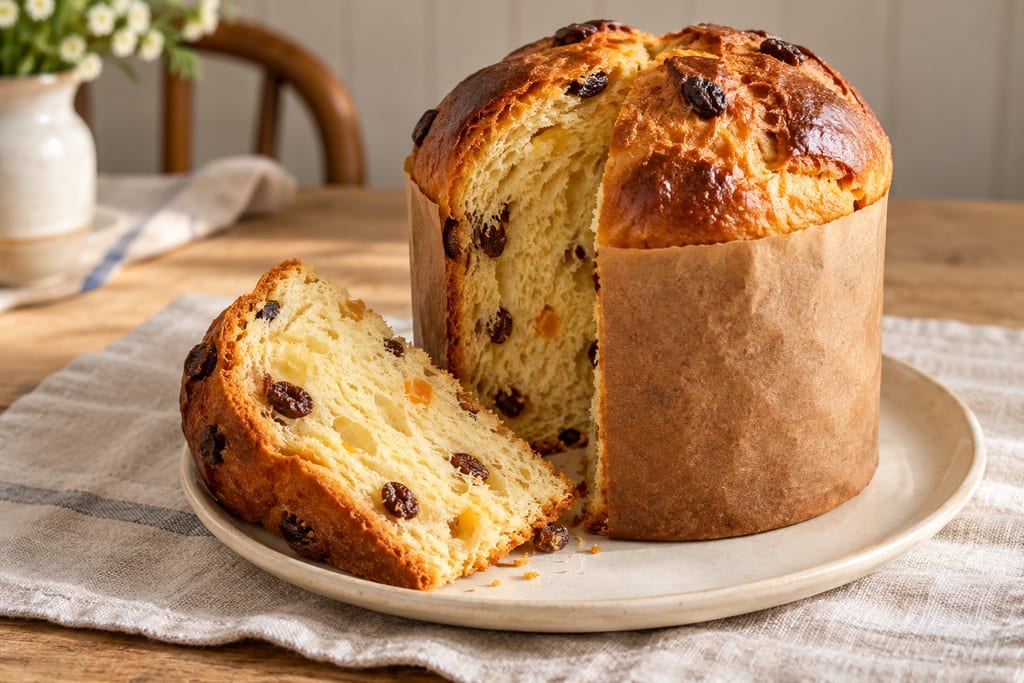
This Ukrainian Easter paska uses an enriched yeast dough with milk, eggs, butter, raisins and citrus zest. A sponge and two further rises precede baking in paper or parchment-lined moulds.
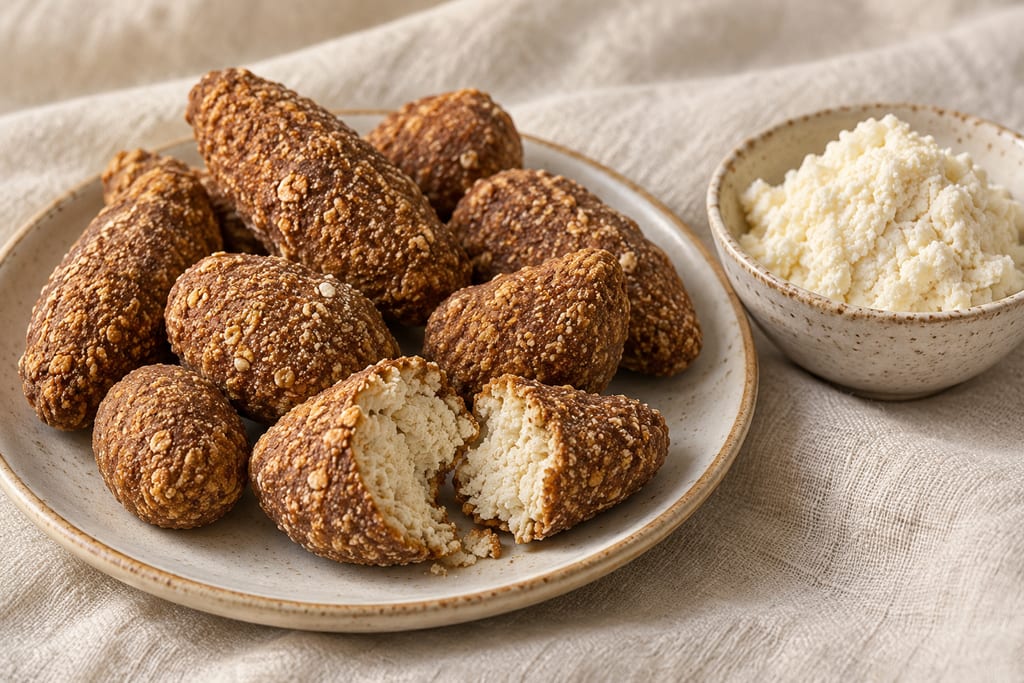
A two-stage Altai dairy preparation: sour chegen is heated into soft aarchi, then portions are drained, pressed and traditionally smoked into firm kurut.
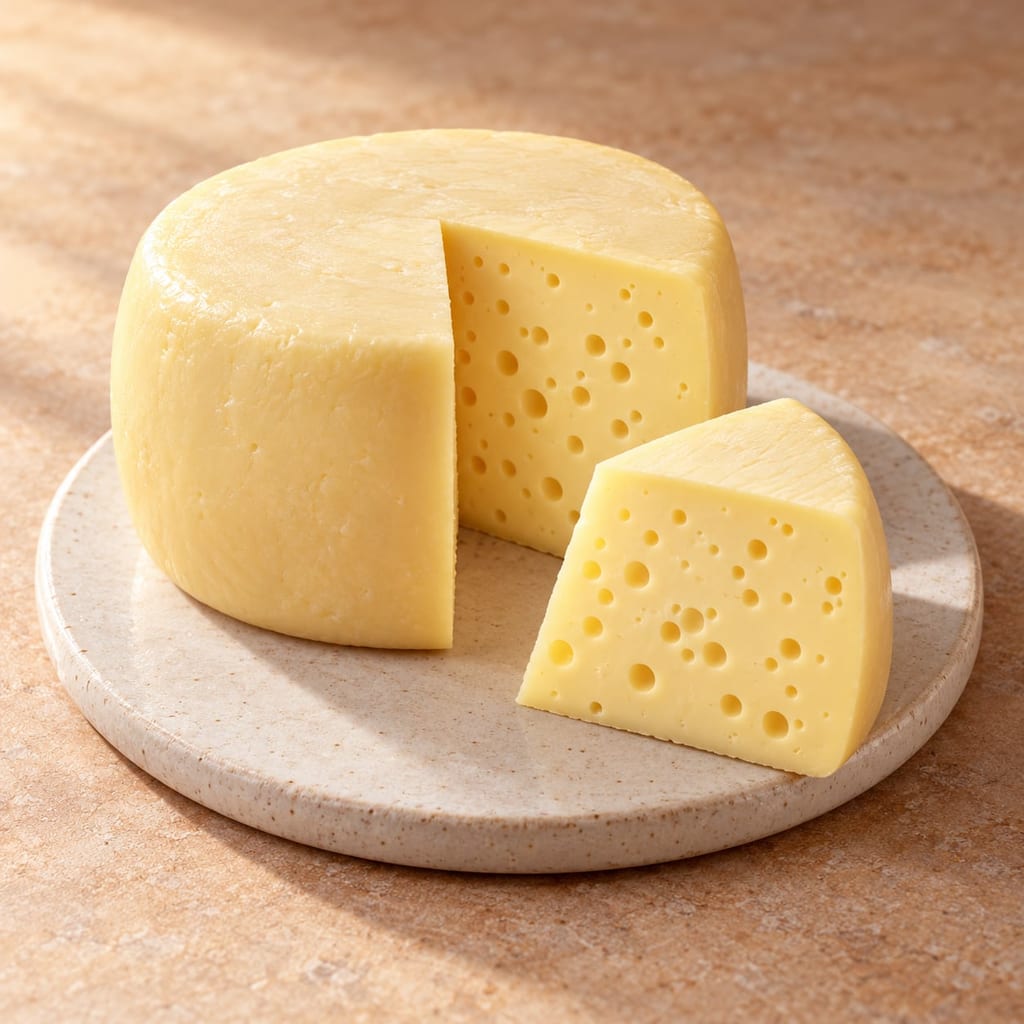
A washed-curd cheese with propionic bacteria, warmed by hot water in two steps and then held in a warm room for weeks so the bacteria can form its holes.
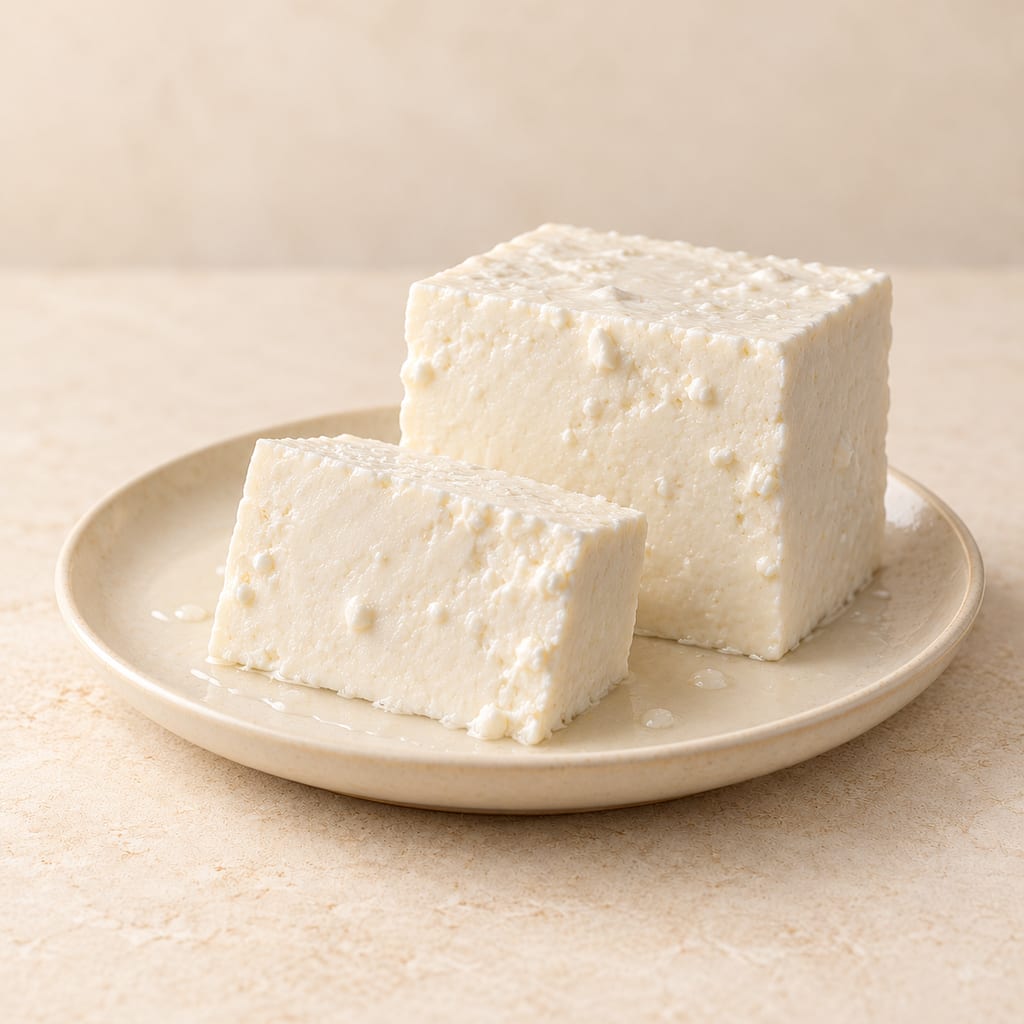
Beyaz peynir is a Turkish white cheese matured in brine. Sheep milk, alone or mixed with other milks, gives a close-textured cheese cut into blocks and packed in cans.
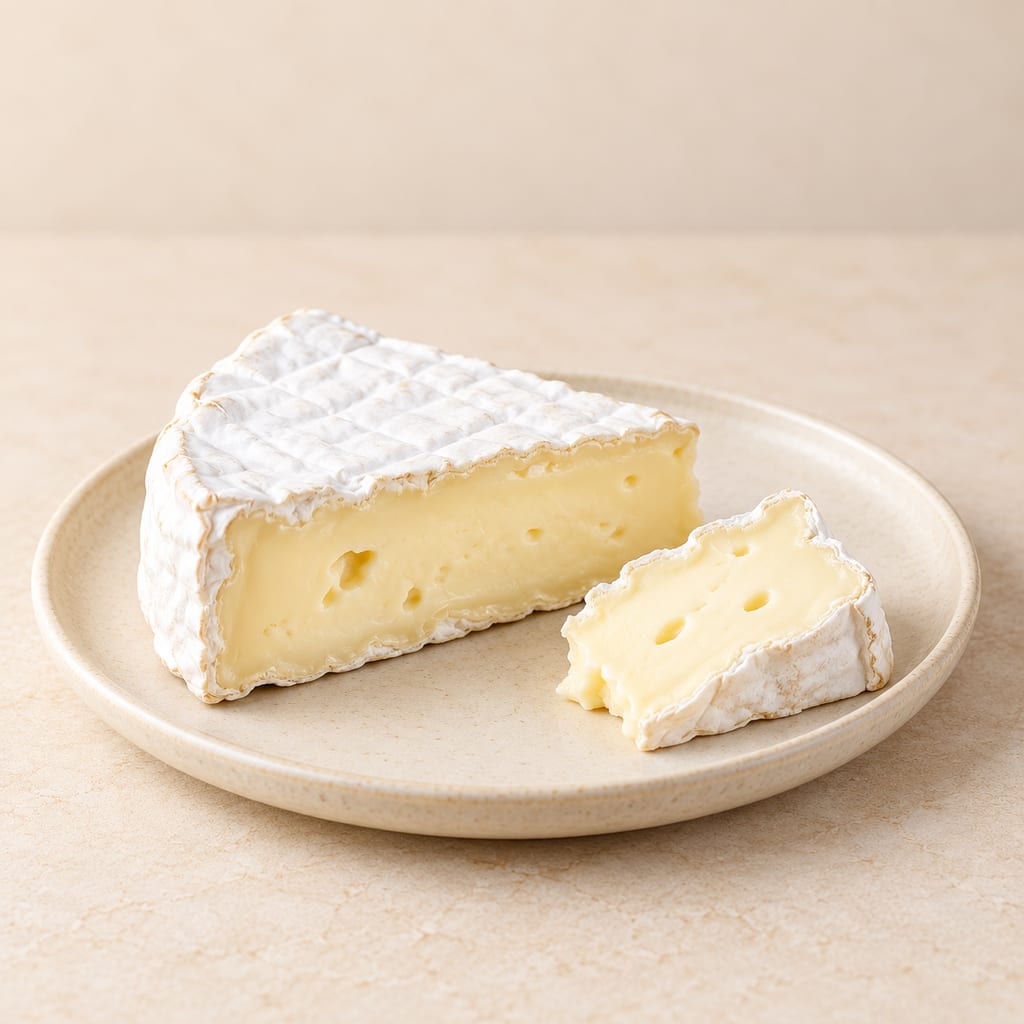
A cream-enriched Brie with a white bloomy rind and a softening center, made from pasteurized milk with lactic and surface cultures.
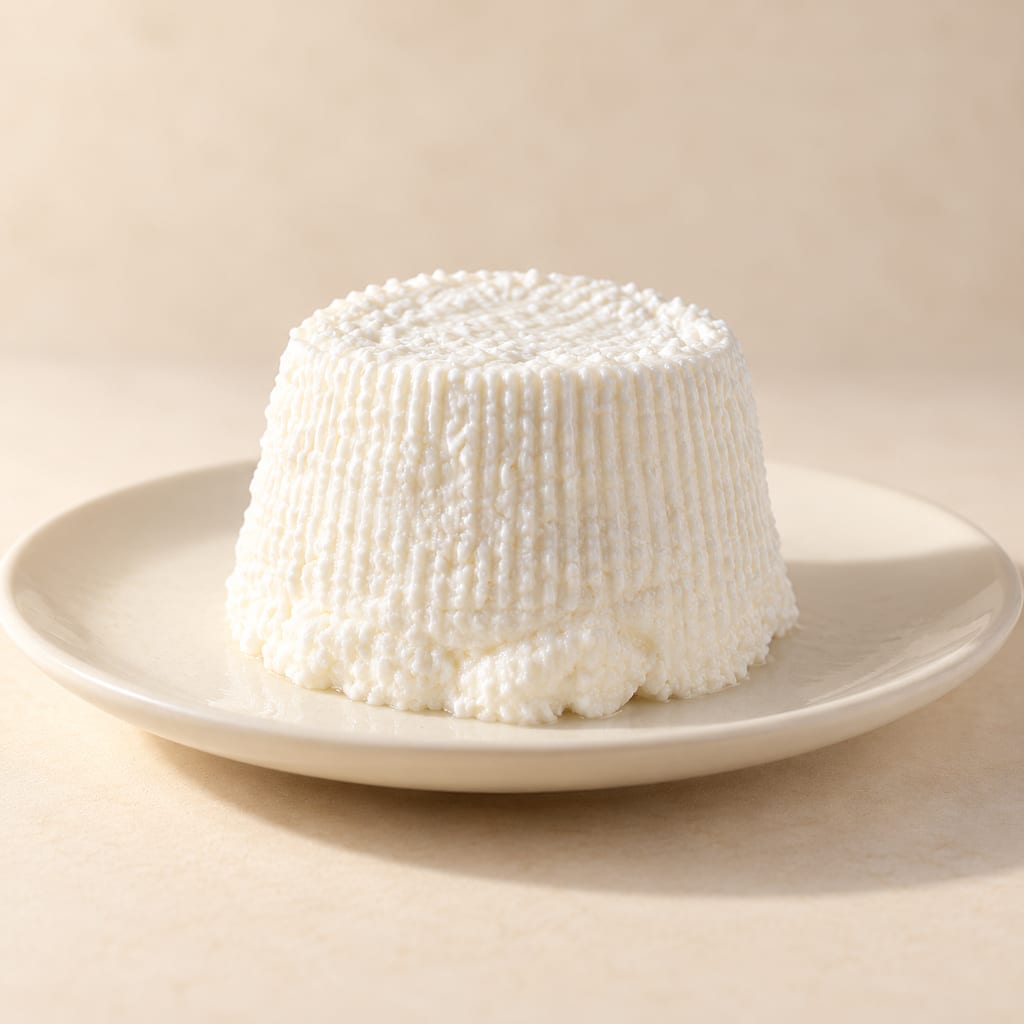
Corsican Brocciu is a whey cheese made by heating sheep's or goat's whey with whole milk and salt, then gently draining the flocculated curds. It is eaten fresh or salted and ripened as Brocciu passu.
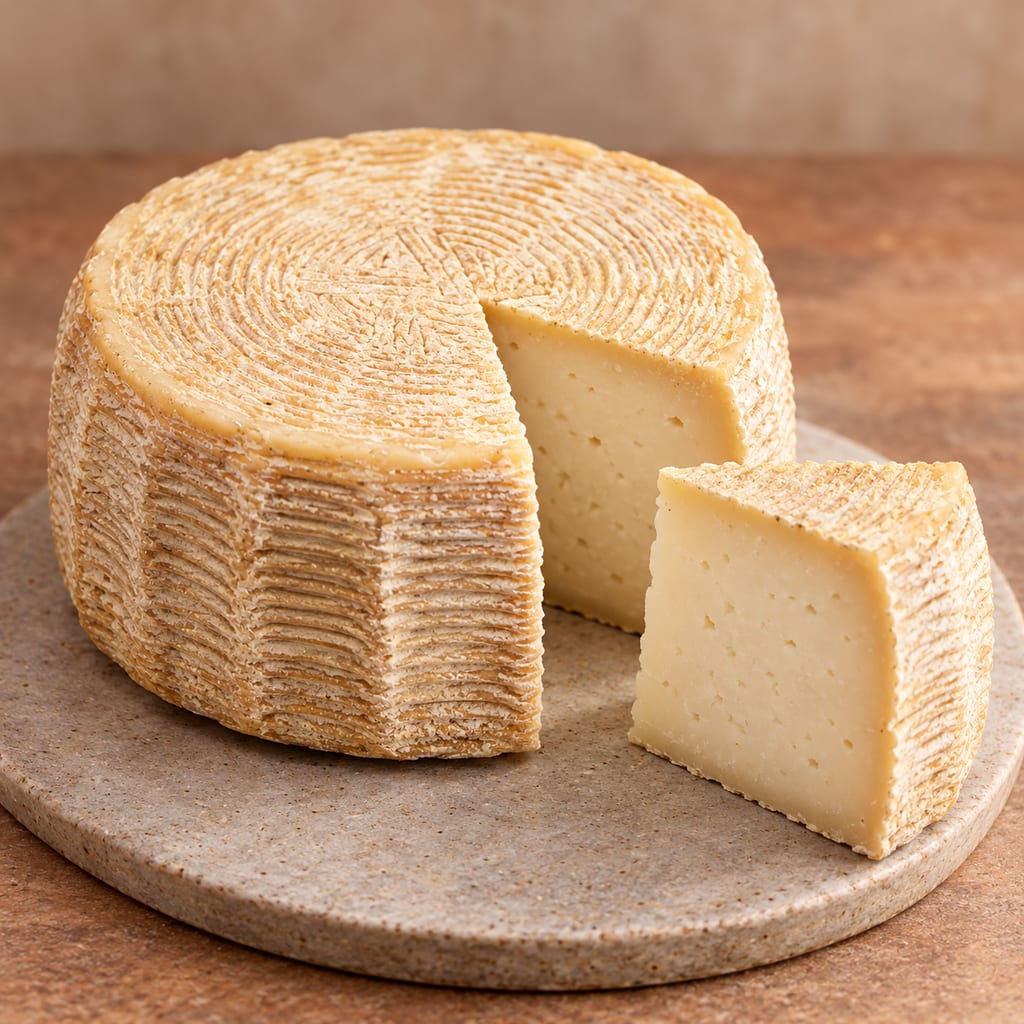
A scalded cheese moulded in baskets and re-cooked in its forms in hot whey, made alongside a ricotta from the same milk, then acidified, brined and aged for months.
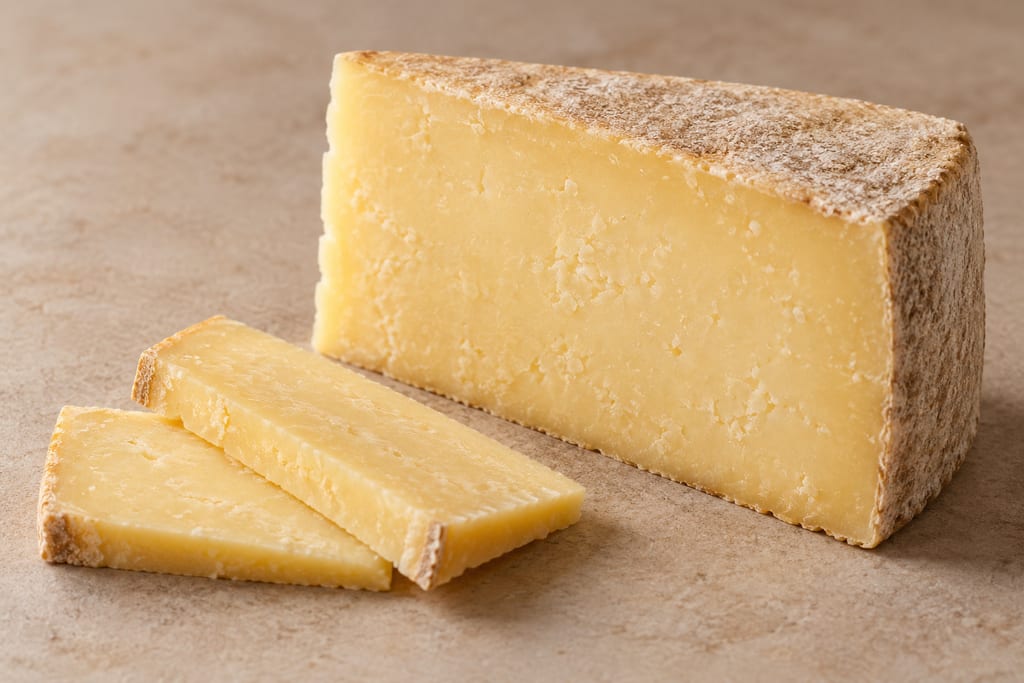
A pressed cheese whose curd is cooked slowly, then cheddared: kept warm in slabs that are turned and stacked for hours before milling, salting and pressing.
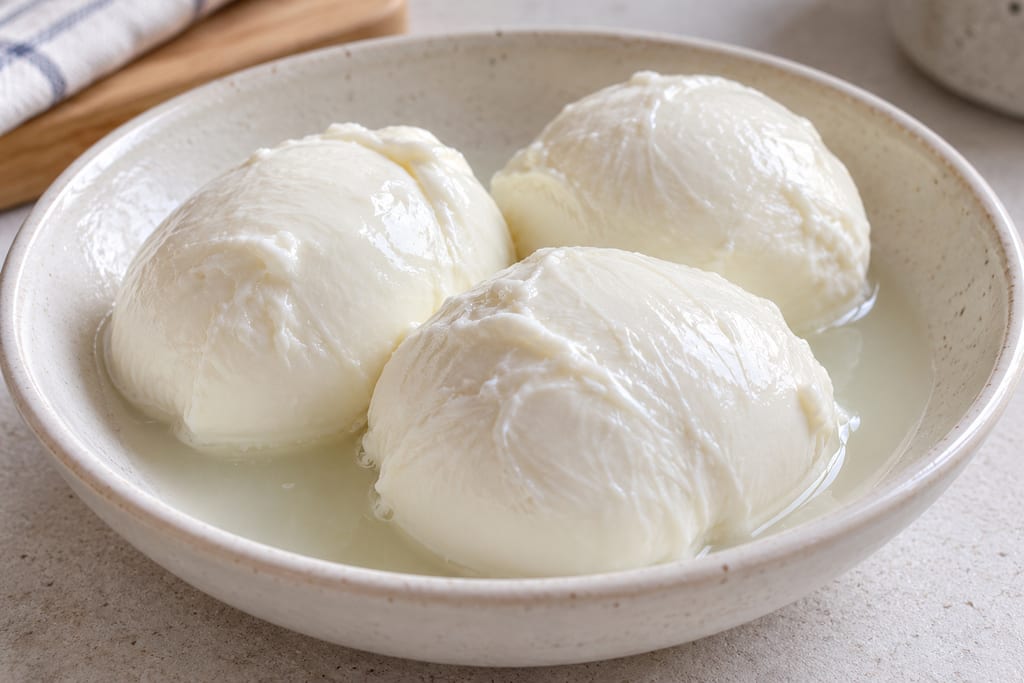
A quick fresh batch uses low-temperature-pasteurized whole milk, citric acid and rennet; the curd is warmed, drained and stretched in hot whey.

A Cap-Pelé boucanière is an Acadian herring-smoking building. The documented Willie Niles example is a one-storey wood-frame structure with a ridge smoke vent and interior bays for hanging fish-bearing cannes.

Achcharu is a family of Sri Lankan vinegar pickles made with mixed vegetables or seasonal fruit and a piquant spice dressing. This version is a quick, refrigerated, non-fermented mixed-vegetable pickle.

The acocote is a long, hollowed and dried gourd used to draw aguamiel from a mature maguey. It is a harvesting tool: the sap is transferred to a separate vessel before it ferments into pulque.

Adrak murabba preserves young ginger in sugar syrup, a sweet South Asian preparation recorded in Indian cookery and food-processing sources.

Parkia biglobosa seeds are fermented into regional West African seasonings, including nététou, iru, dawadawa and soumbala. The yellow fruit pulp is a separate food, and names and methods vary by place.

Japanese reddish-brown vinegar from sake lees matured about three years, turned to vinegar by acetic bacteria; the vinegar of Handa and Edomae sushi rice.

A refined common-wheat flour blended for a broad range of baking; its protein and behavior vary with wheat, milling and market.

The almond mushroom, Agaricus subrufescens, was cultivated in eastern North America in the 1800s, lost its market, and returned as a cultivated mushroom from Brazil, where it is grown under several names.
No community contributions have been published for this entry yet.
Sign in to contribute. Published comments and photos are free to read.
University of Gastronomic Sciences and Slow Food, 2022Method · History
The Ark of Taste in Ukraine, entry 33: Whey Cheese (Vurda)25 litres of dzer with 2.5-3 litres of fresh milk or sour zhentytsia; copper cauldron; 25 minutes cooling; drained on linen 2-3 days, kept in wooden barrels
Shukhevych's Hutsulshchyna as an early source
Cited in: What vurda is; The record; How it is made, and why; On the table
University of Gastronomic Sciences and Slow Food, Ukrainian edition, 2022Method · History
Ковчег смаку в Україні, запис 33: ВурдаUkrainian-language edition of the Ark of Taste entry
Cited in: What vurda is; The record; How it is made, and why; Variations; On the table; Reading results and problems
Radio Svoboda, 16 March 2025Method · Variation
Вівці. Гуцульщина. Чому занепадає вівчарство? Репортаж із «Полонини Маковиця»farmer Roman Halemchuk: soft vurda from hot whey after budz in about half an hour; kept cold; brined version with paprika
Cited in: The record; How it is made, and why; Variations; On the table
Гуцульська Ґражда, 2014History
Hutsul cultural account of traditional sheep's-milk cheesemaking in YavorivYavoriv sheep farms making budz and boiling the whey for vurda
Cited in: The record
Zakarpattia folk-culture centreHistory
Брингя Рахів (Rakhiv bryndza)Zakarpattia regional cheese tradition
Cited in: What vurda is
Eastern-European Journal of Enterprise Technologies 3(10), 2014Science · Variation
Developing Technologies for Producing Urda Albumin CheeseUrda from sheep and cow whey in 1:3, 1:1 and 3:1; 1:1 recommended for that formula
Cited in: The record; Variations
EUREKA: Life Sciences, 2017Science
Study of the Different Ways of Proteins Extraction from Sheep and Cow Whey for 'Urda' Cheese Productionthermal, acid, acid-alkaline and calcium-chloride recovery compared; higher protein recovery from sheep whey
Cited in: The record; How whey protein sets; Variations; Reading results and problems
Eastern-European Journal of Enterprise Technologies, 2017Science
Substantiation of the Method of Protein Extraction from Sheep and Cow Whey for Producing the Cheese 'Urda'thermal recovery recommended for flavour and acidity; 115.5 degrees Thorner in acid-extracted protein
Cited in: How whey protein sets; Reading results and problems
Food Technology and Environmental Safety 18(2), 2016Safety
Grounding of Storage Options of Raw Whey in 'Urda' Cheese Technologywhey held over three hours: 72 +/- 2 C for 15-20 seconds and chill to 4 +/- 2 C
Cited in: How it is made, and why; Reading results and problems
Dairy 4(2), 2023Science
Sustainable Approaches in Whey Cheese Production: A Reviewsmall protein particles around 80 C; commercial whey cheeses at 88 to 92 C
Cited in: What vurda is; How whey protein sets; How it is made, and why; Variations
Mljekarstvo 72(3), 2022Science
The Effect of Whey Type on the Yield and Quality Characteristics of Urdawhey type affects yield and quality
Cited in: How whey protein sets; Variations
US Centers for Disease Control and PreventionSafety
How Listeria Spread: Soft Cheeses and Raw MilkListeria in soft cheese and raw milk
Cited in: Reading results and problems
FoodSafety.govSafety
4 Steps to Food Safetyrefrigerate within 2 hours; refrigerator at 4 C or below
Cited in: Reading results and problems
US Food and Drug AdministrationSafety
What You Need to Know About Preventing Listeria Infectionsprecautions for people at higher risk
Cited in: Reading results and problems
US National Institute of Diabetes and Digestive and Kidney DiseasesSafety
Eating, Diet, and Nutrition for Lactose Intolerancelactose remains in milk