
Airag
Airag is Mongolia’s fermented mare’s-milk drink, traditionally churned with saved starter in a reusable cowhide khokhuur.
 FermenteaWhere food goes to change
Traditional method
Хүрэнгэ · Khurunga · Kurunga · Khurenge · Khurengge · Khürengge · Khürenge · Khurunge · Kyurenge · Köröngö · Körüngge · Хурунга · Хурунгэ · Курунга · Курэнгэ · Хурэнгэ · Buryat fermented milk · Buryat cultured milk · Buryat milk ferment · Ekhe khurunge · Эхэ хурунгэ · Khurengen ekhe · Mother khurunga
Khurunga is a traditional Buryat fermented milk made with a kept mixed bacteria-and-yeast starter, giving a sour, lightly alcoholic and often fizzy drink that is also the base for milk spirit and curds.
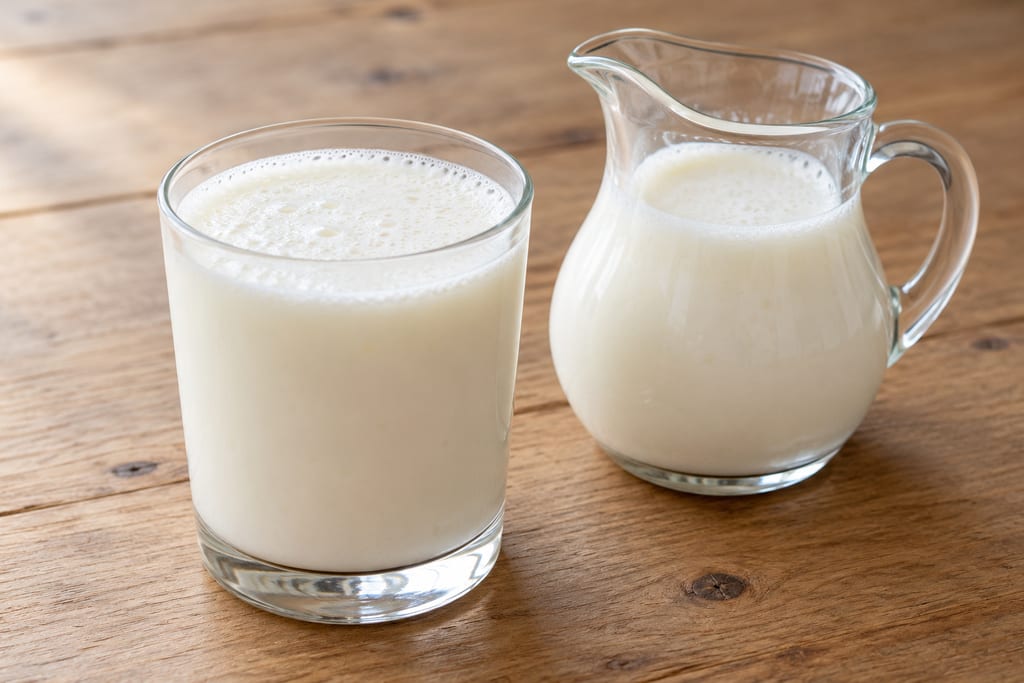
Khurunga, also written kurunga or khurenge, is a fermented milk drink of the Buryat people around Lake Baikal in Southern Siberia. An established culture is added to milk and bacteria and yeasts ferment it together. The drink is sour, cloudy white, lightly alcoholic and often gently fizzy. It is stirred as it ferments, so it is fluid, with fine suspended curd, and depending on its age it may be creamy, thin or separated into foam, liquid and curd.
The Buryat name is хүрэнгэ, and Russian sources write хурунга, хурунгэ, курэнгэ and курунга; scholars also transliterate khurenge, köröngö and körüngge. The terms overlap with words for the starter, such as эхэ хурунгэ, the mother culture. In some Buryat usage airag means a related cow's-milk ferment, which is not the Mongolian airag of mare's milk, so the milk and the local method identify the drink better than a bare name.
Cow's milk is the main raw material, and older Soviet research also records goat's milk. Today milk is often separated into cream and skim; the cream goes to butter and part of the skim milk becomes khurunga, though other households use whole milk. The starter is normally a portion of khurunga kept from the last fermentation, not a new set of species put together.
The fermentation is mixed. Lactic acid bacteria turn milk sugar into acids, and yeasts add alcohol, gas and aroma. Studies have found Lactobacillus, Lactococcus, Lentilactobacillus, Streptococcus and Leuconostoc, with yeasts including Monosporozyma unispora and Trichosporon coremiiforme, in amounts that vary widely between households and commercial products. The drink is also the starting material for the Buryat milk spirit darasun or tarasun, which is a separate product.
Khurunga belongs to a Buryat dairy system in which milk was drunk fresh, fermented, separated into cream and curd, or distilled after fermenting, and the mother culture was a household possession needing regular attention. The drink mattered for everyday food, hospitality, ritual and spirit-making. These observations show cultural importance, not an unchanged recipe since antiquity.
The word has a long trail. A 2026 study finds the Mongolian körüngge, starter culture, in the Khalkha Jirum law code revised in 1709, which fined theft of a starter by livestock, so a starter had real economic value, though the code says nothing of ingredients or microbes. Medieval mentions of Mongolic alcoholic drinks and the word darasun show a wider dairy-alcohol setting, not recipes for this drink.
The earliest explicit description found in Soviet microbiological literature is attributed to Potanina in 1890: a strongly acid, slightly alcoholic drink prized in hot weather. M. N. Khangalov recorded Buryat ways of keeping the mother culture, adding fresh dairy material gradually and working the liquid with wooden stirrers, in material collected in the late nineteenth and early twentieth centuries. A 2026 study of the Alar Buryats records that families could get mother culture from relatives, sometimes with restrictions on who could give it, that some households kept it up all year while others restarted each spring, and that the starter could be a shared family resource. Beliefs in its protective or medicinal qualities are cultural history, not proof of benefit.
Standardisation came in the Soviet period: Z. P. Chuzhova's 1964 research on organisms from native kurunga of the Bokhan–Irkutsk area led to a defined mixed-culture process, and later textbooks and a patent described industrial versions. Molecular studies in 2022 and 2024 showed traditional communities varying between samples, and in 2026 researchers combined history with observation in Argada ulus and laboratory analysis of household and commercial khurunga.
Khurunga is lactic acid and alcoholic fermentation together. Bacteria use lactose and other carbohydrates to make acids that sour the drink and destabilise the milk proteins, while yeasts make ethanol, carbon dioxide and aroma compounds. The community is not a small group of chosen acid-makers, and it is shaped by the organisms kept in the starter and how they interact.
A 2022 study of two Buryat samples found Lactobacillus at 62.4 and 94.1 per cent of bacterial reads, the first with 26.8 per cent Lactococcus, 3.2 per cent Streptococcus and 1.1 per cent Leuconostoc, and both with about 4 per cent Lentilactobacillus. A 2024 metagenomic study found Lactobacillus helveticus at 35.1 per cent, Lactococcus cremoris at 11.2, Lactococcus lactis at 5.2 and Lentilactobacillus kefiri at 6.2 in one sample. These are particular samples and not a starter recipe.
The 2026 study compared household khurunga from Argada ulus with commercial product from Ulan-Ude. Lactobacillus helveticus-related sequences dominated both, at roughly 80 to 83 per cent of bacterial reads in the household samples and 90 to 92 in the commercial ones. The household product also held Lactococcus lactis and other lactic bacteria. Counts were about 82 million lactic bacterial colony-forming units per gram in the household drink and 270 million in the commercial one, with lower but substantial yeast counts, so a shared name does not mean one population.
The chemistry begins with lactose: beta-galactosidase splits it, lactic acid lowers the pH, calcium phosphate dissolves from the casein micelles and the proteins aggregate into fine curd, and stirring breaks the forming gel and keeps the particles suspended. The household drink had pH 3.3 and the commercial one pH 3.7, with lactic acid the main acid.
Yeast metabolism is not simply lactose to alcohol. The study named Trichosporon coremiiforme and Monosporozyma unispora, formerly Kazachstania unispora, as major fungi. T. coremiiforme can use some milk sugars aerobically but is not an alcoholic fermenter, and M. unispora ferments galactose but not lactose, so it probably depends on lactose-using bacteria. The household product measured 1.5 per cent alcohol and the commercial one 2.1 per cent. Carbon dioxide gives the foam and a light prickle, and acetic acid bacteria have been detected at low levels, so it is not a vinegar ferment.
The essentials are milk and an active mother culture. The milk gives lactose, protein, minerals and fat, and the starter gives a kept community of lactic bacteria and yeasts that can make both acid and alcohol. A portion of finished khurunga is kept to start the next batch, and an authentic lineage matters because the populations differ greatly between households and modern producers.
The 2026 fieldwork records a contemporary large-batch method. Households often use a 70-litre plastic barrel holding 10 to 15 litres of khurunga kept from the last cycle and add 40 to 50 litres of fresh milk. The vessel is covered and kept at ambient temperature in an outbuilding, and producers reported about 20 C as suitable and two to three days as the normal fermentation. This is a household process, not a validated small-batch recipe or a safety guarantee.
A distinctive step is repeated stirring, two or three times a day, called bulekhe. Carbon dioxide raises a foamy layer, whey collects beneath it, and protein-rich curd settles to the bottom, so stirring breaks up the foam and redistributes the suspended material to give a more uniform drink, unlike cultured milks left undisturbed to set. The word ehekhe describes the rise of acidity.
Milk treatment differs between systems. The household sample came from unpasteurised milk, while the commercial sample was heat-treated, and protein analysis showed different beta-lactoglobulin behaviour. Chuzhova's 1964 industrial process used strongly heated milk and selected cultures, and a Russian patent describes a defined mix of lactobacilli, lactic streptococci and Candida yeasts with a controlled warm fermentation. Those designed systems must not be merged with the Argada household method.
The drink can be taken at different maturity. The fieldwork describes weaker khurunga after about a day, medium after two and stronger after three, with rising acidity, alcohol and sourness, and once vigorous gas has subsided it can be drunk or processed further. A modern recreation should use pasteurised milk, hygienic vessels and a tested culture with documented acidification and alcohol behaviour.
The best-documented tradition is Buryat, especially round Lake Baikal, with methods recorded among Buryat communities in present Buryatia and Irkutsk Oblast. Some households kept a ferment going continuously and others restarted seasonally with culture from relatives, a valued family possession. The 2026 Alar Buryat study describes adding milk to a newly obtained starter gradually and keeping it up by feeding, stirring and temperature management.
In Argada ulus in Kurumkansky District the 2026 fieldwork describes a continuously backslopped culture, large barrels and periodic stirring, and compares it with commercial khurunga from Ulan-Ude. The household drink was unpasteurised and more microbially diverse, while the commercial one was heat-treated, with a different balance of bacteria and fungi and a higher alcohol level. These are observations on two products, not proof that commercial khurunga is always stronger.
In the Bokhan–Irkutsk area Chuzhova's 1964 work developed a selected-culture method from native kurunga, with acidophilic lactobacilli, organisms then named Lactobacillus casei, diacetyl-producing streptococci and lactose-fermenting yeasts, and heat-treated milk with controlled incubation. Later Soviet starter formulas are industrial adaptations, not reconstructions of Buryat mother cultures.
Soviet dairy literature links kurunga-type drinks to Mongols, Tuvans and Khakas, but similar terms do not prove the same milk, starter or sequence. The 2026 historical study notes regional names khurenge, kyurenge, köröngö and airag, and airag is ambiguous because Mongolian airag is usually mare's milk. Buryat production also distinguishes weak, medium and strong khurunga, the stronger being more acid and alcoholic, and more bitter or acid khurunga may be made on purpose for further processing, so lineage, maturity, milk treatment and use should be recorded separately.
Khurunga is drunk as a sour fermented milk: white, creamy and slightly fizzy, with fine suspended curd and a fermented-dairy smell. Young khurunga is pleasantly sour with a mild alcoholic note, older khurunga is more acid and stronger, and historical accounts prize it as a refreshing, substantial drink in hot weather.
The mother culture is also how the next batch is made. Households keep part of the liquid, add new milk, and sometimes pass culture between relatives, and a mother culture is a living system whose makeup depends on history, feeding and handling, not an ingredient any sour milk can replace.
It is also the starting point for dairy spirits. Buryat distillation turns fermented khurunga into darasun or tarasun, with regional names such as togoonoi arkhi. The 2026 fieldwork processes the drink after vigorous gas formation has subsided and measured about 11 per cent alcohol in a first distillate from household khurunga, which further distillation can raise. The spirit is a separate product.
What is left is used too. The study describes a dense residue called sagaa or bozo, which is drained to make aarsa, a soft curd, and dried further for harder products such as airhan or aruul; aarsa may go into drinks or other foods. Those need their own entries. Khurunga should not be called alcohol-free yoghurt, and its spirits should not be merged with the drink.
In Buryat life the starter was shared between kin, a successful family culture was kept up with care, and fermented milk and its spirits appeared in ceremonies. Some sources credit the drink with medicinal or protective value, which is part of its cultural history and not an established medical benefit.
Typical khurunga smells of sour fermented milk and is white or cream-white with some mix of fine curd, liquid whey and foam. Limited gas belongs to its mixed fermentation. The Argada household drink had pH 3.3 and 1.5 per cent alcohol and the commercial one pH 3.7 and 2.1 per cent, which are measurements of those products and not required endpoints.
Acidity changes with age. The traditional technological classification cited in the 2026 study gives titratable acidity of 100 to 120 degrees Thorner and about 0.2 per cent alcohol for weak khurunga after a day, 160 to 200 and 0.3 to 0.6 per cent for medium after two days, and 240 to 300 and 0.6 to 1.2 per cent for strong after three. The analysed samples had more alcohol than these, so products should not be forced onto one maturity scale.
Buryat production names a defect, arabka: an unpleasant bitter taste and smell, little or no foam, a whey-rich top layer and settled casein flakes. The authors suggest weak lactic fermentation and unwanted proteolysis. It differs from the deliberately matured strong drink, which may grow bitter with age, but offensive smell, abnormal separation and failed fermentation together mean a rejected batch.
A batch without acid or gas may have a tired starter, wrong temperature or a changed community, and foam alone does not prove the right organisms are present. The fungi differed between lineages, with Trichosporon coremiiforme dominant in the household drink and Monosporozyma unispora in the commercial ones, and since the first is not an alcoholic fermenter its abundance does not show it made the ethanol. Texture follows from acid breaking casein and stirring breaking the gel, and heat treatment changes it: the unheated household whey held soluble beta-lactoglobulin, while the heat-treated commercial drink showed denatured whey protein bound to the precipitate. Neither texture nor protein behaviour shows microbial safety.
Raw milk is the main hazard. The CDC lists Campylobacter, pathogenic E. coli, Listeria, Brucella and Salmonella as transmissible by unpasteurised milk, long fermentation cannot be assumed to remove them, and a mother culture adds contamination routes at each transfer. Use pasteurised milk, hygienic vessels, a controlled starter and prompt refrigeration, and use a vessel that lets carbon dioxide out. Khurunga is not reliably alcohol-free, and its alcohol varies with lineage, sugar, temperature, stirring and time, so measure it if a figure is needed. Probiotic or medicinal claims need strain-specific testing. Foam, sourness and tradition do not stand in for measured acidity and a validated storage procedure.
Described in 1890; earlier origins undated.
Household khurunga may be made from unpasteurised milk, which can carry Campylobacter, pathogenic E. coli, Listeria, Brucella and Salmonella; fermentation cannot be assumed to remove them.
Hazard sourceThe inherited starter is a variable community of bacteria and yeasts; detecting a species does not show a starter is safe or balanced.
Hazard sourceMetagenomic studies of traditional milks have found organisms beyond the main lactic community, so dominant lactic bacteria alone do not show safety.
Hazard sourceAn inactive or contaminated starter may not acidify; milk near ambient temperature for days without acid can support unwanted growth.
Hazard sourceOutbuilding fermentation follows ambient conditions; about 20 C is a field observation and not a validated range.
Hazard sourceThe mixed fermentation makes gas and foam, and a hermetically sealed vessel can build pressure.
Hazard sourceKhurunga is not reliably alcohol-free; the study measured 1.5% and 2.1% ethanol in two products.
Hazard sourceBitter taste, offensive smell, little foam, separated whey and settled casein mark a defective batch.
Hazard sourceRepeatedly opening and stirring a fermenter introduces contaminants from hands, tools and the environment.
Hazard sourceRepeated transfers can change the proportions of microbes and the acid and alcohol behaviour of the starter.
Hazard sourceKhurunga is perishable; acidity and ethanol do not make it shelf-stable.
Hazard sourceFermentation does not remove milk allergens or all lactose.
Hazard sourceUse commercially pasteurised cow's milk for modern preparation.
Control sourceUse an authenticated, food-grade khurunga culture with a known history.
Control sourceKeep vessels, lids and stirring tools clean.
Control sourceTreat the historical quantities as ethnographic, not as limits.
Control sourceUse the 20 C observation as process history only.
Control sourceMonitor acidification with a calibrated pH meter in a controlled modern process.
Control sourceUse a vessel that lets carbon dioxide out safely while limiting contamination.
Control sourceMeasure alcohol when a declaration is needed.
Control sourceReject a batch with the arabka defect or other signs of unwanted fermentation.
Control sourceCool and refrigerate the finished milk promptly.
Control sourceThis is an ethnographic reconstruction of a household process, not a validated home food-safety protocol.
The quantities are for a large fermentation system and should not be scaled down automatically.
The fieldwork gives ranges of 40 to 50 litres and 10 to 15 litres and no single batch size or yield.
Use pasteurised milk for modern reproduction; raw-milk fermentation does not establish safety.
Do not rebuild the starter from bacteria and yeasts named in sequencing studies.
A yoghurt or kefir starter does not make authentic khurunga.
About 20 C is a local observation, not a critical limit.
Two to three days is descriptive, not a guarantee of safe acidification.
The household and commercial measurements differ and are not recipe targets.
No validated pH endpoint, maximum fermentation time or microbial specification exists.
Do not use an airtight rigid vessel without safe gas release.
Absence of foam does not mean a batch is safe, and foam does not prove the right culture is active.
Khurunga contains alcohol and is not alcohol-free; the level varies and cannot be told from taste or time.
Strong sourness and mild bitterness can occur with maturation, but severe bitterness with offensive smell and abnormal separation marks the arabka defect.
Discard a failed or defective batch instead of warming it longer or adding unidentified starter.
Some pathogens and toxins cannot be detected by smell, taste, appearance or pH.
Backslopping does not guarantee a stable, safe starter.
Historical claims of months at ambient temperature are not modern shelf-life guidance, and no refrigerated shelf life is established.
Probiotic or medical benefits are not established.
Distillation into darasun or tarasun is a separate process outside this recipe.
Region-level.
Source of the documented method.
A heat-treated commercial comparison sample.
Region-level.
Soviet microbiological research.
Airag is Mongolia’s fermented mare’s-milk drink, traditionally churned with saved starter in a reusable cowhide khokhuur.
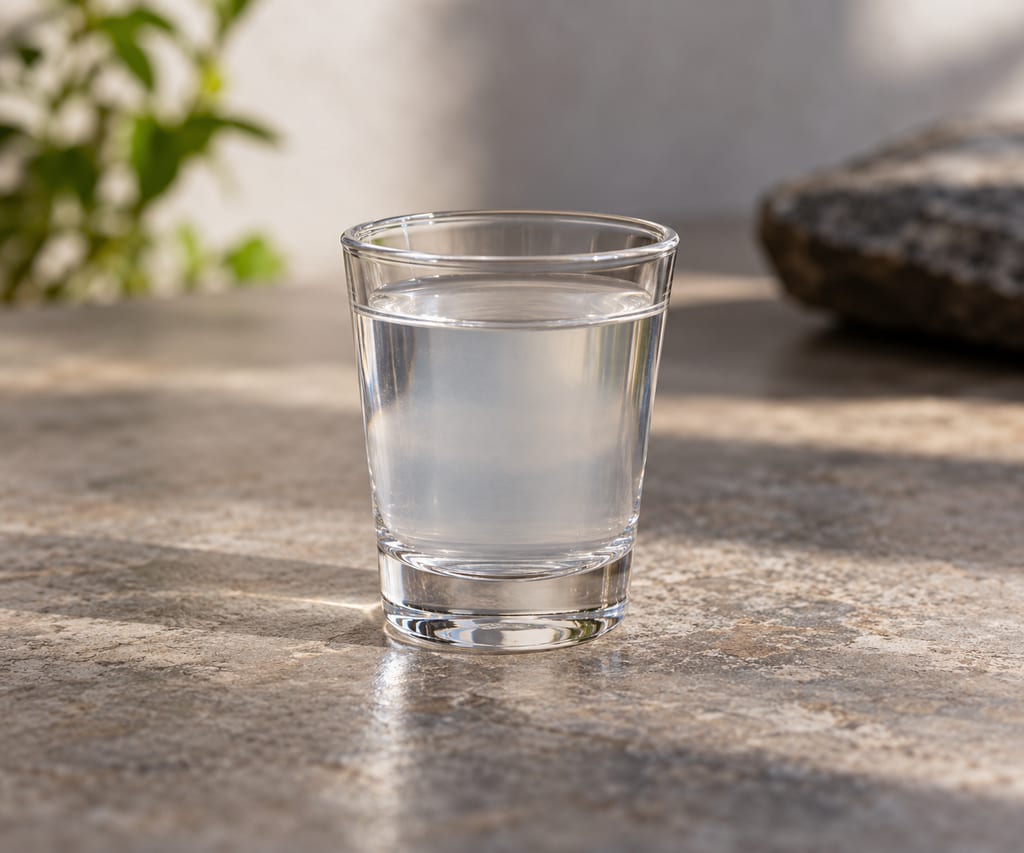
A Buryat milk spirit distilled from khurenge, the backslopped sour dairy ferment, in a cauldron still: a distillate that keeps milky and cheese-like aromas from the dairy it came from.
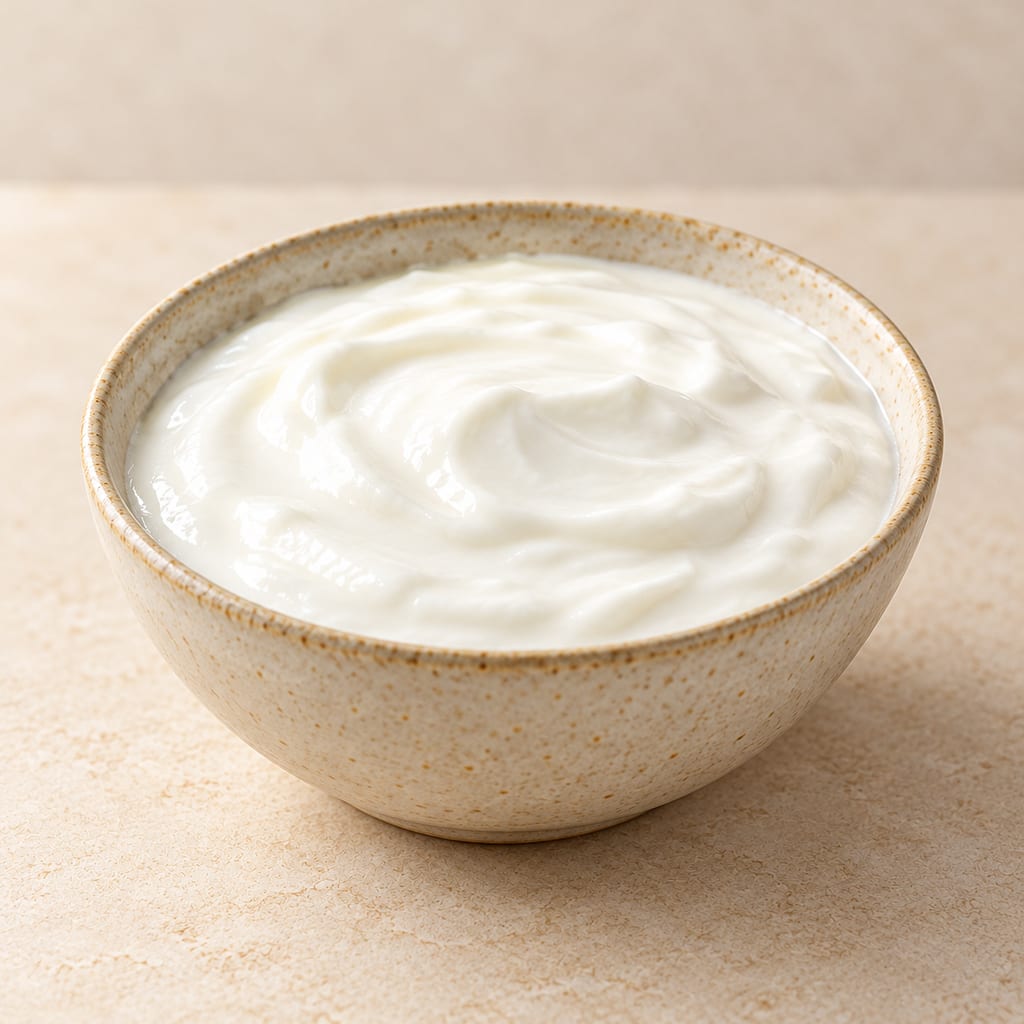
Katyk is a traditional fermented milk of Turkic-speaking peoples, made by souring heated milk with lactic bacteria, often with a spoonful of the last batch, into a thick, sour curd.
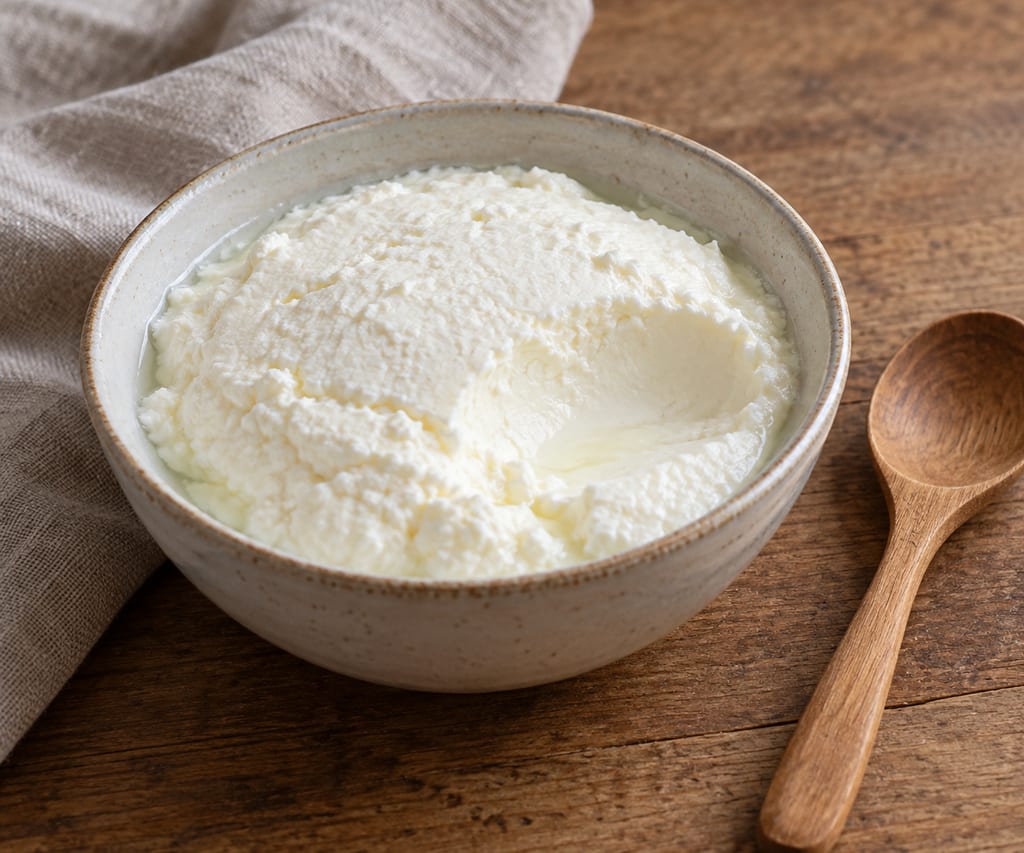
Tarag is a traditional Mongolian fermented milk made by culturing heated cow, yak, sheep or goat milk with a retained starter into a sour, softly set or drinkable yoghurt.
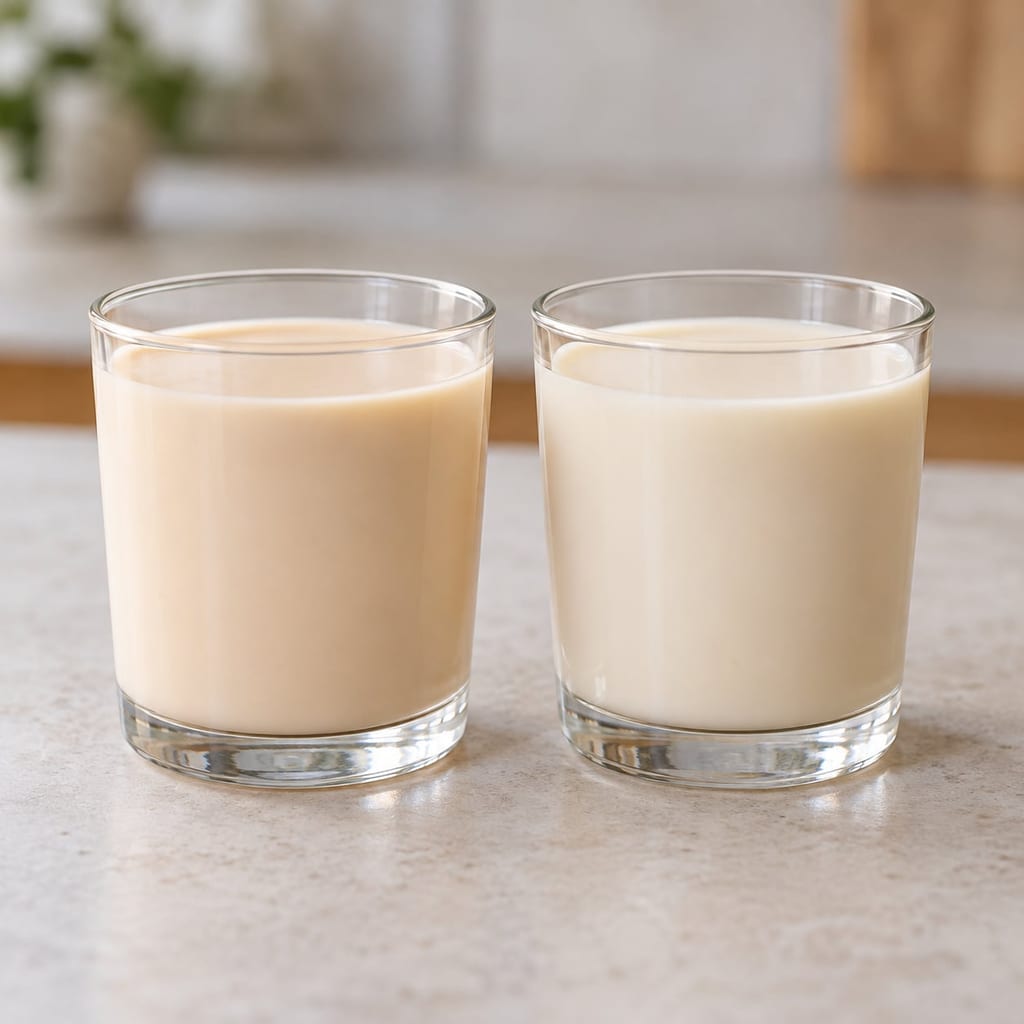
Ryazhenka is a Ukrainian and Russian cultured milk made from long-heated, baked cow's milk, cream-coloured and gently sour; varenets is its close relative with a shorter heat treatment.
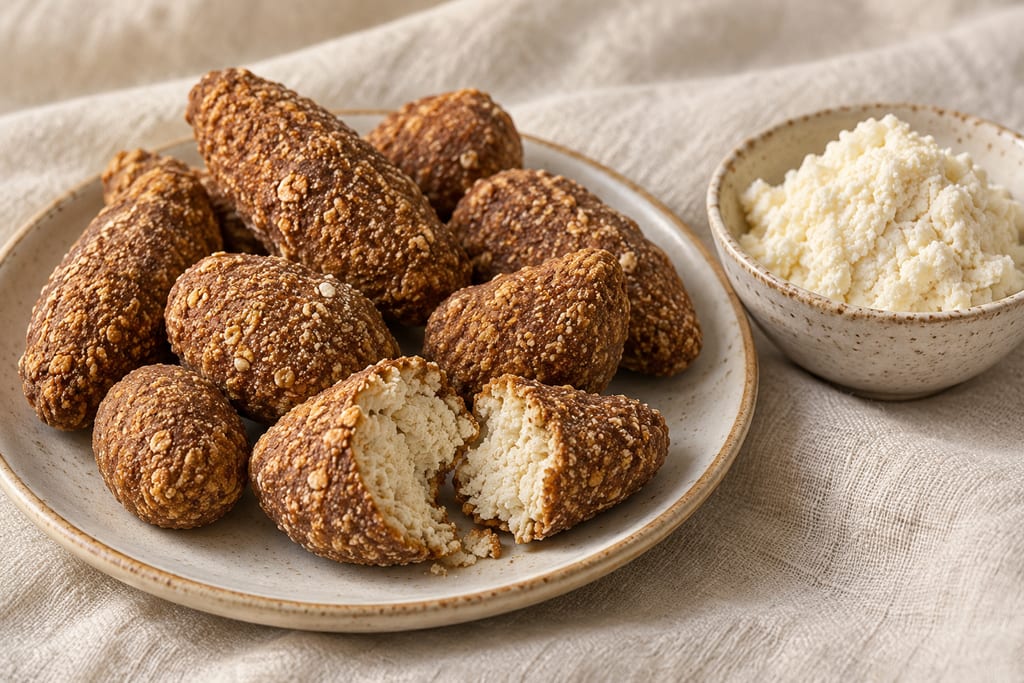
A two-stage Altai dairy preparation: sour chegen is heated into soft aarchi, then portions are drained, pressed and traditionally smoked into firm kurut.

Adygean salt is a seasoned table salt associated with Adygea and the wider North Caucasian culinary tradition. Salt is blended with garlic and a variable selection of herbs and spices; the exact mix depends on the named style and maker.
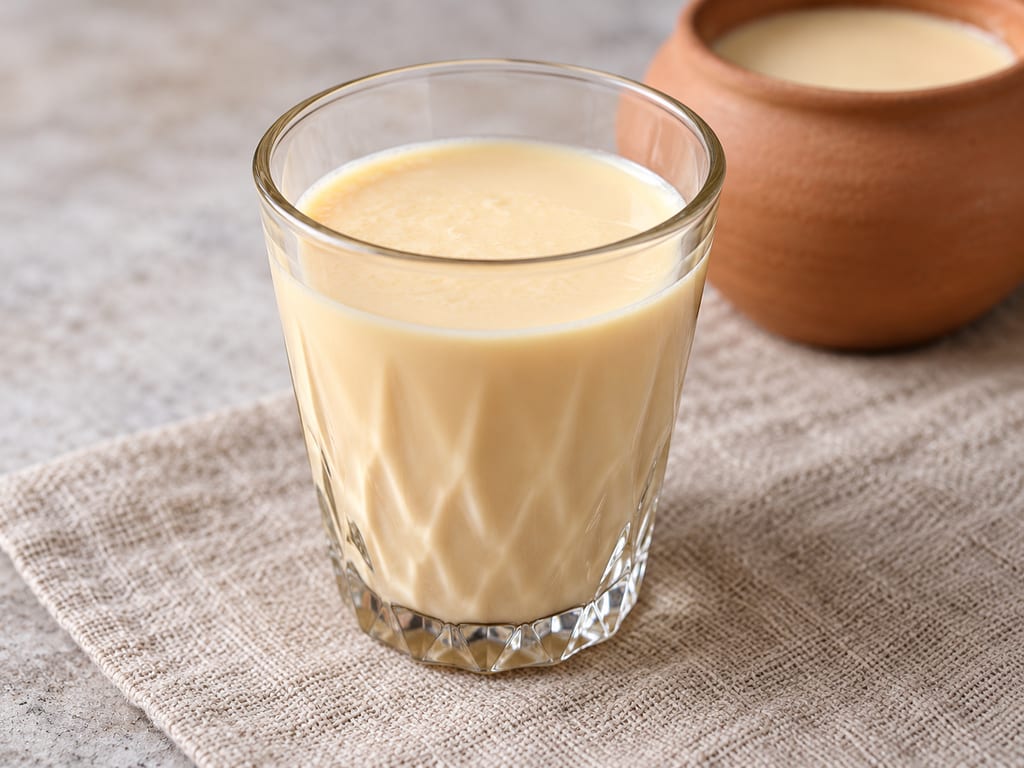
Baked milk is an Eastern European preparation of milk held at high heat for hours until it turns cream-coloured with a cooked, mildly sweet flavour, without any fermentation.
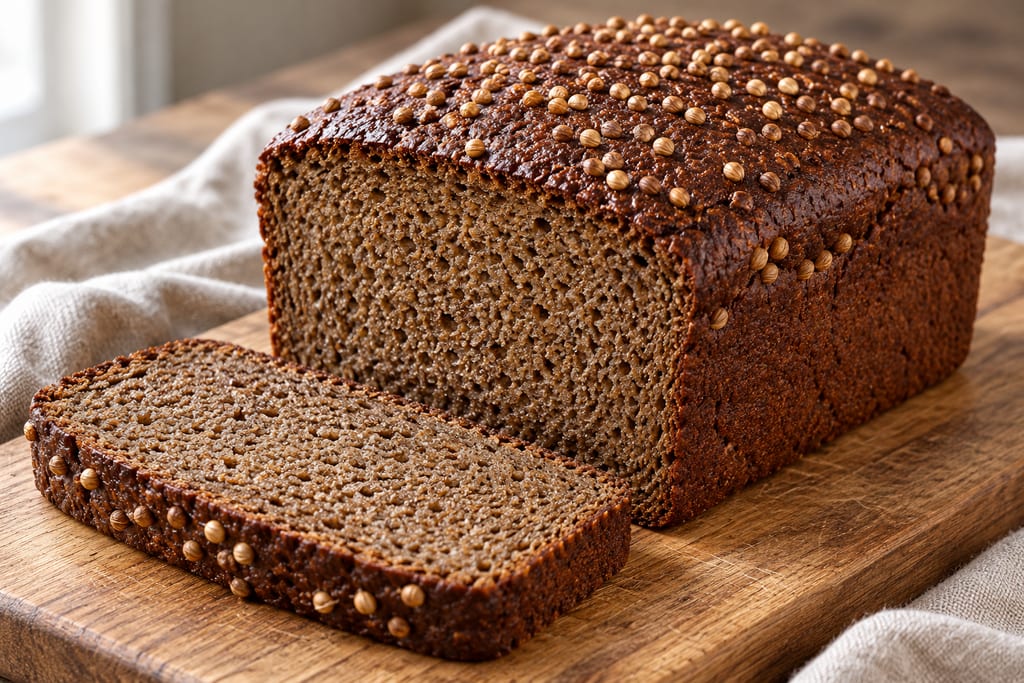
A dark rye sourdough with coriander and roasted barley-malt scald, based on Lily McCann's measured Borodinsk-ish home formula.

Mochenye yabloki are whole apples held under prepared liquid for several weeks. Russian sources from 1892 and 1959 describe the method. It is not the same as vinegar pickling.
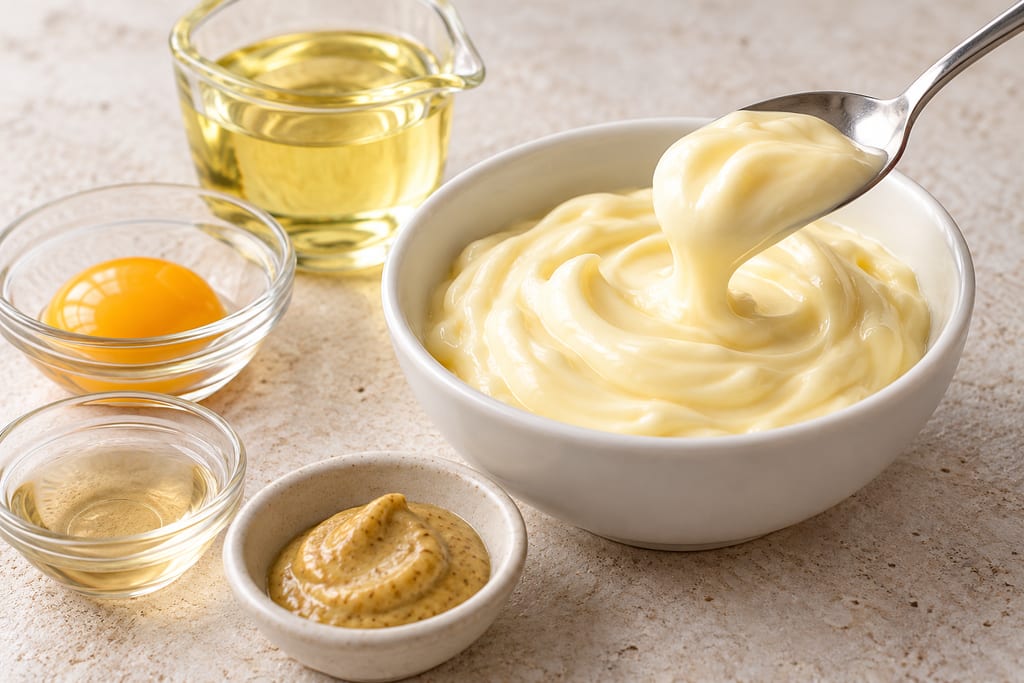
A plain mayonnaise of 200 g refined neutral oil emulsified into pasteurised yolk, vinegar, water and a little Dijon mustard: a clean base for tasting, comparing and flavouring.

Salted mushrooms are a traditional wild-mushroom preserve, especially of Finnish and Russian milk caps, made by layering boiled mushrooms with coarse salt or keeping them under brine, and kept cold.

Ayran is Turkey’s cold, savoury yogurt drink: plain yogurt is loosened with water and lightly salted, then whisked smooth or aerated into a soft cap of foam.
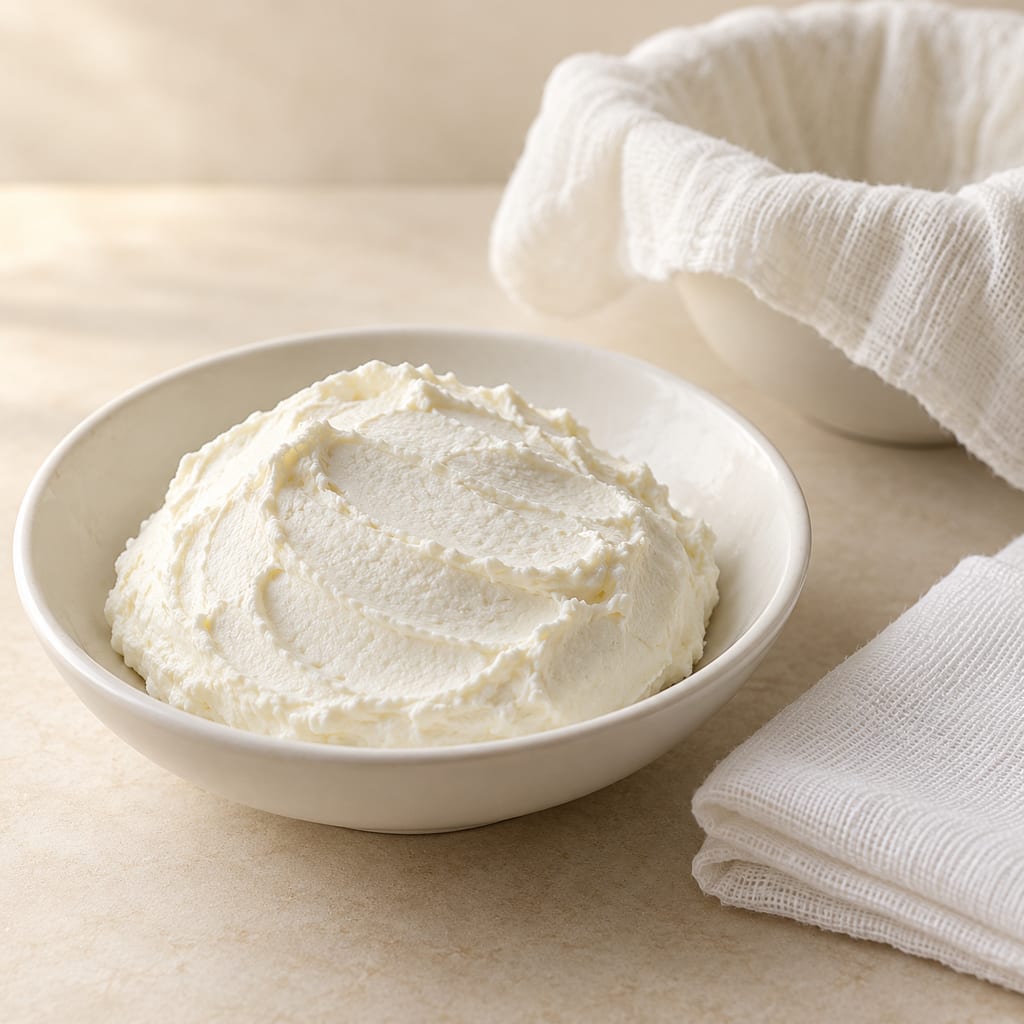
A soft cheese made by setting aside part of the day's milk kefir, draining it in a cloth and salting it through the evening, ready the next morning.
Koumiss is a sour, lightly alcoholic mare-milk drink made by lactic bacteria and yeasts. This technical method uses pasteurized milk, a previous-batch starter and staged cooling.
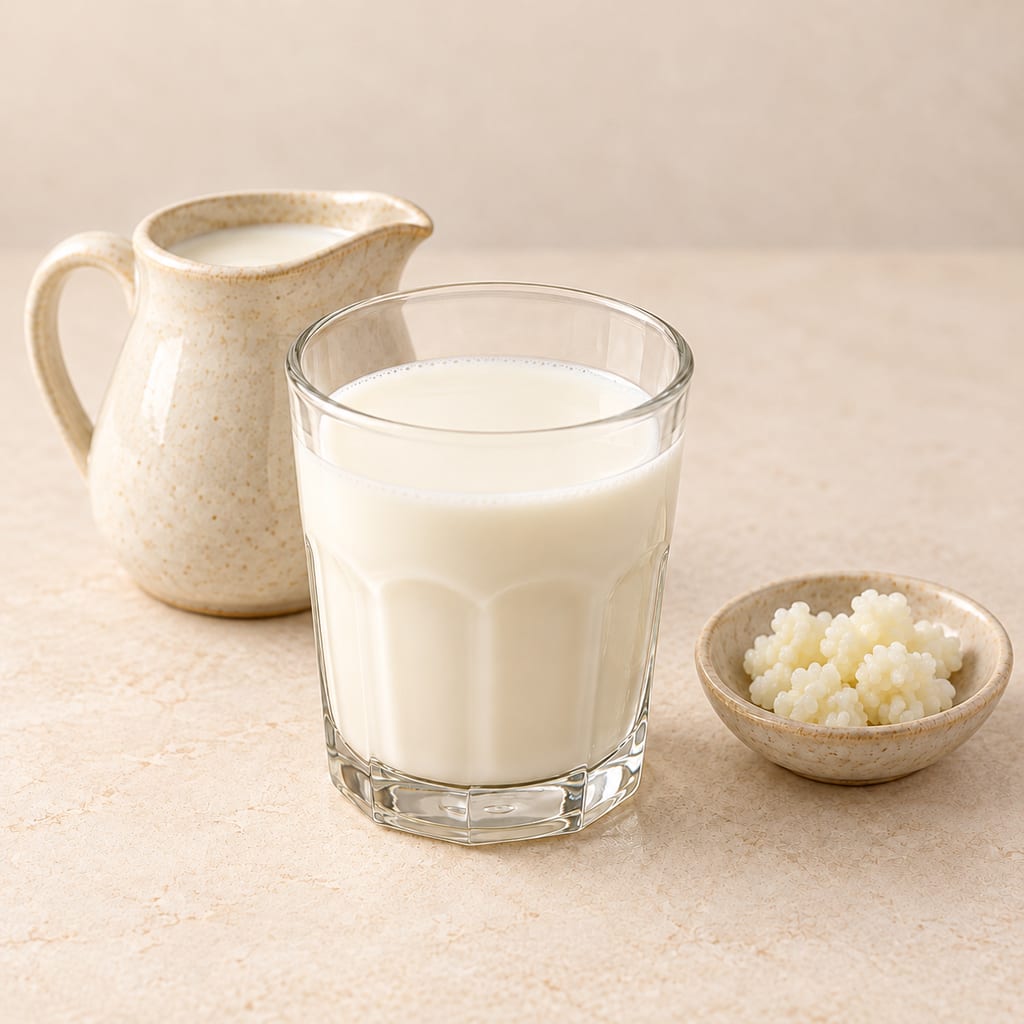
Milk kefir is a tangy fermented drink made with reusable grains of bacteria and yeasts. Grain fermentation can give the milk a light fizz and some alcohol.
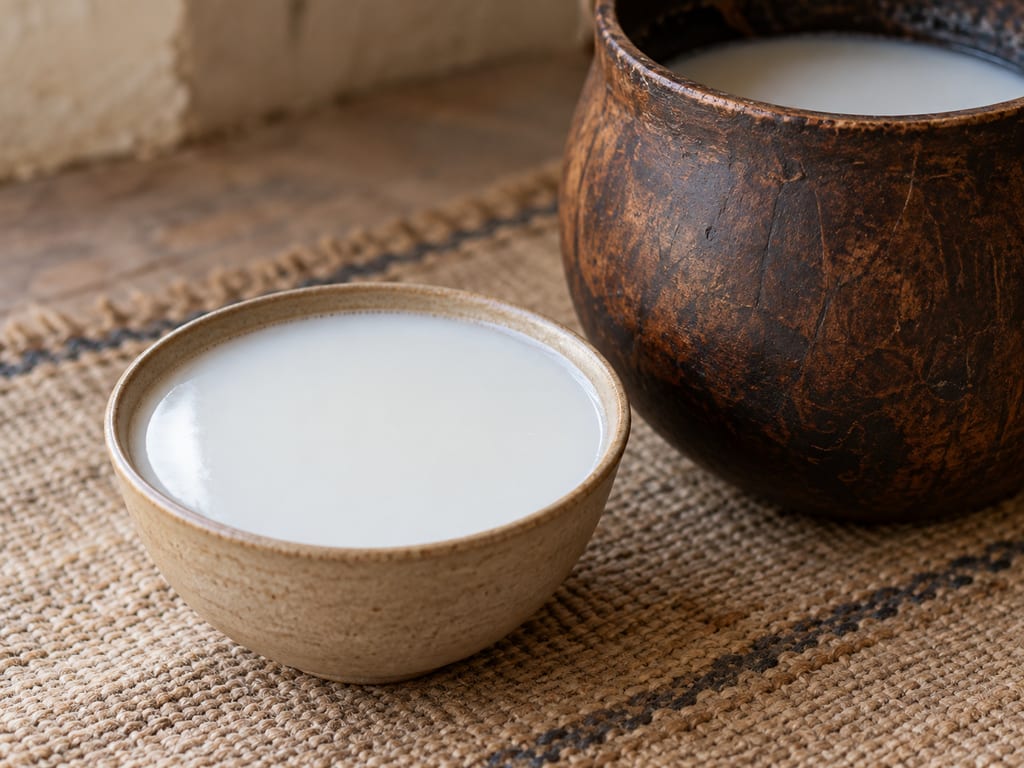
Suusac is a traditional fermented camel-milk drink of Somali pastoral communities in Kenya and Somalia, soured spontaneously in smoke-treated vessels into a thin, acid, smoky milk.
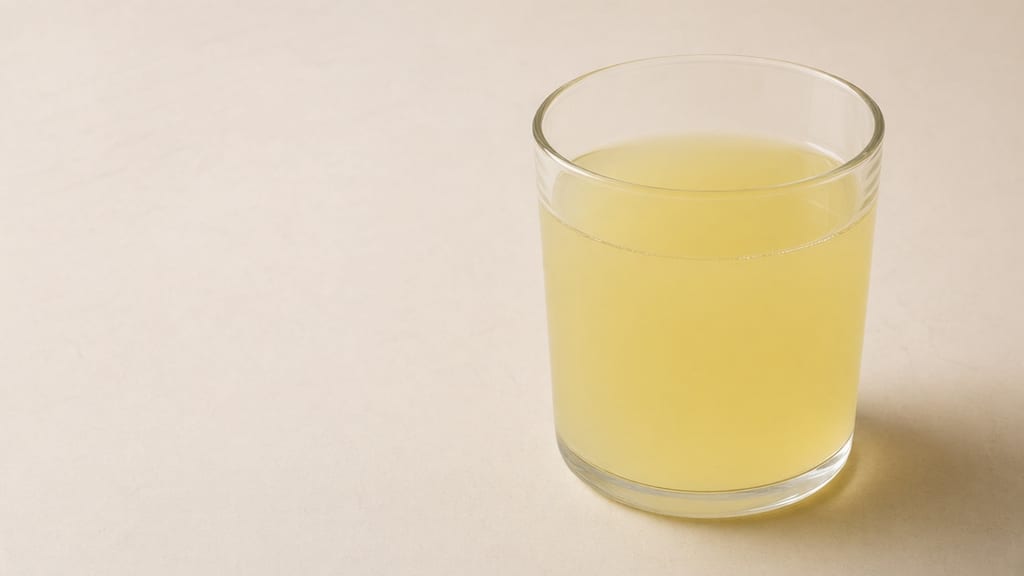
Sýra is Icelandic soured skyr whey kept as a household acid store: a drink when diluted, and historically the medium for súrmatur. Fresh leftover whey is not the same material.

A Cap-Pelé boucanière is an Acadian herring-smoking building. The documented Willie Niles example is a one-storey wood-frame structure with a ridge smoke vent and interior bays for hanging fish-bearing cannes.

Achcharu is a family of Sri Lankan vinegar pickles made with mixed vegetables or seasonal fruit and a piquant spice dressing. This version is a quick, refrigerated, non-fermented mixed-vegetable pickle.

The acocote is a long, hollowed and dried gourd used to draw aguamiel from a mature maguey. It is a harvesting tool: the sap is transferred to a separate vessel before it ferments into pulque.

Adrak murabba preserves young ginger in sugar syrup, a sweet South Asian preparation recorded in Indian cookery and food-processing sources.

Parkia biglobosa seeds are fermented into regional West African seasonings, including nététou, iru, dawadawa and soumbala. The yellow fruit pulp is a separate food, and names and methods vary by place.

Japanese reddish-brown vinegar from sake lees matured about three years, turned to vinegar by acetic bacteria; the vinegar of Handa and Edomae sushi rice.

A refined common-wheat flour blended for a broad range of baking; its protein and behavior vary with wheat, milling and market.

The almond mushroom, Agaricus subrufescens, was cultivated in eastern North America in the 1800s, lost its market, and returned as a cultivated mushroom from Brazil, where it is grown under several names.
No community contributions have been published for this entry yet.
Sign in to contribute. Published comments and photos are free to read.
Scientific Reports 16, article 17769, 16 April 2026Method · Science · History
Microbial diversity and production of milk spirit using traditional Buryat fermentation and distillation technologies70-litre barrel, 10 to 15 litres of kept culture, 40 to 50 litres of milk; about 20 C; two to three days; stirring two or three times daily
household pH 3.3, 1.5% ethanol; commercial pH 3.7, 2.1%
arabka defect; sagaa, aarsa and darasun
Cited in: What khurunga is; The record of a kept culture; Bacteria, yeasts and acid; How it is made, and why; Where it is made and how it varies; Drinking it and what comes from it; Reading results and problems
PubMed CentralScience
Microbial diversity and production of milk spirit using traditional Buryat fermentation and distillation technologies (open-access archive)open-access copy of the 2026 study
PubMedScience
Microbial diversity and production of milk spirit using traditional Buryat fermentation and distillation technologies (PubMed record)bibliographic record of the 2026 study
Cited in: Bacteria, yeasts and acid; Reading results and problems
Microorganisms 10(11), 2140, 2022Science
Microbial Communities of Artisanal Fermented Milk Products from Russiatwo Buryat khurunga samples with Lactobacillus at 62.4% and 94.1% of reads
Cited in: What khurunga is; The record of a kept culture; Bacteria, yeasts and acid
Microorganisms 12(1), 16, 2024Science
Metagenomic Insights into the Taxonomic and Functional Features of Traditional Fermented Milk Products from RussiaL. helveticus 35.1%, Lactococcus cremoris 11.2%, L. lactis 5.2%, Lentilactobacillus kefiri 6.2% in one sample
Cited in: What khurunga is; The record of a kept culture; Bacteria, yeasts and acid
Voprosy Pitaniya 23, 1964History · Method
Kurunga: a therapeutic and dietetic drink from cow's milkChuzhova's selected-culture process; Potanina's 1890 description
Cited in: The record of a kept culture; How it is made, and why; Where it is made and how it varies
Russian Patent Office, 2001Method
RU2164071C2: Method of preparing cultured milk drinkdefined mix of lactobacilli, lactic streptococci and Candida yeasts
Cited in: The record of a kept culture; How it is made, and why; Where it is made and how it varies
Institute for Humanities Research and Indigenous Studies of the North, 2026History
Молочная пища и ее культ у аларских бурят (Milk food and its cult among the Alar Buryats)mother culture obtained from relatives; seasonal restart; gradual milk additions
Cited in: The record of a kept culture; How it is made, and why; Where it is made and how it varies; Drinking it and what comes from it
Aga National Museum named after G. TsybikovHistory · Use
Белая пища в жизни бурят (White foods in Buryat life)dairy foods in Buryat life
Cited in: What khurunga is; Drinking it and what comes from it
US Centers for Disease Control and PreventionSafety
Raw Milkraw milk pathogens; choose pasteurised milk
Cited in: Reading results and problems
Utah State University ExtensionSafety
Tips to Safely Ferment at Homemeasure acidity; control time and temperature
Cited in: Reading results and problems
US Food and Drug AdministrationSafety
Safe Food Handlingclean equipment; prevent contamination
Cited in: Reading results and problems
FoodSafety.govSafety
4 Steps to Food Safetyrefrigerator at 4 C or below
Cited in: Reading results and problems
US National Institute of Diabetes and Digestive and Kidney DiseasesSafety
Eating, Diet, and Nutrition for Lactose Intolerancelactose remains in milk