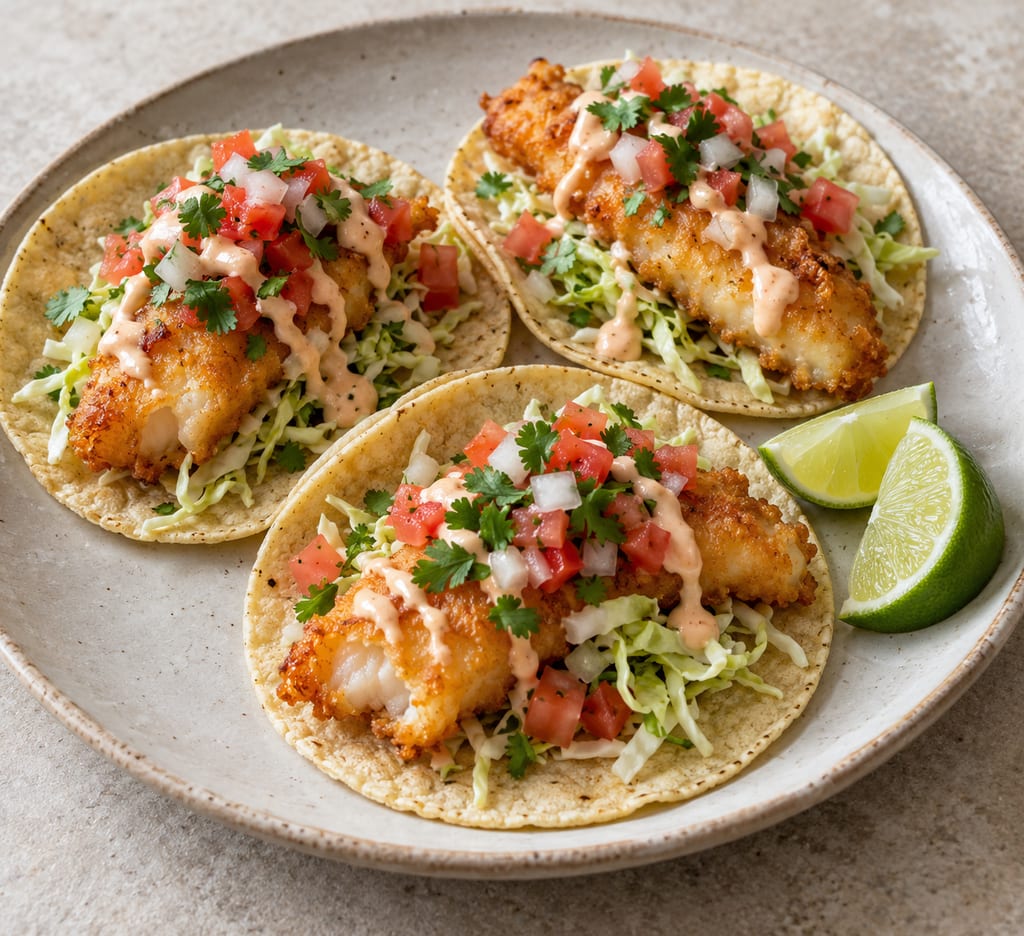
Baja-style fish tacos
Crisp battered white fish in warm corn tortillas with shredded cabbage, lime and fresh salsa. This home version draws on the Ensenada style without claiming to be a definitive historic formula.
 FermenteaWhere food goes to change
Classic mayonnaise with neutral oil · Home mayonnaise base
A plain mayonnaise of 200 g refined neutral oil emulsified into pasteurised yolk, vinegar, water and a little Dijon mustard: a clean base for tasting, comparing and flavouring.
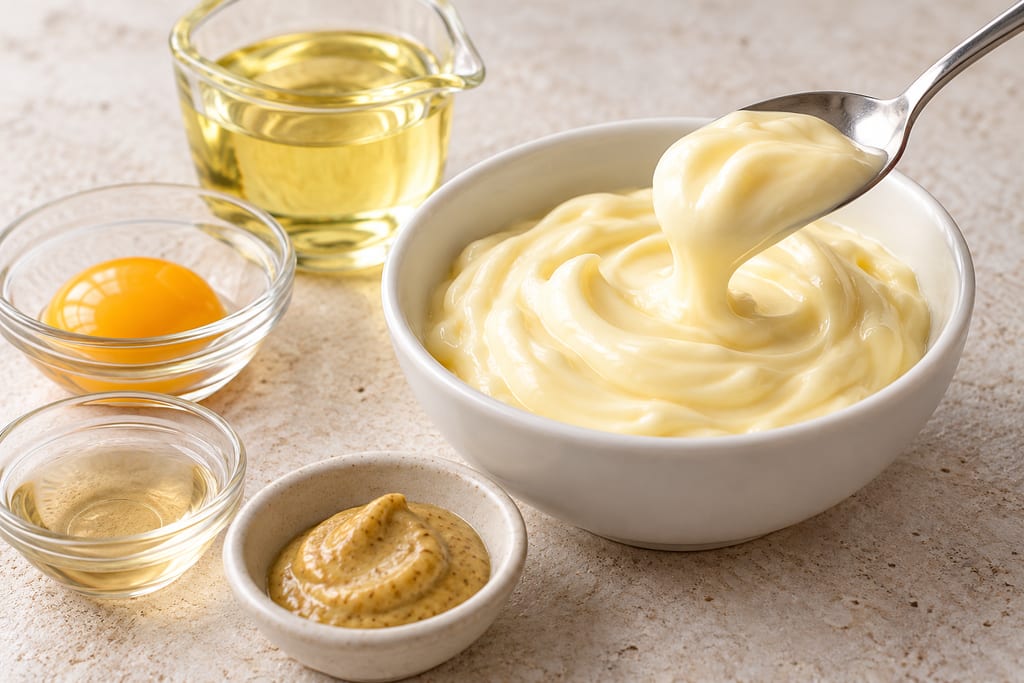
Mayonnaise is often linked to Port Mahon, the capital of Menorca, and to the French capture of the island in 1756. A familiar story says the Duc de Richelieu or his cook encountered the sauce there and carried it back to France, where it became fashionable. The story is memorable, but the surviving evidence is more complicated than the neat origin tale. The duke's culinary role is not firmly documented, and the existence of an earlier local sauce is a separate question from the later fame of its French name.
A 2022 account by food writer José Carlos Capel describes a family manuscript associated with Joana Caules and Rita Seguí, containing recipes written between 1750 and 1756 and a formula for a raw fish sauce identified by the article as the oldest known mayonnaise recipe. The article connects the manuscript to a banquet for Richelieu in 1756, while also reporting that the recipe collection itself dates from before or during that year. This is evidence for a written Menorcan preparation in that period; it does not by itself establish the precise moment or person of invention.
An earlier debate in the same newspaper records a more cautious interpretation of the Menorcan convent cookbook Art de la Cuina, from the first half of the eighteenth century. It mentions alioli bo in dishes but does not describe its method, so identifying it as mayonnaise remains an inference rather than a direct recipe match. The familiar name may preserve the association with Mahón, yet spellings and claims of origin shifted as the sauce circulated through French and European cooking. The neutral formula below is a modern home-development base, not a reconstruction of the Caules manuscript, a Menorcan historical recipe, or a single country's canonical mayonnaise.
Mayonnaise looks like a cream and stands up like a soft solid, but most of it is oil. In this recipe 200 g of oil goes into a sauce of about 265 g, so oil makes up 75.5% of it (200 ÷ 265 × 100). The trick is that the oil is not the continuous part. It is broken into a vast number of tiny droplets packed together in a small amount of water that carries the vinegar, salt, sugar and the dissolved parts of the yolk and mustard. Food scientists call this an oil-in-water emulsion, and egg components are what hold it together. Without them the droplets would run back into a layer of oil floating on sour water. So mayonnaise is not simply oil thickened with egg: how much oil there is, how small the droplets are, what the egg brings and what is dissolved in the watery phase all decide how thick it ends up.
This version is deliberately neutral. A refined oil with little flavour of its own lets the egg, the acid and the seasoning show, which makes it the right base for learning how mayonnaise works, for comparing products and for building flavoured sauces. It is not the only good mayonnaise: an olive-oil one or a strongly mustard-led one can be exactly what is wanted. Each of those changes one thing, and this is the reference it changes from.
The quantities are an untested starting point, not yet tested for keeping. Its nominal yield is 265 g. It is a fresh sauce, made with pasteurised yolk and eaten within a day.
In some markets the word also carries a legal meaning. The United States standard of identity defines mayonnaise as an emulsified semisolid food made from vegetable oil, an acidifying ingredient and egg-yolk-containing ingredients, with at least 65% vegetable oil by weight; its vinegar must be diluted to no less than 2.5% acidity, calculated as acetic acid, and lemon or lime juice may serve as the acid. At 75.5% oil this recipe sits well inside the definition. A low-oil sauce thickened with starch, or a spread made without egg, can be a perfectly good thing to eat without being the same regulated product, and that matters when mayonnaise is set beside salad cream, Dutch fritessaus or a vegan dressing. British salad cream shows the gap: Heinz's declares 22% rapeseed oil and 3% egg yolk, with mustard and modified cornflour to carry its body, and gives 2.6 g sugars per 15 g serving, about 17 g per 100 g (2.6 ÷ 15 × 100 = 17.3). It is both sharp and quite sweet, a plain counterexample to the idea that European condiments are always the less sweet ones.
Whisking oil into a watery liquid tears it into droplets, and every droplet has a surface where oil meets water. That surface is unstable: left alone, droplets touch, merge and grow until the oil separates. Egg yolk supplies molecules that settle at the boundary, proteins and phospholipids among them, each with a part drawn to water and a part drawn to oil. They coat every droplet in a thin film that keeps neighbours from fusing. How much depends on the yolk shows when it is taken away: in a study published in the Journal of Food Science and Technology, replacing egg with soy milk lowered the mayonnaise's stability as the share of soy milk rose, although viscosity kept pace with the egg control up to 75% replacement and tasters found it as acceptable up to 50%. Change the emulsifier and both the stability and the eating quality move.
Thickness comes from crowding. Mayonnaise contains no starch or gum, yet it holds a ridge on a spoon, because its droplets are packed so closely that they press on one another and cannot slide freely past. Add a little more oil to a stable emulsion and the droplets crowd further and the sauce stiffens; add a little water and they gain room, and it loosens. Droplet size matters too. Kewpie, describing its own Japanese mayonnaise, says it makes the oil particles as fine as 2/1000 to 4/1000 mm, two to four micrometres, to give a smooth feel on the tongue: a factory figure for a factory product, but a fair picture of the scale.
This is why the first oil goes in so slowly. At the start there is yolk and water and no emulsion, and each drop of oil has to be broken up and coated before the next arrives. Pour too fast and the oil gathers faster than the whisk can disperse it; it never becomes droplets, and the mixture stays thin and greasy. Once a thick, glossy base exists, its body helps the whisk shear new oil into droplets, and the rest can follow in a thin stream.
Anyone developing a mayonnaise, or trying to understand why two bottles differ, does best to separate six variables. The oil comes first: its plant, whether it is refined or unrefined, and how fresh it is. A neutral refined oil leaves the egg, acid and seasoning exposed; an aromatic oil becomes a main flavour in its own right. The egg is second: yolk alone, whole egg, or yolk with whole egg, and in what quantity. More yolk generally gives a richer egg impression, while whole egg also brings more water. The acid is third, judged by its type, its stated strength, any citrus and the total amount. White distilled vinegar, wine vinegar, cider vinegar and lemon are not interchangeable to the palate.
Sweetness is fourth, and it means the added sugar plus whatever sugar arrives inside mustard or other additions; a little can round the acid without making the sauce taste overtly sweet. Savoury seasoning is fifth: salt, mustard, MSG, yeast extract and spices, which can explain a recognisable brand character that oil and egg alone would miss. Structure is sixth, set by the shear of the whisk or machine, the share of oil, any starch or gum and the storage temperature. Two sauces with similar labels can feel quite different in the mouth because of it.
The oil is 200 g of fresh, neutral, refined oil: rapeseed (canola), sunflower or soybean. Refining strips most of an oil's own flavour, so the sauce tastes of egg, acid and seasoning rather than of seed. Freshness matters more than the plant. Emulsifying an oil does not hide staleness or bitterness, so taste the oil alone before using it. Commercial mayonnaises show the same range of choice: a UK foodservice Hellmann's declares 78% rapeseed oil, Poland's Majonez Kielecki is built on refined rapeseed oil, and a foodservice specification for Duke's in the United States lists soybean oil and targets 80% total fat.
The 25 g of commercially pasteurised yolk is 9.4% of the batch (25 ÷ 265 × 100), in the same territory as those labels: 8.9% egg and egg yolk together in that Hellmann's, 7.0% yolk in Majonez Kielecki. Yolk rather than whole egg gives a richer egg impression; whole egg also brings its white, which is mostly water. Choose an unsalted, unsweetened carton, because some pasteurised yolk is sold salted or sugared for the trade, and either would quietly change the seasoning. Commercially pasteurised whole egg sold for uncooked preparations will also make a mayonnaise, with the extra water of the white; whichever is used, follow the carton's own handling instructions.
The water phase is small and busy. Twenty grams of distilled white or spirit vinegar labelled 5% acidity brings the sharpness; 10 g of drinking water gives the yolk enough liquid to begin. Smooth Dijon mustard, 5 g, adds flavour, and with it a little more acid, salt and water of its own. Salt, 2 g, and sugar, 3 g, are dissolved in the vinegar and water before anything else, because both dissolve in water and not in oil. Stirred into a finished sauce that is three-quarters oil, they dissolve slowly and season unevenly.
The 3 g of sugar, a little over 1% of the batch (3 ÷ 265 × 100 = 1.13), is there to round the vinegar rather than to make the sauce taste sweet. The amount of vinegar is a flavour decision. It has not been shown to give any particular final pH, and nothing in this recipe relies on it for safety: that job belongs to the pasteurised yolk and the fridge.
Bottles from different markets show how wide the family runs. What follows describes particular products, not national taste: a manufacturer's page shows what is in a jar and how it is positioned, and says nothing about what a whole country prefers. In the United States a foodservice mini jar of Hellmann's Real lists soybean oil, whole egg and yolk, vinegar, a little sugar and lemon, which suggests starting from neutral soybean oil and restrained seasoning, though the exact pack should be checked before treating it as a stand-in for the retail jar. Duke's Real, a brand with a Southern identity, lists no sugar and uses distilled and cider vinegars; its retail page says ‘eggs’ while its foodservice sheet lists yolks. A sugar-free, vinegar-forward trial is better grounded than the blanket idea that American mayonnaise is sweet.
In Britain the 5-litre foodservice Hellmann's Real declares 78% rapeseed oil and 8.9% pasteurised egg and yolk, with spirit vinegar, sugar, lemon juice concentrate, salt, flavouring, an EDTA antioxidant and paprika extract. Refined rapeseed is the oil to use against it; an aromatic cold-pressed one will not give the same result. France's Amora Mayonnaise de Dijon, 605 g, is built on rapeseed oil (68% on one technical sheet) with white-wine vinegar, 5.5% Dijon mustard and 5.1% yolk, and sugar and xanthan appear too: a mustard-led sauce, and a reminder that French commercial mayonnaise is neither automatically sugar-free nor the same thing as a chef's hand-whisked one. Belgium's D&L professional lemon mayonnaise has rapeseed oil, 7.5% yolk, mustard, vinegar and 1.2% lemon juice, with 1.4 g sugars per 100 g, the model for a full-bodied lemon-and-mustard sauce for chips, fish or vegetables.
The Netherlands' Remia Fritessaus Classic opens its ingredient list with water, rapeseed oil and sugar, then modified maize starch, with egg yolk present; one retail listing gives 26 g fat per 100 ml. It is a lighter-oil sauce with a different architecture, and thinning ordinary mayonnaise does not reproduce a starch-thickened product. Poland's Majonez Kielecki, 410 ml, lists refined rapeseed oil, prepared mustard, water and 7% yolk, with its sugar tucked inside the mustard, so a short outer list is no proof of a sugar-free sauce. Russia's Sloboda Provansal combines sunflower oil, water, sugar, yolk, salt, vinegar and mustard oil: a sunflower base with vinegar, mustard and a little sweetness, nothing to do with olive oil despite the Provençal name.
Further afield, the Japanese-style mayonnaise on this site follows Kewpie, whose domestic, American, European and Chinese products all differ. In the Philippines, Lady's Choice Real Mayonnaise in a 5.5-litre foodservice pack lists soybean oil, eggs, sugar, vinegar, lactic and citric acids and formulation aids, which makes sweet against sour an axis to develop in its own right and marks it as structurally different from a simple home emulsion. In Mexico, McCormick's Mayonesa con Jugo de Limón is positioned on lime, and the brand's American serving material pairs it with elotes, grilled corn: a citrus-accented mayonnaise is its own recipe, not plain mayonnaise with more distilled vinegar.
Read across, these bottles answer the old question of whether European or American sauces are sweeter only with ‘it depends on the bottle’. A tart product can carry plenty of sugar, because acidity, sugar, salt, egg richness, oil aroma and thickness all interact in the mouth; a sharper sauce may hold more sugar than a milder-tasting one. For a real comparison, buy the exact products, put their nutrition on a per-100 g basis and taste them blind, alone and with the food they are meant for. Product pages are imperfect too: the British Hellmann's foodservice display has shown formatting oddities in its energy fields, and some retail pages leave out full ingredients. A photograph of the bottle actually bought outranks any web page during a trial.
The kit is modest: a digital scale, a bowl, a whisk and a clean jar are enough. By hand, work in a stable bowl that will not spin as you whisk; a damp cloth underneath helps. Dissolve the salt and sugar in the vinegar and water, then whisk in the yolk and mustard. Add the first 20–30 g of oil a few drops at a time, whisking all the while, until the mixture turns glossy and cohesive. That change of look is the sign that an emulsion exists, and the remaining oil can then go in as a thin stream. If the sauce turns so stiff that the whisk drags, add 2–3 g of water, carry on and write down what you added.
A stick blender is quicker. Blend everything except the oil, then add the oil gradually with the blender head kept submerged, so that it pulls oil down into the base. The vessel matters: the head must fit it and stay under the surface, and a large jug blender can fail on a batch this size because the liquid barely reaches its blades. The method popular on social media, putting every ingredient in at once, can work with one particular jar, blender and quantity of egg, but it does not transfer reliably. Slow addition does, and French culinary-school practice agrees: L'Atelier des Chefs also starts from yolk and mustard and brings the oil in gradually.
Temperature is a matter of handling, not ritual. Many recipes ask for ingredients at room temperature; do not leave yolk out for hours to satisfy that. Workable ingredients and controlled oil addition make the emulsion, and the rule here is brief preparation followed by prompt chilling.
Once the emulsion is stable, thickness is easy to steer. A little more oil makes it thicker, as the droplets crowd closer, and a little water makes it thinner. A sauce that is very stiff but glossy has too little free water for its oil: whisk in water 2 g at a time and record the total.
A split sauce is a different problem. If the mixture is thin, oily and separated, pouring in more oil makes it worse, because there is no working emulsion to take the oil up. Start again small. Whisk about 10 g of fresh pasteurised yolk with 5 g of water in a clean bowl, then feed the failed mixture into it slowly, exactly as if it were oil. The new yolk forms a fresh emulsion, and the broken one is rebuilt into it a little at a time.
Other faults have plain first suspects. A sauce that is thin and oily from the start most likely took its oil before an emulsion had formed, or was made in a vessel that did not suit the tool. Bitterness or staleness points first to the oil itself, then to too large a share of an aromatic oil or a heavy hand with garlic in a flavoured version: taste the oil separately, replace a stale one rather than masking it with acid, and cut the aromatic share in the next batch. Batches that vary from day to day point to changed products or to measuring by volume, so weigh everything and keep to the same oil, mustard, yolk and vinegar.
Balance faults call for a next-batch change rather than a rescue. A sauce that is smooth but too sharp has too much acid, or too sharp a kind, for its sugar and salt; change that in a controlled way next time, and for eating now a little sugar can round it without removing any acid. A sweet, bland sauce has too much sugar or too little acid, mustard or salt; change one of them at a time, and try it on the intended food before altering the whole batch. A mayonnaise that turns watery after pickles or herbs go in has taken on their water, so drain pickles and dry herbs first, and do not count on a thickener to put right a storage problem. Sauce that separates after freezing has suffered freeze-thaw damage; make a fresh small batch, because a re-whisked emulsion that looks restored says nothing about how safely it was handled.
Taste it on a piece of bread or a cooked potato rather than from a spoon. Mayonnaise is eaten on something, and the food changes how the acid and salt come across. Make one change at a time: 1–2 g more vinegar for more tang, 1 g more sugar for roundness, or a small extra pinch of salt.
A clearer way to learn your own preference is to split one batch. Weigh out four 50 g portions. Keep one unchanged, add 0.5 g sugar to the second, 1 g of the same vinegar to the third and 0.5 g mustard to the fourth, and taste them side by side on the same food. Sweetness, acidity and mustard then show up separately instead of tangled together. These samples are still fresh sauce under the same handling rules.
To compare against a bought mayonnaise, record its brand, market, country of manufacture, pack size, ingredient list, date and the temperature it was served at, then score sweetness, sharpness, egg richness, mustard character, savouriness, thickness, lubricity (how it coats and slides) and aftertaste separately. Taste with a neutral food and with the dish it is meant for: a sauce that seems ideal alone may swamp an egg sandwich or vanish against salty chips. Call the result ‘inspired by’ the product until repeated blind comparisons show a real match, and remember that matching the flavour does not match the factory's microbiological validation.
Keep measurements and impressions apart while you work. A pH reading is not perceived sourness, a viscosity is not creaminess, and added sugar is not total sugar, since mustard and other additions can bring their own. Once the base suits you, it carries the variations on this site: a mustard-forward French direction, lemon, cider-vinegar, citrus and sunflower versions, avocado-oil and olive-and-garlic mayonnaises, and a set of flavoured sauces stirred into 100 g of finished mayonnaise.
Use commercially pasteurised yolk. The egg in mayonnaise is never cooked, so the yolk is the ingredient that needs controlling, and acid is not a reliable control. The US Food and Drug Administration's guidance for retail and food-service kitchens is to substitute pasteurised eggs or egg products for raw shell eggs in mayonnaise and other dishes that are not thoroughly cooked. Food Standards Scotland's catering advice of 21 August 2026 says pasteurised egg products suit foods that will not be cooked or only lightly cooked, and notes that commercially produced mayonnaise is often made with them. It also stresses clean handling and chilling, and rates eggs from the British Lion and Laid in Britain schemes as a very low Salmonella risk that cannot be excluded; pasteurised yolk is the consistent choice for a recipe used in many countries.
Vinegar does not stand in for it. In laboratory mayonnaise made with raw egg, Salmonella Typhimurium survived better at 4 °C than at warmer temperatures, and a 2025 study found acid-tolerant Salmonella strains persisting longer than acid-sensitive ones, their culturability falling more slowly at 5 °C. Acid type, temperature and strain all change how bacteria survive, and controlled laboratory results cannot be turned into a kitchen rule. Cold slows the growth of most bacteria but is not a kill step, and a sour taste proves nothing. None of it supports leaving homemade mayonnaise on the counter to ‘let the vinegar sterilise it’; it is the reason to start with pasteurised egg and refrigerate at once.
Make it in small batches, refrigerate the finished sauce promptly in a clean covered container at 4 °C or colder, and plan to use it within 24 hours. That limit is a deliberately cautious house convention for an unvalidated formula, not a measured shelf life, a guarantee or a claim about mayonnaise in general. Discard sauce sooner if it has been contaminated or left warm. For serving, put out a small portion and keep the main container cold; never return used dipping sauce to it, and never top up a part-used batch with a new one.
The convention sits comfortably inside official thinking without being certified by it. The NSW Food Authority's guidance on raw-egg products relies on a combined system rather than on acid alone: acidification to pH 4.2 or below, chilled holding at 5 °C or below, small batches made daily and disposal within 24 hours. That is no licence to keep a homemade mayonnaise indefinitely once a meter reads 4.2, and these pasteurised-egg recipes have had no shelf-life study of their own. The FDA's advice to use pasteurised eggs or egg products in mayonnaise that will not be thoroughly cooked points the same way. Both support the controls used here; neither approves the recipe.
‘Lasts longer’ means three different things for a mayonnaise. Physical stability is the sauce staying emulsified instead of separating. Flavour stability is the oil staying free of stale or rancid notes and the aromatics staying pleasant. Microbiological safety is hazards staying under control for the whole intended storage time. More yolk, added starch, a more effective blender or a different oil may improve the first; less exposure to oxygen and light, and fresher oil, may improve the second. Neither shows anything about the third. Food Standards Scotland's shelf-life guidance of March 2025 weighs formulation, acid type, water activity, processing, packaging, contamination and storage together, rather than offering one storage time for every product.
Many popular shortcuts touch only the first two. Switching to avocado oil changes the oil phase and the flavour, but the oil does not validate the water and egg phase. Rosemary extract or vitamin E may slow oxidation in a formulated product, which is a different thing from controlling pathogens, and a sprig of rosemary is not a commercial extract specification. More mustard, garlic, chilli or vinegar added by taste changes flavour, but taste establishes no final pH, acid concentration or kill. Whey, kombucha or an active starter introduces microorganisms and changes the recipe without any validated fermentation process behind it. Vacuum packing removes headspace oxygen and sterilises nothing. Hot-filling or water-bath canning heats a thick emulsion, may split it, and has no tested schedule for these formulas: do not can them. A commercial preservative copied from an online recipe depends on exact formulation, dose, pH and validation, and there is no safe dosing shortcut.
Freezing stops further growth while the sauce stays properly frozen, but mayonnaise commonly separates on thawing, and the National Center for Home Food Preservation lists it among foods likely to separate when frozen. Freezing is therefore a poor default for a smooth table mayonnaise, even though it suits many other condiments, and it never reverses earlier unsafe handling.
For a supply that lasts weeks, keep a commercial plain mayonnaise under its own label instructions and flavour only the portion needed, so the unmodified base keeps its known handling instructions while garlic, herb or chilli experiments stay small. Those instructions belong to the factory's formula and process: Chosen Foods, for example, gives a two-month refrigerated after-opening instruction for its vegan mayonnaise, a date tied to that product and nothing else. A homemade mayonnaise with a longer stated life would need a defined formula, calibrated measurements and an assessment specific to that product. A pH meter can document batches, but a number does not show whether pathogens survive, what new additions do or how the method performs, and pH 4.6, a limit developed for other preservation questions, is no universal certificate of a safe mayonnaise.
Scaling: weigh every ingredient; scale by mass
House convention: make it with commercially pasteurised egg (or, for an eggless sauce, clean equipment and fresh ingredients), chill it promptly at 4 °C or colder and use it within 24 hours. This is a deliberately cautious working rule for an untested formulation, not a measured shelf life. Do not can it; freezing usually splits an emulsion.
The cited report locates an attested sauce formula in the Caules family manuscript from Mahón; it does not establish the exact place or moment of invention.
Commercial mayonnaise is documented in US product specifications; this does not define all regional use.
A mustard-forward French commercial style is documented; this is a modern style marker, not an invention claim.
Kewpie documents a Japanese commercial mayonnaise style; the page does not establish a single national preference.
A Polish commercial mayonnaise product is documented.
A Russian retailer lists a mayonnaise product; this does not establish a national preference.
A Philippine food-service product lists mayonnaise in its range.
A lime-flavoured commercial mayonesa and serving use are documented.
Salad cream is a related mayonnaise-style sauce with a separate formulation.
Dutch fritessaus is a distinct lower-oil style related to mayonnaise.
Crisp battered white fish in warm corn tortillas with shredded cabbage, lime and fresh salsa. This home version draws on the Ensenada style without claiming to be a definitive historic formula.
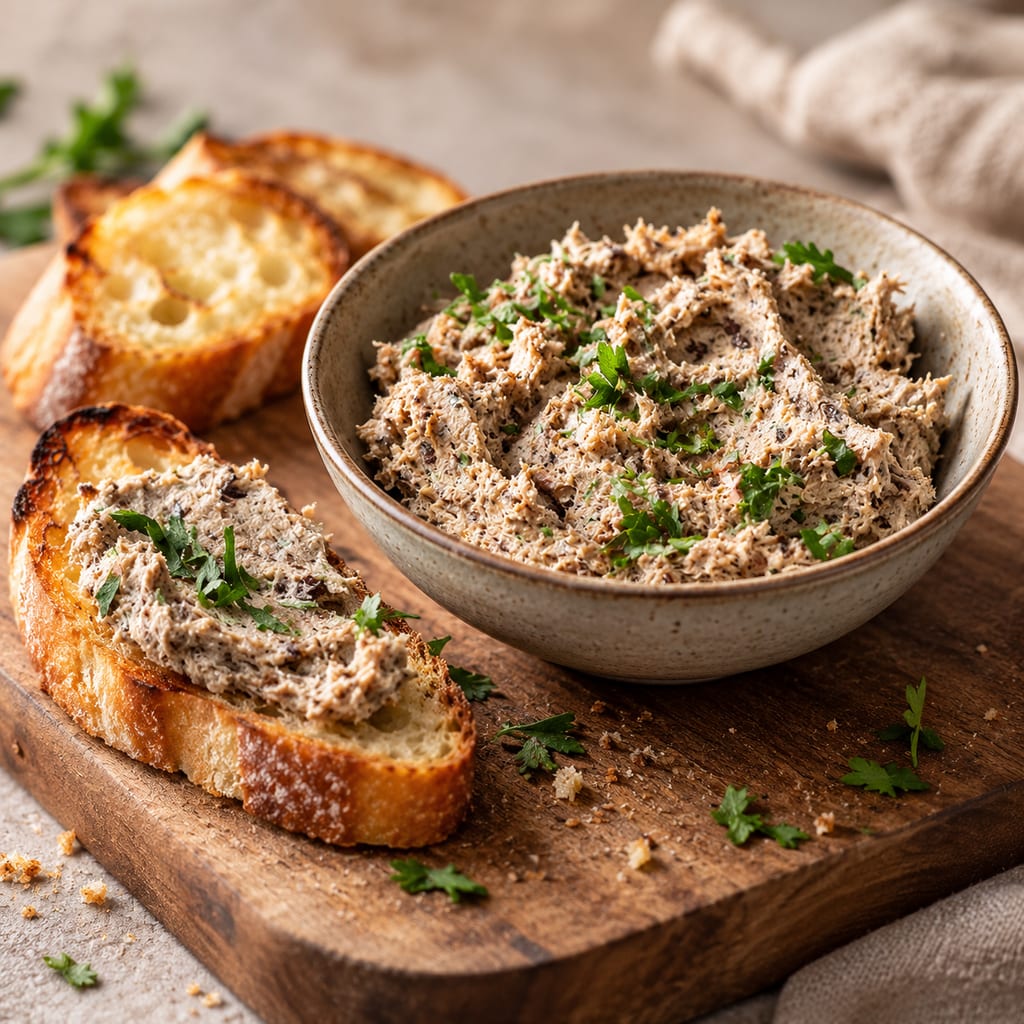
A cold biltong spread with sour cream, mayonnaise, mustard, lemon and herbs; serve it with crackers, crostini or bread.
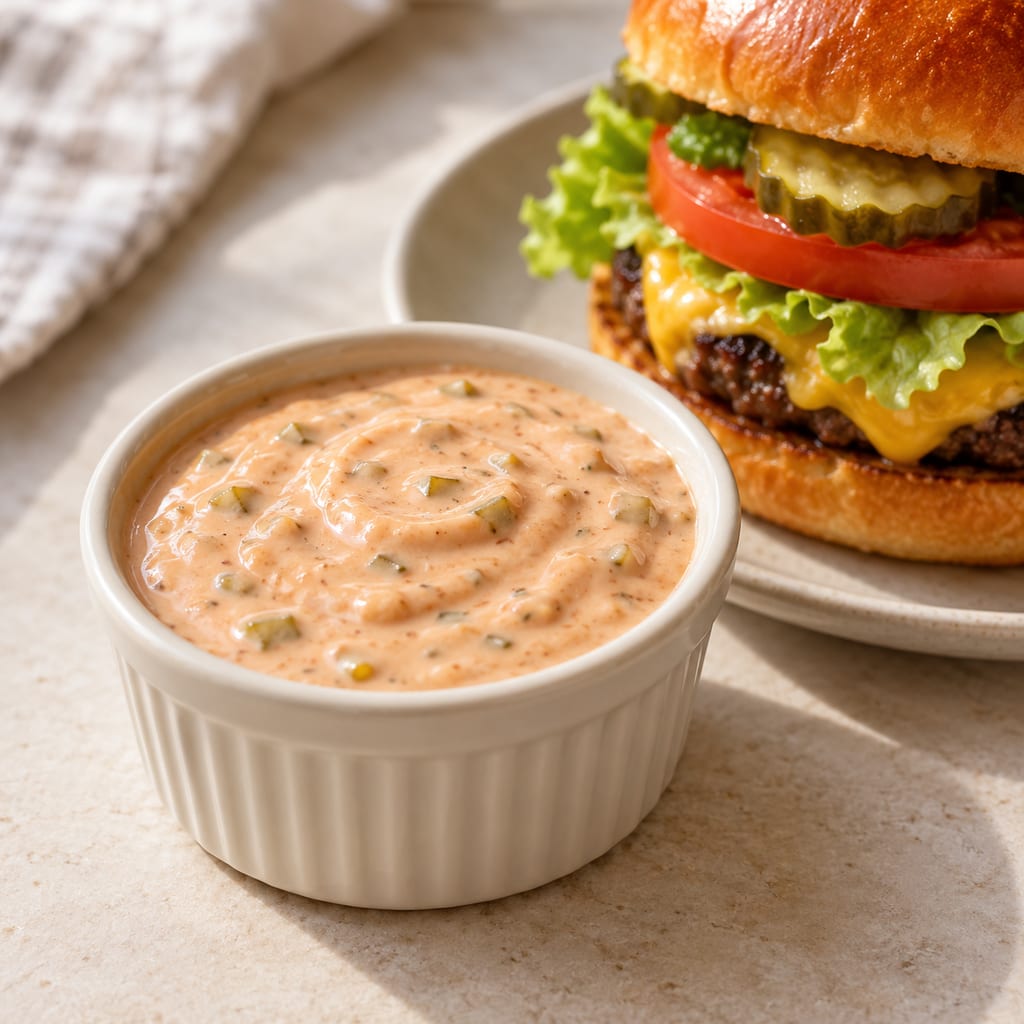
Mayonnaise mixed with ketchup, drained pickle relish and yellow mustard makes a tangy, pickle-flecked sauce for burgers; these proportions are an untested starting point.
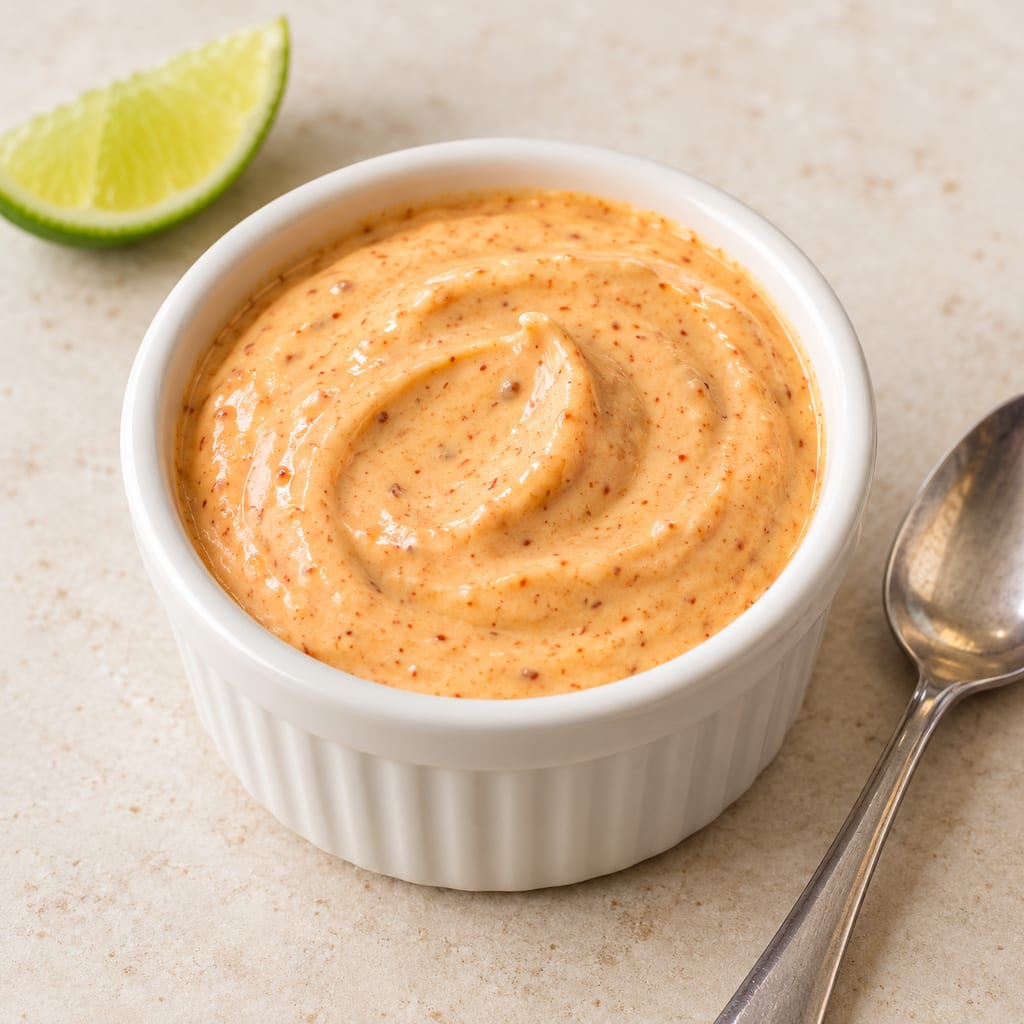
A contemporary, untested mix of finished mayonnaise, mashed canned chipotle in adobo and lime juice, given as starting amounts per 100 g mayonnaise.
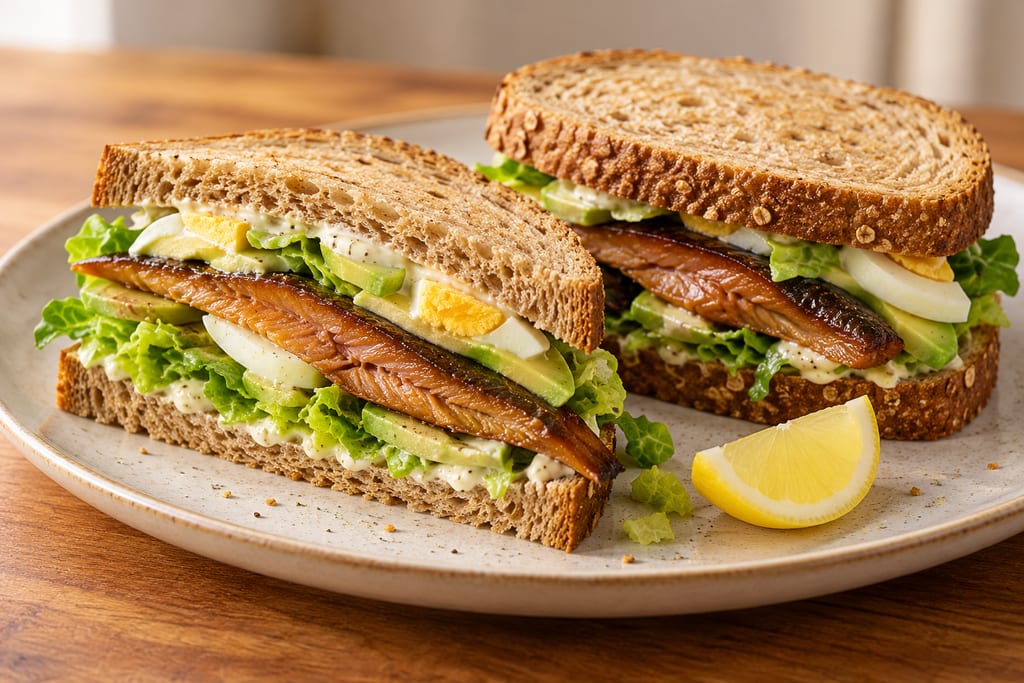
A warm club sandwich of oak-smoked Craster kipper fillets layered with soft-boiled egg, romaine, avocado and lemon mayonnaise on brown bread.
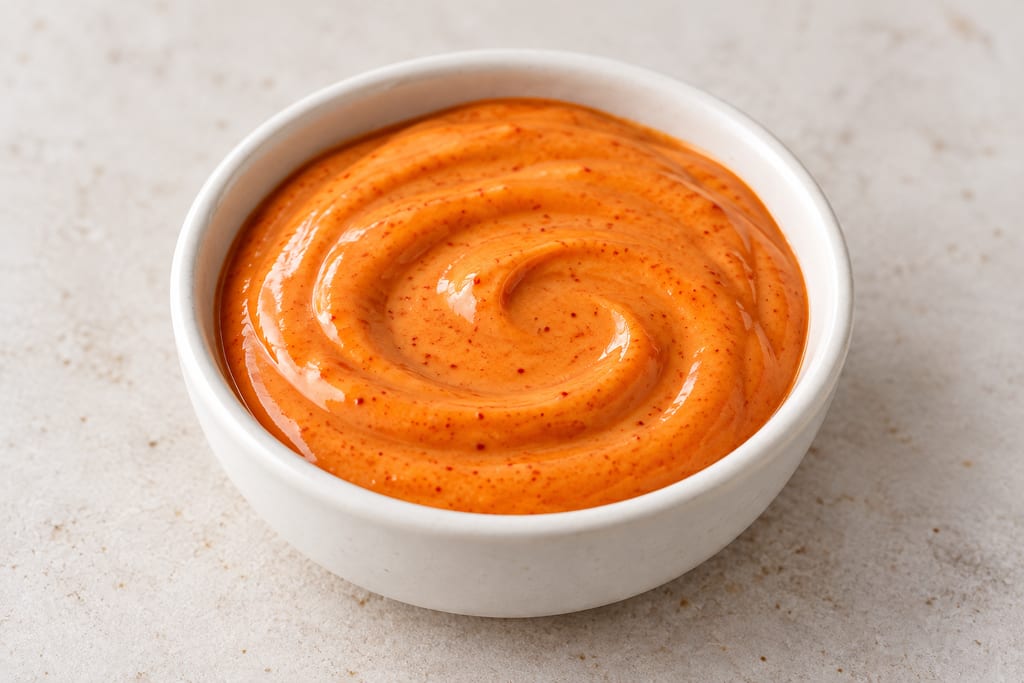
A contemporary, untested mix of finished mayonnaise, gochujang and rice vinegar, with starting amounts per 100 g mayonnaise.
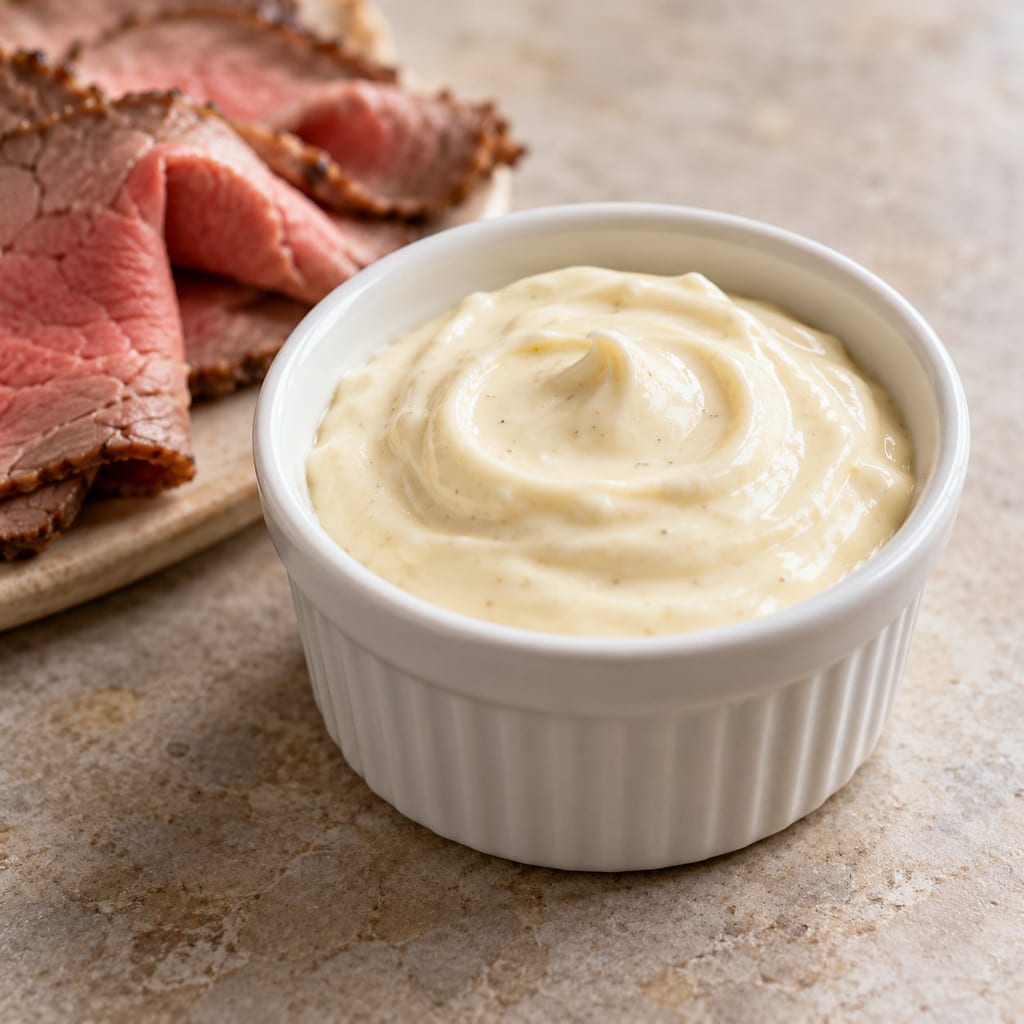
Prepared horseradish and lemon sharpen finished mayonnaise into a fresh accompaniment for roast meat or fish; the archived ratio has not been tested.
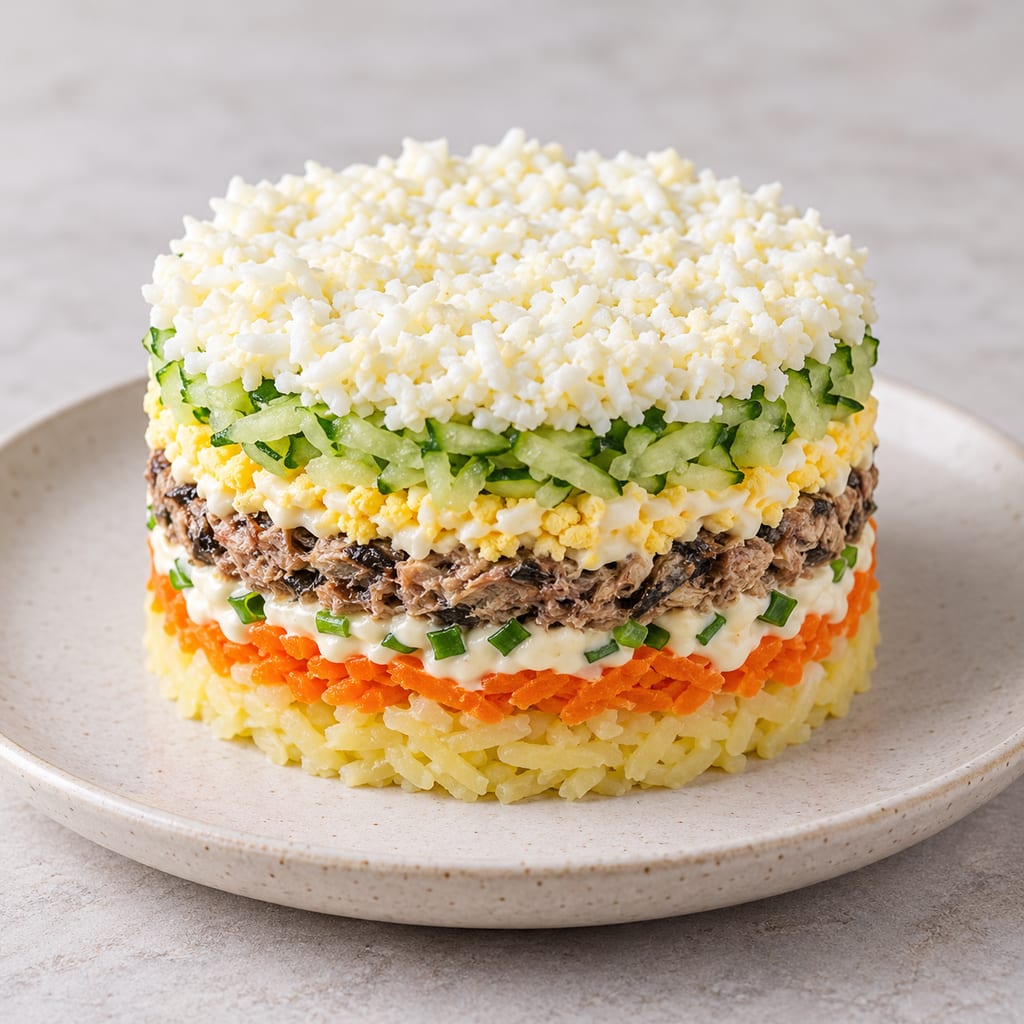
A Latvian Šprotes page’s layered salad uses one can of sprats in oil, grated vegetables and eggs with mayonnaise. The page gives no serving yield, can size or complete vegetable-cooking method.
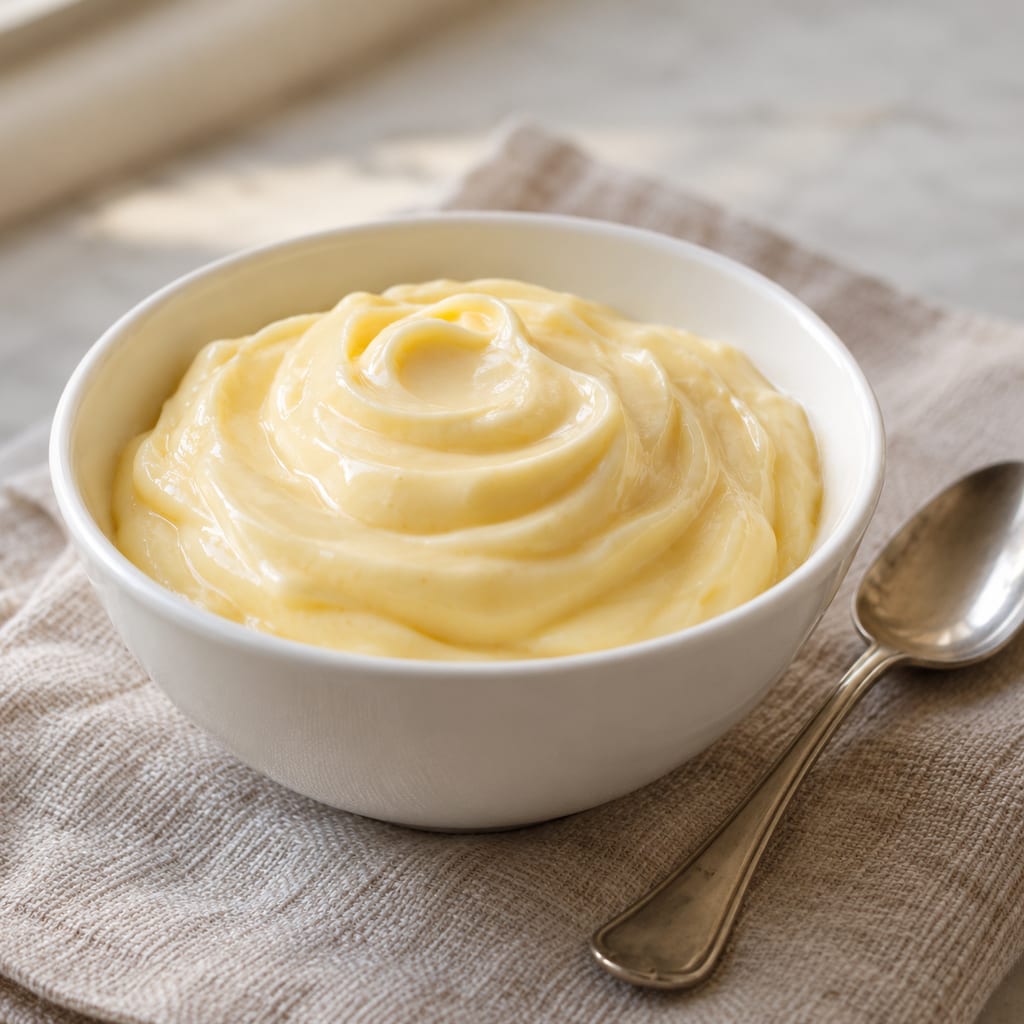
A cooked-yolk mayonnaise documented in the University of Tennessee Extension’s 2007 Egg University Handbook. The egg mixture is heated before oil is emulsified into it.
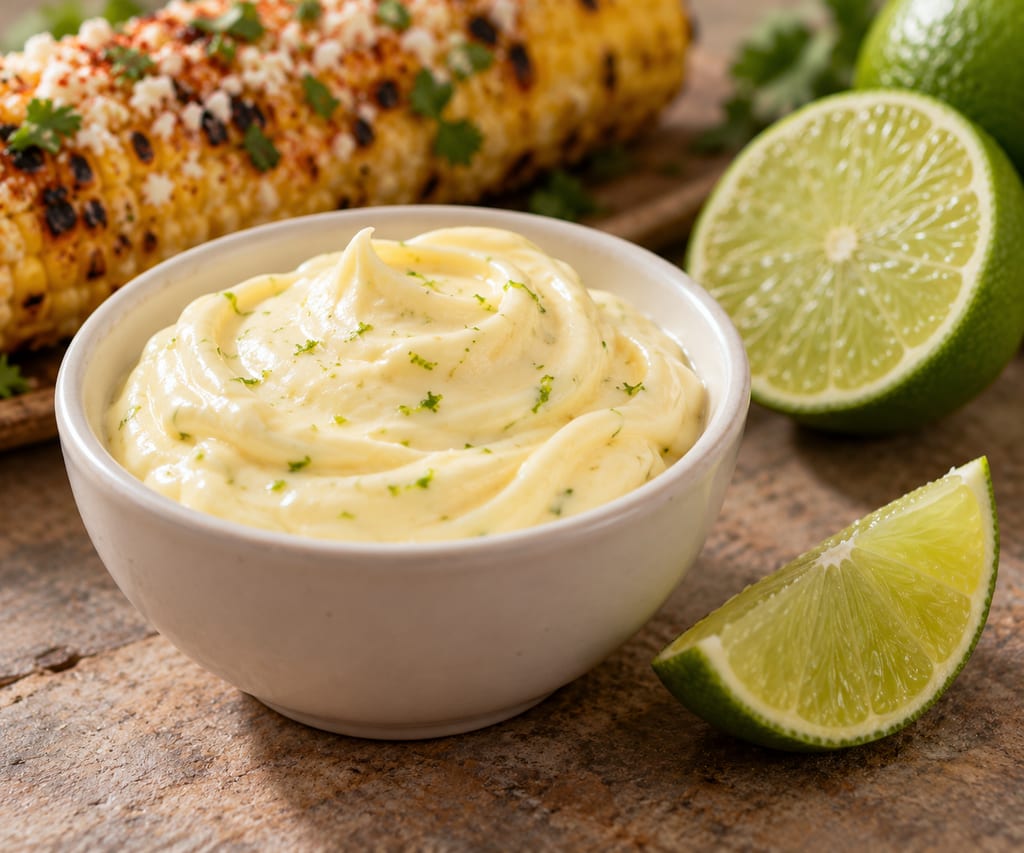
An untested mayonnaise variation that replaces part of a neutral base’s vinegar with lime juice and finishes with optional lime zest.
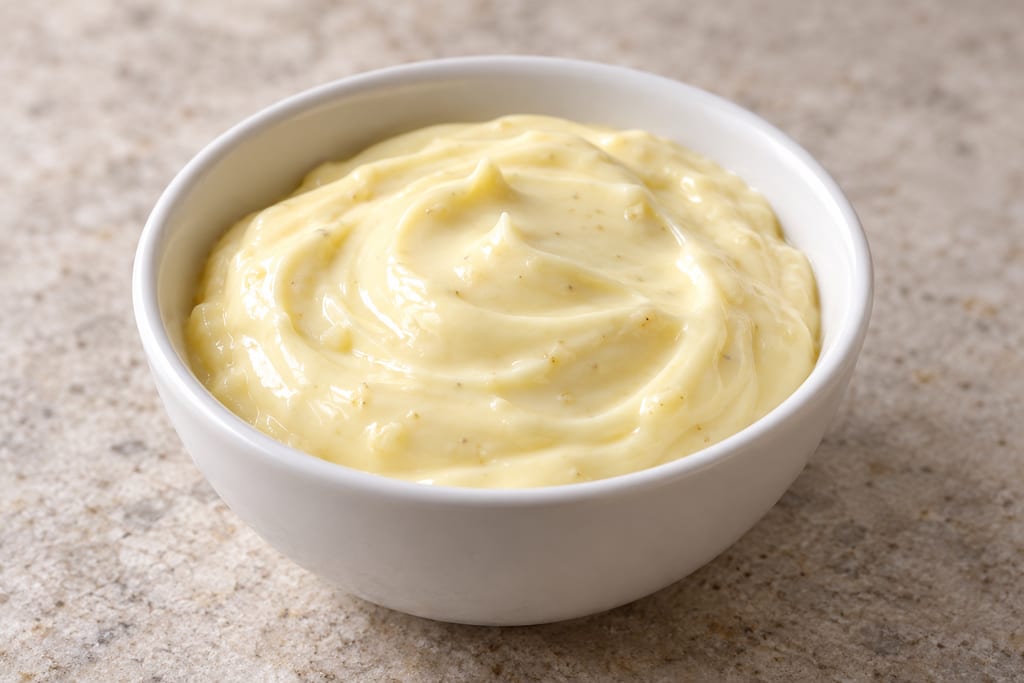
An untested 265 g garlic mayonnaise made by whisking pasteurised yolk with vinegar, water and Dijon, then slowly emulsifying neutral oil with mild extra-virgin olive oil.
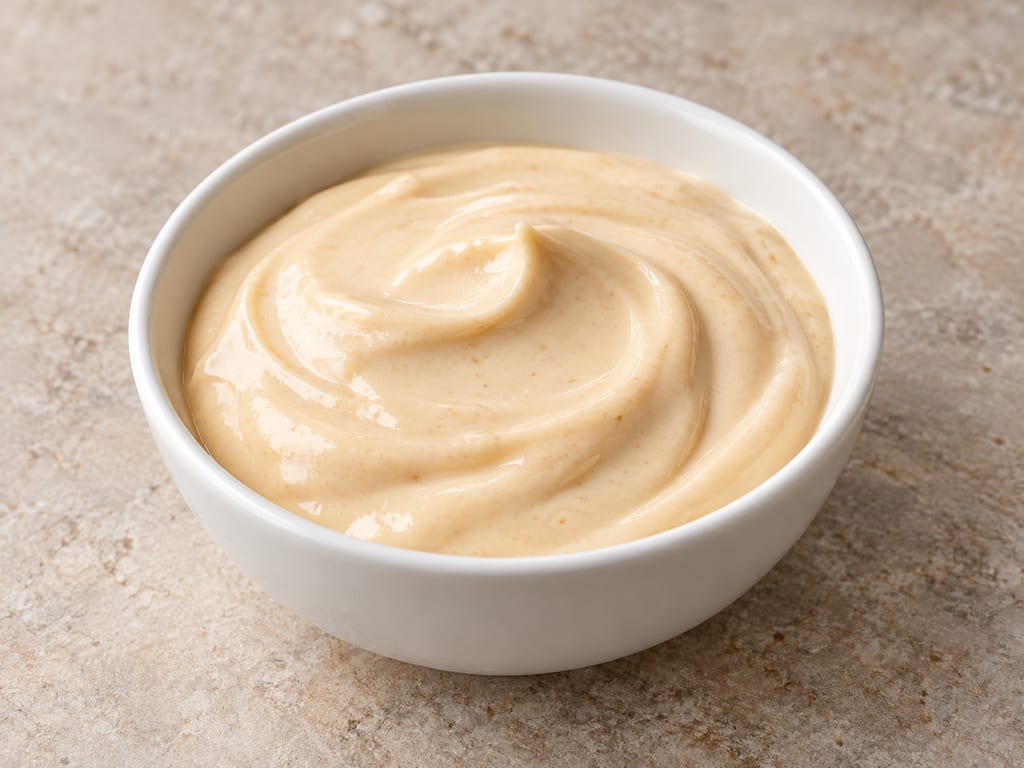
A sesame-forward, fresh sauce made by mixing tahini, toasted sesame oil and rice vinegar into finished mayonnaise; the archived amounts are untested starting points.
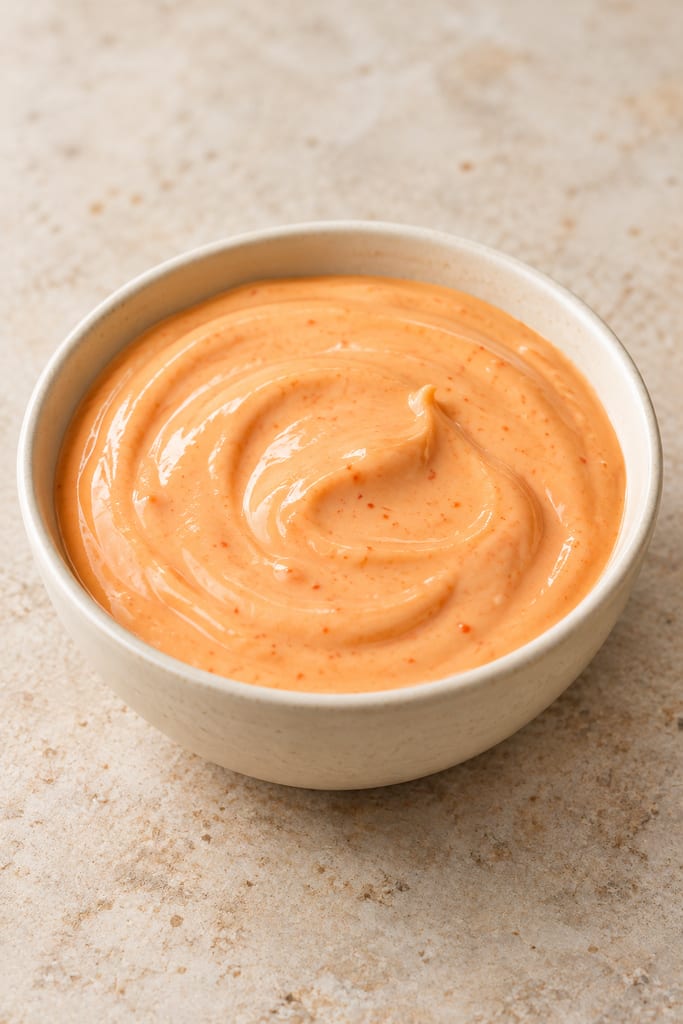
A contemporary, untested mix of finished mayonnaise, sriracha and lime juice, with starting amounts per 100 g mayonnaise.
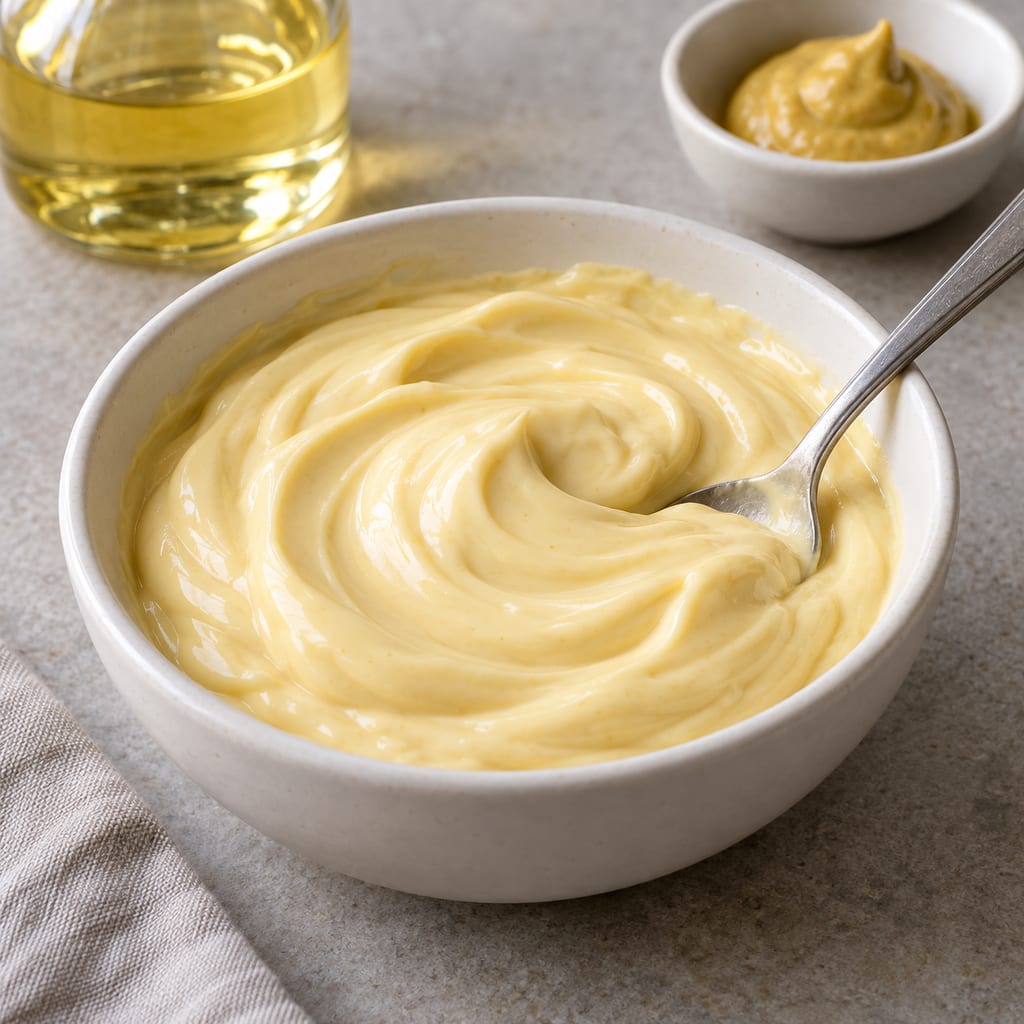
An untested mayonnaise variation made with refined sunflower oil and more Dijon mustard than a neutral base.
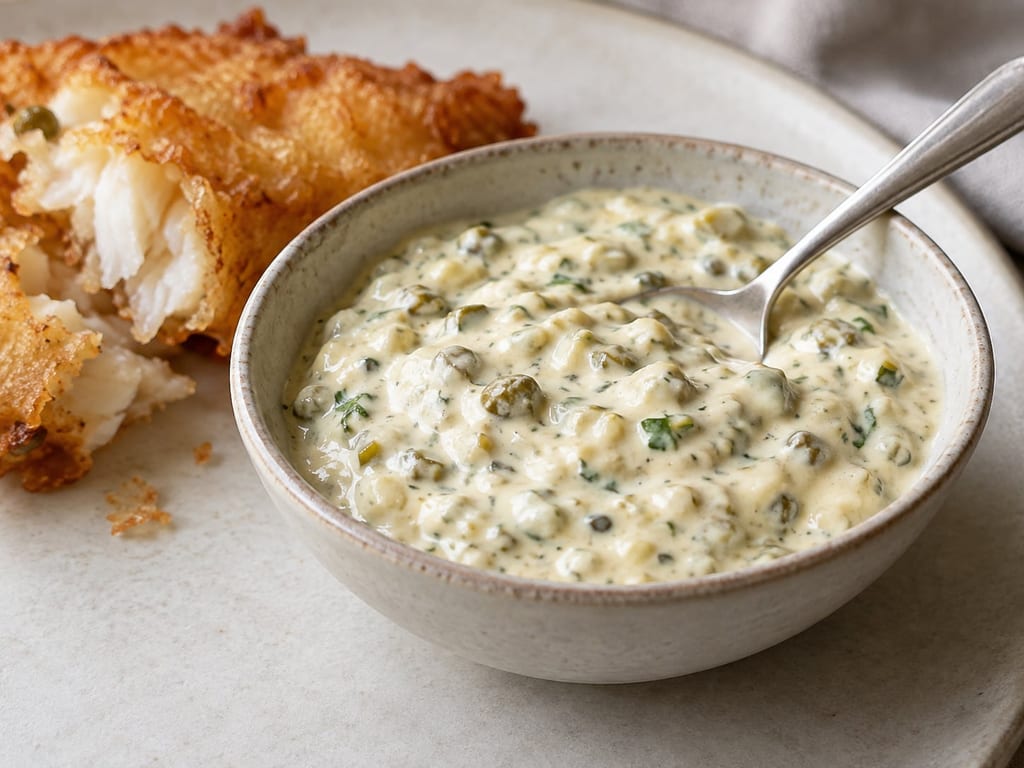
Drained pickled cucumber, capers and unspecified herbs turn finished mayonnaise into a fresh fish and seafood accompaniment; these archived amounts are untested starting points.
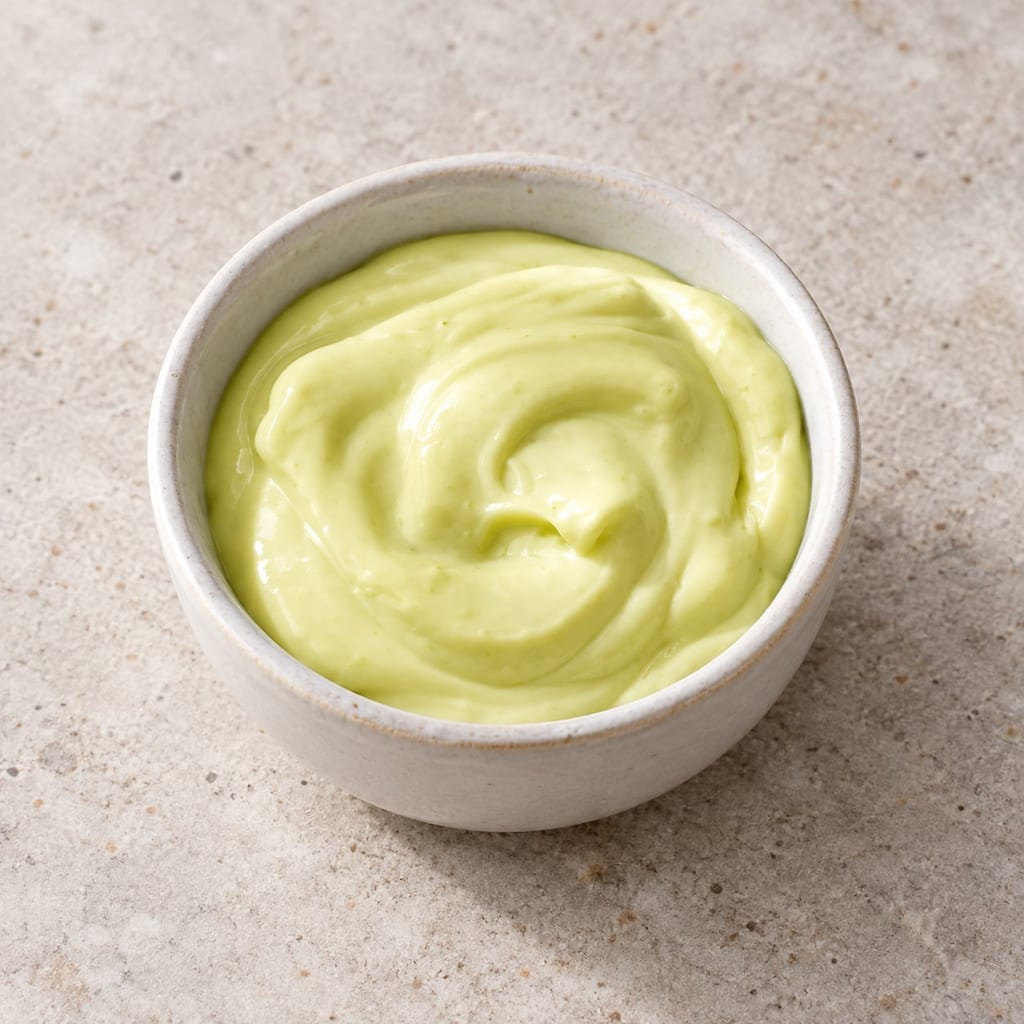
A contemporary, untested mix of finished mayonnaise and prepared wasabi paste, beginning within the archive's 2–4 g range per 100 g mayonnaise.
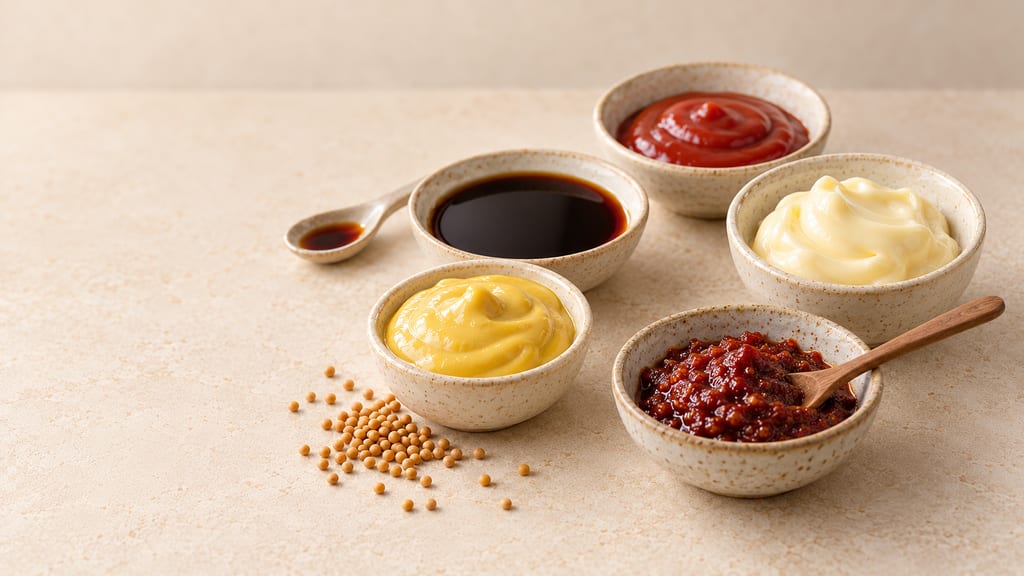
Ketchup, mayonnaise and mustard are three kinds of kitchen engineering. This guide shows how each works, compares real bottles instead of national clichés, then follows the sauces of Asia, the Caucasus, Europe, the Americas and Africa.
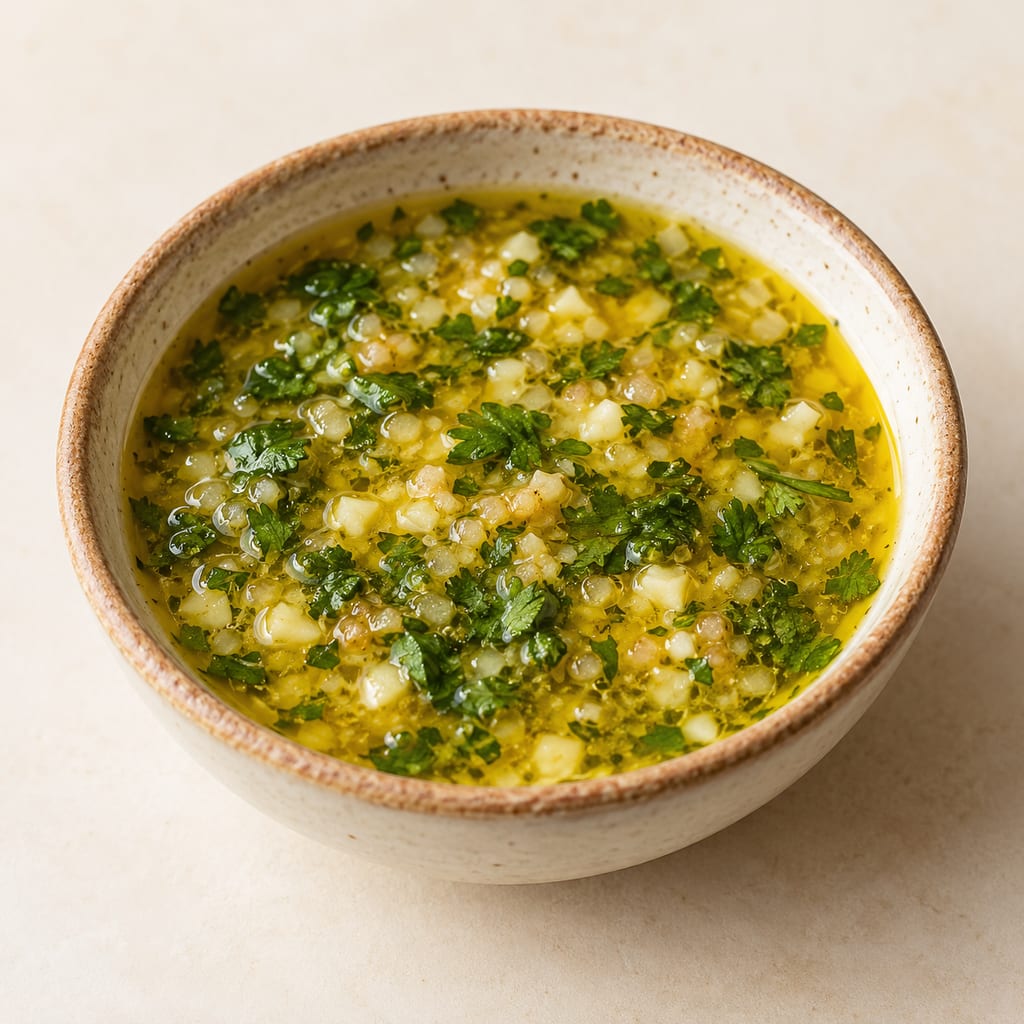
Mojo criollo is a Cuban sauce of garlic and sour orange juice with oil and herbs, used to marinate roast pork and as a dip.
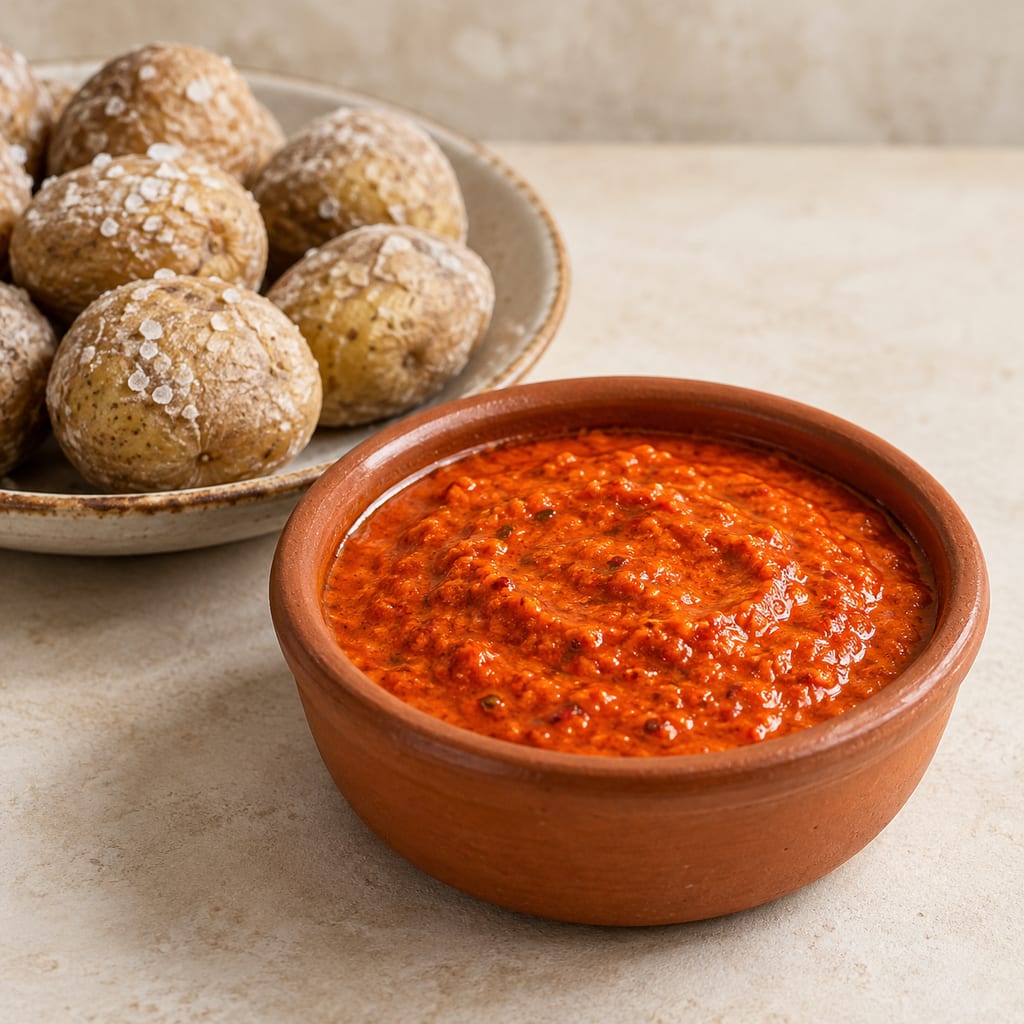
A red sauce of garlic, dried or fresh red pepper, paprika and cumin in olive oil and vinegar, served with salt-cooked potatoes across the Canary Islands.
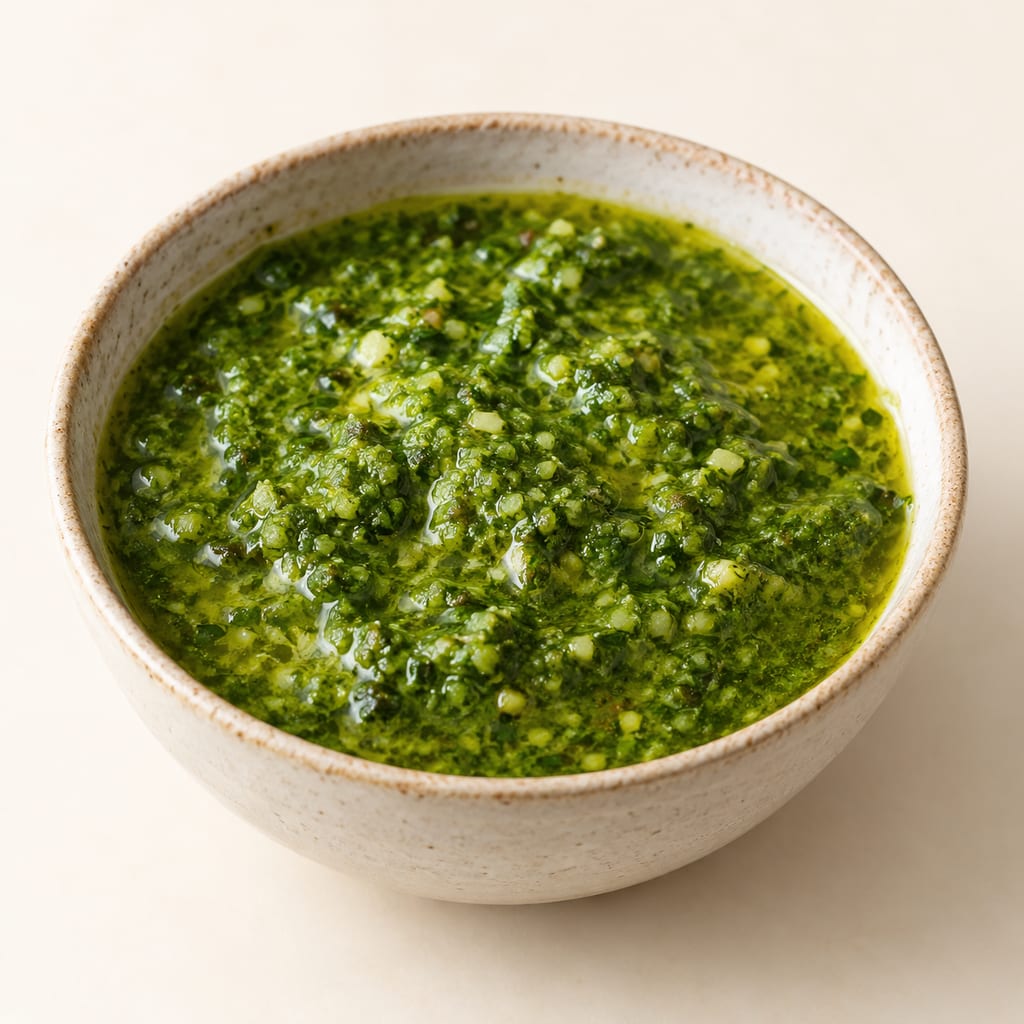
A green sauce of garlic, cumin, green chilli and fresh coriander or parsley in olive oil and vinegar, traditionally served with fish in the Canary Islands.
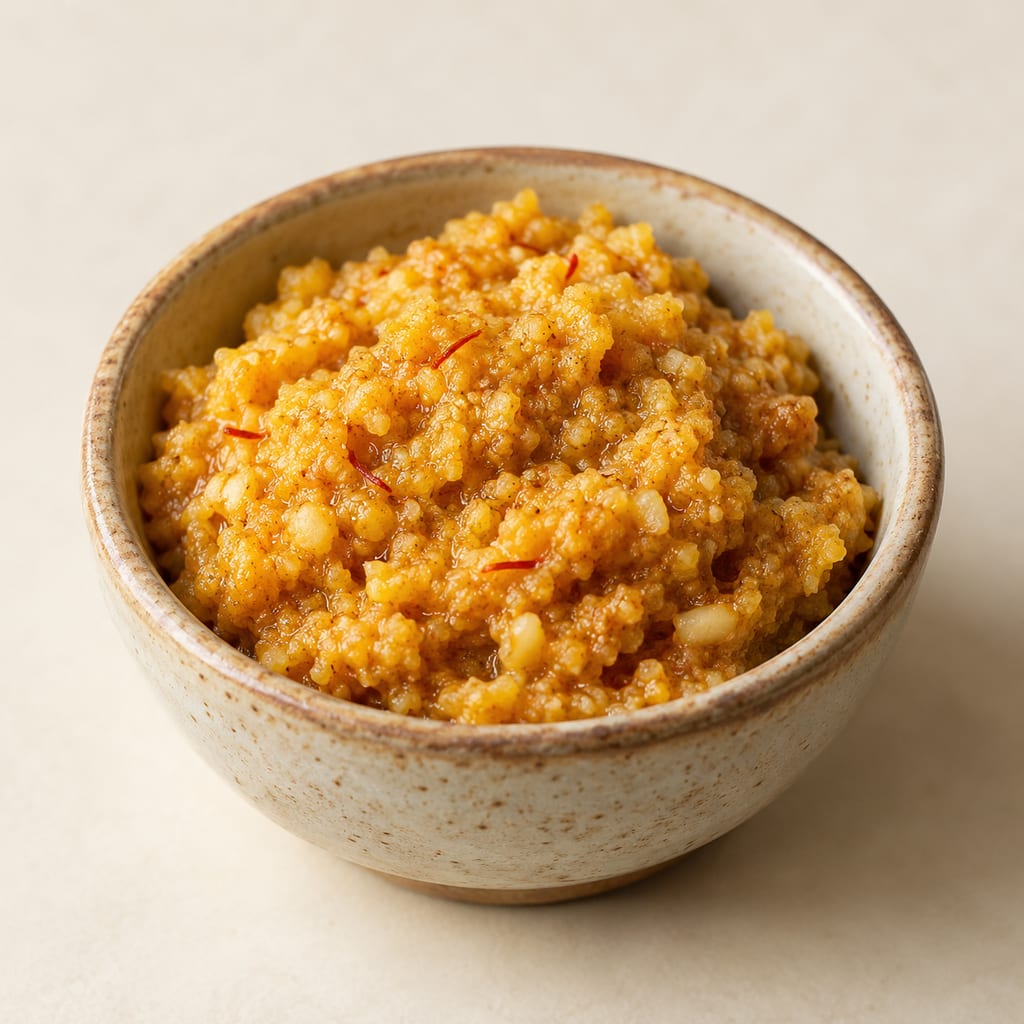
Picada is a Catalan pounded paste of toasted almonds, dry bread, garlic and saffron, stirred into a dish near the end of cooking to thicken and flavour it.
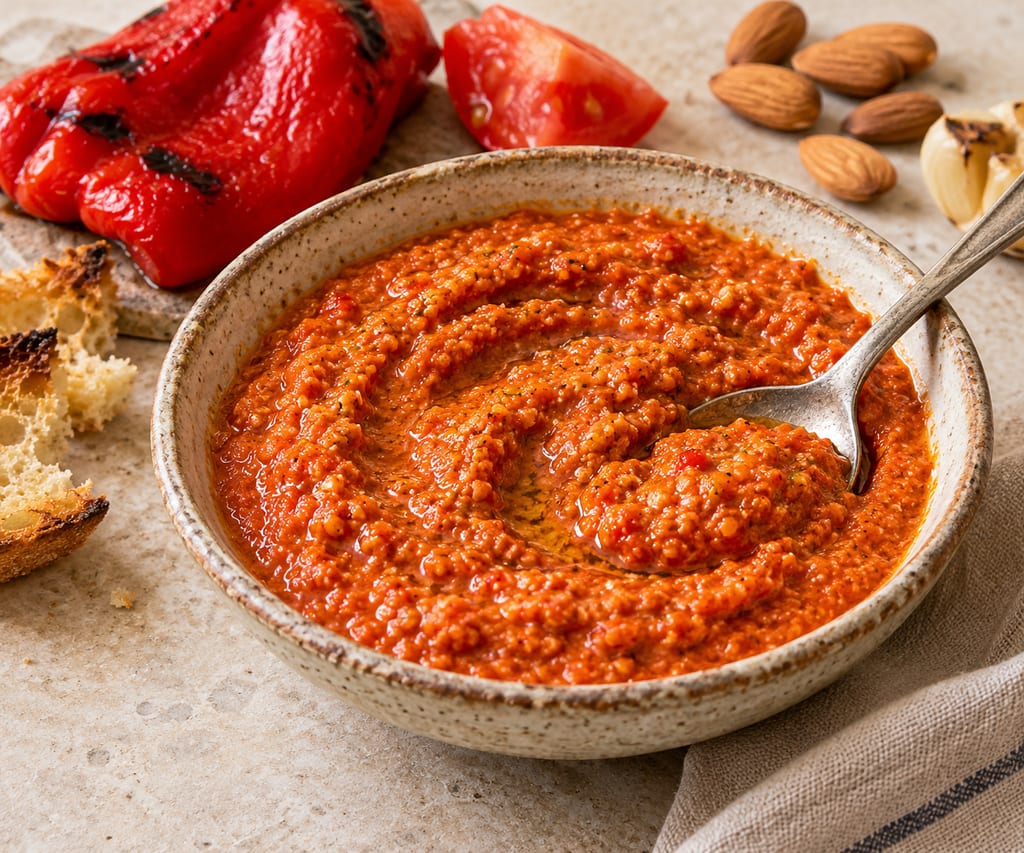
A coarse Catalan-inspired sauce of roasted tomato and red pepper, almonds, bread, garlic, olive oil and sherry vinegar. This modern pepper version is distinct from ñora-based romesco formulations and is not a preserve.
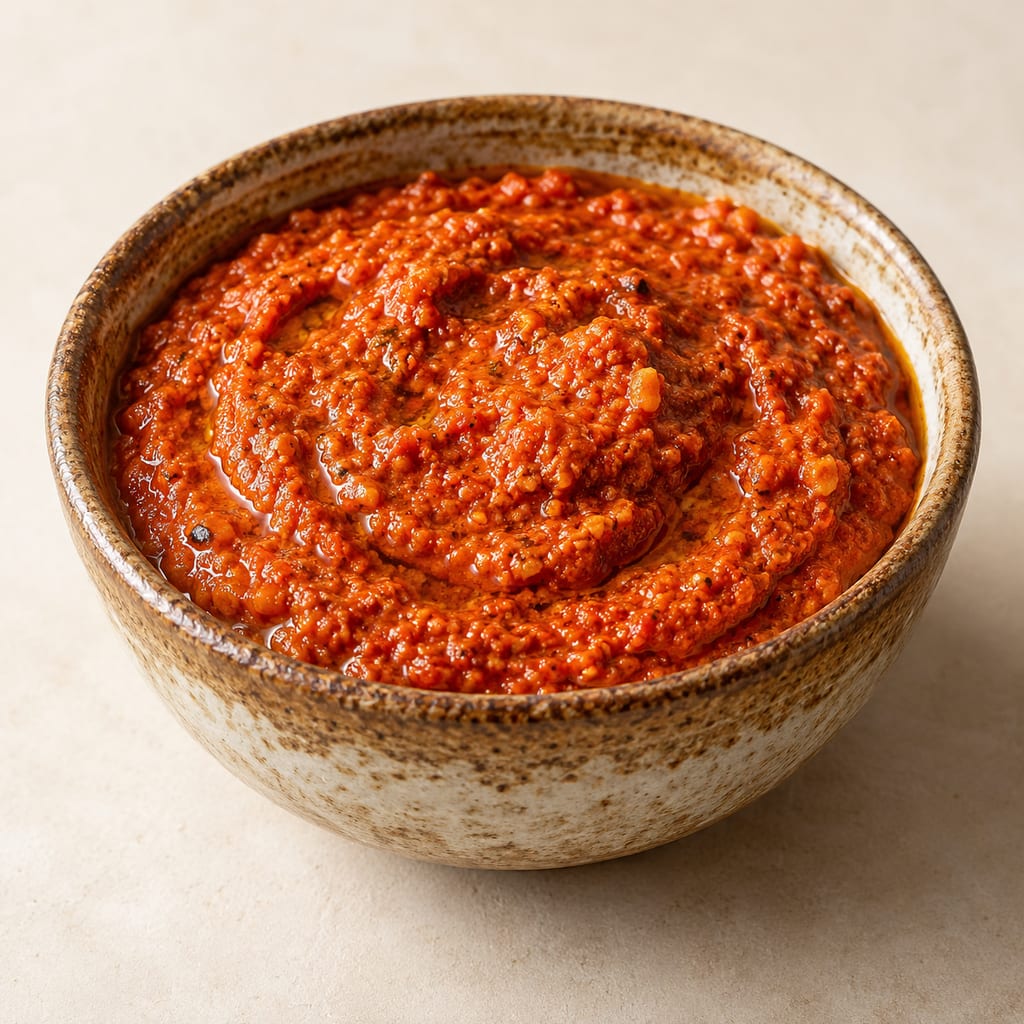
Romesco is a Catalan sauce of roasted tomatoes and garlic, toasted nuts, dried nyora peppers, bread and oil, traditionally served with seafood, grilled meat and calcots.
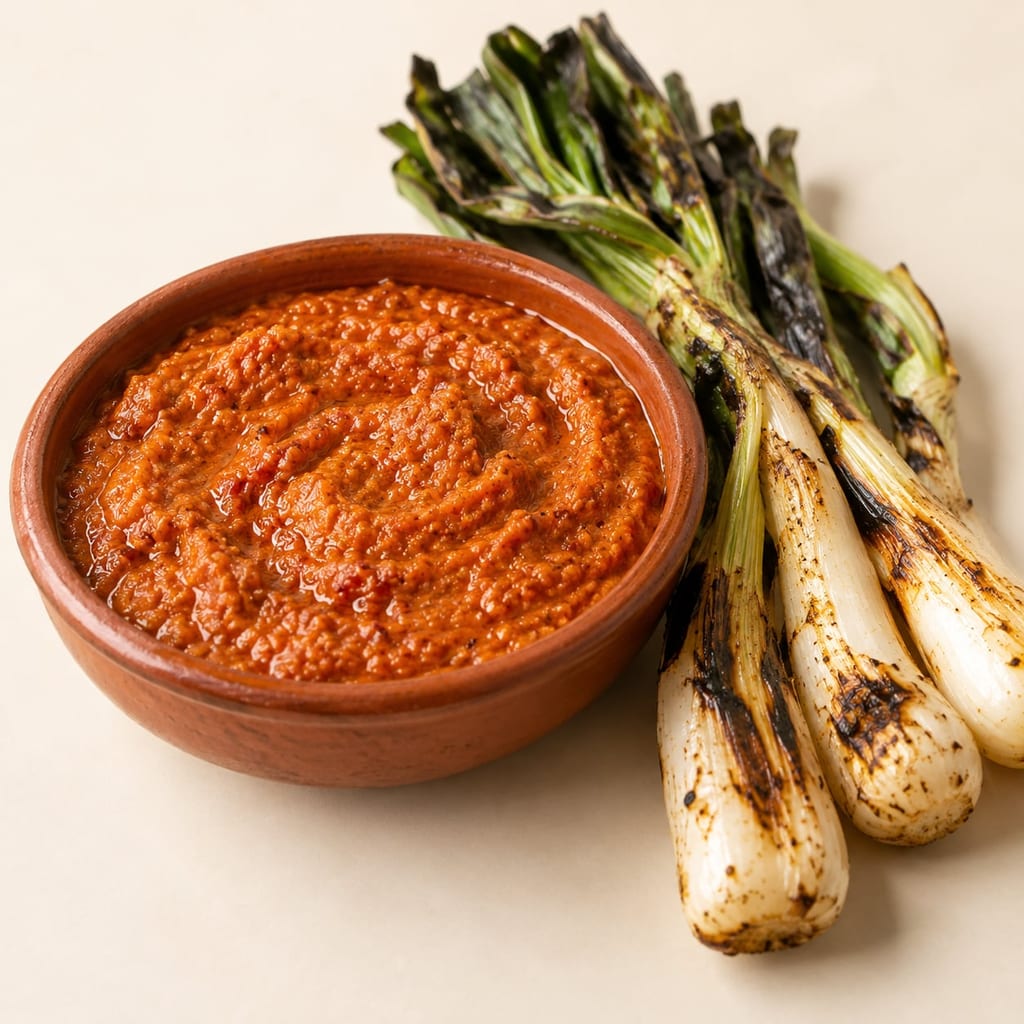
Salvitxada is a Catalan sauce from Valls, thickened with toast rubbed with garlic, served almost only with calcots at the calcotada barbecue.
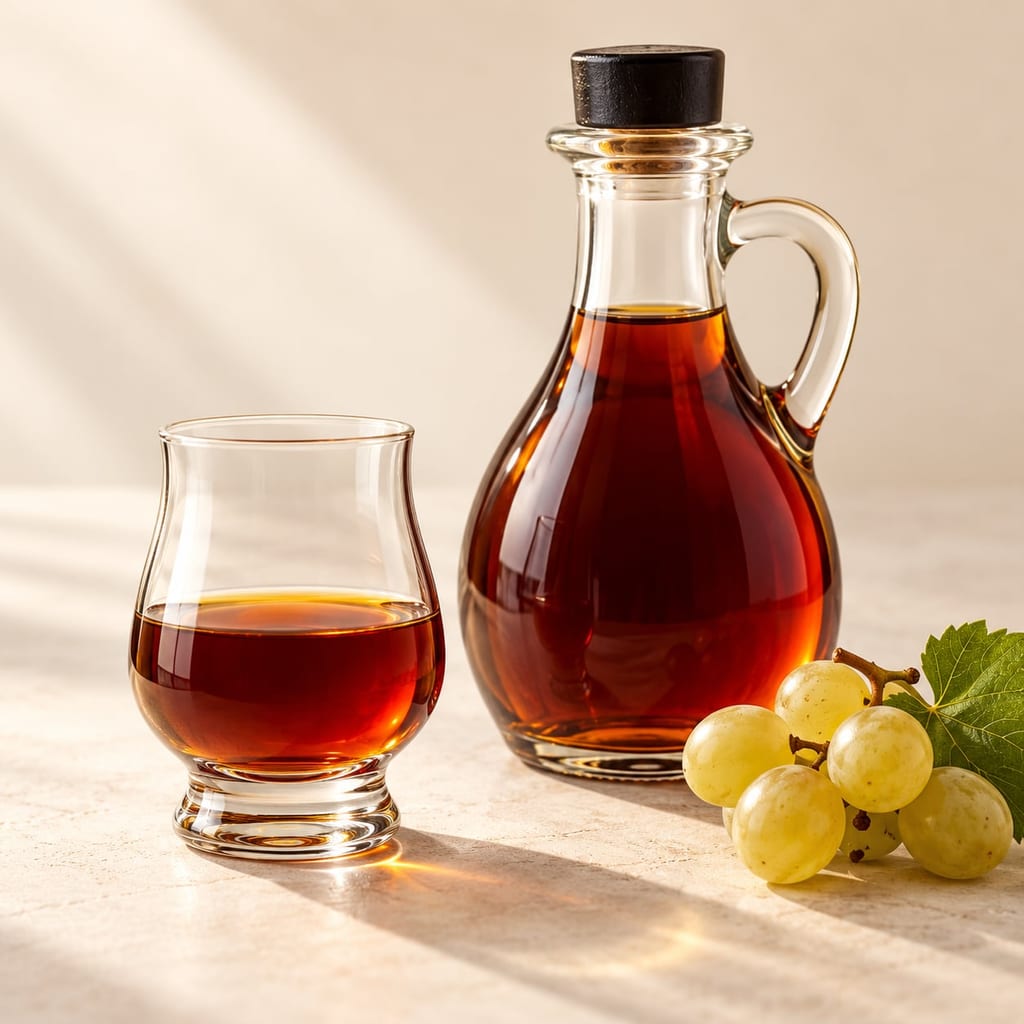
Vinagre de Jerez is made by acetifying eligible Jerez wines and ageing the vinegar in wood. Its protected name belongs to a defined Andalusian zone and a cellar tradition joining wine, oxygen, acetic bacteria and long ageing.
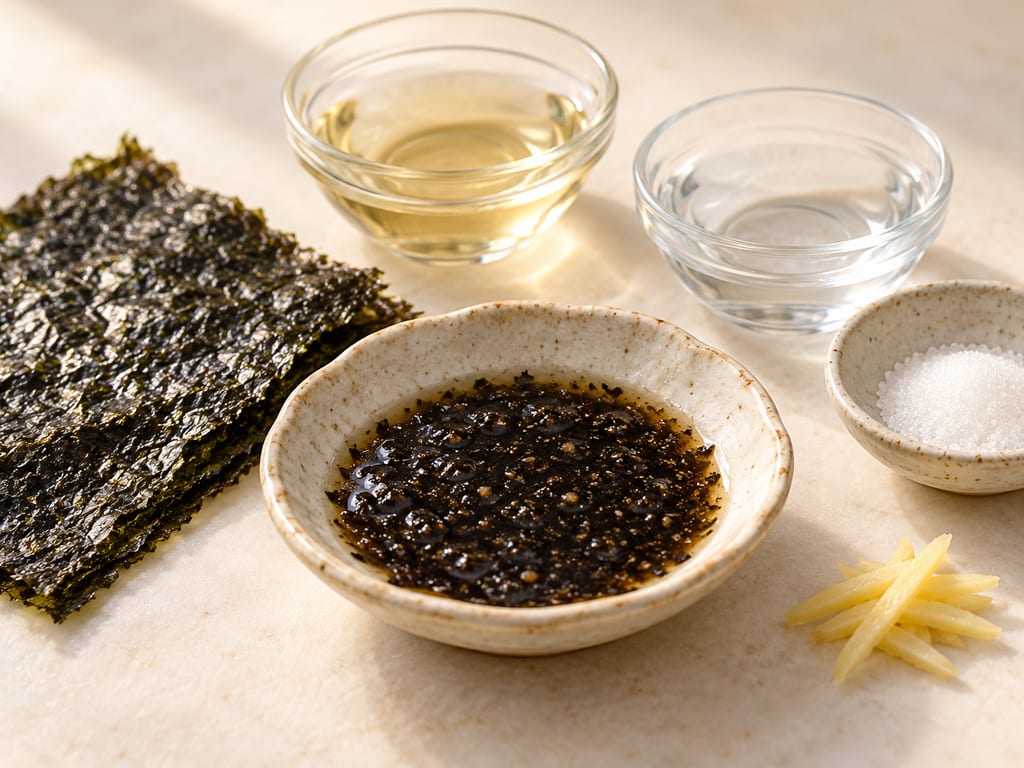
A fresh condiment in which crumbled nori softens in lightly sweetened vinegar and water. It is not vinegar fermented from seaweed.
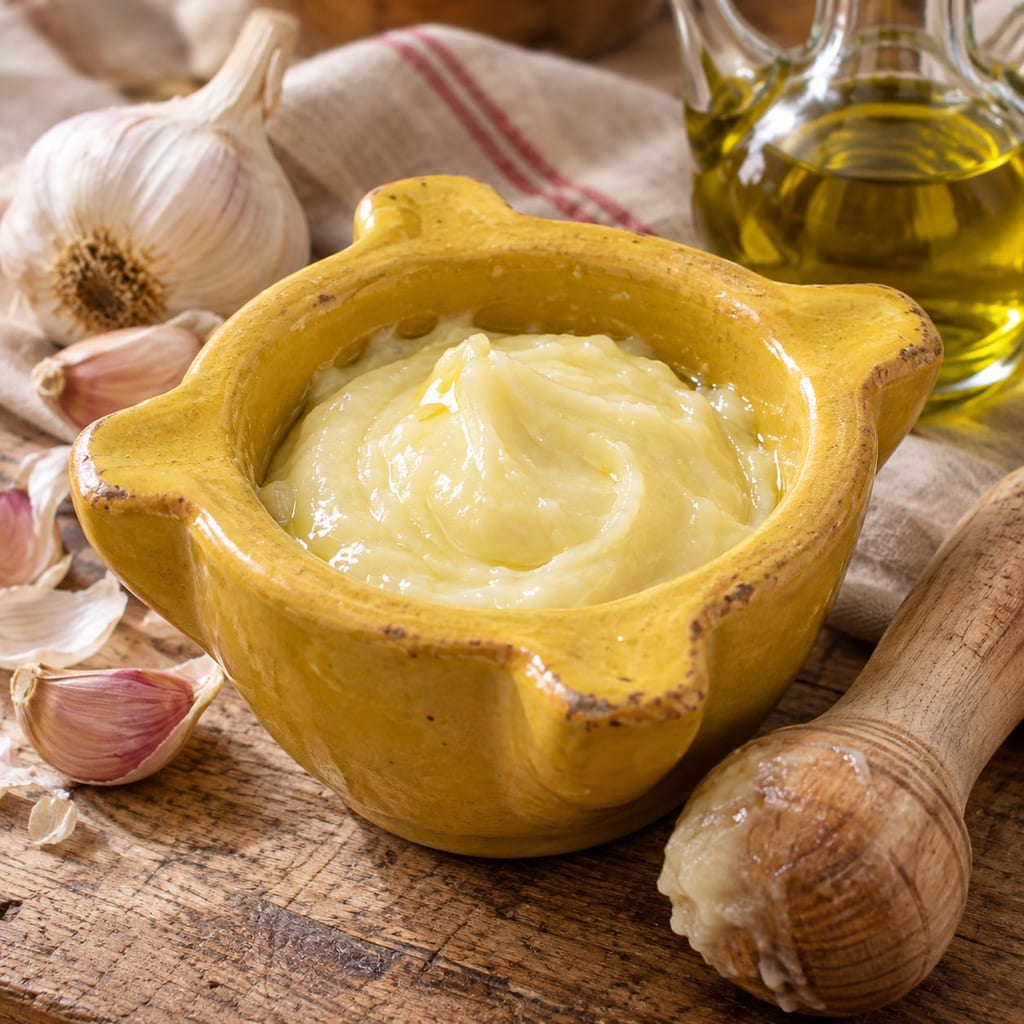
Traditional Catalan allioli is a dense emulsion of garlic, olive oil and salt made slowly in a mortar. This measured Barcelona-style version keeps egg-based garlic mayonnaise distinct.
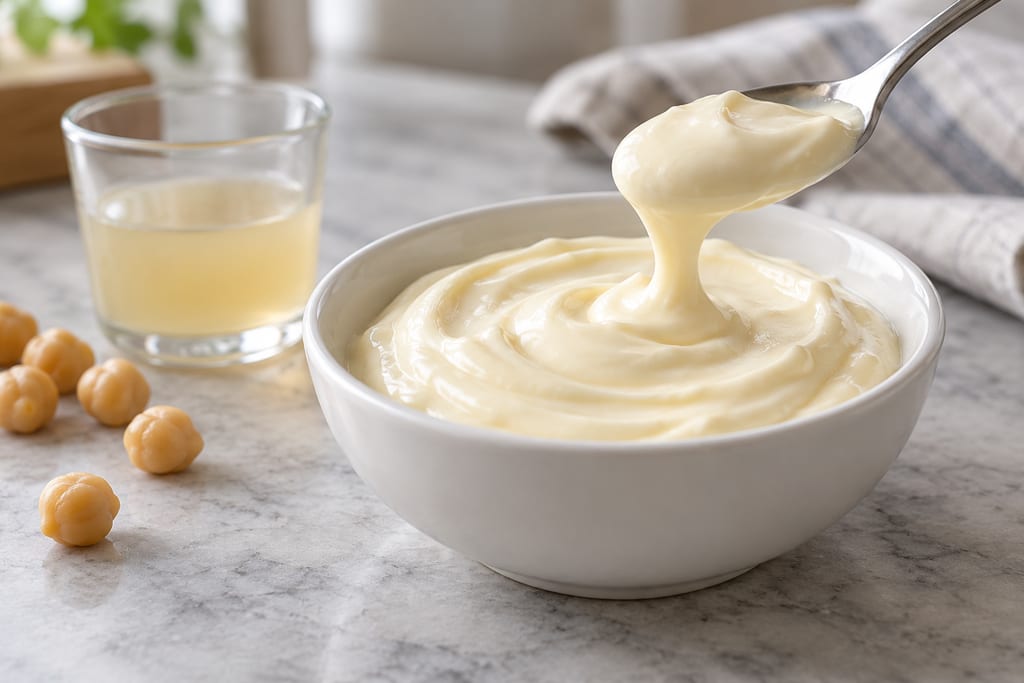
An eggless, untested emulsion made with canned chickpea liquid. Nominal yield 255 g.
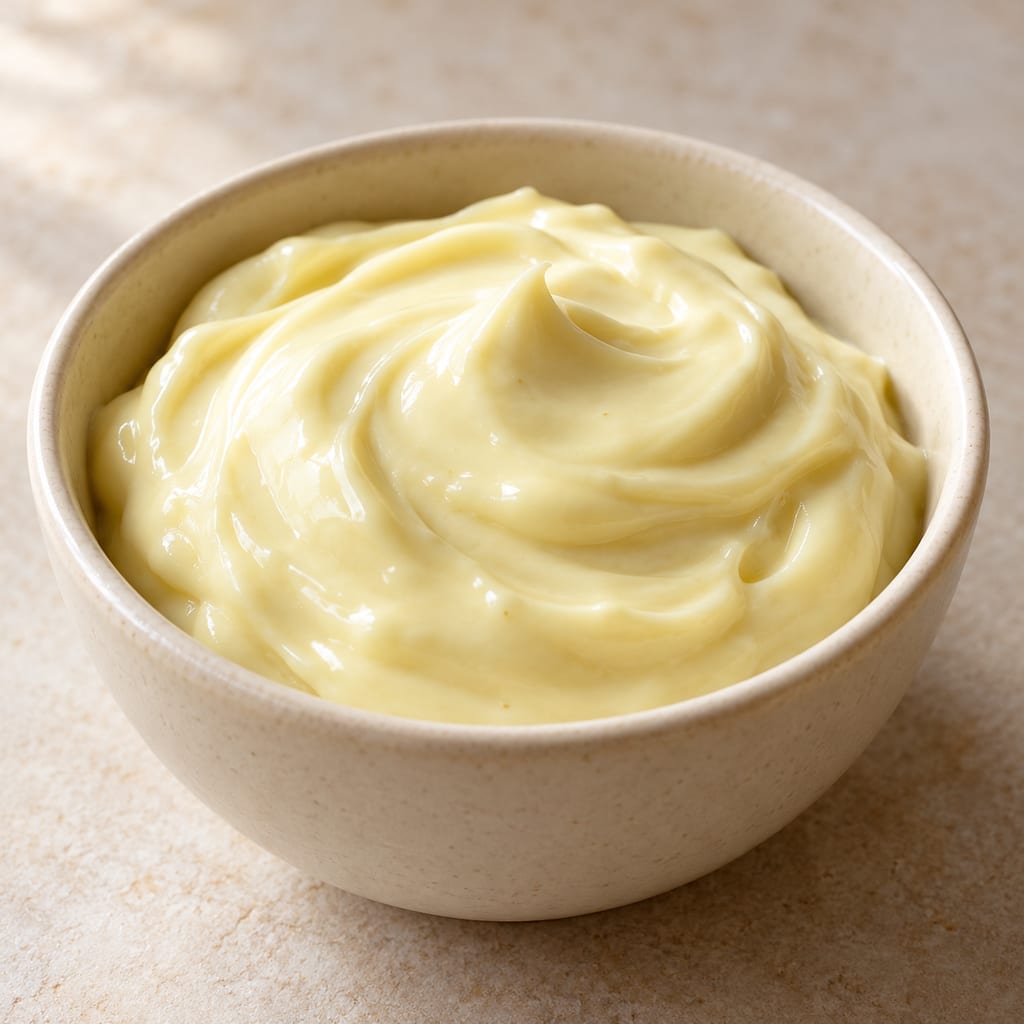
Avocado-oil mayonnaise is an ordinary egg-and-oil emulsion in which avocado oil supplies the oil phase. The oil changes flavour and colour, and it does not preserve the sauce.

Bechamel is a white sauce of milk thickened with a butter and flour roux, one of the French mother sauces, and the base from which Mornay and other cheese and cream sauces are made.
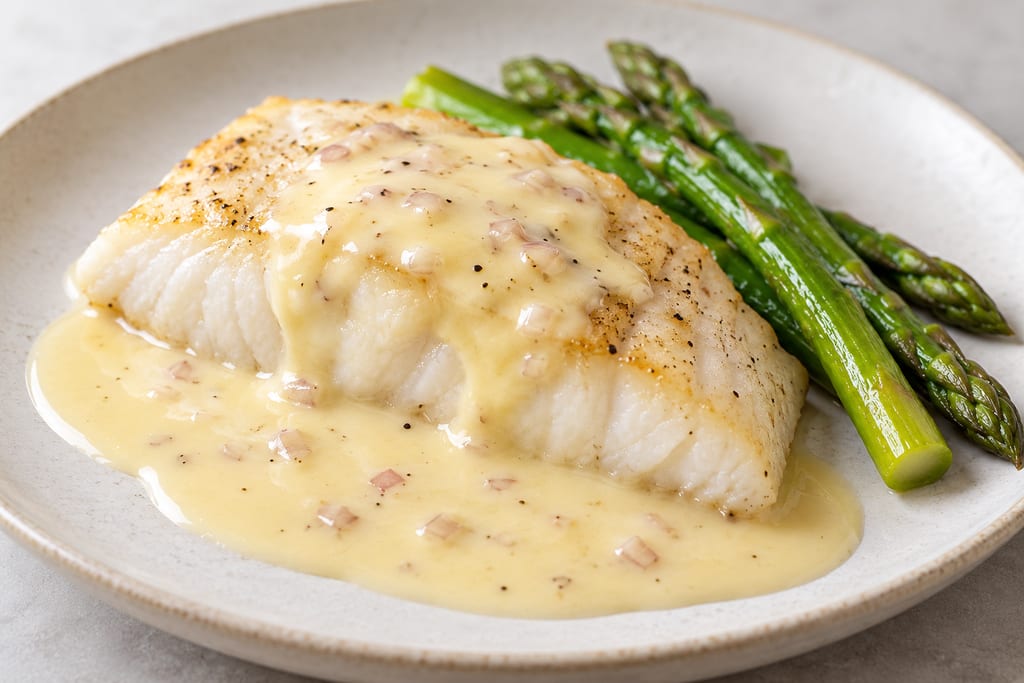
Beurre blanc is a warm emulsion of cold butter whisked into a reduction of white wine, vinegar or lemon juice and shallot, a sauce from the Loire Valley and its red-wine version, beurre rouge.
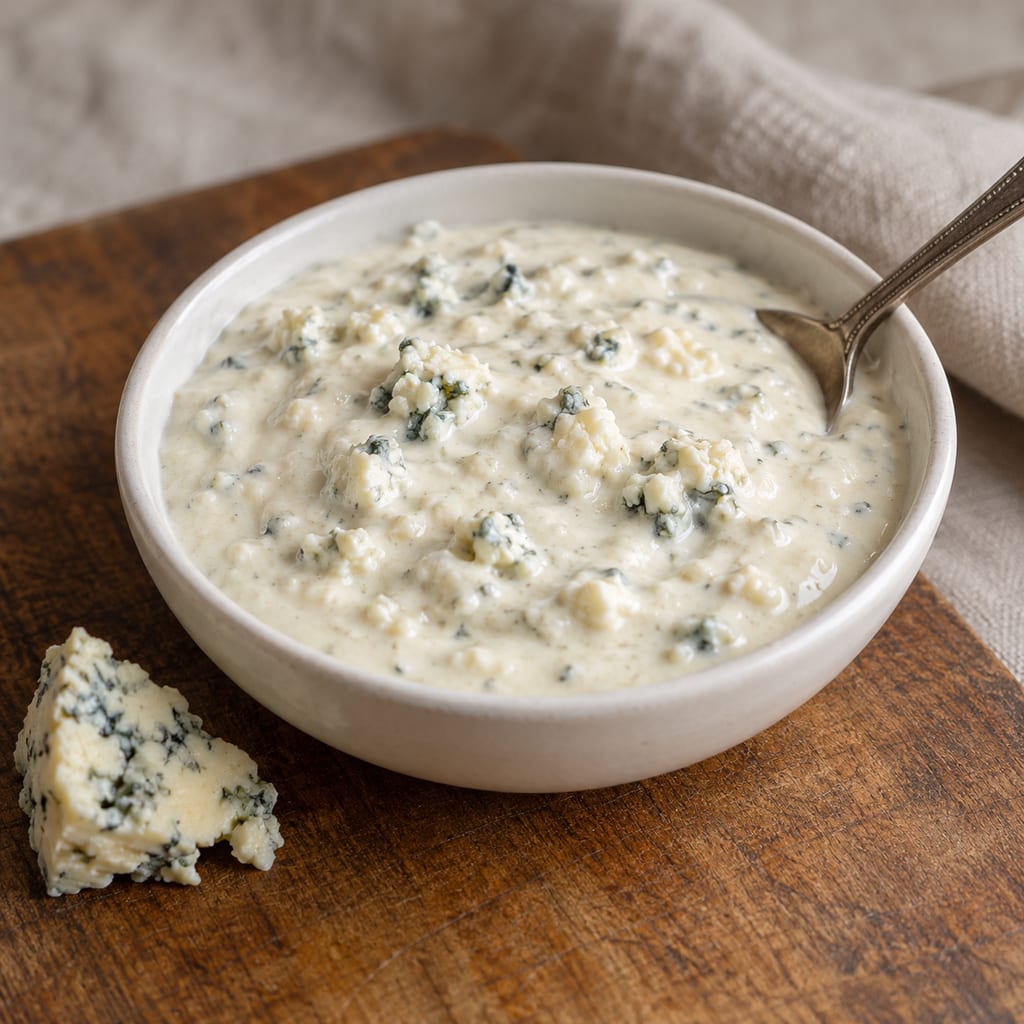
Blue cheese dressing is a creamy dressing built on crumbled blue cheese mashed into buttermilk, with sour cream, mayonnaise, vinegar and seasoning, and kept cold for up to two weeks.
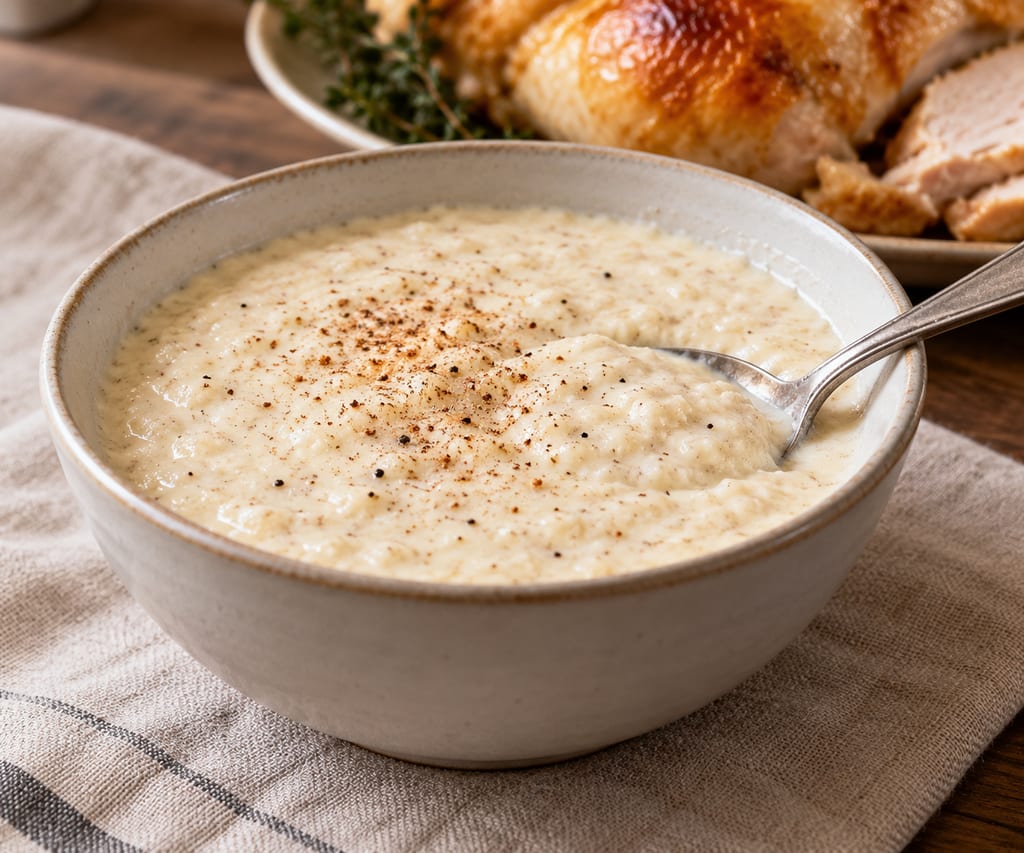
Bread sauce is a British sauce of milk infused with onion, clove and bay, thickened with stale breadcrumbs and finished with butter, served with roast chicken or turkey.
No community contributions have been published for this entry yet.
Sign in to contribute. Published comments and photos are free to read.
Journal of Food Science and Technology (Springer); PMID 26396329; PMCID PMC4571207
Soy milk as an emulsifier in mayonnaise: physico-chemical, stability and sensory evaluationCited in: Oil, held in water; How yolk holds oil in water; Six things that make one mayonnaise differ from another; Thick, thin and split; Tasting, one change at a time
Legal Information Institute, Cornell Law School (copy of the eCFR text)
21 CFR 169.140 MayonnaiseCited in: Oil, held in water
Heinz UK (Kraft Heinz)
Salad CreamCited in: Oil, held in water; Mayonnaise in other countries, bottle by bottle
Kewpie Corporation (Japan)
Kewpie mayonnaise product pages (Japanese domestic site, read in English translation of the Japanese text)Cited in: How yolk holds oil in water
PS in foodservice (distributor product record)
Hellmanns Real Mayonnaise 5L (1720561)Cited in: Why these ingredients and amounts; Mayonnaise in other countries, bottle by bottle
WSP Społem (Wytwórcza Spółdzielnia Pracy Społem, Kielce)
Majonez Kielecki 410 mlCited in: Why these ingredients and amounts; Mayonnaise in other countries, bottle by bottle
Duke's (spec sheet hosted by WebstaurantStore)
Mayonnaise #06003 Gallon, Product Specifications (Duke's, Richmond VA)Cited in: Why these ingredients and amounts; Mayonnaise in other countries, bottle by bottle
Unilever Food Solutions US
Hellmann's Real Mayonnaise Mini Jar 72 x 1.2 ozCited in: Mayonnaise in other countries, bottle by bottle
Groupe Pomona (distributor technical sheet). Not Amora or Unilever France.
Mayonnaise de Dijon en bocal verre 605 g AMORA, technical sheetCited in: Mayonnaise in other countries, bottle by bottle
Albert Heijn (retailer listing)
Remia Fritessaus ClassicCited in: Mayonnaise in other countries, bottle by bottle
VkusVill (Russian retailer). Manufacturer named only as brand 'Слобода'.
Майонез Слобода Провансаль 67% 800 млCited in: Mayonnaise in other countries, bottle by bottle
Unilever Food Solutions Philippines (foodservice site)
Lady's Choice Real Mayonnaise 5.5L (Unilever Food Solutions Philippines)Cited in: Mayonnaise in other countries, bottle by bottle
McCormick. Elote serving material: McCormick Kitchens / McCormick for Chefs recipe pages.
McCormick Mayonesa (Mayonnaise) With Lime JuiceCited in: Mayonnaise in other countries, bottle by bottle
U.S. Food and Drug Administration
Assuring the Safety of Eggs and Menu and Deli Items Made From Raw, Shell Eggs | FDACited in: Pasteurised egg and the 24-hour rule
Food Standards Scotland
Advice on safe storage, handling and use of eggs for catering | Food Standards ScotlandCited in: Pasteurised egg and the 24-hour rule
MDPI, Pathogens
The Combined Effect of pH and Temperature on the Survival of Salmonella enterica Serovar Typhimurium and Implications for the Preparation of Raw Egg MayonnaiseCited in: Pasteurised egg and the 24-hour rule
International Journal of Food Microbiology (Elsevier)
The culturability of acid-tolerant Salmonella in mayonnaise, a raw egg-based sauce.Cited in: Pasteurised egg and the 24-hour rule
National Center for Home Food Preservation (University of Georgia, College of Family and Consumer Sciences)
Lots of Leftovers?Cited in: What ‘lasts longer’ can and cannot mean
Food Lion (retailer listing)
Chosen Foods Classic Mayo Made with Avocado Oil, 11.2 oz (Food Lion listing)Cited in: What ‘lasts longer’ can and cannot mean
Whole Foods Market (retailer listing)
Primal Kitchen Mayo Made with Avocado OilCited in: What ‘lasts longer’ can and cannot mean
L’Atelier des ChefsMethod
Recette La sauce mayonnaiseYolk and mustard are combined first; oil begins drop by drop and continues in a thin stream while whisking.
Cited in: Whisk, blender and the first drops; Thick, thin and split; Tasting, one change at a time
EL PAÍSHistory · Geography
El viejo recetario de Joana Caules del siglo XVIII demuestra el origen menorquín de la mahonesaA report describes a surviving Caules family manuscript with recipes written between 1750 and 1756 and a sauce formula; this documents an attestation in Mahón but does not independently prove invention there.
Cited in: Mahonesa, mayonnaise and the record from Mahón
EL PAÍSHistory
¿Quién inventó la salsa mahonesa (mayonesa)?The author records uncertainty around Menorcan and French origin narratives and reports the earlier Art de la Cuina's references to alioli bo without an explicit method.
Cited in: Mahonesa, mayonnaise and the record from Mahón